Introduction
Health is an important determinant of employability and labour market inclusion, especially in societies characterised by an ageing workforce (Maltby, Reference Maltby2011; Böckerman and Maczulskij, Reference Böckerman and Maczulskij2018). In recent years, we can observe a shift in policy focus away from illness and towards residual work ability (Irvine, Reference Irvine2011; Johansen et al., Reference Johansen, Andersen, Mikkelsen and Lynge2011; Van Hal et al., Reference Van Hal, Meershoek, Nijhuis and Horstman2013). This shift is well-exemplified by the introduction and expansion of graded sick-leave schemes, i.e. the possibility to combine (partial) sickness benefit receipt with part-time work or gradual return-to-work from sick leave.1
The United Kingdom, for instance, replaced its ‘sick note’ with a ‘fit-note’ in 2010, including a ‘maybe fit’ option to encourage part-time work and work adaptations instead of full-time sick-leave (Dorrington et al., Reference Dorrington, Roberts, Mykletun, Hatch, Madan and Hotopf2018). Finland introduced a partial sickness allowance in 2007 and lowered the threshold for its application in 2010 (Viikari-Juntura et al., Reference Viikari-Juntura, Virta, Kausto, Autti-Rämö, Martimo, Laaksonen, Leinonen, Husgafvel-Pursiainen, Burdorf and Solovieva2017). In other countries, such as Sweden, Denmark, Norway and Germany, specific schemes to combine graded work with benefit receipt during sick leave have been in place for decades (Johansen et al., Reference Johansen, Andersen, Mikkelsen, Pass, Raffnsøe and Lynge2008; Andrén and Svensson, Reference Andrén and Svensson2012; Schneider et al., Reference Schneider, Linder and Verheyen2016; Nossen and Lysø, Reference Nossen and Lysø2018). The utilisation of these programmes has been increasing strongly, as a consequence of legislative changes and reforms that were implemented from the late 1990s onwards (Sieurin et al., Reference Sieurin, Josephson and Vingård2009; Markussen et al., Reference Markussen2012; Rehwald et al., Reference Rehwald, Rosholm and Rouland2018).
The activation of sick-listed workers via graded work is of interest for several reasons. First, because so far only few studies have investigated activation policies devoted to sickness absences in a comparative social policy perspective (Vossen and Van Gestel, Reference Vossen and Van Gestel2015). This is remarkable, if we consider that sick leave is associated with high economic costs in the short term, as well as with an increased risk of job loss, unemployment and permanent labour market exit in the long term (Hesselius, Reference Hesselius2007; OECD, 2010; Markussen, Reference Markussen2012). Second, the activation of sick-listed workers and especially graded sick-leave schemes represent an interesting field to investigate the role of employers in activation policies. The ‘demand-side’ dimension of activation has been attracting increasing scholarly interest in recent years (cf. Ingold and Stuart, Reference Ingold and Stuart2015; Bredgaard, Reference Bredgaard2018; Frøyland et al., Reference Frøyland, Andreassen and Innvær2019; Orton et al., Reference Orton, Green, Atfield and Barnes2019). The active involvement of the workplace is considered an important factor in the successful reintegration of employees after an injury or illness (Williams-Whitt et al., Reference Williams-Whitt, Bültmann, Amick, Munir, Tveito and Anema2016; Buys et al., Reference Buys, Selander and Sun2019), but the role played by employers in different institutional contexts for the reintegration of sick-listed workers is largely unexplored.
This article investigates the activation of sick-listed workers and the participation of employers, focusing particularly on options for graded work. The goal of this exercise is to contrast different policy settings and the way they frame the role of employers, as well as to assess their empirical implications for the diffusion of graded sick-leave and employer participation in activation efforts. The analysis, which is based on a review of scientific literature, technical reports and complementary sources as well as on data from a standardised European company survey, compares four European countries: Germany, Austria, Switzerland and the Netherlands. This sample provides an interesting mix of welfare state typologies and trajectories, as well as substantial variation along important policy dimensions. The research gap concerning the activation and graded return from sick leave is particularly large for Continental Europe, while more data and studies are available for Nordic countries (cf. Kausto et al., Reference Kausto, Miranda, Martimo and Viikari-Juntura2008; Hernæs, Reference Hernæs2018; Meneses-Echavez et al., Reference Meneses-Echavez, Baiju and Berg2018). This article thus contributes to the small but growing literature on employer involvement in activation policies. Furthermore, it provides insights on different approaches to the labour market inclusion of sick-listed workers, an underdeveloped but topical field in contemporary welfare state research.
The remainder of the article is organised as follows. The next section outlines the main features of graded sick-leave schemes as activation instruments and sets the stage for the analyses. The analytical steps and data used are described in detail in the methods section. The following section, which is divided into three sub-sections, presents the results from the comparison of sickness absence regulations, activation strategies and graded sick-leave schemes in the examined countries, as well as empirical evidence on the diffusion of graded sick-leave and on employer support for workers on long-term sick-leave. In the concluding section, the main findings are summarised and discussed.
Background
Graded work is partly motivated by medical considerations, as ‘there is growing evidence that work can help people in recovering from sickness or dealing with physical or mental impairment’ (EU-OSHA, 2016: 18). The increasing diffusion of graded sick-leave schemes is however primarily a reflection of the transformation of mature welfare states into ‘active welfare states’, where employment is regarded as the central pillar of social inclusion (Serrano Pascual and Magnusson, Reference Serrano Pascual and Magnusson2007; Weishaupt, Reference Weishaupt2011). The combination of work activity with income replacement during sick leave is consistent with the definition of activation as an ‘increased and explicit linkage between, on the one hand, social protection, and, on the other hand, labour market participation and labour market programmes’ (Barbier and Ludwig-Mayerhofer, Reference Barbier and Ludwig-Mayerhofer2004: 425). Graded sick-leave is also associated with other main characteristics of the ‘activation turn’ identified by scholars, concerning privatisation, i.e. a shift in responsibility for the achievement of social policy objectives to market actors, as well as a decentralisation and individualisation in the provision of services (Berghman et al., Reference Berghman, Nagelkerke, Boos, Doeschot and Vonk2002; Van Berkel and Van der Aa, Reference Van Berkel and Van der Aa2005; Newman, Reference Newman2007; Van Berkel and Borghi, Reference Van Berkel and Borghi2007).
While being consistent with a broad definition and characterisation of activation, graded sick-leave can encompass different types of policies and be part of different welfare strategies. In Scandinavia, gradation has become almost an integral component of the regular sickness certification process. It is thus applicable already in early phases of sick leave and open to a large diffusion (Kausto et al., Reference Kausto, Miranda, Martimo and Viikari-Juntura2008). In other countries, this instrument has a stronger rehabilitative character and is targeted at the smaller group of persons with a long sick leave or longstanding health problem (Leoni, Reference Leoni2020). These different approaches derive in part from the sickness insurance and absence management systems in which the graded sick-leave is embedded. In part, they also reflect different emphases in the underlying activation logic. Depending on the degree of re-commodification (i.e. increased conditionality and market discipline in social security provision) and the combination of ‘demanding’ and ‘enabling’ activation elements (Eichhorst and Konle-Seidl, Reference Eichhorst and Konle-Seidl2008), these policies may be classified as workfarist, where the focus is on reducing costs and benefit dependency, or as forms of social investment, where the focus rests more strongly on the positive health and integration effects of work activity.
Moreover, the ‘activation turn’ involves programmatic elements as well as changes in the management of welfare state policies: ‘the new welfare state should not only do different things, it should also do them in different ways’ (Van Berkel and Van der Aa, Reference Van Berkel and Van der Aa2005: 330). It is therefore important to examine jointly the content of policies and their governance structure, i.e. the institutions and stakeholders involved, as well as their mutual relationships (Van Berkel and Borghi, Reference Van Berkel and Borghi2007). Benefits that enable the partial or graded work activity of sick-listed persons entail a high level of institutional complexity, typically involving four main stakeholders (workers, employers, physicians and health insurers) and balancing economic, occupational, medical and social objectives.
There is well-established evidence that workplace accommodation offers, as well as adequate contact and coordination between healthcare providers and the workplace, are beneficial to the activation of workers with health problems (Franche et al., Reference Franche, Cullen, Clarke, Irvin, Sinclair and Frank2005; Hoefsmit et al. Reference Hoefsmit, Houkes and Nijhuis2012; Van Vilsteren et al., Reference Van Vilsteren, Van Oostrom, de Vet, Franche, Boot and Anema2015; Cullen et al., Reference Cullen, Irvin, Collie, Clay, Gensby, Jennings, Hogg-Johnson, Kristman, Laberge, McKenzie, Newnam, Palagyi, Ruseckaite, Sheppard, Shourie, Steenstra, Van Eerd and Amick2018). The involvement and interest of employers in activating programmes can however not be taken for granted (Ingold and Stuart, Reference Ingold and Stuart2015). On the contrary, it has been shown that their role and activities with regard to return-to-work are often dominated by economic considerations and might vary strongly depending on the worker’s value to the organisation (Seing et al., Reference Seing, MacEachen, Ekberg and Ståhl2015). It can be expected that the fewer legal obligations or specific incentives employers have, the more selective their activation efforts will be.
Bredgaard (Reference Bredgaard2018) has proposed a classification of employers in relation to active labour market policies (ALMP), distinguishing between attitudes (positive/negative) and behaviour (participation/no participation). His analysis of Danish firms shows that, although the engagement of Danish employers is high in a comparative perspective, only a small minority of them have positive attitudes and participate actively in ALMP. Numerous factors, including the overall economic situation and the availability of skilled labour in the workforce, may influence both the attitudes and the actual behaviour of employers. In a policy perspective, it is useful to distinguish between ‘demanding’ and ‘enabling’ approaches to influence employers’ actions (Frøyland et al., Reference Frøyland, Andreassen and Innvær2019). Demanding approaches include mainly legal provisions such as obligations and requirements that place responsibilities on employers; enabling approaches refer to financial incentives as well as to voluntary agreements and commitments.
The following analyses will focus on Germany, Austria, Switzerland and the Netherlands. All four countries belong to the top-tier of OECD countries by income per capita and are characterised by high employment and labour force participation rates.2 They are all identified as co-ordinated market economies (CME) by the ‘varieties-of-capitalism’ (VoC) literature (Hall and Gingerich, Reference Hall and Gingerich2009), but they display significant variation in terms of welfare regimes and institutional developments over time. Austria and Germany are firmly rooted in the corporatist tradition. Despite the fact that, in some respects, Germany departed from the conservative welfare state model in recent decades (Seeleib-Kaiser, Reference Seeleib-Kaiser2016), the two countries still share numerous welfare state and industrial relations features (Wiß, Reference Wiß2018). The Dutch welfare state, which until the 1980s was a mixture of social democratic and corporatist welfare regime elements, was infused with liberal characteristics in the following decades (Van der Veen and Trommel, Reference Van der Veen and Trommel1999; Yerkes, Reference Yerkes2011). Quite conversely Switzerland, which had strong affinities to the liberal welfare model until the 1970s, shifted more in the direction of conservative welfare states in more recent decades (Trampusch, Reference Trampusch2010).
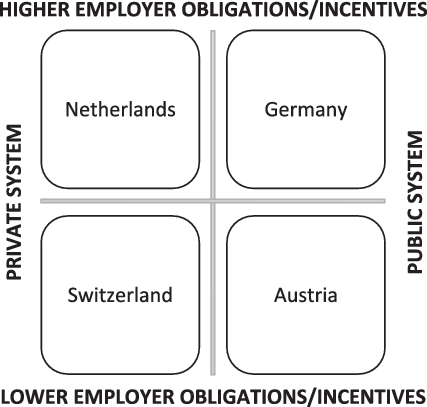
As will be explained in more detail in the results sections, the four countries embody different combinations of two dimensions that are central to employer participation in the activation of sick-listed workers (Figure 1). One concerns the question whether the insurance of health risks and the management of sickness absences are public or private. The other refers to the extent to which employers are confronted with ‘demanding’ and ‘enabling’ elements (i.e. obligations and incentives) that may determine their activation efforts.
Country classification.

Methods
The analysis consists of three steps. The first step gives a brief overview of the salient traits of sickness insurance regulations and the management of sickness absences in the examined countries. The second step is devoted to a more specific comparison of graded sick-leave schemes, their design and governance. These two steps are based on a review of the relevant literature and on desk research to gain a detailed understanding of the institutional settings and regulations, with a particular focus on the role of employers. The scientific literature was collected with a search of online databases using keywords and cross-references.3 The results comprised mainly articles from the fields of economics, social policy and rehabilitation studies, with a large share of evaluation studies. The literature review was complemented with information from technical reports, online manuals and other grey literature provided by public authorities (such as health insurance agencies and the respective Ministries of Social Affairs) and other stakeholders involved in workplace health and rehabilitation (such as the German Federal Working Group for Rehabilitation (BAR) and the Swiss Insurance Medicine (SIM) platform). Where information was not available through publicly accessible sources, direct contact with experts and insurance agencies in the examined countries was sought.
With respect to the role of employers, the focus of this study is primarily on obligations and duties concerning sick leave, as well as on (financial) incentives that derive from the prevailing legal and regulatory framework. Incentives are broadly defined as measures that aim to reduce the assumed risks for employers connected to employing workers who are recovering from a sick leave (Frøyland et al., Reference Frøyland, Andreassen and Innvær2019). The examination of voluntary agreements and commitments is left to future research.
To contrast the findings that emerge from the institutional comparison, in the third and final step the empirical evidence on the diffusion of graded sick-leave as well as on employer activities with respect to sickness absences is gathered and discussed. Data on the use of graded work are difficult to find, especially for countries with a privatised system, which is why in the case of the Netherlands and Switzerland the diffusion of these schemes had to be approximated with rough estimates.
Employer activities related to sickness absences were examined using microdata from the two available waves of the European Survey on New and Emerging Risks (ESENER-1 and ESENER-2; European Agency for Safety and Health at Work, 2010; 2015). ESENER is a representative employer survey in European countries, conducted on behalf of the European Agency for Safety and Health at Work (EU-OSHA). The aim of the survey, which covers both private and public establishments from almost all sectors of activity4, is to collect information on how health and safety is organised at workplaces across Europe. For ESENER-2 respondents were defined as ‘the person who knows best about health and safety in the establishment’, whereas in ESENER-1 ‘the most senior manager who coordinates safety and health activities in this establishment’ was targeted for a management interview. The fieldwork periods for the surveys lasted from March to June 2009 for ESENER-1 and from July to October 2014 for ESENER-2. In 2009 (2014) the sample for the four relevant countries included about 4.500 (5.100) establishments with more than ten employees – about 1.500 (1.750) for Germany and 1.000 (1.100) for each of the other three countries.5 The response rate for establishments with ten or more employees varied between 18 per cent (Germany) and 22 per cent (Austria and Switzerland) in ESENER-1, and 13 per cent (Germany) and 22 per cent (Switzerland) in ESENER-2. In terms of methodology, the two survey waves share many common features, but they differ with respect to the respondents’ definition and the universe of employers, limiting the comparability of results across waves (EU-OSHA, 2015).
Two questions from the survey are well suited to assess the extent to which firms address sick leave as part of their regular safety and health activities: the first question asks whether ‘sickness absences [are] routinely analysed with a view to improving the working conditions?’; the second question asks if ‘there [is] a procedure to support employees returning to work after a longterm sickness absence?’. Responses to these questions were analysed with bivariate statistics, using weighted observations broken down by establishment size.
Results
Sickness insurance and absence management
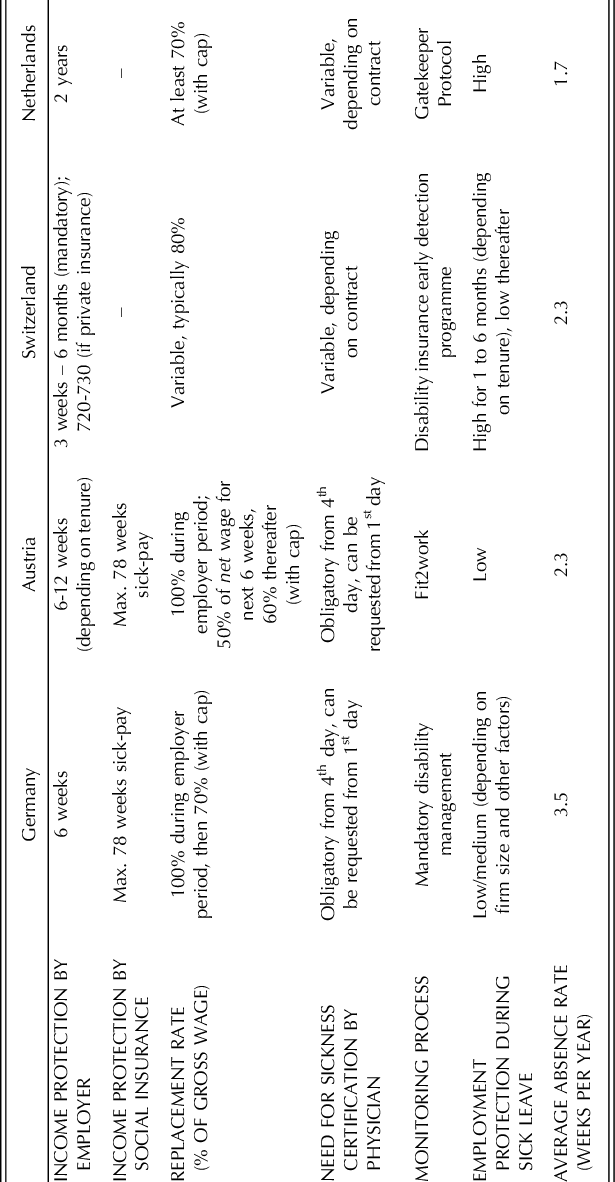
Table 1 provides an overview of the main features that characterise the sick-leave systems in the examined countries.
Sick pay and sickness absence regulations

Notes: Average absence rates are OECD estimates on lost working time due to injury or illness of full-time wage and salary workers, based on the European Labour Force Survey for 2015 (OECD, 2017).
In Germany and Austria the regulations that govern the sickness certification and sickness insurance are very similar. Income protection is organised in two stages: after a first period, when employers are responsible for the continued payment of wages to their sick-listed employees (at 100 per cent replacement rate), the social insurance agency provides sick pay, which can be extended to one and a half years’ duration and represents the main income protection during long absences. Employment protection during sick leave is low in Austria; a dismissal does, however, not exonerate the employer from continued wage payments for the duration of the sick leave. In Germany, employers can terminate the employment relationship when the employee has been accumulating repeated or prolonged absences, but there are some restrictions, particularly for employers with ten or more employees.
Both countries have introduced a standardised procedure to monitor sickness absences. In Germany the major legislative change came into force in 2004, the reform introduced a mandatory disability management (Betriebliches Eingliederungsmanagment) (Bernhard et al., Reference Bernhard, Niehaus, Marfels, Geisen and Harder2011). Under this legislation, all employers, regardless of sector and size, have to contact their employees who are on sick leave for longer than six weeks and offer them support for their return to work. This support can take different forms, such as task and/or workplace adaptations, re-training and gradual return-to-work. If they do not comply, employers might face sanctions, including the payment of damages (SVR, 2015). They also find themselves in a weak legal position, should they want to terminate the employment relationship with their sick-listed employee. Workers have no obligations to participate in the disability management program, but if they decline the offer made by their employer, they lower their chances to retain the job should the employer wish to dismiss them.
Pursuing the same objectives as Germany with its disability management legislation, in 2011 Austria institutionalised a case management programme (fit2work) (Prümper et al., Reference Prümper, Reuter and Jungkunz2015). After six weeks on sick leave, workers are contacted by their health insurance agency and receive an offer for counselling and individual support to speed up recovery and workplace reintegration. Workers, as well as unemployed persons, can also contact the program on their own initiative. For firms, too, the new legislation established a platform that provides support and know-how to set up disability management and to implement reintegration measures. Contrary to Germany, in Austria these steps are however voluntary for both workers and employers, without any sanctions or regulatory incentives.
Switzerland and the Netherlands represent very different models, because the state has a very limited role in the management of sick leave. The responsibility for income protection during sickness lies with the employer, whereas public benefits cover only permanent disability. Swiss law stipulates that the employer must provide continued wage payments for a period that depends on tenure, and varies between three weeks in the first employment year and six months after twenty years. Although the law does not compel them to do so, many employers take out a private insurance for prolonged absences (Duell et al., Reference Duell, Tergeist, Bazant and Cimper2010). In these cases, the replacement rate is about 80 per cent, but the wage continuation applies for the whole duration of the employee’s inability to work, with a maximum of 720 days.
Starting in the 2000s, the Swiss government implemented significant changes to its disability insurance system, with some implications for sick leave. Sickness absence management continues to be largely a matter for private actors, but, in 2008, as part of the fifth revision of the Disability Insurance Act, an early disability risk detection program for persons on longer or repeated sick leave was introduced (Duell et al., Reference Duell, Tergeist, Bazant and Cimper2010). Workers on prolonged sick leave can apply to the disability insurance office for early registration. If the insurance agency detects a risk of invalidity, early intervention measures such as workplace adaptations, but also support for requalification and occupational change, are implemented. Workers can register voluntarily to this program, but registration can also come from the employer or other stakeholders. In the case of longer work inability periods, workers are expected to contact the disability insurance and have an incentive to do so, because disability benefits can be awarded at the earliest after a six months’ waiting period.
The responsibility for the reintegration process lies primarily with the workers, who must do ‘everything reasonable to reduce the extent and duration of work inability’ and ‘participate actively’ in all measures to support reintegration (Art. 21 §4 of Social Insurance Law – ATSG). Failure to comply leads to sanctions. The employers provide income replacement for a comparatively long period of time and have financial incentives to reduce sick leave, not least because workers are protected from termination during sick leave for up to six months, depending on tenure. Firms can also receive different forms of support from the public invalidity insurance for the reintegration of their workers, and are expected to cooperate, but they do not have any specific legal obligations. The abovementioned financial responsibilities can vary by work contract, collective agreement and insurance contract (OECD, 2014). From the employers’ perspective, there are therefore mainly ‘enabling’ elements, and hardly any ‘demanding’ elements.
This is different in the Netherlands, where the privatisation of the sickness insurance system, that was implemented with a series of reforms in sickness and disability schemes introduced from the late 1990s, went hand in hand with the introduction of strong legal obligations and financial incentives for all employers (Everhardt and De Jong, Reference Everhardt and de Jong2011; De Jong et al., Reference De Jong, Lindeboom and Van der Klaauw2011; Van Sonsbeek and Gradus, Reference Van Sonsbeek and Gradus2013; Koning, Reference Koning2016). The central component of the Dutch sickness and disability insurance model is the Gatekeeper Protocol, which defines a two-year waiting period before workers who become ill can apply for disability insurance benefits. During this waiting period, employers have full responsibility for paying their employees6 and they cannot terminate the employment relationship, while at the same time both sides are obliged to engage in reintegration. If employers fail to comply with these requirements, they can face sanctions, including an extension of continued wage payments beyond the two-year threshold. The Netherlands are also one of the few countries where experience rating is applied to public disability insurance, which means that employers pay a higher disability insurance premium if an employee becomes a disability benefit recipient. The majority of employers insure themselves against the financial risks of the waiting period, covering the continued wage payments as well as the activities that come with the obligations of the Gatekeeper Protocol (Kools and Koning, Reference Kools and Koning2019).
Graded sick-leave schemes
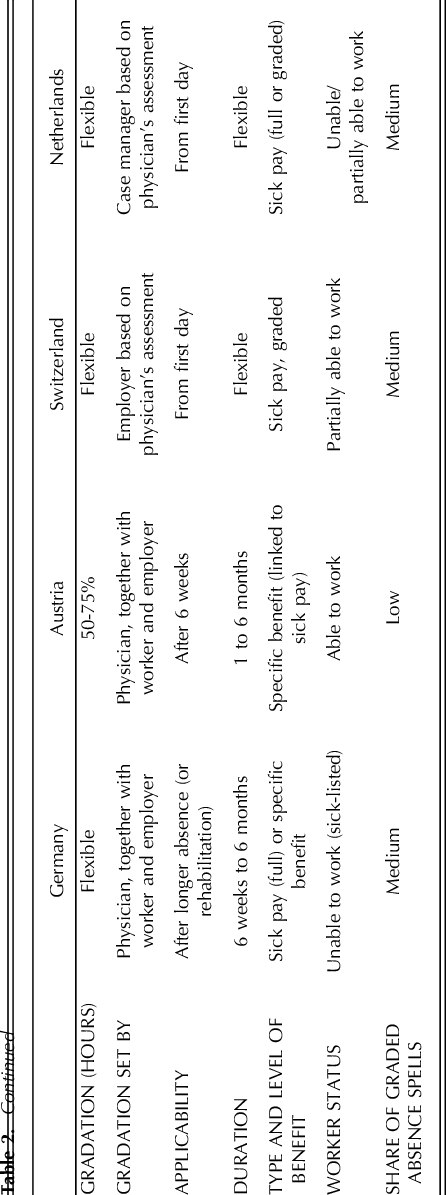
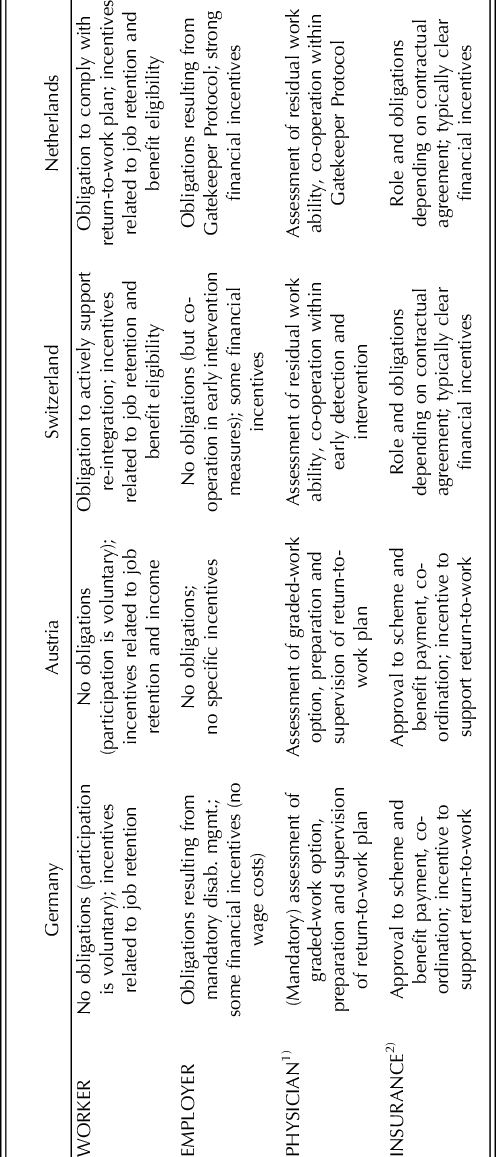
The examined graded sick-leave schemes have different characteristics (see Tables 2 and 3), as well as different historical backgrounds.
Graded sick-leave schemes – Main characteristics

Notes: Share of graded absence spells broadly categorised on a scale from Low (where only a few per cent of long absence spells are graded) to Medium (where at least 10 per cent of long absence spells are graded) and High (where at least 30 per cent of long absence spells are graded, as is the case in Sweden, cfr. Försäkringskassan, 2019).
Graded sick-leave schemes – Stakeholder roles, obligations and incentives

Notes: 1) With respect to physicians, the presence of incentives might vary depending on the type of healthcare professional (e.g. GP, company doctor, insurance doctor) and contractual agreement. 2) For Germany and Austria, the information refers to statutory health/social insurance agencies, for Switzerland and the Netherlands, the information refers to private insurers.
The German stepwise reintegration (stufenweise Wiedereingliederung) is available to workers who have either been sick-listed for a longer period of time or participated in a rehabilitation program (BAR, 2019). The return to the workplace can be designed very flexibly, starting from two hours per day, but during the programme workers are legally still considered unable to work (Herr, Reference Herr2018). Accordingly, they receive only sick pay or another equivalent allowance (depending on the social insurance agency that initiated the graded return-to-work). The employer is not required to pay any wage7 and, on the other hand, is not entitled to a regular work output.
The German programme was established in 1989; however, it was with the introduction of mandatory disability management in 2004 that this option became more widely known and its diffusion started to increase (Schneider et al., Reference Schneider, Linder and Verheyen2016). The reintegration plans entailing graded work soon became the most common measure implemented by firms within their disability management aimed at sick-listed workers (Niehaus et al., Reference Niehaus, Magin, Marfels, Vater and Werkstetter2008). Workers as well as employers have to agree to the reintegration. In principle, both sides can refuse to participate in a stepwise workplace reintegration. For firms, refusal to agree to graded work can however be interpreted as failure to comply with the disability management requirements, resulting in negative consequences which might include the payment of damages to the worker (SVR, 2015). In addition, employers have a moderate incentive to agree to this measure because, setting aside possible costs resulting from workplace adaptation, they do not have to sustain any wage costs and can still profit from a part-time work input by their employee. A new regulation introduced in November 2019 mandates physicians to determine whether a graded work resumption is possible, every time they issue a sickness certificate beyond six weeks of sick leave (Bundesausschuss, 2019). The German system thus comprises ‘demanding’ as well as ‘enabling’ elements that favour the involvement of employers.
Austria introduced a new benefit enabling graded work only in 2017 (Wiedereingliederungsteilzeit). The scheme, which is available only to private sector workers, was inspired by the German stepwise reintegration programme, but it differs from the latter in several respects. The graded return-to-work is available after a long period (six weeks) of sickness absence and, as in Germany, it is based on a reintegration plan that all stakeholders have to approve (BMASK, 2017). During graded work, Austrian workers receive a part of their wage combined with the graded benefit (which is equivalent to sick-pay). Participation in this activation measure is voluntary for both workers and employers. Case managers within the fit2work programme may advise seeking a graded return-to-work, but there is no obligation for the worker or the employer to follow this recommendation.
Since they have to pay for the part-time work of their returning employee, employers have thus neither legal obligations nor immediate financial incentives to seek a graded sick-leave. There is thus a lack of ‘demanding’ elements, while the ‘enabling’ component is limited to the counselling and support provided by case managers within fit2work. For workers, the combination of social insurance benefit and part-time wage results in a higher income than in the case of full-time sick-leave, which may represent a financial incentive. In addition, due to the low level of employment protection during sick leave, workers can have an incentive to return to work earlier on a part-time basis to secure their job, because they avoid an overlong absence from the workplace.
Whereas social insurance legislation in Germany and Austria contemplates only the dichotomous states of ‘able to work’ and ‘unable to work’, in Switzerland it defines sick-leave as the ‘total or partial inability’ to perform work activity due to a health impairment (Art. 6 §1 ATSG). Accordingly, when they certify a sickness absence, the treating physicians should indicate whether and to what extent the person is functionally limited in the exercise of his or her professional activity (Oliveri et al., Reference Oliveri, Kopp, Stutz, Klipstein and Zollikofer2006). Graded sick-leave, typically with a reduction of at least 25 per cent, is thus in principle applicable from the first day of sickness absence. In this respect, the Swiss model resembles more the partial sick-leave options that are available in Sweden or Norway, than the German and Austrian graded-work reintegration schemes.
The Scandinavian and the Swiss models emphasise more the activation of residual work capacity, than the rehabilitative component of graded work. Their use depends crucially on an adequate assessment of work capacity as part of the regular sick-leave certification process. In the Scandinavian countries, public stakeholders undertook repeated efforts aimed at adapting the sickness certification process and increasing the diffusion of gradation in sick leave. Sweden, for instance, introduced comprehensive guidelines for sickness certification, including recommendations for the use of graded sick-leave, and implemented new certificates and standardised methods for the assessment of work capacity (Andrén, Reference Andrén2014; Ståhl et al., Reference Ståhl, Seing, Gerdle and Sandqvist2019).
In Switzerland, it is the employer associations who – together with (private) insurers and physicians – have been pressing for the establishment of improved and more easily applicable instruments for the assessment of residual work ability. In 2005, the stakeholders introduced a new, more detailed sickness certificate in one Swiss region (Rheintal) (Ebnöther, Reference Ebnöther2014). This or other similar certificates were adopted in other parts of the country in the following years. In 2017, a web-based tool to facilitate a structured information exchange between physicians and employers was developed. In 2019 the Swiss insurance medicine platform developed yet another sickness certificate, that is complementary to this web-tool (Kaiser et al., Reference Kaiser, Klipstein, Knöpfel, Rattin and Vallon2019). These detailed certificates are optional for the employer and they do not replace the standard sick-leave certificate. The employer pays for them (typically 100 CHF) and provides the physician with detailed information on workplace characteristics and tasks carried out by the sick employee. In turn, the certificate contains a more precise assessment by the physician of the functional capacities and the residual work ability of the sick worker, thus providing the employer with a better information basis to implement graded work. To sum up, in Switzerland it is primarily the employer who decides about the opportunity to seek a graded sick-leave. Once activation efforts are undertaken, however, the process entails more obligations for workers.
In the Netherlands, during the waiting period defined by the Gatekeeper Protocol, partial work activity of the sick-listed worker is possible, in two different forms: the employee can either do therapeutic work or engage in productive part-time work (Kools and Koning, Reference Kools and Koning2019). In the first case, the measure resembles the German stepwise occupational reintegration, and the worker does not perceive a salary. In the second case, the employer pays for the hours worked, and the insurer pays for the remaining hours. In both cases, the insurers and their case managers play a pivotal role in the process. The involvement of employers and workers is determined by the rules and obligations that govern the Gatekeeper Protocol. The system thus provides strong ‘demanding’ elements, that partly translate into incentives for employers, because the (graded) return-to-work of sick-listed workers is associated with the perspective of lower costs.
Empirical evidence
Data from the Ministry for Social Affairs show that in 2018, the first year after the introduction of the scheme, in Austria there were slightly less than 3,000 graded returns to work (Röhrich, Reference Röhrich2019). This corresponds to a share of about 2 per cent of all private-sector sick-leave spells with a duration over six weeks.
For Germany, no homogenous statistical database covering all social insurers is available, but the existing information points to a considerably higher diffusion of graded sick-leave than in Austria. Data provided by the Techniker Kasse, the largest statutory health insurance, indicates that in 2018 about 16 per cent of sick-leave spells with a duration over six weeks led to a graded return-to-work. The share of workers who participate in graded return-to-work after a rehabilitation is lower, but it has been increasing strongly in recent years (Deutsche Rentenversicherung, 2018; IGES, 2018). The new directive that was implemented at the end of 2019, requiring physicians to assess the opportunity of a graded return-to-work every time they issue a long-term sickness certificate, can be expected to increase the utilisation of this instrument.
With respect to the Netherlands, the only available information concerns workers who have been absent from work for very long periods. Evidence provided by the Dutch Employee Insurance Agency (UWV) on a sample of workers sick-listed for more than six months indicates that 38 per cent were using one of the two available forms of graded sick-leave (Dumhs et al., Reference Dumhs, Rijnsburger and van Deursen2018). In a sample from a large private workplace reintegration provider analysed by Kools and Koning (Reference Kools and Koning2019), about 60 per cent of the workers participated in graded return-to-work at some point during their sickness spell. This sample was however restricted to individuals directed to case management (on average after about nine weeks of sick leave). For Switzerland, only a rough estimate of the diffusion of graded sick-leave is available, indicating that about 20 per cent of the sickness certificates are graded (Kaiser et al., Reference Kaiser, Klipstein, Knöpfel, Rattin and Vallon2019).
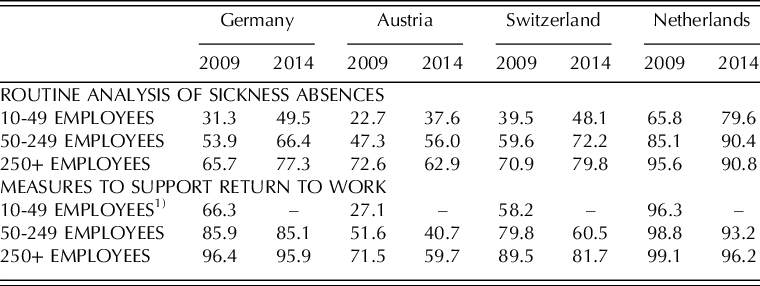
The ESENER data, while not focusing specifically on graded sick-leave, provide contextual information on employer activities with respect to sickness absences and sick-listed workers. Table 4 shows to what extent employers routinely analyse sickness absences with a view to improving the working conditions, and whether they have established a procedure to support employees returning to work after a longer sick leave. The results are broken down by establishment size, which can be an important determinant of employer behaviour, because of organisational factors as well as because occupational safety and health regulations may vary by firm size.

As we can see, there is substantial variation across countries in several respects. Not surprisingly, larger establishments, which have more resources, are more likely than smaller ones to analyse sickness absences on a routine basis and to have standardised procedures to support workplace reintegration. The Netherlands are an exception in this respect, because almost all establishments – regardless of size – provide support for their workers on long-term sick-leave. The routine analysis of sickness absences, too, shows almost full coverage with only little variation by establishment size. Switzerland and Germany show a very similar distribution with respect to the monitoring of sickness absences. In terms of support for return-to-work procedures, however, it is Germany that comes closest to the Netherlands, although we can observe a clear size gradient in both countries. Austria can be singled out as the country with the lowest coverage in both surveyed dimensions. The gap with the other countries is particularly large when we look at small companies, but even for establishments with more than 250 employees it is considerable. Surprisingly, all countries – and especially Austria and Switzerland – display lower levels of employer support during long-term sick-leave in 2009 than in 2014. This pattern might be influenced by the methodological differences between the two survey waves mentioned in the methods section.
Discussion and conclusions
This article has contributed to the literature with a comparative analysis of employer involvement in the activation of sick-listed workers. Despite the increasing emphasis on residual work ability and on the role of employers in activation policies, this topic in largely unexplored in a social policy perspective. The findings show substantial variation across countries in terms of employer obligations and incentives, which have a strong impact on the level of employer involvement in the management of sickness absences and return-to-work procedures. Even countries which belong to the same corporatist welfare regime and share many common features in sickness absence regulations, such as Germany and Austria, make different provisions with respect to the role of employers in the activation of sick-listed workers.
The distinction between public and privatised systems of sickness insurance is of less consequence, than the degree to which institutional settings impose obligations and create incentives. This is highlighted by the Dutch example of ‘managed liberalization’, where the privatisation of social risks has gone hand in hand with the establishment of an encompassing regulatory framework to ensure a sufficient production of welfare (Van der Veen and Trommel, Reference Van der Veen and Trommel1999). In Switzerland, too, the private system that governs health insurance and sick leave is embedded in a strict regulatory framework. However, unlike in the Netherlands, it is primarily the workers who have obligations regarding activation and the prevention of long-term disability, whereas employers have mainly financial incentives to reduce sickness absences in the shorter term.
The available data indicate a broad correspondence between the extent to which employers face obligations and incentives, i.e. ‘demanding’ and ‘enabling’ elements, and the intensity of efforts to activate sick-listed workers. Employer activity is highest in the Netherlands, followed by Germany and Switzerland. In Austria, employer participation is considerably lower than in the other countries. In Switzerland, repeated efforts to expand the use of graded sick-leave indicate that employers are incentivised to use the residual work capacity of sick-listed workers. Support measures for workers on (long-term) absence are however less common than in Dutch and German establishments.
The differences in employer participation have an impact on the selection of workers that are targeted for activation. Although this issue would need further investigation, the evidence supports the expectation that less comprehensive employer participation is correlated with stronger selectivity in activation efforts. With the exception of the Netherlands, support measures for return-to-work are considerably less likely in smaller establishments than in large establishments. In Austria, the use of graded sick-leave shows a high concentration on large firms, as well as on white-collar workers (Röhrich, Reference Röhrich2019). The samples used by Schneider et al. (Reference Schneider, Linder and Verheyen2016) and by Bethge (Reference Bethge2016) suggest that in Germany, too, participation in the graded return-to-work program is associated with favourable characteristics such as tertiary education and higher income.
Depending on the prevailing approach and on developments to date, policy-makers in the countries studied are confronted with different challenges and priorities. In the Netherlands, the remarkably high level of legal and financial responsibilities that employers have towards their sick employees, poses the risk that firms might become very selective in their hiring of workers with health conditions. This is highlighted by the fact that until 2014, as employers were not financially responsible for workers on temporary or flexible contracts, a stronger sorting and inflow of vulnerable groups with health problems into flexible jobs was observed (Koning, Reference Koning2016). In 2014, new legislation was passed to extend the costs of sickness benefits and experience-rated disability insurance benefits also to those categories of workers. The financial burden that firms have to bear for workers who fall ill is particularly high for small and medium-sized enterprises. In 2020, a new insurance to alleviate these financial risks was introduced by the Dutch government, with funds set aside for reimbursement towards the costs that small businesses have to sustain to pay for wages during sick leave.8 In Austria, on the other hand, the priority is on measures to increase the diffusion of return-to-work measures and the participation of employers in activation efforts. The new government coalition that took office in January 2020 stated in its government program that it intends to examine an expansion of the graded sick-leave scheme and to strengthen support and incentives for firms to engage in disability management (Regierungsprogramm, 2020). In Germany, despite the fact that disability management is mandatory for all firms, implementation in small and medium-sized enterprises is still far from being universal and necessitates further supportive measures (Zumbeck, Reference Zumbeck2017; Hoge et al., Reference Hoge, Ehmann, Rieger and Siegel2019). In addition, experts have been criticising the rigid dichotomy between work ability and incapacity to work and the limited scope for work activity during sick leave, proposing the introduction of greater flexibility – on the model of the Scandinavian countries (SVR, 2015; IGES, 2018).
These recent changes and policy discussions indicate that the activation of sick-listed workers will continue to play an important role in the further development of the examined European welfare states. The successful implementation of graded sick-leave and other policies to support return to work and prevent permanent labour market exit will depend to a good degree on the extent and modality of employer involvement. The findings of the present analysis suggest that a combination of ‘demanding’ and ‘enabling’ elements, i.e. of obligations with legal and financial incentives, may be necessary to secure employer participation and a comprehensive coverage of the workforce. Some of the factors that might affect the involvement of employers, such as voluntary commitments and agreements, have however not been explored in this article and should be taken into consideration in future research. A further limitation of the present study concerns the focus on employer participation, while also employer attitudes and motives are of interest, not least because they might influence qualitative aspects of their participation.
Acknowledgments
I would like to thank Beat Gruendler, Regina Knöpfel, Pierre Konings, Esther Raez, Sigrid Röhrich and Bruno Soltermann for valuable information and further references on various aspects of graded sick-leave in their respective countries. The Techniker Kasse, the largest German health insurance fund, provided data on the utilisation of the German graded sick-leave scheme.