Introduction
The legal status of cannabis is evolving as many national and subnational jurisdictions legalise or decriminalise its use for medicinal and/or recreational purposes (Hall and Lynskey, Reference Hall and Lynskey2016; Freeman et al., Reference Freeman, Hindocha, Green and Bloomfield2019). Within this dynamic legal landscape, the way people are using cannabis is also changing. In both licit and illicit markets, individuals now have access to a wide variety of cannabis products and methods of administration (UNODC, 2018; EMCDDA, 2019), resulting in novel trends in patterns of use and consumption practices (Borodovsky et al., Reference Borodovsky, Crosier, Lee, Sargent and Budney2016; Meacham et al., Reference Meacham, Paul and Ramo2018; Spindle et al., Reference Spindle, Bonn-Miller and Vandrey2019).
Cannabis products are typically classified according to their preparation, cultivation process and the content of two cannabinoids – tetrahydrocannabinol (THC) and cannabidiol (CBD). THC concentration is often referred to as a measure of potency (i.e. percentage of total weight), and produces the reinforcing effects of cannabis as well as the transient negative effects (Curran et al., Reference Curran, Freeman, Mokrysz, Lewis, Morgan and Parsons2016). By contrast, CBD is non-intoxicating at doses typically found in cannabis products and has been shown to offset some of THC's negative effects (Englund et al., Reference Englund, Morrison, Nottage, Hague, Kane, Bonaccorso, Stone, Reichenberg, Brenneisen, Holt, Feilding, Walker, Murray and Kapur2013) without altering the reinforcing effects (Haney et al., Reference Haney, Malcolm, Babalonis, Nuzzo, Cooper, Bedi, Gray, McRae-Clark, Lofwall, Sparenborg and Walsh2016). THC and CBD are synthesised by the cannabis plant in glandular trichomes, which appear most abundantly on the flowers of female plants – therefore these glandular trichomes are typically harvested for cannabis production (Potter, Reference Potter2014).
In its traditional form, herbal cannabis consists of seeded floral material, usually dried and dark green to brown in colour. Derived from outdoor-grown landrace (domesticated, locally adapted, traditional variety) plants, THC concentrations in these products are typically modest; around 6% in the US (Chandra et al., Reference Chandra, Radwan, Majumdar, Church, Freeman and ElSohly2019) and 9% in the U.K. (Potter et al., Reference Potter, Hammond, Tuffnell, Walker and Di Forti2018). Alternatively, high potency herbal cannabis (referred to here as sinsemilla, meaning without seeds) is produced from intensely cultivated indoor-grown plants, which have been selectively bred for their THC yield and prevented from fertilisation to increase THC synthesis (Potter, Reference Potter2014). As a result, this variety is much more potent than traditional herbal cannabis (~17%) – though there is considerable variation within and between countries (Chandra et al., Reference Chandra, Radwan, Majumdar, Church, Freeman and ElSohly2019; EMCDDA, 2019) – and their growing market dominance is contributing to the rise in potency of the cannabis currently being used in many parts of the world (Zamengo et al., Reference Zamengo, Frison, Bettin and Sciarrone2015; Potter et al., Reference Potter, Hammond, Tuffnell, Walker and Di Forti2018; Freeman et al., Reference Freeman, Groshkova, Cunningham, Sedefov, Griffiths and Lynskey2018a; Chandra et al., Reference Chandra, Radwan, Majumdar, Church, Freeman and ElSohly2019). Cannabis resin (i.e. hashish) is sold in compressed blocks of extracted plant trichomes. Unlike herbal cannabis or sinsemilla – which are typically devoid of CBD – hashish is traditionally characterised by similar proportions of both THC and CBD (in the U.K ~5%; Hardwick and King, Reference Hardwick and King2008). However, the cannabinoid profiles of these products are determined by the plants used to produce them. Recently, THC concentrations have been increasing substantially with potencies reaching 15–20% throughout Europe (Freeman et al., Reference Freeman, Groshkova, Cunningham, Sedefov, Griffiths and Lynskey2018a), USA (Chandra et al., Reference Chandra, Radwan, Majumdar, Church, Freeman and ElSohly2019) and Morocco (Stambouli et al., Reference Stambouli, El Bouri and Bouayoun2016) – a major producer for illegal export to Europe and other north African countries (EMCDDA, 2019).
These most common varieties of cannabis are typically smoked in joints, either with or without tobacco (Hindocha et al., Reference Hindocha, Freeman, Ferris, Lynskey and Winstock2016); though they may also be used in a water pipe (i.e. bong) or vaporisers (electronic devices which heat cannabis into a vapour for inhalation; Russell et al., Reference Russell, Rueda, Room, Tyndall and Fischer2018) which may influence the pharmacokinetics and transient effects of THC (Spindle et al., Reference Spindle, Cone, Schlienz, Mitchell, Bigelow, Flegel, Hayes and Vandrey2018). Evidence suggests that among these products, those with higher THC concentrations confer the greatest harms, including increased severity of dependence (Freeman and Winstock, Reference Freeman and Winstock2015), cannabis use disorder symptom onset and treatment (Freeman et al., Reference Freeman, van der Pol, Kuijpers, Wisselink, Das, Rigter, van Laar, Griffiths, Swift, Niesink and Lynskey2018b; Arterberry et al., Reference Arterberry, Treloar Padovano, Foster, Zucker and Hicks2019) and a greater risk of, and relapse to psychosis (Di Forti et al., Reference Di Forti, Marconi, Carra, Fraietta, Trotta, Bonomo, Bianconi, Gardner-Sood, O'Connor, Russo, Stilo, Reis Marques, Mondelli, Dazzan, Pariante, David, Gaughran, Atakan, Iyegbe and Murray2015; Schoeler et al., Reference Schoeler, Petros, Di Forti, Pingault, Klamerus, Foglia, Small, Murray and Bhattacharyya2016; Di Forti et al., Reference Di Forti, Quattrone, Freeman, Tripoli, Gayer-Anderson, Quigley, Rodriguez, Jongsma, Ferraro, La Cascia, La Barbera, Tarricone, Berardi, Szoke, Arango, Tortelli, Velthorst, Bernardo, Del-Ben, Menezes, Selten, Jones, Kirkbride, Rutten, de Haan, Sham, van Os, Lewis, Lynskey, Morgan and Murray2019). However, few studies have explored the risk of harms carried by the more novel products becoming increasingly prevalent.
One of the most rapidly proliferating forms of cannabis, known broadly as cannabis concentrates, are extremely potent extracts produced through advanced methods of extraction. These include butane, or other solvent-based extraction (e.g. butane hash oil), or combined heat and pressure (e.g. Rosin) with products often differentiated by specific labels describing their consistency (e.g. shatter, wax, budder; Caulkins et al., Reference Caulkins, Bao, Davenport, Fahli, Guo, Kinnard, Najewicz, Renaud and Kilmer2018). As these efficient methods of extraction allow the cannabinoids to be removed from trichomes, the potencies of these products (which can reach 70–80% and potentially higher; Raber et al., Reference Raber, Elzinga and Kaplan2015) can exceed those produced from sift extraction, such as Kief (a powdery substance consisting of loose trichomes that are often extracted from plant material using manual sifting). These cannabis concentrates are typically consumed via a process known colloquially as ‘dabbing’ in which the vapours created through heating (usually via electronic vaporisers or heated glass/aluminium rods) the highly refined concentrates are inhaled. This method can enable rapid consumption of high doses of THC, and users report stronger and longer lasting effects than that from smoked cannabis (Loflin and Earleywine, Reference Loflin and Earleywine2014). The increasing prevalence of concentrates is evident from both sale and seizure data from the USA (Smart et al., Reference Smart, Caulkins, Kilmer, Davenport and Midgette2017; Chandra et al., Reference Chandra, Radwan, Majumdar, Church, Freeman and ElSohly2019), and although an understudied area, early research suggests that their use is associated with poorer mental health (Chan et al., Reference Chan, Hall, Freeman, Ferris, Kelly and Winstock2017) and increased symptoms of dependence (Loflin and Earleywine, Reference Loflin and Earleywine2014; Meier, Reference Meier2017); though evidence is mixed (Bidwell et al., Reference Bidwell, York Williams, Mueller, Bryan and Hutchison2018; Sagar et al., Reference Sagar, Lambros, Dahlgren, Smith and Gruber2018).
Also gaining prominence, particularly in legal markets (Borodovsky et al., Reference Borodovsky, Crosier, Lee, Sargent and Budney2016) and among medicinal users (Pacula et al., Reference Pacula, Jacobson and Maksabedian2016) are cannabis infused foods (edibles) and liquids. Pharmacokinetically distinct from inhalation, the onset of effects are delayed but have a longer duration when cannabis is ingested (Huestis, Reference Huestis2007); potentially making it more difficult for users to titrate their dose and experience their desired level of intoxication. Also, while THC's bioavailability is much lower when consumed orally, a single commercially available edible product in the USA can contain up to 100 mg of THC (10 servings; although some states impose restrictions beyond 50 mg; Gourdet et al., Reference Gourdet, Giombi, Kosa, Wiley and Cates2017). Offering a non-combustible alternative to cannabis consumption, and often produced and marketed in the form of sweet food products (i.e. brownies and confectionary), there is growing concern that the widespread availability of edibles may increase the likelihood of initiation and frequency of use among young people (MacCoun and Mello, Reference MacCoun and Mello2015).
Previous studies investigating the effects of different types of cannabis use typically assign participants to separate groups according to the type of cannabis they most commonly use. However, grouping participants in this way fails to characterise the full range of cannabis products used and how these differ across individuals. As global drug markets rapidly evolve, developing a richer understanding of cannabis use patterns across a wide range of products is necessary to understand cannabis use and its consequences. One approach to studying this issue is to use person-centred analyses (such as latent class analysis; LCA) which can capture the heterogeneity in, and characterise distinct profiles of, cannabis use and then compare these groups across key health-related outcomes. Studies utilising these approaches have typically identified subgroups of people who use cannabis describing different affective, involvement (i.e. frequency and consequences of use) and/or risk profiles (Pearson et al., Reference Pearson, Bravo and Conner2017; Manning et al., Reference Manning, Garey, Paulus, Buckner, Hogan, Schmidt and Zvolensky2018). Although other studies have used these approaches to distinguish groups by various cannabis use characteristics, including products preferred/used (e.g. Korf et al., Reference Korf, Benschop and Wouters2007; Krauss et al., Reference Krauss, Rajbhandari, Sowles, Spitznagel and Cavazos-Rehg2017), defining classes/clusters using the types of cannabis individuals use in addition to other features of cannabis use not related to product use fails to entirely characterise the specific heterogeneity in the profiles of cannabis products being used. In addition, by not exploring differences in important health-related outcomes across these subgroups, these studies were not able to characterise the risk of harm associated with the different profiles of cannabis use. We are unaware of any previous studies that have both parsed people who use cannabis into groups specifically on the basis of their use of different cannabis products, and then explored variations in health-related outcomes, in particular, dependence between those classes/groups. To address this gap, we used LCA to differentiate groups of people who use cannabis (recruited in the Global Drug Survey, GDS, 2018, a large multi-national survey) using six different cannabis-product indicators (sinsemilla, herbal, hashish, concentrates (e.g. BHO, oil), kief & edibles). To validate the LCA solution, we then compared rates of mental health diagnoses and probable dependence across these latent classes.
Method
Sample
GDS runs the largest drug survey in the world. Using an anonymous, on-line encrypted platform GDS conducts a cross-sectional survey of drug use each year. The survey is promoted through collaboration with media partners and via various social media platforms. Since GDS 2012, over 700 000 people have taken part in these surveys. Core questions assessing patterns of commonly used drugs are supplemented each year by specialist sections determined by the GDS Expert Advisory Group.
GDS 2018 was translated into 19 languages. GDS recruits from a self-nominating population, providing a non-probability sample that should not be considered representative of drug users or indeed generalisable beyond the demographic profile of the respondents. However, given the large international scope of the survey, the data obtained here can nonetheless provide valuable insights into current drug trends and patterns of use, in addition to identifying user populations that might otherwise be hard to access. For a more detailed discussion of the methodology, utility and limitations of the GDS see (Winstock et al., Reference Winstock, Mitcheson, Gillatt and Cottrell2012; Barratt et al., Reference Barratt, Ferris, Zahnow, Palamar, Maier and Winstock2017). The data included in the present study were taken from GDS 2018 (data collected from 6 November 2017 to 10 January 2018). A total of 130 761 responses were received; 55 242 reported past year use of cannabis and were subsequently selected for the analyses reported here. These included responses from 175 different countries, including Germany (30.0%), Denmark (9.5%), Poland (7.9%), USA (6.7%), Switzerland (3.9%) and the UK (3.6%). Ethical approval was obtained from the University College London Research Ethics Committee 11671/001: Global Drug Survey, University of Queensland (No: 2017001452) and The University of New South Wales (HREC HC17769) Research Ethics Committees. All procedures contributing to this work comply with the ethical standards of the relevant national and institutional committees on human experimentation and with the Helsinki Declaration of 1975, as revised in 2008.
Measures
Sociodemographic characteristics and mental health
Country of residence was used as reported by respondents. Age was collected as a continuous variable and subsequently categorised (16–19, 20–24, 24–29, 30+). Gender, ethnicity and highest educational achievement were taken directly from questions with multiple response options, categories with small numbers were collapsed for ease of interpretation (e.g. those reporting non-binary and different identity for gender were combined into a single ‘Other’ category). Participants were also asked if they had ever received a diagnosis for any mental health disorder in their lifetime (yes/no).
Cannabis use
GDS includes a detailed set of questions on cannabis use. Participants were initially asked questions relating to their cannabis use in general. Specifically, frequency of use was collected as a continuous variable (amount of days used in the past 12 months) and then categorised (<monthly; ⩾monthly (<weekly); ⩾weekly (<daily); daily or near daily). Participants with ineligible responses (i.e. 0 or >365 days) were excluded. Amount used was also collected as a continuous variable (‘On a day that you use cannabis how much would you say you normally use?’) ranging from 0.1 to 14 + g. In addition, participants reported whether or not they add tobacco when preparing their cannabis. Participants were then asked about their use of several different types of cannabis products. Each cannabis product was accompanied by a series of product-specific labelled photographs in order to improve identification by participants (Wilson et al., Reference Wilson, Freeman and Mackie2019). Respondents were asked which of the following types they had used in the past 12 months (yes/no): sinsemilla, herbal, hashish, concentrates, kief & edibles.
Severity of dependence
Cannabis dependence was assessed using the Severity of Dependence Scale (SDS; Gossop et al., Reference Gossop, Darke, Griffiths, Hando, Powis, Hall and Strang1995), a 5-item scale measuring the psychological components of dependence. This scale has been used previously to assess the relationship between the use of different cannabis products and cannabis dependence (Freeman and Winstock, Reference Freeman and Winstock2015, Sagar et al., Reference Sagar, Lambros, Dahlgren, Smith and Gruber2018). Each item is scored along a 4-point scale [never (0); sometimes (1); often (2); always (3)] and total scores (ranging from 0 to 15) are obtained by summing the items, with higher scores indicating higher levels of dependence. In addition to total scores, we also compared groups using a diagnostic cut off for cannabis dependence, for which ⩾3 was adopted based on (Swift et al., Reference Swift, Copeland and Hall1998).
Statistical analyses
LCA was performed to identify underlying subgroups of people who use cannabis classified by their endorsement (i.e. reported past year use) of six cannabis products (see Measures). LCA classifies respondents into mutually exclusive classes with distinct endorsement profiles (i.e. cannabis products used). The classes are then interpreted by two model parameters – the prevalence of each class (typically expressed in % of sample) and the probability that members of a class endorse, in this instance, past year use of particular cannabis products. LCA assumes that endorsement probabilities within each class are statistically independent. A series of models postulating an increasing number of classes (1–9) were sequentially fitted to the data using maximum likelihood estimation and multiple starting values (4000 runs) to avoid local maxima. Model estimates were adjusted for the clustering of respondents within countries. These analyses were conducted in Mplus (version 8.1; Muthén and Muthén, Reference Muthén and Muthén2017). In order to achieve converging evidence on the most parsimonious model, models were compared using the Akaike information criterion (AIC), Bayesian information criterion (BIC) and sample size-adjusted BIC. Entropy (a measure of class distinctiveness, with values approach 1 indicating clear delineation of the classes), class size and interpretability were also considered. In addition, to determine whether meaningful subdivisions of classes were introduced as the number of classes increased, we compared the most likely class assignment for each respondent in successive solutions, represented in the form of a probability tree showing class reassignment from the k-class solution to the k + 1 class solution (online Supplementary Fig. S2). Likelihood ratio tests may be unreliable and can over-extract when using multilevel data, therefore they were not used in model enumeration.
The discriminant validity of the preferred solution on sociodemographic and cannabis use characteristics was assessed using omnibus tests (ANOVAs/chi-square). Additional pairwise chi-square tests were conducted to examine class differences in rates of ever receiving a mental health disorder diagnosis using a Bonferroni corrected threshold of p < 0.002. A linear regression model was used to explore the association between latent class membership and severity of dependence. To account for error in class classification when relating latent classes to SDS scores, respondents were assigned to every latent class proportional to their estimated posterior probabilities of being classified in those classes (i.e. probability regression; Clark and Muthén, Reference Clark and Muthén2009). All confidence intervals were generated using robust methods (10 000 bootstrapping samples, bias-corrected 95% confidence intervals). The class with the lowest mean SDS score was used as the reference group. The model was adjusted for age and gender, as well as key aspects of cannabis use, specifically amount, frequency of use and whether participants added tobacco when preparing their cannabis, based on previous research investigating the relationship between multiple measures of cannabis use, and cannabis related problems (Hindocha et al., Reference Hindocha, Freeman, Ferris, Lynskey and Winstock2016; Curran et al., Reference Curran, Hindocha, Morgan, Shaban, Das and Freeman2018). In addition, a sensitivity analysis was conducted to assess the influence of other socio-demographic characteristics that couldn't be included in the initial model due to large amounts of missing data (online Supplementary Table S2, Fig. S3). These analyses were conducted using STATA (version 15.1; StataCorp., 2017).
Results
Sample characteristics
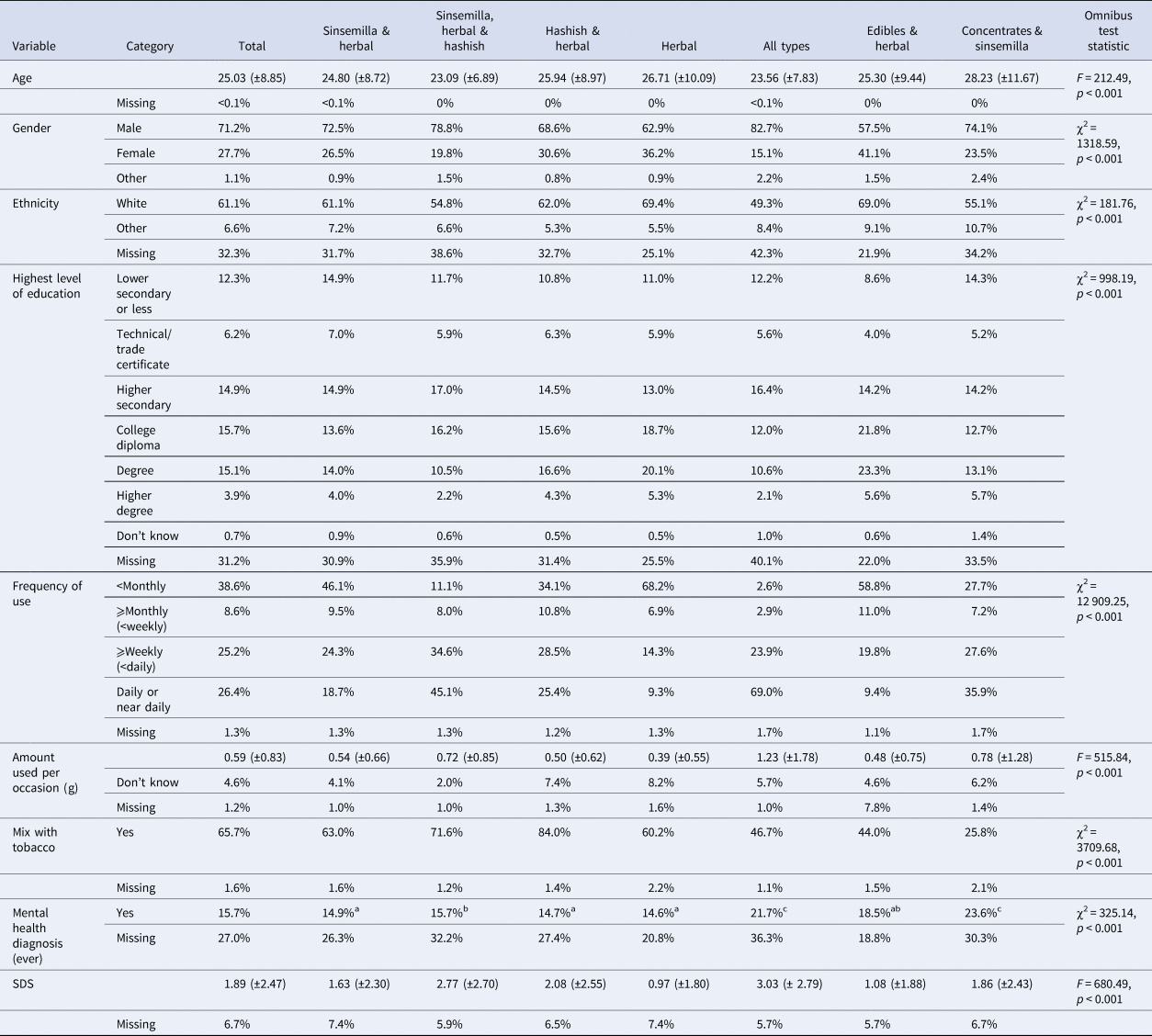
Country of residence was missing for two participants who were therefore excluded from all analyses. The remaining 55 240 participants endorsing past year use of at least one cannabis product were included in the latent class analysis, while for the regression analysis, missing data from any variable in the model were excluded list wise, leaving a sample of 47 511. Of the complete sample, 71.2% were male, with a mean age of 25.0 (s.d. 8.9; Table 1, first column) and less than monthly use was most commonly reported (36.8%). Also, the majority of participants reported adding tobacco when preparing their cannabis (66.8%) and the mean amount of cannabis used per session was 0.59 (s.d. 0.83) g, comparable to studies using other GDS recruitment pools (e.g. Hindocha et al., Reference Hindocha, Freeman, Ferris, Lynskey and Winstock2016). The proportions of participants endorsing past year use of the cannabis products were: sinsemilla (69.2%), herbal (76.1%) hashish (46.4%), concentrates (12.8%), kief (18.4%) and edibles (26.7%).
Socio demographic characteristics and patterns of cannabis use and mental health diagnosis on the whole sample and by latent class membership

SDS, Severity of Dependence Scale. Common superscript letters within rows indicate classes do not significantly differ at the Bonferroni adjusted threshold (p < 0.002). Note pairwise comparisons between classes were only conducted for the mental health diagnosis variable.
3.2 LCA of cannabis type use in previous 12 months
Model selection
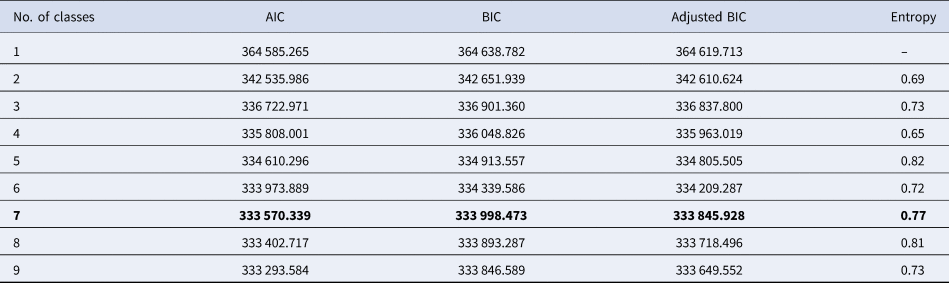
Fitting nine latent class models (one to nine classes) failed to reach a global minimum solution (i.e. fit indices continued to improve as the number of classes increased) and successive models with additional classes were not identified (e.g. overparameterisation). This is not uncommon, particularly when using large sample sizes, and model enumeration can be determined heuristically by considering the substantive interpretability and utility of the classes (Nylund-Gibson and Choi, Reference Nylund-Gibson and Choi2018). Therefore, after inspection of the class characteristics for each solution, we opted for the 7-class model, which we believed offered the optimum solution in terms of class proportions and theoretical meaning. Although model fit was marginally better for eight and nine classes (Table 2), the endorsement profiles of the classes identified in these models were not sufficiently different from those in the 7-class model to suggest that additional, meaningfully different subdivisions of cannabis use were identified (online supplementary Fig. S2), particularly when also considering their small prevalence.
Fit statistics for the 1–9 latent class models of type of cannabis use in past 12 months

Note: Preferred solution is in bold. AIC, Akaike information criterion; BIC, Bayesian information criterion.
Model interpretation
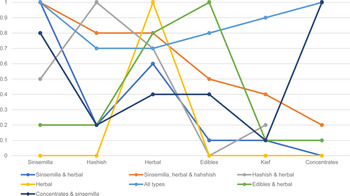
Endorsement probabilities, in this case referring to the probability of reporting past year use of specific cannabis products (Fig. 1), suggest that classes identified by the seven-class solution can be characterised as follows
(1) Sinsemilla & herbal (30.3% of the sample): high probability of using sinsemilla; moderate probability of herbal use.
(2) Sinsemilla, herbal & hashish (20.4%): high probabilities of using sinsemilla, herbal cannabis and hashish; as well as moderate probability of using edibles.
(3) Hashish & herbal (18.8%): high probabilities of hashish and herbal use; moderate probability of using sinsemilla
(4) Herbal (18.4%): high probabilities of herbal use only.
(5) All types (5.7%): high probabilities of using sinsemilla, herbal, hashish, concentrates, kief & edibles.
(6) Edibles & herbal (4.6%): high probabilities of edibles and herbal use.
(7) Concentrates & sinsemilla (1.7%): high probabilities of concentrate and sinsemilla; moderate probabilities of herbal and edibles use.
Endorsement profiles for past year use of cannabis products by latent class for the seven-class model.

Socio-demographic and cannabis use characteristics and self-reported mental health diagnoses by latent class
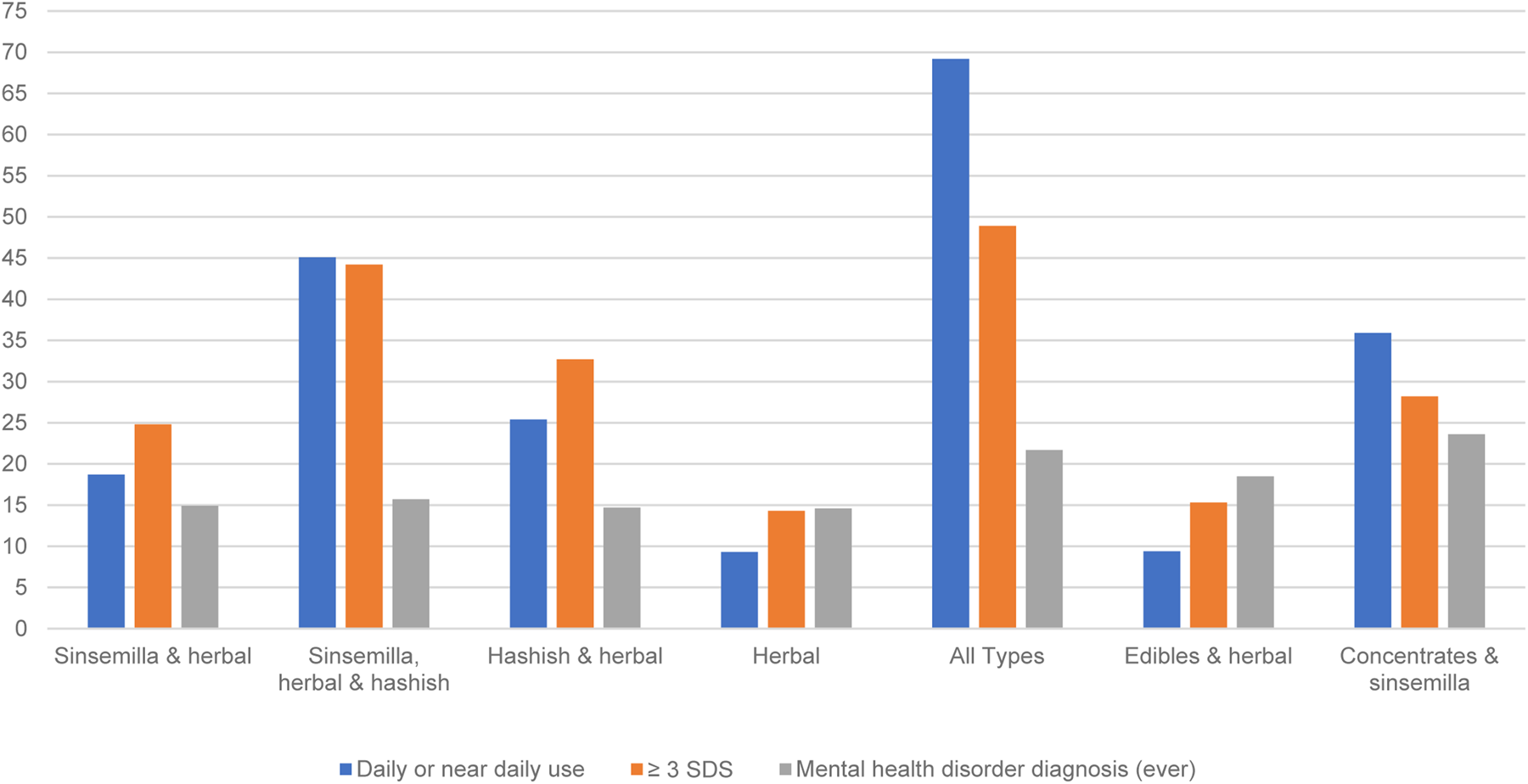
The characteristics of each latent class are displayed in Table 1. Omnibus tests show overall differences between these classes on sociodemographic characteristics (age, gender, ethnicity, the highest level of education) and cannabis use characteristics (frequency and amount of use, mixing with tobacco), suggesting good discriminant validity of the latent class solution. Additionally, between group comparisons revealed that the two classes characterised by concentrates use (all types, concentrates & sinsemilla) had the highest proportion of participants reporting ever receiving a mental health disorder diagnosis, with the rates in these classes significantly greater than all other classes at the Bonferroni corrected threshold of p < 0.002 (Table 1, Fig. 2).
Prevalence (%) of daily cannabis use, SDS scores ⩾3 and lifetime mental health diagnoses by latent class.

Association between latent class membership and severity of dependence on cannabis
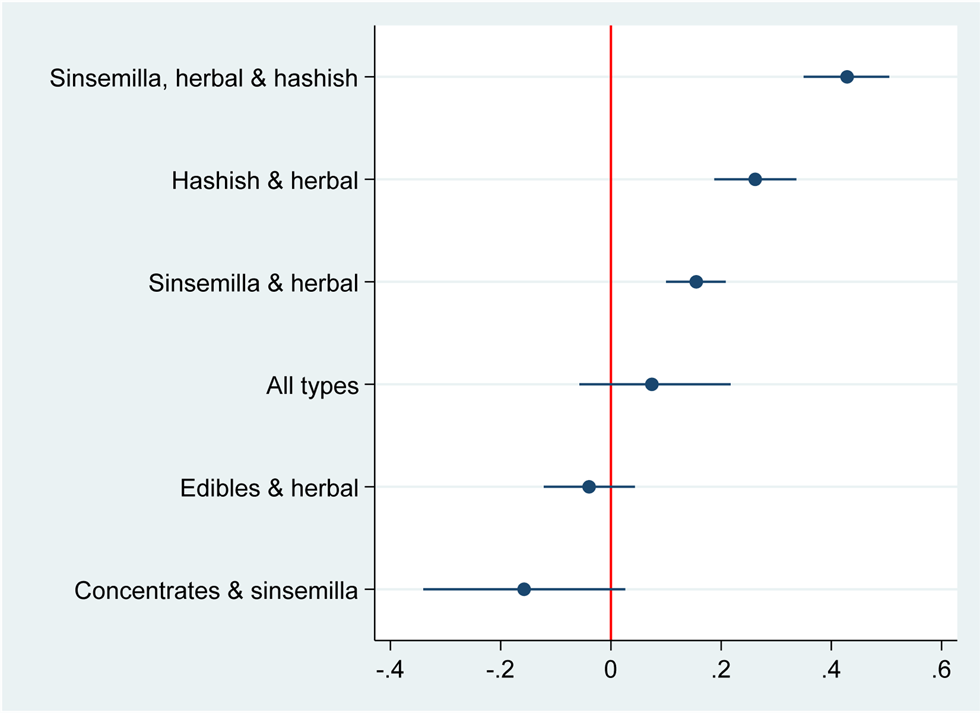
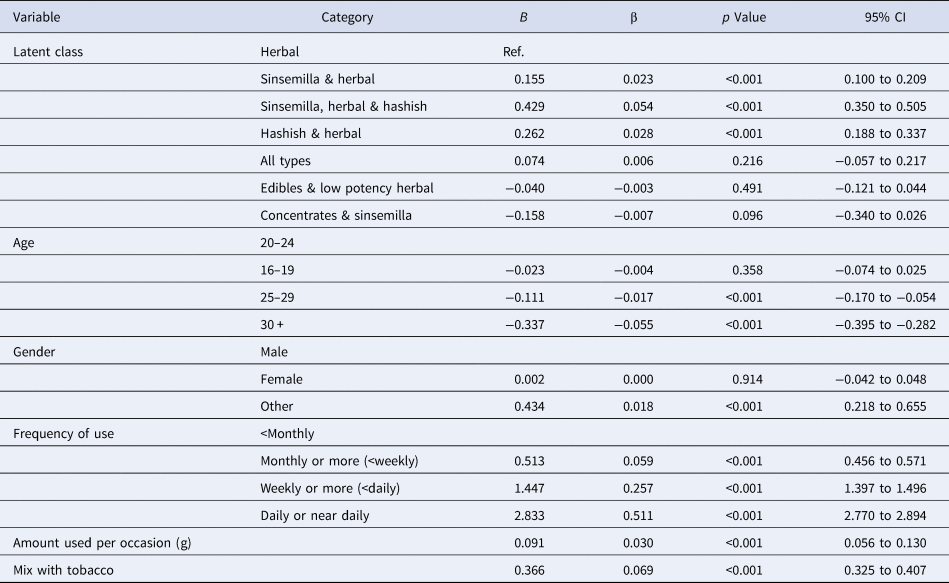
As summarised in Table 3 and Fig. 3, the linear regression model indicated that, after adjusting for demographics and frequency, amount and preparation of cannabis use, SDS scores significantly differed across latent classes. Specifically, when compared to the reference class Herbal, the sinsemilla & herbal; sinsemilla, herbal & hashish and hashish & herbal classes were associated with increased severity of dependence (p's < 0.05). Inspection of Fig. 3 indicates that the concentrates & sinsemilla class was associated with the lowest SDS scores. The sensitivity analysis including sociodemographic covariates with large amounts of missing data did not notably change the results (online supplementary Table S3, Fig. S4). These different associations between latent class membership and risks of high SDS scores, therefore, validate the utility of this method for identifying distinct subgroups of people who use cannabis based on their use of different cannabis products.
Caterpillar plot displaying standardised linear regression coefficients and bias corrected 95% CI for associations with dependence severity for latent class (compared to herbal), adjusted for age, gender, frequency of use, amount used per session, and mixing with tobacco (as reported in Table 2).

Associations between latent class analysis of multiple cannabis product uses and severity of dependence on cannabis (see Fig. 3 for β and 95% CI for latent classes displayed in a caterpillar plot)

B, unstandardised linear regression coefficients; β, standardised linear regression coefficients; 95% CI, 95% bias corrected confidence intervals.
Discussion
Using latent class analysis, we identified seven distinct classes of people who use cannabis from a large international sample defined by their use of six different cannabis products. The classes identified were as follows: (1) sinsemilla & herbal (30.3% of the sample); (2) sinsemilla, herbal & hashish (20.4%); (3) hashish & herbal (18.8%); (4) herbal (18.4%); (5) all types (5.7%) (6) edibles & herbal (4.6%) and (7) concentrates & sinsemilla (1.7%). These findings underscore the considerable heterogeneity in patterns of use among people who use cannabis that is not accounted for in previous studies categorising use according to use of one particular product, and may highlight important limitations in current cannabis assessment tools. As global cannabis markets continue to diversify and the availability of new, less well understood, cannabis products increases, it is necessary for measures used in future studies to be able to capture the variability in patterns of cannabis use identified here (Temple et al., Reference Temple, Brown and Hine2011).
In addition, these classes showed important differences in mental health diagnoses and associations with cannabis dependence severity, supporting previous evidence that addiction and mental health problems are associated with the types of cannabis products used (Freeman and Winstock, Reference Freeman and Winstock2015; Chan et al., Reference Chan, Hall, Freeman, Ferris, Kelly and Winstock2017; Meier, Reference Meier2017; Freeman et al., Reference Freeman, van der Pol, Kuijpers, Wisselink, Das, Rigter, van Laar, Griffiths, Swift, Niesink and Lynskey2018b). Consistent with previous findings, we found that groups using predominantly low potency (e.g. herbal) cannabis had lower risks of cannabis dependence compared to groups using higher potency products. Interestingly, the class characterised by high probabilities of using the three most common cannabis types (sinsemilla, herbal & hashish) was most strongly associated with dependence severity. This replicates previous associations between high potency herbal cannabis (e.g. sinsemilla) and greater cannabis dependency (Freeman and Winstock, Reference Freeman and Winstock2015) and cannabis use disorder symptom onset and treatment (Freeman et al., Reference Freeman, van der Pol, Kuijpers, Wisselink, Das, Rigter, van Laar, Griffiths, Swift, Niesink and Lynskey2018b; Arterberry et al., Reference Arterberry, Treloar Padovano, Foster, Zucker and Hicks2019). Additionally, this class was characterised by high probabilities of hashish use along with the Hashish & herbal class, which also showed especially strong associations with dependence severity. These associations between hashish and cannabis dependence are a novel finding, and might be explained by evidence that its potency has increased substantially in Europe (particularly from 2011 onwards); (Freeman et al., Reference Freeman, Groshkova, Cunningham, Sedefov, Griffiths and Lynskey2018a) as well as USA (Chandra et al., Reference Chandra, Radwan, Majumdar, Church, Freeman and ElSohly2019) and Morocco (Stambouli et al., Reference Stambouli, El Bouri and Bouayoun2016). Another possible explanation is that these classes reported elevated rates of combining tobacco and cannabis, which may increase cannabis dependency (Valjent et al., Reference Valjent, Mitchell, Besson, Caboche and Maldonado2002; Ream et al., Reference Ream, Benoit, Johnson and Dunlap2008; Hindocha et al., Reference Hindocha, Shaban, Freeman, Das, Gale, Schafer, Falconer, Morgan and Curran2015; Hindocha et al., Reference Hindocha, Freeman, Ferris, Lynskey and Winstock2016). Notably, the two groups with high probabilities of using concentrates (all types, concentrates & sinsemilla) did not show strong associations with dependence severity, with neither significantly differing from the Herbal class. This finding challenges the assumption that use of the most potent products (i.e. cannabis concentrates) would be most strongly associated with dependence on cannabis. Although previous studies have reported associations between concentrate use and greater dependence-related problems (Loflin and Earleywine, Reference Loflin and Earleywine2014; Meier, Reference Meier2017); other studies have found no differences in overall dependence scores between concentrate users and non-users (Bidwell et al., Reference Bidwell, York Williams, Mueller, Bryan and Hutchison2018). Also, using an earlier wave of the GDS, (Chan et al., Reference Chan, Hall, Freeman, Ferris, Kelly and Winstock2017) found that concentrate users report fewer positive effects and a lower urge to use when stoned compared to other types of cannabis; which is consistent with evidence from both human and animal studies suggesting that extremely high doses of THC may be aversive, and less reinforcing than moderate doses (Curran et al., Reference Curran, Freeman, Mokrysz, Lewis, Morgan and Parsons2016). Additionally, data suggests that concentrates may be used for experimental purposes (i.e. due to curiosity, rather than their positive effects (Sagar et al., Reference Sagar, Lambros, Dahlgren, Smith and Gruber2018)). They are also more likely to be used by medical patients (Krauss et al., Reference Krauss, Rajbhandari, Sowles, Spitznagel and Cavazos-Rehg2017) and for medicinal purposes (Chan et al., Reference Chan, Hall, Freeman, Ferris, Kelly and Winstock2017). Interestingly, in this sample, the two classes showing high levels of concentrate use were also characterised by elevated rates of ever receiving a mental health disorder diagnoses, supporting previous studies reporting associations between concentrate use and mental health problems (Chan et al., Reference Chan, Hall, Freeman, Ferris, Kelly and Winstock2017). However, this should be interpreted with caution as our assessment of mental health had limitations. In particular, we did not examine specific mental health disorders and responses may be subject to biases due to the reliance on having received a diagnosis, which may be linked to differences in healthcare access, health literacy, diagnostic validity and reliability of healthcare systems across the range of countries sampled.
This study has several strengths. It is the first study to our knowledge that has both characterised heterogeneity in the use of multiple cannabis products and then investigated their association with dependence severity. Additional strengths include the rich and detailed questions on six different cannabis products with pictorial aids, and the use of latent class analysis in a large international sample of over 55 000 people who use cannabis use with a broad range of ages. However, the findings reported here should be interpreted within the context of the study's limitations. Firstly, we used a self-selecting sample, which limits the generalisability of these findings to the general population. However, we are unaware of studies including rich information on multiple cannabis products using a population-based sampling method. Also, individuals recruited as part of GDS show remarkable similarity in terms of broad demographic and use characteristics when compared to those recruited as part of national household surveys in the USA, Australia and Switzerland (Barratt et al., Reference Barratt, Ferris, Zahnow, Palamar, Maier and Winstock2017). Therefore, such surveys can offer valuable and rapid insight into emerging trends in drug use (e.g. cannabis concentrates and edibles; Chan et al., Reference Chan, Hall, Freeman, Ferris, Kelly and Winstock2017, Bidwell et al., Reference Bidwell, York Williams, Mueller, Bryan and Hutchison2018, Sagar et al., Reference Sagar, Lambros, Dahlgren, Smith and Gruber2018). The cannabis products used in this study did not have specific THC or CBD concentrations attributed to them, due to differences within and between international cannabis markets (Chandra et al., Reference Chandra, Radwan, Majumdar, Church, Freeman and ElSohly2019, EMCDDA, 2019). There may also be additional heterogeneity within product categories (i.e. the large variety of different types of concentrates) and due to different consumption methods (e.g. vaping/inhalation via water pipe). However, the use of multiple cannabis products in this study offers an important methodological strength, and self-reported data on cannabis type is associated with quantities of both THC and CBD measured in the laboratory (Freeman et al., Reference Freeman, Morgan, Hindocha, Schafer, Das and Curran2014) providing validation to this method. Additionally, differences in the legal status and availability of cannabis products between countries are likely to influence individuals' patterns of use and therefore latent class assignment in this study. Inspection of online supplementary Figs 5–10 (class assignment in the countries with the six most respondents) show notable geographical differences in class assignment, and this may reflect how legality influences the products that are used. For example, in the USA, where several states have legalised the recreational use and commercial provision of cannabis, a large proportion of respondents were assigned to the classes characterised by concentrates use. By contrast, in the other five countries, where no legal cannabis markets exist, respondents were characterised by the use of more traditional products (i.e. sinsemilla, herbal and/or hashish). Also, rates of use of each of the cannabis products (except hashish) in this sample are lower than those reported in a comparable survey conducted in Canada (Canadian Cannabis Survey, 2018) where commercial sales have recently become legal at the national level. However, due to the sampling methodology of this study, these results cannot be assumed to be representative and should not be generalised to particular countries or regions, in common with other surveys using non-probability sampling methods (Barratt et al., Reference Barratt, Ferris, Zahnow, Palamar, Maier and Winstock2017).
Conclusions
This study is the first to characterise heterogeneity in the use of different cannabis products and explore their associations with cannabis dependence. Our results highlight that people who use cannabis may use a variety of different products in various combinations, and that this can account for significant variation in cannabis dependency and mental health disorder diagnoses. These findings also demonstrate the importance of future studies using cannabis assessment tools that are able to account for the variability in the products currently being used. In terms of cannabis dependence, the highest rates were found among those who used the three most common cannabis types (sinsemilla, herbal & hashish). Although those characterised by the use of highly potent concentrates did not show the strongest associations with dependence, rates of ever receiving a mental health disorder diagnoses were particularly elevated within these individuals.
Supplementary material
The supplementary material for this article can be found at https://doi.org/10.1017/S0033291719002460.
Financial support
This research received no specific grant from any funding agency, commercial or not-for-profit sectors. T.P.F was supported by a Senior Academic Fellowship from the Society for the Study of Addiction. Global Drug Survey is self-funded. No funders had any role in the design, interpretation or writing of this paper.
Conflict of interest
AW is the founder and owner of Global Drug Survey (GDS) Ltd, an independently funded research organisation. No funding was received from an external funding body. JF is a member of the GDS Core Research Team. ML is a member of the GDS Senior Academic Mentor Group.