Introduction
Inadequate availability and increasing prices of quality feed ingredients have made it increasingly difficult to formulate a balanced and least cost poultry feed. This situation advocates the exploration of non-conventional feed resources. Guar meal (GM) is one among such feed stuffs, and ranks highly because of its abundant availability and relatively good nutritional profile (Ahmed, Reference AHMED1998). However, presence of some anti-nutritional factors such as guar gum limits its use in poultry diets. Inclusion of GM in poultry rations can be maximized by adopting proper processing techniques and by the use of certain additives like β-mannanases. The objective of this review is to understand the significance of GM in poultry feed and 8-mannanase as a tool to minimize the effect of β-mannan on bird's performance.
Guar meal
Guar (Cyamopsis tetragonoloba) belongs to a legume family which is resistant to drought conditions. Guar is mainly grown in semi-arid and sub-tropical areas of the East and South East of Pakistan and North and North West of India. Guar is an African species imported by Arabian traders to India as horse fodder (Ecoport, Reference ECOPORT2011), which later on spread to other Asian countries, like Indonesia, Malaysia, and the Philippines, and is now grown in semi-arid and subtropical areas. It grows well under a wide range of soil conditions and is tolerant to low fertility, salinity and alkalinity of soil. It performs best on fertile, medium-textured and sandy loam alluvial soils but does not tolerate heavy black soils (Wong and Parmar, Reference WONG and PARMAR1997; Ecocrop, Reference ECOCROP2011; Ecoport, Reference ECOPORT2011). In the United States during World War II, guar was used as gum producing crop (Wong and Parmar, Reference WONG and PARMAR1997).
Guar endosperm, mainly mannogalactan, is used in paper production, the fabric industry, food products, medicines as well as other products. The endosperm contains the gum which is extracted from seeds during dry milling by mechanical separators. The remaining by-products consist of guar hull, germ and residual gum, which are rich in protein and are used in poultry feed (Conner, Reference CONNER2002; Lee et al., Reference LEE, BAILEY and CARTWRIGHT2003a; Reference LEE, BAILEY and CARTWRIGHT2003b; Reference LEE, CONNOR-APPLETON, BAILEY and CARTWRIGHT2005). GM is a by-product of gum extraction and contains both hulls and germ (an approximate ratio of 25% germ to 75% hull) of the ground seed (Lee et al., Reference LEE, CONNOR-APPLETON, HAQ, BAILEY and CARTWRIGHT2004). A good deal of information on early history, traditional use, and its future prospects has been dealt with by Whistler and Hymowitz (Reference WHISTLER and HYMOWITZ1979).
Chemical composition of guar meal
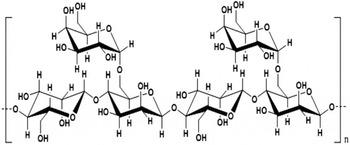
Guar seed is composed of approximately 50% endosperm, yielding about 42% gum (Anderson and Warnick, Reference ANDERSON and WARNICK1964). There are three major components including guar seed (seed coat 14-17%; endosperm 35-42%; germ 43-47%; Goldstein and Alter, 1959). The germ contains most of the protein in seed while the endosperm contains the galactomannan gum. Guar gum is very rich in β-mannans which consist of a linear chain of D-mannose units linked together by β-(1-4) glycosidic linkages and having on certain D- mannose units a single D-galactose unit joined by an a-(1-6) glycosidic linkage and D-galactose to D-mannose ratio is approximately 1.8 Figure 1 (Hawley, Reference HAWLEY1977; Horton, Reference HORTON1997; Choct, Reference CHOCT2002), which is less than the ratio present in 8- mannans that is present in soybean meal (Whistler and Saarnio, Reference WHISTLER and SAARNIO1957). There is positive correlation between percentage of gum and percentage of endosperm present in whole seed (Menon et al., Reference MENON, DUBE and BHARGAVA1972).
Galactomannan present in guar meal. (Adapted from Sharma et al., 2011)

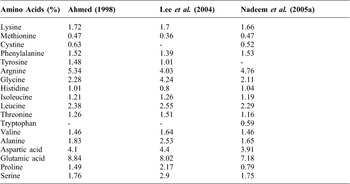
Different scientists have reported varying nutritional profiles of GM with respect to dry matter (DM), crude protein (CP), crude fibre (CF), ether extracts (EE), amino acids (AA) and mineral contents. Some anti-nutritional components also present in GM like guar gum (fl-mannan), saponins and trypsin inhibitors (TI). Dry matter content of GM may vary due to differences in the processing technique adopted and seasonal conditions. Nadeem et al. (Reference NADEEM, GILANI, KHAN and MAHR-UN-NISA2005b) found 96.7% DM during their study of true metabolisable energy (TME) values of poultry feedstuffs in Pakistan. While in another study, Ahmed (Reference AHMED1998) observed 92% DM contents. Lee et al. (Reference LEE, CONNOR-APPLETON, HAQ, BAILEY and CARTWRIGHT2004) observed DM contents for germ, hull, and combined guar by-products being 93.2%, 95.4%, and 94.8%, respectively. The Novus Raw Material Compendium (1994) reported 4% ash contents in guar germ. While Nagpal et al. (Reference NAGPAL, AGRAWAL and BHATIA1971) reported 3.8% and 5.5% ash in guar seed and meal respectively. Verma and McNab (Reference VERMA and MCNAB1984) observed that ash contents of GM fractions like germ, hull, and combined guar by-products were 6.8%, 5.7%, and 5.4%, respectively while, Lee et al., Reference LEE, CONNOR-APPLETON, HAQ, BAILEY and CARTWRIGHT2004 reported 4.6%, 4.6%, and 4.5% ash contents for GM, respectively. Guar meal contains 35-47.5% CP (Couch et al., Reference COUCH, CREGERAND and BAKSHI1966; Ambegaokar et al., Reference AMBEGAOKAR, KAMATH and SHINDE1969) but researchers have observed varying CP levels. Nagpal et al. (Reference NAGPAL, AGRAWAL and BHATIA1971) reported 29.4% and 38.8% protein in guar seed and meal, respectively. Novus Raw Material Compendium (1994) reported 30% CP in guar germ, and from 30 and 41.3% for mechanically extracted and solvent-extracted guar germ meal. Lee et al. (Reference LEE, CONNOR-APPLETON, HAQ, BAILEY and CARTWRIGHT2004) reported 45.9%, 36.9% and 38.5% CP in guar germ, hull, and combined guar by-products, respectively. Ahmed (Reference AHMED1998) and Nadeem et al. (Reference NADEEM, GILANI, KHAN and MAHR-UN-NISA2005b) reported 43.0% and 40.7% CP on a DM basis respectively. Moreover Verma and McNab (Reference VERMA and MCNAB1984) reported that almost 88% true protein for GM contained approximately double the Arginine content compared to soybean meal. While, Van Etten et al. (Reference VAN ETTEN, MLLER, WOLFF and JONES1961) reported low CP (33%) in GM. Amino acid profiles of GM are presented in Table 1.
Whistler and Hymowitz (Reference WHISTLER and HYMOWITZ1979) reported that guar seed contains 4% oil. Van Etten et al. (Reference VAN ETTEN, MLLER, WOLFF and JONES1961) reported 4% EE during his study to evaluate nutrients in 27 selected seed meals. Similarly, Novus Raw Material Compendium (1994) reported 3 to 6% EE for mechanically extracted guar germ meal. While, Nagpal et al. (Reference NAGPAL, AGRAWAL and BHATIA1971) reported higher EE values for guar seed (5.24%) and GM (7.19%). Verma and McNab (Reference VERMA and MCNAB1984) reported 5.5%, 5.7% and 5.9%, while Lee et al. (Reference LEE, CONNOR-APPLETON, HAQ, BAILEY and CARTWRIGHT2004) reported 5.8%, 2.8% and 4.5% EE in germ, hull and combined guar by-products, respectively. Ahmed (Reference AHMED1998) and Nadeem et al. (Reference NADEEM, GILANI, KHAN and MAHR-UN-NISA2005b) found 5.2% and 4.8% EE in GM, respectively.
Amino Acid contents of guar meal.

Nagpal et al. (Reference NAGPAL, AGRAWAL and BHATIA1971) reported 10.52% crude fibre value for guar seed and 11.7%. Verma and McNab (Reference VERMA and MCNAB1984) found 10.2%, 9.9%, and 10.1% whilst Lee et al. (Reference LEE, CONNOR-APPLETON, HAQ, BAILEY and CARTWRIGHT2004) reported 8.4%, 13.5% and 11.4% CF contents in germ, hull and combined guar by-products respectively. Novus Raw Material Compendium (1994) reported 8.8% CF for mechanically extracted guar germ meal. Similarly Ahmed (Reference AHMED1998) and Nadeem et al. (Reference NADEEM, GILANI, KHAN and MAHR-UN-NISA2005b) reported 13.4% and 10.4% CF in GM. Guar meal contains 1.25%, 0.51%, 0.046%, 0.54% and 0.68% Ca, P, Mg, Na and K, respectively (Ahmed, Reference AHMED1998). It is considered a better source of micro-minerals as compared to other vegetable meals as it contains 200 ppm, 828 ppm and 104 ppm of Cu, Fe and Zn respectively (Ahmed, Reference AHMED1998).
Gross energy (GE), apparent and true metabolisable energy (AME and TME) values reported so far are variable. Nagpal et al. (Reference NAGPAL, AGRAWAL and BHATIA1971) reported 4837 and 4861 kcal/kg GE for raw and autoclaved GM. Moreover, Ahmed (Reference AHMED1998) and Nadeem et al. (Reference NADEEM, GILANI, KHAN and MAHR-UN-NISA2005b) reported a GE of raw and treated GM as being 4406 and 4041 Kcal/kg respectively, with 2311 Kcal/kg and 2699Kcal/kg AME and TME being in the range of 2600-2700 kcal/kg DM (Campbell et al., Reference CAMPBELL, JACOBSEN, EGGUM and JUST1983; Ahmed, Reference AHMED1998; Nadeem et al., Reference NADEEM, GILANI, KHAN and MAHR-UN-NISA2005b).
Guar gum (galactomannan polysaccharide) is sticky in nature. Germ and hull fractions of GM contain variable quantity of residual gum that is remnant of gum extraction from the guar seed. Many researchers have reported variable amounts of residual gum contents (ranging from 14-20%) due to variability in techniques used for gum extraction (Bakshi et al., Reference BAKSHI, CREGOR and COUGH1964; Lee et al., Reference LEE, CONNOR-APPLETON, HAQ, BAILEY and CARTWRIGHT2004). Verma and McNab (Reference VERMA and MCNAB1984) reported 4-6% residual gum. While estimating gum levels in guar, Menon et al. (Reference MENON, DUBE and BHARGAVA1972) reported 19-34% gum in whole seed and 38-40% in endosperm. Moreover, Lee et al. (Reference LEE, CONNOR-APPLETON, HAQ, BAILEY and CARTWRIGHT2004), on the basis of total mannose and galactose after free sugar extraction, reported guar gum contents 13%, 7.4% and 11.6% in hull, germ fraction and combined fractions, respectively. Unlike other findings, Ahmed (Reference AHMED1998) reported very low guar gum contents (0.03%) for GM.
Brocher and Ackerson, (Reference BROCHER and ACKERSON1950) originally reported the absence of trypsin inhibitor in GM, but since then many researchers reported its presence (Anderson and Warnick, Reference ANDERSON and WARNICK1964; Couch et al., Reference COUCH, CREGERAND and BAKSHI1966; Reference COUCH, BAKSHI, FERGUSON, SMITH and CREGER1967; Verma and McNab, Reference VERMA and MCNAB1984). Ahmed (Reference AHMED1998) quantified trypsin inhibitor and reported levels of 1.35mg/g trypsin inhibitor (TI). Lee et al. (Reference LEE, CONNOR-APPLETON, HAQ, BAILEY and CARTWRIGHT2004) recorded levels of 3510 TIU/g. These results show negligible TI in GM which should not adversely affect poultry performance.
Saponins may act as growth depressing agents in poultry diets (Jenkins and Atwal, Reference JENKINS and ATWAL1994). Saponin in GM varies from 5 to 13% on DM bases (Curl et al., Reference CURL, PRICE and FENWICK1986; Hassan et al., Reference HASSAN, GUTIERREZ, HAQ, BYRD, BAILEY and CARTWRIGHT2007). Kakani et al. (Reference KAKANI, GUTIERREZ, HAQ and BAILEY2007) reported GM contains approximately 4% saponins.
Feeding aspects of guar meal
The bitter taste and presence of anti-nutritional factors limit the use of GM in poultry feeds. Anti-nutritional and beneficial effects of these contents are reviewed below.
Trypsin inhibitors
Trypsin inhibitors inhibit the proteolytic activity of trypsin and chymotrypsin. Trypsin inhibitor activity in raw GM contributes towards decreased growth performance of poultry (Anderson and Warnick, Reference ANDERSON and WARNICK1964; Couch et al., Reference COUCH, CREGERAND and BAKSHI1966; Reference COUCH, BAKSHI, FERGUSON, SMITH and CREGER1967; Verma and McNab, Reference VERMA and MCNAB1984). Furthermore, many researchers reported that diets containing raw GM results in reduced bodyweight, feed consumption and feed efficiency in poultry (Sathe and Bose, Reference SATHE and BOSE1962; Anderson and Warnick, Reference ANDERSON and WARNICK1964; Thakur and Pradhan, Reference THAKUR and PRADHAN1975a). This poor performance of poultry birds might be attributed to increased pancreatic secretions and decreased protease activity. Couch et al. (Reference COUCH, BAKSHI, FERGUSON, SMITH and CREGER1967) reported pancreatic hypertrophy due to trypsin inhibitor in chicks fed diets containing GM. This occurs due to increased pancreatic secretions which is the result of disturbance in the regulatory feedback loop, which governs pancreatic secretive activity (Francis et al., Reference FRANCIS, MAKKAR and BECKER2001).
Trypsin inhibitor activity can be overcome by heat treatment or by supplementation of essential amino acids such as methionine, and can be destroyed by extrusion processing (Cheeke and Shull Reference CHEEKE and SHULL1985). Couch et al. (Reference COUCH, CREGERAND and BAKSHI1966) reported approximately 80% reduction in trypsin inhibitor activity by heating GM for 60 minutes. Furthermore, Couch et al. (Reference COUCH, BAKSHI, FERGUSON, SMITH and CREGER1967) observed that the harmful effects of trypsin inhibitor can be alleviated by heating GM up to 110°C for 1 h with 15 min of superheated steam injection after the cooker reached 110°C. However, while studying harmful effects of GM feeding, many researchers found that trypsin inhibitors were not the primary factor for deleterious effects of GM to poultry (Anderson and Warnick, Reference ANDERSON and WARNICK1964; Vohra and Kratzer, Reference VOHRA and KRATZER1964; Conner, Reference CONNER2002). Furthermore, heating and steam pelleting diets having GM had no effect on the performance of the broiler chicks (Verma and McNab, Reference VERMA and MCNAB1982).
Growth suppressing effects in animals by anti-nutritional factors present in GM, notably anti-trypsin inhibitors, are less certain than others, because during gum extraction processes guar seeds are passed through a temperature range of 93.3-105°C (Lee et al., Reference LEE, CONNOR-APPLETON, HAQ, BAILEY and CARTWRIGHT2004). Most researchers have referred the residual guar gum as a major anti-nutritional factor in GM rather than trypsin inhibitor (Vohra and Kratzer, Reference VOHRA and KRATZER1964; Burnett, Reference BURNETT1966; Verma and McNab, Reference VERMA and MCNAB1982; Reference VERMA and MCNAB1984; Brocher and Ackerson, Reference BROCHER and ACKERSON1950). Vohra and Kratzer (Reference VOHRA and KRATZER1964) reported depressed growth in broiler chicks even with low guar gum contents (1%) and found 35% depression in growth in birds fed diets containing 2% guar gum as compared to the control. The anti-nutritional effects of guar gum are more pronounced in young birds (Verma and McNab, Reference VERMA and MCNAB1982). Conner (Reference CONNER2002) observed peak growth depression in first 21 days as compared to 21-42 days in broilers fed diets containing GM. Rainbird et al. (Reference RAINBIRD, LOW and ZEBROWSKA1984) correlated these negative effects of guar gum to increased digesta viscosity, which leads to decreased absorption of nutrients.
Intestinal viscosity
Gum residue makes intestinal material more viscous, resulting in lowered nutrient uptake by the gastrointestinal tract (GIT) and reduced nutrient availability (Jenkins et al., Reference JENKINS, WOLEVER, LEEDS, GASSUL, HAISMAN, DILAWARI, GOFF, METZ and ALBARTI1978; Taylor, Reference TAYLOR1979; Blackburn and Johnson, Reference BLACKBURN and JOHNSON1981). Increased viscosity resulted in decreased glucose and water absorption up to 40% and 35%, respectively (Rainbird et al., Reference RAINBIRD, LOW and ZEBROWSKA1984). Lee et al. (Reference LEE, BAILEY and CARTWRIGHT2003a) reported a correlation between excessive digesta viscosity, guar gum and growth depression in chicken and concluded that intestinal viscosity and concentration of guar gum in feed were directly proportional. Furthermore, it also caused pasted vents, diarrhoea and sticky faeces (Couch et al., Reference COUCH, BAKSHI, FERGUSON, SMITH and CREGER1967; Lee et al., Reference LEE, BAILEY and CARTWRIGHT2009). Feeding GM increased mortality in broilers (Sathe and Bose, Reference SATHE and BOSE1962; Couch et al., Reference COUCH, BAKSHI, FERGUSON, SMITH and CREGER1967; Verma and McNab, Reference VERMA and MCNAB1982). Morgan et al. (Reference MORGAN, TREDGER, MADDEN, KWASOWSKI and MARKS1985) observed inhibition of postprandial insulin secretion by guar gum in humans, which can interfere with glucose metabolism (Leeds et al., Reference LEEDS, KANG, LOW and SAMBROOK1980; Sambrook and Rainbird, Reference SAMBROOK and RAINBIRD1985). Addition of guar gum to the diet has been reported to reduce gastric emptying and to decrease level of insulin-like growth factor (IGF-1) (Nunes and Malmlof, Reference NUNES and MALMLOF1992), resulting in reduced growth and feed efficiency.
Non-starch polysaccharides
Although NSPs (glactomannan in GM) are poorly digested by monogastric animals and linked with decreased nutrient utilisation, dietary NSPs can affect the intestinal ecosystem by the provision of fermentable substrates which encourages growth of beneficial bacterial species and prevents establishment and colonisation by pathogenic bacteria in the epithelial tissues within the GIT. Furthermore, undigested or partially digested NSPs at the distal end of GI tract can be a nutrient source for intestinal bacteria which results in synthesis of short chain fatty acids (SCFAs) which are of energetic importance to the host animal, and, in poultry, are readily absorbed by the colonic mucosa (Kirgchgessner et al., Reference KIRGCHGESSNER, EDER, MÜLLER and JAMROZ1999). Residual gum present in GM contains β-1-4 glycosidic linkages which cannot be digested by animals, but are well fermented by microbes in the GIT and SCFA production (Carre et al., Reference CARRE, DEROUET and LECLERCQ1990; Jorgensen et al., Reference JORGENSEN, ZHAO, KNUDSEN and EGGUM1996). This causes decreasing luminal pH and thus inhibits the growth and proliferation of pathogenic in GI tract (Topping, Reference TOPPING1996; Noack et al., Reference NOACK, KLEESEN, PROLL, DONGOWSKI and BLAUT1998). Additionally, gum residues have been reported to improve macrophage activity (Duncan et al., Reference DUNCAN, PUGH, PASCO and ROSS2002).
Moreover, production of SCFAs and probiotic bacteria results in enhanced digestive enzyme activities, which may ultimately lead to improved health of the host. Probiotic bacteria compete with pathogenic bacteria for nutrients and epithelial adhesion sites and stimulate immune functions of the host (Fuller, Reference FULLER1989). Furthermore, many researchers have reported beneficial functions of NSPs such as decreased plasma cholesterol (Dario Frias and Sgarbieri, Reference DARIO FRIAS and SGARBIERI1998; Favier et al., Reference FAVIER, BOST, DEMIGNE and REMESY1998; Yamamoto et al., Reference YAMAMOTO, SOGAWA, NISHINA, SAEKI, ICHIKAWA and IIBATA2000; Maisonnier et al., Reference MAISONNIER, GOMEZ and CARRE2001) and postprandial serum glucose (Fairchild et al., Reference FAIRCHILD, ELLIS, BYRNE, LUZIO and MIR1996; Ou et al., Reference OU, KWOK, LI and FU2001).
Saponins
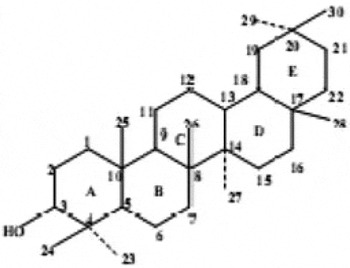
Saponins are a heterogonous group of naturally occurring phytochemicals that consist of a fat soluble nucleus of triterpene or steroidal glycosides (Figure 2), with one or more water soluble carbohydrate side chains consisting of glucose, galactose, xylose, rhamnose or glucuronic acid that are widely distributed among food plants. Some saponins, when added in diets, increase intestinal epithelial cell membrane permeability which may cause growth reduction (Oakenfull et al., Reference OAKENFULL, TOPPING, ILLMAN and FENWICK1984; Gee and Johnson, Reference GEE and JOHNSON1988; Fenwick et al., Reference FENWICK, PRICE, TSUKAMOTO and OKUBO1991), as this is related to decreased trans-membrane electrochemical gradient which is critical for active nutrient transport (Wright, Reference WRIGHT2004). It is thought that glycoside side chains play an important role in disrupting this activity (Oleszek et al., Reference OLESZEK, NOWACKA, GEE, WORTLEY and JOHNSON1994). Some researchers have reported that saponins can increase faecal fat excretions (Reshef et al., Reference RESHEF, GESTETNER, BIRK and BONDI1976; Malinow et al., Reference MALINOW, CONNOR, MCLAUGHLIN, STAFFORD, LIN, LIVINGSTON, KOHLERAND and MCNULTY1981). Jenkins and Atwal, (Reference JENKINS and ATWAL1994) reported that saponins reduce growth rates, interfere with bile acids and limit absorption and digestibility of fats and decreased weight gain, intake and lipid digestibility, and increased cholesterol excretion. Lower absorption of vitamin E and vitamin A is seen in birds fed diets containing 0.9% saponins. Reduction in feed intake in chicks might be attributed to their bitter taste and irritation of the oral mucosa and gastrointestinal tract caused by saponins (Price et al., Reference PRICE, JOHNSON and FENWICK1987). Furthermore, indigestible saponin-protein complex formations have been reported (Potter et al., Reference POTTER, JIMENEZ-FLORES, POLLACK, LONE and BERBER-JIMENEZ1993). This explains the reason of relatively low digestibility in GM and many other legume seeds, which contains high concentrations of saponins.
Saponin present in guar meal. (Adapted from Sharma et al., 2011).

Saponins are currently being investigated for their antibacterial, antiprotozoal and antifungal activities (Mshvildadze et al., Reference MSHVILDADZE, FAVEL, DELMAS, ELIAS, FAURE, DECANOSIDZE, KEMERTELIDZE and BALANSARD2000; Avato et al., Reference AVATO, BUCCI, TAVA, VITALI, ROSATO, BIALY and JURZYSTA2006; Yang et al., Reference YANG, ZHANG, JACOB, KHAN, ZHANG and LI2006; Hassan et al., Reference HASSAN, GUTIERREZ, HAQ, BYRD, BAILEY and CARTWRIGHT2007; Reference HASSAN, EL-GAYAR, CADWELL, BAILEY and CARTWRIGHT2008; Reference HASSAN, HAQ, BYRD, BERHOW, CARTWRIGHT and BAILEY2010; Reference HASSAN, BYRD, CARTWRIGHT and BAILEY2011). In general, saponins seem to have antibacterial activity against Gram-positive bacteria rather than Gram-negative forms (Wallace et al., Reference WALLACE, ARTHAUD and NEWBOLD1994). This affinity of anti-Gram-positive activity is akin to that of ionophores, while their modes of action differ. Furthermore, saponins reduce concentration-dependent growth for in vitro bacterial cultures (Sen et al., Reference SEN, MAKKAR and BECKER1998). Similarly, Hassan et al. (Reference HASSAN, GUTIERREZ, HAQ, BYRD, BAILEY and CARTWRIGHT2007) reported elicited antibiotic activity against Staphylococcus aureus but not Salmonella typhimurium or Escherichia coli in response to saponin extracted from GM. So, hull and germ fractions (GM) of guar bean, because of their high concentration of both saponins and protein (Bakshi, Reference BAKSHI1966; Ambegaokar et al., Reference AMBEGAOKAR, KAMATH and SHINDE1969; Hassan et al., Reference HASSAN, GUTIERREZ, HAQ, BYRD, BAILEY and CARTWRIGHT2007), may be useful as a practical ingredient for poultry feed.
Intake, digestibility and growth performance
Inclusion of GM in broiler rations may result in reduced feed intake by the bird in a dose-dependent manner (Khan, Reference KHAN1996; Kamran et al., Reference KAMRAN, PASHA, MAHMUD and ALI2002). This might be related to presence of guar gum residues which have been shown to reduce gastric emptying (Rainbird and Low, Reference RAINBIRD and LOW1986). Increased intestinal viscosity may also be involved (Jenkins et al., Reference JENKINS, WOLEVER, LEEDS, GASSUL, HAISMAN, DILAWARI, GOFF, METZ and ALBARTI1978; Taylor, Reference TAYLOR1979; Blackburn and Johnson, Reference BLACKBURN and JOHNSON1981). Lee et al. (Reference LEE, CONNOR-APPLETON, BAILEY and CARTWRIGHT2005) reported a linear decrease in intake with increasing level of GM (2.5, 5, 7.5 and 10%) in broiler diets. Poor palatability of GM may be attributed to presence of saponins in GM, as they are bitter in taste (Jenkins and Atwal, Reference JENKINS and ATWAL1994).
Poor growth performance of broilers fed diets containing even lower inclusion levels of GM have been reported by Vohra and Kratzer (Reference VOHRA and KRATZER1964). Guar meal level and growth performance were reported to have negative relationship when diets containing varying levels of GM (0, 7.5, and 15%) were fed to broilers (Thakur and Pradhan, Reference THAKUR and PRADHAN1975a, b). Patel and McGinnis (Reference PATEL and MCGINNIS1985) concluded that, inclusion of higher level (15%) of GM has more negative effects on weight gain and feed efficiency than the 10% inclusion rate.
Processing and enzyme supplementation
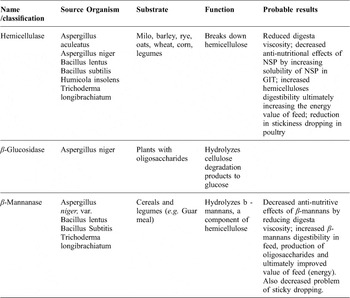
Processing, enzyme supplementation and water treatment can improve the nutritive value of GM with variable success. GM diets supplemented with enzymes (hemicellulase or β-mannanase; Table 2) or a combination of enzymes and heat treatment resulted in improved feed utilisation (Patel and McGinnis, Reference PATEL and MCGINNIS1985; Lee et al., Reference LEE, BAILEY and CARTWRIGHT2003a; Reference LEE, BAILEY and CARTWRIGHT2003b; Reference LEE, CONNOR-APPLETON, BAILEY and CARTWRIGHT2005; Reference LEE, BAILEY and CARTWRIGHT2009). Improved production performance was achieved when GM was fermented with Aspergillus niger or Fusarium species (Nagra et al., Reference NAGRA, SETHI, CHAWLA and CHOPRA1998a). Autoclaving results in increased problem of sticky droppings, whereas enzymes (hemicellulase) reduce this problem (Patel and McGinnis, Reference PATEL and MCGINNIS1985). However, the inclusion threshold should remain as low as 2.5% even for treated GM to avoid problems (Lee et al., Reference LEE, BAILEY and CARTWRIGHT2003b). Nowadays manufacturing of GM involves toasting during to remove trypsin inhibitors and haemagglutins, but further processing is required to minimize adverse effects of residual gum content.
Enzyme supplementation reduces intestinal viscosity and counteracts deleterious effects associated with increased viscosity of the intestinal contents (Burnett, Reference BURNETT1966; Bedford, Reference BEDFORD1995; Almirall et al., Reference ALMIRALL, FRANCESCH, PEREZ-VENDRELL, BRUFAU and ESTEVE-GARCIA1995).
β-mannans are NSPs naturally present in GM (6-8%) and have the ability to bind large amount of water resulting in increased viscosity of fluid in the digestive tract. Problems in small intestine occur due to increased viscosity because substrate enzyme interaction is reduced as a result nutrient availability, particularly fat (Danicke et al., Reference DANICKE, JEROCH, BOTTCHER and SIMON2000). This increased viscosity can reduce the glucose and water absorption (Rainbird et al., Reference RAINBIRD, LOW and ZEBROWSKA1984), thereby decreasing growth and feed efficiency. Incorporation of endo -β-D-mannanase into feed containing GM resulted in lower intestinal viscosity and improved growth and FCR (Lee et al., Reference LEE, BAILEY and CARTWRIGHT2003b). Furthermore, Mehri et al. (Reference MEHRI, ADIBMORADI, SAMIE and SHIVAZAD2010) concluded that β-Mannanase in broiler chicken results in improved gut morphology and plasma immunological status. Supplementation with β-mannanase may lead to enhanced resistance to Salmonella enteritidis (Gutierrez et al., Reference GUTIERREZ, ZHANG, CALDWELL, CAREY, CARTWRIGHT and BAILEY2008).
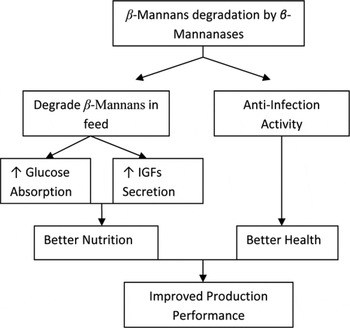
The mode of action of β-mannanase is via hydrolysis of β-1, 4-glycosidic linkages in β-mannans (Ooi and Kikuchi, Reference OOI and KIKUCHI1995). The enzyme cleaves at random inside the 1, 4- β-D-mannan key chains of galactomannan, galactoglucomannan and mannan (McCleary, Reference MCCLEARY1986). Moreover, β-mannanase results in production of manno-oligosaccharides, which found after hydrolysis of guar gum galactomannan, a substance which may results in improved growth by preventing colonization of E. coli and Salmonellae (Ishihara et al., Reference ISHIHARA, CHU, AKACHI and JUNEJA2000; Perry, Reference PERRY1995). Another important mode of action of β-mannanase is to decrease β-mannan levels in the intestinal tract which leads to a reduction in innate immune stimulation (Figure 3; Jackson et al., Reference JACKSON, GERONIAN, KNOX, MCNAB and MCCARTNEY2004). Innate immune system stimulation occurs due to absorption of β-mannanase from the intestinal mucosa which results in increased macrophages and monocytes proliferation and resultant production of cytokine.
Enzymes for hemicellulose: source organism, substrate, function and probable results.

Mode of action of β-mannanases.

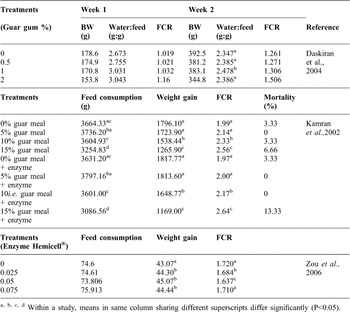
Findings of different researchers have shown improved nutrient utilisation in typical corn-soy-based diets low in β-mannans) and other feed materials, such as guar and copra-meal that are mannan-rich in response to enzymes (endo -β-D-mannanase (Table 3).
Review of different trials that represents the effect of guar gum, meal and β-mannanase on performance parameters.

a, b, c, d Within a study, means in same column sharing different superscripts differ significantly (P<0.05).
Increased intestinal viscosity was alleviated by the supplementation of gum-digesting β-mannanase in guar gum containing diets (Lee et al., Reference LEE, BAILEY and CARTWRIGHT2003b) leading to improved nutrient utilisation (Ray et al., Reference RAY, PUBOLS and MCGINNIS1982; Verma and McNab, Reference VERMA and MCNAB1982; Patel and McGinnis, Reference PATEL and MCGINNIS1985; Takahashi et al., Reference TAKAHASHI, YANG, FUJIKI, KIM, YAMAMOTO and GREENBERG1994, Ellis et al., Reference ELLIS, ROBERTS, LOW and MORGAN1995; Furuse and Mabayo, Reference FURUSE and MABAYO1996).
Diets containing 2% guar gum with enzyme supplementation significantly improved net energy gain and decreased N and DM faecal levels (Daskiran et al., Reference DASKIRAN, TEETER, FODGE and HSIAO2004). McNaughton et al. (Reference MCNAUGHTON, HSIAO, MADDENN and FODGE1998) reported that broiler birds perform well in response to β-mannanase supplementation of low-energy diets (3,003, 3,080, and 3,157 kcal/kg for starter, grower, and finisher, respectively) as compared to high-energy diets (3,146, 3,223, and 3,300 kcal/kg for starter, grower, and finisher respectively) without enzyme. Moreover, Maqbool et al. (Reference MAQBOOL, CAO and JIN2010) concluded that enzyme supplementation (Hemicell®) in diets containing GM can spare at least 90 Kcal/Kg ME. Furthermore, Mussini et al. (Reference MUSSINI, COTO, GOODGAME, LU C., KARIMI, LEE and WALDROUP2011) conducted a dosage response study with different levels of β-mannanase (CTCzyme) 0%, 0.025%, 0.05% (recommended level) and 0.1% and observed that gross energy of excreta decreased with increasing enzyme level, demonstrating better nitrogen utilisation by the birds. β-mannanase improves morphological status in gut and immunological status in plasma in broiler chicks (Christine et al., Reference CHRISTINE, DUNCAN, PASCO, PUGH and ROSS2002 and Mehri et al., Reference MEHRI, ADIBMORADI, SAMIE and SHIVAZAD2010), this may lead to improved health status of birds.
Other researchers (Ouihida et al., Reference OUIHIDA, PEREZ, ANGUITA and GASA2002 and Vahjen et al., Reference VAHJEN, BUSCH and SIMON2005) reported depressed weight gain and feed efficiency in birds fed diets supplemented with β- mannanase. It is conceivable that oligosaccharides that are associated with galactomannans in the GM may be released earlier in the intestine as β-mannans are readily fermentable viscous substrates and may be involved in changes in the microflora colonisation (Choct et al., Reference CHOCT, HUGHES, TRIMBLE, ANGKANAPORN and ANNISON1995, Vahjen et al., Reference VAHJEN, GLASER, SCHAFER and SIMON1998). As intestinal osmotic pressure increases due to the release of oligo- and monomers by microbial fermentation, this interferes with absorption of nutrients. This mechanism is heightened it the presence of higher concentrations of fermentable oligosaccharides, caused by enzymatic hydrolysis, are generated in the crop (Vahjen et al., Reference VAHJEN, BUSCH and SIMON2005). An overgrowth of bacteria in the small intestine has been associated with significant decreases in the digestion of saturated fatty acids by de-conjugation of bile acids by Enterococci spp. (Danicke et al., Reference DANICKE, VAKJEN, SIMON and JEROCH1999) and could increase the incidence of disease in practical conditions (Vahjen et al., Reference VAHJEN, BUSCH and SIMON2005). Furthermore, higher bacterial growth in small intestine may lead to decreased micoflora colonisation in the ileum and caeca which ultimately leads to decreased carbohydrate, fat and protein digestibility (Gdala et al., Reference GDALA, JOHANSEN, BACH KNUDSEN, KNAP, WAGNER and JØRGENSEN1997). Microflora in the ileum and caeca obtain their energy mainly from dietary sugars that escape foregut digestion, which indicates that β-mannanase could indirectly affect intestinal flora through hydrolysis of polysaccharides (Danicke et al., Reference DANICKE, VAKJEN, SIMON and JEROCH1999). Volatile fatty acids that provide energy to the host are also the end products of bacterial fermentation (Annison et al., Reference ANNISON, HILL and KENWORTHY1968; Argenzio, Reference ARGENZIO1982). β-mannanase supplementation promotes significant decreases in the purine bases content in ileum digesta (Ouihida et al., Reference OUIHIDA, PEREZ, ANGUITA and GASA2002).
β-mannanase hydrolysis of guar gum galactomannan to mannan-oligosaccharides may result in improved growth performance (Ishihara et al., Reference ISHIHARA, CHU, AKACHI and JUNEJA2000). Vohra and Kratzer (Reference VOHRA and KRATZER1965) observed improved growth (20%) by supplementation with enzymes (cellulose) in diets containing GM. Patel and McGinnis (Reference PATEL and MCGINNIS1985) reported improved performance in broilers in response to autoclaving or hemicellulase supplementation of GM-based diets.
Conclusions
On the basis of available literature it can be stated that, due to the presence of anti-nutritional factors such as β-mannans, the use of GM as protein source in broiler rations is limited. However the application of β-mannanase enzymes may be helpful in improving this situation, allowing poultry producers to be able to use GM as a cheaper and more available feed source.