Introduction
Acute respiratory infections (ARI) contribute to a significant proportion of antibiotic prescriptions in pediatric urgent care (PUC) Reference Hersh, Shapiro, Pavia and Shah1 that leads to antimicrobial resistance, unnecessary healthcare costs, and adverse drug reactions. Reference Palms, Hicks and Bartoces2,Reference Fleming-Dutra, Hersh and Shapiro3 Studies show disproportionate antibiotic use between sociodemographic groups with higher overall and non-first line therapy (FLT) in White non-Hispanic children compared to children of other races and ethnicities. Reference Goyal, Johnson and Chamberlain4–Reference Kim, Kabbani and Dube9 However, the root causes of these inequities and interventions to reduce them have not yet been studied.
Although antimicrobial stewardship (AS) programs successfully reduced antibiotic misuse, Reference Nathwani, Varghese, Stephens, Ansari, Martin and Charbonneau10 differences in FLT (ΔFLT) for children of different socioeconomic groups diagnosed with ARIs persist. Reference Nedved, Lee and Wirtz6 Quality improvement (QI) efforts may have a variable impact on health equity Reference Corl, Levy, Phillips, Terry, Friedrich and Trivedi11–Reference Trivedi, Grebla, Wright and Washington13 unless projects are approached with a health equity lens. These findings highlight the need for targeted AS interventions that address inequities of antibiotics in children diagnosed with ARIs in PUCs.
We identified that despite a high overall rate of FLT, there was a 3% ΔFLT between socioeconomic groups. Children who are White Non-Hispanic, with commercial insurance, and with English as their primary language had lower rates of FLT compared to their socioeconomic counterparts. Reference El Feghaly, Sainz and Lee8 In this QI collaborative, we aimed to identify barriers to, and drivers of, equitable antibiotic prescribing, and to decrease ΔFLT for ARIs in PUCs related to race, ethnicity, language, and insurance to less than 1.5% in 18 months.
Methods
Context
We invited institutions to participate in this QI collaborative through listservs from the Society for Pediatric Urgent Care and the Sharing Antimicrobial Reports for Pediatric Stewardship (SHARPS) collaborative. Our collaborative consisted of 92 geographically distinct PUC sites from 9 institutions spanning 22 states and Washington, DC. Reference El Feghaly, Sainz and Lee8 Each institution created its own multidisciplinary QI team comprised of PUC nurses, physicians, advanced practice practitioners, and family representatives. Several teams also included AS and health equity experts.
Interventions
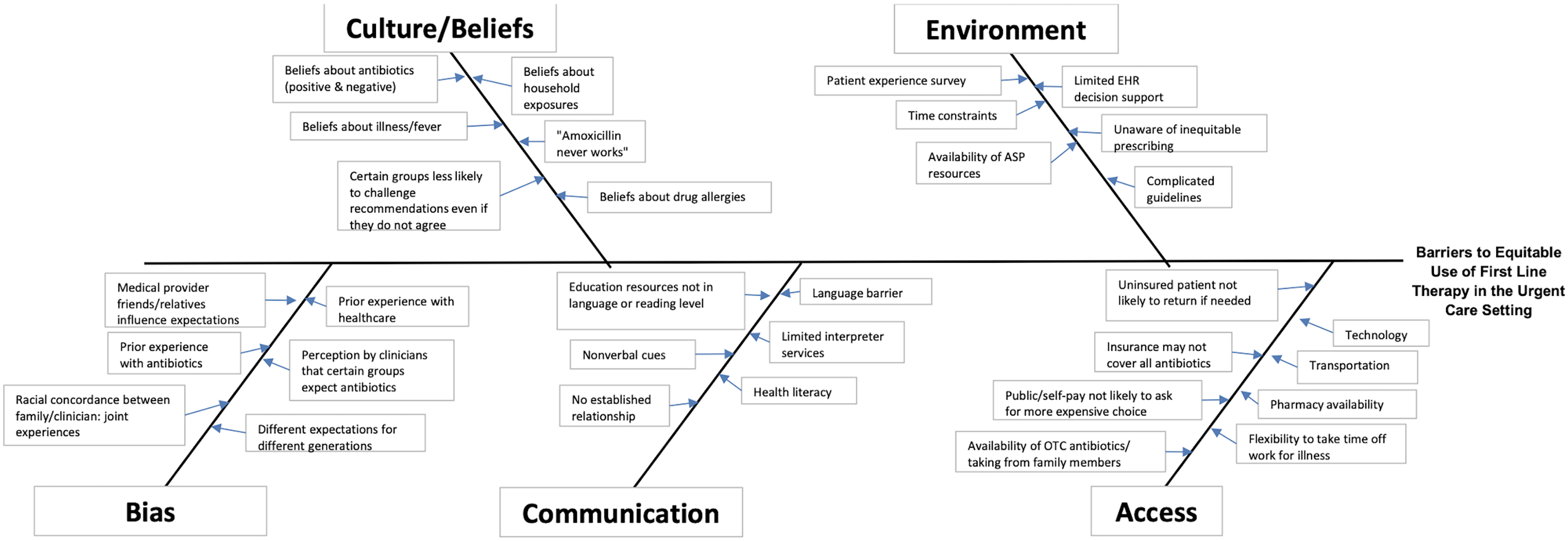
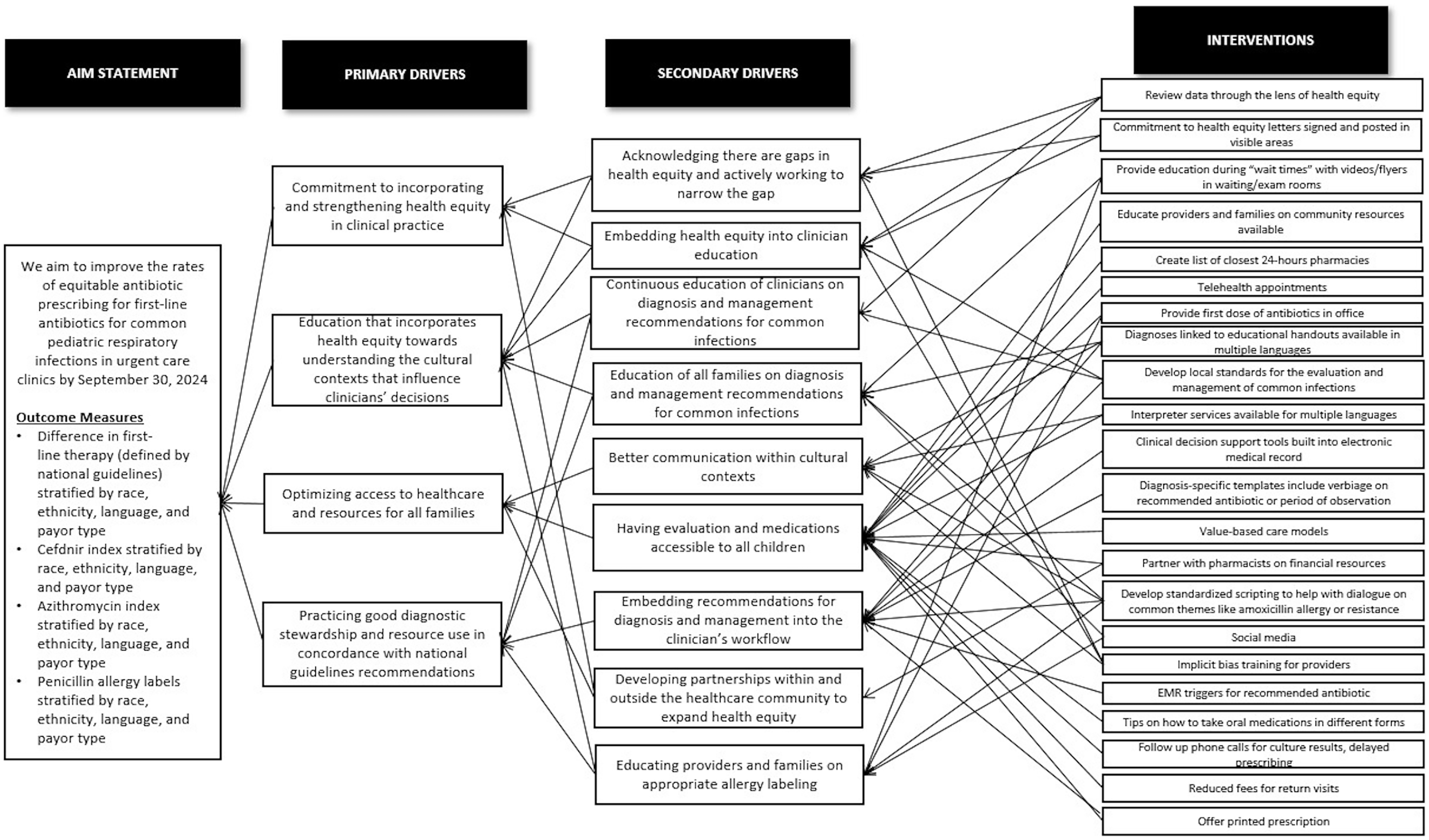
The collaborative leaders developed a project roadmap modified from the Institute for Healthcare Improvement’s Breakthrough Series Model (Supplementary Figure 1) and monthly webinars starting in May 2023. During Action Period 1 (May–August 2023), participants engaged in monthly virtual discussions and identified barriers to equitable FLT in the PUCs. Barriers identified included access to care differences, individual biases, difficulties in communication, the PUC environment, and personal beliefs/culture (Figure 1). Participants also explored drivers to improve health equity which included commitment to health equity in clinical practice, education about the influence cultural contexts have on clinical decisions, optimization of access to healthcare, and diagnostic stewardship (Figure 2). Individual QI teams then created their own cause-and-effect analyses and driver diagrams based on their local challenges and resources.
Cause and effect analysis developed during interactive discussion groups of the multi-site collaborative.

Key driver diagram developed during interactive discussion groups of the multi-site collaborative.

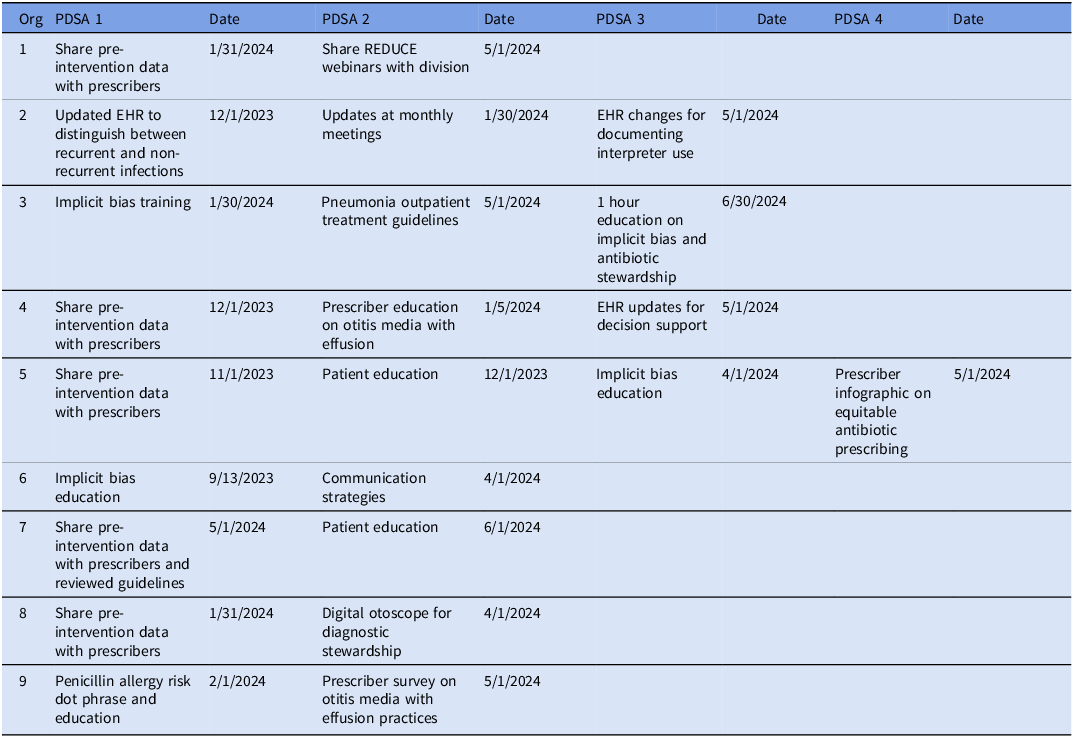
During Action Period 2 (September 2023–March 2024), national experts presented didactic sessions on understanding health equity as it relates to antibiotic stewardship, implicit bias, QI, and patient experience during the monthly webinars. Each organization implemented at least 2 Plan-Do-Study-Act (PDSA) cycles during that time (Table 1). During Action Period 3 (April–September 2024), representatives from each organization shared their local experiences and lessons learned during roundtable discussions. Physicians could earn 25 points of American Board of Pediatrics Maintenance of Certification Part 4 credit if they met all requirements for meaningful participation.
List of PDSA cycles by organization (Org)

EHR, electronic health record.
Study of the interventions
Each organization developed an electronic health record (EHR) report that identified all PUC encounters that fit the inclusion criteria, then uploaded it to a Research Electronic Data Capture (REDCap)® site Reference Harris, Taylor, Thielke, Payne, Gonzalez and Conde14 managed by the collaborative leaders who compiled and analyzed the data. We included PUC encounters of patients 6 months to 18 years of age with International Classification of Diseases, 10th Revision (ICD-10) codes for community acquired pneumonia (CAP), group A streptococcal (GAS) pharyngitis, acute otitis media (AOM), unspecified otitis media, acute pharyngitis, sinusitis, viral respiratory infections, and otitis media with effusion (OME) Reference El Feghaly, Sainz and Lee8 for the pre-intervention (April 2022–April 2023) and intervention periods (May 2023–September 2024). We collected demographic variables including patient age, race, payor type, and language used. Clinical variables included primary and secondary diagnoses, antibiotic prescribed, and penicillin allergy status. Reference El Feghaly, Sainz and Lee8 We used national guidelines to define FLT as follows: no antibiotics for OME and viral respiratory infections, amoxicillin for CAP, Reference Bradley, Byington and Shah15 amoxicillin or penicillin for GAS pharyngitis, Reference Shulman, Bisno and Clegg16 and amoxicillin or amoxicillin-clavulanate for sinusitis Reference Wald, Applegate and Bordley17 and AOM. Reference Lieberthal, Carroll and Chonmaitree18 We evaluated the percentage of FLT by race, ethnicity, language, and insurance. We created an anonymized Microsoft Power BI® dashboard and updated it monthly. This allowed participants to access their local data and compare to the aggregate data.
Measures
For our primary outcome measure, we evaluated the ΔFLT between the socioeconomic groups with the greatest ΔFLT during the pre-intervention period for race, ethnicity, insurance, and language. During the pre-intervention period, we observed the greatest ΔFLT for race between Black and White patients, for language between English and Spanish speaking patients, and for payor type, between commercial and government insurance. Reference El Feghaly, Sainz and Lee8
Although penicillin allergy may be a contraindication to FLT for many ARIs, we did not exclude patients with a penicillin allergy label (PAL), because most patients with PALs can safely take amoxicillin. Reference Taylor, Joerger and Li19 Rather than exclude this cohort of patients, we stratified the percentage of patients with PALs by socioeconomic groups as a secondary outcome measure to evaluate whether differences in percentages of PALs between socioeconomic groups contributed to ΔFLT. Additional secondary outcome measures included cefdinir index (number of encounters with cefdinir prescriptions out of all encounters with an antibiotic prescription), and azithromycin index (encounters with azithromycin prescriptions out of all encounters with an antibiotic prescription). We chose these 2 antibiotics because they are often overused in ambulatory settings as an alternative to FLT. Given that each institution used its own processes and interventions, we did not include specific process measures for the collaborative. However, we included the overall percentage of FLT for all diagnoses combined as a balancing measure to ensure our efforts to decrease the ΔFLT between groups did not result in an overall decrease in FLT.
Analysis
Although demographics included anything reported in the EHR, we collapsed the groups into major categories to allow for comparisons. Reference El Feghaly, Sainz and Lee8 We evaluated outcome and balancing measures using statistical process control charts. We used Montgomery Rules to identify special cause variation and shift the center line (CL). Reference Montgomery20 To evaluate the impact of the increased incidence of Mycoplasma pneumonia during the intervention period, we performed a sensitivity analysis by removing the CAP diagnoses.
Because the greatest ΔFLT was noted between Black and White patients during the pre-intervention period, we performed a difference-in-difference (DID) logistic regression (LR) models to assess if the odds of FLT between Black and White patients changed from pre-intervention (April 2022–September 2023) to post-intervention periods (May–September 2024). In the LR model, we excluded the dates that coincided with the earliest and latest PDSA cycle implementations as a wash-out period (October 2023–April 2024). For the LR model we categorized organizations dichotomously based on whether they implemented PDSA cycles involving education-only interventions, or PDSA cycles of education plus another type of intervention such as EHR changes or use of technology (Education+). We stratified LR models by diagnosis and by PDSA type (Education-only vs. Education+).
Ethical considerations
Our institutional review board (IRB) deemed this project not human subject research. Individual collaborating PUCs completed IRB approvals and data use agreements per their organization’s requirements.
Results
Collaborating organization characteristics
Of the 9 participating organizations, 4 reported their PUCs were in suburban areas, 3 organizations reported urban PUC locations, and 2 organizations had PUCs in both suburban and urban locations. No organization reported PUCs in a rural setting. Most PUCs were part of, or affiliated with, a larger hospital. For all 9 organizations, caregivers self-reported patient race and ethnicity. Six organizations had an established AS program prior to initiating the project, although all sites reported at least one AS intervention in place, most commonly clinical pathways (n = 8, 88.9%) and quality improvement projects (n = 8, 88.9%). Six organizations (66.7%) reported having a health equity officer.
Clinical demographics
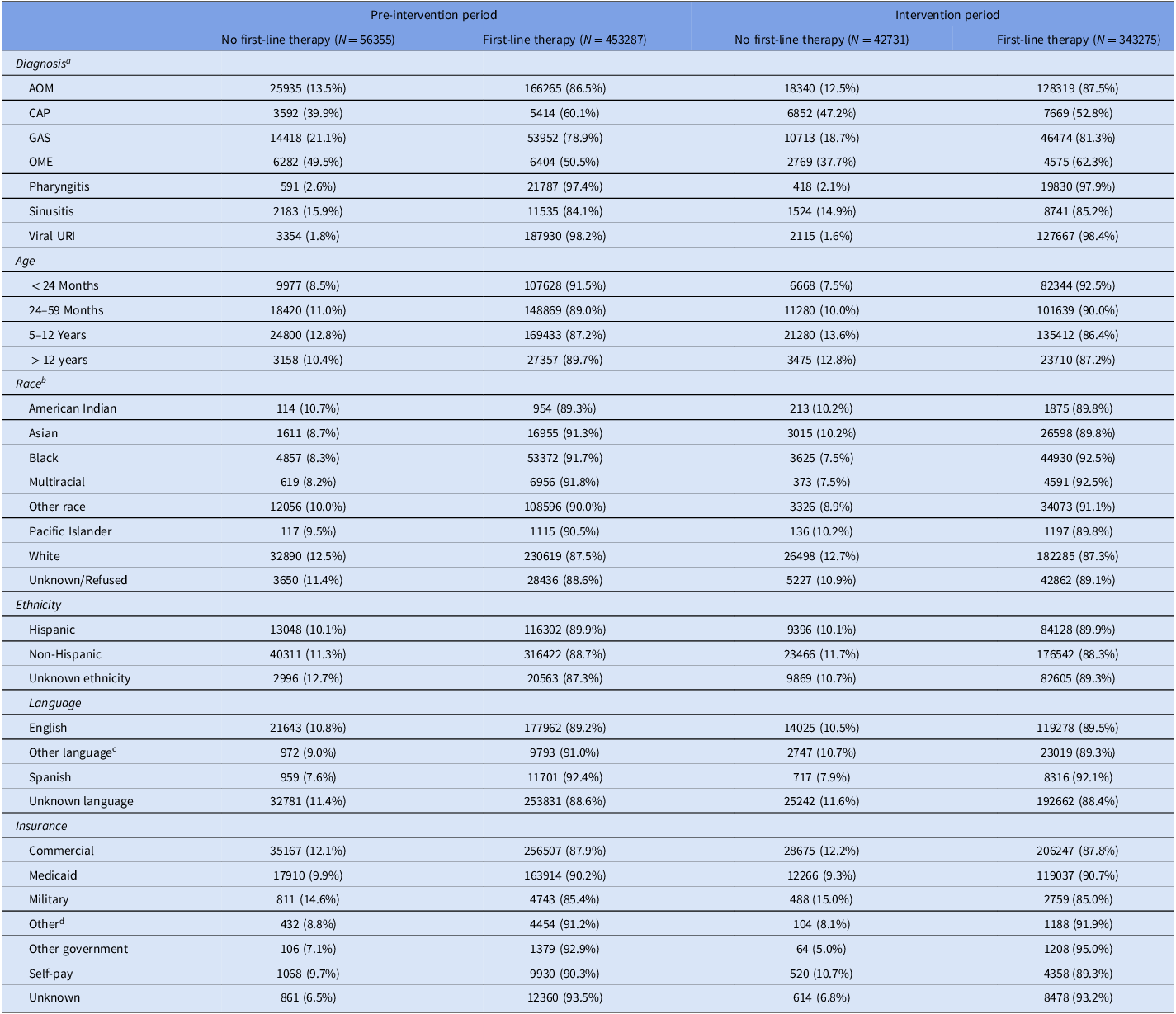
We included 895,648 PUC encounters. Viral URI accounted for most infections (n = 321,766, 35.9%), followed by AOM (n = 320,519, 35.8%), and GAS pharyngitis (n = 125,557, 14.0%). Median age was 4 years [interquartile range (IQR) 2–7 years]. White children made up the largest proportion of the cohort (n = 472,292, 52.7%). Black and Asian children comprised 11.9% (n = 106,784), and 5.4% (n = 48,179), respectively. Table 2 delineates the demographics of patients in both the pre-intervention and intervention periods.
Proportion of patients receiving first-line therapy

a Two institutions did not submit OME or viral respiratory infections records because they were not able to include encounters without antibiotic prescriptions due to EHR limitations.
b Please see Supplementary 2 for list of Other races reported.
c Please see Supplementary 2 for list of Other languages reported.
d Please see Supplementary 2 for list of Other insurance reported.
Overall first-line therapy
Clinicians prescribed FLT in 88.9% of all diagnoses combined. We saw the highest percentages of FLT for viral URI (98.1%) and acute pharyngitis (97.6%). CAP and OME had the lowest percentages of FLT at 55.6% and 54.8%, respectively.
Measures
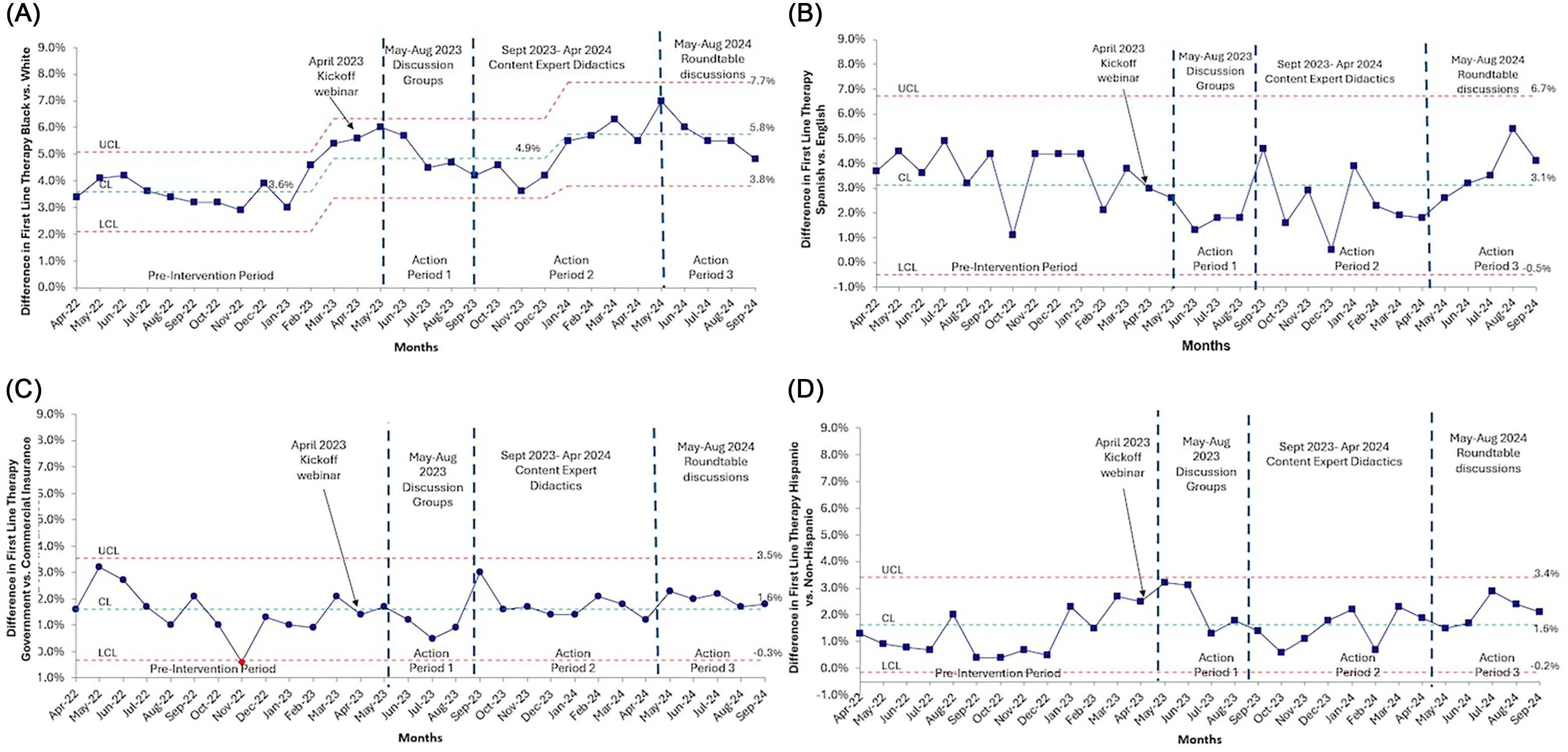
Primary Outcome measure. Despite efforts to explicitly develop interventions to improve equitable FLT, we saw 2 upward CL shifts in ΔFLT (ie increased inequity) between Black and White children from 3.6% to 5.8% (Figure 3A). The CL did not change for ΔFLT between English and Spanish-speaking patients (3.1%) (Figure 3B), commercial and government-insured patients (1.6%) (Figure 3C), or Hispanic and non-Hispanic patients (1.6%) (Figure 3D). Supplementary Figure 3 shows the variability of ΔFLT among the 9 organizations. When we excluded CAP diagnoses, we only saw a single upward CL shift in ΔFLT between Black and White children from 3.5% to 4.9%. The shift occurred prior to the start of the intervention period and did not change throughout the intervention period. The ΔFLT between English and Spanish-speaking patients, commercial and government-insured patients, and Hispanic and non-Hispanic patients after excluding CAP diagnoses was similar to our primary analysis (Supplementary Figure 4).
Control chart of difference in first-line therapy (ΔFLT) for all diagnoses for A. Black children compared to White children, B. Spanish-speaking families compared to English-speaking families, C. Children with government insurance compared to children with commercial insurance, and D. Hispanic children compared to Non-Hispanic children.

Balancing measure. Rates of overall FLT for all diagnoses fluctuated over the study period. We saw a downward CL shift in December 2022 (pre-intervention) from 90% to 86.8%, coinciding with the amoxicillin shortage of Fall 2022—Spring 2023, Reference Brewster, Khazanchi, Butler, O’Meara, Bagchi and Michelson21,Reference Poole, Lee and Kronman22 followed by an upward CL shift in August 2023 back to 89.8%, then another smaller downward CL shift in March 2024 to 87.8% (Supplementary Figure 5A). We saw a slight increase in FLT between pre-intervention and intervention period for all diagnoses except for CAP (Table 2). For CAP, the number of cases increased starting in June 2024 from an average of 441 cases per month, to 1418 cases in September 2024. Along with this increase, we saw a decline in FLT for CAP from an average of 55% to as low as 39% in September 2024. These trends coincided with increased rates of Mycoplasma pneumoniae infection and azithromycin prescriptions seen in the summer and fall of 2024 in the United States (US). 23 Supplementary Figure 5B shows diagnosis-specific trends in FLT.
Secondary outcome measures. We did not see a shift in the CL for encounters with PALs (3.1%). White children had a higher percentage of PALs (3.7%) compared to Asian (2.3%) and Black (1.8%) children (Supplementary Figure 6A). We did not see a difference in the percentage of encounters with PALs between commercial (3.2%) and government insurance (2.9%). Encounters with military insurance had the highest percentage of PALs (6.0%). English-speaking children (4.9%) had a higher percentage of PALs (4.9%) compared to children who spoke Spanish (2.4%) or other languages (1.0%).
We saw an upward CL shift in the cefdinir index from 5.5% to 6.2% in November 2022, coinciding with the amoxicillin shortage prior to our project start. However, we saw a downward CL shift in February 2024 back to 5.6%. White patients consistently had a higher cefdinir index during the intervention period (6.8%) compared to Asian (4.9%), Black (3.7%), Other (5.1%), and Unknown (5.6%) races (Supplementary Figure 6B). Patients with commercial insurance also consistently had a higher cefdinir index (6.7%) during the intervention compared to patients with government insurance (4.8%) and self-paying patients (4.3%).
The azithromycin index remained low (1.1%) during the study period until June 2024 when it increased to a peak of 7.1% in September 2024, coinciding with the start of the Mycoplasma pneumoniae surge. 23 As the azithromycin index increased, we saw a disproportionately higher rate of azithromycin prescriptions in White children (peak of 7.5%) compared to Black children (peak of 5.7%) (Supplementary Figure 6C). We saw a similar trend for payor type with a higher azithromycin index in children with commercial insurance (8.1% in September 2024) compared to children with government insurance or who self-pay (5.4% and 5.8% respectively in September 2024).
Analysis of education-only versus education+ PDSA impact
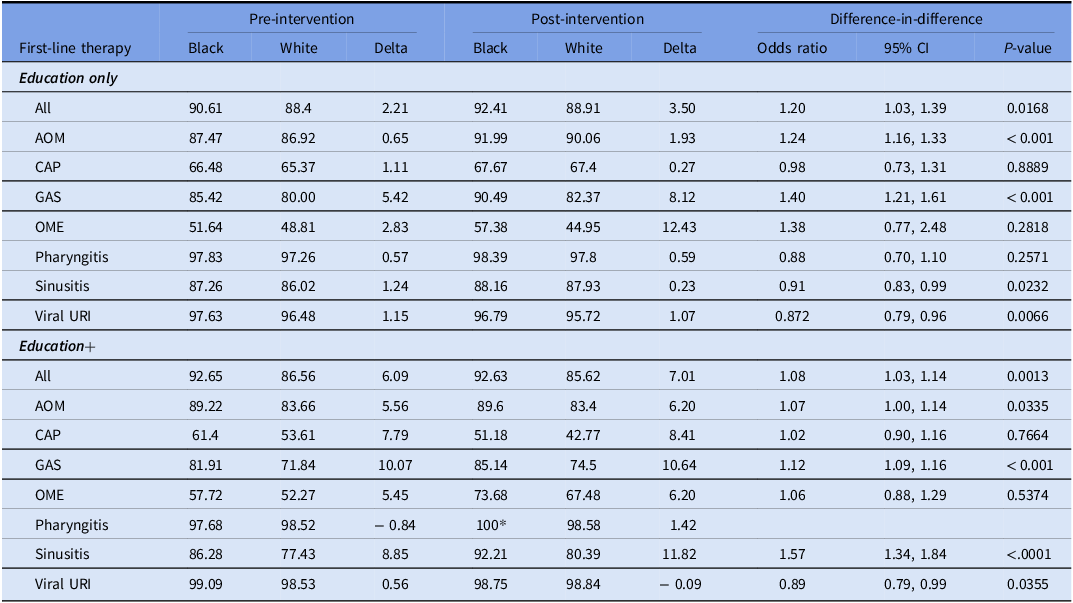
Among the 5 organizations that implemented Education+ PDSA cycles, we observed a slight decrease in ΔFLT between Black and White patients for viral URI (ΔFLT 0.56% pre-intervention to − 0.09% post-intervention; DID odds ratio: 0.89 [0.79, 0.99]; p = 0.0355) and an increase in ΔFLT for GAS pharyngitis (ΔFLT 10.07% pre-intervention to 10.64% post-intervention; DID odds ratio: 1.12 [1.09, 1.16]; p < 0.001) and sinusitis (ΔFLT 8.85% pre-intervention to 11.82% post-intervention; DID odds ratio: 1.57 [1.34, 1.84]; p < 0.001). For the 4 organizations that implemented Education-only PDSA cycles we saw a decrease in ΔFLT between Black and White patients for viral URI (ΔFLT 1.22% pre-intervention to 0.1% post-intervention; DID odds ratio: 0.63 [0.53, 0.75]; p < 0.001) and sinusitis (ΔFLT 1.24% pre-intervention to 0.23% post-intervention; DID odds ratio: 0.91 [0.83, 0.00]; p = 0.0232) but an increase in AOM (ΔFLT 0.65% pre-intervention to 1.93% post-intervention; DID odds ratio: 1.24 [1.16, 1.33]; p < 0.001) and GAS (ΔFLT 5.42% pre-intervention to 8.12% post-intervention; DID odds ratio: 1.40 [1.21, 1.61]; p < 0.001) (Table 3).
Comparison of first-line therapy rate between white and black children in pre-intervention (April 2022–September 2023) and post-intervention (May 2024–September 2024) periods per PDSA cycle type (Education-only vs Education+)

* Non-convergence for this value. Difference-in-difference not able to be calculated for Pharyngitis in the Education+ group.
AOM, acute otitis media, CAP, community acquired pneumonia, GAS, group A Streptococcal pharyngitis, OME, otitis media with effusion, URI, upper respiratory infection.
Discussion
During our 18-month collaborative, we considered causes of ΔFLT among different socioeconomic groups and proposed possible interventions to improve equitable FLT use. Despite implementing several PDSA cycles we did not see an improvement in ΔFLT for commercial and government insurance or English and Spanish speaking families. We saw a widening of the ΔFLT for White and Black children.
We recognize contraindications exist for FLT and that alternative treatment may be appropriate (eg PALs, recurrent or atypical infections). However, we would not expect these contraindications to impact specific groups disproportionately. In our collaborative, White patients and patients with commercial insurance consistently had the highest cefdinir indices while Black patients consistently had the highest percentage of FLT. White patients also had the highest percentage of PALs and azithromycin use during the Mycoplasma pneumoniae surge. These findings mirror previous studies that show people in groups historically considered economically or socially disadvantaged receive the recommended treatment when the recommendations are for “fewer resources,” (eg observation or lower cost treatments) while groups historically considered economically or socially advantaged receive the recommended treatment when recommendations encourage additional resources or treatment. Reference Goyal, Johnson and Chamberlain4–Reference Kim, Kabbani and Dube9 This trend suggests that some groups may experience persistent under-receipt of healthcare, whereas other groups may be over-treated and receive excessive care.
Unlike traditional research that attempts to control for all variables, QI studies experience multiple external factors that likely influence the results. For example, the US experienced a national amoxicillin shortage starting in October 2022 that lasted several months. Reference Brewster, Khazanchi, Butler, O’Meara, Bagchi and Michelson21,Reference Poole, Lee and Kronman22 This coincided with a decrease in the percentage of overall FLT during our pre-intervention period. As amoxicillin supply improved, the percentage of overall FLT also improved. The US also experienced a substantial increase in Mycoplasma pneumoniae infections towards the end of the study period. 23 When we excluded CAP diagnoses from the analysis, we did not see a shift in the CL for ΔFLT race during the intervention period. Despite fluctuations in overall FLT, the trends we noticed in ΔFLT persisted throughout the study period.
In this study, many PDSA cycles focused on improving overall FLT. Local teams had the autonomy to develop interventions specific to their local environment. While we encouraged local leaders to implement system-level interventions related to health equity, many sites implemented low-cost, low-reliability interventions such as education or interventions that did not specifically address health equity. This may have contributed to the lack of change in equitable prescribing. Our virtual dashboard provided performance visualization and feedback which has been shown to enhance decision-making and improve quality of care. Reference Yang, Alveyn and Dey25 Following these interventions, we did see an improvement in the overall use of FLT for all diagnoses excluding CAP. This is consistent with previous studies that demonstrate low-cost interventions can improve antibiotic use. Reference Kronman, Gerber and Grundmeier26–Reference Nedved, Lee, Hamner, Wirtz, Burns and El Feghaly28 However, prior QI studies have shown that sharing data and education alone are rarely adequate strategies to improve and sustain outcomes. Reference Soong and Shojania29 Additionally, these interventions did not improve the ΔFLT.
If inequities in access to care contributed to the ΔFLT patterns identified at baseline then barriers to equitable FLT use likely involve more intrinsic, systemic causes. Improving these inequities will require a more comprehensive and multifaceted approach beyond the scope of our QI initiatives. Reference Zanichelli, Tebano and Gyssens30–Reference Jack32 We continue to encourage individual prescribers to understand and engage in health equity initiatives. However, previous work outside of antibiotic use indicates that successful initiatives require comprehensive mobilization of healthcare systems, cross-agency collaboration, and community engagement to improve health equity. Reference La Roche, Koinis-Mitchell and Gualdron33,34 A critical need to identify interventions that reduce health inequities is needed. As in the current study, awareness of inequities and implicit bias training alone, although important, have not been shown to change clinician behaviors or to improve health equity gaps. Reference Hagiwara, Duffy, Cyrus, Harika, Watson and Green35
Limitations
Our collaborative included large PUC organizations in urban and suburban locations. Findings may not be generalizable to other settings. The duration of the study may not have been long enough to observe significant changes. Ongoing efforts at each organization may be impactful several months after implementation. Although we identified communication and family expectations as potential barriers to FLT, our study did not specifically measure the impact of communication strategies on our outcome. Reference Coxeter, Mar and Hoffmann36,Reference Cabral, Ingram and Lucas37 Additionally, we did not measure prescriber perception of the importance of health equity, their reactions to the inequities identified, or their engagement throughout our project. We also did not monitor how often team members accessed the dashboard. Finally, larger sites likely influenced our data more than smaller sites.
Conclusion
Our results demonstrate that traditional AS initiatives may not be adequate for improving inequities in antibiotic use in the outpatient setting. We recognize that social constructs and their influences on prescribing behaviors are complex. Stratifying data by socioeconomic indices that consider the complex interplay between multiple characteristics within a population may clarify root causes of the inequities reported. Rigorous qualitative studies may further elucidate barriers to health equity that extend beyond the individual prescriber-patient-caretaker relationship and help develop future interventions with higher impact, reliability, and sustainability.
Supplementary material
To view supplementary material for this article, please visit https://doi.org/10.1017/ice.2025.10322.
Acknowledgements
The REDUCE collaborative is supported by an investigator-initiated grant from Merck Sharp & Dohme LLC. They played no role in the design of the project.
Financial support
This study was financially supported in part by a research grant from Investigator-Initiated Studies Program of Merck Sharp & Dohme LLC.
Competing interests
REE receives additional investigator-initiated grant funding from Merck, and served as a grant reviewer for Pfizer. All other authors reported no conflicts of interest. We would like to acknowledge all participants of the REDUCE collaborative including the organizational leaders listed below: Children’s Mercy Kansas City—Jennifer McKinsey, MD & Sheryl Chadwick. Hasbro Children’s Hospital—Tanya Rogo, MD, MPHTM & Steve Willis, PharmD. Intermountain Health KidsCares—Barbora Nelson, DO & Wendy Cotting, MD. Zuckerberg San Francisco General—David Gordon, MD, MPH, Quynh Nguyen, MPH, Taylor Clark, MD, & Angela Casarez, MPH. Nationwide Children’s Hospital—Traci Bouchard, MD & Daniela Humphrey, DO. PM Pediatric Care—Andrea Weathers, MD, DrPH & Michelle Musson, MD, PhD. Rady Children’s Hospital-San Diego—Genevieve Minka, MD. Seattle Children’s Hospital—Mary O’Connor, MD, Victoria JL Konold, MD, Brendan Bettinger, PhD, & Eva Juel-Medina, MSN, ARNP. Little Spurs—Jace Balzen, MD & Alicia Tezel, MD. We would also like to acknowledge Guillermo V. Sanchez and Destani Bizune for their support throughout the study. Finally, we would like to thank Drs. Jeffrey Gerber (Children’s Hospital of Philadelphia), Jonathon Kanter (University of Washington), Julia Szymczak (Intermountain Health), Monika Goyal (Children’s National), and Amanda Montalbano (Children’s Mercy Kansas City) for sharing their expertise during our virtual learning sessions.
Role of funder
Merck had no role in the design and conduct of the study.