Introduction
Gestational weight gain (GWG) can be an indicative factor of both maternal and infant complications during pregnancy.Reference Goldstein, Abell and Ranasinha1, Reference DeVader, Neeley, Myles and Leet2 The Institute of Medicine (IoM) stipulates guidelines in which weight gain during pregnancy can be classified as adequate, inadequate or excessive.3 In an attempt to reduce pregnancy complications, the IoM reformed the GWG guidelines in 2009 to include stratification by pre-conception body mass index (BMI).3 The higher the pre-conception BMI, the less weight a woman is recommended to gain during pregnancy. While inadequate GWG is still a problem in many developing nations, excessive GWG is experienced by almost half the pregnant population in developed nations.Reference Goldstein, Abell and Ranasinha1, Reference Deputy, Sharma and Kim4 Excessive GWG increases the risk of pregnancy complications such as gestational diabetes mellitus (GDM), pre-eclampsia and caesarean section delivery.3 In the long term, women who gain excessive weight during pregnancy are also at higher risk of postnatal weight retention and therefore obesity and related diseases later in life.Reference Mamun, Kinarivala and O’Callaghan5
GWG has a significant impact on the developing fetus in utero. Excessive GWG is associated with an increased risk of large for gestational age (LGA) infants (>90% percentile) and macrosomia (birthweight >4000 g).Reference Frederick, Williams, Sales and Killien6 However, the complications of excessive GWG are not limited to the size of the infant at birth. In the short term, children born to mothers who gained excessive GWG are more likely to acquire infection,Reference Stotland, Cheng, Hopkins and Caughey7 have lower 5 min activity, pulse, grimace, appearance and respiration (APGAR) scores,Reference Stotland, Cheng, Hopkins and Caughey7 suffer from meconium aspiration syndrome,Reference Stotland, Cheng, Hopkins and Caughey7 hypoglycaemiaReference Stotland, Cheng, Hopkins and Caughey7 and are more likely to have increased length of hospital stay at birth.Reference Stotland, Cheng, Hopkins and Caughey7, Reference Walker, Hoke and Brown8 In the long term, children who are born to mothers that experienced excessive weight gain during pregnancy are also more likely to have higher BMI z-scores as childrenReference Oken, Taveras, Kleinman, Rich-Edwards and Gillman9 and suffer from obesity, diabetes and high blood pressure later in life.Reference Wrotniak, Shults, Butts and Stettler10 In contrast, inadequate GWG impairs fetal growth, increasing the risk of small for gestational age (SGA) infants, lower lean body mass, fat mass and head circumference.Reference Catalano, Mele and Landon11 In the long term, children of mothers who gain inadequate weight during pregnancy may be at higher risk of obesity,Reference Roseboom, de Rooij and Painter12 cardiovascular disease,Reference Poston13 breast cancerReference Roseboom, de Rooij and Painter12 and glucose intoleranceReference Roseboom, de Rooij and Painter12 in later life. This suggests that interventions designed to reduce GWG may have a significant influence on both the mother and the health of the next generation.Reference Siega-Riz, Viswanathan and Moos14
Many reviews have considered the effect of diet, physical activity (PA) and lifestyle interventions on GWG.Reference Muktabhant, Lumbiganon, Ngamjarus and Dowswell15–Reference Thangaratinam, Jolly and Glinkowski17 Of the reviews that have considered infant outcomes, two have shown no difference in any measures reportedReference Muktabhant, Lumbiganon, Ngamjarus and Dowswell15, Reference Tanentsapf, Heitmann and Adegboye16 and one reported a significant reduction in birthweight in PA interventions.Reference Thangaratinam, Jolly and Glinkowski17 It remains unclear whether these interventions also impact infant anthropometry and thus impact offspring health in the longer term.Reference O’Higgins, Doolan and Mullaney18 Due to the severity of consequences related to undesirable fetal growth for both mother and baby, there is an urgent need to address this gap in the literature.Reference O’Higgins, Doolan and Mullaney18 Previous reviews in this area have been significantly limited in the translation of results due to two reasons: (i) either a small samples of studies included (⩽4 studies) and/or (ii) excluding papers published in languages other than English, reducing global translatability and possibly biasing overall effect.Reference Pham, Klassen, Lawson and Moher19–21 Therefore, the aim of this systematic review was to evaluate differences in infant anthropometric outcomes (birthweight, birth length, macrosomia, LGA, SGA and low birthweight (LBW)) in studies designed to reduce excessive GWG.
Methods
Protocol and registration
This systematic review was conducted according to the Preferred Reporting Items for Systematic Reviews (PRISMA) and the protocol has been registered with PROSPERO (CRD: 42016035907). This manuscript reports on the secondary outcomes of this protocol. The primary outcomes have been reported elsewhere.Reference Walker, Bennett and Blumfield22
Eligibility criteria
The details of the inclusion exclusion criteria have been previously outlined.Reference Walker, Bennett and Blumfield22 Briefly, studies were eligible if they were randomized controlled trials, conducted in humans with a primary or secondary aim to reduce excessive GWG. Studies that aimed to encourage GWG were excluded. This review also required studies to report on birthweight, birth length, SGA (<10th centile), LGA (>90th centile), LBW (<2500 g) or macrosomia (>4000 g). To limit bias, there was no limit on the age of women, the length of intervention, the content of the intervention, publication language or date.
Search strategy and selection process
A systematic search was conducted using the following electronic databases: Cochrane Library, MEDLINE, EMBASE, PsycINFO, CINAHL, Scopus, LILACS and Clinical Trials.gov was also searched at the same time. The search strategy and keywords used are outlined in Supplementary Table 1. Two native Mandarin speakers (J.M. and F.W.) also independently conducted the systematic search in: China National Knowledge Infrastructure, WangFang and VIP databases. The search was conducted in April 2016. Duplicates were removed via an electronic automated title and author search. Following the removal of duplicates, all title and abstracts were independently screened by two reviewers. Any conflicts were resolved by an independent third reviewer (H.T.). Full texts were retrieved and reviewed via the same process. Corresponding authors were contacted if full texts were unable to be retrieved or further information was required. Systematic reviews identified through the search process were subject to a manual hand searching of reference lists for possible included trials. Multiple publications from the same dataset were reviewed and the publication with the largest sample size was included.
Data extraction and quality assessment
Data extraction was completed by J.M., F.W. and Y.W. for studies published in Chinese, and by R.E.W. and C.J.B. for studies published languages other than Chinese. Data were extracted using a template adapted from the ‘Cochrane data extraction template for randomized controlled trials’.Reference Higgins and Green23 All data were independently extracted and reviewed by at least two reviewers (C.J.B. and R.E.W. for studies published in languages other than Chinese and J.M., F.W. and Y.W. for studies published in Chinese).
Assessment of methodological quality was completed using the Cochrane risk of bias for randomized controlled trials.Reference Higgins and Green24 The overall risk of bias was determined via the following domains: random allocation sequence, allocation concealment, blinding of participants, blinding of outcome assessment, incomplete outcome data, selective outcome reporting and other bias. Bias was then allocated to ‘high’, ‘unclear’ or ‘low’ for each of the domains. If domains were all ‘low’ the study was considered low risk of bias overall. If studies had one or more ‘unclear’ domains but no ‘high’ domains, the study was considered an unclear risk of bias overall. If a study had one or more domains that were ‘high’ the overall study was considered a high risk of bias. All manuscripts were independently assessed by two reviewers for risk of bias. If reviewers disagreed on any domain of the bias tool, resolutions were made between two primary reviewers (R.E.W., C.J.B. or J.M. and F.W.). If no resolution could be made, a blinded reviewer would make a third decision, with the binding decision formed by the domain with the majority of reviewer’s decisions. This was in accordance with the Cochrane handbook.Reference Higgins and Green25
Statistical analysis
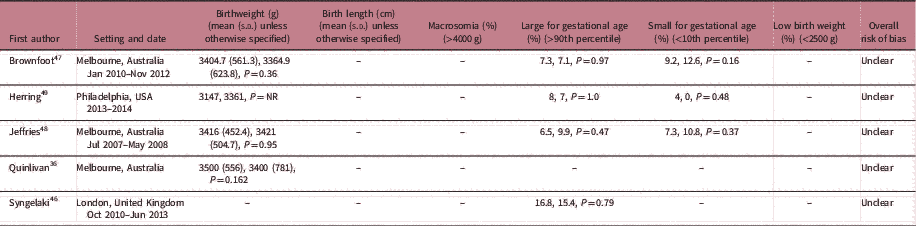
The main outcome measures were birthweight, birth length, macrosomia, LBW, SGA and LGA. Studies were pooled into intervention categories for analysis. Eight categories emerged from the resultant literature: diet alone, PA alone, lifestyle (diet and PA), other, GDM diet, GDM lifestyle, GDM metformin and GDM ‘other’. Studies categorized as ‘other’ did not have interventions that satisfied the other categories listed. Where studies reported results of subgroups but not overall results (such as by maternal BMI category), the groups were combined using the Cochrane formula for combining groups.Reference Higgins and Green25 For studies with more than one arm, only the most intensive arm was chosen for the meta-analysis as not to duplicate representation from control groups.Reference Renault, Nørgaard and Nilas26–Reference Bogaerts, Devlieger and Nuyts31 However, an exception to this rule was a study conducted by Ainuddin et al. Reference Ainuddin, Karim, Hasan and Naqvi30 compared metformin alone, metformin and insulin and insulin alone. For this study only the metformin and insulin alone arms were included in the meta-analysis to ensure appropriate comparison to other studies included. Further, comparator groups were defined as standard care following antenatal care guidelines as appropriate. Studies that reported standard error of the mean (s.e.m.) were converted to standard deviation (s.d.).Reference Clapp, Kim, Burciu and Lopez32–Reference Grant, Wolever, O’Connor, Nisenbaum and Josse38 Studies were excluded from the meta-analysis for the following reasons: (i) no true control (n=6),Reference Clapp, Kim and Burciu33–Reference Moses, Casey and Quinn35, Reference Markovic, Muirhead and Overs39–Reference Silva, Pacheco and Bizato41 (ii) inadequate statistical reporting,Reference Rae, Bond and Evans42, Reference Polley, Wing and Sims43 (iii) studies did not have standard criteria for LGA,Reference Renault, Nørgaard and Nilas26, Reference Oostdam, Van Poppel and Wouters44 SGAReference Renault, Nørgaard and Nilas26 or macrosomia,Reference Thornton, Smarkola and Kopacz45 (iv) studies that were too heterogeneous to compare (other and GDM other category) Reference Quinlivan, Lam and Fisher36, Reference Syngelaki, Nicolaides and Balani46–Reference Herring, Cruice and Bennett49 and (v) data were reported as mean±s.e.m. but when converted to s.d. data were biologically implausible.Reference Clapp, Kim, Burciu and Lopez32
Actual mean difference meta-analyses were conducted on birthweight and birth length to enable ease of interpretation.Reference Takeshima, Sozu and Tajika50 Risk ratio meta-analyses were conducted for dichotomous data which includes the prevalence of LGA, SGA, macrosomia and LBW. The I 2 statistic was used as an assessment of heterogeneity, with an I 2 statistic of >50% regarded as substantial heterogeneity.Reference Higgins and Green25 Funnel plots were used to visually analyze if large studies were influencing the results of the meta-analyses. Sensitivity analyses were conducted removing one study at a time, to assess the bias of one study. Meta-regression used ‘high’ risk of bias as a covariate to explain heterogeneity and explore the relationship with effect size of studies with a ‘high’ risk of bias. Statistical analyses were conducted using Stata/SE 13.1. P-values <0.05 were considered statistically significant.
Results
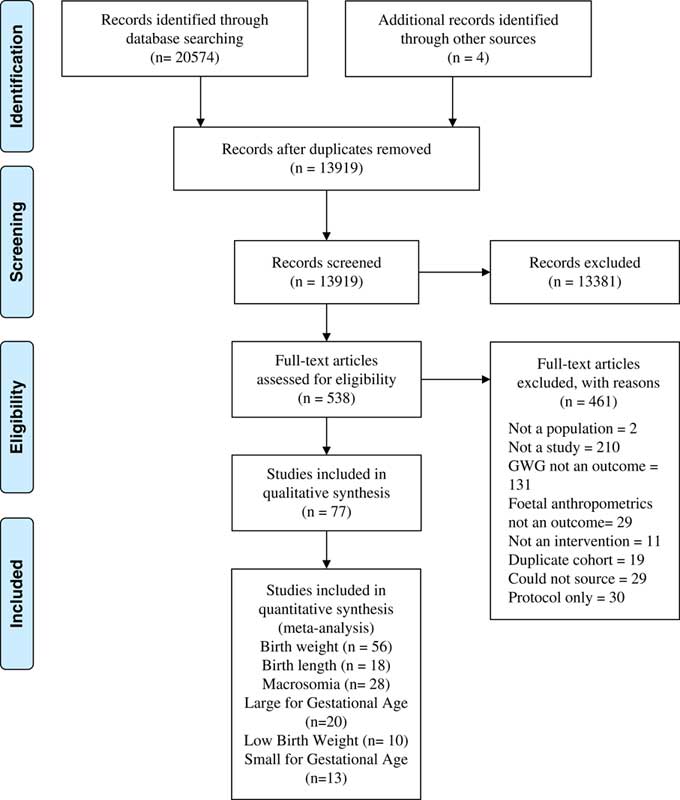
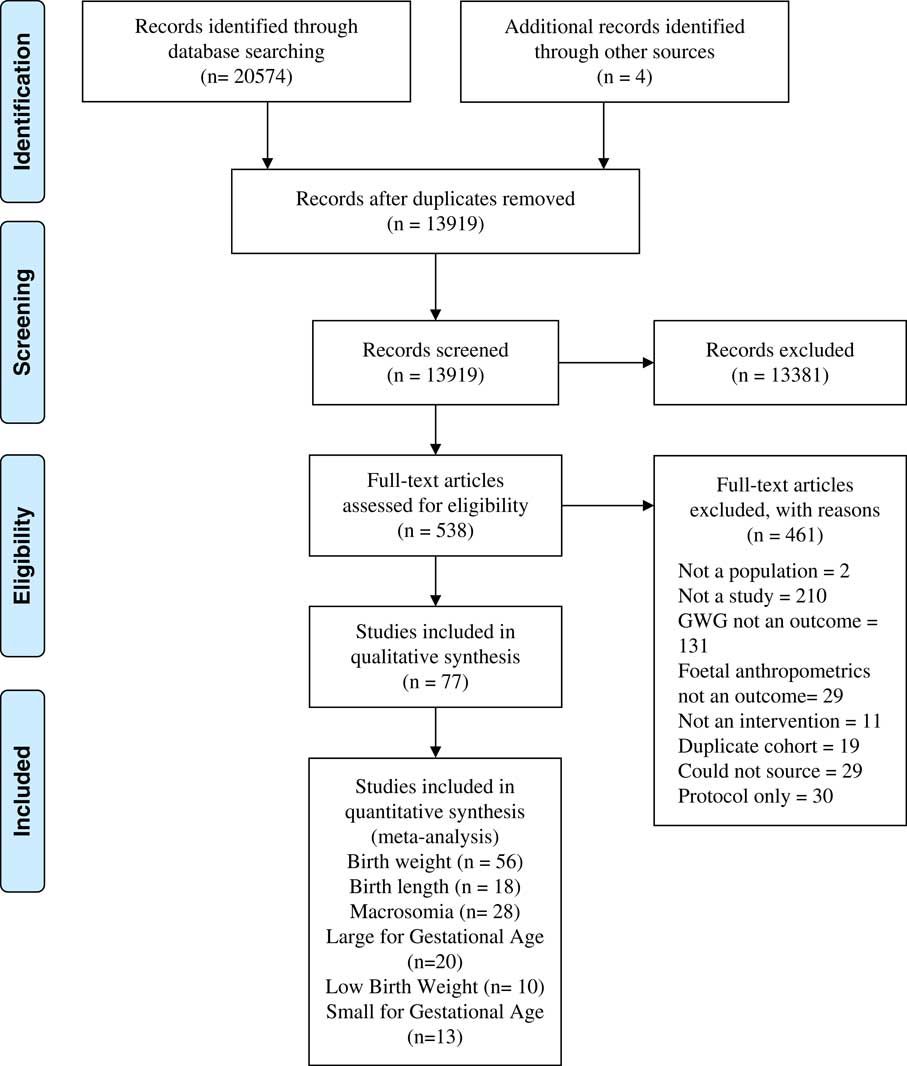
Of the 20,578 records screened, 77 studies were included in this review (Fig. 1). Information regarding the intervention and demographic information are available in Supplementary Tables 2–6. Briefly, all interventions included singleton pregnancies with mean maternal age ranging from 24 to 36 years, baseline BMI ranging from 20.2 to 38.6 and percentage of preterm births ranging from 0.8 to 19%. Further, the included studies represent results from 19,806 infants from 20 countries including: America, Australia, New Zealand, Brazil, Canada, China, Denmark, Finland, Iran, Ireland, Italy, Germany, Spain, United Kingdom, Pakistan, Norway, Belgium, Turkey, Sweden and The Netherlands.
PRISMA diagram of included studies.
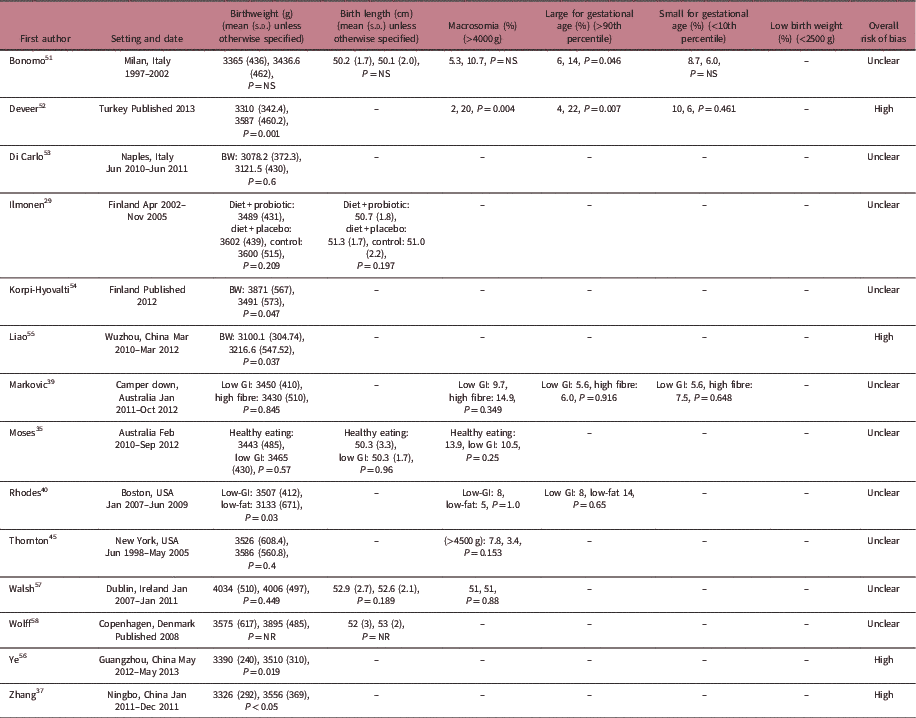
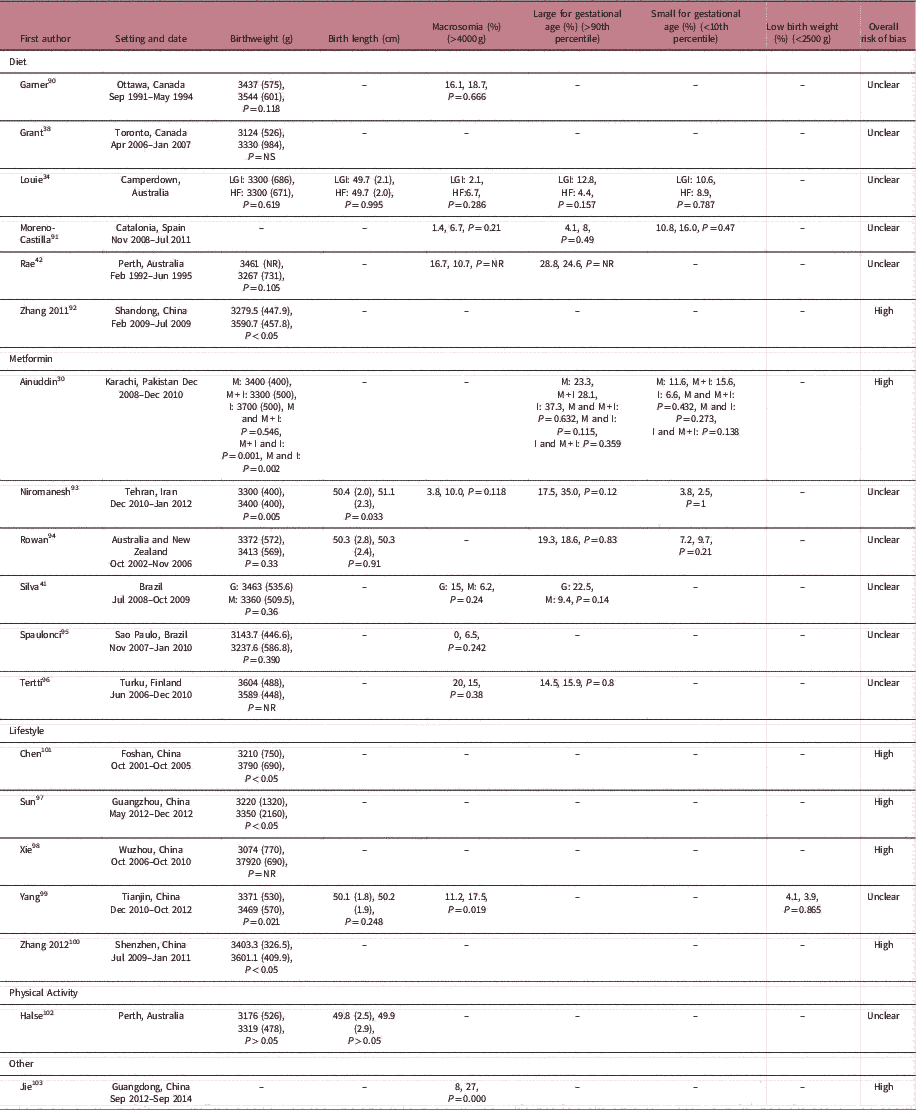
Interventions were categorized into the following groups; diet (n=14),Reference Ilmonen, Isolauri, Poussa and Laitinen29, Reference Moses, Casey and Quinn35, Reference Zhang37, Reference Markovic, Muirhead and Overs39, Reference Rhodes, Pawlak and Takoudes40, Reference Thornton, Smarkola and Kopacz45, Reference Bonomo, Corica and Mion51–Reference Wolff, Legarth, Vangsgaard, Toubro and Astrup58 PA (n=18),Reference Clapp, Kim, Burciu and Lopez32, Reference Clapp, Kim and Burciu33, Reference Oostdam, Van Poppel and Wouters44, Reference Barakat, Cordero, Coteron, Luaces and Montejo59–Reference Petrella, Malavolti and Bertarini74 lifestyle (diet and PA) (n=21),Reference Renault, Nørgaard and Nilas26–Reference Ruchat, Davenport and Giroux28, Reference Bogaerts, Devlieger and Nuyts31, Reference Polley, Wing and Sims43, Reference Petrella, Malavolti and Bertarini74–Reference Vinter, Jensen, Ovesen, Beck-Nielsen and Jørgensen89 diet alone for women with GDM (n=6),Reference Clapp, Kim and Burciu33, Reference Louie, Markovic and Perera34, Reference Grant, Wolever, O’Connor, Nisenbaum and Josse38, Reference Rae, Bond and Evans42, Reference Garner, Okun and Keely90–Reference Zhang92 metformin compared with standard care of insulin for women with GDM (n=5),Reference Ainuddin, Karim, Hasan and Naqvi30, Reference Niromanesh, Alavi and Sharbaf93–Reference Tertti, Ekblad, Koskinen, Vahlberg and Rönnemaa96 metformin compared with glyburide for women with GDM (n=1),Reference Silva, Pacheco and Bizato41 lifestyle for women with GDM (n=5),Reference Chen, Zhang and Hu67, Reference Sun, Chen and Liang97–Reference Chen, Fang and Zhen101 PA for women with GDM (n=1),Reference Halse, Wallman, Dimmock, Newnham and Guelfi102 ‘other’ in women without GDM (n=5)Reference Quinlivan, Lam and Fisher36, Reference Syngelaki, Nicolaides and Balani46–Reference Herring, Cruice and Bennett49 and ‘other’ for women with GDM (n=1).Reference Jie, Liang, Hong, Wu and Ke103 Study characteristics and methodological quality have been reported previously.Reference Walker, Bennett and Blumfield22 For individual results reported in this review, see Tables 1–5.
Infant anthropometric outcomes in studies with a dietary intervention

NR, not reported; NS, not significant; GI, glycaemic index; ‘–’, data not available.
Results presented: intervention, control.
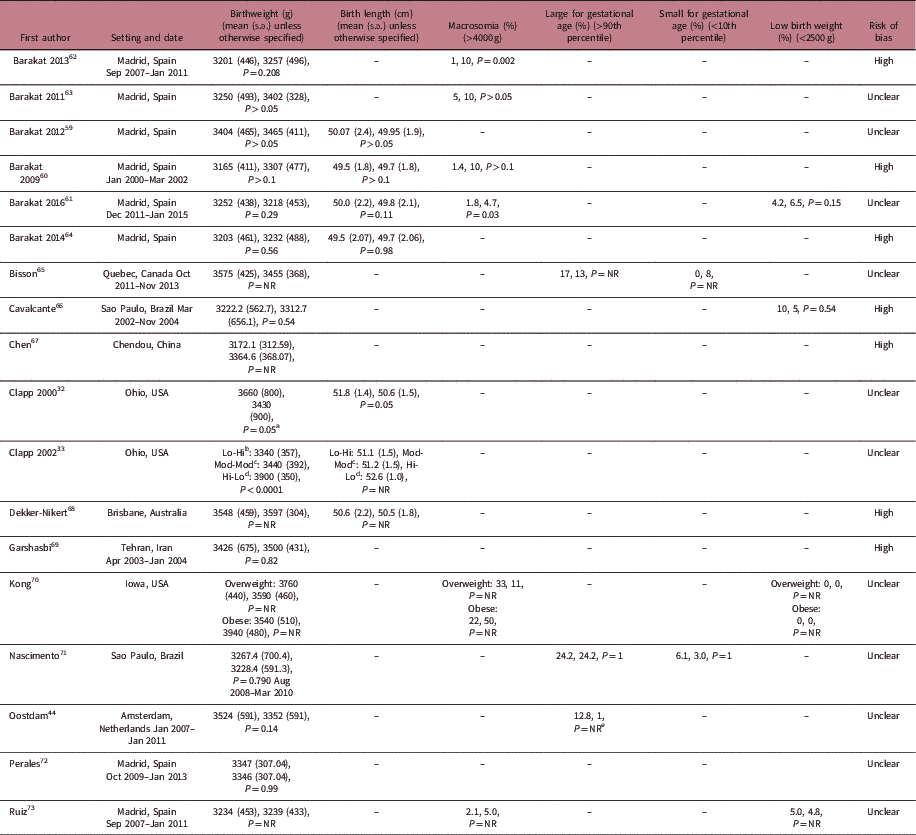
Infant anthropometric outcomes in studies with a physical activity intervention

NR, not reported; NS, not significant; ‘–’=data not available.
Results presented: intervention, control.
aReported as mean±s.e.m.
bLo-Hi: 20 min 5 days a week through week 20, gradually increasing to 60 min 5 days a week by week 24 and maintaining that regimen until delivery.
cMod-Mod: 40 min 5 days a week from week 8 until delivery.
dHi-Lo: 60 min 5 days a week through week 20, gradually decreasing to 20 min 5 days a week by week 24 and maintaining that regimen until delivery.
eReported >97th percentile.
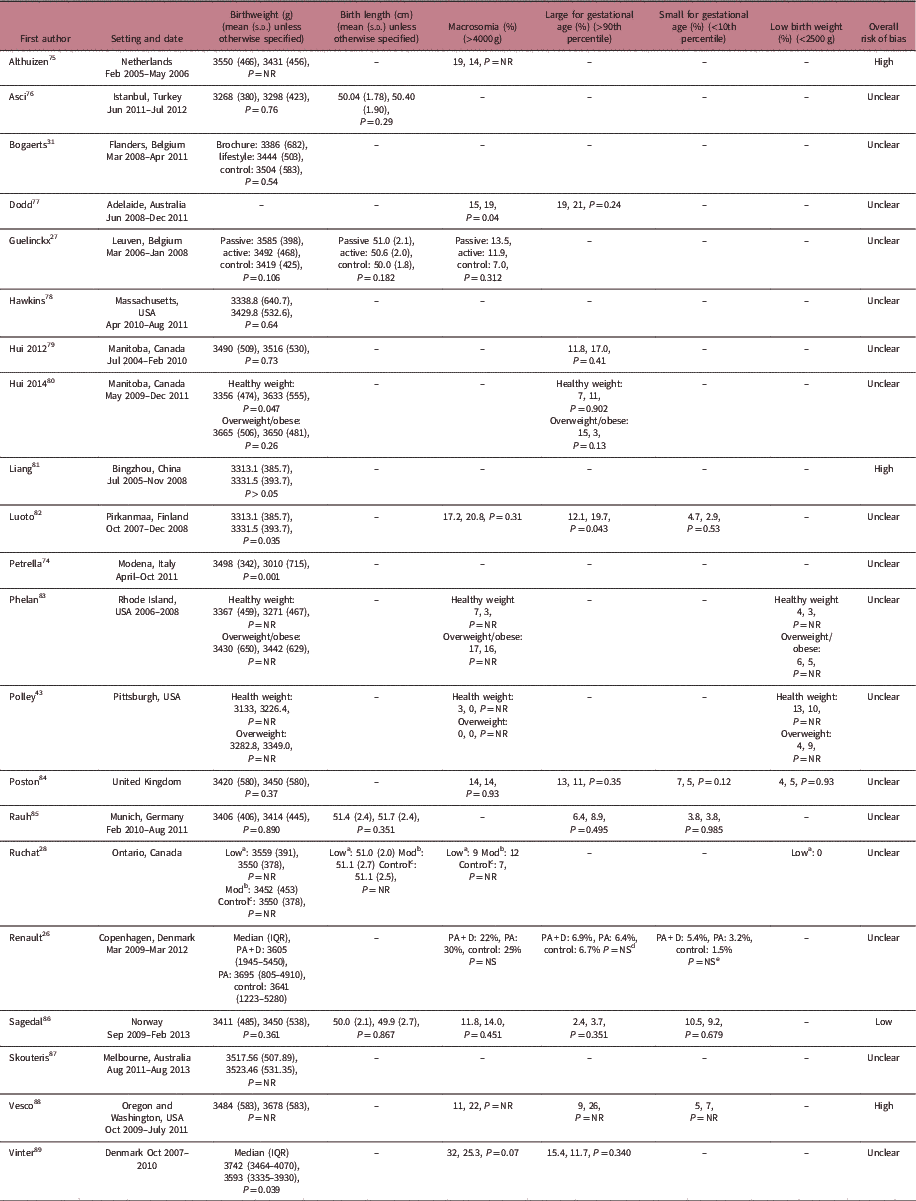
Infant anthropometric outcomes in studies with a lifestyle intervention

IQR, interquartile range; NR, not reported; NS, not significant; PA, physical activity; D, diet symbols; ‘–’, data not available.
Results presented: intervention, control.
aLow=low intensity physical activity+diet intervention.
bMod=moderate intensity physical activity+diet intervention.
cControl=dietary advice.
d124% of relative birthweight.
e76% or less of relative birthweight.
Infant anthropometric outcomes in studies in women with gestational diabetes mellitus

M, metformin; I, insulin; G, glyburide; LGI, low glycaemic index; HF, high fibre; NS, not significant; NR, not reported; ‘–’, data not available.
Results presented: intervention, control.
Infant anthropometric outcomes in studies with an intervention categorized as ‘other’

NS, not significant; NR, not reported; ‘–’, data not available.
Results presented: intervention, control.
Overall
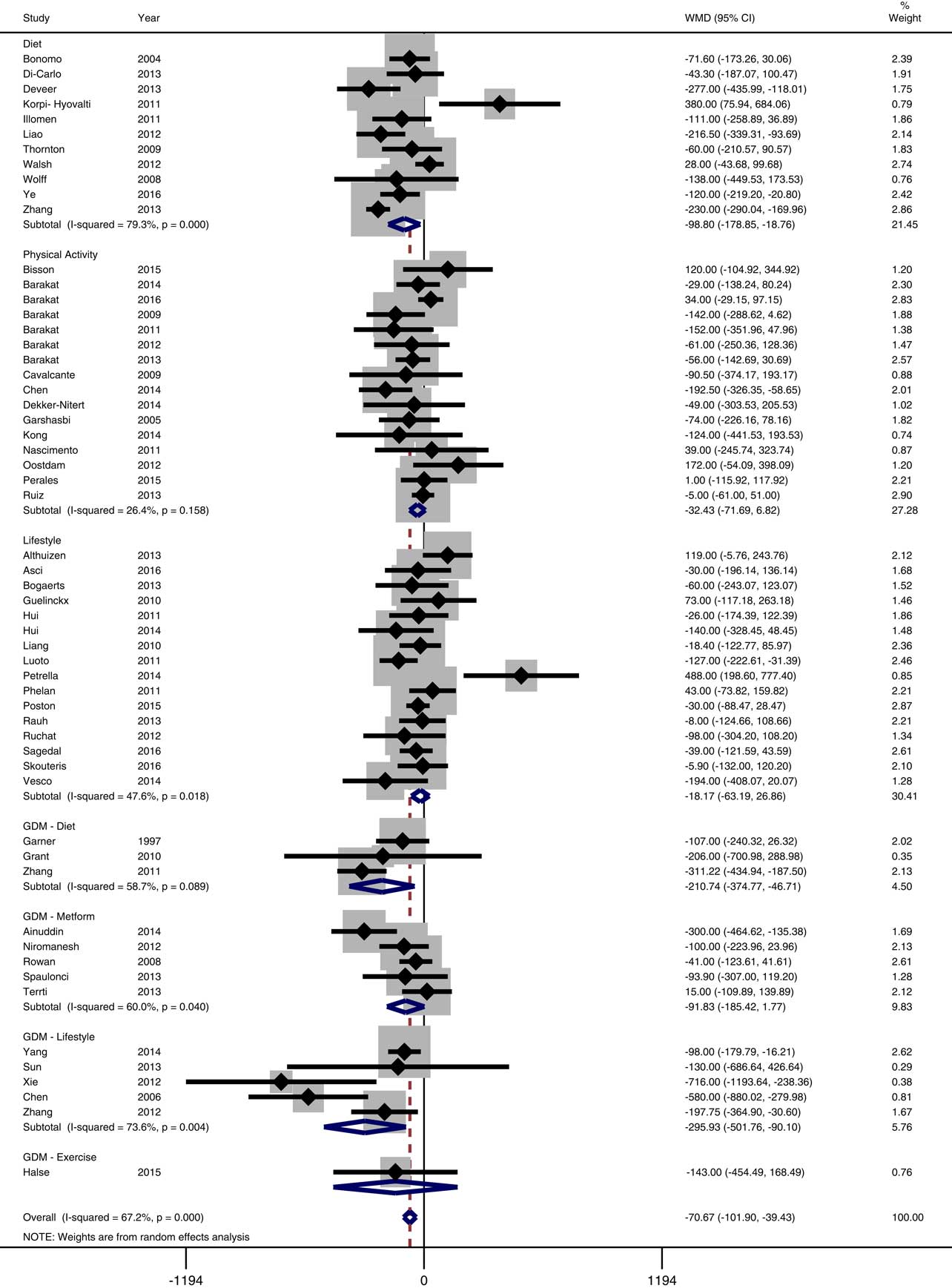
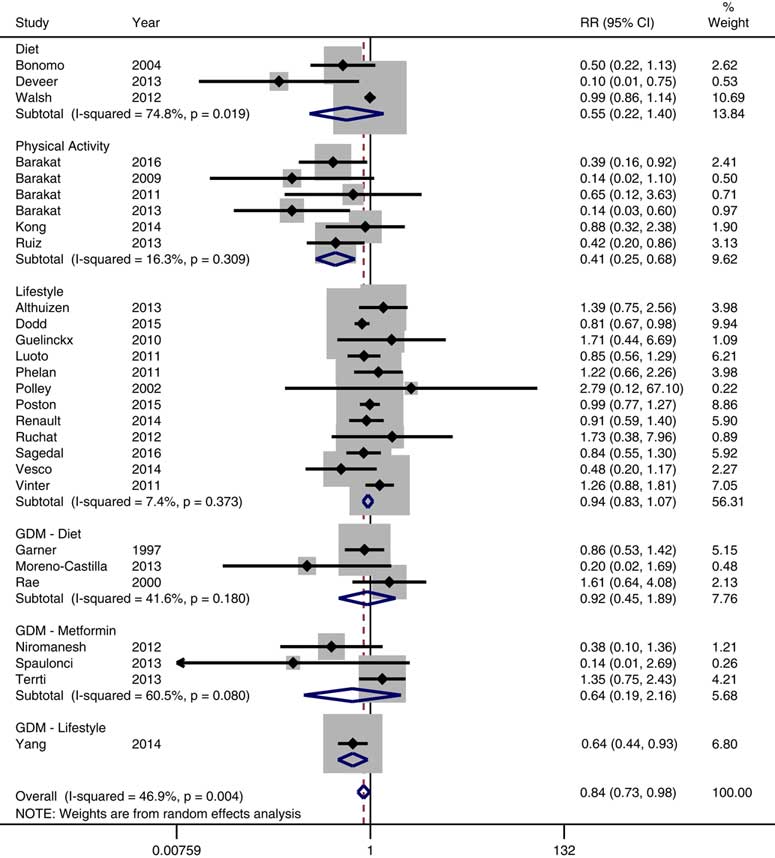
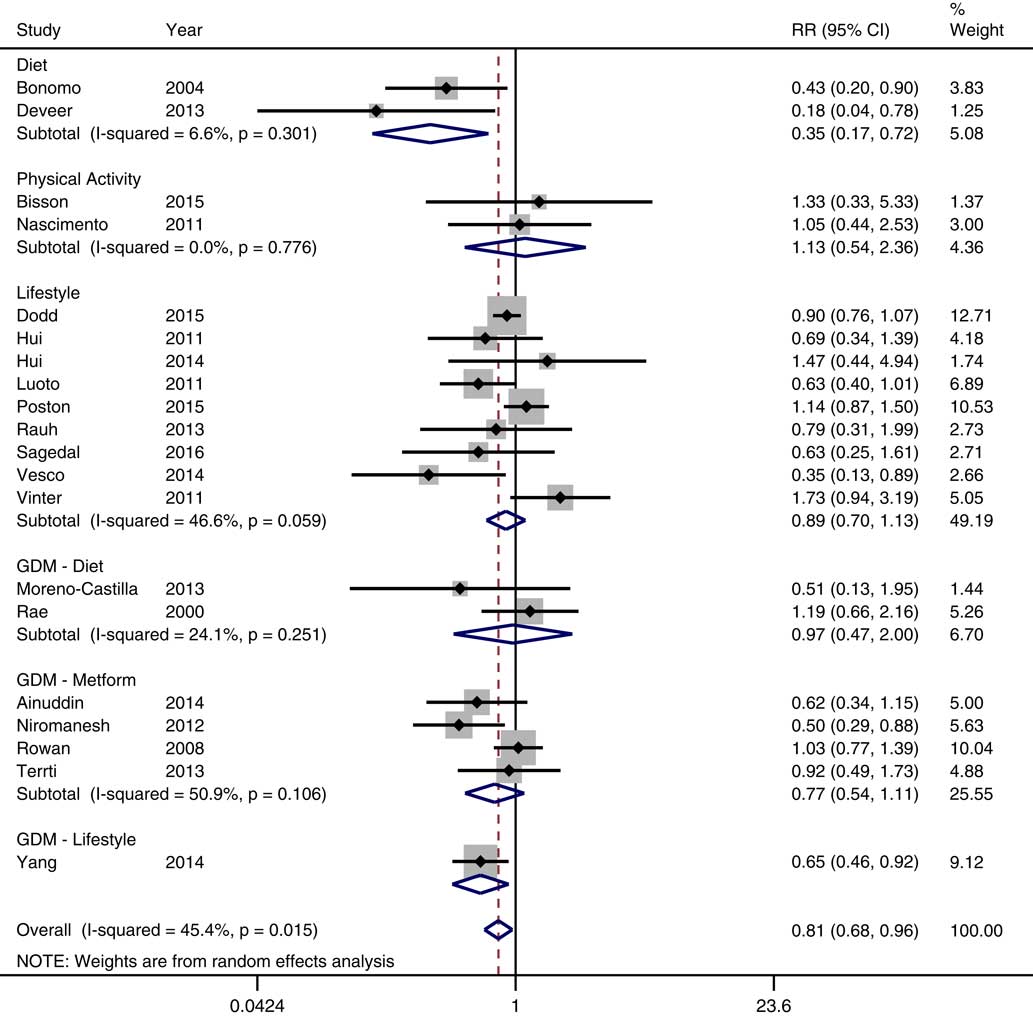
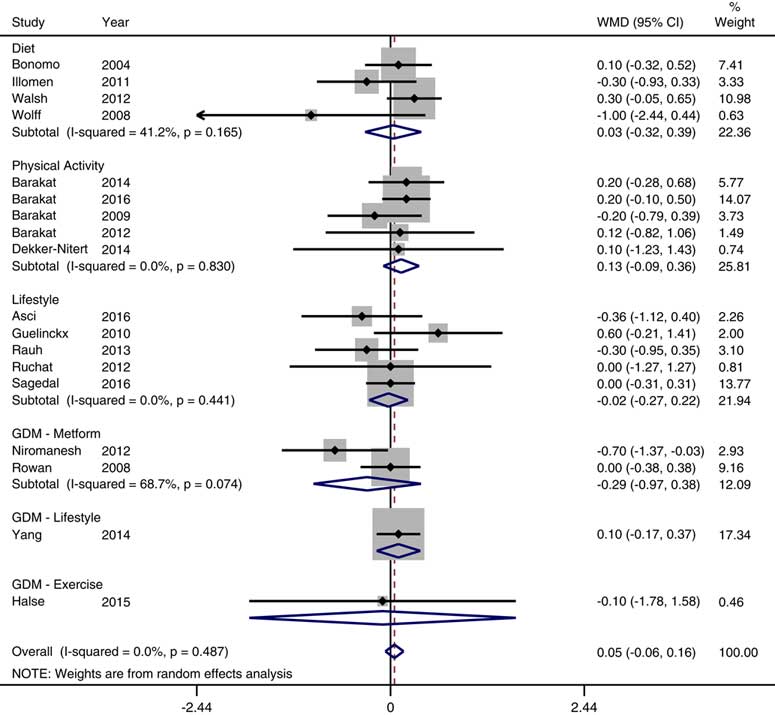
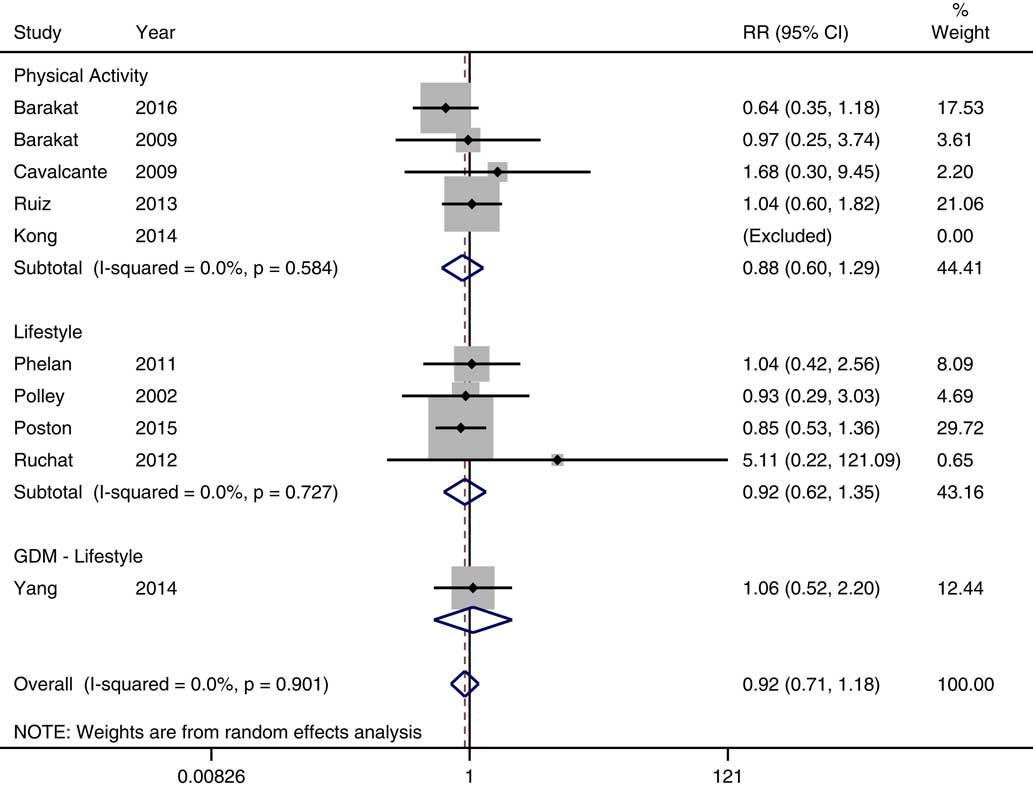
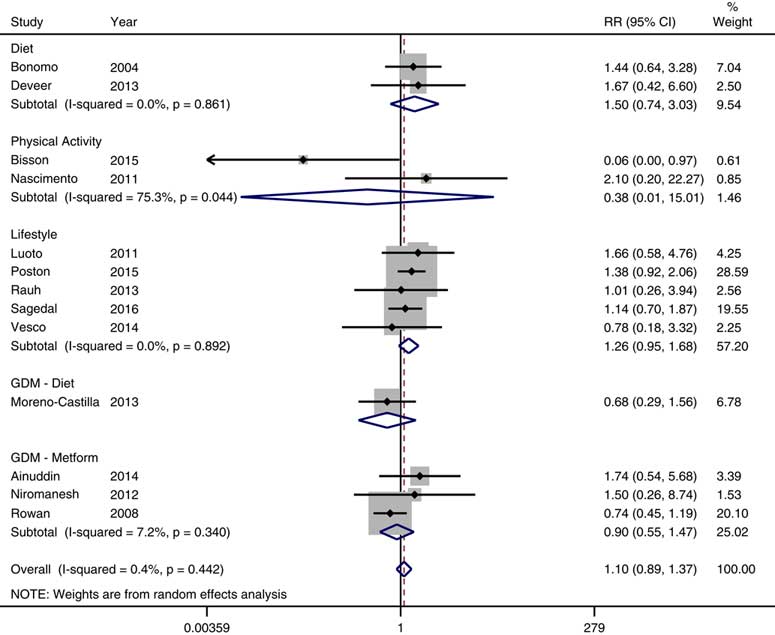
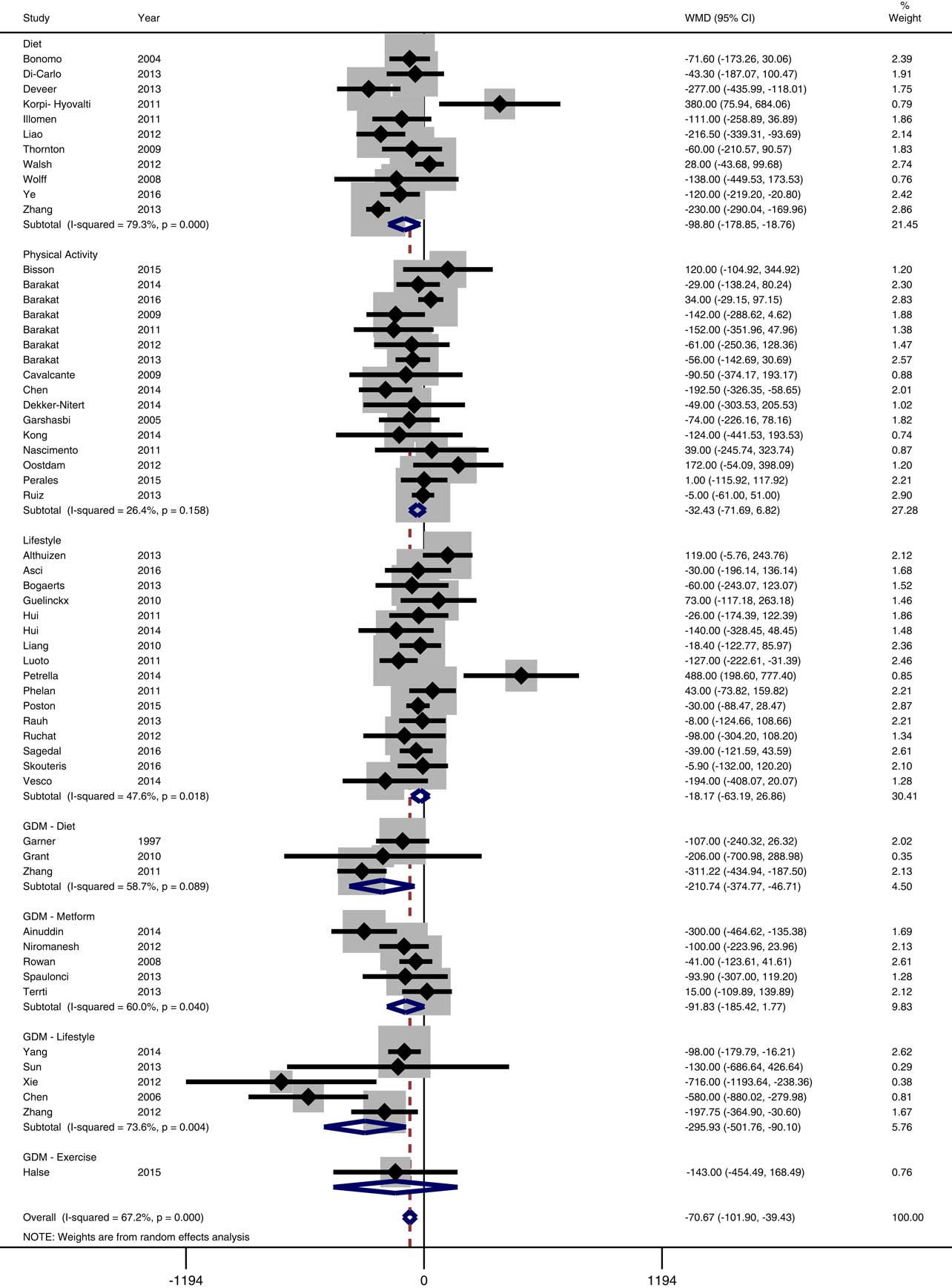
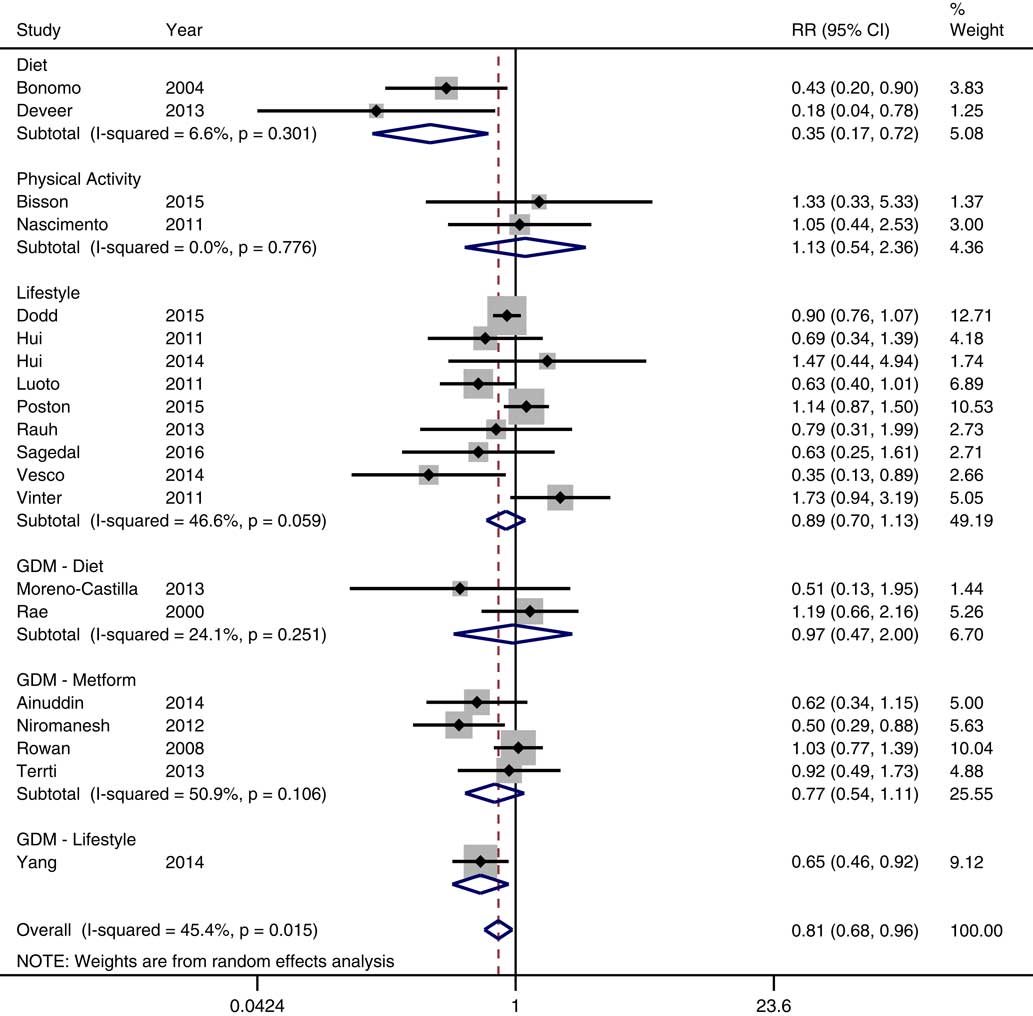
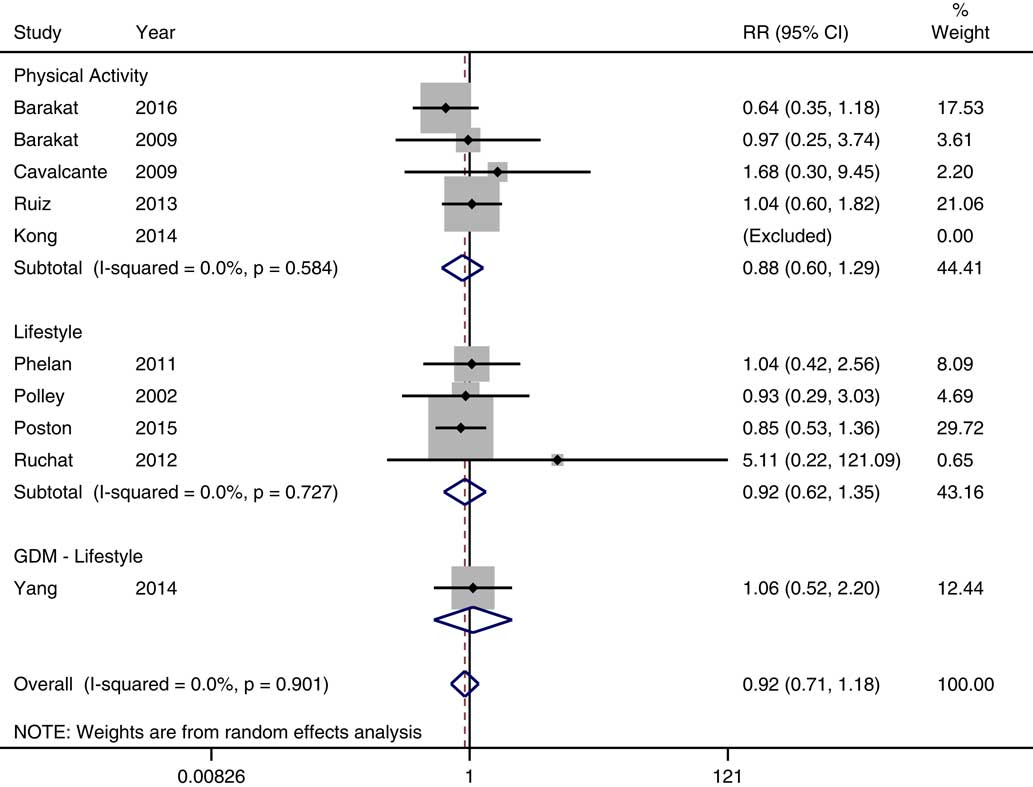
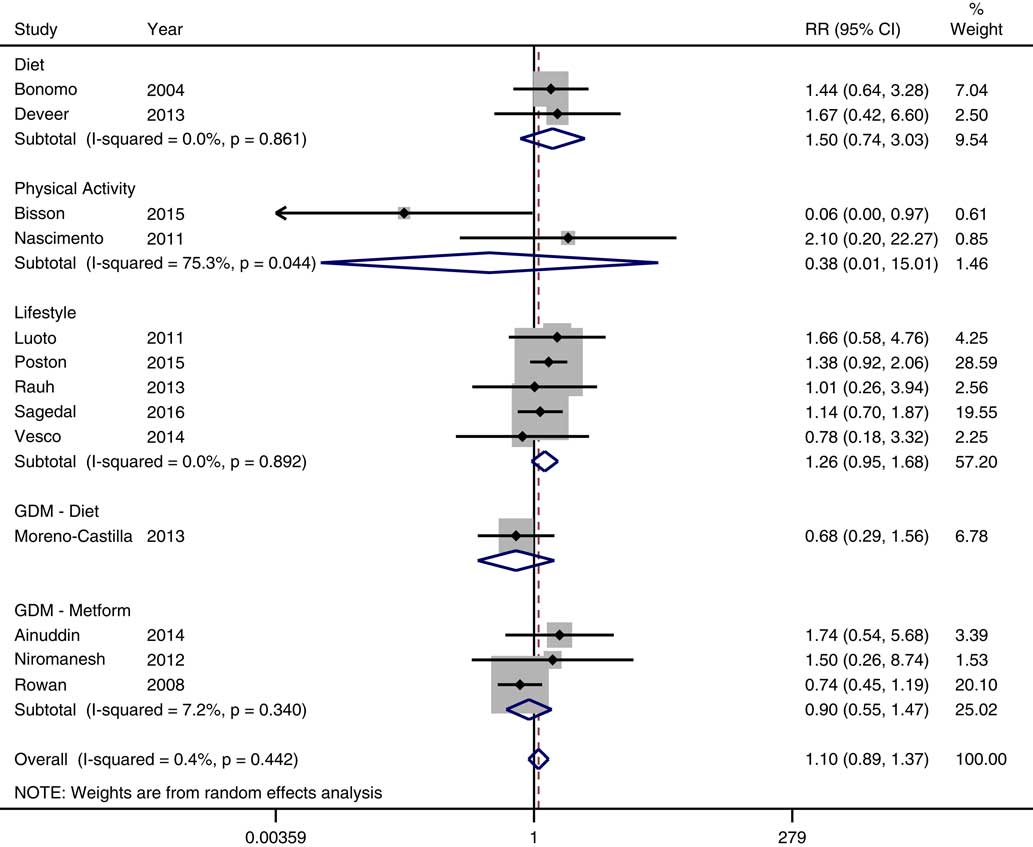
Regardless of intervention type, studies designed to reduce excessive GWG reduced offspring birthweight by 71 g (WMD: −70.67, 95% CI −101.90 to −39.43, P<0.001, I 2=67.2%) (n=56 studies, Fig. 2) and reduced the risk of macrosomia by 16% (RR: 0.84, 95% CI 0.73–0.98, P=0.026, I 2=46.9%) (n=28 studies, Fig. 3). Studies that reported LGA incidence (n=20 studies) reduced the prevalence of LGA by 19% (RR: 0.81, 95% CI 0.68–0.96, P=0.015, I 2=45.4%) (Fig. 4). No intervention type significantly influenced the birth length (Fig. 5), risk of LBW (Fig. 6) or SGA (Fig. 7).
Infant birthweight weighted mean difference meta-analysis of randomized controlled trials designed to reduce excessive gestational weight gain.
Macrosomia relative risk meta-analysis of randomized controlled trials designed to reduce excessive gestational weight gain.

Large for gestational age relative risk meta-analysis of randomized controlled trials designed to reduce excessive gestational weight gain.
Infant birth length weighted mean difference meta-analysis of randomized controlled trials designed to reduce excessive gestational weight gain.

Low birth weight relative risk meta-analysis of randomized controlled trials designed to reduce excessive gestational weight gain.
Small for gestational age relative risk meta-analysis of randomized controlled trials designed to reduce excessive gestational weight gain.
Women who started interventions without GDM
Diet interventions reduced infant birthweight by 99 g (WMD: −98.8, 95% CI −178.85 to −18.76, P=0.016, I 2=79.3%). Lifestyle and PA interventions did not result in a difference in birthweight (Fig. 2). PA interventions reduced the risk of macrosomia by 59% (RR: 0.41, 95% CI 0.25–0.68, P<0.001, I 2=16.3%) (Fig. 3). No significant differences in risk of macrosomia were found for any other intervention type. The risk of LGA was reduced 65% by diet interventions (RR: 0.35, 95% CI 0.17–0.72, P=0.004, I 2=6.6%) (Fig. 5). No other intervention type had significant results for birthweight, birth length, macrosomia, LBW, SGA and LGA.
Women with GDM
Diet and lifestyle interventions in women with GDM decreased infant birthweight by 211 and 296 g, respectively (WMD: −210.74, 95% CI −374.77 to −46.71, P=0.012, I 2=58.87% and WMD: −295.93, 95% CI −501.76 to −91.10, P=0.005, I 2=73.6%, respectively). Furthermore, interventions that used metformin did not significantly reduce or increase birth weight compared with insulin (Fig. 2). No other intervention type had significant results for birthweight, birth length, macrosomia, LBW, SGA and LGA.
Risk of bias
Overall risk of bias is available in Tables 1–5 and further details available in Supplementary Tables 2–6. Twenty-one studies received an overall ‘high risk’ of bias. Of the studies that received a ‘high risk’ of bias half did not clearly state the blinding protocol of participants or personnel. Furthermore, almost half did not adequately explain the randomization procedure (n=9) or method of allocation concealment (n=8). Fifty-five studies received an overall ‘unclear risk’ of bias. Of the studies that received an overall ‘unclear risk’, n=44 did not state the blinding of personnel and n=43 did not state the blinding of participants. Regardless of the overall risk of bias, n=52 studies received an ‘unclear’ for selective outcome reporting due to an inability to check reported outcomes with planned outcomes due to studies not having a published protocol. Visual, subjective assessment of funnel plots suggest a low to medium level of publication bias (Appendices 1–6).
Sensitivity analyses
When single studies were removed to examine sensitivity of estimates, the WMD and RR did not alter considerably, indicating that no single study introduced a high degree of bias.
Meta-regression quality assessment
‘High risk’ of bias used a covariate had a significant negative effect on the birthweight analysis (b=−106.82, 95% CI −171.71 to −41.94, P=0.002). No other meta-analysis effect size was significantly impacted by risk of bias.
Discussion
This review found that interventions designed to prevent excessive GWG during pregnancy had a significant impact on infant anthropometric outcomes including birthweight, macrosomia and LGA. In women without GDM, diet interventions were effective in reducing birthweight, while PA interventions reduced the risk of macrosomia. In women with GDM, both diet and ‘lifestyle’ interventions reduced offspring birthweight.
Results indicate that interventions delivered to the mother during the antenatal period can reduce birthweight and the risk of macrosomia and LGA. Previous research has suggested that a reduction of only 1–2 kg during pregnancy is not enough to reduce adverse pregnancy outcomes, especially in the overweight and obese population, and hence interventions are not worthwhile.Reference Oteng-Ntim, Tezcan, Seed, Poston and Doyle104 However, this theory is not supported by the findings of this systematic review. The primary outcomes of this review showed that interventions designed to reduce GWG, were modestly successful, but only reduced GWG by 1–2 kg on average,Reference Walker, Bennett and Blumfield22 which is consistent with previous systematic reviews.Reference Tanentsapf, Heitmann and Adegboye16, Reference Thangaratinam, Jolly and Glinkowski17, 21 In juxtaposition, the infant anthropometric results of this review are contrary to some previous reviews, which suggest that there was no significant difference between infant birth weight and risk of macrosomia, when intervention and control groups were compared.Reference Muktabhant, Lumbiganon, Ngamjarus and Dowswell15, Reference Thangaratinam, Jolly and Glinkowski17 The current review builds on the previous review as it has a more diverse sample and is tightly controlled for bias. Furthermore, results suggests that regardless of the IOM classifications of excessive GWG, interventions can reduce the risk of adverse infant anthropometric outcomes associated with excessive GWG.
Maternal diet has been shown to influence infant body composition.Reference Blumfield, Hure and MacDonald-Wicks105 Multiple methods of dietary interventions that lead to macronutrient distribution manipulation were included in this review. The success of diet interventions observed in this review are supported by findings from animal and human studies which suggested that manipulating the macronutrient distribution to provide a low protein diet could increase fat deposition,Reference Rehfeldt, Lang and Gors106 predominantly centrally deposited,Reference Langley-Evans107 which in turn can also affect an infant’s body composition.Reference Blumfield, Hure and MacDonald-Wicks105, Reference Blumfield and Collins108 More specifically, maternal low protein and low ratio of protein:carbohydrate diets are associated with abdominal fat deposition.Reference Blumfield, Hure and MacDonald-Wicks105 Further, maternal high polyunsaturated fat diets are associated with healthful upper thigh fat deposition.Reference Blumfield, Hure and MacDonald-Wicks105 Therefore, the results of this review support existing literature and suggest offspring of women who are at high risk of excessive GWG may benefit from maternal dietary counselling in pregnancy.
The influence of interventions on infant anthropometric outcomes in women with GDM was the most profound. Women with GDM are three times as likely to have a high birthweight infant compared with normoglycaemic mothers, due to increased insulin resistance in the mother.Reference Kc, Shakya and Zhang109 The modified Penderson’s hypothesis purports that the size of the infant is not directly fuel mediated, but indirectly through fetal hyperinsulinemia response which increases fat deposition.Reference Kamana, Shakya and Zhang110 This hypothesis suggests that maternal glycaemic control is imperative to the health of the fetus and therefore the decreased risk of macrosomia and LGA may be partially explained by improved glycaemic control in the intervention groups compared with controls. The results of this study highlights the importance of maternal glycaemic and GWG control in GDM for the health of both mother and child, supporting currently primary care guidelines. Furthermore, interventions that reduce infant birthweight and risk of macrosomia and LGA, without increasing adverse outcomes such as SGA and LBW may have long term positive outcomes for the infants. Infants born macrosomic are more likely need an caesarean section delivery, suffer from birth trauma and have an increased risk of severe neonatal morbidity.Reference Khambalia, Algert, Bowen, Collie and Roberts111
Strengths and limitations
A strength and novel aspect of this systematic review was the international sample of studies included. This is the first systematic review considering the infant anthropometrics of studies designed to prevent GWG that has included studies from China, largely inaccessible to those outside of China. The Chinese population contribute almost 20% of the world’s population.112, 113 Furthermore, globalization is increasing and therefore, healthcare settings and recommendations need to be applicable to a wider variety of ethnicities. A limitation of this review was the inclusion of only a small number of studies that addressed the outcomes SGA and LBW. For future studies considering the role of intervention in preventing or reducing GWG, it is recommended to report infant outcomes such as SGA and LBW. Further, the majority of studies defined macrosomia to be >4000 g. However, it has been suggested that a cut off of >4500 g may be more indicative of complications in some ethnic groups.Reference Ye, Torloni and Ota114 Therefore, future studies should endeavour to use appropriate cut offs for the ethnic population represented.Reference Pasupathy, McCowan and Poston115 Another limitation of this review is that n=28 studies included in this review were considered to be ‘high’ risk of bias. To ensure these studies were not significantly influencing results a meta-regression was conducted with ‘high-risk’ as a covariate. This showed that birthweight, but no other outcome was significantly influenced. Therefore, the weighted mean difference of birthweight should be interpreted with caution. However, this highlights that research in this area need to improve reporting clarity and transparency. Not including studies with a high risk of bias would have significantly reduced the translatability of results to a global sample, as studies published in languages other than English had a higher prevalence of high risk of bias. Further, the meta-analyses show high statistical heterogeneity. However, steps were taken to account or examine the effects of this issue, for example, use of random effects model and conducting sensitivity analyses. It is recognized by the authors of this review that to blind participants in a diet, exercise or lifestyle intervention is extremely difficult. However, future studies in this area should clearly report the blinding procedure of both participants and personnel. As with any systematic review, the results of this review contain the available evidence and therefore is limited by the selection bias of the studies included.
Conclusion
Interventions designed to reduce excessive GWG produce a small reduction in infant birthweight and risk of macrosomia and LGA, without influencing birth length or risk of adverse outcomes such as LBW and SGA. Regardless of the intervention type (diet, PA or lifestyle (diet+PA)), these interventions have the potential to significantly reduce the life-long consequences of high birthweight in offspring born to women at high risk of excessive GWG and GDM. Interventions designed to reduce excessive GWG are confirmed to be an important strategy available to improve the health of the next generation.
Financial Support
This article received no other financial support.
Conflicts of interest
The authors have nothing to declare.
Supplementary material
To view supplementary material for this article, please visit https://doi.org/10.1017/S2040174418000879
Acknowledgment
This systematic review was conducted as part of a PhD funded by the Australian Government Research Training Scheme (RTS).