Introduction
Older prisoners are the fastest growing age group of inmates in various prison systems around the world, including in the USA, UK, and Australia among others (Baidawi et al., Reference Baidawi2011; Kingston et al., Reference Kingston, Mesurier, Yorston, Wardle and Heath2011; Aday and Krabill, Reference Aday, Krabill and Gideon2012). For instance, the number of prisoners aged 50 years and older in Australia rose by 83% over the decade 2000–2010 compared to a 36% increase in the prisoner population aged less than 50 years (Baidawi et al., Reference Baidawi2011). Three sub-populations of older prisoners are typically described: those who first enter prison at an older age, those who grow old while incarcerated for long terms, and aging recidivist offenders who enter and exit prison over their lifetime (Aday and Krabill, Reference Aday, Krabill and Gideon2012). Given the population growth of older prisoners correctional services require an understanding of this group, including different subgroups of older prisoners, to enable effective planning and management strategies.
One identified issue is the psychological well-being of older inmates. To date, qualitative studies of older prisoners in the USA and the UK have depicted a largely neglected and marginalized inmate group whose needs are often poorly catered for in the prison environment (Wahidin, Reference Wahidin2004; Crawley, Reference Crawley2005). Aside from the human costs associated with poor well-being, there are economic incentives to examine this issue, given its bi-directional association with worsening health and functioning as well as higher levels of healthcare utilization (Atkins et al., Reference Atkins, Naismith, Luscombe and Hickie2013). In the context of limited correctional budgets and high prisoner healthcare costs, studying psychological well-being and its correlates may prove useful to identifying interventions which can improve well-being, reduce expenses associated with incarceration of older prisoners, and potentially lessen social costs following release.
This study considers psychological distress among older prisoners as a proxy indicator of well-being, and investigates its relationship to various socio-demographic, criminal justice, and mental health factors. However, it is first useful to contextualize this research by understanding how psychological distress presents both across the lifespan and within prison populations.
Psychological distress across the lifespan
In large scale community samples, the proportion of individuals meeting the diagnostic criteria for mental illnesses such as depression and anxiety generally reduces across the lifespan (O’Connor and Parslow, Reference O’Connor and Parslow2010). However, when quantified by dimensional measures using scaled instruments, average levels of psychological distress remain relatively stable – although slightly decreasing throughout adulthood, and moderately rising again in later old age (i.e. at 75–80 years) (Mirowsky and Ross, Reference Mirowsky and Ross1992; O’Connor and Parslow, Reference O’Connor and Parslow2010; Byles et al., Reference Byles, Gallienne, Blyth and Banks2012). Atkins and others (Reference Atkins, Naismith, Luscombe and Hickie2013) argue that later life depressive symptoms should be considered a public health issue given their association with physical morbidity and mortality, decreased physical functioning, high health service utilization, and increased risk of dementia. These issues become increasingly pertinent in the context of the general aging of Western populations.
Higher levels of psychological distress are associated with various fixed factors, including female gender, lower educational status, and increasing age after the age of 75 years (Mirowsky and Ross, Reference Mirowsky and Ross1992; Byles et al., Reference Byles, Gallienne, Blyth and Banks2012). However, modifiable factors associated with psychological distress are also identified, including levels of social support and engagement, physical activity, sleep cycles, functional status, and physical health burden (Paul et al., Reference Paul, Ayis and Ebrahim2006; Atkins et al., Reference Atkins, Naismith, Luscombe and Hickie2013).
Mental illness and psychological distress among older prisoners
Quantitative studies from the UK have determined that one half of older prisoners are estimated to suffer from mental illnesses, commonly depression or anxiety (Koenig et al., Reference Koenig, Johnson, Bellard, Denker and Fenlon1995; Fazel et al., Reference Fazel, Hope, O’Donnell and Jacoby2001; Kakoullis et al., Reference Kakoullis, LeMesurier and Kingston2010; Hayes et al., Reference Hayes, Burns, Turnbull and Shaw2012; Davoren et al., Reference Davoren2015). Two UK studies have also characterized mental health problems among older male prisoners as both underdiagnosed and undertreated (Fazel et al., Reference Fazel, Hope, O’Donnell and Jacoby2004; Kingston et al., Reference Kingston, Mesurier, Yorston, Wardle and Heath2011), with the mental health of older prisoners appearing worse than that of older people in the general community (Koenig et al., Reference Koenig, Johnson, Bellard, Denker and Fenlon1995; Kingston et al., Reference Kingston, Mesurier, Yorston, Wardle and Heath2011).
Previous studies (primarily from North America and the UK) indicate older prisoners experience levels of psychological distress which are similar to that of younger prisoners (Teller and Howell, Reference Teller and Howell1981; Gallagher, Reference Gallagher1988; Vega and Silverman, Reference Vega and Silverman1988) and higher than that of older people in the community (Vega and Silverman, Reference Vega and Silverman1988; Burling, Reference Burling1999). These comparative studies however, are all highly dated, and none have included older female prisoners. There is also a small body of the qualitative and quantitative literature concerning the factors relating to psychological distress among older prisoners, including physical and mental health issues, access to appropriate healthcare, experiences of victimization, issues of the prison environment, social relationships, and access to prison programs (see, e.g. Gallagher, Reference Gallagher1988; Wahidin, Reference Wahidin2004; Crawley, Reference Crawley2005; Murdoch et al., Reference Murdoch, Morris and Holmes2008; Aday and Krabill, Reference Aday, Krabill and Gideon2012).
There is a dearth of quantitative studies examining gender differences in psychological distress among older prisoners. Yet the poor health and physical functioning of older female prisoners alongside detailed qualitative studies describing the impact of imprisonment upon older women suggest a need for further analysis of gender differences in distress among older prisoners (Wahidin, Reference Wahidin2004; Williams et al., Reference Williams, Lindquist, Sudore, Strupp, Willmott and Walter2006). Qualitative studies also describe both the entry and release phases of imprisonment as times of heightened distress, though there is only limited quantitative evidence to evaluate whether these are ubiquitous experiences of older prisoners (see, e.g. Murdoch et al., Reference Murdoch, Morris and Holmes2008). No other findings could be located which compare distress or adjustment among older prisoners in various security settings or placement types.
Given the growth of the older prisoner group, as well as the high prevalence of mental illness among older prisoners, knowledge concerning psychological distress among this group could enable the monitoring of well-being, and the consideration of mediating factors and interventions which may improve the welfare of older inmates. However, there remain few dedicated studies in this area; the quantitative evidence is mainly derived from studies of older male prisoners, and largely originates from North America, limiting its generalizability due to substantial international differences between correctional systems. This study therefore aimed to address this research gap, and contribute to the broader Australian and international literature concerning the well-being of older prisoners, including older female inmates. Specifically, this paper aims (i) to determine the level of psychological distress among older prisoners and provide comparisons to the levels seen among younger prisoners and older people in the general community; and (ii) to investigate the relationships between psychological distress among older prisoners and mental health history, socio-demographic, and criminal justice factors. The research was part of a broader project examining the needs and management of older prisoners in two Australian states.
Methods
Sampling and recruitment
Prisons selected for data collection were those in two Australian states (Victoria and New South Wales) which accommodate and release the highest numbers of prisoners aged 50 years and older. The chosen age threshold is consistent with the majority of studies concerning older prisoner well-being published in the past few decades (Baidawi and Trotter, in press). As is the accepted norm in this area (see, e.g. Baidawi et al., Reference Baidawi2011; Leach and Neto, Reference Leach and Neto2011; Trotter and Baidawi, Reference Trotter and Baidawi2015), a modified definition of ‘older prisoner’ was adopted for Indigenous prisoners (aged 45 years and older) to account for the lower median age of death in this population (55.4 years for Indigenous males and 58.5 years for Indigenous females, compared to 78.4 years for all males and 84.6 years for all females in Australia in 2011) (ABS, 2011a).
Recruitment occurred from eight sites, including both male and female prisons, a variety of security ratings and both public and private prisons (see, Trotter and Baidawi, Reference Trotter and Baidawi2015 for further details). A disproportionate quota sampling strategy was used with a view to representing diversity of the older prisoner population. The older prisoner sample was to be evenly distributed between sentenced prisoners aged 50–64 years and those who were aged 65 years and older, and aimed to comprise a minimum female representation of 10%, with one half of the older prisoners recruited within 90 days of their expected release date, thus allowing prisoners to reflect on their prison experience. A smaller sample of 60 younger prisoners (aged under 50 years) from the same prison sites was included as a comparison group to identify differences between younger and older prisoners, all of whom were within 90 days of their expected release date. These criteria limiting the younger prisoner sample reflected both an aim of the broader study (comparison of the groups’ post-release experiences) and resource limitations. The one exclusion criterion for all recruitment was prisoners identified by the administration as potentially behaviorally or emotionally unstable (due to researcher and participant safety issues). Prisoners aged 50 years and older meeting the above criteria were forwarded a flyer advertising the study by prison program staff. All older prisoners and every fourth younger prisoner from the prisoner list who met the research criteria were forwarded a flyer advertising the study by prison program staff. Eligible prisoners opted into the research by notifying a nominated prison staff member of their interest until all quotas were filled for each group.
Data collection
Face-to-face structured interviews were conducted with consenting prisoners in Victoria throughout 2011, and in New South Wales in 2012 by one of three interviewers, all with prior experience in social work and/or corrections research. Interviews varied between 45 and 90 minutes’ duration, and took place in areas of the prison affording privacy (an office or program room with a closed door) in the absence of prison staff.
Instruments
The interview schedule comprised a combination of yes/no, scaled, and short answer questions concerning a variety of topics; those reported in this paper include socio-demographic characteristics, mental health history, and current experience of psychological distress. Psychological distress was measured using the K10 Scale, a 10-item measure of non-specific psychological distress, which includes items relating to depressed mood, nervousness, restlessness, worthlessness, fatigue, and hopelessness (Kessler et al., Reference Kessler2002). Respondents indicated how often they had experienced each of the items relating to psychological distress over the past four weeks on a scale of one (none of the time) to five (all of the time). The K10 Scale produces a score for each respondent ranging from 10 (indicating no distress) to 50 (indicating severe distress). The K10 Scale was chosen due its ease of administration, its ability to be delivered by lay interviewers, and its availability (both free to administer and available in the public domain) (Kessler et al., Reference Kessler2002). Additionally, comparison data are available for the Australian community (e.g. Slade et al., Reference Slade, Grove and Burgess2011) as well as samples of Australian prisoners (e.g. Butler et al., Reference Butler, Andrews, Allnutt, Sakashita, Smith and Basson2006), and the K10 Scale has been assessed with regard to numerous measures of reliability and validity (Kessler et al., Reference Kessler2002).
Total and average K10 scores of the prisoner samples were then compared to the general population using the Australian Health Survey (ABS, 2013), a national survey of over 20,000 Australians conducted by the Australian Bureau of Statistics between 2011–2013; The survey included, amongst other items, the K10 Scale. Cognitive functioning was assessed using the Mini-Mental State Examination (MMSE) (Folstein et al., Reference Folstein, Folstein and McHugh1975), a widely-used screen containing items relating to orientation, registration, recall, calculation and attention, naming, repetition, comprehension, reading, writing, and drawing; a score of 24 or greater (out of a maximum score of 30) is generally indicative of normal cognition.
Following interviews, other data were collected from each consenting participant's health file (e.g. mental health diagnoses and current medications) and corrections file (e.g. indigenous status, prior imprisonments, and information relating to the current imprisonment). Prescribed psychiatric medication reported in results includes antidepressant, antipsychotic, or mood stabilizer medications prescribed for the participant over the previous two years in prison.
Data analysis
Data were entered into IBM SPSS Statistics 22 software for analysis, with descriptive data reported in this paper (frequencies, means, and standard deviations). Independent samples t-tests were used to check for statistically significant differences in total K10 Scores for categorical dependent variables such as gender (p-values and Cohen's d reported), while bivariate correlations were used to analyze associations between total K10 scores and continuous variables such as age (p-values and correlation coefficient r reported). Finally, one-way between groups ANOVAs were used to explore relationships between total K10 scores and independent variables with more than two categorical levels (e.g. prison security classification). Further analysis was conducted with reference to criminal justice factors by dividing the older prisoner sample according to the three sub-populations of older prisoners typically described in the literature: first-time older prisoners (those fist entering prison for the first time older than 50 years) (81% of those classified), those received into prison aged under 50 years and serving more than four years (9% of those classified), and aging recidivist offenders who had served more than one prior sentenced term (10% of those classified). Most of the older prisoner sample (90%) could be classified based on these criteria.
While the dependent variable (K10 scores) is not normally distributed, the sample size is sufficient to permit the use of parametric statistical analyses. This was confirmed by the use of both parametric and non-parametric statistical techniques to analyze the data, which yielded the same findings. Where homogeneity of variance assumptions are violated, corrected values (e.g. p, df, and t) are reported. A multiple linear regression was then used to examine the proportion of the variance in older prisoners’ distress levels which can be explained by any independent variables identified as being associated with distress scores at the p < 0.1 level.
Results
Sample characteristics
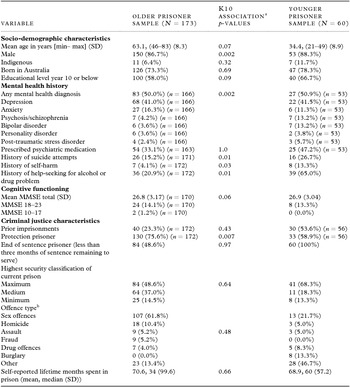
The final sample comprised 173 older sentenced prisoners of whom 48% (n = 83) were aged 65 years and older and 13% (n = 23) were female; a comparison sample of 60 younger prisoners were also included from the same prison locations. Most participants consented for health (96%) and correctional files (99%) to be accessed to collect additional data. Other participant characteristics and variables for analysis are presented in Table 1. These variables were informed by previous research, either comprising factors suggested to be associated with distress (e.g. gender, education level, mental health history), or areas for investigation of association with distress (e.g. protection status, prison security rating, cognitive functioning).
Selected characteristics of the older prisoner sample, p-values for associations with total K10 scores, and comparative data for the younger prisoner sample

Note: sample numbers are given where data were not available for the entire sample of prisoners.
aResults of tests of association between independent variables and total K10 scores for older prisoners: t-tests (2-tailed) for continuous independent variables, Fisher's exact tests (2-tailed) for dichotomous variables and one-way between groups ANOVA for independent variables with more than two levels (e.g. security classification).
bOffence types classified as violent, sexual, fraud, drug, and ‘other’ for tests of association with K10 scores.
Sample representativeness
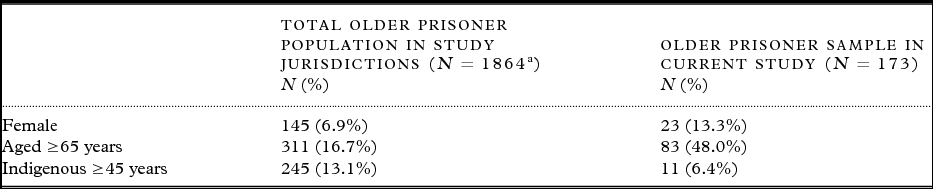
Table 2 below compares certain characteristics of the older prisoner sample with the older prisoner populations in the included jurisdictions at the time of data collection. As a result of the sampling strategy, females and prisoners aged 65 years and older were over-represented in the older prisoner sample, while Indigenous prisoners were under-represented. The younger prisoner sample was broadly reflective of the sample states’ prisoner populations in terms of mean age, and the proportion that were Australian-born; however, Indigenous prisoners are also under-represented in the younger prisoner sample.
Comparison of study sample to total older prisoner population

aBased on data from the Australian Bureau of Statistics (2011b, 2012) of the total older prisoner population (aged 50 years and older) in Victoria (2011) and New South Wales (2012) at the time of data collection. Total older prisoner population excludes Indigenous prisoners aged 45–50 years in the selected jurisdictions at the time of data collection (n = 145 prisoners).
K10 results and comparison to younger prisoners and general population
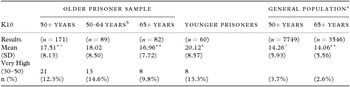
As shown in Table 3, the older prisoner sample (aged 50 years and older) had average total K10 scores which were significantly lower than that of the younger prisoner sample, (p = 0.04) though the effect size of this difference was small (Cohen's d = −0.28). Additionally, mean distress scores of older prisoners were significantly higher than those of older people in the general Australian population (p < 0.01) (see Table 3) (ABS, 2013).
Mean K10 scores: older prisoner sample, younger prisoner sample, and normative data

K10: Kessler Psychological Distress (10-item) Scale.
aWeighted population estimates based on use of Australian Bureau of Statistics (ABS) CURF data (ABS, 2013).
bIncludes Indigenous older prisoners aged 45–49 years.
*p = 0.04 + p < 0.0001 **p < 0.0001.
The proportion of older prisoners presenting with very high distress scores as defined by the cut-off points suggested by population studies (Slade et al., Reference Slade, Grove and Burgess2011) was more than three times the proportion seen in the general community, and not significantly different to the proportion of younger prisoners presenting with very high levels of distress.
Factors associated with psychological distress
Socio-demographic factors
Average total K10 scores decreased with age across the whole sample of prisoners (n = 231, p = 0.01 (2-tailed), Pearson correlation = −0.17); however, no statistically significant difference was detected in the mean K10 scores of older prisoners aged 50–64 years compared with those aged 65 years and older. Older female prisoners had significantly higher K10 scores (n = 22, M = 22.55, SD = 9.33) compared to older male prisoners (n = 149, M = 16.77, SD = 7.69); t(169) = −3.19, p = 0.002 (2-tailed), Cohen's d = −0.49. A higher proportion of older female prisoners had very high levels of distress compared to older male prisoners (22.7% vs. 10.7%), though this difference was not statistically significant (p = 0.15). No significant associations were detected between the K10 scores of older prisoners based on Indigenous status, being born in Australia or level of education, as shown in Table 1.
Mental health history
One half of older prisoners had at least one mental health diagnosis listed in their correctional health files, most commonly depression (41.0%) and anxiety (16.3%). Older females were significantly more likely to have a mental health diagnosis listed in their health files (77.3%, n = 22) compared to older male prisoners (45.8%, n = 144), p = 0.01 (2-tailed).
Older prisoners with psychiatric diagnoses listed on their correctional health files had significantly higher K10 scores (n = 81, M = 19.35, SD = 8.55) compared to those without any recorded diagnoses listed (n = 83, M = 15.47, SD = 7.05), t(155) = 3.164, p = 0.002 (2-tailed), Cohen's d = 0.50. Similarly, other mental health history variables were each associated with significantly higher mean K10 scores among older prisoners, including self-reported histories of suicide attempts (n = 26, M = 21.42, SD = 10.05, p = 0.033), self-harm (n = 7, M = 25.14, SD = 8.07, p = 0.011) and help-seeking for alcohol and other drug problems (n = 36, M = 20.81, SD = 8.38, p = 0.01); however, the effect sizes were small in each instance (Cohen's d = 0.40–0.43), with the exception of a history of suicide attempts, where the effect size was large (Cohen's d = 0.81). No differences in total K10 scores were detected between those older prisoners prescribed and not prescribed psychiatric medication in prison over the previous two years.
Cognitive functioning
Twenty-six older prisoners (15.3%) and eight younger prisoners (13.3%) scored less than 24 on the MMSE, which is generally indicative of reduced cognitive functioning. A small negative correlation (r = −0.14) was observed among MMSE and K10 scores among older prisoners; that is, as cognitive functioning declined distress levels increased across the older prisoner sample, though this relationship was not statistically significant (p = 0.06, 2-tailed).
Criminal justice factors
With the exception of protection status, none of the criminal justice variables listed in Table 1 (prior imprisonments, time remaining to serve, offence type, security classification, and lifetime months in prison) were significantly associated with K10 scores in the older prisoner sample. Protection prisoners are those whose correctional files listed them as requiring a protection placement with limited association from the mainstream prison population due to concerns regarding their own, or other prisoners’ welfare. Overall, protection prisoners (n = 129, M = 16.50, SD = 7.38) had significantly lower total K10 Scores compared to non-protection prisoners (n = 40, M = 20.41, SD = 9.54), t(168) = −2.74, p = 0.01 (2-tailed), Cohen's d = −0.42. Given that all of the older protection prisoners were male, tests were conducted to ascertain if this finding was reflective of gender differences in total K10 scores. When older female prisoners were removed from the analysis, there was no significant difference between total K10 scores of older males in protection (n = 129, M = 16.50, SD = 7.38) and those not who were not protection prisoners (n = 19, M = 17.95, SD = 9.43).
Finally, a one-way ANOVA revealed no significant differences in the mean K10 scores of first-time older prisoners (M = 17.61, SD = 8.18), those growing old in prison (M = 17.86, SD = 10.0), and chronic recidivist older offenders (M = 18.50, SD = 1.92).
Regression analysis
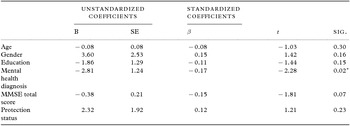
A multiple regression analysis was conducted with a view to understanding the relative contribution of factors associated with distress towards explaining variation in total K10 scores among older prisoners. Those variables which were found to be associated with total K10 scores (age, gender, MMSE total scores, level of education, and protection status) were entered for analysis. Additionally, mental health diagnosis status was entered in lieu of the multiple mental health factors which were associated with total K10 scores in order to avoid overlap between the independent variables. The model was significant (p < 0.00), however, the independent variables together only explained 16% of the variance in total K10 scores of older prisoners (i.e. R squared = 0.16). As shown in Table 4, having a mental health diagnosis made the strongest unique contribution to explaining total K10 scores after controlling for the other independent variables (β = 0.18, p = 0.02). While MMSE total scores and gender also made large contributions to explaining the variance in distress levels among older prisoners (β = 0.15), these were not significant at the p < 0.05 level, potentially indicating overlap with other independent variables.
Linear regression analysis of relationship between total K10 scores and associated factors among older prisoners

Dependent variable = Total K10 score. B = Unstandardized regression coefficient; SE = Standard error of the coefficient; β = Standardized regression coefficient. MMSE = Mini-mental State Examination.
Discussion
This study examined the level of psychological distress among a sample of older prisoners in two Australian states, and subsequently analyzed the relationship between distress levels and mental health history, cognitive functioning, socio-demographic, and criminal justice variables.
There were limited sources of available data upon which to compare the characteristics of the sample to the broader older prisoner population. A high proportion (76.7%) of the older prisoners were first-time inmates, which accords with Australian and international data indicating that between one half and three quarters of older prisoners are serving a first term of imprisonment (Grant, Reference Grant1999; Leach and Neto, Reference Leach and Neto2011; Aday and Krabill, Reference Aday, Krabill and Gideon2012). While precise data regarding offence types of the broader older prisoner population were not available, older prisoners convicted of sexual offences appear to be over-represented in the sample (62.2%, n = 107) compared to the limited older prisoner population data located (28%–42%) (Grant, Reference Grant1999; Baidawi et al., Reference Baidawi2011; Leach and Neto, Reference Leach and Neto2011). Older inmates convicted of homicide (10.5%) or drug offences (4.1%) appear to be under-represented in the study sample relative to available data which suggests that between 14% and 20% of older prisoners in Australia are generally convicted of each of these offence categories (Grant, Reference Grant1999; Leach and Neto, Reference Leach and Neto2011). This skewing is likely to be due to the fact that (male) prisons accommodating the largest number of older prisoners tended to be primarily protection prisons, which subsequently hold high proportions of sex offenders and lower proportions of prisoners not deemed to be requiring protection from mainstream populations.
While distress levels decreased with age, no notable differences were observed in the mean distress scores of older prisoners aged 50–64 years compared to those who were aged 65 years and older. The lack of difference between these subgroups suggests that the age threshold of 50 years and older may be appropriate when considering the mental well-being of older inmates. On the other hand, reflective of the general population, average levels of psychological distress among the older prisoner sample were significantly lower than that of a sample of younger inmates at the same prison locations, though the effect size of this difference was small. While this finding should be interpreted with caution due to the non-representative sampling frame, and the fact that all younger prisoners were nearing the end of their sentences, it aligns with results of a much earlier US study indicating lower distress levels of older prisoners compared to their younger counterparts (Teller and Howell, Reference Teller and Howell1981). Conversely, it is inconsistent with much older North American studies which found no significant differences between stress levels of older and younger prisoners (Gallagher, Reference Gallagher1988; Vega and Silverman, Reference Vega and Silverman1988). Given the non-probability samples of the current and previous studies, as well as large time intervals between the studies and the different jurisdictions which were examined, these findings are not necessarily comparable. Suffice to say that more thorough sampling techniques would be necessary to draw any solid conclusions regarding the relative level of distress between older and younger prisoners. In particular, while no differences were observed in the distress levels of older prisoners who were pre-release compared to those who had more time remaining to serve, it is unclear whether the pre-release status of the younger prisoner sample resulted in greater than average distress scores for this sample compared to the younger prisoner population overall.
While the findings should be re-tested with probability samples of older prisoners, solely relying on average distress levels to compare older and younger prisoners may also be problematic. While the mean distress levels of older prisoners were lower, a similar proportion of older and younger prisoners presented with very high levels of distress. Akin to previous research, the study sample of older prisoners also had distress levels which were significantly higher than those seen in older people in the general community (Vega and Silverman, Reference Vega and Silverman1988; Burling, Reference Burling1999; Murdoch et al., Reference Murdoch, Morris and Holmes2008). The proportion of the older prisoner sample presenting with very high levels of psychological distress was more than three times greater than that seen in general community estimates. Furthermore, since male prisoners and prisoners aged 65 years and older were over-represented in comparison to general population estimates – both groups which tend to present with lower average distress scores – the higher levels distress observed among the older prisoner sample relative to the general community should arguably be considered an underestimate. While prisoners held in mental health units were excluded from data collection, these constituted less than one percentage of prisoner placements at the time of the study, and are therefore unlikely to greatly influence the study findings.
The proportion of older prisoners with a mental health diagnosis (50.9%) was similar to that found in previous studies from the USA and UK (Koenig et al., Reference Koenig, Johnson, Bellard, Denker and Fenlon1995; Fazel et al., Reference Fazel, Hope, O’Donnell and Jacoby2001; Kakoullis et al., Reference Kakoullis, LeMesurier and Kingston2010; Hayes et al., Reference Hayes, Burns, Turnbull and Shaw2012), and much greater than the proportion seen in the older population in the Australian community (16%) (Australian Bureau of Statistics, 2013). While a previous study (Fazel et al., Reference Fazel, Hope, O’Donnell and Jacoby2001), found higher rates of depressive illness among older prisoners compared to their younger counterparts, this study found identical rates of depression in the two groups. However, the use of health record data rather than clinical interviews could potentially underestimate the prevalence of depressive illness in the older prisoner group. Indeed, the data showed that five older prisoners presenting with very high distress scores (K10 = 30–50) had no mental health issues listed in their health records, compared with none of the younger prisoners interviewed. Previous studies have found that individuals with a very high K10 scores have an approximately 80% chance of having experienced a mental disorder in the previous 12 months; this reduces to around 12% for individials presenting with a low K10 score (i.e. 10–15) (Slade et al., Reference Slade, Grove and Burgess2011). This potentially indicates an under-diagnosis of mental health issues in the older prisoner sample, as has been found in previous studies of older prisoner mental health (Fazel et al., Reference Fazel, Hope, O’Donnell and Jacoby2001). As would be expected, distress levels were associated with mental health history of older prisoners, with the exception of those prescribed psychiatric medication in prison. It is possible that this is reflective of the efficacy of psychiatric intervention for those older inmates who accessed such assistance. Alternatively, a contributing factor to this finding may be the relatively high distress scores among older prisoners with a diagnosis of personality disorder (M = 23.40), most of whom (5/6) were not prescribed any psychiatric medication according to their health files.
As in the general community, older female prisoners had significantly greater levels of distress compared to older male prisoners (Byles et al., Reference Byles, Gallienne, Blyth and Banks2012). Also reflective of the general population, older female prisoners were more likely to have a documented mental health issue compared to older male inmates, though the prevalence seen among older female prisoners (77.3%) was far greater than seen in the community (18.4%) (Australian Bureau of Statistics, 2013). This is important given that the majority of studies focusing on the mental well-being of older prisoners have excluded females, primarily due to their smaller numbers in the prison system (Davoren et al., Reference Davoren2015). Yet these results suggest that significant gender differences exist between genders in relation to psychological distress, and the importance of including this group in future research.
An area of discrepancy between the study's findings and that of previous research (see, e.g. Murdoch et al., Reference Murdoch, Morris and Holmes2008) was that no association between level of education and average distress scores was detected, which is of interest given that higher education is associated with lower risk of distress among older adults in the community (Byles et al., Reference Byles, Gallienne, Blyth and Banks2012). While replication of these findings with a representative sample would be desirable, one potential explanation is that the mechanism/s by which education influences distress among older people (e.g. increased access to socioeconomic resources) may be obstructed in the prison environment. This points to a broader question of how imprisonment supports or inhibits the mechanisms and strategies by which individuals normally seek to maintain well-being or cope with distress. While subgroups of older prisoners described in the previous literature (Aday and Krabill, Reference Aday, Krabill and Gideon2012) have fairly substantial differences in offending history and time spent in prison, a key finding of the current study was that no significant differences appeared to exist in terms of level of distress experienced by these different groups of older inmates. The findings suggest that mental health history, as well as gender and cognitive functioning, are more predictive of older prisoner distress than criminal justice history.
Strengths and limitations
This study possesses several unique strengths. It is among the first quantitative studies of older prisoners in Australia and was able to include two states which together hold a significant portion (approximately 50%) of Australia's prisoner population. The sampling strategy utilized allowed for the inclusion of older female prisoners, a group often excluded or minimally represented in research pertaining to older prisoners.
However, the study is not without its limitations. Many of these are characteristic of prison studies more broadly, including the use of self-selecting samples, and the limited sample size. Some potentially significant associations may not have been detected due to the sample size (e.g. Indigenous status, cognitive functioning), and care needs to be exercised in generalizing the study's findings regarding older prisoners’ distress levels to other jurisdictions due to the non-probability sample.
Furthermore, the study was largely reliant on participants self-report data (whether from interviews or taken from participant health files). However, despite a potential perception of prisoners as unreliable survey respondents, previous Australian research regarding the validity of prisoner self-report in relation to health and criminal history data has concluded that prisoners are generally reliable survey respondents (e.g. Schofield et al., Reference Schofield, Butler, Hollis and D’este2011). Further bias could potentially have been introduced through the selection of prison sites. Since time and resource constraints made it impractical to conduct the research at every prison site across the two states, the selection of prison sites accommodating larger numbers of older inmates resulted in the over-representation of certain classes of older offenders (particularly sexual offenders). These issues were acknowledged in the results and their potential impact upon findings relating to the level of psychological distress has been outlined.
Conclusions and implications for prison services
This study has documented a burden of psychological distress and mental health issues among older prisoners in two Australian states which greatly surpasses that seen among older people in the general community. While the focus of this study was upon older inmates, the findings also demonstrated high levels of distress among younger pre-release inmates. What remains unknown is the extent to which distress develops in the prison environment, or is indicative of pre-existing issues.
There is little research focusing on the mental health and well-being of older prisoners, in particular the best strategies to detect, minimize, and respond to these issues (Kingston et al., Reference Kingston, Mesurier, Yorston, Wardle and Heath2011), which may require alternative approaches to those implemented for younger prisoners. Given that many older prisoners may be serving long sentences, these findings suggest a need for ongoing monitoring of mental health symptoms and cognitive functioning throughout the prison sentence. The literature to date suggests various strategies which may assist in this regard, for example implementation of specific older age screening tools (Kingston et al., Reference Kingston, Mesurier, Yorston, Wardle and Heath2011), training of health and custodial staff to better recognize mental health issues among older people (Kakoullis et al., Reference Kakoullis, LeMesurier and Kingston2010), and facilitation of links with old age psychiatry services (Kingston et al., Reference Kingston, Mesurier, Yorston, Wardle and Heath2011). Furthermore, improving preventative measures by keeping older prisoners stimulated and engaged through work and other structured programming may be of key importance, particularly for older female prisoners given their notably high distress levels.
Future research could consider the impact of other factors which the qualitative literature suggests may be related to experiences of distress among older prisoners, including the presence of physical and functional health issues and other difficulties within the prison environment (e.g. appropriateness of accommodation, and social well-being, including experiences of victimization). This is particularly important in light of the finding that the variables explored in this paper (mental health history, cognitive functioning, gender, and protection status) explained so little of the variance in distress observed among the older prisoner sample, potentially indicating that other factors may be more predictive of distress among older prisoners. Such factors may also explain the differences in distress levels observed between older people in prison and those in the general community. Identifying these relationships may present further avenues for intervention with a view to improving older prisoner well-being.
Conflict of interest declaration
None.
Acknowledgments
This study was supported by an Australian Research Council Linkage Grant (grant number LP100100599); the Victorian Department of Justice; and the Victorian Association for the Care and Resettlement of Offenders. This research was conducted by the Criminal Justice Research Consortium, Monash University, and was carried out in partnership with the Victorian Department of Justice, the Victorian Association for the Care and Resettlement of Offenders, the New South Wales Department of Corrective Services, and the Justice Health and Forensic Mental Health Network. We wish to acknowledge the prisoners who participated in the research, and staff at prison locations who facilitated the study. The author wishes to thank Professor Chris Trotter, Dr Catherine Flynn, and Professor Daniel O’Connor for their review and feedback of this paper.