INTRODUCTION
In interacting plant–frugivore assemblages, species play varying roles in maintenance and dynamics of the composite network. In general, large-bodied frugivores are seen as pivotal components of such seed-dispersal networks because they interact with many plant species, eventually interconnecting the different seed dispersal syndromes (Gautier-Hion et al. Reference GAUTIER-HION, DUPLANTIER, QURIS, FEER, SOURD, DECOUX, DUBOST, EMMONS, ERARD, HECKETSWEILER, MOUNGAZI, ROUSSILHON and THIOLLAY1985). Consequently, their loss can cause cascading disrupting effects within the network, and hence a risk to the ecosystem integrity (Vidal et al. Reference VIDAL, PIRES and GUIMARÃES2013). At plant population level, some frugivores may contribute disproportionately more to recruitment of individuals of a given plant species than other frugivores; i.e. they have a higher seed dispersal effectiveness (Schupp et al. Reference SCHUPP, JORDANO and GÓMEZ2010). Likewise, plant species differ in terms of their recruitment probability per seed dispersed by a same frugivore. Differences in quantity of seeds dispersed and in the extent to which gut passage alters seed viability (seed breakage) and germinability (seed scarification) account for differences in seed dispersal effectiveness (Schupp et al. Reference SCHUPP, JORDANO and GÓMEZ2010). With an arguably greater aspect influencing the seed dispersal effectiveness is the pattern and location of seed deposition (Calviño-Cancela & Martín-Herrero Reference CALVIÑO-CANCELA and MARTÍN-HERRERO2009, Schupp et al. Reference SCHUPP, JORDANO and GÓMEZ2010) because the characteristics of the seed deposition site will influence seed germination (through seed predation avoidance; Holl & Lulow Reference HOLL and LULOW1997), seedling establishment (through dung beetle activity; Petre et al. Reference PETRE, ZINQUE, TAGG, BEUDELS-JAMAR, HAUREZ, JOSSO, MORETTO and DOUCET2015), and the likelihood of attaining adulthood (dependent upon whether conditions meet the physiological requirements of the plant species; Agyeman et al. Reference AGYEMAN, SWAINE and THOMPSON1999, Norden et al. Reference NORDEN, CHAVE, BELBENOIT, CAUBÈRE, CHÂTELET, FORGET, RIÉRA, VIERS and THÉBAUD2009, Veenendaal et al. Reference VEENENDAAL, SWAINE, LECHA, WALSH, ABERBRESE and OWUSU-AFRIYIE1996). The effectiveness of seed dispersal is therefore dependent upon movement, defecation patterns and habitat preferences of animals on the one hand, and plant-specific ecological niches on the other. When a plant–frugivore system results in most seeds being deposited in sites particularly suitable for recruitment this is referred to as directed dispersal (Howe & Smallwood Reference HOWE and SMALLWOOD1982) and the disperser is considered critical for the population dynamics of the plant species concerned (Wenny Reference WENNY2001).
In the present study, we investigate key determinants of the seed dispersal effectiveness of a western lowland gorilla population (Gorilla gorilla gorilla; hereafter referred to as WLG) at a previously unstudied site, in south-east Cameroon. In Congo Basin forests, the WLG is assumed to occupy an important position in the seed-dispersal network (Petre et al. Reference PETRE, TAGG, HAUREZ, BEUDELS-JAMAR, HUYNEN and DOUCET2013), being the second-largest forest-dwelling species after the elephant and having a diverse frugivorous repertoire. Moreover, in the Lopé National Park, Gabon, where most of the available data on the WLG seed-dispersal activity come from (Rogers et al. Reference ROGERS, VOYSEY, MCDONALD, PARNELL and TUTIN1998, Tutin et al. Reference TUTIN, WILLIAMSON, ROGERS and FERNANDEZ1991, Voysey et al. Reference VOYSEY, MCDONALD, ROGERS, TUTIN and PARNELL1999a, Reference VOYSEY, MCDONALD, ROGERS, TUTIN and PARNELLb) post-dispersal seed fate monitoring suggested that the WLG performs directed-dispersal at sleeping sites (Wenny Reference WENNY2001). However, WLG populations are declining in abundance at an alarming rate and consequently the ecological service provided by this ape species may vanish locally with the potential of impacting on the whole seed-dispersal network.
Specifically, our objectives were three-fold: (1) To estimate the quantitative seed dispersal activity of gorillas. We hypothesized that given the diet breadth, gape width and body size of gorillas, a large quantity of seeds belonging to a large variety of species will be found in faeces, but given diet preferences (Doran et al. Reference DORAN, MCNEILAGE, GREER, BOCIAN, MEHLMAN and SHAH2002) a limited set of species will encompass most of the seed load dispersed. (2) To assess the treatment of seeds in the gorilla mouth and gut. We hypothesized that, as with other non-flying mammals, mouth processing and gut passage will not reduce germination performances and may serve to improve them (Traveset Reference TRAVESET1998). (3) To characterize seed deposition habitats. We hypothesized that sleeping sites exhibit particular environmental characteristics (Voysey et al. Reference VOYSEY, MCDONALD, ROGERS, TUTIN and PARNELL1999b), that are not reliably present at random sites in the forest and which may influence the outcome of seed dispersal.
STUDY SITE
The study was conducted between September 2009 and August 2012 in the research site ‘La Belgique’ at the northern periphery of the Dja Biosphere Reserve, south-east Cameroon (013°07′–013°11′E, 03°23′–03°27′N). The research site covers approximately 40 km2 of mixed lowland forest (600–700 m asl), in the transition zone between evergreen and semi-deciduous forests (Letouzey Reference LETOUZEY1968). Terra firma forests encompass 74% of the study site and are dominated by old secondary forests, whereas flooded areas (inundated clearings, periodically inundated swamps and riparian forests) account for the remaining 26%; Willie et al. Reference WILLIE, PETRE, TAGG and LENS2012). Climatic data recorded in the site between January 2010 and December 2012 correspond to a humid tropical climate with two rainy seasons (February–June and September–November) interspersed by two dry seasons (monthly rainfall <100 mm; Willie et al. Reference WILLIE, TAGG, PETRE, PEREBOOM and LENS2014). Mean annual rainfall ranged between 1315–1831 mm and mean minimum and maximum daily temperatures were 19.8°C and 27.2°C, respectively.
STUDY SPECIES
Western lowland gorilla
The WLG groups present at La Belgique are not habituated to human presence; therefore, seed-dispersal activity was investigated indirectly through faecal analysis. A density of 0.69 individual km−2 was estimated based on a standing crop nest count survey conducted in 2008 (Projet Grands Singes, unpubl. data). Genotyping from faecal samples collected at nine WLG sleeping sites distinguished two distinct groups of at least seven and 12 individuals respectively, as well as one solitary male (Martine Peeters, pers. comm.).
Gorilla defecation, and hence seed deposition pattern, is spatially and temporally bimodal with half of all faecal production occurring at sleeping sites where faeces are consequently aggregated, and the other half on feeding trails where they are scatter-dispersed (Todd et al. Reference TODD, KUEHL, CIPOLLETTA and WALSH2008). Gorillas establish a new sleeping site at a different location most nights (Tutin et al. Reference TUTIN, PARNELL, WHITE and FERNANDEZ1995), but sometimes return to previously used sleeping sites (Iwata & Ando Reference IWATA and ANDO2006). Gorillas exhibit long daily path lengths (averaging 2 km; Cipolletta Reference CIPOLLETTA2003) across an extensive home range (Doran-Sheehy et al. Reference DORAN-SHEEHY, GREER, MONGO and SCHWINDT2004), and, unlike elephants, tend not to use an established system of permanent trails (Remis Reference REMIS1997, pers. obs.).
METHODS
Faecal collection and analysis
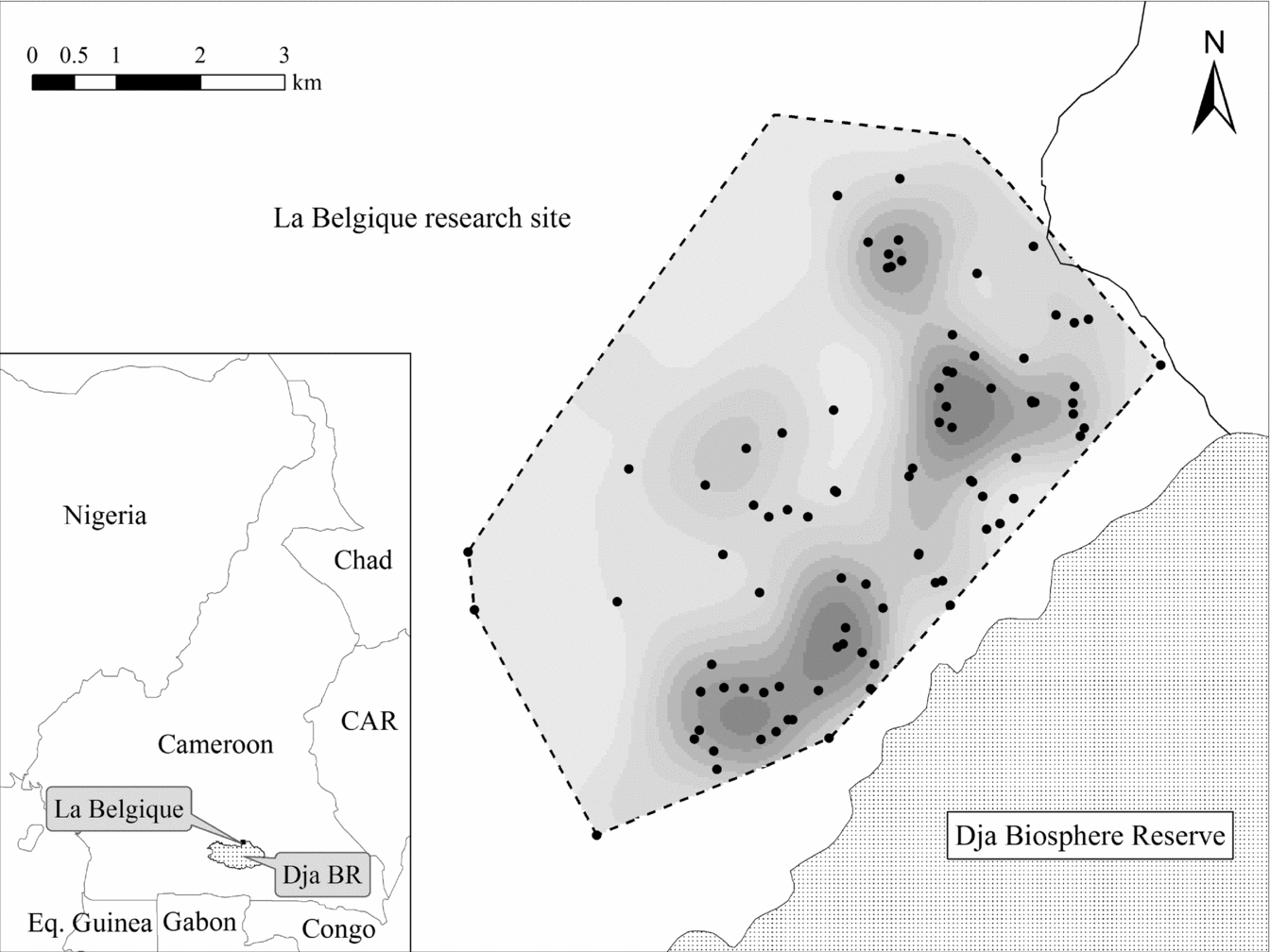
During 15 consecutive d mo−1 throughout the study period, we systematically sought recently used gorilla feeding trails (<48 h old), eventually leading to sleeping sites, to collect fresh faeces. We complemented the sample size with opportunistic encounters of faeces outside of these collection periods. Overall, we collected 1030 faecal samples with a monthly mean ± SD of 28.6 ± 17.1 faeces (range = 2–66), over a 40.3-km2 area (Figure 1). We weighed, washed and sieved all faecal samples and separated food remains (leaf fragments, fibre, bark, fruit skin and seeds) previously dried at ambient temperature. We identified individual seeds to species level where possible, measured seed dimensions with a calliper and assessed volume using the formula for ellipsoids (4/3 π abc; Williamson Reference WILLIAMSON1988). We determined the regeneration guilds of species according to shade tolerance and soil hydromorphy, consisting of pioneer, crypto-pioneer (i.e. species requiring light in early life stages but able to survive in the shade at later ones), non-pioneer light-demanding, moderate pioneer (i.e. species preferring intermediate level of shade at the seedling stage but requiring a canopy opening to further develop), shade-bearing and swamp species (J.-L. Doucet pers. comm., Hawthorne Reference HAWTHORNE1995). For each faecal sample, we recorded the number of species and component seeds ≥5 mm. We recorded only presence/absence data for small-seeded species (<5 mm). Although exceeding this threshold, we similarly recorded presence/absence of seeds of Duboscia spp. (Tiliaceae; mean seed dimensions 10.4 × 5.5 × 2.7 mm) due to their inconspicuousness; being flat, soft, and generally difficult to distinguish from the fibre and leaf material of the faeces.
Delimitation and sampling intensity of faecal collection area at La Belgique research site, south-east Cameroon. Dots represent the distribution of the 112 sleeping sites sampled between September 2009 and August 2012, and the level of grey shading correlates with the sampling intensity of feeding trails based on a kernel density function of feeding trail records (N = 1554) where lighter shading indicates lower densities and darker shading higher densities.

Seed treatment in mouth and gut
We scrutinized seeds individually to describe the proportion of intact vs. damaged (broken/pierced) seeds found in faecal samples. For abundantly dispersed species, we sowed a subsample of intact seeds (N ≥30 seeds when possible) in a field nursery using soil collected from the study site to determine the germination success of passed seeds. For species common in the study site, we compared germination success between gut-passed seeds and those manually depulped from fresh fruits. We used the above-ground emergence of seedling stems to define germination success (Nchanji & Plumptre Reference NCHANJI and PLUMPTRE2003). We monitored germination on a daily basis for at least 6 mo after sowing, though for species known to exhibit dormancy we monitored them for up to 1 y (Erythrophleum suaveolens (Fabaceae), Marantochloa filipes (Marantaceae) and Vitex cf. rivularis (Verbenaceae)). As we did not verify if emergence failure was a result of pre-germination viability loss (for instance through tetrazolium assay) or pre-emergence death (by digging up sown seeds), estimates of germination success are conservative.
Characterization of seed deposition site
In order to characterize seed deposition sites according to the defecation patterns of gorillas, we considered sleeping sites as one type of seed deposition habitat and all other forest locations (potential feeding trails) as another. We thoroughly described the extant vegetation composition and structure in centrally positioned 40 × 40-m plots, subdivided into 100 4 × 4-m grid cells, in 36 sleeping sites and in 36 randomly chosen forest patches (control plots) along the research transects. Within these plots, we recorded (1) canopy openness estimated from hemispherical photographs taken 1 m above the forest floor in 10 randomly chosen grid cells and, in the case of sleeping sites, we took additional photos above each nest because a large proportion of faeces are found in close proximity to nests (Mehlman & Doran Reference MEHLMAN and DORAN2002, pers. obs.); (2) canopy structure described from presence/absence data (0/1) of foliage in three vertically superimposed zones (2–10 m, 10–20 m and >20 m) at the centre of each grid cell (the sum of all data provided an index of foliage density and connectivity scoring from 0 to 300, where the lower the index value the more sparse and disconnected the canopy, and the higher the index value the more dense and continuous); (3) density of woody stems of diameter at breast height (dbh) >10 cm for trees and >5 cm for lianas; (4) tree dbh structure; (5) basal area; (6) mean tree height; and (7) mean understorey cover described by visually assessing the percentage of the ground covered by herbs, lianas and shrubs separately and all together in each grid cell.
Data analysis
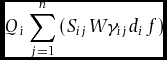
Except otherwise specified, we performed all statistics in Statistica 10 with α level set at 0.05. Means are given with standard deviation (mean ± 1 SD). We tested differences in germination percentage between gut-passed and manually depulped seeds with a Chi-squared test of independence. We used the following formula to measure the seed-dispersal quantity (Q) for each species each month:
 \begin{equation*}
Q_i \sum\limits_{j = 1}^n {(S_{ij} W\gamma _{ij} d_i f)}
\end{equation*}
where Sij denotes the mean number of seeds of species j per gram of faeces during month i, W the mean weight of faecal samples, γij the frequency of appearance in faecal samples of species j during month i, di the number of days within month i, and f the faecal production rate as measured by Todd et al. (Reference TODD, KUEHL, CIPOLLETTA and WALSH2008) (5.57 faeces d−1). The sum of all specific monthly values gives the total seed load dispersed by one WLG individual during the study period. Similarly, we measured the daily seed rain dispersed by the WLG population at La Belgique by multiplying Q (with d set to 1) by the WLG density in the site (Poulsen et al. Reference POULSEN, CLARK and SMITH2001). We analysed hemispherical photos of the canopy in the Gap Light Analyzer software 2.0 which calculates the percentage of pixels occupied by sky. We performed a General Discriminant Analysis (GDA) to investigate if and which environmental variables differ between sleeping sites compared with random areas (control plots) in the forest. We computed a best-subset selection of predictors based on Wilks' Lambda and examined standardized canonical discriminant function coefficients to determine the relative importance of each explanatory variable. Evaluation of model performance was based on the proportion of plots correctly assigned to either sleeping sites or control plots using the defined classification function. We cross-validated the stability of the model by applying to each plot a function derived from all other plots. To test if sleeping sites and control plots differ in terms of botanical composition in addition to structure, and hence belong to different vegetation types, we computed Chao's Abundance-based Sørensen Similarity Index in EstimateS 9.1.0 to compare species assemblages. We computed an index value for each pairwise plot combination between and within types of defecation site as well as between all sleeping site plots combined and all control plots combined. We then tested differences in similarity of botanical composition within defecation site type plot with a Mann–Whitney test. Finally, we calculated an indicator value (IV) in IndVal 2.0 (Dufrêne & Legendre Reference DUFRÊNE and LEGENDRE1997) to identify indicator species of both defecation site types, to further assist in assigning sites to vegetation type. Statistical significance of the resulting IV was evaluated for each species using the Monte Carlo procedure with 999 iterations of individual re-ordering randomization among the two groups.
RESULTS
Plant species dispersed
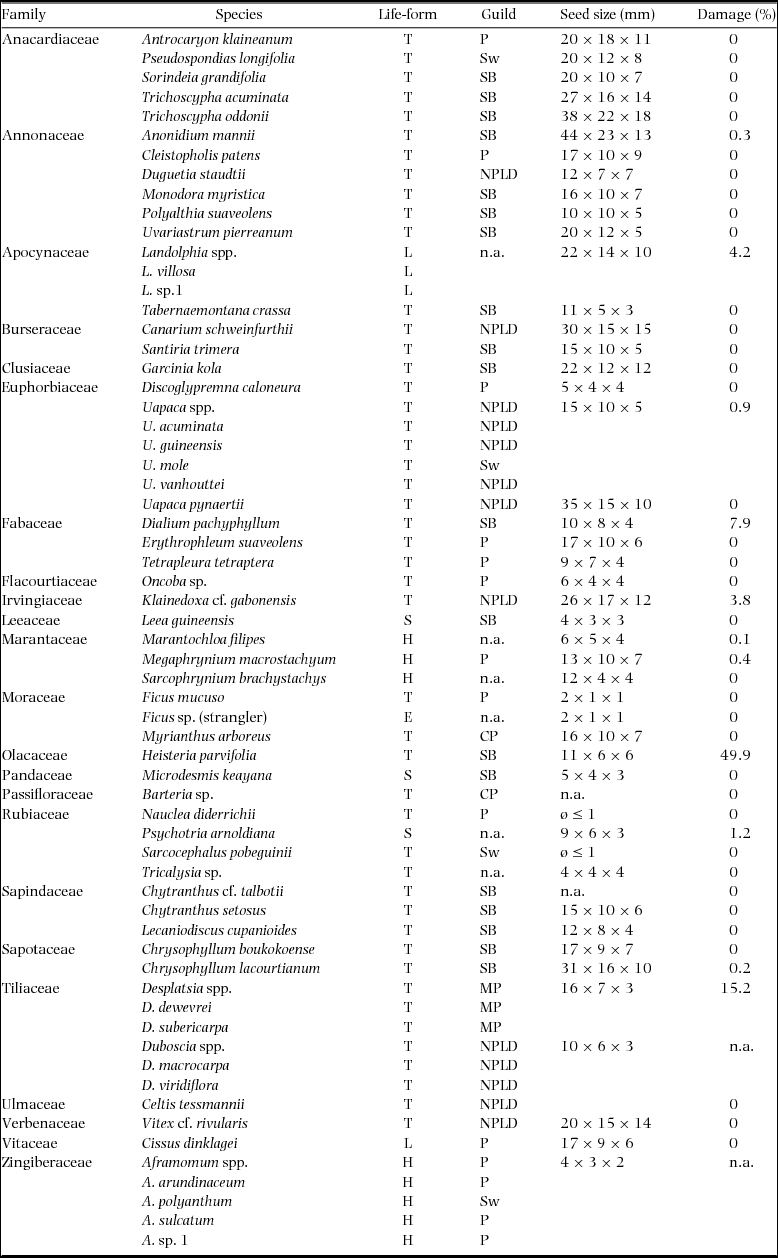
Seeds found in WLG faeces varied greatly in shape, size, fruit type, life-form and regeneration guild. Those successfully identified belonged to a minimum of 58 species (some species of the same genus are macroscopically indistinguishable in seed form, e.g. Landolphia spp. (Apocynaceae), Ficus spp. (Moraceae) and Uapaca spp. (Euphorbiaceae)) from 24 families (Appendix 1). The plant life-forms represented were trees (44 spp.; 75.9%), herbs (7 spp.; 12.1%), shrubs (3 spp.; 5.2%), lianas (3 spp.; 5.2%) and strangler epiphytes (1 sp.; 1.7%). Twenty-four of the 50 woody species (non-epiphyte) presented a light-demanding regeneration guild, recruiting either in open-canopied terra firma habitats (21 spp.; 42%) or on hydromorphic soil (3 spp.; 6%), whereas the shade-bearing guild was represented by 22 spp. (44%). The remaining four species were of unknown regeneration guild.
Most species dispersed produce fleshy fruits; however, we also found intact seeds from fibrous fruits (e.g. Duboscia spp., Desplatsia spp. (Tiliaceae) and Klainedoxa sp. (Irvingiaceae)) and pods (Erythrophleum suaveolens). Intact seeds measured a maximum length of 53 mm (Anonidium mannii (Annonaceae)) and volume of 9 cm3 (Trichoscypha oddonii (Anacardiaceae)). On average, one faecal sample contained seeds of 2.4 ± 1.4 species (range = 0–12), whereas the mean number of species dispersed per month was 10.6 ± 7.6 (range = 0–33; no seeds were found in March 2011 in the two samples analysed).
Seed treatment in mouth and gut
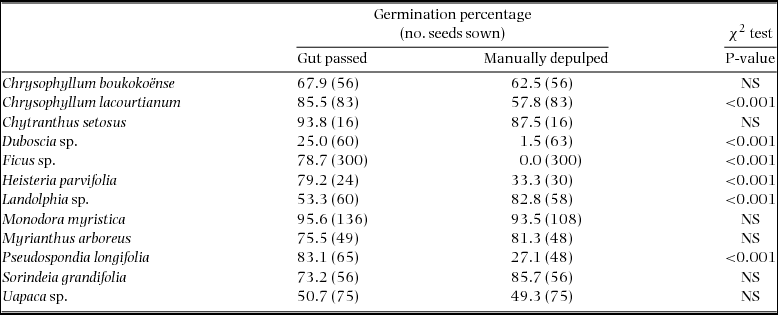
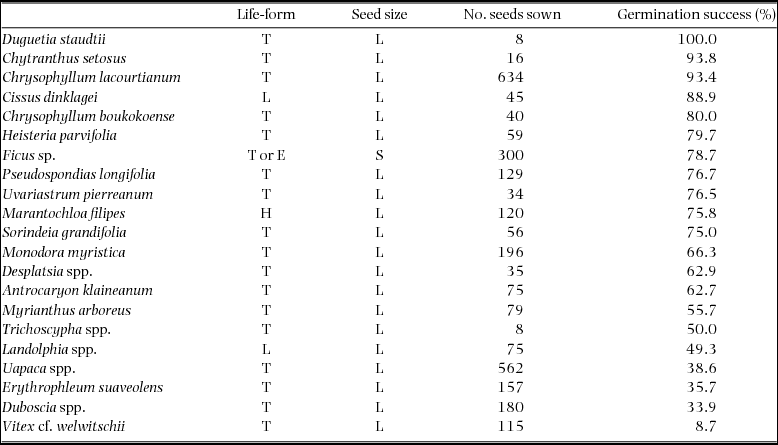
We found damaged seeds for 12 of the 58 identified species in 10.7% of faeces and for unidentified morphotypes in another 1.8% of faeces. In general, damaged seeds accounted for <5% of the specific seed load (Appendix 1) except for Desplatsia spp. and Heisteria parvifolia (Olacaceae), which respectively exhibited 15.2% and 49.9% of damage. Finally, we found 7.9% of seeds of Dialium pachyphyllum (Fabaceae) in a degraded state, probably partly digested. Seeds remaining intact after gut passage retained a high average germination percentage of 65.8% (Appendix 2). Comparative tests suggested a significant change in germination success of seeds after gut passage for six of the 12 species tested; five exhibited a higher germination success after gut passage and one a lower (Table 1).
Results of the germination trials comparing the germination success (%) of gorilla gut-passed seeds to the one of manually depulped seeds of 12 abundant dispersed species. Gut-passed seeds were retrieved from fresh faeces (<48 h old) of a western lowland gorilla population at La Belgique research site, south-east Cameroon, collected between September 2009 and August 2012. Control seeds were manually depulped from fresh fruits collected at La Belgique. Germination trials were performed in a field nursery.
Seed dispersal quantity
The seeds of Aframomum spp. (Zingiberaceae), Ficus spp., Nauclea diderrichii (Rubiaceae), Sarcocephalus pobeginii (Rubiaceae) and Tricalysia sp. (Rubiaceae) measured <5 mm, and were therefore not included in the following analyses. Most faeces contained intact seeds. Seedless faeces were mainly collected during the long rainy season (February–June). The monthly weighted mean percentage of seedless faeces for the 3-y sample period was 12.1%.
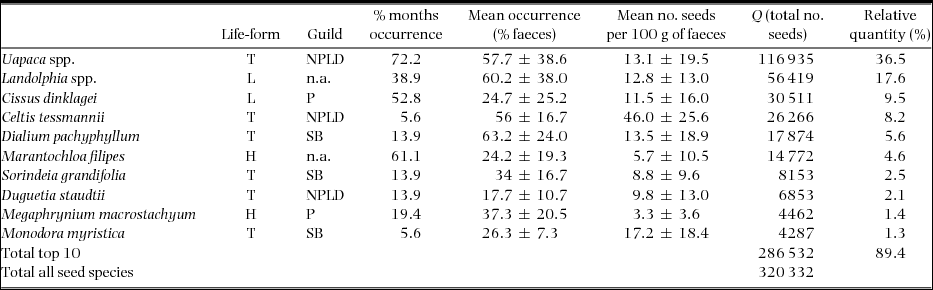
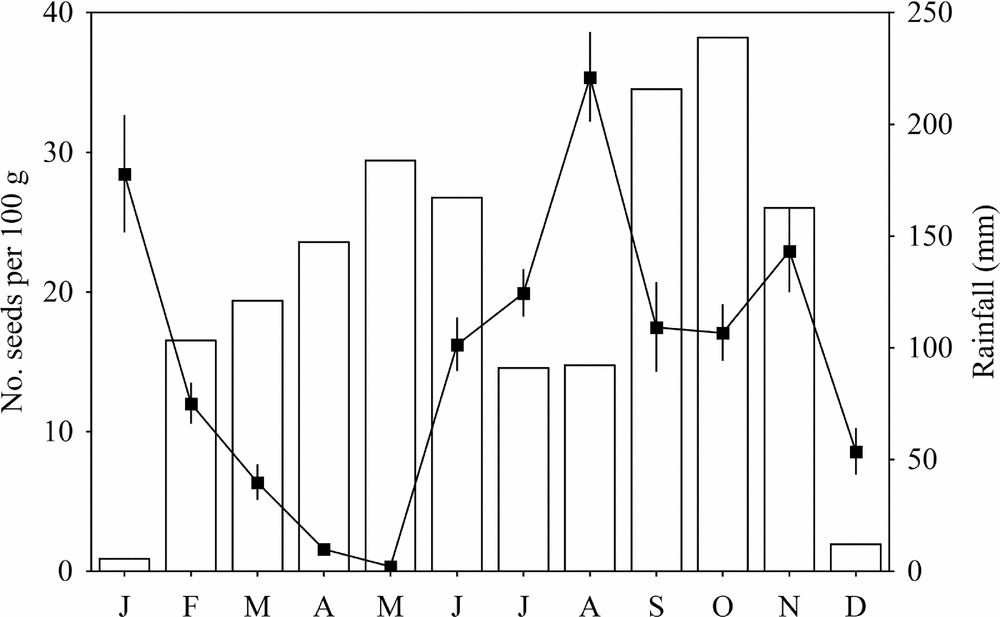
Faecal samples had a mean weight of 294 ± 202 g and the number of large seeds (>5 mm) they contained varied greatly (1–727). The period April–May each year (within the long rainy season) was characterized by few seeds per faecal sample (4.8 ± 10.5 per 100 g), whereas the number of seeds dispersed peaked in dry-season periods (July–August and December–January; 61.8 ± 88.9 seeds per 100 g) (Figure 2). Overall, faeces contained an average of 51.8 large seeds, suggesting a quantitative dispersal rate of 289 large seeds d−1 per individual and a daily seed rain of 199 seeds d−1 km−2 at La Belgique (Table 2). The majority of these seeds represented only a few species (Table 3). In particular, species of the genus Uapaca accounted for a third of all seeds found in faeces (36.5%).
Overall mean daily seed rain and associated 95% Confidence Interval of a western lowland gorilla population at La Belgique, south-east Cameroon, for the period September 2009–August 2012. Gorilla density values come from unpublished work of Projet Grands Singes. The faeces production rate values were extracted from Todd et al. (Reference TODD, KUEHL, CIPOLLETTA and WALSH2008).

Estimated seed-dispersal quantity (Q) of large seeds (>5 mm) of one western lowland gorilla individual in La Belgique, south-east Cameroon, during 3-y period (September 2009–August 2012) for the 10 most abundantly dispersed species. Means are expressed ± SD. For the measurement of the mean occurrence of seeds in faeces, only months in which seeds were found were considered. Life-form: H, herb; L, liana; T, tree. Guild: NPLD, non-pioneer light-demander; P, pioneer; SB, shade-bearer; n.a., not available.
Variation in the quantity of seed dispersal and precipitation across months. Dots and error bars represent the monthly average number of intact seeds (>5 mm) ± SE found in a 100-g sample of faecal material and columns indicate the monthly average rainfall for the period September 2009–August 2012.
Seed deposition site
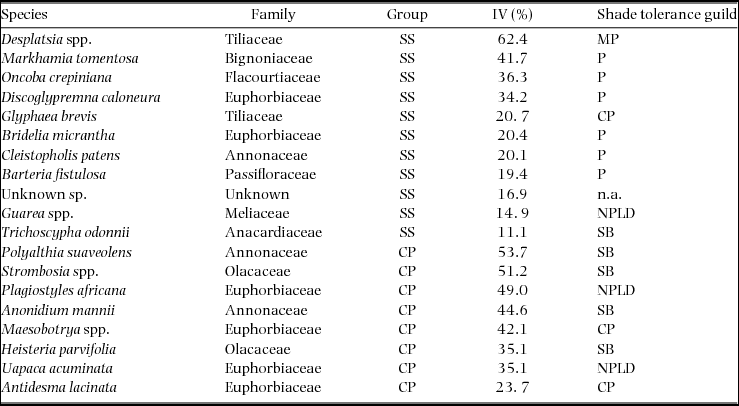
The selected best-subset of predictors in our GDA model comprised by decreasing level of relative importance ‘canopy openness’ (standardized canonical discriminant function coefficient: 0.870), ‘canopy structure index’ (−0.634) and ‘dbh class 10–19.9 cm’ (0.405). The coefficients of the classification function for the three variables showed that sleeping sites are characterized by a higher canopy openness (coefficient of 1.07 vs. 0.395; mean canopy openness of 19.1% ± 13.1% vs. 9.5% ± 4.0%), a less dense and more disrupted canopy (coefficient of 0.094 vs. 0.147; mean index of 118 ± 41.4 vs. 178 ± 36.9) and a higher relative importance of trees with dbh 10–19.9 cm within the diameter structure of the tree stand (90.7 vs. 76.3). Based on these three variables, the model confidently discriminates plot types and explains 73.4% of the observed variance (canonical R = 0.857, Wilks’ Lambda = 0.266, χ2 = 74.8, df = 3, P < 0.001). The percentage of correct classifications for the overall model and the cross-validation is 90.0% in both cases (91.0% and 89.9% for control plots and sleeping sites, respectively). Pairwise plot comparisons of botanical composition between defecation site types lead to a mean Chao's Abundance-based Sørensen Similarity Index of 0.639 ± 0.225. However, once all plots from the same defecation site type were pooled together, the index was remarkably close to 1 (0.978) suggesting that they both belong to the same vegetation formation on a larger scale than the plot size. Furthermore, no significant differences were observed between the mean similarity index within plots of both defecation site types (sleeping sites = 0.669 ± 0.193, control plots = 0.656 ± 0.243; Mann–Whitney: U = 279994, P = 0.602), suggesting that the two types of defecation sites have the same degree of heterogeneity in the composition of extant vegetation. Eleven indicator species were identified in sleeping sites and eight in control plots (Table 4). They are distinguished based on their shade-tolerance guild; indicator species at sleeping sites being dominated by light-demanders, especially pioneers, whereas indicator species at control plots were more shade tolerant.
Indicator plant species listed by decreasing indicator values (IV) of western lowland gorilla sleeping sites (SS) and random areas (control plots; CP) within the home range of the studied population in south-east Cameroon (September 2009–August 2012). Shade-tolerance guilds were extracted from Hawthorne (Reference HAWTHORNE1995) and J.-L. Doucet: CP, crypto-pioneer; P, pioneer; NPLD, non-pioneer light-demanding; MP: moderate pioneer; SB, shade-bearer; n.a., not available.
DISCUSSION
The first objective of this study was to describe the quantitative component of WLG seed dispersal at community and population levels, to assess the importance of gorilla seed-dispersal activity. During 3 y of investigation, intact seeds from 58 species, varying in fruit and seed traits, were successfully identified in WLG faeces in La Belgique; an amount which falls within the range of findings of previous studies (Head et al. Reference HEAD, BOESCH, MAKAGA and ROBBINS2011, Nishihara Reference NISHIHARA1995, Poulsen et al. Reference POULSEN, CLARK and SMITH2001, Tutin et al. Reference TUTIN, WILLIAMSON, ROGERS and FERNANDEZ1991). As a result of its large gape width, the WLG ingests seeds of most of the species it consumes (91.1% at Nouabalé-Ndoki NP, Republic of Congo; Nishihara Reference NISHIHARA1995); and tends to spit out seeds exceeding the dimension threshold of 40–50 mm and 7–9 cm3 (J. Head, unpubl. data, Nishihara Reference NISHIHARA1995, Tutin & Fernandez Reference TUTIN, FERNANDEZ, Thierry, Anderson, Roeder and Herrenschmidt1994), a pattern which encompasses all lengths of seeds dispersed by the entire Central African disperser community (Forget et al. Reference FORGET, DENNIS, MAZER, JANSEN, KITAMURA, LAMBERT, WESTCOTT, Dennis, Schupp, Green and Wescott2007). Therefore, the WLG can be virtually interconnected with almost all species in the seed-dispersal network to which it belongs (Vidal et al. Reference VIDAL, PIRES and GUIMARÃES2013). Quantitatively, the WLG is likely to be an important actor in the regeneration dynamics of some plant species (Table 3). As hypothesized, the WLG seed load is dominated by a few species (three-fourths of all seeds dispersed belonged to five species only), reflecting patterns of seasonal fruit availability and diet preferences. For some of these species, the WLG may contribute disproportionately to dispersal of the seed crop, as was shown for Ganophyllum giganteum and Cola lizae trees in the Lopé National Park, Gabon (Voysey et al. Reference VOYSEY, MCDONALD, ROGERS, TUTIN and PARNELL1999a). In general, the dispersal service received by a plant is dominated by a limited number of disperser species (Schupp et al. Reference SCHUPP, JORDANO and GÓMEZ2010) and a reduction in abundance of these dispersers would have a considerable impact on the plant population dynamics.
At La Belgique, seed damage in the WLG mouth and gut affected a small proportion of species and, with the exception of two species, damaged seeds represented less than 5% of each specific seed load. As expected, scarification of the seed coat in the WLG gut did not negatively affect seed germination: all 21 test species successfully germinated (>75% in the majority of cases), and comparative germination tests with unpassed, manually depulped seeds revealed a positive or neutral effect of scarification in the gut, with one exception. Furthermore, species exhibiting a neutral effect of scarification on germination success may, however, benefit from the removal of the fruit pulp and skin during gut passage, as their presence may otherwise inhibit germination (Robertson et al. Reference ROBERTSON, TRASS, LADLEY and KELLY2006, Samuels & Levey Reference SAMUELS and LEVEY2005).
Because monitoring the fate of seeds dispersed up to recruitment is time constraining, especially in the case of trees, researchers commonly infer site suitability based on recruitment of early life stages (Tutin et al. Reference TUTIN, WILLIAMSON, ROGERS and FERNANDEZ1991, Voysey et al. Reference VOYSEY, MCDONALD, ROGERS, TUTIN and PARNELL1999b, Wenny & Levey Reference WENNY and LEVEY1998). However, processes at play that make a site suitable or unsuitable for a given species are likely to operate beyond this period (Paine & Harms Reference PAINE and HARMS2009, Schupp Reference SCHUPP1995). Here, we employed a different approach which identifies the guilds of species more likely to benefit from seed dispersal by the WLG and hence considers their community-wide service rather than population-wide. Sleeping sites are distinguished from random sites in the forest based on the structure and more subtly the composition (i.e. differences in specific relative frequencies and abundances as suggested by the IndVal results; Dufrêne & Legendre Reference DUFRÊNE and LEGENDRE1997) of the extant vegetation stand: in sleeping sites these are characteristic of early-successional habitats, while those of control plots reflect old-growth secondary forests. At sleeping sites, the canopy is disconnected with a sparse foliage allowing the penetration of enough light to enable light-demanding tree species to establish, grow and eventually recruit. There is a higher representation of small diameter individuals (10–19.9 cm dbh) in the tree stand compared with random sites, further highlighting the regenerating phase of the tree stand. Sleeping-site habitats mostly result from recent or past small-scale disturbance, such as treefalls (supported by the presence of fallen trees at various stages of decay in many sleeping sites; pers. obs.); therefore, seed dispersal at sleeping sites is likely to contribute to gap-phase dynamics. The extent of this contribution will depend on the intensity of the original disturbance and the stage of post-disturbance vegetation recovery (i.e. degree of canopy reformation), as well as the shade-tolerance guild of the dispersed species. Species’ responses to light availability exhibit a continuum from shade-bearing to light-demanding, and in the case of Afrotropical canopy tree species, optimal seedling performances of shade-bearing species occur at degrees of canopy openness of 10–16%, those of pioneer species at 27–44%, and those falling in between representing non-pioneer light-demanding species (Agyeman et al. Reference AGYEMAN, SWAINE and THOMPSON1999, Veenendaal et al. Reference VEENENDAAL, SWAINE, LECHA, WALSH, ABERBRESE and OWUSU-AFRIYIE1996). According to this partitioning, with a mean canopy openness of 9.5%, seed dispersal on feeding trails is likely to be more beneficial for shade-bearing species. In contrast, as sleeping sites were found to have a mean canopy openness of 19%, the species most benefiting from the habitat-directed pattern of seed dispersal at sleeping sites by the WLG at La Belgique are likely to be non-pioneer light-demanders. Furthermore, mean canopy openness above nests in particular is 26.9% ± 14.1%, therefore increasing available irradiance levels for a large proportion of seeds dispersed at sleeping sites to encompass the whole range of optimum light conditions of non-pioneer light-demanding species. As nearly half of the seed load dispersed (47.4%) represents non-pioneer light-demanders (e.g. Uapaca spp., Celtis tessmannii and Duguetia staudtii), dispersal at sleeping sites is expected to provide a higher per capita probability of recruitment compared with seeds dispersed on feeding trails. This would suggest directed-dispersal, and corroborates the findings made at Lopé National Park, Gabon, that sleeping sites play a major role in the seed dispersal service provided by gorillas (Voysey et al. Reference VOYSEY, MCDONALD, ROGERS, TUTIN and PARNELL1999b).
To conclude, the WLG exhibits a number of intrinsic characteristics required for effective seed dispersal: they disperse a large quantity of seeds for which germination performances are in most cases either unaltered or enhanced. The spatial defecation pattern of the WLG may contribute to the specificity of its seed dispersal activity and hence to the overall service fulfilled by this disperser compared with others. We demonstrated previously how differing environmental conditions between the two defecation sites may influence short-term post-dispersal seed fate as a result of differing dung beetle activity (Petre et al. Reference PETRE, ZINQUE, TAGG, BEUDELS-JAMAR, HAUREZ, JOSSO, MORETTO and DOUCET2015). Here, we suggest that the respective dispersal services performed at sleeping sites and feeding trails act at different phases of forest dynamics: gap-phase or old-growth stand regeneration, respectively. While virtually all forest-dwelling seed dispersers are likely to contribute to old-growth stand regeneration, a regular contribution to gap-phase dynamics is likely to be more disperser-specific. In the absence of such a contribution, chances are low that seeds of light-demanding zoochorous species will be deposited in open-canopied sites (Babweteera Reference BABWETEERA, Sudarshana, Nageswara-Rao and Soneji2012). Therefore, the loss of the seed-dispersal service provided by the WLG at La Belgique is likely to be detrimental to the long-term dynamics of some light-demanding species. Empirical support for this relationship would offer new insights into the central role of large-bodied seed dispersers in tropical forests and how their depletion may impact upon plant regeneration dynamics.
ACKNOWLEDGEMENTS
The authors thank each institution that provided financial and logistical support to Charles-Albert Petre for his ongoing PhD research: the Belgian Science Policy Office, Antwerp Zoo (‘Dehousse’ scholarship), the Fondation Gouverneur René Close, and the logging companies FIPCAM and Pallisco. We are grateful to the Ministry of Forestry and Wildlife and the Ministry of Scientific Research and Innovation, Cameroon, for permission to conduct this research. We thank Josephine Head for sharing unpublished data, and the two anonymous reviewers for useful comments on the manuscript. A special thanks is given to the field assistants, students and guides who contributed to data collection: André Issamba (FASA, Cameroon), Abdoul-Karim Abel (FASA, Cameroon), Patrique Ondji, Jean Dolekoa, Simon Bebeli, Jean Mbane, Guillaume Djang Djang, Patrick Sio, Hervé Binkouame, Anicet Mabom.
List of species dispersed by the western lowland gorilla in La Belgique, south-east Cameroon (September 2009–August 2012). Regeneration guilds were extracted from Hawthorne (Reference HAWTHORNE1995) and J.-L. Doucet: CP, crypto-pioneer; P, pioneer; MP: moderate pioneer; NPLD, non-pioneer light-demanding; SB, shade-bearer; Sw, swamp; n.a., not available. Seed size: mean length of the three axes measured on dispersed seeds with a calliper. Damage: the percentage of seeds found damaged in faeces. Nomenclature follows the African Plant Database (available online at http://www.ville-ge.ch/musinfo/bd/cjb/africa/recherche.php).
Germination success (%) of seeds after gut passage in western lowland gorilla at La Belgique, south-east Cameroon (September 2009–August 2012). Seeds were retrieved from fresh faeces (< 48 h old) and sown in a field nursery. Life-form: E, epiphyte; H, herb; L, liana; T, tree. Seed size: L, large (>5 mm); S, small (≤5 mm).