Introduction
The bottlenose dolphin, Tursiops truncatus (Montagu, 1821), is a cosmopolitan species distributed in tropical and temperate waters around the world, including coastal and offshore open waters, bays, estuaries, lakes and lagoons (Wells & Scott, Reference Wells, Scott, Ridgway and Harrison1999). Two ecotypes have been described showing regional differences in ecology, physiology, genetics and morphology: a coastal and an offshore form (Wells & Scott, Reference Wells, Scott, Perrin, Würsig and Thewissen2017), which have already been described in Brazilian waters (see Moreno et al., Reference Moreno, Ott, Tavares, Oliveira, Danilewicz, Siciliano, Bonnato, Viana, Hazin and Souza2009). In recent years, morphological and genetic evidence has indicated that two distinct forms inhabit the South-western Atlantic Ocean (SAO): one in the south and the other in the north of 28°S. According to the authors, these forms appear to show differences in cranial morphology and a variation in their distribution (see Ott et al., Reference Ott, Barreto, Siciliano, Laporta, Domit, Fruet, Dalla Rosa, Santos, Meireles, Marchesi, Botta, de Oliveira, Moreno, Wickert, Vermeulen, Hoffmann, Baracho and Simões-Lopes2016; Fruet et al., Reference Fruet, Secchi, Di Tullio, Simões-Lopes, Daura-Jorge, Costa, Vermeulen, Flores, Genoves, Laporta, Beheregaray and Möller2017; Costa et al., Reference Costa, Fruet, Secchi, Daura-Jorge, Simões-Lopes, Di Tullio and Rosel2019). The southern form is usually sighted in salt lagoons and estuaries of the southern coast of Brazil, Uruguay and Argentina (see Simões-Lopes & Fabian, Reference Simões-Lopes and Fabian1999; Fruet et al., Reference Fruet, Secchi, Di Tullio and Kinas2011; Giacomo & Ott, Reference Giacomo and Ott2016; Wickert et al., Reference Wickert, Von Eye, Oliveira and Moreno2016; Genoves et al., Reference Genoves, Fruet, Di Tullio, Möller and Secchi2018), and has been proposed as a new species for the genus, T. gephyreus (see Wickert et al., Reference Wickert, Von Eye, Oliveira and Moreno2016; Genoves et al., Reference Genoves, Fruet, Di Tullio, Möller and Secchi2018). In contrast, the distribution of the northern form varies greatly, being commonly found from shallower to deeper waters (see Zerbini et al., Reference Zerbini, Secchi, Bassoi, Dalla-Rosa, Higa, de Sousa, Moreno, Möller and Caon2004; Lodi & Monteiro-Neto, Reference Lodi and Monteiro-Neto2012; Milmann et al., Reference Milmann, Danilewicz, Baumgarten and Ott2017).
Several movement patterns have been described in the species since the 1970s, such as seasonal migration, stable residence, temporary residence, and residence with seasonal loyalty (Shane et al., Reference Shane, Wells and Würsig1986). These patterns may be influenced by seasonal variation in oceanographic and physical conditions such as water temperature, salinity and depth, directly affecting productivity, thus the availability of prey (Jaquet & Whitehead, Reference Jaquet and Whitehead1996; Bearzi, Reference Bearzi2005). Bottlenose dolphins are opportunistic and generalist feeders, with a diet based on a large variety of pelagic and demersal fish, cephalopods and crustaceans (Shane et al., Reference Shane, Wells and Würsig1986; Barros & Clarke, Reference Barros, Clarke, Perrin, Würsig and Thewissen2009). Furthermore, bottlenose dolphins seem to exhibit variations in feeding habits that may vary according to habitat characteristics, prey availability and life stage (see Fernández et al., Reference Fernández, Gárcia-Tiscar, Santos, López, Martínez-Celdeira and Pierce2011; Rossman et al., Reference Rossman, McCabe, Barros, Gandhi, Ostrom, Stricker and Wells2015; Giménez et al., Reference Giménez, Louis, Barón, Ramírez, Verborgh, Gauffier, Esteban, Eljarrat, Barceló, Forero and de Stephanis2018; Louis et al., Reference Louis, Simon-Bouhet, Viricel, Lucas, Gally, Cherel and Guinet2018).
Combination of multiple methodologies has the potential to explain plasticity in the distribution of bottlenose dolphins in ocean basins and better understand habitat use. Traditionally, photo-identification has been used as a basic technique to follow naturally marked individuals in surveyed areas (see Würsig & Jefferson, Reference Würsig, Jefferson, Hammond, Mirzoch and Donovan1990). This technique has several limitations, such as the non-detection of usage in non-surveyed areas and substantial time and energy demands in conjunction with the high costs of boat-based surveys in longer-term studies. Carbon and nitrogen stable isotope analyses (SIA) provide a complementary alternative tool to better understand cetacean movements and feeding ecology (Kelly, Reference Kelly2000; Newsome et al., Reference Newsome, Clementz and Koch2010).
The basic principle of SIA is that the stable isotope ratios of a consumer (13C/12C, δ 13C and 15N/14N, δ 15N) are related to those of its prey (Peterson & Fry, Reference Peterson and Fry1987; Newsome et al., Reference Newsome, Clementz and Koch2010). Consumers that use similar environments and occupy the same trophic position have similar isotopic profiles (Renaud et al., Reference Renaud, Tessmann, Evenset and Christensen2011). The utility of this technique resides on the isotopic fractionation (i.e. reaction difference between the heavy and light isotope) (Peterson & Fry, Reference Peterson and Fry1987), which results in an isotopic enrichment of the consumer relative to its prey (Sulzman, Reference Sulzman, Michener and Lajtha2007). δ 15N generally increases by 3 to 4‰ with each step in the food web, offering a good indicator of the trophic level (Peterson & Fry, Reference Peterson and Fry1987). However, recent studies have shown that this rate could be lower for high trophic level organisms (Vanderklift & Ponsard, Reference Vanderklift and Ponsard2003; Hussey et al., Reference Hussey, Macneil, McMeans, Olin, Dudley, Cliff, Winter, Fenessy and Fisk2014). δ 13C values are indicators of primary production at the base of the food web and have a smaller increase that usually varies from 0.5–1‰ between trophic levels (Peterson and Fry, Reference Peterson and Fry1987). In marine environments, several studies have shown that there are significant differences between the carbon isotopic composition of animals living in pelagic and benthic systems and among those that live in coastal and oceanic environments (e.g. France, Reference France1995; Newsome et al., Reference Newsome, del Rio, Bearhop and Philips2007, Reference Newsome, Clementz and Koch2010). Therefore, carbon isotope values can be used as an indicator of the foraging habitat of a species and its habitat use (DeNiro & Epstein, Reference Deniro and Epstein1978; Peterson & Fry, Reference Peterson and Fry1987; Fry, Reference Fry2008). Some studies have shown that δ 15N can also inform aspects regarding the habitat use of a species. This isotopic ratio may also indicate differences when considering distinct habitats (e.g. inshore and offshore systems, latitudes and among oceanic basins) (see Chouvelon et al., Reference Chouvelon, Spitz, Caurant, Mèndez-Fernandez, Chappuis, Laugier, Le Goff and Bustamante2012; Ruiz-Cooley et al., Reference Ruiz-Cooley, Engelhaupt and Ortega-Ortiz2012). Additionally, carbon and nitrogen stable isotopes have also been used to quantify niche dimensions using the concept of ‘isotopic niche’ (Newsome et al., Reference Newsome, del Rio, Bearhop and Philips2007), which is comparable to the ecological niche because an animal's isotopic composition is directly influenced by its prey and the habitat in which it lives (Newsome et al., Reference Newsome, del Rio, Bearhop and Philips2007).
Isotopic fractionation may vary extensively among tissues (Newsome et al., Reference Newsome, Clementz and Koch2010), body sizes (Caut et al., Reference Caut, Laran, Garcia-Hartmann and Das2011) and diet (Vander Zanden & Rasmussen, Reference Vander Zanden and Rasmussen2001). Similarly, turnover rates also vary among tissues, depending on their metabolic activity in relation to protein content (Martínez del Rio et al., Reference Martínez del Rio, Wolf, Carleton and Gannes2009). For bottlenose dolphins, isotopic fractionation and turnover rates have been evaluated for skin (Giménez et al., Reference Giménez, Ramirez, Almunia, Forero and de Stephanis2016) and blood (Caut et al., Reference Caut, Laran, Garcia-Hartmann and Das2011). For skin, Giménez et al. (Reference Giménez, Ramirez, Almunia, Forero and de Stephanis2016) calculated an isotopic fractionation of 1.01‰ for δ 13C and 1.57‰ for δ 15N, while ‘half-life’ turnover rates were 24 and 47 days, respectively. Therefore, the skin isotopic ratio reflects the integrated diet over the last one or two months.
The presence of Tursiops truncatus in inshore environments of the southern Brazilian coast allowed the development of more studies on the species, which has been surveyed for at least two decades (see Simões-Lopes & Fabian, Reference Simões-Lopes and Fabian1999; Fruet et al., Reference Fruet, Secchi, Di Tullio and Kinas2011; Daura-Jorge & Simões-Lopes, Reference Daura-Jorge and Simões-Lopes2016; Fruet et al., Reference Fruet, Secchi, Di Tullio, Simões-Lopes, Daura-Jorge, Costa, Vermeulen, Flores, Genoves, Laporta, Beheregaray and Möller2017). Available data on T. truncatus from lower latitudes of the SAO (≤28oS) comes mainly from scattered stranding records (see Santos et al., Reference Santos, Siciliano, Vicente, Alvarenga, Zampirolli, de Souza and Maranho2010; Meireles et al., Reference Meireles, Campos, Marcondes, Groch, Souto, dos Reis, Normand, Luna, Nascimento, Vergara-Parente, Borges, Jesus, Attademo and Silva Junior2016; Moura et al., Reference Moura, Tavares, Secco and Siciliano2016), and a few survey efforts devoted to assessing live individuals near shore (e.g. Lodi et al., Reference Lodi, Wedekin, Rossi-Santos and Marcondes2008; Lodi & Monteiro-Neto, Reference Lodi and Monteiro-Neto2012). As a consequence, there are still no available data regarding their distribution and habitat use within coastal and offshore waters for lower latitudes of the SAO.
The movements and habitat use patterns of a species could affect the population distribution and abundance, habitat selection, species interactions and the population structure (Nathan et al., Reference Nathan, Getz, Revilla, Holyoak, Kadmon, Saltz and Smouse2008; Börger, Reference Börger2016). Furthermore, the investigation of habitat preferences and trophic ecology of an individual is very important for understanding the roles and niches occupied by it (e.g. Das et al., Reference Das, Lepoint, Loizeau, Debacker, Dauby and Bouquegneau2000; Gross et al., Reference Gross, Kiszka, Van Canneyt, Richard and Ridoux2009; Bisi et al., Reference Bisi, Dorneles, Lailson-Brito, Lepoint, Azevedo, Flach, Malm and Das2013; Santos-Carvalho, Reference Santos-Carvalho2015), which may in turn help with conservation strategies for populations (Owen et al., Reference Owen, Charlton-Robb and Thompson2011). In this sense, a coupled approach using photo-identification and SIA was applied to: (1) investigate the occurrence and movements of bottlenose dolphins along the south-eastern Brazilian coast; (2) evaluate their habitat use and the trophic ecology of the species in the region; (3) compare movements and isotopic signatures calculated here with previous studies.
Materials and methods
Data collection and sampling
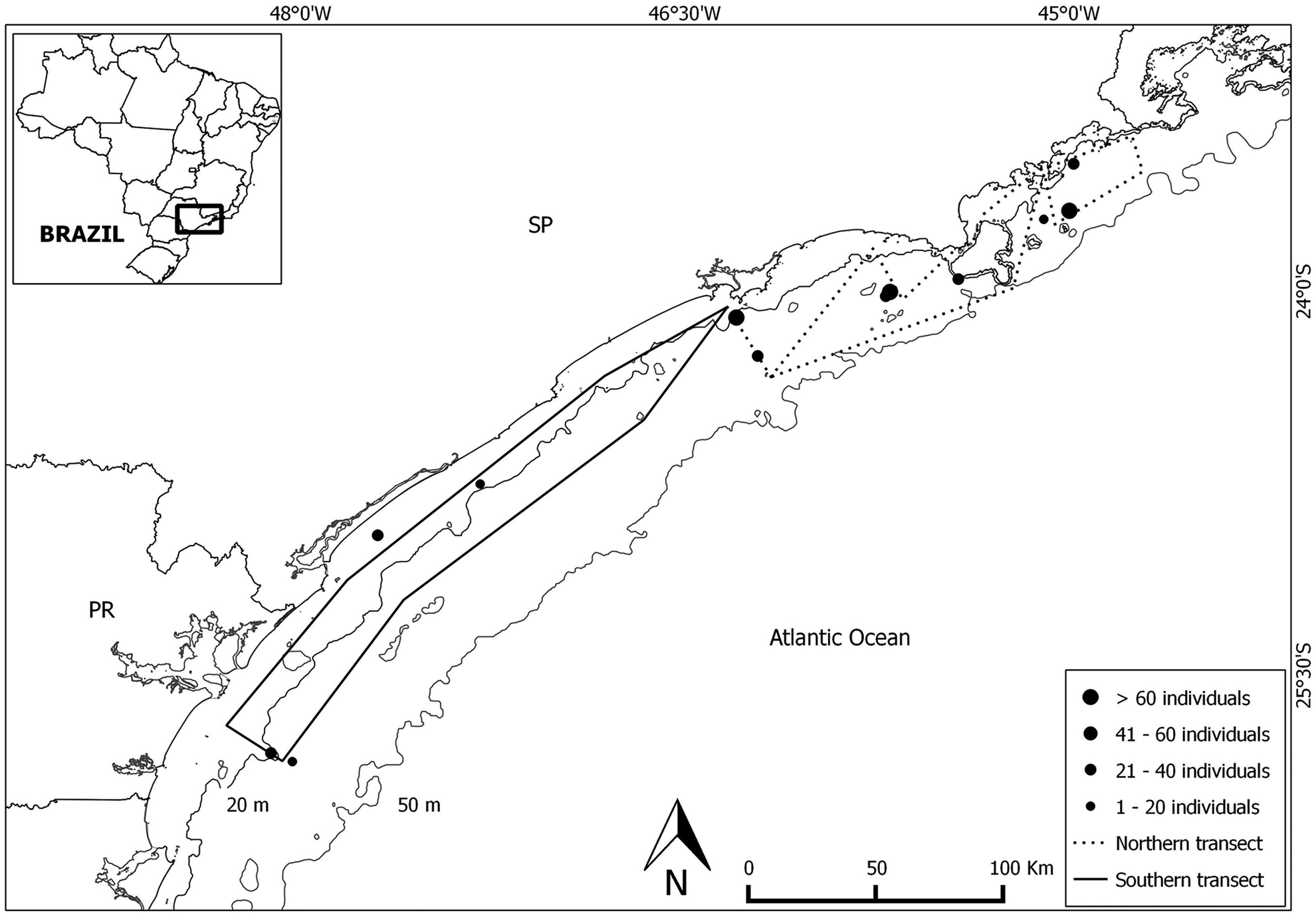
We used samples collected on oceanographic cruises conducted between 2012 and 2015 to investigate the occurrence and distribution of cetaceans in coastal waters with bottom depths ranging from 15–50 m along 600 km of shoreline in south-eastern Brazil (24–26oS). Surveys were conducted using 15 m high-speed boats travelling at 10 knots following pre-established transects (Figure 1). Due to the dimensions of the surveyed area, transects were divided in two sectors: a northern (Transect 1) and southern (Transect 2) sector. Each transect was covered on three different days. This division was logistical and did not take into account environmental or biological characteristics.
Map of the study area showing the covered transects and the geographic position where groups of bottlenose dolphins (Tursiops truncatus) were sighted between 2012 and 2015 along the south-eastern coast of Brazil. SP, São Paulo state; PR, Paraná state.

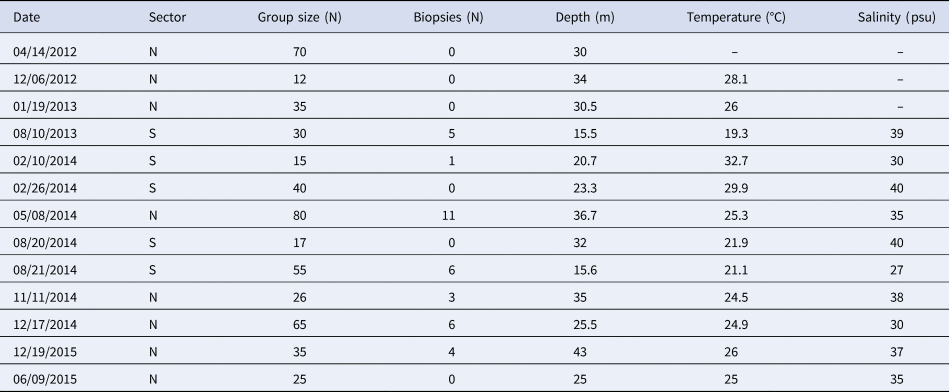
When a group of cetaceans was sighted, the geographic position (latitude and longitude), surface temperature and salinity, bottom depth and group size were estimated (Figure 1 and Table 1). We defined a group as an aggregation of two or more dolphins distributed in a cohesive manner and observed within an area with ~100 m radius (see Wells et al., Reference Wells, Boness, Rathbun, Reynolds and Rommel1999a). Group size was estimated visually considering the probable best, high and low group size, as given by Connor et al. (Reference Connor, Wells, Mann, Read, Mann, Connor, Tyack and Whitehead2000). Photographs of the dorsal fin were taken for individual identification using a digital SLR camera with a 70–400 mm lense, as proposed by Würsig & Jefferson (Reference Würsig, Jefferson, Hammond, Mirzoch and Donovan1990) for small cetaceans. Furthermore, skin samples were collected for genetic and isotopic analyses in the majority of the sightings (Table 1) using a 150 lb crossbow (permit SISBIO 37.206) and frozen in liquid nitrogen onboard.
Collected data on sightings of bottlenose dolphins (Tursiops truncatus) after 21 oceanographic cruises conducted between 2012 and 2015 along the south-eastern coast of Brazil

Date (MM/DD/YYYY), investigated sector (north – N and south – S), environmental parameters (water depth, temperature and salinity), group size, and number (N) of collected biopsies are presented.
Photo-identification analyses
Individuals were identified using the photo-ID technique of Würsig & Würsig (Reference Würsig and Würsig1977) and following the recommendations of Würsig & Jefferson (Reference Würsig, Jefferson, Hammond, Mirzoch and Donovan1990). Photographs of dorsal fins were analysed based on photograph quality and distinctiveness of natural marks. Regarding the quality, photos were classified into four categories: 0 – photographs that were taken just after a dolphin's dive and contained no image of the individual; 1 – photographs without adequate quality to identify individuals in the frame (e.g. blurred, without focus, sharpness); 2 – photographs with sufficient quality to identify individuals taken at distances ranging from 5 to 10 m; and 3 – photographs with sufficient quality to identify individuals taken at distances of up to 4 m. Photos in categories 2 and 3 were useful for identification purposes. Considering distinctiveness, when natural marks were present, the letter ‘c’ was attached to quality categories 2 and 3, representing the marked individuals. When no distinctive marks were shown along the dorsal fin border, the letter ‘s’ would follow categories 2 and 3, representing the unmarked dolphins. Additionally, the proportion of the dorsal fin out of the water and the amount of water splash were also considered in the appropriate choice of photos (for more details, see Santos & Rosso, Reference Santos and Rosso2008). Darwin software was used to model photographs (see Stewman et al., Reference Stewman, Debure, Hale and Russel2006), and all matches were manually checked. Individual movements were analysed using estimated Euclidean distances within ArcGIS (ESRI, USA), following the shoreline whenever physical barriers such as islands were found in the middle of the path.
Gender of biopsied individuals
Skin samples were used to sex the sampled individuals following the methodology described in Rosel (Reference Rosel2003). These analyses were conducted at the Departamento de Genética, Evolução e Bioagentes at Universidade Estadual Paulista (UNICAMP), São Paulo State, Brazil.
Stable isotope analyses
We collected 35 skin samples from bottlenose dolphins: 11 in the southern sector and 24 in the northern one. In the laboratory, samples were dried in an oven at 60°C for 48 h. Lipids were extracted from samples with a solution with chloroform and methanol (2:1) for 24 h as they may influence the values of δ 13C (Folch et al., Reference Folch, Lees and Stanley1957). Giménez et al. (Reference Giménez, Ramírez, Forero, Almunia, de Stephanis and Navarro2017a, Reference Giménez, Marçalo, Ramírez, Verborgh, Gauffier, Esteban, Nicolau, González-Ortegón, Baldó, Vilas, Vingada, Forero and de Stephanis2017b) tested the effects of lipid extraction from the skin of bottlenose dolphins, showing that effects were not significantly present due to low lipid content indicated by C:N ratios. Although there is no consensus among other studies on the need for extraction, we proceeded with lipid extraction as it is recommended in most cases (Newsome et al., Reference Newsome, Clementz and Koch2010). However, studies by Liden et al. (Reference Liden, Takahashi and Nelson1995) and Pinnegar & Polunin (Reference Pinnegar and Polunin1999) suggested that compounds used in the extraction may affect the δ 15N values. Therefore, analyses in duplicate/triplicate were performed to avoid bias in the results. The elemental composition of carbon and nitrogen was used to calculate sample C:N ratios, with a C:N < 3.5 considered indicative of an efficient lipid extraction (Post et al., Reference Post, Layman, Arrington, Takimoto, Quattorchi and Montana2007).
Samples of ~0.3–0.7 mg of residual skin were encapsulated in tin capsules and sent to the Stable Isotope Core Laboratory (Washington State, USA) for isotopic analyses. Analyses were performed using a GV Instruments Isoprime mass spectrometer interfacing with a Costech elemental analyser. The analytical precision was ±0.3 for δ 13C and ±0.5 for δ 15N. The δ 13C and δ 15N values were calculated using the equation proposed by Peterson & Fry (Reference Peterson and Fry1987):
 $$\delta = \displaystyle{{\delta\; {\rm sample}} \over {\delta \;{\rm standard}}}-{\times} 1000$$
where δ sample and δ standard are the isotopic values of the sample and standard, respectively. The standards used were the Pee Dee Belemnite (PDB) and atmospheric nitrogen (N2) for carbon and nitrogen isotopic signatures, respectively.
Isotopic data treatment
δ 13C and δ 15N values were initially compared between the two main surveyed sectors (northern and southern) to evaluate possible spatial segregation. The São Paulo state coast is influenced by different environmental and oceanographic processes depending on the sector (see Besnard, Reference Besnard1951; Castro-Filho et al., Reference Castro-Filho, Miranda and Mayo1987; Castro & Miranda, Reference Castro, Miranda, Robinson and Brink1998; Castro et al., Reference Castro, Lorenzzetti, Silveira, Miranda, Rossi-Wongtshowski, Del and Madureira2006). Therefore, these processes may affect the distribution and the composition of bottlenose dolphins' prey (e.g. Ballance, Reference Ballance1992), influencing their trophic ecology in the surveyed sectors. The isotopic signatures were compared between male and female bottlenose dolphins of both sectors. These comparisons were also useful to evaluate the existence of sexual segregation in the study area, because energy demands may vary between genders (e.g. Rossman et al., Reference Rossman, McCabe, Barros, Gandhi, Ostrom, Stricker and Wells2015; Secchi et al., Reference Secchi, Botta, Wiegand, Lopez, Fruet, Genoves and Di Tullio2017). Data were tested for normality and homoscedasticity using the Shapiro–Wilk and Bartlett tests, respectively. A Student's t-test was then applied using averages of the δ 13C and δ 15N values to compare patterns in habitat use and trophic ecology between the sectors. For gender comparisons, a Welch t-test was used with the same intentions. All statistical analyses were performed using R 3.5.3 (R Development Core Team, 2019). Results are shown using mean ± SD when applicable. P<0.05 was chosen to indicate statistical significance.
The isotopic niche width was estimated between sectors and sexes using Stable Isotope Bayesian Ellipses through the SIBER package in R (see Jackson et al., Reference Jackson, Inger, Parnell and Bearhop2011). The standard ellipse area (SEA) for each group was estimated, as well as SEA corrected for small sample size (SEAC). In addition, Bayesian SEA (SEAB) based on 100,000 posterior draws was computed. The probability (P) that two isotopic niche areas differed from each other was determined using Bayesian inference based on these posterior draws (i.e. the probability that the isotopic niche area of group 1 is greater than group 2 is the proportion of group 1 standard ellipses that are greater than group 2 standard ellipses, based on 100,000 replicates). The per cent overlap between the isotopic niches was calculated using the SEAC (with 100% as the upper limit). For these estimations, a prediction interval (p-interval) of 40% was considered (see Jackson et al., Reference Jackson, Inger, Parnell and Bearhop2011).
Results
Observation effort, photo-ID and individual movements
The 21 oceanographic cruises conducted between 2012 and 2015 resulted in sightings of 13 groups of bottlenose dolphins (~62% of the surveys). From these sightings, eight groups were observed in the northern sector and five in the southern sector (Figure 1). The number of individuals per group ranged from 12 to 80 (39 ± 22 individuals, mean ± SD; N = 13) and sightings were reported in waters with bottom depths ranging from 15.5–43 m (28 ± 8 m, mean ± SD; N = 13), with surface water temperatures ranging from 19.3–32.7°C (28 ± 8°C, mean ± SD; N = 12), and water salinity ranging between 27–40 psu (35 ± 4 psu, mean ± SD; N = 10) (Table 1).
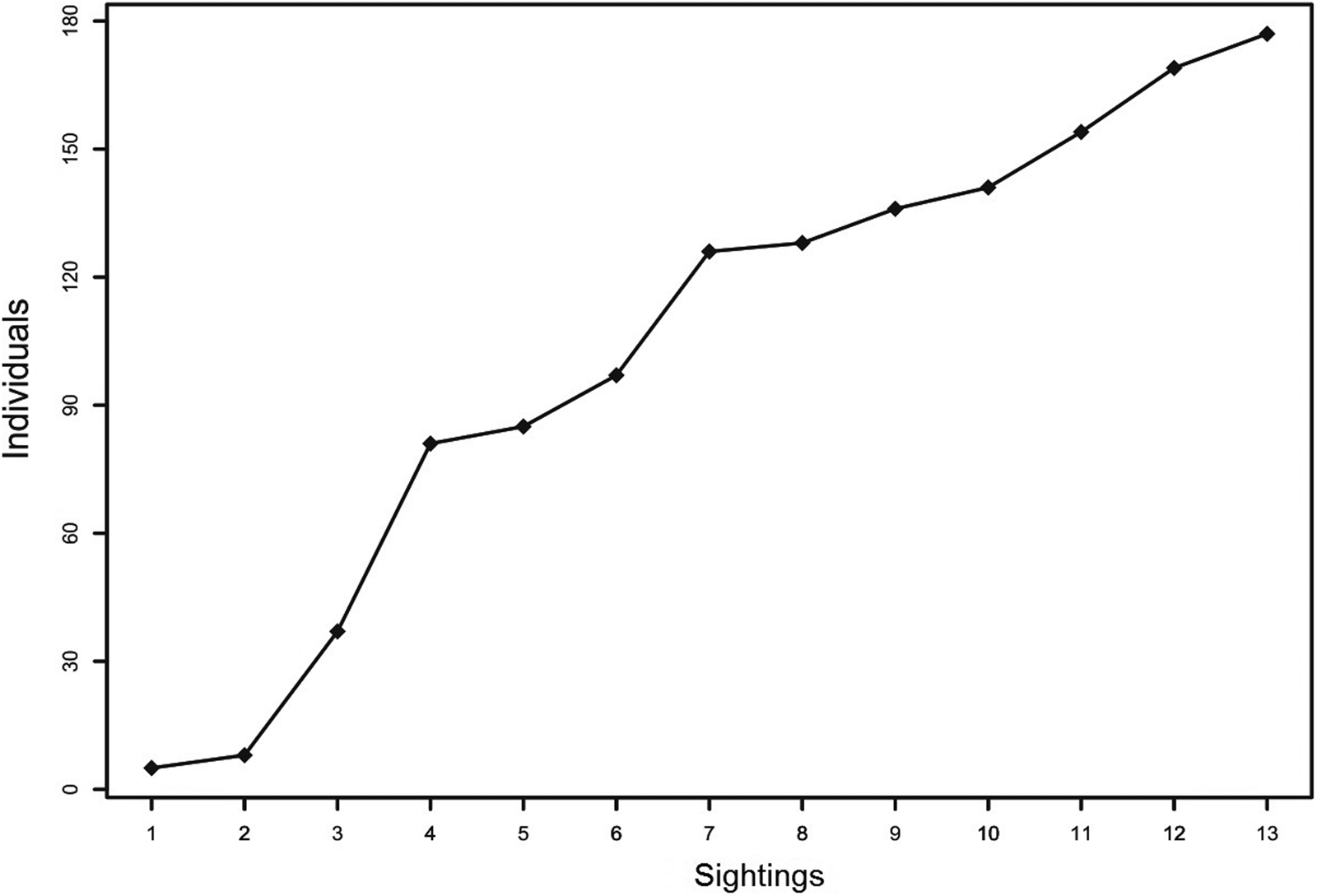
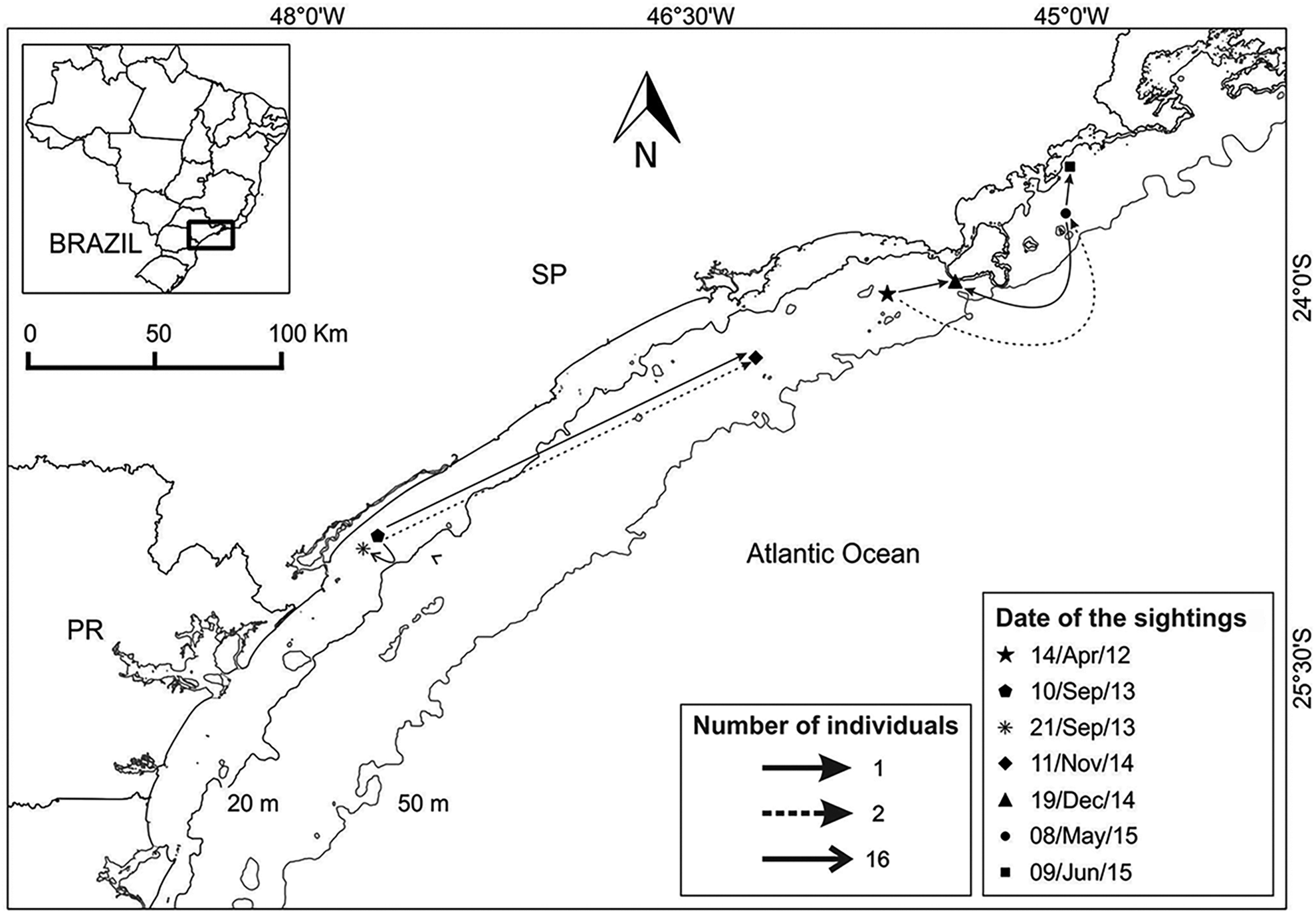
A total of 11,572 photos yielded the identification of 177 unique individuals, with 24 sighted more than once. The discovery curve of new individuals (Figure 2) did not reach a plateau. This could be due to low survey effort relative to the abundance of the species or their mobility in the study area. Re-sightings occurred in intervals that varied between 82 and 979 days (368 ± 194 days, N = 24) and at distances ranging from 7–179 km (25.9 ± 55 km, N = 24). Movements of re-sighted individuals are shown in Figure 3, considering 22 individuals sighted on two occasions and two individuals sighted on three occasions. These two bottlenose dolphins were only sighted in the southern sector. Their first and second sightings were closely spaced (7 km apart) over an interval of 345 days. These dolphins were sighted together with 15 other catalogued individuals. Their third sighting was reported 82 days and 177 km away from the second one. These results suggest upon first impression the existence of a possible spatial segregation. During the four years of investigation, re-sighted bottlenose dolphins were not observed using both sectors.
Discovery curve of individual identifications of bottlenose dolphins (Tursiops truncatus) sampled in oceanographic cruises conducted between 2012 and 2015 along the south-eastern coast of Brazil.

Sightings and re-sightings of bottlenose dolphins (Tursiops truncatus) along the south-eastern coast of Brazil between 2012 and 2015. The start of each arrow indicates the first sightings and the arrowhead indicates the direction of the re-sightings. The format of the arrows indicates the number of individuals re-sighted between the sightings. SP, São Paulo state; PR, Paraná state.

Stable isotope analyses
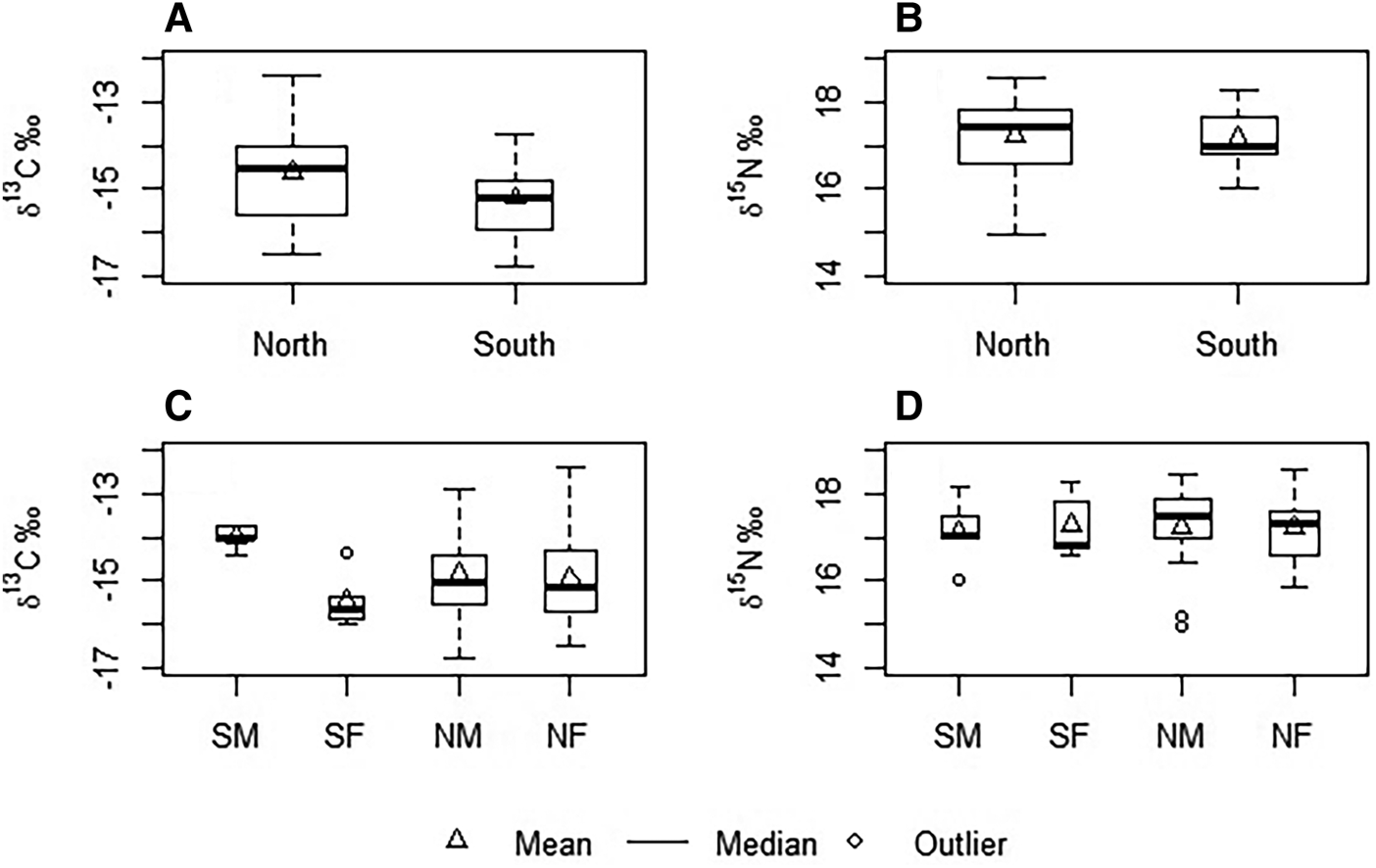
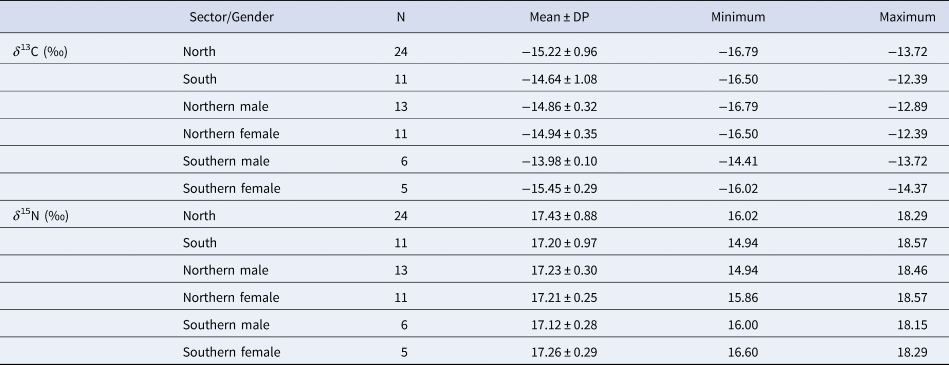
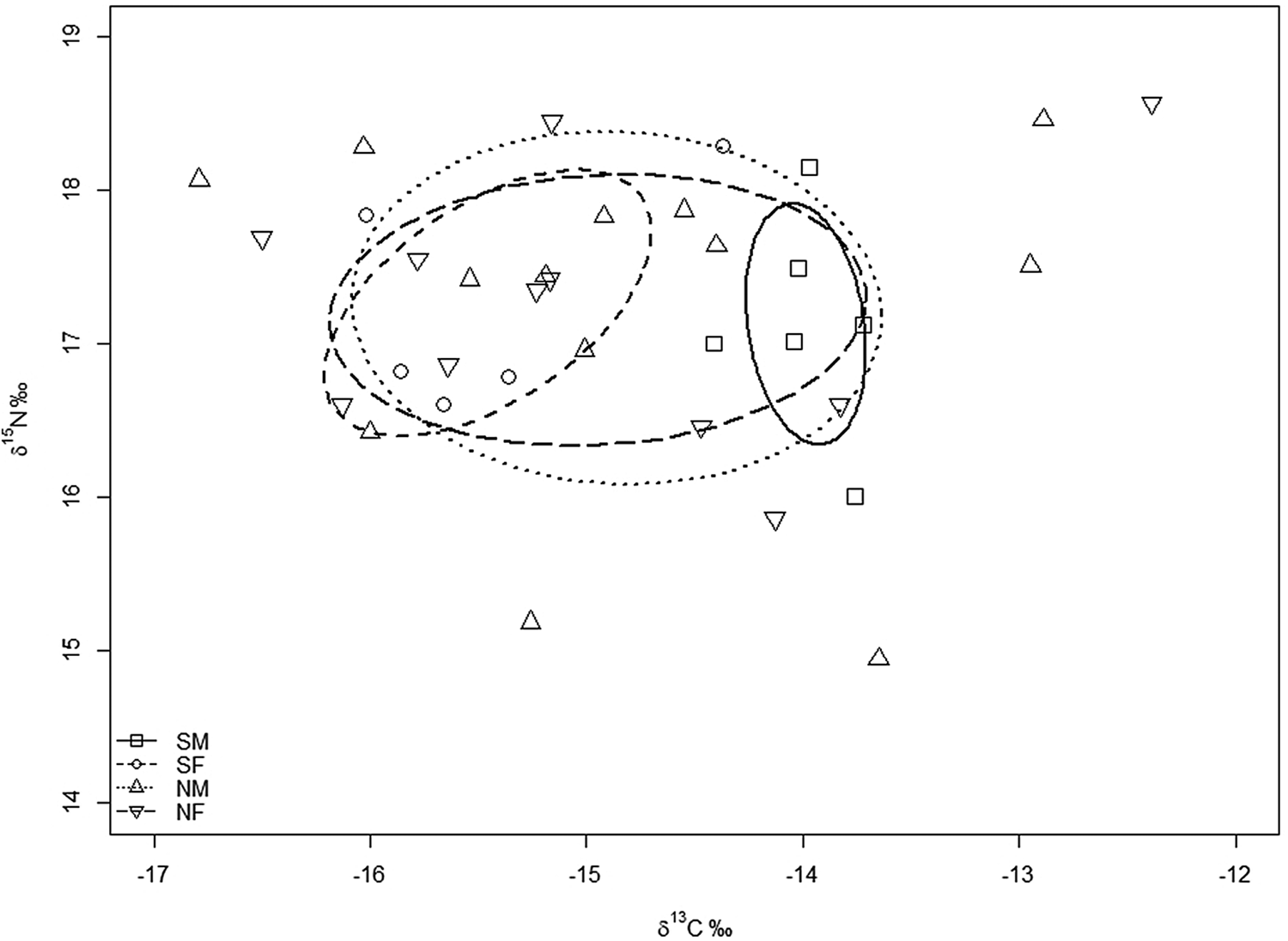
Skin samples of bottlenose dolphins were collected in seven from 12 sightings totalling 35 individuals (Table 1). Considering the results of SIA, δ 13C and δ 15N values ranged from −16.79 to −12.39‰ (−14.82 ± 1.07, N = 35) and from 14.94–18.57‰ (17.22 ± 0.88, N = 35), respectively. The mean values and variability of the data for sectors and genders by sectors are shown in Table 2 and Figure 4. For the two isotopic values, the differences for the means were not significant between sectors (δ 13C: P = 0.30; δ 15N: P = 0.91). Regarding the comparisons between genders, males sampled in the south sector presented δ 13C values more enriched than the southern females, northern males and northern females. In contrast, southern females, northern males and northern females did not differ in relation to their carbon signatures. Similarly, there were no differences in the δ 15N values between males and females of the same sector and between different sectors. The results of the statistical tests are presented in Table 3.
Box plots of carbon (δ 13C) and nitrogen (δ 15N) isotopic ratios for bottlenose dolphins (Tursiops truncatus) sampled along the south-eastern coast of Brazil between 2012 and 2015 in relation to the northern and southern sectors (A and B) and considering genders by sectors (C and D). Whiskers represent maximum and minimum values. An observation beyond 1.5 times the spread is considered an outlier. SM, southern males; SF, southern females; NM, northern males; NF, northern females.

Carbon (δ 13C) and nitrogen (δ 15N) isotope ratios (mean ± SD) and ranges (minimum and maximum) of bottlenose dolphins (Tursiops truncatus) sampled along the south-eastern coastal waters of Brazil between 2012 and 2015

The values are separated by the sectors (north and south) and genders by sector (southern males and females, and northern males and females).
Results of the Student's and Welch t-test for comparisons of carbon (δ 13C – lower-left) and nitrogen (δ 15N – upper-right) isotope ratios from male and female bottlenose dolphins (Tursiops truncatus) sampled in the south and north sector of the study area between 2012 and 2015 along the south-eastern coast of Brazil

The numbers represent the P-values. The bold P-values represent the ones which are statistically significant.
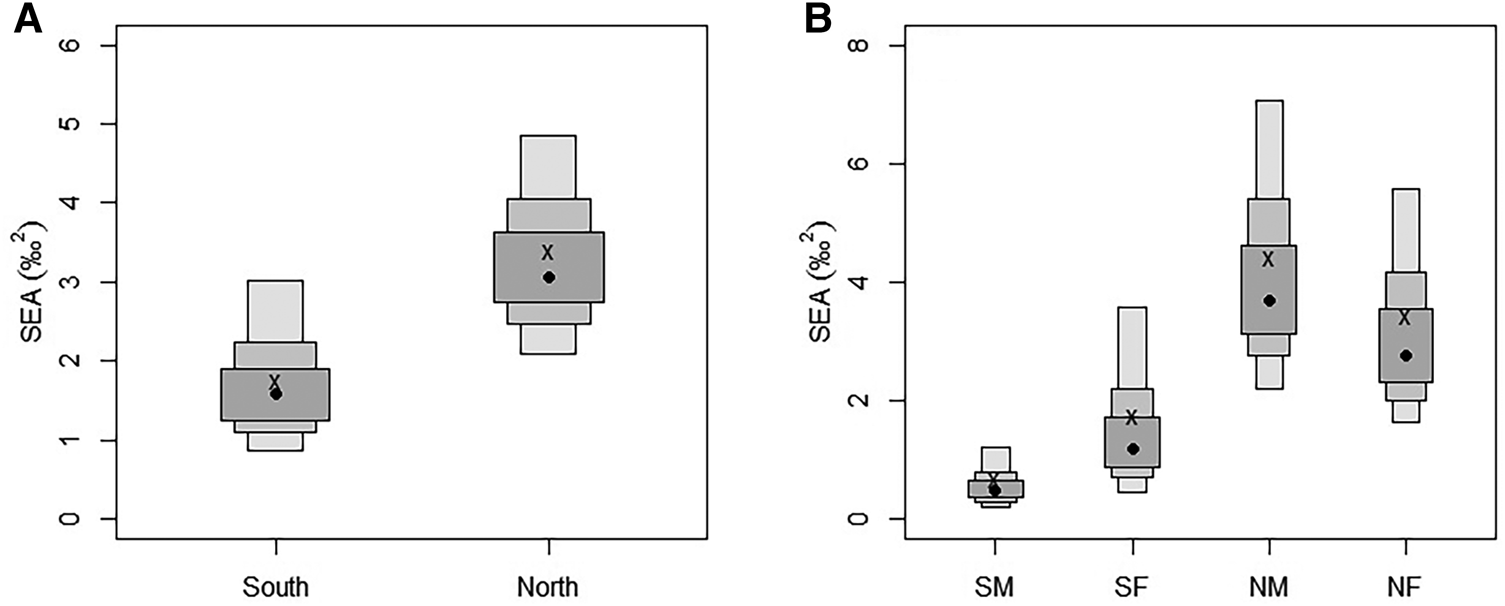
Isotopic niche width was estimated and varied between sectors and genders (Figure 5). Bottlenose dolphins sampled in the northern sector had a larger niche when compared with the southern ones (3.20 and 1.56‰2, respectively; P = 96%). For gender comparisons, the SEAB of the northern males was greater than the northern females (3.77 and 2.89‰2, respectively; P = 74%). In contrast, the southern females presented a larger isotopic niche than the southern males (1.19 and 0.46‰2, respectively; P = 94%). Regarding gender comparisons between distinct sectors, the ellipses of the northern males and females were larger than the southern ones in almost 100% of the total Bayesian estimates.
Density plot of Bayesian standard ellipse areas (SEAB) for bottlenose dolphins (Tursiops truncatus) sampled along the south-eastern coast of Brazil between 2012 and 2015 in relation to the northern and southern sectors (A) and considering genders by sector (B). The black dots represent the mode of posterior distribution of SEAB values with grey boxes presenting the 50, 75 and 95% credibility intervals (from dark to light grey, respectively). The black ‘X’ represents the mean standard ellipse area correct for small sample numbers (SEAC). SM, southern males; SF, southern females; NM, northern males; NF, northern females.

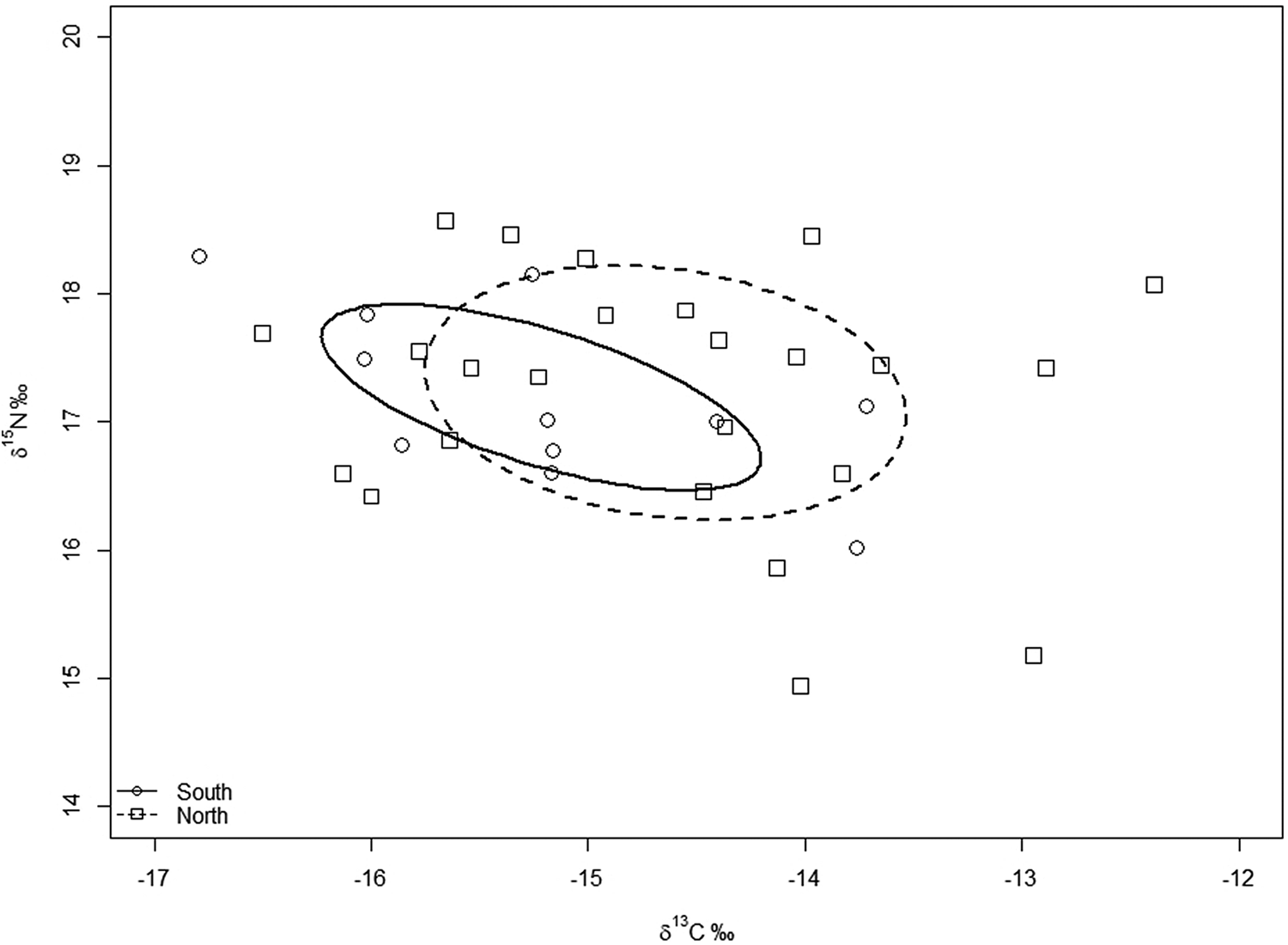
The overlap between the SEAC of the northern and southern individuals was 41 and 79%, respectively (Figure 6). Regarding gender comparisons, the overlaps varied from 14.33 and 97.72%, with the smallest overlap being found between southern and northern males, and the largest one between northern males and females. Small overlaps were also calculated between southern males and northern females (~14.50%). Besides that, larger overlaps were also calculated between northern and southern males (95%), northern males and southern females (~90%), northern females and southern males (~74%), northern and southern females (~92%) and northern females and males (~76%). Finally, intermediate values were found between southern females and northern males (~35%) and between southern and northern females (~47%). No overlap was found between the SEAc of southern males and females. All percentages are shown in Table 4 and presented in Figure 7.
Stable isotope values of bottlenose dolphins (Tursiops truncatus) sampled along the south-eastern coast of Brazil between 2012 and 2015 in relation to the northern and southern sectors. The lines depict the standard ellipse for corrected small sample size (SEAC). The SEAC represents the isotopic niche.

Stable isotope values of the bottlenose dolphins (Tursiops truncatus) sampled along the south-eastern coast of Brazil between 2012 and 2015 considering genders by sector. The lines depict the standard ellipse for corrected small sample size (SEAC). The SEAC represents the isotopic niche. SM, southern males; SF, southern females; NM, northern males; NF, northern females.

Percentages of overlap calculated between the standard ellipses corrected for small sample sizes (SEAC) estimated for male and female bottlenose dolphins (Tursiops truncatus) sampled in the southern and northern sector of the study area between 2012 and 2015 in the south-eastern coast of Brazil

The values represent the overlaps between the groups using the lines as reference.
Discussion
The bottlenose dolphin was sighted over almost the entire studied area in depths ranging from 15.5–43 m. Lodi et al. (Reference Lodi, Domit, Laporta, Di Tullio, Martins and Vermeulen2016) suggested that the species has a continuous distribution along the Brazilian coast, which varies in depth from 1.6–50 m, as reported by Laporta et al. (Reference Laporta, Fruet and Secchi2016). The group sizes detected in the present work (mean 39 ± 22 individuals, N = 13) were higher than those previously observed in other regions of the Brazilian coast. Lodi & Monteiro-Neto (Reference Lodi and Monteiro-Neto2012) reported groups of bottlenose dolphins of up to 30 individuals off the coast of Rio de Janeiro. Additionally, small groups of up to nine individuals were found in estuarine waters of southern Brazil (see Simões-Lopes & Fabian, Reference Simões-Lopes and Fabian1999; Fruet et al., Reference Fruet, Secchi, Di Tullio and Kinas2011; Daura-Jorge & Simões-Lopes, Reference Daura-Jorge and Simões-Lopes2016; Giacomo & Ott, Reference Giacomo and Ott2016). According to Norris & Dohl (Reference Norris, Dohl and Herman1980) and Gygax (Reference Gygax2002), social groups of toothed whales have the tendency to be larger and as they are found further away from the coast, that may help them to optimize location and capture of patchy food resources in a vast area, as well as to protect their congeners from predators. For bottlenose dolphins, differences in group size are possibly related to ethological and ecological drivers such as the flexible and highly adaptable behaviour of the species, their social patterns that may vary by region and the distribution of prey and predators (Shane et al., Reference Shane, Wells and Würsig1986; Defran & Weller, Reference Defran and Weller1999; Connor et al., Reference Connor, Wells, Mann, Read, Mann, Connor, Tyack and Whitehead2000).
Movements of bottlenose dolphins may vary consistently when comparing coastal and oceanic populations. For example, coastal groups observed along the Florida coast showed short movements up to 40 km (see Durden et al., Reference Durden, O'Corry-Crowe, Shippe, Jablonski, Rodgers, Mazzoli, Howells, Harte, Potgieter, Londono, Moreland, Townsend, McCulloch and Bossart2019). In contrast, Robinson et al. (Reference Robinson, O'Brien, Berrow, Cheney, Costa, Eisfeld, Haberlon, Mandleberg, O'Donovan, Oudejans, Ryan, Stevick, Thompson and Whooley2012) estimated distances up to 1277 km for eight coastal bottlenose dolphins sampled on Irish and UK coasts, which presented a new record for European waters, where the species usually show site fidelity and movements less than a few hundred km. Regarding the oceanic dolphins, Wells et al. (Reference Wells, Rhinehart, Cunningham, Whaley, Baran, Koberna and Costa1999b) and Klatsky et al. (Reference Klatsky, Wells and Sweeney2007) reported travelled distances from 1300 and 4200 km, respectively. Here, we identified short-range movements of up to 179 km for bottlenose dolphins using photo-identification in south-eastern Brazil. In northern waters from the surveyed area, Lodi et al. (Reference Lodi, Wedekin, Rossi-Santos and Marcondes2008) showed that eight individually marked coastal bottlenose dolphins moved up to 100 km. In contrast, off southern Brazil, Simões-Lopes & Fabian (Reference Simões-Lopes and Fabian1999) observed movements of bottlenose dolphins that reached 314 km.
Movements may occur for a diversity of reasons, such as feeding, searching for mates and protection from predators (Stern, Reference Stern, Perrin, Würsig and Thewisen2009). Simões-Lopes & Fabian (Reference Simões-Lopes and Fabian1999) suggested the movements of bottlenose dolphins in southern Brazil were probably related to mullet (Mugil sp.) migration, an important prey for the species diet in that region. Besides that, the same authors argued that those movements could also be related to the dispersion of genes among social groups of different areas. Few stomach content studies of bottlenose dolphins have been conducted in south-eastern Brazil (e.g. Di Beneditto et al., Reference Di Beneditto, Ramos, Siciliano, Santos, Bastos and Fagundes-Netto2001; Santos et al., Reference Santos, Rosso, dos Santos, Lucat and Bassoi2002; Melo et al., Reference Melo, Santos, Bassoi, Araújo, Lailson-Brito, Dorneles and Azevedo2010; Moura et al., Reference Moura, Tavares, Secco and Siciliano2016), with only 14 stomachs analysed so far. These samples suggested an ichthyophagous feeding strategy, but the small sample size does not allow us to reach further conclusions regarding the influence of prey preferences on movement patterns in the surveyed area. Besides that, potential predators such as killer whales (Santos et al., Reference Santos, Siciliano, Vicente, Alvarenga, Zampirolli, de Souza and Maranho2010) and great sharks (Santos & Gadig, Reference Santos and Gadig2009) were previously reported in the surveyed area and closer vicinities, but no interactions with bottlenose dolphins have been observed. Therefore, additional investigation of such parameters should be addressed in the surveyed area to better understand the described local movements.
Only 13.6% of the catalogued bottlenose dolphins were re-sighted. This fact could be related to the small number of cruises in comparison to the abundance of the species in the study area. We showed that re-sightings occurred within both the northern and southern sectors. However, in the southern re-sightings, 17 individuals were seen in two different sightings with 345 days and 6.5 km of distance between them, which may indicate site fidelity and a preference of use of the southern area. Besides that, no re-sighted bottlenose dolphin was seen moving in both sectors, which could be showing a spatial segregation of individuals in the southern and northern part of the study area. Thus, we tested for differences in stable isotopes signatures of bottlenose dolphins found in the two areas to evaluate whether they were ecologically segregated.
Bottlenose dolphins sampled in the southern and northern regions of the study area did not present statistically significant differences between their isotopic signatures, which may indicate that dolphins of both sectors are influenced by similar carbon sources and occupy equivalent trophic levels. This fact is confirmed by the high overlaps found between the isotopic niches, indicating ecological similarities. In contrast, we found significant differences when splitting the dataset by sector and sex. First, southern males and females could be differentiated between their δ 13C values, which showed no overlap between their niches. This suggests a possible variation in the foraging environments and, consequently, a sexual segregation for the species in this region. Cockcroft & Ross (Reference Cockcroft, Ross, Leatherwood and Reeves1990) has previously shown that males were consuming a greater proportion of larger fish than females in South Africa. Similarly, Secchi et al. (Reference Secchi, Botta, Wiegand, Lopez, Fruet, Genoves and Di Tullio2017) revealed sexual differences in the prey preferences from the southern coast of Brazil, which was attributed to distinct habitat use. In contrast to the southern sector, bottlenose dolphins may not be isotopically segregated by gender in the northern sector, suggesting a similar feeding ecology which is reinforced by the great overlap between their isotopic niche. According to Riccialdelli & Goodall (Reference Riccialdelli and Goodall2015), an absence of niche segregation between individuals of distinct sexes might be a result of a cooperation in feeding activities, which is known for other populations of the species (see Wells & Scott, Reference Wells, Scott, Ridgway and Harrison1999, Reference Wells, Scott, Perrin, Würsig and Thewissen2017). It is important to note that similar isotopic signatures can be produced by distinct prey that are bound to analogous carbon sources and trophic levels (Bearhop et al., Reference Bearhop, Adams, Waldron, Fuller and Macleod2004; Browning et al., Reference Browning, McCulloch, Bossart and Worthy2014). Therefore, northern males and females could be using different prey that are not distinguishable in their carbon and nitrogen isotopic signatures. However, it is important to note the limited sample size for the isotopic analyses, mainly when we consider the division of the dataset by area and sex. Thus, complementary studies to improve our knowledge of the social patterns and diet of T. truncatus in the south-eastern Brazilian coast are important for a better understanding of this result.
We found the isotopic niche width was significantly greater for the northern sector than for the southern one (3.20 and 1.56‰2, respectively). Such divergence may be related to the temporal variability of oceanographic conditions in the study area that can influence the diversity and availability of prey and, therefore, the habitat use by bottlenose dolphins. The southern sector is highly affected by the Cananéia-Iguape estuarine complex basin, which drains organic matter to the coast (Besnard, Reference Besnard1951), and also functions as a nursery area for many fish species (Schaeffer-Novelli et al., Reference Schaeffer-Novelli, de Mesquita and Cintrón-Molero1990). In contrast, the northern sector is characterized by rocky shores with no influence of discharges from estuaries or large riverine tributaries (Besnard, Reference Besnard1951), but is strongly influenced by coastal upwelling (Castro-Filho et al., Reference Castro-Filho, Miranda and Mayo1987; Castro et al., Reference Castro, Lorenzzetti, Silveira, Miranda, Rossi-Wongtshowski, Del and Madureira2006), which may also contribute to the local biological productivity (Matsuura, Reference Matsuura1996). Therefore, it would be important to evaluate in detail the local prey diversity and abundance, since they could influence these patterns. Additionally, future studies on bottlenose dolphins' local diet should be considered to understand its variability in relation to distinct regions of the Brazilian south-eastern coast.
Despite the isotopic differences found between genders in the southern sector and the similarities for the northern one, males and females in both regions presented distinct isotopic niche width, which can be due to divergence in their home ranges. For example, male bottlenose dolphins may frequently exhibit a large home range (see Wells, Reference Wells, de Waal and Tyack2003; Urian et al., Reference Urian, Hofmann, Wells and Read2009), which could provide different resources and, consequently, a larger niche. However, they could specialize in certain types of prey, that may be related with their caloric requirements, as was suggested by Rossman et al. (Reference Rossman, McCabe, Barros, Gandhi, Ostrom, Stricker and Wells2015) to explain the smaller isotopic niche found for male bottlenose dolphins in relation to females in Sarasota Bay. In contrast, females may present higher fidelity to some areas and consequently smaller home ranges (see Wells, Reference Wells, de Waal and Tyack2003; Urian et al., Reference Urian, Hofmann, Wells and Read2009), but they could specialize in a greater subset of resources that also provide a larger isotopic niche (e.g. Rossman et al., Reference Rossman, McCabe, Barros, Gandhi, Ostrom, Stricker and Wells2015; Secchi et al., Reference Secchi, Botta, Wiegand, Lopez, Fruet, Genoves and Di Tullio2017).
The present work revealed similar carbon isotopic signatures to other studies which sampled coastal ecotype individuals of T. truncatus in south-eastern Brazil (~23°S) (see Bisi et al., Reference Bisi, Dorneles, Lailson-Brito, Lepoint, Azevedo, Flach, Malm and Das2013). However, in contrast, the values in our study differed from the ones from individuals belonging to the estuarine ecotype found in waters from southern Brazil (~28–33°S) (see Botta et al., Reference Botta, Hohn, Macko and Secchi2012; Secchi et al., Reference Secchi, Botta, Wiegand, Lopez, Fruet, Genoves and Di Tullio2017). Although different tissues were analysed when comparing studies, the observed δ 13C values showed divergence possibly induced by the habitat use of the species in different regions of the Brazilian coast. Therefore, our results reinforce previous studies, which have described the existence of two stocks of bottlenose dolphins showing differences in their distribution, that are individuals in estuarine-shallow coastal waters south of 28°S and individuals in coastal-oceanic waters north of 28°S (see Costa et al., Reference Costa, Fruet, Secchi, Daura-Jorge, Simões-Lopes, Di Tullio and Rosel2019). However, there are no available investigations regarding isotopic values from latitudes lower than Rio de Janeiro state along the Brazilian coast. Thus, more studies with individuals of lower latitudes will be important to render a more complete description of the differences in area of use of bottlenose dolphins in that region.
The absence of re-sighted individuals moving across both surveyed sectors may be showing two different stocks with similar δ 13C and δ 15N isotopic signatures in the study area. Besides that, this fact may indicate a certain degree of fidelity of bottlenose dolpins sampled in each sector, although we have limited photo-ID data to prove this completely. However, differences in the width of isotopic niches denote some important ecological variations. These results could be being influenced by local oceanographic factors, which may also contribute to differences in the feeding ecology and habitat use of males and females sampled in each sector, although it would be important to increase the number of samples to improve our conclusions about this finding. The present work is a preliminary evaluation that needs to be continued over the long term in the study area. Thus, we suggest that future local studies can combine photo-identification and SIA with other methods, such as stomach content analyses, genomics and telemetry that will be useful to better understand ecological aspects of T. truncatus off the south-eastern Brazilian coast. In further investigations it will be important to increase the amount of data for local bottlenose dolphin isotopic signatures, and also include other cetacean species with their potential prey to better understand the structure and their function in the local coastal ecosystem.
Acknowledgements
G. Troina helped with discussion of SIA results, and G.C. Figueiredo helped with photo-ID, map production and movement analysis. Linda Waters reviewed grammar and text flow of both the first draft and the final edited document. The Stable Isotope Core Laboratory of the Washington State University carried out the isotopic analyses.
Financial support
We thank Fundação de Amparo à Pesquisa do Estado de São Paulo (FAPESP) for the financial support (Process number 2011/51543-9). V.U. Paschoalini received fellowships from Conselho Nacional de Pesquisa e Desenvolvimento Tecnológico (CNPq process # 159491/2013-4) and Programa Unificado de Bolsas – Universidade de São Paulo (PUB-USP).