Introduction
Vocal fold paresis and paralysis usually result from abnormal nerve innervation to the laryngeal muscles. They can occur at any age, in males or females. There are a variety of causes, with the most common being congenital, iatrogenic, neurogenic and viral.Reference Ahmad, Muzamil and Lateef1–Reference Heuer, Sataloff, Emerich, Rulnick, Baroody and Spiegel3 Unilateral vocal fold paralysis may result in breathy, hoarse or rough voice, and a general inability to produce clear phonation. This condition generally often has a negative impact on quality of life, limiting participation and impairing social interaction. Surgical or therapeutic interventions are often effective in restoring the voice of patients with unilateral vocal fold paralysis.
Vocal functions are determined by assessing the physical measures of pitch, loudness, quality and respiratory support. Therefore, assessments of multidimensional aspects of voice, such as physical, functional and psychological factors, become important. Treatment of voice disorders can involve surgical or behavioural interventions. Adjuvant behavioural voice therapy techniques are attempted for at least three to six months prior to considering surgical management for unilateral vocal fold palsy.
Objective and perceptual assessments can be attained pre- and post-intervention via video stroboscopic examination, self-ratings of voice (i.e. with the use of Voice Handicap IndexReference Jacobson, Johnson, Grywalski, Silbergleit, Jacobson and Benninger4) and a clinician's perceptual rating (with the grade, roughness, breathiness, asthenia and strain (‘GRBAS’) scaleReference Hirano5). Electroglottography is widely used to quantify the extent of approximation of both vocal folds, while the range of frequency and intensity can be measured with voice range profiles.
Studies have reported improvements in voice parameters on perceptual and objective assessment after therapy; however, changes in vocal fold mobility after voice therapy have not been examined.Reference Mangilli, Amoroso, Nishimoto, Barros and Carrara-de-Angelis6 The vocal folds have non-linear mechanical behaviour, and are subject to elongation or shortening; this behaviour plays an important role in the maintenance of F0 or pitch of voice. Individuals with vocal fold palsy are reported to present with limited vocal range with respect to loudness, pitch and quality. Research also suggests that their vocal parameters tend to normalise with an optimum duration of three to four months’ regular therapy.
This study aimed to investigate the normalisation of vocal parameters based on voice range profiles, and compare this with qualitative (perceptual) and quantitative measures (acoustic and glottal), in unilateral vocal fold palsy patients following intensive voice therapy.
Materials and methods
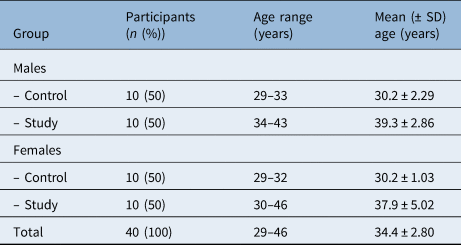
This cohort study was carried out from February 2016 to March 2018. A total of 40 subjects participated (20 control and 20 study subjects, with 10 males and 10 females in each group). The control group comprised age-matched healthy adult participants, with no past history of voice-related pathology. The mean age of all participants was 34.4 ± 2.80 years (Table 1).
Participants’ details

SD = standard deviation
All participants in the study group were diagnosed with unilateral vocal fold palsy by an otolaryngologist using direct stroboscopic examination. Only those patients with an idiopathic aetiology of unilateral vocal fold palsy were included. Patients with a known aetiology of vocal fold palsy were excluded.
All patients underwent detailed (qualitative and quantitative) voice evaluations at the initial assessment, at regular follow ups and at three months post-therapy.
The voice was assessed using the grade, roughness, breathiness, asthenia and strain scale, wherein 0 represents a normal voice, 1 indicates mild dysphonia, 2 represents moderate dysphonia and 3 indicates severe dysphonia. The Voice Handicap Index 30 (‘VHI-30’) (which assesses functional, emotional and physical aspects related to voice) was also administered for qualitative analyses.
The EG-PC3 electroglottography system and Dr Speech analysis software (Tiger DRS, Seattle, Washington, USA) were used for acoustic and electroglottographic analysis of the sustained prolongation of vowel /a/, with a distance of 15 cm between mouth and microphone. The sample was recorded at a sampling rate of 44.1 kHz, for a duration of 3.000 seconds; the intensity range was set to 10–90 dB. Before placing the electroglottography electrodes, the neck skin was prepared by rubbing it using a skin preparation gel. The Computerized Speech Lab (CSL™) model 4500 was used to analyse the voice range profiles after three months of intensive voice therapy. All quantitative analyses were conducted in a sound-treated chamber (conforming to American National Standards Institute (‘ANSI’) standards).
Statistical analyses were carried out using SPSS® software, version 20. The independent two-tailed student's t-test was applied to compare measures for the control group with those of the study group.
The study obtained the required ethical clearance and respected all ethical considerations. The institutional ethical committee approved the study protocol (reference number: INT/IEC/2019/000379) and all participants signed informed consent forms.
Results
Qualitative analyses
Grade, roughness, breathiness, asthenia and strain scale
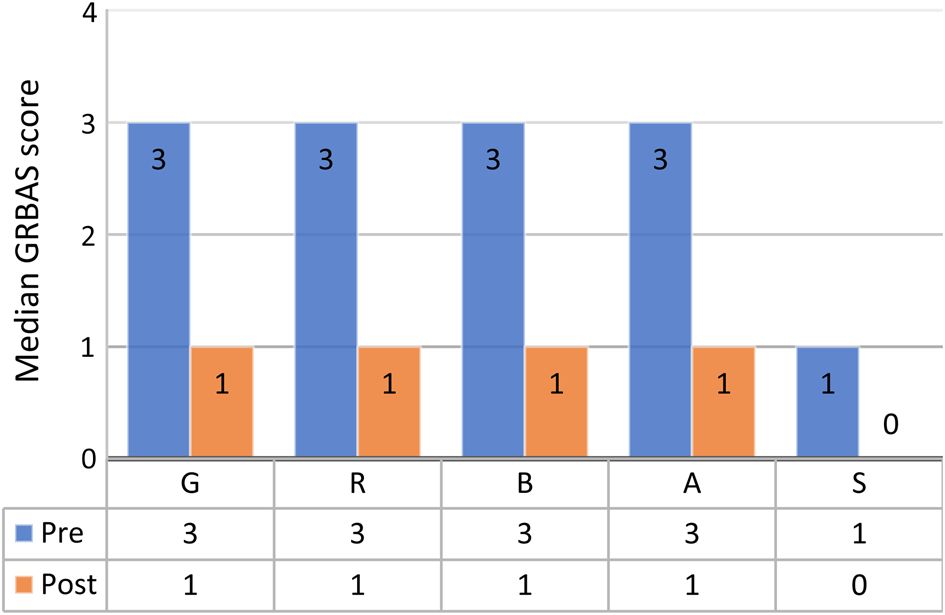
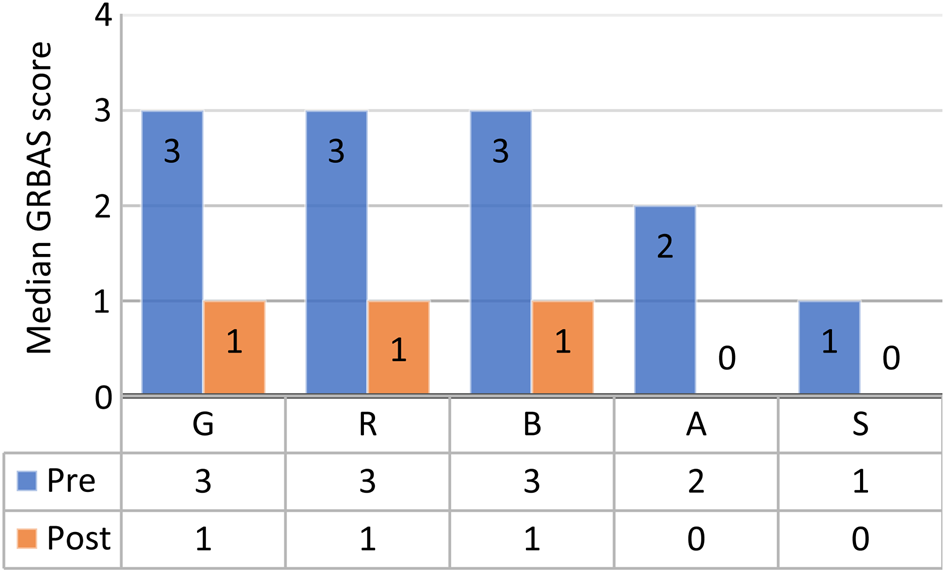
Figures 1 and 2 show data for the auditory perceptual evaluation of the voice according to the grade, roughness, breathiness, asthenia and strain scale, which gives scores of 0, 1, 2 or 3 in relation to grade of hoarseness, roughness, breathiness, asthenia and strain. The results revealed a considerable reduction in the median scores in both genders after voice therapy. The severity of voice problems decreased to a minimal or negligible level after therapy.
Grade, roughness, breathiness, asthenia and strain (GRBAS) scale scores for males, pre- and post-therapy.

Grade, roughness, breathiness, asthenia and strain (GRBAS) scale scores for females, pre- and post-therapy.

Voice Handicap Index
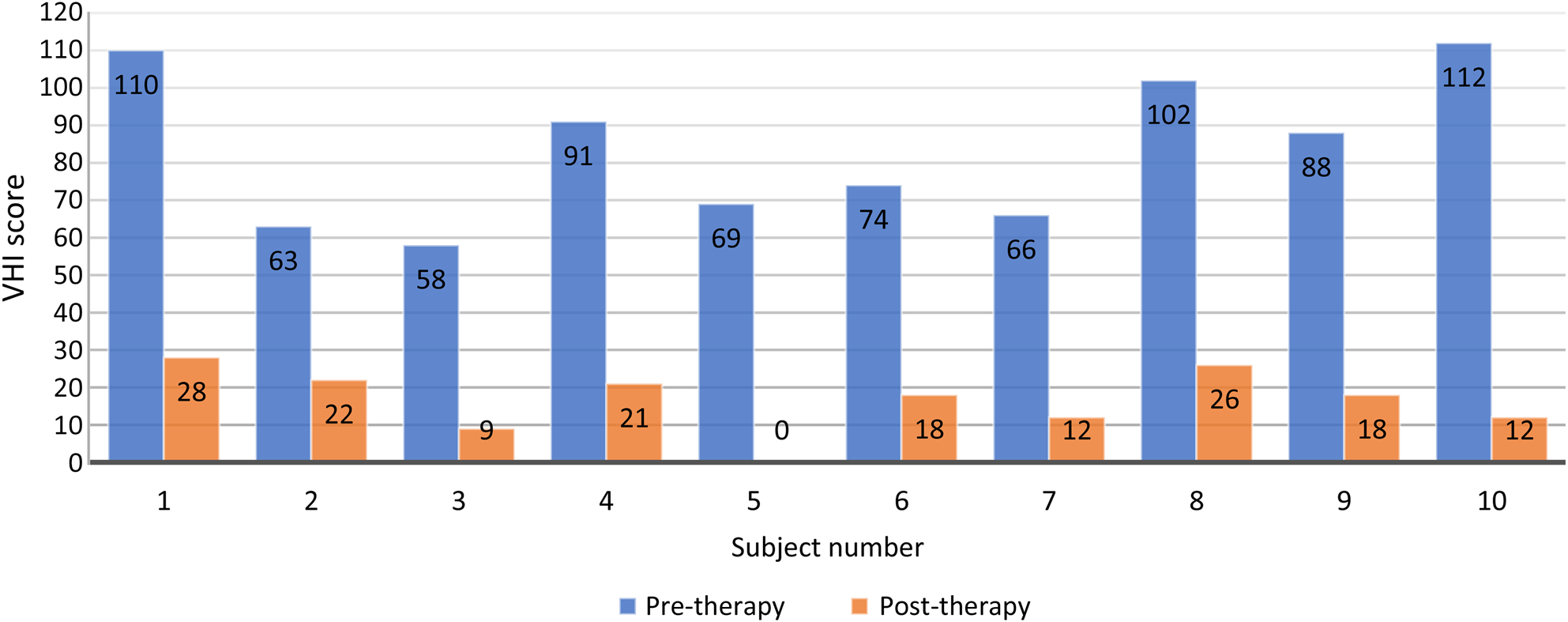
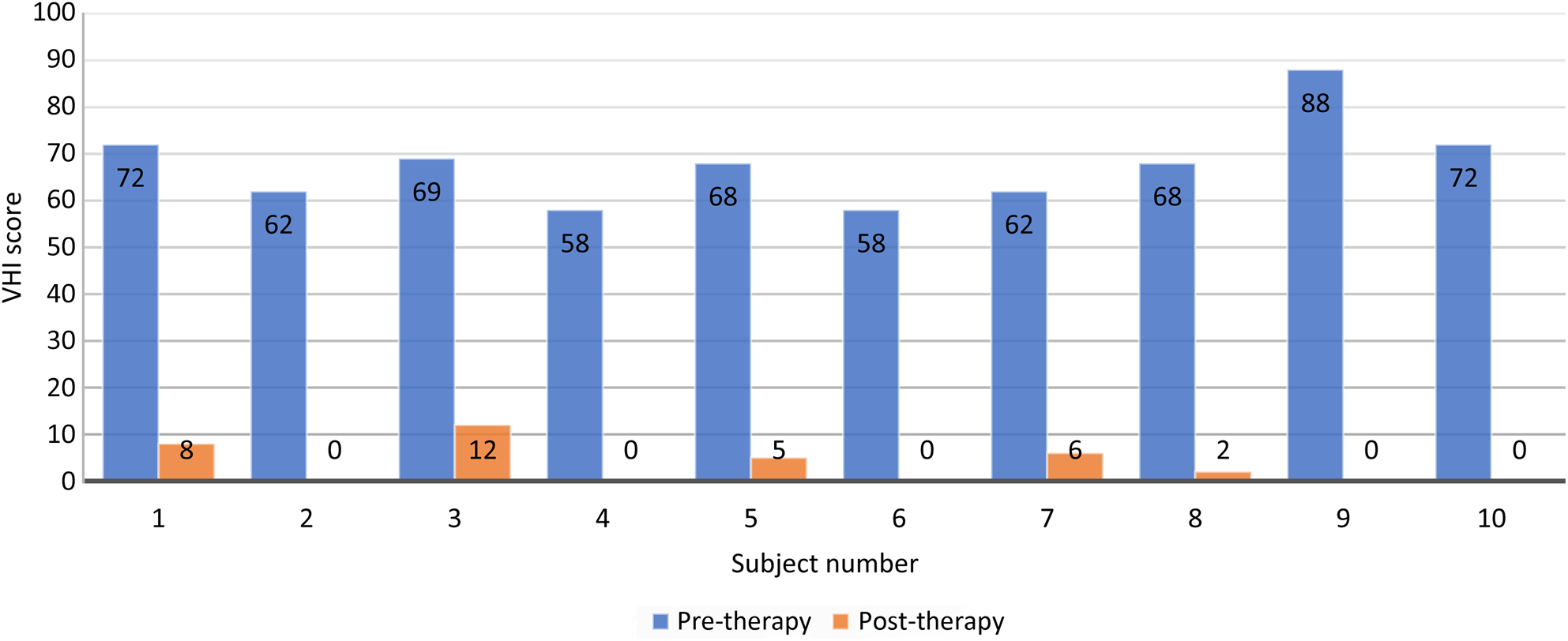
Figures 3 and 4 show the Voice Handicap Index scores obtained before and after voice therapy, in males and females respectively. The results revealed a significant reduction in scores for all three Voice Handicap Index components, namely functional, emotional and physical. Before therapy, the Voice Handicap Index mean score was 83 in males and 68 in females. After therapy, the mean Voice Handicap Index scores decreased to 17 in males and 3 in females.
Voice Handicap Index (VHI) scores for males, pre- and post-therapy.

Voice Handicap Index (VHI) scores for females, pre- and post-therapy.

Maximum phonation duration
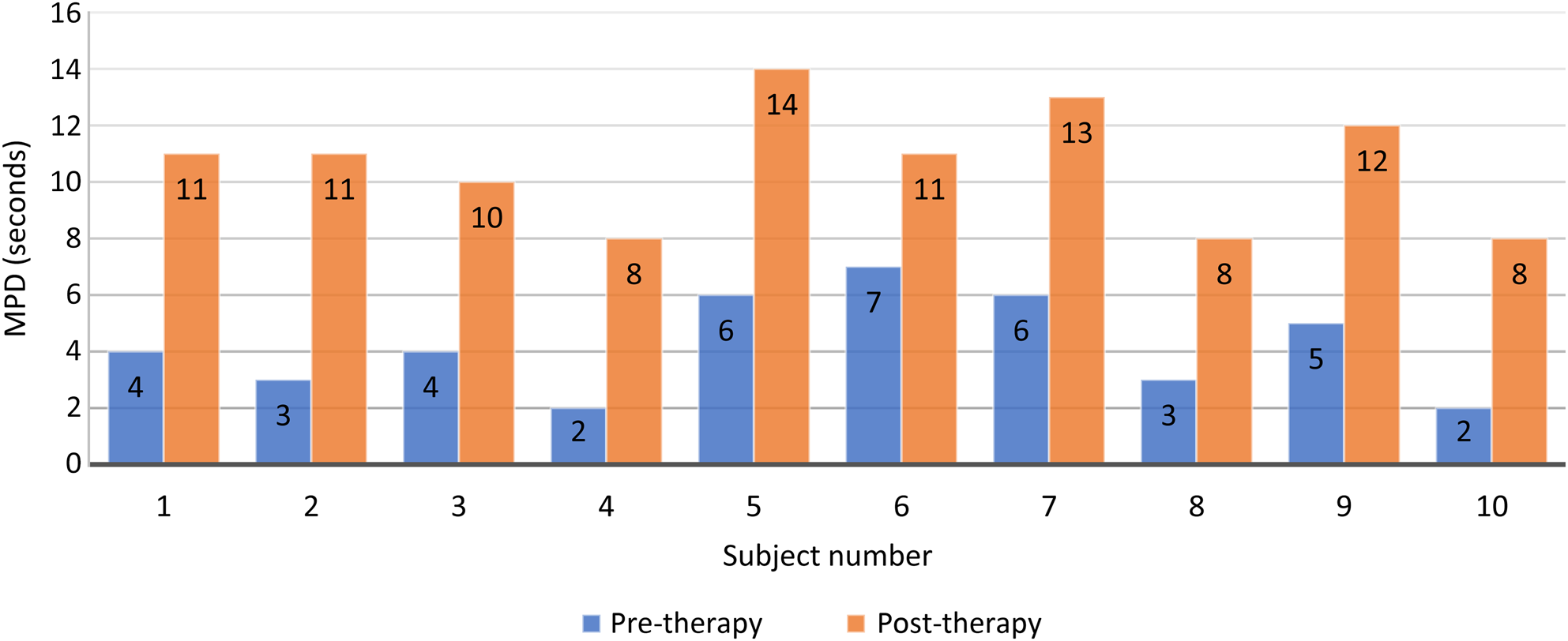
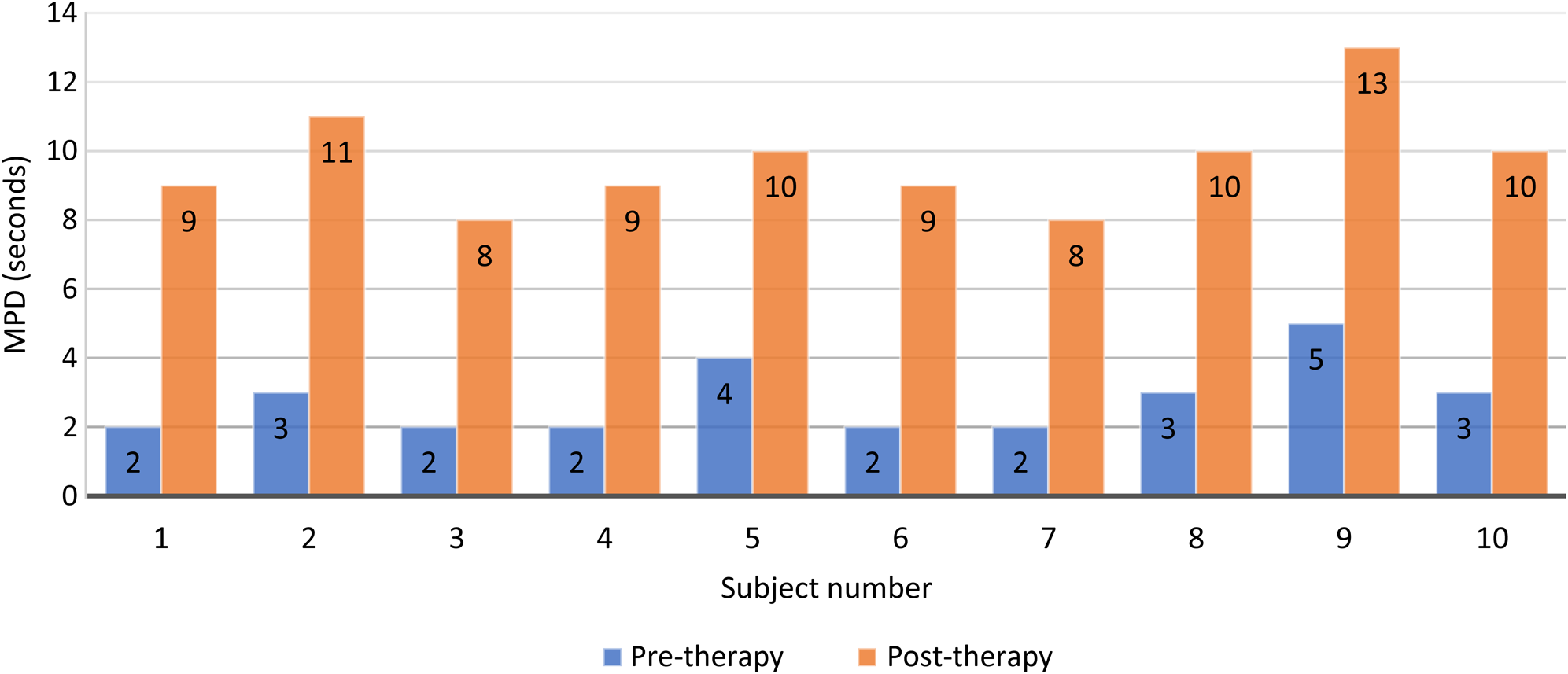
Figures 5 and 6 show the maximum phonation duration values in males and females, respectively. The results show an improvement in the mean values: mean maximum phonation duration was 4 seconds and 3 seconds in males and females, respectively, before therapy, increasing to 11 seconds and 10 seconds after therapy.
Maximum phonation duration (MPD) values for males, pre- and post-therapy.

Maximum phonation duration (MPD) values for females, pre- and post-therapy.

Quantitative analyses
Acoustic analyses
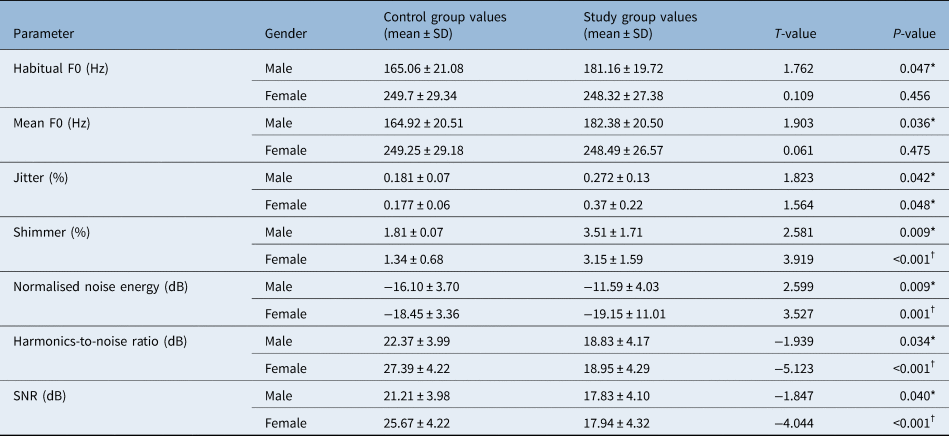
Table 2 compares the acoustic parameters of voice between control subjects and patients with unilateral vocal fold paralysis after three months of intensive voice therapy. The results revealed that all analysed parameters, namely habitual F0, mean F0, jitter, normalised noise energy, harmonics-to-noise ratio and signal-to-noise ratio were within normal ranges, both in males and females, for the control and study groups post-therapy. No statistically significant (p > 0.05) differences were observed between the groups for females, for habitual F0 and mean F0. However, there were statistically significant (p < 0.05) differences for jitter and shimmer, for both genders, between the control and study groups. In addition, although the normalised noise energy, harmonics-to-noise ratio and signal-to-noise ratio were within the normal ranges, there were statistically significant (p < 0.05) differences between both groups.
Comparison of acoustic voice analysis parameters between control and study groups post-therapy

*P < 0.05; †p < 0.01. SD = standard deviation; SNR = signal-to-noise ratio
Electroglottography
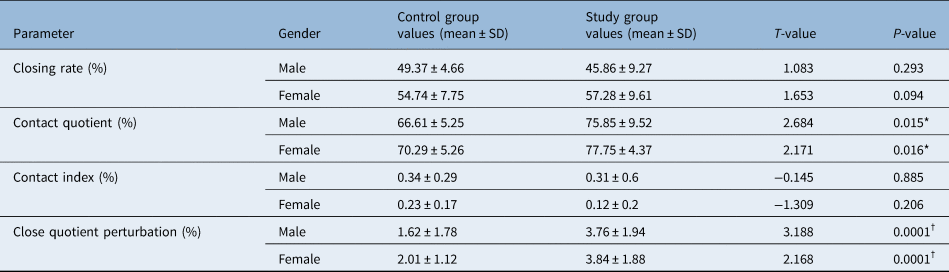
Table 3 shows the mean (with standard deviation) values for closing rate, contact quotient (normal range = 40–70 per cent), contact index (normal = less than 1 per cent) and close quotient perturbation (normal = less than 3 per cent), recorded after three months of therapy. There were statistically significant (p < 0.05) differences for contact quotient and close quotient perturbation between the two groups, both in males and females. However, the differences for closing rate and contact index were statistically non-significant (p > 0.05) between the two groups in both genders.
Comparison of electroglottography parameters between control and study groups post-therapy

*P < 0.05; †p < 0.01. SD = standard deviation
Voice range profiles
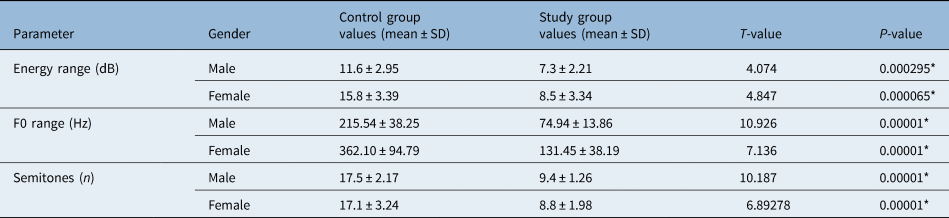
Table 4 compares the control and study groups in terms of energy range, F0 range and number of semitones on voice range profiles in males and females. The t-test revealed significant (p < 0.05) differences between the control and study groups for all three parameters, both in males and females.
Comparison of voice range profile parameters between control and study groups post-therapy

*P < 0.01. SD = standard deviation
Discussion
The grade, roughness, breathiness, asthenia and strain scale primarily reflects the quality of voice, and the Voice Handicap Index represents the patient's perception of voice with respect to physical, emotional and functional components. The results revealed significant improvements in these qualitative analyses, with scores indicating minimal issues or normal voice after three months’ intensive voice therapy, both in males and females. Maximum phonation duration also improved, from 3–4 seconds to 10–11 seconds, after voice therapy.
• Voice disorders can limit participation and impair social interaction, negatively affecting quality of life
• Subjective and objective voice assessments were performed before and after three months’ intensive voice therapy
• Electroglottography and voice range profiles revealed significant (p < 0.05) differences after therapy
• Thus, these acoustic measures should be performed prior to terminating voice therapy
• Comprehensive voice therapy should aim to enhance frequency and intensity (pitch and loudness range)
• Voice range profiles may be used as objective indicators of pitch and intonation in unilateral vocal fold palsy, after voice therapy
Quantitative analyses showed no statistically significant differences (p > 0.05) for habitual F0 and mean F0 between the control and study groups for females. Jitter, shimmer, normalised noise energy, harmonics-to-noise ratio and signal-to-noise ratio were significantly (p < 0.05) different between groups, although the mean values were within the normal limits and ranges for all parameters except shimmer.
Electroglottography is a non-invasive assessment of the impedance between two vocal folds during adduction. It could not be measured during the first assessment session (i.e. before the start of therapy). After three months of intensive voice therapy, electroglottography revealed statistically significant (p < 0.05) differences between the two groups, both in males and females, for contact quotient and close quotient perturbation, but there were no significant (p > 0.05) differences for closing rate and contact index. Increased values for contact quotient and close quotient perturbation indicate greater vocal contact. They also reflect the symmetry of the contact phase in unilateral vocal fold palsy. The contact phase is thought to reflect vocal fold tonus and be particularly sensitive to mucosal dynamics within the vertical plane, which may lead to vocal fold contact irregularity.Reference Titze and Talkin7,Reference Rothenberg8 The vocal folds exhibit a non-linear, anisotropic, viscoelastic behaviour. The non-linear mechanical behaviour provides a means to regulate vocal fold stiffness and tension through vocal fold elongation or shortening, which plays an important role in the control of the F0 or pitch of voice production.Reference Herzel, Berry, Titze and Steinecke9
In the present study, the voice range profiles showed statistically significant (p < 0.05) differences between the control and study groups, both in males and females, for the mean F0 range, the number of semitones and the energy range. The inability to control laryngeal performance, as indicated by the limited F0 range and semitones in unilateral vocal fold palsy, may be because of lowering pitch, where tension must be increased at the same time to counteract the lengthening effect. A stiff vocal ligament within the vocal fold plays an important role in controlling vocal performance, namely ‘increasing pitch by elongating a vocal fold’.Reference Titze10
Conclusion
Unilateral vocal fold paralysis patients may remain affected after voice therapy, in terms of pitch variation and intonation, despite normalised voice quality and loudness. The present study suggests that the pitch scale should also be considered in voice therapy prior to terminating treatment. Voice range profiling may be a good objective indicator of improvements in pitch and intonation after therapy for unilateral vocal fold palsy. The present study thus also supports having regular therapy for a minimum of three months, to achieve stabilisation of vocal parameters in patients with unilateral vocal fold palsy.
Competing interests
None declared