





Introduction
Unity Is Strength!
During my fieldwork at the nüsi (女寺, women’s mosque) in Jinan, Shandong, where I was observing their tradition of collective chanting, I asked about the spontaneous gatherings that take place after the evening prayer, Maghrib, locally known as Shamu. Ahong Ma, the female imam of the nüsi, confidently explained the deeper purpose behind this communal ritual. To better understand the significance of this interaction, it is important to situate it within the broader institutional landscape of Hui women’s religious life (ahong Ma Yuxi, interview, 2 January 2023).
A distinctive feature of Chinese Islam, particularly among the Hui, is the presence of female clergy and women-only mosques, known as nüsi, a unique phenomenon. Female imams, who are often referred to by locals as nü ahong or shiniang (师娘, lit. “teacher mother”), not only lead prayers and religious activities for women but also help manage the daily affairs of these mosques.
In February–May 2024, I conducted fieldwork in Jinan to study Jing-Tang songs (经堂歌, scripture hall songs), which vary in name across different regions and are also referred to as Jingge. Originating in the seventeenth century alongside the rise of Islamic education in China, this tradition has gradually evolved into one primarily practiced and transmitted by women (Jaschok Reference Jaschok2025:6). In Jinan, Jing-Tang songs are understood as melodic and didactic verses originally used to educate Muslim communities through rhymes that incorporate elements such as religious teachings, parables, and scriptural interpretations. Performed in a flexible mixture of Arabic, Persian, and Chinese, these songs are characterised by simplicity, musicality, and ease of memorisation. As such, this unique art form serves as an important lens through which to understand the historical and cultural development of Chinese Muslim women.
However, more than two decades after Jaschok and Shui’s (Reference Jaschok and Shui2000) meticulous exploration of women’s mosques in China, gender inequality within the community persists. For example, important ceremonies such as weddings and funerals—regardless of whether the principal is male or female—are invariably led by male imams. When asked why, many Hui men responded, “women cannot handle such occasions, and it is against Islamic law for them to preside over important rituals” (Mr. Ma and other Hui people in Jinan Hui Communities, interview, 12 March 2024). Others explained, “women’s voices are too soft; during lively gatherings, their recitations can hardly be heard” (ahong Xin and other Hui people in Xiaojinzhuang, interview, 16 March 2024).
As ahong Ma remarked during my fieldwork—and as I observed through their musical practices—the women’s regular evening gatherings offer a powerful response to the notion of their “soft voices.” On ordinary nights, and especially during Ramadan, compared to ordinary days, more women gather in the nüsi to learn about Islam, basic Arabic words and phrases, and Qur’anic verses. Their nightly chanting holds profound meaning for the Hui community. In these exclusive spaces, Hui women come together to study, practice, and sing Jing-Tang songs. This music, as a form of collective action, plays a crucial role in strengthening social bonds, affirming identity, and enhancing the visibility of women within a marginalised community.
The study of female Muslims and women’s mosques in China has received growing scholarly attention, particularly through the pioneering work of Maria Jaschok and her colleagues. In her recent contributions, Jaschok re-examines the central role of Jing-Tang songs. On the topics of “sound” and “silence” in Chinese Muslim women’s religious spaces, she demonstrates that women are not passive or ignorant in religion, instead, they actively participate in religious education, transmit cultural traditions, and express their faith, thereby playing crucial roles in religious communities, driving transformation, and at the same time facing challenges posed by gender inequality that require continuous efforts for equality and self-expression (Reference Jaschok2025:42–44).
Jaschok and her colleagues emphasise that women’s religious expression—shaped through sonic practices, institutional frameworks, and gendered negotiations of power—also fosters “networks of mutual support and solidarity” in the contemporary world (Jaschok et al. Reference Jaschok, Shui, Ge, Harris and Jaschok2021:187). Importantly, she highlights the role of female ahong (imams) in the transmission of jingge: they adapt melodies and modify lyrics, and thereby prove that jingge is a form of collective creation that reflects women’s lives and beliefs across different historical periods (Jaschok et al. Reference Jaschok, Shui, Ge, Harris and Jaschok2021:187).
While much existing research emphasises the interplay between institutional authority and cultural constraints, my analysis of musical details—such as rhythm, scale, and vocal texture—reveals how women’s voices shape a distinctive soundscape that both affirms faith and subtly reconfigures gendered religious space. In the broader Chinese Islamic tradition, scholars consistently note the prevalence of women’s collective recitation practices (e.g., Jaschok and Shui Reference Jaschok, Shui and Spakowski2005; Jaschok Reference Jaschok2014; Harris Reference Harris2020; Ha Reference Ha, Harris and Jaschok2021, Reference Ha2022). Drawing on my fieldwork in Jinan, I also found that the frequency and prominence of women’s collective recitation far exceed that of men. Within the existing scholarship, however, the deeper reasons behind this distinctive form of women’s religious gathering remain insufficiently examined and thus merit further investigation.
In her work, Kay Kaufman Shelemay emphasises that music plays a central role in establishing, maintaining, and reinforcing the “collective identity.” (Reference Shelemay2011:368). Through examples drawn from Ethiopian Orthodox Christianity and its diaspora, she illustrates how shared musical practices—particularly liturgical chant and congregational participation—serve to reconstitute communities in contexts of migration and displacement. Although she briefly gestures toward studies on rhythm and synchronisation, her primary focus remains on music as a social process that actively produces and reinforces a sense of communal belonging (Reference Shelemay2011:369). This can be seen in the context of group singing and rhythmic synchronisation, which is considered connected to how those people who are part of a disadvantaged group use music to form a stronger collective sense of belonging.
Based on my fieldwork among Hui Muslim women over the past few years, I have observed that women in China’s Hui communities exhibit characteristics similar to those of the Ethiopian Orthodox communities studied by Shelemay during their collective recitations, and the tradition of Hui collective recitation has long been overlooked. Likewise, Hui Muslim women in Jinan demonstrate a form of musical unity that not only reinforces their sense of belonging within the Hui community but also challenges dominant gender and cultural norms within both Chinese and Islamic contexts.
In this regard, Catharina Raudvere’s study of contemporary Sufi women in Istanbul offers a helpful comparative lens. As she states, women’s zikir gatherings are not simply devotional practices but are crucial sites for negotiating visibility, religious agency, and communal space within a patriarchal religious framework, thereby opening up “new fora of an at least semi-public character”(Reference Raudvere2002:30). Hui Qur’anic recitations—including such cases as my fieldwork in Jinan and the other aforementioned cases—reflect what Christina Baker (Reference Baker2023) describes as sonic strategies—the use of sound to navigate socio-political constraints, reshape collective identity, and articulate resistance. In this sense, Hui women’s recitations are not merely religious practices but also serve as a powerful sonic intervention, shaping communal memory and redefining their place within the broader social and religious landscape.
In the current context of increasingly tightened religious policies in China, Hui Muslims often align their practices with state prioritiesFootnote 1 (Rosati Reference Rosati, Harris and Jaschok2021; Yusupof Reference Yusupof, Harris and Jaschok2021). However, as Rosati observes in her study of Muslim women in Linxia, the state’s campaign to “sinicise” Islam and regulate private religious education has had little impact in Jinan (Reference Rosati, Harris and Jaschok2021:168). One reason is that Jing-Tang songs, which emphasise Chinese-language translations and employ pentatonic melodic structures, already align closely with the political discourse of the “sinicisation of religion.” Moreover, unlike formal “schools” or “educational programmes,” these women’s gatherings occur informally during or after regular religious activities, as participants described: “We just take some time after prayer to learn Jing-Tang songs together and chat about everyday life” (ahong Ma Yuxi, interview, 20 October 2025). In this way, women’s recitation traditions—deeply rooted in historical continuity—have largely evaded political scrutiny, becoming an effective tool for collective learning and for preserving their sense of religious and cultural identity.
In Maria Jaschok’s research, Hui Muslim women develop complex oral traditions and religious practices within what she describes as a “silenced” space—one shaped jointly by Neo-Confucian and Islamic patriarchal structures (Reference Jaschok2025:53).Footnote 2 These practices reflect a distinctive form of agency rooted in specific cultural, religious, and historical contexts. Building on these theoretical insights, it becomes clear that collective recitation serves as a powerful means through which Muslim women challenge this imposed “silence.”
In this paper, I argue that the sonic practices of Hui Muslim women in Jinan constitute a unique form of negotiating their visibility and place—both within the Islamic world and the broader Chinese sociopolitical landscape—challenging prevailing stereotypes that portray women, and especially their voices, as weak or marginal. Through collective recitation, these women create a space where gender, religion, and cultural identity intersect, forming a powerful and distinctive collective voice. The development of this collective chanting practice also bears witness to the gradual transformation of Muslim women’s social status within Chinese society. This practice not only counters the stereotype of the generally softer and more delicate voices of women compared to men, but also strategically strengthens their vocal power through rigorous and synchronised practice. In doing so, they assert their presence within the Chinese Muslim community and beyond.
Finding stability through song in Xiaojinzhuang
Xiaojinzhuang Village is a historically significant Hui community in North China. Many Hui people living in Beijing, Tianjin, Hebei, and other northern provinces with the surname Jin likely trace their ancestry to this village, as their forebears migrated from here generations ago. The community is believed to have formed during the Ming Dynasty (1368–1644), centred around a Chinese-style mosque built in 1490. Like many Hui settlements in China, the village gradually developed as Hui Muslims settled around the mosque, forming a distinct ethnic and religious enclave.
During the past decade, many houses have been demolished due to financial difficulties and the lasting effects of COVID-19 in Xiaojinzhuang. The village is now littered with half-demolished buildings and construction debris, and locals say that little progress was made during the 3 years of the pandemic. In the midst of these ruins, the historic mosque, designated as a protected cultural site, stands as an unusual and striking presence. Meanwhile, the traditional Hui practice of living around the mosque has been disrupted, forcing many residents to relocate to other parts of Jinan or its outskirts.
The COVID-19 pandemic brought local construction projects to a halt, and the promised new housing for returning residents has not materialised and shows no sign that it will. Intermittent lockdowns and movement restrictions during the three-year period meant that many villagers, now dispersed across Jinan, were unable to attend religious activities or group learning sessions regularly. In the post-pandemic period, even as restrictions have eased, the transportation infrastructure in Xiaojinzhuang has been slow to recover. As a result, women who wish to continue gathering must often travel from distant neighbourhoods, sometimes paying higher taxi fares to reach the mosque to participate in their community’s religious activities (Hui women in Xiaojinzhuang, pers. comm., 16 March 2024).
Despite these hardships, Hui Muslim women continue to gather, donate money, and prepare the iftar meal from the afternoon onward. Throughout the evening, only one category of men appears—the ahong, who occasionally step out to kaijing Footnote 3 (lit. “opening the scripture”) before returning to rest. Aside from them, no other male Muslims are present.
These women live in a peri-urban area of Jinan, once most renowned for their oral recitations. Because a large number of Muslim women in the past were illiterate, oral recitation became an essential means of learning religious knowledge and coping with gendered educational marginalisation (Jaschok Reference Jaschok2025). As Jaschok and Shui observe, “Jingge were used as an educational tool to teach young girls’ basic Islamic knowledge and scriptural languages…[and] brought emotional release, speaking to women’s suffering, aspirations, and sacrifices” (Jaschok Reference Jaschok2025:24). Although the provincial capital now faces far fewer issues of female illiteracy, educational disparities between rural and urban areas still persist. Meanwhile, this oral tradition has been consciously preserved as a missing spiritual dimension of formal education and continues to thrive as a collective learning and chanting practice in the nüsi.
In Jinan, the transmission of Jing-Tang songs is largely facilitated by shiniang. This title mirrors the male clerics, such as Imam or ahong, who are commonly referred to as shifu (师父, “teacher” or “master”). Not only during the month of Ramadan when I conducted fieldwork, but also on regular evenings, shiniang voluntarily teaches classes in the women’s mosques before the night prayer, Isha. These lessons include basic religious knowledge, Arabic pronunciation, Qur’anic recitation for daily religious observance, and training in Jing-Tang songs. Despite having no formal musical and Arabic training, the women’s voices become remarkably harmonious and melodious during important religious occasions or festivals. This is achieved through the shiniang’s patient and meticulous correction of pronunciation, as well as the women’s daily collective practice and coordination over time.
To understand how such sonic practices take shape in everyday life, it is helpful to turn to the community of Xiaojinzhuang and the religious guidance offered by shiniang Mi. Her leadership plays a crucial role in preserving and sustaining the community’s religious and cultural traditions. Speaking with shiniang Mi and the local women, I could immediately sense their deep pride and joy in belonging to this community. During iftar, as they recited prayers in unison, I was profoundly moved by the warmth of the gathering. Their sincere smiles, the atmosphere of mutual support, and the sound of their collective voices expressed a devotion directed not only toward God but also toward one another. Each simple yet beautiful melody carried an unmistakable reverence for God and the Prophet.
A closer look at these practices reveals that the very traditions abandoned by men have become central to women’s religious identity. Jing-Tang song tradition, once a shared practice for both genders—was gradually discarded by men for being “too simple” or “too basic.” Furthermore, this style of singing (often Chinese, or sometimes Persian, or Arabic with a Chinese accent) is not considered orthodox within Islam, and men from this region now have more opportunities to travel to the Middle East and receive more “orthodox” training. As a result, many men today (except religious specialists) have forgotten these chants. Yet these “simple” traditions have endured among women and have become their “sound of faith” (Jaschok Reference Jaschok2025:5). Through diligence, wisdom, generosity, and compassion, the women of Xiaojinzhuang continue to safeguard this seemingly simple yet meaningful tradition through their collective gatherings.
When I asked shiniang Mi about gender equality, she laughed and said:
God created men and women as equals. It’s not about who holds more authority in the household. The key is for men and women to complement one another, to cooperate, and to encourage each other. That is the path to success. The division of labor is different, that’s all. (shiniang Mi Xianzhi, interview, 16 March 2024)
From her words, it appears that Islamic teachings offer a sanctuary for women. However, scholarly discussions on gender equality in Islam often present a more cautious perspective. In many academic analyses, women’s agency and religious space are portrayed as outcomes of negotiation—gradually earned rather than inherently granted (Jaschok and Shui Reference Jaschok and Shui2000; Raudvere Reference Raudvere2002; Ha Reference Ha, Harris and Jaschok2021). For me, as a Han Chinese male researcher, their invitation held even greater meaning. They hoped that I could transform their long-standing devotion to faith and their commitment to preserving tradition—including the Jing-Tang song—into words that could be shared with a wider audience.
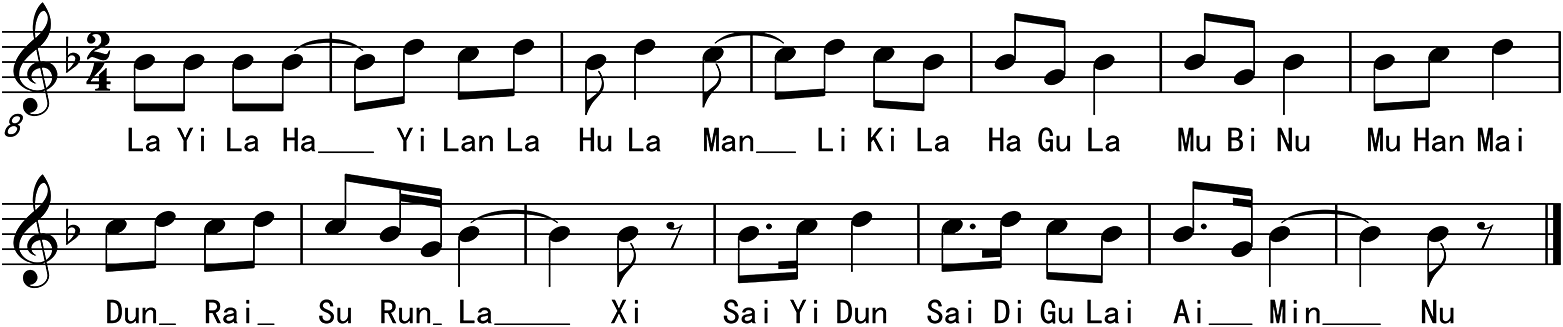
During Ramadan 2024, I observed their collective recitation of simple Arabic phrases—most notably the declaration of faith affirming the oneness of God and the prophethood of Muhammad (Figure 1). Although the melody is straightforward, their chanting is powerful, precise, and consistently in tune. The rhythm follows a steady 2/4 pattern, a structure that reinforces their strong sense of unity and is also characteristic of women’s collective recitation more broadly (Figure 2).
Women gathering for recitation during Ramadan in Xiaojinzhuang before the iftar. Photo by the author.

The Praise in nüsi. Transcription by the author. Note: Their recitation was performed in Arabic with a local accent, and I used the Chinese pinyin system to highlight the features of their pronunciation. The Pronunciation in standard Arabic is “Lā ilāha illā Allāh, al-Malik al-Ḥaqq al-Mubīn, Muḥammadun Rasūlu Allāh, al-Sayyidu al-Ṣādiqu al-Amīn.” (There is no god but Allah, the Sovereign, the True, the Clear [in His Truth]. Muhammad is the Messenger of Allah, the Master, the Truthful, the Trustworthy.)

Figure 2. Long description
The top staff begins with a treble clef and two flats, indicating B flat major or G minor, in 2/4 time. The melody is notated with quarter and eighth notes. Under each note, romanized syllables are written: the top staff reads ‘La Yi La Ha Yi Lan La Hu La Man Li Ki La Ha Gu La Mu Bi Nu Mu Han Mai.’ The bottom staff, also in treble clef and two flats, continues the melody with the syllables ‘Dun Rai Su Run La Xi Sai Yi Dun Sai Di Gu Lai Ai Min Nu.’ Each syllable is directly aligned with its corresponding note, indicating precise pronunciation for each pitch. The notation includes rests and ties, and the melody flows continuously from the top staff to the bottom, reflecting a single musical phrase.
What makes this performance especially striking is that these women come from diverse backgrounds and have received no formal musical training. Yet the clarity, coordination, and beauty of their chanting make it difficult to associate their performance with the marginalised status often assumed for women’s religious practices. The Jing-Tang song, in particular, represents a distinctive form of Islamic musical education in China. These chants employ simple melodic patterns to teach basic Arabic vocabulary, fundamental Islamic principles, and moral parables—emphasising ethical lessons, devotion, and everyday religious practice.
Consequently, the everyday practices of the women in Xiaojinzhuang reveal a community that sustains itself through sound: sound that binds people together, transmits knowledge, and preserves dignity amid social and spatial upheaval. Their recitations do more than fill the mosque with melody; they create a sense of stability and continuity at a moment when the physical landscape of the village has become fractured and uncertain. Musically, the steady 2/4 metre and recitative melodic lines exemplify the core paradigm of women’s recitation, while the lyrics—built around the repetition of essential religious concepts and basic Islamic knowledge—reflect the long-standing structure of the Jing-Tang song tradition. Within this context, the Jing-Tang song serves as a quiet anchor, enabling women to reaffirm who they are and what they value even as their surroundings continue to shift. It is in this resilience and creative continuity that the deeper significance of their music emerges, and it is here that we most clearly see how Hui Muslim women carve out a space of their own—sonically, socially, and spiritually.
Shiniang: female leadership in the community
A sentiment is widely shared across many Hui communities in North China, where a common saying circulates: “A Muslim woman is the Imam of the household.” Given the irreplaceable roles that women fulfil as wives and mothers, many Hui believers find this statement both accurate and meaningful (Imam Li Quanfu, interview, 11 March 2024). However, beneath this positive interpretation lies a reflection of what many scholars have noted—that women’s religious and social roles are often confined to the domestic sphere (Harris Reference Harris2020; Ha Reference Ha, Harris and Jaschok2021; Rosati Reference Rosati, Harris and Jaschok2021). However, as Jaschok and Shui’s (Reference Jaschok and Shui2000) extensive study of women’s mosques shows, the development of women’s religious education—including the jingge tradition—has rarely been a purely domestic matter. Rather, it has often been initiated by individual women who stepped beyond household roles to build forms of learning and leadership. This pattern is equally evident in Jinan, where Muslim women have long worked to make themselves visible in broader religious and communal spheres. The earliest of these efforts was carried forward by a previous generation of shiniang, whose personal initiative laid the foundation for the women’s collective practices seen today.
The presence of shiniang, like that of nüsi, is a phenomenon unique to Islam in China and virtually unparalleled elsewhere in the Islamic world (Jaschok and Shui Reference Jaschok and Shui2000). Shiniang typically possesses far greater religious knowledge and practical experience than the average congregant. Historically, in Shandong, women-led mosques and female ritual spaces—such as saoma (ritual gathering places)—were often guided exclusively by shiniang. Today, these figures are sometimes referred to as female ahong (women Imams) (Yi Reference Yi2006).
Within these women’s gathering spaces, the shiniang is often described with admiration, as her unique charisma deeply influences the community. Shiniang are equipped with the knowledge and skills to address the specific religious needs of Hui women, especially in contexts where male clerics are considered inappropriate—such as preparing the bodies of deceased women for burial, specifically the act of washing and dressing the bodies. Many shiniang can recite large portions of the Qur’an from memory and are thoroughly familiar with the rituals, sequences, and physical movements required for daily prayers. They possess the qualifications necessary to lead routine religious activities and offer spiritual guidance to the community. In fact, archival materials and oral histories reveal that shiniang often played prominent public roles in religious education. For example, in the 1990s, some shiniang in Jinan were known to deliver wa’z (religious sermons) in the streets of Hui neighbourhoods. These wa’z were pre-written sermons composed in accordance with Islamic teachings, typically delivered during religious festivals or before congregational prayers to educate and spiritually uplift the community. These days, with the existence of the nüsi, shiniang need not deliver sermons in streets, therefore, making wa’z less visible to the public.
Unlike their male counterparts, the shiniang’s wa’z were frequently chanted with melodic intonation, creating what local Muslims refer to as the “shiniang tune” (师娘调). This localised terminology reveals something significant: within the historical memory of Jinan’s Hui community, it was the shiniang’s distinctive vocal style—not the male clergy’s—that people chose to highlight. The very existence of this term, shiniang tune, suggests that shiniang voices were once widely heard, recognised, and appreciated, even if later generations have tended to overlook or downplay their contributions.
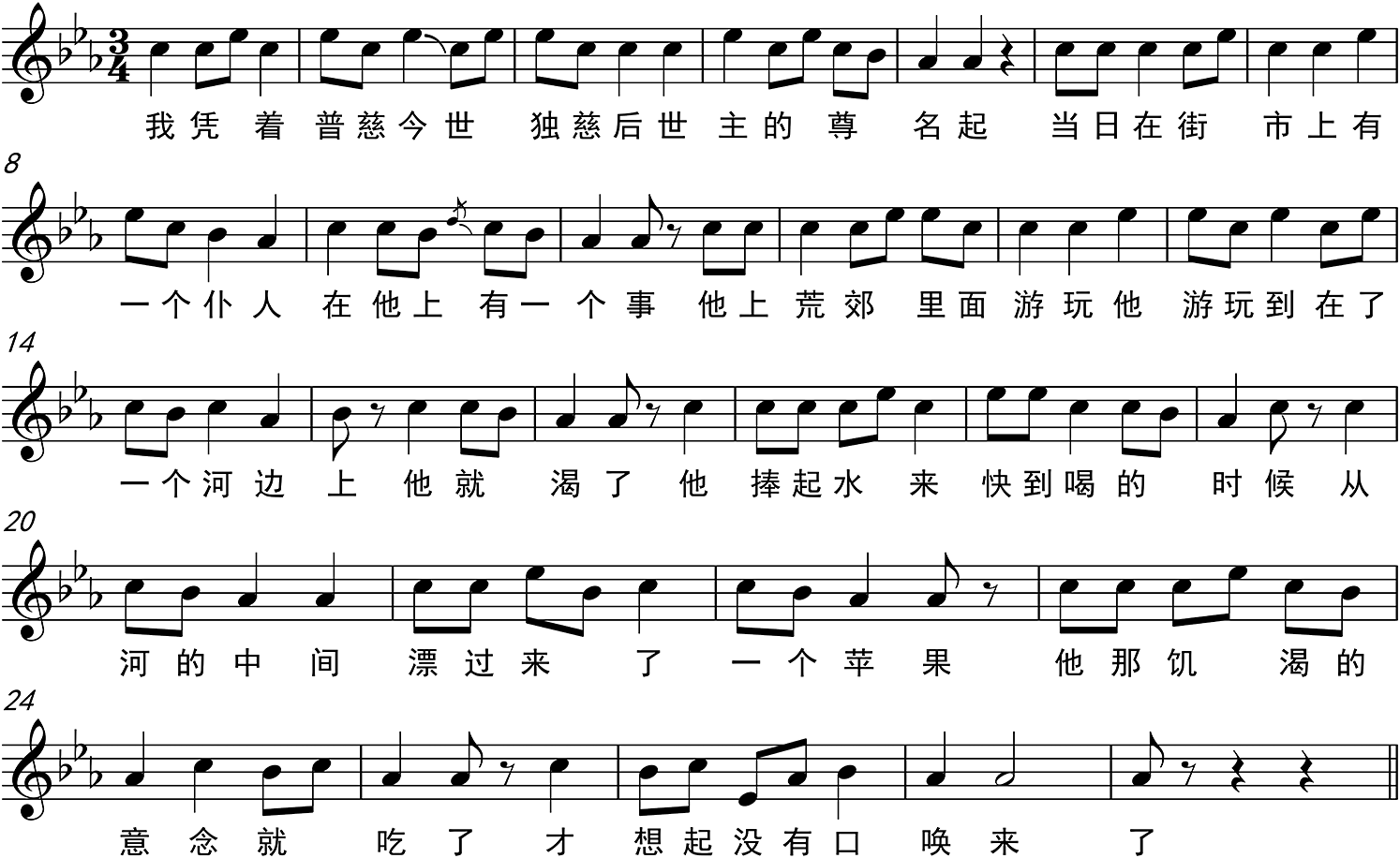
During the course of my research, I have found an archival audio-visual material recorded in the 1990s, featuring a now-deceased shiniang, which includes a rare recording of her wa’z performance (Figure 3). Her surname was Ding, but in accordance with local custom, community members referred to her as shiniang Jin, adopting the surname of her husband, who was an ahong. This naming convention, however, has largely faded among the younger generation of shiniang, who are now more commonly addressed by their maiden names. This shift suggests a growing recognition of women’s individual visibility and authority, no longer defined in relation to their male counterparts.Footnote 4
Shiniang Jin’s Wa’z (transcription by the author). Note: The parenthetical notations, e.g., “ke (lie)” or “chi (lie)” in the pinyin transcription, demonstrate that these pronunciation elements deviate from Standard Mandarin and reflect distinctive features of the Jinan dialect. The Meaning is: “In the name of the Lord of Mercy, who is merciful to the Lord of this world, and to the Lord of the hereafter. On that day in the marketplace, there was a servant, and something happened to him. He was wandering in the remote countryside, and when he reached the riverbank during his wanderings, he became thirsty. He cupped his hands to gather the water, and just as he was about to drink, he noticed an apple floating in the middle of the river. His thirsty desire caused him to eat the apple, only then realising he had not received a kouhuan (verbal permission).”

Figure 3. Long description
The musical score consists of five horizontal staves, each beginning with a treble clef and a key signature of two flats. Each staff is divided by vertical bar lines and contains quarter, eighth, and dotted notes. Chinese lyrics are written directly below each note, matching the melody. The first staff starts with lyrics about compassion and a respected figure, followed by a narrative about a person by a river, thirst, and an apple drifting by. The melody is consistent, with rhythmic variation and rests at the end of some lines. The score is formatted for vocal performance with clear alignment between syllables and notes.
Shiniang Jin is fondly remembered in the community for her dedication, kindness, and spiritual leadership, and her distinctive style of wa’z chanting remains vivid in the memories of older residents. She was so appreciated that an educational video was made to honour her contributions to and influence on the community. Because the nüsi had not yet been built at the time, the recording was made in the main hall of the men’s mosque after asking all male worshippers to leave, with the intention of providing a learning resource for the women of the community. The resulting video not only commemorates her contributions to local religious life but also stands as a valuable example of gendered religious sound within Chinese Islam—underscoring the significant role Hui Muslim women have played in shaping, transmitting, and safeguarding the auditory traditions of their faith.
I have chosen to analyse a selected excerpt of the opening section of this wa’z chant (Figure 3), which lasts approximately 20 minutes in total. The narrative recounts a young man who, after eating an apple without receiving prior verbal permission, follows the river in search of the apple tree’s owner. The owner tests the young man’s character, and ultimately, moved by his honesty and sincerity, rewards him by marrying his daughter to him. Through this parable, the shiniang imparts an Islamic ethical teaching—the principle that one must not use or consume something without the explicit consent of its owner.
As illustrated in the musical transcription above, this performance reflects three defining characteristics of wa’z as performed by shiniang in Shandong and the broader Huabei region. First, the content is highly accessible and exhortative, often conveyed through parables or vivid narrative storytelling rather than through abstract doctrinal citation or rigid sermonising. Second, the melodic structure is rooted in the traditional Chinese pentatonic scale, typically avoiding chromatic alterations and occasionally omitting one tone entirely. This structure aligns subtly with the tonal nature of Mandarin Chinese, which features four phonemic tones, creating a natural aesthetic resonance. Third, the linguistic style of the chant blends elements of the Shandong regional dialect with features of Jing-Tang language—a hybridised liturgical idiom combining Arabic, Persian, and vernacular Chinese.Footnote 5 This combination ensures both prosodic fluency and rhythmic coherence while avoiding overly obscure or complex expressions. The value of this style lies in its accessibility for Hui Muslims in China, many of whom have limited exposure to Arabic language religious instruction. By using locally familiar musical idioms and dialectal expressions, these chants enhance comprehension.
The distinctive chanting style of shiniang can be seen as part of a broader scholarly conversation on localised Qur’anic and devotional recitation. Previous studies have explored the influence of local musical scales on Islamic recitation, such as Indonesian local musical scale’s adaptations (Harnish and Rasmussen Reference Harnish and Rasmussen2011; Tsai Reference Tsai2020), maqam-based secular inflections in Egypt (Nelson Reference Nelson2001), or scale systems shaped by indigenous African traditions (Neubauer Reference Neubauer1980). In the case of shiniang, the gendered divergence in recitation styles—where female and male voices follow distinct melodic contours—not only underscores the irreplaceable role of women but also reflects the culturally embedded character of religious expression. More importantly, it points to an ongoing reconfiguration of women’s authority within contemporary Chinese Islam, revealing how sonic practice becomes a site where gendered power is quietly negotiated and redefined.
Much of the recent academic discourse on Muslim women, especially in Islamic studies, has been shaped by feminist ideological frameworks that assume the existence of systemic inequality and oppression. Over the past decade, many studies have acknowledged the historical and structural subjugation of women within Islamic and patriarchal systems (see Jaschok and Miers Reference Jaschok, Miers, Jaschok and Miers1994; Harris et al. Reference Harris, Ha and Jaschok2021). Yet an uncritical reliance on such an assumption risks obscuring meaningful and nuanced forms of agency. As Guangtian Ha (Reference Ha, Harris and Jaschok2021) insightfully points out, the reverence for mothers and the affection shown to daughters in Hui communities also manifests in the public sphere, reflecting broader patterns of respect and deference towards women, not limited to kinship relations. However, as his narrative also reveals, within mixed-gender mosques, women’s spatial presence remains notably restricted (Ha Reference Ha, Harris and Jaschok2021).
Similar to what Veronica Doubleday (Reference Doubleday1999) observed in Middle Eastern contexts—where women use the frame drum to create expressive spaces amid religious and gendered constraints—Chinese Muslim women likewise mobilise sound as a domain of power, continuity, and subtle negotiation. Through interviews with Hui Muslim women, I learned that in the 1990s, shiniang typically led individual recitations to educate the community. Over time, however, this practice has evolved into collective chanting that involves a wider circle of participants. The emergence of women’s mosques further institutionalises this shift, providing a space where women, through ongoing negotiation within both Islamic and Confucian frameworks, have carved out a comparatively broader sphere for devotional expression (Jaschok and Shui Reference Jaschok and Shui2000; Frankel Reference Frankel2021).
Nüsi: religious education for Hui women in Jinan
To understand contemporary variations of women’s collective chanting—and to assess the progress of their rights compared to the past—I visited another significant Hui Muslim community in Jinan, which is home to the city’s, and indeed Shandong Province’s, most renowned nüsi. Closer to the city centre, there is a well-known Hui residential area called the Jinan Hui Community. The main thoroughfare of this neighbourhood, Yongchang Street, is renowned among Muslim communities across China. Here, a striking sight unfolds: three mosques standing side by side—the Southern Grand Mosque, the Northern Grand Mosque, and the nüsi. Their continued presence is remarkable in Northern China, where Muslims are a minority.
The two grand mosques stand close together due to historical sectarian divisions. The Southern Grand Mosque was founded in 1295, while the Northern one was established later, likely in the late Ming or early Qing period (Li et al. Reference Li, Qin, Feng and Sha1998). The Northern Mosque is linked to Yang Kuiyuan, who raised construction funds across China and, after doctrinal disputes with the Southern Mosque, led the Gedimu (Old Sect) community to build a new mosque on Yongchang Street. Though these divisions shaped prayer practices, Jinan’s Hui community remains geographically concentrated (Yi Reference Yi2006).
According to local oral accounts, the Hui community in Jinan once had two small saoma (women’s prayer spaces). However, these were demolished in the 1960s as a result of urban expansion, leaving Muslim women without a fixed place for religious activities for a long period. Archival and photographic records from the 1980s show that many women attended the men’s mosques during festivals for prayers and celebrations, and that some temporary saoma were occasionally set up during that time. In 1996, the Jinan government funded the construction of a nüsi between the two existing mosques to meet the daily religious needs of local Muslim women. This provided women with a large, permanent, and independently managed religious space; it also brought together female believers from different sectarian backgrounds within the community. This created a unique religious landscape, with three significant mosques located within just 200 metres of each other. The nüsi provided women with an independent place of worship, marking a significant development in religious life for Jinan’s Hui.
Scholars have different interpretations of the emergence of the nüsi in China. Religious scholar James Frankel sees the nüsi as an Islamic response to the Confucian concern about the “wanton mingling of men and women” (Frankel Reference Frankel2021:130). Meanwhile, Maria Jaschok and Shui Jingjun highlight the complex interplay between Islamic and Confucian patriarchal systems, arguing that Chinese Muslim women exist within a “cultural double bind” of both traditions’ constructs of femininity (Jaschok and Shui Reference Jaschok and Shui2000:11). Certainly, in the traditional sense, the establishment of the nüsi did provide an effective solution to these concerns; at the same time, it also created an autonomous space where women could gather, communicate, and pursue collective religious learning.
The establishment of the nüsi in the 1990s marked a turning point for women’s status within Jinan’s Muslim community. In 1993, the first woman to obtain an ahong qualification through formal religious education graduated from the Southern Great Mosque in Jinan—this was ahong Ma, who later became the head of the nüsi (Figure 4). Unlike many female religious leaders traditionally referred to as shiniang, Ma firmly rejected this title, insisting on being addressed as ahong due to her formal religious credentials.
Shandong ahong qualification ceremony, 1993. The only female ahong present is Ma Yuxi, seen wearing pink in the second row, far left. Photo courtesy of ahong Wen Yanli.

Many longtime Hui residents continued to call her shiniang out of habit, but over time, they adjusted to addressing her as ahong Ma in person, though some still referred to her as shiniang in private. Occasionally, people would express their discomfort, arguing that shiniang had long been the established term for female religious leaders and that there was no precedent in Jinan for calling a woman ahong. However, due to Ma’s strong-willed nature, authoritative voice, and legitimate religious qualifications, the community gradually accepted this shift, albeit with some silent resistance.
The gradual acceptance of ahong Ma’s title reflects broader dynamics within Jinan’s Hui Muslim community, where religious authority, gender roles, and social structures continue to evolve. These shifts, however, do not occur in isolation. They are embedded within the broader spatial and cultural landscape of Jinan, a predominantly Han city where Hui Muslims have historically maintained distinct communal spaces.
In Jinan, Hui Muslims tend to live in concentrated communities. This residential pattern serves two purposes: it helps them maintain and safeguard their faith while also ensuring their cultural presence is recognised. For instance, halal beef and lamb, along with distinctive Hui cuisine, have become defining features of the area, attracting Han Chinese visitors in search of authentic Hui Halal food. Similarly, celebrations such as Eid al-Fitr and Eid al-Adha draw interest from non-Muslim tourists, offering them a glimpse into Hui religious and cultural practices. While these customs are simply part of Hui daily life, their visibility is amplified by the communal living arrangement. This residential pattern reflects an integration-oriented acculturation configuration, in which minority groups maintain cultural continuity while engaging in meaningful interactions with the wider society (Leong and Berry Reference Leong and Berry2010). Such community-based consolidation enables the Hui both to safeguard religious life and to cultivate a recognisable cultural presence in Jinan, making their customs more visible and accessible to non-Muslim residents and visitors. Despite being such a small Muslim minority, the Jinan Hui have left their mark in this region, as can be evidenced by the Persian words that have made their way into the local Chinese dialect.
This communal structure also shapes gender dynamics within Jinan’s Hui Muslim society. Unlike the male-dominated sectarian divide between the two Grand Mosques, Hui Muslim women in Jinan appear largely unbound by such distinctions. Instead, they gather in the central space between the Northern and Southern Grand Mosques, where I met the wives of religious leaders from both congregations. These women, also commonly referred to as shiniang, do not necessarily undertake religious duties at the nüsi. Unlike the shiniang who actively lead congregations and teach at nüsi, their title is derived primarily from their status as the wives of ahong or Imams, rather than from formal religious responsibilities.
The establishment of the nüsi has further strengthened women’s capacity for independent religious participation, offering them a dedicated space for worship that is free from external oversight. More importantly, it has created a space for women to come together across sectarian lines, amplifying a collective voice that is increasingly difficult to overlook.
A visible shift in contemporary Hui communities is that women are no longer represented solely by the lone figure of a shiniang striving against all odds—as seen in a photo from the early 1990s, where ahong Ma stands alone, determined to pursue religious education. Over time, women have also moved beyond the earlier need to learn religious knowledge exclusively from men, a process that once required navigating numerous restrictions on gender interaction in accordance with Islamic norms (Jaschok and Shui Reference Jaschok and Shui2000; Ha Reference Ha2022). Today, the nüsi has become a vibrant gathering place for women who come together for daily prayer and learning.
The Nüsi during Ramadan: a space of religious and social engagement
During Ramadan in 2024, I walked along Yongchang Street at night and witnessed a bustling scene outside the nüsi. Each evening, around 70–100 women gathered for prayers, and on some nights, attendance exceeded 100. Given that the nüsi can accommodate about 150 worshippers, the space felt vibrant and full. In stark contrast, the Southern Grand Mosque, which can accommodate 600 people, had only about 20 men attending prayers on most nights.
When I asked the nüsi leaders about this striking difference, they noted that during Ramadan, the number of women attending prayers at the nüsi sometimes surpassed the combined male attendance at both grand mosques. One administrator, surnamed Zhao, explained:
Women don’t often gather together—they’re usually busy with family matters. Ramadan gives them a rare opportunity to see each other, to chat, and to strengthen their bonds. Before and after prayers, ahong Ma also gives religious lessons, teaching the women how to make du’a and leading them in reciting zanci (praises for the God and the Prophet) and Jingtang melodies. (Ms. Zhao, interview, 24 March 2024)
A striking sonic feature of the nüsi during Ramadan was the resounding and synchronised chorus of a’minai (āmīn with Chinese accent), heard especially after supplications (du‘a) and the recitation of Surah Al-Fatiha (the first chapter of the Qur’an) in prayers. This strong, unified response was rarely heard in the men’s mosques.Footnote 6
Additionally, during the taraweeh prayers, an important nightly ritual during Ramadan, a unique difference emerged between male and female worshippers. Traditionally, Chinese Muslims recite zanci between every four cycles of taraweeh prayer. However, at the men’s mosques, this practice was often conducted individually, with only a small group—fewer than 10 people—participating collectively in the last week of Ramadan. One major reason for this was that many men were unfamiliar with the lyrics and melodies of zanci.
In contrast, at the nüsi, nearly all the women participated in the zanci recitations. Their voices were strong, synchronised, and loud enough to be heard even outside the nüsi. The communal singing reflected not only their religious devotion but also their deep familiarity with these traditions, emphasising the integral role of Hui women in preserving and transmitting Islamic sonic culture in Jinan.
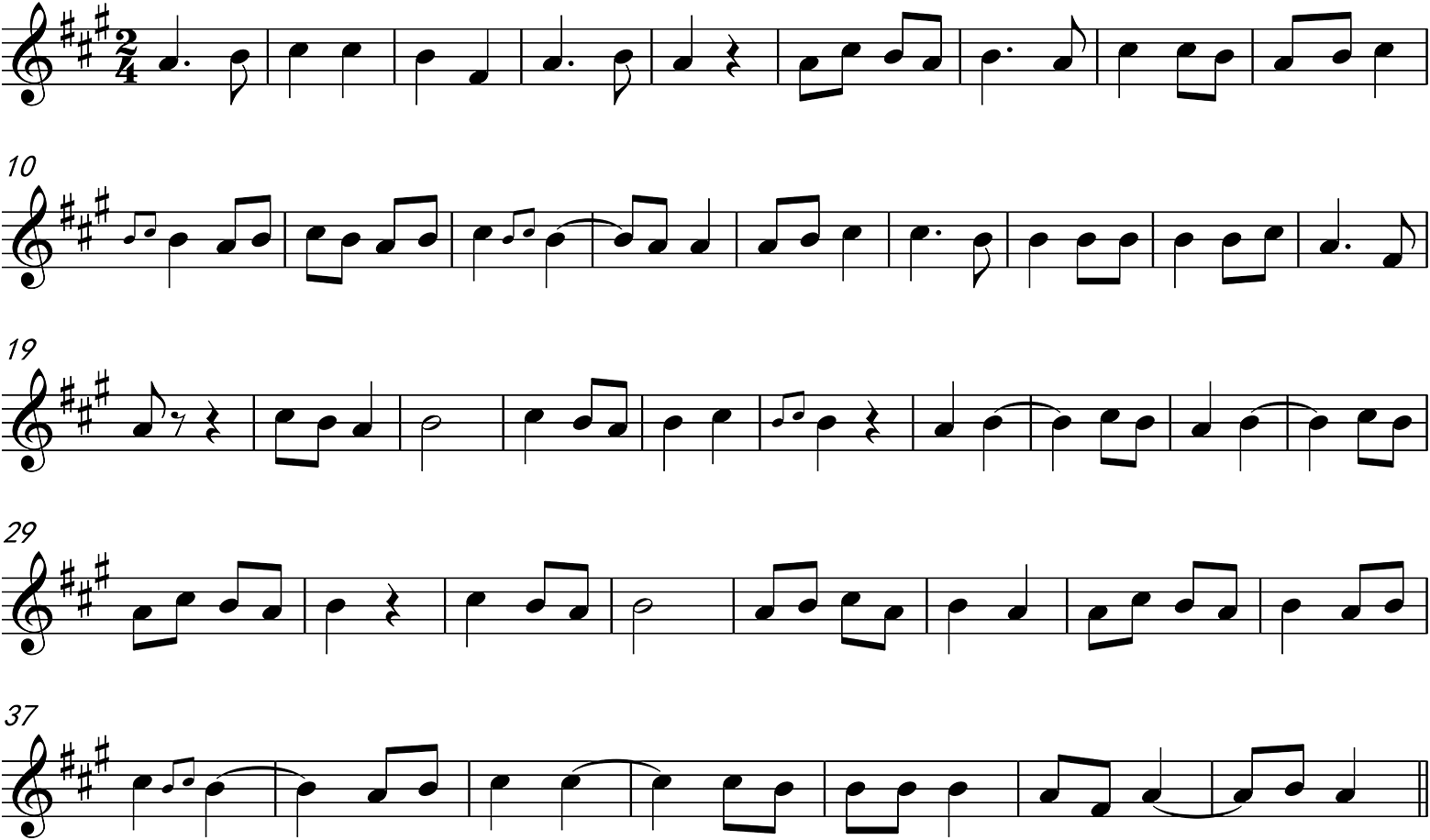
Among the many zanci performed, one particularly striking example was what ahong Ma referred to as Qingzhen Yan (“Words of Purity”). She had learned it in her early years of religious study from her teacher, the wife of an ahong. The first time I heard it was before the taraweeh prayers, as women gradually arrived at the nüsi. Inside, ahong Ma patiently guided them through the recitation, repeating each line over and over. As more women joined, their voices grew louder, filling the space with a powerful, synchronised rhythm. With each repetition, their chanting became more polished, more unified, and increasingly resonant—an auditory testament to their dedication and collective strength (Figure 5).
Qingzhen Yan which leading by ahong Ma. Main melody transcribed by the author.

This zanci primarily focuses on elucidating the phrase: “There is no God but Allah” (lāʾilāhaʾillā-llāh), which is central to Islamic theology. As many Chinese Hui people do not understand Arabic, employing musical recitation by shiniang serves to aid in comprehending the significance and deeper meanings of this phrase. The aim is to help individuals memorise the verses.
The composition in Figure 5 is distinctive for its interpretation of the initial Arabic sentence using the Jing-Tang language in the subsequent verses. The melody derives its essence from local Shandong music and predominantly consists of four notes, primarily centred on C. The piece’s mode is rooted in the C gong (宫调) pentatonic scale, bearing a pronounced Chinese musical essence.
The melody of the recitation is influenced by the local music traditions in Shandong. Shandong songs are known for their sonorous and warm vocals, and the music often exhibits a smooth, slow, and gentle quality. The melodies of Shandong songs lack significant fluctuations and predominantly follow the pentatonic scale. Additionally, it is customary to incorporate glides at the end of phrases and in the connection between certain notes (Lü Reference Lü and Lü2000).
In addition to the melody, the rhythm of Qingyzhen Yan (Figure 5) follows a simple 2/4 structure without complex rhythmic variations, making it easier to maintain cohesion during collective recitation, which allows even those without formal musical training to easily sense the pulse and flow of the music.
More importantly, the powerful sound produced during formal recitations is the result of continuous daily practice, repetition, and refinement by the Hui Muslim women in the community. Through this ongoing process of learning, “rehearsing,” and “practicing,” they achieve a synchronised and polished performance when it truly matters.
By coincidence, during an evening visit, I was able to observe one of their learning sessions. Under the guidance of ahong Ma, participants practiced line by line, matching the recitation with the melodic contour. Most of them held sheets containing Chinese transliterations of Arabic zanci (verses) as they learned to pronounce and recite. In later interviews, I discovered that many of these women had not received jiaomen (mosque-school) education—that is, formal training in Arabic, Persian, or religious studies. As a result, the mosque serves as a space for them to participate in prayers whenever time allows, especially after retirement.
Their motivations for doing so, as shared in the interviews, can be summarised in several points:
-
1. After retirement, they enjoy greater freedom to participate in religious activities, without the restrictions once imposed by their work units or political affiliations (many of them, though Hui, were Communist Party members who worked for the government).
-
2. They seek to strengthen social bonds with neighbours and other Hui friends, cultivating a supportive and spiritual community.
-
3. They hope that their piety and devotion will lead them to enter tianyuan (paradise) after death.
Compared with the cases in Linxia (Rosati Reference Rosati, Harris and Jaschok2021) or the historically documented situations in Central China (Jaschok Reference Jaschok2025), where collective recitation served primarily as a compensatory form of religious education for women, the practice in contemporary Jinan reflects a significant shift. It now embodies not only an emphasis on Hui identity and the reinforcement of religious networks but also an emotional and spiritual response to mortality—a way of confronting the fear of death through collective faith and devotion (Jaschok and Shui Reference Jaschok and Shui2000).
Moreover, as Chuanbin Zhou and Lanxin Guo (Reference Zhou and Guo2020) highlight, the sinicised symbol of the peony has successfully bridged Islamic doctrine with local Chinese cultural symbols, particularly in central and northwestern China.Footnote 7 Meanwhile, Jing-Tang songs incorporate pentatonic scales in their chanting, blending them with captivating stories and poetic imagery. Mandarin speakers may notice the presence of many Shandong dialectal elements in their recitations.
This fusion creates an imagined paradise—an acoustic space imbued with elements that are deeply familiar to the community. Within this space, nothing seems foreign or out of place. The charm of their melodic verses and narratives not only reinforces the localised Islamic culture but also weaves together religious teachings with culturally resonant motifs familiar to their locale.
Resisting marginalisation through collective gathering and chanting among Hui Muslim women
Through the cases of Hui Muslim women in Xiaojinzhuang and the Hui community in Jinan, a clear pattern emerges: whether located in the city centre or on the outskirts, women actively gather to study and recite together. Their collective recitations are consistently described as synchronised and unified. Feminist musicologists have long argued that collective sound can serve as a powerful mode of agency for marginalised groups, enabling women to negotiate social power through disciplined vocal practice, embodied presence, and solidarity (Koskoff Reference Koskoff2014). Viewed through this lens, Hui women’s gatherings are not simply devotional events but gendered strategies for cultivating visibility, authority, and mutual support.
This phenomenon is not unique to Hui Muslims. In Rachael Harris’s research on Uyghur women, the hikmät—a form of collective recitation similar to Hui zanci—is performed during significant Islamic months and on Fridays, serving to seek blessings, heal illness, and reinforce bonds among women (2010). Harris argues that although often dismissed as marginal, such women’s recitation groups are in fact among the most widespread forms of Islamic practice in the Uyghur region, paralleling localised women-centred devotional traditions across the Islamic world. Feminist Islamic studies similarly emphasise that women’s ritual participation can generate subtle yet meaningful forms of agency within patriarchal structures, not in opposition to piety but through disciplined devotion itself (Nelson Reference Nelson2001).
A comparable dynamic appears in Guangtian Ha’s work on Jahriyya women. Despite limited access to religious education, heavy domestic responsibilities, and societal disapproval of hearing female voices in public, some persist in organising their own study circles and producing learning materials (Ha Reference Ha, Harris and Jaschok2021; Jaschok Reference Jaschok2025). While women are often expected to recite privately or quietly (qiaoqiao di nian), others defy these norms by forming groups and reciting audibly in semi-public settings (Ha Reference Ha, Harris and Jaschok2021:208). Their perseverance resonates with feminist analyses that highlight how women create alternative modes of authority and moral community within male-dominated institutions (Mernissi Reference Mernissi and Lakeland1991; Wadud Reference Wadud1999).
In the Indonesian context, women have historically faced marginalisation in both social and religious participation. As Anne Rasmussen explores in her book, gatherings for Qur’anic recitation not only foster a strong sense of community among women—enabling them to connect and support one another through shared religious practices—but also serve to challenge prevailing stereotypes about Muslim women (Reference Rasmussen2010). These gatherings highlight women’s active engagement in religious life and leadership, demonstrating that religious devotion can be a source of empowerment and collective identity.
In China—where Muslims constitute only a small minority—collective recitation among Hui women takes on additional layers of meaning. The founding of the People’s Republic of China introduced slogans such as women hold up “half of heavey,” encouraging new forms of gender participation (Croll Reference Croll1994:205–206). Yet feminist scholars note that these changes often left entrenched patriarchal structures intact, particularly in rural areas, where domestic obligations and sociocultural expectations continued to restrict women’s access to public time and space (Croll Reference Croll1994). This observation aligns with Jaschok’s (2000) historical work on nüsi and shiniang, which documents how Hui women gradually gained spatial and economic autonomy even as structural constraints persisted. In many parts of northwest China, influenced by Middle Eastern practices, men and women now worship in the same mosque, yet women’s physical mobility and vocal presence remain severely limited (Ha Reference Ha, Harris and Jaschok2021). In some areas, a woman speaking publicly is still considered inappropriate or shameful (Ha Reference Ha, Harris and Jaschok2021).
Against this backdrop, the collective recitation practiced by Hui Muslim women in Jinan and Xiaojinzhuang becomes especially meaningful. Historically, these women have resisted marginalisation through two interrelated strategies: shared labour and shared religious learning. Feminist sound scholars note that communal voice—whether expressed through song, chant, or recitation—builds forms of solidarity that transform private devotion into collective strength (Shelemay Reference Shelemay1998). In this sense, the unified sound of women’s recitation disrupts the expectation that “feminine endings” occupy weak, nearly inaudible positions. Instead, their collective voice makes audible those who are so often expected to remain unheard (McClary Reference McClary2002:ix).
Seen through this lens, it becomes evident that Hui Muslim women have resisted marginalisation through two primary forms of collective action: shared labour and shared education. These practices are not merely religious observances but powerful strategies for reclaiming agency, asserting self-worth, and resisting the weight of historical and structural oppression. Contemporary scholarship in religious studies further underscores this point. Despite notable progress, Muslim women still face deeply entrenched structural inequalities—stemming from restrictive interpretations of religious law, pervasive stereotypes, and centuries-old moral codes (Mernissi Reference Mernissi and Lakeland1991; Ali Reference Ali2006).
Against this broader backdrop, the collective sonic practices of Hui Muslim women acquire heightened significance. Rather than responding to marginalisation as isolated individuals, they cultivate communal forms of expression through which their voices become both audible and socially consequential. From the earliest documented moments (around 1990s) when shiniang delivered wa’z aloud on village streets, their instructive storytelling drew public attention and laid the groundwork for a collective vocal presence. After the building of the nüsi, women were able to participate in Jing-Tang songs with the shiniang, rather than just listening to their wa’z on the streets. Over time, synchronised chanting further amplified this presence, enabling their voices to move beyond domestic and gendered boundaries.
By expressing their religious devotion through sound, Hui Muslim women have garnered deep respect within their communities. As I observed early in my fieldwork, particularly in Xiaojinzhuang, women are held in remarkably high esteem by nearly all members of the community. Yet, this respect is built upon a complex foundation. In interviews, several men remarked that, according to Islamic teachings, “women’s status should be slightly lower than men’s,” while at the same time expressing genuine admiration—even envy—for the women’s accomplishments in religious learning and recitation. Such ambivalence reveals both the persistence of traditional gender hierarchies and the quiet transformation taking place within them. Indeed, in contemporary China, where gender equality has made considerable progress, it remains rare to see such widespread and heartfelt recognition of women’s achievements in religious life. Much of this respect can be attributed to the role of the shiniang, whose leadership has shaped a distinct space for women’s religious expression. In a broader social context where religious commitment is often subdued, the visible piety of Hui Muslim women stands out. Through autonomous spaces, female-led religious governance, and the strategic use of collective voice, these women have gradually carved out a form of power that is uniquely their own.
Conclusion
When I asked why women had preserved the traditions of Chinese recitation and Persian transliteration, a highly respected Hui elder—well-travelled and knowledgeable about Islamic culture—responded that it was difficult for women to study Arabic and advanced religious knowledge compared to men (Mr. Liang, pers. comm., 15 October 2025). I felt a deep sense of disappointment, not only because he had previously shared with me so much valuable knowledge about Hui traditions, but also because such conservative thinking persists even among well-educated and cosmopolitan Muslims in today’s society. On the other hand, compared with the timeframes and sites examined by scholars such as Jaschok, Harris, and Ha, I did witness a relatively encouraging transformation: Hui Muslim women have begun to create their own space, their own administrative system, and, most importantly, their own voice through collective recitation.
Since ahong Ma received her certification and became the first female ahong in the community, Hui Muslim women in Jinan have gradually gained a voice of their own—despite ongoing, often unspoken resistance in private. Their collective and unified expression has ensured that women’s voices can no longer be overlooked. Their collective recitations—rooted in Jing-Tang songs, synchronised rhythms, and the sacred space of the nüsi—challenge dominant narratives of female passivity within both Islamic and Confucian frameworks. Far from being peripheral actors, these women forge a distinct form of agency through disciplined unity, amplifying their voices in contexts where individual expression might otherwise be muted. This phenomenon reveals three critical insights for understanding gender, religion, and resistance in contemporary China:
First, Hui women’s sonic practices transcend devotional acts to become political interventions. Second, the nüsi emerges as a sonic sanctuary, accessible only to women, where gendered authority is renegotiated. Third, this study complicates simplistic narratives of Islamic feminism. As Koskoff reminds us, “power is an attribute of relationships…and can be negotiated or overturned through ritual or symbolic protest,” a point that illuminates how Hui women’s collective recitation becomes a sonic negotiation of authority rather than merely a devotional act (Reference Koskoff2014:28). Their harmonised recitations of zanci and Qur’anic verses reflect a theology of unity—one that echoes the ethos of Unity Is Strength but is rooted in Qur’anic ideals of communal solidarity (ummah) and divine justice. This dialectal and pentatonic musical style has faced criticism within the broader Muslim world for its nonstandard pronunciation, perceived deviation from Islamic law, and limited intelligibility among non-Chinese Muslims (Jaschok Reference Jaschok2025). Yet the women’s steadfast commitment to preserving this tradition represents a subtle challenge to the ideal of a globally “unified” Islam. In a world where minority women’s voices are routinely suppressed or exoticised, the Hui Muslim women of Jinan offer a powerful lesson: unity forged through sound can dismantle walls of silence. Their practices remind us that challenges to marginalisation and the assertion of one’s own voice need not be loud or confrontational. Despite having their own spaces and organisations, women in Jinan still have limited access to major religious activities. Yet, within their own domains, their sonic agency—the power of collective ritual sound—remains undiminished. At times, its force is felt most strongly in the chorus, where disciplined voices rise together to claim space, dignity, and belonging, revealing the democratic power of collective sound (Stokes Reference Stokes2023:44). From the cases discussed above, what is especially encouraging is the growing visibility that women are achieving through sound. As China’s socioreligious landscape continues to evolve, these sonic practices will remain essential for navigating the tensions of marginality and change—demonstrating that even the softest voices, when harmonised, possess the power to reshape the contours of religious life. This leads to a broader question that extends beyond any single community: in an era marked by rapid political, cultural, and institutional transformation, how will Hui Muslim women continue to expand the independent spaces they have created and further cultivate the distinctive religious voices that have long sustained their faith?
Glossary

Table 1. Long description
The table consists of three columns titled Term, Chinese, and Definition.
* Row 1: n ü s i, 女寺, Women’s mosque.
* Row 2: a h o n g, 阿訇, Imam.
* Row 3: J i n g - T a n g song, 经堂歌, A Chinese Islamic scripture hall song.
* Row 4: s h i n i a n g, 师娘, Islamic female clerics in China.
* Row 5: s h i f u, 师父, Islamic male clerics in China.
* Row 6: s h i n i a n g tune, 师娘调, The melodic contour of female clerics.
* Row 7: k o u h u a n, 口唤, Verbal permission in the Hui J i n g - T a n g language.
* Row 8: z a n c i, 赞词, Praises.
* Row 9: k a i j i n g, 开经, Normally referring to reciting the Qur’an.



 Open access

