





Introduction
Civic and citizenship education research has consistently demonstrated that classroom discussion of controversial and sensitive (CaS) issues is a strong predictor of students’ civic knowledge, political engagement, and sense of political efficacy (Hess Reference Hess2005; Kelly Reference Kelly1986; Torney-Purta, Lehmann, Oswald et al. Reference Torney-Purta, Lehmann, Oswald and Schulz2001). In this study, CaS issues are understood as topics that provoke disagreement and emotional responses related to contested values, identities, or lived experiences, and that vary across contexts and classrooms (Drerup Reference Drerup and Curren2022; Gindi and Erlich Reference Gindi and Erlich2018).
Addressing CaS issues through open discussion is particularly relevant to civic education because it supports perspective taking, argument evaluation, and constructive engagement with disagreement (eg Barton and McCully Reference Barton and McCully2007; Honeyman Reference Honeyman2025). For these reasons, CaS issues are understood as pedagogical practices, not merely curricular topics, that embody the civic mission of schooling.
Open discussion and deliberative pedagogy strengthen students’ civic and political skills and their civic identity. Research has shown that repeated engagement in structured discussion helps young people internalise norms of reason-giving, respectful disagreement, and collective problem-solving, later influencing their adult civic behaviour (Levine Reference Levine2007).
These identity-forming dynamics depend on ‘thick’ discussion environments characterised by trust, psychological safety, and regular opportunities for deliberation, conditions that tend to be most fragile in structurally disadvantaged settings. This makes it especially important to understand how teachers in such contexts facilitate, limit, or adapt discussion-based pedagogy when encountering CaS issues.
Whether teachers are able to facilitate such discussions depends heavily on the epistemic conditions of their work. Torres (Reference Torres2024) argued that politically and socially strained settings create ‘vulnerable epistemic contexts’ in which teachers must make decisions about controversial issues under heightened pressure: they have limited time to weigh alternatives, encounter fewer countervailing perspectives, and face stronger signals from parents and local communities about what is considered acceptable. Under such conditions, cautious or avoidant strategies become more likely, even among teachers who value open discussion.
This is particularly relevant in settings characterised by double disadvantage, where regional structural conditions combine with the institutional position of vocational and technical schools. In these contexts, the preconditions for deliberative pedagogy, such as trust, psychological safety, and classroom stability, are more fragile. In structurally disadvantaged regions and non-elite educational tracks, the civic mission of schooling is most tested. Teachers working in vocational education often face cumulative educational disadvantages. At the same time, they are expected to create spaces for democratic discussion, including engagement with CaS issues.
Despite the central role of context for CaS pedagogy, existing research has been conducted largely in academically selective or well-resourced schools, or in politically polarised yet institutionally stable democracies (Barton and McCully Reference Barton and McCully2007; Cotton Reference Cotton2006; Hess Reference Hess2005; Kello Reference Kello2016; Kelly Reference Kelly1986; Oulton, Dillon and Grace Reference Oulton, Dillon and Grace2004). These studies have provided valuable typologies of teacher roles and insights into how teachers balance neutrality and advocacy. However, they tend to rely on environments that provide key conditions for deliberation, including institutional support and classroom stability.
Much less is known about how teachers navigate CaS issues in structurally disadvantaged regions and non-elite educational tracks. In such settings, chronic teacher shortages, high student heterogeneity, and limited institutional resources intensify dilemmas already identified in the literature, including concerns about classroom management, protecting vulnerable students, and anticipating parental reactions. These contexts do not create new types of CaS issues; they intensify tensions inherent in CaS pedagogy.
This gap is particularly consequential for democratic education. Structurally disadvantaged regions tend to show lower political participation and weaker civic trust; vocational schools in these regions educate a substantial share of young people facing cumulative educational disadvantage (Grissom Reference Grissom2011). Studying CaS pedagogy under conditions of double disadvantage therefore speaks directly to the civic mission of schooling by examining how democratic practices are enacted where democratic participation is most fragile.
As pointed out by Bernard and Šimon (Reference Bernard and Šimon2017), there are multiple types of peripheries. These peripheries differ in their structures and their manifestations of social disadvantage, but they are often characterised by a high risk of social exclusion, poor accessibility, lower living standards, and demographic challenges. The double disadvantage relates to limited employment opportunities, poverty, social exclusion, and, in some regions, a higher concentration of ethnic minorities combined with further social disadvantages. Bernard and Šimon (Reference Bernard and Šimon2017) argued that the combination of several of these factors is especially problematic.
We focus on two dimensions of double disadvantage. Geographically, this includes the distance from city centres, lack of transport accessibility, and physical and financial barriers to accessing services (Bernard and Šimon Reference Bernard and Šimon2017: 19). Socially, it involves feelings of exclusion and marginalisation together with lower trust in political institutions.
The study addresses the following research question: How do civic education teachers in structurally disadvantaged vocational schools reason about CaS issues under conditions of perceived risk, and how do these conditions shape their strategic responses? Specifically, it explores how teachers respond to institutional, societal, and student-driven influences, how they balance neutrality and advocacy, and how external constraints shape their pedagogical decisions. Rather than examining deliberation itself, this study focuses on teachers’ reasoning prior to, and surrounding, the decision to open, limit, or redirect discussion.
Theoretical background: approaches to controversial and sensitive issues and neutrality in civic education
Controversial and sensitive issues worldwide
Torres (Reference Torres2024) showed that politically and socially strained environments impose additional epistemic pressures on teachers, making open discussion more demanding and often riskier. These pressures have been documented across diverse national and political contexts.
CaS topics are a crucial part of teaching in religiously or ethnically polarised societies such as Israel (Gindi and Erlich Reference Gindi and Erlich2018) and Northern Ireland (Barton and McCully Reference Barton and McCully2007). Although not deeply polarised, reducing societal divides through education is also relevant in the Czech context, especially amid the current curriculum reforms.
According to the Education Week Research Center survey conducted in September-October 2022, 32 per cent of US teachers avoided in-class teaching about potentially controversial topics such as ethnicity, gender, sexuality, and religion (Stanford Reference Stanford2022). Among the reasons for omitting these issues, educators stated that their students were too young to discuss them properly (22 per cent), that they were worried about legal sanctions (19 per cent), and that they believed sensitive issues did not belong in schools (17 per cent) (Stanford Reference Stanford2022).
Other research has indicated that reasons for avoiding CaS issues (Gindi and Erlich Reference Gindi and Erlich2018; Kello Reference Kello2016) include that the curriculum does not offer enough space for discussion and that teachers lack self-confidence, worry about being on the ‘front line’, and feel pressure from all points of the political spectrum (Kelly Reference Kelly1986: 113). Moreover, teachers lack didactical support, including specifically targeted training.
A study from Israel by Gindi and Erlich (Reference Gindi and Erlich2018: 62, 65) showed that supported teachers were likelier to engage in discussions on sensitive topics. Opening up about these topics promoted a sense of internal efficacy (Gindi and Erlich Reference Gindi and Erlich2018). A study from Germany showed that younger teachers were more willing to discuss CaS issues in civic education (Weisseno, Böker and Oberle Reference Weisseno, Böker and Oberle2017).
The meaning and desirability of neutrality in education are long-standing concerns (Kelly Reference Kelly1986: 114). There is no established consensus, leading to the question of how teachers should disclose their opinions and views (Hess Reference Hess2005: 47).
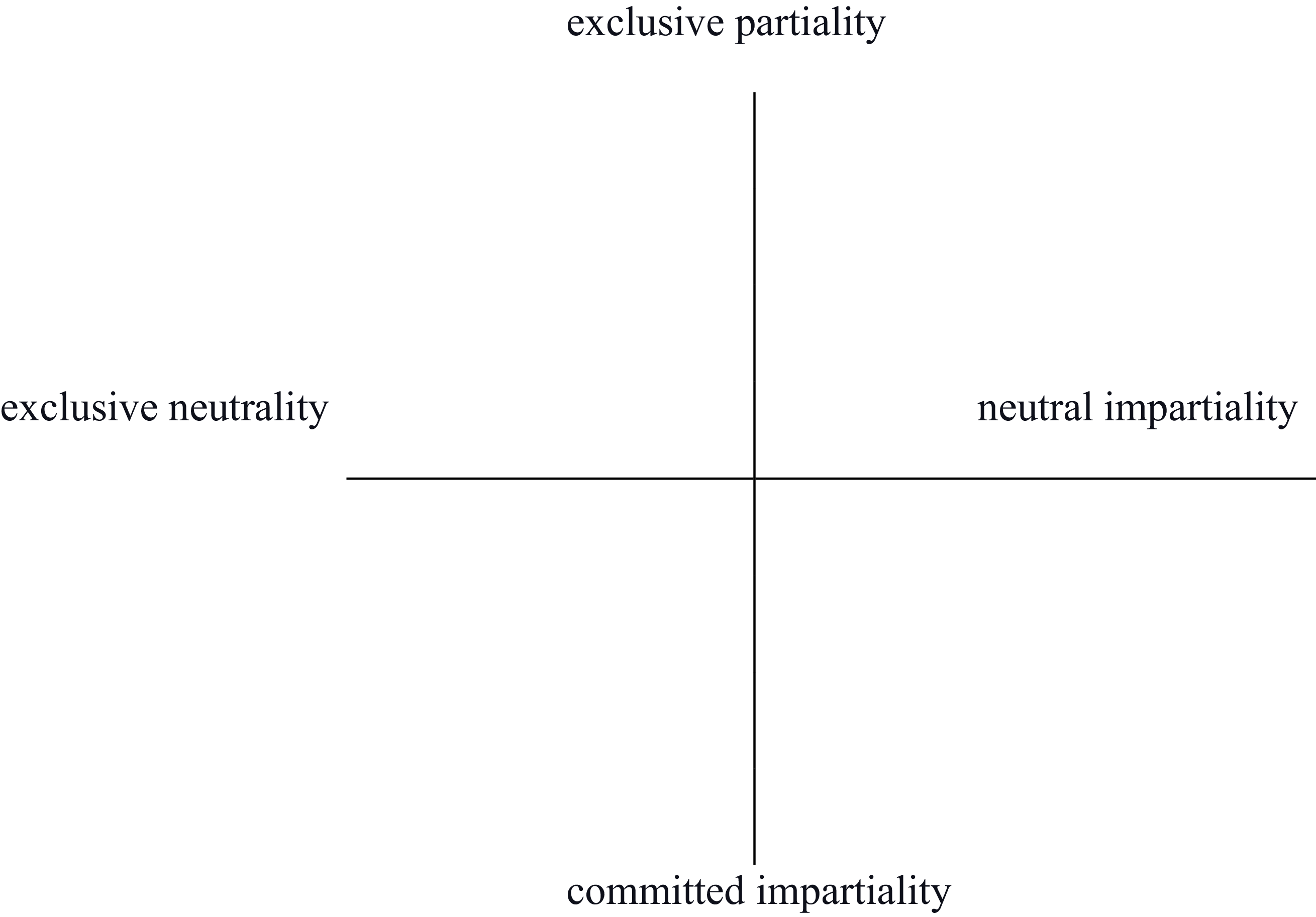
Kelly (Reference Kelly1986) created a typology of teacher approaches to CaS topics, as depicted in Figure 1. The first approach is exclusive neutrality: the teacher completely avoids CaS topics in discussions. Proponents argue that schools should remain nonpartisan and provide values-free knowledge (Kelly Reference Kelly1986: 114). Critics of this approach state that it is impossible to maintain because views and values are transmitted formally and informally through the ‘hidden curriculum’, eg school climate, leisure activities, and unwritten school rules (Kelly Reference Kelly1986). Moreover, according to Kelly, values and opinions are part of the school curriculum.
Kelly’s typology of teacher approaches to neutrality.
Source: based on Kelly (Reference Kelly1986).

The second approach is exclusive partiality, which explicitly favours one side without the teacher considering other points of view. The aim is to persuade students of the ‘correct’ position (Kelly Reference Kelly1986: 116). Critics of this approach argue that it denies the complexity and plurality of perspectives. Pupils then do not develop sufficient critical thinking skills and are more susceptible to ideological indoctrination (Kelly Reference Kelly1986: 121).
The third approach is neutral impartiality. This approach presents all issues without the teacher expressing an opinion. It is based on the principles of critical dialogue. The teacher tries to promote an open climate in the classroom but does not disclose their own opinions. Proponents of this approach argue that the diversity of social goods, ethical relativism, and the need to mitigate conflict suggest that teachers should be more like civil servants than philosophers (Kelly Reference Kelly1986: 123). Nevertheless, the lack of reciprocity in disclosed opinions might be interpreted by students as a lack of trust or even cowardice.
The last approach in Kelly’s typology is committed impartiality, which involves presenting multiple views and aspects of issues, with the teacher openly favouring one. Kelly considered this approach the most proper, connected with authenticity and teaching by personal example, direct experience, and collegiality (Reference Kelly1986: 133). Kelly noted that in this approach, pupils can have discussions with the teacher because they know the teacher’s opinions on the issue. This gives them good practice in questioning authority.
A study by Kello (Reference Kello2016: 41–47) on Latvian and Estonian history teachers identified several strategies for handling CaS issues. Kello labelled these strategies as: (1) hiding or avoiding controversies – which was legitimised by the limited available time or by the danger of disagreement among pupils; (2) finding common ground or smoothing edges – being mediators and decreasing the tension around sensitive issues; (3) just doing the job – conceptualising the teacher’s position as a ‘civil servant’ primarily focused on the mechanical delivery of textbook content and factual knowledge, without encouraging deep understanding or questioning the official historical narrative; (4) enhancing heterogeneity – where the teacher did not discount their own view but encouraged the presentation of student opinions; and (5) leaving the truth open – accenting various points in discussion without seeking consensus.
Hess (Reference Hess2005: 47–48) created a similar typology of teachers’ strategies for coping with CaS issues. For our study, the innovative category of denial refers to teachers who believe that a topic is not controversial or sensitive. Teachers disclose their opinions, considering themselves to be ‘speaking the truth’ rather than taking a position, as they perceive only one correct answer.
Research has indicated that these strategies are context-specific and adapted according to the teacher’s relationship to the issue (Hess Reference Hess2005; Kello Reference Kello2016; Kelly Reference Kelly1986).
Research gap
Despite the extensive body of research on teaching CaS issues, existing theoretical frameworks and typologies have been developed predominantly in academically selective or well-resourced schools (Barton and McCully Reference Barton and McCully2007; Cotton Reference Cotton2006; Hess Reference Hess2005; Kello Reference Kello2016; Kelly Reference Kelly1986; Oulton, Dillon and Grace Reference Oulton, Dillon and Grace2004). These studies have provided influential models of how teachers balance neutrality, advocacy, and avoidance when addressing controversial issues in civic and citizenship education.
However, this literature rests on an implicit contextual assumption: that teachers operate in environments where key preconditions for deliberative pedagogy – such as classroom stability, institutional support, and relatively homogeneous student preparedness – are at least minimally secured (Grissom Reference Grissom2011). Less attention has been paid to how these established typologies function in contexts in which such conditions are systematically weakened.
Levinson (Reference Levinson2012) has shown that democratic and civic educational aims may be constrained by institutional pressures associated with disadvantaged school contexts. However, relatively little attention has been paid to how such pressures shape teachers’ decisions when addressing controversial and sensitive issues in the classroom.
As a consequence, existing typologies risk being implicitly read as descriptions of stable teacher orientations or pedagogical styles, while overlooking the extent to which teachers’ approaches may be situational, adaptive, and contingent on contextual risk. Research on controversial and sensitive issues has therefore left comparatively underexplored how teachers reason about controversial issues when maintaining that classroom stability and institutional legitimacy are central pedagogical concerns.
In response to these limitations, this study focuses on vocational and technical schools in structurally disadvantaged regions to examine how established approaches to controversial issues are enacted, adapted, and negotiated under conditions of intensified constraint. Rather than offering a direct comparison with academically selective schools, the study extends and stress-tests existing typologies, highlighting how familiar dilemmas of neutrality, advocacy, and avoidance are reshaped in contexts in which epistemic, institutional, and relational conditions for deliberation are particularly fragile.
Not all schools in disadvantaged regions are themselves disadvantaged or face the same challenges. Strong regional differences at the level of districts, municipalities, and even schools have been identified in the literature. For instance, Dvořák, Meyer and Kučerová (Reference Dvořák, Meyer and Kučerová2021), in a study on interschool mobility, pointed to the fact that schools located close to socially excluded areas may have different social and ethnic student compositions, which can contribute to selection and segregation processes. Such differences may also be influenced by school management, local hierarchies, and the high level of decentralisation and autonomy in the Czech educational system.
Specifics of the Czech civic education system
The Czech Republic exhibits a relatively low level of political participation (Linek, Císař, Petrúšek et al. Reference Linek, Císař, Petrúšek and Vráblíková2017) and a high level of Euroscepticism compared to Western democracies (Kovář Reference Kovář2018). It has a relatively stable democratic political system and high education inequalities (Prokop Reference Prokop2019).
Czech educational outcomes are strongly associated with students’ socioeconomic background, with the Czech Republic among the Organisation for Economic Co-operation and Development (OECD) countries where family background exerts a comparatively strong influence on educational achievement and educational trajectories (OECD 2023). Previous research has shown that the Czech education system is characterised by early educational tracking and comparatively strong associations between student socioeconomic background and educational trajectories (Straková Reference Straková2007). Students from lower socioeconomic backgrounds are substantially more likely to attend vocational tracks; academically selective gymnasia enrol more socially advantaged students.
Czech elementary education, which is compulsory, lasts for nine years and is divided into two levels: primary (first to fifth year) and lower secondary (sixth to ninth year). There are three main types of secondary education paths: (1) ‘vocational school’, which provides vocational training; (2) ‘technical school’, which focuses primarily on technical subjects and natural sciences; and (3) ‘gymnasiums’, which prepare students for university (EACEA 2022).
Czech civic education has a hundred-year history, albeit interrupted by an authoritarian socialist regime during which civics was used for ideological indoctrination (Smékal, Protivínský, Jarušek et al. Reference Smékal, Protivínský, Jarušek, Janečková and Hotový2010). Despite its tradition, the Czech system faces challenges: lack of funding, dominance of cognitive methods, and no consensus on civic education aims (Platforma kateder pro občanské vzdělávání 2024; Prokschová Reference Prokschová2023).
According to Education Act 561/2004 paragraph 32, activities and promotion of political parties and movements are not permitted in schools (Školský zákon 561/2004 Sb. 2004). The lack of a detailed definition of ‘promotion’ is problematic. For instance, before the election to the European Parliament, some candidates offered schools speeches that presented information about the European Union and did not include political agitation.
Civic education classes are compulsory in the elementary school curriculum. It is taught one or two hours weekly. Czech education is decentralised, stressing the role of schools and teachers (Greger Reference Greger and Kopecký2015). According to the key educational document Strategy for the Education Policy of the Czech Republic up to 2030+, Czech civic education should be a balanced mix of knowledge, values, and attitudes promoting civic competencies essential for democratic political participation (MŠMT 2020).
Research has shown a discrepancy between the ambitious goals of Czech education documents and real school practices (Prokschová Reference Prokschová2023; Urbanová Reference Urbanová2016). An analysis of 60 qualitative interviews from the Czech Republic and Germany identified a discourse of avoidance in the Czech Republic, often omitting specific CaS issues. By contrast, the German school environment favoured a power-free discourse in which mutual trust, openness, and tolerance for different opinions were valued more than ideological agreement (Prokschová Reference Prokschová2020: 312, 316).
These two discursive settings highlight the significantly different understandings of neutrality in schools among Czech and German participants. In the Czech context, neutrality was often a strategy to avoid politics, particularly in class discussions of CaS issues such as gender, religion, and ethnicity. German interviewees understood ‘neutrality’ as their teachers’ effort to avoid promoting specific ideological viewpoints during lessons (Prokschová Reference Prokschová2020: 311).
Methodological background of the study
The study employed purposive sampling to examine how civic education teachers reason about CaS issues in structurally disadvantaged contexts. It focused on secondary technical and vocational schools, which educate a substantial proportion of Czech adolescents yet remain under-represented in international research on civic and citizenship education.
In contrast to academically oriented gymnasia, these schools typically serve students with more heterogeneous educational trajectories and socioeconomic backgrounds. Research has suggested that open discussion of controversial and sensitive issues may become particularly demanding in contexts characterised by institutional instability, social fragmentation, or heightened classroom pressures (Levinson Reference Levinson2012; Pollak, Segal, Lefstein et al. Reference Pollak, Segal, Lefstein and Meshulam2018). Focusing on these schools made it possible to examine how teachers navigate CaS issues in an under-researched educational context and to assess the applicability of existing typologies developed primarily from academically selective schools.
The article draws on ten qualitative interviews and one focus group with four additional secondary school teachers, conducted between 15 April and 30 June 2023. In qualitative inquiry, sample adequacy is determined by analytic depth and information power rather than numerical size (Miles, Huberman and Saldaña Reference Miles, Huberman and Saldaña2014). The interviews generated information-rich data, and iterative coding revealed conceptual redundancy, indicating sufficient analytic saturation for developing a coherent category system. Similar studies of teacher beliefs and CaS issues commonly rely on small, information-rich samples, typically 8–12 interviews (Cassar et al. Reference Cassar, Oosterheert and Meijer2023; Hess Reference Hess2005), as their aim is to explore patterns of reasoning and decision-making rather than to estimate the prevalence of particular approaches within a wider population.
The focus group was conducted online via the Zoom platform on 28 June 2023; it lasted approximately 120 minutes. Individual interviews were conducted between April and June 2023 and lasted approximately 60–90 minutes. The study was approved by the ethics committee of the Institute of Sociology of the Czech Academy of Sciences on 14 April 2023. All participants received information about the purpose of the study, data handling, and anonymity prior to providing informed consent, and all data were pseudonymised.
The study was conducted in the Karlovy Vary Region and the Ústí nad Labem Region, among the most structurally disadvantaged areas in the Czech Republic. Both regions are characterised by a cumulation of social exclusion and educational problems. They consistently rank lowest in PISA literacy and have high dropout rates, chronic shortages of qualified teachers, high levels of early school leaving, and high interschool mobility. Students in these regions also have, on average, the lowest socioeconomic status in the Czech Republic (Dvořák, Meyer and Kučerová Reference Dvořák, Meyer and Kučerová2021; Lebeda, Lysek, Marek et al. Reference Lebeda, Lysek, Marek and Folwarczný2020; Soukop, Macková, Marek et al. Reference Soukop, Macková, Marek and Lebedová2023).
Focusing on these regions enabled us to examine how macro-level structural disadvantage intersects with teachers’ pedagogical decision-making in relation to CaS issues – an aspect that remains underexplored in the CaS literature. The regions serve as a contextual frame rather than as variables in a comparative research design.
Interviewees were recruited in cooperation with Public Opinion Research Centre (CVVM), Institute of Sociology of the Czech Academy of Sciences. A list of all secondary technical and vocational schools in both regions was compiled, and civic education teachers were invited to participate via direct email invitations.
We employed purposive sampling to achieve diversity in the type and size of schools. The response rate was approximately 20 per cent, which is standard for this type of school-based recruitment. We included one respondent per school and aimed to ensure heterogeneity in age, years of teaching experience, and location to achieve spatial diversity.
We selected teachers aged between 23 and 68 years at the time of the interview, ranging from early-career teachers with one year of teaching experience to teachers with more than 25 years of practice. Most teachers had between 6 and 15 years of teaching experience. Locations varied from relatively prosperous regional centres benefiting from tourism to medium-sized or small towns with relatively high or low quality of life, as well as peripheral border cities and industrial towns with accumulated social problems.
Given the small size of the two regions and the fact that teachers are relatively easy to identify because towns often have only one secondary technical or vocational school and schools frequently employ only one civic education teacher, we cannot provide more specific details without violating anonymity. In many cases, teachers’ names and photographs are also publicly available on school websites, further increasing the risk of identification.
All interviews were conducted by one of the authors under comparable conditions to ensure consistency. A semi-structured format was used, guided by an outline of key issues while allowing flexibility to follow participants’ responses. Although the same thematic areas were addressed across interviews, their sequencing and emphasis evolved as insights from earlier interviews informed subsequent ones. While the interviews covered a broader range of topics, the sections relevant to CaS issues and teachers’ understanding of neutrality focused on the following themes:
-
1. Perceptions of CaS issues and neutrality: how teachers define controversial or sensitive issues in their practice, how they understand neutrality, and whether they regard it as a core professional value.
-
2. Approaches to CaS issues: how teachers work with CaS, why they choose to include or avoid such topics, how they mitigate tension, and whether they experience institutional, societal, or parental pressures.
-
3. Balancing neutrality and advocacy: whether teachers feel obliged to remain neutral, when and why they disclose their views, situations in which neutrality is not perceived as possible, and values they believe must be defended.
-
4. Managing classroom discussion: how discussions unfold, what roles teachers assume, and whether they use explicit rules or structures to guide debate.
-
5. Needs, expectations, and experiences of practice: perceived gaps in support or training, expectations regarding professional support, and formative positive or negative experiences (including burnout or perceived failure) shaping current practice.
These core prompts were supplemented by probing questions designed to elicit concrete classroom episodes and teachers’ decision-making processes (eg ‘Can you recall a recent moment when you hesitated to address a sensitive topic? What influenced your choice?’).
All interviews and focus group materials were recorded and transcribed verbatim. Computer-assisted qualitative analysis software (Atlas.ti) was used for coding and analysis. The analysis followed a constructivist grounded theory approach (Charmaz Reference Charmaz2006), proceeding through open, focused, and axial coding. This approach was chosen because it allows for an empirically driven understanding of how teachers respond to the complexities of real-world teaching, rather than imposing predefined theoretical categories.
All transcripts were analysed by one of the authors. During the initial phase, transcripts were read repeatedly to gain familiarity with the material, and preliminary categories were developed inductively from participants’ accounts. As the analysis progressed, these categories were continuously refined, renamed, merged, or differentiated in response to emerging insights. A coding framework was developed to organise the material and was iteratively revised throughout the analysis.
Because the coding frame was developed inductively and remained open to revision, inter-coder reliability testing was not applied. Instead, analytic rigour was supported through constant comparison across interviews, systematic memo writing, and repeated returns to the original transcripts to check the fit between data and emerging categories. Memos documented analytic decisions, category development, and shifts in interpretation, creating an audit trail of the analytical process.
Transparency and credibility were further supported by the use of full verbatim transcripts and a clearly documented sequence of analytic steps. In this sense, the analysis is replicable at the level of analytic logic: another researcher working with the same data and following the same coding procedures could reconstruct the analytical process and arrive at theoretically comparable categories.
A paradigmatic model was developed to structure the findings, aligning teacher strategies with key contextual influences. By categorising approaches along two dimensions – discussion management and neutrality versus advocacy – the model captures how teachers actively negotiate their role in civic education. This model extends previous typologies, such as those proposed by Kelly (Reference Kelly1986) and Hess (Reference Hess2005), by integrating both explicit and implicit teacher strategies.
The paradigmatic model highlights how factors such as school policies, community expectations, and student engagement influence teacher choices, offering a more comprehensive framework for understanding civic education in contemporary classrooms. Consequently, the findings should be understood as contextually grounded analytic generalisations rather than claims about prevalence or region-level effects. In line with principles of qualitative literacy (Small and Calarco Reference Small and Calarco2022), the study supports analytical and conceptual inferences rather than claims about frequency or distribution of strategies across the teacher population. The four approaches identified should therefore be understood as recurring patterns of situational response within specific institutional contexts, not as stable teacher types or generalisable prevalence estimates. The study seeks to illuminate possible forms of professional reasoning rather than to make representative claims about Czech teachers as a whole.
Results
Teachers in our sample reasoned about CaS issues as a process rather than as the application of fixed pedagogical approaches. In the interviews, teachers consistently described using different strategies across situations rather than adhering to a single, stable approach. What appears as distinct strategies therefore represents a situational repertoire shaped by perceived risk, rather than fixed pedagogical orientations.
Two key dimensions emerged from teachers’ repeated references to practical questions guiding their decisions when addressing CaS issues: how much control over classroom discussion was necessary, and whether neutrality was pedagogically sufficient in a given situation. These dimensions did not originate as theoretical constructs but emerged from teachers’ situated judgements about what was possible and defensible in particular classroom contexts. Together, they provide an analytic lens for organising the four strategies identified in the data: strategic avoidance, structured neutrality, value-based advocacy, and transparent facilitation (see Table 1).
Situational strategies for addressing controversial and sensitive issues

Table 1. Long description
A table with four rows and four columns. The columns are labeled Strategy, Dominant form of risk, Discussion management, and Positioning on neutrality-advocacy. The rows are labeled with different strategies: Strategic avoidance, Structured neutrality, Value-based advocacy, and Transparent facilitation. Each row details the dominant form of risk, level of discussion management, and positioning on neutrality-advocacy for each strategy. For example, Strategic avoidance has Institutional/epistemic risk, low discussion management, and neutrality through non-engagement. Structured neutrality has Social risk, moderate discussion management, and explicit neutrality. Value-based advocacy has Epistemic/normative risk, high discussion management, and selective advocacy of core values. Transparent facilitation has Relational risk, high discussion management, and bounded self-disclosure.
Importantly, teachers differed in how they understood neutrality. For some, neutrality meant refraining from intervention; others described active intervention as necessary to maintain neutrality in particular situations. Rather than a fixed stance, neutrality functioned as a situational judgement, ranging from non-intervention to close moderation depending on perceived classroom risks.
Table 1 summarises four situational strategies identified in teachers’ accounts. The column ‘Positioning on neutrality–advocacy’ indicates typical orientations observed within each strategy and therefore does not constitute an independent analytic dimension.
The categories do not represent stable teaching styles but recurrent ways of responding to different constellations of perceived risk. Although Table 1 links each strategy to a dominant form of risk, the data show that these risks rarely occur in isolation. Rather, as teachers described in the interviews, strategies respond to shifting combinations of risk and do not form clearly separated categories.
Before presenting the findings, it is important to consider the context of double disadvantage as it emerged in our data. When reflecting on the challenges they face, teachers often referred to broader structural conditions of the region. In particular, they mentioned the departure of young people from the region and the limited opportunities available to those who remain. They also highlighted the specific situation of the border region, as many residents could find better-paid work in Germany. As one teacher explained:
This is where the social divide naturally widens. We’re talking about education here, and whether formal education even makes sense when you can drive 60 km to Germany to pack sausages for a higher salary than what I earn here…. Those who do that (go to university) usually don’t return to the region, which is also a problem. The younger generation is leaving, and those who could earn higher incomes are moving somewhere else.
Strategic avoidance
Strategic avoidance can be understood as a response primarily to institutional and epistemic risk. Teachers described limiting engagement with CaS issues in situations in which insufficient instructional time, unclear institutional backing, or limited confidence in handling potential escalation made open discussion appear risky. In these situations, teachers anticipated that engaging with controversial topics could undermine classroom stability or their professional legitimacy.
The teachers we interviewed said they felt caught, facing heterogeneous pressures and contradictory expectations from themselves as teachers and citizens as well as from school management, the Ministry of Education, society, their pupils, and the families of the pupils. One significant external pressure was the influence of school policies and curriculum guidelines. Some teachers felt constrained by the lack of transparent methodology for handling CaS issues, leading them to rely on personal judgement. As one teacher noted:
When Covid hit, there were millions of methodologies – everything on how to teach students, and it was nice to have something prepared in advance. It’s true that sometimes it was unnecessarily lengthy. Here, we don’t actually have support in anything at all. But it is true that there’s some school server, so maybe the deputy puts things there, but I admit I don’t know. It’s possible that it’s there; I just don’t look at it.
Another teacher described being explicitly told that no specific guidance was necessary, reinforcing the sense that responsibility for handling sensitive issues rested solely with individual teachers.
In practice, strategic avoidance involved deliberately narrowing the scope of discussion or reframing controversial issues to reduce potential tension. Teachers frequently shifted attention away from contemporary political debates towards historical contexts or factual descriptions. As one teacher explained:
We don’t discuss political issues; instead, we focus on historical contexts and facts. This way, students don’t feel pressured to take a particular stance.
These interview excerpts demonstrate the strategies some teachers use to carefully control CaS discussions, ensuring that sensitive or controversial issues do not escalate into conflict. Teachers emphasised that such decisions were not driven by a lack of interest in controversial topics, but by concerns about managing discussion responsibly under constrained conditions.
Time constraints were repeatedly mentioned as a key factor shaping avoidance. Teachers expressed doubts about whether one lesson per week provided sufficient space to introduce complex issues, facilitate discussion, and address emerging conflicts:
No, that’s way too little; it’s really just not enough (time allocation for teaching)… when I ask what we did in Civics last week, they (students) don’t remember much at all, since it’s really just one hour a week – definitely not enough.
The structural characteristics of peripheral regions also contributed to the teachers’ cautious approaches. Our respondents indicated problems identified in the literature on peripheral regions (Bernard and Šimon Reference Bernard and Šimon2017: 19), particularly geographical distance from centres and limited transport accessibility. These constraints made it more difficult to visit institutions where pupils could observe how these institutions function in practice, such as government offices, courts, and other public institutions. In this sense, teachers working in structurally disadvantaged areas did not have the same opportunities to organise such excursions as schools located closer to centres.
But we don’t have that many options, so once a year we go on a big excursion. But you can’t take them (students) on trips every month. It’s too financially demanding for them if they have to keep paying for things like that all the time, and they don’t go on trips only with us. I mean, of course we can invite guest speakers to our school. I’m not saying they wouldn’t come, but that Prague-centrism is still there.
Teachers also perceived Prague-centrism in civic education materials used in vocational schools in disadvantaged regions, as illustrated by the following quotation.
For children from regions like this, you first need to show them why these issues matter (poverty, social exclusion, or debt). Instead, we had activities simulating municipal council meetings about residential parking zones, which are not really issues here in (anonymised) or in the surrounding villages. The materials focused on topics typical of large cities, often linked to environmental issues, recycling, or multicultural coexistence, almost as if they were global topics. But these are simply not the issues that local students deal with very much.
Rather than describing a lack of resources in general, teachers pointed to a perceived mismatch between available civic education materials and the realities of vocational schools located in disadvantaged regions.
Some teachers also expressed uncertainty about their own epistemic preparedness, reporting doubts about whether they had sufficient knowledge to present complex topics accurately or respond to unexpected student reactions during discussion. Concerns about professional identity and reputation further contributed to avoidance, particularly among older teachers who feared being positioned negatively or misunderstood by students whose views they perceived as dominant.
Importantly, teachers did not describe strategic avoidance as a permanent or preferred approach. Rather, avoidance was often framed as a temporary and situational response, shaped by teachers’ sensitivity to specific classroom dynamics:
My own sensitivity, based on what I know about that class. In some classes, I know that I simply can’t bring up certain topics, or I can only address them individually, I can’t discuss them with the whole class.
In this respect, teachers often relied on detailed knowledge of their students’ family backgrounds and personal experiences. Several respondents emphasised that sensitivity was not based solely on the topic itself, but also on an awareness of what specific students had experienced outside of school.
I guess it depends on how you work with the class… I know that, for one thing, these kids have often gone through things that I haven’t experienced in my entire life – meaning they really do come from socially disadvantaged families, and there may have been domestic violence, intimate partner violence, and so on. So, honestly, sometimes I think everyone should know what that child has been through, and only then realise why that child behaves the way they do at school…
Sensitivity was therefore often understood relationally rather than substantively. Topics became sensitive not solely because of their intrinsic content, but because of their connection to students’ lived experiences.
Avoidance was also described as a time-based strategy, particularly in relation to highly sensitive topics such as racism. Teachers reported postponing discussion until classroom norms and trust had been established:
Racism is a sensitive topic here, so it can be tricky. In some classes, I avoid bringing it up until the end of the school year. At the start, I focus on helping the students adjust and learn to work together. I want them to understand that there are no childish jokes here, and that takes time.
Several teachers noted that in more cohesive classes, or when sufficient time and institutional support were available, they would be more willing to open discussion or adopt more structured forms of neutrality. Strategic avoidance thus appears as a situational response to heightened perceived institutional or epistemic risk rather than as a stable pedagogical orientation.
Structured neutrality
Structured neutrality can be understood as a strategy for managing social risk in situations in which teachers anticipate disagreement or tension among students but still consider discussion feasible under clearly defined conditions. This approach was typically described in politically diverse classrooms, where teachers sought to prevent conflict escalation or student stigmatisation while maintaining a basic space for discussion.
Teachers who adopted structured neutrality described actively moderating classroom discussions while refraining from endorsing any particular position. Rather than presenting their own views, they focused on ensuring that multiple perspectives were articulated and that the discussion followed agreed-upon rules. In interviews, teachers often referred to this approach not as ‘neutrality’ but as ‘balance’.
This strategy was illustrated in discussions preceding elections, during which teachers prioritised analytical skills over evaluative judgement:
Before the elections, we watched the debates and analysed the candidates’ arguments, but we didn’t discuss who was better or worse. Instead, we focused on how the arguments were constructed.
In such discussions, teachers positioned themselves as moderators rather than contributors. They reported avoiding the introduction of additional viewpoints or counterarguments, even when doing so might have deepened the discussion. Their role was to maintain order and fairness, ensuring that all students had the opportunity to speak without feeling judged or pressured.
Our interviewed teachers stated that they did not actively bring new opinions to the discussion to enrich it or strengthen students’ arguments and analyse the issue more deeply. Notably, no interviewee mentioned adopting the role of the devil’s advocate, a strategy described in the literature as deliberately introducing opposing viewpoints to challenge prevailing opinions (Kelly Reference Kelly1986: 123; Stradling Reference Stradling1984; Zorwick and Wade Reference Zorwick and Wade2016). This absence underscores the restrained nature of structured neutrality, in which teachers prioritised order and perceived fairness over epistemic provocation.
Teachers also referred to implicit professional norms that reinforced this restrained approach. Some mentioned general guidelines or codes of conduct emphasising objectivity, tact, and respect, which they interpreted as supporting a neutral moderating role:
There are methodologies and some guidelines. As far as I know, there’s even a general code of conduct for teachers that says they should always maintain some objectivity and tact. I always try to guide my students towards respect.
At the same time, the teachers acknowledged implicit limits of structured neutrality. By maintaining a neutral stance, they restricted opportunities to challenge dominant narratives or to model more critical engagement with controversial claims. Structured neutrality thus prioritised classroom cohesion and perceived fairness over deeper interrogation of competing positions.
One way teachers managed these limits was through reframing sensitive topics. Rather than addressing locally salient or potentially stigmatising issues directly, they introduced controversial themes through historical or foreign examples perceived as less immediately threatening:
One World (festival) helped me in that I didn’t have to broach the topic of racism in relation to different skin colours. However, I found a documentary made by a British journalist featuring a young politician from a neo-Nazi party, which approached racism from a different angle, one that wasn’t directed at the Roma minority. In the end, I was glad that I could introduce the issue in the context of Nazism.
Teachers emphasised that structured neutrality was not a fixed approach. In classrooms characterised by higher levels of trust, or when discussing less polarising topics, they reported being more willing to move towards more open facilitation. Conversely, heightened tension or previous negative experiences led teachers to restrict discussion further or shift towards avoidance. Similarly to strategic avoidance, structured neutrality thus functioned as a situationally calibrated response to social risk rather than as a stable pedagogical style.
Value-based advocacy
Value-based advocacy can be understood as a response to epistemic and normative risk. It occurs in situations in which teachers perceived that not expressing a clear position could legitimise misinformation, relativise fundamental democratic values, or undermine students’ understanding of constitutional principles and human rights. This strategy was described particularly in contexts in which teachers felt that neutrality might be interpreted as acceptance of factually incorrect or normatively problematic claims.
Teachers who adopted value-based advocacy reported intervening selectively by articulating clear normative boundaries while still allowing discussion to take place. They framed their role not as promoting personal political preferences, but as supporting students’ understanding of non-negotiable democratic values, such as human rights and constitutional principles. As one teacher explained:
I always try to help them understand that some things aren’t just a matter of opinion; we have fundamental human rights and values that are not relative at all.
In some cases, teachers described making their stance visible through symbolic or explicit actions. One teacher mentioned taking down a picture of former president Miloš Zeman at school as a form of protest against his use of vulgar language in a public radio broadcast. Others reported openly criticising specific actions or policies associated with his presidency during classroom discussions, particularly when these actions were perceived as conflicting with democratic norms.
In the interviews, value-based advocacy was evident in lessons that explicitly connected civic theory to current events. One teacher described how discussions of the Czech Constitution provided a basis for addressing controversial presidential actions:
The kind of president we had (referring to Miloš Zeman), so there were many controversial questions arising from that, especially when we discuss the Constitution of the Czech Republic and talk about the president’s powers. As soon as some theory can be linked to practice, we immediately make that connection.
Another recurring area of advocacy concerned misinformation and media literacy. Teachers described actively guiding students to recognise and critically evaluate misleading or false information:
We work with disinformation and examine how it arises and develops. I want them (students) to understand that not everything they read online is necessarily true.
In these cases, teachers intervened by correcting factually false claims, rather than by imposing their own views on how the media landscape should be interpreted. While teachers perceived human rights and constitutional principles as non-negotiable, they saw work with media and information as an area that allowed for discussion, differing interpretations, and uncertainty.
At the same time, teachers were aware that value-based advocacy carries relational and institutional risks. Taking a clear stance could provoke resistance from students, parents, or school leadership, and required careful judgement about when such an intervention was justified. Teachers noted that when disagreement concerned legitimate political preferences rather than factual distortion or normative violations, they were more likely to revert to structured neutrality or facilitative approaches. Value-based advocacy thus appears as a situational response to heightened epistemic and normative risk rather than as a stable pedagogical style.
Transparent facilitation
Transparent facilitation can be understood as a way of managing relational risk in classrooms that teachers perceive as sufficiently trusting and stable. This approach was described in contexts in which teachers believed that sharing their own perspectives could strengthen reciprocity and mutual respect rather than inhibit student participation. As one teacher explained:
I always say, ‘I’ll share my opinion with you. Some will agree, some won’t. You can respond, but I’m not imposing my view on you – just take it as it is.’
Teachers described carefully calibrating what they disclosed and when. In the context of elections, for example, several reported that they deliberately withheld information about their voting preferences before elections, while sometimes sharing their views afterwards. This timing was seen as a way to preserve students’ autonomy while maintaining transparency:
I never tell them who I will vote for before the elections. I might share it afterward. I prefer not to frame it as an opinion, since by then the decision is made. But if something seems questionable to me, I let them know.
A recurring feature of transparent facilitation was the establishment of clear boundaries between professional self-disclosure and private political choices. Teachers distinguished between expressing general value orientations and protecting aspects of their personal lives:
There are some things I don’t hesitate to answer because I really believe in them, and I don’t see any reason why I should hide it. But on the other hand, there are things I kind of keep to myself, like my private stuff. It really depends on what they’re asking specifically. For example, questions like ‘who did you vote for’ are just private. So, to give them at least a little answer, I’ll tell them that I prefer the right or the left – something general like that. But I wouldn’t tell them exactly who I voted for.
Teachers also described actively creating space for students to challenge different perspectives and engage in peer-to-peer argumentation:
I always say, ‘Here’s my opinion: some will agree, some won’t. Feel free to respond, but I’m not trying to push my views on you – just telling you how I see it.’ When students disagree, I give them the opportunity to explain why. I want them to debate with each other and practice defending different viewpoints.
In such classrooms, students were described as equal discussion partners whose views were taken seriously, even when teachers disagreed:
They (students) realise that they don’t have to be afraid to share their opinion – that no one will judge them for it, no one will make fun of them, and everyone will accept their view. I might not agree with it, but I see it as a real opinion. And I think they really need that – to be treated as equals, even at 15. Not to be looked down on. That, I believe, is the foundation.
This was particularly visible when controversial issues intersected with students’ own lived experiences. In such situations, teachers often positioned students as knowledgeable contributors and temporarily ceded greater responsibility for the discussion.
…and poverty as well. Later, when we talked about household finances, you kind of got the sense that one in three people here is receiving social benefits, so that makes the topic a bit more sensitive. Those who are not ashamed of it will say so openly, give examples, and sometimes even explain how things work at the social welfare office, the municipal office, or the employment office. And I like that, because they kind of take over for me and actually lead the class for a while.
Here, students’ experiential knowledge functioned as a resource that legitimised their participation and reduced teachers’ need to act as the primary source of authority.
Excessive sharing of teachers’ own views or poorly timed interventions were described as potentially coercive or destabilising. Transparency was therefore treated as carefully bounded and situational rather than unrestricted.
Teachers indicated that when trust weakened, time pressure increased, or previous discussions led to conflict, they limited self-disclosure and shifted towards structured neutrality or avoidance. Transparent facilitation thus appears as a context-dependent strategy enabled by relational stability rather than as a default approach to controversial issues.
Discussion
Our analysis indicates that teaching CaS issues is characterised by a high degree of situational uncertainty, often under conditions of limited institutional support. In contexts marked by double disadvantage, variations in teachers’ approaches therefore reflect situational judgements rather than inconsistency or a lack of professional commitment.
Our findings suggest that teachers in our sample reasoned about CaS issues as an ongoing process rather than as the application of fixed pedagogical approaches. Across interviews, teachers frequently described using different strategies across situations rather than adhering to a single, stable approach. Instead of referring to stable pedagogical orientations, teachers portrayed their practice as a series of ongoing judgements about what could be reasonably addressed, justified, and sustained in specific classroom situations.
What appear as distinct strategies therefore represent a situational repertoire shaped by perceived risk, rather than fixed pedagogical orientations. Across these strategies, teachers move between approaches as their reading of contextual conditions and dominant perceived risks shifts. These strategies thus describe how teachers act and provide an analytic vocabulary for reflecting on pedagogical choices under varying institutional and classroom constraints.
While these findings have clear normative implications for supporting teachers in addressing controversial issues, the aim of this study was analytical rather than prescriptive. The discussion therefore focuses on what teachers do and also on how contextual constraints shape the selection and combination of pedagogical strategies across situations.
First, our findings show that variations in teachers’ approaches reflect how they draw on different pedagogical options across situations, rather than adhering to a single, enduring orientation. Classic typologies in civic education have tended to categorise teachers according to their intentional stances. Kelly’s (Reference Kelly1986) framework, for example, distinguished exclusive neutrality, exclusive partiality, neutral impartiality, and committed impartiality.
Our empirical findings suggest, however, that such decisions are rarely made in abstraction, or as the result of a single, enduring orientation. Instead, they are shaped by a combination of external pressures, including curriculum requirements, parental expectations, the broader political climate, and immediate classroom dynamics. Teachers navigate a spectrum of engagement, employing adaptive strategies to manage controversy in ways they perceive as workable. Their decisions are influenced by factors such as the specific situation, local context, class composition, timing, perceived sensitivity of the issue, and their own pedagogical experience.
Hess (Reference Hess2005) extended Kelly’s model by explicitly acknowledging that teachers do not operate with full autonomy. Institutional policies, sociopolitical contexts, and public discourse constrain whether teachers choose to deny, balance, privilege, or avoid controversial topics. Our findings resonate strongly with this perspective and further it by showing that teachers do not merely adopt one approach. Instead, they shift dynamically between approaches, depending on how they read the situation at hand.
Across our interviews, the teachers did not describe themselves as neutral, advocative, or facilitative in any enduring sense. What counted as ‘controversial’ was thus assessed situationally rather than treated as a stable property of particular topics. This aligns with Drerup’s (Reference Drerup and Curren2022) argument that controversiality is not inherent in issues themselves; it emerges from specific social, political, and institutional contexts.
In this respect, our findings do not challenge Kelly’s (Reference Kelly1986) framework of neutrality, partisanship, and committed impartiality, which was articulated as a set of idealised pedagogical orientations rather than empirically fixed teacher types. Rather than rejecting such typologies, our analysis suggests a different way of using them analytically: as reference points for pedagogical options that may be selectively mobilised in response to situational demands.
This interpretation is consistent with earlier empirical research. For example, Pollak, Segal, Lefstein et al. (Reference Pollak, Segal, Lefstein and Meshulam2018) described how teachers sometimes sidestep controversial issues by translating them into more manageable academic forms; Kello (Reference Kello2016) pointed to practices such as smoothing the edges of controversy or temporarily concealing it. Viewed through the lens of our findings, these practices need not be understood as simple avoidance. Instead, they can be interpreted as pragmatic responses to perceived risk. Indirect or mediated forms of engagement do not necessarily signal a breakdown of deliberation; they reflect how teachers make controversial issues teachable under constrained conditions.
Second, by introducing two analytically grounded dimensions – discussion management and positioning along a neutrality–advocacy continuum – this study integrates and extends these existing frameworks.
Our findings indicate that teachers adopted neutrality primarily as a practical response to uncertainty rather than as a value-free pedagogical stance. Neutrality was most frequently reported in situations of uncertainty about classroom dynamics and potential conflict; it functioned to maintain classroom order, sustain the flow of the lesson, and limit risks to teachers’ professional standing.
Teachers avoided or narrowed controversial issues not because they considered them insignificant, but because they anticipated concrete difficulties, including loss of control over a discussion, insufficient time to address conflict adequately, or uncertainty regarding institutional support. What teachers described as neutrality thus did not involve an attempt to articulate or defend particular values; it functioned as a strategy for preventing escalation. Similar patterns have been documented in earlier research, indicating that neutrality and balance often operate as protective responses to institutional and interactional pressures rather than as principled pedagogical commitments (Cotton Reference Cotton2006; Oulton, Dillon and Grace Reference Oulton, Dillon and Grace2004).
While such strategies may reduce the risk of students feeling personally targeted, they can also limit opportunities for democratic learning by narrowing how far competing claims are examined (Hess Reference Hess2005).
Teachers often described their approach as neutral, yet even when they explicitly claimed to remain neutral, they continued to organise classroom discussions by deciding who could speak, which topics were pursued, and how student contributions were taken up. As Cotton (Reference Cotton2006) suggested, neutrality in this sense functions less as an actual state than as an interactional claim.
One reason teachers may emphasise neutrality is to protect themselves from accusations of promoting a particular viewpoint – a concern also reflected in the widely shared professional expectation that teachers should be neutral, even though such neutrality is difficult, if not impossible, to achieve in practice (Oulton, Dillon and Grace Reference Oulton, Dillon and Grace2004). In our data, structured neutrality operated in this way: it helped maintain classroom order and a sense of fairness, while at the same time placing limits on how far disagreement could be explored.
Third, we found that teachers moved away from neutrality precisely at the point at which it was no longer perceived as sufficient. When teachers felt that staying out of the discussion would effectively legitimise claims they considered false or unjust, they stepped away from neutrality and intervened, either by articulating particular values or by guiding the discussion more explicitly. These interventions were episodic rather than systematic and occurred at points at which teachers judged that allowing the discussion to continue without intervention would normalise claims they considered factually incorrect or morally unacceptable.
In Kelly’s terms (Kelly Reference Kelly1986), these moments mark the point at which neutrality becomes false, because remaining neutral would itself amount to endorsing claims the teacher considered untenable. Treating all positions as equally debatable can, in such moments, create a false symmetry by placing claims teachers regard as unacceptable on the same footing as those they consider defensible (Kello Reference Kello2016).
Transparent facilitation came closest to what Kelly describes as committed impartiality, but teachers also made clear how hard it was to use in practice. When teachers did speak about their own position, they understood it as an intervention that had to be carefully timed and limited, because it could easily shift the dynamics of the discussion. Acknowledging one’s own position did not remove teacher authority, but the acknowledgement often made the authority more visible and potentially contested (Cotton Reference Cotton2006), particularly in contexts shaped by identity-based vulnerability (Kello Reference Kello2016).
Across all four strategies, the teachers’ decisions were shaped primarily by how they perceived and prioritised different risks in specific situations. Kelly’s (Reference Kelly1986) work emphasises rational deliberation and moral autonomy; it pays less attention to how teachers anticipate and manage risk in everyday classroom practice.
Previous empirical studies have addressed risk in more partial ways, focusing, for example, on institutional risk (Oulton, Dillon and Grace Reference Oulton, Dillon and Grace2004), interactional risk (Cotton Reference Cotton2006), moral risk (Cassar et al. Reference Cassar, Oosterheert and Meijer2023), or identity-related risk (Kello Reference Kello2016). Our analysis shows that the teachers in our study did not respond to these risks separately; they weighed the risks against one another as situations unfolded and adjusted their strategies accordingly. This aligns with Torres’ (Reference Torres2024) analysis of teaching under political polarisation, which showed that teachers are routinely required to balance openness to diverse viewpoints with the expectation that they will intervene when factual accuracy or core democratic norms are at stake.
Conclusion
This study suggests that debates about neutrality and advocacy may benefit from greater attention to situated judgement. Rather than adhering to fixed pedagogical stances, our participants described responding to controversial and sensitive issues through a repertoire of strategies that shifted according to perceived risks, classroom dynamics, and contextual constraints. In this sense, movement between neutrality, facilitation, advocacy, and avoidance emerged not as evidence of inconsistency, but as a feature of professional judgement. Addressing controversial issues thus appears less as the application of predetermined principles and more as an ongoing effort to balance professional responsibility, classroom relationships, and democratic values under changing conditions.
These dynamics are shaped by the institutional and social contexts in which teachers work. The study does not approach vocational education in contrast to academically selective schools, but rather as a context in which dilemmas discussed in the literature, such as neutrality, openness, avoidance, and the regulation of classroom discussion, become more intense. In this sense, vocational schools in structurally disadvantaged regions can be understood as a ‘stress test’ for deliberative pedagogy. In such settings, neutrality and the handling of CaS issues are less a matter of normative pedagogical choice than strategies for managing cumulative pressures, maintaining classroom order, and navigating risk.
These strategies are shaped by different forms of distance that affect teachers’ everyday work. Respondents often described a geographical and symbolic distance from centres of educational decision-making and curriculum development. Teaching materials and policy frameworks were seen as based on assumptions typical of urban or academically oriented schools, rather than on the realities teachers face in vocational schools in disadvantaged regions. This distance was not primarily described in financial terms, but as a lack of fit between available materials and local teaching conditions. In this context, the relative absence of external pressures was described ambivalently, both as a limitation and, for some teachers, as a source of pedagogical autonomy.
Although the findings point to important normative implications for supporting teachers, this study remains deliberately analytical rather than prescriptive. Its contribution lies in making visible how contextual constraints shape teachers’ situational judgements across strategies, rather than in proposing best practices. By presenting a more nuanced and adaptable framework, this study offers a point of orientation for educators navigating controversial discussions.
Participants described discussions with students as often extending to current political issues and local problems, including social inequality, racism, and the emigration of young people from disadvantaged regions. In this context, teachers pointed to the importance of accessible professional development for strengthening their capacity and confidence. Improved teacher education may support this by offering practical courses, didactic resources, and training focused on factual content, classroom discussion, and the development of students’ argumentation skills. Teachers also mentioned the limited availability of structured textbooks and methodological materials, which may make it harder to navigate controversial issues across situations.
In light of these findings, preparation for teaching CaS issues may move beyond normative debates about neutrality or advocacy. Instead, training may focus on developing situational judgement, including recognising perceived risks, reflecting on available strategies, and anticipating shifts as classroom conditions evolve. In contexts of limited methodological guidance, the four strategies identified in this study may serve as a point of reference for thinking through classroom situations and the potential consequences of different teaching approaches, without prescribing specific solutions. Several teachers noted that in more cohesive classes, or when sufficient time and institutional support were available, they were more willing to open discussion or adopt more structured forms of neutrality.
This study focused on technical and vocational schools in structurally disadvantaged regions, a context that remains under-represented in civic education research. While the findings offer rich, context-sensitive insights based on qualitative interviews, they do not allow for claims about the prevalence or effectiveness of particular strategies. Future research could therefore examine how frequently these strategies occur across different school settings and explore students’ responses to discussions of controversial issues. Comparative research across national and institutional contexts would further help to assess how varying political and educational environments shape teachers’ situational judgements.
Taken together, the findings highlight how opportunities for deliberative engagement may be shaped by teachers’ situational decisions under conditions of constraint. As Levine (Reference Levine2007) argued, civic identity develops through repeated experiences of discussion, disagreement, and collective reasoning. The findings suggest that the question is not only whether teachers discuss controversial issues, but under what conditions they consider such discussion possible, legitimate, and worthwhile. Understanding these conditions may be as important for democratic education as debates about neutrality, advocacy, or discussion techniques themselves.
Data availability statement
Metadata from our research are stored in the digital data repository of the Czech Social Science Data Archive at https://doi.org/10.14473/CSDA/NOWYQM. Due to the small and interconnected nature of the participant group, complete anonymity cannot be guaranteed, even after anonymisation. The interviews also include highly sensitive and personal content. For these reasons, the data that support the findings of this study are not publicly available, but they may be shared by the corresponding author upon reasonable request.
Funding statement
This work was supported by the NPO ‘Systemic Risk Institute’ number [LX22NPO5101], funded by European Union – Next Generation EU (Ministry of Education, Youth and Sports, NPO: EXCELES).
Competing interests
On behalf of all authors, the corresponding author states that there is no conflict of interest.
Ethical standards
The study was approved by the ethics committee of the Institute of Sociology of the Czech Academy of Sciences on 14 April 2023 (approval number: SOU-442_3/2023). All participants received information about the purpose of the study, data handling, and anonymity prior to providing informed consent, and all data were pseudonymised.
Use of AI
AI tools (ChatGPT) were used for spelling, language, and stylistic checks and suggestions of alternative terminology under the authors’ supervision.


 Open access

