Introduction
Amoebiasis is caused by a pathogen belonging to the phylum protozoa known as Entamoeba histolytica. In developing countries, 100 000 deaths are documented every year due to amoebiasis. Amoebic colitis appears due to E. histolytica infection in the large intestine. Trophozoite and cyst are two cell cycle stages found in E. histolytica. In the intestine, the trophozoite phase evolves from the cyst and invades the intestinal mucosa. It spreads to the liver and then causes amoebic liver abscess (Sehgal et al., Reference Sehgal, Bhattacharya and Bhattacharya1996). Symptoms of the infection in the extra-intestinal region, bowel and liver are also seen in a few cases (Stanley, Reference Stanley2003). Two genetically divergent species as causative of amoebiasis are E. histolytica and E. dispar, both of which are human parasites (Al-Braiken and Salem, Reference Al-Braiken and Salem2008). Both chemical and natural drugs are used for the treatment of amoebiasis. Among them, several drugs, which vary based on severity and diagnosis, have emerged for the treatment of amoebiasis. The most commonly used drug against amoebiasis is nitroimidazole, a combination of tinidazole and metronidazole (MTZ) (Marie and Petri, Reference Marie and Petri2013). It has been found that MTZ can kill amoeba; however, it is incapable to destroy the cyst, although it is considered as a reference drug against amoebic infection. Long-term intake of MTZ (1.5 g day−1 for 10 days) may cause several side-effects such as headache, appetite loss, nausea, metallic flavour and diarrhoea (Haque et al., Reference Haque, Huston, Hughes, Houpt and Petri2003). As a result of in vitro and in vivo studies, it has been found that nitroimidazole causes a genotoxic effect. Amino and methyl groups present in nitroimidazole interact with the structure of DNA to cause damage (Boechat et al., Reference Boechat, Carvalho, Salomão, Castro, Araujo-Lima, Mello, Felzenszwalb, Aiub, Conde, Zamith, Skupin and Haufe2015). It has been evaluated that MTZ is capable of causing biotransformation and generates nitroso intermediates, which generate adduct in DNA and inhibit the enzyme thioredoxin reductase which generates reactive oxygen species and generates oxidative damage in the cell (Leitsch et al., Reference Leitsch, Kolarich, Wilson, Altmann and Duchêne2007). Th-2 and Th-1 have a regulatory control mechanism to regulate E. histolytica infection (Tessema et al., Reference Tessema, Schwamb, Lochner, Forster, Jakobi and Petry2009). On the other hand, MTZ is capable to cross the barrier of brain–blood and cause cerebellar toxicity (Agarwal et al., Reference Agarwal, Kanekar, Sabat and Thamburaj2016).
Being a renowned drug against amoebiasis, MTZ also has a few side-effects such as nausea, headache, metallic taste, dry mouth, headache, neurotoxicity and unpleasant smell (Bendesky and Menendez, Reference Bendesky and Menéndez2001). To overcome these adverse effects of MTZ, safer and more effective treatment is required. Therefore, in this study, we performed a bias analysis of articles published in the last 20 years, based on anti-E. histolytica activity of medicinal plants.
Description of used interventions
Along with MTZ, nitazoxanide and its derivatives are used against E. histolytica infection. Nitazoxanide has shown similar anti-amoebic activity as compared to that of MTZ (Fox and Saravolatz, Reference Fox and Saravolatz2005). The effectiveness of nitazoxanide and its metabolites has been demonstrated against its two forms, which are invasion and luminal forms (Shirley et al., Reference Shirley, Farr, Watanabe and Moonah2018). MTZ is considered one of the reference drugs for amoebiasis (WHO, 2005; The Medical Letter, 2013; AAP, Reference Kimberlin, Brady, Jackson and Long2012). MTZ is recommended to treat amoebic colitis, 500–750 mg kg−1 thrice a day, it is considered as an appropriate dose for adults, and 30–50 mg kg−1 body weight for 5 or 10 days is considered as an appropriate dose for children (WHO, 2005; The Medical Letter, 2013; AAP, Reference Kimberlin, Brady, Jackson and Long2012). These recommended doses of MTZ are considered to have a potent suppressive effect against the cysts and trophozoites (WHO, 1994; Li and Stanley , Reference Li and Stanley1996). MTZ is considered a potent drug for about 60% of patients for parasitic infection (Petri and Haque, Reference Petri, Haque, Mandell, Bennett and Dolin2010). The drugs having anti-amoebic activity have been observed altering the effect of other drugs (AAP, Reference Kimberlin, Brady, Jackson and Long2012). The study of the combination therapy for eradication of the cysts is quite important; evaluation of a combination of other drugs for prevention of prominent chances of reinfection is very often. Few other drugs such as secnidazole, tinidazole and ornidazole have a longer half-life and show better results against amoebic colitis caused by E. histolytica infection (AAP, Reference Kimberlin, Brady, Jackson and Long2012). In a few cases, MTZ failed to cure the infection; in such cases, the wrong diagnosis was observed which resulted in the selection of mistreatment and treatment failure, instead of drug resistance (Stanley, Reference Stanley2003). The patients diagnosed with severe amoebic infection suffered from a high mortality rate, due to improper treatment and wrong diagnosis of the disease, which strictly indicates the insufficiency of the renowned drug MTZ (Hayat et al., Reference Hayat, Azam and Shin2016).
Importance of the relevant meta-analysis
Due to all the adverse effects of MTZ and other drugs available in the market, we searched the different databases and screened the articles based on anti-E. histolytica activity of medicinal plants published in the last 20 years. We further screened the selected articles for bias analysis and extracted the results. The purpose of this meta-analysis is to collect all the information of plants effective against the infection caused by E. histolytica, their families, their IC50 values, along with the studied reference drugs and the plant parts used in the study along with their active component(s). We tried to reduce the efforts of further researchers studying in the field of antiamoebic infections by covering all the requirements in one review article.
Methods
Search strategy
The present study was performed via the search based on PRISMA guidelines (Tricco et al., Reference Tricco, Lillie, Zarin, O'Brien, Colquhoun, Levac, Moher, Peters, Horsley, Weeks, Hempel, Akl, Chang, McGowan, Stewart, Hartling, Aldcroft, Wilson, Garritty, Lewin, Godfrey, Macdonald, Langlois, Soares-Weiser, Moriarty, Clifford, Tunçalp and Straus2018). The study has been a detailed literature analysis through different databases, i.e. PubMed, Science Direct, Medline and Google. The ideology of this literature search is summarized in Table 1. Key terms used were ‘anti-Entamoeba histolytica activity of medicinal plants and anti-Entamoeba histolytica activity of natural drugs’. The last search was done on 21 September 2020 to ensure the inclusion of all relevant papers.
Search strategy and selection for systematic review

Study selection
Articles published on anti-amoebic and anti-E. histolytica activity of the medical plants were selected. Since the study is solely based on the anti-amoebic activity of medicinal plants particularly against E. histolytica infection, the studies are based on other diseases and biological activities such as anti-inflammatory activity, antioxidant activity, antipyretic activity, anti-cancerous activities, etc., were excluded. The articles included in the study are not limited to any region or country; however, the impact of the publication sites has been acknowledged.
Study screening
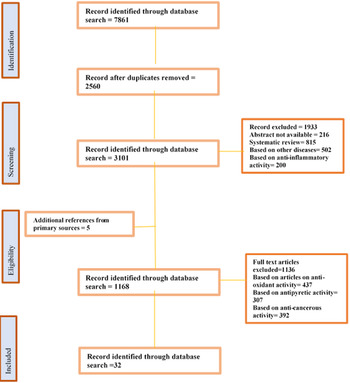
Using the relevant keywords, we got 84 papers from PubMed, 55 papers from Medline, 7480 articles from Google Scholar and 317 articles from Science Direct. Out of those articles, 32 articles were found appropriate and were included in the current study. In total, 7448 articles were excluded based on the exclusion criteria. The reasons for each have been summarized and shown in the PRISMA chart in Fig. 1.
PRISMA chart of the studied articles.

Databases searched
PubMed, Medline, Google Scholar, Science Direct
Search keywords
Medline : Anti-Entamoeba histolytica activity of medicinal plants, the anti-amoebic activity of medicinal plants
PubMed : Anti-amoebic activity of natural drugs, anti-Entamoeba histolytica activity of herbal drugs
Science Direct : Anti-Entamoeba histolytica activity of medicinal plants
Google Scholar : Anti-amoebic activity of medicinal herbs, the anti-amoebic activity of natural drugs
Criteria Selected before Search : Articles published in all the languages, published in the last 20 years
Inclusion criteria
1. Randomized control trials, cohort studies, cross-sectional studies, survey reports, interview
2. Articles published on anti-E. histolytica activity of medicinal plants
Exclusion criteria
1. Comments, books, reviews
2. Articles about other diseases
3. Research paper based on studies before 1 January 2000
Risk of bias analysis
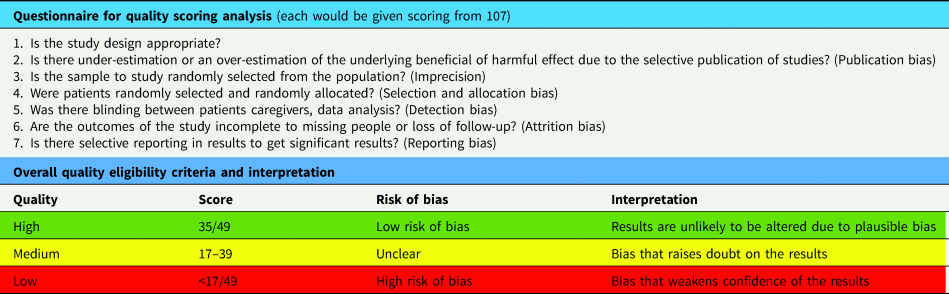
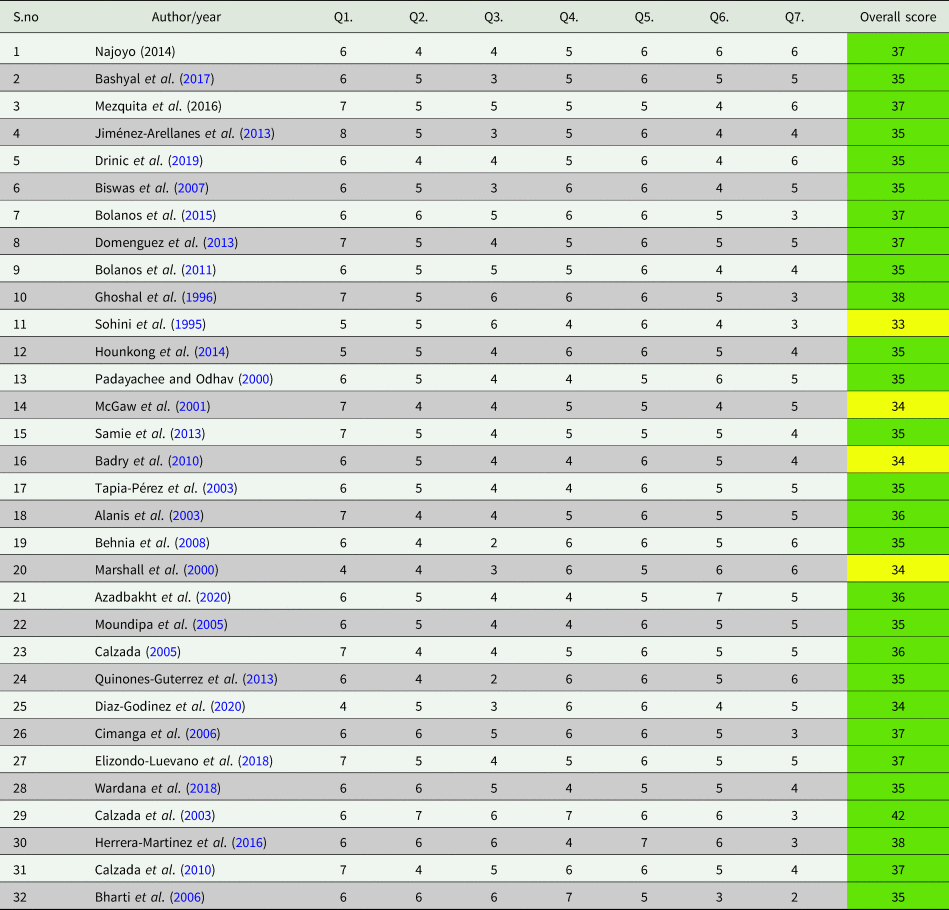
Thirty-two articles included in the study were analysed for quality to avoid the risk of bias in the study. Articles were analysed based on a self-made questionnaire and quality eligibility criteria adapted based on guidelines in the ‘GRADE handbook’ and the ‘Cochrane Handbook for Systematic Reviews of Interventions’ (GRADE, 2013; Cochrane Training, 2018). The quality check of each paper was done based on study design, publication bias, imprecision, selection bias, allocation bias, detection bias, attrition bias and reporting bias. A questionnaire consisting of seven questions has been made as mentioned in Table 2 and each question is scored from 1 to 7, 1 for worst quality and 7 for the best quality based on the questions. After filling the questionnaire, each paper was scored, and the overall quality score was compared with the set overall quality eligibility criteria as mentioned. A score above 70% has been considered a high-quality paper, which comes out to be 35/49. A score of 17–34/49 has been considered an average quality paper. Furthermore, a score of <17/49 has been considered a low-quality paper and was not included in the study. In the present study, we got 24 papers, which are of high quality, and four papers considered as medium quality. Hence, there are no chances of results to be altered due to the risk of bias because of the use of high-quality papers for a systematic review.
Questionnaire and scoring criteria for quality scoring analysis

Results
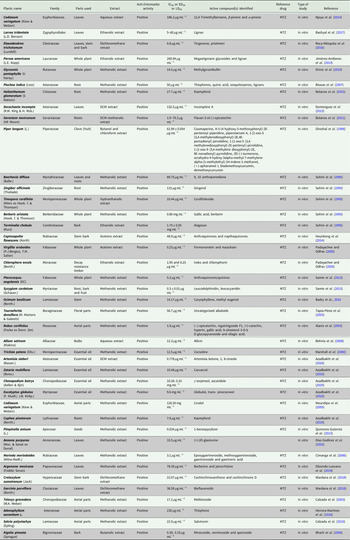
In the present meta-analysis, we searched articles through the abovementioned databases published in the last 20 years reporting anti-E. histolytica activity of medicinal plants. Table 3 presents the names of the plants having anti-E. histolytica activity, along with the names of their families, parts used in the related studies, their active component(s), IC50 values and the extracts studied. We found that in the maximum included articles, the methanolic extracts showed potent anti-E. histolytica activity. In all the included studies except Calzada et al. (Reference Calzada, Velazquez, Ledillo Rivera and Esquivel2003), MTZ was taken as the reference drug for the studies. We found members of 24 families having anti-E. histolytica activity, they are Euphorbiaceae (Juss), Zygophycellales, Celstraceae, Lauraceae (Juss.), Rutaceae (Juss), Asteraceae (Bercht. & J. Presl), Cistaceae (Juss), Geraniaceae (Juss), Piperaceae (Giseke), Myrtaceae (Schauer), Myctahinaceae, Menispermiaceae, Zingiberaceae (Martinov), Berberidaceae (Juss), Combretaceae (R. Br.), Rubiaceae (Juss), Fabaceae (Lindl), Moraceae (Gaudich), Lamiaceae (Martinov), Papaveraceae (Juss), Hypericaceae (Juss), Clusiaceae, Apiaceae (Lindl) and Annonaceae (Juss) (Table 3).
Showing the list of plants reported having anti-Entamoeba histolytica activity in the last 20 years.

Showing list of plants showing positive anti-amoebic activity especially against E. histolytica infection, with complete details of the family of the plant, part used, method of preparation of extract, IC50 value, active compound and drug used as a positive control. Where MTZ stands for metronidazole.
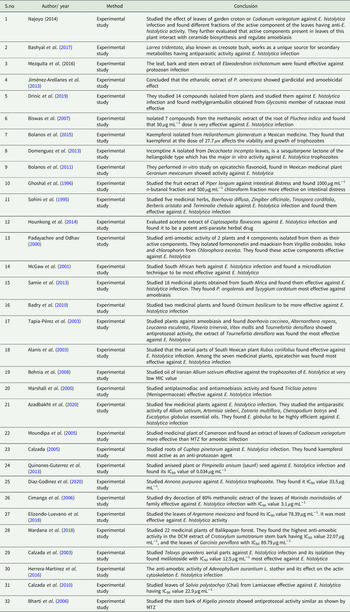
In Table 4, we enlisted all the published articles through the different databases having anti-E. histolytica activity, whereas we screened all the articles based on seven questions in Table 5. That resulted in four articles having high bias risk and scored below 35, which were cited as Sohini et al. (Reference Sohini, Kailam and Bhatt1995), Marshall et al. (Reference Marshall, Russell, Phillipson, Kirby, Warhust and Wright2000), McGraw et al. (Reference McGaw, Jager and Staden2001) and Badry et al. (Reference Badry, Ali and Badry2010).
Table showing the name of the author, mode of study and conclusion of each study, published in the last 20 years in PubMed, Medline, SCOPUS, Science Direct, Google Scholar

Risk bias table of all the selected articles question wise

Showing risk bias table, where we screened 32 articles and found four articles with a high risk of bias, where the score was <35 based on all the seven screened questions.
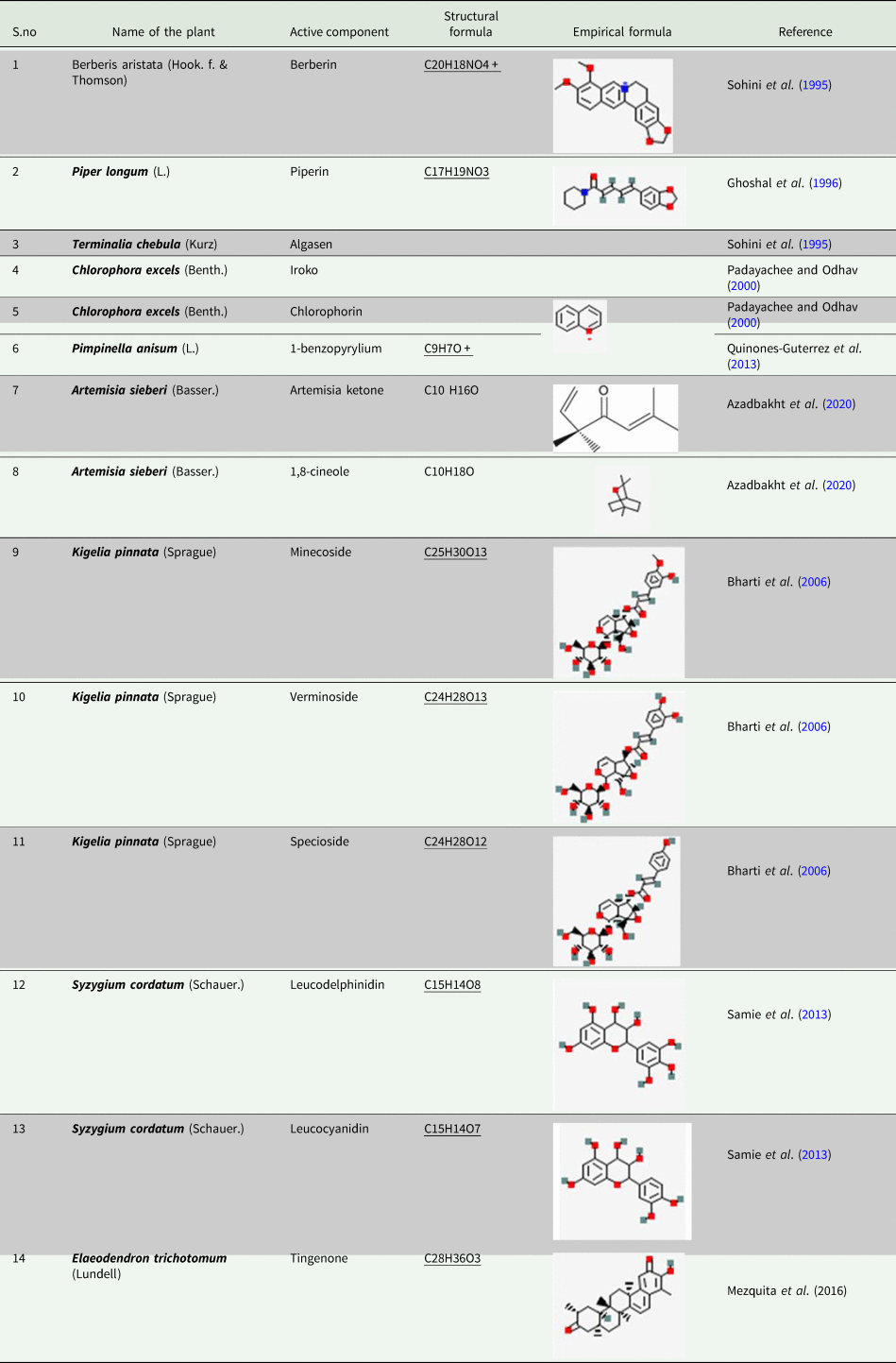
Table showing the structural and molecular formula of active components of plants found most active against E. histolytica infection

Discussion
In the present study, we included 32 articles in the study and searched for the anti-amoebic activity of medicinal plants. We screened the articles based on their medicinal properties and anti-amoebic property and found 42 herbs of 24 families having anti-E. histolytica activity. It has been stated by Calzada et al. (Reference Calzada, Mulia, Tapia-Contreras, Bautista, Maldonado and Ortigo2010) that the extracts showing an IC50 value of fewer than 20 μg mL−1 are active against E. histolytica infection and are prominent for the treatment of amoebiasis. On the other hand, the extracts with IC50 values between 20 and 150 μg mL−1 are considered as plants with moderate anti-amoebic activity; the extracts with IC50 values 150–400 μg mL−1 are considered as weak drugs, while the extracts having IC50 values more than 400 μg mL−1 are inactive against amoebiasis.
In this study, we included the articles showing potent to weak anti-amoebic activity. The aqueous extract of the leaves of Codiaeum variegatum from family Euphorbiaceae with an IC50 value of 186.2 μg mL−1 (Moundipa et al., Reference Moundipa, Flore, Bilong and Bruchhaus2005) and active component 1,2,4-trimethyl benzene, β-pinene and α-pinene, the ethanol extract of the whole plant Periplaneta americana (Lauraceae) with an IC50 value of 269.94 μg mL−1 and active components megastigmane glycosides and lignan (Jiménez-Arellanes et al., Reference Jiménez-Arellanes, Luna-Herrera, Ruiz-Nicolás, Cornejo-Garrido, Tapia and Yépez-Mulia2013), the dichloromethane extract of the leaves of Decachaeta incompta (Asteraceae) with an IC50 value of 132.5 μg mL−1 and active component incomptine A (Domenguez et al., Reference Domenguez, Marchat, Camarillo, Hernendez, Espindola, Calzada, Hernandez, Monroy and Moreno2013), the methanol extract of the leaves and roots of Boerhavia diffusa (Nyctaginaceae) with an IC50 value of 90.8 μg mL−1 and active component 9, 10 anthracenedione (Sohini et al., Reference Sohini, Kailam and Bhatt1995) and the methanol extract of the roots of Zingiber officinale (Zingiberaceae) with an IC50 value of 115 μg mL−1 and active component gingerol (Sohini et al., Reference Sohini, Kailam and Bhatt1995) have been identified with weak activity against E. histolytica infection (Table 3). The plants revealed that moderate anti-amoebic activities are the methanol extract of the flowers of Tournefortia densiflora (Boraginaceae) with active component alkaloids and IC50 value 56.7 μg mL−1 (Tapia-Pérez et al., Reference Tapia-Pérez, Tapia-Contreras, Cedillo-Rivera, Osuna and Meckes2003), the acetone extract of the stem bark of Coptosapelta flavescens (Rubiaceae) with active components anthraquinones and napthaquinones with IC50 value 48.9 μg/mL−1 (Hounkong et al., Reference Hounkong, Swangjaroen, Kongyen, Rukachaisirikul, Voravyathikunchai and Pongpachit2014) (Table 3). In this study, we found a few plants having potent anti-amoebic activity, which is the seed methanol extract of Pimpinella anisum (Apiaceae) with an IC50 value 0.034 μg/mL−1 with active components 1-benzopyrylium (Quinones-Guterrez et al., Reference Quinones-guterrez, Yerde Star, Rivas-Morales, Oranday-Cardenas, Mercado- Hernandez, Chavez-Montes and B-Gonzales2013), the root extract of Cuphea pinetorum (Lythraceae) with an IC50 value of 7.9 μg mL−1 with active component kaempferol (Calzada, Reference Calzada2005), the essential oil of Eucalyptus globulus (Myrtaceae) with an IC50 value of 9.6 μg mL−1 with active components globulol, trans-pinocarveol (Azadbakht et al., Reference Azadbakht, Chabra, Akbarabadi, Motazedin, Monadi and AKbari2020), the essential oil of Zataria multiflora (Lamiaceae) with an IC50 value of 10.48 μg mL−1 with active component carvacrol (Azadbakht et al., Reference Azadbakht, Chabra, Akbarabadi, Motazedin, Monadi and AKbari2020). The essential oil and dichloromethane extract of Artemisia sieberi (Asteraceae) with an IC50 value of 0.778 μg mL−1 with active components artemisia ketone, 1, 8-cineole (Azadbakht et al., Reference Azadbakht, Chabra, Akbarabadi, Motazedin, Monadi and AKbari2020), the essential oil of Triclisia patens (Menispermaceae) with IC50 value 12.5 μg mL−1 with active component cocsoline (Marshall et al., Reference Marshall, Russell, Phillipson, Kirby, Warhust and Wright2000). The aqueous extract of the bulbs of Allium sativum (Alliaceae) with an IC50 value of 12.3 μg mL−1 with active component allicin (Behnia et al., Reference Behnia, Haghighi, Komeilizadeh, Seyyed Tabaei and Abadi2008). The methanol extract of the aerial parts of Rubus corifolius of Rosaceae with an IC50 value of 1.9 μg mL−1 with active component (−)-epicatechin, nigaichigoside F1, (+)-catechin, hyperin, gallic acid, β-sitosterol 3-O-β-d-glucopyranoside and ellagic acid (Alanis et al., Reference Alanis, Fernando, Cedillo-Rivera and Meckes2003). The methanol extract of the stem of Ocimum basilicum (Lamiaceae) with IC50 value 14.17 μg mL−1 with active component Caryophyllene, methyl eugeno (Badry et al., Reference Badry, Ali and Badry2010), methanolic extract of root bark and fruit of Syzygium cordatum of myrtaceae with 0.3 μg mL−1 with active component leucodelphinidin, leucocyanidin (Samie et al., Reference Samie, Obi and Meyer2013), the methanolic extract of the whole plant of Pycanthus angolensic (Fabaceae) with IC50 of 5.3 μg mL−1 with active component quinines and anthroquinines (Samie et al., Reference Samie, Obi and Meyer2013), ethanolic extract of timber of Chlorophora excels of family moraceae 1.95 μg mL−1 with active component iroko and chlorophorin (Padayachee and Odhav, Reference Padayachee and Odhav2000), acetone extract of Virgillio oroboides of family Fabaceae with IC50 value 0.25 μg mL−1 with active component formononetin and maackiain (Padayachee and Odhav, Reference Padayachee and Odhav2000), the ethanolic extract of bark of Terminalia chebula of family Combretaceae with IC50 value 1.75 μg mL−1 and active component alagesan (Sohini et al., Reference Sohini, Kailam and Bhatt1995) hydroehtanolic extract of the whole family of Tinospora cordifolia of family menispermiaceae 10.4 μg mL−1 with active component cordifolioside (Sohini et al., Reference Sohini, Kailam and Bhatt1995), the dichloromethane extract of the roots of Geranium mexicanum of Germinaceae with IC50 value of 1.9 μg mL−1 with active component flavan-3-ol-(-)-epicatechin (Bolanos et al., Reference Bolanos, Martinez, Soto, Rodriguez, Camarillo, Marchat and Moreno2011). The methanolic extract of the kaempferol of Helianthemum glomeratum (Cistaceae) with IC50 value 27.7 μ m and active component kaempferol (Bolanos et al., Reference Bolanos, Martinez, Soto, Marchat, Monroy and Moreno2015), the methanol extract of the whole plant of Glycosmis pentaphylla of Rutaceae with an IC50 value of 14.5 μg mL−1 and active component methylgerambullin (Drinic et al., Reference Drinic, Raninger, Zraungi, Astelbauer, Leitsch, Obwaller, Walochnik and Duchene2019). Butanol and chloroform extract of Piper longum (Piperaceae) with IC50 value in a wide range from 0.0054 μg mL−1 onwards (Ghoshal et al., Reference Ghoshal, Prasad and Lakshmi1996). The dichloromethane extract of the leaves, stem and bark of Elaeodendron trichotomum (Clesteraceae) with an IC50 value of 6.8 μg mL−1 and active component tingenone, pristimeri (Mezquita et al., 2016) and the ethanol extract of the leaves of Larrea tridenta (Zygophycellales) with IC50 value between 5 and 60 μ m and active component lignin to be very effective (Bashyal et al., Reference Bashyal, Li, Bains, Debnath and LaBarbera2017).
On focusing on in vivo studies on anti-E. histolytica activity, innate immune response was found involved. To limit the infection and its progression, host–antigen interaction was seen. The innate immune response is involved in the interaction of macrophages, neutrophils, complement system and participating antibodies. On host–cell interaction, opsonization is promoted by attachment of leucocytes at the site of infection, which helps in eliminating the pathogen (Bohlson et al., Reference Bohlson, Fraser and Tenner2007). In the study published by Costa et al. (Reference Costa, Nunes, Ferreira, Gomes and Caliari2010), they observed the binding of C9 and C3 components with the trophozoites at the time of infection. Compos-Rodrigues et al. (Reference Campos-Rodriguez, Jarillo-Luna, Ventura-Jurez, Shibayama, Pacheco-Yépez, Serrano-Luna and Tsutsumi2000) reported significant binding of antibodies with E. histolytica trophozoites in 72 h of infection, in this process adaptive immune response was observed. Positive interaction between C9 trophozoites and the necrosed region of cells was found only in infected animals. During the hepatic infection, it was found that E. histolytica trophozoites escape the complementary system in vivo studies (Costa et al., Reference Costa, Nunes, Ferreira, Gomes and Caliari2010).
Hence from our study based on IC50 values, we found berberin, piperin, alagesan, maackiain, Iroko, chlorophorin, 1-benzopyrylium, artemisia ketone, 1, 8-cineole, minecoside, verminoside, specioside, globulol, trans-pinocarveol, cocsoline, leucodelphinidin, leucocyanidin and tingenone, be most active against E. histolytica infection (Table 6).
Conclusions
In the present review, we studied all the articles published in different databases in the last 20 years reporting anti-Entamoeba activity of medicinal plants. We found 42 plants showing anti-E. histolytica activity and 12 plants were found most active with an IC50 value of fewer than 10 μg mL−1. We found seven medicinal herbs, including P. anisum, S. cordatum, Virgillia oroboides, Artemisia sieberi, Kigelia pinnata, Rubus coriifolius and Elaeodendron trichotomum, Piper longum as the most active against E. histolytica having IC50 values below 1 μg mL−1. Active components were also isolated in the studied articles, we found berberin, piperin, alagesan, maackiain, Iroko, chlorophorin, 1-benzopyrylium, artemisia ketone, 1, 8-cineole, minecoside, verminoside, specioside, globulol, trans-pinocarveol, cocsoline, leucodelphinidin, leucocyanidin, tingenone and pristimerito most active as anti-E. histolytica agents. We screened the included articles for bias analysis and found four articles with high bias risk, hence these studies can be repeated for better results.
Author contributions
All authors revised the manuscript for content and approved this version.
Financial support
None.
Conflict of interest
None.
Ethical standards
Ethics approval was not required for this study because it is a secondary collection and data analysis.