Introduction
Nontuberculous mycobacteria (NTM) are a diverse group of bacteria predominantly found in soil and water. Reference Falkinham1 In healthcare environments, NTM are opportunistic pathogens implicated in various infections linked to contaminated water sources, medical devices, and equipment. Reference Falkinham2,Reference Hayward, Brown and Whiley3 Healthcare personnel (HCP) can also carry these microorganisms on their skin and hair. Reference Gardini, Gregori, Matteelli and Castelli4,Reference Szturmowicz, Oniszh, Wyrostkiewicz, Radwan-Rohrenschef, Filipczak and Zabost5 While human-to-human transmission is infrequent, such colonization can complicate infection control measures. Reference Bryant, Grogono and Rodriguez-Rincon6 The presence of NTM in healthcare facilities is a significant concern as it poses a risk to vulnerable patients and leads to healthcare-associated outbreaks, highlighting a critical public health challenge. Reference Kaul, Chan and Phillips7,Reference Kunz, Lawinger and Miko8 An outbreak of Mycobacterium chimera in heater-cooler devices, with an alarming global mortality rate of approximately 40–50%, exemplifies this concern. Reference Sommerstein, Schreiber and Diekema9
M. fortuitum has been implicated in healthcare-associated infections, predominantly affecting the respiratory system, skin, and soft tissues, particularly after surgical procedures. Reference Ma, Li and Liu10–Reference Phillips and von Reyn12 While NTM, including M. fortuitum, are infrequently causative agents of prosthetic joint infections (PJIs), they nonetheless contribute to these cases. Reference Buser, Laidler, Cassidy, Moulton-Meissner, Beldavs and Cieslak13–Reference Peng, Lee and Chen17 Potential sources of NTM PJIs include contamination from the perioperative environment, contaminated injections, and transmission from HCP colonized with these organisms. Reference Buser, Laidler, Cassidy, Moulton-Meissner, Beldavs and Cieslak13 The onset of symptoms related to NTM infections, including PJIs, can manifest after the typical postoperative monitoring and follow-up period. Only about 53% of NTM-associated PJIs are estimated to be diagnosed within the first year following surgery. Reference Maimaiti, Li and Xu16 Data from an NTM PJI outbreak revealed that over 65% of cases emerged more than 90 days after the surgical procedure. Reference Peng, Lee and Chen17 The rising trend of conducting orthopedic surgeries, including arthroplasties, in ambulatory surgery centers (ASCs) adds another layer of complexity to the surveillance of surgical site infections, thus necessitating improved monitoring protocols to ensure patient safety. Reference Wang, Puvanesarajah, Marrache, Ficke, Levy and Jain18,Reference Rhee, Huang and Berrios-Torres19
This report describes an outbreak of M. fortuitum among patients with PJIs at two ASCs in Tennessee. Unlike other outbreaks associated with NTM, this outbreak presented a unique challenge, as the origin could not be linked to water-related sources.
Methods
Case ascertainment and definition
A case was defined as a patient who underwent hip or knee arthroscopy or arthroplasty at an ambulatory surgical center (ASC), ASC A or B, between January 1, 2023, and November 20, 2024, and subsequently developed a culture-positive M. fortuitum surgical site infection. Seventeen cases were identified.
Chart abstraction
Demographic, clinical, exposure, and perioperative data were abstracted from patients’ medical records using a REDCap survey modified from a tool provided by the Centers for Disease Control and Prevention (CDC).
Clinical specimens and testing
The facility laboratory or reference laboratory identified clinical isolates as M. fortuitum. Out of 17 cases, isolates from 16 were sent to the Tennessee State Public Health Laboratory for identification confirmation. These isolates were subsequently forwarded to the CDC for whole genome sequencing. Isolates were processed as previously described. Reference Villa, Illoh, Kracalik, Basavaraju and Eder20 Sequence data were analyzed for quality and sequence type using the bioinformatics pipeline PHoeNIx, and phylogenetic relatedness was assessed among isolates using SNVPhyl. Reference Petkau, Mabon and Sieffert21,Reference Halpin, McDonald and Elkins22 One case isolate was not available for confirmation or sequencing.
Case-control study
A matched case-control study was conducted with a 1:4 case-to-control ratio, focusing on knee and hip procedures performed at ASC A. After cases were identified, controls were selected from similar procedures performed in May 2023 at ASC A. The matching variables included surgery type, age-decade, and the presence of immunocompromising conditions or diabetes. These matching criteria were designed to minimize confounding factors that could increase the risk of surgical site infections or affect wound healing.
Healthcare personnel investigation
A REDCap survey was distributed to all clinical and sterile processing staff at ASC A to determine the risk for NTM carriage.
Environmental investigation
Potential environmental sources of transmission were investigated at ASC A, focusing on water and areas where deficiencies in infection prevention and control, environmental cleaning, and sterile processing practices were observed. Samples of the first catch and post-flush water from sinks and ice from ice machines (1,000 mL each) were collected in high-density polyethylene bottles containing 100 mg of sodium thiosulfate. Samples were also taken from drains, drain covers, faucets, aerators, and sinks between first catch and post-flush collections. Further sampling was based on targeted infection control assessment findings, including operating room (OR) surfaces, sterile compounding areas, OR equipment, surgical hoods, and surgical instruments. Flocked nylon swabs were pre-moistened immediately before sample collection with liquid AMIES transport media for small areas or objects with difficult-to-reach crevices. Larger surfaces were sampled using pre-moistened cellulose sponges in a neutralizing buffer. Reference Rose, Houston and Martinez-Smith23 Detergent from the fluid waste management system was collected in instrument detergent containers (Neptune Enzymatic Detergent, Stryker). All specimens were tested at the CDC.
Infection control assessment
On-site observations were conducted over several days at ASC A and ASC B in various facility areas, including preoperative holding, ORs, post-surgical holding, sterile processing, and spaces used for sterile supply storage and scrub sink areas. Environmental service activities were assessed on multiple occasions during OR turnover and terminal cleaning. Sterile processing was observed in order of workflow, including stations used for manual and mechanical cleaning, packaging, sterilization, and sterile storage. Standardized infection control assessment tools were utilized to evaluate practices throughout the facility. The CDC’s Infection Control Assessment and Response tools were implemented in the sterile processing department. The Association of periOperative Registered Nurses (AORN) checklist assessed processes and workflow. The ORs routine environmental cleaning, turnover, and terminal cleaning were evaluated using AORN’s designated checklists for the corresponding area. All observations were conducted through direct observation and verbal interviews with the departmental staff.
Statistical analyses
For the case-control study, odds ratios and 95% confidence intervals were calculated to evaluate the strength of association between intraoperative risk factors identified during chart abstraction for both cases and controls. The risk factors analyzed included the OR where the procedure was performed, members of the surgical team, and equipment and materials used during the procedure. When necessary, the Haldane-Anscombe correction was applied to avoid division by zero errors in any data cells. Fisher’s exact test was utilized to determine statistical significance, with a P-value of <0.05 considered significant.
Results
Descriptive epidemiology
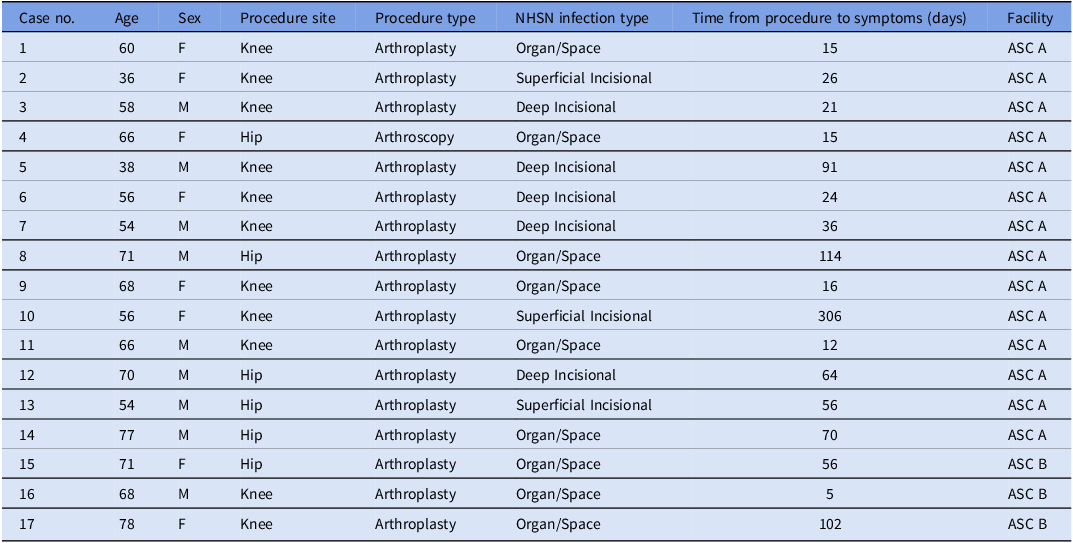
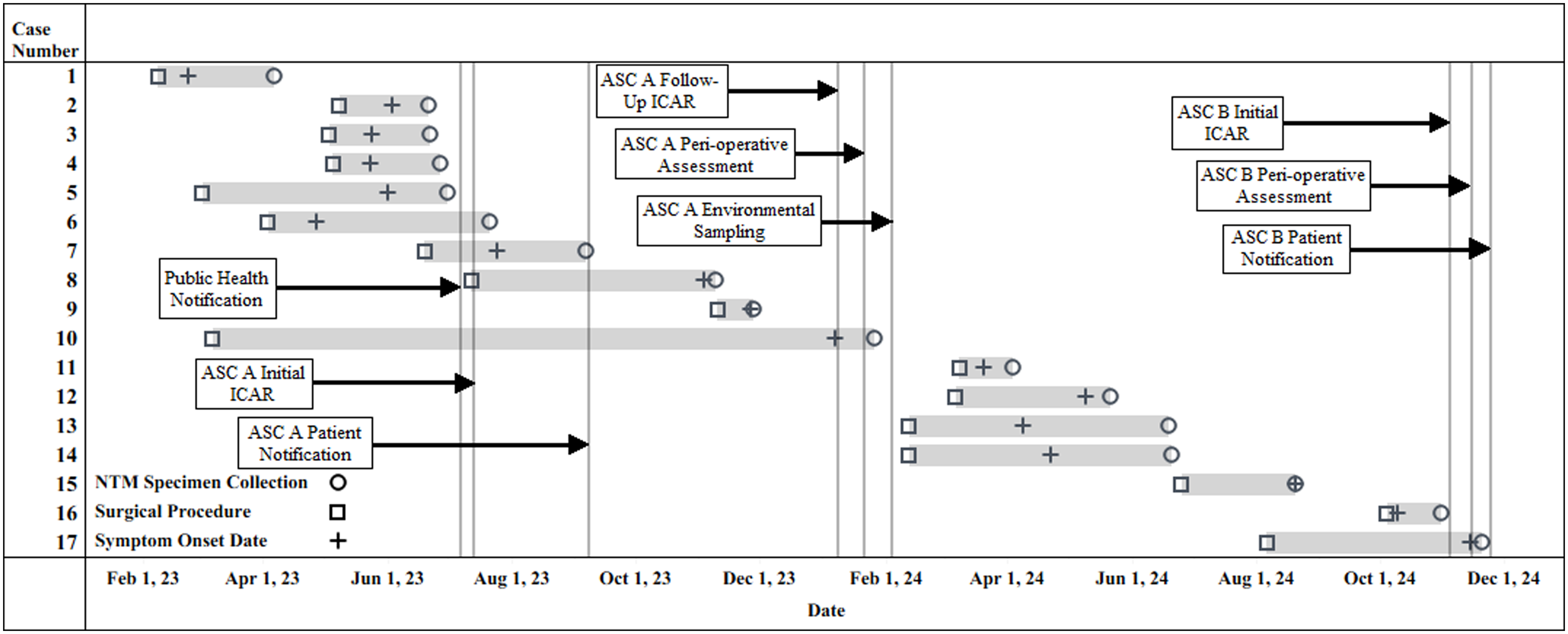
Tennessee facilities are required to report extrapulmonary non-tuberculous mycobacteria (NTM) infections to the Department of Health, and laboratories must forward isolates to the State Public Health Lab. Seventeen M. fortuitum surgical site infection (SSI) cases were identified through provider and clinical laboratory reporting (Table 1). The first 14 cases were detected at ASC A from April 2023 to June 2024, and the final 3 cases were identified at ASC B from August 2024 to December 2024. Figure 1 demonstrates the overall timeline of events.
Demographic characteristics of case patients

Note. F, Female; M, Male; NHSN, National Healthcare Safety Network; ASC, Ambulatory Surgery Center.
Outbreak timeline. This figure details the sequence of events and actions taken during the outbreak investigation. Collection (circle) refers to the date of collection of the first M. fortuitum culture-positive specimen. Procedure (square) refers to the date of the case’s first orthopedic surgical procedure associated with M. fortuitum joint infection. Symptoms (plus sign) refers to the date of the case’s first self-reported or physician-detected sign or symptom associated with M. fortuitum joint infection. Note: ASC, Ambulatory Surgery Center; ICAR, Infection Control Assessment and Response.

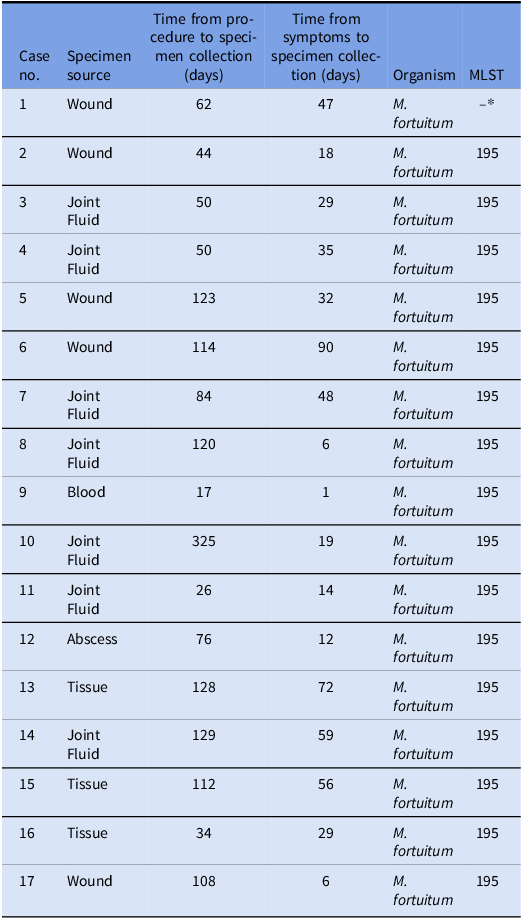
Case ages ranged from 36 to 78 years, with a median of 66. There were 8 (47%) female and 9 (53%) male cases. Out of the total cases, 16 (94%) were white, and 1 (6%) was black (results not shown). All infections were linked to prosthetic joint replacements except for case 4, which underwent an arthroscopic ligament repair. Six cases underwent hip procedures, while 11 had knee procedures. Using the National Healthcare Safety Network (NHSN) criteria, without considering surveillance window periods, 9 cases (52.9%) met the criteria for organ/space SSIs, 5 (29.4%) for deep incisional SSIs, and 3 (17.6%) for superficial SSIs. Symptoms of infection were reported 5–306 days post-procedure, with a median of 36 days. Specimens positive for M. fortuitum included joint fluid (n = 7), tissue (n = 3), wound (n = 5), abscess (n = 1), and blood (n = 1) (Table 2). The time from procedure to the collection of the first positive specimen varied from 17 to 325 days, with a median of 84 days. The duration from the first reported symptoms to the collection of the first positive specimen ranged from 1 to 90 days, with a median of 29 days. M. fortuitum was recovered from all 17 specimens. Whole genome sequencing revealed that all 16 sequenced isolates belonged to the same multi-locus sequence type (MLST 195) and differed by 0 to 10 high-quality single nucleotide variants across 98.23% of the conserved genome. These findings indicate a high degree of relatedness among the outbreak cases.
Description of clinical specimens and culture results

Notes. MLST, Multi-locus sequence type.
* The specimen from Case no. 1 was not available for sequencing.
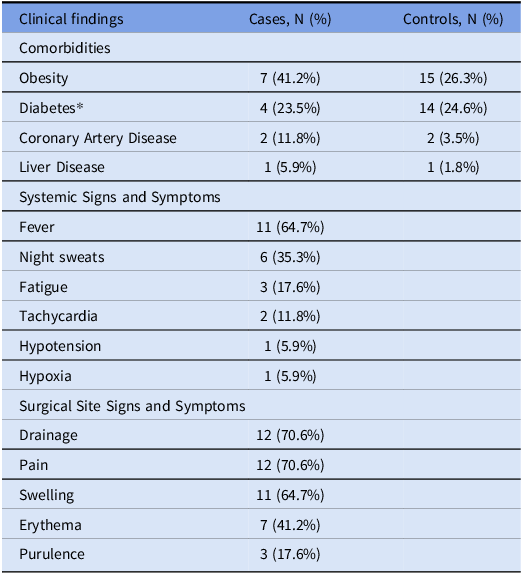
The most common comorbidities observed among cases were obesity (n = 7) and diabetes (n = 4) (Table 3). Systemic signs or symptoms reported included fever (n = 11), the most prevalent finding, followed by night sweats (n = 6). All cases showed signs and symptoms related to the surgical site, with the most frequent issues being drainage from the site (n = 12) and pain (n = 12). Sixteen out of 17 cases survived, but all required additional arthroplastic procedures and complex antimicrobial regimens. Note that the death was not related to the patient’s PJI.
Common comorbidities of case and control patients and clinical findings of case patients

Note. *Cases were matched on diabetes and immune-compromising conditions.
Case-control study
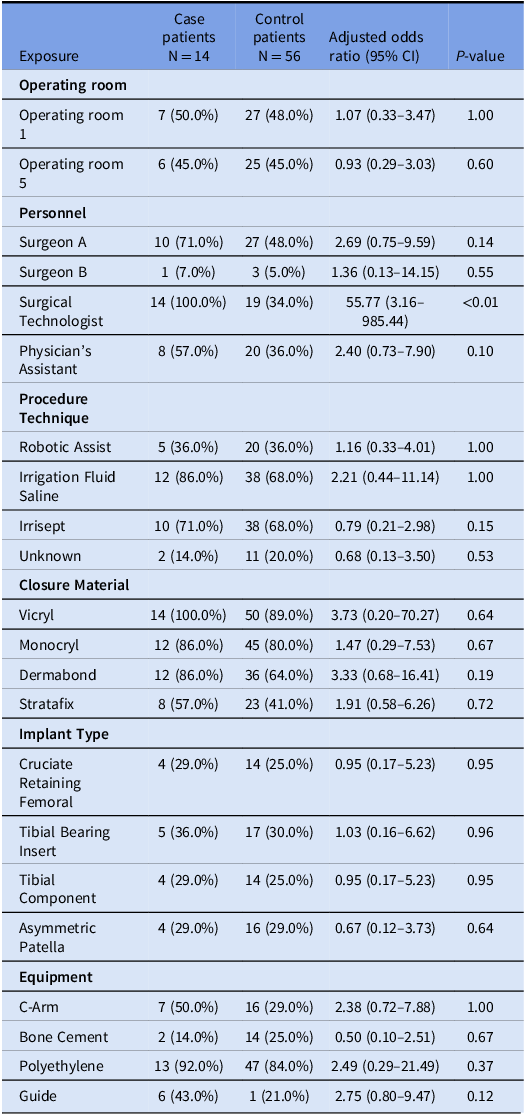
A case-control analysis was conducted using the first 14 cases and 56 matched control cases from ASC A (Table 4). The study focused on exposure factors during the surgery. The presence of one surgical technologist in the operating room (OR) during the procedure was significantly associated with the occurrence of NTM SSIs, with an odds ratio of 55.77 (95% CI [3.16–985.44]; P = 0.0097). This technologist was present for all 14 procedures at ASC A.
Case-control analysis

Healthcare personnel investigation
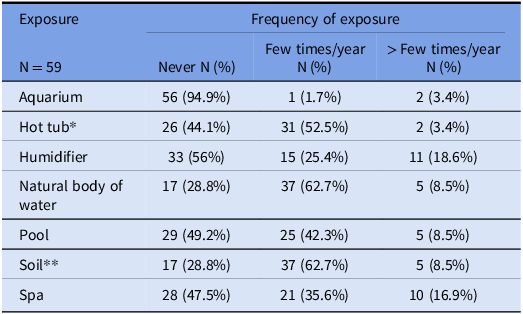
A survey was conducted to evaluate HCP’s exposure at ASC A to environmental sources of NTM (Table 5). The survey included 59 respondents, resulting in a response rate of approximately 60%. The surgical technologist identified in the case-control study reported exposure to hot tubs, humidifiers, natural bodies of water, pools, and soil a few times per year. Follow-up interviews with this individual confirmed that the exposure to the humidifier and soil occurred after the procedures of several cases.
Healthcare personnel exposure

Notes. * Includes hot tubs, jacuzzi, sauna, and whirlpools.
** Includes farming, re-potting plants, gardening, and landscaping.
Environmental assessment
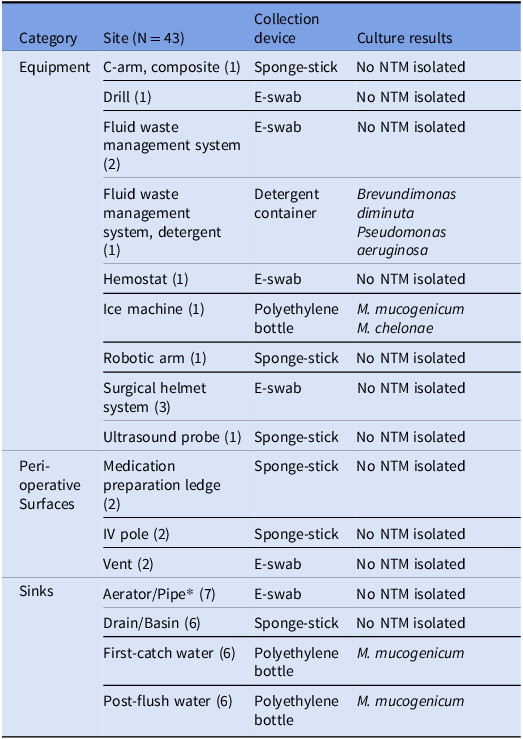
M. fortuitum was not detected in any of the 43 environmental samples collected from ASC A (Table 6). However, two other NTM species, M. mucogenicum and M. chelonae, were identified in samples from water and ice machines. Additionally, Pseudomonas aeruginosa and Brevundimonas diminuta were isolated from a sample of detergent used in the facility’s fluid waste management system.
Environmental culture evaluation

Note. *When an aerator was present, a sample of the aerator and the pipe was collected.
Infection control assessments
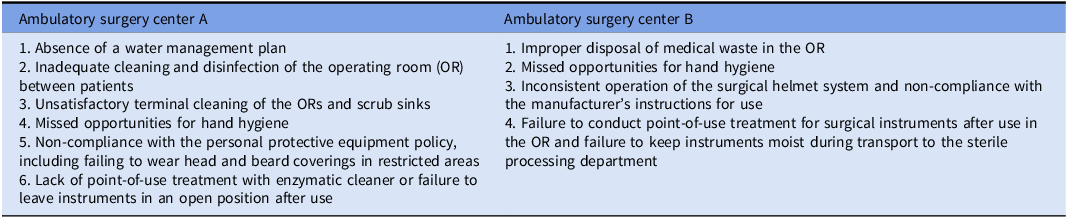
Deficiencies in the infection control and prevention program and practices were identified at both ASCs, with key findings listed in Table 7. The overall infection prevention program at ASC A had several areas requiring improvement. The infection preventionist did not have formal training in infection prevention and had multiple other responsibilities, and there were no certified personnel in the sterile processing department. Furthermore, the facility lacked a formal system for tracking SSIs. Providers reported complications using paper surveys, which could not be produced upon request. There was also a lack of understanding regarding the requirements for reportable diseases.
Infection control assessment of ambulatory surgery centers—key deficits

Public health, facility, and regulatory action
Local and state public health officials recommended patient notification, which was successfully implemented at ASC A for all orthopedic procedures performed between January 2023 and September 2023. Letters were sent to ASC A providers, advising them to maintain a heightened suspicion for NTM infections in any patient experiencing complications and providing them with guidance on diagnostic testing and reporting. Initially, ASC A removed the technologist from procedures; however, the technologist was ultimately terminated due to their refusal to cooperate with the investigation. Following termination, no additional cases were identified at ASC A.
Within three months of their termination from ASC A, the same technologist was hired at ASC B, where cases 15–17 were identified. Patient notifications were recommended and completed at ASC B for cases with the technologist present during their procedures. Provider letters were also distributed, similar to those at ASC A. It was subsequently discovered that the surgical technologist did not possess an active license in Tennessee, a requirement of the Division of Health-Related Boards since 2016 (TN Code § 68-11-239). After identifying case 15 and confirming the technologist was employed without an active license, the local health department issued a public health mandate prohibiting the technologist from performing clinical duties. This mandate included remediation activities, such as NTM colonization testing, continuing education opportunities, and obtaining an active license that would allow the technologist to return to clinical work. It was later learned that the technologist was no longer employed at ASC B at the time of the health directive. To date, they have not contacted the local health department to pursue return to clinical work.
Discussion
Outbreaks of surgical site infections (SSIs) associated with transient colonization of HCP have been documented in the literature. Reference Buser, Laidler, Cassidy, Moulton-Meissner, Beldavs and Cieslak13,Reference Groenewold, Flinchum and Pillai15,Reference Rahav, Pitlik and Amitai24 Specifically, outbreaks of M. fortuitum and other NTM species have been linked to a combination of lapses in infection prevention and control (IPC) practices and HCP carriage due to environmental exposures such as hot tubs. The presence of the same surgical technologist in all 17 procedures across two facilities and the high degree of genomic similarity among the clinical isolates strongly indicate that transmission occurred through HCP colonization and subsequent contamination of the sterile field. Furthermore, prior to case 15, no other instances of M. fortuitum were reported at ASC B through state-mandated reporting or laboratory review. It is important to note that colonization with a pathogen does not guarantee transmission, and proper practice will prevent transmission from colonization of NTM and other agents. Ambulatory surgery centers (ASCs) A and B demonstrated lapses in IPC practices. At ASC A, it was observed that the surgical technologist identified by the case-control analysis did not comply with the established protocols regarding personal protective equipment. Specifically, the technologist failed to utilize essential safeguards, including beard coverings, which are vital in maintaining sterile conditions and preventing contamination during surgical procedures. During the on-site assessment of ASC B, the technologist had already been removed from clinical responsibilities. Although HCP carriage and subsequent transmission were strongly suspected as the source of contamination in this outbreak, the precise transmission mechanism from the surgical technologist to the patients remains unclear.
Both facilities used the same brand of surgical helmet systems for joint procedures. There is conflicting evidence regarding whether these systems reliably reduce the risk of SSIs compared to standard surgical attire. Reference Kang, Dewar and Lobo25,Reference Lindsley, Blachere, Derk, Mnatsakanova and Noti26 The sequence in which these systems were donned or the exhaust system activated may have contributed to the contamination of the sterile field. Healthcare facilities must ensure all medical devices are operated according to the manufacturer’s instructions and regularly conduct audits to verify protocol adherence.
When a specific HCP is identified as a potential source of an outbreak, it is crucial to prioritize adherence to policies and practices rather than disciplinary action against the individual. In this outbreak, public health authorities advised ASC A not to retaliate against the surgical technologist if the technologist was willing to comply with the facility’s IPC policies and best practices. The technologist was informed of a possible connection to the outbreak at ASC A and initially complied with requests for information and remediation; however, they later ceased cooperation, and employment was terminated. Despite this, they were subsequently employed at ASC B. This situation highlights the importance of verifying licenses and contacting references during hiring. It also emphasizes the need for thorough onboarding training, ongoing education, and regular monitoring of HCP’s IPC practices by infection prevention staff.
The refusal of HCPs to comply with facility policies, IPC practices, and required training poses a significant risk to patient safety. Persistent non-compliance with these policies and best practices can lead to termination from their position. However, few safeguards prevent a non-compliant HCP from returning to inappropriate practices at another facility. This is commonly observed in investigations of drug diversion. Terminated personnel often resume employment at another facility or state before finalizing licensure action. Collaborating with the facility’s legal department to consistently incorporate “not eligible for re-hire” language in cases that pose immediate threats to patient safety may prove advantageous. Reference Rahav, Pitlik and Amitai24
ASC A’s delay in reporting this outbreak posed a significant barrier to rapid public health action. Although NTMs are reportable in Tennessee, neither the provider nor the clinical laboratory initially reported these cases. Since 2015, SSIs for specific procedures performed in acute care hospitals have been reportable through the NHSN in Tennessee. However, ASCs in Tennessee are not mandated to report SSIs at the state or federal level. Despite the slow progression of infections, 11 out of 17 NTM infections in this outbreak would have been detected through NHSN surveillance. Even if NHSN SSI criteria were not met within the 90-day surveillance window, conducting record reviews and entering data within the NHSN framework may have allowed quicker detection at the facility level. NHSN reporting is not well-suited for rapid outbreak detection; however, its standardized definitions, routine record reviews, and established data entry system could improve infection surveillance in ASCs like those mentioned here. ASC A previously lacked a formal mechanism for tracking infections. As the number of ASCs and the variety of procedures they perform continue to grow, public health authorities should consider enhancing surveillance in this healthcare setting. Due to the slow-growing nature of NTMs, there remains a risk that NTM infections could go undetected in NHSN surveillance. Even a single case of healthcare-associated NTM infection, particularly an NTM SSI, should prompt a public health investigation. It may indicate weaknesses in IPC practices related to sterile processing, aseptic technique, and water management. Currently, few states and jurisdictions require the reporting of extrapulmonary NTM infections, and Oregon and Tennessee, where NTM is reportable, have documented outbreaks of NTM SSIs. Reference Phillips and von Reyn12 In the future, public health authorities should enhance provider awareness regarding NTM infections and evaluate whether mandatory reporting of NTM cases is appropriate in their jurisdictions. This study did present several limitations. Specifically, not all HCP completed the survey, and the case-control study was performed only at ASC A. Furthermore, there exists a slight possibility that not all cases were detected. Ultimately, this investigation highlights the critical need for heightened awareness and rigorous infection prevention strategies in healthcare settings to protect vulnerable patient populations from opportunistic pathogens like M. fortuitum, particularly in ambulatory surgical environments. This outbreak emphasizes that HCP transmission of these organisms is possible, and not all NTM healthcare-associated infections are linked to water contamination within facilities.
Acknowledgements
The authors thank the Centers for Disease Control and Division of Healthcare Quality and Promotion and the Tennessee State Public Health Laboratory for supporting this investigation.
Financial support
The Tennessee Department of Health Healthcare-Associated Infections and Antimicrobial Stewardship Program received funding for this project from the Epidemiology and Laboratory Capacity Cooperative Agreement (Federal Grant # NU51CK000367) and the Strengthening HAI/AR Program Capacity Cooperative Agreement (Federal Grant # NU50CK000528).
Competing interests
All authors report no conflicts of interest relevant to this article.