INTRODUCTION
The prominence and academic prestige of studies devoted to African pastoral societies is now lost in a handful of exotic textbooks that date from the first half of the 20th century. With the notable exception of some East African contexts, these discussions may now support a peripheral footnote, generally obscured by harsh criticisms associating anthropological practice with various colonial projects, or replaced by the contemporary prevalence of urban settings. This article, however, focuses on an African/Saharan pastoral context: the arabophone population of Mauritania.Footnote 1 The particular social landscape that I will endeavour to explore here is centred on a group of camel experts (shepherds, jockeys and camel trainers) who migrated in the late 20th and early 21st centuries to the United Arab Emirates, where they encountered a surprising economic bonanza.Footnote 2 This group is known in Mauritania by the term znāga, a designation referring to ‘white tributaries’ specialised in livestock production, which places them at the lower-status end of the vertical social hierarchy that permeates Saharan arabophone society (Marty Reference Marty1919; Lériche Reference Lériche1955; Stewart Reference Stewart1973; Ould Cheikh Reference Ould Cheikh1985; Norris Reference Norris1986; Bonte Reference Bonte1990; Baroja Reference Baroja2008 [1955]: 3–58; Hamès Reference Hamès2008; Rebstock Reference Rebstock and Fierro2011). This group constitutes the key focus of this article, which will centre on the local readings triggered by their return to the Sahara during the first decade of the 21st century. Close attention will be paid in particular to the Ūlād Bāba Ahmad, a qabīla (pl. qabā‘il; generally translated in English as ‘tribe’) with a prominent role in this migratory process.
My interest in this subject was sparked by the work I had previously carried out on the Ūlād Bāba Ahmad leadership (Freire Reference Freire2013: 130–49), during which I repeatedly came across fulsome praise regarding the successful re-incorporation of the tribe's znāga families which had recently returned from the Emirates (the group included about 50 families, totalling approximately 200 people). These formal assertions provided a more inclusive understanding of the group's historical social status, while at the same time signalling the possible overcoming of any restraints to intra-tribal social mobility. Initially I – naively – hoped that I could finally treat a Saharan subject where social ‘antiques’ such as tribal organisation, kinship-centred relations, the fastidious segmentary literature (Kuper Reference Kuper1982) or genealogical narratives would be nothing more than forgotten details of mere historical significance. In the end, however, due largely to the pervasiveness of social structures which are stratified on a genealogical basis, this preliminary thought proved to be inadequate in understanding the contemporary role played by the znāga population. In this sense, my argument also highlights the interest in an effectively integrated reading of globalised migration experiences. Though centred on a somewhat ‘remote’ geography, this article does not constitute a marginal note on the cultural singularity of a distant Muslim population. Far from framing globalisation as an eminently high-tech opening up of social and financial flows, this study defends the interest in an ethnographically centred reading of globalised experiences, which, contrary to what has often been suggested (Werbner Reference Werbner1999; Ong & Collier Reference Ong and Collier2007, should closely relate to ‘local knowledge’.
After working in the region for more than a decade, I was surprised that it proved much more difficult to treat social status than other subjects I had previously probed in Mauritania – namely Islam and genealogical traditions. For the first time I had the experience of doors being slammed in my face, my privileged informants being incapable of helping me in any way, and of telephone calls being abruptly terminated the moment I told people about my research interests. Challenging my previous understanding, these elements pointed to the profound tensions still felt over questions directly regarding social status. They underlined, at the same time, an academic urgency in exploring this subject. My efforts, as presented throughout this article, comprise an ethnography that is not easily spelled out, and which sometimes might still seem shrouded in mystery. In this sense, the years I have devoted to this question might well not be evident from the sparse interview material presented directly. It was, in fact, very hard to simply take notes of the many long and repeated encounters I had with different migrants, or to obtain authorisation to make any sound recordings. For these reasons, the ethnography presented here replicates the sensitive and frequently ‘obscure’ character that this discussion still has today.
The use of the expression znāga, though seemingly neutralised by its inclusion in the title of an academic article, must not hide its particularly problematic meaning. In fact, the annotation by Caro Baroja in the early 1950s, stating that the word znāga is ‘the most heinous insult’ in the Sahara (Baroja Reference Baroja2008: 139, my translation), still seems appropriate. During my fieldwork I thus privileged the use of expressions such as ‘shepherd’ or ‘herdsman’, and only very seldom did I integrate the expression znāga into my interviews. It was, nevertheless, implicit in the topic and understood by the interlocutors I chose to address, as well as recognised through my knowledge of the genealogy of the particular tribe on which I was focusing.
The geographical identity of the south-western Saharan arabophone population is defined, above all, by its flexibility. This quality largely derives from their use, up to a few decades ago, of extensive nomadic routes. The people concerned understand, in a maximalist view, the area between Guelmim (in southern Morocco) and the Senegal River margins, to the west, and the area between the Atlantic Ocean and Timbuktu, to the east, as their territory. In a restricted sense, this area can be circumscribed to the political borders of the current Islamic Republic of Mauritania. If we consider, for example, the recent development of a ‘Saharawi’ political structure and identity,Footnote 3 or the permeability of the southern and eastern frontiers of Mauritania, the region's population seems to continue to be committed to territories of very imprecise boundaries. This mobility of Saharan populations is today replicated, too, in different contemporary regional migrations (de Bruijn & van Dijk Reference Bruijn and van Dijk2003; Choplin Reference Choplin2008; Ciavolella Reference Ciavolella2008), and even in a transcontinental extension to North America, Western Europe, Southern Africa or China, where Saharan communities are already recognised.
This social and geographical porosity of the western Saharan region and its populations is the backdrop for the persistent addition of the prefix ‘trans-’ to the word Sahara. The excessive use of this term has been recently discussed by McDougall & Scheele (Reference McDougall, Scheele, McDougall and Scheele2012), who stress that this label has provided a description of the Sahara and its populations mainly as a ‘crossing’, resulting from an intense exchange of goods and Islamic knowledge (Marfaing & Wippel Reference Marfaing and Wippel2004; Lydon Reference Lydon2009; Austen Reference Austen2010).Footnote 4 As argued throughout this article, the understanding of an eminently Saharan social and cultural sphere that transcends the transcontinental focus is long overdue.
SAHARAN MIGRANTS IN THE EMIRATES
In the first few months of 1982, 30 Mauritanian shepherds travelled from Nouakchott to Abu Dhabi as part of a programme to recruit labour specialised in camel husbandry. Some years later it was agreed that their families would be allowed to join them, and in 1986 a new party of about 300 migrants (all of them directly or indirectly linked to pastoral activities) flew to the UAE. This group was hosted by the Emirates army and initially accommodated in a military camp. They were later relocated to the town of as-Samha ash-Sha‘abiīa, which was specifically conceived to receive them and which would be the base for the Mauritanian expatriate community in the Emirates (Ould Ahmed Salem Reference Ould Ahmed Salem, Soares and Otayek2007: 34). On top of a US$ 400 per month salary, these shepherds were offered free medical care, education and housing, with sanitation, electricity ‘and even air conditioning’, absolute novelties for most of them. Some years later, the number of Mauritanians in the UAE had risen to 4,000,Footnote 5 and Mohamedin ould Ahmedu (from the Ūlād Bāba Ahmad tribe), who enjoyed a privileged relationship with Shaykh Zayid bin Sultan al-Nahaīan (founder of the modern United Arab Emirates, and its leader from 1971 until his death in 2004), had become the acknowledged leader of the znāga community. Today, however, fewer than a dozen Mauritanian shepherds remain in the Emirates, and all the men previously conscripted into the army and police force have also returned to Nouakchott. Following the death of Shaykh Zayid in November 2004, his heirs soon lost interest in camel production, and a swift return to the Sahara was arranged for these low-tech agents of the global migration processes.
As we know, an overwhelming part of the identity narratives and genealogical traditions of the western Saharan arabophone population reclaim an ancestral connection with the Arabian Peninsula, most of which results from bonds with Arab characters who were supposedly established in the Saharan confines some centuries ago (Norris Reference Norris1962). Oddly enough, and here reversing this initial east-west transit, Mauritania's ‘Bedouin’ (‘pastoral’) credentials continued to be recognised in Arabia. When in the early 1980s Emirati officials decided to recruit workers in Mauritania, the country was seen by wealthy Arabs as a place where they could still experience some sort of a ‘return to the wild’, where they could spend time hunting or practicing falconry (Grégoire Reference Grégoire2000). It was most probably as a result of this exoticised vision of the Sahara and its populations that Shaykh Zayid, who was aiming at a ‘cultural revival’ of his country essentially by valuing its ‘traditional’ camel culture, sponsored the arrival of Mauritanian herders in Abu Dhabi (Khalaf Reference Khalaf1999, Reference Khalaf2000; Insoll Reference Insoll and Insoll2007).Footnote 6
One of the protagonists of this migratory itinerary (someone who returned to Mauritania in 2007, after having worked in Abu Dhabi as a camel trainer for more than a decade) is very clear when questioned about the relationship his employers had with camels:
They are great Bedouin [‘badu ata’].Footnote 7 I think they are even better than the Mauritanians, but as they became rich they stopped working directly with the animals. I am sure that was the only reason why they called us there … I just wanted to work, and ended up flying to the Emirates almost by chance. When I left I thought I would go into the army; it was only afterwards that I learned that I would be working with Shaykh Zayid's camels. For more than ten years I was there preparing the camels, and the kids who rode them,Footnote 8 for racing. (Ould Umar 2012 int)Footnote 9
According to all my interlocutors the recruitment of Saharan shepherds, over a time span of almost two decades, seems to have been promoted by Shaykh Zayid's particular interest in traditional desert culture (Khalaf Reference Khalaf1999: 90, 98), a fact currently highlighted in his biographies:
When the young Zayed was growing up, there was not a single modern school anywhere along the coast. He, like his fellows, received only a basic instruction in the principles of Islam from the local Islamic preacher, although an enthusiasm and a thirst for knowledge took him out into the desert with the Bedouin tribesmen, absorbing all he could about the way of life of the people, their traditional skills and their hard-won ability to survive under the harsh climatic conditions. These early years not only taught Sheikh Zayed about his country, they also brought him into contact with the people (…) When the first geological survey teams from foreign oil companies arrived to carry out a preliminary surface survey of the trackless wastes of Abu Dhabi's deserts, it was Sheikh Zayed who was assigned the task of guiding them (UAEC 2012, accessed 26.4.2014).
In the same tone, a young Shaykh Zayid is also described in Wilfred Thesiger's famous Arabian Sands:
I had been looking forward to meeting him, for he had a great reputation among the Bedu. They liked him for his easy informal ways and his friendliness, and they respected his force of character, his shrewdness, and his physical strength. They said admiringly, ‘Zayid is a Bedu. He knows about camels, can ride like one of us, can shoot, and knows how to fight’. (Thesiger Reference Thesiger2007: 268–9)
Part of the aspiration that Shaykh Zayid had for his country, in a decisive period of its history, was then centred on his ‘civilisational’ interest in reviving desert culture, and to that end he revitalised an ancient connection with the western Saharan confines. However, here I am treating only the last few decades of the past century and the early years of the 21st century. Today, as fewer than a dozen Mauritanian shepherds still work in the Emirates, the country's most popular sporting activities are football, car racing and golf: ‘some call camel racing, falconry, and boat racing heritage sports because they hark back to Bedouin tradition’ (Darraj & Puller Reference Darraj and Puller2009: 84–5; see also Dresch & Piscatori Reference Dresch and Piscatori2005).Footnote 10
A SAHARAN QABĪLA AND THEIR ZNĀGA
The study of the arabophone western Saharan population has concentrated, as we know, on the analysis of hierarchically structured social configurations. Nevertheless, although the groups positioned at the lower end of this structure have recently become a focus of academic attention (Villasante-De Beauvais & Acloque Reference Villasante-De Beauvais and Acloque2000; Searing Reference Searing2003; Leroux Reference Leroux2004; Seesemann Reference Seesemann and Reese2004; Klein Reference Klein and Rossi2009; Rossi Reference Rossi2009), very few studies have centred on the znāga population treated in this article. Among the reasons that might justify the lack of academic interest in this particular subject, one aspect seems to stand out: the ambiguity of the tributary framing of this population. The znāga are to a large extent responsible for the development of the region's herds, thus creating bonds of great proximity with the owners of these herds. These bonds are, in some cases, centuries old, and cut across a simple professional relationship to encompass, in many cases, a shared genealogical project. Another fundamental aspect, which has probably diverted attention away from this population, has to do with the colour of their skin: they are ‘white tributaries’ (Hall Reference Hall2011; El Hamel Reference El Hamel2012). Most observers prioritise the region's much more numerous black population of servile origin, the ḥrātīn (Lovejoy Reference Lovejoy2000; Villasante-De Beauvais & Acloque Reference Villasante-De Beauvais and Acloque2000; Bullard Reference Bullard2005; Lecocq Reference Lecocq2005; Wright Reference Wright2007; Ould Ahmed Salem Reference Ould Ahmed Salem, Ellis and van Kessel2009; McDougall Reference McDougall2010).
But let us now centre on the tribe that played a pivotal role in the Saharan shepherds' migration to the Gulf. The Ūlād Bāba Ahmad, known in south-western Mauritania since the mid-17th century, are today composed of about 3,800 individuals. Their recognised territory extends from the northern outskirts of the town of Mederdra, to the south-western periphery of Boutilimit, in the north. Today, a large majority of the group is permanently settled, either in the four villages they founded in the late 1990s (located 100 kilometres to the east of the capital), or in Nouakchott. The Ūlād Bāba Ahmad are historically included in the Tachumcha tribal confederation, and are also a ‘fraction’ of the Ūlād Daimān tribe (Marty Reference Marty1919: 194–5). The informally acknowledged Berber ancestry of this group should trace their roots further to the north of the African continent, but more consolidated historical records detect them in southern Mauritania only from the mid-17th century onwards. During this crucial period the Trarza Emirate was formed in the region (Curtin Reference Curtin1971; Ould Sa‘ad Reference Ould Sa'ad1989; Taylor Reference Taylor2002), and it was precisely with the first of its emirs (Ahmad bin Damān, d. circa 1631) that the Ūlād Bāba Ahmad tribal eponym came into prominence, thus consolidating a genealogy and a status identity that is recognised to the present day as a qabīla (Norris Reference Norris1969: 499; Hall Reference Hall2011: 60; Freire Reference Freire2013: 130–42). Consistent with the structuring of the tripartite model that followed (and is presently recognised), the Ūlād Bāba Ahmad assumed the role of ‘religious officiants’ (zwāya, or, more recently, ‘marabouts’).Footnote 11
The vertical structure of the tribe comprises populations of different tributary status: laḥma (tributaries), or znāga (white tributaries, associated with cattle husbandry), m‘allamīn (‘blacksmiths’), ḥrāṭīn (descendants of slaves) and ‘abīd (slaves). These groups are considered part of the tribal structure, even if they normally have no actual genealogical link with the tribal ancestor, thus being generally – if euphemistically – described as ‘clients’ or ‘allies’. Even if these groups lack a noble ancestry, their integration and active participation in the tribe are not compromised. In fact, this capacity to incorporate ‘foreign’ families is often considered a decisive advantage,Footnote 12 as a tribe's regional influence is often paralleled with the number of ‘allies’ it manages to recruit. The Ūlād Bāba Ahmad confirm this structure. And if the direct descendants of Bāba Ahmad evidently constitute a ‘noble’ group with privileged opportunities, there are also other ways of successfully integrating the tribe. According to the Ūlād Bāba Ahmad leadership, there is only one fundamental prerequisite for the assimilation of ‘foreign’ families: adherence to the ‘ethical’ model drawn from the tribal eponym (Freire Reference Freire2013: 138–9). It is largely in this sense that one must understand the presence of families of tributary status in the tribe, and the subsequent role played by the Ūlād Bāba Ahmad leadership in the processes that took many of the group's znāga (probably numbering 200 individuals) to the UAE in the late 20th century.
Proving the depth of these interconnections, one should note that, from the first hour, the tribe's leadership decided to take a privileged view of the ‘exodus’ of its shepherds to the Gulf. The younger brother of the tribe's leader was among the first group to leave Mauritania in the early 1980s, thus serving as a point of articulation between the expatriate community and the tribal leadership. From Nouakchott, this structure coordinated the recruitment of new migrants, provided small loans and even suggested investments (mainly in property) for the remittances that came from the United Arab Emirates.
Until quite recently the Ūlād Bāba Ahmad, today mostly sedentary, formed an essentially transhumant community. The severe droughts that ravaged the Sahara in the late 1970s (Swift Reference Swift1977; Vermeer Reference Vermeer1981) have accelerated their sedentarisation, consolidating, at a national level, the exponential development of towns such as Kiffa, Nema and, notably, Nouakchott. From the distance of a few decades, it is now important to consider the changes this process may have promoted.Footnote 13
If one focuses on how sedentarisation – incomplete and very recent – has been implemented, the complexity of the formulas currently generated is made evident. The sedentarisation of most of the Ūlād Bāba Ahmad has its clearest manifestation in the founding (in the late 1990s) of the villages of Igerm, Awdach and Habiballash (86, 93 and 105 kilometres from Nouakchott, on the Nouakchott–Boutilimit road) and of Bir Jud (10 kilometres to the north of Mederdra), which are recognised as having been built with the proceeds of the migratory experience of their inhabitants. These communities chose to settle in the vicinity of the urban centres of Mederdra and Boutilimit, where some have also bought property, and where their children go to school (in fact, the urban and rural spheres suffer from profound demographic fluctuations that follow the school calendar). Nevertheless, the presence of znāga families in these towns (among which one must also include Nouakchott) combines husbandry with activities developed in the adjacent countryside,Footnote 14 thus confirming an effective articulation between both spaces.Footnote 15 Generally, the women and children travel during the weekends to the camps or small villages where the men live, or, conversely, the men rejoin their town-based families over the weekends (replicating, in this case, the pattern once practiced in the Emirates). During the ‘wet season’ (khrīf), between the months of July and September, families usually reunite in the countryside, accompanying their herds for the very limited period of abundance in south-western Mauritania.
Another important aspect concerning the new residential structure associated with these communities relates to the fact that these recently founded villages were established in an area still associated with the tribe's ‘traditional territory’. Thus, if on the one hand the znāga communities seem to have attained a certain degree of autonomy, they are still, in some way, respectful of a tribal-based social project that continues to frame them. The founding of villages by families of znāga status should, nevertheless, raise questions concerning the ties of these families with the ‘masters’, from whom they are today, in fact, financially independent. Importantly, however, as already stated, these recently founded villages were set up within the tribe's recognised territory, or, more rarely, on its periphery (see Figure 1). This evidence should prove that the relations between groups of znāga status and bīḍān ‘masters’ define degrees of association that clearly differ from a simple tributary relationship, which Pierre Bonte has described as relations of ‘hierarchical alliance’ (Reference Bonte1987: 61). As mentioned above, the incorporation of znāga families into the tribe occurs fundamentally through their adherence to the statutory model that conjures the tribe's identity. This acceptance of the tribe's ontological programme is followed by a diversity of permanently negotiated arrangements between groups of different status and different kinship strategies, but also on the basis of a shared genealogy that can go back several centuries. These alliances seem, nevertheless, to have been decisively disputed when znāga families managed to buy property and to become the owners of significant herds. This process, epitomised in the founding of new villages, is undoubtedly related to the migratory remittances that came from the Gulf.
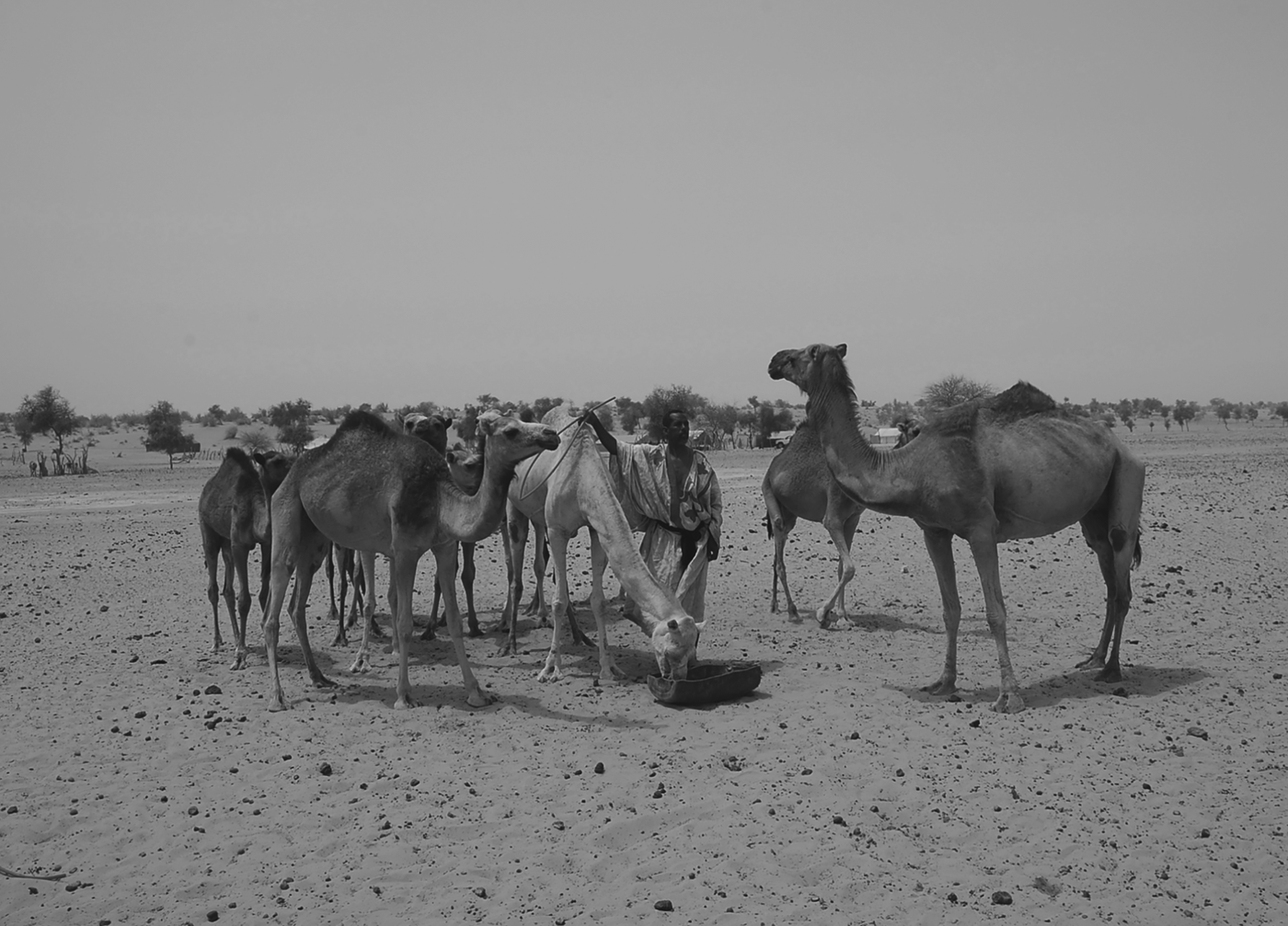
After 15 years in the UAE, a Ūlād Bāba Ahmad man, recently returned home, decided to install a new well and resume cattle and camel husbandry in south-western Mauritania. Bir Jud, March 2012. © Francisco Freire.

CAMELS AND ISLAM: THE MALLEABILITY OF SOCIAL CATEGORIES
Theoretically, the description of a religious status tribe from south-western Mauritania should illustrate a group dedicated to teaching, writing, missionary (da‘wa) work or trade (which is not, in any way, excluded from the list of ‘licit’ activities). In fact, it is another particular aspect that defines the Ūlād Bāba Ahmad as a highly original case: their peculiar expertise in camel husbandry (see Monod Reference Monod1967; Brauer Reference Brauer1993). This feature, always used in the description of the tribe, distances itself from the paradigm according to which south-western Saharan religious status groups are excluded from raising camels and therefore should dedicate themselves ‘exclusively’ to cattle husbandry.Footnote 16
This important aspect has its origins in the mid-17th century consolidation of the region's social status roles, following the founding of the Trarza Emirate (Searing Reference Searing2003: 90). After the Battle of In Titam (1630 or 1631) a Bani Hassān (Arab) leadership was established in this region, and the then defeated groups (from which the Ūlād Bāba Ahmad descend) were ‘condemned’ to remain solely in charge of cattle production. The – mainly ideological – association with camel culture was a right reserved to the groups of Arab genealogy that had gained political control, henceforth consolidating a separation between ḥassān (or ‘warriors’) and zwāya (‘religious’) status. The irrefutable connection between the Ūlād Bāba Ahmad and camel-raising demonstrates their proximity to the Trarza Emirate's leadership, which saw the camel as the privileged emblem of a noble ‘ethic’. Following this contextualisation, the Ūlād Bāba Ahmad are thus confronted with a serious social paradox.
In fact, other inconsistencies with the ‘traditional order’ are to be found when we examine the current livestock production of the tribe. The interest in cattle presently shown by the Ūlād Bāba Ahmad is justified by the geographical shrinkage of pastoral routes (which severely limits the success of camel-raising) following profound ecological (and residential) transformations.Footnote 17 This contemporary shift in animal production could finally consolidate a rapprochement to the ‘true’ values of the zwāya order. But, in reality, this point was never made by my interlocutors, who simply referred to the adoption of more suitable and more profitable husbandry practices. In all Ūlād Bāba Ahmad's pasture grounds we today find both camels and cows, along with small ruminants (goats and sheep), contradicting their historically recognised specialisation in camels. Various interlocutors told me that they were already adults when they saw cows for the first time, during the 1980s; they also mentioned the rapid efforts they had to make in order to learn how to raise these animals.
Let us now consider the trait that effectively establishes the identity of the Ūlād Bāba Ahmad: their religious dimension. Some of the most notable ‘talents’ of ‘Bāba Ahmad al-Daymānī’, the tribe's eponym, are described in H.T. Norris's ‘Znaga Islam’:Footnote 18
Saints such as Abā Zayd of the Īdaygub and his cousin Bāba Ahmad al-Daymānī provided food or rain when either was scarce, punished offenders by long-distance guidance of meteors and magic spells, and undertook swift journeys on holy donkeys and on flying sticks. (1969: 499)
The above quote illustrates some of the mystical dimensions that have often been recognised in the zwāya groups from south-western Mauritania. Based on such sources I questioned the leader of the Ūlād Bāba Ahmad, Daddah ould Mohamed Lemin, about the contemporary value of the well-known miracles of its ‘father’:
It is true that that dimension exists, but today people do not pay much attention to it. It might be important for other groups, but we do not attach importance to those aspects, and never provide those kinds of service! Even in the relationship we have with our znāga, we never use those arguments. As we are strong, we do not need to do it! Ahmed ould Mohamed Mahmud [a previous leader of the qabīla], for example, did not even pray next to his znāga. He always tried to look strong next to them. As a matter of fact, if we show ourselves to be too religious [‘maraboutique’], the znāga won't respect us anymore. (Ould Mohamed Lemin 2011 int.)Footnote 19
This statement is significant as it conjugates the tribe's present-day ‘official’ narrative concerning its exoteric dimensions and the tributary role ascribed to communities such as the znāga.Footnote 20 The relation between religious practice and power is also made evident, clearly widening the region's Islamic readings to include a large spectrum of socio-cultural dimensions. To a considerable extent it is the actual religious status of the qabīla – as historically described – that seems to be called into question today. In reality, we are seeing a new religious framing, which some consider to be ‘deculturalised’ (Roy Reference Roy2008: 196–7), apparently gaining ground. This new framing has located the qabīla's religious identity at completely different levels from those that ‘traditionally’ described the group's eponym and many of its more distinguished descendants (Cleaveland Reference Cleaveland1998). The mystical dimensions attached to the religious role of the Ūlād Bāba Ahmad today seem to be officially non-existent.
This debate should be carried out in conjunction with a wider regional adoption of versions of Islam that question the more mystical dimensions which have, until recently, largely defined religious practice in the western Sahara (Ould el-Bara Reference Ould el-Bara and Hamès2007; Hamès Reference Hamès2008).Footnote 21 The Ūlād Bāba Ahmad's adherence to a ‘saner’ Islam (that in its political version is usually classified as ‘Islamist’; see Hunwick Reference Hunwick, Rosander and Westerlund1997; Otayek Reference Otayek2011; Hill Reference Hill2012; Ould Ahmed Salem Reference Ould Ahmed Salem2013), still correlates, however, ‘traditional’ practices and ‘reformist’ charters of contemporary Islamic theology. Even though the Ūlād Bāba Ahmad continue to be historically associated with their extraordinary mystical powers and their success in husbandry, these representations are currently being questioned and redefined, again confirming the ‘liquid’ use of the Saharan status model (in this case related to a ‘religious’ group) and the likely dilution of any definitive features associated with pre-established orders.
BACK TO THE SAHARA, AND TO THE QABĪLA: SIGNIFICANT CONTINUITIES
If the discussion above suggests the need for new analytical tools or concepts, as well as the vitality of Mauritanian tribal structures, when one focuses on the status identity of the znāga families recently returned from the Gulf one is often faced with seemingly unchangeable formulas. The alterations that are noticeable, for example in the models of animal husbandry, religious practice or spatial identity, have not yet been felt at the more ‘intimate’ levels of tribal structure, particularly if we consider intra-tribal status mobility. If the extraordinary income earned abroad was enough for many families to buy property, cars or animals (Haas Reference Haas2006; Radeny et al. Reference Radeny, Nkedianye, Kristjanson and Herrero2007), this was not sufficient to celebrate, for example, the marriage between a znāga man and a woman of noble/free status, even if she had considerably fewer financial resources. Notwithstanding various such attempts, such an alliance is still considered illicit (by non-znāga). In fact, I was repeatedly informed that the impossibility of znāga men marrying women of higher status was one of the most complex – and currently intractable – problems facing the group.Footnote 22
If, on the one hand, the status of a tribe is open to change (as we have seen), its internal hierarchised programme seems, on the other hand, determined to keep its historically recognised form. According to my research, there would appear to be only two ways to accomplish an effective change of status: either through the creation of a new genealogical project (thus silencing another), consolidated possibly over the course of a century until the traces of a servile origin are lost; or through a radical change in residential location, by migrating from one's place of origin. Both options, for which we can identify various Saharan examples, imply a clean break from any tribal bonds. In fact, the Saharan tribal model still seems to lack the malleability to generate an endogenous mechanism capable of solving this most sensitive question.
But let us return to the issue of the professional requalification of the Mauritanian shepherds who migrated to the UAE. In reality, their remarkable expertise remains a fundamental asset if we consider the choices they made after their return to the Sahara: most of them remain dedicated to raising livestock. Nevertheless, a decisive transformation has taken place, given that now, unlike in the past, they own their own herds:
Today, most of them do not have the life they once had. We can find chauffeurs, guards, businessmen … Many possess some livestock, but instead of tending the herds themselves, they leave them with relatives. All their children are now schooled, and they all know the Quran. Many of them have started to attend school in the Emirates. Their life has in fact improved a lot. It was, nevertheless, due to their capacity as shepherds that they achieved all this. (Ould Mahand Baba ould Mazruf 2012 int.)
Today I am guardien in a firm in Nouakchott. I have some animals, which I leave with relatives in the village [of Bir Jud, to the north of Mederdra]. Most of us have not gone back to the countryside. I even bought a plot of land, and built a house here in Nouakchott. If I had not gone to the Emirates, perhaps I would still be in the countryside. Today I have my own animals, and I no longer have to care for the livestock of others. My family, all of my brothers, who have not been in the Emirates, they all still live in the countryside. (Ould Umar 2012 int.)
The pervasive association of the Ūlād Bāba Ahmad with an eminently rural environment should be reconciled with a connection to urban contexts, from which they extract revenue that adds to what they earn through husbandry (see Figure 2). What one now sees is a diversified residential and professional structure that conjugates urban and rural life (Bonte Reference Bonte2000; Ould Ahmed Salem Reference Ould Ahmed Salem2001). Nevertheless, this structure does not hinder the pervasive influence of genealogically based narratives, and the possible reconversion of the social status of znāga populations. The ‘official’ statement that the Ūlād Bāba Ahmad's ‘traditional leader’ (shaykh taqlīdī) insisted on making regarding the role of the man who once led the znāga community in the Emirates – and who is presently a thriving cattle owner – gives us a clear indication of the complexity of the processes at work here: ‘Let me tell you this very clearly: he can represent us anywhere! He's a great, great man, and can represent us at all levels, and in any place!’ (Nouakchott, 9.4.2012).
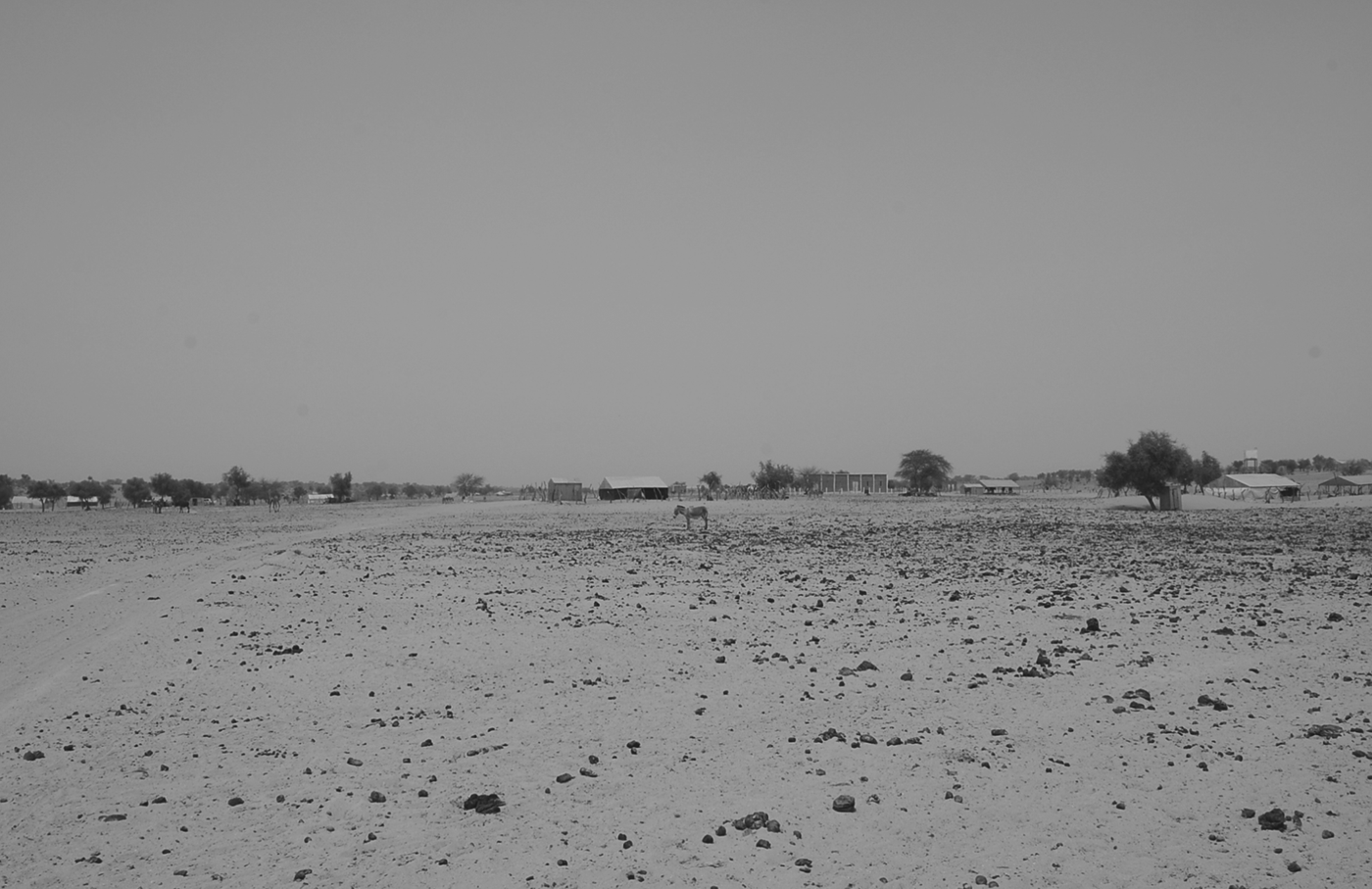
The village of Bir Jud (southwestern Mauritania), founded in the early 2000s by migrants returned from the United Arab Emirates. © Francisco Freire.
This statement might prove that a znāga origin does not constitute an impediment to the recognition of a ‘shepherd’ as the leading figure, today authorised to politically participate fully in all spheres. The importance that the ‘traditional leader’ now assigns to this agent can also be associated with his comfortable economic position, which might, for example, lead to severe questioning of the traditional leadership of the tribe (Barth Reference Barth1986: 127). It should also be noted that it was precisely within the family circle of this ‘distinct’ znāga – a tribe's representative ‘at all levels and in any place’ – that a serious conflict broke out some years ago. By then, following another unsuccessful marriage attempt, it was even suggested that all tribal bonds be definitively cut due to the refusal of the bride's family to accept a znāga as the husband to their daughter.Footnote 23
CONCLUSION
Despite the recent academic interest in studies of globalisation and transnational flows, much of the material presented in this article – if based on a transnational migration experience – resists an analysis exclusively focused on this perspective. The issues I have tried to address question the interpretation that consecrates the use of the pair ‘cosmopolitism and globalisation’ when, in fact, plenty of other concepts (such as history, nation, ethnicity and, in the particular context dealt with here, social status) also play a significant role. The processes discussed in this article do indeed support the opening of new research areas in the Saharan context, but they also reiterate questions long explored in the region. The znāga example confirms that their passage through the Emirates has allowed only a limited degree of emancipation from the status bonds that, in many cases, still define these families as simple ‘tributaries’. Even though their recent earnings allow for decisive material improvements, as well as the guarantee of a qualified position in the political life of the tribe or the state, they still cannot accommodate the possibility of a marriage between a man of znāga status and a noble/free woman.
In Mauritania one can currently see ministers and even prime ministers who are known to be of tributary origin, but whose genealogy does not disqualify them as eminent statesmen. In these specific cases, in public service, or globally, in the labyrinths defining urban life, the traditionally hierarchised social order seems to have assumed a degree of flexibility. However, as one attempts a detailed examination centred on tribal-based contexts and reflects, for example, on the adopted kinship strategies, one finds that the weight of genealogical narratives is still highly present. My experience confirms an interest in continuing to discuss status roles in contemporary western Saharan contexts, and reaffirms my reluctance to simply dismiss them as historically located regional curiosities.
The examples studied here also prove that the present academic focus on the telling issues of slavery and slave descent does not present a complete account of the many forms of adherence to the western Saharan hierarchical social model. Different forms of social mobility coincide in the efforts to question the limits established by the traditional status code or by kinship. Nevertheless, in the case of the znāga population it is precisely these two interconnected elements (social status and genealogy) that seem to halt the much-desired possibility of intra-tribal social mobility. This issue is, as we have seen, widely noticed, and furthermore identified by the tribal leaderships as the generator of profound tensions. Therefore, it is argued here that despite the recognised inefficiencies of studies focusing, for example, on the segmentary model, or on a totalising qualification of kinship – which was once identified as ‘the most fundamental organising principle of Arab society’ (Rosenthal Reference Rosenthal, Bosworth, van Donzel, Heinrichs and Pellat1993: 967; see also Conte & Walentowitz Reference Conte and Walentowitz2009) – such difficulties should not prevent the conduct of research in these particular fields, which continue to present themselves as decisive elements in the contemporary exploration of western Saharan social contexts.