





Impact statement
Despite its central role in material cultivation, medium design remains underexplored in Biodesign. This contribution positions it as a critical methodological site for operationalizing regenerative design principles through two open-source protocols. These enable practitioners across diverse skill levels and research environments to experiment with alternative plant substrates in SCOBY cultivation, integrating systematic experimentation with experiential material characterization. The presented exploratory research shows how this methodology fosters the emergence of novel material expressions for further exploration and prototyping, while recognizing variability as a productive feature within growing design practices.
Introduction
Contemporary Biodesign endeavors are progressively orienting themselves toward cultivating relational approaches with other organisms, fostering multispecies sensibilities and developing frameworks aimed at regenerative approaches within the field (Karana et al. Reference Karana, McQuillan, Rognoli and Giaccardi2023; Pollini and Rognoli Reference Pollini and Rognoli2024; Rognoli et al. Reference Rognoli, Albergati, Pollini and Langella2025). Following these trajectories, design research increasingly engages with biological and epistemological diversity, alongside more-than-human interactions in situated making and material-driven interventions, thereby revealing fundamental tensions between theoretical ambitions and actual practices (Bandoni et al. Reference Bandoni, Cohen, Cotta and Paoliello2024; Das Reference Das2024; Kim et al. Reference Kim, Kim, Martins, Karana, Gray, Ciliotta Chehade, Hekkert, Forlano, Ciuccarelli and Lloyd2024; Tarkhanian Reference Tarkhanian, Morrison, Culén and Habib2025; Weber Reference Weber2024). One such tension concerns microbial cultivation media, which often remain constrained by standardized inputs and procedures, limiting their ability to align with regenerative aspirations. In particular, the preparation of nourishing media intended to feed microorganisms remains largely underexamined, often standardized by scientists or adopted from pre-existing practices and treated as a neutral step within biofabrication practices. This constitutes a critical dimension for three main reasons. First, the composition of the nourishing medium directly shapes the affordances of the resulting biomaterial, and standardized procedures can limit its potential material expressions and consequent applications. Second, the ingredients used in these media, often imported or highly purified for laboratory use, entail ecological, geographical, socio-cultural and economic implications that do not necessarily align with sustainable or regenerative principles. Third, certain microorganisms utilized in Biodesign can only be handled within sterile environments and require specialized equipment. As a result, these practices tend to remain confined to designers and researchers with access to specialized infrastructure, thereby fostering forms of gatekeeping within the broader community of practitioners working with living systems.
Recognizing these criticalities raises questions about what might emerge if designers had access to medium design as a site of research. Would it foster investigation into formulations that adapt to available resources across different geographical contexts and to research environments with varying levels of equipment? Rather than being fixed or standardized, nutrient media protocols could be designed as open-ended methods, opening up opportunities for exploring how ecological diversity, locality and biodiversity could be integrated into growing material practices, thereby seeking to operationalize aspects of regenerative frameworks.
Overview of SCOBY’s state-of-the-art in Biodesign
The criticalities revolving around medium design become particularly evident in the case of Symbiotic Culture of Bacteria and Yeasts (SCOBY) cultivation, one of the most investigated biological systems since the early emergence of Biodesign. SCOBY consists of a gelatinous pellicle primarily composed of water, bacterial cellulose constituting the structural extracellular matrix, microbial cells, and associated metabolites (Jayabalan et al., Reference Jayabalan, Malbaša, Lončar, Vitas and Sathishkumar2014). As a fiber-based hydrophilic biomaterial, it exhibits a range of versatile properties that make it a compelling object of study for design and techno-scientific disciplines. The pioneering work of Suzanne Lee received broad visibility through her TED talk “Grow your own clothes,” where Lee showcased jackets and skirts made with SCOBY sheets she grew and sewed herself (Lee Reference Lee2011). Since then, dozens of designers have experimented with potential SCOBY applications. A substantial portion of this work is gathered in the review by Roussel et al. (Reference Roussel, Haute, Dhulster, Teyssier and Mahé2023), which maps a wide range of design trajectories, including fashion applications, such as prototypes of shoes and bags, as well as explorations into packaging for food and cosmetics, and the development of compostable products, including tampons and wallets (Rykkelid Reference Rykkelid2016). Product investigations have ranged from acoustic membranes to architectural scales, envisioning entire pavilions, while speculative design scenarios have even imagined compostable modes of transport produced entirely from SCOBY (Dunne et al. Reference Dunne, Raby and Schwabe2013). The common denominator in the vast majority of application designs has been the use of SCOBY in the form of dried sheets, and applications that follow those of leather, bioplastics and paper, due to the pellicles’ mechanical properties, translucency, fibre-configuration and hydrophilia, which make it compatible with a wide range of processing possibilities. In parallel, designers have also engaged with production processes, exploring alternative methods to static cultivation aimed at growing 3D shapes (ibid; Schwabe Reference Schwabe2012), and at increasing biomass production through the development of bioreactors (Cohen et al. Reference Cohen, Sicher, Ayala-Garcia, Sanchez-Fayos, Conterno and Ugur Yavuz2023). Additionally, design-driven research has examined the range of material states obtainable from wet pellicles, leading to the development of SCOBY-derived powders, granulates, solid foams and gelatinous pellets (Design Friction Lab 2022; Sicher et al. Reference Sicher, Uğur Yavuz, Cohen, Silvia, Valentina and Nithikul2023).
With the advancement of Biological Human-Computer-Interaction (Bio HCI), and More-than-Human approaches to Design, SCOBY has become a means for researching into biomaterial habitabilities (Groutars et al. Reference Groutars, Martins, Karana, Nunes, Nisi and Oakley2025), symbiotic foods (Sicher Reference Sicher2022; Sicher et al. Reference Sicher, Ayala-Garcia, Massari, Rognoli and Alexander2026), multispecies temporalities (Bell et al. Reference Bell, Coffie, Alistar, Ciolfi, Hogan, Döring, Jenkins, van Dijk, Huron and Li2024), interactive wearables (Bell et al. Reference Bell, Chow, Choi, Alistar, Ciolfi, Hogan, Döring, Jenkins, van Dijk, Huron and Li2023) and interaction with living matter (Ofer and Alistar Reference Ofer, Alistar, Schmidt, Väänänen and Goyal2023); thereby expanding its role from being a final material/product output to becoming a medium for design inquiry.
Despite these expansions, most approaches still rely on standardized protocols for SCOBY production and primarily investigate the material from a post-growth perspective, paying limited attention to the ecological and procedural conditions through which it emerges.
Key critical dimensions of SCOBY cultivation
Within Biodesign, SCOBY is grown by drawing from the Kombucha-brewing tradition, likely originating in ancient Manchuria (Villareal-Soto et al. Reference Villarreal-Soto, Beaufort, Bouajila, Souchard and Taillandier2018). A sweetened tea medium is inoculated with a fragment of SCOBY pellicle, which is either donated by acquaintances or purchased from Kombucha producers, to allow more pellicle to be generated by the microbes contained in the SCOBY. However, the original provenance of the biofilm and the conditions under which it initially formed are unknown (topic addressed in Sicher Reference Sicher2026). The procedure facilitates reproducibility and accessibility by utilizing ingredients that are easily reachable, namely tea leaves and sugar; however, these ingredients’ life-cycle implications, cultivation and production processes and market journeys across countries and dozens of hands are rarely the subject of critical observation within the field. Specifically, tea leaves (Camellia sinensis) are a product of importation in Europe, indeed, tea plants are predominantly cultivated under monoculture systems concentrated in Southeast Asia and parts of the African continent, which are largely controlled by multinational actors (Hicks Reference Hicks2009). These agri-food systems are associated with intensive pesticide use, ecological degradation and social inequities (Ali Abaker Omer et al. Reference Ali Abaker Omer, Zhang, Liu and Shan2025; Pandey et al. Reference Pandey, Sinniah, Babu and Tanti2021). A similar reliance on monocultural production systems characterizes beet-derived sugar as a key component of SCOBY media, although its production is more geographically distributed across European contexts (Maitah et al. Reference Maitah, Řezbová, Smutka and Tomšík2016) and is likewise associated with well-documented ecological and social impacts (Märländer et al. Reference Märländer, Hoffmann, Koch, Ladewig, Merkes, Petersen and Stockfisch2003; Zimmermann and Zeddies Reference Zimmermann and Zeddies2002). While SCOBY-derived biomaterials are often framed as sustainable or regenerative, they may remain rooted in production systems that do not necessarily share or promote these values. Recognizing these hidden ecologies sustaining Biodesign endeavors and their implications (Chen et al. Reference Chen, Cachat, Pschetz, Yamashita, Evers and Yatani2025) opens up an opportunity for biodesigners to critically address the organisms, materials and knowledge embedded in their practices. This could lead to more informed, ethically grounded procedural decisions and to experimenting with alternative nourishing substrates that may be more locally accessible and ecologically situated.
Interestingly, while scientific studies on Kombucha have extensively explored alternative plants for producing analogous fermented beverages (Barakat et al. Reference Barakat, Beaufort, Rizk, Bouajila, Taillandier and El Rayess2023), research on SCOBY cultivation within Biodesign has remained relatively “monocultural,” relying predominantly on tea leaves. This limits its potential, as tea imparts specific properties to the SCOBY, shaping its material expressions and, consequently, influencing the applications that emerge from it. This tendency is also reflected in the fact that most Biodesign research involving SCOBY has mainly focused on areas such as packaging, textiles and fashion despite its broader potential (Sicher et al. Reference Sicher, Ayala-Garcia, Massari, Rognoli and Alexander2026). Continuing to rely solely on standardized growth processes represents a risk of reinforcing a distance between Biodesign practices and the reality of the living worlds they seek to engage with.
Qualitative experiments by students attempting to grow SCOBY from fruits and vegetables appeared nearly a decade ago (Rykkelid Reference Rykkelid2016; Sicher Reference Sicher2017), and ever since, ongoing research on alternative substrates in Biodesign is limited to the authors’ and colleagues’ endeavors (Sicher Reference Sicher2022; Sicher et al. Reference Sicher, Ayala-Garcia, Massari, Rognoli and Alexander2026). The slow advancement of research on medium design may be linked to the absence of methodologies that guide systematic experimental diversification of the materials used in the media, which is less straightforward than it may initially appear. Indeed, such a research process requires close collaboration with scientific experts, a framework that remains accessible only to a limited number of practitioners. Therefore, developing open-source methodologies that support designers with varying levels of expertise and access to infrastructure and equipment is essential to making medium design an accessible site of inquiry, while also facilitating collaboration with scientists who would otherwise need to (co)develop such methods from scratch, often extending timeframes by years and complicating collaboration.
Contribution: open-source protocols for advancing medium design for SCOBY growth as a Biodesign domain for regenerative ecologies
Within Biodesign, emergent frameworks have been elaborating on the importance of addressing regenerative principles; however, how these aspirations translate into actual practices is still in a nascent stage of development. Enabling medium design experimentation with alternative plant substrates in SCOBY cultivation appears to directly align with the five pillars of the Regenerative Ecologies framework (Karana et al. Reference Karana, McQuillan, Rognoli and Giaccardi2023).
First, it supports a critical inquiry into material sourcing practices and the incorporation of eco-social dimensions within growing material practices. Second, it fosters the integration of biological diversity into cultivation processes by introducing substrate variability as a core design parameter. Third, it promotes more-than-human sensibilities by encouraging engagements between practitioners and specific interactions between plant and microbial organisms, where SCOBY cultivation becomes a site for “understanding microbes through plants and plants through microbial activity” [insight framed by Dr. Maya Hey, in conversation on March 6th, 2024]. Fourth, working with diverse plant substrates necessitates ecological literacy, requiring deeper engagement with plant organisms and their ecological, temporal, and contextual conditions. Finally, it connects to the role of plants in human societies as sources of food, materials, health promotion, and medicine, suggesting that substrate diversity can encourage contextually-informed design interventions, thereby promoting the expansion of the expressive and functional potential of SCOBY-based materials.
This contribution positions SCOBY medium design as a site where regenerative principles can be operationalized through systematic experimentation enabled by two open-source, and open-ended protocols. Namely, one is designed for experimenting with diverse plant substrates within sterile laboratory environments, and the other is intended for non-sterile contexts such as households and workshops. These protocols address varying levels of familiarity with SCOBY cultivation and differing access to infrastructure and equipment.
Research context and rationale
These protocols emerge from the broader doctoral investigation in Design Studies of the first author, focusing on the integration of plant biodiversity into SCOBY growth media. The research is informed by prior collaborative work of the authors, as well as by extensive studies on interactions between bacteria and medicinal plants conducted by the group of the microbiology supervisor, Prof. Dr. Regine Hengge. The research topic was co-designed in collaboration between the first author and the supervisor, drawing on mutual research interests. Namely, on the potential of growing SCOBYs with plants traditionally associated with health-promoting properties, based on the hypothesis that such inputs may enrich the growing material with bioactive compounds and expand its underexplored potentials and applications. The experimentation was conducted in affiliation with the Cluster of Excellence Matters of Activity and the Institute of Biology of the Humboldt Universität zu Berlin and evaluated in collaboration with the Fermentation and Distillation Group of the Laimburg Research Centre in South Tyrol, led by the second author.
Previous collaboration between the authors provided preliminary results showing that alternative plant materials to tea can modulate SCOBY pellicles’ biochemical properties such as antioxidant potential [results not published], suggesting that consequent material applications could be designed in line with their specific affordances rather than by their resemblance to existing materials. In that context, the medium design was completely undertaken by the scientists, based on a set of existing protocols, and no further inquiry was conducted to optimize its parameters.
Interestingly, recent studies conducted by other scientists (Tapias et al. Reference Tapias, Di Monte, Peltzer and Salvay2022) have confirmed that alternative plant to tea can lead to distinct material properties and biochemical compositions, which in turn translate into different affordances of SCOBY pellicles. However, in the aforementioned studies, investigation into plant concentration within the medium remains unexplored, representing a critical gap in the research. This is particularly significant, as plant concentration, as will be shown, might play a significant role in shaping material expressions and biomass production in SCOBY pellicles.
Since the Hengge Group has developed expertise in evaluating the effects of different plant compounds on model bacteria such as E. coli, P. aeruginosa, and B. subtilis (Hengge Reference Hengge2019; Pruteanu et al. Reference Pruteanu, Hernández Lobato, Stach and Hengge2020), the laboratory work has therefore focused on drawing from that knowledge to assess methods that enable testing a range of concentrations to carry out both qualitative and quantitative evaluations of SCOBYs cultivated with alternative plant substrates.
Methodology: Developing fundamental methods
The knowledge underlying the developed protocols emerges from a combination of scientific literature, the expertise of collaborating microbiologists and the prior experiential knowledge of the biodesigner. The first author conducted the experimental work within a semi-autonomous framework, following initial laboratory introduction and continuous theoretical and methodological guidance from microbiology colleagues. Experimental designs and protocols were iteratively developed through collective discussions before experimentation and progressively refined through the interpretation of experimental outcomes over time.
Importantly, the protocols are the output of two years of ongoing research and position this work as a methodological development process aimed at producing transferable knowledge that can support other practitioners. This aligns with established scientific practice, where protocol development constitutes a foundational form of knowledge production: researchers develop and refine methods that can be subsequently adopted by others, allowing the broader community to save time and build upon iterated procedures. For instance, research on bacterial cellulose derived from isolated strains continues to rely on the Hestrin-Schramm medium formulation (Reference Hestrin and Schramm1954), demonstrating how methodologies persist over time and play a critical role in advancing research continuity and comparability.
Assessing plant concentration in liquid media
Preliminary experiments taking place in the laboratory were based on the preparation of nutrient media using selected plant infusions of four plants known in Europe for their health-promoting properties, namely Cretan plants: Cistus incanus, Origanum dictamnus, Sideritis scardica; and Tilia cordata which is native to and widely distributed across Central Europe (more information on plant selection is provided in Supplementary Materials 1, “Protocol 1 – Rationale for Material Choices”). They were prepared at concentrations equivalent to standard tea-based protocols (6 g/L); however, two of the four tested plant species did not show any pellicle formation, leaving the medium in a slurry liquid state, without, however, displaying signs of contamination. This empirical observation prompted further investigation into possible causes, including the hypothesis that such concentration might present phytochemicals inhibiting or killing SCOBY’s microbial inhabitants, which aligns with research findings by the Hengge group on the antimicrobial and antibiofilm properties of plant-derived compounds (Hengge Reference Hengge2019; Pruteanu et al. Reference Pruteanu, Hernández Lobato, Stach and Hengge2020). Responding to this, the minimum inhibitory concentration method (MIC) was employed. MIC is widely used in microbiology to determine the lowest concentration of a substance that inhibits microbial growth (Andrews Reference Andrews2001; Magréault et al. Reference Magréault, Jauréguy, Carbonnelle and Zahar2022; Wheat Reference Wheat2001). While it is commonly applied to pure microbial cultures, it was adapted in this investigation to SCOBY culture and used as an experimental strategy to test diverse concentrations of plant infusions in liquid media. Ongoing experimentation with alternative plant infusions in different concentrations led to the empirical identification of 2, 4, and 6 g/L as relevant thresholds for SCOBY growth in plant-based media. They are reported as the initial dry weight prior to infusion in hot water.
6 g/L reflects a concentration commonly used in Kombucha production (see Supplementary Materials 2,: Composition of the Tea-infusion medium used as a control in Protocol 1); the 4 g/L concentration was selected based on studies evaluating alternative plant infusions for SCOBY characterization (Tapias et al. Reference Tapias, Di Monte, Peltzer and Salvay2022). The lower concentration was included following empirical observations: some plant infusions at 4 and 6 g/L did not support SCOBY growth, whereas 2 g/L resulted in successful or increased pellicle formation. Rather than defining strictly precise values, these serve as practical reference points that support evaluating variations in material expression and biomass production. These reference concentrations were maintained in both protocols.
Shared features and differences across the protocols
Both protocols are structured around the systematic testing of a tea-based control medium against alternative plant-based liquid media formulated at three different concentrations. Each variable is performed in triplicate.
The first protocol was developed within a microbiology laboratory and designed to facilitate the simultaneous testing of five different plant species. This resulted in the use of 8 ml volumes per replica compatible with 6-wells microtiter plates, precision equipment and sterile working conditions. The protocol was developed according to systematic methods and scientific rigor in order to promote procedural consistency and comparability across experimental conditions. This method is particularly indicated for designers who are familiar with SCOBY cultivation and laboratory work and have access to specialized infrastructure.
The second protocol is informed by the first but was adapted for dissemination and didactic activities, which took place across diverse contexts, ranging from biolabs and workshops to open-air settings such as botanical gardens. It was designed to be more accessible for practitioners operating outside specialized infrastructures, acknowledging that many Biodesign practices occur in non-sterile environments and without access to laboratory equipment. This second protocol operates with larger volumes of 200 g per replicate and simplifies the preparation process through the use of less purified ingredients and omits non-essential components (citric acid), making it more accessible to a broader range of practitioners, including those with limited familiarity with SCOBY cultivation. At the same time, it facilitates a more direct transition between medium experimentation and biomass production for material tinkering and prototyping, while still maintaining a systematic and comparative experimental structure.
Both protocols allow practitioners to observe how plant concentrations influence biomass production and material expressions and support the assessment and development of customized protocols tailored to the specific plant species they choose to test. The tea-based control medium developed in the laboratory setting (see Supplementary Materials 2, “Composition of the Tea Control Medium of Protocol 1”) serving as a reference for comparison was established through a combination of the author’s prior experience, input from Berlin-based Kombucha producers, scientific studies on SCOBY medium optimization (Bortolomedi et al. Reference Bortolomedi, Paglarini and Brod2022; de Miranda et al. Reference de Miranda, Ruiz, Silva, Uekane, Silva, Gonzalez and Lima2022; Gaggìa et al. Reference Gaggìa, Baffoni, Galiano, Nielsen, Jakobsen, Castro-Mejía, Bosi, Truzzi, Musumeci, Dinelli and Di Gioia2018; Hamed et al. Reference Hamed, Maghrawy and Abdel Kareem2023; Jayabalan et al. Reference Jayabalan, Marimuthu and Swaminathan2007; Park et al. Reference Park, Jung and Park2003) and iterative empirical experimentation (results not shown; see Data Availability Statement). Both protocols begin with independent concentrated infusions of tea and the alternative plant substrate/s, which are subsequently diluted to achieve formulations corresponding to 6g/L for the tea control and 2, 4 and 6 g/L for each plant. Solutions are prepared and inoculated with a homogeneous suspension composed of 30 g of SCOBY biomass per litre (3%) obtained by blending the pellicle with liquids, which facilitates the collection and distribution of inoculum across the media. The inoculated media are then distributed in three replicas and left to ferment for 21 days, after which a range of evaluation methods can be employed, including experiential material characterization (Karana et al. Reference Karana, Pedgley and Rognoli2015) and dry biomass measurement. Both protocols allow considerable freedom in the selection of edible plants to be tested and can be performed either independently or sequentially. However, they vary in terms of preparation sequence, materials, equipment, and conditions in order to make the work more suitable and agile within each intended framework.
Protocol 1 – testing plant-infusion-based media in sterile laboratory environments
The first protocol, is developed under sterile conditions facilitating the parallel testing of multiple alternative plant substrates due to small replica volumes. It involves the autoclaving of all ingredients except ethanol and the plant infusions, which are filter-sterilized to preserve their bioactive compounds. The ethanol solution is sterile by itself at the provided concentration however, it could be filter sterilized to avoid particles; compatibility with the filtration membrane should be verified in advance. Sterile standard 6-well microtiter plates are used. Two conditions distributed in triplicate can be put either in the same microtiter plate or in different ones. All equipment is sanitized, and samples are incubated at 30°C for 21 days. Additional information on the rationale for material choices is provided in Supplementary Materials 1, “Protocol 1 – Rationale for Material Choices,” while Supplementary Materials 3 includes an image illustrating the “Materials and Equipment Reported for One Experimental Setup.”
Protocol 1 – written procedure
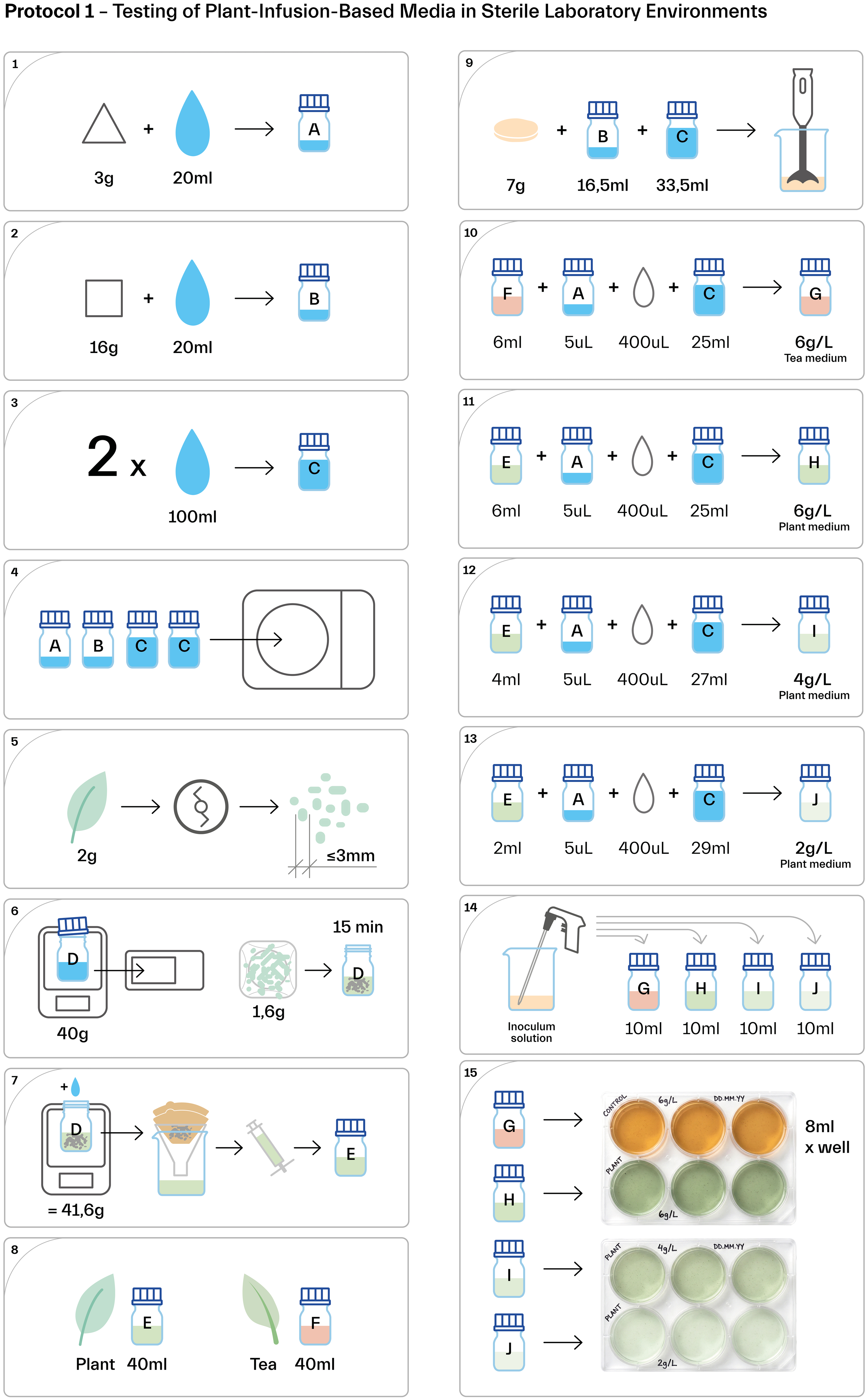
In the procedure, all equipment must be sterilized under dry or wet conditions or sanitized with 70% ethanol. Conduct all the steps in a sterile environment. The procedure is illustrated in Figure 1. Each step number corresponds to the number reported in the figure frames.
Illustrated Protocol 1: Numbers in the corners of each frame correspond to the steps indicated in the written procedure.

Figure 1 Long description
A diagram illustrating the protocol for testing plant-infusion-based media in sterile laboratory environments. Panel 1: A triangle symbol and a droplet icon combine to form a mixture labeled A. Panel 2: A square symbol and a droplet icon combine to form a mixture labeled B. Panel 3: Two droplet icons combine to form a mixture labeled C. Panel 4: Mixtures A, B, and C are combined in a container. Panel 5: Plant material is processed into small pieces. Panel 6: A container labeled D is mixed with plant material to form a new mixture labeled E. Panel 7: Mixture D is combined with a plant to form a new mixture labeled E. Panel 8: Plant material is infused with water to create tea. Panel 9: Ingredients are combined in a beaker to form a mixture. Panel 10: Mixtures F, A, and C are combined to form a tea medium labeled G. Panel 11: Mixtures E, A, and C are combined to form a plant medium labeled H. Panel 12: Mixtures E, A, and C are combined to form a plant medium labeled I. Panel 13: Mixtures E, A, and C are combined to form a plant medium labeled J. Panel 14: Inoculum solution is added to mixtures G, H, I, and J. Panel 15: The mixtures are distributed into wells for further testing.
Stock solutions
-
(1) Citric acid: in a bottle, dissolve 3 g of citric acid in 20ml of double-distilled water. Label as “A.”
-
(2) Sucrose: in a bottle, dissolve 16 g of sucrose in 20ml of double-distilled water. Label as “B.”
-
(3) Prepare two bottles, each containing 100 mL of double-distilled water, and label them both as “C.”
-
(4) Take bottles A, B and the two “C” and autoclave them at 121°C, 20 minutes.
Concentrated infusions
-
(5) Observe the dry plant and tea materials. If the particle size exceeds 3mm, coarsely grind each one independently to the indicated size (do not make a powder). Prepare ∼2g.
-
(6) Determine the tare weight of the bottle using an analytical balance. Add 40 g of double-distilled water to bottle D. Loosely place the cap on the bottle and heat in a microwave until boiling. Add 1.6 g of plant material and allow the infusion to steep uncovered for 15 minutes.
-
(7) After the steeping, reweigh the bottle and add water from one bottle C to adjust the total weight to 41.6 g (water + plant material). Prepare a filtration setup by placing two paper filters inside a funnel, layered one within the other, positioned over a clean beaker. Pour the entire contents of bottle D, including all plant particles, into the filters. Allow the liquid to passively filter into the beaker (by gravity), then compress the filters by hand to recover additional liquid. Remove the funnel. Using a sterile syringe, collect the filtrate and filter-sterilize it through a 0.45 µm membrane filter directly into bottle E.
-
(8) Repeat the procedure (steps 5–7) with tea (chosen as the control in this experiment) using clean equipment and obtain the tea concentrate in bottle F. Now you have a plant (E) and a tea (F) concentrate stock solutions.
Inoculum suspension
For this experiment, the inoculum suspension is prepared in excess (for 20 replicates), compensating for the small volume that remains adhering to the transferring equipment.
-
(9) Weigh 7 g of SCOBY on a sanitized weighing boat. Transfer 16.5 ml of sucrose stock (B) and 33.5 ml of water (C1) into a sterile beaker using a sterile glass pipette (or a sterile disposable one). Ensure the blender’s metal head is sanitized, then homogenize the mixture with the hand blender. Cover with aluminum foil until use.
Liquid media (v/v)
-
(10) In bottle G, prepare the control medium using sterile glass pipettes and micropipettes equipped with sterile tipps. Add 6 ml of tea (F), 400 µL ethanol, 5 µL citric acid stock (A) and 25 ml water (C).
-
(11) In bottle H, prepare the 6 g/L plant infusion medium by utilizing the plant infusions (E) with the same amounts of the control medium.
-
(12) In bottle I, prepare the 4 g/L plant medium by adding 4 ml from bottle E, 400 µL of ethanol, 5 µL of citric acid stock (A) and 27 ml of water (C2).
-
(13) In bottle J, prepare the 2 g/L pleant medium by adding 2 ml from bottle E, 400 µL of ethanol, 5 µL of citric acid stock (A) and 29 ml of water (C2).
-
(14) Take the beaker with the inoculum suspension and stir to ensure homogeneity. Transfer 10ml with a disposable sterile pipette into each bottle: G, H, I, J, re-stirring before each collection. Close the caps of the bottles and homogenize the contents with a vortex.
-
(15) Take the sterile microtiter plates and transfer 8ml of freshly vortexed, inoculated substate into one well and repeat two additional times to complete the triplicate preparation with a sterile disposable pipette. Repeat this process with bottles G, H, I and J and write the plant medium, concentration and date with a marker directly on the plate as in the visualization. Close the lids and incubate at 30°C in static conditions for 21 days.
The remaining inoculated liquid can be left in each bottle and incubated as well to double-check the SCOBY growth ability for each substrate and to prepare material demonstrators.
Protocol 2 – testing plant-infusion-based media in non-sterile environments
The second protocol, developed for execution in non-sterile environments, is designed to facilitate systematic testing using easily accessible equipment such as glass jars and common kitchen utensils. The use of a scale with at least two decimal points (0.00) is recommended. Measurements are expressed in grams, including liquids, to simplify execution, and each replicate corresponds to a volume of 200 g. All equipment is sanitized using an ethanol solution (70%), and the replicates are left to ferment at room temperature for 21 days.
Additional information on the rationale for material choices is provided in Supplementary Materials 4, “Protocol 2 – Rationale for Material Choices,” while Supplementary Materials 5 includes an image illustrating the “Materials and Equipment Reported for One Experimental Setup.”
Protocol 2 – written procedure
All equipment shall be sanitized with 70% ethanol solution, including jars, carafes, metal spoons, funnel, disposable graduated pipettes and the blender’s head.
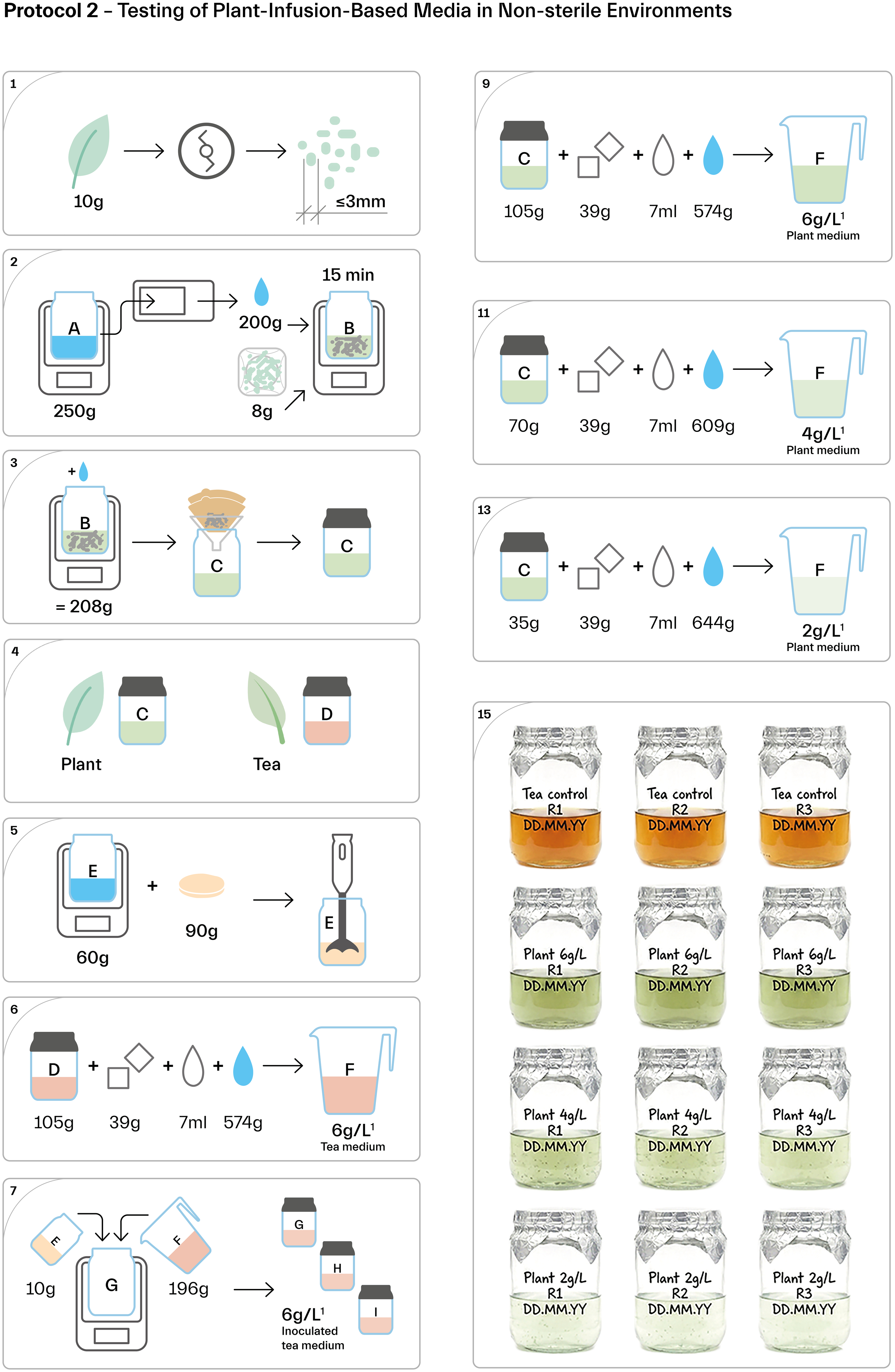
The procedure is illustrated in Figure 2. Each step number corresponds to the number reported in the figure frames.
Illustrated Protocol 2: Numbers in the corner of each frame correspond to the steps indicated in the written procedure.

Concentrated infusions
-
(1) Dry plant and tea: if the particle size exceeds 3 mm, coarsely grind them individually (do not make a powder). Prepare ∼10 g.
-
(2) Tare the weight of jar A, weigh 250 g of water into it and heat it to boiling using a microwave. Separately, weigh jar B, as a precaution, take note of its mass and tare the scale. Weigh 8 g of plant material into jar B, followed by 200 g of the boiled water. Allow the mixture to steep for 15 min. Reserve the remaining hot water for subsequent steps.
-
(3) After the steeping, reweigh jar B, making sure that the weight of the container is not included; if it is, subtract it. Add some of the remaining boiled water to adjust to 208 g, corresponding to the weight of the water + plant. Prepare a filtration setup by placing two paper filters inside a funnel, layered one within the other, positioned over a clean jar C. Pour the entire contents of jar B, including all plant particles, into the filters. Allow the liquid to passively filter into jar C (by gravity), then gently press the filters to recover additional liquid. Remove the funnel and cover jar C with aluminium foil.
-
(4) Repeat the procedure (steps 1–3) using tea with clean equipment to obtain the tea concentrate in bottle D. You now have the concentrate infusions of plant (C) and tea (D).
Inoculum suspension
The inoculum suspension is prepared by blending SCOBY with water in a 3:2 ratio, corresponding to 10 g of inoculum suspension per replicate. As in Protocol 1, the inoculum suspension is prepared in excess, compensating for the liquid loss adhering to the transferring equipment.
-
(5) Place jar F on the scale and tare it. Add 60 g of water and 90g of SCOBY. Ensure the blender’s metal head is sanitized, then homogenize the mixture and cover jar E with aluminum foil.
Liquid media
-
(6) In a 1–1.5 L carafe, prepare the control medium by combining 105 g of concentrated tea (D), 39 g of sugar, 574 g of cold water and 7 ml of ethanol (added with a graduated disposable pipette). Stir with a sanitized metal spoon until the sugar is completely dissolved.
-
(7) To formulate the triplicates, prepare three empty jars: G, H and I. Using the scale, transfer into jar G first 10 g of freshly homogenized inoculum from jar E; second, 196g of the carafe (F) freshly stirred solution. Repeat with H and I. Gently stir each jar using a sterilized metal spoon. Re-sanitize the spoon between one sample and the next. Finalize by labeling and covering G, H and I with aluminium foil.
-
(8) Discard any remaining medium in the carafe, or transfer it into an additional jar to be used as material demonstrator; sanitize it with 70% ethanol and dry it with absorbent paper.
-
(9) To prepare the plant media, repeat step 6 with the same amounts using plant infusion concentrate (C) to obtain the 6g/L medium.
-
(10) To formulate the triplicates of 6 g/L Plant medium, prepare three empty jars: J, K and L, following the amounts of step 7: 10g of inoculum solution (E) and 196 g of carafe solution (F). Remember to sanitize the metal spoon and the carafe after use. Label the 6 g/L replicas and cover them with aluminium. Discard any remaining medium in the carafe, or transfer it into an additional jar to be used as material demonstrator; sanitize it with 70% ethanol and dry it with absorbent paper.
-
(11) To obtain the 4 g/L Plant medium, combine 70 g of concentrated plant infusion (C), 39 g of sugar, 609 g of water and 7 ml of ethanol (added with a disposable pipette). Stir with a sanitized metal spoon until the sugar is completely dissolved.
-
(12) To formulate the triplicates of 4 g/L Plant medium, prepare three empty jars: M, N and O, following the amounts of step 7: 10 g of inoculum solution (E) and 196 g of carafe solution (F). Remember to sanitize the metal spoon and the carafe after use. Label the 4 g/L replicas and cover them with aluminium. Discard any remaining medium in the carafe, sanitize it with 70% ethanol and dry it with absorbent paper.
-
(13) To obtain the 2 g/L Plant medium, combine 35 g of concentrated plant infusion (C), 39 g of sugar, 644 g of water and 7 ml of ethanol (added with a disposable pipette). Stir with a sanitized metal spoon until the sugar is completely dissolved.
-
(14) To formulate the triplicates of 2 g/L Plant medium, prepare three empty jars: P, Q and R, following the amounts of step 7: 10 g of inoculum solution (E) and 196 g of carafe solution (F). Remember to sanitize the metal spoon and the carafe after use. Label the 2 g/L replicas and cover them with aluminium. Discard any remaining medium in the carafe, sanitize it with 70% ethanol and dry it with absorbent paper.
-
(15) Make sure to have prepared all replicas with all annotations, including medium type, number of replicas, date and that they are covered in aluminium as illustrated below.
-
(16) Store indoors at room temperature in static conditions for 21 days away from direct sunlight, dust and moist sources.
Results
This section reports the main dimensions and insights that emerged through experimentation with the two protocols. They provide an overview of quantitative, qualitative and epistemic dimensions that emerged through experimentation with alternative plant infusions.
Insights from Protocol 1 emerged from iterative independent experiments conducted by the first author, testing Cistus incanus, Origanum dictamnus, Sideritis scardica, and Tilia cordata, with tea-based media as a control (constituted by a mix of black and green tea, 1:1). The results of the final experiment, conducted once the procedure had been stabilized through iterative practice, are discussed; this experiment included three replicates per variable. Quantitative biomass measurements were integrated with an adapted first-person experiential characterization of the material method (Karana et al. Reference Karana, Pedgley and Rognoli2015) to examine structural, sensory, and visual variations in the resulting pellicles.
Insights from Protocol 2 were collected across four different didactic and citizen science workshops. The results of a two-day workshop involving Bachelor’s and Master’s students from different design programs are discussed. The protocol was adapted to the equipment available at the host institution and implemented using plants selected by participants based on personal relevance, curiosity, or local availability, including plantain and wall pellitory as foraged species, discarded onion peels and green tea as a control. In this setting, participants carried out quantitative biomass measurements and provided photographic documentation, while experiential characterization was not included due to time constraints.
Together, the two protocols provided complementary forms of knowledge concerning biomass production and material expressions. These dimensions highlight the value of variability as a key dimension for assessing customized protocols for SCOBY growth with alternative plants as well as for informing subsequent material tinkering and prototyping stages.
Evaluation of dry biomass production across plants and infusion concentrations
Biomass weight emerged as a relevant evaluation criterion, as producing cellulose under static fermentation conditions is highly labor-intensive, and practitioners utilizing tea often face limited access to sufficient SCOBY mass for material tinkering and prototyping. Therefore, when experimenting with alternative plants for SCOBY cultivation, it becomes important to assess whether the selected substrates can support adequate biomass production for subsequent material research stages. Discussions with collaborating scientists highlighted that wet weight is not a reliable indicator of cellulose production, as it can be influenced by the water-retention capacity of the fibres and altered by residual liquid remaining on the pellicle surface after collection. For this reason, dry weight was considered a more reliable parameter for biomass evaluation. At the end of the 21-day cycle, SCOBY pellicles were removed from nourishing media, gently blotted with absorbent paper, placed in a pre-weighted plastic boat, left to dry at room temperature, and re-weighted to determine dry material mass.
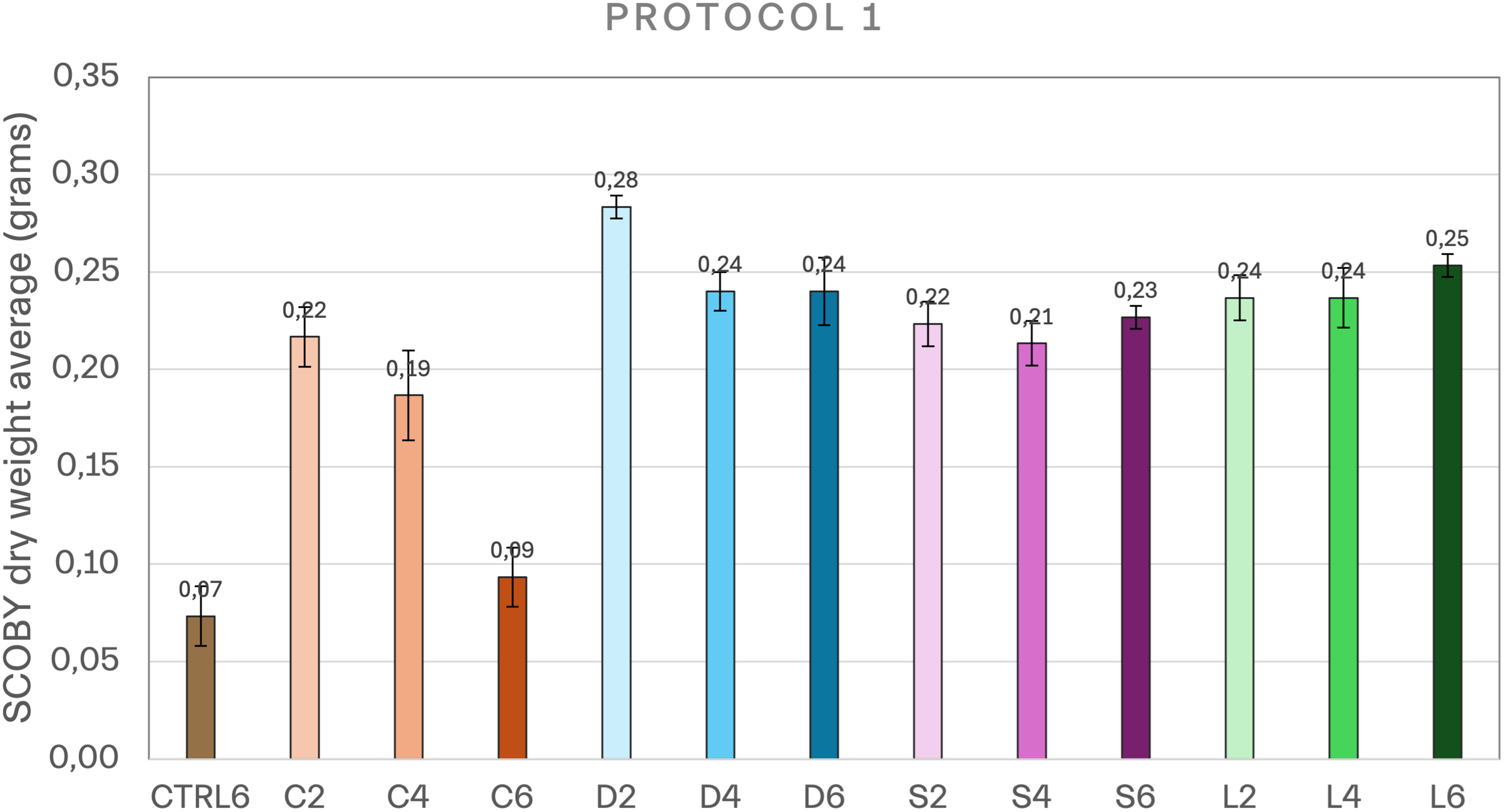
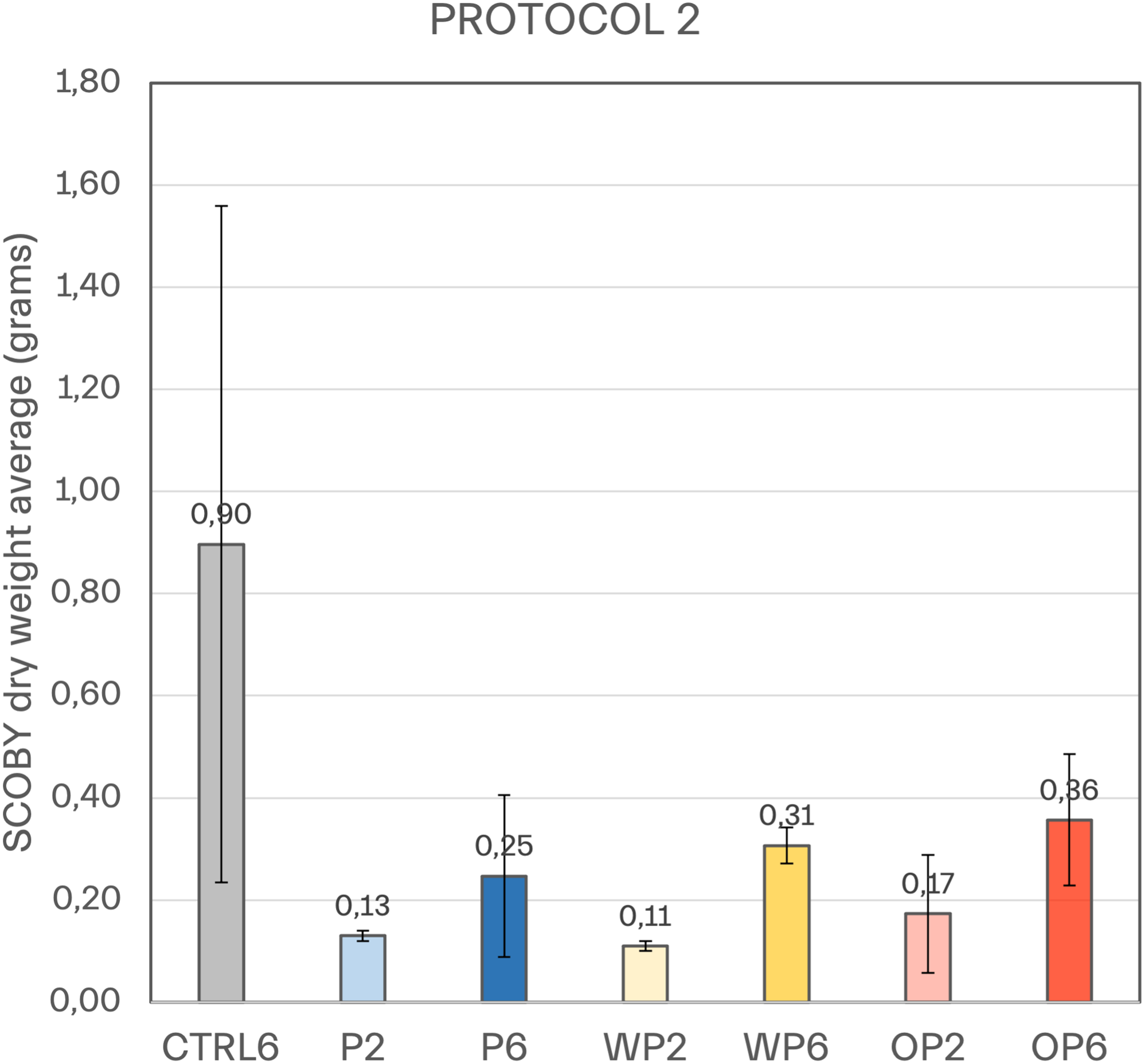
Preliminary quantitative observations across both protocols (Figures 3 and 4) suggest that some plant infusions can stimulate substantially higher SCOBY biomass production compared to the tea-based control. In Protocol 1, this tendency emerged across all tested concentrations of O. dictamnus, S. scardica and T. cordata. In contrast, C. incanus showed a different trend, with the 2 and 4 g/L concentrations producing considerably higher biomass than the tea control, while the 6 g/L concentration resulted in biomass production comparable to the control. Preliminary results from Protocol 2 instead suggest that plantain, wall pellitory, and onion peels produced yields comparable to the control medium based on error bar overlap under all conditions except for plantain and wall pellitory at 2 g/L.
PROTOCOL 1 – Dry weight of SCOBY pellicles grown in plant infusion media. Each bar represents the mean of three replicates. Error bars indicate standard deviation. CTRL: tea control (black tea and green tea, 1:1); C: Cistus incanus; D: Origanum dictamnus; S: Sideritis scardica; L: Tilia cordata (Linden). Concentrations: 2 = 2 g/L; 4 = 4 g/L; 6 = 6 g/L.

PROTOCOL 2 – Dry weight of SCOBY pellicles grown in plant infusion media. Each bar represents the mean of three replicates. Error bars represent the standard deviation. CTRL: green tea control; P: Plantain; WP: Wall pellitory; OP: Onion peels. Concentrations: 2 = 2 g/L; 6 = 6 g/L.

When interpreting quantitative data, considering variability between replicates (represented through standard deviation) proved particularly important. Beyond average values alone, variability across replicas provides additional insight into the reliability and significance of observed differences. It shows that variations in biomass yield based on arithmetic means may not be statistically meaningful, particularly when the range of the error bars overlaps between conditions, as can be observed, for example, in Figure 3 between the control and C. incanus at 6 g/L, or in Figure 4 between Plantain at 2 and 6 g/L. In this sense, standard deviation helps to intepret more cautiously whether changes in plant-infusion concentration effectively influence cellulose production. Across several variables, including S. scardica, T. cordata, plantain, and onion peels, differences between all concentrations do not appear to be significant when variability is considered; however, statistical analysis (e.g., ANOVA/Tukey’s HSD) is needed to confirm these observations. This suggests that biomass measurement alone can not be a sufficient criterion for assessing plant concentration for customized protocols, particularly when quantitative results do not show meaningful differences across conditions. In such cases, quantitative data should be integrated with additional analytical evaluations and characterizations, and/or insights emerging from qualitative observations of the material.
Experiential characterization of the SCOBY pellicles
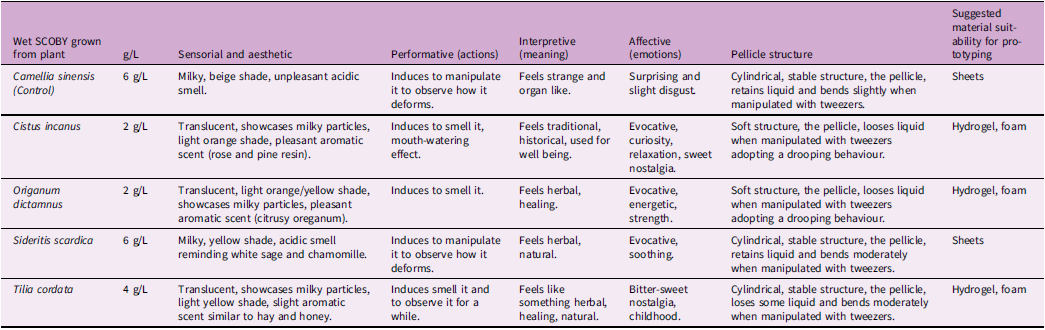
The experiential characterization of SCOBY pellicles, which were also used for biomass evaluation in Protocol 1 (Figure 3), was documented by the first author, while it was not evaluated in Protocol 2 due to temporal constraints inherent to the workshop formats. Adapted from Material-Driven Design Methods (Karana et al. Reference Karana, Pedgley and Rognoli2015), it included sensorial and aesthetic, performative, interpretive, affective first person observations complemented with two additonal dimensions namely, insights on pellicle structure and suggested material suitability for prototyping.
Pellicle structure emerged as a particularly relevant aspect, as the first author’s extensive prior experience in SCOBY processing into different material states (Sicher et al. Reference Sicher, Uğur Yavuz, Cohen, Silvia, Valentina and Nithikul2023), enabled preliminary indications of potentially suitable material processing approaches for consequent exploratory material tinkering and prototyping activities. Moreover, colour and scent insights contributed to the understanding of material expression across different plant infusions. Taken together, these qualitative dimensions were considered as complementary alongside quantitative biomass data in the interpretation of results. In particular, when differences in biomass production between concentrations were not substantial, experiential characterization helped to highlight unique material qualities and expressions. The first-person experiential characterization of selected SCOBY pellicles is reported in Table 1 as representative examples.
First-person experiential characterization of selected wet SCOBY pellicles and insights on suitable material states

Table 1 Long description
A table comparing the properties of SCOBY pellicles grown from different plants. The table has 6 rows and 7 columns. The columns are labeled Wet SCOBY grown from plant, g per L, Sensorial and aesthetic, Performative (actions), Interpretive (meaning), Affective (emotions), Pellicle structure, and Suggested material suitability for prototyping. The rows are labeled with different plants: Camellia sinensis (Control), Cistus incanus, Origanum dictamnus, Sideritis scardica, and Tilia cordata. Each row provides detailed information about the sensorial and aesthetic properties, performative actions, interpretive meaning, affective emotions, pellicle structure, and suggested material suitability for prototyping of the SCOBY pellicles grown from the respective plants. Row 1: Camellia sinensis (Control), 6 g per L, Milky, beige shade, unpleasant acidic smell, Induces to manipulate it to observe how it deforms, Feels strange and organ like, Surprising and slight disgust, Cylindrical, stable structure, the pellicle, retains liquid and bends slightly when manipulated with tweezers, Sheets. Row 2: Cistus incanus, 2 g per L, Translucent, showcases milky particles, light orange shade, pleasant aromatic scent (rose and pine resin), Induces to smell it, mouth-watering effect, Feels traditional, historical, used for well being, Evocative, curiosity, relaxation, sweet nostalgia, Soft structure, the pellicle, looses liquid when manipulated with tweezers adopting a drooping behaviour, Hydrogel, foam. Row 3: Origanum dictamnus, 2 g per L, Translucent, light orange/yellow shade, showcases milky particles, pleasant aromatic scent (citrusy oregano), Induces to smell it, Feels herbal, healing, Evocative, energetic, strength, Soft structure, the pellicle, looses liquid when manipulated with tweezers adopting a drooping behaviour, Hydrogel, foam. Row 4: Sideritis scardica, 6 g per L, Milky, yellow shade, acidic smell reminding white sage and chamomille, Induces to manipulate it to observe how it deforms, Feels herbal, natural, Evocative, soothing, Cylindrical, stable structure, the pellicle, retains liquid and bends moderately when manipulated with tweezers, Sheets. Row 5: Tilia cordata, 4 g per L, Translucent, showcases milky particles, light yellow shade, slight aromatic scent similar to hay and honey, Induces smell it and to observe it for a while, Feels like something herbal, healing, natural, Bitter-awe sweet nostalgia, childhood, Cylindrical, stable structure, the pellicle, looses some liquid and bends moderately when manipulated with tweezers, Hydrogel, foam.
Based on complementary observations, and diverse design-driven trade-offs, a specific concentration was were selected for each plant. For O. dictamnus, 2 g/L was chosen as it consistently supported the highest biomass production, even across all tested conditions. A similar rationale guided the selection for C. incanus, where 2 g/L was preferred despite the absence of statistically significant differences compared to 4 g/L, as it represented a more resource-efficient condition. For S. scardica, 6 g/L was selected due to the lack of marked differences in biomass production across concentrations, while the stronger pigment retention observed at the highest concentration was considered a desirable material quality. For T. cordata, 4 g/L was chosen as a trade-off condition, showing improved structural qualities compared to 2 g/L while not differing significantly from 6 g/L, and was therefore considered a more resource-optimized choice.
Rather than constituting an optimization process based on a single criterion, this selection reflects a provisional and exploratory trade-off between production efficiency and material expressivity. Given the exploratory nature of the study, these decisions should be understood as open-ended interpretive choices that allow designers to navigate multiple criteria when determining which material qualities or practical considerations to prioritize in their medium design.
Pellicle structure informing material processing suitability
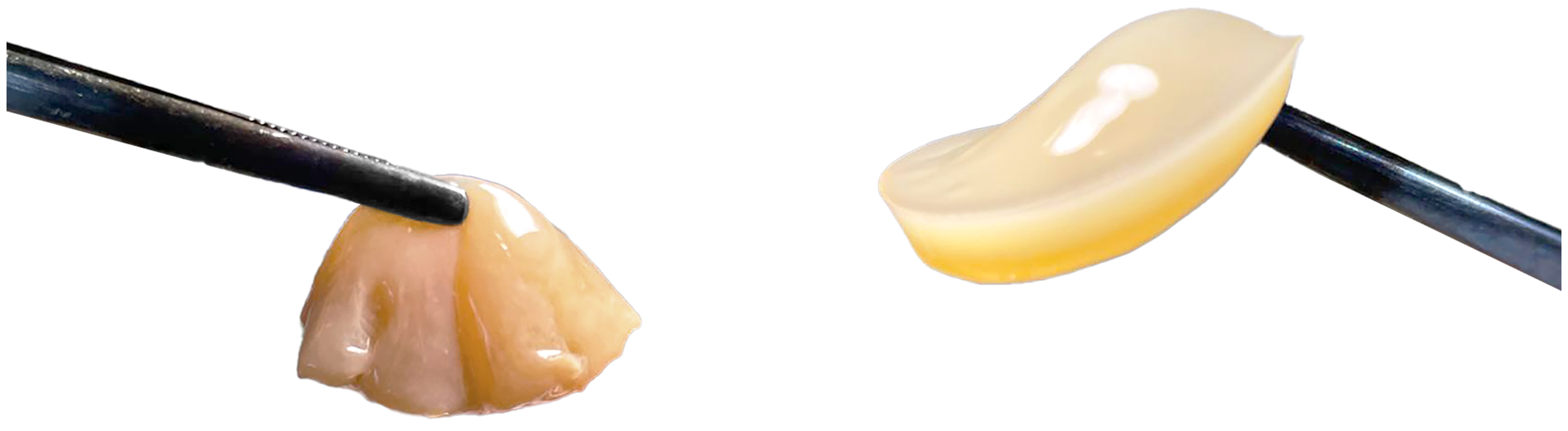
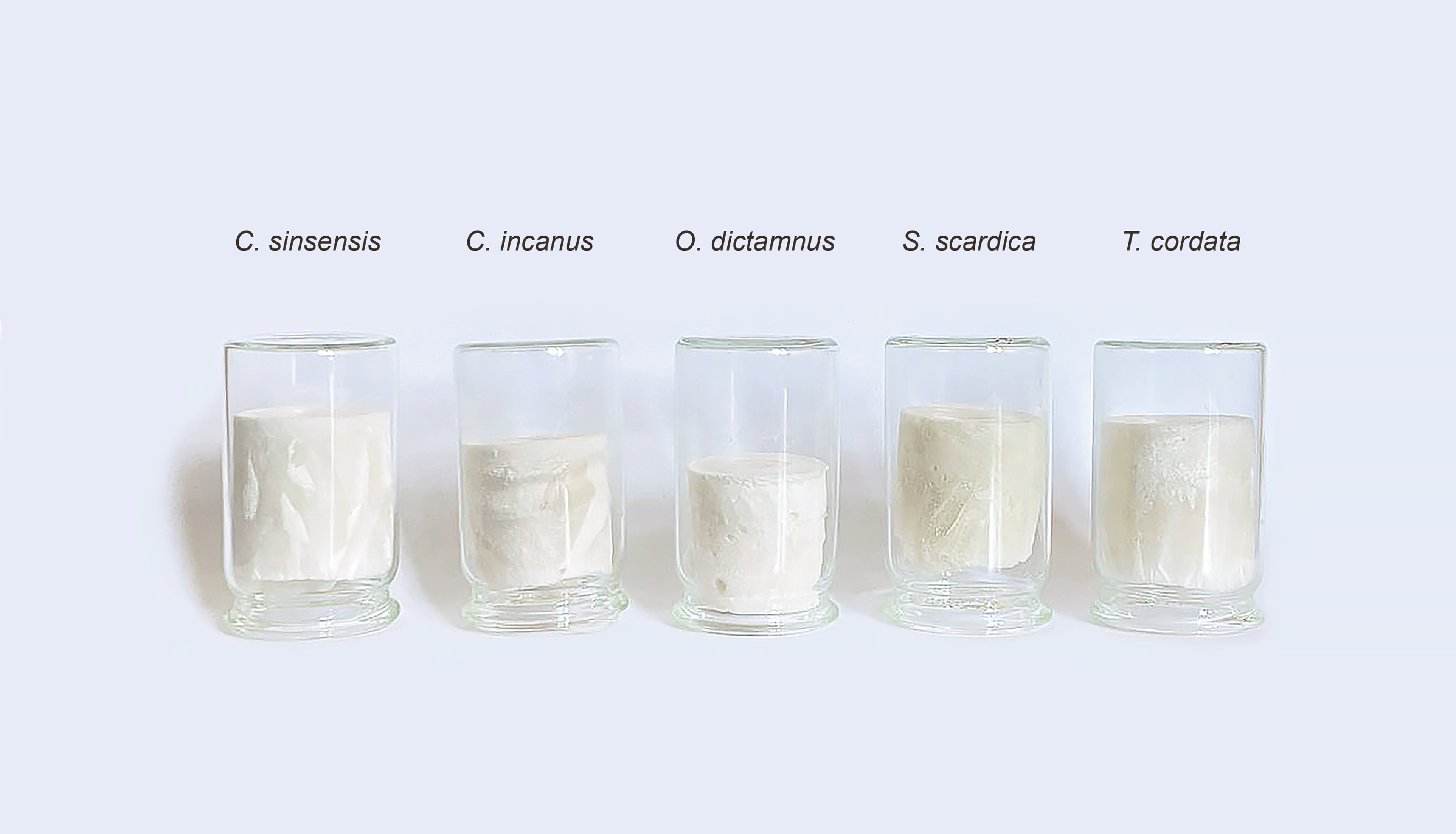
Pellicle structure provides key indications for subsequent material processing suitability, revealing how different plant infusions produce materially distinct outcomes (Figure 5) that can support different design trajectories. Pellicles grown in C. incanus and O. dictamnus (2 g/L) are translucent and soft, showing pronounced deformation under their own weight and releasing liquid upon handling. While initially forming smooth cylindrical geometries in the microtiter plate, they collapse when manipulated, exhibiting a drooping behaviour that indicates a loose, highly hydrated fibre structure. When dried, they result in fragile films with limited mechanical strength, often becoming sticky and difficult to handle.
Wet SCOBY pellicles showing diverse structural properties. The left one shows a pellicle grown from C. incanus medium (4g/L), showcasing drooping behaviour, and the right, a pellicle from S. scardica medium (6g/L), showing slight bending when manipulated with tweezers.

In contrast, pellicles grown in S. scardica (6 g/L) maintain greater structural integrity, appearing more opaque and milky, with minimal liquid release and improved stability during handling and drying. These properties suggest a denser fibre network that supports the formation of more robust leather-like sheets. T. cordata (4 g/L) occupies an intermediate position, combining translucency with moderate structural stability.
Rather than indicating a simple hierarchy of “better” or “worse” materials, these differences suggest the expression of distinct affordances that can align with different processing possibilities: softer, more hydrated pellicles better suit hydrogel-or foam-based utilizations, while denser structures are more compatible with (but not limited to) sheet-based applications, indications that can be subsequently explored and validated through material testing and prototyping. Importantly, structural softness should not be directly associated with lower biomass production, as demonstrated by O. dictamnus (2 g/L), which combined a drooping behaviour with one of the highest dry-weight yields in comparison to tea. This decoupling of structural appearance and yield further reinforces the need to interpret material outcomes through multiple criteria.
Colour behaviour across material states
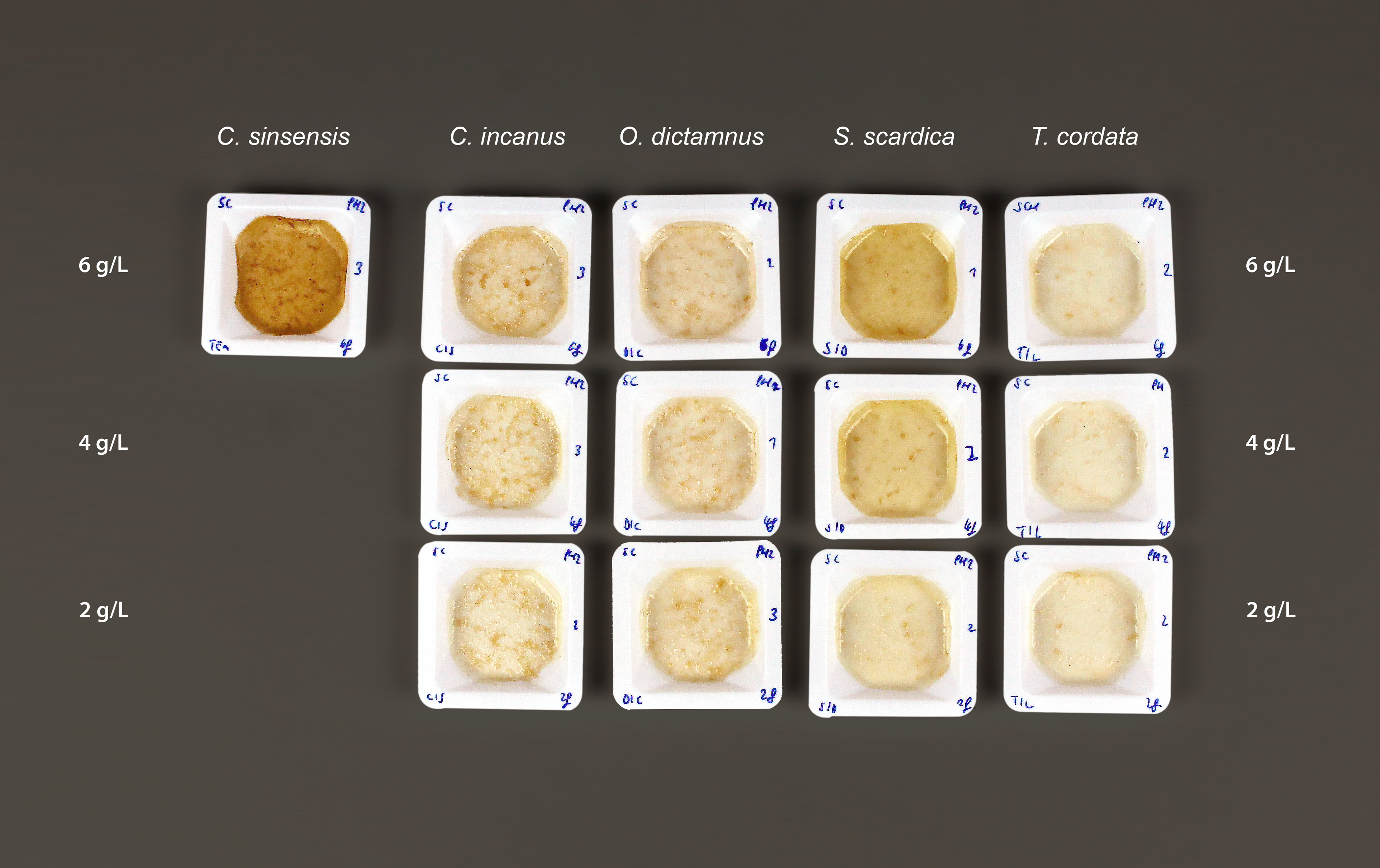
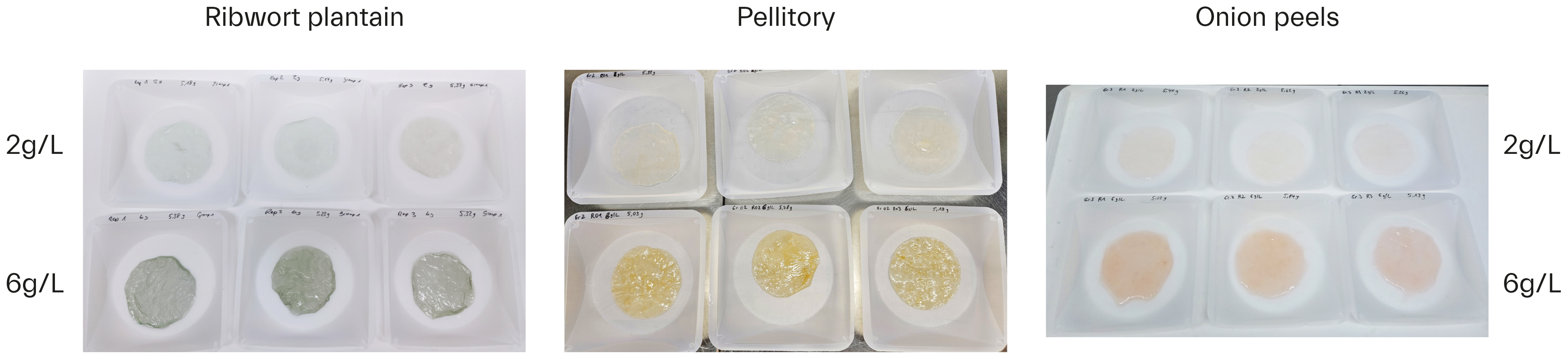
Pellicle colouration was observed across both protocols in both wet and dry states, revealing influences of plant infusions on pigment uptake. In the wet state, higher infusion concentrations generally resulted in more intense colouration, suggesting increased incorporation of water-soluble pigmented compounds, such as flavonoids, into the cellulose matrix. This trend was consistent across S. scardica, plantain, wall pellitory and onion peel, which all exhibited stronger pigmentation at higher concentrations (Figures 6 and 7).
Zenithal images of dry SCOBY pellicles grown with different plant infusions and concentrations. The first row shows the five conditions at 6 g/L, the second at 4 g/L, and the third at 2 g/L; the tea control (C. sinensis) is presented only at 6 g/L. While higher plant concentration corresponds to increased pigmentation in S. scardica, this trend is not evident in C. incanus, O. dictamnus, and T. cordata. The visible particles characterizing visual heterogeneity in the pellicles are inoculum residues, which could, however, be easily removed by thorough washing while the pellicles are still in a wet state. Pellicles have a diameter of ca. 35 mm Ø.

Wet pellicles obtained from media prepared using Protocol 2 at concentrations of 2 g/L (upper row) and 6 g/L (lower row), showing increased pigmentation in all samples grown at higher infusion concentrations. Pellicles have a diameter of ca. 70 mm Ø.

However, this concentration-dependent relationship was not consistently preserved in C. incanus, O. dictamnus and T. cordata, especially after drying, indicating that pigment retention is also affected by material state transitions and temporal phenomena such as oxidation (Figure 6).
Interestingly, when pellicles grown under Protocol 1 at 6 g/L (selected to maximize pigment retention) were processed into solid foam samples (processing details are not reported due to IP limitations), they converged towards a uniform light cream appearance (Figure 8). This unexpected convergence indicates that specific processing procedures might significantly reduce the plant-specific chromatic signatures, transforming colour from a stable material property into a state-dependent and process-sensitive expression.
Picture of SCOBY foam samples obtained from pellicles grown in 6 g/L plant infusion–based liquid media. All samples display a light, cream-like colouration, with no notable differences in shade, except for S. scardica, which shows a slightly more pronounced yellowish tint. Diameter of the solid foam samples ca. 28 mm Ø.

Overall, these observations suggest that colour in SCOBY-based materials should not be understood as a direct function of infusion concentration, but rather as an emergent property shaped by the interaction between plant inputs and material transformation processes across different states.
Scent as emergent material property
The odour of conventional Kombucha SCOBY is often described as unpleasant or even repellent and is generally perceived as a drawback of this biomaterial. However, experimentation with Protocol 1 revealed that infusing alternative plants operated as an evocative medium that connected laboratory experimentation with affective memories and fostered pleasant and relaxing sensations during media preparation. Scent emerged as a differentiating material characteristic, making both the liquid media and freshly grown pellicles recognizable during and after fermentation (see Table 2, “Sensorial and Aesthetic” column). However, scent was found to be highly temporal: as pellicles dried, olfactory differences diminished and converged towards a more uniform slightly acidic, caramelized, floral profile. This indicates scent as a dynamic, temporal material property with a fascinating potential for future SCOBY-based Biodesign research. Rather than treating scent as a side product, it can be approached as a design element that manifests how biological diversity embedded in the medium can generate varied material experiences (Karana et al. Reference Karana, Pedgley and Rognoli2015). These findings can contribute to encourage Biodesign research into olfactory dimensions of microbial activity, a trajectory that, besides the pioneering work of Paula Nerlich (Nerlich et al. Reference Nerlich, Sherry, Deary, Morrow and Scott2024) is highly underresearched.
Integrating plant knowledge into speculative outputs
As part of Protocol 2, students were invited to develop speculative application scenarios based on SCOBY pellicles grown with alternative plant infusions. These scenarios drew on state-of-the-art SCOBY material possibilities, plant properties elaborated by scientific literature, vernacular knowledge, as well as personal and cultural associations. This, in turn, highlighted SCOBY’s potential as a medium for epistemic convergence across different forms of knowledge.
Discussion
This section focuses on discussing three key findings emerging from this SCOBY-driven experimentation that support medium design as a fundamental domain with strong potential in Biodesign.
Data variability as a productive feature of biological systems
Experimentation with the presented protocols suggests that data variability should not be seen as a limitation, but as an inherent part of a biological system and also as a productive feature that enables practitioners to gain new insights into living systems and growing materials. In particular, quantitative and qualitative observations across both protocols suggest that variations in plant substrates and infusion concentration in the medium influence the characteristics and affordances of SCOBY pellicles. This correlation points to promising opportunities for expanding the understanding of plant–microbe relationships, as well as the spectrum of material expressions of SCOBY, raising relevant research questions for design and techno-scientific disciplines. Rather than following prefixed criteria, medium design choices can be aligned with different design priorities, such as maximizing biomass yield, improving resource efficiency, highlighting specific sensory qualities, or balancing multiple criteria in a trade-off decision.
While different plant-derived inputs introduce variability in the properties of the resulting pellicles, SCOBY cultures sourced from different geographical locations and contexts can also vary in their microbial composition and relative proportions. As a conceptual framework, each new experimental batch can be understood as a distinct biological system, represented within each protocol by three technical replicates derived from the same inoculum–nourishing medium pair. Consequently, it is important to highlight that material outcomes can be influenced by both plant-and microbial-driven variability. Especially in a complex mixed culture such as SCOBY, variations may occur between batches, as the starting SCOBY itself can exhibit internal variability. This highlights the importance of carefully testing specific SCOBY-plant combinations, as well as assessing, documenting and critically reflecting on one’s experimental practice, rather than relying on standardized assessments.
One of the core messages of this contribution is that working with SCOBY cultures requires designers to engage with biological and material variability and to refine experimental methods through iterative practice, highlighting the importance of developing familiarity with systematic approaches to experimentation. In Protocol 1, initial experiments showed greater variability across biomass measurements within the replicates, while the results of the final experiment (shown in Figure 3) exhibited lower standard deviation, suggesting that increased procedural familiarity improves result consistency. For this reason, a preliminary practice phase is recommended before collecting data. The protocol chosen should be tested at least two to three times to become familiar with the procedure. Moreover, for statistical evaluation, a minimum of three replicates per condition is generally required, while six to nine replicates are considered preferable for increased robustness. In this study, results are based on three replicates per variable, reflecting the exploratory character of the protocols and their iterative refinement.
Although these protocols are designed to support greater independence for designers in conducting experiments, collaboration with scientists, where possible, remains an important resource for defining experimental parameters and interpreting results, particularly in relation to statistical variability.
Alternative plant media as drivers of novel SCOBY application scenarios
The speculative scenarios generated by students provided insights into how SCOBY materials grown with alternative plants can act as mediators between material experimentation and various forms of situated plant knowledge. Plantain-based SCOBY was envisioned as a hydrogel for skin irritation relief, drawing on its traditional use in rural contexts where these leaves are applied directly to wounds to avoid infection. Onion peel-derived SCOBY was associated with practices of relieving ear inflammation, inspired by a participant’s recollection of their grandmother using onion slices for this purpose. Finally, pellicles grown with wall pellitory were linked to cleaning applications, informed by the plant’s German name Glaskraut (“glass herb”) and its traditional use in surface cleaning.
These examples highlight how integrating alternative plants into SCOBY media can activate multiple layers of knowledge, which can be interwoven with SCOBY’s material expressions. These scenarios suggest how medium design can operate as a site of knowledge convergence between biofabrication processes and situated human–plant relationships. Overall, these preliminary scenarios suggest that experimentation with these protocols can expand material outcomes and applications by integrating situated, culturally embedded forms of knowledge, reinforcing plant variability as a catalyst for extending Biodesign into novel research and application domains.
Insights for future research on SCOBY grown with diverse plant substrates
Future research can build on the presented protocols in multiple directions. First, preliminary results from Protocol 1 suggest that certain plant infusions can support higher biomass production compared to tea, representing a promising potential to address common limitations among practitioners: the reduced availability of SCOBY biomass for tinkering and prototyping and the labor-intensive nature of growing the material independently. Growing SCOBY with alternative plant infusions could directly support material tinkering and prototyping practices by providing greater volumes of material for hands-on experimentation, as well as increased traceability of the media components. This, in turn, fosters deeper material understanding and knowledge development and it can ultimately expand the exploration of potential application scenarios in underexplored trajectories, including health promotion and edibility (Sicher et al. Reference Sicher, Ayala-Garcia, Massari, Rognoli and Alexander2026).
Second, a promising aspect concerns the underexplored experiential characteristics (Karana et al. Reference Karana, Pedgley and Rognoli2015; Pedgley et al. Reference Pedgley, Rognoli and Karana2016) of SCOBY that emerge through alternative plant infusions, such as structural configurations, colour, and scent, which could reveal opportunities to develop informed biomaterial expressions and informed applications (Holzbach et al. Reference Holzbach, Brück, Zhou, Ahram, Karwowski, Di Bucchianico, Taiar, Casarotto and Costa2023) with evocative, personal, affective and socio-cultural significance in Biodesign approaches.
Third, the properties of plant-infusion-derived SCOBY pellicles, as well as their processed material forms, could be further evaluated through systematic material characterization using established material science methods, including tensile strength testing, durability assessment and biochemical analysis, such as the evaluation of the pellicles’ antioxidant potential (dedicated article upcoming). Such analyses could technically inform and further reinforce suitable material processing and application pathways. More broadly, this line of inquiry opens a promising avenue for interdisciplinary collaboration with material scientists, biotechnologists and microbiologists. Moreover, introducing plant variability may open up future research opportunities for integrating additional synergies within Biodesign research, including collaborations with ethnographers and anthropologists, botanists and foragers, as well as broader engagements with situated material flows and networks connected to plant ecologies. It may also support further exploration of the socio-cultural, ontological and cosmological significance of plants and contribute to developing methods on how traditional uses and significance could be ethically investigated (Bandoni et al. Reference Bandoni, Cohen, Cotta and Paoliello2024; Tarkhanian Reference Tarkhanian, Morrison, Culén and Habib2025) and potentially integrated into Situated Growing Design (Sicher, Reference Sicher2026) approaches to SCOBY materials and applications.
Last but not least, distributed exploration of diverse plant infusions could promote the development of SCOBY-centered biomaterial libraries, an endeavour that could serve as a pedagogical tool, as well as an archival method for research practices, which align with established practices in DIY materials design and material tinkering (Pedgley et al. Reference Pedgley, Rognoli and Karana2016; Rognoli and Levi Reference Rognoli and Levi2004; Romani et al. Reference Romani, Rognoli, Levi, Ferraris, Rognoli and Nimkulrat2023).
Conclusion
This article advocates for the recognition of medium design as a fundamental domain of Biodesign practice. The presented protocols represent a methodological approach promoting engagement with multispecies interactions, enabling the development of novel material expressions and supporting the complementary collection of insights into both quantitative and qualitative characteristics of SCOBY-based materials.
Rather than representing a radical shift, this perspective provides a systematic methodological addition to established material-driven design approaches (Karana et al. Reference Karana, Pedgley and Rognoli2015), where experimenting with process (Rognoli and Parisi Reference Rognoli, Parisi, Clèries, Rognoli, Solanki and Llorach2021) is already central to material exploration. Here, this logic is extended to biological systems, where variability becomes a key design parameter. At the same time, the protocols foster a deeper cognitive and first-person understanding of SCOBY as a living system: insights into the organisms emerge through the fermentation process, and insights into plant-microbes interactions emerge through the resulting pellicles. This, in turn, reflects and supports the idea that engaging with these protocols supports the development of multispecies sensibilities and forms of ecological awareness (Kim et al. Reference Kim, Kim, Martins, Karana, Gray, Ciliotta Chehade, Hekkert, Forlano, Ciuccarelli and Lloyd2024; Nicenboim et al. Reference Nicenboim, Karana, McQuillan, Devendorf, Kakehi, Bell, Withers, Yamashita, Evers and Yatani2025).
The protocols are designed to be accessible across varying levels of familiarity with SCOBY materials and workspaces, from sterile laboratories to non-sterile environments, encouraging more accessible and distributed experimentation. By emphasizing plant substrates as a key design variable in SCOBY cultivation, practitioners are particularly invited to work with locally available, edible fruits, herbs, flowers, barks, roots, spices and plant-derived biomasses and to make informed processual decisions that can incorporate circularity, more-than-human perspectives and situated or personal significance. To conclude, these protocols can be understood as a methodological contribution to the operationalization of the Regenerative Ecologies framework in practice (Karana et al. Reference Karana, McQuillan, Rognoli and Giaccardi2023), promoting the integration of bioregional principles (Rigobello and Evans Reference Rigobello, Evans, Gray, Ciliotta Chehade, Hekkert, Forlano, Ciuccarelli and Lloyd2024; Wahl Reference Wahl2016) as well as biological and epistemological diversity into material cultivation practices.
Credits: All figures and tables were designed/compiled/generated/adjusted by the first author. The icons in Figures 3 and 4 were designed from scratch. Step 15 in both figures was AI-generated (see “AI utilization statement” for more information). All pictures were taken by the first author, except for Figure 7, which shows pictures delivered by students mentioned in the acknowledgements.
Supplementary material
The supplementary material for this article can be found at https://doi.org/10.1017/S2977905726100237
Data availability statement
Data subject to third-party restrictions: The data that support the findings of this study are not publicly available at this time, as they form part of ongoing doctoral research. They will be made available from the authors upon completion of the study and/or following the publication of the corresponding results, subject to the approval of the doctoral supervisors upon request.
Acknowledgements
The microbiological experimentation of this research was conducted in the laboratory of Prof. Dr. Regine Hengge at the Institut für Biologie, at the Humboldt-Universität zu Berlin. The research topic was co-designed with Prof. Hengge, who provided extensive discussions, methodological guidance and feedback, as well as recommendations for the experimental setup and its iterative development. We would like to express our deepest gratitude to Prof. Regine Hengge for providing key grounding and significant insights to the work and welcoming and supporting our proposed collaboration. We are particularly grateful to members of the Hengge Group who supported the development of Protocol 1 through feedback, laboratory introductions and practical guidance, in particular, José I. Hernández Lobato, Dr. Eike Junkermeier, Dr. Ronja Offer and Dr. Katharina Preßler. Additional thanks go to Dr. Christine Kanow-Scheel, Prof. Dr. Thomas Eitinger and Raúl Trepel-Washington for providing technical support and access to laboratory equipment. We gratefully acknowledge the Laimburg Research Centre in South Tyrol for enabling this study to be carried out within its infrastructure, as well as the members of the Fermentation and Distillation Group. We particularly thank Dr. Noemi Tocci for her dedicated contribution to the discussions, design, execution, and interpretation of the evaluation analyses. We would like to warmly thank the students who participated in the workshop reported, which took place during the Studium Digitale 2025 event at Burg Giebichenstein Kunsthochschule Halle, Sachsen-Anhalt (DE): Antonia, David, Emily, Femi, Helen, Inbal, Mathilda and Rhona. Our deep appreciation goes to Prof. Dr. Mareike Gast and Dr. Falko Matthes for their kind invitation and support. We express our heartfelt gratitude to Prof. Dr. Markus Holzbach, the IMD Institut für Materialdesign and the Hochschule für Gestaltung (HfG) Offenbach am Main for their support to this doctoral research. To conclude, we gratefully acknowledge Prof. Sam Edens (Amsterdam University of Applied Sciences) for her generous and insightful feedback on earlier versions of this text.
Author’s contributions
Emma Sicher: Research co-design, conceptualization of the manuscript; development of the research framework; execution of all experimental cultivation activities; protocols design and iteration; data collection and quantitative assessment; preliminary data analysis and interpretation; development of the discussion and conclusions; writing of the original draft. Responsible for the protocol steps visualizations, including tables, diagrams, process illustrations, experimental documentation and all photographic images.
Lorenza Conterno: Contribution to the methods’ assessment for the evaluation of the grown pellicles; protocol evaluation and refinement; data interpretation; review of the research design; technical guidance; support in scientific interpretation of data; terminology refinement; strengthening of the conceptual and scientific framing of the work; critical review and editorial feedback on the manuscript.
Both authors reviewed and approved the final version of the manuscript.
Financial support
The authors acknowledge the support of the Cluster of Excellence »Matters of Activity. Image Space Material« funded by the Deutsche Forschungsgemeinschaft (DFG, German Research Foundation) under Germany’s Excellence Strategy – EXC 2025 – 390648296.
Competing interests
None.
Ethical standards
This research complies with ethical guidelines and legal requirements of the Institut für Biologie of the Humboldt-Universität zu Berlin. All the human collaborators were fully informed about the aims of the study and the intended use of the information collected. Biological materials provenance: the SCOBY cultures were kindly donated by Mattia Caramella from ROY Kombucha and Julian Ronnefeldt from KulchaBox producers in Berlin; equipment, plants and materials were purchased from commercial suppliers and certified European commerce (including C. incaus, O. dictamnus, S. scardica and tea). Other plant materials were foraged locally in Berlin, including T. cordata; and plantain and wall pellitory in Halle, Germany. Additional information about the materials utilized in this study is reported in the Supplementary Materials 1 and 4.
AI utilization statement
ChatGPT was employed for voice-to-text transcription, synonym suggestions and recommendations for improving the clarity and grammatical correctness of the content. All content was conceived by the authors and double-checked. Two images were generated with the aid of Google Gemini for representation purposes, as high-quality images of the actual experimental setups were not available. The images, included in Step 15 of each of the two protocols, were created to closely reflect the real-life artifacts with which the first author has had extensive experience, ensuring high accuracy in the AI-generated representations.


 Open access

