Introduction
Brazil has been the world’s leader in sweet orange (Citrus sinensis L. Osbeck) production for the last 30 years. Currently, approximately 22% of the world’s sweet orange crop comes from Brazilian orchards (FAO, 2018) and it is also the largest orange juice producer and exporter in the world.
The main sweet orange producing region in Brazil is located in the state of São Paulo and the west and southwest of Minas Gerais state, which corresponds to about 80% of the total cultivated area. The 2019/2020 sweet orange harvest in that region reached 386.79 million boxes (40.8 kg box−1), considering early-maturing, mid-season, and late-maturing cultivars. This production comes from about 174 million trees, cultivated in, approximately, 370 thousand hectares (Fundecitrus, 2020). During this same harvest season, Pera sweet orange corresponded to about 36% of the yielding plants and 31% of the total sweet orange crop in the above-mentioned region (Fundecitrus, 2020).
In spite of its unknown origin, Pera sweet orange is considered a Brazilian cultivar, and its name is associated with pear-shaped sweet oranges cultivated in other countries, such as the United States, Spain, Portugal, and Italy (Donadio, Reference Donadio1999; Donadio et al., Reference Donadio, Figueiredo and Pio1995; Hodgson, Reference Hodgson, Reuther, Webber and Batchelor1967). It is a highly productive sweet orange, with medium-sized trees (Donadio, Reference Donadio1999; Pio et al., Reference Pio, Figueiredo, Stuchi, Cardoso, Mattos, De Negri, Pio and Pompeu2005), and it is the predominant mid-season cultivar in Brazil. This cultivar is most frequently planted among several other (early-maturing and late-maturing) cultivars.
Pera sweet orange is considered a desirable cultivar due to its adequate fruit yield and juice quality for processing, as well as acceptable traits for the fresh fruit market. For the fresh fruit market, its multiple blooming periods can be economically attractive because it ensures a constant supply of fresh fruit during the year; however, this trait also requires more accurate picking work to avoid a mixture of fruits from different blooming seasons that could negatively interfere with juice quality during processing (Davies and Albrigo, Reference Davies and Albrigo1994; Di Giorgi et al., Reference Di Giorgi, Ide, Dib, Marchi, Triboni and Wagner1993; Donadio, Reference Donadio1999; Donadio et al., Reference Donadio, Stuchi, Pozzan and Sempionato1999).
Several Pera-type selections have been described since the 1930s. In 1968, the Pera Pré-imunizada sweet orange (a mild-CTV-strain immunized selection) was obtained and has been shown to be a high-yielding scion with enhanced tolerance to Tristeza stem pitting disease (Müller et al., Reference Müller, Targon and Machado1999). In the late 1980s, this scion was renamed Pera IAC (Donadio et al., Reference Donadio, Stuchi, Pozzan and Sempionato1999; Müller et al., Reference Müller, Targon and Machado1999; Salibe et al., Reference Salibe, Teófilo Sobrinho and Müller2002). Considering all Pera sweet oranges already available, the Pera IAC is, by far, the most planted selection, with more than 70 million trees planted since its release (Salibe et al., Reference Salibe, Teófilo Sobrinho and Müller2002). It is still the predominant cultivar (Carvalho et al., Reference Carvalho, Latado, Silva and Müller2015).
Identifying alternative mid-season selections with enhanced traits compared to the standard cultivar (Pera IAC) could be extremely beneficial. Among those traits, higher plant yields, superior fruit and juice qualities, and a slight shift within the mid-season harvest time are important to improve net profits in the citrus industry.
We evaluated the horticultural performance of different sweet orange selections and compared them with the most produced mid-season sweet orange cultivar, Pera IAC, to identify possible superior cultivars that could be exploited as alternative cultivars during the sweet orange mid-season in Brazil.
Material and Methods
Experimental site and sweet orange selections
The experiment was planted in 2007 at a commercial citrus farm located in Iaras, Southwest São Paulo state, Brazil (latitude 22°52’15”S; longitude 45°9’46”W, 640 m above sea level), with 6.5 × 2.5 m tree spacing (615 plants ha−1). The regional climate is Cfa (Humid subtropical, oceanic climate, without dry season, with hot summer), according to the Köppen classification (mean annual temperature of 20.1 °C, and total annual rainfall of 1319 mm (Alvares et al., Reference Alvares, Stape, Sentelhas, Gonçalves and Sparovek2013). The soil is classified as distrofic red-yellow Oxisol.
The following sweet orange selections (Citrus sinensis L. Osbeck) were evaluated as mid-season selections: Pera IAC (standard cultivar), Pera IAC 2000, Seleta Rio, Seleta Amarela, Homosassa, Pera 2, Finike, Biondo, Bidwells Bar, Sanguínea, Jaffa, Pera Alexandre Maróstica, Pera Milton Teixeira, Pera 3, Pera 4, Vaccaro Blood, and Torregrosa. This material was derived from the germplasm collection at Estação Experimental de Citricultura de Bebedouro (EECB), São Paulo State, which, in turn, came from Centro APTA Citros ‘Sylvio Moreira’ or from clone selections in the Bebedouro region. All plants were grafted on Sunki mandarin [C. sunki (Hayata) hort. ex Tanaka]. The experimental site was managed without supplementary irrigation, and other cultural practices (including disease and pest managements) were applied according to technical recommendations for the state of São Paulo, Brazil to reach high yields (Mattos Jr. et al., Reference Mattos Júnior, De Negri, Pompeu Junior, Ghilardi, Azevedo, Bastianel, Aguiar, Gonçalves, Paterniani, Tucci and Castro2014).
Plant size and adjusted plant density
Parallel and perpendicular canopy diameters were measured to the tree row and plant height was recorded 7 years after planting, following the main harvest. Canopy volume, in m3, was calculated according to the formula:
Canopy volume = 2/3 × π × ((Dpar×Dper)/4) × H, where Dpar is the parallel canopy diameter to the tree row (m), Dper is the perpendicular canopy diameter to the tree row (m), and H is the plant height (m).
In order to predict the optimum tree spacing, adjusted plant density was calculated, according to the formula:
Adjusted plant density = 10000/[(Dpar × 0.75) × (Dper + 2.5)], where Dpar is the parallel canopy diameter to the tree row (m), Dper is the perpendicular canopy diameter to the tree row (m), assuming a projection of 25% between canopies and an increase in 2.5 m between plant rows (De Negri et al., Reference De Negri, Stuchi, Blasco, Mattos Júnior, De Negri and Pio2005).
Plant yield, yield efficiency, alternate bearing index, and fruit abscission
Annual yield and accumulated plant yield (kg plant−1) were recorded between the third and seventh year after planting (2010–2014). Yield efficiency was calculated by the ratio of average plant yield (kg plant−1) and canopy volume (m3) (2011–2014).
Moderate drought occurred during the harvest seasons of 2012, 2013, and 2014, so fruit abscission was accessed from monthly counts of fruit drop. The average mass of dropped fruit was registered and added to the accumulated and annual yield. Accumulated fruit abscission (kg plant−1) was also calculated by including data from the three drought-affected seasons.
Alternate bearing index was calculated between 2010 and 2014, with the use of the following expression:
Alternate bearing index = 1/(n − 1)×{|a 2 − a 1|/(a 2 + a 1)+|a 3 - a 2|/(a 3 + a 2) + … + |a n - a n−1|/(a n + a n−1)}, where n is the number of years and a 1, a 2, …, a n−1, and a n is the yield during the corresponding years (Pearce and Dobersek-Urbanc, Reference Pearce and Dobersek-Urbanc1967; Stenzel et al., Reference Stenzel, Neves, Gomes and Medina2003).
Fruit quality
Samples for fruit quality analyses were comprised of eight fruits per replication (40 fruits from each cultivar), collected in October of the harvest seasons of 2012, 2013, and 2014. The following variables were recorded: (i) fruit mass, g); (ii) fruit shape, by the ratio of equatorial and longitudinal fruit diameters; (iii) peel thickness (mm); (iv) seed number; (v) juice content (%), by the calculation of the ratio between juice mass and fruit mass; (vi) total soluble solids (ºBrix), by direct reading in a digital refractometer; (vii) total acidity (%), by titration of 25 ml juice with 0.1N NaOH; (viii) ratio, calculated by the ratio between total soluble solids and total acidity; (ix) ascorbic acid content (mg 100 ml–1 juice), calculated by 2.6-diclorofenol-indofenol method; and (x) color index, recorded with the use of a colorimeter (Minolta Chroma Meter CR-300), with the determination of a*, b*, and L variables, where a* corresponds to the variation between green and red colors, b* corresponds to the variation between blue and yellow, and L is the brightness variation between black and white. These variables were then applied in the formula CI = 1000 × a*/(L × b*), according to Jimenez-Cuesta et al. (Reference Jimenez-Cuesta, Cuquerella-Cayuela and Martinez-Javega1983) to calculate peel (skin) color index and pulp color index, with variation between −20 (green) and +20 (orange-red), where zero (0) corresponded to yellow.
Fruit maturation regression and accumulated degree days
In order to calculate the maturation regression in 2012, 2013, and 2014, fruit samples were collected as early as in July, in 20-day intervals, until the final harvest date of each harvesting year (October 15th 2012, October 22nd 2013, and October 24th 2014). The best harvest period for each selection in each analyzed year, according to fruit maturation (ratio ≥ 12) was estimated by the formula: Accumulated degree days = Σ(T M − T B), where accumulated degree days is the total of degree days (thermal units) necessary to reach fruit ripening, T M is the average daily temperature (°C) in each harvest year from the blooming week to the harvest week, and TB is the basal minimum temperature (T B), considered to be 13 °C (Monselise, Reference Monselise1986). The length of the phenological cycle (flowering to maturation) started at full bloom and ended at the respective harvest date, in each harvest year (Volpe et al., Reference Volpe, Schöffel and Barbosa2002). Full bloom was registered from August 29th to September 4th, August 20th to August 26th, and August 26th to September 1st, during the years 2011, 2012, and 2013, respectively. Data of fruit maturation of all three analyzed years were comprised to calculate the average accumulated degree days for fruit maturation (fruit ripening, ready to be harvest).
Experimental design and statistical analysis
The experiment consisted of 17 treatments (sweet orange selections), 5 replications, and 3 plants per plot, with a total of 255 experimental plants, in a completely randomized design (CRD). Measurements of plant size, plant yield, and fruit quality of each selection were compared with those of Pera IAC, which was considered as the standard cultivar, by Dunnett test (p < 0.05). The relationship between yield efficiency and canopy volume values was analyzed by a regression model. Maturation (fruit ripening) was assessed by linear regression with data from the 2012, 2013, and 2014. Variables were transformed, if needed, according to the Box–Cox test.
To calculate the performance indexes for each sweet orange cultivar, data were previously normalized by the equations:
 $$N1 = [(\max - \min )/2],$$
 $$N2 = [(N1 \times 100)/\max ],$$
 $$N3 = [(N2 \times V)/N1],$$
where ‘max’ is the maximum value of each variable, ‘min’ is the minimum value of each variable and ‘V’ is the value of the variable. The following equations were then used to calculate the cultivar performance indexes for the fresh fruit market (FFMI) and juice processing (JPI):
 $${\rm{FFMI}}\,{\rm{or}}\,{\rm{JPI}} = [(A \times a + B \times b + C \times c + D \times d + E \times e)/(\max - \min )],$$
where A, B, C, D, and E correspond to the indexes of each chosen variable; a, b, c, d, and e correspond to the relative importance attributed to each variable (variable score; %); max is the maximum value of each variable; and min is the minimum value of each variable (Caputo et al., Reference Caputo, Mourão Filho, Silva, Bremer Neto, Couto and Stuchi2012).
The scores of each variable were assigned according to their relative importance, according to the criterion for the fresh fruit market: accumulated fruit yield (30%), total soluble solids (20%), skin color index (20%), seed number (10%), and fruit mass (20%); and for juice processing: accumulated fruit yield (30%), total soluble solids (30%), juice content (30%), and pulp color index (10%). Finally, the mean values referring to the indexes (FFMI and JPI) were analyzed by the Shapiro–Wilk normality test and compared by the Dunnett test (p < 0.05).
Results
Plant size and adjusted plant density
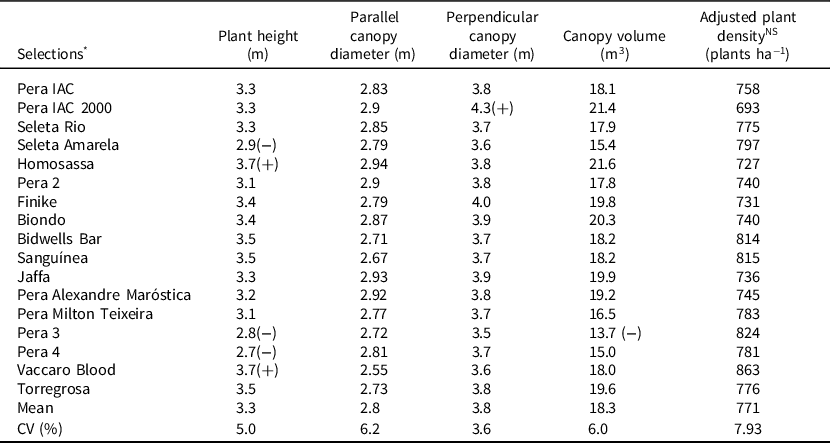
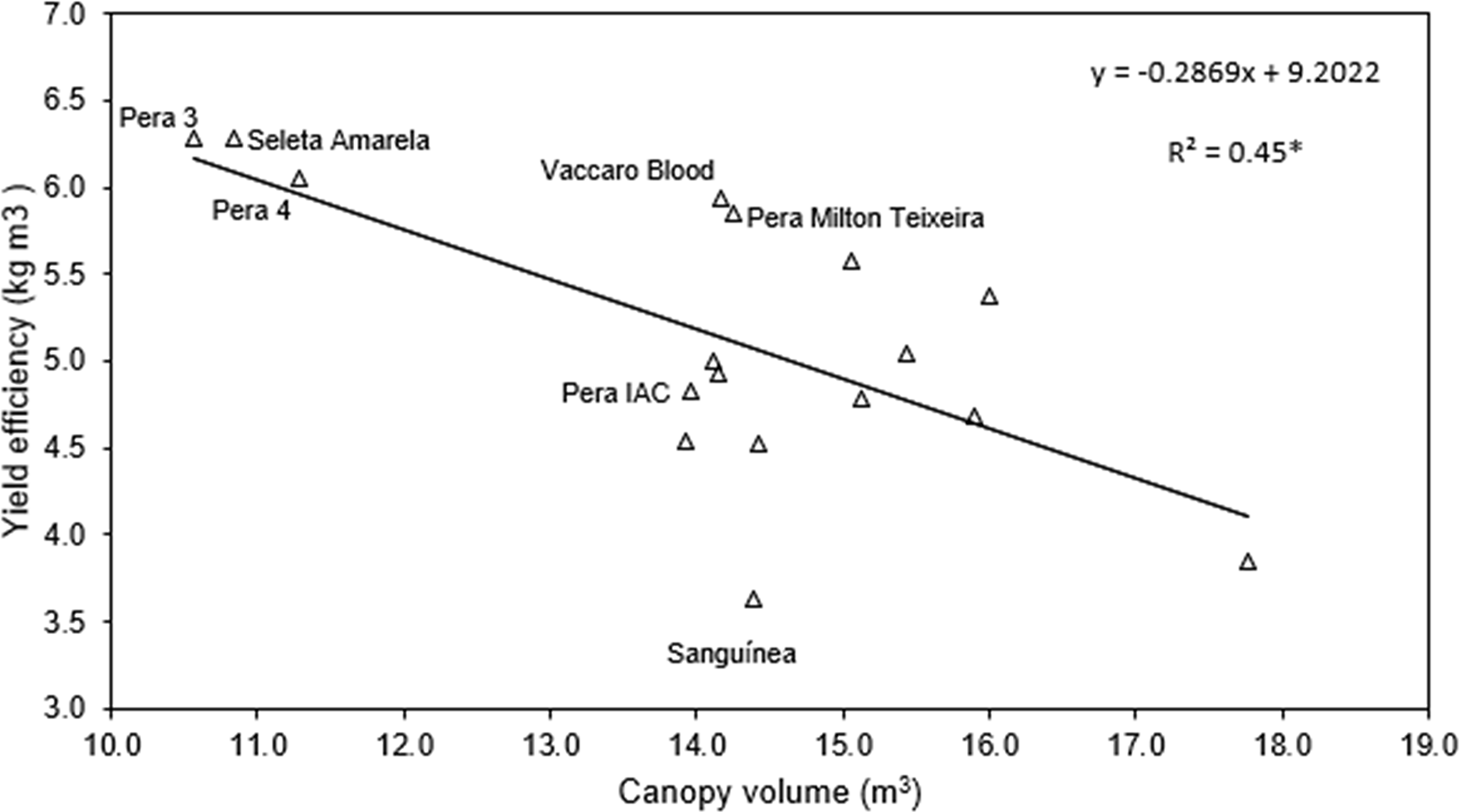
Seven years after planting, plants of Homosassa and Vaccaro Blood sweet oranges were taller than Pera IAC, whereas plants of Seleta Amarela, Pera 3, and Pera 4 were shorter (Table 1). All selections had similar parallel canopy diameters to Pera IAC trees. Pera IAC 2000 had higher values of perpendicular canopy diameters than Pera IAC. Plants of Pera 3 had the lowest canopy volumes and the highest yield efficiency values, when compared to Pera IAC (Tables 1 and 2). Conversely, Sanguínea trees had the lowest yield efficiency (Table 2). This can be explained by the influence of the canopy volume in relation to the yield efficiency (Figure 1). No differences among selections were reported regarding adjusted plant density (Table 1).
Plant height, parallel and perpendicular canopy diameters to the planting row, canopy volume, and adjusted plant density of 17 sweet orange selections budded on Sunki mandarin in the seventh year after planting (2014), in Iaras, state of São Paulo, Brazil

* Means compared to Pera IAC sweet orange (standard cultivar). (+) Significantly higher than Pera IAC; (−) Significantly lower than Pera IAC; NSNot significant. Dunnett test (p < 0.05).
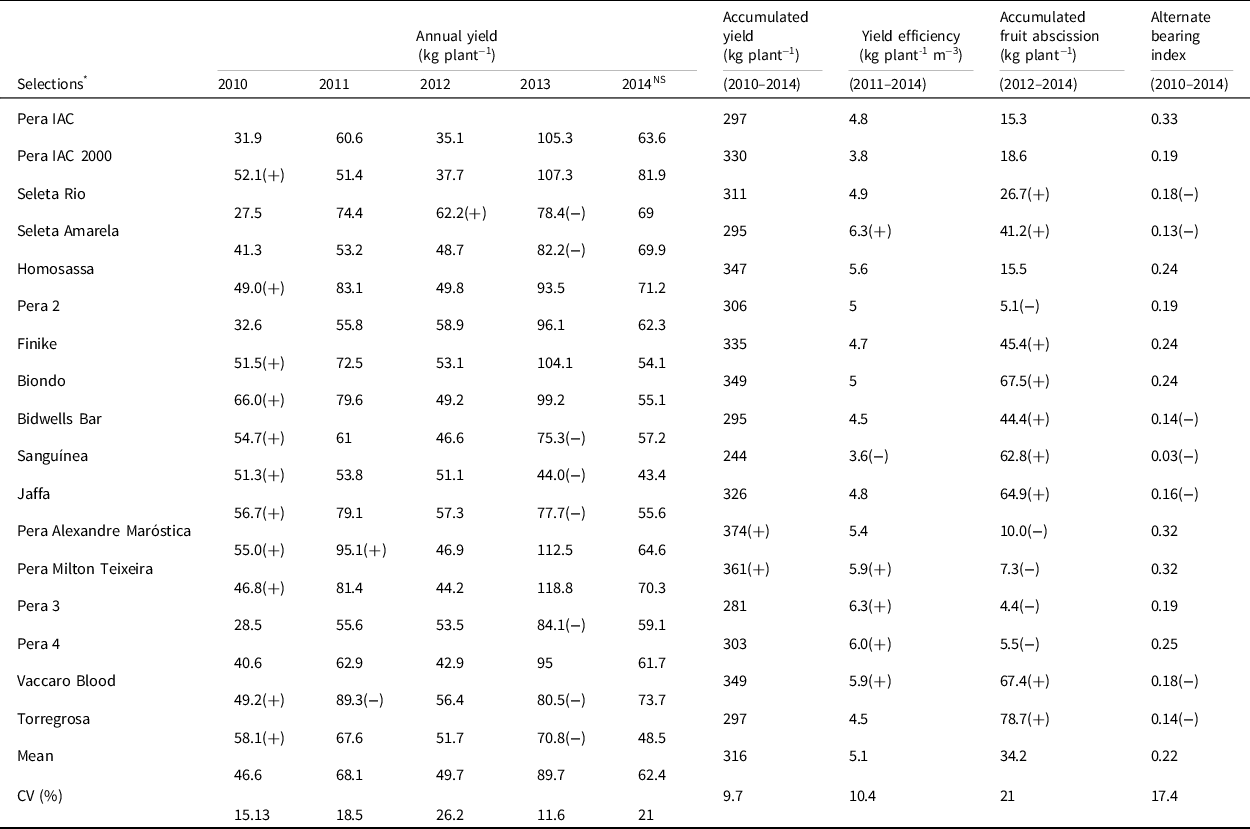
Annual yield, accumulated yield, yield efficiency, accumulated fruit abscission, and alternate bearing index of 17 sweet orange selections budded on Sunki mandarin (2010–2014), in Iaras, state of São Paulo, Brazil

* Means compared to Pera IAC sweet orange (standard cultivar). (+) Significantly higher than Pera IAC; (−) Significantly lower than Pera IAC; NSNot significant. Dunnett test (p < 0.05).
Linear relationship between yield efficiency and canopy volume of 17 sweet orange selections budded on Sunki mandarin, in Iaras, state of São Paulo, Brazil, 2011–2014. *Regression is significant (p < 0.05).

Plant yield, yield efficiency, alternate bearing index, and fruit abscission
Several selections (Pera IAC 2000, Homosassa, Finike, Biondo, Bidwells Bar, Sanguínea, Jaffa, Pera Alexandre Maróstica, Pera Milton Teixeira, Vaccaro Blood, and Torregrosa) had higher yields than Pera IAC in the first harvest (2010). However, no major differences between these same selections and Pera IAC were registered in 2011 and 2012. In contrast, the recorded annual yield of a few selections that showed better performance than Pera IAC in 2010, performed poorly in 2013. No differences in plant yield were recorded in 2014 between the evaluated selections and Pera IAC (Table 2).
Pera Alexandre Maróstica and Pera Milton Teixeira had higher accumulated yields (2010 through 2014) than Pera IAC (Table 2). In contrast, yield efficiency values (kg plant−1 m−3) of Seleta Amarela, Pera Milton Teixeira, Pera 3, Pera 4, and Vaccaro Blood were higher than those of the standard cultivar (Pera IAC) (Table 2).
Lower fruit abscission values than the standard cultivar were recorded in Pera 2, Pera Alexandre Maróstica, Pera Milton Teixeira, Pera 3, and Pera 4 in three seasons (Table 2). Conversely, cultivars such as Sanguínea and Torregrosa dropped more than 45% of their fruit, compared to about 15% for Pera IAC (Table 2). Seleta Rio, Seleta Amarela, Bidwells Bar, Sanguínea, Jaffa, Vaccaro Blood, and Torregrosa had a lower alternate bearing index than Pera IAC (Table 2), suggesting more consistent yields during the first five seasons of production.
Fruit quality
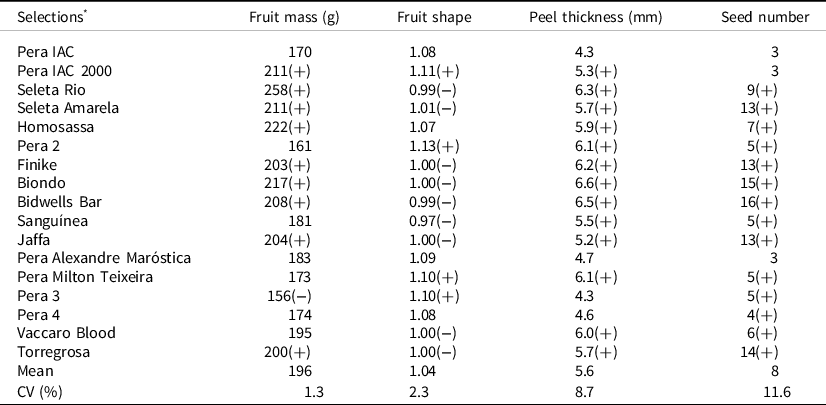
Nine selections (Pera IAC 2000, Seleta Rio, Seleta Amarela, Homosassa, Finike, Biondo, Bidwells Bar, Jaffa, and Torregrosa) produced heavier fruits than Pera IAC, considering the three harvest years studied in this research (2012 through 2014) (Table 3). Conversely, fruits of Pera 3 sweet orange had lower fruit mass values. Fruit shape values were higher in Pera IAC 2000, Pera 2, Pera Milton Teixeira, and Pera 3 selections than in the standard cultivar, suggesting a more pear-type shape, whereas nine of the other selections were more rounded than Pera IAC (Table 3).
Fruit mass, fruit shape, peel thickness, and seed number of 17 sweet orange selections budded on Sunki mandarin, averaged from harvests of the fifth to the seventh year after planting (2012, 2013, 2014), in Iaras, state of São Paulo, Brazil

* Means compared to Pera IAC sweet orange (standard cultivar). (+) Significantly higher than Pera IAC; (−) Significantly lower than Pera IAC. Dunnett test (p < 0.05).
Fruits from Pera Alexandre Maróstica, Pera 3, and Pera 4 had peel thickness values similar to those of Pera IAC. All other selections produced fruits with a thicker peel (Table 3). With the exception of Pera IAC 2000 and Pera Alexandre Maróstica, all other selections had fruits with higher seed number than the standard cultivar (Table 3).
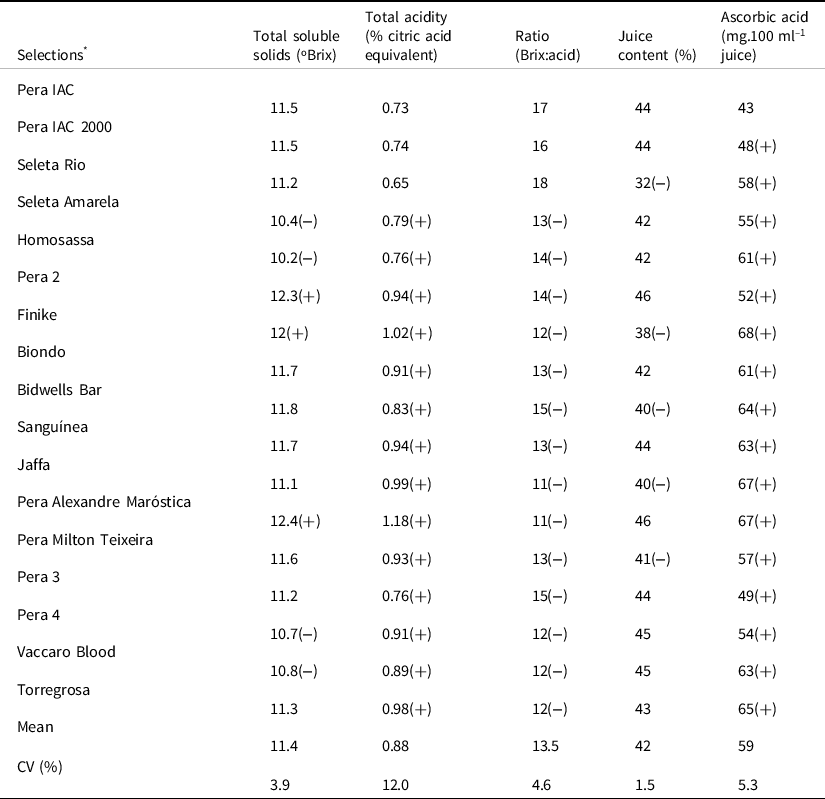
Fruits from Pera 2, Finike, and Pera Alexandre Maróstica had significantly higher total soluble solids than the standard cultivar, whereas Seleta Amarela, Homosassa, Pera 4, and Vaccaro Blood fruits showed lower total soluble solids values than Pera IAC (Table 4). Only Pera IAC 2000 and Seleta Rio sweet oranges had similar values of total acidity to Pera IAC sweet orange, with all the remaining 14 selections producing more acidic fruits (Table 4).
Total soluble solids, total acidity, ratio, juice content, and ascorbic acid of 17 sweet orange selections budded on Sunki mandarin, averaged from harvests of the 5th to the 7th year after planting (2012, 2013, 2014), in Iaras, state of São Paulo, Brazil

* Means compared to Pera IAC sweet orange (standard cultivar). (+) Significantly higher than Pera IAC; (−) Significantly lower than Pera IAC. Dunnett test (p < 0.05).
Ratio values varied from 12 to 18 among the evaluated selections; however only fruits from Pera IAC 2000 and Seleta Rio had similar values of ratio compared with Pera IAC, whereas all fruits from other selections had lower juice ratios (Table 4), probably due to their higher total acidity values.
Juice content ranged between 32 and 46% without any major significant differences among selections, with the exception of Seleta Rio, Finike, Bidwells Bar, Jaffa, and Pera Milton Teixeira, which had lower juice content than those of Pera IAC (Table 4). Ascorbic acid varied from 43 to 68 mg 100 ml–1 juice, which is considered adequate according to previous research (Kimball, Reference Kimball and Kimball1991; Davies and Albrigo, Reference Davies and Albrigo1994). However, all studied selections had significant higher ascorbic acid contents than Pera IAC (Table 4).
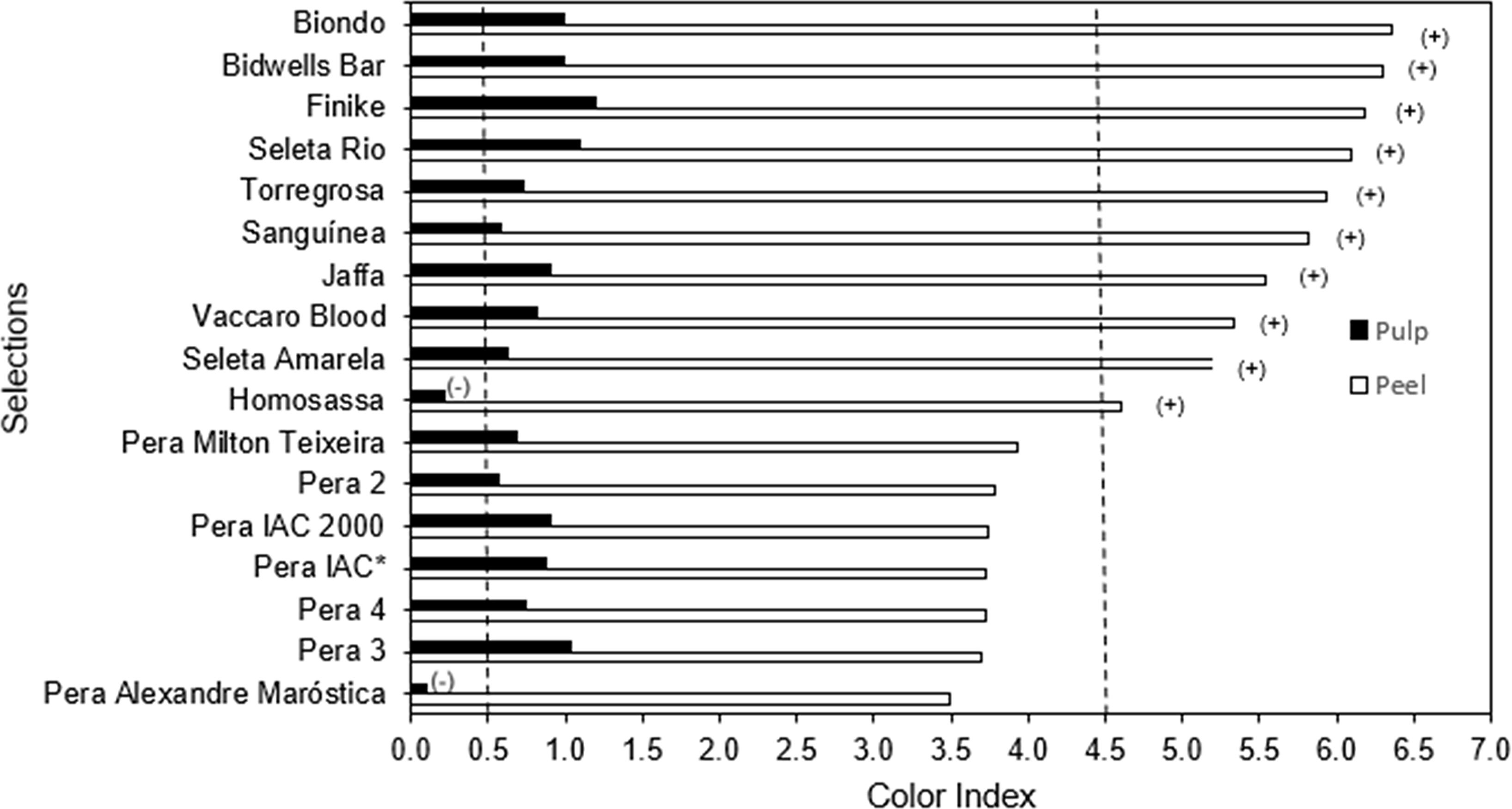
Fruits from ten selections had better peel color indexes than Pera IAC, with the remaining six selections showing no significant differences (Figure 2). Pulp color index values of Homosassa and Pera Alexandre Maróstica were significantly lower than the standard cultivar, while the remaining selections were similar to Pera IAC (Figure 2).
Peel (skin) color index and pulp color index of 17 sweet orange selections budded on Sunki mandarin, averaged from harvests of the 5th to the 7th year after planting (2012, 2013, 2014), in Iaras, state of São Paulo, Brazil. *Means compared to Pera IAC sweet orange (standard cultivar). (+) Significantly higher than Pera IAC; (−) significantly lower than Pera IAC by Dunnett test (p < 0.05).

Fruit maturation
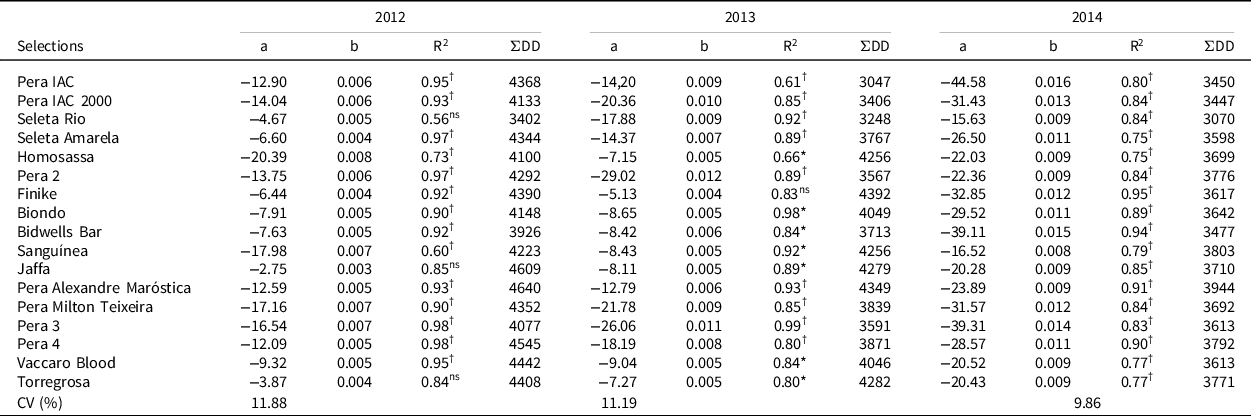
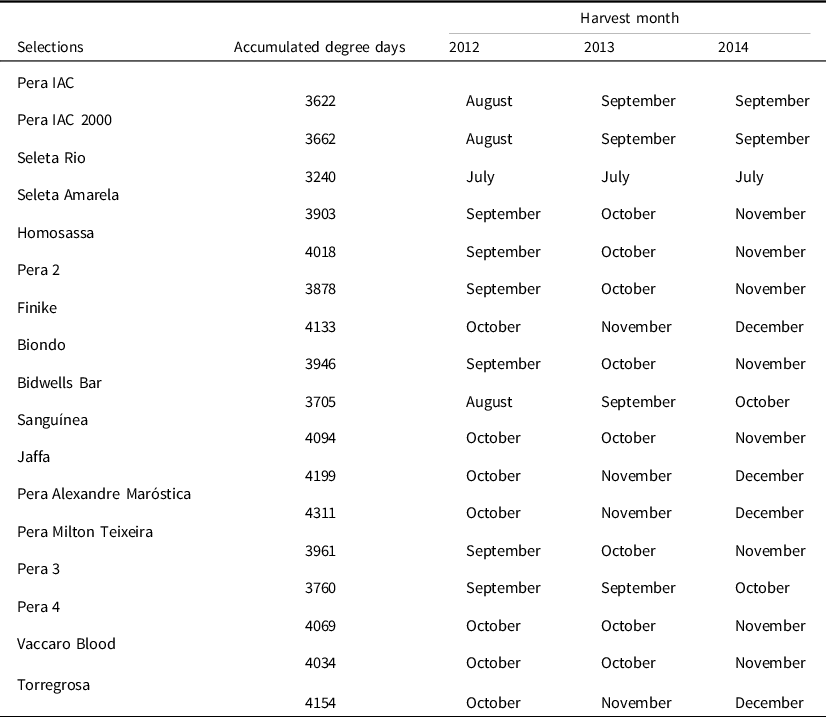
Maturation linear regressions were statistically significant for the majority of the sweet orange selections, during the three evaluated harvest seasons (2012, 2013, and 2014) (Table 5). The duration of the fruit maturation period, that is, from bloom to minimum fruit maturation point to harvest (fruit ripening) (ratio = 12), ranged from 11 to 15 months, considering the average of accumulated degree days from 2012 to 2014 (Table 6).
Linear coefficient (a) and angular coefficient (b), determination coefficient (R2), coefficient of variation (CV), regarding the maturation linear regressions, accumulated degree days (ΣDD) to reach Ratio = 12 (using a basal minimum temperature of 13°C), of 17 mid-season sweet orange selections budded on Sunki mandarin, from harvests of the fifth to the seventh year after planting (2012, 2013, 2014), in Iaras, state of São Paulo, Brazil

* Linear regression significant (p < 0.05).
† Linear regression significant (p < 0.01).
NSLinear regression not significant (p < 0.05).
Accumulated degree days, for a basal minimum temperature of 13oC, to reach Ratio = 12, and respective estimated harvest month of 17 sweet orange selections budded on Sunki mandarin, from harvests of the fifth to the seventh year after planting (2012, 2013, 2014), Brazil

Pera IAC accumulated 3622 degree days to reach the maturation point (ratio = 12). Conversely, Seleta Rio had the lowest required degree day accumulation to reach maturation, with the harvest month estimated to be July in the Iaras region, Brazil, suggesting that this cultivar could be classified as an ‘early-maturing to mid-season’ sweet orange (Table 6). Pera Alexandre Maróstica required the highest degree day accumulation to reach maturation, indicating that this material should reach ratio = 12 as late as December, in, at least, one harvest season (Table 6). Therefore, this selection, as well as other selections with a similar response, such as those whose harvest is estimated in November/December (Finike, Jaffa, and Torregrosa) (Table 6), could be considered ‘mid-season to late-maturing’ selections.
Performance indexes
In order to identify potential sweet orange selections that, overall, could show higher horticultural performance than the standard cultivar (Pera IAC), we calculated performance indexes using two different sets of criteria to comprise desirable traits for the fresh fruit market and juice processing.
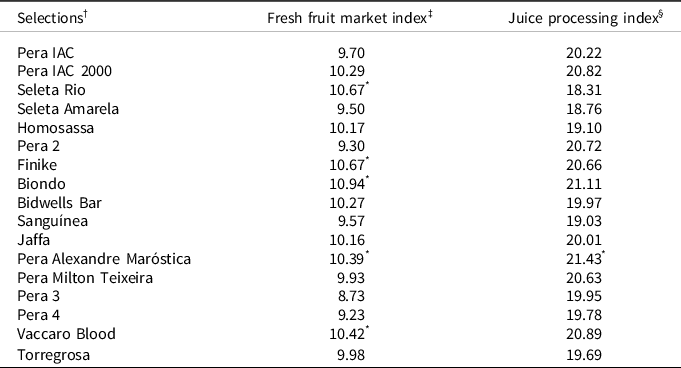
Fresh fruit market indexes took into account, not only the overall accumulated yield, but also important traits to be considered in fruits for the fresh market, such as high total soluble solids, high skin color index, low seed number, and high fruit mass. Results indicated that at least five sweet orange selections (Seleta Rio, Finike, Biondo, Pera Alexandre Maróstica, and Vaccaro Blood) could be considered superior to the standard cultivar (Table 7).
Performance indexes of 17 sweet orange selections budded on Sunki mandarin, for the fresh fruit market and juice processing, in Iaras, state of São Paulo, Brazil

* Significantly higher than Pera IAC sweet orange by Dunnett test (p < 0.05).
† Means compared to Pera IAC sweet orange (standard cultivar).
‡ Selected variables: accumulated fruit yield (30%), total soluble solids (20%), skin color index (20%), seed number (10%), and fruit mass (20%).
§ Selected variables: accumulated fruit yield (30%), total soluble solids (30%), juice content (30%), and pulp color index (10%).
Juice processing indexes also took accumulated yield into consideration, and included other variables that should receive more attention during juice processing, such as, high total soluble solids, high juice content, and high pulp color index. For this analysis, Pera Alexandre Maróstica had a significantly higher overall performance than Pera IAC (Table 7).
Discussion
The search for new sweet orange cultivars is essential to continuously improve production efficiency in the field and during fruit marketing and juice processing, to keep this industry in a competitive and sustainable position. The harvest season of sweet orange, considered the most important citrus fruit produced in the world, starts in the fall and can last until the early spring in both hemispheres, for a total of almost 10 months around the year. This long harvest period is only possible because of the availability of early-maturing, mid-season, and late-maturing cultivars, which must have high yield and adequate fruit quality, and have specific and differential accumulated degree days required to reach fruit maturation during specific months of the year.
Brazil has been the world’s leader in sweet orange production for juice processing and export, and a large internal fresh fruit market. It is highly desirable to find new sweet oranges, especially mid-season selections. High-density planting is one of several strategies to increase yield (Forner-Giner et al., Reference Forner-Giner, Rodriguez-Gamir, Martinez-Alcantara, Quiñones, Iglesias, Primo-Millo and Forner2014), and it has been applied in citrus groves within the recent years. However, this practice requires smaller trees, preferentially with the use of dwarfing or low-vigor inducing rootstocks. Reduction of plant vigor can also be achieved by selecting low-vigor scion cultivars.
In this study, the adjusted plant density (De Negri et al., Reference De Negri, Stuchi, Blasco, Mattos Júnior, De Negri and Pio2005), considering the overall group of cultivars could be increased by about 25.3%, that is, plant density could be adjusted to, approximately, 771 plants ha−1 (Table 1), without any major changes in grove management, indicating that these selections have the potential to be cultivated in more high-density plantings (Wheaton et al., Reference Wheaton, Castle, Whitney, Tucker and Muraro1990) under the conditions of this experiment. Moreover, at least one sweet orange selection (Pera 3) had lower canopy volume than the standard cultivar (Table 1). Low canopy volume values in Pera 3 could be attributed to the fact that this is an old budline, that is, it is not from nucellar origin (Donadio et al., Reference Donadio, Stuchi, Pozzan and Sempionato1999). Pera 3 was sanitized by shoot-tip grafting (micrografting) (Navarro et al., Reference Navarro, Roistacher and Murashige1975) and then pre-immunized (Fadel et al., Reference Fadel, Stuchi, Silva, Parolin, Oliveira, Müller and Donadio2019). Pera 2 and Pera 4 also showed similar tree size (canopy volume) to Pera IAC, so the lower vigor of Pera 3 could be of genetic origin.
The sweet orange selections recorded an accumulated yield along the five harvest years, ranging from 281 to 374 kg plant−1 (Table 2), and at least two Pera sweet orange selections (Alexandre Maróstica and Milton Teixeira) had significantly higher values than those of the standard cultivar. The accumulated yield range was higher than those found by Sanderson and Treeby (Reference Sanderson and Treeby2014), in three Pera sweet orange selections (Bianchi, Limeira, and Olímpia), along the first five harvest years (2000–2004) in southeastern Australia. However, Castle and Baldwin (Reference Castle and Baldwin2011) reported higher yields of Pera sweet orange selections than those found in this study, as well as in plants of Homosassa, Torregrosa, Sanguínea, Bidwells Bar, and Jaffa sweet orange budded on Swingle citrumelo (Citrus paradisi × Poncirus trifoliata). Differences in yield could be associated with grove management, including irrigation versus rainfed conditions, as well as by different rootstocks (Sunki mandarin versus Swingle citrumelo). Girardi et al. (Reference Girardi, Cerqueira, Cantuarias-Avilés, Silva and Stuchi2017) reported adequate responses of several sweet oranges when budded on Sunki mandarin. Conversely, relatively low yield values in 2014 (Table 2) could be explained by the atypical extended dry season in that year, which has already been discussed in previous study (Ramos et al., Reference Ramos, Mourão Filho, Stuchi, Sentelhas and Fadel2016).
Overall, alternate bearing index values were relatively low and ranged from 0.03 to 0.33, suggesting that the selections did not have high alternate bearings. These values were also similar to those found in other studies involving sweet orange selections, with values below 0.5 (Girardi et al., Reference Girardi, Cerqueira, Cantuarias-Avilés, Silva and Stuchi2017). In contrast, even lower alternate bearing indexes were recorded in Seleta Rio, Seleta Amarela, Bidwells Bar, Sanguínea, Jaffa, Vaccaro Blood, and Torregrosa, and they were significantly different than those from Pera IAC (Table 2). Research carried out by Espinoza-Núñez et al. (Reference Espinoza-Núñez, Mourão Filho, Stuchi and Ortega2008), Cantuarias-Avilés et al. (Reference Cantuarias-Aviles, Mourão Filho, Stuchi, da Silva and Espinoza-Núñez2010), and Yildiz et al. (Reference Yildiz, Hakan Demirkeser and Kaplankiran2013) have demonstrated that rootstocks influenced this trait in several scion cultivars, however, more significantly in mandarin scion cultivars, which naturally have high alternate bearing indexes. The relatively low alternate bearing indexes reported in our research could also be associated to the early age of the experimental plants as age may also lead to higher values of this variable (Sanderson and Treeby, Reference Sanderson and Treeby2014; Smith et al., Reference Smith, Shaw, Chapman, Owen-Turner, Lee, McRae, Jorgensen and Mungomery2004).
Fruit abscission can be an important limitation to plant yield, particularly under rainfed conditions. Significantly higher accumulated fruit abscission rates of some selections when compared to Pera IAC (Table 2) could be associated with the metabolic process of the plant that occurs in response to development, environment, and hormones (Adouli et al., Reference Adouli, Zamani, Fattahi-Mohgadam, Golein and Rezaei2018), including temperature or natural senescence of ripe/overripe fruits, which can be a genetic trait of these cultivars (Khefifi et al., Reference Khefifi, Selmane, Ben Mimoun, Tadeo, Morillon and Luro2020).
Fruit mass is an important fruit quality attribute, especially for sweet oranges for the fresh fruit market. In the present study, several sweet orange selections had superior fruit mass values than the standard cultivar. Moreover, Stuchi et al. (Reference Stuchi, Donadio, Sempionato and Perecin2004) reported higher fruit mass in Pera IAC budded on Sunki mandarin than those registered herein; however, such differences can be related to differences in fruit load, since fruit mass is inversely related to plant yield (Castle et al., Reference Castle, Bowman, Baldwin, Grosser and Gmitter2011).
Peel thickness values found in this study (Table 3) can be associated with early plant age (Khalid et al., Reference Khalid, Malik, Saleem, Khan, Khalid and Amin2012) because this trait was evaluated between the fifth and seventh year after planting. Fruits from Bidwells Bar, Biondo, Torregrosa, Seleta Amarela, Finike, and Jaffa cultivars had high seed number (>12) (Table 3), which is a common characteristic found in those considered undesirable to fresh fruit market commercialization (Pio et al., Reference Pio, Minami and Figueiredo2001). Conversely, Pera sweet orange selections had low seed number (<6). Some other selections of this genetic material (Latado et al., Reference Latado, Tulmann Neto, Ando, Iemma, Pompeu Junior, Figueiredo, Pio, Machado, Nakemata, Ceravolo and Rossi2001) could be classified in the same group as Homosassa, Sanguínea, and Vaccaro Blood (e.g., commercially seedless (0–8 seeds)). The other selections were moderately seedy (9–15 seeds), according to Davies and Albrigo (Reference Davies and Albrigo1994).
Total soluble solids and total acidity are the most important traits related to flavor quality in orange juice (Legua et al., Reference Legua, Forner, Hernández and Forner-Giner2013). Differences in total soluble solids and total acidity can be attributed mostly to the distinct scion/rootstock combinations, local climate (Davies and Albrigo, Reference Davies and Albrigo1994), and fruit size, since total soluble solids and total acidity concentrations are inversely correlated to fruit mass (Barry et al., Reference Barry, Castle and Davies2004) leading to differences in juice taste (Benjamin et al., Reference Benjamin, Tietel and Porat2013). Total soluble solids ranged about 17% (10.2–12.4) among the several selections studied (Table 4); in all cases, these are acceptable values for the fresh fruit market in Brazil (Total soluble solids > 10 ºBrix) (CEAGESP, 2011). The total soluble solids values for Seleta Amarela, Homosassa, Pera 4, and Vaccaro Blood were significantly lower than the values registered for Pera. Castle and Baldwin (Reference Castle and Baldwin2011) reported a range from 11.0 to 12.4 oBrix for several Pera selections in Florida. Thirteen of 17 studied selections showed the minimum total soluble solids content of 11 oBrix. Total acidity varied from 0.65 to 1.18% among the studied selections. The best tasting fruits are considered those with a total acidity between 0.75 and 1% (Steger, Reference Steger1990), and five of the selections we assessed were outside this range (Table 4). In other research, Homosassa and Jaffa fruits had higher total soluble solids values, whereas Pera IAC had lower values of total soluble solids than those observed in this study (Donadio et al., Reference Donadio, Stuchi, Pozzan and Sempionato1999; Stuchi et al., Reference Stuchi, Donadio, Sempionato and Perecin2004). In those same studies, Homosassa, Finike, and Torregrosa had similar total acidity values, but they were different from those found in Jaffa and Pera Alexandre Maróstica. In Florida (USA), Jaffa and Torregrosa budded on Swingle citrumelo had lower total acidity than those found in the present study, whereas Homosassa budded on the same rootstock had higher total acidity values than those observed in the present experiment (Castle and Baldwin, Reference Castle and Baldwin2011).
Maturation linear regressions of the sweet orange cultivars were significant in most cases during the three evaluated harvest seasons, suggesting a direct relationship between fruit maturation and accumulated degree days (Volpe et al., Reference Volpe, Schöffel and Barbosa2002). The variation in maturation time (ripening) is due to several factors, such as solar radiation, rootstock, and plant nutrition (Kimball, Reference Kimball1984; Stenzel et al., Reference Stenzel, Neves, Marur, Scholz and Gomes2006). However, temperature plays the most important role in this process, being inversely correlated with ripening (Sentelhas et al., Reference Sentelhas, Mattos Junior, De Negri, Pio and Pompeu Junior2005).
In the present study, considering the conditions of the experiment, especially the climate conditions (southern São Paulo State), we found that Pera IAC needed about 3622 degree days to reach maturation, considering the harvests of the fifth to the seventh year after planting (2012, 2013, 2014), and, therefore, to produce fruits ready to be harvested (ratio = 12). Similar values were found for Pera Rio sweet orange, in Bebedouro (northern São Paulo State), in which fruits from that selection needed 3700 degree days to reach a ratio around 13 (Volpe, Reference Volpe1992). Moreover, considering the 17 selections studied, maturation periods ranged considerably according to the different accumulated degree days necessary to reach fruit maturation (3240 to 4311). Differences in maturation period among Pera selections were also observed in previous research works (Teófilo Sobrinho, Reference Teófilo Sobrinho, Pompeu Junior, Figueiredo and Tanuri1990; Domingues et al., Reference Domingues, Teófilo Sobrinho, Tulmann Neto and Mattos Júnior1999; Schinor et al., Reference Schinor, Aguilar-Vildoso and Mourão Filho2009). In the present study, some selections could be used as alternatives to better cover the whole harvest period, given their significant differences in accumulated degree days required to reach a ratio of 12. That is the case for Seleta Rio, which could be considered under the conditions of this experiment, a potential early to mid-season selection, because the estimated harvest time for the region of the experiment was around July (Table 6). In contrast, our study also revealed that some other selections could be strategically cultivated as ‘late-maturing’, considering the local climate conditions, and also the high accumulated degree days required to reach fruit maturation. This is the case for Pera Alexandre Maróstica, which required high accumulated degree days associated with lower fruit abscission, resulting in a harvest as late as December. Considering the accumulated degree days criterium, Finike, Jaffa, and Torregrosa could also be cultivated for late harvest; however, high abscission fruit rates present in these selections may limit their potential for this purpose.
In the present study, we extensively evaluated 17 sweet orange selections, and compared 16 of them with the standard mid-season sweet orange cultivated in Brazil, Pera IAC. The results reported herein indicate that some of these selections can be alternatively cultivated with significant advantages, not only for the farmers, but also for the juice processing companies and fresh market consumers.
We believe that two major factors could be considered in order to establish priorities in such comparisons and possible alternatives for the standard cultivar. First, fruit yield potential must be considered because this attribute is essential for the citrus growers. Secondly, fruit destination must be considered for adequate sweet orange selection because quality attributes are significantly different between desirable fruits for fresh fruit market and fruit for juice processing.
Considering the first approach (i.e., the first factor (fruit yield)), we have identified at least two potential selections that could be considered as alternatives to Pera IAC, including Pera Alexandre Maróstica and Pera Milton Teixeira. These two selections have in common, not only the typical Pera-type fruit shape, but also, significantly higher fruit yields in comparison with the standard cultivar. Moreover, these selections indicated lower fruit drop during the experimental study, especially during very dry seasons, suggesting their adequate adaptation to the regional environment. Finally, our results suggest that Pera Alexandre Maróstica could be chosen as a complementary mid-season selection (along with Pera IAC) because of its higher requirement for accumulated degree days, and relatively higher total acidity values in October, which would allow a significant shift in harvest period, as a ‘late-mid-season selection’ (mid-season to late cultivar) or even as a Pera sweet orange selection for late harvest in that region.
A second important issue to be considered when selecting sweet orange cultivars is the target market for the fruit. In our research, we considered that all selections studied should be suitable or eligible for the fresh fruit market and also for juice processing, because the standard cultivar has this trait. However, the quality attributes to select cultivars for the fresh fruit market should be distinct from those for juice processing. That is the main reason we decided to utilize the performance indexes to rank these selections, choosing two different sets of criteria. For a long time, the application of performance indexes has been considered one of the most efficient methods for the selection of cultivars based on the simultaneously quantitative analysis of traits (Pesek and Baker, Reference Pesek and Baker1969). This tool has been already applied in other research works in order to classify different citrus selections according to specific criteria (Caputo et al. Reference Caputo, Mourão Filho, Silva, Bremer Neto, Couto and Stuchi2012; Simonetti et al., Reference Simonetti, Cristofani-Yaly, Barros, Schinor, Fadel, Sousa, Leonel and Tecchio2015). Similar indexes based on phenotypic characteristics have been efficient employed in other crops, such as corn for exploring different markets (Dovale et al., Reference Dovale, Fritsche-Neto and Silva2011) and for coffee breeding related to the simultaneous selection of characters for the prediction of gains (Ferreira et al., Reference Ferreira, Cecon, Cruz, Ferrão, Silva, Fonseca and Ferrão2005).
For the fresh fruit market, total soluble solids, fruit mass, seed number, and skin color index are important variables to be considered. In contrast, fruits that are destined for juice processing must have significant values of total soluble solids, juice content and pulp color index as desirable attributes. In our results, performance indexes analyses indicated that Seleta Rio, Finike, Biondo, Pera Alexandre Maróstica, and Vaccaro Blood do have higher overall quality than Pera IAC for the fresh fruit market, despite that some of these materials presented high seed numbers in their fruits. Moreover, Seleta Rio had low requirements regarding accumulated degree days to reach maturity, and could be cultivated as an early-maturing to mid-season selection. Furthermore, when submitted to the qualitative analysis for juice processing, Pera Alexandre Maróstica was identified as a superior selection to the standard cultivar. Therefore, this selection has important attributes for both fresh fruit market and juice processing, like Pera IAC.
In summary, we found superior sweet orange selections to the standard mid-season Pera IAC. These results should allow the use of alternative mid-season sweet oranges to complement the existing commercially used cultivars, and to promote a slight shift within the mid-season harvest time, providing fruit for the fresh fruit market as well as juice processing.
Acknowledgements
The authors thank Coordenação de Aperfeiçoamento de Pessoal de Nível Superior (CAPES) for granting a scholarship to YCR and for partially funding this research, Conselho Nacional de Desenvolvimento Científico e Tecnológico (CNPq) for granting a research fellowship to ESS and FAAMF, Dr. Hilton Thadeu Zarate do Couto for his support on running statistical analyses, Dr. Simone Rodrigues da Silva for her technical support during experiment setup, Dr. Paulo Cesar Sentelhas for his critical review of the manuscript, Citrosuco group for the technical support for this research, and Estação Experimental de Citricultura de Bebedouro, the Laboratório de Pós-Colheita de Produtos Hortícolas (USP/ESALQ), and Grupo de Práticas em Fruticultura for their technical support and lab analyses.