




Homelessness is a growing issue in Ireland and globally, Reference O’Sullivan, Benjaminsen, Busch-Geertsema, Filipović, Pleace and Teller1 with its true prevalence likely underestimated. 2 People experiencing homelessness (PEH) (see Definitions below) face higher rates of physical and mental illness, Reference Aquin, Roos, Distasio, Katz, Bourque and Bolton3,Reference Fazel, Geddes and Kushel4 social exclusion and significant barriers to healthcare. Reference Mejia-Lancheros, Lachaud, Woodhall-Melnik, O’Campo, Hwang and Stergiopoulos5 These barriers include fragmented health systems, unresponsive mainstream services and a lack of targeted strategies for marginalised groups. Reference Siersbaek, Ford, Ní Cheallaigh, Thomas and Burke6 Severe mental illness, including psychosis, is more common among PEH, Reference Fazel, Geddes and Kushel4 along with other mental health conditions. Reference Fazel, Khosla, Doll and Geddes7
In Ireland, access to public general adult mental health services is determined by residential address, thus excluding many PEH. Reference Devine and Bergin8,Reference O’Neill, Casey and Minton9 Dedicated mental health services for this group are under-resourced and mainly support individuals with severe illness requiring assertive outreach. 10 Chronic underfunding exacerbates this, with community mental health teams (CMHTs) operating at only 70% of recommended staffing levels Reference O’Connor, Wrigley, Jennings, Hill and Niazi11 and mental health services receiving a low share of the Irish healthcare budget. Reference Griffin12
Dual diagnosis (co-occurring mental health and substance use disorders) is common in this population, Reference Fazel, Geddes and Kushel4 yet care remains fragmented. Reference Proudfoot, MacGabhann and Phelan13 Recent increases in migrant populations have also contributed to higher demand for homeless services. Reference O’Sullivan, Benjaminsen, Busch-Geertsema, Filipović, Pleace and Teller1
Service evaluation is a valuable tool for assessing the needs of complex and hard-to-reach populations like PEH, who are often underrepresented in research. Reference Fazel, Khosla, Doll and Geddes7 Despite the importance of this issue, there is a lack of research examining the specific needs of this population. Given rising pressure on mental health systems in Ireland and internationally, we aimed to better understand the demand for mental health services among PEH in the Irish context.
Aims
This study aimed to investigate the demand for mental healthcare for those experiencing homelessness in the following settings: in-patient psychiatric units, emergency psychiatric presentations and out-patient referrals. We also sought to evaluate the clinical characteristics of this population and to better understand their needs. Clinical characteristics included:
-
(a) demographics: age and gender;
-
(b) background: pre-existing psychiatric diagnoses and contact with mental health services;
-
(c) appropriateness of referral: whether referrals were accepted;
-
(d) redirection of declined referrals: for declined referrals, the services they were redirected to;
-
(e) comorbid conditions and vulnerabilities: identification of any relevant comorbidities.
Method
Location and context
This study examines the structure and functioning of community mental health services (CMHTs) in Dublin, Ireland, within the context of homelessness, as 69% of the homeless population resided in the capital during the study. CMHTs provide mental healthcare to individuals aged 18 and over, offering assessment and treatment for a range of mental illnesses. Access is typically via referrals from general practitioners, emergency departments or law enforcement. Each CMHT operates within a geographical catchment area, generally serving individuals who have resided there for at least 3 months.
Service description
The study focuses on nine consultant psychiatrist-led CMHTs across Dublin – three each in the north inner city, south inner city/suburban areas, and west Dublin – selected to represent varying levels of urbanisation and socioeconomic deprivation, using the Pobal Deprivation Index. 14 All teams had access to multidisciplinary teams, in-patient beds and day hospital services. In-patient bed access was similar across the teams. West Dublin uniquely featured a home-based treatment team. None of the CMHTs had in-house assertive outreach but all could refer patients to specialised mental health services for people experiencing homelessness, which are limited to individuals with severe, enduring mental illness and a history of homelessness. These services, however, exclude international protection applicants, who remain under CMHT care owing to separate funding structures.
Out-patient appointments were typically arranged via postal correspondence, with some services offering SMS reminders. Interpreter services were arranged when indicated in referrals. The study also includes details from local emergency departments and in-patient units associated with the CMHTs, illustrating the referral and treatment pathways within Dublin’s mental health infrastructure for homeless individuals.
Study method
This study evaluated all referrals to the psychiatry team on call in one emergency department (chosen on the basis of availability of service evaluation data), nine CMHTs and three in-patient psychiatry units over a 1-year period (1 July 2022 to 30 June 2023). These data were collected as part of routine service evaluation.
Ethics approval
The research protocol for this study was approved by the Faculty of Health Sciences Research Ethics Committee at Trinity College Dublin (SJH/TUH REC, CH09 REC and SVUH REC). Our study was carried out in accordance with the Helsinki Declaration of 1975, as revised in 2013. This study was assessed as being a low-risk study, as only anonymised retrospective data were analysed. Explicit consent was not required from participants, as an exemption under the Data Protection Act 2018 (Section 36(2)) (Health Research) (Amendment) Regulations 2021 applied.
Definitions
We defined homelessness using ETHOS Light, a version of the European Typology of Homelessness and housing exclusion (ETHOS) developed by the European Federation of National Organisations Working with the Homeless (FEANTSA). Reference Gregor19 This includes those sleeping rough, in emergency accommodation or accommodation for the homeless, those living in institutions whose stay is prolonged owing to lack of housing, those in non-conventional dwellings, and those living temporarily with friends/family owing to lack of housing. We refer to these individuals as people experiencing homelessness (PEH).
Active psychosis was defined as the presence of delusions, hallucinations and/or thought disorder. Those with positive urine drug screens were included in this category.
Severe mental illness was defined the presence of current symptoms or a history of schizophrenia, schizoaffective disorder, bipolar affective disorder or major depression with psychotic symptoms.
Emergency accommodation is government funded, night-by-night accommodation, usually in hostel or bed and breakfast settings. Supported temporary accommodation is a more stable tenancy (3–6 months), usually in hostel or bed and breakfast settings. Supported long-term accomodation is tenancies greater than 6 months. Rough sleeping is defined as those who sleep in streets, buildings or other places not designed for habitation.
Participants
All persons over the age of 18, referred to CMHTs, the psychiatry team based in the emergency department or for in-patient psychiatric admission at participating centres were included.
Results
Demographic data
Our data include 401 referrals to mental health services over a 1-year period, including 174 CMHT referrals, 89 in-patient admissions and 138 referrals to psychiatry in the emergency department. The data cover nine CMHTs, three in-patient units and one emergency department. These are described separately below.
Community mental health teams
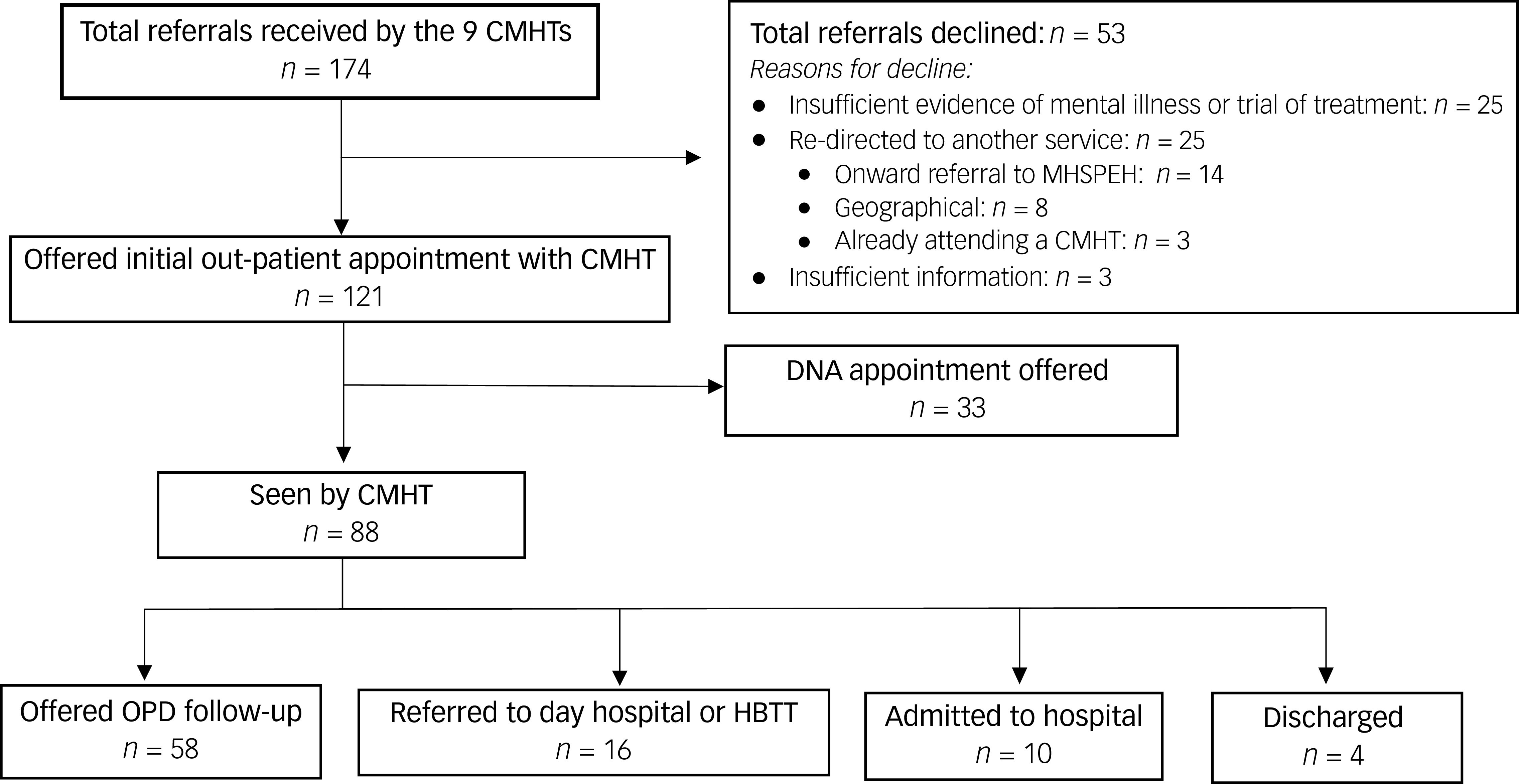
During the study period, there were 174 referrals for 172 individuals to the nine CMHTs (Fig. 1). For analysis, these teams were grouped into three areas: Area A (West Dublin), Area B (North Dublin City) and Area C (South Dublin City and suburbs), each with similar demographics and resource levels. Of the 174 referrals, 69% (120/174) were accepted by the teams. Among all referrals, 67% (117/174) were male and 33% (57/174) were female, with a mean age of 34 years (range 19–64). Accepted and declined referrals were analysed separately owing to differing outcomes between the groups.
Flowchart of referrals to community mental health team for review. CMHT, community mental health team; MHSPEH, specialised mental health services for people experiencing homelessness; DNA, did not attend; OPD follow-up, out-patient CMHT follow-up; HBTT, home-based treatment team.

Referrals accepted by specialised mental health services for PEH
Demographics
Of the 121 referrals accepted by the nine CMHTs during the study period, 65% (78/121) were male and 36% (43/121) female, with a mean age of 34 years. Most referrals (58%, 70/121) had previously attended a CMHT, 21% (25/121) were transfers from other teams and 26% (31/121) had a history of severe mental illness (SMI). Alcohol and substance use were common comorbidities, with 31% (37/121) reporting substance use and 21% (26/121) reporting alcohol use.
Source of referral
The most frequent referral sources were general practitioners (55%, 95/174) and emergency department psychiatry teams (34%, 60/174). The other referrals were from medical professionals (4%, 7/174), other CMHTs (3%, 6/171) and prison psychiatry teams (3%, 6/171).
Pre-existing diagnosis, reason for referral and vulnerabilities
Among accepted referrals, 26% (31/121) had no pre-existing psychiatric diagnosis, and diagnosis data were missing for 14% (17/121). Diagnoses included psychotic disorders (17%, 21/121), anxiety disorders (10%, 12/121), major depressive disorder (9%, 11/121) and personality disorders (9%, 11/121). Other conditions included substance use disorder (7%, 8/121), bipolar disorder (5%, 6/121), neurodevelopmental disorders and bulimia (3%, 4/121).
Low mood was a concern in 40% (48/121) of referrals: 21% (25/121) with suicidal ideation, 19% (23/121) without. Psychotic or affective symptoms were reasons in 30% (36/121), including behavioural disturbance (n = 24), paranoia (n = 8) and hallucinations (n = 4). Other reasons included stable SMI transfer (12%; 15/121), anxiety (12%; 14/121), self-harm (4%; 5/121) and eating disorders (2%; 3/121).
Of accepted referrals, 62% (65/121) were international protection applicants (IPAs), mainly in hotels or hostels. In Area A (West Dublin), IPAs represented 87% (47/53) of referrals. Additional vulnerabilities included medical issues (n = 6), LGBTQ+ status (n = 4), being a victim of human trafficking (n = 3), recent prison release (n = 3), state care exit (n = 3), rough sleeping (n = 3) and being a travelling community member (n = 2). Two participants had multiple vulnerabilities.
Outcomes
Of the 121 patients offered appointments, 27% (33/121) did not attend any review with the service (Fig. 1). The number of appointments offered and the means of engagement (domiciliary visit, etc.) were not recorded. Of the 88 new patient appointments attended, 66% (58/88) of individuals were offered further out-patient follow-up, 18% (16/88) were offered day hospital or home-based treatment team follow-up, 11% (10/88) were offered in-patient psychiatry admission and 5% (4/88) were discharged following the first review.
Period of time homeless
Period of time homeless was recorded in 44% (53/121) of cases. Of these, 14% (17/121) reported experiencing homelessness for less than 3 months, 11% (14/121) for 3–6 months, 13% (16/121) for 6–12 months, 3% (3/121) for 1–2 years and 3% (3/121) for over 5 years. For the remaining 56% (68/122) the period homeless was not recorded.
Referrals declined by specialised mental health services for PEH
Demographics
During the study, 53 referrals were declined by the CMHTs. Of these individuals, 74% (39/53) were male and 26% (14/53) female. Nearly half (47%; 25/53) had previously attended a CMHT, 19% (10/53) had transferred from another CMHT and 23% (12/53) had a history of SMI. Alcohol and substance use were common comorbidities, with 34% (18/53) reporting substance use and 32% (17/53) reporting alcohol use.
Source of referral
The majority of declined referrals came from general practitioners (51%; 27/53), followed by emergency department psychiatry teams (32%; 17/53). The other sources were prison psychiatry teams (9%; 5/53), CMHTs (6%; 3/53) and other medical referrals (2%; 1/53).
Pre-existing diagnosis, reason for referral and vulnerabilities
Among declined referrals, 23% (12/53) had no pre-existing psychiatric diagnosis, and diagnosis data were missing for 19% (10/53). Psychotic illness was the most common diagnosis, at 24% (13/53), with these patients typically referred to other CMHTs or specialist services. Other diagnoses included personality disorder (11%; 6/53), depression (9%; 5/53), anxiety (6%; 3/53) and substance use/neurodevelopmental disorders (8%; 4/53). Nearly half (49%; 26/53) were referred for low mood, and 34% (18/53) for psychotic or affective symptoms, including behavioural disturbance (13%; 7/53), paranoia/delusions (17%; 9/53) and hearing voices (4%; 2/53). Suicidal ideation and anxiety accounted for 9% (5/53) and 8% (4/53) respectively.
Of the declined referrals, 23% (12/53) were international protection applicants. Other vulnerabilities (17%; 9/52) included medical issues, LGBTQ+ status, recent state care exit and being a human trafficking victim; one participant had multiple vulnerabilities.
Type of accommodation and period of homelessness
Accommodation type was recorded in 93% (44/53) of cases, with 75% (40/53) using emergency accommodation – 55% (29/53) in hostels and 20% (11/53) in hotels or bed and breakfast accommodation. Long-term accommodation and rough sleeping each accounted for 4% (2/53). Accommodation data were missing for 17% (9/53). The duration of homelessness was unknown in 85% (45/53) of cases. Among recorded cases, 6% (3/53) had been homeless for less than 3 months, 7% (4/53) for 3–6 months, and 2% (1/53) for over 5 years.
In-patient admissions
Demographics
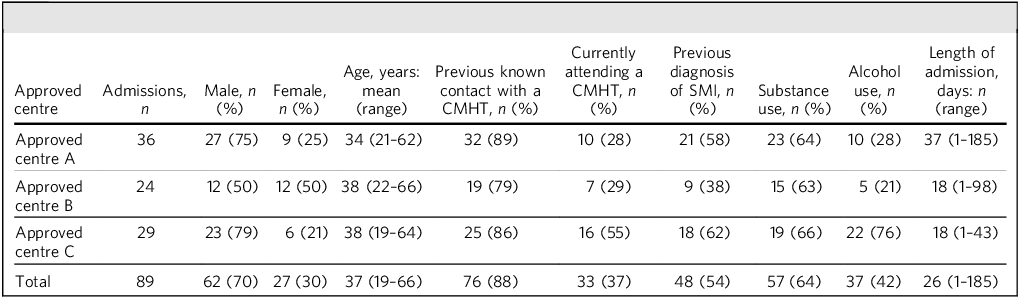
Over a 1-year period, there were 89 admissions to three in-patient psychiatry units in Dublin (Table 1). Of these, 70% (62/89) were male and 30% (27/89) female, with a mean age of 37 years (range 19–66 years). Most individuals (88%; 76/89) had had prior contact with a CMHT, and 37% (33/89) were actively attending one at admission. SMI was diagnosed in 54% (48/89) before admission. Substance use was reported in 64% (57/89) and alcohol use in 42% (37/89). International protection applicants accounted for 9% (8/89). The average admission length was 26 days (range 1–185 days), with 57% (51/89) admitted involuntarily.
Admissions to in-patient psychiatry units (approved centres)

CMHT, community mental health team; SMI, severe mental illness.
Referral pathways, discharge diagnosis and vulnerabilities
Symptoms at presentation included symptoms of acute mania or psychosis (71%; 63/89), low mood (19%; 17/89), self-harm or self-poisoning (9%; 8/89) and side-effects of psychotropic medication (1%; 1/89).
On discharge, more than half were diagnosed with psychotic disorders (53%; 47/89), 15% (13/89) with personality disorder and 11% (10/89) with mental and behavioural disturbance due to psychoactive substance use. The remainder were diagnosed with affective disorders, with major depressive disorder accounting for 9% (8/89) and bipolar disorder accounting for 8% (7/89). The remainder were diagnosed with alcohol dependence syndrome (2%; 2/89) and intellectual disability (2%; 2/89).
Additional vulnerabilities were found in 31% of individuals (28/89), with being an international protection applicant (9%; 8/89) and rough sleeping (9%; 8/89) being the most common. Other vulnerabilities were active intravenous drug use (n = 3), being a recent care leaver (n = 3), being a member of the travelling community (n = 2) and having significant medical conditions (n = 2). In addition, those with intellectual disability (n = 2), pregnancy (n = 1) and who identified as LGBTQ+ (n = 1) were felt to have additional vulnerability. One individual had more than one vulnerability.
Type of accommodation and period of time homeless
For in-patient admissions, type of homeless accommodation on admission was recorded in all cases. The majority (62%; 55/89) were residing in emergency accommodation at the time of admission, with 15% (13/89) in supported temporary accommodation, 12% (11/89) in long-term accommodation, 9% (8/89) rough sleeping and 2% (2/89) couch surfing.
In terms of length of time spent homeless, this was recorded in 71% (63/89) of cases. Of these, 14% (12/89) had been homeless for less than 3 months, 10% (9/89) for 3–6 months, 12% (11/89) for 1–2 years, 8% (7/89) for 3–5 years and 27% (24/89) for over 5 years. In 29% (26/89) of cases, the length of time the person was homeless was unknown.
Emergency department presentations
Demographics
During the study period, 138 episodes of presentation to the emergency department involved 110 individuals. Of these, 12% (17/138) left before being seen and were not assessed by psychiatry. Among the 121 referrals assessed, 26% (31/121) required admission (medical or psychiatric) and 74% (90/121) were referred for community follow-up: 47% (42/90) to CMHTs, 29% (26/90) to addiction services and 24% (22/90) to their general practitioner.
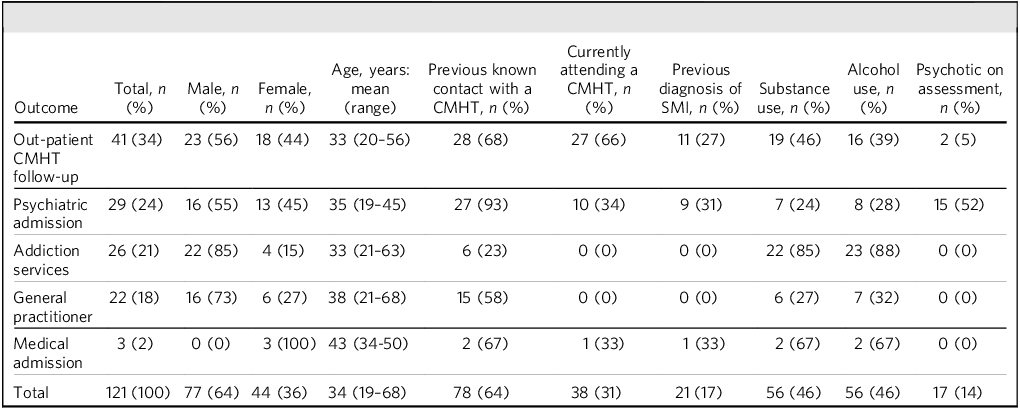
The assessed group was 64% (77/121) male and 36% (44/121) female, with a mean age of 34 years (range 19–68 years) (Table 2). Outcome following assessment included out-patient CMHT follow-up for 34% (41/121), psychiatric admission for 24% (29/121), addiction services for 21% (26/121), general practitioner follow-up for 18% (22/121) and medical admission for 2% (3/121).
Presentations to the emergency department by outcome

CMHT, community mental health team.
Most presentations (64%; 78/121) had had previous CMHT contact, although only 31% (38/121) were currently attending. A minority had a pre-existing SMI (17%; 21/121) and 14% (17/121) were psychotic at assessment. Alcohol and substance use were both reported by 46% (56/121), with one-third (33%; 40/121) intoxicated on arrival at the emergency department.
Method of presentation to emergency department, discharge diagnosis and vulnerabilities
Self-presentation was most common, at 45% (54/121), followed by ambulance (26%; 31/121), Gardaí (Irish police) (17%; 21/121) and general practitioner or other doctor referral (12%; 15/121).
Personality disorder was the most frequent discharge diagnosis (34%; 41/121), followed by psychotic disorders (19%; 23/121), alcohol and substance use disorders (16%; 19/121) and neurodevelopmental disorders (16%; 19/121). Psychotic disorders included schizophreniform disorder (14%; 17/121) and other psychoses (5%; 6/121). Substance use diagnoses comprised substance dependence (9%; 11/121), alcohol dependence (5%; 4/121) and psychoactive substance-induced disorders (3%; 4/121). Neurodevelopmental disorders included attention-deficit hyperactivity disorder (7%; 8/121), intellectual disability (5%; 6/121) and autism spectrum disorder (4%; 5/121). Mood disorders accounted for 14% (17/121), predominantly major depressive disorder (12%; 14/121), with bipolar disorder and post-traumatic stress disorder comprising 3% (3/121).
Type of homelessness was recorded in 73% (88/121) of cases. Emergency accommodation was most common (39%; 47/121), with 35% (42/121) in hostels and 4% (5/121) in hotels or bed and breakfast accommodation. The other types were couch surfing (13%; 16/121), short-term homeless accommodation (10%; 12/121), rough sleeping (7%; 8/121) and long-term homelessness (4%, 5/121).
Additional vulnerabilities were noted in 12% (14/121) of cases, comprising members of the travelling community (6%, 7/121), international protection applicants (2%, 3/121), those with previous offending risk factors (2%, 2/121) and individuals identifying as LGBTQ+ (2%, 2/121).
Discussion
This study used routine service data from three types of mental health service – in-patient, out-patient and emergency department – to evaluate referrals of PEH. Referrals accepted and declined by services were analysed, along with demographic profiles. No significant changes in acceptance criteria or service delivery occurred during the study period.
Summary of findings
Over 400 referrals to psychiatric services were analysed, highlighting high demand and significant mental health burdens among PEH. In CMHTs, 70% of referrals were accepted; among those declined, 47% (25/53) were redirected to more appropriate services. Over half of those declined either did not meet secondary care criteria or lacked sufficient referral detail. Notably, 27% (33/121) of those offered appointments did not attend. The cohort exhibited high complexity: over half had had previous CMHT contact, more than one-quarter had SMI, nearly one-third reported ongoing substance use and one-fifth reported alcohol use. Documentation of homelessness duration and accommodation type was generally poor.
For in-patient psychiatry units, 89 admissions were reviewed across three units. The majority of those admitted were younger males, with 88% having had prior CMHT contact; however, only 37% had current CMHT engagement, possibly reflecting care access barriers. Over half had a previous SMI diagnosis, and comorbid alcohol and substance use disorders were common. Length of stay varied widely. Comparing with previous Irish studies Reference Daly, Craig and O’Sullivan15,Reference Guilfoyle, Daly, Craig, Sweeney and O’Donnell16 is challenging because of differences in measures; Feeney et al Reference Feeney, Umama-Agada, Gilhooley, Asghar and Kelly17 reported a mean length of stay of 22.2 days in a Dublin unit over 2 years, whereas our study found a mean of 26 days. Involuntary admission rates were markedly higher here, at 57%, compared with 13.7% in Feeney et al Reference Feeney, Umama-Agada, Gilhooley, Asghar and Kelly17 and approximately 13% annually reported by the Health Research Board. 18
Emergency department presentations showed that most patients waited for assessment, with one-third intoxicated on arrival. One-quarter were admitted medically or psychiatrically. Despite nearly two-thirds having had prior CMHT contact, only one-third were currently engaged. Personality disorder was diagnosed in one-third of patients, and active or chronic psychosis was found in one-fifth. Substance use and additional vulnerabilities were prevalent. Homelessness duration and type were poorly recorded. Emergency accommodation and hostels were commonly used across all cohorts.
The complexities and comorbidities observed align with international Reference Gregor19,Reference Khan, Koehne, Haine and Dorney-Smith20 and Irish studies Reference Daly, Craig and O’Sullivan15,Reference Guilfoyle, Daly, Craig, Sweeney and O’Donnell16 on PEH accessing mental healthcare. Yet, current care models may be insufficient without timely assertive outreach, dual diagnosis services and well-resourced housing interventions.
Strengths and limitations
This is the first Irish study examining a broad range of referrals to mental health services for PEH. Using routine service evaluation data collected over 1 year, the study provides a comprehensive overview of referral patterns, highlighting a high demand for mental health services and the complex vulnerabilities within this population.
Regarding limitations, data were primarily collected from paper-based referrals, which, although efficient, limited our ability to quantify or clarify details such as current symptoms, substance use disorders, comorbidities, length of homelessness and type of accommodation – key factors in understanding the needs of this population. Local policies dictated acceptance criteria for homeless teams, excluding some groups classified as homeless by FEANTSA, Reference Gregor19 such as those at risk of homelessness, living in long-term accommodation or outside catchment areas. It is unclear whether these criteria were consistently applied across centres. Underreporting is likely, with Ní Cheallaigh et al Reference Ní Cheallaigh, Cullivan, Sears, Lawlee, Browne and Kieran21 estimating a 30% rate, especially affecting identification of ‘couch surfing’ individuals.
Much of the data-set relied on incomplete paper-based general practitioner referrals, and as data were gathered from a limited number of centres, the findings are not generalisable beyond the study sites.
Future directions
Our findings highlight the significant demand for mental health services by those experiencing homelessness. In the absence of effective integrated healthcare systems and housing interventions, it is likely that the standard CMHT approach is insufficient to meet this complex need. Moreover, our findings support the reported high rates of substance and alcohol use among PEH. The timely development of integrated dual diagnosis services in Ireland, as outlined by MacGabhann et al, Reference MacGabhann, Moore and Moore22 is also crucial in meeting the needs of this vulnerable population.
Most referrals in this study were, paper-based, whereas in-patient and liaison data were electronically stored. This information is not, however, available across healthcare services in Ireland. Electronic health records have been shown to improve the quality of information and of patient care, and provide information for healthcare planning. Reference Häyrinen, Saranto and Nykänen23 Although recommended by the Committee on the Future of Healthcare (Sláintecare), 24 this has yet to be made available in most public mental health services in Ireland. The introduction of electronic health records would also reduce administrative burden and improve continuity of care for this vulnerable cohort with complex needs. It may also improve collaboration across agencies.
About the authors
Margaret Gallagher, Department of Public Health and Primary Care, Institute of Population Health, School of Medicine, Trinity College Dublin, and School of Medicine, University College Dublin, Ireland. Jo-Hanna Ivers, Department of Public Health and Primary Care, Institute of Population Health, School of Medicine, Trinity College Dublin, Dublin, Ireland.
Data availability
The data that support the findings of this study are available from the corresponding author, M.G., upon reasonable request.
Author contributions
M.G. conceptualised and planned the piece, and analysed the data. Both M.G. and J.-H.I. drafted, reviewed and edited the manuscript.
Funding
This research received no specific grant from any funding agency, commercial or not-for-profit sectors.
Declaration of interest
None.

 Open access


eLetters
No eLetters have been published for this article.