Introduction
Ageing has become a global issue in modern societies. As the fastest-growing age group in the world, older adults face not only physiological challenges such as limitations in physical function and cognitive decline but also a range of psychological problems arising from shifts in their social roles (Lee et al. Reference Lee, Zhu, Lane and Portegijs2021). Among these concerns, loneliness is a significant psychological issue frequently experienced by many older adults and serves as an important indicator of their psychological wellbeing, often arising from a lack of social connections (Santini et al. Reference Santini, Jose, Cornwell, Koyanagi, Nielsen, Hinrichsen, Meilstrup, Madsen and Koushede2020). Meanwhile, with the rapid growth of the mobile internet, social media is becoming an essential tool for older adults to alleviate loneliness. However, research to date on social media use (SMU) and loneliness in older people has been somewhat mixed (Fuss et al. Reference Fuss, Dorstyn and Ward2019; Tang et al. Reference Tang, Jin, Zhang and Wang2022). Many studies found that SMU was negatively associated with older adults’ loneliness because it could facilitate connections to social relationships and access to social support (Heo et al. Reference Heo, Chun, Lee, Lee and Kim2015; Nowland et al. Reference Nowland, Necka and Cacioppo2018). Nevertheless, other studies showed that SMU was positively correlated with loneliness in older adults (Tng and Yang Reference Tng and Yang2022) or no significant correlation between these two variables (Aarts et al. Reference Aarts, Peek and Wouters2015). Therefore, such contradictory findings remind us that exploring the mechanism underlying the relationship between SMU and loneliness among older adults becomes necessary.
SMU and loneliness in older adults
Loneliness can occur at any stage of the life cycle but is more easily experienced by older adults whose social interaction is reduced due to factors such as retirement, widowhood, living alone, declining health, as well as limited economic and social status (Ong et al. Reference Ong, Uchino and Wethington2016). Therefore, loneliness is recognized as a crucial risk factor for developing physical and mental health problems in older people (Ansari et al. Reference Ansari, Muhammad and Dhar2023; Ong et al. Reference Ong, Uchino and Wethington2016). The social distancing practices implemented during the Covid-19 pandemic may have particularly exacerbated feelings of loneliness among older adults (Armitage and Nellums Reference Armitage and Nellums2020). Thus, identifying the key antecedents that contribute to loneliness among older adults is of critical importance.
Social media is an internet-based tool that allows users to connect with others regardless of location or time (Von Muhlen and Ohno-Machado Reference Von Muhlen and Ohno-Machado2012). Especially for older adults, social media is mainly used to maintain social relationships (Nef et al. Reference Nef, Ganea, Müri and Mosimann2013). Therefore, SMU is believed to help reduce isolation and loneliness among older adults (Francis et al. Reference Francis, Kadylak, Makki, Rikard and Cotten2018). A growing number of studies have found that SMU plays a positive role in alleviating loneliness in older adults (Schlomann et al. Reference Schlomann, Seifert, Zank, Woopen and Rietz2020; Bonsaksen et al. Reference Bonsaksen, Ruffolo, Leung, Price, Thygesen, Schoultz and Geirdal2021). Convincingly, similar results have also been synthesized by a recent meta-analysis (Wiwatkunupakarn et al. Reference Wiwatkunupakarn, Pateekhum, Aramrat, Jirapornchaoren, Pinyopornpanish and Angkurawaranon2022). However, consensus has yet to be reached on this relationship among older adults (Fuss et al. Reference Fuss, Dorstyn and Ward2019; Tang et al. Reference Tang, Jin, Zhang and Wang2022). Studies have shown that SMU was not associated with loneliness in older adults (Aarts et al. Reference Aarts, Peek and Wouters2015; Stockwell et al. Reference Stockwell, Stubbs, Jackson, Fisher, Yang and Smith2021), even with a positive relationship between the two variables (Tng and Yang Reference Tng and Yang2022). The ‘internet paradox’ proposed by Kraut et al. (Reference Kraut, Patterson, Lundmark, Kiesler, Mukhopadhyay and Scherlis1998) posits that SMU, while intended to facilitate social connection, may paradoxically undermine real-life relationships by reducing social participation and face-to-face interactions, thereby increasing the risk of loneliness among older adults. For instance, older adults who engage with friends on social media but not with family may experience greater loneliness due to increased social strain (Tng and Yang Reference Tng and Yang2022). Aarts et al. (Reference Aarts, Peek and Wouters2015) also argued that it is not the frequency of SMU itself that matters but rather the time spent on activities aimed at fighting against loneliness, such as seeking and receiving social support. Therefore, the absence of consensus encourages us to explore further the mechanism underlying the relationship between SMU and loneliness in older people.
One possible explanation for these inconsistencies is that SMU includes various aspects of online activities, yet it is usually measured as a whole. Therefore, the differentiation of the purposes of SMU based on their functions may be an influential factor. According to the utilization of social media, Burke et al. (Reference Burke, Kraut and Marlow2011) categorized SMU into three purposes: active private use (i.e. communication), active public use (i.e. posting) and passive use (i.e. browsing). As active SMU, either communication or posting provides a direct or indirect way to facilitate direct or potential exchanges with others, which can predict positive psychological outcomes (Brandtzæg Reference Brandtzæg2012; Masur Reference Masur2021). As evidence, a series of studies indicated that communication and posting were associated with lower loneliness (Burke et al. Reference Burke, Marlow and Lento2010; Hutto et al. Reference Hutto, Bell, Farmer, Fausset, Harley, Nguyen and Fain2015). In contrast, viewing information on social media does not involve direct or potential social interactions, which may reduce people’s social connections and even cause upward comparison (Ahmed Reference Ahmed2018; Nowland et al. Reference Nowland, Necka and Cacioppo2018). Therefore, browsing was thought to be associated with lower wellbeing in older adults, including loneliness (Burke et al. Reference Burke, Marlow and Lento2010; Tang et al. Reference Tang, Jin, Zhang and Wang2022).
The mediating role of social support
As aforementioned, different purposes of SMU are differentially associated with loneliness among older adults (Hutto et al. Reference Hutto, Bell, Farmer, Fausset, Harley, Nguyen and Fain2015; Tang et al. Reference Tang, Jin, Zhang and Wang2022). We speculate that these differences may stem from the varying degrees of social support embedded in different purposes of SMU, such as communication, posting and browsing. For example, when social media is used as a way to enhance existing relationships and forge new social connections (e.g. communication and posting), it may offer a new avenue for older adults to communicate with others and bolster social support, thereby alleviating loneliness (Zhang et al. Reference Zhang, Kim, Silverstein, Song and Burr2021). As evidence, previous studies have shown that social media communication and posting can strengthen people’s social bonds and sense of belonging, thereby mitigating loneliness (Chen et al. Reference Chen, Mark and Ali2016; Sutcliffe et al. Reference Sutcliffe, Dunbar and El-Jarn2023). However, non-connection-oriented usage (e.g. browsing) fails to contribute to interpersonal connections and may instead induce upward social comparison, potentially diminishing social support (Antunes et al. Reference Antunes, de Mello Monteiro, Crocetta, de Lima Antão, Leitão, da Rocha, de Almeida Barbosa, Guarnieri, da Silva, Raimundo and de Abreu2023). Consequently, social support may serve as a key mechanism linking different purposes of SMU to loneliness among older adults.
Social support refers to the perception or experience of being cared for and valued by others within one’s social network (Wills Reference Wills and Clark1991). According to the social convoy model, family ties serve as a primary source of social support, particularly for older adults (Chopik Reference Chopik2017). One of the important motivations for older adults to engage in social media is to seek and maintain social support (Nef et al. Reference Nef, Ganea, Müri and Mosimann2013). Therefore, social support was recognized as a crucial factor in promoting the mental health of older adults, including the alleviation of loneliness and depression (Li et al. Reference Li, Jiang and Zhang2019; Zeng et al. Reference Zeng, Mao, Lu and Chen2023). Based on these findings, social support is hypothesized to mediate the relationships between different purposes of SMU and loneliness among older adults. Specifically, communication and posting would attenuate loneliness in older adults by enhancing perceived social support, while browsing would increase loneliness by reducing perceived social support. Furthermore, given empirical evidence that perceived that social support exerts a stronger influence on loneliness than received social support (Haber et al. Reference Haber, Cohen, Lucas and Baltes2007), the present study focuses on assessing perceived rather than received support. This emphasis is particularly relevant in later life, when subjective evaluations of available social resources tend to serve as more salient predictors of wellbeing than the objective quantity of support received.
The moderating role of attachment styles
In addition to the purposes of SMU, its consequences may also vary depending on the user’s characteristics (Yang Reference Yang2016). Attachment styles, as a prototype of interpersonal relationships, have been shown to have good explanatory power for understanding individuals’ offline social interaction (Mikulincer and Shaver Reference Mikulincer and Shaver2007). Prior research indicates that insecure attachment is associated with interpersonal difficulties, which in turn reduce perceived social support (Fujimori et al. Reference Fujimori, Hayashi, Fujiwara and Matsusaka2017; Pandeya Reference Pandeya2017). Predictably, online relationships, often considered to be extensions of offline relationships, may also be influenced by individuals’ real-life interpersonal interaction patterns (Marriott and Buchanan Reference Marriott and Buchanan2014). Indeed, accumulating evidence indicates that attachment styles, as relatively stable individual difference variables, play a crucial role in shaping the psychological outcomes of SMU (Jenkins-Guarnieri et al. Reference Jenkins-Guarnieri, Wright and Hudiburgh2012; Oldmeadow et al. Reference Oldmeadow, Quinn and Kowert2013; Rom and Alfasi Reference Rom and Alfasi2014), particularly by influencing perceived social support (Yang et al. Reference Yang, Chen, Liang, Du, Guo and Du2024).
Attachment styles can be conceptualized in terms of anxiety and avoidance, each dimension of which significantly influences individuals’ emotions and cognitions (Brennan et al. Reference Brennan, Clark, Shaver, Simpson and Rholes1998). Individuals high in attachment anxiety, characterized by a chronic desire for closeness and fear of abandonment (Vrtička and Vuilleumier Reference Vrtička and Vuilleumier2012), tend to use social media as a socio-emotional tool to maintain relationships and achieve proximity (Rom and Alfasi Reference Rom and Alfasi2014). However, their persistent concerns about rejection or neglect may lead them to perceive lower levels of social support (Merz and Consedine Reference Merz and Consedine2009). Consequently, individuals with high attachment anxiety may exhibit stronger associations between SMU and perceived social support, suggesting that attachment anxiety may potentially moderate this association due to heightened sensitivity to social evaluation. For instance, older adults with high attachment anxiety may engage more frequently in communicative SMU, thereby enhancing their perceived social support. In contrast, attachment avoidance is characterized by discomfort with closeness and a preference for independence (Vrtička and Vuilleumier Reference Vrtička and Vuilleumier2012). Individuals with high attachment avoidance are more likely to use social media as an instrumental communication medium (Rom and Alfasi Reference Rom and Alfasi2014), engaging in restrained SMU behaviours such as limited Facebook use and lower levels of self-disclosure. This tendency reflects their reliance on deactivating strategies, which discourage emotional openness and amplify concerns about vulnerability or dependence on others (Oldmeadow et al. Reference Oldmeadow, Quinn and Kowert2013; Hart et al. Reference Hart, Nailling, Bizer and Collins2015). Nevertheless, these deactivating tendencies may be attenuated in low-threat contexts. According to the online disinhibition effect (Suler Reference Suler2004), the anonymity and reduced social cues of online environments can lower perceived interpersonal threat, thereby increasing the willingness of avoidant individuals with high attachment avoidance to interact online to fulfil social needs (Jenkins-Guarnieri et al. Reference Jenkins-Guarnieri, Wright and Hudiburgh2012; Lee Reference Lee2013). This dual pattern highlights the context-sensitive nature of avoidant attachment in shaping social media engagement and its implications for social support and psychological wellbeing. Additionally, attachment dynamics in later life may manifest differently. Additionally, attachment dynamics may manifest differently in later life. To be specific, older adults with high attachment anxiety are particularly sensitive to the availability of social support, whereas those with high attachment avoidance often prioritize independence and limit reliance on others (Kafetsios and Sideridis Reference Kafetsios and Sideridis2006). Empirical evidence further indicates that interpersonal difficulties arising from insecure attachment contribute to loneliness in later life (Woodhouse et al. Reference Woodhouse, Dykas and Cassidy2012; Fujimori et al. Reference Fujimori, Hayashi, Fujiwara and Matsusaka2017), highlighting the enduring influence of attachment processes on social functioning and wellbeing among older adults.
For older adults, relatives and friends constitute vital sources of social support (Tang et al. Reference Tang, Lin and Chen2020). Accordingly, their primary motivation for using social media is to maintain connections with family members, obtain social support and mitigate feelings of isolation and loneliness (Nef et al. Reference Nef, Ganea, Müri and Mosimann2013; Francis et al. Reference Francis, Kadylak, Makki, Rikard and Cotten2018). Social media thus serves as a crucial medium through which older adults sustain their social and emotional bonds (Morris et al. Reference Morris, Adair, Ozanne, Kurowski, Miller, Pearce, Santamaria, Long, Ventura and Said2014). Given that social media communication facilitates interpersonal connection, it is proposed that attachment styles moderate the association between SMU and perceived social support, such that individuals with high attachment anxiety or avoidance may experience differential benefits from SMU in terms of perceived social support enhancement.
Current study
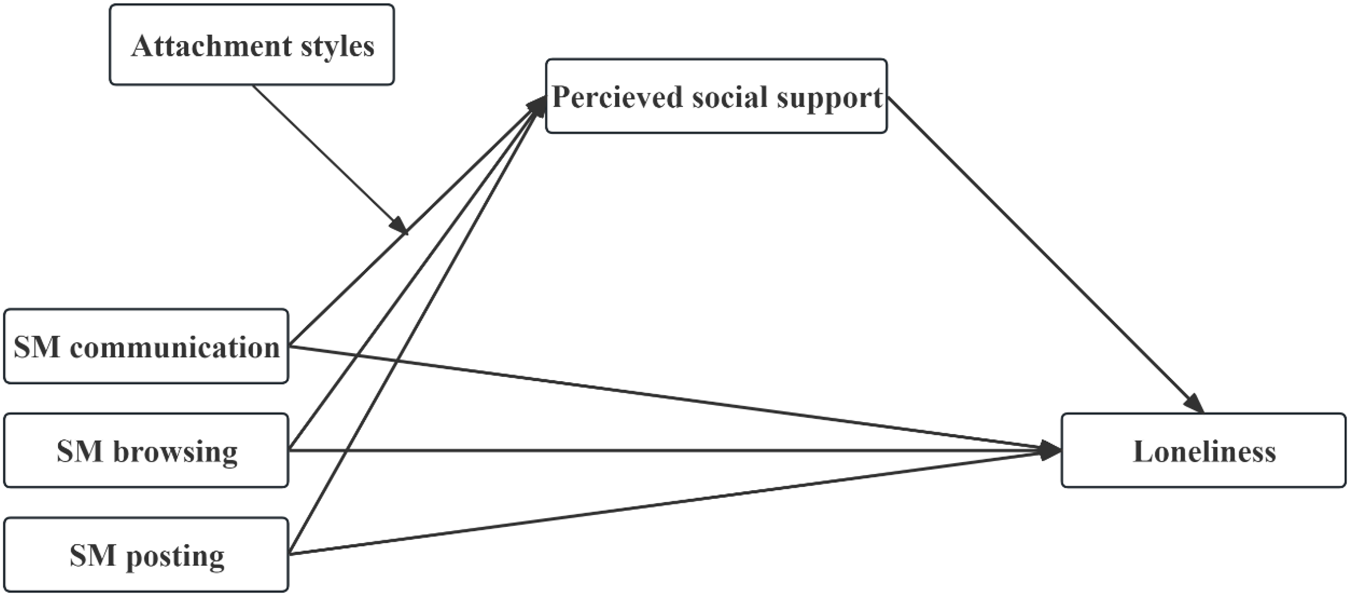
The present study constituted a moderated mediation model to examine the mechanisms underlying the relationship between SMU and loneliness among older adults. Specifically, it aimed to clarify the associations between different purposes of SMU and loneliness among older adults, to investigate whether perceived social support mediates these associations and to determine whether attachment styles moderate these effects (Figure 1). Based on the literature review, we formulated the following hypotheses:
Hypothesis 1: Social media communication and posting would be negatively associated with loneliness among older adults, whereas social media browsing would be positively associated with loneliness.
Hypothesis 2: Perceived social support would mediate the associations between different purposes of SMU and loneliness in older adults. Specifically, social media communication and posting would indirectly reduce loneliness through increased perceived social support, whereas social media browsing would indirectly increase loneliness through decreased perceived social support.
Hypothesis 3a: Attachment anxiety would moderate the mediating effect of perceived social support in the relationship between SMU and loneliness among older adults. Specifically, attachment anxiety would moderate the indirect associations between different purposes of SMU and perceived social support, such that older adults with high attachment anxiety would exhibit stronger associations between each purpose of SMU and perceived social support.
Hypothesis 3b: Attachment avoidance would moderate the mediating effect of perceived social support in the relationship between SMU and loneliness among older adults. Specifically, attachment avoidance would moderate the indirect links between different purposes of SMU and perceived social support, such that older adults with high attachment avoidance would exhibit stronger associations between each purpose of SMU and perceived social support.
Conceptual model.

Methods
Participants and procedures
A total of 538 older adults aged 55 and above, each with at least six months of SMU experience, participated in an online survey administered via Credamo, a professional Chinese data collection platform similar to Amazon Mechanical Turk (MTurk). The sample of the present study was collected in two phases to minimize sampling error and enhance the reliability of the findings. In the first survey, 333 older adults were recruited, of whom 299 provided valid responses. In the second survey, 205 older adults were recruited, yielding 199 valid responses. Consequently, the final sample comprised 498 older adults in total. The two surveys were identical except for one additional item in the second survey, which asked whether participants regularly followed health-related information about Covid-19 on social media; all respondents answered affirmatively. Descriptive statistics for participants’ demographic characteristics are presented in Table 1.
Descriptive statistics of the demographics

Measures
Purposes of SMU
The Chinese version of the Multidimensional Scale of Facebook Use (MSFU, Frison and Eggermont Reference Frison and Eggermont2015; Li et al. Reference Li, Huang, Tan, Liu and Zheng2018) was used to assess the different purposes of SMU. The MSFU comprises nine items divided into three dimensions: communication (two items), posting (three items) and browsing (four items). Each item was rated on a seven-point Likert scale ranging from 1 (never) to 7 (several times per day). In the present study, the items were adapted to reflect several popular social media platforms among Chinese older adults, including WeChat, QQ and TikTok (Douyin). These platforms collectively represent diverse modes of social engagement such as text-based communication, posting activities and short video browsing.
The three-factor model with nine items demonstrated an acceptable fit after allowing two item residuals to correlate, x 2(23) = 142.681, p < 0.001, RMSEA = 0.102, 90 per cent CI [0.086, 0.119], SRMR = 0.069 and CFI = 0.923. Factor loadings ranged from 0.31 to 0.91. The Cronbach’s alpha coefficients were 0.79 for communication, 0.90 for posting and 0.67 for browsing. The browsing sub-scale showed relatively low internal consistency. In subsequent analyses, a correlated residual was added between BQ1 (Browsing Question 1) and BQ3 (Browsing Question 3) to account for item-specific associations, which improved model fit. Although the RMSEA slightly exceeded the conventional cut-off of 0.08, values between 0.08 and 0.10 are generally considered to be indicative of mediocre but acceptable fit (Browne et al. Reference Browne, Cudeck, Bollen and Long1993). The observed RMSEA value (0.102), while marginally above this range, remains acceptable given the model’s complexity. Furthermore, all other fit indices (CFI = 0.923, SRMR = 0.069) met recommended thresholds, indicating that the overall model provided an adequate representation of the data.
Loneliness
Loneliness was measured using the 20-item Chinese version of the UCLA Loneliness Scale (3rd edition) (Russell et al. Reference Russell, Peplau and Ferguson1978; Wang Reference Wang1995). Each item was rated on a four-point Likert scale ranging from 1 (never) to 4 (always), with higher total scores indicating greater loneliness. The scale has demonstrated good reliability and validity among the Chinese older adults (Wang et al. Reference Wang, Zhang, Wang, Zhao and Zhou2022). Confirmatory factor analysis (CFA) indicated that the one-factor model fitted the data well: x 2(170) = 680.623, p < 0.001, RMSEA = 0.078, 90 per cent CI [0.072, 0.084], SRMR = 0.065 and CFI = 0.824. Factor loadings ranged from 0.32 to 0.67, and the Cronbach’s alpha coefficient in the present study was 0.91. Although the CFI value was slightly below the conventional threshold of 0.90, prior research suggests that CFI values between 0.80 and 0.85 can be considered marginally acceptable, particularly for complex models or specific populations (Marsh et al. Reference Marsh, Hau and Wen2004).
Perceived social support
The Chinese version of the Multidimensional Scale of Perceived Social Support (MSPSS) was used to measure perceived social support (Zimet et al. Reference Zimet, Dahlem, Zimet and Farley1988; Chou Reference Chou2000). The MSPSS consists of 12 items across three domains: family, friends and significant others. Each domain includes four items, which were rated on a seven-point Likert scale ranging from 1 (very strongly disagree) to 7 (very strongly agree), with higher scores indicating greater perceived social support. The scale has demonstrated good reliability and validity among the Chinese older population (Xiao et al. Reference Xiao, Shi, Dong, Zheng, Xue, Zhang, Xue, Lin, Ouyang and Zhang2022). Confirmatory factor analysis indicated that the two-factor model fitted the data after setting two items correlated: x 2(53) = 296.438, p < 0.001, RMSEA = 0.096, 90 per cent CI [0.086, 0.107], SRMR = 0.061 and CFI = 0.894. Factor loadings ranged from 0.57 to 0.74, and Cronbach’s alpha coefficient was 0.89.
Attachment styles
The Chinese Version of Experience in Close Relationship Scale-Short (ECR-S) was used to measure attachment styles (Zhao and Hao Reference Zhao and Hao2019). The ECR-S consists of two dimensions – attachment anxiety and avoidance – with each including six items. Each item was rated on a seven-point Likert scale ranging from 1 (strongly disagree) to 7 (strongly agree). The reliability and validity of ECR-S have been demonstrated in the Chinese adult population (Zhao and Hao Reference Zhao and Hao2019). The two-factor model fitted the data with x 2(53) = 240.660, p < 0.001, RMSEA = 0.084, 90 per cent CI [0.074, 0.095], SRMR = 0.062 and CFI = 0.899. In this study, the factor loadings were from 0.26 to 0.86, and the Cronbach’s alpha coefficients for attachment anxiety and avoidance were 0.71 and 0.77, respectively.
Analytic strategies
All data analyses were conducted using SPSS 25.0 and Mplus 8.4. Descriptive statistics and correlation analyses were first performed in SPSS. Then, the construct validity of the four measures was estimated by using CFA. Latent moderated structural equation (LMS) with the maximum likelihood (ML) estimator was employed to test the mediation and moderated mediation effects (Klein and Moosbrugger Reference Klein and Moosbrugger2000). The bootstrap method (n = 1,000) was adopted to determine the statistical significance of the mediating effects. All modelling procedures were conducted in the Mplus 8.4 statistical package.
Results
Descriptive statistics and correlation analyses
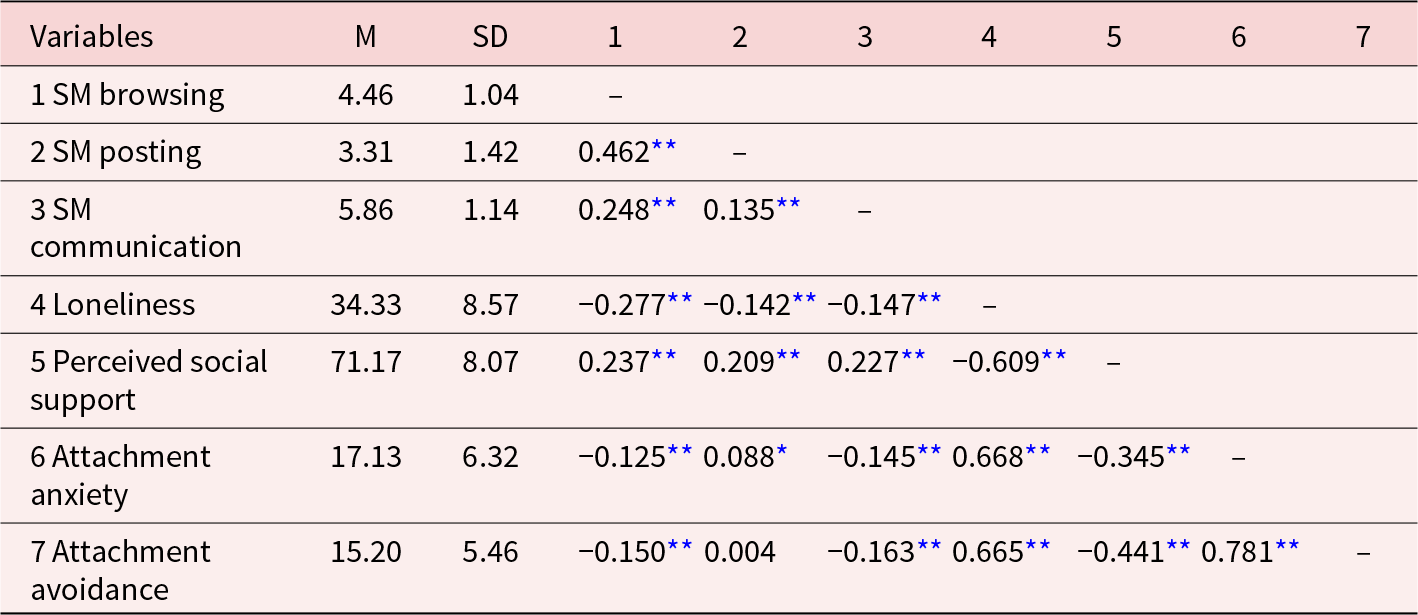
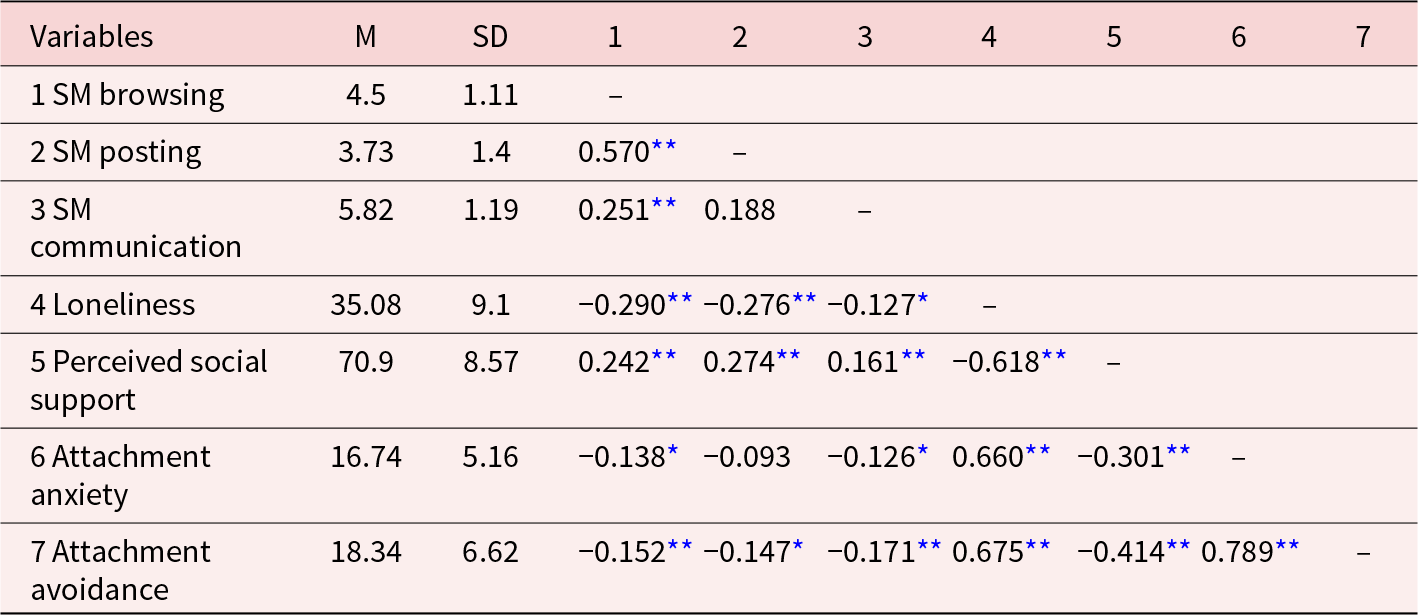
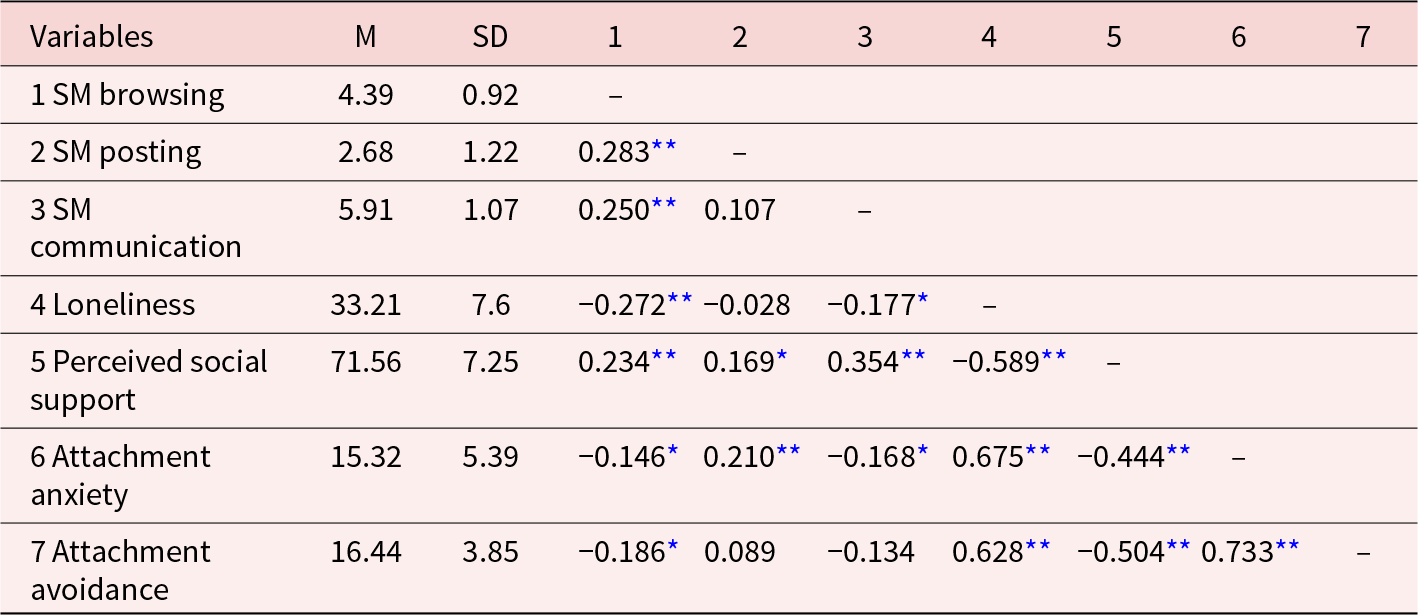
Table 2 shows the means, standard deviations and correlations of the main study variables. We found that communication (r = −0.147, p < 0.01), posting (r = −0.142, p < 0.01) and browsing (r = −0.277, p < 0.01) were all negatively correlated with loneliness among older adults. Perceived social support was negatively correlated with loneliness (r = −0.609, p < 0.01), attachment anxiety (r = −0.345, p < 0.01) and attachment avoidance (r = −0.441, p < 0.01). Please refer to Tables 3 and 4 for the correlation analysis results of the data from Phases 1 and 2.
Means, standard deviations and correlations of the main study variables (n = 498)
Note:
* p < 0.05, **p < 0.01.
Means, standard deviations and correlations of the main variables of the T1 (n = 299)
Note:
* p < 0.05, **p < 0.01.
Means, standard deviations and correlations of the main study variables of the T2 (n = 199)
Note:
* p < 0.05, **p < 0.01.
Testing for the mediation effect
To test Hypothesis 2, the mediation role of perceived social support between different purposes of SMU and loneliness in older adults was examined. Social media communication, posting and browsing were incorporated into a model as independent variables. The fit for the model was acceptable (x 2(767) = 2260.23, p < 0.001, RMSEA = 0.063, 90 per cent CI [0.060, 0.066], SRMR = 0.069 and CFI = 0.824). As shown in Table 5, communication (β = 0.25, p < 0.001) positively predicted perceived social support, and perceived social support negatively predicted loneliness (β = −0.68, p < 0.001). However, browsing (β = −0.01, p = 0.900) and posting (β = 0.19, p = 0.075) had non-significant effects on perceived social support. Moreover, the effects of browsing (β = −0.13, p = 0.256), posting (β = 0.08, p = 0.400) and communication (β = 0.01, p = 0.804) on loneliness were not significant when controlling for perceived social support.
Testing the mediation effect of SMU on loneliness
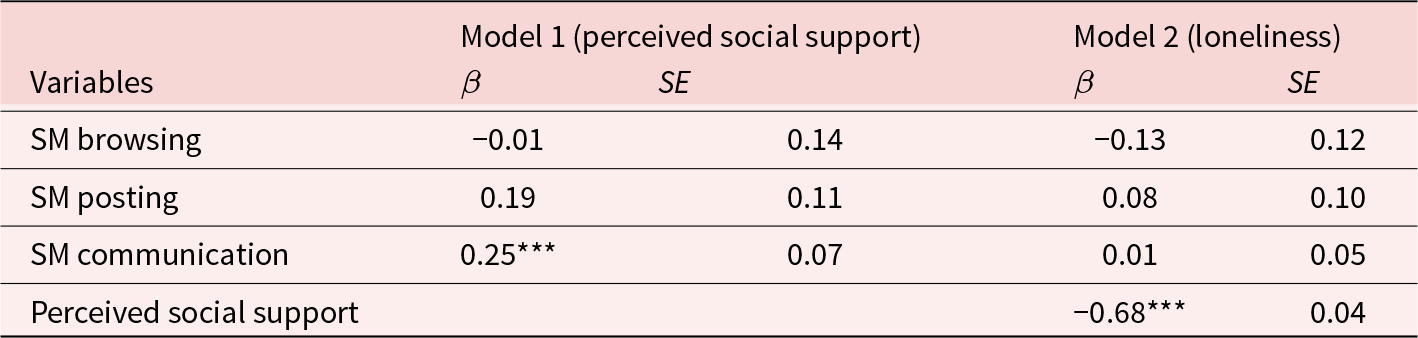
Note: *p < 0.05, **p < 0.01, ***p < 0.001
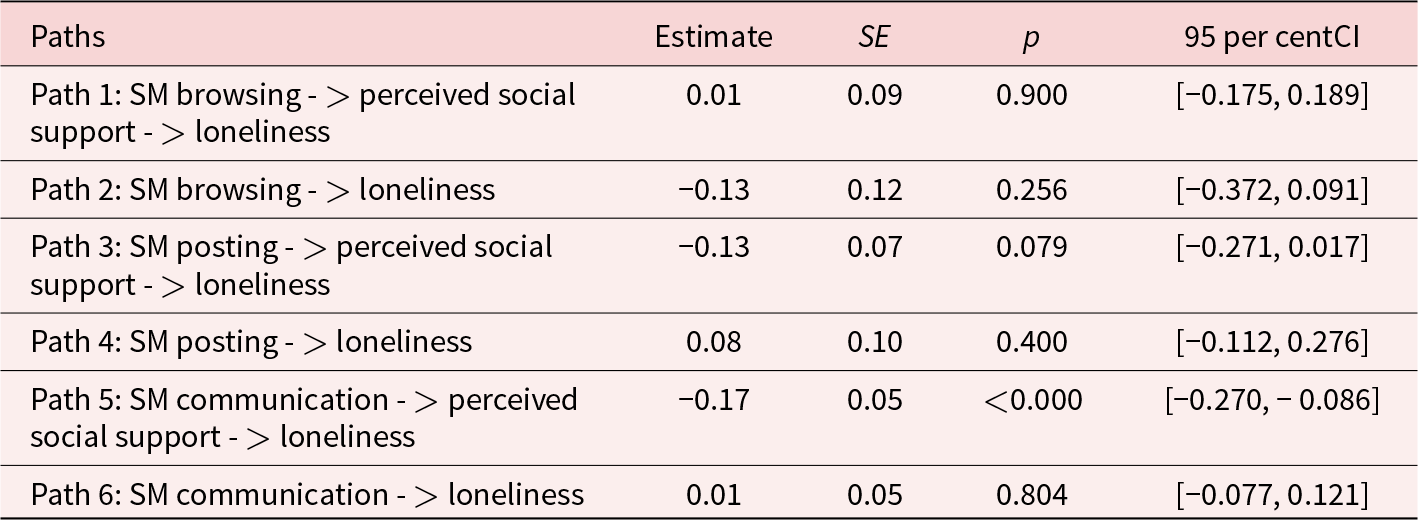
Bootstrapping analyses indicated that the indirect effect of social media communication on older adult’s loneliness through perceived social support was significant (β = −0.17, SE = 0.05, 95 per cent CI = [−0.270, −0.086]), whereas the direct effect was not significant (β = 0.01, SE = 0.05, 95 per cent CI = [−0.077, 0.121]). Therefore, perceived social support fully mediated the relationship between social media communication and loneliness in older adults. Additional results from the multiple-mediator model testing are presented in Table 6.
Multiple-mediator model testing: perceived social support in the prediction of loneliness from social media use
Testing for moderated mediation
A moderated mediation analysis was subsequently conducted. Preliminary mediation results indicated that among the three purposes of SMU, only the communication use exhibited a significant indirect effect on loneliness through perceived social support, whereas posting and browsing use did not yield significant mediation effects. Based on these findings, the subsequent moderated mediation analysis focused on the communication-perceived social support pathway to examine whether attachment anxiety and attachment avoidance moderated this association.
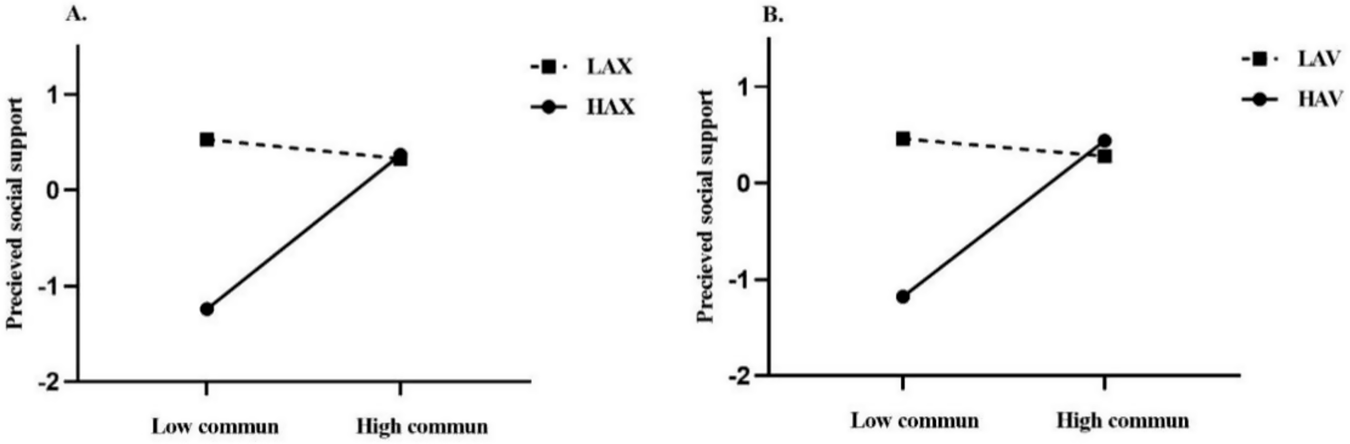
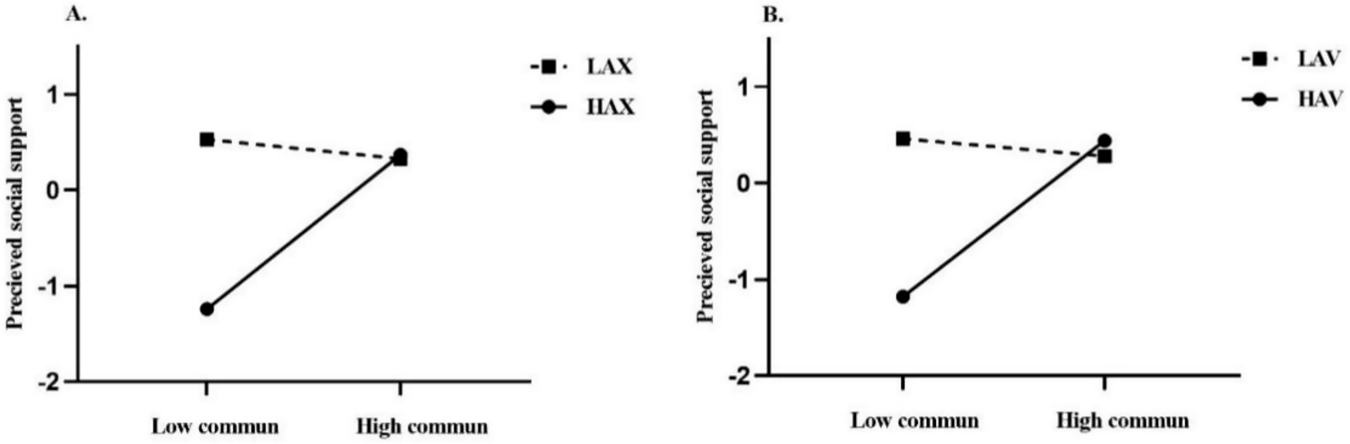
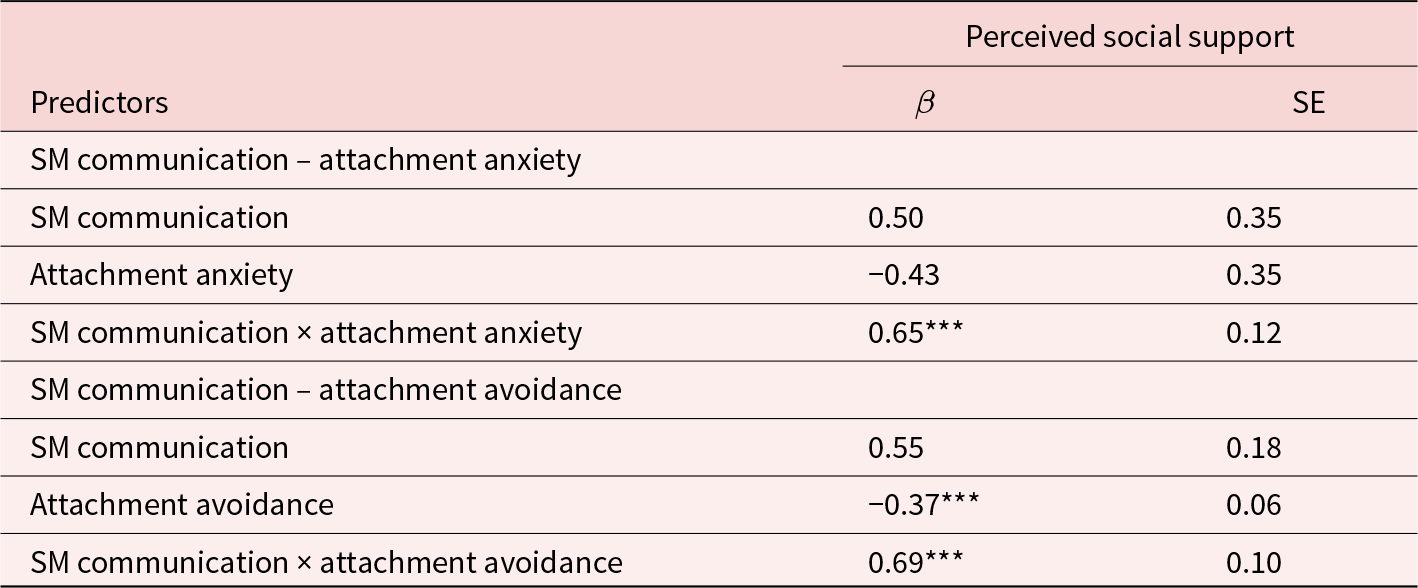
The results revealed that both attachment anxiety and attachment avoidance significantly moderated the first stage of the mediation process. As shown in Table 7, the interactions of social media communication with attachment anxiety (β = 0.65, p < 0.001) and avoidance (β = 0.69, p < 0.001) significantly positively predicted perceived social support. Simple slope tests revealed that the positive predicting effects of social media communication on perceived social support were more obvious in older adults with high levels of attachment anxiety (βsimple = 1.15, p = 0.006) and avoidance (βsimple = 1.24, p < 0.001), whereas such significant effects were absent in the low levels of attachment anxiety and avoidance groups (βsimple = −0.14, p = 0.644; βsimple = −0.14, p = 0.394, Figure 2).
The moderating role of attachment anxiety on the associations between SM communication and perceived social support in older adults. (A) Perceived social support change during the low and high communication conditions for older adults with low or high levels of attachment anxiety (1 SD below or above the mean). (B) Perceived social support change during the low and high communication conditions for older adults with low or high levels of attachment avoidance (1 SD below or above the mean). LAX: low levels of attachment anxiety; HAX: high levels of attachment anxiety; LAV: low levels of attachment avoidance; HAV: high levels of attachment avoidance; Commun: communication.
Moderated mediation models result
Note: *p < 0.05, **p < 0.01, ***p < 0.001
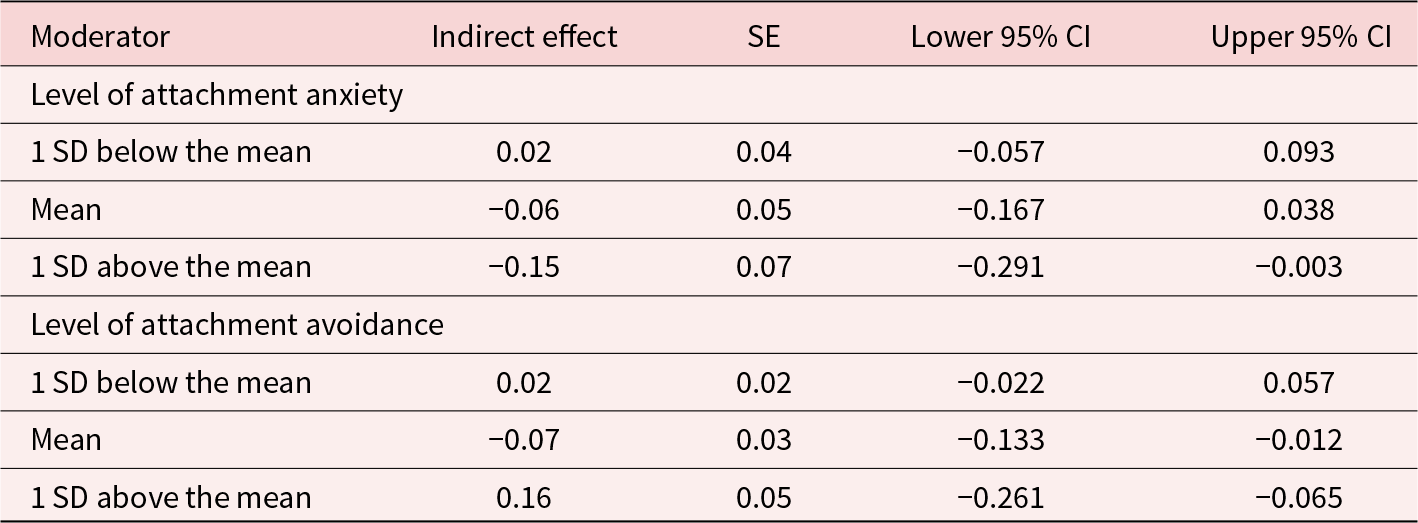
Finally, we evaluated the conditional indirect effects of social media communication on loneliness via perceived social support to facilitate the interpretation of the significant effects mentioned earlier. As shown in Table 8, the mediating role of perceived social support was significant (β = −0.15, 95 per centCI [−0.219, −0.003]) in older adults with high levels of attachment anxiety (1 SD above the mean), while such significant mediating effects were absent in those with medium (1 SD at the mean) and low (1 SD below the mean) levels of attachment anxiety. Additionally, the mediating effects of perceived social support were significant in older adults with high (β = −0.16, 95 per centCI [−0.216, −0.065]) and medium (β = −0.07, 95 per centCI [−0.133, −0.012]) levels of attachment avoidance; however, it was not significant in those with low levels of attachment avoidance.
Conditional indirect effect at specific levels of moderators when treating perceived social support as a mediator
Discussion
The present study formulated a moderated mediation model to investigate the mechanism underlying the relationships between different purposes of SMU and loneliness among older adults. The findings demonstrated that social media communication, posting and browsing were all negatively associated with loneliness in older adults. Furthermore, perceived social support fully mediated the association between communication and loneliness. In addition, attachment anxiety and attachment avoidance significantly moderated the association between social media communication and perceived social support. Taken together, these findings provide valuable insights into how and under what conditions SMU is related to loneliness in later life.
The associations between different purposes of SMU and loneliness in older adults
The present results indicated that social media communication and posting were negatively associated with loneliness among older adults. Consistent with these findings, previous studies have also shown that engaging in communication and posting activities on social media is related to lower levels of loneliness (Burke et al. Reference Burke, Marlow and Lento2010; Hutto et al. Reference Hutto, Bell, Farmer, Fausset, Harley, Nguyen and Fain2015). For instance, Frison and Eggermont (Reference Frison and Eggermont2020) found that posting significantly reduced loneliness. Additionally, Tang et al. (Reference Tang, Jin, Zhang and Wang2022) suggested that communication may help reduce loneliness in older adults by expanding their social networks and enabling them to maintain connections with others.
However, contrary to Hypothesis 1, it was found that social media browsing was negatively associated with loneliness among older adults. Browsing is often perceived as a catalyst for social comparisons, which can evoke negative emotions like jealousy, ultimately increasing social stress and intensifying feelings of loneliness (Fox and Vendemia Reference Fox and Vendemia2016). This finding contradicts existing evidence (Verduyn et al. Reference Verduyn, Lee, Park, Shablack, Orvell, Bayer and Kross2015). Nevertheless, this result can be understood in the context of the timing of data collection. The present study was conducted in December 2024, shortly after the lifting of the restrictive zero-Covid policy in China. During this period, older adults, who are at higher risk for Covid-19 infection, may have been more inclined to browse health-related information on social media rather than engage in social comparisons. Supporting this notion, a qualitative study demonstrated that information and communication technology can help older adults mitigate the negative effects of social isolation and loneliness imposed by confinement during the Covid-19 pandemic (Llorente-Barroso et al. Reference Llorente-Barroso, Kolotouchkina and Mañas-Viniegra2021). All participants in the second survey also reported regularly following health-related information about Covid-19 on social media, which further supports our findings. Beyond this situational explanation, the result may reflect a more general mechanism whereby health-oriented browsing fosters a sense of perceived control and access to social resources, thereby helping to mitigate feelings of loneliness.
The mediating role of social support
The present results supported the mediating role of perceived social support in the relationship between social media communication and loneliness in older adults. Specifically, communication reduced loneliness by enhancing perceived social support, thereby confirming Hypothesis 2. According to social capital theory (Bourdieu Reference Bourdieu1986), social capital can be enriched through connections made via social media, which boosts perceived social support, satisfies social needs and ultimately alleviates loneliness. Indeed, previous studies found that interacting with others on social media can reduce loneliness among older adults by increasing social support (Heo et al. Reference Heo, Chun, Lee, Lee and Kim2015; Zhang et al. Reference Zhang, Kim, Silverstein, Song and Burr2021). Overall, these findings indicate that communicating on social media serves as an effective means for older adults to alleviate loneliness by enhancing their perceived social support.
Contrary to Hypothesis 2, the present study did not find evidence that perceived social support mediated the relationship between social media posting and loneliness among older adults. While previous research has suggested that posting on social media can enhance social support (Frison and Eggermont Reference Frison and Eggermont2020), the findings in this area are mixed. Posting has the potential to enhance social support under specific conditions; however, the lack of feedback may diminish or nullify this effect. Yang (Reference Yang2016) suggested that individuals may feel unsupported and isolated if their posts fail to receive any acknowledgement. Additionally, evidence indicated that posts without feedback may be perceived as social neglect or rejection (Faulkner et al. Reference Faulkner, Williams, Sherman and Williams1997).
Furthermore, the finding that social media browsing did not significantly reduce perceived social support, and consequently did not increase loneliness among older adults, may be explained by the unique social context of the Covid-19 pandemic. As noted earlier, during the Covid-19 pandemic, many older adults engaged in social media browsing mainly to seek health-related information. Such informational browsing rarely triggers upward social comparison, which may account for the absence of the expected negative association between browsing and perceived social support. Moreover, health information-oriented browsing, as a passive form of social media engagement lacking direct interaction and emotional exchange (Burke et al. Reference Burke, Kraut and Marlow2011), exerts limited influence on perceived social support. Taken together, these findings suggest that, beyond communication, social media activities such as posting and browsing may be less effective in fostering perceived social support.
The moderating effects of attachment styles
As predicted in Hypothesis 3, the integrated moderated mediation analyses demonstrated that attachment anxiety moderated the strength of the relationship between social media communication and loneliness mediated by perceived social support. Specifically, both the main effect of social media communication and its interaction with attachment anxiety significantly predicted perceived social support. This indicates that social media communication generally enhances perceived social support among older adults, and that this positive effect is further amplified for those with high levels of attachment anxiety. Attachment styles determine individuals’ different needs, expectations and behaviours in social relationships (Feeney and Noller Reference Feeney and Noller1992); thus, they may shape how people perceive and benefit from social support (Yang et al. Reference Yang, Chen, Liang, Du, Guo and Du2024). For older adults with high levels of attachment anxiety, online communication may provide new avenues for interacting with others, thereby facilitating the acquisition of social support and emotional connections (Burke et al. Reference Burke, Kraut and Marlow2011; Oldmeadow et al. Reference Oldmeadow, Quinn and Kowert2013; Rom and Alfasi Reference Rom and Alfasi2014).
In contrast, for attachment avoidance, only the interaction between social media communication and attachment avoidance was significant, whereas the main effect of social media communication was non-significant. This pattern suggests that the effect of social media communication on perceived social support depends on older adults’ levels of attachment avoidance. Those with high levels of attachment avoidance reported greater perceived social support from communication, which in turn helped alleviate loneliness compared with those low in attachment avoidance. Consequently, the overall effect of social media communication was non-significant in the attachment avoidance model. Individuals with high levels of attachment avoidance often prefer communicating through social media rather than in face-to-face interactions, as online environments allow them to maintain relationships while avoiding intimacy and closeness (Blackwell et al. Reference Blackwell, Leaman, Tramposch, Osborne and Liss2017). Through these online exchanges, they may still experience a sense of social support and reduced loneliness. These findings also align with the social compensation hypothesis, which posits that individuals who face greater challenges in offline interpersonal relationships are more likely to benefit from social media usage, as it provides an alternative means for fulfilling social needs and compensating for limited real-life connections (Poley and Luo Reference Poley and Luo2012).
Although prior research in younger populations has shown that attachment anxiety and avoidance exert similar influences on perceived social support and emotional outcomes (Mikulincer and Shaver Reference Mikulincer and Shaver2007), among older adults, the negative impact of avoidant attachment on wellbeing through diminished perceived social support appears particularly pronounced (Kafetsios and Sideridis Reference Kafetsios and Sideridis2006). This pattern likely reflects age-related social and contextual factors, as older adults typically experience shrinking social networks, increased health challenges and heightened vulnerability to loneliness. For those high in avoidant attachment, a reluctance to seek or rely on others for support may more directly limit the benefits derived from their remaining social resources, thereby exerting a stronger indirect effect on wellbeing.
Implications and limitations
Building on the moderated mediation model, these findings offer valuable implications for both practice and policy. They suggest that social media can serve as an accessible and cost-effective platform for maintaining social connections and enhancing social support among older adults. Accordingly, social service initiatives and community programmes should assist vulnerable populations in developing the skills and confidence needed to use social media effectively to promote psychological wellbeing, particularly during periods of social isolation.
Despite the strengths of the present study, several limitations should be acknowledged. First, defining older adults as individuals aged 55 years and above deviates from the conventional threshold of 60 years. In the Chinese context, however, women typically retire at 55, which may lead them to experience age-related transitions earlier. Moreover, in many developing countries, internet penetration among older adults remains substantially lower than in developed countries (National Bureau of Statistics of China 2019; Pew Research Center 2019), suggesting that middle-aged and younger-old individuals may better represent active internet users in these regions. Nevertheless, this sampling approach may limit the generalizability of the findings to adults aged 60 and above. Future research should adopt standardized age criteria to ensure greater comparability and representativeness of older adult populations across studies. Second, the cross-sectional design of the present study precludes causal inferences, thereby limiting its explanatory power regarding the relationship between SMU and loneliness among older adults. Future research should employ longitudinal or experimental designs to investigate the causal relationship. Although multiple platforms (WeChat, QQ and TikTok) were included in the assessment of SMU, the sample primarily used WeChat. This pattern reflects the communication habits of Chinese older adults but may constrain the generalizability of the findings to populations that rely more heavily on visual or video-based platforms. Future studies should therefore examine platform-specific patterns to determine whether the observed associations hold across diverse social media environments.
Conclusion
The present study employed a moderated mediation model to elucidate the roles of perceived social support and attachment styles in explaining the mechanisms linking different purposes of SMU to loneliness among older adults. The findings indicate that social media communication can enhance access to social support, particularly for individuals who face real-life social challenges, such as those with high levels of attachment anxiety or avoidance. Notably, social media browsing was not consistently associated with increased loneliness and, under certain circumstances, even appeared to alleviate it. This context-dependent pattern may reflect situational factors, such as the Covid-19 pandemic, during which older adults increasingly relied on online platforms to sustain social connections. By elucidating these nuanced mechanisms, the study contributes to a deeper understanding of how diverse forms of SMU influence psychological wellbeing and offers valuable insights for promoting social adaptation and mental health among older adults in the digital era.
Acknowledgements
This project was supported by the Social Science Foundation of Jiangsu Province under Grant number 22SHC005.
Author contributions
Yueyang Qi and Weijie Cao contributed equally to this work. Yueyang Qi: software, data curation, formal analysis, writing – original draft, reviewing and editing, visualization; Weijie Cao: conceptualization, methodology, investigation, resources, data curation; Yilin Zhang: writing – reviewing and editing; Yuanxiao Ma: conceptualization, resources, supervision, funding acquisition, writing – reviewing and editing.
Competing interests
The authors declare no competing financial interests.
Ethical standards
The Ethics Review Committee of Nanjing Normal University has approved this study and the recruitment of participants. All of the study methods were conducted in line with the approved guidelines. All of the participants provided written informed consent. The author confirms that all data and analysis codes are available on OSF (https://osf.io/vzcdy/?view_only=93617f263ec44adab0e03c7d2412c457).