Introduction
The nutritional value of date palm (Phoenix dactylifera L.) fruits is well documented worldwide. The importance of date palm culture is unique as it is one of the most important trees that is successfully cultured and remains productive for a long time (up to 150 years; Chao and Krueger, Reference Chao and Krueger2007). Worldwide production, utilization and industrialization of dates are increasing continuously (Botes and Zaid, Reference Botes, Zaid and Zaid2002). The number of date palm cultivars around the world is thought to be as high as 5000 ( Jaradat and Zaid, Reference Jaradat and Zaid2004). These cultivars are commonly identified by a wide range of morphological features, including the general morphology of trees and fruits (Nixon, Reference Nixon1950; Zaid and de Wet, Reference Zaid, de Wet and Zaid2002a). Recent studies have focused on the characterization of date palm cultivars using different kinds of molecular markers (Sedra et al., Reference Sedra, Lashermes, Trouslot, Combes and Hamon1998; Cao and Chao, Reference Cao and Chao2002; Al-Khalifah and Askari, Reference Al-Khalifah and Askari2003; Soliman et al., Reference Soliman, Ali and Ahmed2003; Zehdi et al., Reference Zehdi, Trifi, Billotte, Marrakchi and Pintaud2004a, Reference Zehdi, Sakka, Rhouma, Ould Mohamed Salem, Marrakchi and Trifib; El-Assar et al., Reference El-Assar, Krueger, Devanad and Chao2005; Rhouma et al., Reference Rhouma, Ould Mohamed Salem, Zehdi-Azouzi, Rhouma, Marrakchi and Trifi2007, Reference Rhouma, Dakhlaoui-Dkhil, Ould Mohamed Salem, Zehdi-Azouzi, Rhouma, Marrakchi and Trifi2008; Elshibli and Korpelainen, Reference Elshibli and Korpelainen2008). Molecular techniques are expected to provide an accurate assessment of the quantity and pattern of variation within the species. Molecular marker data can be used in association with phenotypic data and chemical analyses to compare the relationships and performance of different types of dates and date palm cultivars.
The classification of date palm fruits into soft and dry types, mainly based on the texture of the ripe fruit, is thought to be associated with the content of particular sugars and water (Cook and Furr, Reference Cook and Furr1953; Mustafa et al., Reference Mustafa, Harper and Johnston1986; Barreveld, Reference Barreveld1993; Zaid and de Wet, Reference Zaid, de Wet and Zaid2002b). Besides the sugar content, another character that has not received much attention is the fruit acidity. Apart from their general role in metabolism, acids play an important role in the context of fruit flavour and marketing. Titratable acidity is used to test the stage of ripeness, and it serves some practical purposes in the commercial assessment of fruits (Hulme, Reference Hulme1970). It is known that date fruits contain a number of organic acids, such as citric, malic and oxalic acid, which are considered as contributors to flavour (Barreveld, Reference Barreveld1993).
In Sudan, date palm is the most important fruit tree in the northern part of the country, where it has been cultivated for more than 3000 years (Osman, Reference Osman2001). Several cultivars have been recognized and selected by farmers (Supplementary Fig. S1, available online only at http://journals.cambridge.org), and then cloned and cultivated for commercial production and local use. The potential for date palm cultivation is getting more important with the increasing interest to expand its culture throughout the country (Osman, Reference Osman2001), especially in areas that are threatened by the occurrence of drought and famines, such as North Darfur and North Kordofan. However, the present state of knowledge of Sudan date palms and date cultivars does not reflect the importance and potential of this crop in the country. On the other hand, worldwide evaluation of different date varieties will give a chance to understand the variability of the great number of date cultivars reported in the literature. The resulting knowledge may also enhance the use of the existing variability for the purposes of consumption, processing, conservation and breeding.
The objectives of this study were to (1) investigate the biodiversity of the most popular date palm cultivars in Sudan, (2) evaluate different marker systems in characterizing date palm cultivars, including morphological, chemical and DNA analyses, and (3) employ different data analysis techniques for data exploration in order to synthesize the interrelationships between observations to allow precise characterization of date palm cultivars. The conclusive aim was to utilize tree and fruit characters as descriptors of date palm cultivars, used either for individual cultivars or for cultivar groups.
Material and methods
Plant material
Fifteen cultivars of Sudan date palms were investigated in this study. These cultivars are from the Nori (18° 32′ 45″N, 31° 54′ 15″E) Horticultural Orchard date palm collection, which is approximately 50 years old (Osman, Reference Osman2001). Date palm fruits were collected at harvest (Tamr stage).
Determination of morphological characters
For morphological characters, data were collected from five trees per cultivar, 60 fruits per tree grouped as four replications, each replicate consisting of five observations, and each observation being an average of three samples of fruits. Fruit weight, flesh weight, fruit and seed sizes were measured using an analytical balance and a Fernier scale. Tree morphology in terms of stem length and diameter, number and length of leaves, number and length of pinnae as well as number and length of spines at the midrib base was measured. Length of pinnae was measured at three levels, at the top, middle and bottom along the leaf midrib. Leaves were studied for each tree, a minimum of three observations were scored for each character. Regarding tree morphology, ten cultivars were examined due to difficulties in measuring the height of some cultivars.
Determination of chemical characters
The chemical analyses of fruits included the determination of the percentage of glucose, fructose and sucrose and also the examination of dry matter and titratable acidity. Two repeated analyses were performed to examine each parameter in all cultivars. To estimate the dry matter content, homogenized samples were dried at 70°C until they reached constant weights, which took from 3 to 4 d. Sugar contents were determined by weighing 5 g of each sample, which was then homogenized in distilled water. The samples were deproteinized with Carrez reagents. The slurry was filtered, and the sample solutions were diluted sufficiently to yield a sucrose+d − glucose+d − fructose concentration between 0.05 and 0.8 g/l. The analysis of sugars was based on the measurement of enzyme activity, in which sucrose, d − glucose and d − fructose were analysed using a Boehringer Mannheim reagent kit (Cat. No. 716 260). The sucrose analysis was based on the hydrolysis of sucrose into glucose and fructose and calculation of both sugars before and after hydrolysis. Titratable acidity was analysed according to AOAC (method 942.15; Horwitz, Reference Horwitz2002), where 10 g of each fruit sample was homogenized in 100 ml of neutralized H2O and titrated with 0.1 M NaOH to pH 8.1. The results were expressed as ml base/100 g sample.
Microsatellite analysis
Young leaves of the 15 cultivars were collected from mother trees and dried and kept at room temperature until DNA extraction. Total genomic DNA was extracted from dry leaves, using DNeasy plant mini kit (Qiagen, Hilden, Germany) according to the manufacturer's protocol. DNA polymorphisms were detected by polymerase chain reaction (PCR) using 16 microsatellite markers developed for P. dactylifera by Billotte et al. (Reference Billotte, Marseillac, Brottier, Noyer, Jacquemoud-Collet, Moreau, Couvreur, Chevallier, Pintaud and Risterucci2004). PCR reactions were performed in a volume of 20 μl at the testing stage and in a volume of 5 μl in the final analyses. The 5 μl reaction mixture contained about 3 ng of total genomic DNA per 1 μl reaction volume, 0.1 μl dNTP mix containing 0.001 μmol of each of dATP, dGTP, dCTP and dTTP, 0.3 units of DyNAzyme™ II DNA polymerase with reaction buffer containing 10 mM Tris–HCl, pH 8.8, 1.5 mM MgCl2, 50 mM KCl and 0.1% Triton X-100 (Finnzymes) and 0.5 μl of each of two 5 μM primers. The reverse primers were fluorescently FAM labelled at the 5′end. Amplifications were performed in a thermocycler (MJ Research, Inc., Watertown, MA, USA, model PTC-200) with the following programme: a denaturation step of 4 min at 94°C, followed by 35 cycles of denaturation for 45 s at 94°C, annealing at 52°C for 45 s, elongation for 1 min at 72°C, and a final elongation step of 8 min at 72°C.
Data analyses
All chemical and morphological data were collected and analysed as a completely randomized design with cultivars as treatments. The analysis of variance was conducted by SPSS 15.0 for Windows to test the significance of variation between cultivars for each character. When overall cultivar effects were significant, as indicated by F-tests, differences between individual cultivars were determined using Duncan's multiple range test (Steel and Torrie, Reference Steel and Torrie1980). Multivariate analysis and statistical correlations were also performed among the compositional and morphological characters.
Principal components analyses (PCA) were performed on the variance matrices for each group of characters. The significance of similarities between individuals of dry and soft types of cultivars for each group of characters was tested by the Mann–Whitney U test. A discriminant function analysis was used for combined chemical and morphological characters to provide a set of weightings that allow dry and soft types of date palm cultivars to be distinguished. The a priori probabilities were set to be proportional to the sample size from each group in relation to the whole collection. The Laggai (Mishrig Wad Laggai), Khateeb (Mishrig Wad Khateeb), Medina and Zaglool cultivars were assigned as the soft type of dates, while other cultivars represented the dry-type group. Tests for data exploration were performed using SPSS 15.0 (SPSS Inc., Chicago, IL, USA).
Descriptive statistics for genetic diversity (number of alleles, observed heterozygosity and expected heterozygosity) were calculated using Genetix 4.05 (Belkhir et al. Reference Belkhir, Borsa, Chikhi, Raufaste and Bonhomme2004). A distance matrix was calculated according to Nei's (Reference Nei1972) standard genetic distance using the Populations 1.2.28 software (Langella, Reference Langella2002). To evaluate the genetic relationship between different cultivars, a principal component analysis was conducted using the SAS 9.1 software (SAS institute Inc., Cary, NC, USA).
Results
Tree morphology
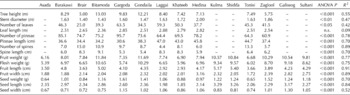
Significant differences were observed among cultivars in tree morphology (P < 0.001; Table 1), including tree height and the number of pinnae and spines. The Bitamoda cultivar was the tallest, significantly (Duncan's test; P < 0.05) different from other cultivars except Gondaila. Gargoda formed a single group of bushy trees with the average number of pinnae equalling 95.7, while the Khateeb and Medina cultivars constituted a separate group with respect to the number of spines (Duncan's test; P < 0.05). Strong correlations were observed between pinnae length and leaf length (P < 0.01; Pearson's correlation), and between the number of leaves and leaf length (P < 0.01; Pearson's correlation).
Morphology of 15 date palm cultivars grown in Sudan

Data are expressed as means and the significance of the cultivar effect on each variable is determined by the analysis of variance as well as multivariate analysis of variance. n.s., not significant. Overall effect of cultivar on tree and fruit morphology, P < 0.001.
Morphological characters of fruits and seeds
The date palm cultivars evaluated exhibited large variation in fruit morphology for all characters indicated in Table 1. Fruit length varied between 2.92 and 5.40 cm. The Shidda, Kulma, Bitamoda and Barakawi cultivars possessed the highest fruit lengths, while Laggai, Khateeb and Asada showed the lowest fruit lengths.
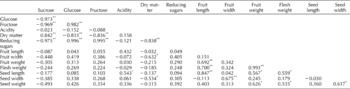
The observed fruit weights of the Gondaila, Bitamoda and Shidda cultivars were the highest, while the observed fruit weights of the Asada, Tonisi and Khateeb cultivars were the lowest. Significant varietal differences were observed in seed characters (P < 0.001), including seed weight, seed length and seed width (Table 1). The seed length followed the same trend as the fruit length in most tested cultivars, especially in the Shidda, Kulma, Galisoog, Bitamoda and Barakawi cultivars. A significant positive correlation was observed between the fruit and seed length (P < 0.01), and between the fruit length, fruit weight and flesh weight (P < 0.01; Table 3).
Sugar content of the fruits
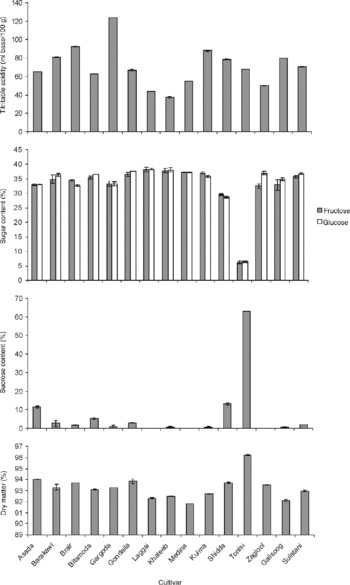
The total sugar content ranged from 67.4% (Asada) to 77.4% (Gargoda), while the percentage of reducing sugars varied from 12.6% (Tonisi) to 76.6% (Laggai). Glucose concentrations ranged from a very low value of 6.3% (Tonisi) to 38.4% (Laggai; Fig. 1). In the present study, there were approximately equal amounts of glucose and fructose in all tested cultivars. The glucose-to-fructose ratio was always in the range of 0.9–1.1 (Fig. 1). Sucrose, a non-reducing sugar, was found at its lowest concentration (0.01%) in Laggai, Medina and Zaglool, and at its highest concentration (63.1%) in Tonisi, followed by Shidda (13.0%) and Asada (11.5%; Fig. 1). The Tonisi fruits represented an exceptionally high concentration of sucrose when compared with all other cultivars tested.
Chemical characters of 15 date cultivars collected from Sudan at the Tamr stage. Standard errors are shown.

Dry matter content of the fruits
The percentages of dry matter content varied significantly between cultivars (P < 0.001), ranging from 91.8% in the Medina to 96.2% in the Tonisi (Fig. 1). The Tonisi cultivar, followed by the Asada, Gondaila and Shidda cultivars, possessed the highest dry matter percentages. In the correlation test (Table 3) of dry matter versus sucrose, it was found that sucrose was positively correlated with dry matter (P < 0.01) and the concentration of reducing sugars (glucose and fructose) was inversely correlated with dry matter (P < 0.01). On the other hand, dry matter was positively correlated with seed and fruit width (P < 0.05).
Titratable acidity of the fruits
Significant differences among varieties were observed for titratable acidity (P < 0.001). The measured acidity was found to be a distinguishable character for almost every individual cultivar. Among the 15 cultivars, 13 significantly different groups were observed (Fig. 1). The values of titratable acidity varied from 37 ml base/100 g sample observed in Khateeb to 124 ml base/100 g sample observed in Gargoda.
Microsatellite polymorphism
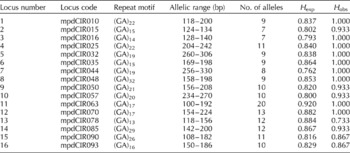
The 16 microsatellite primer pairs used to analyse genetic variation in 15 cultivars of date palm resulted in a total of 167 alleles with an average of 10.4 alleles per locus. The number of alleles ranged from 7 for loci mpdCIR015 and mpdCIR016 to 22 for locus mpdCIR063. High levels of observed and expected heterozygosities were detected (Table 2). The genetic distances among all accession pairs ranged from 0.693 to 3.496. The maximum genetic distance was observed between the Meddina and Bitamoda cultivars, while the minimum genetic distance was observed between the Laggai and Asada cultivars.
Summary of microsatellite allele data revealed by 16 microsatellite loci in 15 cultivars of date palm collected from Sudan

Principal components analyses
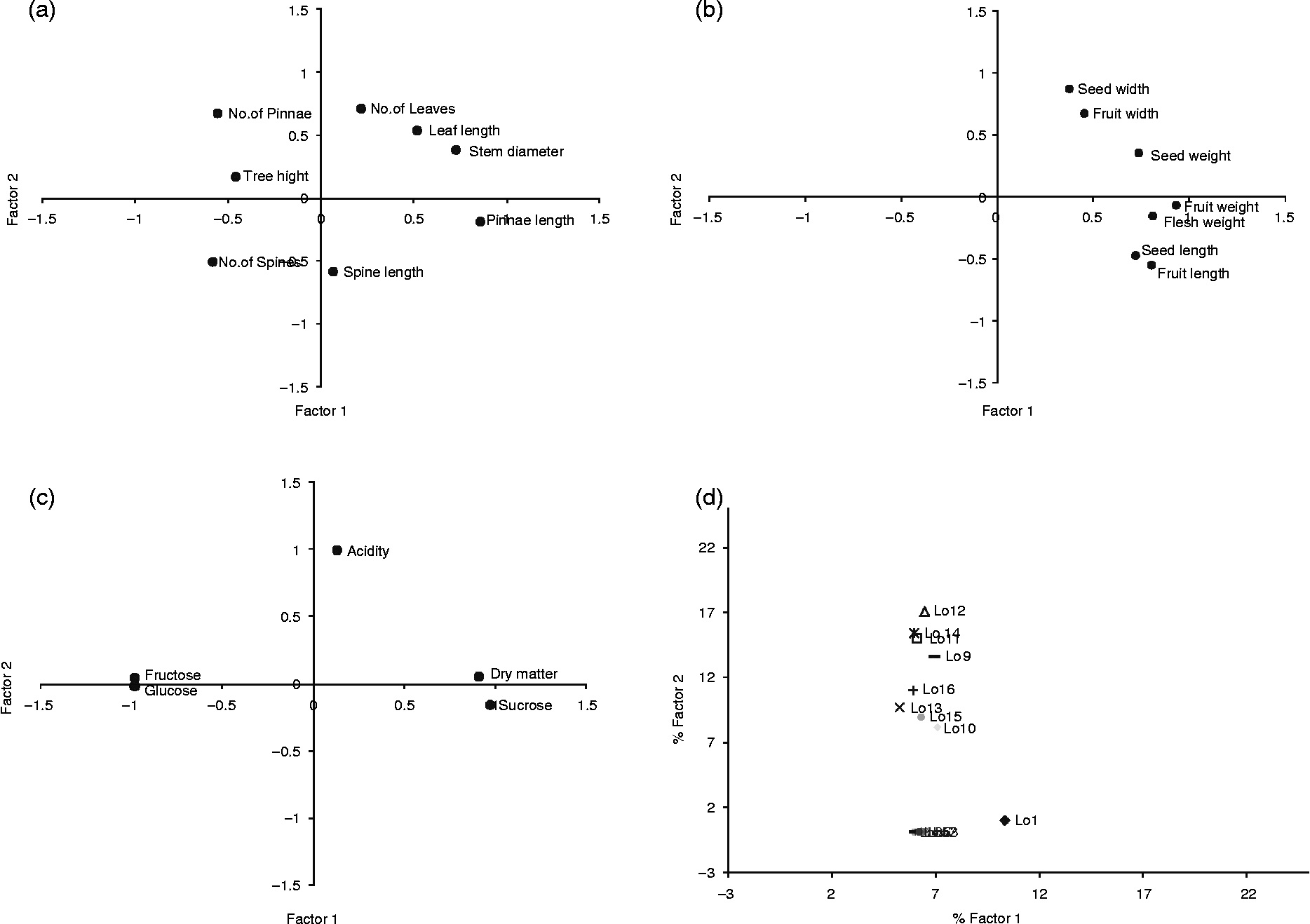
Two principal components were found to explain 95% of the diversity of tested chemical characters of fruits, 79.5% of the morphological diversity of fruits and 60.5% of the diversity in tree morphology. When all cultivars were considered, fruit weight (0.94), flesh weight (0.91) and fruit length (0.80) constituted the highest load on PC1, which explained 62% of the total variance, and seed width (0.87) and fruit width (0.68) constituted the highest load on PC2, which explained 67% of the total variance (Fig. 2b).
Trait loadings on the first two principal components of different date palm cultivars based on four marker systems of characterization, including (a) tree morphology, (b) fruit and seed morphology, (c) chemical characters of fruits and (d) DNA polymorphisms tested by microsatellite markers.
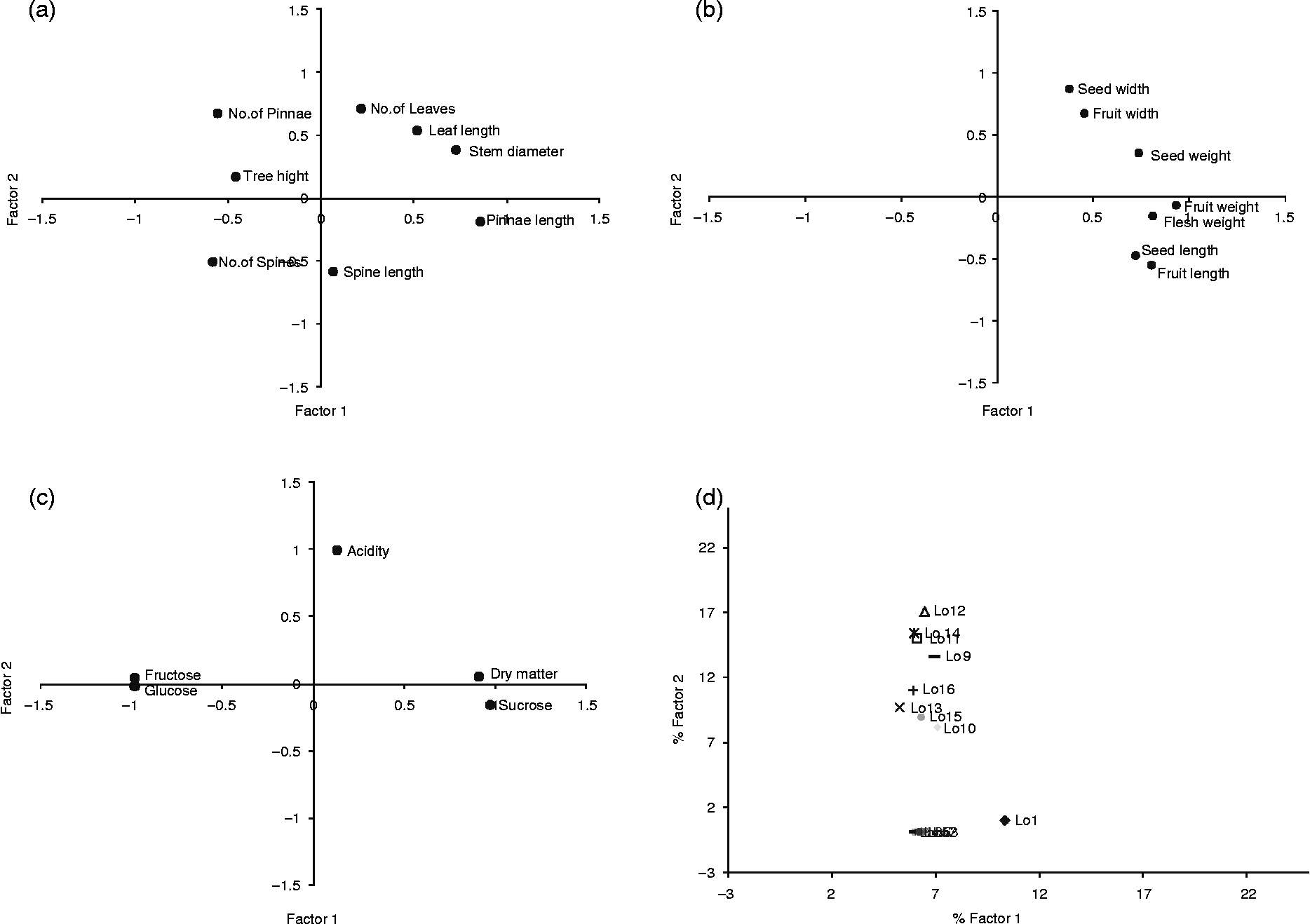
Regarding tree morphology, the three levels of pinnae length comprised the highest load on PC1 (0.90–0.83), while stem diameter comprised 0.73 on PC1; pinnae length and stem diameter explained 70% of the total variance on PC1. The highest load on PC2 was observed for the number of leaves and pinnae, (0.71) and (0.67), respectively, which explained 45% of the total variance (Fig. 2a).
Sucrose concentration (0.98) and dry matter content (0.91) comprised the highest load on PC1, which explained 48% of the total variance, while acidity (0.99) loaded high on PC2, explaining 97% of the total variance. Glucose and fructose concentrations were negatively ( − 0.99 and − 0.98, respectively) loaded on PC1 and explained 26% of the total variance for each character (Fig. 2c).
The tested 16 microsatellite loci exhibited different patterns of loadings on PC1 and PC2 (Fig. 2d). The two principal components were found to explain a total of 31% of the diversity of DNA polymorphism. Variances explained by PC1 and PC2 were 19 and 12%, respectively. The highest load, expressed as percentages, on PC1 was observed for locus mpdCIR010 with 10% loading; the other loci effect ranged from 5 to 7%. The loci that exhibited the main effect on PC2 included mpdCIR050, 057, 063, 070, 078, 085, 090 and mpdCIR093, with locus mpdCIR070 explaining 17% of the total variance.
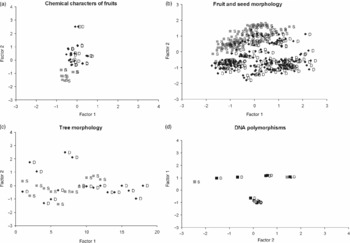
The combined effects of different characters of each marker system on the scatter plot of tested cultivars based on the first two principal components were compared (Fig. 3). A distinguishable grouping pattern of cultivars that belong to the soft type of dates and those belonging to the dry type of dates was observed for chemical characters of fruits (Z = 2.064, P = 0.039; Fig. 3a), fruit and seed morphology (Z = − 10.204, P = 0.000; Fig. 3b) and tree morphology (Z = − 3.778, P = 0.000; Fig. 3c), while a comparable relationship was not observed for DNA polymorphism (Z = − 0.392, P = 0.695; Fig. 3d).
Principal component analyses for soft (S) and dry (D) types of date palm cultivars according to the first two components of traits for four marker systems of characterization, including (a) chemical characters of fruits, (b) fruit and seed morphology, (c) tree morphology, and (d) DNA polymorphisms tested by microsatellite markers.

Discriminant analysis
Using the 15 cultivars and all chemical and morphological characters of the fruits, the discriminant analysis correctly predicted the dry type of date palm cultivars (100%) with probabilities of membership ranging between 54% for the Bitamoda cultivar and 99.9% for all the other cultivars, while the probabilities of membership within the soft type of dates were 100% for all cultivars. According to the standardized coefficients, the highest weightings that maximize the differences between groups were observed for chemical characters (8.93–3.89) and seed weight ( − 6.97). When the same test was performed for all characters in ten cultivars, all tree characters failed the tolerance test (tolerance level 0.001) and were excluded from the analysis.
Discussion
This study was undertaken to evaluate the extent and range of diversity for tree and fruit traits of 15 date palm cultivars, including the most popular and well-known cultivars in Sudan. We screened these cultivars for a variety of characters for possible combinations and comparisons of different types of data. The analysis of variance was performed to investigate the degree of variability between cultivars for different variables, while multivariate analyses were carried out for data exploration, possible combinations and comparisons of different trends of diversity. A large amount of diversity was found among the tested date palm cultivars at morphological, chemical and genetic levels, including tree and fruit characters. Although this variability provides a wide range of choices for selection and adaptation of date palm cultivars, it makes the screening and documentation of all existing cultivars very difficult. Date palm culture in the world has been based on the development of thousands of cultivars exhibiting a wide range of variability in terms of fruit characters and tree morphology. The distribution and strength of this variability vary from one country to another, resulting in different criteria and names of thousands of date palm cultivars ( Jaradat and Zaid, Reference Jaradat and Zaid2004). The popular and marketable characters of some cultivars have encouraged date palm growers for extensive exchange habits of date palm cultivars within each producing country and overseas as well (Osman, Reference Osman2001; Jaradat and Zaid, Reference Jaradat and Zaid2004). Within Sudan, date palm culture is based on the use of varieties and strains, which are estimated to number 400 (Osman, Reference Osman1984).
Some cultivars are distinguishable by their growth habits, which include both the pattern and vigour of growth (Elhoumaizi et al. Reference Elhoumaizi, Saaidi, Oihabi and Cilas2002). These characters constitute an important part of characterization in Tunisia (Bioversity International, 2008). In Sudan, for example, a well-known single character that differentiates the growth of the Laggai and Khateeb cultivars is the orientation of spines along the base of the leaf (either alternate or opposite arrangement, with two spines or a single spine, respectively), but this character is not stable in other cultivars. In this study, the Laggai and Khateeb cultivars belonged to significantly different groups (Duncan's test; P < 0.05) with respect to the stem diameter, tree height and the number of leaves and spines. However, data exploration through PCA indicated specific trends in different types of dates related to tree morphology, which confirms the importance of multivariate analysis when high diversity exists.
Regarding fruit morphology, there was an agreement with farmers' and consumers' characterization (Supplementary Fig. S1, available online only at http://journals.cambridge.org). For example, fruit size was found to be one of the characteristic features that differentiate cultivars into distinct groups. It is familiar among farmers and local consumers that Gondaila and Bitamoda possess big fruits and are rich in fruit flesh. However, the same cultivars may significantly vary in their fruit size in different locations and seasons as a response to environment and cultural practices (Bashab, Reference Bashab1997; Baballa, Reference Baballa2002).
The Medina, Laggai and Khateeb cultivars are classified as belonging to the soft type of dates in Sudan (Osman, Reference Osman1984). Consistent with this classification, these three cultivars contained the lowest percentage of dry matter. Tonisi, followed by Asada, Gondaila and Shidda, possessed the highest dry matter percentages. These cultivars are known as the dry type of dates (Osman, Reference Osman1984; Bashab, Reference Bashab1997), despite the lack of practically any previous data on their dry matter and sugar contents. In this study, soft types of dates were clearly separated from dry types when chemical characters were considered in PCA with the main contribution of sucrose and dry matter (48% on PC1).
It is worth to mention that the observed negative loadings of glucose and fructose on PC1 (Fig. 2c) can also be explained by the negative correlation of dry matter concentration with glucose and fructose concentrations, and the positive correlation of sucrose and dry matter content (Table 3). This correlation of dry matter versus sucrose content may explain the classification of dates into soft and dry types, which, thus, seems to be related to the sugar and dry matter contents at the final stage of ripening. The increase in reducing sugars and the decrease in sucrose from stage 1 to stage 4 in relation to the decrease in the water content in dates during these stages (Al-Shihab and Marshall, Reference Al-Shihab and Marshall2003) may depend on the cultivar in question, especially in the dry types. This suggests that these characters are highly affected by the environment, stage of ripening and the cultivar itself, or by the interaction of these factors. On the other hand, the negative correlation of sucrose and reducing sugars also follows the hypothesis of sucrose conversion into glucose and fructose due to invertase activity during fruit ripening towards the Tamr stage (Hulme, Reference Hulme1970).
Pearson's correlation coefficients for morphological and chemical characters of the fruits of 15 date palm cultivars
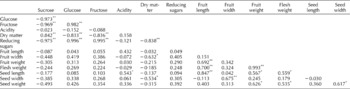
The mean values are significant at *P < 0.05 and **P < 0.01.
Despite the well known fact that farmers select date palm cultivars according to their appearance, taste and flavour, there are no reports available on the acidity and/or the type of acids that dominate in the fruits of different cultivars of dates. In this study, acidity was found to be a distinguishable character for almost every individual cultivar. Further studies are needed to determine to what extent acidity is an important variety assessment for commercial purposes, provided that unexplained large variation exist in the taste of date palm fruits worldwide (Zaid and de Wet, Reference Zaid, de Wet and Zaid2002a).
The results of the principal component analysis confirmed that the grouping of Sudan date palm cultivars is mainly based on the chemical and morphological characters of fruits and tree morphology, while the absolute genetic characterization resulted in a complex relationship between cultivars. The high level of DNA polymorphism, as indicated by the high expected and observed heterozygosis, seems to be a general characteristic feature of date palm germplasm (Zehdi et al., Reference Zehdi, Trifi, Billotte, Marrakchi and Pintaud2004a, Reference Zehdi, Sakka, Rhouma, Ould Mohamed Salem, Marrakchi and Trifib; Elshibli and Korpelainen, Reference Elshibli and Korpelainen2008), in almost all producing countries. However, the high genetic variability is not associated with specific genetic relationship in most of the tested cultivars (Sedra et al., Reference Sedra, Lashermes, Trouslot, Combes and Hamon1998; Cao and Chao, Reference Cao and Chao2002; Zehdi et al., Reference Zehdi, Sakka, Rhouma, Ould Mohamed Salem, Marrakchi and Trifi2004b; Elshibli and Korpelainen, Reference Elshibli and Korpelainen2008).
The distribution of date palm culture in Sudan follows a geographic pattern including locations for the successful production of either soft or dry type of dates (Osman, Reference Osman1984). This relationship was detectable when we studied the population genetics of date palms in Sudan (Elshibli and Korpelainen, Reference Elshibli and Korpelainenin press), where population samples were collected from both types of locations. In this study, our samples were individual cultivars collected from Nori Horticultural Orchard, a location considered suitable for the production of both types of dates.
The use of a combination of different methods for the analysis of date palm cultivars was found effective when exploring the overall role of different characters in grouping date palm cultivars. Apparently, a number of markers can be applied as group descriptors according to specific objectives. Different marker systems and their combinations may have considerable value when screening wide date palm collections for the preliminary characterization of cultivars, e.g. considering the grouping of soft and dry types of dates. Such analyses may also provide useful information about geographic distribution and dispersal, traits for quality assessment and traits for breeding programmes.
Acknowledgements
This work was financially supported by the Islamic Development Bank as part of a project aiming at characterizing date palms in Sudan using different approaches and markers. Sakina Elshibli was also supported by a grant from the Finnish Cultural Foundation.