Poverty has been defined as “lack of the means of providing material needs or comforts,” and in the United States is based on gross income for individual households (Dictionary.com, 2014). For example, in 2009 the gross income rate was $22,000 for a family of four (Yoshikawa, Aber, & Beardslee, Reference Yoshikawa, Aber and Beardslee2012). Other criteria for poverty are used to establish eligibility for specific programs, including the free lunch program (below 130% of the poverty line), the reduced-price lunch program (below 185% of the poverty line), or participating in the Women, Infants, and Children Nutritional Supplement Program (below 185% of the poverty line). In addition to income, poverty is closely intertwined with a number of cofactors often referred to as socioeconomic status (e.g., parental educational and/or occupational attainment, poor child care, and preschools). Most of the dimensions of poverty have been considered mechanisms by which poverty is conceived to influence child problem behavior. One such factor is neighborhood deprivation, which includes the levels of resources in the community, such as home ownership and accessibility to stores, jobs, day care, and schools; and types of dangers facing residents, including crime and exposure to deviant peers/adults. Neighborhood deprivation has often been used to index the effects of poverty above and beyond family income because it captures many aspects of poverty's pervasiveness in children's lives (Shaw & Shelleby, Reference Shaw and Shelleby2014). In addition to poor housing quality, suboptimal nutrition, and parenting in the home (Makosky, Reference Makosky and Belle1982; McLoyd, Reference McLoyd, Carlo, Crockett and Caranza2011), young children living in poverty are often exposed to a continuous stream of adverse life conditions in their neighborhoods, including exposure to violence, deviant peers and adults, toxic air, lead, and/or pesticides that cumulatively compromise many health outcomes (Evans, Reference Evans2004; McLoyd, Reference McLoyd, Carlo, Crockett and Caranza2011).
A substantial body of research has established the importance of neighborhood environments for child and family development (Brooks-Gunn, Duncan, & Aber, Reference Brooks-Gunn, Duncan, Aber, Brooks-Gunn, Duncan and Aber1997; Leventhal & Brooks-Gunn, Reference Leventhal and Brooks-Gunn2000; Shonkoff & Phillips, Reference Shonkoff and Phillips2002). Poverty in general and neighborhood deprivation in particular have been associated with a number of maladaptive outcomes for children and adolescents, including poor academic achievement (Magnuson & Votruba-Drzal, Reference Magnuson, Votruba-Drzal, Cancian and Danziger2009) and low educational attainment (Duncan, Kalil, & Ziol-Guest, Reference Duncan, Kalil and Ziol-Guest2008), as well as higher rates and earlier onsets of chronic health conditions (e.g., asthma, diabetes, and hearing and vision problems; Currie & Lin, Reference Currie and Lin2007; Magnuson & Votruba-Drzal, Reference Magnuson, Votruba-Drzal, Cancian and Danziger2009). One of the most consistent adverse outcomes associated with poverty and specifically neighborhood quality has been conduct problems (CP) and more serious forms of antisocial behavior (AB) in childhood and adolescence (Ingoldsby & Shaw, Reference Ingoldsby and Shaw2002; Magnuson & Votruba-Drzal, Reference Magnuson, Votruba-Drzal, Cancian and Danziger2009; Yoshikawa et al., Reference Yoshikawa, Aber and Beardslee2012).
A plethora of research has demonstrated consistent links between components of neighborhood deprivation and different components of CP, including aggressive behavior and more covert forms of AB, with associations becoming stronger as children move into the school-age period and adolescence (Beyers, Bates, Pettit, & Dodge, Reference Beyers, Bates, Pettit and Dodge2003; Brooks-Gunn et al., Reference Brooks-Gunn, Duncan, Aber, Brooks-Gunn, Duncan and Aber1997; Coley, Morris, & Hernandez, Reference Coley, Morris and Hernandez2004). However, in the most disadvantaged urban environments in the United States, associations between neighborhood deprivation and problem behavior have been found for children as young as ages 3 to 4 (Kohen, Brooks-Gunn, Leventhal, & Hertzman, Reference Kohen, Brooks-Gunn, Leventhal and Hertzman2002; Supplee, Unikel, & Shaw, Reference Supplee, Unikel and Shaw2007; Xue, Leventhal, Brooks-Gunn, & Earlys, Reference Xue, Leventhal, Brooks-Gunn and Earls2005). Studies suggest that neighborhood risk factors may directly impact early initiation and growth of child CP (Ingoldsby et al., Reference Ingoldsby, Shaw, Winslow, Schonberg, Gilliom and Criss2006; Wikstrom & Loeber, Reference Wikstrom and Loeber1999; Xue et al., Reference Xue, Leventhal, Brooks-Gunn and Earls2005), especially in the context of family and individual risk.
How might neighborhood factors be associated with child CP and antisocial pathways? Sampson and Morenoff (Reference Sampson, Morenoff, Bowles, Durlauf and Hoff2004) have described community-level structural factors thought to impede systemic social organization, including residential mobility, population instability, family disruption, housing density, and resource deprivation. These suboptimal structural factors are believed to compromise the density of acquaintanceships and informal intergenerational kinship ties and the quality of collective supervision in neighborhoods, and ultimately compromise community support of child well-being (Sampson, Reference Sampson, Crouter and Booth2001). In addition to structural characteristics, social aspects of the neighborhood (e.g., presence of gangs or deviant peers and perceptions of danger) have been posited as potential factors in the development and maintenance and especially the progression of antisocial patterns through adulthood (Dishion & Patterson, Reference Dishion, Patterson and Cicchettiin press; Seidman et al., Reference Seidman, Yoshikawa, Roberts, Chesir-Teran, Allen and Friedman1998). In addition to children modeling and more often being asked to take part in antisocial activities by peers, older youth, and adults, residents in these neighborhoods feel less trusting toward neighbors, describe lower levels of cohesion and support, and report more parenting challenges (Furstenburg, Reference Furstenberg and Wilson1993; Sampson, Reference Sampson and Wilson1993). Cumulatively, neighborhood factors suggest that for children living in high-risk neighborhoods to not engage in CP and more serious forms of AB, parents may need to demonstrate high levels of parenting skills, setting limits by structuring child behavior in the home to promote prosocial behavior and closely monitoring their children's activities outside in the neighborhood.
Most researchers have suggested that during early childhood the effects of neighborhood deprivation on child functioning are mediated by compromises in parent psychological functioning (Chazan-Cohen et al., Reference Chazan-Cohen, Raikes, Brooks-Gunn, Ayoub, Pan and Kisker2009; Mistry, Vandewater, Huston, & McLoyd, Reference Mistry, Vandewater, Huston and McLoyd2002; Shaw & Shelleby, Reference Shaw and Shelleby2014) and/or caregiving practices. Proponents of the family stress model (Conger & Elder, Reference Conger and Elder1994; Conger, Ge, Elder, Lorenz, & Simons, Reference Conger, Ge, Elder, Lorenz and Simons1994; McLoyd, Jayaratne, Ceballo, & Borquez, Reference McLoyd, Jayaratne, Ceballo and Borquez1994) posit that the cumulative effects associated with poverty take a toll on parent functioning, leading to higher levels of distress, anxiety, depression, and substance use, which in turn compromise parenting quality and child functioning (Brody, Murry, Kim, & Brown, Reference Brody, Murry, Kim and Brown2002; McLeod & Shanahan, Reference McLeod and Shanahan1993; Shaw & Shelleby, Reference Shaw and Shelleby2014). In addition, adverse effects of poverty on child functioning are thought to arise from low-income parents' inability to invest sufficient resources in human capital that would enrich children's learning. These resources include educational tools, enrollment in high-quality day care and preschools, as well as adequate health care and safe neighborhoods (Conger & Donellan, Reference Conger and Donnellan2007; Magnuson & Votruba-Drzal, Reference Magnuson, Votruba-Drzal, Cancian and Danziger2009; Yeung, Linver, & Brooks-Gunn, Reference Yeung, Linver and Brooks-Gunn2002).
Moderation of Effects of Parenting Interventions
Among early risks implicated in the development of CP, parenting is a particularly salient factor because parents serve as the most important socializing agents for young children (Maccoby, Reference Maccoby1992), who are both physically and psychologically dependent on parents. Accordingly, parenting has been posited to play a mediating role in the link between socioeconomic and community-level risk, including neighborhood risk, and child behavior outcomes (Conger et al., Reference Conger, Conger, Elder, Lorenz, Simons and Whitbeck1992; Patterson, Reid, & Dishion, Reference Patterson, Reid and Dishion1992). Therefore, it is not surprising that many widely implemented early interventions for CP target aspects of parenting (Lundahl, Risser, & Lovejoy, Reference Lundahl, Risser and Lovejoy2006; Reyno & McGrath, Reference Reyno and McGrath2006). Numerous randomized trials show that parenting interventions are effective in preventing child problem behavior (Gardner, Hutchings, Bywater, & Whitaker, Reference Gardner, Hutchings, Bywater and Whitaker2010; Kazdin, Reference Kazdin2002).
Although promising effects have been demonstrated through parenting interventions for child CP, with meta-analyses reporting small to moderate effects (Lundahl et al., Reference Lundahl, Risser and Lovejoy2006; Piquero, Farrington, Welsh, Tremblay, & Jennings, Reference Piquero, Farrington, Welsh, Tremblay and Jennings2009), such interventions are not effective for all children and families (Shelleby & Shaw, Reference Shelleby and Shawin press; Webster-Stratton, Reference Webster-Stratton1990; Webster-Stratton & Hammond, Reference Webster-Stratton and Hammond1997). Several important questions remain regarding the conditions under which parenting interventions may be most or least successful. Therefore, the investigation into moderators of effectiveness is a critical issue for the field, both to inform ways to refine interventions and to advance theory, because moderator analyses can elucidate whether developmental processes differ for those varying in initial risk (Gardner et al., Reference Gardner, Connell, Trentacosta, Shaw, Dishion and Wilson2009; Hinshaw, Reference Hinshaw2002).
In order that parenting interventions may confer optimal public health benefit, it is vital to discover whether such interventions are effective for the most high-risk families in society. Conversely, it is possible that they might serve to increase social disparities, by conferring greater benefit on more advantaged families, as reported in some meta-analyses of predictors of outcome in parent training (Lundahl et al., Reference Lundahl, Risser and Lovejoy2006; Reyno & McGrath, Reference Reyno and McGrath2006). Based on the aforementioned research demonstrating that children living in poverty in the context of neighborhood deprivation are those most likely to show early onset and persistent CP and more serious AB in adolescence and beyond, this is an important concern (Farrington, Reference Farrington1994; Moffitt, Reference Moffitt1993; Patterson & Yoerger, Reference Patterson, Yoerger and Hodgins1993). Accordingly, in addition to testing the potential for continuing to find main effects, this paper investigates the extent to which neighborhood deprivation moderates the long-term outcomes associated with a brief family intervention initiated when children were 2 years of age. Specifically, we investigate, with a large cohort of low-income families residing in three distinct types of communities (i.e., urban, rural, and suburban), the effects of repeated Family Check-Ups (Dishion et al., Reference Dishion, Shaw, Connell, Wilson, Gardner and Weaver2008; Shaw, Dishion, Supplee, Gardner, & Arnds, Reference Shaw, Dishion, Supplee, Gardner and Arnds2006) on teacher reports of child CP across a 7-year period.
Several research teams have studied moderators of intervention response for programs directed at preventing or treating child conduct problems (Conduct Problems Prevention Research Group, 2002; Gardner et al., Reference Gardner, Hutchings, Bywater and Whitaker2010), with many of these studies focusing on child behavioral characteristics that have been associated with an improved response to intervention, particularly for parenting-focused interventions. For example, Shelleby and Shaw (Reference Shelleby and Shawin press) reported that among four of six studies, greater initial levels of problematic child behavior were associated with improved intervention response compared to children with lower initial levels of CP, with the other two studies, both of which involved children with clinically elevated levels of problem behavior, finding no difference in response to treatment. Unfortunately, far fewer studies have examined neighborhood deprivation as a moderator of intervention response to parenting interventions, with only one study examining a child-focused intervention, described in more detail below (Lochman, Wells, Qu, & Chen, Reference Lochman, Wells, Qui and Chen2013).
In terms of broader indices of sociodemographic risk, including parental educational attainment, single-parent status, and income, the literature has been more mixed. There have been numerous studies of predictors of outcome, many of which found that these risk factors predict poorer treatment response (Lundahl et al., Reference Lundahl, Risser and Lovejoy2006; Reyno & McGrath, Reference Reyno and McGrath2006). However, fewer studies have analyzed moderator effects, where the effects of the same risk factors on control group families are taken into account. The results of studies on sociodemographic risk have tended to show no significant moderation effects (Shelleby & Shaw, Reference Shelleby and Shawin press). Thus, reassuringly for the field, using moderator rather than predictor designs, many have found that the most disadvantaged families do not necessarily fare worse particularly in parenting-focused intervention studies using a group format (e.g., Incredible Years, Triple P, or Parent Management Training; Shelleby & Shaw, Reference Shelleby and Shawin press). Exceptions to not finding moderating effects of treatment response include a study by Gardner et al. (Reference Gardner, Connell, Trentacosta, Shaw, Dishion and Wilson2009), using the Family Check-Up (FCU) with the current cohort and examining CP outcomes in early childhood. No moderation effects were found for seven of nine risk factors tested (e.g., maternal depression and parental substance use); however, greater improvements in child CP were associated with the FCU for those parents with lower education, but fewer improvements were found for single- versus two-parent families.
Only one study focused on reducing children's CP has directly addressed the issue of whether neighborhood adversity moderates intervention response. Using Lochman's Coping Power Program (Lochman & Wells, Reference Lochman and Wells2004) and both parent reports of social organization and support and Census-based, geocoding data to assess neighborhood disadvantage, neighborhood moderation was found in two of eight growth modeling analyses of child CP, only one of which was in the expected direction. Whereas parent perception of higher levels of social disorganization surprisingly was associated with improved response to intervention, neighborhood disadvantage assessed via geocoding was linked to lower intervention response (Lochman et al., Reference Lochman, Wells, Qui and Chen2013). The current study builds on Lochman et al.'s (Reference Lochman, Wells, Qui and Chen2013) study by also using geocoded census-based data of neighborhood risk to examine the potential long-term differential effectiveness of the FCU on teacher reports of child CP at age 9.5.
A second aim of the current study was to examine potential indirect paths between the FCU and child CP for families living in areas of extremely high neighborhood adversity. Specifically, should neighborhood risk be found to attenuate improvements in child CP, we hypothesized that improved parenting would account for those children who did improve on CP regardless of level of neighborhood deprivation. Some limits on parental influence have been demonstrated for adolescents living in high-risk, urban neighborhoods, with the effects of parental monitoring on youth AB being attenuated relative to lower risk, low-income neighborhoods (Shaw, Criss, Schonberg, & Beck, Reference Shaw, Criss, Schonberg and Beck2004). However, during early childhood higher levels of parental involvement and monitoring have been found to attenuate the magnitude of association between neighborhood risk and child CP in a sample of low-income children from urban, high-risk neighborhoods (Supplee et al., Reference Supplee, Unikel and Shaw2007). Supplee et al.'s finding is consistent with qualitative research by Arditti, Burton, and Neeves-Botelho (Reference Arditti, Burton and Neeves-Botelho2010) and Burton (Reference Burton2007), who have documented the especially central role low-income mothers play in the care of children living in the highest risk neighborhoods, with the family's reality characterized by a cascade of seemingly unending challenges. Despite the hardships associated with poverty (e.g., unemployment, substandard housing, exposure to violence, and crime) and the sense of defeatism and hopelessness such conditions routinely elicit (Arditti et al., Reference Arditti, Burton and Neeves-Botelho2010), it is possible that parents who are able to provide high-quality care to children might protect them from engaging in high levels of CP. Thus, we investigated the possibility that if neighborhood deprivation was found to attenuate intervention effects of the FCU on child CP, specifically aggression, indirect effects on child aggression might be evident for those parents living in the highest risk neighborhoods who showed improvements in parent–child interaction as a function of being randomly assigned to the FCU. We chose to focus on child aggression because of its perniciousness and greater long-term consequences on future AB and other domains of adjustment relative to both broader (i.e., externalizing) and other narrow-band factors of CP (e.g., rule breaking; Campbell, Spieker, Burchial, Poe, & the NICHD ECCRN Reference Campbell, Spieker, Burchinal and Poe2006), a pattern that has been replicated from earlier reports of the current sample in relation to predicting school-age academic achievement and social competence from multiple dimensions of disruptive behavior (Brennan, Shaw, Dishion, & Wilson, Reference Brennan, Shaw, Dishion and Wilson2014; Brennan et al., Reference Brennan, Shelleby, Shaw, Dishion, Gardner and Wilson2013). Similarly, we chose to focus on teacher versus parent reports of child aggression at age 9.5 for two reasons. First, teachers were not involved in the intervention and therefore were less likely to bias reports based on experiences. Second, teacher reports of AB in middle childhood have been shown to be a more reliable indicator of future problem behavior in adolescence and adulthood (Loeber & Dishion, Reference Loeber and Dishion1983; Verhulst, Koot, & Van der Ende, Reference Verhulst, Koot and Van der Ende1994).
The FCU
The FCU model was developed as a core component of an ecological approach to family intervention and treatment that is motivated by a public health perspective (Dishion & Stormshak, Reference Dishion and Stormshak2007). The FCU emerged from a program of research on the development of parent management training (Forgatch & Patterson, Reference Forgatch, Patterson, Weisz and Kazdin2010), which emphasizes and supports parenting practices that are empirically linked to children's growth in problem behavior. The FCU was designed to motivate parents to maintain their skillful efforts to promote positive child adjustment and to engage in interventions services for those parenting practices that need attention. The FCU model has two phases therefore. The first phase is the FCU, and the second phase involves parent management training (Dishion, Stormshak, & Kavanagh, Reference Dishion, Stormshak and Kavanagh2011). The parent management training is adapted and tailored to the specific needs of the parent and child. Although the FCU is often described as an adaptive intervention, it is not adaptive in the formal sense because services are allocated a priori based on data collected at the baseline assessment (see description below).
The FCU incorporates six principles relevant to translation of developmental and intervention research into a public health framework: (a) intervention targets (e.g., family management practices) are based on developmental research; (b) the intervention is family centered in that it supports adult leadership in the child-rearing process; (c) the intervention is adapted and tailored to the child with specific needs, including an assessment of parenting strengths and weaknesses; (d) the intervention focuses on improving daily interpersonal interactions in families; (e) the intervention supports client motivation to change; and (f) the intervention is designed as a health maintenance model to be delivered in service and education contexts that affect large numbers of children and families. The FCU can be delivered either in families' homes or in public schools (Dishion & Kavanagh, Reference Dishion and Kavanagh2003), community mental health agencies, pediatric settings, and other community organizations.
The early childhood version of the FCU has also been developed and tested through Women, Infants, and Children Nutritional Supplement (WIC) programs in the United States. In the initial study that used the FCU in a WIC setting, families living in an urban, ethnically diverse area were identified as at risk on the basis of socioeconomic, family (e.g., maternal depression), and child (e.g., conduct problems) risk. In that study, 120 families were randomly assigned to the FCU intervention or WIC as usual groups. The intervention was found to reduce early emergence of preschool CP and increase observed parent involvement (Shaw et al., Reference Shaw, Dishion, Supplee, Gardner and Arnds2006) and positive parenting (Gardner, Shaw, Dishion, Suppplee, & Burton, Reference Gardner, Shaw, Dishion, Supplee and Burton2007). Following this pilot work, a multisite intervention trial was implemented that included families at high risk and their male and female children (N = 731) in urban, suburban, and rural settings. Initial findings based on an intention-to-treat (ITT) approach demonstrated that children in the intervention group showed reduced growth in CP from ages 2 to 4, and these reductions were mediated by increases in positive parenting practices observed between child age 2 and 3 (Dishion et al., Reference Dishion, Shaw, Connell, Wilson, Gardner and Weaver2008). Subsequently, in the same sample direct effects of the FCU have been found for improvements in maternal depression and child emotional problems (Shaw, Dishion, Connell, Wilson, & Gardner, Reference Gardner, Connell, Trentacosta, Shaw, Dishion and Wilson2009), co-occurring child CP and emotional problems (Connell et al., Reference Connell, Bullock, Dishion, Shaw, Wilson and Gardner2008), and parent utilization of social services (Leijten et al., Reference Leijten, Shaw, Gardner, Wilson, Raaijmakers and de Castro2015). In addition, indirect effects have been found for improvements in maternal social support (i.e., by improving child CP; McEachern et al., Reference McEachern, Fosco, Dishion, Shaw, Wilson and Gardnerin press), children's inhibitory control and language development (Lunkenheimer et al., Reference Lunkenheimer, Dishion, Shaw, Connell, Gardner and Wilson2008), and academic achievement at ages 5 and 7.5 (Brennan et al., Reference Brennan, Shelleby, Shaw, Dishion, Gardner and Wilson2013), the latter three indirect effects found only when improvements in parenting occurred. Finally, in a recent follow-up of this same cohort at age 7.5, Dishion et al. (Reference Dishion, Brennan, McEachern, Shaw, Wilson and Weaver2014) reported ITT intervention effects on parent-reported (age 2 through 5) and teacher-reported (age 7.5) CP, with less growth in CP for children in the intervention group than for those in the control group. In addition, using complier average causal effect analysis within a growth mixture framework to examine effects of intervention engagement, effect sizes for both parent- and teacher-reported CP were found to increase as a function of the number of annual FCUs parents attended between ages 2 and 5 years, with effect sizes as high as d = 0.83 and 0.42 for parent and teacher reports of CP, respectively, for those parents who attended at least three feedback sessions during early childhood.
The Current Study
We proposed to test two aims in the current study. First, we sought to examine whether previously established intervention effects of the FCU on teacher reports of a broad index of CP at age 7.5 (Dishion et al., Reference Dishion, Brennan, McEachern, Shaw, Wilson and Weaver2014) would be found for child aggression at age 9.5 and moderated by neighborhood deprivation, with no intervention effects on child aggression anticipated for those living in the highest risk neighborhoods. Second, if moderation by neighborhood deprivation was evident, we sought to examine whether improvements in parenting during early childhood associated with the FCU would be related to teacher reports of child aggression at age 9.5 among those living in the highest risk neighborhoods.
Methods
Participants
Participants were drawn from a larger study of 731 caregiver–child dyads recruited between 2002 and 2003 from WIC programs providing nutritional assistance for impoverished families in and around Pittsburgh, Pennsylvania; Eugene, Oregon; and Charlottesville, Virginia (Dishion et al., Reference Dishion, Shaw, Connell, Wilson, Gardner and Weaver2008). Families were invited to participate if they had a child between 2 years 0 months and 2 years 11 months of age and if they met the study criteria of having a family, child, and/or socioeconomic risk factors for future behavior problems. To be deemed eligible for inclusion, families had to score at least one standard deviation above the normative mean in two of the three domains of risk: familial (maternal depression and stress), child (conduct problems and high conflict relationships with adults), and sociodemographic (e.g., poverty and teen parent status). Randomization to the FCU (intervention) or WIC care as usual (control) group was decided upon before the first home assessment at age 2 and revealed to families and the lead examiner at the end of the assessment after examiners had completed global ratings of parenting and child functioning. In subsequent years, families assigned to the intervention condition received the assessment and the FCU, whereas those in the control condition participated only in annual assessments. For purposes of the present study, all families assigned to the FCU, whether or not they elected to receive the intervention, were included in analyses (i.e., ITT design).
Of the 1,666 families approached at WIC sites, 879 met the eligibility requirements and 731 agreed to participate. At the time of the first assessment, the children (49% female) had a mean age of 29.9 months (SD = 3.2). Of the 731 families, 272 (37%) participants were recruited in Pittsburgh, 271 (37%) in Eugene, and 188 (26%) in Charlottesville. Across sites, the primary caregiver (PC) self-identified as belonging to the following racial groups: 50% European American, 28% African American, 13% biracial, and 9% other (e.g., American Indian or Native Hawaiian). Thirteen percent of the sample reported being Hispanic. During the initial screening, more than two-thirds of the families enrolled in the project had an annual income of less than $20,000, and the average number of family members per household was 4.5 (SD = 1.63). Forty-one percent of the population had a high school diploma or general education diploma, and an additional 32% had 1–2 years of post high school training.
Of the 731 families who initially participated, 659 (90%) were available at the age 3 follow-up, and 587 (80%) participated at the age 9.5 follow-up. Selective attrition analyses at age 9.5 revealed that families with lower levels of parental education were more likely to drop out of the study over time (t = 4.46, p < .001); therefore, maternal education was included as a covariate in analyses. There were no other significant differences based on project site, children's race or gender, or initial levels of maternal depression, parent's report of children's externalizing behavior, or intervention status.
For the current study, analyses were limited to those participants with available teacher-reported data at age 9.5, which resulted in 385 participants, which was 66% of the sample retained for home assessments at age 9.5. The only selective attrition evident was that participants in Pittsburgh were less likely to have teacher data available than were participants from Charlottesville and Eugene, F (1, 730) = 7.89, p < .01, which was related to our ability to gain cooperation from select school districts at the Pittsburgh site rather than from retention differences from parents or parents' willingness to grant permission to obtain teacher ratings of child behavior in Pittsburgh versus the other sites. Therefore, we include site status as a covariate in the analyses.
Procedures
Home assessment procedure
Age 2 and 3 assessments were conducted in the home with PCs, children, and alternate caregivers when available. Assessments were identical for control and intervention group participants and involved structured and unstructured play activities for the target child and caregiver. The age 2 and 3 home assessments began by having the child engage in free play with age-appropriate toys while the mother completed questionnaires. After the free-play task (15 min), mother and child participated in a clean-up task (5 min), followed by a delay of gratification task (5 min), four teaching tasks (3 min each), a second free-play (4 min) and clean-up task (4 min), the presentation of inhibition-inducing toys (2 min each), and a meal preparation/lunch task (20 min). All interactions were videotaped for later coding. Relevant to the current study are the teaching tasks (which included mothers assisting their child to put together a puzzle, build two towers, and play a board game together), the inhibition-inducing toys (which included presenting the child with an ambiguous toy), and the meal preparation/lunch task (in which the mother was asked to prepare a meal for the child as she normally would). For a more detailed description of the additional home assessment protocol, please see Dishion et al. (Reference Dishion, Shaw, Connell, Wilson, Gardner and Weaver2008). To optimize internal validity of the study, initial assessments at age 2 were completed prior to random assignment to intervention or the control group and research staff were blind to the family's group assignment. In subsequent years, the annual home assessment also took place prior to intervention. The families received $100 for participating in the age 2 assessment, $120 for the age 3 assessment, and $200 for the age 9.5 assessment, each of which lasted 2.5 to 3 hr. Parental written consent was obtained for all participants. Institutional review board approval was received.
The FCU procedure
The FCU is an annual brief, three-session intervention that is individually tailored to the needs of youths and families on the basis of results obtained via an ecological assessment. The three meetings include an initial contact session, a home-based multiple-informant ecological observational assessment session, and a feedback session (Dishion & Stormshak, Reference Dishion and Stormshak2007), which followed the same order and structure each year of the current trial. During the assessment session, a parent consultant explores parent concerns, focusing on family issues that are critical to the child's well-being. Feedback emphasizes parenting and family strengths, yet draws attention to possible areas of change. One goal of the FCU feedback session is to enhance the family's motivation to change by using collaborative, therapeutic techniques based on motivational interviewing, such as promoting change talk and fostering motivation to address key problems in parenting. The FCU is designed to make assessment-based decisions about the need for follow-up parenting services that are tailored to meet the families' specific needs. If follow-up sessions are warranted and parents indicate they are interested, follow-up treatment sessions consistent with several approaches to parent management training, but specifically linked to the Oregon model (Forgatch & Patterson, Reference Forgatch, Patterson, Weisz and Kazdin2010), are administered. The Everyday Parenting curriculum was used to guide the follow up interventions (Dishion et al., Reference Dishion, Patterson and Cicchetti2011).
For the purposes of this randomized trial, to assure that assessments were not biased by the potential for intervention, families were first assessed and then invited to engage in the initial interview session and feedback. Therapists in this randomized trial were found to have delivered the FCU with adequate fidelity, which was related to improvements in parenting and subsequent changes in children's problem behaviors between ages 2 and 4 (Smith, Dishion, Shaw, & Wilson, Reference Smith, Dishion, Shaw and Wilson2013). A majority of families assigned to the intervention remain engaged in the FCU over time: 76% at age 2, 69% at age 3, 70% at age 4, and 66% at age 5. Of the families participating in the FCU, the majority engaged in the additional follow-up sessions: 72% at age 2 with a mean of 3.4 sessions, 70% at age 3 with a mean of 3.1 sessions, 74% at age 4 with a mean of 3.5 sessions, and 74% at age 5 with a mean of 5.5 sessions. For the purposes of the current study, an ITT design was utilized, such that all families assigned to the FCU were included in the treatment group.
Measures
Neighborhood deprivation
Geocoded US Census data were utilized to determine a family's level of neighborhood deprivation when children were age 2. Although geocoded data were available at later ages, only age 2 data were retained in the current study because previous work with the current sample indicated neighborhood deprivation to be relatively stable over time (Choe, Shaw, Dishion, & Wilson, Reference Choe, Shaw, Dishion and Wilson2014). Neighborhood deprivation index scores were created from 8 items selected in large-scale studies of public health outcomes after comprehensive review of neighborhood risk measures and principal component analyses of 20 census items (Messer et al., Reference Messer, Laraia, Kaufman, Eyster, Holzman and Culhane2006). The 8 items were as follows: percentage of households below the poverty level, percentage in crowded housing, percentage of males in management and professional occupations (reverse scored), percentage of single mother-headed households, percentage of households on public assistance, percentage of households earning less than $30,000 a year, percentage of adults earning less than a high school education, and percentage of unemployed adults. A Z score was created for each item, and then an overall mean score was computed such that higher scores reflected greater levels of neighborhood deprivation (Cronbach α = 0.81).
Dyadic positive engagement
At ages 2 and 3, the videotaped interaction tasks involving the child and the PC were coded using the Relationship Affect Coding System (RACS; Peterson, Winter, Jabson, & Dishion, Reference Peterson, Winter, Jabson and Dishion2008). The RACS is a microsocial coding system that reflects the three dimensions of behavior for each of the family participants simultaneously (verbal, physical, and affect). Verbal codes reflect two different types of events: general conversation (positive, negative, or neutral) and attempts at changing the behavior of another (directives, negative directive, and positive structure). Physical behaviors are those that involve a physical interaction (positive physical contact, negative physical contact, and neutral physical contact). Affect codes reflect the general affect displayed by the parent and child in an interaction (anger/disgust, validation, distress, positive affect, and ignore). The cues used for code selection are based on facial expression, vocal tone, and nonverbal cues, such as body posture and/or orientation. The RACS coding was recorded using Noldus Observer XT, Version 11.0 (Noldus Information Technology, 2012), which allows for continuous coding of an interaction between the child and caregiver simultaneously. Using this approach, it is possible to calculate durations and frequency of behaviors.
At any given moment during an interaction, the parent and child can have one code (or event or state) recorded from each of these three data streams. Because there are three simultaneous data streams for each participant in the interaction tasks, we created six behavior clusters that summarize the three data streams for each person in the interaction. The six behavior summary clusters are positive, neutral, directives, negative, no talk, and ignore (for more details see Sitnick et al., Reference Sitnick, Shaw, Gill, Dishion, Winter and Wallerin press). Behavior clusters observed at each time point link the child's and parent's behavior at the same time, thereby arriving at dyadic states (see Dishion, Forgatch, Van Ryzin, & Winter, Reference Dishion, Forgatch, Van Ryzin and Winter2012). Using this approach, it is possible to calculate durations and frequencies of behavior clusters for each family member, but more important for the dyadic states, the interaction dynamic between family members.
The dyadic states we derived were positive engagement, neutral engagement (e.g., conversation that maintained interaction, verbal acknowledgement about another's statement, good-natured jokes, and teasing), coercive engagement, and noninteractive. The duration of dyadic states reflects both the parent's and the child's interactive state. A summary score was created for observed dyadic positive engagement that reflected the duration of positive and neutral engagement between the caregiver and the child. This includes the duration of time that the caregiver or child was engaged in positive or neutral behavior, while the other member of the dyad was also engaged in positive or neutral engagement. Thus, positive engagement could include both parent and child showing positive behavior, both showing neutral behavior, or one of the two showing positive behavior and one showing neutral behavior (or vice versa).
The total duration during which each caregiver–child dyad was observed in the dyadic positive engagement region was calculated and divided by the overall session time to calculate a duration proportion score. Reliability coefficients were in the “good” to “excellent” range with overall κ scores at each age of 0.93, and agreement of 93% and 94% at ages 2 and 3, respectively. Kappa coefficients were obtained from Noldus Observer. The κs are computed based on the duration and sequencing of coded behavior. Only interaction tasks administered at the home assessments across all four ages (the teaching, inhibition, and meal tasks) were included in the analysis. Finally, a change in dyadic positive engagement score was calculated by subtracting the age 2 total duration score from the age 3 score such that scores with a positive value reflected an increase in dyadic positive engagement from ages 2 to 3 and negative scores reflected a decrease from ages 2 to 3.
Child aggression
At age 9.5, teachers completed the Teacher Report Form (TRF; Achenbach, Reference Achenbach1991) for the target child. Requests to complete the TRF were not sent out to teachers until they had known the child in the classroom for at least 2 months, but in most cases longer. The TRF is an empirically validated measure of child behavior problems. Teachers rate the validity of several statements regarding potential child behaviors on a 3-point Likert scale (0 = not true, 1 = somewhat true, sometimes true, and 2 = very true, often true). The aggression subscale was used for the current analyses and has an internal consistency of 0.94. In addition, parent's reports of the child's aggressive behavior at age 2 was included as a covariate using the Child Behavior Checklist (Achenbach & Rescorla, Reference Achenbach and Rescorla2001). We used T scores for all analyses. Internal consistency for the aggression subscale was 0.85.
Covariates
Demographic data were collected at the age 2 home assessment and included as covariates in these analyses. Gross annual family income and the PC's level of educational attainment were included as covariates with education level dummy coded as less than high school education = 0 and high school education or higher = 1. Single-parent status was included as a covariate with parents who were married or living with a partner = 0 and single parents = 1. Parents indicated the target child's gender, race, and ethnicity. Child gender was coded as male = 0 and female = 1. Child's race was dummy coded as Caucasian/other = 0 with Black African American/biracial being the comparison group = 1. Child's ethnicity was dummy coded as Caucasian/non-Hispanic = 0 and Hispanic = 1. Finally, because data were collected from three sites, two dummy coded variables were created to represent site location with families located in Oregon treated as the comparison group.
Data analyses
Data analyses were conducted in four parts. First, we examined ITT effects of the FCU on teacher reports of child aggression at age 9.5. Second, we investigated the potential for differential effects of the FCU on teacher-reported aggression by level of neighborhood risk through regression analysis. Because we had no a priori cutpoint for establishing extreme neighborhood deprivation in this sample of low-income families, we initially used multiple cutpoints to compare differences between intervention and control group participants' levels of teacher-reported aggression. These cutpoints included the groups split on neighborhood deprivation at the median, those at the bottom two-thirds and top one-third of neighborhood deprivation, and grouped into the bottom three quarters and top one quarted of risk.
Third, following these initial analyses that tested for moderation using multiple cutpoints of neighborhood risk, multiple group structural equation modeling (SEM) was utilized to evaluate whether there were differences by neighborhood deprivation in the direct effects of the FCU on teachers' reports of child aggression at age 9.5 after accounting for covariates. Fourth, multiple group SEM was utilized to investigate whether changes in positive engagement mediated the relationship between the FCU and teacher's report of child aggression at age 9.5 and whether this mediation differed for neighborhood deprivation groups (i.e., moderated mediation). All SEM analyses were conducted using maximum likelihood estimation in Mplus 6.12 (Muthén & Muthén, Reference Muthén and Muthén2012), which provides maximum likelihood parameter estimates for missing data with conventional standard errors. In all SEM analyses, the following covariates were included: project site; parent's marital status, income, education, and report of child aggression at age 2; and the target child's race, ethnicity, and gender. To evaluate the fit of the structural models, several fit indices were used, including the chi-square goodness of fit statistic, the root mean square error of approximation (Browne & Cudeck, Reference Browne, Cudeck, Bollen and Long1993), and the comparative fit index (Bentler, Reference Bentler1990), all of which have been typically used as indices of practical fit. Finally, structural pathways between variables were tested for significant differences across groups using chi-square difference tests, and pathways that were not significantly different between groups were constrained to be equal in the final structural model. Finally, SEM analyses were conducted with both the full sample and with only those participants who had age 9.5 teacher data available. Results with the full sample and the subsample with teacher data indicated the same pattern of significance for both analyses. However, for the purposes of consistency throughout the study, we have retained the more conservative analyses with the limited sample and only report on those results below.
Results
ITT effects of the FCU on teacher reports of child aggression
The t tests comparing intervention and control group participants on teacher-reported aggression at age 9.5 (t = 1.16, ns) indicated that group means did not significantly differ; thus, an ITT effect of the FCU on child aggression was not evident for the entire sample at age 9.5.
Grouping of neighborhood deprivation variable
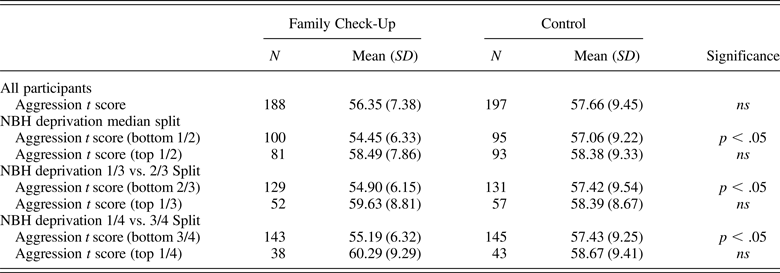
Regression analysis revealed a significant Intervention Status × Neighborhood Deprivation interaction (B = 2.87, p < .05) after accounting for direct effects of each variable on age 9.5 teacher-reported aggression. As shown in Table 1, follow-up t tests exploring the interaction at three cutpoints demonstrated significant effects of the FCU on age 9.5 teacher-reported aggressive behavior for participants who experienced relatively lower levels of neighborhood deprivation at age 2, t (below median) = 2.32, p < .05; t (bottom two-thirds) = 2.53, p < .05; t (bottom three-quarters) = 2.40, p < .05, but no intervention effect was evident for those with the highest levels of age 2 deprivation, t (above median) = 0.09, ns; t (top third) = 0.97, ns; t (top quarter) = 0.78, ns.
Intervention effects on age 9.5 teacher-reported aggressive behavior for all participants and by neighborhood deprivation groupings

Note: NBH, Neighborhood.
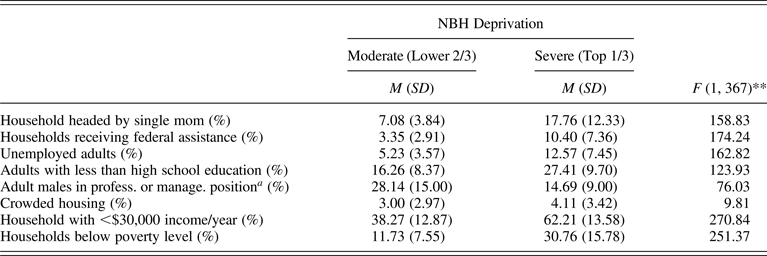
Based on findings that intervention effects were significant for all but those living in the most severely deprived neighborhoods at age 2, regardless of the cutpoint used, and the study's aim to examine potential indirect intervention effects for children exhibiting the highest levels of neighborhood risk, we selected use of the top third (severe neighborhood deprivation) and bottom two-thirds (moderate neighborhood deprivation) cutpoint for subsequent analyses. This grouping was also chosen to reflect the already elevated rates of neighborhood deprivation in the sample and to allow for greater power to detect intervention effects in the severe deprivation group. As shown in Table 2, individual items of the neighborhood deprivation index were significantly different between severe and moderate risk groups using the upper third and lower two-third cutpoints, also supporting the use of one-third to two-thirds threshold.
Individual neighborhood deprivation items by group

Note: NBH, Neighborhood.
a Reverse coded in neighborhood disadvantage variable.
**p < .001 for all F tests.
Direct effects of FCU on teacher-reported aggression
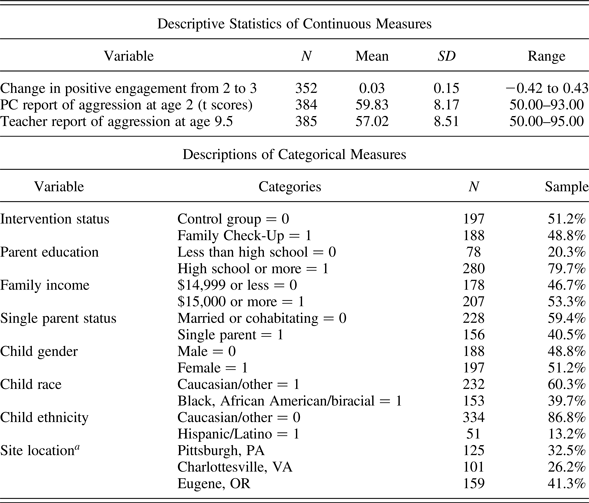
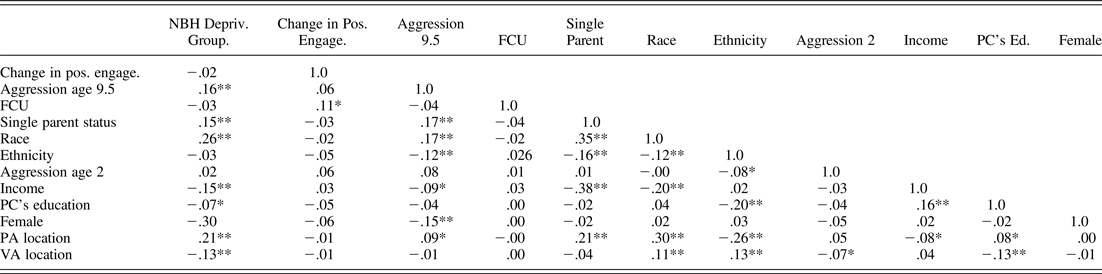
Descriptive statistics are reported in Table 3, and bivariate correlations are reported in Table 4. In the multiple group analyses of direct effects of the FCU on child aggression, after controlling for the previously listed covariates, a significant direct effect was evident for families living in moderate neighborhood deprivation (i.e., lower two-thirds, β = –0.27, p < .05) but not for families living in more extreme neighborhood deprivation (i.e., upper third, β = 0.17, p = ns).
Descriptive statistics

a In the analyses Location was included by dummy coding Pittsburgh and Charlottesville with Eugene serving as the comparison group.
Correlations for the full sample

Note: NBH, Neighborhood; FCU, Family Check-Up; PC, primary caregiver; PA, Pennsylvania; VA, Virginia. Nonparametric correlations are reported for all categorical variables.
*p < .05. **p < .01.
Moderated mediation
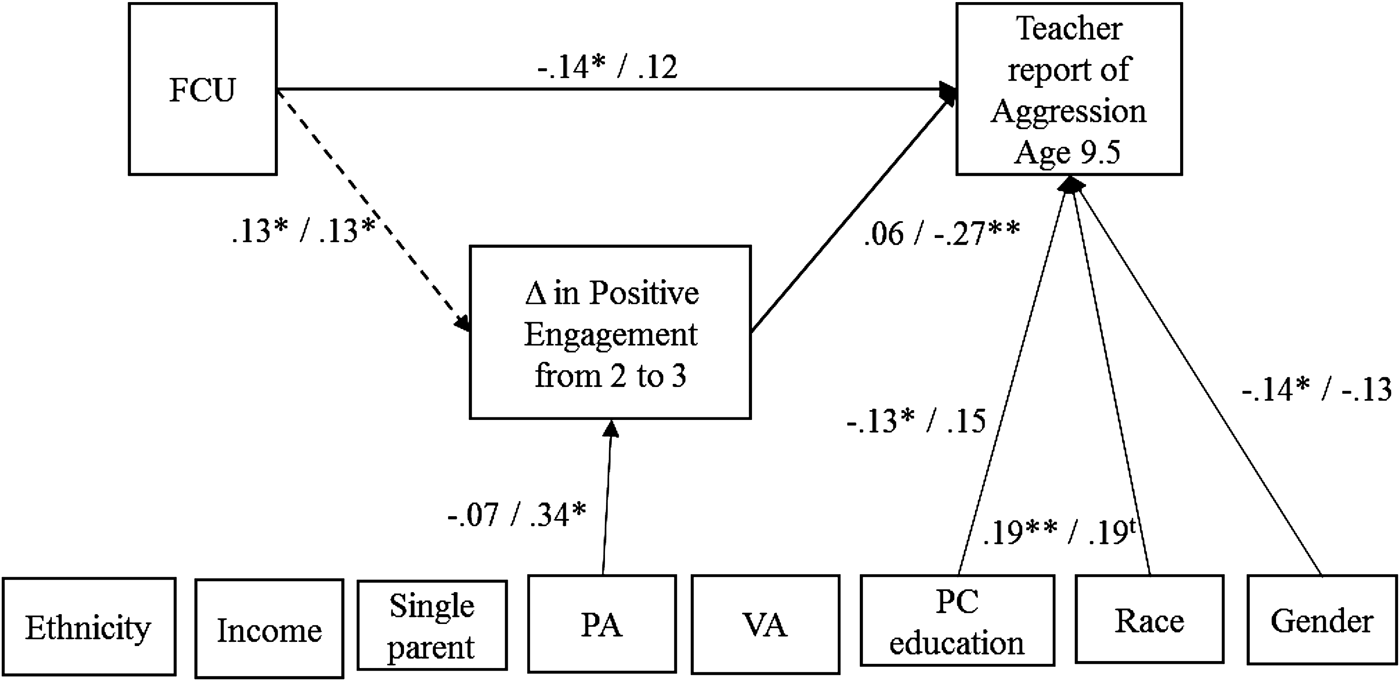
Figure 1 presents the results of the multiple group SEM mediation analyses for severe and moderate neighborhood deprivation groups. A chi-square test revealed that there were no significant differences between structural models with and without the pathway from the FCU to changes in positive engagement constrained to be equal across groups (χ2 = 0.50, df = 1, p = .48); therefore, these constrained pathways were retained in the final model. The practical indices of fit indicated that the final model had a close approximate fit with the data (χ2 = 84.45, df = 38, p < .01; comparative fit index = 1.0, root mean square error of approximation = 0.000). As shown in Figure 1, for families in the moderate neighborhood deprivation group, there is a direct significant negative pathway from the FCU to teacher-reported child aggression at age 9.5 (β = –0.15, p < .05) and a direct pathway from the FCU to changes in positive engagement (β = 0.13, p < .05), but the pathway from changes in positive engagement to child aggression was not significant (β = 0.06, ns). For families living in extremely deprived neighborhoods, however, no significant pathway from the FCU to child aggression emerged (β = 0.18, ns), but pathways from the FCU to changes in positive engagement (β = 0.13, p < .05) and from changes in positive engagement to child aggression (β = –0.27, p < .01) were significant, such that the FCU was related to increases in positive engagement from ages 2 to 3, which in turn was related to decreases in child aggression at age 9.5. Analyses of indirect effects indicate that the indirect pathway from the FCU to child aggression for the families living in severe neighborhood deprivation was at trend level (β = –0.03, p = .06). Consistent with this marginal indirect effect from the FCU to changes in positive engagement to teacher reports of school-age child aggression for those living in severe neighborhood deprivation, for families living in the urban Pennsylvania site there was a significantly greater change in maternal positive engagement from ages 2 to 3 among those living in the severe neighborhood deprivation group than among those living in moderately deprived neighborhoods. For families living in moderate neighborhood deprivation, the FCU directly improved parents' positive engagement in early childhood and reduced children's school-age aggression.
Multiple group structural equation model result. Standardized β weights are reported. Information on the left side of the slash (/) indicates results for moderate deprivation group and the right side indicates results for the severe neighborhood deprivation group. Dashed line indicates a constrained pathway. Analyses included the following covariates: child gender, race, and ethnicity, primary caregiver's education and income, and site location. Only pathways from covariates that were significant for either group are shown for visual simplicity. t p < .10, *p < .05, **p < .01. PC, Primary caregiver; PA, Pennsylvania; VA, Virginia.

Discussion
Building on prior research examining the effectiveness of the FCU in improving child CP for at-risk children from low-income families (Dishion et al., Reference Dishion, Shaw, Connell, Wilson, Gardner and Weaver2008, Reference Dishion, Brennan, McEachern, Shaw, Wilson and Weaver2014; Shaw et al., Reference Shaw, Dishion, Supplee, Gardner and Arnds2006), findings from the current study support the long-term effectiveness of the FCU based on intervention effects for teacher reports of child CP at age 9.5. However and in contrast to earlier reports of this sample where social deprivation did not, in the main, moderate intervention effects (Dishion et al., Reference Dishion, Shaw, Connell, Wilson, Gardner and Weaver2008, Reference Dishion, Brennan, McEachern, Shaw, Wilson and Weaver2014; Gardner et al., Reference Gardner, Connell, Trentacosta, Shaw, Dishion and Wilson2009), FCU effects were found to be moderated by neighborhood deprivation. The effect was such that although ITT effects were found on parenting across neighborhood risk, direct effects on child aggression were only evident for those living in neighborhoods characterized by moderate levels of deprivation. For those families living in neighborhoods characterized by more extreme neighborhood adversity, direct effects of the FCU intervention on child CP were not evident. Neighborhood deprivation moderation was found regardless of whether the threshold for defining severe deprivation was set at the median, upper third, or upper fourth of the sample; intervention effects continued to be evident for the moderate-risk neighborhood group and not found for the severe-risk group.
Despite moderation of intervention effects being found for neighborhood deprivation, because the sample coprised ethnically diverse, low-income families (consistent with their eligibility for WIC) living across urban, rural, and suburban communities, the findings are still fairly impressive in demonstrating 7.5-year effects on teacher reports of child CP across informant and context. That is, for most WIC-eligible families who were not seeking intervention for their children at age 2, participation in the FCU resulted in significant decreases in child CP through the school-age period. That intervention effects were not directly found for children living in the most deprived neighborhoods was not surprising based on the extreme levels of adversity found in these neighborhoods and, in many cases, in these children's homes. This differential effect is particularly plausible given that child behavior was assessed at an age when children are beginning to have more substantial independent access to neighborhood peer groups and other extrafamilial contextual influences.
A second major goal of the study was to examine whether by improving parent–child interaction and specifically levels of dyadic positive engagement among those children living in extremely deprived neighborhoods might show long-term reductions in child CP. Consistent with the qualitative research by Burton (Reference Burton2007) and Arditti et al. (Reference Arditti, Burton and Neeves-Botelho2010) stressing the salience of parenting while living in extreme poverty, we found significant paths between the FCU and the quality of parent–child interaction between ages 2 and 3, and between dyadic positive engagement and teacher reports of child CP at age 9.5. The path from positive engagement to teacher reports of child CP was only significant for those living in the higher risk neighborhoods, with a marginally significant trend for the entire indirect effect from the FCU to changes in positive engagement to school-age child CP. The findings suggest that although the FCU was less effective in promoting long-term effects on child CP for those living in extreme versus moderate neighborhood deprivation, if parent–child interaction could be improved in these families during the toddler period, children living in extreme neighborhood deprivation would show particularly marked improvements in CP relative to control children living in comparable neighborhoods, and perhaps relative to intervention children from less deprived neighborhoods.
Neighborhood deprivation, intervention, and school-age child CP
The current findings from our initial comparisons showing intervention effects on CP for children from relatively less deprived neighborhoods are consistent with a number of passive longitudinal studies demonstrating that neighborhood deprivation independently predicts child CP during the school-age period and thereafter, even after accounting for other socioeconomic (e.g., income) and family (maternal depression) risk factors (Beyers et al., Reference Beyers, Bates, Pettit and Dodge2003; Brooks-Gunn et al., Reference Brooks-Gunn, Duncan, Aber, Brooks-Gunn, Duncan and Aber1997; Coley et al., Reference Coley, Morris and Hernandez2004; Ingoldsby et al., Reference Ingoldsby, Shaw, Winslow, Schonberg, Gilliom and Criss2006). Logically, it follows that effecting long-term changes in CP for children living in neighborhoods characterized by poorer resources and greater exposure to antisocial and other deviant peer and adult behavior would be challenging. The moderation finding for neighborhood deprivation is also consistent with the one known child intervention paper to examine this issue, using Lochman's Coping Power to address CP (Lochman & Wells, Reference Lochman and Wells2004). In addition, using Census data to derive an index of neighborhood deprivation, Lochman et al. (Reference Lochman, Wells, Qui and Chen2013) found that higher levels of neighborhood deprivation were linked to lower intervention response.
Improving parenting and child CP in context of extreme disadvantage
The current findings also suggest that there might be hope for preventing the development of CP among children living in our most extremely deprived communities. Whereas others (Minuchin, Reference Minuchin1974) have appropriately suggested skepticism about our ability to effectively intervene in the face of overwhelming levels of adversity, suggesting that parenting interventions for multirisk, low-income families would be analogous to putting Band-aids on individuals that require surgery, the present findings suggest that addressing parenting and parent–child interaction quality in early childhood for families living in such high-risk contexts might be a viable option for promoting positive adaptation for such children. Rather than giving up on such families because of the multiple layers of adversity, the current findings suggest that changes in parenting can occur as commonly for those living in moderately high versus extremely high levels of neighborhood deprivation (β = 0.13, p < .01 in both groups for path from FCU to positive engagement from ages 2 to 3). Moreover, because the path between changes in positive engagement from ages 2 to 3 and teacher reports of child aggression at age 9.5 was only significant for families living in the most extreme neighborhood deprivation, echoing the findings of Arditti et al. (Reference Arditti, Burton and Neeves-Botelho2010) and Burton (Reference Burton2007) and several others noting that parenting as a proximal process is more influential than the distal processes related to poverty and neighborhood disadvantage (Chazan-Cohen et al., Reference Chazan-Cohen, Raikes, Brooks-Gunn, Ayoub, Pan and Kisker2009; Conger et al., Reference Conger, Ge, Elder, Lorenz and Simons1994; McLoyd et al., Reference McLoyd, Jayaratne, Ceballo and Borquez1994; Mistry et al., Reference Mistry, Vandewater, Huston and McLoyd2002), the results suggest that more (rather than less) intensive attempts should be made to address parenting issues for children living in such neighborhoods. One could argue that the marginal indirect effect from the FCU to changes in parenting to improvements in child CP at school for those living in extreme neighborhood deprivation provides the strongest support for the mediating process being tested in the current study. Whereas the FCU was associated with comparable improvement in parenting across neighborhood risk, the actual moderation effect appeared to be in transferring these improvements to child behavior at school, where those children in the most deprived contexts showed significant gains. For those living in moderately high levels of neighborhood deprivation, perhaps other family process issues are more important in mediating intervention effects of the FCU on child CP at school. In future papers, we intend to investigate candidates that are related to parental well-being and thus indirectly linked to child adjustment (e.g., family chaos and satisfaction in parental social support).
An issue related to the FCU's ability to modify parenting practices across levels of neighborhood deprivation is where the intervention occurred. It may not be a coincidence that the FCU was conducted in each family's home, providing easier accessibility to families who because of their limited economic resources (including the ability to travel with children to a clinic), might find engaging in intervention challenging. Whereas most programs with the strongest evidence base for demonstrating long-term effects on CP in early childhood have been conducted in clinics rather than at families' homes (Webster-Stratton & Hammond, Reference Webster-Stratton and Hammond1997; McNeil, Eyberg, & Eisenstadt, Reference McNeil, Eyberg and Eisenstadt1991), accessibility is an issue of increasing salience because of the recent emphasis on improving the availability of mental health services for families living in at-risk communities. A notable exception is the work of Olds's (Reference Olds2002) Nurse Family Partnership program, which relies on home visiting during the prenatal period and infancy and also has shown long-term effectiveness in reducing youth CP and AB for families living in poverty. We believe the current findings have significant implications for social policy, suggesting that more concerted efforts be made to identify families with young children living in highly deprived neighborhoods, using innovative methods to engage families in preventive services, such as the FCU.
The paths for the indirect intervention effect from the FCU to positive engagement to reductions in child CP are also consistent with our clinical experience using the FCU with families living in highly deprived neighborhoods. Based on our work, therapists need advanced skills in navigating the multiple and very real contextual and intrapersonal challenges facing these families to guide parents to focus on modifying the ways they manage their child's behavior. We have found it helpful for therapists to listen and acknowledge the salience of acute events (e.g., losing electricity or water or loss of employment) and/or chronic conditions (e.g., neighborhood safety, maternal depression, or paternal criminality) at the beginning of sessions before guiding the parent to focus on the management of the child's behavior. In navigating often troubled waters, it is essential to let parents know how improving parenting practices might also lessen the intensity of some (but not all) other challenges facing the family, including intrapersonally (e.g., improving parental depression), interpersonally (e.g., improving coparenting and parent–child relationship quality), and from the perspective of safeguarding the child in the neighborhood (improving the parent's monitoring of the child's activities inside and outside of the home). We have intervention findings to validate therapist's impressions from our clinical work, demonstrating that the use of the FCU in early childhood is linked to improvements in maternal well-being (Shaw et al., Reference Shaw, Dishion, Connell, Wilson and Gardner2009), marital and parent–child relationship quality (Wever, Shaw, Crossan, Dishion, & Wilson, Reference Weaver, Shaw, Crossan, Dishion and Wilsonin press; Weaver, Shaw, Dishion, & Wilson, Reference Weaver, Shaw, Dishion and Wilson2015), parental social support satisfaction (McEachern et al., Reference McEachern, Fosco, Dishion, Shaw, Wilson and Gardnerin press), and monitoring of child behavior (Shaw et al., Reference Shaw, Dishion, Supplee, Gardner and Arnds2006).
Whereas there was an ITT effect on teacher reports of child CP for those families living in moderate levels of neighborhood deprivation, and the FCU was found to be related to improvement in positive engagement between ages 2 and 3 for treatment families, improvements in positive engagement were not found to mediate intervention effects on teacher reports of child aggression at age 9.5. Although changes in parenting were found to mediate later parent reports of child CP during the preschool period (Dishion et al., Reference Dishion, Shaw, Connell, Wilson, Gardner and Weaver2008) and later effects on academic achievement (Brennan et al., Reference Brennan, Shelleby, Shaw, Dishion, Gardner and Wilson2013) in the entire sample, it is possible that for families living in communities characterized by only modest to moderate neighborhood deprivation, modifying PCs' levels of positive engagement may not fully account for other within-family changes that resulted from participation in the FCU, or that further sequential mediation takes that was not examined in the current study. We are currently exploring other potential family mediators to account for the improvements of children living in moderately deprived, low socioeconomic status neighborhoods in relation to teachers' perceptions of the child's CP at school, such as improvements in family chaos, marital quality, and maternal social support, all of which might have a downregulating effect on parent and child behavior, so that the child can better maintain his/her regulation skills at school. Alternatively, more global measures of parenting quality might better capture changes in caregiving behavior that are linked to the child's behavior 7 years later in the context of school (e.g., global indices of positive behavior support vs. molecular ratings of neutral and positive behavior).
Limitations
Despite having several methodological strengths, including the long-term follow-up of an experimental trial of the FCU using a large sample of low-income, ethnically diverse girls and boys from urban, rural, and suburban communities, the use of multiple methods and informants (e.g., observations of parenting, geocoding of neighborhood risk, and teacher reports of child CP), the study is not without several methodological limitations. First, the participants consisted of predominantly European American and African American children of low-income families, with a smaller proportion of children coming from Hispanic (13%) or other ethnic (9%) backgrounds. The extent to which the findings would generalize to other samples, particularly children from different racial/ethnic backgrounds or higher income households, might be limited. Second, although rates of teacher participation were moderate (66% of retained sample at age 9.5), because of issues in gaining cooperation from school districts, predominantly in more urban sections of the Pittsburgh and Charlottesville sites, the current results may include an underestimate of children living in the most impoverished neighborhoods within the sample. On the one hand, having fewer teacher reports on a disproportionate number of children living in the most deprived neighborhoods might underrepresent the magnitude of neighborhood moderation effects in the current analysis (i.e., less variability than the full sample) and provide less power to detect indirect effects from the FCU to improvements in parenting to positive effects on child disruptive behavior at school. On the other hand, having a disproportionate number of higher risk children missing from the analysis may have overestimated the effects of the indirect path from parenting to child disruptive behavior. This seems like a less likely result for the path between the FCU and parenting, which was quite comparable for high- and extreme-risk families. Nevertheless, we believe that the importance of demonstrating associations among neighborhood deprivation, the FCU, parenting, and child disruptive behavior across context and informant outweighs the potential limitations. Further, relative to other passive longitudinal and intervention samples examining the potential moderating contribution of neighborhood deprivation on child outcomes, the sample included a higher than average proportion of families living in highly deprived neighborhoods. Although many studies of neighborhood purposely focus on a wide range of socioeconomic strata, often utilizing representative samples, we purposely restricted our focus on variation in neighborhood deprivation among low-income families, also varying in terms of urbanicity. In addition, although teacher reports of CP during the school-age period have been consistently linked to multiple facets of youth adjustment during adolescence and are important, because children's AB becomes more covert and often undetected by adults as they move into early adolescence, it will be important to supplement teacher reports with youth reports of antisocial activities in future follow-ups of the current sample.
Although we purposefully included families who varied in terms of their urbanicity, our method for characterizing neighborhood deprivation was urban-centric, relying heavily on stressors more commonly experienced by those living in urban versus rural or suburban contexts. Recent conceptualizations of poverty suggest that the precise types of community-level, environmental stressors for those living in poverty vary by level of urbanicity, with most research in this area conducted on children from large urban communities (Miller, Votruba-Drzal, & Setodji, Reference Miller, Votruba-Drzal and Setodji2013; Shaw, Reference Shaw2013). Urban, suburban, and rural areas differ in terms of their population density, resources, availability of transportation, and social and community capital. Rural communities are often characterized by lack of access to public transportation, health care, libraries, child care, and other social services (Vernon-Feagans, Gallagher, & Kainz, Reference Vernon-Feagans, Gallagher, Kainz, Meece and Eccles2008), inner-city neighborhoods often include little green spaces, high rates of crime, and poverty concentration, overcrowding, and noise and air pollution (Evans, Reference Evans2006), while low-income families living in suburban communities report feeling isolated from social service providers and social support (Miller et al., Reference Miller, Votruba-Drzal and Setodji2013). Future efforts in this area would benefit by characterizing neighborhood deprivation in ways that better capture stressors associated with living in these disparate contexts.
From a methodological perspective, it would have been preferable to generate latent profiles of neighborhood deprivation rather than experiment using logical, albeit arbitrary, cutpoints to establish neighborhood risk. Initially, we attempted to identify empirically derived neighborhood deprivation dimensions at the cluster level. However, because even when combined the two highest risk clusters only represented 15% of the sample, making group differences challenging to detect, and because rates of neighborhood deprivation for those assigned to other clusters were still elevated compared to population samples, we opted to use less stringent methods and cutpoints for distinguishing between high and extreme neighborhood deprivation. Finally, although we chose to focus on aggressive behavior in the current study, which represents only some of the more serious types of CP during the school-age period, it should be noted that the current results were largely replicated using the narrow-band rule-breaking factor and the broad-band externalizing factor from the Child Behavior Checklist. These results indicate that the current findings are not specific to aggressive behavior per se, but also include oppositional and other types of defiant CP.
Conclusions
With these caveats, the current results suggest that within a sample of multirisk families living in poverty, the effectiveness of family-centered interventions such as the FCU may be less effective in more extremely deprived neighborhoods than in low-income neighborhoods characterized by moderate levels of deprivation. Despite an attenuation of intervention effects on child aggression for those living in the most extremely impoverished neighborhoods, the results also suggest that improvements in school-age aggression at school were found when parents improved their levels of positive engagement in interactions with their children during the toddler period. We look forward to testing whether such positive effects on youth AB continue to be evident as we follow the current sample during the midadolescent period in the coming years.