Introduction
After more than forty years since being first introduced, antenatal glucocorticoid therapy to promote fetal maturation remains one of the most important interventions for preterm birth and has been acknowledged as a ‘rare example of a technology that yields substantial cost savings in addition to improving health.’ 1 A key reason for this success is that synthetic glucocorticoids mimic the developmental maturational changes that normally occur in late gestation in response to rising fetal glucocorticoids. But it is this capacity of glucocorticoids to exert potent effects throughout gestation that makes exposure to excess maternal glucocorticoids, the transfer of which is normally tightly regulated by the placenta, an important candidate mechanism underlying known associations between an adverse fetal environment and risk of cardiometabolic and other diseases in adulthood.
Remarkably, despite the emerging body of evidence linking fetal glucocorticoid excess to permanent changes in homeostasis and organ function, there has been little evidence to date from randomized trials of harm following exposure to clinical doses of antenatal glucocorticoids. However, with wider use of glucocorticoids in an attempt to maximize neonatal benefits, including repeat doses and administration before cesarean at term, there is increased need to consider whether short-term benefits could be outweighed by later adverse effects.
In this paper, we outline the clinical benefits and actions of synthetic glucocorticoids, highlight areas of clinical uncertainty, review what is currently known about long-term effects of antenatal glucocortcoids, and discuss the apparent discrepancy between data from randomized clinical trials and other studies.
Clinical benefits of antenatal glucocorticoid treatment
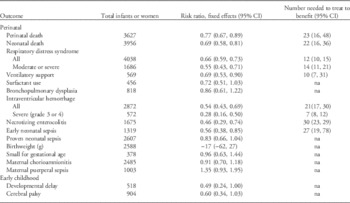
The benefits of antenatal glucocorticoid treatment in women with threatened or planned preterm birth have been summarized in a Cochrane systematic review involving 21 trials (4269 infants), and include a reduced incidence of neonatal death, respiratory distress syndrome, intraventricular hemorrhage, early neonatal sepsis and necrotizing enterocolitis, with numbers needed to treat to benefit of 30 or fewer (Table 1).Reference Roberts and Dalziel 2 These benefits were not associated with an increase in the incidence of intrauterine infection or puerperal sepsis. In these trials, efforts were made to expose fetuses to glucocorticoids for at least 48 to 72 h,Reference Liggins and Howie 3 though subgroup analysis showed that the incidence of neonatal death and respiratory distress syndrome were reduced even if exposure to glucocorticoids was within 24 and 48 h of birth, respectively.Reference Roberts and Dalziel 2
Perinatal effects of antenatal glucocorticoids compared with placebo or no treatment in women at risk of preterm birth

na, not applicable; CI, confidence interval.
Adapted from meta-analysis of Roberts and Dalziel.Reference Roberts and Dalziel 2
Although the earliest trials were performed before many of the advances in modern neonatal intensive care, approximately a quarter of all data in the review came from trials that completed recruitment after 1990. In this subgroup, the relative and absolute benefits of treatment were at least as good as, if not better than, those for infants born in earlier decades,Reference Roberts and Dalziel 2 possibly reflecting synergistic effects between antenatal glucocorticoids and other treatments such as surfactant.Reference Jobe, Mitchell and Gunkel 4 – Reference Andrews, Marcucci, White and Long 7
In the review, statistically significant reductions in the incidence of respiratory distress syndrome were seen only with administration of glucocorticoids before 35 weeks’ gestation, though risk ratios at 35 to 36 weeks’ gestation were similar. 1 In two subsequent open-label trials, antenatal glucocorticoid treatment before cesarean at term reduced admission for respiratory distress, primarily at early-term gestation.Reference Stutchfield, Whitaker and Russell 8 , Reference Ahmed, Sayed Ahmed and Mohammed 9 However, in another double-blind trial at late-preterm gestation betamethasone had no effect on the incidence of respiratory distress, though the need for phototherapy was reduced.Reference Porto, Coutinho, Correia and Amorim 10 Although selective use of antenatal glucocorticoids after 34 weeks’ gestation has been recommended by some authorities,Reference Roberts 11 there is concern that the balance of benefits and potential harms in the more mature fetus may be different, particularly given the low incidence of serious morbidity.Reference Aiken, Fowden and Smith 12 , Reference Reynolds and Seckl 13 Indeed, a two-fold increase in teacher-reported low academic ability in children exposed to betamethasone at term suggests need for caution.Reference Stutchfield, Whitaker and Gliddon 14 Further evidence from ongoing trials of glucocorticoid treatment in late gestation is awaited (NCT01222247, NCT01206946, NCT00446953, Khazardoust et al. Reference Khazardoust, Salmanian and Zandevakil 15 ), and long-term follow-up of these infants will be crucial in determining the overall effect of treatment.
There are insufficient data from randomized trials to evaluate effects of antenatal glucocorticoid treatment before 26 weeks’ gestation, but in large cohort studies of extremely preterm infants antenatal glucocorticoid exposure has been consistently associated with significant clinical benefit, especially improved survival and a decreased incidence of intraventricular hemorrhage.Reference Abbasi, Oxford, Gerdes, Sehdev and Ludmir 16 – Reference Wong, Abdel-Latif and Kent 20 Furthermore, studies in animals and human lung explants have shown that glucocorticoid-induced pulmonary maturation occurs from the early saccular phase of lung development.Reference Ballard, Ertsey, Gonzales and Gonzales 21 – Reference Willet, Jobe, Ikegami, Kovar and Sly 23
Obstetric subgroups
Randomized trial data are available for a limited number of maternal subgroups, and have shown that antenatal glucocorticoids are effective in women with pre-clampsia and preterm prelabour rupture of membranes (PPROM), without increasing the incidence of intrauterine or neonatal infection.Reference Roberts and Dalziel 2 , Reference Harding, Pang, Knight and Liggins 24 Recent studies support the use of antenatal glucocorticoids in fetuses that may be affected by inflammation or infection,Reference Yoo, Chang and Kim 25 – Reference Collins, Kunzmann and Kuypers 28 though early administration appears to be important.Reference Kuypers, Jellema and Ophelders 29
In the Cochrane systematic review, antenatal glucocorticoids did not have a significant effect in multiple pregnancy,Reference Roberts and Dalziel 2 raising concern that higher doses of glucocorticoid may be required.Reference Ballabh, Lo and Kumari 30 However, this is likely to represent a type 2 error as there were few data available for this subgroup and subsequent studies have shown maternal and fetal glucocorticoid pharmacokinetics are not altered in multiple pregnancy.Reference Della Torre, Hibbard, Jeong and Fischer 31 , Reference Gyamfi, Mele and Wapner 32
Cardiovascular responses to glucocorticoids may differ between normally grown and growth restricted fetuses, with growth restricted fetuses showing reduced rather than increased fetal and placental vascular resistanceReference Edwards, Baker and Wallace 33 – Reference Wallace and Baker 35 and increased cerebral blood flow.Reference Miller, Supramaniam, Jenkin, Walker and Wallace 36 – Reference Chang, Chang and Chao 38 These observations have raised concern that glucocorticoids may disrupt fetal cardiovascular compensation for placental insufficiencyReference Torrance, Derks, Scherjon, Wijnberger and Visser 39 – Reference Morrison, Botting and Soo 41 and increase cerebral oxidative stress and injury.Reference Miller, Chai and Loose 37 , Reference Velayo, Ito and Dong 42 While randomized trials have not specifically addressed the use of antenatal glucorticoids in the presence of fetal growth restriction, key trials did include such pregnanciesReference Liggins and Howie 3 and observational data, though limited, appear reassuring with respect to later neurological outcome.Reference Schaap, Wolf and Bruinse 43 One trial suggested that glucocorticoids may be less effective in reducing respiratory distress syndrome in infants with lower birthweight percentile,Reference Schutte, Treffers, Koppe and Breur 44 but in growth restricted fetal sheep, glucocorticoid-induced pulmonary maturation was similar to that of normally grown animals.Reference Sutherland, Crossley and Allison 45
Antenatal glucocorticoid therapy causes a transient increase in maternal glucose concentrations,Reference Refuerzo, Garg and Rech 46 – Reference Mastrobattista, Patel and Monga 48 often more pronounced in women with diabetes,Reference Refuerzo, Garg and Rech 46 , Reference Mathiesen, Christensen and Hellmuth 49 and someReference Amorim, Santos and Faundes 47 but not allReference Wapner, Sorokin and Thom 50 randomized trials have shown an increase in the incidence of glucose intolerance in women following glucocorticoid administration. While hyperglycemia and hyperinsulinism can impair glucocorticoid action,Reference Carlson, Smith and Post 51 – Reference McGillick, Morrison, McMillen and Orgeig 53 outcomes appear similar for preterm infants of mothers with and without diabetes when there is adequate maternal glycemic control and a high rate of antenatal glucocorticoid exposure.Reference Rehan, Moddemann and Casiro 54 , Reference Bental, Reichman and Shiff 55 Consequently, antenatal glucocorticoid therapy remains indicated in women with diabetes,Reference Roberts 11 although increased insulin therapy may be required.Reference Kalra, Kalra and Gupta 56
Mechanism of action and pharmacology
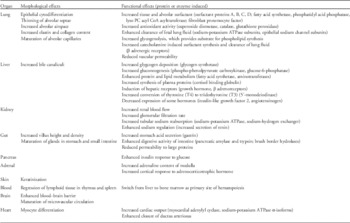
Fetal glucocorticoids have a key role in late gestation in preparing the fetus for extra-uterine life and are important in achieving synchrony between maturation and parturition.Reference Liggins 57 – Reference Challis, Matthews, Gibb and Lye 59 They induce a wide range of proteins and enzymes with morphological and functional maturational effects in most fetal tissues, especially the lung, liver and intestine (Table 2). However, this tends to occur at the expense of ongoing cell division.Reference Fowden, Szemere, Hughes, Gilmour and Forhead 60
Maturational effects of glucocorticoids on the fetus in late gestation

Adapted from Ballard and Ballard,Reference Ballard and Ballard 243 Fowden and Li,Reference Fowden, Li and Forhead 58 Grier and HallidayReference Grier and Halliday 244 and Liggins.Reference Liggins 57
Glucocorticoid action is mediated primarily by activation of the cytosolic glucocorticoid receptor with subsequent effects on transcription,Reference Venkatesh and Ballard 61 mRNA stabilityReference Venkatesh, Iannuzzi, Ertsey and Ballard 62 and post-translational processing.Reference Ballard 63 The activated glucocorticoid receptor induces a limited number of genes directly via nuclear response elements within the gene promoter,Reference Venkatesh, Iannuzzi, Ertsey and Ballard 62 , Reference Li, Saunders, Fowden, Dauncey and Gilmour 64 – Reference Barquin, Ciccolella, Ridge and Sznajder 68 but for most genes transcription is induced indirectly through interactions with nuclear transcription factors that coordinate expression of multiple genes.Reference Venkatesh and Ballard 61 At higher concentrations, glucocorticoids may have a variety of non-genomic effects, including altered cell membrane permeability, mitochrondrial function and intracellular signaling.Reference Chen and Qiu 69 – Reference Du, Wang and Hunter 71
The success of glucocorticoid therapy is due in large part to the fact that clinical doses of synthetic glucocorticoids accelerate a similar sequence of coordinated organ development in the preterm fetus to that which normally occurs in late gestation in response to the rise in endogenous fetal glucocorticoids.Reference Liggins 57 , Reference Fowden, Li and Forhead 58 , Reference Ballard 63 Glucocorticoid receptor expression is high in fetal tissues from mid-gestation, especially in the lung, intestine, pituitary and thymus,Reference Speirs, Seckl and Brown 72 though glucocorticoid action may be influenced by fetal expression of the 11β-hydroxysteroid dehydrogenases (11β-HSD) that determine local glucocorticoid concentrations,Reference Wyrwoll, Holmes and Seckl 73 chromatin conformation, Reference Venkatesh and Ballard 61 the developmental stage of tissuesReference Trahair and Sangild 74 , Reference Ballard 75 and glucocorticoid receptor polymorphisms.Reference Haas, Dantzer and Lehmann 76
The clinical benefits of glucocorticoids in preterm infants result from combined maturational effects on multiple organ systems and pathways. For example, prevention of intraventricular hemorrhage is likely due to increased circulatory stability and vascular resistance,Reference Kari, Hallman and Eronen 6 , Reference Crowther, Hiller, Doyle and Robinson 77 – Reference Smith, Altamirano, Ervin, Seidner and Jobe 79 maturation of cerebral microvasculatureReference Stonestreet, Petersson, Sadowska, Pettigrew and Patlak 80 , Reference Liu, Feng and Yin 81 and improved lung function reducing the need for mechanical ventilation. Initial improvements in lung function are due to enhanced absorption of fetal lung fluid and thinning of alveolar septae, followed by increased surfactant proteins and phospholipids, the concentrations of which are not significantly altered until at least 48 h after glucocorticoid exposure.Reference Ikegami, Polk and Jobe 82 – Reference Moss, Nitsos and Knox 87
Dexamethasone and betamethasone are the only parenterally administered glucocorticoids that reliably cross the placenta due to their limited affinity for placental 11β-HSD-2, which metabolizes maternal cortisol into inactive cortisone.Reference Blanford and Murphy 88 Fetal serum concentrations of dexamethasone and betamethasone are approximately one-third that of maternal.Reference Ballard, Granberg and Ballard 89 , Reference Anderson, Gennser and Jeremy 90 Hydrocortisone and prednisone do reach the fetus if given in sufficient amounts, but are rapidly cleared from the fetal circulation and thus have limited fetal effect.Reference Ballard 75 Although dexamethasone and betamethasone are stereoisomers of the same fluorinated steroid, meta-analysis of several small trials suggested that dexamethasone was more effective at preventing intraventricular hemorrhage.Reference Brownfoot, Crowther and Middleton 91 This may be due to dexamethasone having slightly greater affinity for the glucocorticoid receptor than betamethasone, the longer duration of increased fetal glucocorticoid activity achieved with current dexamethasone dosing regimens,Reference Ballard 75 , Reference Jobe and Soll 92 , Reference Fonseca, Alcorn, Ramin and Vidaeff 93 and greater potency for non-genomic effects.Reference Buttgereit, Brand and Burmester 70 Results of a large clinical trial comparing the effect of dexamethasone and betamethasone for preterm birth on later neurodevelopment are awaited.Reference Crowther, Harding and Middleton 94
One trial found that doubling the dose of betamethasone administered to women (two doses of 24 mg) did not result in any additional neonatal benefit,Reference Howie and Liggins 95 which is not surprising given that the glucocorticoid receptor is saturated at low nanomolar concentrations of glucocorticoids.Reference Ballard 75 The molecular action of glucocorticoids suggests that a small but sustained increase in fetal glucocorticoid activity would be sufficient to induce premature maturation. Indeed, in sheep a single maternal injection of betamethasone in a depot form (betamethasone acetate) was as effective as serial bolus dosing (betamethasone phosphate), despite considerably lower fetal plasma concentrations.Reference Jobe, Nitsos and Pillow 96
Repeat doses
The use of repeat doses of antenatal glucocorticoids was originally proposed because subgroup analysis of the first and largest trial showed that infants born 7 or more days after glucocorticoid treatment did not experience respiratory benefit and may have actually been at increased risk of respiratory distress syndrome.Reference Howie and Liggins 95 , Reference Howie and Liggins 97 Subsequently, nine placebo-controlled trials allowed use of weekly repeat doses of glucocorticoids but the effect on the incidence of respiratory distress syndrome and neonatal death in these trials was similar to those permitting only a single course of glucocorticoids.Reference Roberts and Dalziel 2
However, experimental animal studies have shown that repetitive maternal dosing or longer courses of glucocorticoids result in greater biochemical and structural maturation in the preterm fetal lung than a single dose or course.Reference Willet, Jobe, Ikegami, Kovar and Sly 23 , Reference Ballard, Ning, Polk, Ikegami and Jobe 86 , Reference Jobe, Newnham, Willet, Sly and Ikegami 98 – Reference Engle, Kemnitz, Rao, Perelman and Farrell 104 This may be partly due to the reversibility of glucocorticoid action in fetal tissues and declining effect over time.Reference Tan, Ikegami and Jobe 105 However, improvements in lung function and architecture persist in the fetus for at least 2 to 3 weeks before gradually reverting to the baseline developmental state.Reference Jobe, Newnham, Willet, Sly and Ikegami 98 , Reference Ikegami, Jobe and Newnham 100 , Reference McEvoy, Schilling and Spitale 106 , Reference McEvoy, Bowling and Williamson 107 Overall, these studies suggest that a maximal maturational response in the preterm fetus requires repeat exposure to glucocorticoids.
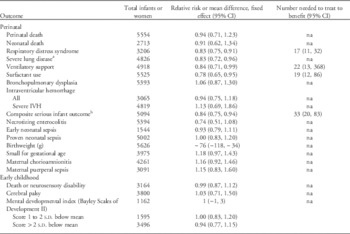
More recent trials have investigated the effect of giving repeat dose(s) of glucocorticoids to women at risk of preterm birth 7 or more days after an initial course of glucocorticoids. Though treatment regimens were quite variable and not all trials showed neonatal benefit, a Cochrane systematic review (10 trials, 5700 infants) found that repeat dose(s) of betamethasone were associated with a reduced incidence of respiratory distress syndrome and combined serious neonatal morbidity compared with a single course (Table 3).Reference Crowther, McKinlay, Middleton and Harding 108 Other related benefits included decreased use of oxygen, surfactant, mechanical ventilation and inotropes, and reduced treatment for patent ductus arteriosus.Reference Crowther, McKinlay, Middleton and Harding 108 Most trials included women with PPROM and there was no significant increase in incidence of intrauterine infection or puerperal sepsis (Table 3). Importantly, the absolute benefit of repeat dose(s) was similar to that of an initial course (numbers needed to treat to prevent respiratory distress syndrome [95% CI]: single course 12 [10, 19]Reference Roberts and Dalziel 2 ; repeat dose[s] 17 [11, 32]Reference Crowther, McKinlay, Middleton and Harding 108 ).
Effects of repeat dose(s) of antenatal betamethasone compared with placebo or no treatment given to women at risk of preterm birth 7 or more days after an initial course of glucocorticoids

CI, confidence interval; na, not applicable.
Adapted from meta-analysis of Crowther et al.Reference Crowther, McKinlay, Middleton and Harding 108
a Statistically significant heterogeneity (I 2=76%); average relative risk (random effects) 0.80 (95% CI 0.56, 1.14); 95% prediction interval 0.4 to 1.56 (τ 2=0.12).
b Variously defined but includes severe lung disease, chronic lung disease, severe intraventricular hemorrhage, periventricular leukomalacia, necrotizing enterocolitis, retinopathy of prematurity, proven sepsis, patent ductus arteriosus requiring treatment and perinatal death.
In this systematic review, subgroup analysis of trials based on planned glucocorticoid dose and frequency did not identify any particular treatment regimen as being superior to another.Reference Crowther, McKinlay, Middleton and Harding 108 However, a meta-analysis of individual patient data, currently in progress, may help to determine optimal dose and frequency of repeat doses, and pregnancies in which benefits are likely to be maximized.Reference Crowther, Aghajafari and Askie 109 For example, secondary analysis of one trial suggested that benefits were greatest when repeat doses were commenced before 29 weeks’.Reference Zephyrin, Hong and Wapner 110
Adverse effects and long-term outcomes after antenatal glucocorticoid treatment
The glucocorticoid hypothesis of the developmental origins of disease
Fetal overexposure to glucocorticoids is an important potential mechanism underlying the known associations between fetal growth restriction or undernutrition and adult cardiometabolic diseases, such as diabetes, hypertension, stroke and ischemic heart disease.Reference Barker 111 Key evidence includes the demonstration in animals that both fetal growth restriction and components of metabolic syndrome can be induced by administration of exogenous glucocorticoidsReference Benediktsson, Lindsay, Noble, Seckl and Edwards 112 – Reference Sloboda, Moss and Li 114 or by manipulations that increase placental transfer of maternal glucocorticoids, such as inhibition of placental 11-β-HSD-2.Reference Lindsay, Lindsay, Edwards and Seckl 115 Moreover, maternal protein restriction reduces placental 11-β-HSD-2 activity and induces hypertension in offspring,Reference Langley-Evans, Phillips and Benediktsson 116 which can be prevented by blockade of maternal corticosteroid synthesis.Reference Langley-Evans 117 In humans, maternal and fetal glucocorticoid concentrations are correlated with birthweightReference Stewart, Rogerson and Mason 118 – Reference Bolten, Wurmser and Buske-Kirschbaum 121 and offspring blood pressure,Reference Huh, Andrew and Rich-Edwards 122 adiposityReference Van Dijk, Van Eijsden, Stronks, Gemke and Vrijkotte 123 and cortisol concentrations,Reference Raikkonen, Seckl and Heinonen 124 and may be related to risk of later cognitive impairment,Reference Bergman, Sarkar, Glover and O’Connor 125 , Reference Geoffroy, Hertzman, Li and Power 126 psychiatric disordersReference Raikkonen, Pesonen and Heinonen 127 – Reference Raikkonen, Seckl, Pesonen, Simons and Van den Bergh 131 and osteoporosis.Reference Baird, Kurshid and Kim 132
Risk factors for cardiometabolic disease
In animals, antenatal exposure to synthetic glucocorticoids has been associated with increased risk factors for cardiometabolic disease including enhanced fat deposition,Reference Dahlgren, Nilsson and Jennische 133 , Reference Berry, Jaquiery, Oliver, Harding and Bloomfield 134 impaired metabolism of visceral fat,Reference Gatford, Wintour, De Blasio, Owens and Dodic 135 , Reference Cleasby, Kelly, Walker and Seckl 136 higher blood pressure Reference Benediktsson, Lindsay, Noble, Seckl and Edwards 112 , Reference Celsi, Kistner and Aizman 137 – Reference de Vries, Holmes and Heijnis 145 and decreased insulin sensitivity,Reference Nyirenda, Lindsay, Kenyon, Burchell and Seckl 113 , Reference Sloboda, Moss and Li 114 , Reference O’Regan, Kenyon, Seckl and Holmes 141 , Reference Moss, Sloboda and Gurrin 146 , Reference Long, Shasa, Ford and Nathanielsz 147 which in some cases occurred without associated effects on fetal growth.Reference de Vries, Holmes and Heijnis 145 In several studies, there were more marked effects on physiological function with larger or repeat doses of glucocorticoids.Reference Sloboda, Moss and Li 114 , Reference de Vries, Holmes and Heijnis 145 , Reference Nyirenda, Welberg and Seckl 148 , Reference Sloboda, Moss and Li 149
These pertubations in later cardiometabolic function may be due to permanent changes in organ structure, such as reduced nephron mass,Reference Celsi, Kistner and Aizman 137 , Reference Figueroa, Rose, Massmann, Zhang and Acuna 143 , Reference Ortiz, Quan, Weinberg and Baum 150 – Reference Wintour, Moritz and Johnson 153 or altered neuro-hormonal regulation, including increased expression of peripheral glucococorticoidReference Nyirenda, Lindsay, Kenyon, Burchell and Seckl 113 , Reference Cleasby, Kelly, Walker and Seckl 136 and central mineralocorticoid receptors,Reference Banjanin, Kapoor and Matthews 154 , Reference Dodic, Hantzis and Duncan 155 altered tissue activity of 11β-HSD,Reference Tang, Kenyon, Seckl and Nyirenda 140 , Reference Nyirenda, Carter and Tang 156 , Reference Sloboda, Newnham and Challis 157 and increased reactivity of sympathetic,Reference Segar, Roghair and Segar 158 – Reference Moritz, Dodic and Jefferies 160 renin–angiotensin–aldosteroneReference Dagan, Gattineni, Habib and Baum 139 , Reference O’Regan, Kenyon, Seckl and Holmes 141 , Reference Shaltout, Rose and Figueroa 144 , Reference Contag, Bi, Chappell and Rose 161 , Reference Massmann, Zhang, Rose and Figueroa 162 and hypothalamic–pituitary–adrenal (HPA) systems.Reference Levitt, Lindsay, Holmes and Seckl 138 , Reference O’Regan, Kenyon, Seckl and Holmes 141 , Reference de Vries, Holmes and Heijnis 145 , Reference Dean, Yu, Lingas and Matthews 163 , Reference Uno, Eisele and Sakai 164 In addition, impaired glucose tolerance may result from altered insulin signaling,Reference O’Brien, Sekimoto, Boney and Malee 165 , Reference Jellyman, Martin-Gronert and Cripps 166 upregulation of hepatic gluconeogentic enzymes, such as phosphophenolpyruvate carboxykinaseReference Nyirenda, Lindsay, Kenyon, Burchell and Seckl 113 , Reference de Vries, Holmes and Heijnis 145 and glucose-6-phosphate,Reference Moss, Doherty and Nitsos 167 and reduced β-cell function.Reference Sloboda, Moss and Li 114 , Reference de Vries, Holmes and Heijnis 145 , Reference Gesina, Tronche and Herrera 168 – Reference Blondeau, Lesage, Czernichow, Dupouy and Breant 170
It is important to note that these findings have not been universalReference Gatford, Wintour, De Blasio, Owens and Dodic 135 , Reference Moss, Doherty and Nitsos 167 , Reference Moritz, Butkus and Hantzis 171 – Reference Gubhaju, Sutherland and Yoder 174 and effects have often varied between sexes,Reference O’Regan, Kenyon, Seckl and Holmes 141 , Reference Dean, Yu, Lingas and Matthews 163 , Reference Liu, Li and Matthews 175 among species, with the stage of fetal development, and over time. In general, adverse effects on cardiometabolic function have been seen more consistently in smaller animals, possibly reflecting a longer duration of glucocorticoid exposure relative to gestation length. Nevertheless, in rodents glucose intolerance only occurred with prolonged but not short courses of antenatal dexamethasone.Reference Nyirenda, Lindsay, Kenyon, Burchell and Seckl 113 , Reference O’Regan, Kenyon, Seckl and Holmes 141 , Reference Nyirenda, Welberg and Seckl 148 However, rodents appear particularly susceptible to glucocorticoid-induced hypertension,Reference Benediktsson, Lindsay, Noble, Seckl and Edwards 112 , Reference Celsi, Kistner and Aizman 137 , Reference O’Regan, Kenyon, Seckl and Holmes 141 , Reference Ortiz, Quan, Weinberg and Baum 150 , Reference Ortiz, Quan, Zarzar, Weinberg and Baum 151 whereas the association is more variable in sheepReference Gatford, Wintour, De Blasio, Owens and Dodic 135 , Reference Moss, Doherty and Nitsos 167 and primates,Reference de Vries, Holmes and Heijnis 145 , Reference Bramlage, Schlumbohm and Pryce 173 perhaps due to the earlier onset of metanephric development in higher species.Reference Moritz, Dodic and Wintour 176 In some studies, antenatal glucocorticoid exposure was associated with increased HPA axis activity in juvenile animals but decreased activity in older animals, emphasizing the importance of assessments throughout the life course.Reference Sloboda, Moss and Li 149 , Reference Sloboda, Moss, Gurrin, Newnham and Challis 177
In contrast to animal studies, long-term follow-up of adult subjects in one clinical trial found that those exposed antenatally to betamethasone compared with placebo had similar blood pressure, adiposity, blood lipids and morning cortisol concentrations.Reference Dalziel, Walker and Parag 178 Betamethasone-exposed subjects did have a slightly increased insulin response to oral glucose challenge, with some evidence of greater effect in the higher dose arm of this trial.Reference Dalziel, Walker and Parag 178 However, the clinical significance of this result is uncertain as the differences were small and fasting insulin concentrations and glucose tolerance did not differ between groups. In another trial, antenatal betamethasone exposure was actually associated with slightly lower adult systolic blood pressure.Reference Dessens, Haas and Koppe 179
Results from human observational studies have been conflicting, with many showing no association between antenatal glucocorticoid exposure and later risk factors for cardiometabolic disease, including blood pressure,Reference Norberg, Stalnacke, Nordenstrom and Norman 180 – Reference de Vries, Karemaker and Mooy 182 insulin sensitivity,Reference Norberg, Stalnacke, Nordenstrom and Norman 180 , Reference Finken, Keijzer-Veen and Dekker 181 cortisol concentrations,Reference Norberg, Stalnacke, Nordenstrom and Norman 180 peripheral arterial function,Reference Norberg, Stalnacke, Nordenstrom and Norman 180 blood lipids and adiposity.Reference Norberg, Stalnacke, Nordenstrom and Norman 180 , Reference Finken, Keijzer-Veen and Dekker 181 However, in others there was a small increase in blood pressure,Reference Doyle, Ford, Davis and Callanan 183 slight decrease in renal clearanceReference Finken, Keijzer-Veen and Dekker 181 and β-cell function,Reference Kelly, Lewandowski and Worton 184 and evidence of increased aortic stiffness.Reference Kelly, Lewandowski and Worton 184 In addition, two studies demonstrated increased stress reactivity in term-born children exposed antenatally to glucocorticoids.Reference Alexander, Rosenlocher and Stalder 185 , Reference Erni, Shaqiri-Emini, La Marca, Zimmermann and Ehlert 186
There are currently few data from randomized trials on the long-term effects of repeat doses of antenatal glucocorticoids on cardiometabolic function, apart from blood pressure, which did not differ between children exposed to repeat doses or a single course.Reference Asztalos, Murphy and Willan 187 – Reference Crowther, Doyle and Haslam 189 Results of a detailed investigation of the effects of repeat doses on later physiological function in one trial are awaited.Reference McKinlay, Cutfield and Battin 190
Growth, bone mass and reproduction
In many animal studies, antenatal glucocorticoids have been associated with a dose-related reduction in birthweight, primarily due to decreases in soft tissue and solid organ mass with less effect on skeletal size.Reference Newnham, Evans and Godfrey 191 However, in primates birthweight is not invariably affected, even after prolonged exposure.Reference de Vries, Holmes and Heijnis 145 Several mechanisms may contribute to glucocorticoid-induced slowing of fetal growth, including altered placental function and nutrient transfer,Reference Moss, Sloboda and Gurrin 146 , Reference Newnham, Evans and Godfrey 191 , Reference Fowden and Forhead 192 decreased DNA synthesis and cell division,Reference Ballard 75 reduced fetal tissue water contentReference Stonestreet, Watkins, Petersson and Sadowska 193 and increased protein catabolism.Reference Milley 194 – Reference Verhaeghe, Vanstapel, Van Bree, Van Herck and Coopmans 196 It is likely that altered expression and action of insulin-like growth factors underlie many of these changes, with an overall shift from paracrine to centrally regulated secretion.Reference Verhaeghe, Vanstapel, Van Bree, Van Herck and Coopmans 196 – Reference Fowden 201 In both small and larger animals, glucocorticoid-induced fetal growth restriction was followed by rapid catch-up growth,Reference Stewart, Sienko, Gonzalez, Christensen and Rayburn 103 , Reference O’Regan, Kenyon, Seckl and Holmes 141 , Reference Moss, Sloboda and Gurrin 146 , Reference Gatford, Owens and Li 197 and did not affect adult body size, even after repeat doses.Reference Moss, Doherty and Nitsos 167 , Reference Bramlage, Schlumbohm and Pryce 173 , Reference Stewart, Gonzalez, Christensen and Rayburn 202
In a Cochrane systematic review, exposure to repeat doses of antenatal glucocorticoids compared with a single course was also associated with a small reduction in birth size (Table 3), though anthropometric measures that adjusted for gestational age were similar between groups.Reference Crowther, McKinlay, Middleton and Harding 108 It is important to note that even a single course of antenatal glucocorticoids may decrease birthweight, but this effect is not seen until at least 48 h after treatment.Reference Roberts and Dalziel 2 Nevertheless, secondary analysis in one trial suggested that placental growth was reduced in a dose-dependent manner.Reference Sawady, Mercer and Wapner 203 However, as in other animals, effects on human fetal growth are transitory,Reference Battin, Bevan and Harding 204 and antenatal glucocorticoid treatment has not been associated with altered body size, in either childhoodReference Crowther, McKinlay, Middleton and Harding 108 , Reference Asztalos, Murphy and Willan 187 , Reference Smolders-de Haas, Neuvel and Schmand 205 , Reference Dalziel, Liang, Parag, Rodgers and Harding 206 or adulthood.Reference Dalziel, Walker and Parag 178 , Reference Dessens, Haas and Koppe 179
There are few data on the long-term effects of antenatal glucocorticoids on bone development. In one study, adult female rats exposed to antenatal dexamethasone had decreased femoral cortical thickness.Reference Swolin-Eide, Dahlgren and Nilsson 207 However, in a human randomized trial antenatal betamethasone treatment did not have any effect on bone mineral density or femoral geometry in early adulthood.Reference Dalziel, Fenwick and Cundy 208
Similarly, the long-term effects of antenatal glucocorticoids on reproduction have, until recently, received little attention. In female guinea pigs, antenatal exposure to repeat doses of betamethasone led to reduced fertility.Reference Dunn, Kapoor, Leen and Matthews 209 Several studies have also demonstrated that antenatal glucocorticoids can alter physiological function in second generation offspring, including decreased stress reactivityReference Iqbal, Moisiadis, Kostaki and Matthews 210 and altered β-cell function.Reference Long, Shasa, Ford and Nathanielsz 147 In humans, one trial found a trend towards delayed pubarche in boys exposed to antenatal betamethasone,Reference Smolders-de Haas, Neuvel and Schmand 205 which was not observed in another trial,Reference Dalziel, Walker and Parag 178 though the finding in this study of increased appendicular growth relative to axial growthReference Dalziel, Fenwick and Cundy 208 may be suggestive of a delay in onset of puberty.
Neurodevelopment
In animal studies, exposure to antenatal glucocorticoids has been associated with reduced brain mass,Reference Uno, Eisele and Sakai 164 , Reference Huang, Beazley and Quinlivan 211 , Reference Uno, Lohmiller and Thieme 212 delayed myelination,Reference Dunlop, Archer, Quinlivan, Beazley and Newnham 213 – Reference Antonow-Schlorke, Helgert and Gey 215 decreased maturation of the retina and peripheral nervesReference Dunlop, Archer, Quinlivan, Beazley and Newnham 213 – Reference Antonow-Schlorke, Helgert and Gey 215 and impaired programmed apoptosis.Reference Malaeb, Hovanesian and Sarasin 216 , Reference Scheepens, van de Waarenburg, van den Hove and Blanco 217 Many of these effects were dose related and some persisted into adulthood,Reference Moss, Doherty and Nitsos 167 raising concern that antenatal glucocorticoid therapy may have adverse effects on long-term neurodevelopment. However, in clinical trials a single course of antenatal glucocorticoids has not been associated with adverse effects on later cognitive and academic ability in childhoodReference MacArthur, Howie, Dezoete and Elkins 218 – Reference Schmand, Neuvel and Smolders-de Haas 221 or adulthood,Reference Dessens, Haas and Koppe 179 , Reference Dalziel, Lim and Lambert 222 and may reduce the incidence of developmental delay and cerebral palsy (Table 1).Reference Roberts and Dalziel 2
Similarly, in a Cochrane systematic review, pre-school children randomly exposed to repeat doses of antenatal betamethasone compared with those exposed to a single course of glucocorticoids did not differ in cognitive function or incidence of neurosensory disability, including cerebral palsy, despite a possible small negative effect on head circumference at birth (four trials, Table 3).Reference Crowther, McKinlay, Middleton and Harding 108 Subsequently, one of the trials included in this review also found that by early school-age intellectual ability was similar between groups but there was a trend towards a decrease in the incidence of severe cerebral palsy in those exposed to repeat doses.Reference Asztalos, Murphy and Willan 187 Despite several reports suggesting adverse effects on emotional regulation,Reference Crowther, Hiller, Doyle and Robinson 77 , Reference French, Hagan, Evans, Mullan and Newnham 223 in longer-term follow-up of clinical trials antenatal glucocorticoid exposure has not been associated with clinically significant disturbances in early childhood behavior, executive function or adult psychiatric illness, even after repeat doses.Reference Asztalos, Murphy and Willan 187 , Reference Crowther, Doyle and Haslam 189 , Reference Dalziel, Lim and Lambert 222 , Reference Asztalos, Murphy and Hannah 224 Additional outcome data at school age are awaited from another large trial.Reference Crowther, Doyle and Anderson 225
While these data are reassuring, a small observational study suggested that infants who were born at term after exposure to repeat doses of antenatal glucocorticoids may have less mature brain development.Reference Modi, Lewis and Al-Naqeeb 226 Unlike preterm infants in whom potential adverse effects on brain growth may be mitigated by reduced neonatal morbidity, outcomes may be different if pregnancy continues to term. In a secondary analysis of infants born at term in one trial, those exposed to repeat doses of betamethasone compared with a single course of glucocorticoids had increased risk of sensory disability. However, very few children were affected and the impairments in vision and hearing were not severe.Reference Asztalos, Murphy and Willan 187 , Reference Asztalos, Willan and Murphy 227 Furthermore, this effect was not seen in the main trial and the potential for bias in subgroup analyses based on post-randomization variables is well recognized.Reference Gates and Brocklehurst 228 It should be noted that in the first and largest trial that played such a key role in establishing the long-term safety of antenatal glucocorticoid treatment, ∼40% of subjects were born at or after 36 weeks’ gestation.Reference Roberts and Dalziel 2
Respiratory function
Glucococorticoids induce many beneficial changes in fetal lung architecture but also cause slowing of secondary septation and alveolar formation.Reference Bunton and Plopper 229 – Reference Blanco, Massaro and Massaro 231 Although the effect on alveolarization is reversible,Reference Willet, Jobe, Ikegami, Kovar and Sly 23 , Reference Blanco, Massaro and Massaro 231 – Reference Roth-Kleiner, Berger and Gremlich 233 rats exposed to antenatal glucocorticoids had larger and fewer alveolar air spaces in adulthood,Reference Blanco, Massaro and Massaro 231 , Reference Tschanz, Haenni and Burri 234 raising concern that later lung growth may be impaired. However, a single course of glucocorticoids did not affect spirometric measures of lung volume or expiratory flow in childhoodReference Roberts and Dalziel 2 , Reference Smolders-de Haas, Neuvel and Schmand 205 , Reference Wiebicke, Poynter and Chernick 235 and adulthood.Reference Dalziel, Rea and Walker 236 The effect of repeat doses on later lung function is currently unknown, but data from one trial are awaited.Reference McKinlay, Cutfield and Battin 190
Discussion
The neonatal benefits of antenatal glucocorticoid therapy are now well established and are recommended for all women at <35 weeks’ gestation with threatened or planned preterm birth, with few exceptions.Reference Roberts and Dalziel 2 While a single course of antenatal glucocorticoids has been associated with several subtle late physiological effects, including mildly increased stimulated insulin and altered body segment proportions, these are unlikely to be of major clinical significance. Importantly, in randomized cohorts there has been no evidence of clinical side effects across a range of organ systems, including neurocognitive, cardiovascular, endocrine and respiratory function, through into early adulthood.
This is somewhat surprising given the wider animal literature in which the potential for long-term adverse effects after fetal glucocorticoid exposure has been well documented. Furthermore, in humans, as with most species, antenatal glucocorticoid treatment can have a small negative effect on fetal growth, a potential marker of altered organ development. There are several possible reasons for the apparent discrepancy in outcomes between clinical trials and animal experimental studies. First, fetal effects can vary among species due to differences in the timing of organ development and expression of glucocorticoid receptors and the 11β-HSD, which determine local glucocorticoid concentrations. Second, dosage schedules in animals have tended to be longer relative to gestation length and there have been few pharmacological studies involving measurement of fetal glucocorticoid concentrations to establish appropriate physiological doses.Reference Jobe, Nitsos and Pillow 96 , Reference Schwab, Coksaygan, Samtani, Jusko and Nathanielsz 237 , Reference Loehle, Schwab and Kadner 238 In humans, the increase in fetal glucocorticoid activity with current clinical treatment regimens is similar to that seen in preterm infants with respiratory distress syndrome, but effective fetal doses are likely to be higher in many animal studies.Reference Loehle, Schwab and Kadner 238 Third, there are few comparative animal models of current neonatal intensive care practice. Finally, publication guidelines for animal studies have not, until recently, required the same methodological rigor as clinical trials, with greater potential for bias.Reference Muhlhausler, Bloomfield and Gillman 239
While clinical trial data are reassuring, several observational studies have reported adverse cardiometabolic effects in adulthood. However, studies in which exposures are not randomly allocated are at greater risk of bias. This was well illustrated by an observational study that was performed in parallel with a clinical trial by the same investigators using a similar protocol; infants who were exposed to repeat doses of betamethasone in the observational study demonstrated cardiac hypertrophy, whereas those in the trial did not.Reference Mildenhall, Battin and Morton 240 , Reference Mildenhall, Battin, Bevan, Kuschel and Harding 241 Thus, longitudinal study of trial cohorts is essential for reliable estimates of long-term risk.
Evidence from clinical trials has shown that there is opportunity to achieve additional neonatal benefit through extended use of antenatal glucocorticoid therapy, including administration of repeat doses in women at risk of preterm birth at <34 weeks’ gestation and before elective early-term cesarean. However, given the range of dose-dependent effects that have been observed in animal studies and the possibility that outcomes may be different at term, it cannot be assumed that long-term safety data derived from earlier trials apply equally to these newer clinical applications. Thus, short-term benefits and their clinical importance need to be weighed against the uncertainty about later health outcomes.
Infants of women who are considered eligible for repeat doses continue to have high neonatal morbidity despite exposure to a single course of glucocorticoids 7 or more days earlier, including an incidence of respiratory distress syndrome of 35%, severe lung disease of 13% and combined serious neonatal complications of 20%.Reference Crowther, McKinlay, Middleton and Harding 108 Thus, use of repeat doses to maximize fetal maturation and decrease this level of morbidity would seem justified, particularly given the relatively high absolute benefits and that there is high quality evidence showing absence of harmful effects on neurodevelopment and general health in early to mid-childhood. However, more data are needed on longer-term cardiometabolic and respiratory outcomes, and the influence of different obstetric risk factors on the benefits achieved.
In contrast, only about 5% of infants born at term by elective cesarean require admission for respiratory distress, and serious morbidity and severe disease is uncommon.Reference Stutchfield, Whitaker and Russell 8 Although preventing these admissions is desirable, the finding of lower teacher-reported academic ability in those exposed to glucocorticoids raises serious concern about whether glucocorticoid treatment in this group may actually be harmful, and long-term follow-up with psychometric testing is required before the balance of benefits and risks can be accurately defined. In addition, for many women there is an equally effective alternative, namely, delaying elective cesarean until 39 weeks’.Reference Stutchfield, Whitaker and Russell 8
Research is ongoing into the most effective type of synthetic glucocorticoid and whether there are benefits from antenatal glucocorticoid treatment at late preterm gestations. Other areas of uncertainty include the use of different preparations of betamethasone, the minimally effective glucocorticoid dose and the optimal timing of glucocorticoid administration before preterm birth.
It is important that these and future questions are investigated in randomized trials powered to assess clinically relevant effects on both short- and long-term outcomes, especially neurodevelopment but also cardiometabolic and respiratory effects. A recent study that showed increased risk of necrotizing enterocolitis with a simple change in the timing of betamethasone administration from 24 to 12 hourly is a reminder that the effects of antenatal glucocorticoids on the fetus are complex and clinical practice must remain firmly based on evidence from clinical trials.Reference Khandelwal, Chang, Hansen, Hunter and Milcarek 242
In summary, the introduction of antenatal glucocorticoid treatment for preterm birth remains one of the most important discoveries in perinatal medicine and has been responsible for substantial reductions in neonatal mortality and morbidity. Remarkably, despite the evidence linking fetal glucocorticoid exposure with adverse long-term health outcomes, in randomized trials a single course of antenatal glucocorticoids has not been associated with clinical harm up to early adulthood. More recent evidence has shown that there is opportunity to maximize neonatal benefit through extended use of antenatal glucocorticoids, including administration of repeat doses in women at risk of preterm birth and before elective cesarean. However, the longer-term effects of these newer applications are less certain and more longitudinal research is needed to determine the overall effect of treatment in these situations. More than forty years ago, the investigators of the first antenatal glucocorticoid trial concluded that ‘it would be surprising if there were no scope for improved results from therapeutic regimens based on a better understanding of the mode of action of glucocorticoids…[and] better selection of patients.’Reference Liggins and Howie 3 To this we must also add the need for a better understanding of the effects of antenatal glucocorticoid therapy throughout the life-course.
Acknowledgments
We acknowledge the pioneering work of Associate Professor Ross Howie and Professor Mont Liggins, and thank them for making the Auckland Steroid Trial data available. We are also grateful for the support of Professor Caroline Crowther and other investigators of the ACTORDS Trial Study Group.
Financial Support
This research received no specific grant from any funding agency, commercial or not-for-profit sectors.
Conflicts of Interest
None.
Ethical Standards
This paper is a review of published human and animal studies and ethical approval was not required.