Introduction
The “square Hebrew” script that has been in use for two millennia is the descendant of the script of most Dead Sea scrolls (third century BCE – first century CE), often called the “Jewish script” by scholars. If we go further back in time in search of the ancestor of the Jewish script, it is not a Hebrew script that we find, but the Aramaic alphabet. Judean scribes adopted the latter likely in the sixth century BCE; it was already widespread in the Neo-Babylonian empire (ca. 612–539 BCE) and was the principal means of written communication in the Persian empire (ca. 539–330 BCE). Under the pens of these scribes, the Aramaic script gradually developed until it became the Jewish script.
Before they adopted the Aramaic script, Hebrew scribes used a cousin of it, namely the Paleo-Hebrew script. It was shared by the kingdoms of Israel and Judah, and it was still used for centuries after their respective ends in ca. 720 and 587/6 BCE. In particular, Judeans used it alongside the Aramaic and then the Jewish script, albeit in limited contexts. This Element is devoted to the Hebrew inscriptions written in the Paleo-Hebrew script.
More than a century and a half after modern scholarship started to study it closely, the Paleo-Hebrew script remains relatively little known, even among scholars and students who are aware of its existence. Most historical essays on ancient Israel and Judah refer only to its heyday in the eighth to the sixth centuries, although it remained in existence for half a millennium afterward. A few iconic inscriptions or sets of inscriptions capture all the attention of historians, who are not always aware of the wealth of information that can be extracted from hundreds of more modest documents, which shed light on economic life, food consumption, onomastics, linguistics, religious practices and beliefs, and so forth. This Element argues that the biography of the Paleo-Hebrew script is worth tracing in its entirety and that the full import of Paleo-Hebrew epigraphs deserves to be appreciated by historians of ancient Israel and Judah, as well as scholars of the Hebrew Bible.
Admittedly, there are reasons why Paleo-Hebrew inscriptions are relatively neglected. The corpus is slim – about 1,000 inscriptions, most of them very shortFootnote 1 – compared to the 10,000 inscriptions in Phoenician and Punic (Briquel-Chatonnet and Hawley Reference Briquel-Chatonnet, Hawley and Hasselback-Andee2020: 298). Moreover, the vast majority of Paleo-Hebrew epigraphs are unassuming texts such as lists of names or commodities. During the period when the Paleo-Hebrew script was used, essentially for most of the first millennium BCE, dozens of books were written in the Hebrew language. By contrast, the sum total of the words found in Paleo-Hebrew inscriptions could hardly fill an Element. That sum increases if we include the Dead Sea scrolls, but only in a limited fashion since fewer than twenty scrolls written in the Paleo-Hebrew script have been found, most of them in a fragmentary state; moreover, most are copies of works that were already known, since they are biblical books.Footnote 2
These limitations notwithstanding, the Paleo-Hebrew corpus attests to a striking variety of text genres, and meticulous study of them can yield a surprising amount of information. Historians sometimes raise the question: What would we know of ancient Israel and Judah if we did not have the Bible? Archaeologists generally answer by showing how the buildings, objects, and other findings exhumed during excavations would still enable us to reconstruct the daily life of the inhabitants to some degree. When it comes to fleshing out such a sketch with information about matters such as onomastics, historical events, or religious beliefs, however, they need to turn to ancient inscriptions. Yet the descriptions found in standard works on history and life in the Hebrew kingdoms are much more limited than the available evidence. This Element attempts to illustrate the full extent of that evidence by a selection of relevant documents. It will also point out the carefulness that is required to use them in a responsible way when drawing historical conclusions from them.
Section 1 will briefly trace the slow rediscovery of the Paleo-Hebrew script, from the Renaissance to modern scholarship; this will help us better understand the current state of knowledge and contextualize the present discussion. It will also introduce the reader to the main features of the script and of the related corpus of texts. Section 2 will sketch out the history of the script itself, from the early ninth century BCE to the second century CE. Against this backdrop, we will move on to what we can learn from the Paleo-Hebrew inscriptions about the people and their social functions (Section 3), historical events (Section 4), religious beliefs and practices (Section 5), and literacy (Section 6).
1 The Rediscovery of a Second Hebrew Script
To some extent, the relative but enduring lack of knowledge about the Paleo-Hebrew script is a legacy of past scholarship. Herein lies a paradox. There had always been some awareness of the existence of a second Hebrew script beyond the square script, thanks to early Jewish and Christian sources. Moreover, these sources were aware that the former was older than the latter. And yet, it was not until the nineteenth century that scholars began to fully understand its place within the family of Semitic scripts and that this relative chronology was backed by a solid scholarly consensus.Footnote 3
1.1 Research History
The relevant ancient sources include the Babylonian Talmud (Sanhedrin 21b), which mentions the view shared by some rabbis that the original script of the Torah was the Ivrit (Hebrew) script but that it was changed to the Ashurit (Assyrian) script by Ezra (in the fifth century BCE). Then the Jews adopted the latter and left the former to the Samaritans. Origen (ca. 185–254) noted that the tetragrammaton (Yhwh) was written, in some manuscripts of the Septuagint, in the “most ancient” Hebrew script instead of the Hebrew script of his time, while Eusebius (ca. 260–340) and Jerome (ca. 342–420) mentioned that the Samaritans used the oldest Hebrew script (Pummer Reference Pummer2002: 42, 81, 93, 189–190).
Despite these testimonies, many scholars during the Middle Ages and the Early Modern period believed that the square Hebrew was the older script. The Talmud itself also mentioned that view alongside the opposite one (Sanhedrin 21b). Before the sixteenth century, in the absence of attestations of the Paleo-Hebrew script, it was natural for European scholars to turn to the well-known square Hebrew when reflecting on the origins of Hebrew writing. It was that script that both Jewish and Christian kabbalists (Drucker Reference Drucker2022: 42–47) thought of when they read the influential Sefer Yetzirah (ca. third to sixth century CE), which projected the existence of the Hebrew alphabet back to the origins of the world: God had used it to create all things. Square Hebrew was often endowed with a sacred status in their eyes (Macfarlane Reference Macfarlane2025: 482).
Crucially, scholars living before the nineteenth century knew only of two kinds of Paleo-Hebrew epigraphs, and one of them was not even really written in that script. The first consisted in coin legends from the time of the Hasmoneans (first century BCE) or from the Jewish Revolts (66–74 and 132–135 CE). In the thirteenth century, during a visit to Acre, Nachmanides was shown a Jewish coin with a legend that Samaritans were able to read because, so he inferred, it was written in the Hebrew script still in use among Samaritans according to the Talmud (Florentin and Tal Reference Florentin and Tal2024: 3–4). Guillaume Postel (Reference Postel1538) was the first to publish drawings of two such coins, with their transcription and translation (“Jerusalem the holy” and “shekel of Israel”), alongside a chart of the Samaritan script presented as “the Ancient Hebrew alphabet, now that of the Samaritans.” Yet he continued to believe that the square Hebrew script existed from the Creation of the world, in contrast to Joseph Juste Scaliger (1540–1609), who concluded that it was the Samaritans who had preserved the oldest Hebrew script (Richelle Reference 88Richelle, Gertz, Rhyder, Römer and Schmid2026: 104–105).
The second kind of document regarded as written in Paleo-Hebrew was actually manuscripts of the Samaritan Pentateuch. The Samaritan text was included in the Paris Polyglot (1628–1645) and the London Polyglot Bible (1655–1657). The confusion between the Paleo-Hebrew and the Samaritan scripts persisted for centuries, and the relative chronology compared to square Hebrew was still debated in the eighteenth century.
A notable shift in method intervened at that time: scholars began to primarily ground their conclusions on paleography, backed with comparative script charts (Drucker Reference Drucker2022: 153–186). Based on a visual comparison of letterforms, scholars attempted to reconstruct the overall development of scripts through time. However, paleography was still in its infancy, and scholars drew contradictory conclusions from it. They often confused the Paleo-Hebrew, Samaritan, and Phoenician scripts.
Only in the first half of the nineteenth century was the method refined, thanks to the work of Ulrich Friedrich Kopp, who published the first treatise on Semitic paleography (Reference Kopp1821), and Wilhelm Gesenius, who provided a lucid assessment of the debate on the Hebrew scripts (Reference Gesenius1815) and later revised his views in light of Kopp’s contribution, publishing an important genealogical tree of Semitic scripts (Reference Gesenius1837: 64). According to that stemma, the Paleo-Hebrew script attested on coin legends derived from Phoenician, like Greek or Aramaic. It was the ancestor of the Samaritan script attested on biblical manuscripts. The square script, on the other hand, derived from Aramaic (which is correct) with some influence of Palmyrene (which is not).Footnote 4 Crucially, Gesenius identified a close resemblance between Paleo-Hebrew and Phoenician, itself regarded as very old, but considered that square Hebrew was a much later offshoot of the Aramaic branch of the script family. Whereas the Talmud and early Christian authors provided ancient testimonies about the seniority of Paleo-Hebrew compared to square Hebrew, these twin paleographic observations amounted to empirical evidence of this relative chronology.
Still in the nineteenth century, an increasing number of inscribed seals bearing Hebrew legends surfaced, and Moritz Abraham Levy published a collection comprising, in his reckoning, twenty Paleo-Hebrew items (Reference Levy1869). He was able to identify paleographical features for most of the Paleo-Hebrew alphabet. Archaeologists found such a seal when excavating the palace of Sargon II in Khorsabad, which provided a dating in the eighth century BCE, thus proving the considerable antiquity of the script, as noted by Melchior de Voguë (Reference De Voguë1864). The same scholar consolidated and improved the scenario drawn up by Gesenius, arguing that the square script attested in the first century CE derived from the Aramaic alphabet through a long development in the hands of Judean scribes, who had started using it in the fifth century BCE.
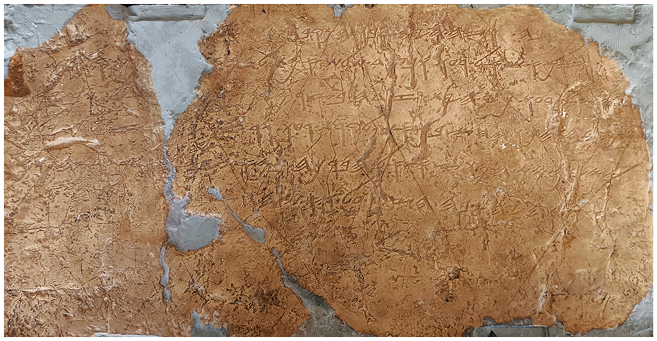
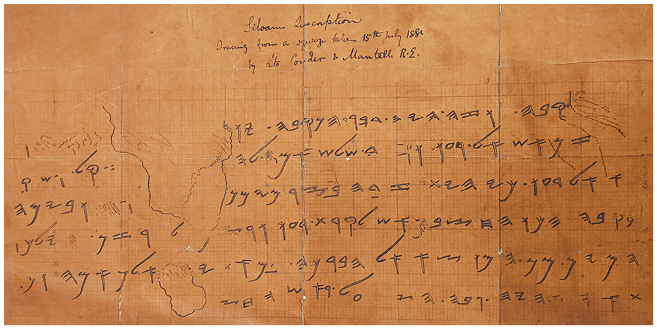
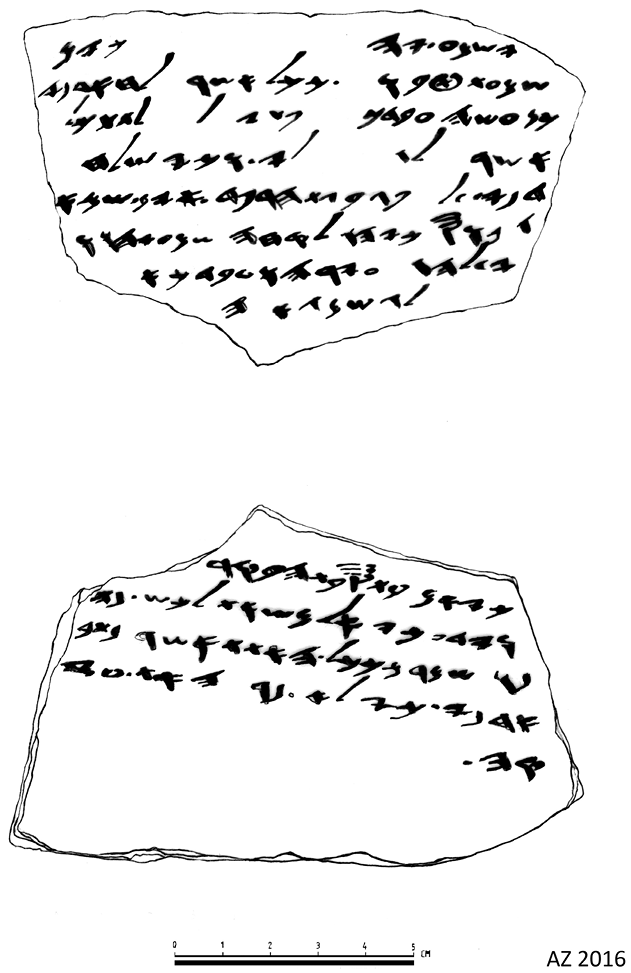
However, it took several decades before the Paleo-Hebrew script was fully recognized as a distinct script, as it was still being confused with Phoenician by many scholars. Thus, the most important Paleo-Hebrew inscriptions discovered were published as specimens of the Phoenician script. Such was the case of iconic findings that will be discussed later on in the Element, notably the Siloam Tunnel inscription (Sayce Reference Sayce1881; see Figures 1 and 2) and the Samaria ostraca in a partial, preliminary publication (Lyon Reference Lyon1911: 137)Footnote 5; as for the first Lachish letters, they were published as written in the “Phoenician-Hebrew” script (Torczyner Reference Torczyner1938: 15, 204). The first textbooks of Northwest Semitic inscriptions included only a single Paleo-Hebrew inscription, namely the Siloam Tunnel inscription (Lidzbarski Reference Lidzbarski1898: 439Footnote 6; Cooke Reference Cooke1903: 15–17).
Plaster cast of the Siloam Tunnel inscription, made in 1881.
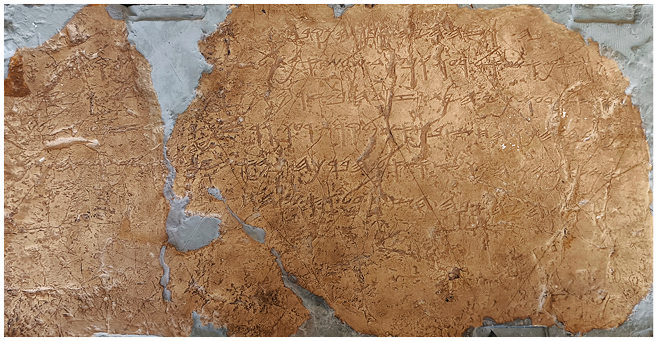
Drawing of a squeeze of the Siloam Tunnel inscription, made by Lts Conder & R. E. Mantell in 1881.
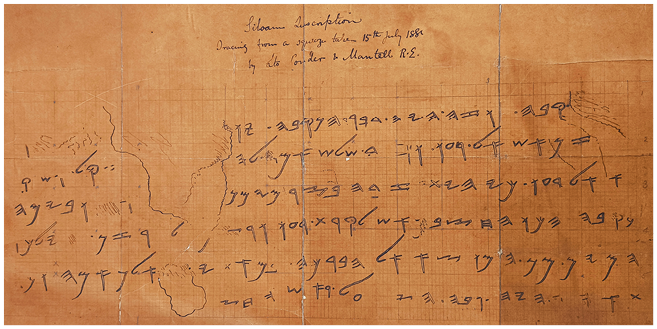
Fortunately, the number of items grew significantly in the following decades, notably thanks to the discovery of large sets of inscriptions at Samaria in 1909–1910, Lachish from 1935, and Arad in 1962–1967. David Diringer (Reference Diringer1934) was the first to publish a collection of Paleo-Hebrew inscriptions regarded as a distinct corpus.
The growing number of inscriptions that had been discovered enabled Cross (Reference Cross1962a, Reference 81Cross1962b) to describe more precisely the development of the Paleo-Hebrew script in the eighth to the sixth century BCE. A series of doctoral dissertations that he supervised studied the paleography of the Samaria ostraca (Kaufman Reference Kaufman1966), of Hasmonean coins and Dead Sea scrolls written in Paleo-Hebrew (Hanson Reference Hanson1963), and of the Samaritan script and its relationship to Paleo-Hebrew (Purvis Reference Purvis1968). Birnbaum published a detailed paleographical study of inscriptions of various periods (Reference Birnbaum1971: col. 31–103). At that point, the main lines of the development of the Paleo-Hebrew script through its entire history were largely understood and described.
Since then, the size of the corpus has not ceased to grow thanks to many excavations, while numerous unprovenanced items have surfaced, especially seals and seal impressions. The 1990s and 2000s saw various efforts to gather the accumulated findings in reference collections (WSS, AHI, HAE, HI, EP). Current research spreads in four directions. First, online databases are being created (HSS, CSSL, PHDSS, Onomasticon).Footnote 7 Second, new imaging techniques, such as multispectral and Reflectance Transformation Imaging (RTI), are helping to improve the readings of old inscriptions and facilitate the decipherment of new ones. Third, scholars are creating software enabling automated identification of scribal hands and automated paleography. Fourth, new approaches are going beyond the traditional focus on decipherment and philological analysis, to examine inscriptions in their sociohistorical context and to integrate insights from multimodality studies, which consider the many ways in which inscriptions “spoke” beyond words (e.g., through their design and spatial placement).
Now that we have seen how scholars came to attain a proper knowledge of the Paleo-Hebrew script and have been able to collect hundreds of inscriptions, it is time for us to get better acquainted with the script and its corpus.
1.2 A Distinctive Outlook
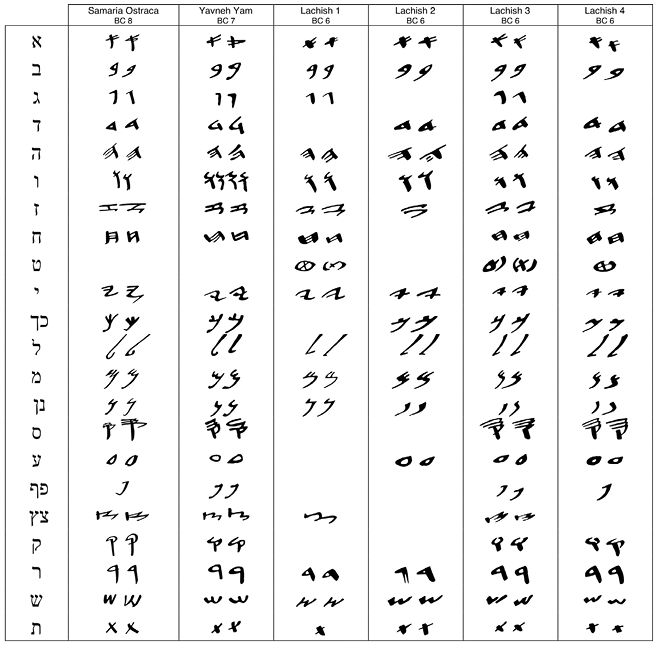
While the linear alphabets used in the Levant during the first millennium BCE (Phoenician, Paleo-Hebrew, Aramaic, Ammonite, Moabite, and Edomite) are relatively similar, each of them, once it had reached its full development, displayed unique features. What distinguishes Paleo-Hebrew from the others? To answer that question, let us have a brief look at some of its most distinctive features in the period when it was the most used, namely the eighth to the sixth century BCE, in Israel and Judah – it so happens that no significant paleographical differences appear between inscriptions from these two countries in the available documentation (Renz Reference Renz1997). I will only mention here the most basic features (see Figure 3; for detailed paleographical descriptions, see HAE II/1, 95–208; see also Vanderhooft [Reference Vanderhooft, Hackett and Aufrecht2014] for monumental texts; Rollston [Reference Rollston1999, Reference Rollston2010: 97–103, and Reference Rollston, Hackett and Aufrecht2014] for cursive; Mendel-Geberovich [Reference Mendel-Geberovich, Eshel and Langlois2023] for seals).
Comparative chart of Paleo-Hebrew letterforms; from left to right: square Hebrew, Samaria ostraca, Yavneh-Yam (or Meṣad Ḥashavyahu) ostracon, and Lachish letters 1 to 4.
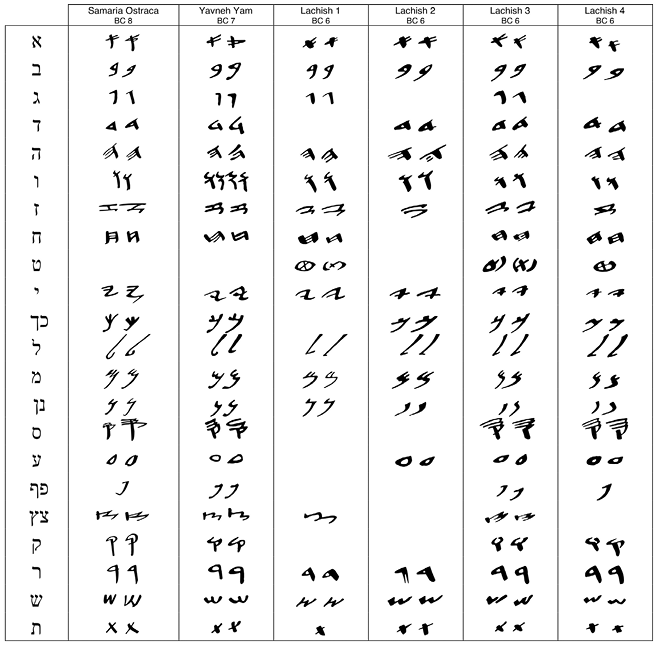
Paleo-Hebrew shares an important feature with Phoenician that distinguishes it from Aramaic: the heads of the letters beth, daleth, and resh are always closed, whereas they are open in Aramaic from the second half of the eighth century BCE onward. In addition, the Paleo-Hebrew script has unique features: beth often leans backward (i.e., it tends to be slanted to the right); the head of waw includes an oblique stroke piercing the shaft; the downstrokes of kaph, mem, and nun are elongated and curved (sometimes curved upward to the left); taw is an oblique cross made of two strokes of approximately the same length. The shapes of zayin and ṣade are also generally penned in a distinctive way compared to other scripts. Zayin is made up of two long horizontal strokes connected with a short vertical stroke; ṣade comprises a short vertical stroke, to the right of which an elongated zigzag is connected.
In cursive inscriptions, an extra tick sometimes appears on aleph, zayin, yod, and samekh when the hand holding the pen, before being lifted to write the next letter, starts moving to the left. This “cursive reflex” became a fixture, deliberately added to the execution of the letters (albeit far from systematically). It is even represented on some monumental inscriptions, which are not written with ink but chiseled on stone; this suggests that some scribes and engravers ascribed to it an aesthetic quality. Another consequence of writing with ink is the presence of both thin and thick strokes, the latter being observed on downstrokes because the scribe used the larger side of the pen nib in downward movements. This is related to the writing instrument used in the Iron Age through the Persian period, which was generally a rush brush (Longacre Reference Longacre2021). Remarkably, and probably out of the same aesthetic concern as noted above, several monumental inscriptions engraved on stone imitate the thin and thick strokes.
The overall effect of these features is to give a recognizable and often elegant appearance to Paleo-Hebrew inscriptions. To be sure, the quality of the execution of the writing varies significantly depending on the medium (which can be more or less easy to incise or engrave), the time of writing (e.g., before or after firing a pot, which affects the hardness of its surface), the skills and experience of the writer, and the pace and care in writing. All these parameters depend on the project behind the writing. And yet, unlike in the Egyptian or South-Arabian scribal traditions, the same version of the script is used both on drafts hastily penned on perishable media and on monumental texts. This is a trait shared with the other Levantine alphabetic scripts in the Iron Age, such as Phoenician or Aramaic, so it can hardly be construed as an original decision on the part of Paleo-Hebrew scribes. However, as we have just seen, they seem to have made the most of that situation by showcasing what they perceived as elegant flourishes that ultimately stemmed from their cursive practice.
1.3 A Variety of Media and Text Genres
As noted above, the corpus of Paleo-Hebrew inscriptions has grown dramatically since the late nineteenth century. Texts are found on many kinds of media and represent a large array of text genres. Although any classification is necessarily schematic, the following list gives an idea of this variety.Footnote 8
1. Monumental inscriptions
Royal inscriptions, undefined monumental inscriptions
Funerary inscriptions
Building inscriptions
2. Papyri
Letters
Lists of personal names
3. Seals and seal impressions
Personal seals and bullae
Fiscal bullae
Jar handle impressions
4. Ostraca
Letters and the equivalent
Letters
A petition
Records of fulfillment of an instruction
Economic and administrative documents
Economic deeds (full text)
Delivery notes
Delivery lists/ration lists
Simple lists of personal names
Lists of personal names with indications of origins
Inscriptions related to (scribal) training
Abecedaries
Repeated words
Single letters
Numeral exercises
Literary texts used for practice
Literary texts
Tags (for food rations?)
5. Secular vessel inscriptions
Inscriptions related to delivery
Ownership marks
Delivery or storage marks
Measures
Other vessel inscriptions: single letters
6. Inscriptions on objects possibly used in a cultic context
Consecration formulas
Votive formulas
The word “Sacred”
Other cultic objects
Lots for priestly service?
7. Graffiti
Prayers
Blessings
Curses
Other texts
8. Weights
Measures
9. Plaster inscriptions
Literary texts
10. Ivory plaque
Personal names
11. Amulets
Blessings
12. Coins
Coin legends
13. Tesserae
Tokens
14. Mason’s mark
Single letters
Evidently, a medium could be used to present different types of texts. But the opposite is also true: some genres can be found on various media. For instance, lists of names and letters could be written on ostraca, but also on papyrus.
1.4 Unprovenanced Inscriptions and Forgeries
The growth of the Paleo-Hebrew corpus, especially during the last decades of the twentieth century, has a darker side. Many inscriptions, especially seals and bullae, are unprovenanced: they were not found during controlled excavations but surfaced, most of the time, on the antiquities market. The authenticity of these texts is uncertain; some have been proved to be fakes, and many others are suspected to be so.
This, in itself, is far from a unique phenomenon. When three quarters of the Corpus inscriptionum latinarum had already been published,Footnote 9 Abbott (Reference Abbott1908: 22) reckoned that among the 144,044 inscriptions it comprised, no less than 10,576 were “spurious or suspected.” However, as he noted, the bulk of fakes had been made in the heyday of classical studies, during the Renaissance and in its wake. The difference with the Paleo-Hebrew corpus is that the interest in ancient Israel and the willingness of some to pay considerable sums of money to acquire inscriptions related to it make forgery an enduring phenomenon that still plagues the field of Paleo-Hebrew epigraphy and requires considerable critical acumen (Rollston Reference Rollston2003, Reference Rollston2004).
This Element will only consider unprovenanced inscriptions when there are compelling reasons to believe they are genuine. This may happen in at least four different situations:
(a) When an inscription was published at a time when the Paleo-Hebrew script was so little known that it could not have been imitated by forgers, which was the case prior to the publication of drawings of the Siloam Tunnel Inscription in 1881 (cf. Bordreuil Reference Bordreuil, Hackett and Aufrecht2014), but also in the following years, as we have just seen;
(b) when a seal impression is retroactively proved to be genuine because another impression made with the same seal is found during controlled excavations;
(c) when the provenance can be retrospectively ascertained with a very high degree of confidence;
(d) when the inscription would have been almost impossible to forge, as in the case of some cuneiform tablets bearing Paleo-Hebrew words on their edge (cf. Section 2.3.1).
Coins represent a special case. Many are unprovenanced, but a sufficiently large number have been found during controlled excavations for the main results of studies of the legends and the script to be well-grounded.
1.5 Unity of the Script
Striking terminological fluctuations can be observed in scholarly literature when it comes to designating the script of the inscriptions that are the subject of this Element. In the nineteenth century, German scholars used the adjectives hebräisch or althebräisch. Much later, North American scholars, especially Cross (Reference Cross1962a, Reference 81Cross1962b) and his students, used “Hebrew” for inscriptions from the First Temple period but “Palaeo-Hebrew” for inscriptions from the Second Temple period and the coin legends of the Second Jewish Revolt (132–135 CE). The leading Israeli epigrapher of the time, Naveh, sometimes did the same (Reference Naveh1975: 29), but also spoke of “Hebrew” inscriptions for all periods (Reference Naveh1987: 65–78). Cross’s rationale for using two distinct labels was that the script of the Second Temple period represented, in his view, “an archaistic survival from the book hand of Israelite times” (Reference Cross and Wright1961: 189 n. 4). Birnbaum (Reference Birnbaum1971) used “Palaeo-Hebrew” for most inscriptions, including those from the First Temple period, but coined the term “Neo-Palaeo-Hebrew” for the script on some coin legends from the Roman period, which he judged to be an artificial imitation. Others use the term “Neo-Hebrew” for inscriptions from the Hellenistic period (Magen, Misgav, and Tsfania Reference Magen, Misgav and Tsfania2004).
This Element takes the view that the changes in use over time do not provide solid grounds for using distinct labels, because the script itself basically remains the same. It is not fortuitous that the term “Palaeo-Hebrew,” or “Paleo-Hebrew,” came to be routinely used for both the First and the Second Temple periods. Speaking of “Hebrew” inscriptions is logical, but it sometimes creates a confusion with later inscriptions in the square script. For this reason, and because it is the most widely used term, this Element will use “Paleo-Hebrew.”Footnote 10
Clearly, the fluctuations in terminology are tied to the fact that the “status” of the script in the Neo-Babylonian to the Roman period remains unclear. Other questions concern the rise of the script in the Iron Age II. To better understand how this script emerged, flourished, and then survived for a long time, it will now be helpful to sketch the history of the script itself.
2 The Paleo-Hebrew Script: A Short Biography
This section traces the history of the Paleo-Hebrew script from its origins (Section 2.1) to its heyday (Section 2.2) to the long period during which it was still used, although overshadowed by the Aramaic script (Section 2.3).
2.1 The Origins
As we saw in Section 1, scholars have long noticed a close relationship between the Phoenician and the Paleo-Hebrew scripts. While the hypothesis that Paleo-Hebrew derives from Phoenician is still held by many scholars today, it is rejected by others.
2.1.1 The Parent Scripts
The Phoenician alphabet is itself the descendant of an older script: the Early Alphabetic script, attested in the Levant from the late third millennium BCE (Richey Reference Richey2023) and in Egypt in the second millennium BCE. It seems to have been overshadowed by well-established writing systems such as cuneiform until the end of the Late Bronze Age, ca. 1200–1150 BCE. Neither the orientation nor the direction of writing nor the stance of the letters was fixed until the script was first standardized in the Phoenician city of Byblos in the eleventh century.
Although the Phoenician script is the mother script of several alphabetical scripts of the first millennium, notably Aramaic, it is not certain that it played that role for all of them. Indeed, recent discoveries (see below) have shown that the Early Alphabetic script was still in use until the early first millennium in the Southern Levant. It is thus theoretically possible that some alphabets stemmed directly from it rather than from Phoenician.
In the case of the Paleo-Hebrew script, the best argument in favor of a Phoenician lineage remains the fact that both scripts have the same number (22) of graphemes, whereas Paleo-Hebrew phonology should have required a larger set of graphemes to be fully represented. This suggests that Hebrew-speaking scribes borrowed the alphabet from the Phoenicians. However, it is not certain that the Phoenician language comprises only twenty-two phonemes (Burlingame Reference Burlingame2019: 54–55). Moreover, the reduction of the linear alphabet to twenty-two graphemes may have occurred before the rise of the Phoenician script, in the same way that the Ugaritic cuneiform alphabet in the thirteenth century BCE existed not only as a set of thirty graphemes but also in a shorter version that seems to have comprised only twenty-two signs (Burlingame Reference Burlingame and Viers2025: 35–36). The abecedary found at Izbet Sartah, which dates from the eleventh century BCE and has twenty-two signs, could be an instantiation of such a shorter version of the Early Alphabetic script.
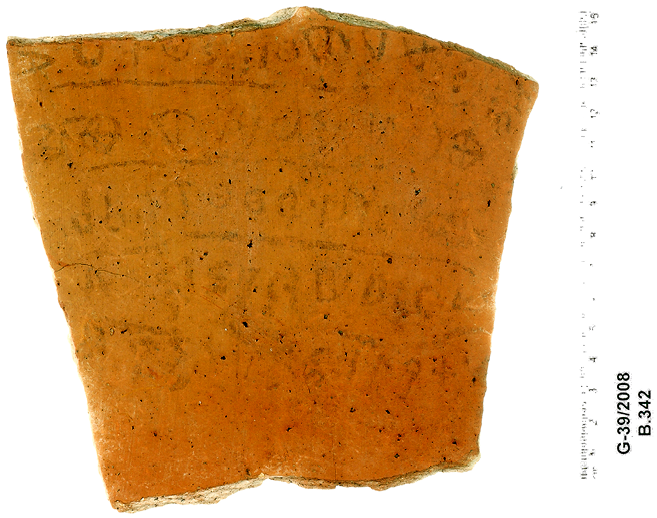
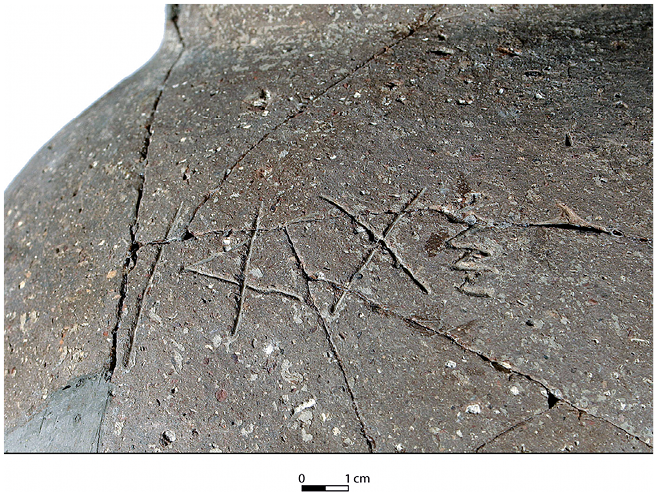
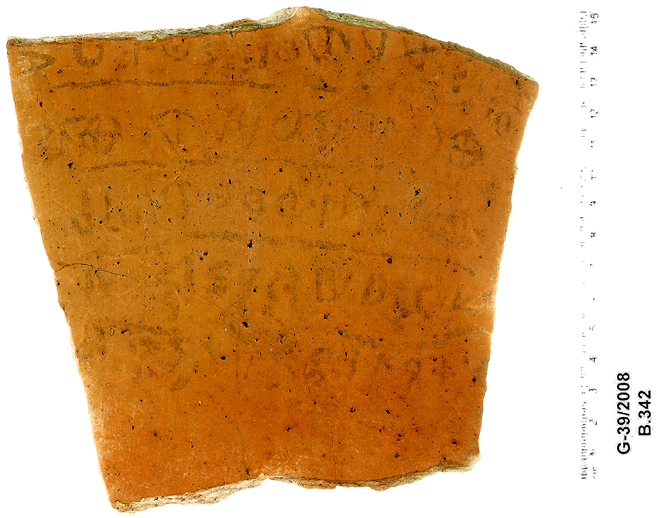
In favor of the hypothesis that Paleo-Hebrew descends directly from the Early Alphabetic script, one may note that inscriptions in the latter script appear in the tenth and perhaps the ninth centuries BCE in sites from Israel, Judah, and Philistia, that is, in areas where Paleo-Hebrew or a variant of it was routinely used in the subsequent periods. Examples include the Qeiyafa ostracon (Donnelly-Lewis Reference Donnelly-Lewis2022), dated ca. 1,000 BCE (see Figure 4), and the Ophel pithos ostracon, dated to the tenth (Aḥituv and Mazar Reference Aḥituv, Mazar, Mazar and Pavitz-Cohen2020: 431) or the ninth century (Kleiman Reference Kleiman2021). The situation suggests that scribes in these areas had not adopted the Phoenician script used by their contemporaries in Byblos but were still using the not-yet-standardized Early Alphabetic script, slightly before we observe the appearance of the first Paleo-Hebrew inscriptions. That being said, it is possible that they knew of Phoenician inscriptions and were influenced, consciously or not, by the Phoenician alphabet when they developed the Paleo-Hebrew letterforms.
The Qeiyafa ostraca.
2.1.2 The Birth of the Paleo-Hebrew Script
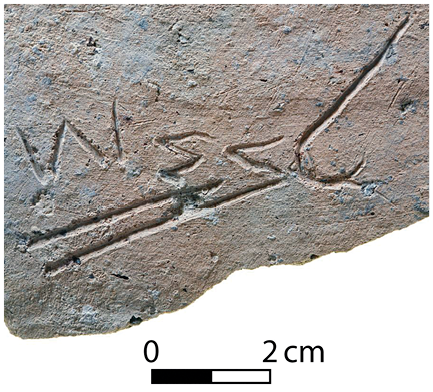
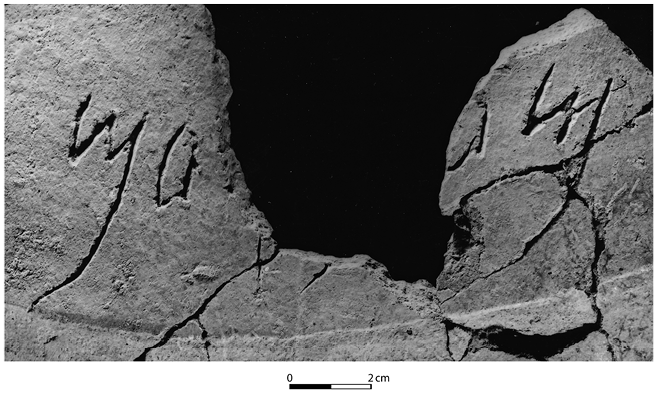
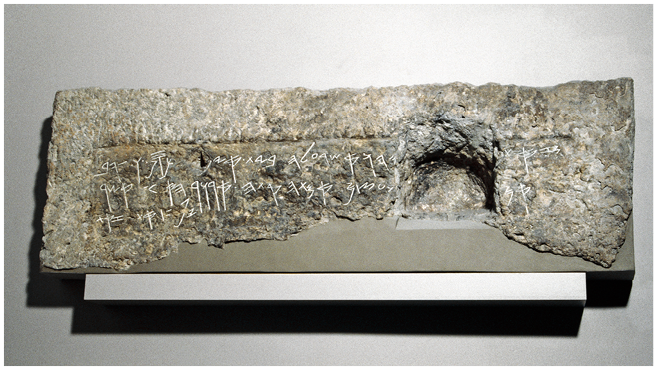
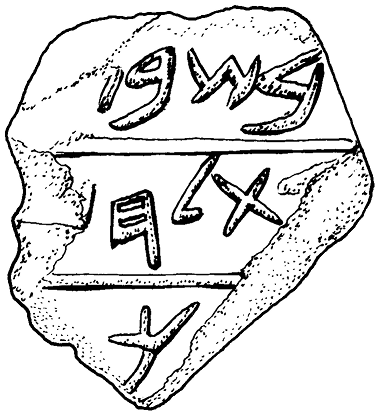
It seems possible to trace the development of some letterforms from the tenth to the ninth century at Tel Rehov, in the Jordan Valley, thanks to inscriptions belonging to a series of successive strata (Aḥituv and Mazar Reference Aḥituv, Mazar, Mazar and Pavitz-Cohen2020: 417–428; cf. Richelle Reference Richelle2016: 589; Greene Reference Greene, Keimer and Pierce2023). Most striking is the development of the letter mem, from a simple vertical zigzag (inscription 2, Stratum VI, tenth century, see Figure 5) to a vertical zigzag with a long downstroke (inscription 5, Stratum V, late tenth to ninth century, see Figure 6) to a horizontal zigzag with a long, curved downstroke, like in Paleo-Hebrew (inscription 8, Stratum IV, early ninth century, see Figure 7).
Tel Rehov inscription 2.
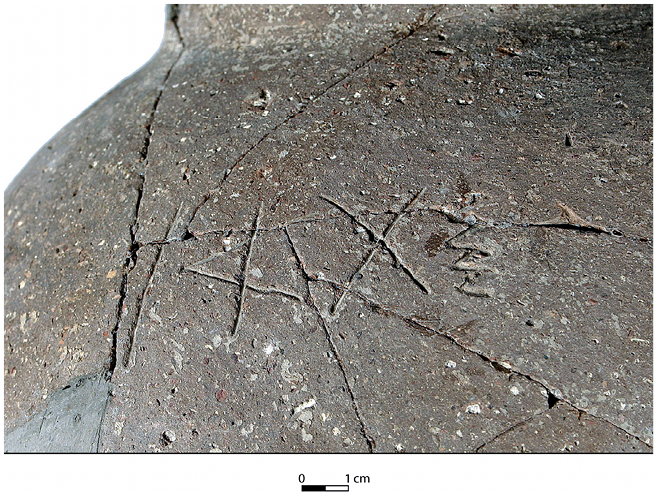
Tel Rehov inscription 5.
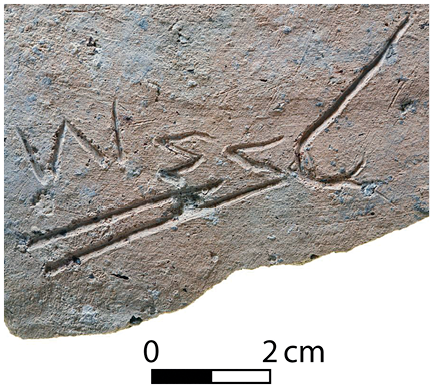
Tel Rehov inscription 8.
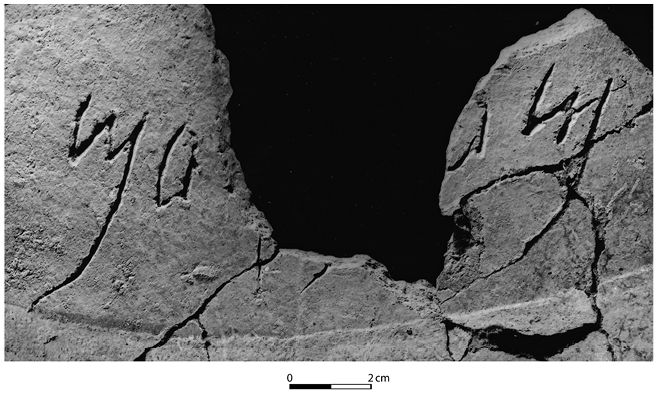
Given that script development is a process, drawing a boundary between Early Alphabetic (or Phoenician) and Paleo-Hebrew must admittedly remain a matter of convention. But it seems safe to ascribe several inscriptions (including inscription 8) from Tel Rehov Stratum IV to Paleo-Hebrew, and some would say the same for inscription 5 (Sass Reference Sass, Sergi, Oeming and de Hulster2016: 215–216). There are a number of other inscriptions from around the first half of the ninth century that are possible candidates.Footnote 11 All in all, it seems reasonable to say that the Paleo-Hebrew script was born in the early ninth century BCE (or possibly slightly before).
Another way to look at the problem is not to focus on the script itself, but on the scribal toolkit. Certain Hebrew words designating writing implements and media were borrowed from the Egyptian language during the New Kingdom (1549–1069 BCE), which suggests that the Hebrew scribal culture was basically borrowed from Egypt (Zhakevitch Reference Zhakevitch2020).
In sum, it is likely that the alphabetic scribal tradition of Hebrew speakers in the Southern Levant was already in place in the late second millennium and continued into the early first millennium, with a gradual development of the script from Early Alphabetic (or Phoenician) into Paleo-Hebrew.
Strictly speaking, the earliest Paleo-Hebrew inscriptions are those displaying at least some of the distinctive features that will be regularly displayed by the Paleo-Hebrew script in the following centuries (see Section 1.2). That said, some scholars designate as Hebrew inscriptions some epigraphs that bear, in their view, texts in the Hebrew language even though they are written in the Early Alphabetic or the Phoenician script. The Gezer calendar has often been presented that way, and it is included in collections such as HI and HAE, but the linguistic affiliation with Hebrew is much disputed. A better candidate might be the Qeiyafa ostracon (ca. 1,000 BCE), an Early Alphabetic inscription that contains a Hebrew text according to Donnelly-Lewis (Reference Donnelly-Lewis2022); it remains to be seen whether this conclusion will be accepted by other scholars.
2.1.3 A National Script?
Just as the earliest texts in the Hebrew language may well have been written in another script than Paleo-Hebrew, conversely, Paleo-Hebrew may have served to write texts in languages other than Hebrew. In fact, inscriptions that are arguably written in that script have been found on sites belonging to four peoples: not only Israel and Judah but also the Philistines and Moab. This raises the question of who exactly “created” Paleo-Hebrew.
To be more precise, Philistine inscriptions from the eighth and seventh centuries BCE exhibit a script very close to Paleo-Hebrew, although betraying some Phoenician influence; it is debated whether this script was already used there in the ninth century BCE (Lemaire Reference Lemaire and Aubet-Semmler2000). As for Moabites, their earliest known inscriptions, most notably the Mesha stele, are written in a script virtually identical to Paleo-Hebrew, and some scholars argue that it is Paleo-Hebrew, whereas later inscriptions from Moab gradually branch off from it (Bean et al. Reference 80Bean, Rollston, McCarter and Wimmer2018: 19–20). It is generally held that Moab first used the Paleo-Hebrew script because Israel was its suzerain, as stated in the Bible (2 Kgs 3) and suggested at the beginning of the Mesha stele. While many scholars date the stele to ca. 840, a dating closer to the end of the ninth century BCE (and therefore much later than the Paleo-Hebrew inscriptions from Tel Rehov) is preferable (Lemaire Reference 85Lemaire, Niehr and Römer2021: 163–165). Nevertheless, the possibility cannot be ruled out that Paleo-Hebrew was “created” by the Moabites or by the Philistines.
Paleo-Hebrew seems attested earlier in Israel than in Judah in the current state of documentation. One could make a case that Judean scribes used Early Alphabetic (cf. the Ophel pithos ostracon) until they learned Paleo-Hebrew from Israelite colleagues in the middle of the ninth century, when Judah was under the hegemony of Israel. This remains very conjectural, however, and recent archaeological discoveries indicate that Judah was more powerful in the ninth century than was previously thought (Gadot and Uziel Reference Gadot and Uziel2023).
In fact, such questions are often tied to a view of Paleo-Hebrew as a “national” script, intentionally developed in the context of a chancellery under the auspices of a state. This model runs the risk of anachronism and postulates a top-down diffusion of a “normative” script that may not account for concrete scribal realities. According to another, more recent view (the “Franchise Model”) inspired by sociohistorical analogies, new script features were developed by prestigious scribal lineages in a few centers, then spread to the rest of the country by trained scribes who left to work “freelance.” The royal court adopted such features that had already been formalized in the hands of prestigious scribal lineages (Greene and Hutton Reference Greene and Hutton2025). As the first major attempt to ground the development of the Paleo-Hebrew script (and others) in social realities, this model paves the way for further research. In particular, the socio-professional context of scribes is currently a matter of investigation. While most scholars agree that being a “specialist of writing” was a profession in itself in Israel and Judah, Schniedewind (Reference Schniedewind2023, Reference Schniedewind2024) argues that scribes were always rooted in a defined profession within a “community of practice” (in short, a guild): they were “palace scribes,” or “temple scribes,” or “military scribes,” and so on. On this view, the process of the development of a script described in the Franchise Model occurred within such communities of practice rather than within “purely” scribal lineages. We will return to the topic of scribalism in Section 6.2.3. At any rate, these new perspectives have the advantage of explaining how scribal practices, and script features, could spread and break through political borders.
2.2 The Gilded Age
The bulk of Paleo-Hebrew inscriptions date from the early eighth to the early sixth centuries BCE. In 1996, the collection HAE, which sorts inscriptions based on chronology, included, if one leaves aside for a moment seals and stamp impressions, only 4 items dated to the tenth century and 18 dated to the ninth century, but 246 from the eighth century, 102 from the seventh century, and 65 from the sixth century (HAE I, 11–13). The uneven distribution between the periods is even more acute if one includes inscribed seals and stamp impressions, which all postdate 800 BCE. Thirty years on, the numbers would be a bit different due to new findings and the revision of some datings, but the overall distribution is only confirmed. The number of newly discovered inscriptions from the tenth or ninth centuries is limited, whereas the number of texts from the second half of the royal period has significantly increased, notably thanks to the hundreds of provenanced bullae found in Jerusalem. On the other hand, as we shall see later, the use of Paleo-Hebrew after 587/6 BCE drops again. It is thus clear that the period ca. 800–587/6 is the heyday of this script.
But the wealth of inscriptional evidence is not revealed only in numbers. It also translates into a large variety of media used for writing, which, in turn, served to write down texts in a wide array of text genres. This section will focus on the most important epigraphs.
2.2.1 Monumental Inscriptions
The most “spectacular” kind of inscription was certainly monumental texts. However, there is no universal definition of a monumental inscription (Smoak and Mandell Reference Smoak, Mandell, Buccellati, Hageneuer, van der Heyden and Levenson2019: 312–315). This category may include inscribed royal stelae, lapidary, or funerary inscriptions, but also sometimes graffiti if they have a “monumental” quality.
Four fragments of inscriptions that may have been royal, monumental texts, have been found in the capitals of Israel and Judah. Unfortunately, their very fragmentary state of preservation does not allow for much textual interpretation, as we shall see. There is some irony, but also some frustration, in the fact that the most spectacular inscriptions of the past have only left “crumbs” for modern scholars, whereas routine texts are sometimes preserved in full. The few recovered fragments are more important for their existence than for their contents. They prove that the tradition of erecting monumental inscriptions, probably including stelae, was not absent from Israel and Judah.
In fact, most people in these countries could probably not read them and were thus, to some extent, in the same position as we are. Their advantage over us is that they could see the intact monuments, whether stelae, inscriptions carved on walls, or plaques affixed to a wall, in their original spatial context. Recent research on monumentality has highlighted how such inscriptions could “speak” in many ways, even to the illiterate public (Smoak and Mandell Reference Smoak, Mandell, Buccellati, Hageneuer, van der Heyden and Levenson2019). The shape of the monuments, their spatial placement, their scale relative to their immediate context, their graphic design (including the aesthetics of the script), and their iconography in some cases: all these features were meant to convey messages to the public in what amounted to visual rhetoric. When they were commissioned by rulers, they constituted a powerful way to impress royal power on the population. That being established, let us briefly survey the relevant inscriptions.
(1) A limestone fragment dated to the second half of the eighth century BCE was found in Samaria: it merely contains the relative pronoun ʾšr followed by a word divider (HI, 496–497). Nevertheless, the materiality of the fragment, notably the high quality of the script execution, with letters deeply incised and neatly separated, together with the use of a word divider, shows that it was a stele. It was found at a corner of the eastern gate of the city, which would have been an ideal location for public display (assuming this was its original place).
(2) A fragment of a stone plaque from the eighth century BCE was found in the City of David (HI, 227–229). Its monumentality shows in the remarkable quality of the script (its engraver took pains to imitate thin and thick strokes), the spacing between letters and between lines, and the use of word dividers, all of this for a text chiseled on a polished limestone plaque found in the royal quarter of the capital. Moreover, it “was originally set into a wall with plaster, because bits of plaster still cling to the back of the stone” (HI, 227). This shows both the careful preparation behind it and the fact that it was publicly displayed. The fragment contains remnants of the first four lines of the stelaFootnote 12:
1.]ṣbr.h-[ … heap of…
2.]bšbʿ.ʿšr[ … with a sufficiency of riches
3.]rbʿy.w-[ … fourth…
4.]b[…
The translation of line 2, based on a turn of phrase attested in 1 Chr 29:28; Qoh 4:8, is very uncertain. One could conjecture that a king commissioned this inscription to publicly proclaim having amassed riches, or enriched the sanctuary, or something similar, but this would remain highly speculative.
(3) Another fragment from the City of David belonged to a smoothed limestone slab (Reich and Shukron Reference Reich and Shukron2008). It was found in a fill on the eastern slope of the hill, out of its original context, which was likely a building whose fragments were dispersed downhill. The script resembles that of the preceding inscription, including the use of thick downstrokes; both were incised with a pointed chisel.
The fragment contains remnants of two lines. Whereas the few letters from line 2 do not allow for any interpretation, those found in line 1 seem to be the end of a personal name: […]qyh[…]. The editio princeps mentions several possibilities: ʿAmaqyahu, Ḥalaqyahu, Ṣidqiyahu, and Ḥizqiyahu; others could be cited. Because it is a monumental inscription erected in the capital of Judah in the eighth century, it is tempting to think that it was commissioned by a king, in which case Hezekiah (the English form of Ḥizqiyahu) is the sole candidate (van der Veen Reference 90Van der Veen2009). However, this identification rests on a substantial restoration, the dating of the inscription cannot be determined precisely, and it is not inconceivable that a high-ranking official could have commissioned it, so this remains a conjecture.
Finally, yet another monumental inscription on limestone was found at the Ophel,Footnote 13 again out of its original context; it is dated on paleographical grounds to the first half of the seventh century BCE (HI, 226–227). It was incised with a flat chisel, and “the precise letters indicate that the original inscription was incised with great care” (EP, 30). Compared to the preceding inscriptions, the size of the letters is strikingly large, with a height of 22 cm covered by merely four lines. Not much can be said except that the text mentions “the water” (hmym) in line 2, contains some spatial indications (“below,” mtḥt, in line 1; “in the far reaches of,” byrkty, in line 3), and apparently a form of the verb “to tear down, remove” (nsḥ, line 4). Perhaps the inscription commemorated “some water project” (EP, 30), but that remains very hypothetical.
Fortunately, certain private monumental inscriptions are in a better state of preservation. This is the case of several funerary inscriptions found in Silwan village, on the hill opposite the City of David to the west. The most notable one is the Royal Steward Inscription (HI, 507–510; see Figure 8), which was engraved ca. 700 BCE on the lintel of the door of a rock-cut tomb (in fact, a multi-chamber burial complex). It reads:
This is [the tomb of …]yahu “who is over the house.” There is no silver or gold here [on]ly [his bones] and the bones of his female slave with him. Cursed be the person who opens this (tomb)!
The title “who is over the house” (ʾšr ʿl hbyt) is known from the Hebrew Bible (1 Kgs 4:6; 16:9; and so on), and we will encounter it again later, on seal impressions (Section 3.1.1). It designates a person supervising the royal house, that is, a royal steward (for a survey of attestations and a discussion, see Vanderhooft, Richey, and Shukron Reference Vanderhooft, Richey and Shukron2022). Only the end of the name, the divine component yahu, is preserved here. However, a passage of Isaiah (22:15–19) that likely dates from the time of the prophet himself criticizes a certain Shebna “who is over the house” for having cut out a tomb “in the height” for himself. As a result, some scholars hypothesize that the inscribed tomb belonged to Shebnayahu (šbnyhw), possibly the full form of Shebna (šbnʾ), whose final aleph indicates that it is an abbreviated name (see, e.g., EP, 44–47). While this is possible, it is impossible to prove, and all the more so since neither the biblical oracle nor the inscription can be dated with much precision.
The Royal Steward Inscription.
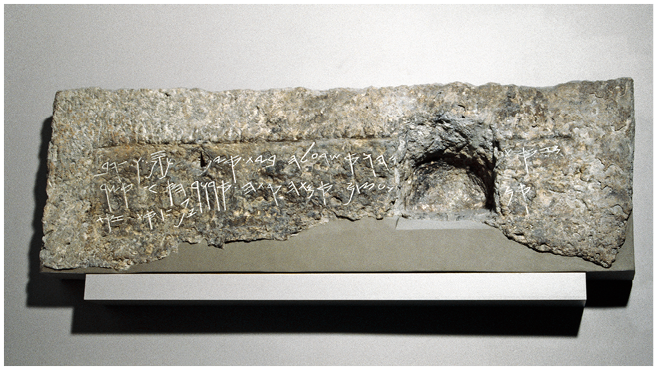
The fascinating debate about the identity of the deceased mentioned in its first part should not obscure the main purpose of the rest of the inscription, which is to discourage robbers. As Suriano (Reference Suriano2018: 98–127) has shown, various kinds of Paleo-Hebrew funerary inscriptions have a protective character, a matter to which we will return in Section 5.4.
Finally, the special case of the Siloam Tunnel inscription (HI, 499–506; see Figures 1 and 2) is extremely interesting. The tunnel drew the water from the Gihon spring to the Siloam pool, thus ensuring that the inhabitants of Jerusalem had access to water even in time of war. The six-line-long text commemorates the moment when the two teams digging the tunnel met in the middle:
…the breaking through. And this was the manner of the breaking through: While [the hewers were wielding] the pick, each one towards his fellow, and while there were still three cubits to be tunnel[ed through, there was heard] the sound of each one calling to his fellow, for there was a fissure in the rock on the right and [on the left]. At the time of the breakthrough, the hewers struck, each to meet his fellow, pick against [p]ick. And then the waters flowed from the spring to the pool for twelve hundred cubits. And a hu[nd]red cubits was the height in the rock above the heads of the hewer[s].
No name appears in this (virtually complete) text, which surprises scholars who would expect a king to take credit for commissioning this stunning piece of engineering work (the tunnel is about 550 meters long). The Bible ascribes the digging of a tunnel to Hezekiah (2 Kgs 20:20), who reigned ca. 700 BCE, and paleography yields a dating around that time for the inscription, so it is tempting for modern scholars to hypothesize an identification that the inscription fails to provide. However, paleographical dating is very approximate, and Hezekiah’s son, Manasseh, is another contender. Since an engineering work of that scale may well have taken years, it could have been started by the father and completed by the son.
In reality, it is best to recognize this inscription for what it is. It is not a text designed to be seen by many: it was carved inside the tunnel, on a wall. Rather than showcasing the achievements of a ruler, this monumental inscription, which “narrates a monumental feat,” celebrates the skills of the engineers and craftsmen who were able to dig the tunnel, and it was quite appropriately “set within the technological feat itself” (Smoak and Mandell Reference Smoak, Mandell, Buccellati, Hageneuer, van der Heyden and Levenson2019: 328).
It has been rightly observed that the script of this inscription is more cursive than the script of the Royal Steward inscription. For some scholars, that fits with the notion that the Siloam Tunnel inscription may not have been commissioned by a king or a high-status official, whereas the Royal Steward inscription was made for the tomb of the steward of the palace. Yet this approach is questionable. Special efforts were required to imitate the distinction between thick and thin strokes when engraving a text like the Siloam Tunnel inscription (especially on the wall of a tunnel, in darkness). One could argue that it displays a more exquisite style than most other monumental inscriptions in Paleo-Hebrew. As Mandell and Smoak (Reference Smoak, Mandell, Buccellati, Hageneuer, van der Heyden and Levenson2019: 326) write, “the desired aesthetic or graphic design” was a crucial factor in the script variation among monumental texts.
2.2.2 Papyrus
The most common medium for long and/or literary texts in the Iron Age Levant was papyrus. It is also the least attested medium in the royal period. There are only three possible surviving exemplars, none of which was found in controlled excavations: the Murabbaʿat papyrus, the so-called Jerusalem papyrus, and the so-called Ishmael papyrus (Aḥituv Reference Aḥituv, Sion, Uziel, Ganor and Klein2023). The second is highly suspicious due to problems in grammar (the construct form “vessels of wine” is written nblym yyn instead of the expected nbly yyn) and ductus (the way the letters are penned is unusual). As for the third, it has a dubious line of ownership (see Aḥituv Reference Aḥituv, Sion, Uziel, Ganor and Klein2023: 329). The name given to the first comes from the fact that it is virtually certain that it comes from a cave in the Wadi Murabbaʿat; most scholars believe it is genuine. It dates from ca. 700 BCE and is a palimpsest: a message was overwritten by a list of personal names. The underwritten text is very difficult to read: “He said, (namely) …yhw, to you(?)[…]…, I have sent the welfare of your house. And now, do not listen to [everything (?) he will sa]y to you” (NHI, 154).
The reason for the dearth of preserved papyri is well known: it is perishable and only survives when kept in special, dry conditions, even in Egypt (Fröśen Reference Fröśen and Bagnall2009: 79–80). This is by no means a unique case: only two fragmentary papyri in the Phoenician script have been found so far (Briquel-Chatonnet and Hawley Reference Briquel-Chatonnet, Hawley and Hasselback-Andee2020: 330), and none at all from the Iron Age in Aramaic, Ammonite, Moabite,Footnote 14 or Edomite. However, lost papyri sometimes left traces of their existence when they were sealed, which leads us to the next kind of document to consider.
2.2.3 Seals and Seal Impressions
Personal seals were used to certify the name of the sender of a text on papyrus (letter, clerical document, and so on) or as a mark of ownership. They could be impressed on a jar handle or on a lump of clay (“bulla”) attached with a cord to a rolled papyrus or to a parcel (made of basket, fabric, or another material). More precisely, a first lump of clay was pressed against the cord, which was then looped around the papyrus again, and a second lump of clay was applied before being stamped (Goren and Arie Reference Goren and Arie2014: 151–153). The rear side of certain bullae shows imprints of the cord and of papyrus lines.
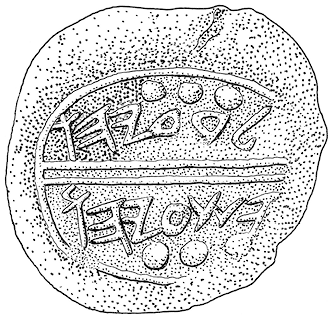
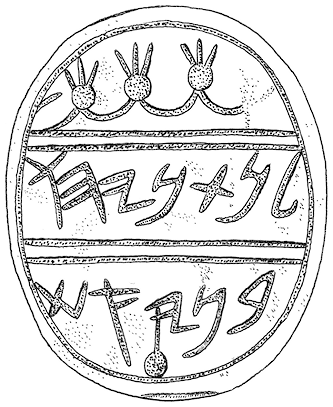
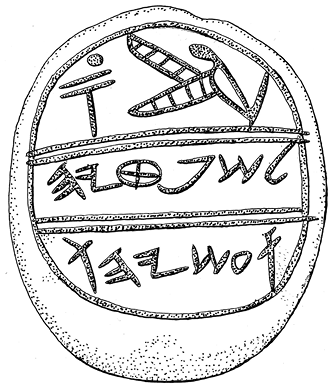
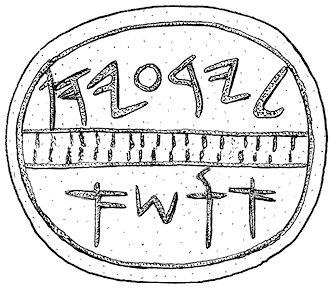
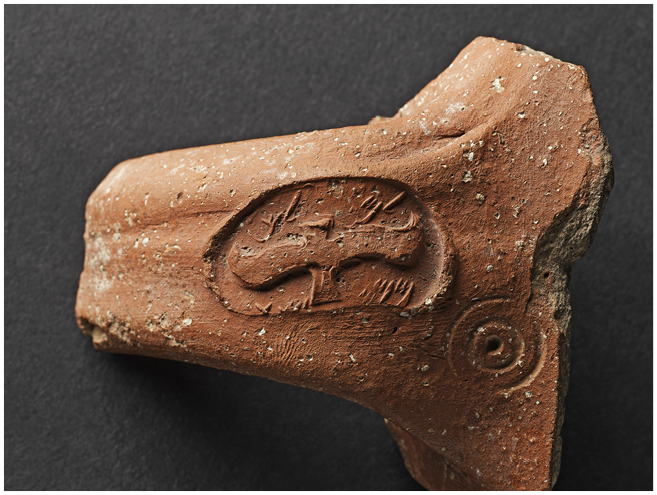
Seals could be anepigraphic, that is, bearing iconography but no written legend. From the eighth century BCE, many seals were inscribed with the name of the owner (preceded by the preposition l, “belonging to”). It was often followed by the patronym (preceded or not by ben, “son of,” or bat, “daughter of”) and/or a title. In rare cases, both the names of the father and the grandfather were inscribed. Figures 9 to 13 provide examples.
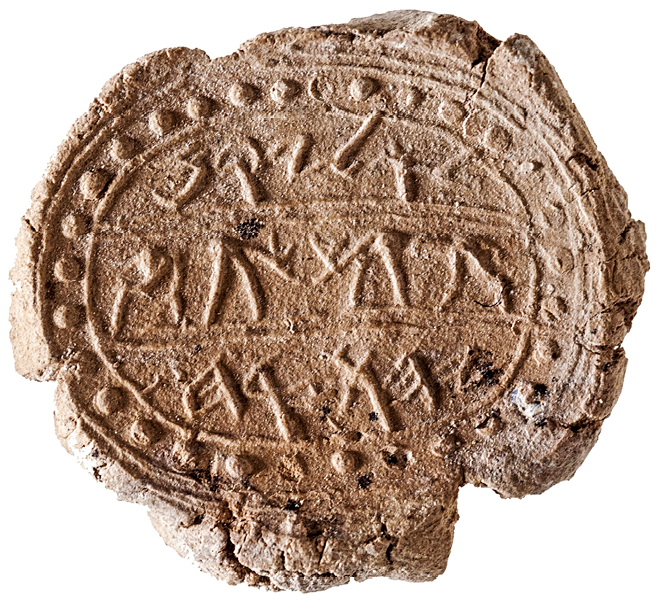
Impression of the seal “belonging to ʿAdayahu (son of) Yeshaʿyahu” (lʿdyhw yšʿyhw); CSSL Jerusalem 494.
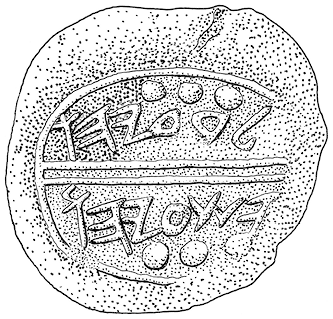
Seal “belonging to Netanyahu son of Ya’osh” (lntnyhw bn yʾš); CSSL Jerusalem 337.
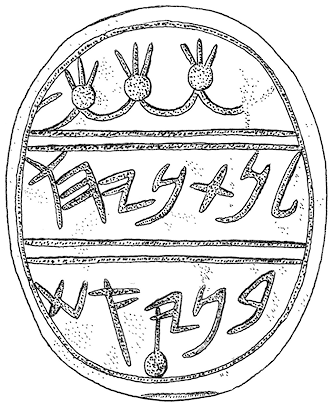
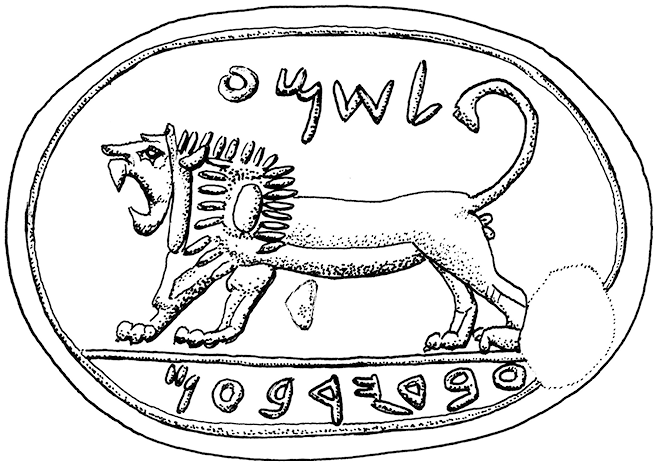
Seal “belonging to Shepaṭyahu (son of) ʿAsayahu” (lšpṭyhw ʿšyhw); CSSL Lachish 228.
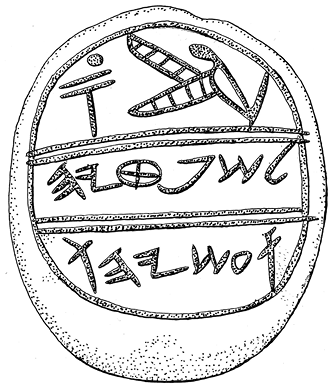
Seal “belonging to Yedayahu (son of) Usha” (lydʿyhwʿwšʾ); CSSL Jerusalem 339.
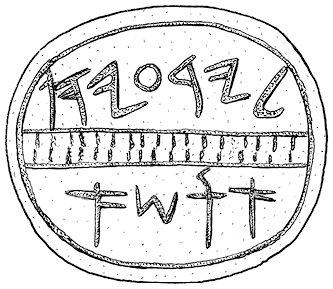
Bulla of “Elyakim (son of) Yehozarah” (ʾlyqm yhwzrḥ); CSSL Lachish 930.
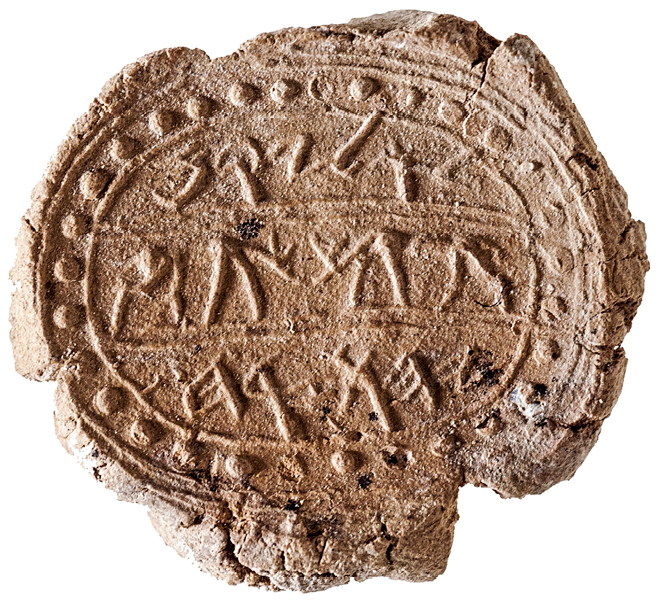
The corpus of Paleo-Hebrew inscribed seals and seal impressions found in controlled excavations is extensive, and it is growing thanks to the wet-sifting method. Levy (Reference Levy2023: 304, 310) reckoned 303 items, including 61 seals, 187 bullae, 54 stamped handles, and one stamped cuneiform tablet. Only twelve items come from Israel; all the others are from Judah. The online database he has developed (HSS) now includes 323 items. The number of bullae is higher if one includes those that are yet to be published: Mendel-Geberovich (Reference Mendel-Geberovich, Eshel and Langlois2023) reckons 270 provenanced seals and bullae from Judah found in excavations during the last two decades, most of them from Jerusalem.
These inscriptions are of prime importance for the onomastics and prosopography of ancient Israel and Judah (cf. Section 3.1). In turn, the onomasticon sheds some light on the relative popularity of deities, whose names are often components of anthroponyms (cf. Section 5.1). Furthermore, personal seal impressions hint at an abundant use of papyrus in the eighth to the sixth century BCE, and all the more so since they only represent those papyri that were sealed. In fact, they only represent a fraction of sealed papyri: the reason why some bullae are preserved and others are not is that the former were unintentionally exposed to fire and became strengthened like pottery (Goren and Arie Reference Goren and Arie2014: 156). All the other papyri, those that were never sealed and those whose bullae were not fired, have vanished without leaving any trace. The situation in the Hebrew kingdoms finds an analogy in Hellenistic Babylonia, where the Aramaic alphabet was widely used: thousands of papyri bullae (sort of napkin rings wrapped around the rolled papyri) were found in Babylon, Seleucia on the Tigris, and other cities, but not a single papyrus (Wallenfels Reference Wallenfels and Perna2000).
The abovementioned seals are personal seals, that is to say, belonging to individuals. However, two other kinds of seals existed: the so-called fiscal bullae and hundreds of stamp impressions on storage-jar handles bearing notably the legend lmlk (“belonging to the king”); both shed light on the economy of the kingdom of Judah (cf. Section 3.2.2).
2.2.4 Ostraca
One of the most widespread writing media found during excavations is the ostracon, or inscribed potsherd.Footnote 15 Pottery was ubiquitous in ancient Israel and Judah, whereas papyrus was very expensive, so broken potsherds came in handy when it came to writing everyday texts. In some cases, several ostraca have been found in the same room of a building and/or came from the same vessel. Scribes typically held the convex side in the palm of one hand and wrote on the concave side with the writing instrument they held with the other hand. Texts were either incised or written with ink. In the latter case, part or all the text is often badly preserved, but imaging techniques developed in recent years, such as multispectral imaging, are helping scholars to decipher them (Faigenbaum-Golovin et al. Reference Faigenbaum-Golovin, Shaus, Sober and Finkelstein2016).
At first glance, ostraca preserve unassuming texts, hastily written for down-to-earth purposes; they may seem of little interest. The reality is more complex. Granted, the vast majority of texts are brief notes, lists, or dockets: documentary texts written for utilitarian purposes in the context of bureaucracy or the daily routine of a workshop, to mention but two examples. Yet we shall see that even this kind of inscription yields a lot of information for historians. Moreover, ostraca also served to write down texts in other genres, such as messages or even literary works. Let us briefly review the main genres attested on ostraca.
Lists. Many ostraca are mere lists of personal names, sometimes followed by indications of amounts, written in hieratic numerals borrowed from Egypt (Wimmer Reference Wimmer2008). Like seals and bullae (cf. Section 2.2.3), this kind of document is relevant for onomastics, but the specificity here is the presence of groups of names, which may point to a variety of uses in the context of administrative or military management: for example, recording groups of manpower or absence logs, establishing a duty roster, or recording people receiving or giving commodities as rations or as taxes (the quantities being indicated by the numerals).
The degree of specification in the formulas may suggest different concrete situations (Garfinkel and Mendel-Geberovich Reference Garfinkel and Mendel-Geberovich2020: 169–170): (a) first names alone may have been used when the people on the list were familiar and the ostracon was used for a local situation, for instance inside a workshop or a fortress; (b) full names, that is, first names followed by patronyms (X son of Y), may have been needed when dealing with strangers, for example, people who came from a different town to deliver commodities; (c) full names followed by places of origin may have been used, for example, in the case of soldiers coming to a fortress from different towns.
In some rare cases, a heading helps understand the purpose of the list. For example, inscription 19 from Horvat ʿUza (Beit-Arieh Reference Beit-Arieh and Beit-Arieh2007: 152–156) begins with “group of ten” (ʿšrt),Footnote 16 and each of the eight lines that follow contains a full name. There are faint traces of another line, and it is most likely that yet another line was originally present. Given the context – a fortress – the ostracon may be a list of members of a small military unit. Groups of ten seem to have been a typical squad in fighting (Judg 6:27; 2 Sam 18:15; Jer 41:1–2), and it was the smallest unit in the Neo-Assyrian army, led by a “chief of ten” (rab eširtu) (De Backer Reference De Backer2014).Footnote 17
Another frequent kind of list comprises commodities followed by numerals indicating quantities to record allocations of supplies, shipping logs, incoming revenue, inventories, accounting, and so on. They yield information on agriculture, food consumption, and the economy (cf. Section 3.2.2). Like lists of personal names, they sometimes mention toponyms, which helps reconstruct the historical geography of Israel and Judah (cf. Section 3.3). In some cases, a date is provided. A number of ostraca contain both personal names and commodities.
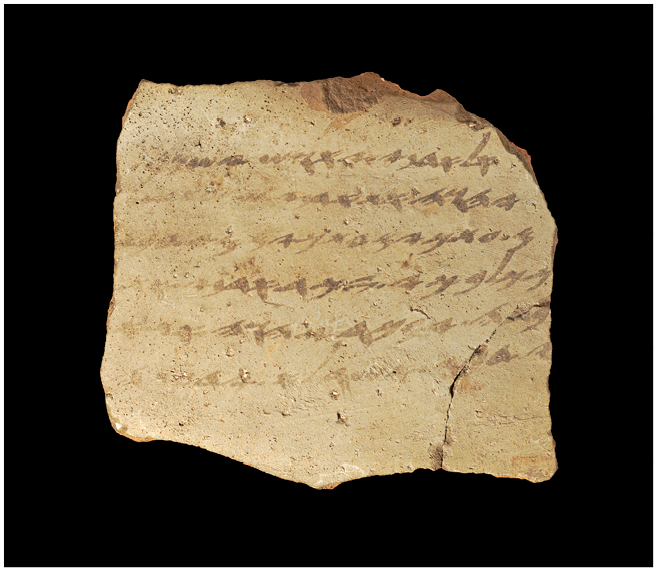
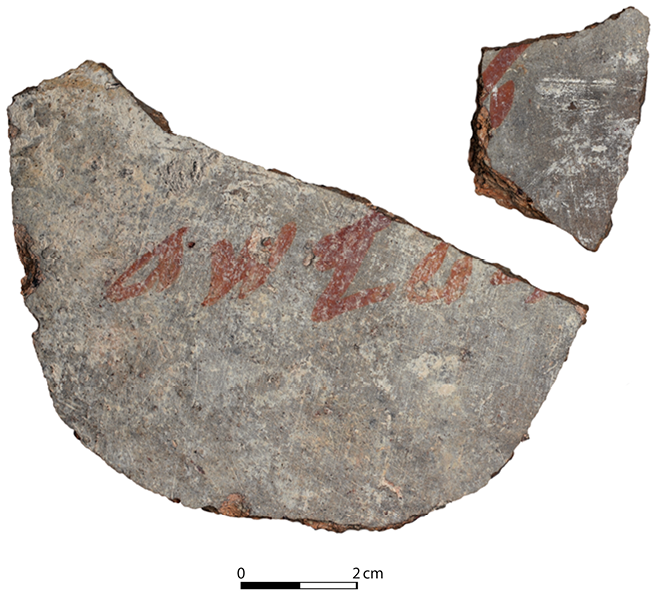
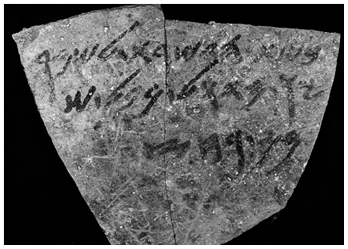
Other Documentary Texts. Administrative recording required not only drawing up lists but also writing a variety of other documents, for instance, dockets recording incoming commodities. The Samaria ostraca are an interesting example (HI, 483–487). More than 100 ostraca were found in the royal palace, dating to the early eighth century BCE and using similar formulas. For instance (translations from Richelle Reference Richelle2022a), ostracon 14 reads, “In the nin[th] year, from Gat Pirʾan, to Šamaryaw, a jar of old wine,” while ostracon 21 reads, “In the tenth year, to Šamaryaw, from Tawil, a jar of refined oil” (see Figure 14). These documents have been interpreted in various ways; according to a widespread hypothesis, they record incoming jars of wine and oil of the finest quality sent from multiple estates in the vicinity of Samaria.
Samaria ostracon 21.
It is likely that, in some cases, lists and other documentary texts were first noted on ostraca, then on papyrus, as was done for lists of workmen at Deir el-Medina (Allon and Navratilova Reference Allon and Navratilova2023: 24, 43). While the latter evidence comes from a different country (Egypt) and an earlier period (the late second millennium BCE) than monarchic Israel and Judah, the practice makes sense in all these contexts.
Messages. Ostraca could also be used to write down messages. As it happens, most of the letters preserved in Paleo-Hebrew were found in two Judean fortresses, Arad and Lachish. They shed some light on the daily routine of soldiers and officials, but also, occasionally, on some activities preceding an imminent attack (cf. Sections 4.2 and 4.3). In addition, epistolary formulas appear on pithoi at Kuntillet ʿAjrud.
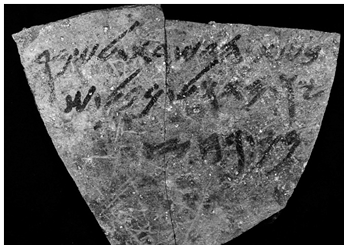
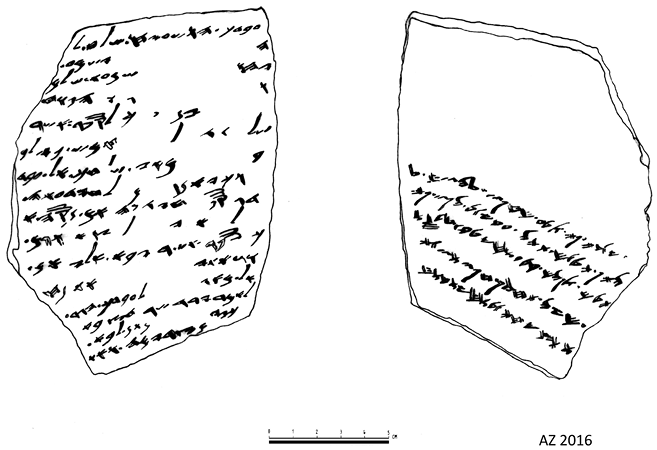
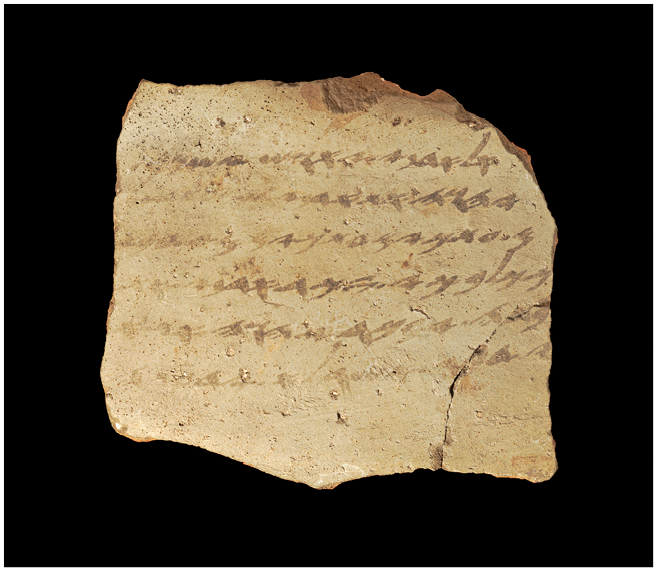
Let us take as an illustration the Lachish letters. They were found in the stratum (II) destroyed by the Babylonians in 587/6 BCE (for a careful reappraisal, see Zammit Reference Zammit2016). Several were sent to a military official, Yaʾush, by one or several subordinates, including a certain Hoshaiah. It is debated whether the ostraca themselves are letters sent from military outposts of the Shephelah (in which case Yaʾush may well have been the commander of the fortress) or drafts of letters sent from Lachish (in which case local soldiers are informing Yaʾush about troop movements and routine matters in the fortress), or a mix of both. For example, Lachish ostracon 2 reads (HI, 306; see Figure 15):
To my lord, Yaʾush. May Yhwh cause my lord to hear tidings of peace now, today, this very day. Who is your servant, a (mere) dog, that my lord has remembered his [se]rvant? May Yhwh quickly bring my … a word that you did not know.
Lachish letter 2.
Interestingly, the writer uses some phraseology that is reminiscent of biblical language: the self-abasement formula “who is your servant, a (mere) dog…” (cf. 2 Sam 9:8; 2 Kgs 8:13), which also has parallels in Neo-Assyrian letters (e.g., “I am a dog, but the king, my lord, remembered me”; Breier Reference Breier2013: 22). The ostracon does not actually say much, and it has been suggested that it could be a template used to teach how to write a letter (Mandell Reference Mandell2022). At any rate, most letters could include part or all of the following elements (Pardee Reference Pardee1982: 145–152; Heide Reference Heide2024):
(i) an address indicating the sender, “message (ʾmr) of X,” or the addressee, “to (ʾl) X” or “to my lord (ʾl ʾdny) X,” or sometimes both the sender and the addressee when there is no hierarchical relationship between them, for instance, “X sends (herewith) concerning the welfare of Y and the welfare of your house”;
(ii) a greeting formula with a blessing or well-wishing formula, such as “may Yhwh cause my lord to hear tidings of peace”;
(iii) the transitional phrase “and now” (wʿt);
(iv) the body of the letter, providing information, instructions, requests, petitions, and so on.
Literary Texts. Ostraca were frequently used to write literary texts in Antiquity. One of the most productive sites in this regard is Deir el-Medina. Ben Haring notes that “the most important collection of Deir el-Medina ostraca… includes over 8,000 documentary and over 7,000 literary ostraca” (Haring Reference Haring, Caputo and Lougovaya2020: 97–88 fn. 44). Even though the category “literary” is used in a flexible way, the proportion remains striking.
By contrast, literary texts on ostraca remain an exceptional phenomenon in the Paleo-Hebrew corpus. The best possible instance is Horvat ʿUza inscription 1 (Beit-Arieh Reference Beit-Arieh and Beit-Arieh2007, 122–128). It comprises thirteen lines that prove difficult to read, but the contents suggest that it could be some kind of literary composition. The beginning reads: “If in insolence or propriety you have denounced them to the great ones of […], then you have denounced […]. But if not, (then) fear […],”Footnote 18 and the end speaks of a grave that will be destroyed. As Isaac (Reference Isaac2020) has shown, the language of the text shares terminology with prophetic texts of the Bible; however, the genre remains difficult to determine.
2.2.5 Vessel Inscriptions
Finally, inscriptions on vessels (jars, jugs, decanters, bowls, and so on) generally contain one or several of the following indications: the name of the owner or recipient (e.g., “belonging [l-] to PN” or simply “PN”), some indication of contents (e.g., “smoked wine,” HI, 340), and some specification of measure (e.g., “one-half,” HI, 104). These inscriptions are relevant for onomastics (cf. Section 3.1) as well as the study of agriculture and food consumption (cf. Section 3.2.2).
It is important to know if the text was inscribed before or after firing the pottery. In the former case, the text was meant to “tag” the vessel from the start; moreover, it was incised when the clay was still malleable, which allowed for a relatively easy execution of the script. By contrast, a post-fire inscription may or may not be related to the initial function of the vessel; in addition, if incised or chiseled, the medium may have affected the writing due to its hardness, which means that caution is needed when drawing information from the inscription on the paleography of its time.
2.3 A Second Life
Now that we have reviewed the main kinds of Paleo-Hebrew inscriptions written in the heyday of this script, it is time to turn to its fate after the destruction of the kingdom of Judah ca. 587/6 BCE. While the documentation is written overwhelmingly in the Aramaic script, the Paleo-Hebrew script is still attested throughout the Second Temple period. However, the full extent of the corpus often eludes scholars. Most collections of Paleo-Hebrew inscriptions (AHI, HAE, HI, EP) focus on the Iron Age, and the epigraphs of the Neo-Babylonian to Roman periods remain dispersed in various isolated publications. The remainder of this section will survey the evidence, then discuss what it tells us about the uses of the script in these periods.
2.3.1 Neo-Babylonian Period
Perhaps surprisingly, Paleo-Hebrew was used by some Judean exiles during the Neo-Babylonian period, at least not far from Nippur, in āl Yāḫūdu, which means “Judahtown” in Akkadian. It is also called āl Yāḫūdaiā, “town of the Judeans.” Hebrew names are written in the Paleo-Hebrew script on the edge of three cuneiform tablets: hw bn hs (note the use of the Hebrew word ben for “son”Footnote 19), šlmyh, and šmdn. The tablets whose edge bear these names date respectively from 572 BCE (Pearce and Wunsch Reference Pearce and Wunsch2014: 98; Moore Reference Moore2023: 67), 568/7 BCE (Lemaire Reference Lemaire2015b: 44), and 550 BC (Pearce and Wunsch Reference Pearce and Wunsch2014: 112). In the case of šlmyh, the same name appears as Šalam-Yāma in the cuneiform text written on the tablet. Although the āl Yāḫūdu tablets are technically unprovenanced, they are widely regarded as authentic inscriptions documenting the life of the local community during the Neo-Babylonian and early Persian periods. The deportees living there and in other towns nearby received a parcel of royal land and became farmers.
Writing the name of a person on the edge of a tablet may have served archival purposes. It seems that the main text of the tablets, in cuneiform, was written by a Babylonian scribe and that a Judean administrator added on the spot (the clay being still malleable) the Hebrew names along the edge. This suggests that more than a quarter of a century after the deportation of 587/6 BCE, there were still exiles sticking to their old alphabet, at least in that context. Interestingly, sixteen names were also written in Aramaic on the edge of tablets, but they all date from the Persian period. As Moore (Reference Moore2023: 67) argues, the transition from Hebrew to Aramaic may have been gradual, but it may also have been a consequence of an administrative reform imposed by the new (Persian) power in 539 BCE or soon afterward. The fact that the earliest Aramaic name on the edge of a tablet dates from 538 BCE makes the latter scenario tempting, although more evidence would be required to substantiate it.
2.3.2 Persian to Roman Periods
The Paleo-Hebrew inscriptions of the subsequent periods are not numerous, but they appear on various kinds of media (for a detailed inventory and paleographical study, see Perrot and Richelle Reference Perrot, Richelle, Attia and Perrot2022; for the Persian period in particular, see Hamilton Reference Hamilton, Hackett and Aufrecht2014). Because some documents are very difficult to date, and because some writing traditions stretched over centuries, it is best to present them according to inscription types while indicating diachronic developments whenever possible.
Seals and Bullae. A handful of seals and seal impressions from the Persian period have been found. For example, the earliest seal is that of yhwyšmʿ bt šwššrʾṣr (WSS 1071). The owner, Yehoshamaʿ, whose name is written in Paleo-Hebrew, seems to be the daughter of an exile, šwššrʾṣr, a Babylonian name written in the Aramaic script.Footnote 20
Two seal impressions of the Hasmonean ruler Alexander Jannaeus (CIIP 701; 702) are generally taken as authentic, but they are, unfortunately, unprovenanced.
Finally, two Paleo-Hebrew seals bearing the legends “Y[ear] three of their redemption” (š šlš lgʾltm) and “for spinning” (lʿzl) were found in the fortress of Yatir in the northern Negev; they prove that the use of that script by the Bar Kochba administration was not limited to coins (Vainstub and Fabian Reference Vainstub and Fabian2024).
Stamp Impressions. Yehud authorities used storage-jar stamp impressions (Lipschits and Vanderhooft Reference Lipschits and Vanderhooft2011) that seem to be the continuation of earlier similar systems (Lipschits Reference Lipschits2021). The legend is generally the mere name “Yehud” (yhd or yhwd), usually written in the Aramaic script, but sometimes in Paleo-Hebrew, and one also finds occasionally, in the Aramaic legend, a letter whose shape is borrowed from Paleo-Hebrew (Lipschits Reference Lipschits2021: 79–88).
In the second half of the second century BCE, under the Hasmoneans, the legend on storage-jars was simply “Jerusalem” (yršlm) in Paleo-Hebrew letters written in between the branches of a five-pointed star (Lipschits Reference Lipschits2021: 89–94).
Coins. The Second Temple period sees the appearance of a medium that did not exist in the First Temple period: coinage. Although it has long been thought that it was the Hasmoneans who first introduced Paleo-Hebrew legends on coins, in the second century, the practice was already in place on Yehud coins from ca. 400 to 260 BCE (Gitler, Lorber, and Fontanille Reference Gitler, Lorber and Fontanille2023). The standard legend is a mere yhd or yhdh, but one also occasionally finds a coin with the name of an official (cf. Section 3.1.6).
Samarian rulers also minted coins, ca. 375–332 BCE, but the legends are in the Aramaic script, with only two exceptions found in the so-called Nablus hoard, which is technically unprovenanced but regarded as authentic (Eshel Reference Eshel, Lipschits, Knoppers and Albertz2007: 227–230): the name Bedayah (bdyh) written on two coins, one entirely in Paleo-Hebrew, the other with only the divine component yh in that script (Meshorer and Qedar Reference Meshorer and Qedar1999: 84–85).
The first Hasmonean ruler who dared to mint coins was John Hyrcanus I (135–104 BCE), and he used Paleo-Hebrew legends, a practice that lasted until Mattathias Antigonus (40–37 BCE). It was a statement of autonomy, and the same is obviously true of the coins minted during the First and the Second Jewish Revolts against Rome in 66–74 and 132–135 CE, respectively (see Meshorer [Reference Meshorer2001] for Jewish coins from the various periods).
Spindle Whorl. A unique find is a Paleo-Hebrew word, gnt[ ] (perhaps a toponym or an anthroponym), on a spindle whorl that some date around the fifth century BCE on paleographical grounds (Hamilton Reference Hamilton, Hackett and Aufrecht2014: 260–261).
Scrolls. The most striking development compared to the Iron Age is the preservation of around nineteen biblical scrolls (of Pentateuchal books and of Job) entirely written in Paleo-Hebrew. While the script of the earliest scrolls could theoretically fit the fifth or fourth centuries (Langlois Reference Langlois and Langlois2019), it may be more accurate to say that paleography allows for a dating before the second century CE for the most ancient scrolls (Perrot and Richelle Reference Perrot, Richelle, Attia and Perrot2022: 27–45); paleographical dating cannot be precise because the script did not develop much between the Neo-Babylonian and the Hellenistic periods.Footnote 21 In addition, most Paleo-Hebrew scrolls are written with a reed pen, a novelty of the Hellenistic period (before this, scribes used a rush brush); this suggests that the earliest scrolls do not predate that era (Longacre Reference Longacre2021: 21; Perrot and Richelle Reference Perrot, Richelle, Attia and Perrot2022: 45).
While most scrolls contain biblical texts, a non-biblical text, previously regarded as written in a cryptic script, turns out to be written in Paleo-Hebrew (Perrot and Puech Reference 87Perrot and Puech2023). The very cursive letterforms attest to a free use of the script. The text is too fragmentary to make any interpretation certain, but it does mention a “sanctuary” (mqdš) and could be a narrative dealing with religious matters.
Furthermore, a fragment of papyrus written on both sides with (very fragmentary) non-biblical texts in Paleo-Hebrew has been found at Masada and thus predates 73 CE (Talmon Reference Talmon1997). One side mentions “Mount Geriz[im]” (hrgryz[ym]), but, despite appearances, this does not prove that it was written by a Samaritan.
The Dead Sea scrolls further attest to the use of Paleo-Hebrew in scrolls otherwise written in the Jewish script (Tov Reference Tov2004: 206–208, 238–246): for writing divine names (Yhwh, Adonai, ʾEl, ʾElohim), perhaps due to their sanctity, and as single letters in the margin, probably to highlight special passages.
Tesserae. Lead tesserae from the second century BCE, with one or a few Paleo-Hebrew letters, have been found on Mount Gerizim; they may have served as tokens for purchasing offerings at the sanctuary (Magen, Bijovsky, and Tzionit Reference Magen, Bijovsky and Tzionit2021: 123–127, 192–194).
Mason’s Marks. At Masada, mason’s marks (a letter and bars denoting numerals) were found on seventy column drums, that is, cylindrical sections of columns (CIIP 3906–3971). The letters are taken from the Jewish script except for zayin, which could have been confused with a numeral: the mason used the Paleo-Hebrew letterform (CIIP 3917–3919).
Ostraca. Also at Masada, a little over 300 ostraca, mostly found near the storehouses, contain one to three letters; they may have served as tags for rationing food during the First Jewish Revolt (Yadin and Naveh Reference Yadin, Naveh, Yadin, Naveh and Meshorer1989: 6–7, 12–16). Most letters are in the Jewish script, but twenty contain two Paleo-Hebrew letters, or, in a few cases, a Paleo-Hebrew letter and one or two Greek letters. Paleo-Hebrew was also used on an ostracon that is difficult to decipher and interpret (Yadin and Naveh Reference Yadin, Naveh, Yadin, Naveh and Meshorer1989: 64, no. 640).
Vessel Inscription. On a vessel found at Masada, somebody attempted to use Paleo-Hebrew to write a personal name in an ink inscription. The text may read: “Yeshuaʿ, pure for hallowed things” (Yadin and Naveh Reference Yadin, Naveh, Yadin, Naveh and Meshorer1989: 36, no. 457).
Ossuaries. While most Jewish ossuaries from the Roman period are written in the Jewish script, a few exceptions were found in burial caves near Jerusalem dating to the first century BCE or CE; they bear the names Elisha (ʾlyšʿ) in Paleo-Hebrew (CIIP 62), and Eliezer (ʾlyʿzr) written twice, once in the Jewish script and once in Paleo-Hebrew (CIIP 207).
Stone Inscriptions. Excavations at Mount Gerizim have uncovered many inscriptions on stone (Magen, Misgav, and Tsfania Reference Magen, Misgav and Tsfania2004), most of them in Aramaic, but eight in Paleo-Hebrew. Dušek (Reference Dušek2012: 54) cautiously suggests a dating in the first half of the second century BCE. Only fragments of texts appear, but a few preserved words suggest a priestly context: “priest” (khn), Yhwh, and [P]inḥas, which is probably the name of a priest, perhaps a high priest since the same inscription contains “the high…” ([ ] hgdl).
An inscription on a square stone plate from the first century BCE engraved in a tomb in the Kidron Valley reads, “The house of the bones of ‘Ovadiya son of G… Ḥezir” (CIIP 138).
A fragment of a white marble plaque found at the Ophel (CIIP 13) is sometimes dated to the royal period but is more likely to date from the Roman period, perhaps the first century CE. Only the word “son” (bn) can be identified.
Last but not least, the so-called Abba inscription (CIIP 55) proves fascinating. It is a funerary epigraph that was found in a tomb dated to the first century CE based on the archaeological material it contained. Not only does it show that Paleo-Hebrew could still be chosen for such a tomb inscription, but its script contains features that would reappear much later in the Samaritan script, even though the deceased seems to have been Jewish. Moreover, the text itself, which is complete, is tantalizing. Here is a translation (Naveh Reference Naveh1973: 82–83):
I, Abba, son of the priest Eleaz(ar), son of Aaron the high (priest), I Abba, the oppressed and the persecuted, who was born in Jerusalem, and went to exile into Babylonia and brought (back to Jerusalem) Mattathi(ah) son of Jud(ah), and I buried him in the cave, which I acquired by the writ.
One may only speculate as to the sociohistorical background or personal story that lies behind Abba’s exile to Babylonia, and the nature of his relationship to Mattathiah.
Interestingly, harbingers of the Samaritan script also appear on a few Dead Sea scrolls, on the Masada papyrus, and on a Jewish seal found at Khirbet Qumran (Perrot and Richelle Reference Perrot, Richelle, Attia and Perrot2022: 52). This suggests that the transition from the Paleo-Hebrew to the Samaritan script, which is attested from the fourth century CE (Barag Reference Barag, Cotton, Hoyland, Price and Wasserstein2009), was gradual.
In the later first millennium CE, Paleo-Hebrew letters occasionally appear, perhaps on some inscriptions (CIIP 957, tentatively dated to the third to the sixth century), but also for writing the divine name on Septuagint manuscripts (De Lange Reference De Lange2015: 71–74).
2.3.3 What Was It Used for?
A few decades ago, it was possible to have the impression that Paleo-Hebrew had virtually fallen out of use some time after the fall of Jerusalem, before being artificially revived by the Hasmoneans as a means of nationalistic affirmation, a practice later taken up during the Jewish Revolts. The survey above, however, paints a richer picture: Paleo-Hebrew appears on a striking variety of media and is attested throughout the Second Temple period.
A number of facts suggest that Paleo-Hebrew may well have represented more than a dead script that was only artificially used in extremely limited contexts (Perrot and Richelle Reference Perrot, Richelle, Attia and Perrot2022: 49–53): (a) It is attested throughout the Second Temple period; (b) it appears on a surprising array of media and in diverse situations, including on everyday life inscriptions (a spindle whorl, mason’s marks, and tags); (c) it sometimes influences some letterforms on texts written in the Aramaic script; (d) it is occasionally mixed with the Aramaic and the Jewish scripts; (d) cursive features appear on letterforms on coins and stone inscriptions; (e) the variety of letterforms for several individual characters and, more importantly, the presence of transitional forms that are harbingers of the later Samaritan script suggest that the script was developing.
It is possible to conceive of different reasons for the script’s continued use, although these remain conjectures. For some engravers of monumental documents, Paleo-Hebrew may have represented the equivalent of the Gothic script today in German: a formal script form that is used for certain texts. For some craftsmen inscribing legends on coins, it may have been an archaic script that they did not really know but that they used thanks to old inscriptions that served as models. A multiplicity of such models would be an alternative explanation for the variety of letterforms on coins, although the possibility remains that this variety reflects a wider use. For some scribes, it may have been the script of authoritative religious scrolls that they studied, copied, and edited; that is, a script that they used to read and write in the context of their professional activity, but not the script they used in everyday life. Such scribes are the most obvious candidates for those who caused the script to develop new variants of letterforms. The Abba inscription was likely incised by an artisan using a model written by a scribe.
The situation probably varied over time, and it is important to note that the cumulative evidence described above comes from different periods. Naveh (Reference Naveh1987: 117) argued that Paleo-Hebrew was still regularly used to write Hebrew texts until the third century BCE; Mizrahi (Reference Mizrahi2017) regards the switch to Aramaic as a process starting in the Persian period, when he thinks Pentateuchal scrolls were transliterated from Paleo-Hebrew to Aramaic. It is likely that old literary scrolls in Paleo-Hebrew were still read for centuries. The Paleo-Hebrew Dead Sea scrolls might represent a return to the old script in the Hellenistic period, but it may be more realistic to regard them as copies of older scrolls that were themselves written in the same script. Mizrahi (Reference Mizrahi2017: 116 fn. 27) notes that they display “unique scribal practices that have no parallel in scrolls written in the Jewish script (such as the breaking of words between lines, a special use of an elaborated waw as a verse divider, etc.).” It is therefore likely that a continuous use of Paleo-Hebrew existed, at least among some scribes.
The situation may also have been different in Samaria than in Judah. It is conceivable that the inhabitants of Samaria never ceased to use the Samaritan script for some religious purposes and that their scrolls of Torah books were always written in Paleo-Hebrew, which gradually developed into the Samaritan script.
Finally, several hypotheses attempt to account for the special status of the Paleo-Hebrew script (Perrot and Richelle Reference Perrot, Richelle, Attia and Perrot2022: 54–57): scholars assume that it served nationalistic purposes (assertion of autonomy and reference to older, greater times), or that it was a “conservative” script used by Sadducees, or that it had a sacred status (hence its use for divine names), or, on the contrary, that it was less sacred than square Hebrew and was used on some scrolls to make sure they did not render the reader impure or did not risk being defiled by him or her. The first and third theories seem the most attractive, but they work for very different contexts. Moreover, other contexts also exist, such as textile craft, masonry, a burial cave, and the literary activity of scribes who inherited old scrolls from their predecessors. This suggests that the uses of Paleo-Hebrew transcend any single theory; this older, different script was available for various purposes.
As this section has shown, Paleo-Hebrew epigraphs are found on a surprisingly diverse array of media, preserve texts in a wide variety of text genres, and reflect uses in various periods. As a result, they unveil many facets of the life of ancient Israelites and Judeans, as the following section will illustrate.
3 Daily Life in Ancient Israel and Judah
Paleo-Hebrew inscriptions frequently mention names and titles (Section 3.1), which gives us a glimpse into social organization; moreover, they provide, in various ways, information on social interactions, agriculture and food consumption, as well as the economy (Section 3.2). Finally, the toponyms mentioned in texts help reconstruct historical geography (Section 3.3).
3.1 People and Social Functions
Most people in ancient Israel and Judah will remain forever unknown to us; their names and lives have not left traces in preserved texts. The Hebrew Bible does name many people, whether in narratives, poems, or genealogies; however, in the absence of extrabiblical corroboration, their existence is difficult to ascertain because the texts often mix history and fiction. Still, extrabiblical sources confirm the existence of a few dozen biblical characters, whether from Israel, Judah, or other countries. Methodologically, equating a person named in an inscription with a biblical character requires caution. The likelihood that they are identical increases with the number of shared features: same name, same patronym, same title, same period, same local context, and so on (see Mykytiuk Reference Mykytiuk2004: 9–56 for a detailed introduction to the relevant criteria). Conversely, Paleo-Hebrew inscriptions contain many names that are not mentioned in the Hebrew Bible.
Thus, epigraphy makes a crucial contribution to our knowledge of the onomasticon of ancient Israel and Judah (Zadok Reference Zadok1988).Footnote 22 But it also opens a window into the social structure of these countries because these texts attest to titles that correspond to social roles and professions in the political and administrative apparatus, the military, and a few other professions and activities. I will discuss these aspects by focusing on the First Temple period, then move to the situation in the Second Temple period. Finally, I will discuss the relationship between personal names and gender.
3.1.1 High Officials
Garfinkel and Mendel-Geberovich have recently drawn up a list of twenty-two Judean high officials mentioned in provenanced Paleo-Hebrew inscriptions (Reference Garfinkel and Mendel-Geberovich2020: 170–171). Among them, four do not bear a title but can be plausibly equated with specific officials from the late seventh century BCE mentioned in the Bible, because they have the same patronym, lived in the same period, and an impression of their seal was found in the city, Jerusalem, where the biblical officials lived:
Azaryahu son of Hilqiyahu (WSS 596), a member of a priestly family, see 1 Chr 5:39;
Gemaryahu son of Shaphan (WSS 470), see Jer 36:10;
Yehukal son of Shelmiyahu son of Šby (CSSL Jerusalem 349), see Jer 37:2; 38:1;
Gedalyahu son of Pasḥur (CSSL Jerusalem 349), see Jer 38:1.
Strikingly, if the identifications of these men are correct, we have here attestations of important officials from the prophet Jeremiah’s time, but also of two other officials of even greater importance for their time. Whereas the title of scribe (spr) remains unattested in provenanced inscriptions,Footnote 23 the name of Shaphan, a scribe who played a crucial role under Josiah according to 2 Kgs 22, appears on the seal of his son Gemaryahu. No title is given to that son, but the fact that he had his own personal seal is indicative of a certain social status. If we are to believe Jer 36:10, he had a chamber in the Temple. Similarly, it is plausible that Hilqiyahu, whose name appears on the seal of his son Azaryahu, was no other than the high priest of Josiah’s time, mentioned alongside the scribe Shaphan in 2 Kgs 22:3–8. Azaryahu was also probably a priest (see 1 Chr 5:39), although his seal does not provide that information.
In fact, the title of a person was not necessarily mentioned on his or her seal, witness the case of Elyashib son of Eshyahu, who we know (thanks to ostraca) had a key role in the fortress of Arad: no less than three seals bearing his name and his patronym, but no title, were found on the same site (Aharoni Reference Aharoni1981: 119–120).
The eighteen remaining Judean officials in Garfinkel and Mendel-Geberovich’s list bore a variety of titles: king, son of the king, servant of the king, steward of the royal house, steward/squire, governor of the city (or, perhaps better, fortress), and army commander.Footnote 24 I will now briefly comment on the first five titles, which pertain to the political and administrative apparatus. I will discuss the other two in Section 3.1.2 because they belong to the military.
King (mlk). The sole Judean ruler whose seal impression has been found so far in controlled excavations is Hezekiah (cf. 2 Kgs 18–20);Footnote 25 the bulla, found at the Ophel, reads “belonging to Ḥiz[q]iyahu (son of) A[ḥ]az king of Juda[h]” (lḥz[q]yhw ʾ[ḥ]z mlk yhd[h]; CSSL Jerusalem 495a). As it happens, two bullae identical to the provenanced one had surfaced on the antiquities market years before its discovery (cf. Deutsch Reference Deutsch2002: 42, 46Footnote 26). No forger could have guessed exactly how Hezekiah’s seal could have looked, so at least one of the unprovenanced bullae must be genuine.
Son of the King (bn hmlk). This title is not necessarily to be taken literally (filial language was often used metaphorically in the ancient Near East), but it likely designates a royal relative. It appears on the bulla of a certain Geʾalyahu found in Beth Zur (WSS 412).
Servant of the King (ʿbd hmlk). This title also appears in the Bible (2 Sam 18:29; 2 Kgs 22:12). The semantic range of ʿbd is wide; on seals, it evidently designates an official of high rank. Two of the officials bearing that title on inscriptions might be mentioned in the Bible: Yaʾazanyahu, whose seal (WSS 8) was found at Tell en-Naṣbeh (ancient Mizpah), see 2 Kgs 25:23, and Natanmelek, whose seal was found in the excavations of the Givʿati parking lot, in Jerusalem, see 2 Kgs 23:11. Two more Judean royal servants can safely be added even though their seals are unprovenanced, because these seals were published as early as 1863 and 1858, respectively. They are Shebanyaw (WSS 3) and Abiyaw (WSS 4), and they both bear the title “servant of ʿUzziyaw,” who must be the same king of Judah as mentioned under that name in 2 Chr 26:1 and as Azariah in 2 Kgs 15:1.
Steward of the House (ʾšr ʿl hbyt). This title, literally “the one who is over the house,” was mentioned when discussing the Royal Steward inscription (2.2.1). We may now add that it appears on the bullae of a certain Gedalyahu, found in Lachish (WSS 405), and of Adoniyahu, found in Jerusalem (HSS 2190; Vanderhooft, Richey, and Shukron Reference Vanderhooft, Richey and Shukron2022). It is conceivable that it is the same Gedalyahu who was later appointed by the Babylonian king “over the people” who remained in Judah after the fall of Jerusalem ca. 587 BCE (2 Kgs 25:22), as it would have made sense to give such a function to a person with experience.
Steward/Squire (nʿr). The Hebrew word nʿr has a wide semantic range and could mean steward or squire. This title appears twice on the same Arad ostracon (HI, 105) and on four jar-handle impressions made with the same seal (WSS 663), found on three different sites (Ramat Rahel, Beth Shemesh, and Tell Beit Mirsim).
The titles discussed above are known thanks to inscriptions from Judah. Because only twelve seals and seal impressions from Israel have been found so far, we cannot expect as much evidence from the northern kingdom. Nevertheless, the seal “belonging to Shema servant of Jeroboam” (lšmʿ ʿbd yrbʿm; WSS 2; see Figure 16) refers to King Jeroboam II (2 Kgs 14:13–29). In addition, an inscription from Tel Rehov dated to the ninth century BCE is generally read lšqynmš and translated “(belonging) to the cupbearer Nimshi” (Aḥituv and Mazar Reference Aḥituv, Mazar, Mazar and Pavitz-Cohen2020: 421–423). The same title appears in the Bible (Gen 40; Neh 1:11), as does the name Nimshi (e.g., 2 Kgs 9:2). However, it is disputed whether the script of the inscription can be considered an early form of Paleo-Hebrew or not (cf. Sass Reference Sass, Sergi, Oeming and de Hulster2016: 216).
Seal of “Shemaʿ servant of Jeroboam” (lšmʿ ʿbd yrbʿm); CSSL Megiddo 45.
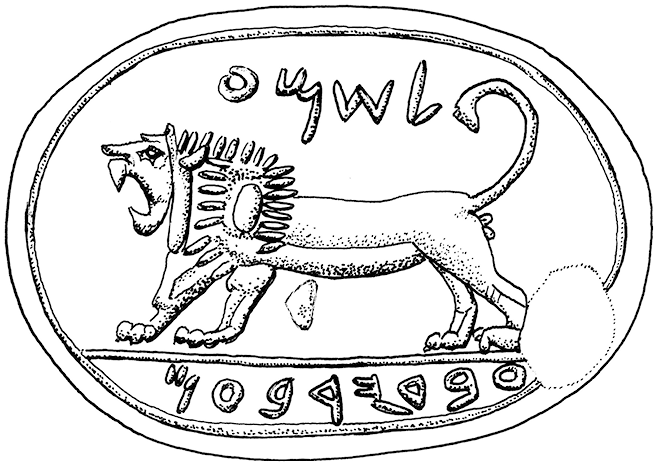
3.1.2 Military
The last two titles in the list drawn up by Garfinkel and Mendel-Geberovich are “governor of the city” (šr ʿr) and “army commander” (šr hṣbʾ).Footnote 27 The first title appears on a seal found in Jerusalem and on four storage jars from Kuntillet ʿAjrud. But it seems preferable to translate “governor of the fortress,” at least for Kuntillet ʿAjrud, since there was no city there, only a small, fortified waystation (Schniedewind Reference Schniedewind2019b). The second title appears on Lachish letter 13, which mentions “the commander of the army, Coniah the son of Elnathan” (HI, 310).
Some ostraca enable us to go further than the case of individual officials. We have already encountered a possible attestation of a unit of ten soldiers at Horvat ʿUza (cf. 2.2.4). Several other ostraca containing lists of personal names have been found there, and it is quite likely that some of them are groups of soldiers, although the possibility that some are administrative staff cannot be ruled out. The most interesting are two ostraca in which men are sorted by ordinals (Beit-Arieh Reference Beit-Arieh and Beit-Arieh2007: 160–168). The first reads as follows (Beit-Arieh’s translations are slightly emended):
1. First (rʾšn)
2. After Natan: Neḥemya[hu]
3. Leader (qṣyn) of the unit (mṭh) Gadli
4. Second (šny) to Neḥemyahu: El[…]
5. Second to Taḥtana: Mala[sh]
6. Third (šlšy) after […]
7. Third […]
8. Fourth (rbʿy) […]
9. Ho[…]
The second, whose beginning seems to have been lost, reads:
1. Leader (qṣyn) Elnathan
2. Leader of the unit Gadli
3. Second to Daṭad: Malash
4. Second to Gaʿali: Abiyahu
5. Third to Malash: Ya ʾazinyahu son of Z[…]
6. Third to Abiyahu: Elyashib
7. Fourth to Yaʾazinyahu: Yaʾazinyahu son of […]
8. Hoshaʿyahu Naweh. mplqm
As Beit-Arieh writes, the jar may have “served as a kind of notice board, for example a duty roster (for what task is not mentioned) for members of some organized unit within the fortress; or it may have been a hierarchical list of officials connected with the military or civil administration of the fortress” (Reference Beit-Arieh and Beit-Arieh2007: 167). The title “leader” (qṣyn), used on both documents, serves in the Hebrew Bible to designate not only political rulers (e.g., Isa 3:6) but also military commanders (Josh 10:24).Footnote 28
3.1.3 Priests
There are no mentions of the title “priest” in provenanced inscriptions from the Iron Age.Footnote 29 Nevertheless, as we have already seen, because a certain seal was found in the City of David (thus close to the Temple) and dates from the late seventh century BCE, it is plausible that “Azariah, son of Hilkiah” (WSS 596) is the man listed in a sacerdotal genealogy (“sons of Levi”) in 1 Chr 5:39 (ET 5:13) and that his father Hilkiah was the high priest at the time of King Josiah who is said to have found the scroll of the law (2 Kgs 22:8).
3.1.4 Prophets
In Lachish ostracon 3 (HI, 308–314; see Figure 17), dating from soon before 587/6 BCE, Hoshaiah says that he has forwarded a letter citing a message related in some way to a prophet (nbʾ): “As for the letter of Tobijah, the servant of the king, which came to Shallum the son of Jaddua from the prophet, saying, ‘Beware!’ – your serv<ant> has (already) sent it to my lord.” Much ink has been spilled over the interpretation of this sentence (Zammit Reference Zammit2016, vol. 1: 273–276). Its syntax is puzzling because the letter mentioned is both said to be “of Tobijah, the servant of the king” and to have come “from the prophet.”
The visible graphemes of Lachish letter 3 as seen today (obverse and reverse).
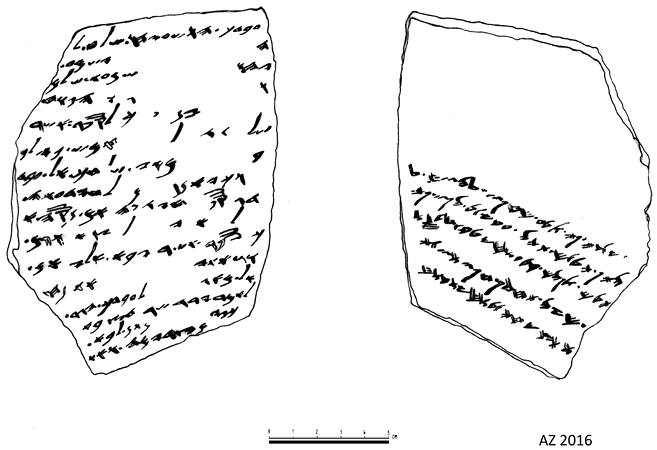
Some argue that Tobijah was none other than the prophet, although that would mean that Hoshaiah refers to the same person by two distinct titles. Others prefer to think that Tobijah, a royal servant, wrote a letter to convey the message of the prophet. The word “Beware!” could be the first word of that message or a summary of it, perhaps inspired by a keyword. Such a scenario would be reminiscent of a practice well attested at Mari in the eighteenth century BCE and in Neo-Assyrian texts from the seventh century BCE: someone wrote to inform the king of an oracle that was summarized in the letter (Nissinen Reference Nissinen2017: 73–92). Alternatively, the letter written by Tobijah contained a message to the prophet, who then forwarded it to Shallum. The royal servant may have warned the prophet of some danger, hence the word “Beware!” perhaps because the prophet’s oracles had irritated some powerful people. However, it does not seem very likely that this would have interested a high official in Lachish.
Either way, the ostracon echoes biblical texts depicting Jeremiah, who was a prophet in Jerusalem in exactly the same period, either by showing that prophets could indeed try to weigh in on political matters or by showing that they could make enemies at a high level.
Three other inscriptions might mention the word “prophet.”Footnote 30 Two impressions of the same seal from Lachish (WSS 530; HSS 2012) bear the legend lyrmyhw bn ṣpnyhw bn nby. While the beginning clearly means “belonging to Yirmiyahu son of Ṣepanyahu,” it is debated whether the last part means “son of Nobai” or “son of a Nobite” or “son of a prophet” (Schniedewind Reference Schniedewind2024: 112–114). Reconstructing nby[ʾ] to read “prophet” remains hypothetical.
A similar situation occurs with the bullae (HSS 2158) of a seal “belonging to Isaiah” (lyšʿyh[w]). The second register bears nby, which some complete to nby[ʾ], “prophet.” But it is unclear whether there was enough space for this additional letter. Schniedewind (Reference Schniedewind2023) argues that nby would still be an acceptable spelling for this Hebrew word in eighth-century BCE Judah, on the grounds that it was an Akkadian word borrowed through Aramaic, a language in which the spelling nby is attested. This involves the assumption that the spelling with a final ʾ in the Hebrew Bible and in Lachish ostracon 3 is a later development or that it coexisted with the shorter spelling. Here again, there are other possibilities, such as “(son of) Nobai,” “the Nobite” (a gentilic) or names such as nbyt (Nabit) or nbyl (Nabil) if there was an additional letter.Footnote 31
Finally, inscription 9 from Tel Rehov Stratum IV (ca. 900–830 BCE) is an ostracon with the name Elisha (ʾlšʿ) written in red ink (see Figure 18). Several arguments have been adduced to argue that it is the same person as the prophet from 2 Kgs 2–13 (Aḥituv and Mazar Reference Aḥituv, Mazar, Mazar and Pavitz-Cohen2020: 426–429; Schniedewind Reference Schniedewind2024: 120–123): (a) the building where the ostracon was found hosted some cultic activity; (b) the red ink, the large size of the letters, and the intentionally rounded shape of the lower side of the ostracon are unusual, as if the inscription was meant to be displayed; (c) Elisha was born at Abel Meholah (1 Kgs 19:16), not far from Tel Rehov, in the ninth century; (d) Nimshi, a name that appears on two inscriptions from Tel Rehov, is also the name of the father or grandfather of King Jehu (or perhaps of his clan), a contemporary of Elisha (2 Kgs 9:2, 20). On the other hand, these arguments are purely circumstantial, and identifications based on names without a title or patronym remain very hypothetical. The use of red ink is rare indeed in Paleo-Hebrew, but it was used at Kuntillet ʿAjrud, including for training exercises (Schniedewind Reference Schniedewind2019a: 28–29). The rounded shape of the ostracon is puzzling but it did not necessarily apply to each of its edges.
The Elisha ostracon from Tel Rehov.
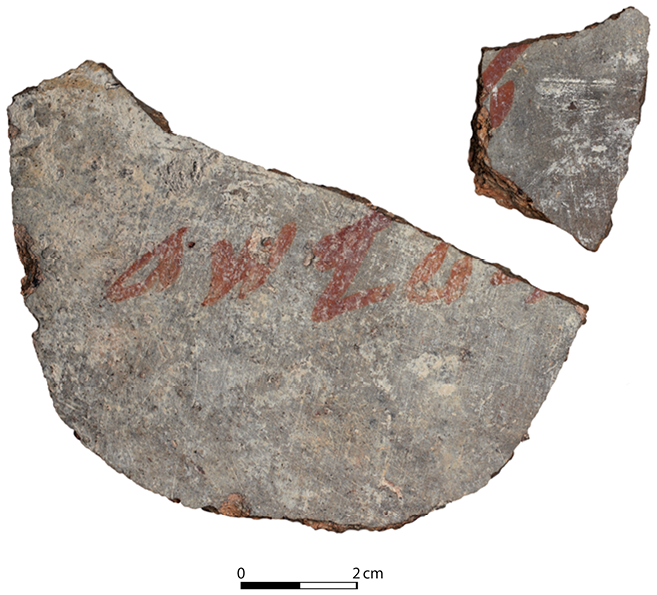
In the end, these identifications remain tantalizing but hypothetical.
3.1.5 Other Professions
Inscriptions occasionally name other professions than those mentioned so far. This includes the following activities, found on Iron II ostraca: “shepherds” (rʿm; HI, 488); “sheep-breeder” (nqdy; Faigenbaum-Golovin et al. Reference 82Faigenbaum-Golovin, Rollston, Piasetzky, Sober and Finkelstein2015: 135); in the Bible, this word is applied to the prophet Amos (Am 1:1; 7:14) and to King Mesha (2 Kgs 3:4); “wool-comber” (šrq, HI, 207; Faigenbaum-Golovin et al. Reference 82Faigenbaum-Golovin, Rollston, Piasetzky, Sober and Finkelstein2015: 135); and “harvesters” (qṣrm, “those who harvested,” HI, 359).
3.1.6 Leaders from the Second Temple Period
All the people mentioned so far lived in the monarchic period. The Paleo-Hebrew inscriptions from the Persian to the Roman period are also relevant for prosopography.
An important example is the bulla of “[…]yahu son of [San]ballat, governor of Samari[a]” (WSS 419) found still attached to a papyrus dated to ca. 358–338 BCE. The name Sanballat is plausibly restored here because it was the name of a governor of Samaria mentioned on an Aramaic papyrus from Elephantine from the fifth century BCE, and the name of an official in Neh 2:10, 19, and so on. It is unclear whether the […]yahu of the bulla is the same person or his son (or grandson).
It is the coin legends that contain by far the most information. We have already mentioned the two coins of Bedayah, governor of Samaria in the fourth century BCE (Section 2.3.2). A few coins from the same century reveal the names of political and religious leaders in Yehud, notably “Yohanan the priest” (ywḥnn hkhn) on an unprovenanced coin generally regarded as authentic, and “Hezekiah the governor” (yḥzqyh hpḥh) on several provenanced coins (Meshorer Reference Meshorer2001: 14–16).
Many coins bearing legends with names of Hasmonean rulers (John Hyrcanus I, Hyrcanus II, Alexander Jannaeus, Judas Aristobulus I and/or Aristobulus II, and Mattathias Antigonus) have been found, including during controlled excavations. Some legends designate them as kings, others as high priests; only Mattathias Antigonus used both titles simultaneously. In fact, Hasmoneans seemed to prefer using their sacerdotal title. In addition, during the reigns of Hyrcanus, Aristobulus, and Jannaeus, the high priest title was accompanied by a mention of the ḥeber ha-yehudim, which some interpret as “council of the Jews/Judeans” and others as a reference to the entire Jewish people seen as religiously led by the ruler and high priest (Regev Reference Regev2013: 175–223).
The leaders of the two Jewish Revolts (66–74 and 132–135 CE) resumed the use of the Paleo-Hebrew script for the legends on their coins. Two names are sometimes mentioned on the coins of the Second Revolt: “Shimʾon, Prince of Israel,” that is, Simeon bar Koseba, and “Eleazar the priest,” perhaps a contemporary of the former, possibly his uncle, Eleazar of Modiʾin.
3.1.7 Personal Names and Gender
Finally, the relationship between inscriptions and gender is worth exploring. The form of a Hebrew personal name is not gendered, except when it includes the element bt (“daughter”) as in Bathsheba (2 Sam 11:3). Unless a person is presented as the daughter (bt), wife (ʾšt), or handmaiden/wife (ʾmt) of somebody, it is difficult to ascertain that she is a woman. Golub and Mendel-Geberovich (Reference Golub and Mendel-Geberovich2024) reckon only five female individuals whose names appear in provenanced Iron Age II Paleo-Hebrew inscriptions, all from Judah. Their names appear on seal and seal impressions, which means that the women in question belonged to the Judean upper class, since they owned a seal. In addition, five other women, designated as daughter, wife, or handmaiden, are mentioned without their names.
3.2 Social and Economic Realities
Now that we have seen how inscriptions shed some light on ancient people and their social functions, let us find out how the same sources inform us about their lives in the socioeconomic systems of Israel and Judah.
3.2.1 Social Interactions
What the inscriptions yield in practice are snapshots of daily life and social interactions or practices. In this regard, the letters exchanged between soldiers are especially instructive, as they show some concrete situations in the daily life of a fortress, for example, an official ordering a soldier to fetch food. In addition, while inscriptions do not frequently give us access to the emotional life of ancient people, this does happen in Lachish ostracon 3 (HI, 308–314). In the following excerpt, we see that the writer, Hoshaiah, is offended by a remark from his superior:
And now, open the ear of your servant concerning the letter that you sent to your servant last night, because the heart of your [ser]vant has been sick ever since you sent (it) to your servant, and because my lord said, “You did not understand it. Call a scribe!” By the life of Yhwh, no one has tried to read a letter to me – ever! Moreover, any letter that comes to me, if I have read it, I can afterwards [re]peat it to the last detai[l]!
The hurtful remark quoted by Hoshaiah could also be translated as “You don’t know how to read a letter!” (see discussion in Zammit Reference Zammit2016, vol. 1: 121–123). Either way, Hoshaiah was evidently proud of his ability to read (and memorize). The idiom he uses, “the heart (lb) of your servant has been sick (dwh),” finds a parallel in Jer 8:18, with an adjective instead of a verb, but the same root dwh: “My joy is gone, grief is upon me, my heart is sick (lbby dwwy).”
The most poignant situation is evoked by an ostracon found at Meṣad Ḥashavyahu, a fortress on the coastal plain in use in the late seventh century (HI, 357–370). A harvester complains that his garment has been confiscated. Here is an excerpt:
When I had measured my harvest for some time, he took the garment of your servant. Now all my colleagues will testify for me – those who harvested with me in the heat of [the sun. All] my colleagues will testify for me (that) truly I am innocent of gu[ilt. Therefore, let him return] my garment…
This situation is reminiscent of biblical texts that regulate the practice of taking a garment as a pledge by prescribing that it be returned before nightfall (Exod 22:25–26; Deut 24:12–13) or that altogether condemn this practice (Am 2:8). This echoes the distress of the worker who wrote or had the ostracon written for him. While many scholars wonder why he did not make his request to the commander of the fortress in person, it is possible that he worked at a grain-cultivating site in the Judean hill country that was controlled by the fortress, and thus needed to send a message there (Daniels Reference Daniels2024). This leads us to the matter of agriculture.
3.2.2 Agriculture, Pastoralism, and Economy
Archaeological findings and biblical texts make it clear that the economy in Israel and Judah was largely based on agriculture. Inscriptions provide specific illustrations. Ostraca mention cereals and products made with them (grain, barley, wheat, flour, flour-dough, bread), some beverages (wine, aged wine, smoked wine, olive oil, refined olive oil, “extract of black raisins”) (Rollston Reference Rollston, Fu, Shafer-Elliott and Meyers2022: 469–473), and, arguably, chickpeas (Vainstub Reference Vainstub2024: 84–85). Measures of capacity are often specified (HAE II/1, 35–47).
To some extent, inscriptions help us understand how agricultural products were stored, allocated, shipped, and transported. Some of the Arad ostraca seem to record products, such as wheat, brought to the fortress as taxes by farmers of the Beersheba-Arad Valley, then collected in storehouses, and later processed into commodities, such as flour or bread, which were given as rations to soldiers (Vainstub Reference Vainstub2024). Generally speaking, Judean ostraca of the late seventh century are best set against the backdrop of an economy focusing on olive oil in the Shephelah and grain in the hill country, probably geared toward surplus production in the context of a wider regional market (Daniels Reference Daniels2024: 333–335).
Stamp impressions on storage jars reveal another system for collecting agricultural products on a much larger scale (see Figure 19). In the period ca. 730–670 BCE, they generally contained two words: lmlk (“belonging to the king”) and one of four place names (Hebron, Ziph, Socoh, and Mamshit), likely the royal estates where the jars were sent to be filled with wine and oil before being collected in administrative centers, above all Lachish and Ramat Rahel (Lipschits Reference Lipschits2021: 138). In the subsequent periods, variants of this system were in place. Because this kind of collection system is chronologically coterminous with the hegemony of successive empires over Judah, Lipschits hypothesizes that it was put in place to facilitate the payment of taxes to the suzerain power. He argues that “it was part of the administration involved in collecting agricultural products, mainly wine and oil, and that these products were sold and exchanged for precious metals, which were Judah’s currency for paying taxes” to the suzerain (Lipschits Reference Lipschits2021: 6).
Storage-jar stamp from Lachish, with the words lmlk (“belonging to the king”) and mmšt (“Mamshit”).
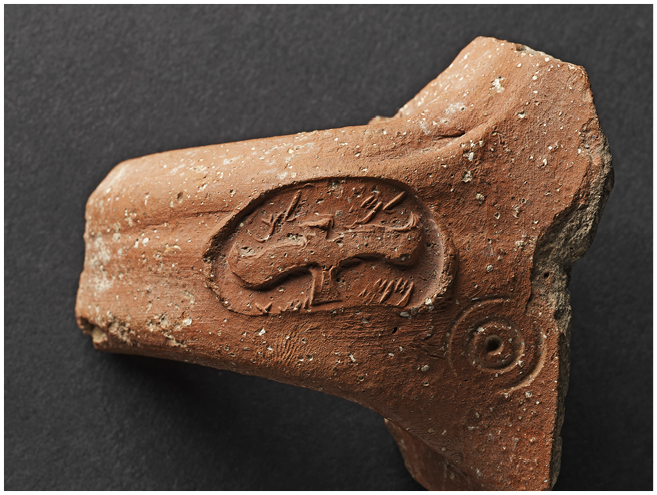
The so-called fiscal bullae also likely recorded royal taxes (see Figure 20). Only three or four are provenanced (Mendel-Geberovich Reference Mendel-Geberovich, Eshel and Langlois2023: 124–125), but at least some of the unprovenanced ones that surfaced before any were found in controlled excavations must be authentic, since it would have been impossible to guess the existence and form of such documents (Heide Reference Heide, Lubetski and Lubetski2015). They contain a date (regnal year), a toponym, and “to the king” (lmlk). They were probably attached to goods sent to Jerusalem.
Fiscal bulla bearing the legend “In the seventh (year / B)ethlehem / (for the kin)g.” Jerusalem; National Campus for the Archaeology of Israel; CSSL Jerusalem 295.
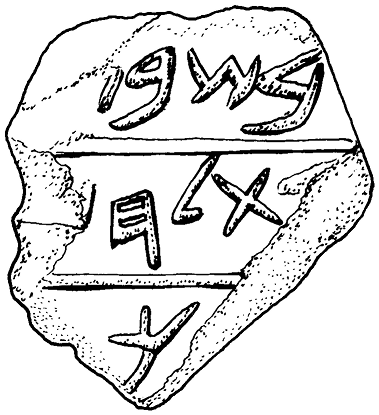
To obtain information about economic exchanges among private individuals, perhaps at local markets, one needs to look at inscribed weights, most of which are from domestic contexts. The nearly 500 inscribed Judean weights, in use already in the eighth but mostly in the seventh century, bear the name of a unit of measure (bqʿ [half Shekel], pym [2/3 Shekel], or nsf [5/6 of a Shekel]), hieratic numerals and, in some cases, a sign meaning “Shekel” (Kletter Reference Kletter1998).
Naturally, Paleo-Hebrew coins were an important element of the economy under the Hasmoneans and in the First Revolt. They seem to have been used to pay soldiers and to generate a profit; the latter function was apparently not applicable during the Second Revolt, during which the use of coins seems to have been more symbolic (Hendin Reference Hendin, Jacobson and Kokkinos2012). In any case, the information coins provide on the ancient economy comes from their metallurgical composition and their metrology rather than their legends.
Pastoralism was also an important activity in ancient Israel and Judah, but inscriptions do not yield much information in this regard. We have already encountered brief mentions of shepherds, sheep-breeders, and a wool-comber (Section 3.1.5). There are rare appearances of animals on provenanced texts (Heide Reference Heide, Aḥituv, Cotton and Morgenstern2021); these include a “horse” (Aharoni Reference Aharoni1981: 124), maybe a “young sheep” or a “lamb,” and a donkey. In the latter case, the animal is actually used for transporting commodities: “Hananiah commands you to Beersheba with the load of a pair of donkeys, and you shall pack them with dough” (HI, 16).
3.3 Historical Geography
When an inscription mentions a toponym, it may contribute to our knowledge of the historical geography of Israel, Judah, or the surrounding countries. In itself, such a mention does not allow us to locate the place in question, but ancient names have often been preserved over the centuries with few phonological and spelling variations, to the point that they are frequently recognizable behind modern Arabic names of villages. The most productive set of Paleo-Hebrew inscriptions in this regard is the Samaria ostraca. They mention eighteen village names and seven names of “clans” or “districts,” situated in the hill country around Samaria, which enables historians to reconstruct a map of the ancient territory of Manasseh in the early eighth century BCE (see, e.g., Richelle Reference Richelle2010: 176–191; Reference Richelle2022a: 396).
Paleo-Hebrew inscriptions also shed light on historical geography in a different way. The mere presence of a Hebrew epigraph on a site does not prove that it belonged to Israel or Judah, because inscriptions could “travel” in the context of trade exchanges. A large number of inscriptions in this script is a more credible hint. These twin observations are illustrated by the case of Horvat ʿUza, where thirty-four Paleo-Hebrew inscriptions have been found, and one Edomite text (Beit-Arieh Reference Beit-Arieh and Beit-Arieh2007): it was a Judean fortress that communicated with Edomites.
The situation becomes more interesting when patterns emerge through numerous findings related to an administrative system. Thus, the geographical distribution of the lkmlk storage-jar stamps sheds light on the history of the territory of Judah in the late eighth and early seventh centuries BCE. In particular, these stamps were numerous in the Shephelah in the last third of the eighth century but virtually disappeared from there afterward. This shows that the Shephelah was controlled by Judah and played an important role in its economy until Sennacherib destroyed most sites of the Shephelah in 701 BCE, after which that region was partly abandoned and Judah’s economic life contracted to the hill country until the late seventh century (Lipschits Reference Lipschits2021: 42–48, 158–159).
4 Historical Events
Do Paleo-Hebrew inscriptions document historical events? At first glance, that does not seem very likely. Such mentions are typically to be sought in monumental inscriptions, and the only such epigraph written in Paleo-Hebrew that contains complete sentences is the Siloam Tunnel Inscription. However, a closer look at the corpus of Paleo-Hebrew inscriptions unveils at least allusions to historical events, both direct and indirect. From a methodological point of view, it is important to acknowledge that such interpretations are generally based on a comparison with biblical accounts and other sources (such as Neo-Assyrian texts). The inscriptions rarely function as independent testimonies that would, on their own, suffice to establish the historicity of the events in question. Rather, once they are set against the backdrop of a chain of events known through the Hebrew Bible and other sources, they can be construed as presupposing a specific event or referring to it. In the following examples, we will start with the Iron Age, then move to the Roman period.
4.1 Accession to the Throne of a Judean King
Arad inscription 88, an ostracon from the end of the seventh century BCE (HI, 98–100), differs from all the other texts found in the fortress. The beginning of three lines is preserved:
ʾnk.mlkty.bk[ I have become king over/in/with/when…
ʾms.zrʿ.w[ strengthen the arm…
mlk.msrym.l[ the king of Egypt to…
It is tempting to complete line 1 with “over all Judah” (bk[l yhwdh]), “over all Israel” (bk[l ʿrṣ Yšrʾl]), or “over the land” (bk[l ʿrṣ]) but that remains conjectural (see the discussion in HI, 98–99). Given the dating at the end of the seventh century BCE, the king in question might be Jehoahaz son of Josiah (cf. 2 Kgs 23:31). The new sovereign might be asking the commander to strengthen his troops (line 2) in order to confront the Egyptian king (line 3), who had just killed the preceding Judean king, his father (cf. 2 Kgs 23:29).
This ostracon could be a copy of a royal, monumental inscription, since the same practice is attested in Egypt (Haring Reference Haring and Verhoeven2015). Yet some Egyptian parallels suggest another possible explanation. Four administrative ostraca, from the Nineteenth and the Twentieth Dynasties, mention the death and/or the accession to the throne of a Pharaoh (Dorn Reference Dorn, Collier and Snape2011: 167–168). The event can be casually mentioned in routine administrative records, but also in a report. For example, an ostracon from Deir el-Medina states that a scribe announced the death of Seti II, then records a daily log of absences. Another ostracon narrates that a vizier came to Deir el-Medina and read out a letter announcing the accession to the throne of Ramses VI (Dorn Reference Dorn, Collier and Snape2011: 160). The letter, or rather an excerpt of it, is cited: “Neb-Maat-Re [Mery-Amen] Amen(-her)-khepeshef Ramesses Mery-Amen, god and ruler of Heliopolis, l.p.h. has arisen as a great ruler of every country.”Footnote 32 A similar situation may lie behind the Arad ostracon: an official from Jerusalem may have come to the Judean fortress to share the news that Jehoahaz had been enthroned.
4.2 The Edomite Threat
Arad ostracon 24 (HI, 47–53) also alludes to an interesting historical situation. It conveys a “word from the king” (dbrb hmlk) to Elyashib, perhaps the commander of the fortress. He is to send troops to Ramath-Negeb, where they will be under the supervision of “Elisha, son of Jeremiah.” The royal order is to be obeyed “on your life” and is motivated by two clauses: “lest anything happen to the city” and “lest Edom should go there.”
This perceived need to protect Ramath-Negeb from the Edomites is best interpreted against the backdrop of the geopolitical situation ca. 600 BCE (Richelle Reference Richelle2017). The Negeb was likely used by Judeans and Edomites in the seventh century for peaceful trade exchanges in the context of the pax Assyriaca, but Judean kings added to Arad a chain of fortresses to protect the southern frontier of Judah: Ḥorvat ʿUza, Ḥorvat Radum, Tel ʿAroer, Ḥorvat ʿAnim, Tel Malḥata, and Tel ʿIra. They evidently anticipated a possible offensive from Edom, which, according to biblical texts, did take place in the early sixth century (2 Kgs 24:1–2Footnote 33; Ezek 25:12–14; 35; 36:5; Obad 10–16; Joel 4:19; see also Ps 137:7; Lam 4:21–22). Strikingly, the Rekabites told Jeremiah that “when King Nebuchadnezzar of Babylon came up against the land, we said, ‘Come, and let us go to Jerusalem for fear of the army of the Chaldeans and the army of Edom’”Footnote 34 (Jr 35:11). This fear of the Edomites echoes that expressed by the king of Judah in Arad ostracon 24.Footnote 35
4.3 Lachish before the Babylonian Invasion
In Lachish letter 3 (already discussed in Section 3.1.4), Hoshaiah reports that “the commander of the army, Coniah the son of Elnathan, has gone down to go to Egypt” and that Coniah commandeered a certain official and his men from Arad, perhaps to accompany him to Egypt. Such contacts with Egypt are not surprising given that there was a long history of diplomacy between Judah and that country. The trip made by an official to Egypt is also reminiscent of an oracle in which Ezekiel criticizes Zedekiah, king of Judah, for “sending ambassadors to Egypt, in order that they might give him horses and a large army” (Ezek 17:15). According to Jer 37:5–10, the king of Egypt did come to help Zedekiah against the Babylonians, and the prophet predicted that the Egyptian ruler would soon retreat (Jer 37:5–10). It does not seem too much of a stretch to read the ostracon against that background, even though the specific nature of Coniah’s trip to Egypt remains unknown.
In Lachish ostracon 4 (HI, 314–319; see Figure 21), an unnamed soldier writes to a superior, “the fire-signal (mšʾt) of Lachish we are keeping watch according to all the signals which my lord gave, because we cannot see Azekah.” During Nebuchadnezzar’s invasion, Lachish and Azekah were “the only fortified cities of Judah that remained” (Jer 34:6). Azekah had a strategic role because it could spot the arrival of an army in the coastal plain. The fire-signal system, also mentioned in Jer 6:1, served for communications between military outposts and fortresses that were out of sight from each other (such as Lachish and Azekah) thanks to a third site.
The visible graphemes of Lachish letter 4 as seen today (obverse and reverse).
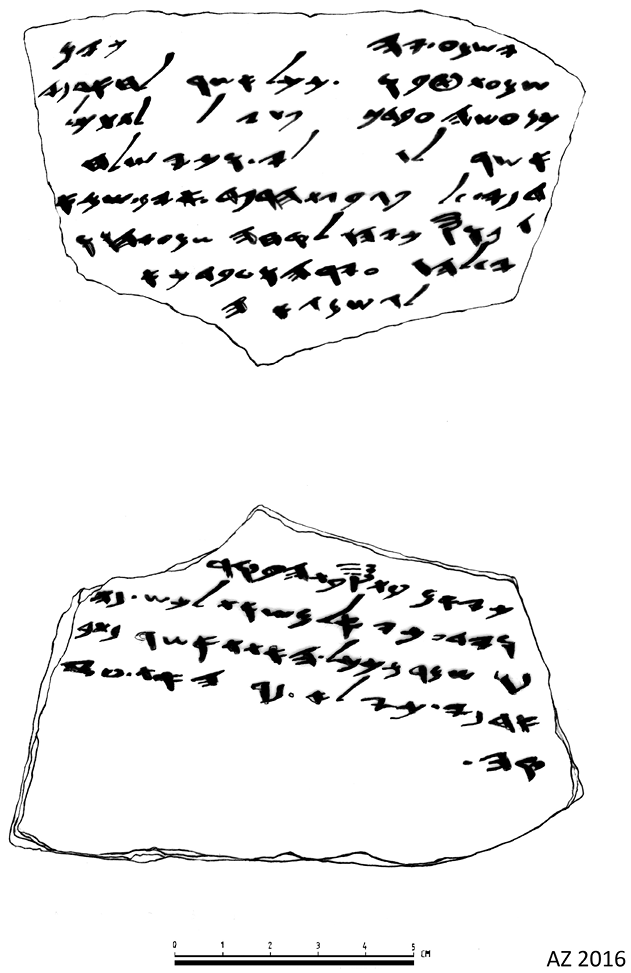
Finally, according to Zammit (Reference Zammit2024: 262), a soldier laments in Lachish letter 6 that “the words of the [king] are not good (enough) to weaken the hands of the Chaldaeans,” which, again, points to the same historical context.
4.4 Israelite Tribute or Booty in Mesopotamia
Perhaps the most tantalizing illustrations come not from Israel or Judah but from Mesopotamia. During excavations in Nimrud (biblical Calah) in 1850, two bronze bowls bearing ownership marks in Paleo-Hebrew and paleographically dated to the first half of the eighth century BCE were found in Fort Shalmaneser: “belonging to Aḥiyaw” (lʾḥyw) and “belonging to Malkiyaw […ʾ…]” (lmlkyw […ʾ…]) (HI, 395–396). The divine component -yaw is typical of names from the kingdom of Israel. These objects were stored in a room containing approximately 150 bronzes originating from the Levant, an accumulated tribute or booty received or taken by Assyrian kings in the second half of the eighth century BCE. The two bronze bowls with Paleo-Hebrew inscriptions were most likely part of a tribute sent from Israel (or possibly Judah) to Assyria, unless they were plundered by Assyrian soldiers when they annexed part of Israel (ca. 732 BCE) or its entirety (ca. 720).
A century later, excavations in the same palace uncovered three ivory plaques inscribed with the same script (HI, 392–395) and dated to the second half of the eighth century BCE. The most interesting text contains three fragmentary lines, with a mention of a “great king” (mlk gdl) in line 2. But it is unclear whether it refers to an Israelite or Assyrian king, or if it is part of the phrase “from the great king [to the commoner]” (see HAE III, 130). Here again, these objects were part of a larger set of ivories likely accumulated as tribute from Levantine kings, or booty, and those inscribed in Paleo-Hebrew likely came from Israel.
In all likelihood, these inscribed objects would never have been found in Nimrud if Assyria had not subjected Israel to vassal status or invaded it. In that sense, these texts provide indirect testimonies for these upheavals in the history of Israel. This echoes a situation that we have encountered in Section 2.3.1: Hebrew names in Paleo-Hebrew on the edge of a few cuneiform tablets are traces of Judean exiles in Babylonia in the sixth century BCE.
4.5 Israelite Migrants in Judah
Another kind of migration indirectly attested by some Paleo-Hebrew inscriptions is that of Israelites fleeing to Judah ca. 720 BCE, as the Assyrians attacked their country. Their Israelite origins show in the use of the component yw (yaw) in their names. Indeed, among the 799 personal names found on Paleo-Hebrew provenanced inscriptions, Golub (Reference Golub2014: 631–633) reckons 224 names with the component yhw, all from Judah and its immediate vicinity, and none from Israel; and 38 names with yw, all found on sites controlled by Israel except for three persons: Ywʿzr (on the Murabbaʿat papyrus), Ywkn (WSS 663, seal found at Beth-Shemesh), and Ywbnh (WSS 676–678, seals from several Southern sites). These exceptions may be the names of Israelites who took refuge in Judah when the Assyrians conquered Samaria ca. 720 BCE.
Among them is the patronym of a certain Menahem, which was spelled differently on the three seals on which it appears: Yawbanah (Ywbnh), Yobanah (Ybnh), and Yahubanah (Yhwbnh). In fact, the third seal was engraved with Ybnh and the letters he and waw were subsequently squeezed into vacant spaces. This correction suggests a deliberate alignment to the typical Judean form of name (Schniedewind Reference Schniedewind2024: 89–92). The multiplicity of the son’s seals and the fact that their impressions were found in important administrative centers (Jerusalem, Lachish, Ramat Rahel, and so on) show that he had a high status in Judean society. He may have been a refugee from Israel who wanted to assimilate to his new Southern context.
4.6 Jewish Revolts
Our last example of historical events referred to in Paleo-Hebrew inscriptions comes from the Roman period. The coins minted by Jewish leaders during the First and Second Jewish Revolts (respectively, 66–74 and 132–135 CE) conveyed political and religious messages in various ways, including through their materiality: iconography, size, and metallurgical composition (not only bronze but also silver). The inscribed legends themselves contributed in a major way. This is demonstrated not only by the fact that Paleo-Hebrew was used or by the patriotic slogans taken on their own, but also, more subtly, in the variations over time, from one revolt to another, and even from year to year during the First Revolt.
For example, the presence or absence of certain words speaks volumes to the historian (Hendin Reference Hendin, Jacobson and Kokkinos2012: 127, 130–131). The name Zion was used during the first war but not the second, likely because it referred to Jerusalem seen as the city of the Temple, which had been destroyed in 70 CE, a major, dramatic event. On the other hand, the fact that a leader, Simon Bar Koseba, had his name written on coins is in line with the common practice in the Hellenistic and Romans periods (Hasmonean rulers had done the same), but the absence of such a name on coins from the First Revolt is striking. It is probably due to the fact that Jews were divided into various factions. The name Jerusalem in lieu of a minting authority may have served to symbolize an ideal unity or simply the place of minting.
Similarly, changes over time seem to reflect historical developments. In the first year of the First Revolt, we find the slogan “(for the) freedom of Zion,” but in the fourth, it becomes “for the redemption of Zion.” This is interpreted in two opposite manners by historians (Hendin Reference Hendin, Jacobson and Kokkinos2012: 129–130). Some see it as a consequence of Simon bar Goriah (a leader of the revolt) taking control of Jerusalem in the meantime. Others see it as a consequence of the Roman victories in many other places, which may have led to a change in expectations among Jews, assuming that “redemption” points to a deliverance from oppression through violence or to a more spiritual hope.
5 Religious Beliefs and Practices
The area of life in ancient Israel and Judah that elicits the most interest and debate among historians is certainly that of religious beliefs and practices.Footnote 36
5.1 Deities
The obvious point of entry is the identity of the deities that were worshipped in ancient Israel and Judah. Two kinds of evidence are worth examining here: the mentions of such divine beings on inscriptions and theophoric names, that is, names that include a divine name as a component.
The first line of inquiry leads to a striking observation: the overwhelming dominance of Yhwh. Provenanced Paleo-Hebrew inscriptions from the eighth to the sixth century BCE contain dozens of references to Yhwh – forty in the concordance of HI (784–785), a rough estimate that has not significantly altered since its publication. The name is almost always spelled yhwh, whether in Israelite or Judean inscriptions. Exceptions are yh in two Khirbet Beit Lei graffiti (though in one case it is immediately followed by yhwh); perhaps yw in what may be a votive inscription, lyw, “to Yaw,” on a jar shoulder from Megiddo (but that is very unusual; see HI, 353–354); yhw on the rim of a stone basin from Kuntillet ʿAjrud (inscription 1.2; Aḥituv, Eshel, and Meshel Reference Aḥituv, Eshel, Meshel and Meshel2012: 76–77).Footnote 37
By contrast, other deities are rarely mentioned independently (i.e., outside theophoric names), if ever. According to several scholars, an ostracon from ca. 700 BCE found in Jerusalem bears the phrase “ʾEl creator of the earth” (HI, 240–241). However, the divine name in [ʾl] qn ʾrṣ is reconstructed.Footnote 38 As tempting as it is, especially because the same formula exists in Phoenician and Aramaic (see also Gen 14:19), it does not fit the context, which is a list of personal names. More realistic possibilities exist, including [z]qn ʾrṣ, “elder of the land,” see Jer 26:17; Prov 31:23 (HAE III, 198; Lemaire Reference Lemaire2024: 48–49), which might be a title given to one of the listed persons.
A couple of other alleged occurrences of ʾEl are based on erroneous readings or very uncertain interpretation (Lemaire Reference Lemaire2024: 48); similarly, the reading “Gracious God” (ʾl ḥnn) on a Kuntillet ʿAjrud pithos (HI, 296) has been disproved by photographs (Aḥituv, Eshel, and Meshel Reference Aḥituv, Eshel, Meshel and Meshel2012: 99).
The sole possible occurrences of the names ʾEl and Baʿal in a provenanced text found in a site controlled by Israel are found in a literary text on a plastered wall at Kuntillet ʿAjrud (inscription 4.2; Aḥituv, Eshel, and Meshel Reference Aḥituv, Eshel, Meshel and Meshel2012: 110). However, it is a text written in the Phoenician script, and while it has been argued that its language was the Hebrew spoken by a Judean (Aḥituv, Eshel, and Meshel Reference Aḥituv, Eshel, Meshel and Meshel2012: 126), there are good arguments in favor of the idea that it is the Phoenician language (Blum Reference Blum2013: 29–30; Lemaire Reference Lemaire2013: 94–99). Finally, the goddess Asherah might be mentioned in several inscriptions (see Section 5.4).
Theophoric names confirm the same dominance of Yhwh in the Hebrew onomasticon while nuancing it a little. Methodologically, they need to be studied with caution. First, the choice of a name cannot be regarded as a straightforward reflection of the parents’ religious ideas, since other aspects may feature in that choice, such as a euphonic ring (as is the case today when parents choose a name). Moreover, parents giving a Yahwistic name to a child may well have worshipped Yhwh alongside other divinities, and if they gave, say, Baʿalistic names to his or her brothers and sisters, we have no means of knowing it. Nevertheless, statistics compiled from a relatively large sample may reveal some trends, especially if the distribution of divine components is strongly uneven. Second, as mentioned above, the component baʿal is ambiguous; for instance, the name Eshbaʿal (a son of Saul, cf. 1 Chr 8:33) can theoretically mean “man of Baʿal” or “man of the Lord” with reference to Yhwh. Third, certain names contain divine appellatives such as ʾb, father, ʾḥ, brother, or ʾdn, lord, which are equivocal as regards the god thus qualified. For instance, ʾḥyqm means “My (divine) brother has arisen,” but the name does not make it clear in itself whether the divine brother in question is Yhwh or another deity.
With these caveats in mind, let us consider the data (see Tigay Reference Tigay1986 for a seminal study). Golub (Reference Golub2017: 40) reckons that among the 285 theophoric names from monarchic Judah attested in Paleo-Hebrew inscriptions, 77% are Yahwistic (74% with yhw, 2% with yh, 1% with yw), 13% have ʾEl as a component, 9% use divine appellatives, and only 1% are other divine names. Among the 54 theophoric names from Israel, 59% are Yahwistic (always with yw), 19% use baʿal, 15% use ʾEl, 7% use divine appellatives, and 2% use other deities. In passing, Asherah is not among the other deities from either country. Comparing the names from the ninth and eighth centuries to the names from the seventh and sixth centuries in Judah, Golub further points out “a very clear onomastic evolution in archaeology: yhw grows from 51% to 79% while all of the other elements decrease: ʾl drops from 21% to 12%, divine appellatives drop from 15% to 8%, and other divine names disappear altogether” (Reference Golub2017: 41).
Because the main trends are so sharp, they can safely be interpreted in terms of religious history: Yhwh’s dominance is evident both in Israel and Judah, and even more so in Judah during the late royal period.
5.2 Divine Attributes
Theophoric names yield additional information thanks to the divine attributes they contain, expressed by way of verbs, epithets, and divine appellatives. A maximalist approach would regard them as theological statements that reflect the beliefs and devotion of parents. To take but a few examples, one finds names meaning “Yhwh is (my) king” (mlkyhw) “Yhwh is gracious” (ḥnnyhw), “Yhwh is (my) light” (ʾwrywh), and “Yhwh will restore” (ʾlyšb) (see HI, 584–622 for a list of attested names and their meanings). The most popular verbal roots in Judah were šlm (“to keep safe, replace”), nḥm (“to comfort”), šwb (“to turn, restore”), and šmʿ (“to hear”). Some of them might be reactions to divine help in relation to childbirth, if they mean, for instance, that the revered deity has kept the mother safe during the birth, or “replaced” a deceased child, or comforted the parents by giving them a child (Golub Reference 83Golub2021: 71). However, that is just a possibility, and we should avoid overinterpreting the limited data we have about childbirth (Bird Reference Bird2026). Moreover, as we have seen, several factors may have played a role in the choice of a name, and in any case, the names represent religious snippets that cannot be added up to create a systematic theology.
Strikingly, the pools of Hebrew roots used for names in Israel and Judah overlap only in a limited way, with a mere 23% of shared roots (Golub Reference 83Golub2021: 68). Moreover, the diversity of roots is significantly higher in Israel than in Judah (in relative proportion to the number of attested names), which some interpret as a reflection of a more cosmopolitan society (Vishne et al. Reference Vishne, Golub, Piasetzky, Finkelstein and Sober2025).
5.3 Cultic Places and Objects
It remains difficult to find references to cultic places in Paleo-Hebrew inscriptions. Arad ostracon 18 (HI, 37–41), a letter to Elyashib, mentions that somebody is “staying in the house of Yhwh (byt yhwh).” This is not a reference to the temple that was uncovered inside the fortress, since it ceased to function a century beforehand, ca. 700 BCE. Perhaps it refers to the temple of Jerusalem.
Nevertheless, indirect hints of the presence of cultic places materialize in the word “holy” (qdš), which appears on some vessels from Arad, Beersheba, and Beth Shemesh (Lemaire Reference Lemaire2024: 52–55). While this is not surprising in Arad, where a temple has been uncovered, it is especially interesting in the case of Beth Shemesh, where no temple has been discovered yet, and in the case of Beersheba, where remnants of an altar have been found but no building has been identified as a sanctuary.
In addition, the syntagms “Yhwh of Teman” and “Yhwh of Samaria” (see Section 5.4) likely presuppose the presence of local sanctuaries, even though the specific towns are difficult to specify (notably because Samaria is the name of a city and of a region).
It has often been proposed to interpret the lists of names in Arad inscription 49 (HI, 77–80) in the context of temple activities, for example, as a record of rations for priests, but it could simply be a record of agricultural products (Vainstub Reference Vainstub2024: 92–94).
5.4 Religious Discourses
As it happens, the most frequent form of religious discourse in Paleo-Hebrew epigraphy is that of blessings and, to a lesser extent, prayers and curses.
All these kinds of texts appear in the inscriptions dated to the late monarchic period and written on walls of the antechamber of a burial cave at Khirbet Beit Lei (HI, 125–132). Some are simple curses (“cursed,” ʾrr), sometimes with a specification (“cursed be the one who would erase…”). Others are prayers, such as “Attend, Yh, gracious God! Acquit, Yh, Yhwh!” or “Save, O Yhwh!” Finally, one inscription is a theological statement, but it is so difficult to read that various translations have been proposed. The most widely accepted is: “Yhwh is the God of all the earth; the mountains of Judah belong to the God of Jerusalem” (see EP, 233–235).
Many scholars (e.g., HI, 125) regard the Khirbet Beit Lei inscriptions as graffiti scratched by refugees fleeing the Babylonians, which would make them spontaneous expressions of piety. Mandell and Smoak (Reference 86Mandell and Smoak2016), however, contend that they are an integral part of the making of the tomb: they “identify the tomb as belonging to the spatial realm of the god of Jerusalem and the mountains of Judah” (240), they “delineate the space between the antechamber and the interior tombs,” and they “serve an apotropaic function for those laid to rest at the site” (243). This is another protective aspect of funerary inscriptions (see the discussion on the Royal Steward inscription in Section 2.2.1).
Blessings also appear on two silver amulets found in a burial cave at Ketef Hinnom and dated ca. 600 BCE (HI, 263–275). One is very difficult to read but seems to contain the following phrases:
…the covenant and lovingkindness to those who love him [and] keep…eternity… and from evil for in him (?) is redemption. For Yhwh [wi]ll restore us… May Yhwh bless [and k]eep you. [May] Yhwh shine [his] fac[e] up[on you]…
The other reads:
…to/for Yhw[h]… May Yhwh bless you and keep you. May Yh[w]h shine his face [upon] you and [may] he give you pea[ce]…
The blessing formulas are very similar to the Priestly Blessing of Num 6:24–26. Smoak argues that the amulets “condense and abstract temple ritual so that temple ritual could be transposed to a portable space on the body” of the deceased (Reference Smoak2019: 441). Through the discourse on the enduring relationship between the deceased and Yhwh, “writing reveals the relational side of death” (Suriano Reference Suriano2018: 130).
The most fascinating discoveries are the texts found at Kuntillet ʿAjrud. Alongside several inscriptions in the Phoenician script, a variety of Paleo-Hebrew texts have been found. The most relevant here are three ink inscriptions written on two pithoi, that is, large storage jars (Aḥituv, Eshel, and Meshel Reference Aḥituv, Eshel, Meshel and Meshel2012: 87–100; see Blum Reference Blum2013: 43–47 and Leuenberger Reference Leuenberger, van Dijk-Coombes, Swanepoel and Kotzé2021 for improved readings). Two are messages, likely written as scribal exercises (Schniedewind Reference Schniedewind2019a: 35–37). The most complete is found on pithos B (translation based on Aḥituv, Eshel, and Meshel Reference Aḥituv, Eshel, Meshel and Meshel2012: 95):
Message of Amaryaw: Say to my lord, are you well? I bless you to Yhwh of Teman and his Asherah (brktk lyhwh tmn wlʾšrth). May he bless you and may he keep you, and may he be with my lord […]
The fragmentary message appears on pithos A; it contains a variant of the preceding blessing: “I bless you to Yhwh of Samaria and his Asherah” (brkt ʾtkm lyhwh šmrn wlʾšrth).
On pithos B, a similar blessing formula is followed by what seems a theological statement about Yhwh’s generous benevolence (translation based on Blum Reference Blum2013: 45):
1. […I bless you] to Yhwh of Teman and his Asherah.
2. He grants everything a man asks of him. And if he has no bread, he gives him as much as he needs.
As it happens, a tomb inscription at Khirbet el-Qôm includes comparable formulas: “blessed was ʾUriyahu by Yhwh, and from his enemies by his Asherah (lʾšrth) he has delivered him (…)” (HI, 409).
These inscriptions have sparked important debates regarding two aspects. First, the specifications “Yhwh of Teman” and “Yhwh of Samaria” are often interpreted in terms of multiple manifestations of the same god, Yhwh, in connection to local sanctuaries. However, similar phrases, such as “Ishtar of Nineveh” and “Ishtar of Arbela,” designate distinct deities in ancient Near Eastern texts, as appears in the ways they are treated when they are both cited in the same text. This raises the possibility that the relevant Paleo-Hebrew inscriptions attest a form of polytheism, although the absence of a text mentioning both “Yhwh of Teman” and “Yhwh of Samaria” does not provide the same kind of clear-cut evidence (Allen Reference Allen2015).
Second, the phrase generally rendered by “to (or by) Yhwh and his Asherah” (lyhwh wlʾšrth) is much disputed. This translation assumes that the final -h in ʾšrth is a suffix referring back to Yhwh (“his”), but personal names never take pronominal suffixes in Biblical Hebrew (although it happens in Ugaritic). The goddess Asherah is unattested in first-millennium BCE epigraphy (except in South Arabic). In the Bible, most occurrences of asherah designate a sacred pole, not a deity (exceptions include Judges 3:7). Scholars who regard these objections as decisive prefer alternative interpretations: “Yhwh and Asherata” (another name form of Asherah; Hess Reference Hess2025), “Yhwh and his sacred pole” (Lemaire Reference Lemaire2024), or “Yhwh and his sanctuary” (Sass Reference Sass2014). This is not the place to delve into the complexity of the debate, but when all is said and done, every interpretation suffers from at least one significant drawback. It is noteworthy, though, that three of the four interpretations presuppose a relationship to the goddess, either directly or indirectly since the sacred pole is often regarded as a stylized tree that symbolizes Asherah.
In the end, while the Hebrew Bible already paints a multifaceted picture of religion in ancient Israel and Judah, inscriptions have the advantage of offering concrete snapshots, found in situ and unedited, which at times echo the biblical narrative, but also raise fresh questions.
6 Literacy
The last aspect of life in ancient Israel and Judah that we will consider is literacy. Typical questions are the following: Who was able to read and write in ancient Israel and Judah, when, where, and what kind of documents? The purpose of the following is not to provide all the answers to these questions, which would require a lengthy discussion (for further references, see Richelle Reference Richelle, Keimer and Pierce2022b), but to show how Paleo-Hebrew inscriptions contribute to the debates. As we shall see, they inform most approaches to literacy (Section 6.1), and they prove especially helpful in discussions on the spread and rate of literacy among the population (Section 6.2), and on the origins and production of Hebrew literature (Section 6.3). This applies to the royal period; for later times, Aramaic inscriptions are more relevant.
6.1 The Importance of Inscriptions for Literacy Studies
The crucial importance of inscriptions is patent in that they inspire and inform most of the scholarly approaches to literacy. Elsewhere (Richelle Reference Richelle2024), I have described a typology of these approaches depending on whether they are based on:
(a) the quantity of discovered inscriptions, with fluctuations over periods that would help in tracing the spread of literacy and striking differences between media that would reflect actual uses of them;
(b) the geographical distribution of findings and their diverse settings, regarded as hints about the dissemination of writing in a country and in various contexts, whether public, professional, or private;
(c) data external to the epigraphic record about writing, such as biblical references to writing or comparative evidence, especially from Egypt and Mesopotamia, which are used to extrapolate to the situation in the Levant;
(d) inherent features of the inscriptions, such as scribal conventions in their script and orthography, the presence of cursive features, or their multimodality, that is, properties of inscription that make them “speak” even to non-literate people; these aspects are regarded as hints of, respectively, standardized scribal training, the practice of fast-writing on papyrus, and the use of inscriptions for a wider audience;
(e) contextual data that could help “predict” literacy, whether a sufficient level of development of a society (regarded as a condition of possibility for the emergence of literature) or the proliferation of literate people in a given period, assessed on the basis of the number of hands behind inscriptions on some sites (and regarded as a context favorable to the production of literature).
Apart from (c) and partly (e), these approaches stem from interpretations of the Paleo-Hebrew epigraphic record or attempts to contextualize it. As will be evident in the following discussion (see also Richelle Reference Richelle2024), some approaches prove helpful whereas others are misguided or require qualifications.
6.2 The Spread of Literacy
In order to understand and describe the spread of literacy, scholars rely particularly on the distribution of inscriptions in time and space.
6.2.1 Chronological Distribution
Paleo-Hebrew inscriptions first appear in the early ninth century, and their number dramatically increases from the eighth century. This quantitative observation seems corroborated by, and is partly due to, a qualitative change. Whereas people had been using personal seals for centuries, it is apparently only from the eighth century that they started using inscribed seals. Before that, the seals only bore iconography. Admittedly, the correlation between the use of an inscribed legend and literacy skills is not straightforward. Anepigraphic seals were used to seal written documents on papyrus (and goods). Moreover, they were still used centuries after inscribed seals had been introduced, including to seal papyri (e.g., Keel Reference Keel2017: 452, no. 385; 436, no. 352), and nothing proves that they were reserved for non-literate people. An analogy can be drawn with storage-jar stamp impressions: inscribed seals gave way to anepigraphic seals in the second half of the seventh century BCE, and nobody infers from this fact that the rate of literacy decreased in that period. Conversely, it is not entirely certain that the owner of an inscribed seal was literate, beyond perhaps the ability to read his or her name. Nevertheless, the appearance of written legends in the eighth century seems difficult to understand if it is not the result of a wider access to literacy, likely connected to the growth of the bureaucracy. Moreover, the high number of inscribed seals in the late decades of the royal period is often seen as reflecting an even higher rate of literacy.
That being said, it is probably best to think in terms of a gradual increase, with possible periods of acceleration, rather than sudden explosions of literacy. First, the chronological distribution of findings is artificially tilted toward late periods, because “only the last phase of a building’s occupation and the remains of the last decades of a prosperous town yield many finds” (Millard Reference Millard and Biran1984: 305), and in Judah, the most important destructions happened in the late eighth and early sixth centuries. This obviously affects the sites that yielded the most substantial sets of inscriptions, namely Arad, Lachish, and Jerusalem, which all succumbed to the Babylonian invasions in the early sixth century BCE. Thus, the Lachish letters archives were found in destruction layers (Herzog Reference Herzog2002: 48–49). Similarly, the fact that only bullae subjected to fire are preserved explains why most of them, in Jerusalem, date from the very end of the royal period.
Second, numbers require interpretation: the majority of Israelite inscriptions actually belong to a single set of inscriptions, namely the Samaria ostraca, which were written by a handful of scribes (Faigenbaum et al. Reference Faigenbaum-Golovin, Shaus, Sober, Turkel, Piasetzky and Finkelstein2020) in a couple of years; they do not point to widespread literacy in Israel throughout the eighth century, most years of which have not, in fact, left a single inscription. Third, only the distribution of certain kinds of texts can be traced, because virtually all the documentation on perishable media (papyrus, plaster, and possibly wax tablets) is lost.
While these qualifications do not change the likelihood that literacy spread mostly during the eighth to the sixth century, they do show that quantitative approaches to literacy are of limited use (Richelle Reference Richelle2024); they often do not meet the minimal requirements for statistical analysis.
6.2.2 Geographical Distribution and Settings
The geographical distribution of inscriptions is also uneven, and the more so if one considers the different media. Thus, military contexts (Judean fortresses) are overrepresented in the preserved documentation, which suggests either that officers had literacy skills or that they had easy access to scribes. The former seems more likely because the letters in the small Arad fortress were written by at least six distinct persons (Faigenbaum-Golovin et al. Reference Faigenbaum-Golovin, Shaus, Sober and Finkelstein2016). But this mostly concerns ostraca. Most ostraca are found on (relatively) minor sites, whereas the bulk of Judean bullae found during excavations come from Jerusalem and Lachish. This leads Garfinkel and Mendel-Geberovich to hypothesize that
the distribution of ostraca and that of bullae are mutually complementary and compensatory. It was in the two major centres of the kingdom, Jerusalem and Lachish, that the holders of the highest bureaucratic positions were active. They wrote on expensive papyrus and used their seals to seal them. On the other hand, at minor sites and in the kingdom’s periphery papyrus was harder to come by and therefore minor officials working there wrote on potsherds, available in abundance in any ancient site.
While this sounds basically correct, it is important to remember that only certain kinds of papyri were sealed. Moreover, a fine-tuned description would require differentiating between the bullae attached to incoming papyri and those attached to local documents meant to be archived in the town where they were written, not to mention bullae that were attached to goods. As already noted (Section 2.2.3), only bullae that had been fired were preserved. If a bulla is found broken (i.e., with its two clay layers separated), it means that the papyrus was unsealed and, therefore, that it had been received from elsewhere if it was a letter, though not necessarily if it was a clerical document. If a bulla is found complete, it is equivocal: either it was still attached to the papyrus when that papyrus burned (which suggests that the document had been archived), or the papyrus was opened by cutting the cord (which happened mostly for incoming documents). This last situation occurred with seventeen bullae kept in a sealed juglet at Lachish (Goren and Arie Reference Goren and Arie2014: 156). This suggests that most of the papyri that were potentially sealed by the twenty-three bullae found in that city (Garfinkel and Mendel-Geberovich Reference Garfinkel and Mendel-Geberovich2020: 166) had actually been written elsewhere. Unfortunately, this kind of information is not always available, so our current descriptions are incomplete.
More generally, because inscriptions are found on many sites scattered over the territories of Israel and Judah, the geographical distribution of findings is often regarded as a hint that literacy was relatively widespread in these countries, at least from the eighth century. In addition, the variety of findspots point to public and professional, but also private settings. However, strictly speaking, what is certain is that writing was widespread; to say more, a qualitative analysis is necessary. Indeed, the underlying question is: Who exactly wrote the texts, since their findspots do not necessarily correspond to the place where they were written?
6.2.3 Scribes and Literacies
There is a relatively broad consensus that only a small fraction of the population was literate in any meaningful sense, as in other ancient societies, since literacy required significant training, and inscriptions from the eighth to the sixth century display paleographical and orthographical conventions that presuppose a standardized curriculum (Rollston Reference Rollston2010: 91–114). Most scholarly discourse has generally focused on (professional) scribes, regarded as specialists of writing. However, recent research highlights the fact that other professions, such as artisans, likely required some literacy skills (Mandell Reference Mandell2023).
Several situations may point to writers who were not professional scribes: when the very crafting of an object included the addition of an inscription (e.g., seals and amulets), when the text was incised on pre-fired pottery, or when it displays crude handwriting (unless that is due to a medium that is hard to inscribe). In the case of messages, one sometimes wonders whether the text was written by the sender or whether he or she used a scribe. The former may be true of Hoshaiah, the military official who is offended at the suggestion by his superior that he cannot read a letter, and replies: “By the life of Yhwh, no one has tried to read a letter to me – ever!” (Lachish letter 3, cf. Section 3.2.1). The latter may be the case for the Meṣad Ḥashavyahu ostracon, which is a plea addressed by a harvester (cf. Section 3.2.1).
As already mentioned in Section 2.1.3, Schniedewind (Reference Schniedewind2023, Reference Schniedewind2024) argues that writing was a skill that people learned within a community of practice because it was required for a defined profession. In his view, before the late first millennium BCE, there were no “professional scribes” in the abstract: “writing was a skill used in a profession – like a metalsmith, a midwife, a potter, or a bureaucrat. Writing was not the profession in itself, at least in Israel” (Reference Schniedewind2024: 16). By drawing the attention of epigraphers to the concrete social contexts in which literate people learned and used their skills, including writing, Schniedewind offers a helpful corrective, as scholars too often speak of “scribes” in the abstract, irrespective of the inscription they are considering. On the other hand, it cannot be considered as certain that writing could never itself be the trade of a profession in Israel or Judah, as it was, according to most scholars, in Egypt, Mesopotamia, or Ugarit. Even if we assumed that professional scribes were always attached to an entity such as, for instance, the government or a temple (as opposed to being freelance), it is not certain that they were necessarily also, or primarily, a secretary, a priest, a Levite, or something else. At the very least, more research is needed to better understand the social contexts of those who acquired high levels of literacy and the ability to produce literary works (such as those comprising the Hebrew Bible).
While the current debates about the notion of scribes continue, qualitative studies of literacies seem a promising direction for future investigations, as has been done for Hellenistic and Roman epigraphy, although multiplying subcategories (signature literacy, commercial literacy, and so on) is not necessarily fruitful (Richelle Reference Richelle2024: 119–121).
6.3 Hebrew Literature
Can the modest corpus of Paleo-Hebrew inscriptions help us understand when and how Hebrew literature was produced? The answer is a qualified “yes.”
6.3.1 Epigraphic Literary Texts
First, a few literary texts are preserved on Paleo-Hebrew inscriptions. Some have already been discussed in Section 5.4. While modest in length, they are remarkable snippets that are suggestive of a much wider world of literary activity. For example, the Ketef Hinnom amulets prove that the Priestly Blessing found in Num 6:24–26 already existed ca. 600 BCE. That does not mean that the amulets contain citations of the biblical passage (which may have been written later): both the biblical and the epigraphical texts likely use preexisting liturgical formulas. But these amulets bear the oldest attestations of formulas that came to be part of the Hebrew Bible.
We have also mentioned the ostracon found at Horvat ʿUza that is potentially literary (cf. Section 2.2.4). Why write a literary text on such a medium? The same practice was frequent in Egypt, and it seems to have served at least two purposes: making copies of monumental texts or drafting works that would later be written on other media (Haring Reference Haring and Verhoeven2015). At the very least, the fact that a literary text seems to have been first written in a military outpost suggests that we should be wary of preconceptions such as the notion that the production of literature was virtually entirely restricted to the capital of the kingdom.
This is also shown, in the case of Israel, by the literary texts from Kuntillet ʿAjrud. From the same site, inscription 4.6.1, written with ink on a plastered wall, is unfortunately too fragmentary to put forward an assured interpretation (see Blum Reference Blum2013: 39–43 for readings and a tentative reconstruction). Its very existence, however, is significant, as it shows that literary texts on plaster, best illustrated in the Deir ʿAlla inscriptions (EP, 433–465), were also written by Israelites.
6.3.2 The Conditions of Possibility for the Production of Literature
Second, the available data suggest that literary texts in the Hebrew language could have been written from the early first millennium BCE, whether in Phoenician or in Early Alphabetic, and, from the ninth century, in Paleo-Hebrew. Some biblical scholars and archaeologists have argued that the very limited number of inscriptions from the early royal period is a hint that literature was not produced in Israel before the ninth century and in Judah before the eighth century. In fact, some believe that literacy was extremely limited in Judah before that (Finkelstein Reference Finkelstein2020). Yet there is a broad consensus among epigraphers about the fact that Israelites and Judeans were able to produce literary works before these dates (e.g., Lemaire Reference Lemaire and Schmidt2015a; Richelle Reference Richelle2016; Rollston Reference Rollston, Gadot, Zelinger, Cytryn-Silverman and Uziel2017).
Indeed, the “absence of evidence” argument is particularly unconvincing here, not only because the uneven distribution of findings over time is partly accidental but also because the absence of the relevant medium for that discussion, that most used for literary texts (i.e., papyrus) is a well-understood phenomenon, due to its perishable nature. In fact, except for a fragment of papyrus (cf. Section 2.2.2), that medium is entirely absent from the epigraphical record of Judah until the Hellenistic period, which includes periods in which there is no doubt that it was abundantly used, as shown by seals and bullae, and also because most biblical literature was produced and copied before then.
In addition, positive, albeit indirect evidence that papyrus was used in Judah in the early first millennium exists. Anepigraphical bullae with imprints of papyrus lines on their rear, dated to the tenth and ninth centuries on the basis of their iconography, have been found among the 180 bullae discovered near the Gihon spring, in Jerusalem; clay analysis of bullae from that set points to a local production (Richelle Reference Richelle2024: 116). As for Israel, Paleo-Hebrew inscriptions show, from the start (i.e., the early ninth century BCE), cursive features that result from a long practice of fast-writing on papyrus.
None of this proves that literature was produced in the tenth or ninth centuries, but it does show that the conditions that made it possible were present. A few scribes using papyrus are enough to write long, literary texts; contrary to what is sometimes argued (Faigenbaum-Golovin et al. Reference Faigenbaum-Golovin, Shaus, Sober and Finkelstein2016), proliferation of literacy is not a precondition for the production of such texts (Richelle Reference Richelle2024: 116–118; Kletter Reference Kletter2025). In Mesopotamia and in Greece, to mention but two examples, many literary works were written even though the rate of literacy was very low.
6.3.3 Inscriptions and the History of the Hebrew Language
Third, linguistic features of Paleo-Hebrew inscriptions from the eighth to the early sixth century align them with Standard Biblical Hebrew (SBH), which roughly corresponds to most prose texts in Genesis to Kings, as opposed to Late Biblical Hebrew (LBH), found in texts such as Chronicles, Ezra-Nehemiah, or the Hebrew sections of Daniel (Hendel and Joosten Reference 84Hendel and Joosten2018: 60–72; see Gogel Reference Gogel1998 for a detailed description of the grammar).
With a lot of caution, this provides SBH with an anchor in the absolute chronology, which would, in turn, suggest that Genesis to Kings contain substantial textual layers whose first redaction comes from the royal period. That being said, linguistic dating is a much-debated approach, and Paleo-Hebrew inscriptions cannot tell us exactly when the transition from SBH to LBH started, nor how much time that process took. What seems clear is that the bulk of Paleo-Hebrew inscriptions predate that transition.
6.3.4 Scribal Training
Fourth, and finally, Paleo-Hebrew inscriptions shed some light on the training of scribes. Not only are certain inscriptions scribal exercises, but the paleographical and orthographical conventions that appear on many texts point to a standardized curriculum, as already noted. In a stone inscription from Jerusalem, the same name (Blṭh) is written twice, first by the trained hand of a master, and second by the remedial hand of an apprentice (Rollston Reference Rollston, Lundberg, Fine and Pitard2012). Similarly, on Pithos B from Kuntillet ʿAjrud, abecedaries are written, in red by a master and in black by one or several apprentices (Schniedewind Reference Schniedewind2019a: 28–29). It is possible that the plaster inscriptions found at the same site served in the context of an advanced curriculum for scribes destined to write literature (Schniedewind Reference Schniedewind2019a: 158–164). However, most of them are written in the Phoenician script, and those in Paleo-Hebrew are extremely fragmentary. Generally speaking, to reconstruct the scribal training from its most modest forms to advanced education, the contribution of Paleo-Hebrew has to be supplemented by comparative evidence from other cultures and other Semitic corpora (Schniedewind Reference Schniedewind2019a: 141–164).
Conclusion
This Element opened by showing that the modern rediscovery of the Paleo-Hebrew script has been a slow process and that scholars took much time before ascribing to Paleo-Hebrew inscriptions the status of a distinct subfield of Northwest Semitic epigraphy (Section 1). Even today, long after the corpus has considerably grown, most scholarly works on the history of ancient Israel and Judah only discuss a few iconic inscriptions dating from its heyday in the eighth to the sixth century BCE and the relatively brief windows of time when it served political purposes in the Hellenistic and Roman periods. As we have seen in Section 2, the life of the Paleo-Hebrew script proves much richer and more multifaceted than that. It served to write down a striking variety of text genres on a wide array of media for more than a millennium, even though it was not an everyday script anymore after the sixth century BCE. While there is no collection (similar to HI or HAE for the royal period) gathering all the Paleo-Hebrew inscriptions from the Neo-Babylonian to the Roman period, this survey reveals that the script was used in many contexts, which paints a much richer picture than usual descriptions.
By way of selected illustrations in several areas of life of ancient Israel and Judah, this Element has also served as a plea to move beyond the relative neglect of the Paleo-Hebrew corpus and consider the full extent of the information it offers to historians. Granted, the inscriptions are often modest in size and scope, and they offer snapshots rather than narratives, glimpses rather than surveys, hints rather than detailed attestations. And yet, they shed light on a surprising array of spheres including daily life (Section 3), historical events (Section 4), religious practices and beliefs (Section 5), and literacy (Section 6). While it would be an exaggeration to argue that there is not a single aspect of life in ancient Israel and Judah that is not illuminated by Paleo-Hebrew inscriptions, one may say that there is hardly an inscription that does not shed light in some way on one of these aspects. To take the simplest illustration, we have seen that even short inscriptions bearing a mere personal name contribute to the knowledge of the onomasticon and sometimes the prosopography in ancient Israel and Judah – not to mention the development of the script over time. In turn, the onomasticon reveals precious information on the relative popularity of deities in these countries.
Inscriptions sometimes corroborate or illustrate the narratives that came down to us through handwritten transmission – above all, the Hebrew Bible. They clarify historical issues by providing in situ and contemporary evidence. At the same time, even a single sentence on a short inscription may carry the potential to challenge our preconceptions, as shown by the controversy over the phrase often translated as “Yhwh of Teman (or Samaria) and his Asherah.” Paleo-Hebrew epigraphy is at its best when it challenges well-established views and launches debates, which it may do with any new discovery, in any excavation, every year.
Abbreviations
Because this is also a list of the main current editions of Paleo-Hebrew inscriptions, annotations are provided for the convenience of the reader.
- AHI
Ancient Hebrew Inscriptions (Davies Reference Davies1991–2004) [A collection of Paleo-Hebrew texts, mostly devoted to the royal period, although it also includes a few later stamp impressions and some coins; the transcriptions are given without translation, comment, or image; it also contains a concordance, and a synopsis of texts found in AHI, HAE, and WSS.]
- CIIP
Corpus Inscriptionum Iudaeae/Palaestinae (Cotton, Segni, Eck et al. Reference Cotton, Segni and Eck2011; Ameling, Cotton, Eck et al. Reference Ameling, Cotton and Eck2018) [Two volumes belonging to a larger project gathering inscriptions from the fourth century BCE to the seventh century CE, mostly in Greek and Latin, but with a few Paleo-Hebrew texts.]
- CSSL
Corpus of Stamp Seals from the Southern Levant (levantineseals.org) [A database containing descriptions, photos, and drawings of anepigraphical and inscribed seals and seal impressions; it includes, but is not limited to, a digital version of CSSPI; it is not limited to Paleo-Hebrew. The database is provided by the Stamp Seals from the Southern Levant (SSSL) Project.]
- CSSPI
Corpus of Stamp-Seal Amulets from Palestine/Israel [A multi-volume edition of stamped seals, both anepigraphical and inscribed, with photos and drawings; see, e.g., Keel (Reference Keel2017) for vol. 5.]
- EP
Echoes from the Past (Aḥituv Reference Aḥituv2008, based on earlier editions in modern Hebrew) [A selection of Paleo-Hebrew inscriptions from the royal period, alongside a few important texts from Philistia, Aram, and Transjordan; it presents the advantage of containing photos, as well as many drawings; a vocalized version of the transcriptions is provided, and the comments focus on philology.]
- HAE
Handbuch der althebraïschen Epigraphik (Renz and Röllig Reference Renz and Röllig2016) [A collection of inscriptions from the royal period, originally published in 1996 and reprinted in 2016 with a brief appendix; it contains an impressive wealth of information, including sections devoted to paleography, text genres, and grammar; it includes paleographical charts and numerous drawings; inscriptions are presented in chronological order, which is helpful but sometimes makes it complicated to find a particular text.]
- HI
Hebrew Inscriptions (Dobbs-Allsopp et al. Reference Dobbs-Allsopp, Roberts, Seow and Whittaker2005) [The reference collection in English, it contains all the texts from the royal period available at the time of completion, provided they contain at least one legible word; the volume contains no photos or drawings but useful appendixes on personal names, inscribed weights, seals, and bullae that do not appear in WSS, and a concordance.]
- NHI
The National Hebrew Script (Yardeni Reference Yardeni2018) [A posthumously published selection of inscriptions from the royal period, with images and drawings; it also includes some Early Alphabetic and Phoenician texts.]
- HSS
Hebrew Stamp Seals (hebrewseals.com) [A database containing provenanced seals and seal impressions from the Iron Age in Paleo-Hebrew; it includes, but is not limited to, the provenanced items from WSS, with the same photos but in high resolution.]
- PHDSS
Paleo-Hebrew Dead Sea Scrolls (paleohebrewdss.com) [A database serving as a companion to Perrot and Richelle (Reference Perrot, Richelle, Attia and Perrot2022), it contains paleographical tables allowing a comparison of the script of Paleo-Hebrew Dead Sea scrolls, paleographical charts of the letterforms of each scrolls, and fonts.]
- WSS
Corpus of West Semitic Stamp Seals (Avigad and Sass Reference Avigad and Sass1997) [This remains the reference collection of seals and bullae in the Paleo-Hebrew, Phoenician, Aramaic, Ammonite, Moabite, and Edomite scripts; it includes photos of most items, sometimes a drawing; many items are unprovenanced.]
Acknowledgments
I am grateful to Mahri Leonard-Fleckman, Christopher Hays, and Brent Strawn for inviting me to write this Element in the ANEWB series and for their help and encouragement. Thank you in particular to Chris for his careful editing and comments. I would also like to thank the anonymous reviewers for their helpful comments, which enabled me to improve the manuscript. Many thanks to my wife, Sarah Mullen (Richelle), for checking the English of this Element and for her patience when I think of ancient inscriptions while watching a series with her.
I am grateful to all those who kindly provided me with illustrations and gave me permission to reproduce them or helped me secure permission: Ava Clark, Felicity Cobbing, Yosef Garfinkel, Eythan Levy, Amihai Mazar, Kris J. Udd, Christophe Uehlinger, Kristen Vagliardo, and Abigail Zammit. Many thanks to Felicity for her precious help during my visit to the Palestine Exploration Fund in London. The views expressed in this Element are solely my own.
Finally, this Element would not have been possible without the excellent research conditions I enjoy, thanks to my colleagues, at the Faculty of Theology and Religious Studies and the Research Institute “Religions, Spiritualities, Cultures, Societies” of UCLouvain.
Christopher B. Hays
Fuller Theological Seminary
Christopher B. Hays is D. Wilson Moore Professor of Old Testament and Ancient Near Eastern Studies at Fuller Theological Seminary, and a Research Associate of the University of Pretoria, South Africa. He has served as the U.S. State Department Educational and Cultural Affairs Annual Professor at the Albright Institute of Archaeological Research in Jerusalem, and as President of the Pacific Coast Region of Society of Biblical Literature. Hays is the author of Hidden Riches: A Textbook for the Comparative Study of the Old Testament and the Ancient Near East (2014), The Origins of Isaiah 24–27 (2019), and Death in the Iron Age II and in First Isaiah (2011). He holds a PhD in Hebrew Bible from Emory University, an MA in Egyptology from UCLA, and an MDiv from Princeton Theological Seminary. hays@fuller.edu
Brent A. Strawn
Duke University
Brent A. Strawn is D. Moody Smith Distinguished Professor of Old Testament and Professor of Law at Duke University and McDonald Distinguished Fellow in Law and Religion at Emory University’s Center for the Study of Law and Religion. He has edited over thirty volumes to date, including the award-winning volumes The Oxford Encyclopedia of the Bible and Law (2015) and The World Around the Old Testament: The People and Places of the Ancient Near East (2016). He has authored over 300 articles, essays, and contributions to reference works, as well as seven books, most recently Unwavering Holiness: Pivotal Moments in the Book of Isaiah (2025, with Walter Brueggemann). He sits on several editorial boards and served as translator and editor for both the Common English Bible (2011) and the New Revised Standard Version updated edition (2022). In 2023, Strawn was awarded a grant from the National Endowment for the Humanities. bstrawn@div.duke.edu
Kristine H. Garroway
Hebrew Union College
Kristine Henriksen Garroway is Professor of Hebrew Bible at the Hebrew Union College in Los Angeles. She is the author of Children in the Ancient Near Eastern Household (Eisenbrauns, 2014) and Growing Up in Ancient Israel: Children in Material Culture and Biblical Texts (Society of Biblical Literature, 2018), which won the Biblical Archaeological Society’s 2019 Publication Award for Best Book Relating to Hebrew Bible. Her latest book is The Dying Child: The Death and Personhood of Children in Ancient Israel (Oxford, 2025). She has also co-edited three volumes and two special journal issues, and contributed widely to academic and public-facing scholarship.
About the Series
The Ancient Near Eastern World and the Bible Elements series explores the field of ancient Near Eastern studies and its developments in an approachable, holistic, and integrated way, focusing on intersections with the Bible and biblical studies. The ancient Near East (ANE) encompasses a vast temporal and geographical terrain, including the peoples and cultures, history and religion that gave rise to and shaped the biblical texts. The ANEWB series explores these areas, providing thorough overviews and introductions to a host of ANE topics, organized into four major streams that include “Peoples and Empire,” “Social History,” “Religion,” and “Texts,” with the primary focus on those materials that are of greatest significance to understanding ancient Israel and the biblical world. In the series, scholars make the latest and best scholarship available in highly accessible ways, introducing readers to the essentials of the topic in question while also conveying distinctive viewpoints and capturing new developments.