Introduction
Risk perceptions about marijuana use have changed over the past decade in the USA. Data from the 2002 to 2014 US National Survey on Drug Use and Health (NSDUH) show that the proportion of adult respondents (aged 18+ years) who perceived regular (once or twice a week) marijuana use as having great risk of harm decreased from 50.4% in 2002 to 33.3% in 2014 (Compton et al., Reference Compton, Han, Jones, Blanco and Hughes2016). Another study based on 2002–2012 NSDUH data found that the decrease in risk perception was significant regardless of past-year marijuana use/non-use, but past-year non-daily and daily use were negatively associated with perceived great risk of regular cannabis use (Pacek et al., Reference Pacek, Mauro and Martin2015). Lower risk perceptions may be due to marijuana's changing legal status (29 US states had laws allowing marijuana use for at least some medical purposes, and eight states and Washington, DC, had laws allowing marijuana use for recreational purposes in 2017), increased marijuana availability due to commercialization, increasing numbers of marijuana users, increased medical marijuana registration (a significant share by older adults), and increased frequency of use among users (Schuermeyer et al., Reference Schuermeyer2014; Okaneku et al. Reference Okaneku, Vearrier, McKeever, LaSala and Greenberg2015; Wen et al., Reference Wen, Hockenberry and Cummings2015; Compton et al., Reference Compton, Han, Jones, Blanco and Hughes2016; Fairman, Reference Fairman2016; Martins et al., Reference Martins2016; Hasin et al., Reference Hasin2017).
Among adolescents, lower marijuana risk perception was found to be associated with a higher use rate and intention to use in the near future (Lopez-Quintero and Neumark, Reference Lopez-Quintero and Neumark2010). Marijuana use has also been found to contribute to incrementally lower risk perceptions among adolescents over time, showing a possible reappraisal of risk perception among users (Grevenstein et al., Reference Grevenstein, Nagy and Kroeninger-Jungaberle2015). A qualitative study of marijuana risk perception formation among substance using veterans (aged 24–65 years) also found that (1) these adults based their risk perceptions on personal experience rather than scientific knowledge; (2) a majority viewed marijuana as significantly different from other drugs because they saw it as safe, non-addictive, lacking physical withdrawal symptoms, and as having less overt behavioral effects; and (3) only a minority recognized marijuana's capacity to cause negative social consequences; act as a precursor to other, more harmful substance use; and cause paranoia or worsen psychosis (Wilkinson et al., Reference Wilkinson, van Schalkwyk, Davidson and D'Souza2016).
Over the past decade, marijuana use has increased among all age groups of adults, especially older adults, in the USA (Hasin et al., Reference Hasin2015; Compton et al., Reference Compton, Han, Jones, Blanco and Hughes2016). From 2003 to 2014, NSDUH shows that past-year use rates rose from 2.95% to 9.08% among the 50–64 age group and from 0.15% to 2.04% among the 65+ age group (Salas-Wright et al., Reference Salas-Wright2017). Though use rates among the 50+ age group have increased, more of those aged 50+ years than younger adults still perceive marijuana use as having great risk of harm (Okaneku et al., Reference Okaneku, Vearrier, McKeever, LaSala and Greenberg2015; Pacek et al., Reference Pacek, Mauro and Martin2015). However, risk perceptions differ substantially between older marijuana users and non-users. NSDUH data from 2006 to 2013 show that only 5.0% of past-year marijuana users aged 50+ years perceived regular marijuana use to be of great risk (Han et al., Reference Han, Sherman, Mauro, Martins, Rotenberg and Palamar2017). A qualitative study of baby boomer (1946–1964 birth cohort) marijuana users also found that these users consider marijuana to be a safer alternative to other substances and that they used harm-reduction strategies (e.g. moderation of quantity and frequency of use) to minimize negative effects on their social functioning (Lau et al., Reference Lau, Sales, Averill, Murphy, Sato and Murphy2015).
With increasing marijuana use among those aged 50+ years, more research is needed to examine whether older marijuana users’ risk perceptions are associated with their use patterns (e.g. use frequency, medical vs. recreational use), marijuana use disorder, other substance use/use disorders, and experience of other problems (e.g. driving under the influence (DUI)) associated with marijuana use. A majority of older marijuana users are long-term users who initiated use early in life, and they are also more likely than non-users to have had mental and substance use disorders (Choi et al., Reference Choi, DiNitto and Marti2016a). Following alcohol, marijuana is the second most frequently used substance by older adults who report DUI (Choi et al., Reference Choi, DiNitto and Marti2016b). Older marijuana users have a higher rate of overall injury than non-users, leading to a higher rate of emergency department (ED) visits (Choi et al., Reference Choi, Marti, DiNitto and Choi2017). Older ED trauma patients who screened positive for marijuana (or cocaine) also had significantly higher odds of intensive care admission and surgery than those who screened negative (Lank and Crandall, Reference Lank and Crandall2014).
In the present study, we examined marijuana use risk perception among (1) the general population aged 50+ years and (2) past-year marijuana users aged 50+ years. As used in other studies, drug outcome expectancy theory (Leventhal and Schmitz, Reference Leventhal and Schmitz2006) provides a conceptual framework for this study. Outcome expectancy theory posits that drug-taking behavior is motivated by the desire to attain particular outcomes associated with drug consumption. For example, people use marijuana expecting to enhance positive outcomes (e.g. feeling, a sense of relaxation, pleasure, cognitive enhancement, stress, and pain relief) and to cope with and attenuate negative emotions (e.g. depression and anxiety). Older adults who attribute these positive outcomes to marijuana use may be those who continue to use it, use it more often, and are not likely to perceive great risk from using it. On the other hand, marijuana users who may have experienced negative outcomes (e.g. from marijuana use disorder or other marijuana-attributable dangerous behaviors like DUI) may be more likely to perceive risk of using it. Study hypotheses were: (H1) Compared to never marijuana users, prior to past-year users and past-year users will be less likely to perceive moderate/great risk from regular marijuana use; and (H2) among past-year users, those with marijuana use disorder will be more likely, while frequent users and medical marijuana users (who tend to be more frequent users (Choi et al., Reference Choi, Marti, DiNitto and Choi2017)), will be less likely to perceive moderate/great risk. Based on significant correlates of marijuana use and risk perception in previous studies (e.g. Pacek et al., Reference Pacek, Mauro and Martin2015; Han et al., Reference Han, Sherman, Mauro, Martins, Rotenberg and Palamar2017), covariates were sociodemographic factors, including residence in states with medical marijuana laws (MLL); past-year other substance use/use disorders; major depressive episode (MDE); self-rated health; and past-year DUI. This study's findings may provide further insights into correlates of marijuana risk perception among the 50+ age group, the age cohort with the highest increase in marijuana use rates.
Methods
Data and sample
Data are from 2013 to 2015 NSDUH public use files. The annual NSDUH series measures the prevalence of substance use among the civilian, non-institutionalized, US population aged 12+ years (Inter-university Consortium for Political and Social Research (ICPSR), 2016). Questions about substance use and mental disorders and related treatment are also asked of respondents aged 18 years and older. A detailed description of NSDUH's complex multi-stage stratified sampling design is available from Center for Behavioral Health Statistics and Quality (2016). Survey respondents were interviewed in private at their place of residence using audio computer-assisted self-interview, computer-assisted personal interview, and computer-assisted self-interview to provide respondents with highly private and confidential means of responding to questions and to increase the level of honest reporting of illicit drug use and other sensitive behaviors (ICPSR, 2016).
To increase the study's power to detect low frequency events (e.g. great risk perception among marijuana users), we combined three years of data. While some questions in the 2015 NSDUH regarding some substances were changed from those asked in 2013 and 2014 (e.g. subtypes of hallucinogens, inhalants, and prescription drugs, definition of misuse of prescription drugs), the variables selected for this study were the same for all three survey years—marijuana use, risk perception, first age of use, and use frequency; marijuana and alcohol abuse or dependence; and nicotine dependence.
The total number of respondents completing the survey was 55,160 in 2013, 55,271 in 2014, and 57,146 in 2015. The present study focused on the 24,057 respondents aged 50+ years from these three years, of whom 14,454 were 50–64 years and 9,603 were 65+ years. (The NSDUH public use data files do not provide chronological age to protect respondents’ anonymity.)
Measures
Marijuana risk perception: All respondents were asked: “How much do people risk harming themselves physically and in other ways when they smoke marijuana (1) once a month and (2) once or twice a week?” Response categories were no risk, slight risk, moderate risk, and great risk. We describe risk perceptions for using once a month (occasional use) and once or twice a week (regular use) but focused on regular use in multivariable analysis.
Marijuana use status was measured with questions about lifetime use (“have you ever, even once, used”), leading to identification of never users, prior-to-past-year users (former users), and past-year (within the past 12 months) users. For marijuana use patterns, we examined age of first use, frequency of use (total number of days used in the past 12 months), and any medical marijuana use (“Was any of your marijuana use in the past 12 months recommended by a doctor or other healthcare professional?”).
Past-year marijuana and alcohol abuse or dependence were determined using Diagnostic and Statistical Manual of Mental Disorders, 4th edition (DSM-IV) criteria. Nicotine dependence was determined based on Fagerstrӧm test scores (Heatherton et al., Reference Heatherton, Kozlowski, Frecker and Fagerstrom1991).
Other covariates: Sociodemographic characteristics included age group (50–64 years and 65+ years), gender, race/ethnicity, marital status, educational level, income, and residence in MML states at the time of interview. Health status was measured with self-ratings of health (excellent/very good, good, or fair/poor). Past-year MDE was assessed with DSM-IV criteria during the worst/most severe period of time, lasting two weeks or longer, in the past 12 months (yes = 1, no = 0). Lifetime MDE (including past-year episode) was also determined using DSM-IV criteria. For past-year DUI, respondents were asked, “During the past 12 months, have you driven a vehicle while you were under the influence of (1) a combination of alcohol and illegal drugs used together, (2) alcohol/alcohol only; or (3) illegal drugs only?” An affirmative answer to any of these questions was coded as 1 (= yes vs. 0 = no to all).
Analysis
All analyses were conducted with Stata/MP 15’s svy function to account for NSDUH's multi-stage, stratified sampling design. For this study, adjusted person-level analysis weights were created by dividing the final person-level analysis weights by the number of years of pooled data (three in the current study) following NSDUH guidelines for combining sampling weights across multiple survey years. All estimates presented in this study are weighted except sample sizes. First, χ 2 tests and bivariate logistic regression were used to compare never users, former users, and past-year users aged 50+ years on their sociodemographic and clinical characteristics and their marijuana risk perceptions. Second, χ 2 tests and bivariate logistic regression was used to compare risk perceptions of non-medical versus medical users. Third, multivariable logistic regression analysis was used to test H1 (associations between risk perceptions and marijuana use status) and H2 (associations between risk perceptions and marijuana use patterns and problems). While previous studies have focused on great risk, we dichotomized the outcome variable into moderate/great risk versus no/slight risk for multivariable analyses. Given that only 58 marijuana users aged 50+ years (including only two men and three women aged 65+ years) perceived great risk, using great risk as a separate category would have fallen below a recommended 10:1 threshold for outcomes to variable ratios outlined in Hosmer et al. (2013). Our sensitivity analysis with moderate and great risk perceptions as separate categories showed that the pattern of results for the moderate and great risk responses were generally consistent. Potential significance of the survey year (2013, 2014, or 2015) was tested in preliminary models, but finding no significant effect, it was excluded from the final models. Logistic regression results are presented in odds ratios (OR) or adjusted odds ratios (AOR) and 95% confidence intervals (CI). Statistical significance was set at p < 0.05.
Results
Sample characteristics by marijuana use status
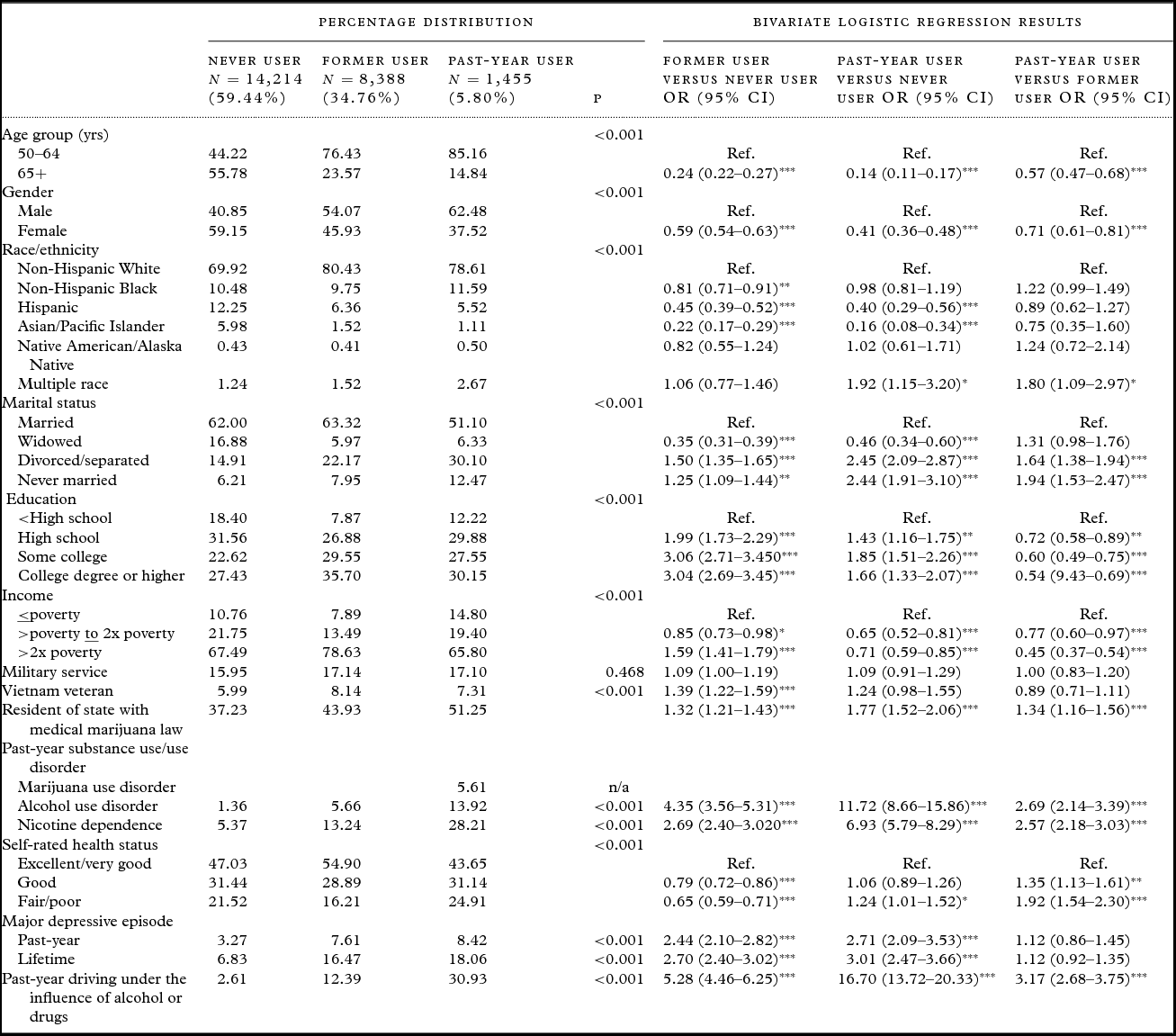
Table 1 shows that of those aged 50+ years, 34.8% were former and 5.8% were past-year marijuana users. (Past-year use rates increased from 4.9% in 2013 to 6.1% in 2014 and 6.3% in 2015, F[2.00, 219.85] = 4.48, p = 0.012). Compared to never users, former and past-year users were less likely to be in the 65+ age group, female, racial/ethnic minorities, and widowed; however, they were more likely to be divorced or never married, have had higher education, have income above 200% of poverty, and live in MML states. Former and past-year users were also more likely than never users to have alcohol abuse/dependence and nicotine dependence, had past-year/lifetime MDE, and reported DUI. Former users were less likely but past-year users were more likely to have rated their health fair/poor. Compared to former users, past-year users were less likely to be in the 65+ age group, female, and to have had higher education and income higher than poverty; however, they were more likely to be divorced or never married, live in MML states, and to have alcohol abuse/dependence and nicotine dependence, and reported DUI.
Sociodemographic, health, and mental health characteristics of the 50+ age group by marijuana use status (%)

Note: Probability values for percentage differences in percentage distributions among never users, former users, and past-year users were calculated using design-based F tests (i.e. a corrected, weighted χ 2).
***p < 0.001; **p < 0.01; *p < 0.05.
Risk perception by marijuana use status
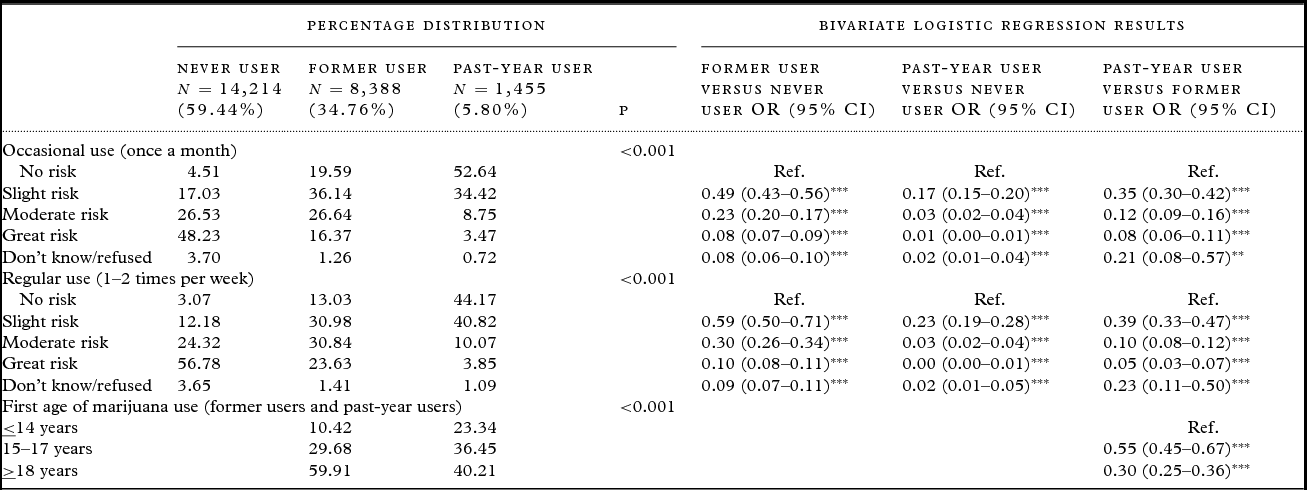
Table 2 shows that compared to 3.1% of never users and 13.0% of former users, 44.2% of past-year users perceived no risk from regular use. On the other hand, compared to 56.8% of never users and 23.6% of former users, only 3.9% of past-year users perceived great risk from regular use. Additional analysis showed that the 3.9% rate of great risk perception among past-year users aged 50+ years was higher than the 2.9% and 3.1% rates of great risk perception among past-year users in the 18–24 and 25–34 age groups, respectively, but it was not significantly higher than the 3.4% rate of past-year users in the 35–49 age group (p = 0.068). Table 2 also shows that compared to 10.4% of former marijuana users, 23.3% of past-year users began using on/before age 14.
Marijuana use risk perceptions among the 50+ age group by marijuana use status

Note: Probability values for differences in percentage distributions among never users, former users, and past-year users were calculated using design-based F tests (i.e. a corrected, weighted χ 2).
***p < 0.001; **p < 0.01; *p < 0.05.
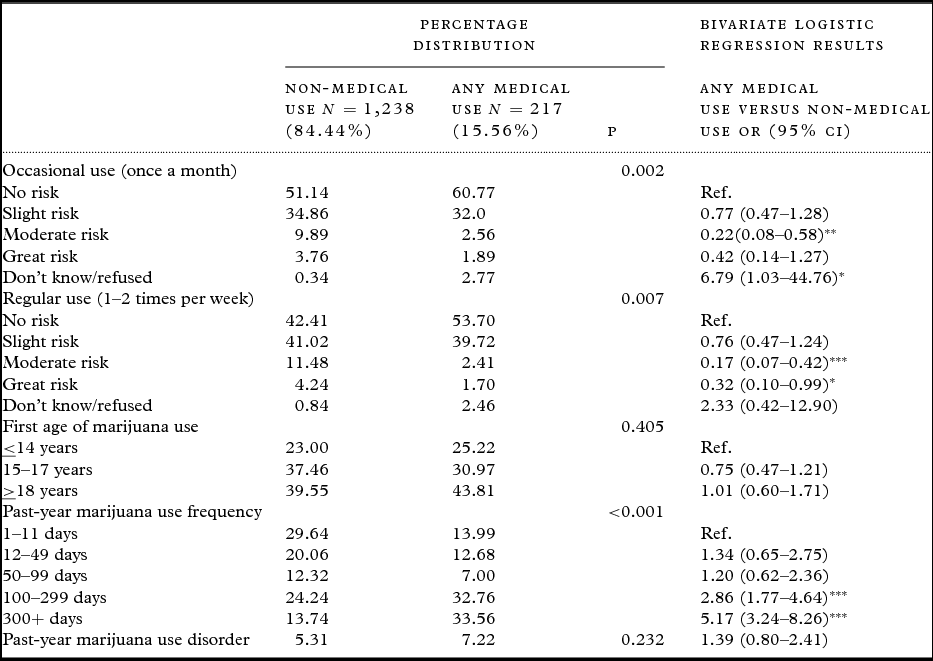
Table 3 shows that of past-year users, medical users (i.e. those who reported using all or any marijuana recommended by healthcare professionals; 15.6% of past-year users) were significantly less likely than non-medical users to perceive moderate and/or great risk. Further analysis also showed that higher frequency users had lower risk perceptions, though risk perceptions did not differ between those with and without marijuana use disorder. However, larger proportions of high-frequency users with marijuana use disorder (14.4% of the 300+ day users and 23.2% of 100–199 day users) than high-frequency users without the disorder (3.1% of the 300+ day users and 5.9% of 100–199 day users) had moderate/great risk perception (p < 0.001).
Marijuana use risk perceptions and use patterns of past-year marijuana users aged 50+

Note: Probability values for differences between medical and non-medical users were calculated using design-based F-tests (i.e. a corrected, weighted χ 2).
***p < 0.001; **p < 0.01; *p < 0.05.
Of all past-year users, 42.4% used on 100+ days, with medical users having significantly higher odds of having used on 100+ days than non-medical users. Medical and non-medical users did not differ on their marijuana initiation ages or on rates of marijuana use disorder (5.6% for all past-year users). Further analysis also showed that those who reported all their use to be medical (70.7% of any medical users and 11% of past-year users) did not significantly differ from the rest of the users on marijuana initiation ages and rates of marijuana use disorder. In addition, medical and non-medical users did not differ on past-year nicotine dependence. As expected, higher proportions of those with marijuana use disorder than those without used on 300+ days (36.6% vs. 15.7%, p < 0.001) and had alcohol abuse/dependence (24.3% vs. 13.3%, p = 0.016), were dependent on nicotine (17.4% vs. 12.6%, p < 0.001), and reported DUI (48.9% vs. 29.9%, p = 0.011).
Correlates of risk perception
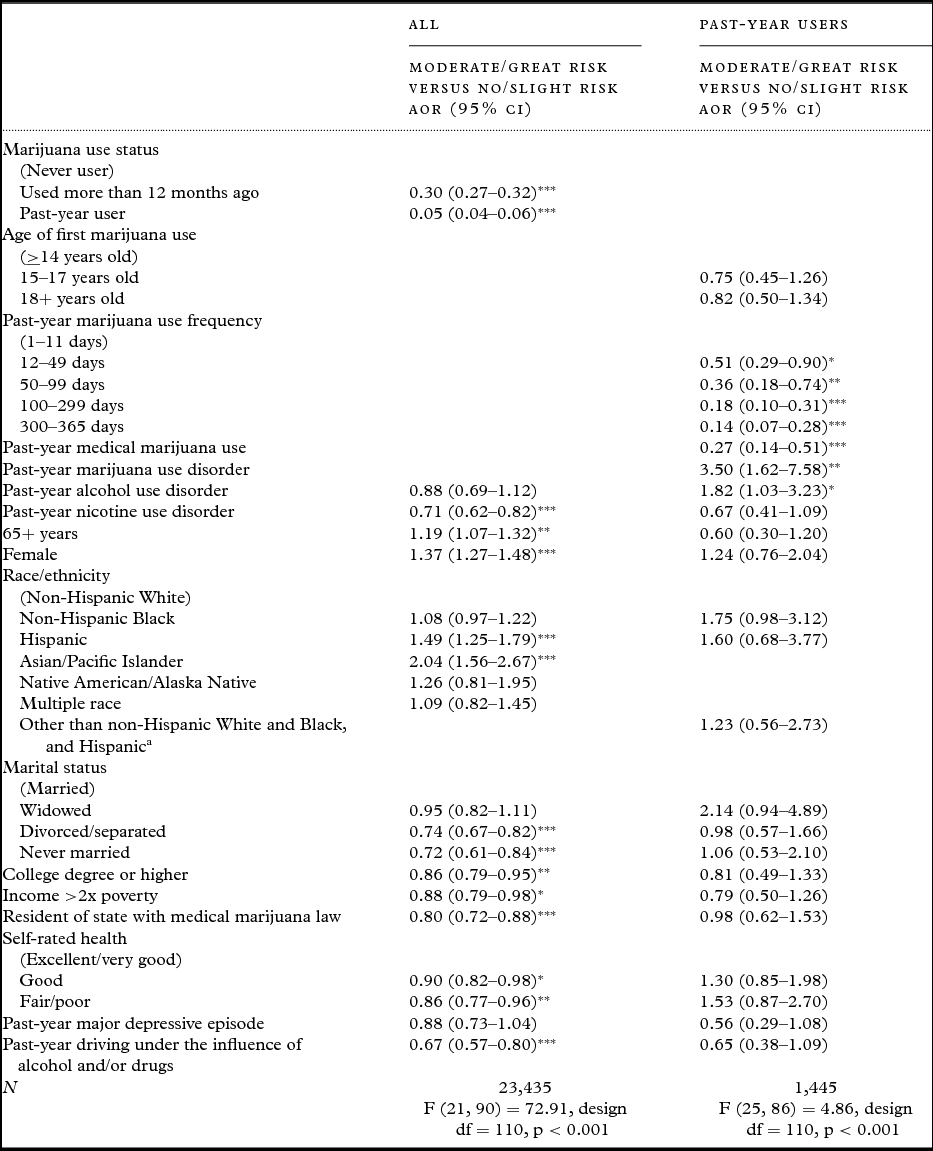
The second column of Table 4 shows that compared to never users, former users (AOR = 0.30, 95% CI = 0.27–0.32) and past-year users (AOR = 0.05, 95% CI = 0.04–0.06) had significantly lower odds of moderate/great risk perception (as opposed to no/slight risk perception). Of significant covariates, the 65+ age group, women, Hispanics, and Asians had higher odds of moderate/great risk perception, while divorced/never married individuals and those with a college degree, income >2 times poverty, good or fair/poor self-rated health, residence in MML states, past-year nicotine dependence, and past year DUI had lower odds of moderate/great risk perception.
Correlates of marijuana risk perception of the 50+ age group

a Because the number of Asian/Pacific Islanders, Native American/Alaska Natives, and people of multiple races were too small to calculate odds separately, we combined these groups.
***p < 0.001; **p < 0.01; *p < 0.05.
The third column of Table 4 shows that among past-year users, higher marijuana use frequency (AOR = 0.14, 95% CI = 0.07–0.28 for 300+ days of use compared to 1–11 days of use) and any medical marijuana use (AOR = 0.27, 95% CI = 0.14–0.51) were associated with lower odds of moderate/great risk perception, while past-year marijuana use disorder (AOR = 3.50, 95% CI = 1.62–7.58) and alcohol use disorder (AOR = 1.82, 95% CI = 1.03–3.23) were associated with higher odds. Marijuana initiation age was not a significant factor in risk perception. Sociodemographic characteristics and other covariate were not significant.
Discussion
Given increasing numbers of older-adult marijuana users, this study examined whether US older adults’ marijuana risk perceptions are associated with their marijuana use status, use patterns, and related problems. Multiple data sources have shown that risk perceptions are higher among older than younger adults in the general population and lower among marijuana users than non-users. Our findings confirmed that marijuana use, either prior to past year or in the past year, and more frequent use among users were associated with lower odds of moderate/great risk perception among the 50+ age group. However, of past-year users aged 50+ years, those with marijuana use disorder were three times more likely than those without the disorder to perceive moderate/great risk. These findings mostly support study hypotheses.
Lower risk perceptions among older-adult marijuana users than non-users may stem from the following: (1) Older users tend to be long-term users, and their low risk perception may result from their experience as such. (2) Long-term users may have learned how to use harm reduction strategies such as moderating use to minimize harms (Lau et al., Reference Lau, Sales, Averill, Murphy, Sato and Murphy2015). (3) Older frequent users may consciously or unconsciously minimize negative effects to rationalize their frequent use. Although support for legalizing marijuana use is up to 60% among all US adults, the rate among the 55+ age group is 45% (Swift, Reference Swift2016). Older users may still be sensitive to negative reactions to their use from their non-using peers and other non-users and may remain cautious about disclosing their use to them (Lau et al., Reference Lau, Sales, Averill, Murphy, Sato and Murphy2015). At the same time, the baby boom generation's greater exposure to and more liberal attitudes toward psychoactive drugs than prior generations likely accounts for their overall low risk perception (Black and Joseph, Reference Black and Joseph2014).
Perhaps the most important study finding is that users with past-year marijuana use disorder were 3.5 times more likely than users without the disorder to perceive high risk from marijuana use. Although more frequent users had lower risk perception, a larger proportion of frequent users with marijuana disorder than frequent users without the disorder had higher risk perception. Those with marijuana use disorder may be cognizant of marijuana's negative effects on their life. Given their higher rates of alcohol and nicotine use disorders and DUI, those with marijuana use disorder may also perceive the negative effects of polysubstance use, including more harmful substances (Wilkinson et al., Reference Wilkinson, van Schalkwyk, Davidson and D'Souza2016).
Though the proportion of older marijuana users with marijuana use disorder was small, their personal experience may have converged with the current state of knowledge that marijuana's deleterious effects generally outweigh beneficial effects in all age groups (National Academies of Sciences, Engineering, and Medicine, 2017). Marijuana may be safer than alcohol and other drugs (Nutt et al., Reference Nutt, King and Phillips2010), and low-dose medical marijuana has been found effective in easing refractory neuropathic pain in conjunction with traditional analgesics, although trials are limited by short duration, variability in tetrahydrocannabinol dosing and strength, and lack of functional outcome measures (Deshpande et al., Reference Deshpande, Mailis-Gagnon, Zoheiry and Lakha2015). A systematic review of the efficacy and safety of medical cannabinoids in older adults also found limited efficacy (van den Elsen et al., Reference van den Elsen2014).
The lower odds of high risk perception among residents of MML states and medical marijuana users were expected. However, the findings indicate that a substantial proportion of medical marijuana users in the 50+ age group are long-term marijuana users who initiated use at a young age and used for non-medical purposes before using for medical purposes. Medical marijuana users also used marijuana far more frequently than those who use it for recreational purposes only. Researchers should examine the extent to which these medical users also use prescribed medications and whether their non-prescription substance use interferes with the effects of prescribed medications.
The study also shows that those with a college degree (likely a reflection of their younger ages) and higher income are less likely to have high risk perceptions, while Hispanics and Asians are more likely than non-Hispanic whites to have high risk perceptions. These findings align with US public opinion polls regarding marijuana legalization where support is higher among those with higher education and non-Hispanic Whites (Geiger, Reference Geiger2016). Taken together, this study's findings and public opinion polls suggest that lower risk perception is likely associated with legalization support or vice versa.
The study has some limitations due to NSDUH data constraints. First, the measure of risk perception included “physically and in other ways.” Physical health, mental/cognitive health, social/interpersonal, and other effects may be perceived differently. Because marijuana remains a Schedule 1 controlled substance in US federal law, legal problems/risks from using marijuana (e.g. loss of social standing or a professional practice license) are also important considerations that may have affected respondents’ risk perceptions regardless of their views about physical or mental health effects. Separating effects in different domains could aid in more accurate analysis. Second, the reliability and validity of respondents’ self-report of medical marijuana use and DUI may have been affected by social desirability bias. Third, despite pooling three years of data, the small proportion of older adults with marijuana use disorder hampered more in-depth analysis (e.g. determining interactions between the disorder and physical and mental health). Also, the 5.6% marijuana use disorder rate among the 50+ age group is substantially lower than the 17.5% rate among the same age group reflected in 2012/2013 National Epidemiologic Study on Alcohol and Related Problems (NESARC) (Choi et al., Reference Choi, DiNitto and Marti2016a). The discrepancy between NSDUH and NESARC in marijuana use disorder prevalence may be due to different diagnostic instruments used in the two surveys (Hasin et al., Reference Hasin2015).
The findings have the following implications for research and clinical practice. First, while very low risk perceptions among older marijuana users appear to be based largely on personal experiences, research evidence on marijuana's benefits is slim at best. To better educate the public about marijuana's benefits versus harms, more scientific evidence is needed. Second, longitudinal research on marijuana use risk perception formation among older adults is also needed. Third, older adults with marijuana use disorder need appropriate treatment, preferably interventions designed especially for older adults. Fourth, healthcare providers should be careful about recommending medical marijuana for older adults, especially those with long-term problematic use patterns and marijuana use disorder or who are at risk for developing such problems.
Conflict of interest
None.
Author contributions
All three authors conceptualized the study. NGC conducted statistical analysis and drafted the paper; CNM provided statistical consultation; and DMD reviewed and edited it.
Acknowledgments
The authors thank the University of Texas at Austin Addiction Research Institute for assistance in disseminating this work.