Introduction
The ceramic traditions of predynastic Egypt (c. fourth millennium BC) have long been a major focus of research. The main technological, morphological and stylistic features of predynastic ceramics from both the southern and northern parts of the lower Nile Valley (Upper and Lower Egypt, respectively) have been described extensively (e.g. Friedman Reference Friedman1994; Buchez Reference Buchez2008; Mączyńska Reference Mączyńska2013: 112–42 with references). Variations observed within these ceramics have been used to define the main developmental phases of prehistoric cultures in the area and they remain the backbone of chronology (Hendrickx Reference Hendrickx, Hornung, Krauss and Warburton2006), despite ongoing refinement of the radiocarbon-based chronology (Dee et al. Reference Dee, Wengrow, Shortland, Stevenson, Brock, Flink and Ramsey2013). Many of the temporally significant transformations in the predynastic ceramic record have now been documented, but the driving forces behind these changes—and also the ceramic features that did not change through time—have rarely been investigated in detail (exceptions being e.g. Friedman Reference Friedman1994; Köhler Reference Köhler1997; Mączyńska Reference Mączyńska, Bader, Knoblauch and Köhler2016).
The unpublished ceramic material and associated data deriving from archaeological research conducted in 1984 at the town mound of Nekhen, Hierakonpolis, Upper Egypt (Hoffman Reference Hoffman, Krzyżaniak and Kobuciewicz1989), and fully re-examined in more recent years (as explained below), provide the opportunity to scrutinise change and continuity of ceramic traits from stratified contexts covering all phases of the Predynastic, and to explore the broader processes that these may reflect or imply. The importance of the Nekhen ceramic assemblage cannot be overestimated, as it originates from one of the few uninterrupted stratigraphic sequences available for pre- to Early Dynastic Upper Egypt (c. 4400–2686 BC). It is also unique in deriving from a major ‘town’ site, considered to have been “a regional central place” since its foundation (Hoffman et al. Reference Hoffman, Hamroush and Allen1986: 178–81). Retrieved from a settlement context, this material arguably reflects the daily activities of the inhabitants of this early centre and how these may, or may not, have evolved through time. As such, the information that this assemblage can offer complements insights provided by the more widely studied funerary assemblages, whose developments may have been influenced, in part, by changes in the concept of the afterlife, burial customs and funerary rituals.
This article presents an overview of the major qualitative and quantitative changes, along with aspects of continuity, which have been identified within this important pottery assemblage in relation to ceramic fabrics, morphological repertoire and surface features. These inform us about how strategies of raw material exploitation, techniques of vessel forming and surface modification, and the use of the pottery at Nekhen changed—or not—during its earliest history. The potential factors underlying any observed ceramic variation or continuity will also be examined, including both those aspects relatively well-known from the wider literature and other traits found during more recent study of this assemblage. In addition, the article highlights new lines of investigation that may advance our understanding of the processes that generated material culture change in early Egypt.
Materials, data and methods
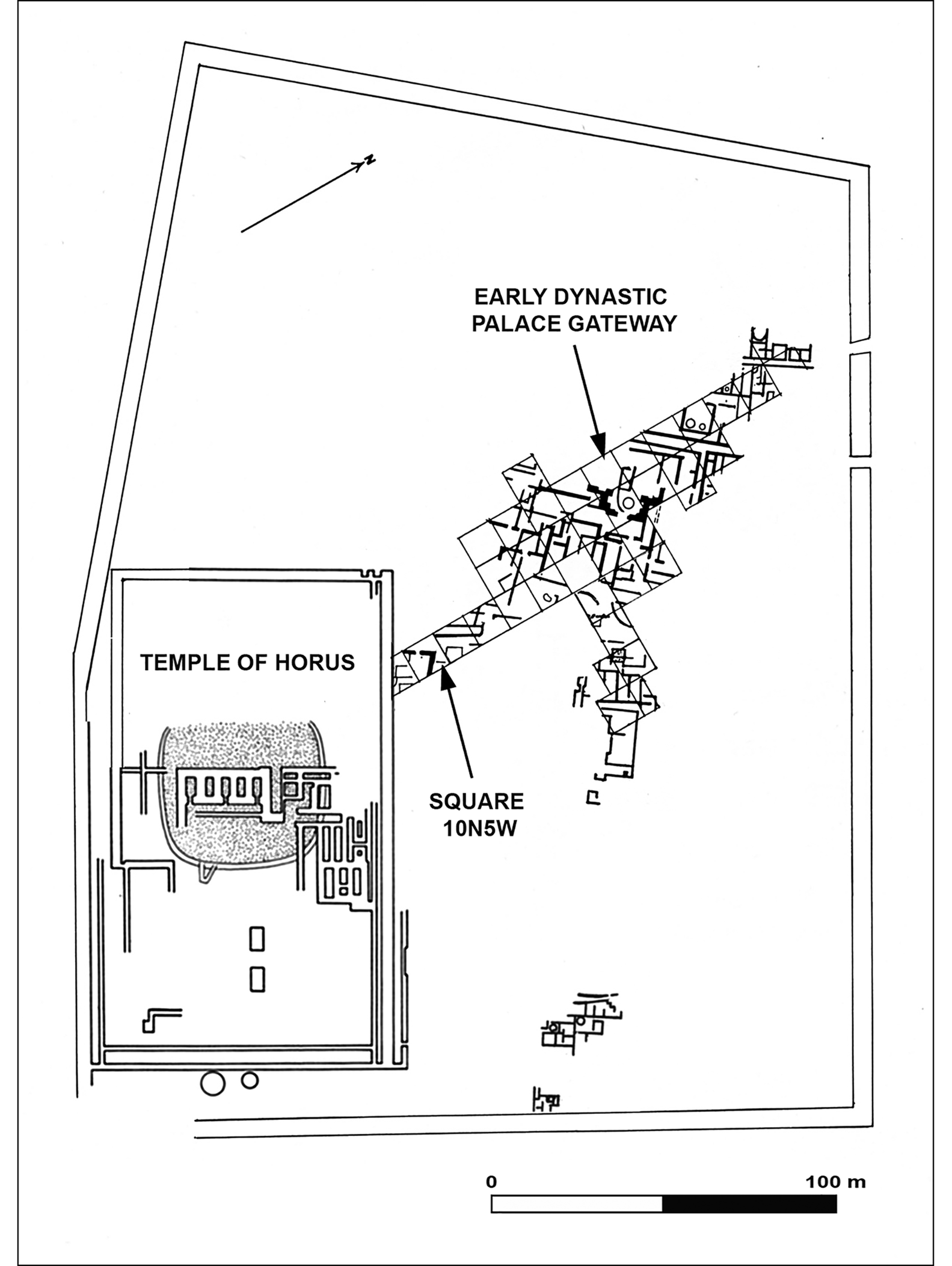
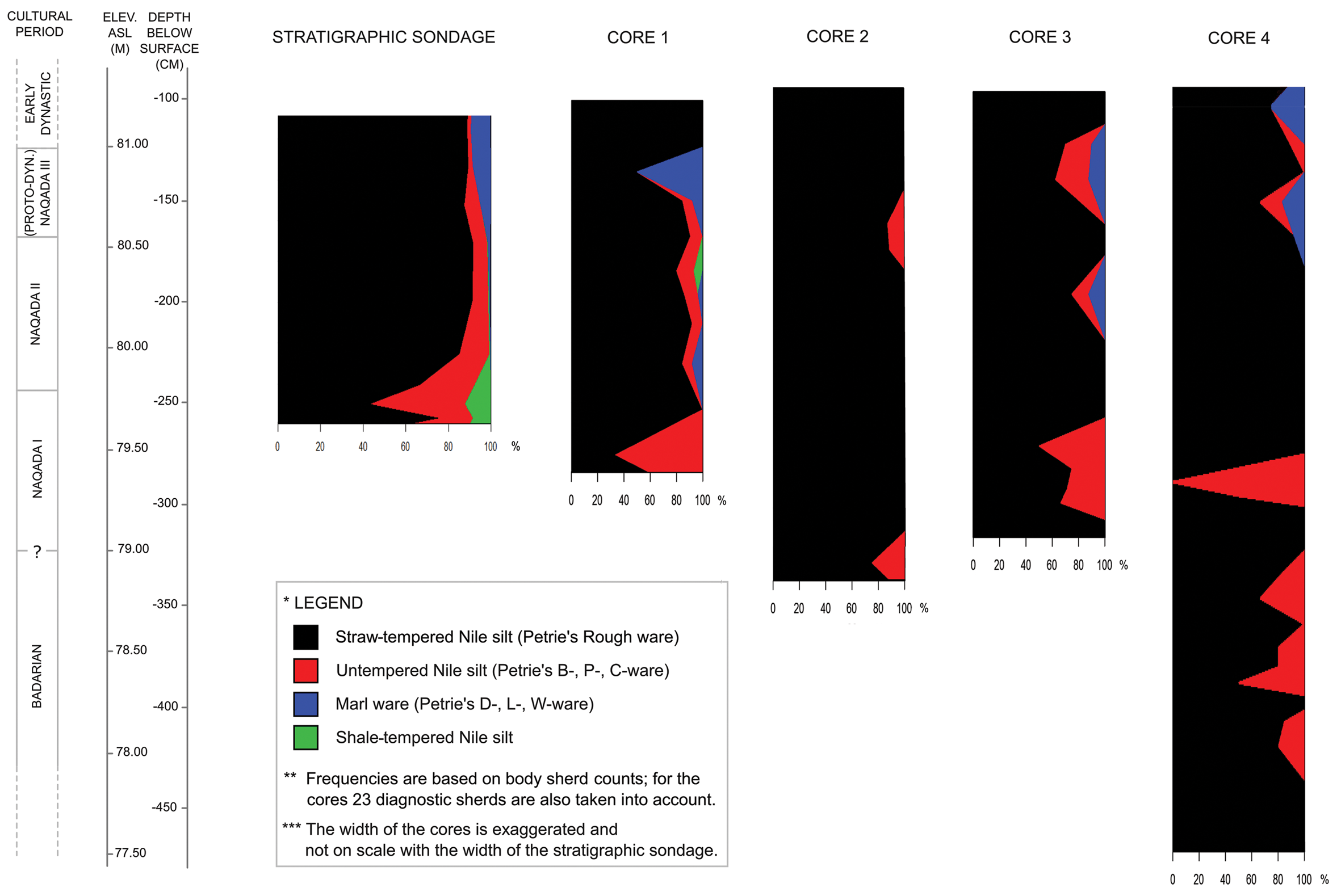
The ceramic assemblage reviewed in this paper was recovered from within a 10 × 10m square (10N5W), located close to the temple of Horus at Nekhen (Figure 1) and stratigraphically excavated under the direction of Michael A. Hoffman in 1984 (Hoffman Reference Hoffman, Krzyżaniak and Kobuciewicz1989). Specifically, the pottery under consideration here was retrieved from the following sectors: four cores, each approximately 0.1m in diameter, that were drilled in the corners of the square (Figure 2), and a larger sondage dug within and beneath a triangular room (measuring initially 5.4 × 4.8 × 2.5m; Hoffman Reference Hoffman, Krzyżaniak and Kobuciewicz1989: 318–20). Based mostly on the stratigraphic and ceramic evidence, the chronology of these contexts was considered by the principal investigator to extend from the Early Dynastic back to Badarian times (Hoffman et al. Reference Hoffman, Hamroush and Allen1987: 2–5; Hoffman Reference Hoffman, Krzyżaniak and Kobuciewicz1989: 318–19), or to what has also been defined as a “local Neolithic culture” (Hoffman Reference Hoffman, Krzyżaniak and Kobuciewicz1989; Friedman Reference Friedman1994: 361, note 1). It is the deepest archaeological deposits—between 3.22 and 4.71m below the ground's surface—reached only through coring and from which a fragment of possible Badarian pottery was reported (Adams Reference Adams1995: 26, 31), that were attributed to this early phase (Figure 2). Hoffman et al. (Reference Hoffman, Hamroush and Allen1987: 4, fig. 3) also suggested an absolute chronology of 3700/3800 BC as the end of this phase. When it might have started was more difficult to define due to the limited quantity of cultural material (including pottery) recoverable via coring, and the dearth of samples suitable for radiocarbon dating from these lowest archaeological strata. In general, the depth of these earliest cultural remains may suggest a chronological sequence extending far back in time. Whether the sequence may have spanned only part or the whole Badarian period, recently radiocarbon dated to between 4400 and 3800 BC (Dee et al. Reference Dee, Wengrow, Shortland, Stevenson, Brock, Flink and Ramsey2013; Wengrow et al. Reference Wengrow, Dee, Foster, Stevenson and Bronk Ramsey2014), can, however, only be determined by future research.
Map of the site of Nekhen showing the location of the 10N5W square excavation unit (courtesy of the Hierakonpolis Expedition).

Plots showing the distribution of pottery made of different fabric/temper classes throughout the levels of stratigraphic sondage and cores at Nekhen (source data: Hierakonpolis Expedition archive; periodisation based on Hoffman et al. Reference Hoffman, Hamroush and Allen1987; ceramic nomenclature from Petrie Reference Petrie1921 and Friedman Reference Friedman1994) (compiled by G.A. Di Pietro).

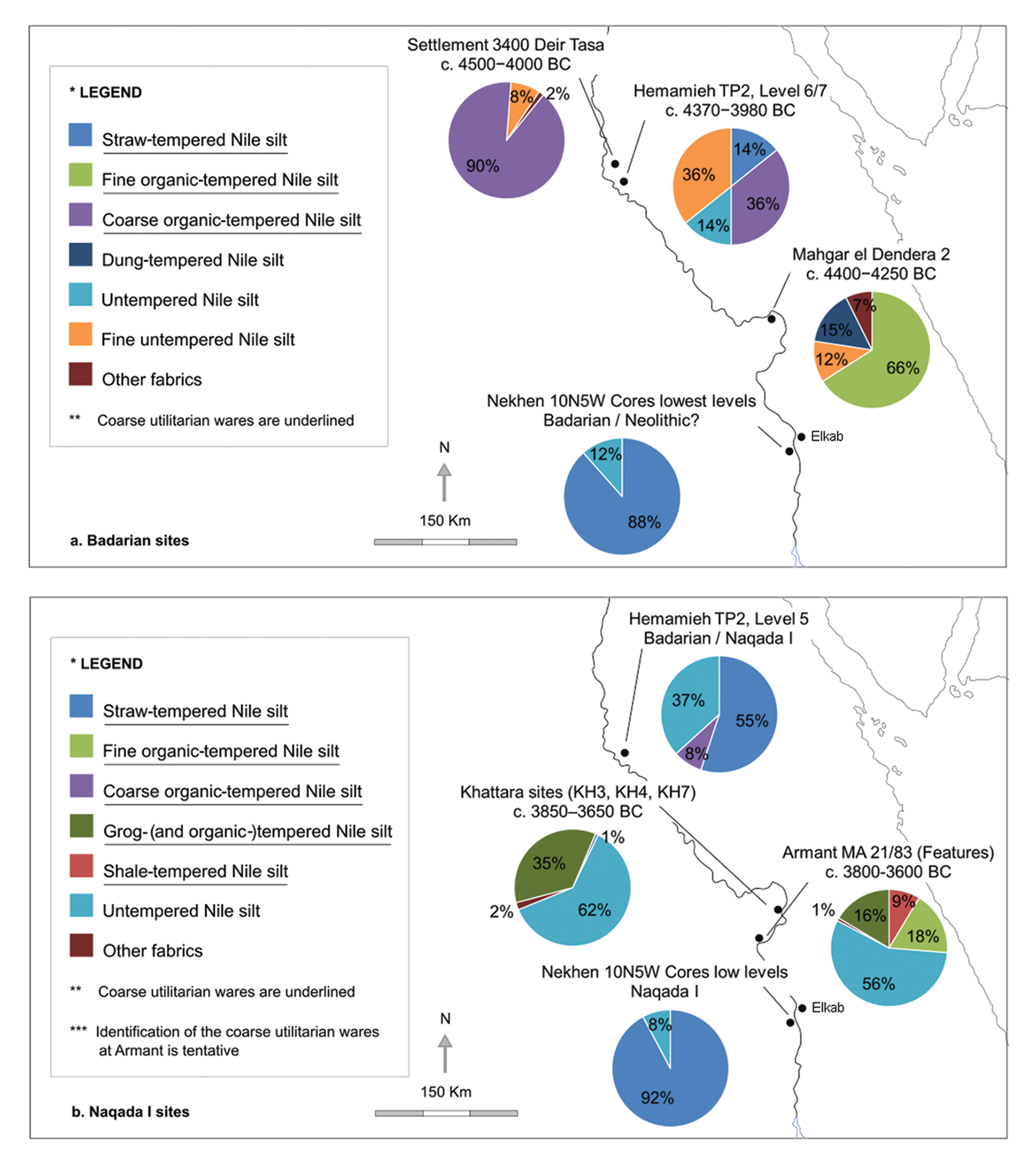
Map of Upper Egypt with pie charts showing the composition of the ceramic assemblages of several early predynastic settlement sites, in terms of fabric (source data: Holmes Reference Holmes1993; Friedman Reference Friedman1994; Ginter & Kozłowski Reference Ginter and Kozłowski1994; Holmes & Friedman Reference Holmes and Friedman1994; Hendrickx et al. Reference Hendrickx, Midant-Reynes and Neer2001; Hierakonpolis Expedition archive; ceramic nomenclature from Friedman Reference Friedman1994) (compiled by G.A. Di Pietro).

A total of 418, mainly minute, pottery sherds were retrieved from the cores, while a much larger and better-preserved group, consisting of 12 614 sherds, was recovered from the sondage. The entire ceramic assemblage from the 1984 excavation of 10N5W was examined and recorded by Barbara Adams and Michael Hoffman, but, due to the premature death of both archaeologists, the results were only partially published (Hoffman et al. Reference Hoffman, Hamroush and Allen1987: 4; Friedman Reference Friedman1994: 62, 776). Over the last few years, documentation and data from the 1980s fieldwork and the initial ceramic analyses—which now form part of the Hierakonpolis Expedition archives—have been subjected to intense scrutiny by the author, along with the thorough restudy of the ceramic sample that is still preserved and stored in Egypt. A brief preliminary report of the first stage of this reinvestigation is presented in Di Pietro (Reference Di Pietro and Pirelli2013).
Data from both the earlier ceramic analyses and from the most recent re-analyses have been used for the study reported here, together with published ceramic data concerning other selected settlement sites of early Egypt that have been examined within the scope of the ‘CASEPS: Comparative Archaeological Study of Egyptian Predynastic Settlements’ research project (UCL Institute of Archaeology). On this basis, how certain ceramic elements vary, or not, in terms of relative frequency (Figure 2) and presence or absence across the stratigraphic levels of the cores and sondage at 10N5W has been charted. A comparison of the proportions of ceramic fabrics within assemblages from distinct and approximately contemporaneous sites has also been undertaken (Figure 3).
For most of the inter-assemblage comparisons, ‘sherd count’ was the only measure of pottery quantification possible; for a few sub-assemblages within the assemblage from the 10N5W sondage, however, ‘body sherd count’, ‘rim sherd count’ or ‘rim-EVE’ (estimated vessel equivalent; Orton & Hughes Reference Orton and Hughes2013: 206–10) could be used. No tests have been performed to assess the statistical significance of the trends inspected—an approach that is common within so-called ‘exploratory data analysis’, including its application within archaeology (cf. Drennan Reference Drennan2009: vi, 157–60). Whether statistically significant or not, many of the trends identified have also been detected in other early Egyptian contexts, and have long been considered to be of chronological value (e.g. Petrie Reference Petrie1899; Kaiser Reference Kaiser1957; Friedman Reference Friedman1994; Hendrickx Reference Hendrickx, Hornung, Krauss and Warburton2006). Indeed, the present article focuses on ceramic variations that may be suggested to represent chronological patterns, either by analogy with other similar contexts or based on other archaeological argumentations (e.g. variations in ware or shape types that are, at least in principle, functionally similar). That any of the subtler variations observed amongst the ceramic sub-assemblages examined may also partly reflect functional differences cannot be completely ruled out, given the limited information available on the character of the deposits that produced such materials and for which “it can only be assumed […] are the result of domestic activities” (Friedman Reference Friedman1994: 732).
Ceramic variation and homogeneity across the Nekhen stratigraphic sequence
The analysis of the composition of the 10N5W stratified ceramic sequence in terms of fabrics presents a rather homogeneous picture with only a few major variations (Figure 2). This picture is characteristic of the Upper Egyptian ceramic tradition and the principal developments over its early phases, but it also reveals site-specific features.
Pottery made of Nile silt, both untempered and heavily tempered with organic material, occurs throughout all the levels of the sondage and cores. The ceramic material from the deepest levels (accessed by coring)—strata that possibly extend back to Badarian times or a local Neolithic culture—deserves particular mention. As for the organic-tempered ceramic sherds, recent examination of this material by the author has shown it to be similar, at least macroscopically, to pottery made of straw-tempered Nile silt (Petrie's ‘Rough ware’; Petrie Reference Petrie1921: xxxviii–lxiv), which is common in overlying and later sectors of the sequence. Furthermore, the relatively high incidence of this type of utilitarian, ‘rough’ pottery throughout the cores, from the deepest to the uppermost sections, is notable.
In contrast to the material of the lowest strata of Nekhen, which is datable to Badarian/Neolithic and Naqada I (cf. strata between 3.22 and 2.44m below the ground's surface in Figure 2; c. 3800/3700–3500/3400 BC; Hoffman et al. Reference Hoffman, Hamroush and Allen1987: 4, fig. 3), pottery made of straw-tempered Nile silt is absent in the Badarian settlements known as 3400 near Deir Tasa and Mahgar el Dendera 2 (Holmes Reference Holmes1993: 23; Hendrickx et al. Reference Hendrickx, Midant-Reynes and Neer2001: 61, 85). It is also rare in other early settlement contexts, such as Hemamieh and the ‘Khattara sites’ (Friedman Reference Friedman1994: 560–62; Holmes & Friedman Reference Holmes and Friedman1994: 130). The same may be tentatively suggested for Armant and for strata at Elkab attributed to the early Badarian period (Ginter & Kozłowski Reference Ginter and Kozłowski1994: 164; Claes et al. Reference Claes, Hendrickx, Devillers, Hart, Kindermann, Dapper, Ikram, Storms, Swerts, Huyge and Mączyńska2014: 83). A variety of other coarse utilitarian wares are attested at these early sites/site levels (Figure 3), while the straw-tempered pottery went on to become the predominant ‘rough’ ware in the region (e.g. at Hemamieh: Holmes & Friedman Reference Holmes and Friedman1994: 127–31; at ‘South Town’, Naqada: Friedman Reference Friedman1994: 524–34; Di Pietro Reference Di Pietro, Bader, Knoblauch and Köhler2016; and at Elkab: Claes et al. Reference Claes, Hendrickx, Devillers, Hart, Kindermann, Dapper, Ikram, Storms, Swerts, Huyge and Mączyńska2014: 85) later than at Nekhen (cf. 88 and 92 per cent of the ceramic assemblage in the lowest strata; Figure 3).
The ceramic evidence provided by the sondage at Nekhen—at least for the late Naqada I/early Naqada II period (c. 3650–3450 BC)—shows that a small portion of the utilitarian vessels were made up of a shale-tempered Nile silt. The straw-tempered pottery, however, appears to be the most common utilitarian ware since what may have been the earliest phases of the site's occupation (Figure 2). In addition, this latter fabric type increases in frequency from the lower to the higher levels of the sondage (cf. Friedman Reference Friedman1994: 62), suggesting that it probably began to replace shale-tempered Nile silt over time (cf. Buchez Reference Buchez2004a: 23–24).
One of the crucial predynastic innovations within the Upper Egyptian ceramic industry was the production of marl wares. These were made from calcium-rich clays derived from limestone and shale deposits in wadis, or from the addition of calcareous matter to clays of alluvial origin (Nordström & Bourriau Reference Nordström, Bourriau, Arnold and Bourriau1993: 160; Friedman Reference Friedman1994: 29, 85–87, 157–60). In the 10N5W sondage, pottery made of marl first occurs in level 5, which can be attributed to the Naqada IIB–C (c. 3450 BC). In the upper levels, marl pottery tends to replace untempered Nile silt ceramics (cf. Friedman Reference Friedman1994: 62)—a trend also recorded in mortuary contexts (Hendrickx Reference Hendrickx, Hornung, Krauss and Warburton2006: 73).
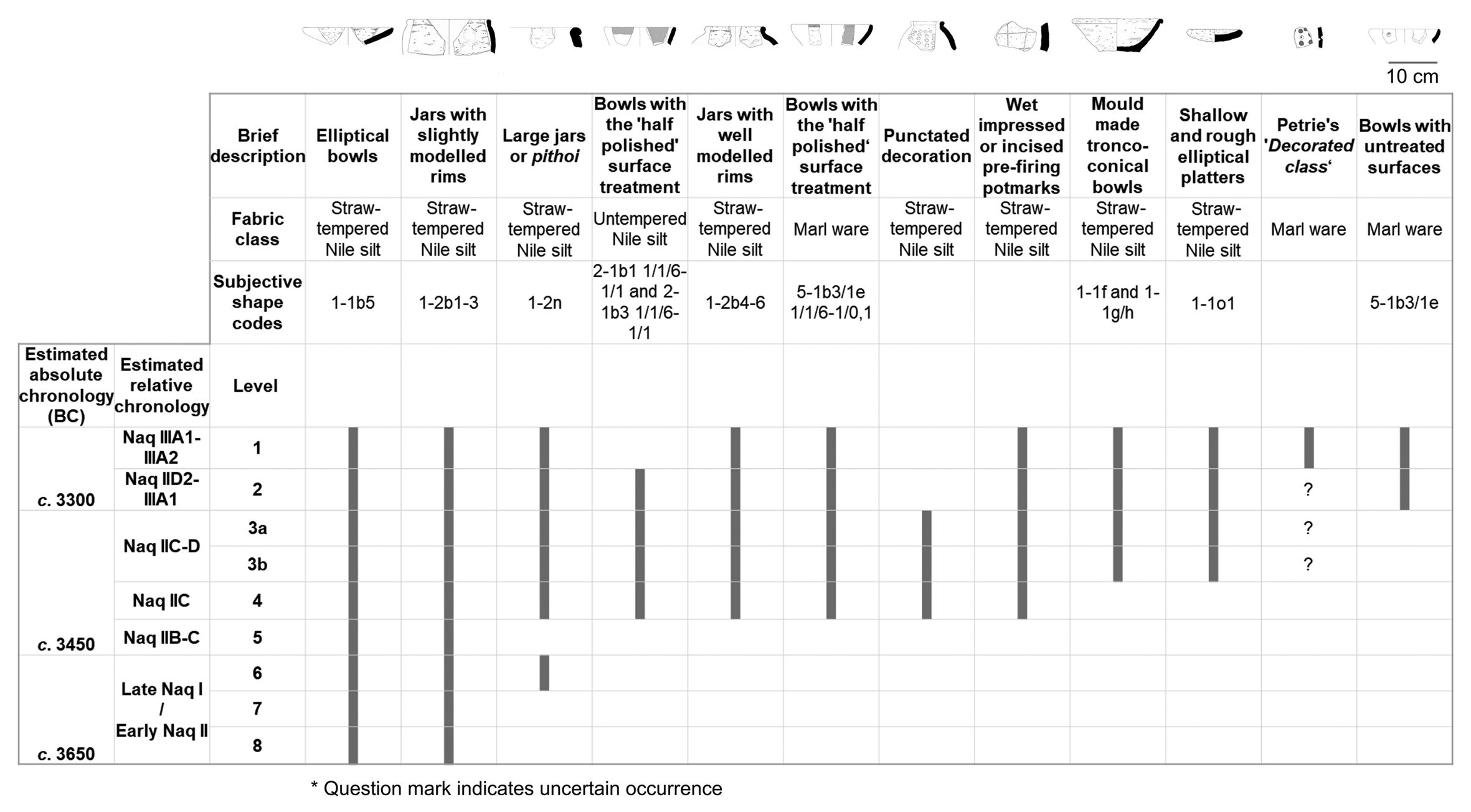
Due to the fragmentary state of the material retrieved from the sondage and cores, the extant assemblage offers little evidence for the methods used in shaping the pottery. For most of this assemblage—particularly the pre-Early Dynastic phase material—the typical predynastic vessel construction techniques, such as coiling, slab construction, mould shaping, turning of the rims, or a combination of these (Friedman Reference Friedman1994: 236–40), must be assumed to have been adopted. In levels of the sondage datable to the Naqada IIC–D to IIIA1–2 phases (c. 3400–3200 BC), the use of a mould is clearly attested for a series of tronco-conical bowls made of straw-tempered Nile silt. Notably, this type of vessel increases in frequency towards the upper levels (3–1) of the sondage, and also at the expense of more refined bowls that were coil-built (cf. elliptical bowls; Figure 4).
Vertical distribution of selected ceramic elements across the stratigraphic sondage at Nekhen 10N5W (drawings by G.A. Di Pietro; ceramic codes from Friedman Reference Friedman1994; absolute chronology based on Dee et al. Reference Dee, Wengrow, Shortland, Stevenson, Brock, Flink and Ramsey2013) (compiled by G.A. Di Pietro).

Other vessel shape classes for which clear trends in frequency across the levels of the sondage can be charted—and, to some extent, a plausible explanation for their appearance or increase/decrease in popularity can be suggested—include large jars and jars with a prominent rim, both of which are made of straw-tempered Nile silt (Figure 4). These jar types show a slight increase in frequency towards the upper levels of the sondage, which is accompanied by a decline in frequency of jars with less prominent rims. Another vessel type within the aforementioned fabric class is the roughly made, shallow and generally elliptical platters. These also tend to increase in frequency towards the upper layers of the sondage.
Innovative features in the surface treatment of certain vessels also appear throughout the strata of the 105N5W sondage. Almost all of the levels yielded fragments of fine ware bowls that are fully slipped and polished on both their interior and exterior surfaces. Ceramics exhibiting the so-called ‘half polished’ treatment, however, only occur in levels 4 and above. These bowls are slipped and polished entirely on their interior surface, but only on the rim of their exterior (cf. Friedman Reference Friedman1994: 199). From level 3 and above, there are also a number of marl bowls with external surfaces half coated with a slip, but not ‘half polished’. Marl bowls characterised by untreated internal and external surfaces are restricted to the two upper strata of the sondage (Figure 4).
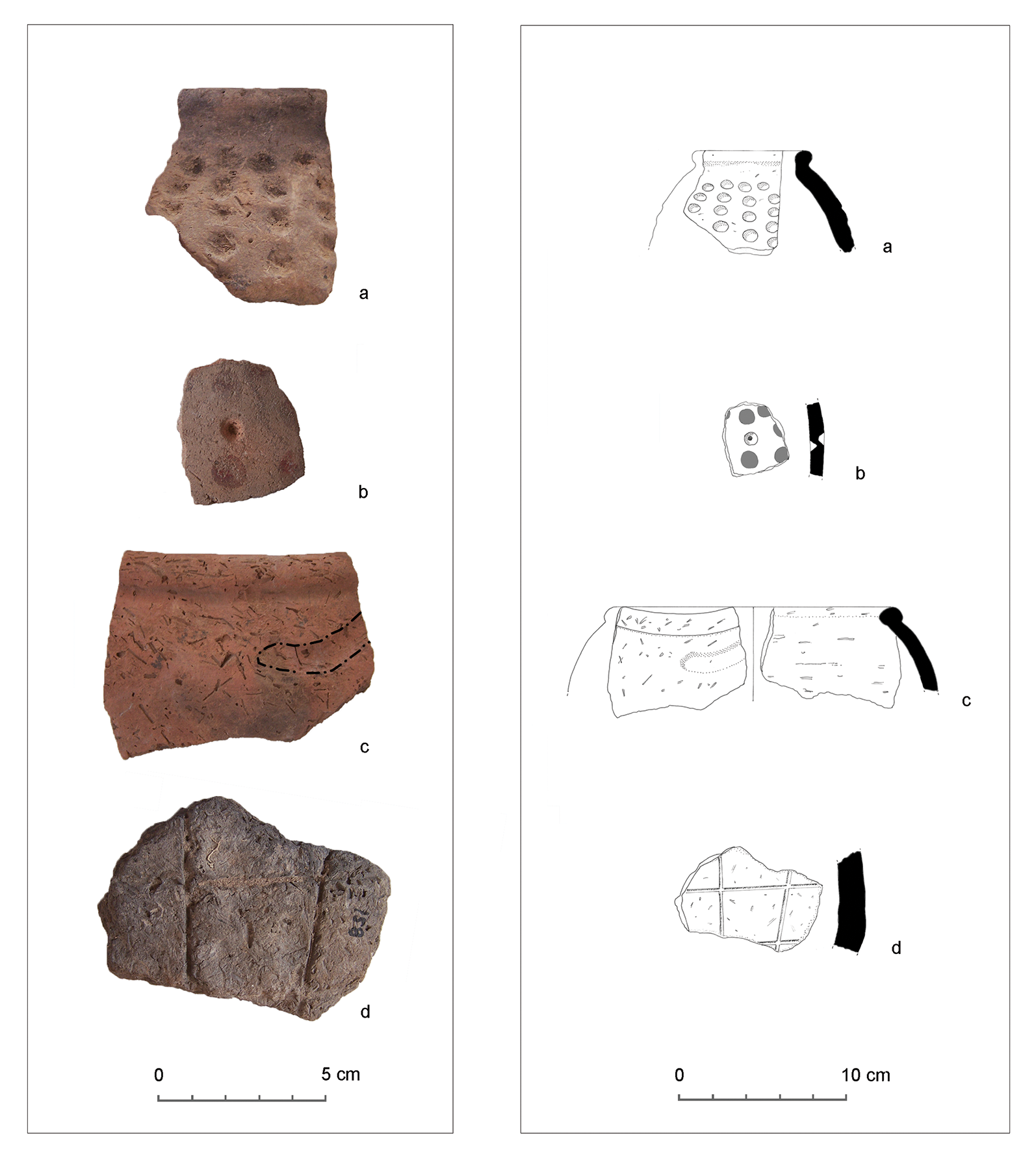
Amongst other noteworthy features typical of the predynastic ceramic tradition are punctate designs impressed on the exterior surface of straw-tempered Nile silt vessels, usually jars (cf. D93b, Petrie Reference Petrie1921: xxxvii). These only occur in sondage levels 4 and 3, and are datable to the middle Naqada II period (c. 3400 BC). The first recognisable red-painted decoration in marl ware pottery (Petrie's ‘Decorated class’ or D-ware; Petrie Reference Petrie1921: xxxi–xxxvii) comes from level 1, on a sherd that had been reworked into the form of a disc. Finally, a number of marks—either impressed or incised while the vessel clay was still wet—are observed within the pottery made of straw-tempered Nile silt from level 4 and above (Figure 5).
Selection of potsherds with decorations and pre-firing potmarks from the stratigraphic sondage at Nekhen 10N5W: a) punctate impressions (level 3); b) red-painted dots on a beige slip (level 1); c) impressed potmark in the form of a crescent (highlighted by a dashed line; level 4); d) incised potmark (level 2) (photographs and drawings by G.A. Di Pietro).

Factors promoting change or stability in the predynastic ceramic industry
Ceramic evidence from cores, which reached unprecedented depths below the historic town of Nekhen, and from other centres of the Nile Valley indicates that the earliest Upper Egyptian ceramic industry relied almost invariably on Nile alluvial silts as its main raw material. These so-called ‘Nile silt clays’ are generally assumed to have been collected from riverbanks or flood plains located close to the river's edge (Nordström & Bourriau Reference Nordström, Bourriau, Arnold and Bourriau1993: 160), although in some cases archaeometric research has shown that some of these clays derive from sediments deposited by earlier stages (e.g. Pleistocene) of the Nile and located far out into the desert (Allen et al. Reference Allen, Rogers, Mitchell and Hoffman1982: 208; Friedman Reference Friedman1994: 84–85). Their relatively wide availability and accessibility, as well as their plasticity and homogeneity that would have made them particularly suitable for modelling (cf. Bourriau Reference Bourriau1981: 14), may explain their continued use in pottery production throughout the entire predynastic period and beyond. Besides these ecological and functional explanations, the extent to which other factors, such as social or symbolic practices (cf. Albero Santacreu Reference Albero Santacreu2017: 509–11), influenced the long-term exploitation of such clays needs to be investigated.
A distinctive feature of the earliest pottery at Nekhen is the use of organic temper, which is usually called ‘straw’ and is assumed to be a by-product of cereal processing (cf. Nordström & Bourriau Reference Nordström, Bourriau, Arnold and Bourriau1993: 173–74; Friedman Reference Friedman1994: 143–44). Preliminary archaeobotanical research confirms this identification (Chris Stevens pers. comm.), although further in-depth analyses are necessary. Amongst other aspects, it remains to be established, for example, whether this material was included in the ceramic paste as dung or chaff. In contrast with other organic and non-organic inclusions that appear in pottery from Nekhen (Figure 2) and other sites (Figure 3), this temper type and the pottery production related to it would have been strictly linked to agriculture. It may, therefore, be suggested that the very early appearance and relative abundance of straw-tempered pottery at Nekhen reflects the importance played by agriculture at this centre from its earliest history. This hypothesis could be supported indirectly by the fact that this ware type is absent or relatively rare in settlements of seasonal character, or in settlements whose inhabitants relied predominantly upon non-agricultural activities (cf. Early Hemamieh and ‘Khattara’ sites: Friedman Reference Friedman1994: 72, 308, 342, 465; Mahgar el Dendera 2: Hendrickx et al. Reference Hendrickx, Midant-Reynes and Neer2001: 104).
Straw-tempered fabric may have grown in popularity and replaced other coarse fabrics—a trend that is observed at Nekhen and other sites (cf. above) throughout the Predynastic—following an intensification of agricultural production and, potentially, an increased integration of diverse economic activities (such as agriculture, the processing of agricultural products and by-products, and ceramic production). These may not, however, have been the sole factors underlying this change in ceramic technology. Indeed, the increasingly common use of straw-tempered Nile silt has long been suggested to have been favoured due to the faster and more efficient production facilitated by the organic temper, in comparison to other coarse utilitarian wares (Friedman Reference Friedman1994: 266–67). Experimental research, such as that of Skibo et al. (Reference Skibo, Schiffer and Reid1989), has demonstrated that the use of organic material as temper provides technological advantages, including increased workability of the ceramic paste and positive effects on vessel performance, such as reduced weight. The results of these experiments have also been confirmed by more recent research (Albero Santacreu Reference Albero Santacreu2010). It should be stated, however, that none of these studies involved the use of clays and tempers from the study area in question here.
The diffusion of new modes of production has also been argued to have determined the increased use of straw-tempered Nile silt and the concurrent abandonment of other utilitarian fabrics over time. In the Hierakonpolis region in particular, shale-tempered vessels, presumably used predominantly in cooking and food preparation (cf. the issues discussed below concerning the determination of vessel function), may have ceased to be produced at the household level and been replaced by new types of straw-tempered containers, which were produced on a larger scale by specialist potters (Friedman Reference Friedman1994: 262, 266, 905, 913). Moreover, if straw-tempered pottery assumed the same function as the earlier shale-tempered containers, this would imply that a number of the technological advantages offered by earlier ceramic types (e.g. heat-transfer ability and resistance to abrasion; Skibo et al. Reference Skibo, Schiffer and Reid1989: 127–40) were sacrificed for other benefits (outlined above), which were reputed to be more important from a certain stage onwards. Ultimately, the preference for such organic-tempered ceramics—although these were highly porous, brittle and of poor durability—may have also been a response to new needs, such as those requiring more intensive pottery production (cf. Albero Santacreu Reference Albero Santacreu2014: 276–77).
The development of marl wares and their expanding use over time are considered to have been determined by both their superior technological qualities and “the desire to save labour and increase output” (Friedman Reference Friedman1994: 909). Indeed, compared with other fine wares, the addition of calcium salts to the ceramic paste would have made this fabric harder and easier to fire, using the same quantities of fuel and without extensive cleaning of the clays (Friedman Reference Friedman1994: 163). Evidence provided by the ceramic assemblage from the sondage at 10N5W confirms that aesthetic factors, such as a preference for the buff colour that is prevalent in marl pottery, did not, at least initially, drive the increasing popularity of this fabric. Indeed, most marl sherds that occur in the deeper and presumably older levels of the sondage bear a red slip, which is similar to that found on the fine, untempered Nile silt pottery (cf. Friedman Reference Friedman1994: 704).
‘Labour saving’ developments are also reflected in various other aspects of the ceramics recovered from the sondage at Nekhen. The increasing use of moulds, for example, may signify a tendency towards a less labour-intensive pottery production, which possibly valued quantity over quality or aesthetic appeal. It also implies that relatively low-skilled personnel could have been employed (cf. Goulder Reference Goulder2010: 355), at least for the part of the chaîne opératoire that involved the use of moulds. Nonetheless, long-established motor patterns in pottery-shaping and more traditional modes of production would presumably have persisted (cf. Rice Reference Rice, van der Leeuw and Pritchard1984: 244).
Finally, the slight changes in surface treatment observable within the fine ware bowl assemblage—which includes fully slipped and polished bowls, those with half slipped and half polished exteriors, those with half slipped exteriors and those with both interiors and exteriors untreated—also suggest reductions in material (i.e. slip) use and effort invested in the production of these ceramic types. It remains to be ascertained whether this diminished surface coating and finish, which may have also affected mechanical properties of the vessels such as impact resistance (cf. Friedman Reference Friedman1994: 257), was counterbalanced by alterations in the paste recipe.
A more comprehensive analysis is also required to establish the many influences behind these ‘labour-saving’ changes and the related intensification in pottery production in the late predynastic period. Indeed, while the recorded phenomena are argued to have been promoted by an increased demand for ceramic products to satisfy both domestic consumption and mortuary practices, and by increasingly centralised control over pottery production (cf. Friedman Reference Friedman1994: 912–15), it is less clear to what extent other factors, such as demographic changes and non-local demand for ceramics (cf. Rice Reference Rice, van der Leeuw and Pritchard1984: 250, 255–73), may have contributed to such developments.
The appearance of other ceramic features over time, such as decorative motifs (cf. Figure 5), can presumably be explained as cultural developments. The first unequivocal occurrence of D-Ware in the uppermost levels of the sondage probably represents a period in which the buff-coloured surface was more popular on marl pottery vs a previous stage when red-slipped surfaces prevailed. The emergence and diffusion of a new style were probably responsible for the use of the whitish surface offered by marl pottery as a ‘canvas’ for new red-painted designs (Wengrow Reference Wengrow2006: 92–93). Other types of decoration, such as the punctate impressions, are instead viewed as a reflection of intra- or extra-regional contacts (Friedman Reference Friedman1994: 713–18), but the reason behind their rapid disappearance remains unclear. Other features that appear on vessels from sondage strata dated to the middle Naqada II onwards, such as the pre-firing potmarks, could represent mainly economic concerns. Indeed, studies conducted on large corpora of potmarks have demonstrated that some signs should be interpreted as a means of counting the manufactured pots (e.g. Buchez Reference Buchez, Hendrickx, Friedman, Ciałowicz and Chłodnicki2004b: 681–85).
Economic developments could also have influenced some of the subtle quantitative changes observed in the composition of the Nekhen ceramic assemblage. The increasing frequency of large jars in the upper levels of the sondage—a trend also reported at other slightly later sites (Buchez Reference Buchez, Hendrickx, Friedman, Ciałowicz and Chłodnicki2004b: 681)—may, for example, be the result of an increased need to store commodities. Similarly, the growing number of jars with prominent rims may be related to the need for more efficient vessel sealing systems and means of storage. Ultimately, these changes were probably related to the central role that the acquisition and storage of surplus food increasingly played in predynastic Egypt.
A number of changes observable in vessel morphology can probably be linked to changes in vessel usage. The appearance of certain new vessel types, for example, may have been influenced by dietary changes that required new types of pots for processing and cooking new types of food, or by the adoption of new culinary practices (Rice Reference Rice, van der Leeuw and Pritchard1984: 246). Obviously, these specific explanations can only be applied to ceramic types confidently interpreted as relating to food preparation. At Nekhen, this may be the case for a number of crudely made shallow platters (sondage levels 3–1), for which a function as bread-baking pans is usually suggested (Hendrickx et al. Reference Hendrickx, Faltings, Op de Beeck, Raue and Michiels2002: 296, type R1g3). Overall, the function of most of the vessels within our study area and how the use of such pottery may, or may not, have changed over time are still little understood, despite previous research on these topics (Friedman Reference Friedman1994: 243–62; Hendrickx et al. Reference Hendrickx, Faltings, Op de Beeck, Raue and Michiels2002; Buchez Reference Buchez2004a). Thus, the possible impact of variables such as diet and food technology on other components of the predynastic pottery-production system remains unclear.
Conclusions
The 10N5W stratified ceramic assemblage exemplifies key transformations, as well as aspects of continuity, relating to the ceramic industry of early Egypt. As for the developments recorded at Nekhen and which can also be charted in other sites of the Nile Valley (some of which are reported above), their scale and pace, but also their genesis (e.g. endogenous vs exogenous), must have varied at different centres and depended partly on the socio-economic status and complexity of the individual sites. Reanalysis of the Nekhen ceramic assemblage and comparison with assemblages from a number of other early settlements tentatively suggest that Nekhen may have been the centre at which major ceramic innovations, such as the production of straw-tempered pottery, first developed and possibly spread to other parts of Upper Egypt. The small amount of ceramic material available for the earliest strata at Nekhen and the lack of independent dating for them, however, dictate caution in such interpretation. Only further archaeological research on the earliest settlements within the Nile floodplain can address these issues.
A variety of potential factors may have stimulated change within the pottery-making system of Nekhen, ranging from the intensification of agriculture to the introduction of new food-preparation methods. On the other hand, other elements, such as raw material availability and long-standing motor habits, may have favoured conservatism. Nonetheless, many other variables known generally to have influenced ceramic change and stability, such as modes of using pots and symbolic behaviour (Rice Reference Rice, van der Leeuw and Pritchard1984; Albero Santacreu Reference Albero Santacreu2014: 262–78), remain to be investigated. Equally, a series of new analytical techniques, including ceramic use-alteration analyses that may elucidate vessel function, and alternative theoretical perspectives, such as agency theories, may provide a more holistic explanation of the processes that generated change or ensured continuity in the ceramic industry of early Egypt.
Acknowledgements
My gratitude goes to the late Michael A. Hoffman and Barbara Adams, whose data I had the privilege to use, and to Renée F. Friedman (University of Oxford, Director of the Hierakonpolis Expedition) for making their work available to me and for her feedback on an earlier draft of this paper. Ceramic analyses were performed in 2012, funded by a grant from the ‘Michela Schiff Giorgini Foundation of the United States’, and subsequently as part of the ‘CASEPS: Comparative Archaeological Study of Egyptian Predynastic Settlements’ project. The latter was conducted at the UCL Institute of Archaeology (2013–2015), under the supervision of David Wengrow (Professor of Comparative Archaeology), to whom I am very much obliged for his support in all aspects and stages of this research. This project has received funding from the People Programme (Marie Curie Actions) of the European Union's Seventh Framework Programme (FP7/2007–2013) under REA Grant Agreement 329601. To generate the stratigraphic plot in Figure 2, the software R (http://www.R-project.org/) and the Stratigraph package were used, for which Andrew Bevan (Professor of Spatial and Comparative Archaeology, UCL Institute of Archaeology) offered helpful advice. I am also grateful to the peer reviewers for their valuable comments on an early draft of this article.