Introduction
Cerebral palsy (CP) is the most common pediatric-onset physical disability with an estimated prevalence ranging from 2.6 to 3.1 cases per 1000 live births in the USA (Maenner et al., Reference Maenner, Blumberg, Kogan, Christensen, Yeargin-Allsopp and Schieve2016). CP is caused by an insult or malformation of the developing brain which affects motor control centers, and causes alterations in growth, development, and overall health throughout the lifespan (Christensen et al., Reference Christensen, Van Naarden Braun, Doernberg, Maenner, Arneson, Durkin and Yeargin-Allsopp2014). The population of adults with CP is expanding because of the steady or marginally increased prevalence (Paneth, Hong, & Korzeniewski, Reference Paneth, Hong and Korzeniewski2006) and increases in the childhood survival rate (Brooks et al., Reference Brooks, Strauss, Shavelle, Tran, Rosenbloom and Wu2014) in recent decades. Despite being considered a neurological syndrome caused by a non-progressive insult, the hallmark features of CP represent a highly progressive phenotype of ‘early aging’ (Peterson, Gordon, & Hurvitz, Reference Peterson, Gordon and Hurvitz2013; Peterson, Gordon, Hurvitz, & Burant, Reference Peterson, Gordon, Hurvitz and Burant2012; Verschuren et al., Reference Verschuren, Smorenburg, Luiking, Bell, Barber and Peterson2018).
Spina bifida (SB) is another congenital birth defect that occurs in approximately 3.5 cases per 10 000 live births in the USA, and encompasses a spectrum of birth defects (meningomyelocele, myelomeningocele, myelocele, meningocele, and rachischisis), which are the result of incomplete closure of the spinal column and lead to exposure of or herniation to the spinal cord/meninges (Atta et al., Reference Atta, Fiest, Frolkis, Jette, Pringsheim, St Germaine-Smith and Metcalfe2016). Although SB has a lower-case fatality rate than other neural tube defects, it often results in severe life-long disability and morbidity. Moreover, now that the oldest cohort with SB is nearly 60 years of age, a better understanding of age-related changes across the lifespan is critical to inform and improve clinical care for this population (Dennis, Spiegler, & Hetherington, Reference Dennis, Spiegler and Hetherington2000; Ware, Kulesz, Juranek, Cirino, & Fletcher, Reference Ware, Kulesz, Juranek, Cirino and Fletcher2017).
The clinical framework that encompasses healthcare for patients with CP and SB has been largely confined to issues that arise during childhood and adolescence. Despite the shortage of surveillance research to evaluate lifespan health and developmental trajectories in both of these populations, there is ample indication that adults living with CP and SB have a significant and progressive functional decline, inadequate muscle and bone development, increased obesity, and risk for secondary chronic disease (Dosa et al., Reference Dosa, Foley, Eckrich, Woodall-Ruff and Liptak2009; Lampe, Grassl, Mitternacht, Gerdesmeyer, & Gradinger, Reference Lampe, Grassl, Mitternacht, Gerdesmeyer and Gradinger2006; Lidal, Lundberg Larsen, & Hoff, Reference Lidal, Lundberg Larsen and Hoff2019; Marreiros, Monteiro, Loff, & Calado, Reference Marreiros, Monteiro, Loff and Calado2010; Moreau, Li, Geaghan, & Damiano, Reference Moreau, Li, Geaghan and Damiano2008; Peterson, Zhang, Haapala, Wang, & Hurvitz, Reference Peterson, Zhang, Haapala, Wang and Hurvitz2015; Polfuss, Bandini, & Sawin, Reference Polfuss, Bandini and Sawin2017; Trinh et al., Reference Trinh, Wong, Sakthivel, Fahey, Hennel, Brown and Milat2017; Whitney et al., In Press; D. G. Whitney et al., Reference Whitney, Hurvitz, Devlin, Caird, French, Ellenberg and Peterson2018). However, there have been very few studies to examine psychological morbidity among adults living with CP or SB (Bellin et al., Reference Bellin, Zabel, Dicianno, Levey, Garver, Linroth and Braun2010; Dicianno et al., Reference Dicianno, Kinback, Bellin, Chaikind, Buhari, Holmbeck and Collins2015; Smith et al., Reference Smith, Peterson, O'Connell, Victor, Liverani, Anokye and Ryan2018; Whitney et al., Reference Whitney, Warschausky, Ng, Hurvitz, Kamdar and Peterson2019a), and no current studies have examined the longitudinal trends of a broad array of mental health disorders in these populations. The purpose of this study was, therefore, to examine the incidence of and risk for common psychological morbidities in a large sample of adults with CP or SB, as compared to adults without CP or SB.
Methods
Data source
This is a retrospective cohort study of adults with congenital CP or SB whose diagnosis could have existed across any patient care setting. This study used a national, private insurance claims database, Clinformatics DataMart Database (OptumInsight, Eden Prairie, MN). This is a de-identified administrative claims database of over 80 million adults and children with commercial insurance representing those on a single, large US private payer who had both medical and pharmacy coverage throughout the enrollment. Enrolled beneficiaries' emergency department, outpatient, and inpatient encounters are captured. This study was deemed exempt by the University of Michigan Institutional Review Board at the researchers' institution.
Sample selection
All individuals 18 years of age and older at the time of their enrollment which could start from 2007 to 2017 were potentially eligible for this analysis. We excluded individuals with less than 12 months of continuous enrollment to require sufficient claim history. All medical claims excluding laboratory and outpatient pharmacy were considered to identify prevalence or treatment for these conditions during the enrollment period.
Identification of patients with CP and SB
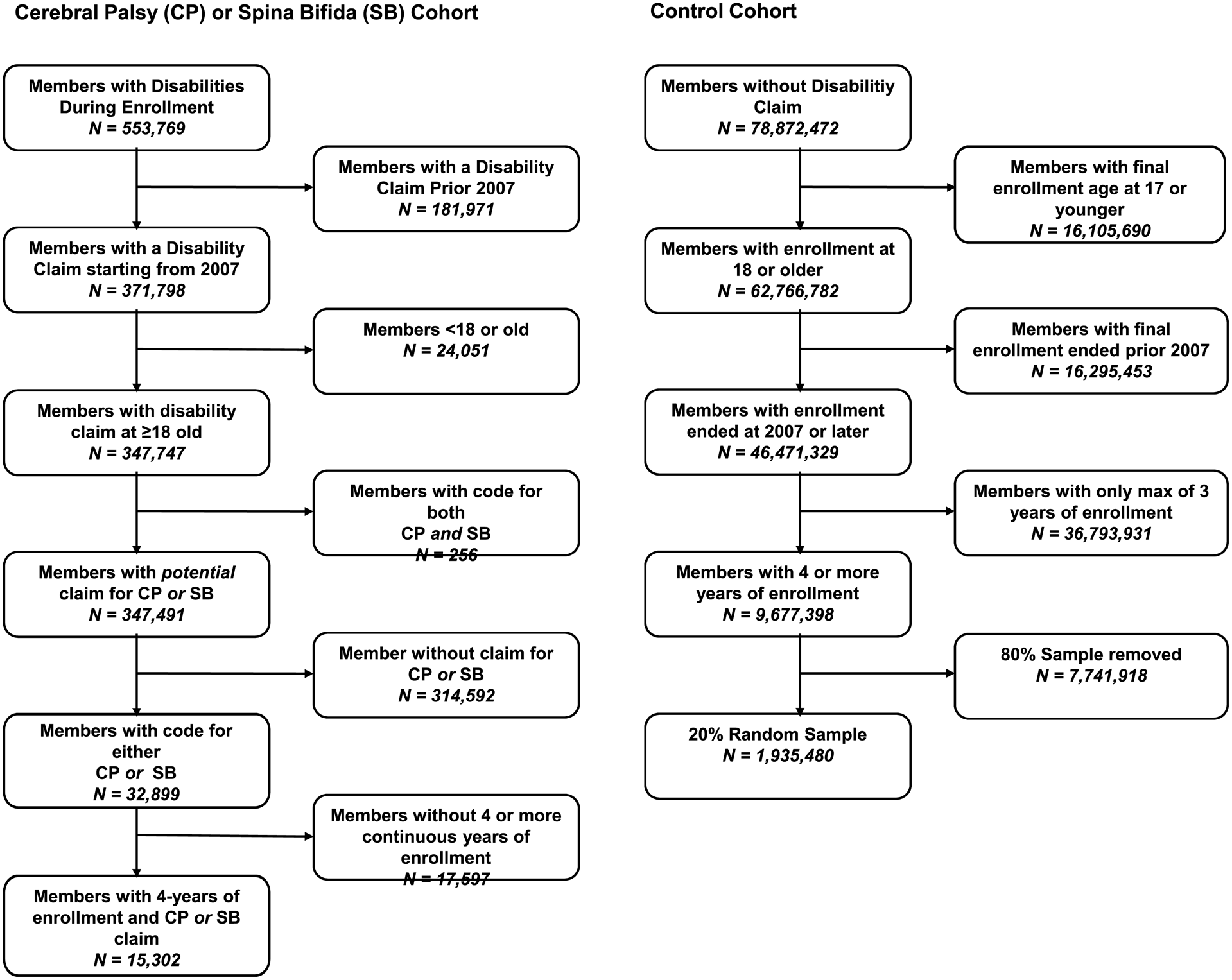
All members with a diagnosis of CP or SB were identified using International Classification of Diseases, Ninth revision, Clinical Modification (ICD-9-CM) (online supplementary Table S1). Members that had CP or SB prior to 2007 were excluded due to poorer coverage of diagnosis codes during 2001–2006 in the database. Members without a diagnosis code in any position when they were 18 years or older during enrollment were excluded. Due to lack of clinical feasibility and different disease etiologies, a small number of members were excluded who had both CP and SB during enrollment. To allow adequate longitudinal follow up for all patients with CP or SB, only those that had four or more continuous years of enrollment following their starting date of enrollment within the study period were included.
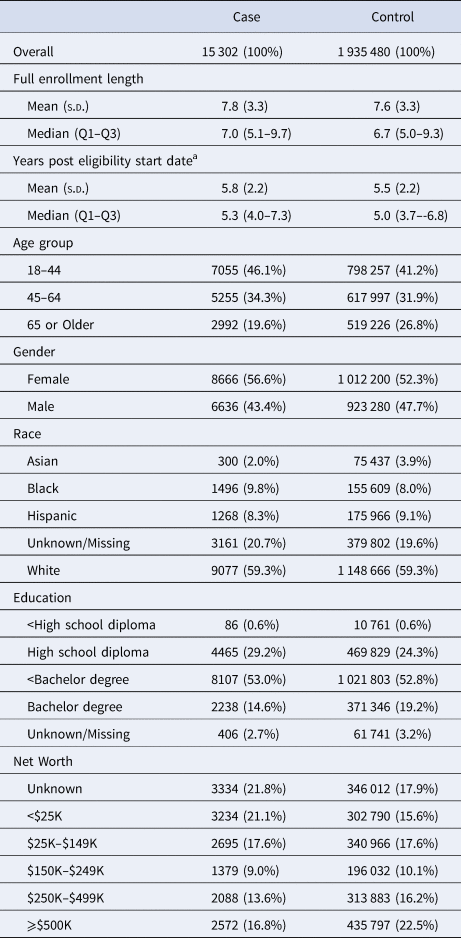
A comparison cohort of controls without CP or SB were also identified using the same aforementioned inclusion criteria (Table 1). Additional exclusion criteria for identifying the control cohort included removal of any individual with other physically disabling neurological disorders (e.g. paraplegia, quadriplegia, hemiplegia, traumatic spinal cord injury, and multiple sclerosis). Among the remaining members without CP or SB, a 20% simple random sample of members was selected to represent the control group. We performed a simple random sampling of the set of controls that had no evidence of CP or SB throughout their enrollment on the insurance plan during the study period. Post-hoc analyses of demographic characteristics were compared between the 20% sample of controls and all controls to ensure no bias in the control cohort attributable to random selection (Fig. 1).
Descriptive characteristics among adults with CP or SB (case) or without CP or SB (control)

a All adults with CP and SB have their index date set the same as start of eligibility date (start of 2007, year when turned 18, or enrollment start date, whichever was the latest).
Flow chart of subject inclusion and exclusion for final case and control cohorts.

Psychological morbidities
Physician-diagnosed psychological health disorders were identified based on a single encounter that included at least one of pertinent ICD-9 or ICD-10 codes (in any position) (see online supplementary Table S1). The primary outcome was time in days to incident psychological morbidity as a composite outcome following enrollment on the plan. Secondary outcomes were component incident psychological morbidity, including: (1) insomnia, (2) adjustment disorders, (3) anxiety disorders and post-traumatic stress disorder (PTSD), (4) delirium/dementia/amnestic or other cognitive disorder, (5) dementias, (6) impulse control disorders, (7) mood disorders, (8) personality disorders, (9) alcohol-related disorders, (10) substance-related disorders, and (11) central pain syndrome.
Covariates
Explanatory covariates included age group split into three categories (18–44, 45–64, 65 or older), sex, race, educational attainment, household net worth, and a modified Elixhauser comorbidity index. The Elixhauser comorbidity index was modified to remove four conditions that would be correlated with incident psychological morbidity: alcohol abuse, drug abuse, psychoses, and depression. Therefore, the revised index only considers 27 comorbidities (online supplementary Table S2).
Statistical analysis
Bivariate analyses of baseline demographic characteristics between patients with CP or SB and controls were examined. For categorical variables, column percentages were compared between both groups using effect size calculations with Cohen's h. The Cohen's h effect size calculation was used since, due to large sample sizes, being statistically overpowered would not provide clinically meaningful differences in proportions between groups. For continuous variables, means and standard deviations, as well as medians with upper and lower bounds on interquartile ranges, were calculated. Cohen's d standardized mean differences were calculated for continuous variables to ascertain clinically meaningful differences between groups.
Since CP and SB are congenital conditions, it is assumed that all adults already have the condition at the time of their enrollment by age 18. To capture full comorbidity history within the study period, all patients with sufficient continuous enrollment within the study period of 4 years were retained to enable sufficient follow-up. The CP/SB cohort, use the first year of enrollment out of the 4-year enrollment to capture comorbidity history and to examine if any prevalent psychological outcomes existed.
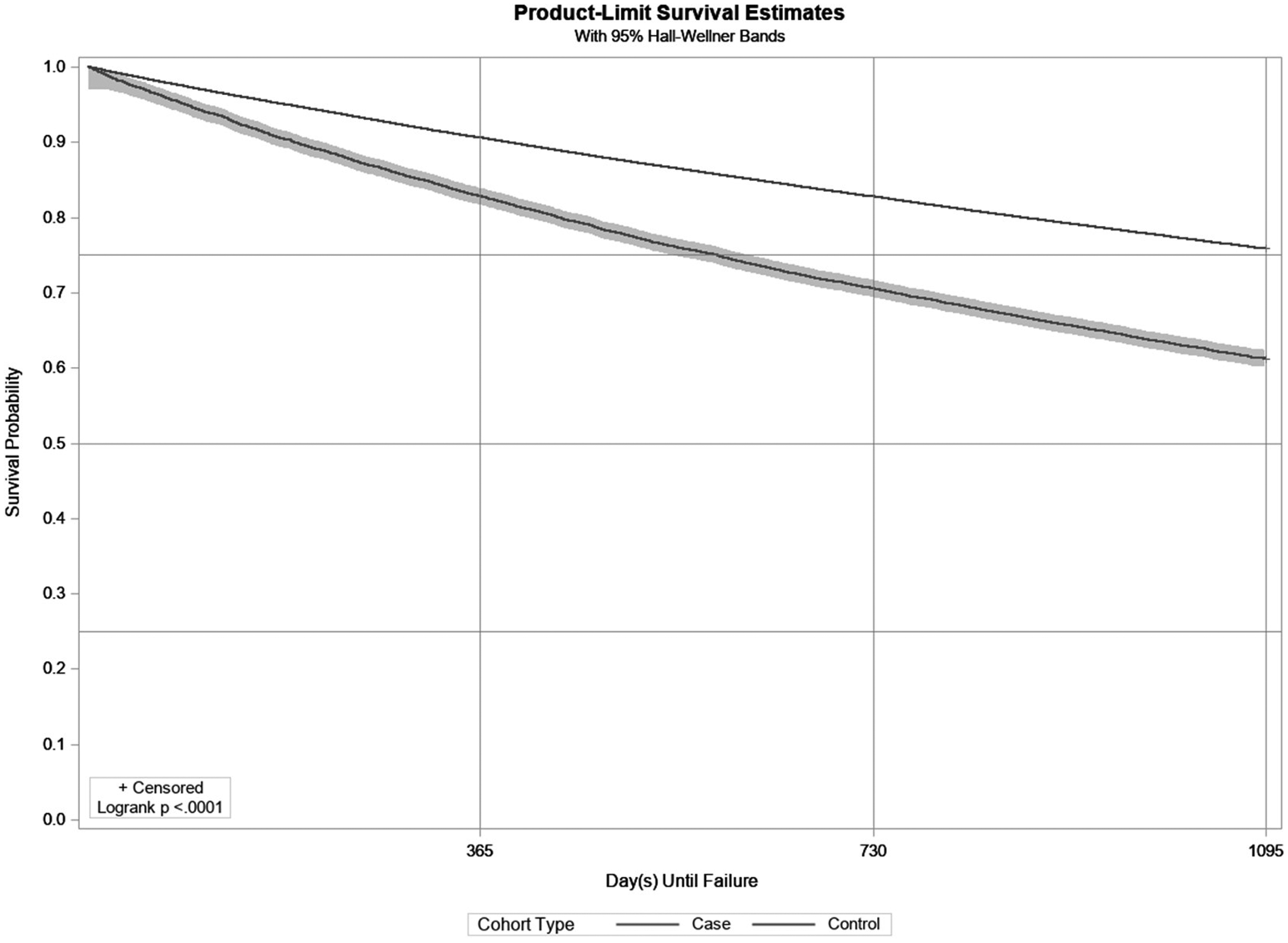
To examine disease-free survival of individuals with CP or SB compared to controls, those patients that had no evidence of composite psychological morbidity in each group were plotted using Kaplan–Meier product limit survival curves for a 3-year period. To establish incidence in claims, we used 1-year lookback period from the index date in each group to obtain evidence of any service utilization with a diagnosis of any psychological morbidity. These patients were excluded from the product-limit survival curves and other subsequent analyses.
To estimate the unadjusted and adjusted hazard of the composite and each psychological morbidity, a series of survival models were developed. For each psychological morbidity, all patients that had evidence of the specific psychological morbidity were excluded from the model. For example, if insomnia was being considered as the incident outcome, all patients with prevalent insomnia in the 1-year prior to the index date would be excluded from the model. Therefore, sample sizes of patients included for each outcome varied based on evidence of prevalent disease in the 1-year prior to the index date. Survival models were then used to quantify unadjusted and adjusted hazard ratios for each incident psychological morbidity. Appropriate survival models were based on distributional assumptions that included testing Weibull, lognormal, exponential, gamma, logistic, loglog, and Normal distribution with respect to the follow-up days by minimizing critical model fit statistics. Critical assessment of Akaike Information Criterion (AIC) was used as a basis for minimization amongst all candidate distributions. Use of the parametric Weibull regression for incident psychological outcome was applied stepwise. To examine the effects of incremental adjustment on the exposure variable (CP or SB), a series of models for each psychological outcome was evaluated. All patients were right-censored if they did not experience the outcome in the follow-up period or disenrolled from the plan. Both unadjusted and all adjusted hazard ratios and 95% confidence intervals for the exposure to CP/SB were calculated.
All analyses were conducted using SAS 9.4 (SAS Institute, Cary, NC). Statistical testing was two-tailed with a significance level of 0.05 and effect sizes used a 0.2 meaningful difference cutoff.
Results
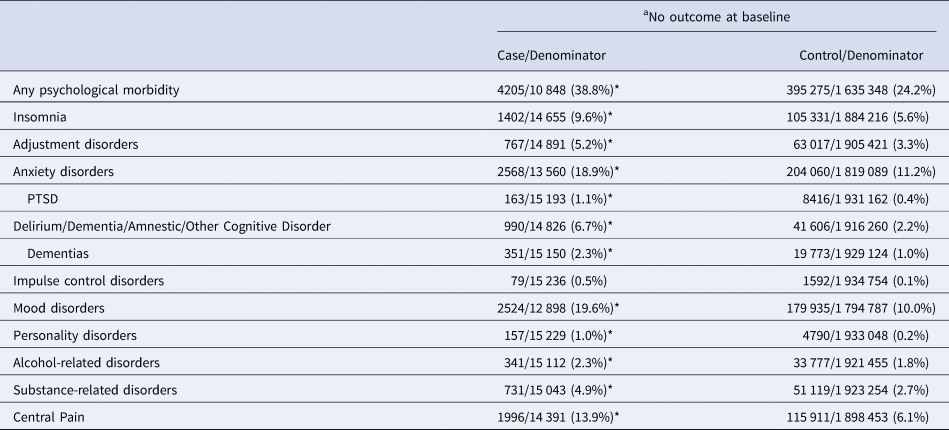
The median time in the plan for eligible enrollees was 7.0 (25th Percentile: 5.1; 75th Percentile: 9.7) and 6.7 (25th Percentile: 5.0; 75th Percentile: 9.3) years for patients with CP or SB v. controls, respectively. Adults living with CP or SB had a higher 4-year incidence of any psychological morbidity (38.8% v. 24.2%) as compared to adults without CP or SB, and differences were to a clinically meaningful extent. Moreover, adults with CP or SB had significantly higher incidence of all of the psychological outcomes, including insomnia (9.6% v. 5.6%), adjustment disorders (5.2% v. 3.3%), anxiety disorders (18.9% v. 11.2%) and PTSD (1.1% v. 0.4%), delirium/dementia/amnestic or other cognitive disorder (6.7% v. 2.2%), dementia (2.3% v. 1.0%), impulse control disorders (0.5% v. 0.1%), mood disorders (19.6% v. 10.0%), personality disorders (1.0% v. 0.2%), alcohol-related disorders (2.3% v. 1.8%), substance-related disorders (4.9% v. 2.7%), and central pain syndrome (13.9% v. 6.1%), as compared to adults without CP or SB (all p < 0.01 and SMD ⩾ 0.2) (Table 2).
Incidence of any and all psychological morbidities among adults with and without CP or SB with 1-year clean enrollment period

a Denominators for both cases and controls reflect 1-year clean period during their enrollment for the specific condition. For instance, among cases (CP/SB), there exist 14 655 patients whose first year of enrollment had no evidence of insomnia; therefore, inferred incident insomnia could be estimated for this subset of the full CP/SB cohort. As a result, all patient cohorts' denominators dynamically change conditional on the incident outcome being measured to ensure a clean period in the first year of enrollment
*p < 0.01 and standard mean difference (SMD) ⩾0.2.
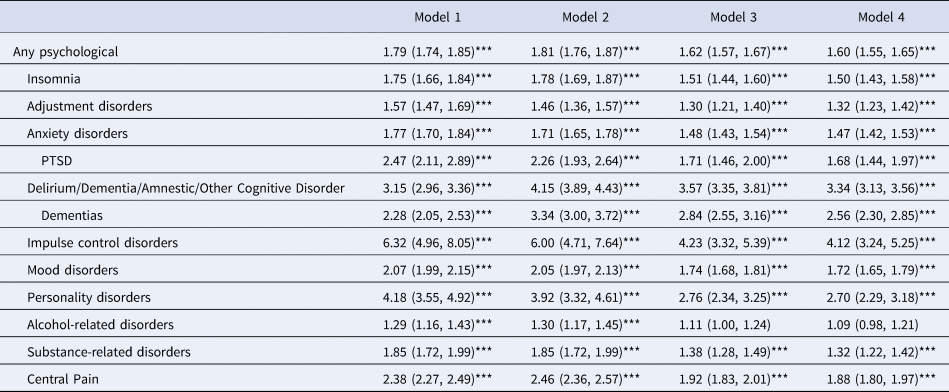
A Kaplan–Meier curve for the unadjusted disease-free survival for any psychological morbidity in adults with CP or SB and controls are demonstrated in Fig. 2. Unadjusted survival models demonstrated a robust increased hazard ratio (HR) for each of the incident psychological morbidities among adults with CP or SB and ranged from HR: 1.29 (1.16, 1.43) for alcohol-related disorders to HR: 6.32 (4.96, 8.05) (all p < 0.001). Fully adjusted survival models demonstrated that adults with CP or SB had a greater hazard for any psychological morbidity (HR: 1.60; 95% CI 1.55–1.65) (online supplementary Table S3), and all but one psychological disorder (alcohol-related disorders), and ranged from HR: 1.32 (1.23, 1.42) for substance disorders to HR: 4.12 (3.24, 5.25) for impulse control disorders (Table 3).
Disease-free survival and Kaplan–Meier product-limit survival curves (3-year) for adults with CP or SB (grey) and without CP or SB (black), for any psychological morbidity.

Survival models with parametric Weibull regression were completed stepwise for each incident psychological outcome to examine the effects of incremental adjustment on the exposure variable (CP or SB)

Model 1: Unadjusted.
Model 2: Model 1 + Demographic variables (age, sex, race, geographic region).
Model 3: Model 1 + Model 2 + Modified Elixhauser Comorbidity Index.
Model 4: Model 1 + Model 2 + Model 3 + Education + Income.
Discussion
The principal finding of this study was that adults living with CP or SB had a higher incidence of and adjusted hazard for any and all psychological morbidities than adults without CP or SB. This is the first and largest study to date to examine longitudinal trajectories of psychological morbidity among adults living with CP or SB. Future research and clinical efforts are needed to not only better understand the healthcare burden associated with mental health disorders in the CP and SB populations, as well as across other subpopulations with other neurodevelopmental disabilities, but also to understand the disparities in healthcare access between privately- and federally-insured beneficiaries living with disabilities. Importantly, these findings bolster the need for improved clinical screening and design of early behavioral interventions to reduce risk of psychological disease onset/progression in the CP and SB populations.
Our findings support previous research indicating a higher risk of various psychological morbidities in adults with CP and SB. Adults with CP often experience depression and anxiety at higher prevalence and incidence than the general population (Smith et al., Reference Smith, Peterson, O'Connell, Victor, Liverani, Anokye and Ryan2018; Whitney et al., Reference Whitney, Warschausky, Ng, Hurvitz, Kamdar and Peterson2019a). In a population-representative sample from the UK, more than 16% of younger adults with CP under 30 years of age were found to have depression compared to less than 7% of the general population (Fortuna, Holub, Turk, Meccarello, & Davidson, Reference Fortuna, Holub, Turk, Meccarello and Davidson2018). Depression and anxiety are also considered to be factors of concern for adults with SB (Mukherjee & Pasulka, Reference Mukherjee and Pasulka2017). In fact, in a recent cohort study, approximately 26% of adults with SB experienced depressive symptomatology, 36% were on antidepressants to treat depressive symptoms, and 63% of those with clinical symptoms of depression were on antidepressants (Dicianno et al., Reference Dicianno, Kinback, Bellin, Chaikind, Buhari, Holmbeck and Collins2015). The pathophysiology underlying CP and SB consist of insults to or malformations of the central nervous system that may include the frontal cortex, the prefrontal cortex, cerebellum, the limbic system, and other brain centers that control behavior, self-regulation, working memory, and executive function may be disrupted, thus predisposing individuals with CP or SB to a higher risk of poor cognitive health than typically developing peers.
In addition to the findings that adults living with CP or SB had a higher risk for developing conventional psychological morbidities (e.g. depression and anxiety), we found that risk for central pain was also significantly greater in adults with CP or SB. Indeed, chronic pain is the most commonly reported physical symptomology of CP and SB throughout the lifespan, and yet pain is perhaps the least understood, emphasized, and studied physical comorbidity of these conditions (Alriksson-Schmidt, Josenby, Lindquist, & Westbom, Reference Alriksson-Schmidt, Josenby, Lindquist and Westbom2018; Blackman, Svensson, & Marchand, Reference Blackman, Svensson and Marchand2018; Fehlings, Reference Fehlings2017; Wagner et al., Reference Wagner, Linroth, Gangl, Mitchell, Hall, Cady and Christenson2015). There exists robust literature linking pain and psychological morbidity in the general population (Goesling, Lin, & Clauw, Reference Goesling, Lin and Clauw2018; Tsang et al., Reference Tsang, Von Korff, Lee, Alonso, Karam, Angermeyer and Watanabe2008); however, there have been virtually no investigations to understand pain phenotype distributions (e.g. including nociceptive, nociplastic, neuropathic) in CP or SB and how they contribute to psychological morbidity onset/progression. Pain is experienced by adults with CP and SB when completing normal tasks, such as dressing and transferring, or other activities that require medical interventions (Fox et al., Reference Fox, Ayyangar, Parten, Haapala, Schilling and Kalpakjian2019; Morley et al., Reference Morley, Struwe, Pratte, Clayton, Wilson, Dicianno and Ma2020). Prior research has found that nearly 40% of adults with CP and 45% of those diagnosed with SB commonly experienced pain and severe fatigue (Benner et al., Reference Benner, Hilberink, Veenis, Stam, van der Slot and Roebroeck2017; van Gorp et al., Reference van Gorp, Dallmeijer, van Wely, de Groot, Terwee, Flens and Roebroeck2019). When compared to individuals without CP, about 70–75% of adults with CP report chronic pain (Fox et al., Reference Fox, Ayyangar, Parten, Haapala, Schilling and Kalpakjian2019; van der Slot et al., Reference van der Slot, Benner, Brunton, Engel, Gallien, Hilberink and Roebroeck2020). Individuals with SB are likely to have pain in all regions of their bodies, with pain in legs (thigh, hip, knee, shin, and ankle) reported most often (Morley et al., Reference Morley, Struwe, Pratte, Clayton, Wilson, Dicianno and Ma2020). Assessment of putative pain mechanisms could provide new insight into the pain experience in adults with CP and SB and inform interventions to address pain and psychological morbidity.
Strengths and weaknesses
A major strength of this study is the large and longitudinal sample of adults with CP or SB. It can be challenging to gather data on these clinical sub-populations, and very little is known about health outcomes among individuals with CP or SB as they transition throughout adulthood. Moreover, most large administrative claims databases do not contain some socioeconomic indicators such as net worth, race, and location (division). Herein, we provide incidence estimates and adjusted hazards for psychological morbidity while considering numerous sociodemographic variables from samples representing all states in the USA. Lastly, while clinical trials may be considered the ‘gold standard’ in clinical research, cohort studies are less expensive, include broader patient populations, and are more efficient. In fact, there is little evidence to support the superiority of clinical trials over observational studies (Benson & Hartz, Reference Benson and Hartz2000).
Our study also has several limitations that should be acknowledged. First, we were unable to determine the severity of CP or SB through claims-based data. However, we suspect that our sample may be more reflective of a healthier, higher functioning segment of the CP or SB population (Whitney et al., Reference Whitney, Alford, Devlin, Caird, Hurvitz and Peterson2019b), because they had to be enrolled in private insurance, either by purchasing their own insurance, or by being covered through employment or marriage to someone who had private insurance. Therefore, results and comparisons to adults without CP or SB are likely conservative estimates, and the true extent of psychological morbidity may be underestimated in this study. Importantly, administrative claims data may be prone to inaccurate coding of medical diagnoses, such as CP or SB, as well as chronic diseases, which may have an effect on our incidence estimates. While validation studies have shown that using >1 claim for a medical condition improves the ability to identify beneficiaries with that medical condition (Kerr, McGlynn, Van Vorst, & Wickstrom, Reference Kerr, McGlynn, Van Vorst and Wickstrom2000; Reeves et al., Reference Reeves, Garcia, Kleyn, Housey, Stottlemyer, Lyon-Callo and Dombkowski2014), single claim-based algorithms have been reported to have moderate-to-high positive predictive value (~80%) or specificity (up to 96%) (Doktorchik et al., Reference Doktorchik, Patten, Eastwood, Peng, Chen, Beck and Quan2019; Leslie, Lix, & Yogendran, Reference Leslie, Lix and Yogendran2011; Reeves et al., Reference Reeves, Garcia, Kleyn, Housey, Stottlemyer, Lyon-Callo and Dombkowski2014). However, the accuracy of identifying medical conditions using claims data depends on the number of years for the study period (Leslie et al., Reference Leslie, Lix and Yogendran2011) and the medical condition examined (Doktorchik et al., Reference Doktorchik, Patten, Eastwood, Peng, Chen, Beck and Quan2019; Leslie et al., Reference Leslie, Lix and Yogendran2011; Noyes, Liu, Lyness, & Friedman, Reference Noyes, Liu, Lyness and Friedman2011; Reeves et al., Reference Reeves, Garcia, Kleyn, Housey, Stottlemyer, Lyon-Callo and Dombkowski2014). Finally, we cannot rule out time-varying confounding since baseline measurements of all covariates were included in our final models. Thus, whether having CP or SB ‘causes’ an elevated risk for earlier-onset psychological morbidity, or if changes in other health parameters (e.g. diabetes, a known predictor of psychological morbidity) themselves, are a cause of poor mental health, is an interesting topic. Thus, we were unable to determine if other competing risks or unmeasured confounding [i.e. other risk factors (e.g. family history of mental health disorders, lack of physical activity, loss of functional independence, etc.)] may have influenced the observed findings. Indeed, unmeasured confounding could also be within proxy variables of appropriate care (PT, OT, etc.) which might mitigate psychological morbidity risk (and were not considered). This would lend credence to additional follow-up work to understand the care pathway to success for these patients.
Conclusion
In conclusion, adults with CP or SB have an elevated risk of developing a variety of psychological morbidities compared to the general adult population of privately insured beneficiaries without CP or SB. Individuals with CP and SB frequently utilize healthcare services as part of their routine clinical care. Therefore, increasing clinical awareness of the mental health disorders experienced and risks among adults with CP and SB, improving clinical screening strategies, and developing efficient referral resources for coordinated care may help reduce the burden of mental health disorders in these population.
Supplementary material
The supplementary material for this article can be found at https://doi.org/10.1017/S0033291720001981
Acknowledgements
This research was developed in part under a grant from the National Institute on Disability, Independent Living, and Rehabilitation Research (NIDILRR #90RTHF0001-01-00).
Conflict of interest
None.