Introduction
Adolescence spans ages 10–19 years, although there are developmental variations for early, middle and late adolescence, defined as ages 10–14, 15–17 and 18–19 years, respectively (Dixon-Mueller, Reference Dixon-Mueller2008). Adolescence is an intricate transitional period from childhood to adulthood characterized by physiological and psychological maturity, various external influences, and exposures and experimentation that can enhance sexual risk (WHO, 2001). According to UNICEF/WHO/UNFPA definitions, the stage overlaps with other youthful stages: childhood and youth (UNDESA, no date).
Adolescent sexuality is discussed as part of the broader sexual and reproductive health and rights entrenched by the 1994 International Conference on Population and Development’s Programme of Action (ICPD-PoA), which provided the historic sexual and reproductive health and rights framework, spelled out the population–health–development synergy and addressed the age-driven health needs of adolescents (UN, 1994). Healthy adolescent sexual development is critical for health and socioeconomic well-being (ibid). It is well established that adolescent sexual and reproductive health, and timing of sexual activity in particular, are intricately linked to several outcomes, namely: pregnancy and childbearing, maternal health and HIV and other sexually transmitted infections (Zaba et al., Reference Zaba, Boerma, Pisani and Baptiste2002; Ghebremichael et al., Reference Ghebremichael, Larsen and Paintsil2009; Louie et al., Reference Louie, de Sanjose, Diaz, Castellsague, Herrero and Meijer2009; Stockl et al., Reference Stockl, Kalra, Jacobi and Watts2013). Early sexual debut is also linked to cervical cancers (Louie et al., Reference Louie, de Sanjose, Diaz, Castellsague, Herrero and Meijer2009). In the context of structural, socio-cultural and financial barriers to adolescents accessing sexual and reproductive health services (Chandra-Mouli et al., Reference Chandra-Mouli, Svanemyr, Amin, Fogstad, Say, Girard and Temmerman2015), sexual deferment is a tenable option.
Adolescents in sub-Saharan Africa are especially affected by adverse sexual and reproductive health outcomes associated with early sexual activity, and this exists against the backdrop of the HIV pandemic, largely transmitted through heterosexual contact (UNAIDS, 2016), child marriages (UNFPA, 2012), unmet need for contraceptives (Chandra-Mouli et al., Reference Chandra-Mouli, McCarraher, Phillips, Williamson and Hainsworth2014) and restrictive abortion laws (Sedgh et al., Reference Sedgh, Singh, Shah, Åhman, Henshaw and Bankole2012). Sub-Saharan Africa also has a substantial and rapidly growing adolescent population (UNICEF, 2012), which currently constitutes almost a quarter of the total population of the region (UNICEF, 2015). Female adolescents in particular are disproportionately affected, largely because being female and young poses high sexual and reproductive health risks (Fathalla, Reference Fathalla1998). Female adolescents experience early childbearing, which creates a substantial morbidity and mortality burden among adolescents (UNFPA, 2012). HIV infections among adolescent girls continue to be markedly higher than in adolescent boys in sub-Saharan Africa (UNAIDS, 2016).
There has been substantial research on the socio-cultural risk factors associated with adverse adolescent sexual and reproductive health, one of which is parental absence (Ngom et al., Reference Ngom, Magadi and Owuor2003; McGrath et al., Reference McGrath, Nyirenda, Hosegood and Newell2009; Mmari, Reference Mmari2011; Pilgrim et al., Reference Pilgrim, Ahmed, Gray, Sekasanvu, Lutalo and Nalugoda2014). Parental presence is known to be protective against early sexual debut, sexual activity and pregnancy (Ngom et al. Reference Ngom, Magadi and Owuor2003; McGrath et al., Reference McGrath, Nyirenda, Hosegood and Newell2009; Pilgrim et al., Reference Pilgrim, Ahmed, Gray, Sekasanvu, Lutalo and Nalugoda2014).
There are myriad pathways through which parental absence may influence children’s sexual and reproductive health. Parents provide primary sexual socialization, i.e. impart to their children social, cultural and religious values regarding sexuality (Shtarkshall et al., Reference Shtarkshall, Santelli and Hirsch2007). Parents are well placed to play this role because of their huge stake in the welfare of their children. Involvement of parents in their adolescent children’s lives is also argued to influence adolescents’ self-esteem, which is linked to health-related behaviours (WHO, 2001). Parental absence during the critical adolescence stage may therefore be detrimental to adolescent sexual and reproductive health.
Research on the association between orphanhood status and sexual and reproductive health outcomes seems to have taken centre-stage with the advent of HIV (Robertson et al., Reference Robertson, Gregson and Garnett2010; Mojola Reference Mojola2011; Chae, Reference Chae2013; Mkandawire et al., Reference Mkandawire, Tenkorang and Luginaah2013). In sub-Saharan Africa, an estimated 52 million children aged 0–17 years are orphans, defined as children aged 0–17 years whose parent or parents are dead, out of the global 140 million (UNAIDS et al., 2004; UNICEF, 2015). Research has consistently shown that the majority of orphans are adolescents, regardless of geographic setting (Fisher, Reference Fisher1950; UNAIDS et al., 2004; Hosegood et al., Reference Hosegood, Floyd, Marston, Hill and McGrath2007; Shoko & Ibisomi, Reference Shoko and Ibisomi2016). This is explained by the cumulative increases in orphans with age, and the higher mortality amongst parents of older children due to the older age of the parents as compared with younger children (Fisher, Reference Fisher1950; Palloni & Lee, Reference Palloni and Lee1992; UNAIDS et al., 2004; Hosegood et al., Reference Hosegood, Floyd, Marston, Hill and McGrath2007). Sub-Saharan Africa has the most severe HIV epidemic in the world, estimated to be 70% of global HIV prevalence and of AIDS-related deaths (UNAIDS, 2016). The effect of HIV/AIDS is severe for adults in their prime years resulting in high adult mortality, producing a parallel rise in the number of orphans (Palloni & Lee, Reference Palloni and Lee1992; UNAIDS et al., 2004; Robertson et al., Reference Robertson, Gregson and Garnett2010). The anti-retroviral therapy (ART) roll-out in the region is the most important HIV intervention to date, and has resulted in a substantial reduction in HIV-related mortality (Reniers et al., Reference Reniers, Blom, Calvert, Martin-Onraet, Herbst and Eaton2016) and orphanhood prevalence (Makumbi et al., Reference Makumbi, Nakigozi, Sekasanvu, Lukabwe, Kagaayi and Lutalo2012; Rathod et al., Reference Rathod, Chi, Kusanthan, Chilopa, Levy and Sikazwe2014) and has increased survival into adolescence for children perinatally affected by HIV (Mofenson & Cotton, Reference Mofenson and Cotton2013).
Upon parental death, adolescents’ living arrangements almost always change (Mojola, Reference Mojola2011). The transition to other households in the event of parental death disrupts interpersonal relationships, requiring children to build new relationships with their new care-givers, with varying degrees of success (Foster, Reference Foster2004; Juma et al., Reference Juma, Askew and Ferguson2007; Mojola, Reference Mojola2011; Puffer et al., Reference Puffer, Drabkin, Stashko, Broverman, Ogwang-Odhiambo and Sikkema2012). This transition may affect children’s social and emotional development, and has a bearing on their sexual development and sexual and reproductive health (Juma et al., Reference Juma, Askew and Ferguson2007). The characteristic and culturally sanctioned living arrangements for orphans is to seek care from kin networks, although orphans are increasingly living outside of family care (Foster, Reference Foster2004). Research in sub-Saharan Africa on the effects of orphanhood status on sexual and reproductive health outcomes such as early sexual debut, pregnancy, marriage and HIV infection and other sexually transmitted infections, although substantial, has not produced completely consistent findings. For example, a study by Palermo and Peterman (Reference Palermo and Peterman2009) found no evidence that orphanhood was associated with marriage or pregnancy, but with sexual debut. A study by Robertson et al. (Reference Robertson, Gregson and Garnett2010) suggested that the association between orphanhood and sexual debut existed for countries with high orphanhood levels and not those with low orphanhood prevalence. The association also varies by category of orphans, i.e. maternal, paternal or double orphans, and sex of the respective adolescent (McGrath et al., Reference McGrath, Nyirenda, Hosegood and Newell2009), in some cases existing for female adolescents only (Robertson et al., Reference Robertson, Gregson and Garnett2010; Chae, Reference Chae2013). A study by Magadi and Uchudi (Reference Magadi and Uchudi2015) did not find orphans to have a higher risk of sexual debut than their non-orphan counterparts.
The variation is partly due to the diverse control variables used in multivariate models, age cut-offs, geography and research design given the contextual variations in health. The age criterion used in data collection often introduces restrictions on the ages that are to be considered in research using secondary data. For studies using the publicly available Demographic and Health Survey (DHS) data, the age range for analysis of sexual debut is 15–17 years because these are the only ages with available data for both parental survival status and sexual and reproductive health outcomes (Palermo & Peterman, 2009; Robertson et al., Reference Robertson, Gregson and Garnett2010). For longitudinal studies and studies using primary or other sources of data, ages range from early adolescence to mid-20s (McGrath et al., Reference McGrath, Nyirenda, Hosegood and Newell2009; Chae, Reference Chae2013; Mkandawire et al., Reference Mkandawire, Tenkorang and Luginaah2013). Although the relationship is less conclusive, orphanhood seems to be an important factor for female adolescents’ sexual and reproductive health vulnerability (Operario et al., Reference Operario, Underhill, Chuong and Cluver2011). This relationship is likely to be influenced by demographic and socioeconomic factors, age, rural–urban residence or care arrangements for the orphan (Operario et al., Reference Operario, Underhill, Chuong and Cluver2011; Magadi & Uchudi, Reference Magadi and Uchudi2015; Embleton et al., Reference Embleton, Nyandat, Ayuku, Sang, Kamanda and Ayaya2017). Research also suggests the aforementioned factors may be important not only as confounding factors, but also in their own right (Mkandawire et al., Reference Mkandawire, Tenkorang and Luginaah2013). Nevertheless, the highlighted inconsistency between orphanhood and sexual and reproductive health outcomes may also be because the longstanding patterns of fosterage in the region are rarely considered.
Parental absence is not exclusively due to parental death, and may be prompted by other circumstances (Meintjes et al., Reference Meintjes, Hall, Marera and Boulle2010; Gaydosh, Reference Gaydosh2015), so the orphaned children may not have been living with the deceased parent to begin with. Children may be ‘virtual orphans’ when parents are living elsewhere (Case et al., Reference Case, Paxson and Ableidinger2004). While parental non-co-residence may not always imply child–parent non-contact, frequency of contact is almost certainly likely to vary, and ultimately to affect the extent of parental influence. There is emerging research considering the effect of adolescents’ living arrangements on sexual and reproductive health, taking into account orphanhood status, but this research is sparse and geographically restricted.
A longitudinal study in a district of Uganda showed that parental absence, particularly of fathers, whether due to death or otherwise, resulted in early sexual debut among female adolescents (Pilgrim et al., Reference Pilgrim, Ahmed, Gray, Sekasanvu, Lutalo and Nalugoda2014). A cross-sectional study of male and female adolescents in two districts of Sierra Leone found that living with a surviving parent, a mother, father or both parents, delayed sexual debut (Stark et al., Reference Stark, Tan, Muldoon, King and Lamin2015). A study using a two-phased global Well-Being of Adolescents in Vulnerable Environments (WAVE) study data, suggested that in Johannesburg, South Africa, there was no association between parental absence and sexual debut for male adolescents (Mmari et al., Reference Mmari, Kalamar, Brahmbhatt and Venables2016). Contrary to other studies, female adolescents who were raised by other persons besides their parents were less likely to have sex compared with their counterparts who were raised in households in which both their biological parents were present. In addition, the risk of sexual debut was higher for maternal and double orphans, but lower for paternal orphans. For males who were paternal orphans, the risk of sexual debut was higher than for their counterparts who were non-orphans (ibid).
It is against this background that the present study sought to contribute to the discourse by focusing on female adolescents’ sexual debut and parental presence/absence, taking into account parental survival status. The study used nationally representative and comparable data from seven southern African countries. The study had the following hypotheses: 1) orphans have a higher risk of sexual debut compared with non-orphans, and 2) female adolescents who are living with both parents have reduced risk of sexual debut than their counterparts who do not. The objectives of the study were first to estimate the timing of sexual debut across the countries, second, to examine whether there was a significant difference in sexual risk across an array of living arrangements and third, to estimate the association between orphanhood status, living arrangements and timing of sexual debut.
Methods
Data and study sample
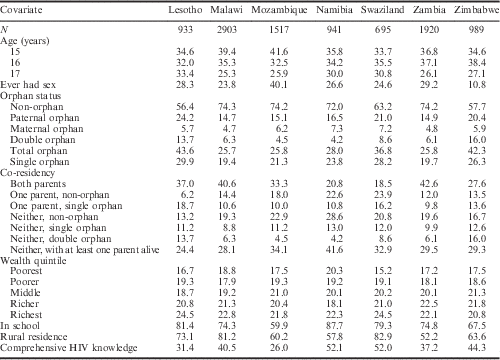
The study used data from adolescents aged 15–17 collected as part of the DHS programme from seven of the ten southern African countries. The seven countries were Lesotho, Malawi, Mozambique, Namibia, Swaziland, Zambia and Zimbabwe, while relevant data were not available for Angola, Botswana and South Africa. The surveys employed in the study were conducted between 2006 and 2014 for each country as follows: Lesotho 2009/10, Malawi 2010, Mozambique 2011, Namibia 2013, Swaziland 2006/7, Zambia 2013/4 and Zimbabwe 2010/1. The sample sizes in the study ranged from approximately 700 female adolescents in Swaziland to 2900 in Malawi (see Table 1).
Descriptive statistics (percentages) of study population

Percentages may not add up because of rounding.
Female adolescents aged 15–17 years were selected from the women of reproductive ages identified from the sampled households to participate in detailed individual interviews. Interviews with women included questions on sexual and reproductive health, and parental survival information was obtained from the household schedule. This study was restricted to females because of their heightened sexual and reproductive health risks. The study was also restricted to usual household residents to capture typical living arrangements. Adolescents were classified as either never married, or ever married. The latter category excluded female adolescents whose sexual debut occurred within marriage, i.e. where age at sexual debut was higher than the age at first union. Child/early marriages, defined as marriages where one or both partners are aged 17 years or younger, are widespread in the seven countries (UNFPA, 2012). In Lesotho, Malawi, Mozambique, Zambia and Zimbabwe, approximately 20–50% of girls are married by age 18 (UNFPA, 2012).
Contextual factors
Southern Africa provides an important context for research on adolescents’ sexual and reproductive health outcomes. The sub-region is characterized by relatively high parental absence and complex and fluid households due to high child fosterage, labour migration and non-marital fertility (Hosegood et al., Reference Hosegood, Floyd, Marston, Hill and McGrath2007). The sub-region is by far the worst affected by the HIV epidemic (UNAIDS, 2016). A number of adolescents may be HIV-infected following postnatal acquisition of infection (Eaton et al., Reference Eaton, Garnett, Takavarasha, Mason, Robertson and Schumacher2013).
Demographic and Health Surveys
The DHS programme undertakes cross-sectional surveys in low- and middle-income countries every 4–5 years dating back to the mid-1980s (Corsi et al., Reference Corsi, Neuman, Finlay and Subramanian2012). Key advantages of the DHS include high response rates, high-quality interviewer training, national coverage, almost consistent content over time and procedures standardized to allow for data comparability across countries and over time (Corsi et al., Reference Corsi, Neuman, Finlay and Subramanian2012, p. 1602). Samples are drawn using a two-stage stratified sampling design, are household based, and predominantly include the de facto population, i.e. usual residents and visitors present the night preceding the household interview.
Variables
The outcome variable in the analyses was ‘sexual debut’, defined as age at first sexual intercourse, and coded ‘0’ if the respondent had not initiated sexual intercourse. Legal age of consent for sex is 16 years in the seven study countries. In the study, adolescents whose age at first sexual intercourse was inconsistent with related events, e.g. age at conception of current pregnancy or age at first birth, who constituted less than 1% of the sample, were excluded.
The key explanatory variable was ‘living arrangement’, derived from adolescents’ co-residency with biological parents considering parents’ survival status. Parental survival information was obtained from questions on whether the index person’s biological mother/father was alive at the time of the interview. In the study, female adolescents with indeterminate responses for parental survival status were excluded, to consider only adolescents that affirmatively reported their orphanhood status. Maternal and paternal (which make up single orphans), double and non-orphanhood were mutually exclusive categories. The departure from the international definition for orphans, which includes double orphans for maternal and paternal orphans (UNAIDS et al., 2004), was deliberate. This was to capture separately the effect of mothers, fathers and both parents’ deaths on the timing of sexual debut for female adolescents.
Co-residency information was obtained from questions that sought to identify the adolescent’s mother/father using the respective parent’s identification number on the household schedule, coded ‘0’ if not listed on the household schedule. In the study, co-residency was coded ‘1’ if a parent was present on the household schedule or ‘0’ otherwise. Parental co-residency was combined with orphan status as follows, to categorize female adolescents’ living arrangements: 1) both parents; 2) one parent, non-orphan; 3) one parent, single orphan; 4) neither parent, non-orphan; 5) neither parent, single orphan; 6) neither parent, double orphan.
Further disaggregation to identify the specific parent (mother or father) would have been informative but this was not possible due to small numbers in some categories in the models performed by country.
Potential confounding factors were schooling, wealth quintile, residency and comprehensive HIV knowledge. These variables are theoretically associated with sexual debut and were common across the datasets. Using age-for-grade analysis in the respective countries, adolescents aged 15–17 years should be enrolled in secondary school. Thus, a variable for school attendance was derived by identifying adolescents who attended school in the current year (coded ‘1’ if was in school and ‘0’ otherwise). Residency was coded ‘1’ if the adolescent resided in a rural area and ‘0’ if the place of residence was urban. Country- and survey-specific relative wealth indices were available in the datasets (Rutstein & Staveteig, Reference Rutstein and Staveteig2014). In the study, wealth quintiles that accounted for rural and urban differences were derived from the ones available in the datasets. Comprehensive HIV knowledge among young people was on the list of indicators for monitoring the United Nations Declaration of Commitment on HIV/AIDS, and was defined in relation to responses to the following questions that were all to be correctly answered (UNAIDS, 2002), also adopted in the study: 1) Can having sex with only one faithful, uninfected partner reduce the risk of HIV transmission? (Yes); 2) Can using condoms reduce the risk of HIV transmission? (Yes); 3) Can a healthy-looking person have HIV? (Yes); 4) Can a person get HIV from mosquito bites? (No); 5) Can a person get HIV by sharing a meal with someone who is infected? (No).
Analysis
The analyses included descriptive statistics, and unadjusted and adjusted models that took into account the surveys’ complex design. The DHS data were weighted to allow for nationally representative estimates. The Cox regression-based test for equality of survival curves was used for the key explanatory variable ‘living arrangements’, to test for equality of survivor functions for sample-weighted data. For descriptive statistics, the characteristics of the population were reported using percentages and Kaplan–Meir survival curves plotted to estimate the timing of sexual debut. The analyses (unadjusted and adjusted regression models) were performed separately by country after merging individual women and household datasets. It would have been less cumbersome, and interesting, to use pooled datasets in order to model country effects. However, there are concerns around the reliability of estimates from analysis involving pooled datasets for relatively few countries (Bryan & Jenkins, 2016). In the study, pooled data were used to increase the sample size to enable disaggregation of co-residency with one parent to co-residency with mother or father, and to differentiate between maternal and paternal orphans for single orphans. Cox proportional hazard models were fitted to estimate the risk of sexual debut, where female adolescents who were sexually naïve at the time of the survey were censored.
Ethics statement
Written permission to use the data was provided by the Inner City Fund International (ICFi), which keeps the archived data. The University of the Witwatersrand’s Human Research Ethics Committee (Medical) granted ethical approval for the study (No. M140443).
Results
The results showed that orphanhood levels ranged from approximately 26% to 44% (Table 1). Lesotho and Zimbabwe, with over 40% orphans, were the worst affected. Approximately 20–30% of female adolescents were single orphans. The largest proportions of orphans across the countries were paternal orphans – more than double that of maternal orphans. Between 20% and 40% of adolescents were co-resident with both parents. Approximately 25–40% were not co-resident with either parent, although at least one of their parents was alive.
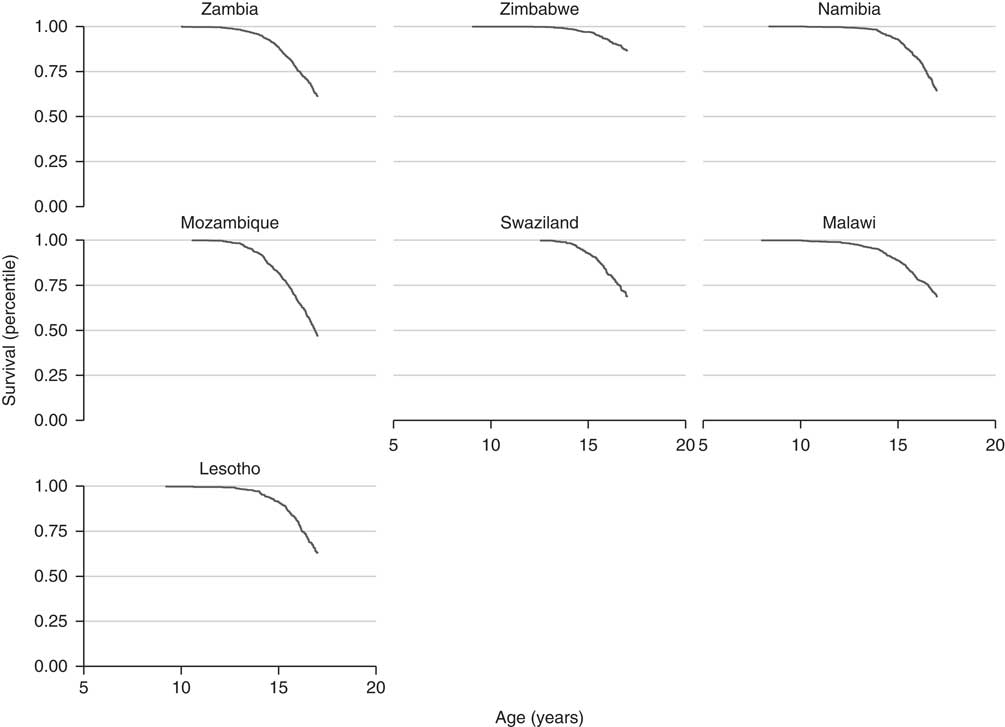
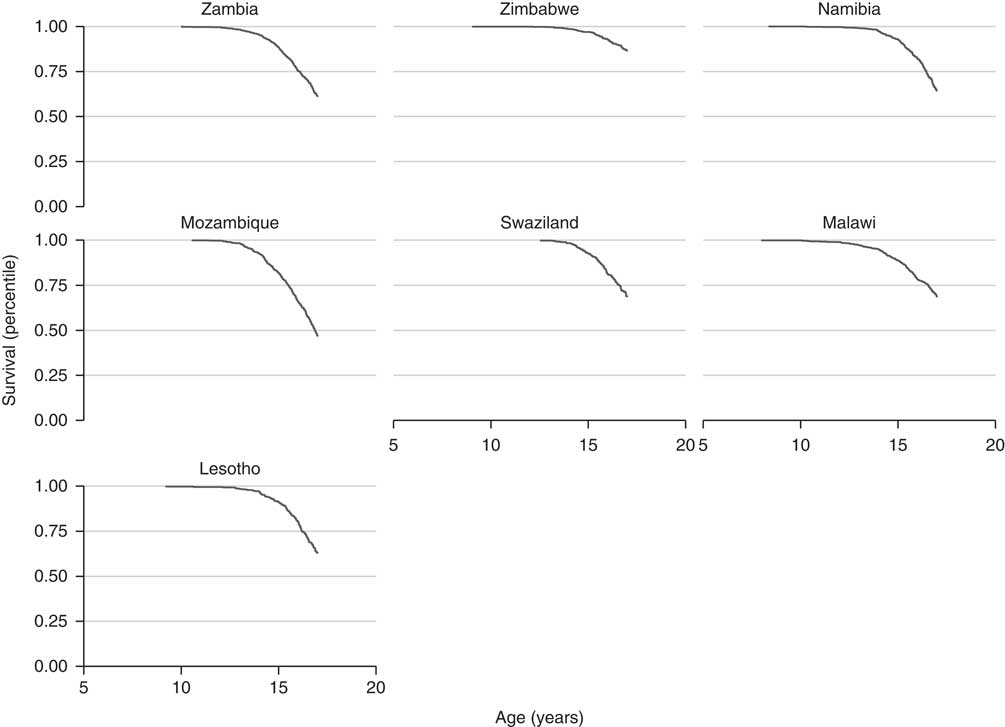
The median age at sexual debut could not be estimated for the seven countries as approximately 10–40% had experienced sexual debut. Kaplan–Meir curves started descending before adolescence (before age 10), although the survival rates were very high at this stage (Fig. 1). The survival curves descended very gradually, except for Mozambique where the survival curve descended relatively sharply, although the results are different from those shown in Table 1. Results from the Cox regression-based tests for equality of survival curves showed that there were significant differences in the relative hazards across the living arrangements categories for all countries, except for Swaziland and Namibia (results not shown).
Kaplan–Meier survival curves of time to sexual debut by country.
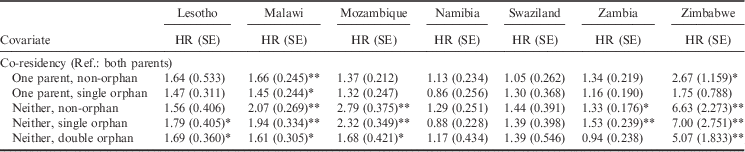
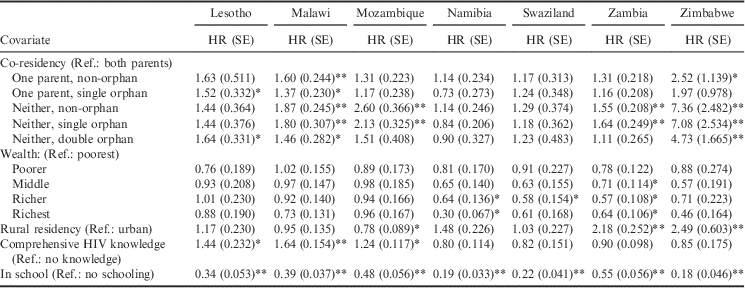
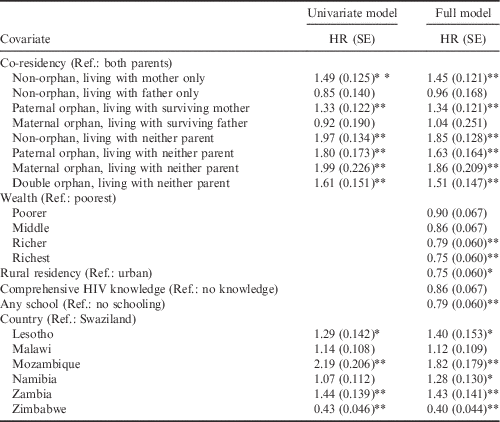
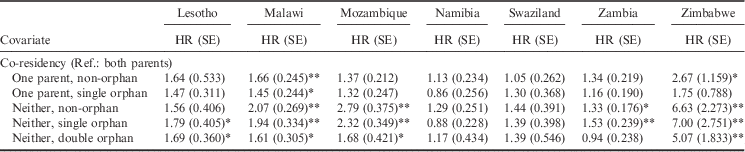
The results showed that living arrangements were associated with the risk of sexual debut (Tables 2 and 3). This was in five of the seven countries studied. This was particularly the case for female adolescents who were co-resident with neither of their parents. The pooled analyses showed that non-co-residency with the father (regardless of the father’s survival status or mother’s co-residency status) was associated with higher risk of sexual debut (Table 4). In addition, the sexual debut risk for female adolescents who were co-resident with the father only was lower or not different from that of adolescents co-residing with both parents – but was not statistically significant. The adjusted models for all countries indicated that current enrolment in school was significantly associated with lower risk of sexual debut.
Unadjusted models for timing of sexual debut by orphanhood status and country
HR: Hazard Ratio; SE: Standard Error; Ref., reference category.
*p<0.05; **p<0.01.
Adjusted models for timing of sexual debut by country

HR: Hazard Ratio; SE: Standard Error; Ref., reference category.
*p<0.05; **p<0.01.
Unadjusted and adjusted models for time to sexual debut: pooled data

HR: Hazard Ratio; SE: Standard Error; Ref., reference category.
*p<0.05; **p<0.01.
Lesotho
In the unadjusted model, co-residency with neither of the parents for double and single orphans was associated with approximately 70% and 80% higher sexual debut risk, respectively. In the adjusted model, co-residency with neither parent for double orphans was associated with 60% higher risk of sexual debut and with 50% higher sexual debut risk for co-residency with one surviving parent.
Malawi
In the unadjusted model, co-residency with one parent, for single orphans and for non-orphans, was associated with approximately 1.5 and 1.7 times the risk of sexual debut, respectively, compared with co-residency with both parents. In addition, non-co-residency with either parent for double orphans, single orphans and non-orphans was associated with approximately 1.6, 1.9 and 2.1 times higher sexual debut risk, respectively. This persisted in the adjusted model, although slightly attenuated.
Mozambique
In the unadjusted model, female adolescents who were not co-resident with either of their parents had a higher risk of sexual debut (Hazard Ratios (HRs) were 1.7, 2.3 and 2.8 for double orphans, single orphans and non-orphans respectively). In the adjusted model, the HRs were 2.1 for single orphans and 2.6 for non-orphans.
Namibia and Swaziland
There was no evidence that co-residency with parents was associated with sexual debut risk in either country.
Zambia
In the unadjusted model, co-residency with neither parent when one or both parents was alive was associated with 1.5 and 1.3 times the risk of sexual debut, respectively. In the adjusted model, the risk was approximately 1.6 times for both.
Zimbabwe
In the unadjusted model, non-co-residency with both parents increased the risk of sexual debut amongst adolescents, which persisted in the adjusted model (HR ranged from 2.7 to 7.0 in the unadjusted model and from 2.5 to 7.4 in the adjusted model).
Pooled data
Adolescents who were co-residing with a mother and not a father because of death of the latter or because the father was living elsewhere, had higher sexual debut risk (HR: 1.3 and 1.5, respectively, for the unadjusted model, and which persisted in the adjusted model). Higher risk of sexual debut was also present in all instances where an adolescent was not co-residing with either parent (HR: 1.6–2.0 for the unadjusted model and 1.5–1.9 in the adjusted model).
Discussion
The study set out to examine the relationship between orphanhood, living arrangements and risk of sexual debut among female adolescents aged 15–17 years in southern Africa. Results showed that across the seven countries orphanhood was high, but in all likelihood could be a ‘diminishing problem’, perhaps as a result of the ART roll-out, seen in Zambia and Uganda (Makumbi et al., Reference Makumbi, Nakigozi, Sekasanvu, Lukabwe, Kagaayi and Lutalo2012; Rathod et al., Reference Rathod, Chi, Kusanthan, Chilopa, Levy and Sikazwe2014). Although the data were from a relatively short interval between 2006 and 2014, the period saw dramatic changes in adult mortality levels, so orphanhood prevalence across countries should be understood in the context of adult mortality levels at the different reference periods for the data used in the study. Parental absence was also high and, consistent with research by Martin and Zulaika (Reference Martin and Zulaika2016) and Monasch and Boerma (Reference Monasch and Boerma2004), could not be explained completely by orphanhood.
A substantial number of female adolescents had initiated sexual activity – just over 10% to 40% of the female adolescents had had their sexual debut. The results suggested that ‘living arrangements’ was associated with higher sexual debut risk in five of the seven countries in the study. The pooled analyses showed that father absence was associated with higher risk of sexual debut, while co-residency with only the father was associated with lower or equal sexual debut risk to non-orphans co-residing with both parents. The expectation was that co-residency with one parent would be associated with higher risk of sexual debut compared with co-residency with both parents, and the complex picture could be explained by the influence that fathers may exert over children’s behaviour, while mothers may experience problems disciplining their children when their husbands have died (Mmari, Reference Mmari2011). Living with neither parent was nevertheless found to be associated with a higher risk of sexual debut amongst female adolescents in this study. This was consistent with the hypothesis that co-residency with parents is associated with lower risk of early sexual debut.
Interestingly, and contrary to the study’s hypotheses, i.e. that (1) orphans have a higher risk of sexual debut compared with non-orphans and (2) female adolescents who are living with both parents have lower risk of sexual debut than their counterparts who do not, double orphans did not seem to be the worst disadvantaged. This is probably because female adolescents who are double orphans are more likely to get support from members of their kinship network compared with their counterparts whose parents are living elsewhere. In an African context, relations get together to arrange the care of surviving children after the death of parents (Mann, Reference Mann2002).
Although control factors were included to estimate the net effect of living arrangements on the timing of sexual debut, they also provided important insights. The results suggested that schooling was the only factor that was universally associated with sexual debut across the countries. The study also showed that school attendance was relatively high in all the countries, although not universal. In the adjusted model, the reduction in sexual debut risk was between approximately 45% and 80% for female adolescents who were attending school, compared with their counterparts who were not. Also noteworthy was that adolescents in higher wealth quintiles had lower sexual debut risk in Namibia and Zambia, and those resident in rural areas had higher risk of sexual debut in Zambia and Zimbabwe, and lower risk in Mozambique. In Lesotho, Malawi and Mozambique, comprehensive HIV/AIDS knowledge was associated with risk of sexual debut; in all three countries sexual debut risk was higher among female adolescents who possessed comprehensive HIV/AIDS knowledge, compared with those who did not. This result is counterintuitive – the expectation is that sound HIV knowledge should translate into HIV-avoidant behaviours, one of which is postponement of sexual initiation (UNAIDS, 2002). However, the relationship between knowledge and behaviour is complex – knowledge alone is insufficient for behaviour change, which poses a challenge for health promotion in general. In this context, sexually active adolescents may have better HIV knowledge than their non-sexually active counterparts, partly because they tend to actively seek HIV information (Van Rossem et al., Reference Van Rossem, Berten and Van Tuyckom2010). Further research is required to understand these pathways.
The study had certain limitations, which need to be considered when interpreting the results. The study used cross-sectional data, so even the potential time-varying explanatory variables were included at fixed points in time and therefore the temporal sequence of events could not be established. Sexual debut was self-reported and therefore could have been under-reported, the extent of which may vary across countries. In addition, the study excluded adolescents living on the streets or in institutions, who with respect to orphanhood status, living arrangements and sexual debut, may be the worst disadvantaged (Hillis et al., Reference Hillis, Zapata, Robbins, Kissin, Skipalska and Yorick2012). The study also did not account for the complexity of African households, e.g. possible vacillation of adolescents between households resulting in multiple household memberships, which is difficult to ascertain using cross-sectional data. Other factors not considered included whether sexual activity was coerced, which may explain the timing of sexual debut.
In conclusion, this study helps to extend the knowledge of risk factors associated with sexual debut and to shape future interventions and research on sexual and reproductive health outcomes among female adolescents in southern Africa. The results suggest that the absence of parents, particularly fathers, is associated with early sexual debut among female adolescents. However, this is against the backdrop of lower co-residency with fathers as compared with mothers (Monasch & Boerma, Reference Monasch and Boerma2004; Martin & Zulaika, Reference Martin and Zulaika2016). Universal access to education may help delay the timing of sexual debut. Ultimately, access to age-appropriate sexual health information and services is critical for healthy sexual development, as outlined in the 1994 report on the International Conference on Population and Development (UN, 1994).
Acknowledgments
This paper was facilitated by attending the Wits School of Public Health Thanda Ukubhala writing retreat, which received financial support from the Faculty of Health Sciences Research Office. The South African Medical Research Council (SAMRC) is gratefully acknowledged for funding Carren Ginsburg’s Career Development Award.