Introduction
Over the past two decades, youth sexual and reproductive health concerns have increasingly been on Zimbabwe's national agenda, as they have in most sub-Saharan African countries. Because of the high HIV prevalence in the country, national programmes against sexually transmitted infections (STIs) encourage youth to adopt responsible sexual behaviour: Abstain, Be faithful and use Condoms, also known as the ABC approach (MOHCW et al., 2004; NAC, 2006; Government of Zimbabwe, 2008). The HIV prevalence rate among the general population has begun to wane, from 26.5% in 1997 to 18.1% in 2005 (Gregson et al., Reference Gregson, Garnet, Nyamukapa, Hallett, Lewis and Mason2006; Mahomva et al., Reference Mahomva, Greby, Dube, Mugurungi, Hargrove and Rosen2006). Although little evaluation research on the impact of HIV prevention programmes has been done (Kim et al., Reference Kim, Kols, Nyakauru, Marangwanda and Chibatamoto2001; Alford et al., Reference Alford, Cheetham and Hauser2005), the recent decline in HIV prevalence is attributed to delays in sexual debut, reduction in sexual partnership and increased condom use (Gregson et al., Reference Gregson, Zhuwau, Anderson and Chandiwana1998, Reference Gregson, Garnet, Nyamukapa, Hallett, Lewis and Mason2006; UNAIDS, 2005a). However, despite the apparent decline in HIV infection, the prevalence rate continues to be one of the highest in the world and the burden of new infections (50%) is still concentrated among persons aged 15–24 (Mahomva et al., Reference Mahomva, Greby, Dube, Mugurungi, Hargrove and Rosen2006). HIV prevalence among Zimbabwean youth aged 15–24 (women 8%, and men 5%) is substantially higher than youth in other sub-Saharan Africa countries (ranging between 1 and 4% for both males and females) (Macro International Inc., 2008). Further, there is growing concern that even in countries where HIV prevalence has declined, risky patterns of sexual behaviour may be increasing again (UNAIDS, 2005b).
To avoid a resurgence of HIV and to sustain the gains made to date, further research on the determinants of youth sexual behaviour needs to be done. Understanding the determinants of sexual behaviour is critical for intervention efforts aimed at fostering positive adolescent development and decreasing the negative outcomes of adolescent sexual behaviour. There is a need to look beyond an individualistic research paradigm to include sociocultural contextual factors shown to shape sexual practices relevant to HIV transmission and prevention (Brokensha, Reference Brokensha, N. and R.1989; King, Reference King1999). Over the course of the past two decades, several researchers in sub-Saharan Africa have argued that fundamental barriers to reducing sexual risk behaviour are rooted within the sociocultural context that moulds the politics of the youth (Obbo, Reference Obbo, Brummelhius and Herdt1995; Hulton et al., Reference Hulton, Cullen and Khalokho2000; Rwenge, Reference Rwenge2000). For example, Obbo (Reference Obbo, Brummelhius and Herdt1995) argues that socially and culturally determined gender roles bestow control in sexual matters upon men and ordinarily within this type of social–cultural context, it is men who control or determine safe sex methods such as condom use. Some studies have identified a high degree of violence and coercion as an integral part of the sociocultural milieu in which expectations for, and meanings of, youth sexuality are formed. The normative violence matrix in which sexuality is set in has implications for increased sexual risk behaviour among the youth (Jewkes et al., Reference Jewkes, Vundule, Maforah and Jordaan2001; Zambuko & Mturi, Reference Zambuko and Mturi2005). Additionally, some observers have pointed to practices such as ‘blood brotherhood’, female circumcision and girl-child pledging as cultural culprits in the expanding HIV epidemic among young people (Grisaru et al., Reference Grisaru, Lezer and Belmaker1997; Hrdy, Reference Hrdy1987; Sibanda, Reference Sibanda2000).
Contemporary research shows ethnicity, another putatively important sociocultural factor, emerging as mediating sexual behaviour in sub-Saharan Africa (Addai, Reference Addai1999a; Akwara et al., Reference Akwara, Madise and Hinde2003). This body of research shows that ethnicity is much more important than education, religion, place of residence and ecological region. Ethnicity has been shown to encompass a mosaic of observable and unobservable norms, beliefs and rituals that govern various life events. In this regard, ethnicity has been shown to be of prime importance in defining marriage patterns (Hirchman, Reference Hirschman1985; Thapa, Reference Thapa1989; Arnaldo, Reference Arnaldo2004), acceptability of sexual behaviour and initiation of sexuality (Magnani et al., Reference Magnani, Karim, Weiss, Bond, Lemba and Morgan2002), and fertility and use of contraception (Addai, Reference Addai1999b; Addai & Trovato, Reference Addai and Trovato1999). However, few of these studies have dealt with the effects of ethnicity on adolescent and young adult's sexual behaviour per se (Hulton et al., Reference Hulton, Cullen and Khalokho2000; Rwenge, Reference Rwenge2000; Hallman, Reference Hallman2004). Traditional values, norms and roles acquired in adolescents' early lives through ethnic structures have implications for their current and future sexual behaviour. Additionally, as adolescents enter a world of new relationships they are challenged with reconciling sociocultural norms of behaviour with emerging sexual feelings and desires (Bourdillon, Reference Bourdillon1997). More importantly, no comparative analysis of young men's and women's sexual behaviours has been undertaken to examine whether the effects of ethnicity are consistent or manifest differently between the sexes. Such information is critical for interventions that meet the gender-specific needs of young people. The comparative lack of attention paid to ethnic dimensions of HIV for young people represents a missed opportunity for containing the pandemic in a region where ethnic identity continues to shape social and sexual processes.
The dominant paradigm for the organization and conduct of HIV research in Zimbabwe has largely focused on the demographic and socioeconomic factors associated with the risk of HIV infection (e.g. Campbell & Mbizvo, Reference Campbell and Mbizvo1994; Mbizvo et al., Reference Mbizvo, Siziya, Olayinka and Adamchak1997; Meekers & Wekwete, Reference Meekers and Wekwete1997; Gwede et al., Reference Gwede, McDermott, Westhoff, Mushore, Mushore and Chitsika2001). Although elements of traditional sexual practices such as ‘dry sex’ (Runganga et al., Reference Runganga, Pitts and McMaster1992), incest and abuse of adolescent girls for ‘cleansing’ purposes (Meursing, et al., Reference Meursing, Vos, Coutinho, Moyo, Mpofu, Oneko and Mundy1995) are reported as significant problems in contemporary Zimbabwean culture, seldom have researchers and policymakers looked at the salient cultural variable – ethnicity – and how it shapes HIV-related behaviour in Zimbabwe. Ethnicity continues to provide a powerful marker of identification, socialization and group solidarity in the country. Yet, little is known about the differences in sexual behaviour of the main ethnic groups in the nation, i.e. the Shona and Ndebele. More importantly for this study, the relative role of ethnicity in adolescents and young adults' sexual experiences and behaviours has not been systematically assessed. Using a nationally representative sample of young men and young women, this study expands on the small but growing scholarship pointing to the effects of ethnicity on sexual behaviour in sub-Saharan Africa. Unlike most of these studies in which effects of ethnicity are adjusted for as potentially confounding factors, in this study, the relative effects of ethnicity per se on sexual behaviour among never-married adolescents and young adults are of primary interest.
The sociocultural perspective
This study adopts a cultural contextual perspective of sexual behaviour that views young people's ethnic context as a primary determinant of their preparation for healthy adulthood (Parker, Reference Parker2004; Poundstone et al., Reference Ponderstone, Strathdee and Celentano2004). The basic question that underlies the study is: does the ethnic context of youth people's daily lives provide them with greater options for non-risky sexual behaviours or compromise their development into healthy adults? The conceptual framework for the study is provided by two hypotheses derived from findings of previous research that shows the link between sexual behaviour and ethnicity: the ‘cultural/norms’ hypothesis and the ‘characteristics’ hypothesis (Addai, Reference Addai1999a; Addai & Trovato, Reference Addai and Trovato1999; Arnaldo, Reference Arnaldo2004).
The first hypothesis, the ‘cultural/norms’ hypothesis, assigns greater importance to the role of culture independent of demographic and socioeconomic factors in explaining sexual behaviour. Group norms, ideals and beliefs are viewed as essential in shaping people's sexual behaviour. In sub-Saharan Africa, ethnicity is the basis of social organization in the traditional context, and thus encompasses a mosaic of observable and unobservable norms, beliefs and rituals that govern various life events. Each ethnic group has its own corpus of knowledge and practices in the sphere of sexual and health behaviour (Murdock, Reference Murdock and Manners1964, Reference Murdock1967; Bourdillon, Reference Bourdillon1976, 1990; Gelfand, Reference Gelfand1979; Nyathi, Reference Nyathi2001).
Several studies in sub-Saharan Africa indicate that sexual behaviour customs vary from repressive–restrictive to permissive–supportive across cultural groups (Murdock, Reference Murdock and Manners1964; Caldwell et al., Reference Caldwell, Caldwell and Quiggin1989; Orubuloye et al., Reference Orubuloye, Caldwell and Caldwell1991). For example, Addai (Reference Addai1999a) found differences in sexual behaviour among the various ethnic groups in Ghana, with the Akan women more likely to be sexually active before their seventeenth birthday than the non-Akan women. Similarly, in Kenya, sexual customs have been shown to vary greatly among ethnic groups, with differing values on virginity, consequences of premarital pregnancy, level of knowledge and use of contraception. While within the Luhya and Luo, a woman who remained a virgin until her wedding was given gifts, within the Kamba women were ritually deflowered by elder men from whom they received sexual teachings (Ocholla-Ayayo et al., Reference Ocholla-Ayayo, Lema, Obudho, Maganzi, Suda, Njua, Khasakhala and Pitchar1993). The latter practices make it difficult for a woman to insist on using condoms or any barrier method of contraception. Similar to the Luhya and Luo culture in Kenya, in general traditional Zimbabwean culture does not condone premarital sex. The majority Shona consider virginity among young unmarried females as precious and sociocultural controls exist to dissuade premarital sex. Shona and Ndebele ethnic groups are both patriarchal and patrilineal (Bourdillon, Reference Bourdillon1976; Gelfand, Reference Gelfand1979; Chigwedere, Reference Chigwedere2000; Nyathi, Reference Nyathi2001). Conversely, most traditional African cultures expect men not to remain celibate before marriage or monogamous within marriage. These cultures tend to give greater latitude in social and sexual behaviour to male rather than female children, allowing multiple sexual partners, even casual liaisons for men (Caldwell & Caldwell, Reference Caldwell and Caldwell1987; Meyer-Weitz et al., Reference Meyer-Weitz, Reddy, Weijts, van den Borne and Kok1998; Gilbert & Walker, Reference Gilbert and Walker2002). This has generated an unequal situation in which adolescent girls and young women have either to counter male pressure to initiate sexuality, or face familial or social consequences of losing their virginity.
The second hypothesis relates adolescent sexual activity to individuals' demographic and socioeconomic characteristics. Called the ‘characteristics’ hypothesis, this perspective attributes ethnic group differences in sexual behaviour to the different demographic and socioeconomic characteristics of young people from different ethnic groups. Inherent in this hypothesis is the assumption that irrespective of ethnicity, people who have similar demographic and socioeconomic characteristics should have similar sexual norms and practices (Addai, Reference Addai1999a; Arnaldo, Reference Arnaldo2004). Ethnic differences in sexual behaviours are seen as a consequence of improved socioeconomic status of some groups through increased education, urban residence, household wealth and modern occupation. Sexual behaviours among ethnic groups that may exist at some point are considered temporary, representing a cultural lag which might be attributed to social and economic deprivation (Goldscheider, Reference Goldscheider1971). Therefore, once differences in demographic and socioeconomic characteristics are statistically controlled, differences in sexual behaviour among the different ethnic groups should greatly diminish or disappear.
Data and Methods
Data source
The data for this study were derived from the 2005–06 Zimbabwe Demographic and Health Survey (2005–06 ZDHS). The survey collected information on sociodemographic characteristics, fertility, health and nutrition, experiences with HIV testing and knowledge about HIV prevention, attitudes and behaviour. The sampling design of the 2005–06 ZDHS ensured that nationally representative population and health indicators could be derived as well as representative indicators of urban and rural areas. The survey used a two-stage cluster sampling technique: selection of area units or clusters in a single stage, with probability proportional to size, followed by selection of households within clusters. A more detailed description of sample selection has been provided elsewhere (see Central Statistical Office & Macro International Inc., 2007). Since nearly half of the worldwide new infections each year occur among those aged 15–24 (WHO, 2006), the study focuses on sexual behaviour of never-been-married adolescents and young adults aged 15–24. With these restrictions on age and marital status, the sample size constituted 2960 men and 2143 women. The cultural and social reality of sexual behaviour in most developing countries differs by gender, thus this study examines whether the effects of ethnicity are consistent or different between the sexes. Hence, separate analyses are conducted for men and women.
Several caveats concerning the data should be noted. The cross-sectional nature of the data limits causal inferences that can be drawn from the study. However, cross-sectional correlations still provide insights into possible barriers to behaviour change in a country in which HIV is widespread. Additionally, the absence of data on cultural norms and values in the DHS does not allow this study to include a detailed assessment of the direct effect of social and cultural norms and values on sexual behaviour. Only one aspect of culture – ethnicity – is the focus of the study. The broad assumption is that distinct customary norms and ideologies of sexual behaviour are embedded within each ethnic group, and thus ethnic differences in sexual behaviour should be expected. An additional caveat is that the behavioural outcomes are based on self-reported information, which is subject to reporting errors and biases. In cultures where premarital sexual intercourse is not tolerated, women may be reluctant to admit that they engage in such behaviour and thus their responses may reflect normative rather than actual behaviour. Conversely, men may purposely misreport higher levels of sexual activity than they experience because of cultural expectations for them to have multiple partners (Slap et al., Reference Slap, Lot, Huang, Daniyam, Zink and Succop2003; Curtis & Sutherland, Reference Curtis and Sutherland2004; Nnko et al., Reference Nnko, Boerma, Urassa, Mwaluko and Zaba2004). Blanc & Rutenberg (Reference Blanc and Rutenberg1990) caution users of DHS data about analysis of sexual behaviour at the individual level; nonetheless, they conclude that aggregate measures do produce valid results.
Variable specification
Outcome variable
For the present analysis, the focus is on behavioural indicators derived from adolescents and young adults reporting on sexual behaviour according to the ABC prevention approach. The ABC approach constitutes the minimum package required to contain the spread of HIV, with different groups of young people targeted with different components (Singh et al., Reference Singh, Darroch and Bankole2003; Kirungi et al., Reference Kirungi, Musinguzi, Madraa, Mulumba, Callejja, Ghys and Bessinger2006). While the study does not measure behavioural change from these cross-sectional data, youth who either abstain from sexual intercourse, engage in a monogamous sexual relationship for an extended period of 12 months, or who used condoms during their last sexual intercourse are considered to be engaging in safer sexual behaviour.
Using the sexual behaviour data, four behavioural outcomes were created: (1) abstinence – primary abstinence (virginity) or secondary abstinence (no sex within the previous 12 months), (2) faithfulness – one sexual partner in the last 12 months, (3) condom use – condom use at last sex, and (4) risky sexual behaviour – had more than one partner in the last 12 months. In addition, respondents who had experienced an STI in the last 12 months are considered as having engaged in risky sexual behaviour, regardless of their number of partners or condom use at last sex. There is strong evidence to suggest that the main cause of rampant heterosexual transmission of the HIV in sub-Saharan Africa in contrast to HIV transmission in Western Europe and the United States is the high prevalence of STIs in sub-Saharan Africa (Grosskurth et al., Reference Grosskurth, Mosha, Todd, Mwijarubi, Klokke and Senkoro1995; Bingham et al., Reference Bingham, Barton and Stary2001). Furthermore, experience of an STI in the last 12 months probably indicates unprotected sex with a non-monogamous partner.
Key explanatory variable
The explanatory variable central to this study is ethnicity. The study used a dichotomous variable to contrast ethnic categories of Shona and Ndebele. A residual of respondents, predominately white Zimbabweans, Asians and persons of mixed ethnicity, were excluded from the analysis on account that there was not a sufficient number of cases (men n=27 and women n=52). The 2005–06 ZDHS did not ask respondents their ethnic group affiliation. However, the language in which they were interviewed was recorded and was used to classify the respondents into the two main ethnic groups. This is appropriate in Zimbabwe where a very small proportion of Shona speak fluent Ndebele and visa versa. Primary language spoken or language spoken at home is commonly used as a proxy measure of ethnicity. Use of language as a proxy measure for ethnicity in predicting sexual behaviour is at least as reliable as conventionally measured ethnic origin (Nguyen et al., Reference Nguyen, Ugarte, Fuller, Haas and Portenoy2005; Salamonson & Andrew, Reference Salamonson and Andrew2006).
Control variables
The study included several sociodemographic and social–cognitive factors to identify characteristics that provide control variables when considering the effects of ethnicity on sexual behaviour. The control variables considered for this study have theoretical and empirical importance as risk and protective factors affecting youth sexual behaviour and HIV infection in developing countries (Mmari & Blum, Reference Mmari and Blum2005).
Sociodemographic characteristics
Although several studies have shown that youth living with both parents tend to delay sexual intercourse (Upchurch et al., Reference Upchurch, Levy-Storms, Sucoff and Aneshensel1998; Ramirez-Valles et al., Reference Ramirez-Valles, Zimmerman and Juarez2002; Ekundayo et al., Reference Ekundayo, Dobson-Stallworth, Roofe, Aban, Bachman and Kempf2007) we chose not to include variables related to family structure in this analysis in part because their relevance to older youth (age 18–24) is less clear and in part because early exploratory analyses with such variables did not find them to be significant.
The study controlled for age, stratified into a series of four dummy variables hypothesized to represent a gradation in the social tolerance and exposure for premarital sex activity and childbearing (15–17, 18–19, 20–21 and 22–24) (Brandon-Gage & Meekers, Reference Brandon-Gage and Meekers1993). Due to relatively high educational attainment in Zimbabwe, respondents are divided into two educational categories: less than secondary and secondary or higher. On the assumption that in-school status acts as a protective factor for delayed sexual debut, and that the out-of-school protective nature depends on respondent's employment status, a three-category variable is included to assess the combined effects of school attendance and employment status on sexual behaviour. The categories included in the analysis are in-school, out-of-school and employed, and out-of-school and unemployed.
Religion is included in the analysis because previous studies show that religious affiliation is an important predictor of premarital sex and other HIV/AIDS preventive and protective behaviours (Addai, Reference Addai2000; Odimegwu, Reference Odimegwu2005). The analysis distinguished three religious categories: Traditional, Christian and Apostolic sect. To capture the possible differences in sexual behaviour within the social environments in which youth reside, a variable that would reflect place of residence of the respondent is used. This variable has two categories: rural and urban residence. The general assumption in the literature is that rural–urban residence distinguishes clearly social control and traditional norms and values on sexual behaviour still prevalent in rural areas versus the flouting of customs and taboos endemic in urban areas (Caraël, Reference Caraël and Herdt1997).
The survey also includes a household wealth index that is estimated from several household characteristics and asset variables using principal component analysis (see Rutstein & Johnson, Reference Rutstein and Johnson2004, for more details). The household wealth index is used as a proxy indicator for household wealth in this analysis. Household wealth inequality is measured by dividing the wealth index into quintiles, with each quintile considered as a dummy variable. Thus, a five-level category variable (poorest, poor, middle, richer and richest) is included to assess the effects of household wealth on sexual behaviour.
Social–cognitive variables
In addition to controlling for sociodemographic factors, the analysis also included social–cognitive variables empirically demonstrated to be associated with sexual behaviour: (1) HIV-related knowledge and (2) perception of risk of HIV infection. HIV-related knowledge is included in the analysis on the assumption that knowledge of HIV and AIDS provides a foundation for developing safer sex behaviours (Hartell, Reference Hartell2005). A series of six questions on knowledge of ways in which HIV can be transmitted was used to form a three-category variable coded as ‘low’ if the respondents gave up to one correct answer out of a possible six; ‘moderate’ if he or she gave two answers and ‘high’ if he or she gave three or more correct answers. The question on perception of risk of HIV infection was: ‘do you think your risk of getting infected with HIV is low, medium or high, or you do have no risk at all?’ Only 3% of men and 7% of women gave the ‘don't know’ response and these were combined with the ‘great risk’ group. A four-category variable was used to reflect respondents' self-assessed risk of infection of HIV: ‘no risk’, ‘small risk’, ‘moderate risk’ and ‘great risk’.
Analytical approach
The statistical analyses were undertaken in two stages. First, bivariate associations between ethnicity and each of the variables described above, including the behavioural outcomes of interest, were assessed. These associations were assessed using F-statistics produced from Pearson chi-squared statistics corrected for the survey sample design effects (Rao & Scott, Reference Rao and Scott1984). Multinomial logistic regression was then conducted to model the direct and conditional effect of ethnicity across the four-category behavioural outcome for men (i.e. abstinence, faithfulness, condom use and risky sex) and the three-category behavioural outcome for women (i.e. abstinence, faithfulness and risky sex). Given that there is not a sufficient number of cases of women who reported condom use at last sex, this category is excluded from analysis for women. Since there is no intuitive meaning to multinomial coefficients, an easier way to understand the effect of an individual's characteristic on his/her choice of sexual behaviour is to ask how likely a certain type of individual is to adopt or engage in a certain type of sexual behaviour. For that purpose, the estimated coefficients are operationalized to provide predicted probabilities of adopting or engaging in a particular sexual behaviour by an individual with certain ethnic, sociodemographic and social-cognitive characteristics (Retherford & Choe, Reference Retherford and Choe1993). These probabilities are calculated for each variable while the remaining variables are held at their mean values. They represent the estimated probability of choosing a particular behaviour when other factors are held constant.
The study used weights to correct for the differential response rates and the unequal probability used to select the respondents in the survey. Statistical analyses were performed using STATA version 9 software (StataCorp, College Station, Texas, USA) and its robust variance estimation commands to adjust for stratification and cluster survey design effects.
Results
Sample characteristics
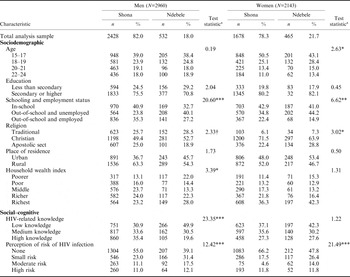
Table 1 provides basic descriptive information about background characteristics of respondents by ethnicity. Overall, Shona (men 82.0%; women 78.3%) is the predominant ethnic group in Zimbabwe followed by the Ndebele (men 18.0%; women 21.7%). The age structure for the two ethnic groups shows that the percentage differences between men are quite small in comparison with the same comparison for women. About half of Shona women (50.5%) were in the early adolescent age range (15–17 years) compared with Ndebele women (43.1%); whereas a slightly higher proportion of Ndebele women (13.4%) were in the late adolescent age range (22–24 years) compared with Shona women (11.0%).
Across ethnic groups, there are gender differences in schooling and employment status. Overall, women are somewhat more likely to be in school than men. Also, within-gender ethnic differences in school attendance are observed, particularly among men; a greater proportion of Shona men (40.9%) compared with Ndebele men (32.7%) were currently in school. Ethnic differences by out-of-school and employment status were observed for both sexes; Shona youth were more likely to be out of school and employed (men 35.3%; women 22.4%) than Ndebele youth (men 27.2%; women 14.9%). The religious composition of both ethnic groups reflects Christianity as the dominant monotheistic system of belief and practice in Zimbabwe. While there are no significant gender and ethnic differences in educational attainment and place of residence, the majority of respondents reported having attained secondary or higher schooling and residing in rural areas.
Distribution of unmarried adolescents and young adults aged 15–24 by ethnicity and sociodemographic and social–cognitive characteristics, 2005–06 ZDHSa

a Design based F-ratio produced from Pearson χ 2 statistics.
* p<0.05;
** p<0.01;
*** p<0.001;
† p<0.10.
The level of HIV-related knowledge significantly varied by male gender and ethnicity, but not for women. About half of Ndebele men (49.9%) and a third of Shona men (30.9%) had low knowledge of HIV prevention methods. Conversely, a higher proportion of Shona men reported medium and high levels of knowledge of HIV prevention methods than Ndebele men. Examining self-reported risk perception, Shona youth (men 55.0%; women 66.2%) were more likely to perceive themselves to be at ‘no’ risk of HIV infection at all compared with Ndebele youth (men 39.1%; women 47.8%). A higher proportion of Ndebele youth perceived themselves to be at ‘small’ or ‘moderate’ risk of HIV infection compared with the Shona youth.
Sexual behaviour by ethnicity
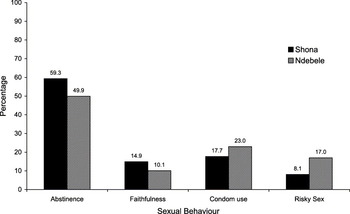
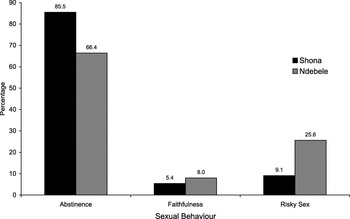
Figures 1 and 2 show the distribution of sexual behaviour of men and women by ethnicity. Overall, the differences in sexual behaviour among men, although significant, do not show as strong a pattern as those for women. However, these results suggest a gender-based double standard where men are less likely to abstain compared with women, across both ethnic groups. As regards ethnic differences in sexual behaviour, Shona youth (men 59.3%; women 85.5%) were significantly more likely to be abstinent compared with Ndebele youth (men 49.9%; women 66.4%). Conversely, Ndebele youth (men 17.0%, women 25.6%) were more likely to have engaged in risky sexual behaviour compared with the Shona youth (men 8.1%; women 9.1%). Despite the fact that compared with Shona men, Ndebele men were less likely to abstain and to being faithful to their sexual partner, Ndebele men were more likely to use condoms (23.0%) compared with Shona men (17.7%). The bivariate results provide the initial support to the ‘cultural/norms’ hypothesis; however, these findings do not control for sociodemographic and social–cognitive differences between the ethnic groups.
Distribution of sexual behaviour by ethnicity, 2005–06 ZDHS, adolescent boys and young men.

Distribution of sexual behaviour by ethnicity, 2005–06 ZDHS, adolescent girls and young women.

Multivariate analysis
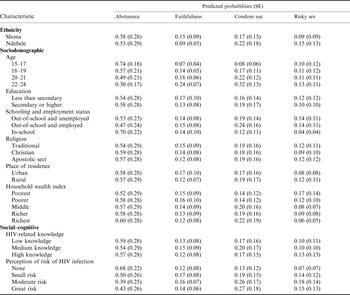
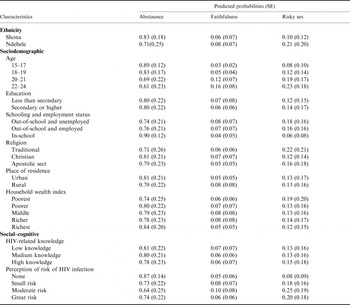
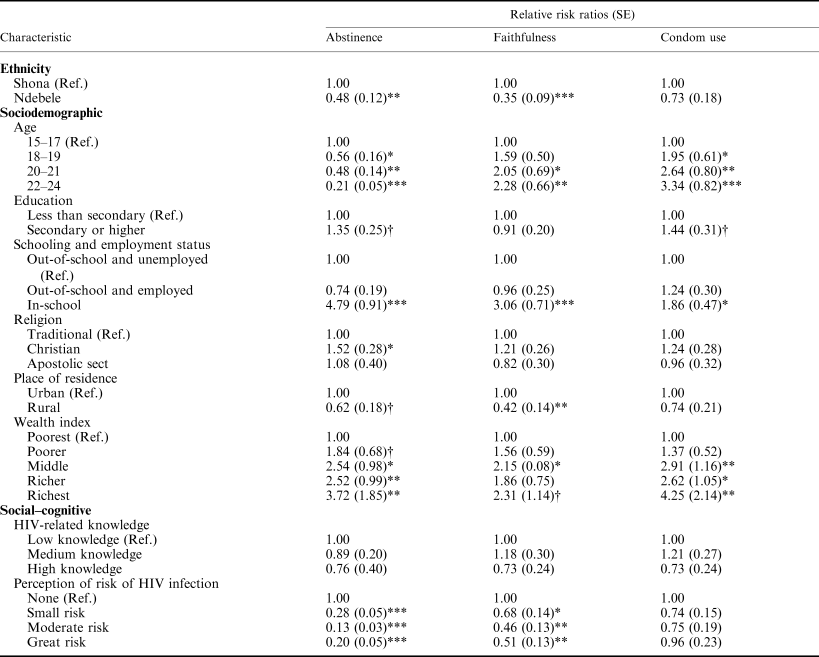
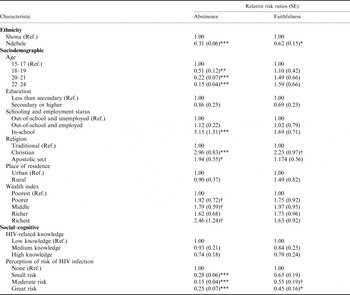
Tables 2 and 3 present the predicted probabilities showing the effects of ethnicity on sexual behaviour for men and women, controlling for sociodemographic and social–cognitive factors. Before and after adjustment the study confirms the proposition that there is ethnic variation in safe and risky sexual behaviour among youth in Zimbabwe. The parameter estimates from the final multivariate models of ethnicity and confounding variables are presented in Appendix Tables A1 and A2, for men and women.
Predicted probabilities that men were abstinent, faithful in the last 12 months, used a condom at last sex and engaged in risky sex by ethnicity and selected variables, 2005–06 ZDHSa

a Predicted probabilities are reported as proportions. Figures in parentheses are standard errors for the predicted probability.
Predicted probabilities that females were abstinent, faithful in the last 12 months and engaged in risky sex by ethnicity and selected variables, 2005–06 ZDHSa

a Predicted probabilities are reported as proportions. Figures in parentheses are standard errors for the predicted probability.
Men
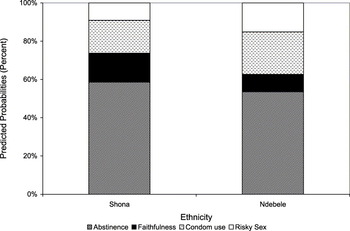
Overall, the results indicate that ethnicity was significantly associated with sexual behaviour, net of sociodemographic and social–cognitive factors. The probability of abstaining and having been faithful in the last 12 months was lower among Ndebele men than among Shona men. Conversely, Ndebele men were more likely either to use condoms at last sex or to have engaged in risky sexual behaviour compared with Shona men (Table 2 and Fig. 3).
Predicted probabilities of safe sexual practices and risky sexual behaviour among adolescent boys and young men in Zimbabwe, 2005–06 ZDHS.

Sociodemographic variables significantly associated with sexual behaviour include age, schooling and employment status, religion, place of residence and household wealth index. The probability of abstinence declined with age as expected, whereas the probability of faithfulness, condom use and risky sexual behaviour increased monotonically with age, especially so for faithfulness and condom use. As expected, the probability of abstaining was higher among men currently attending school. Conversely, the probability of condom use and risky sexual behaviour was lower among men indicating school attendance. Notably, the probability of abstinence and condom use was higher for men with secondary or higher schooling, although the effects are of borderline significance (p<0.10). Christian religion was associated with a higher probability of abstinence, but not for faithfulness and condom use. Regarding place of residence, rural men had a lower probability of faithfulness than urban men. In the extant literature, rural areas are thought to confer greater social control over sexual behaviour, reflecting the conservative culture and traditionalism dominant in rural areas. Men living in the poorest households had lower probabilities of abstinence and condom use compared with men living in the richest households. As expected, men living in the poorest households had higher probability of risky sexual behaviour compared with men living in the richest households.
With respect to social–cognitive factors, those who perceived themselves to be at low risk of HIV infection were less likely to abstain, while those who perceived themselves at moderate and high risk were more likely to have used a condom at last sex. A possible explanation for the negative association between risk perception and abstinence is that the direction of effect is in the opposite direction than commonly hypothesized, namely, that the direction of effect is from behaviour to perception of risk of HIV infection rather than the reverse. The results also demonstrate the importance of perception of risk of HIV infection for risky sexual behaviour. Men who perceived themselves to be at ‘no risk’ at all had the lowest probability to have engaged in risky sexual behaviour; those who perceived ‘moderate risk’ had the highest probability to have engaged in risky sexual behaviour. Notably, there was no significant association between HIV-related knowledge and any of the four categories of behavioural outcome of interest.
Women
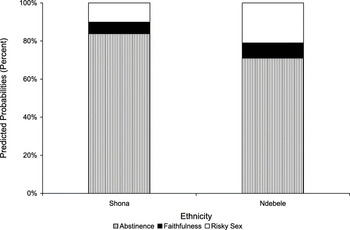
The ethnic differences in sexual behaviour among adolescent girls and young women remained robust after statistically controlling for sociodemographic and social–cognitive characteristics. Table 3 and Figure 4 show that the probability of abstinence was higher among Shona women (83%) than among Ndebele women (71%). In addition, Ndebele women were more likely to engage in risky sexual behaviour compared with Shona women. The differences in predicted probabilities for the ethnic variables according to abstinence and risky sexual behaviour are substantive and much stronger for women than for men.
Predicted probabilities of safe sexual practices and risky sexual behaviour among adolescent girls and young women in Zimbabwe, 2005–06 ZDHS.

Among women, sociodemographic factors that significantly affected the likelihood of adopting safer sex or engaging in risky sexual behaviour include age, schooling and employment status, and religion. The probability of abstaining decreased consistently with age, whereas the probability of faithfulness and risky sexual behaviour increased with age. The variable ‘schooling and employment status’ is important among women, as it is for men. Findings for the composite variable of school attendance and employment status suggest that abstinence was positively associated with current school attendance, whereas there was little variation in abstinence by whether a respondent was out-of-school and unemployed or out-of-school and employed. Religious affiliation has a substantive effect on abstinence and risky sexual behaviour, but it did not have an effect on faithfulness. Compared with women affiliated with Traditional religion, women affiliated with the Christian and Apostolic sect religions had higher probabilities of abstaining. On the other hand, women affiliated with Tradition religion had the highest probability to have engaged in risky sexual behaviour compared with women affiliated with Christian and Apostolic sect religions. As expected, women from households with poorest wealth had lowest probability of abstaining, although the effects are moderate (p<0.10). Similarly, the probability of risky sexual behaviour was highest among women from the poorest households, with those from the richest households having the lowest probability to have engaged in risky sexual behaviour. It is noteworthy that the predicted probabilities of perception of risk of HIV infection show that women who perceived themselves as having ‘no risk’ at all were more likely to have abstained, whereas women with moderate and high risk awareness were more likely to have engaged in risky sexual behaviour. The estimated effects of knowledge of HIV prevention methods on sexual behaviour are insignificant for all three categories of the behavioural outcome.
Discussion
This study examined the influence of ethnicity as either a protective or risk factor for sexual abstinence, faithfulness, condom use and risky sexual behaviour among unmarried adolescents and young adults in Zimbabwe. The findings confirm the primary hypothesis that there are ethnic differences in sexual behaviour among adolescents and young adults in Zimbabwe net of the effects of sociodemographic and social–cognitive factors. The analysis shows that ethnicity captures some of the unobservable behavioural and cultural factors that affect youths' sexual behaviour in Zimbabwe. The findings complement and extend previous studies in sub-Saharan Africa that found that sexual practices among youth are influenced in important ways by ethnicity (Addai, Reference Addai1999a; Rwenge, Reference Rwenge2000).
The findings of this study show that compared with Shona youth, Ndebele youth were significantly less likely to abstain. Ndebele youth were more likely to engage in risky sexual behaviour as measured in this study (i.e. more than one partner in the last 12 months and no condom use at last sex, or experienced an STI in the last 12 months). The study's results are consistent with previous research findings in Zimbabwe, which have documented the Ndebele as having higher seroprevalence for herpes simplex virus type 2 (HSV-2) compared with the Shona (Montana et al., Reference Montana, Kasprzyk, Woelk and St Lawrence2004). Similarly, the regions mostly settled by the Ndebele, namely Bulawayo, Matabeleland North and Matabeleland South, have been revealed to have higher HIV prevalence rates among antenatal care attendees and youth than those regions mostly settled by the Shona (Mahomva et al., Reference Mahomva, Greby, Dube, Mugurungi, Hargrove and Rosen2006). Furthermore, the findings suggest that Ndebele youth have a tendency to violate sexual norms prescribed under a patriarchal system, which discourages premarital sex (Vos, Reference Vos1994). There are several possible explanations for the ethnic differences in sexual behaviour. First, the expectation for marriage might be higher for Shona than Ndebele women. A higher proportion of women might be entering marital union immediately after premarital pregnancy or become sexually active within their first union (Reynolds, Reference Reynolds1991; Singh et al., Reference Singh, Wulf, Samara and Cuca2000). On the other hand, Ndebele women may spend more time unmarried thus increasing their period of exposure to risky sexual behaviour.
Second, the analysis suggests that for the Ndebele there appears to be culturally based barriers to the adoption of safe sexual practices, thus increasing their vulnerability to HIV infection, as well as other sexually transmitted infections. The findings demonstrate that each ethnic group has different sexual and reproductive health needs. Ndebele youth, who are less likely to abstain and engage in risky sexual behaviour, have an urgent need for contraception and HIV prevention methods. However, for both ethnic groups, prevention interventions should be strengthened with extensive education on abstinence, fidelity and condom use through culturally appropriate messages.
The results reveal across-gender and within-gender ethnic differences in sexual practices, with substantive differences observed for women. Shona women were more likely to abstain than Ndebele women. Furthermore, comparing the two indigenous groups, Ndebele women were more likely to have engaged in risky sexual behaviour compared with Shona women. Significant levels of abstinence among young Shona women might also indicate that cultural support for virginity may continue to influence sexual behaviour and reports of abstinence (Schatz & Dzvimbo, Reference Schatz and Dzvimbo2001). Thus, sociocultural expectations for virginity before marriage might lead respondents to provide socially desirable responses in favour of abstinence, thus resulting in over-reporting of sexual abstinence (Gregson et al., Reference Gregson, Nyamukapa, Mason, Zhuwau, Caraël, Chandiwana and Anderson2002).
Regarding gender differences in sexual behaviour, the findings show that sexual abstinence is more prevalent among women than men. This finding of a gender difference in abstinence is consistent with results across developing regions, which indicate that sexual abstinence in Latin America and Asia is higher among young women than among young men (Mmari & Blum, Reference Mmari and Blum2005). These results might suggest a gender-based double standard where there are lesser local cultural sanctions on boys to remain virgins until marriage or greater tolerance of premarital sex among boys than girls (Rani et al., Reference Rani, Figueroa and Ainsle2003). Furthermore, gender differences in sexual behaviour can be explained by the widely differing sexual norms and highly asymmetric patterns of sexual networking between men and women (Gregson et al., Reference Gregson, Nyamukapa, Mason, Zhuwau, Caraël, Chandiwana and Anderson2002; Terry et al., Reference Terry, Mhloyi, Masvaure and Adlis2005). The implications of these findings are that more holistic and gender-sensitive interventions, for both men and women, are needed to address the issues of gender differences in sexual behaviour that are deeply rooted in gender inequality in the society and which increase young women's vulnerability to HIV/STI infections.
Data from the present study also point to sexual behaviour being more socially controlled for both men and women. The results show that school attendance and religion exerted expected protective effects on sexual abstinence. These patterns are consistent with past research in sub-Saharan Africa demonstrating the protective effect of school attendance (Magnani et al., Reference Magnani, Karim, Weiss, Bond, Lemba and Morgan2002; Ndyanabangi et al., Reference Ndyanabangi, Kipp and Diesfeld2004) and religion (Gregson et al., Reference Gregson, Zhuwau, Anderson and Chandiwana1999) for adolescent sexual abstinence. The results of the study further suggest that other challenges and opportunities are apparent with regard to particular non-ethnic variables. One noteworthy finding is that rural men were less likely to be faithful and more likely to have engaged in risky sexual behaviour. Studies in Ethiopia (Hladik et al., Reference Hladik, Shabbir, Jelaludin, Woldu, Tsehaynesh and Tadesse2006) and Kenya (Voeten et al., Reference Voeten, Egesah and Habbena2004) have reported the expansion of the HIV epidemic to rural areas of these two countries and a trend toward a decline in some cities. This suggests that rural youth might be encountering greater obstacles to services and information on contraception and STI prevention than urban youth (Wilson et al., Reference Wilson, Greenspan and Wilson1989; CRLP & CLF, 2006). Greater efforts should be made to reach youth in the countryside who typically have earlier sexual debuts and tend to be less likely to adopt safe sexual behaviours.
Consistent with studies in sub-Saharan Africa (Maswanya et al., Reference Maswanya, Moji, Horiguchi, Nagata, Aoyagi, Honda and Takemoto1999; Simbayi et al., Reference Simbayi, Kalichman, Jooste, Cherry, Mfecane and Cain2005) and elsewhere (Ben-Zur et al., Reference Ben-Zur, Breznitz, Wardi and Berzon2000), we did not find any evidence of an association between HIV-related knowledge and sexual behaviour. The results indicate that even though people seem to have basic knowledge about HIV/AIDS, behaviour has not changed much. Therefore, the importance of connecting knowledge and behaviour and of identifying the missing link between knowledge and behaviour change still remains a challenge. The study's findings concerning the important effect that perception of risk of HIV infection has on sexual behaviour are also worthy of note. In common with previous research, it was found that a majority of the youth in this study perceived themselves as being at little or no risk of HIV infection (MacPhail & Campbell, Reference MacPhail and Campbell2001). This study showed that youth who perceived themselves to be at moderate or great risk for HIV infection were all more likely to have engaged in risky sexual behaviour. The results do not support health behaviour models that posit that high perception of risk is associated with safe sex behaviour. Our findings are consistent with results documented in Kenya (Akwara et al., Reference Akwara, Madise and Hinde2003) and Ecuador (Park et al., Reference Park, Sneed, Morisky, Alvear and Hearst2002), which demonstrate positive associations between risk perception and sexual risk behaviour. The cause of the discernible gap between perception of risk of HIV infection and sexual behaviour is that youth might be having a sense of invincibility. Among youth, HIV infection is seen as a distant rather than an immediate threat. Moreover, given the cross-sectional study design, it is difficult to discern whether perception of risk of HIV infection is based on previous sexual behaviour or whether risk perception preceded their having sex.
In conclusion, the HIV and AIDS epidemic is complex, and successful efforts to limit HIV transmission must rely on a combination of cultural, social and behavioural approaches. Although it is unrealistic to expect to alter underlying sociocultural contexts quickly, understanding their nature and influence on local patterns of youth sexual behaviour should assist the development of more cultural relevant and more effective HIV prevention strategies. Collectively, the findings of this study call for innovative strategies to promote resilience and protective factors to overcome the sociocultural challenges faced by young people, to remain abstinent, be faithful or be able to negotiate use of condoms in every sexual encounter. Current success in the Abstinence, Being faithful and Condom use (ABC) approach could be strengthened by recognizing and responding to cultural forces that reproduce and perpetuate risky sexual behaviours. More in-depth research is needed in Zimbabwe and other sub-Saharan Africa countries to deepen our understanding of the plethora of sociocultural practices embedded in each ethnicity that appear to influence adolescent and young adults' risk- or non-risk-taking behaviour. The cultural connotations of sexuality need to be more thoroughly understood through both quantitative and qualitative research. In order to promote safe and healthy sexuality among youth, effective HIV/AIDS prevention efforts must take the local norms seriously.
Appendix
Relative risk ratios for the effects of ethnicity and selected variables on abstinence, faithfulness in the last 12 months and condom use at last sex relative to risky sex among men, 2005–06 ZDHSa
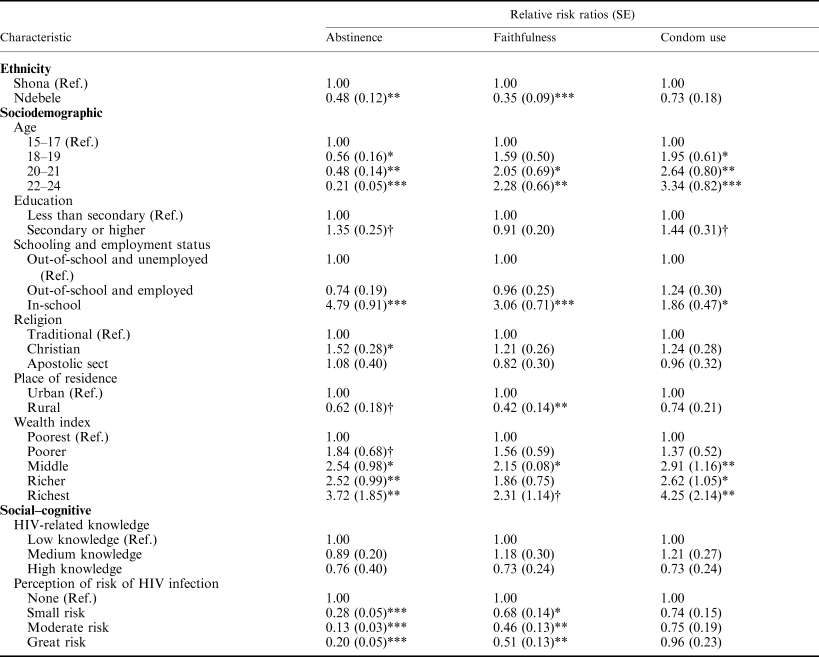
a Analysis performed using weighted data, and simultaneously adjusting for survey design.
Ref.=reference category.
* p<0.05;
** p<0.01;
*** p<0.001;
† p<0.10.
Relative risk ratios for the effects of ethnicity and selected variables on abstinence and faithfulness in the last 12 months relative to risky sex among women, 2005–06 ZDHSa

a Analysis performed using weighted data, and simultaneously adjusting for survey design.
Ref.=reference category.
* p<0.05;
** p<0.01;
*** p<0.001;
† p<0.10.