Film
The growth of film criticism in modern reception studies presents in a particularly acute form many of the issues of method with which other areas of reception are also grappling. In addition, it brings together under the umbrella of one art form the sometimes uneasy relationship between ‘high’ cultures and popular forms of entertainment. ‘Spectacle’ has to be analysed alongside that of the most nuanced ‘avant-garde’ production techniques. Film has been closely related to drama in terms of analytic approaches, not just because of its links with the subject matter of ancient texts but because it is, like theatre, a performative medium; although, unlike a staged performance, the conditions in which it is created both assume and facilitate its preservation. Yet some aspects of film also move close to poetry. Film-poems based on ancient texts and paradigms have encouraged a more self-referential approach, reflecting on the relationship between words and images in both public and private contexts of reception. It will become clear from the discussion which follows that film receptions have some significant overlaps with those in drama and poetry. Film is now an established area in reception research and has developed critical approaches and methods rigorously tailored to the medium. Classical reception and film studies also reveal in a particularly acute way the tensions between ‘traditional’ approaches and more radical forms of analysis.
In Chapter 3 I referred extensively to the work of Maria Wyke on film in the context of classical appropriations by fascist and liberal ideologies. Her work has centred on two of the major cinematic traditions in the twentieth century, in Hollywood and in Italy. Her ground-breaking book Projecting the Past. Ancient Rome, Cinema and History Footnote 1 focused on four examples of how episodes from ancient Roman culture were appropriated in order to address modern issues (Spartacus and the slave uprising; Cleopatra's threat to Rome and associated gender stereotypes; persecutions and excess in the time of Nero; and film representation surrounding the destruction of Pompeii). Wyke's approach is primarily historicist and addresses mainly Roman material, but her concluding chapter (‘A Farewell to Antiquity’) also considers the impact of box-office decline of the ‘blockbuster’ after the 1960s and the distaste felt by younger and more cinematically sophisticated audiences for outmoded narrative forms.
This shift was reflected in the prominence of European ‘art house’ films in the 1960s and early 1970s. Most of these films represented Greek material, mainly from tragedy, but one in particular, Fellini – Satyricon directed by Federico Fellini (1969), took Petronius’ satiric novel and used it to address central questions concerning the relationship between cinema and classics with, in this case, a focus on ‘the value of cinema as a means of reconstructing and consuming ancient Rome in the present’.Footnote 2 The film's structure of a series of episodes without a coherent narrative link and its representation of Petronius’ parody of mythic heroism used the wide frame of Cinemascope to emphasize successions of images rather than to narrate the development of characters or to communicate their point of view. Thus distinctions between ‘reality’ and ‘illusion’ became blurred. The alienation of the viewer was accentuated by dubbing, which disrupted the association between the actors’ lips and the dialogue, and by a musical score based on electronically produced metallic sounds. This approach not only subverted the tradition of the epic film but also, according to the director, represented the way in which archaeology can reveal fragmented images of a vanished world – in this case caught unawares by modern cinematic techniques.
Modes of analysis
In order to address this kind of cinematic development, reception scholars have to take full account not only of the conditions of production (choice of subject, economic conditions of financing and marketing, impact of directors and actors, and situation of the film in relation to their other work) but also of the formal and technical use of the medium and its redrawing of the possibilities of representation and communication. This kind of methodology has been quite slow to develop. The most influential approach has been imported into classical reception from Shakespeare studies and in particular via the work of Jack Jorgens.Footnote 3 He classified films of Shakespearean tragedy under three main headings:
(i) theatrical mode, in which film was used as a recording device to try to capture what was essentially a theatrical performance;
(ii) realistic mode, which moved away from an overtly theatrical setting to a naturalistic situation;
(iii) filmic mode, in which the film maker or director makes full use of the medium's own forms and technology.
These categories were adapted for discussion of classical film by Kenneth MacKinnon.Footnote 4 MacKinnon added a fourth category, that of metatragedy, to recognize the way in which films were increasingly not just reminding audiences about ancient works but also investigating their relationship with the modern film. MacKinnon clarified the categories by discussing specific examples for each. Under ‘theatrical mode’ he included the earliest filmed record of a modern production of Greek drama, the vision-only eleven-minute extract from the 1927 production of Prometheus in Chains, staged at Epidauros as part of the ‘Delphic Idea’ or movement towards world peace, a concept developed by Angelos Sikelianos and his wife, Eva Palmer. The film provides important evidence for the combination of archaizing costume and chorus movement, taken from painted pottery, and the impact of Isadora Duncan's contemporary techniques in dance. More recent examples of the theatrical mode include Tyrone Guthrie's Oedipus Rex (1956) and a number of films of different performances of Sophocles’ Electra.
Under ‘realistic mode’ MacKinnon cited Michael Cacoyannis’ three films based on Euripides (Electra [1961], The Trojan Women [1971], and Iphigenia [1976]). Under ‘filmic mode’ he suggested the most modern-seeming examples, such as Jules Dassin's Phaedra (1961) and Costas Ferris’ ‘art’ movie Prometheus, Second Person Singular (1975). Under ‘metatragedy’ MacKinnon placed Jules Dassin's A Dream of Passion (1978), which featured one of the stars playing Medea in a modern production, and Pasolini's Oedipus Rex (1967), which alluded to Pasolini's own biography and emphasized the importance of Freud's conception of the Oedipus Complex.Footnote 5
MacKinnon's typology has continued to be extensively used as a basis for analysing classical films because it provides a way of assessing the relationship between ancient text and classical film-as-genre without necessarily using that relationship as an arbitrary criterion of value. However, some more conservative critics have attempted to circumscribe the characterization of the classical film genre by suggesting that it must conform to a notion of classical ‘status’ framed by three elements: form (as characterized by Aristotle); imitation of classical models (formulated by one critic as ‘classical theory insists upon the primacy of the original…the basic and fundamental elements must not be changed’); and ahistoricity (‘knowledge is found in the general conclusions that have stood the test of time’).Footnote 6 Genre classification in film is more prevalent than in critical approaches to other art forms and does not attract the same criticisms for being outmoded. Seminal studies of epic in film (Paul 2013) and tragedy in film (Michelakis 2013) have analysed genre without being constrained by conservative criteria of authenticity, and have explored the agencies involved in creative interactions.
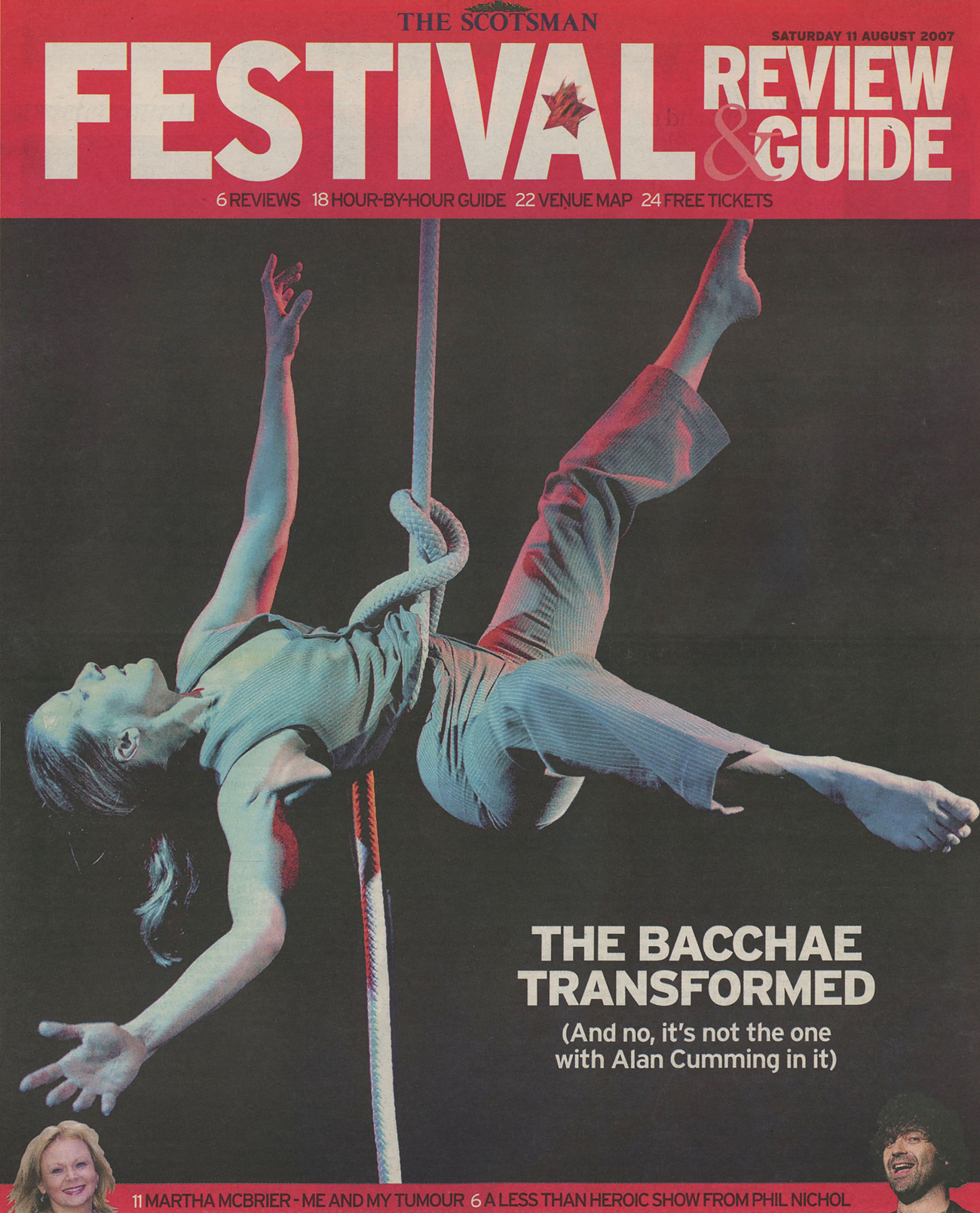
Tamsin Shasha in Bacchic, a one performer show based on Euripides’ The Bacchae, conceived and performed by Tamsin Shasha, co-written with and directed by Jonathan Young, toured 2007 - 2008. This performance showcased physical theatre, using corde lisse/rope skills to communicate the Olympic status and power of the god Dionysus, who was presented through the diverse lenses of An Icon; An Orgy; A Dissenter. Video clips of this project and other explorations of Greek myth are available at: www.actorsofdionysus.com/projects/

Film and drama
In a vigorous article which both supported the contribution of genre studies to film and refuted ultra-traditionalist formulation of classicism, Mary-Kay Gamel identified the importance for reception criticism of systematic comparison of ancient drama and modern film in terms of formal, thematic, and affective features.Footnote 7 She also noted that, like drama, film is (despite the focus on the director and individual auteur theory in film) the product of a combination of talents of author, director, actors, and musicians. She argued that material aspects are crucial, including the origins of financial support for creation and distribution of the work. In addition, ancient drama and modern film share the potential of an appeal to a large and socially diverse audience. Gamel showed that an overemphasis on filmic treatment undervalues the impact of the other aspects and that a full treatment, for film as for drama, must take account of all of them if the scope of the term ‘text’ is not to be fatally narrowed. Finally, she reasserted that the concept of genre (e.g. epic, film noir, science fiction, westerns, war film, avant-garde) is, like individual works, located within history, and that any film must be considered in the context of its generic tradition. The presence or dominance of certain genres at a particular time and their absence at others is one index of ideological change,Footnote 8 as are the counter-texts snapping at the conventional frameworks of genres.
Also significant is the question of shifts of emphasis within a genre, for instance in selection of classical referents or the ways in which these are addressed. In his discussion of film treatment of Medea, Ian Christie drew links between the categories of film representations, selectivity in respect of the ancient text, and the particular social and artistic expectations in respect of the genre made by the receiving society.Footnote 9 He argued that Medea was avoided by film makers for a long time because her story did not fit in with the borrowings made by film from nineteenth-century stage traditions and other vernacular narrative media that combined sentiment with sensation. For example, moralizing and melodrama were popular in the early twentieth century, yet the shocking demands of the Medea story exceeded the bounds of melodrama and did not offer the redemptive element required by the moralizing tradition. Only in what Christie called ‘the permissive and experimental sixties’ could the taboos surrounding what could be shown and seen be broken.Footnote 10 In this respect cinema norms differ from those of Greek drama, in which violence occurs off stage and is communicated through narrative. In film, events are shown rather than narrated, yet, while the revenge killing of Glauce could be accommodated, the killing of the children could not.
Christie linked the transgressive elements of the 1960s with a new sense of the relationship between the political and the psychosexual. This was demonstrated in Pasolini's Medea (1970) and later developed in Jules Dassin's A Dream of Passion (1978), which was written and directed in Greece three years after the collapse of the military junta (the colonels’ regime), against which both Dassin and his wife, Melina Mercouri (who played one of the Medea figures in the film), had protested. Christie's approach also considers the ways in which filmic adaptations replace elements excluded by ancient authors, or draw on other ancient sources. For example, Pasolini included Colchis and Medea's role as sorceress as a prelude to her domestication by Jason, while Dassin alludes to the reinterpretation of Euripides’ play in the context of modern theatre performance and the contemporary environment of marital breakdown and child killing. Thus both receptions create a ‘double perspective’, encoding reflection on both Euripidean and modern refigurations.
Like Wyke and Gamel, Christie's approach locates the films within the director's works as a whole, particularly in relation to the visual styles used in the films – for instance in the use of ‘montage’ to allow accumulation of meaning within and between images (as in Lars von Trier's Danish version of Medea, 1988) or in Pasolini's enigmatic discontinuity in camerawork. Christie also points to the way in which the development of psychoanalytic film criticism has linked the story of Medea to elements in modern horror films (crossing the border between human and monster, human and alien) and suggests that this involves a mutation of Medea into a Medusa figure.
Films which move away from ahistoricity, whether in setting or in subject matter, are usually engaged in some kind of mutation of myth. One notable example was the Colombian production Edipo Alcalde (Mayor Oedipus), 1996, a joint Colombian, Mexican, and Spanish production directed by Jorge Ali Triana. Triana was the founder of the Popular Theatre of Bogotá and subsequently became director at the National Theatre of Colombia and the Spanish Repertory Theatre in New York City. The screenplay for Edipo Alcalde was by Gabriel García Márquez (the Nobel Prize-winning novelist) and the film was chosen for the Directors’ Fortnight at the Cannes Film Festival in 1996. The cast of Colombians was augmented by Cuban, Spanish, and Mexican actors in the star roles. The film adapted Sophocles’ Oedipus the King to tell the story of a young man (Edipo) sent by the government in the mid-twentieth century to a small town in the Andes mountains to run the mayor's office, in the face of the violence and hate felt by various factions in the town. On his way he is ambushed but escapes by killing his attackers. Later the body of a popular local political leader is discovered. Triana described the film as ‘a primal cry from the heart against irrational violence in this Latin American country’ and told how García Márquez had always wanted to ‘adapt the Greek classic to the Colombian reality’. The mayor follows the Oedipal path to unwitting incest and only gradually, prompted by a blind old man who is constructing a coffin for him, comes to realize that he himself was the killer of the local leader. A popular review made the obvious deduction: ‘The story is set in present-day war-torn Colombia, with the South American country's civil strife standing in for the Theban Plague.’Footnote 11
In addition to its artistic merit and interest to film specialists generally (it was included in the season of Colombian cinema ‘From Reality to Magic’ at the National Film Theatre, London, in 2002), Edipo Alcalde is important in two respects for reception studies. First, it is one of a number of examples which challenge the view that Sophocles’ Oedipus the King is hardly ever rewritten or adapted.Footnote 12 The reasons generally given are that the myth is not easy to translate into modern situations because the intervention of Freud's theory narrows its scope to the psychoanalytic (and is therefore thought to preclude other resonances) or that, since Sophocles’ play is about social and personal responsibility, it is not well attuned to the concerns of contemporary Western culture. In fact, Oedipus the King was banned by the censors from the professional stage in Britain until 1910, so it could be argued that Freud's theory is actually part of a liberating tendency.Footnote 13
When these claims are considered, it becomes significant that Edipo Alcalde was made by an international cast which was prepared to cross psychological as well as cultural boundaries. Furthermore, other adaptations of Sophocles’ play in the last fifty years have built on its potential to say the unsayable and explore culturally and politically dangerous or controversial material. Important examples include Ola Rotimi's play The Gods Are Not to Blame (1968), in which the play becomes an analogue for the intertribal fighting of Africa and especially the Biafran war. More recently, Rita Dove's The Darker Face of the Earth (published 1994, first performed at the Oregon Festival in 1996 and subsequently at the Royal National Theatre in London) set the story in an ante-bellum cotton plantation in the southern states of the USA, exploring the institution of slavery as the source of pollution. Incest is replaced as a focus by miscegenation. Thus what was regarded by Aristotle, Freud, and Levi-Strauss as a text of central cultural dominance becomes the vehicle for challenging that dominance – a metaphor for the fraught discovery of the guilt of enslavers and colonizers.Footnote 14
Oedipus the King was also the springboard text for David Greig's Oedipus (2000, published in 2005 as Oedipus the Visionary). This was the first of three plays performed in sequence in Glasgow in 2000 by Theatre Babel, directed by Graham McLaren, as a result of a commission to three leading Scottish playwrights to adapt classical texts in the light of the flourishing of theatre arts in the years before and following devolution and the reconvening of the Scottish Parliament after a gap of almost three hundred years.Footnote 15 Greig's was a highly politicized version of Sophocles’ play, with both costume and setting suggesting the India of the British Raj. The Indian context and associated religious ritual distanced the struggle for political change from modern time and place, yet there was contemporary impact in the themes of transfer of power and the exposure of corruption and disease, with the design suggesting that the sun was setting over a colonized city. Yet this never became a ‘closed’ reading: both usurper and liberator spoke in Scots accent and idiom, and the identification of Creon and Oedipus with the roles of usurper and liberator fluctuated throughout the play.
The setting and focus reminded anyone who was so tempted that Scots, too, were leaders in the expansion and organization of the British Empire, and thus the play resisted facile equation with the notion that post-devolution Scotland was emerging from colonial rule. Yet both histories – of the Raj, of devolution, and of the associated crises of identity – were there. As the director Graham McLaren put it
Politically Scotland is changing and with the millennium the world is changing. Now is the time to be defining what it is to be, not just a Scot in Scotland but what it is to be human in the world…Oedipus is as close to a universal text as you'll get. It starts off with the simple mystery of who killed Laius but finishes up by asking absolute questions about what it is to be human.Footnote 16
Thus it is clear from reception of Oedipus the King in theatre and film that analogues of Sophocles’ play cross back and forth between the boundaries of the psychoanalytical and the political. Moreover, in the adaptation of the myth in both art forms, the setting introduces an important interpretive category – that of space and location.
Setting and landscape
This aspect of film as a receiver and adapter of classical plays has been analysed by Pantelis Michelakis.Footnote 17 Michelakis set out to show how a focused analysis of landscapes in films which adapted Greek tragedy would also shed light on wider aspects of the politicization of antiquity. He pointed out how individual landscapes had been used to generate often incompatible readings of various ideological positions. Following the approaches developed by Turner in his study of cinema as social practice,Footnote 18 Michelakis’ study concentrated on how landscapes in classically generated films could be considered as a source for the shaping of social and personal identities. He concluded that there were two main types of cinematic landscape used to shape perceptions of Greek tragedy. The first was landscape that appropriated and ‘recycled’ images of antiquity that are familiar from the surviving monuments and artefacts. Examples in this category included Antigone (1961), directed by George Tzavellas, which used impressive stage sets of the city of Thebes and Creon's palace inspired by classical architecture and iconography. Tzavellas also used film of the Greek countryside, which drew both on the association between performances of tragedy and rural areas such as Epidauros and on the Greek tradition of period dramas, a film genre of the late 1950s. He aimed to restore an authentic context for the film, and his conception of this was shaped by his perception of continuity between past and present. In the same category, Michelakis placed Michael Cacoyannis’ Electra (1962), which eschewed stage sets for a countryside setting that, according to the director, ‘owes everything to that part of Greece today which appears timeless…Greek tragedy has no age’.Footnote 19 Cacoyannis also included a sequence shot at the palace of Mycenae to suggest that Electra's past, too, can be excavated, reconstructed, and interpreted in different ways.
This link between psychological and historical analysis was similarly evident in two film versions of Oedipus the King which were set in archaeological sites (both shot in 1967, one at Dodona, directed by Philip Saville, and one at Tiryns, directed by Oswald Derke). Michelakis also pointed out how the 1980s and 1990s filming of productions in ancient amphitheatres became a staple in educational and sometimes in mainstream films. The convention was ‘sent up’ in Mighty Aphrodite (1996, starring Woody Allen), in which an ‘authentic’ production of Oedipus Rex in a Greek theatre in Sicily was juxtaposed with modern dialogue.
From the late 1960s, films of Greek tragedy moved away from the norms of neoclassical theatre and, as was discussed above, the classical past began to be explored in more visually innovative ways. Michelakis distinguishes three types of landscape setting which embody this shift within the genre of classical films. The first is the desert, deployed by Pasolini in his Edipo re (1967) and Medea (1970), in which the mythological figures are first shown in primitive, barbaric, and sometimes non-Greek open landscapes which signify the contrast between myth and the modern urban landscapes to which the unfolding of their stories brings them. The desert-type setting was also used by Cacoyannis (The Trojan Women, 1971, and Iphigenia, 1976) to evoke the bleakness and suffering of Greece in the context of the military dictatorship (1967–74). Michelakis’ second category is that of forest:
the cinematic forests of Greek tragedy range from the murky marshland of Denmark (von Trier's Medea, 1987) to the deciduous forests of New England (Amy Greenfield's Antigone: Rites for the Dead, 1990) or the tropical rainforests of Colombia (Edipo Alcalde).Footnote 20
The categories of desert and forest show how apparently natural spaces come to be filled with contests of politics and ideology. Michelakis’ third ‘landscape’, the city, is used to frame these contests. Relations between the three spaces involve a concept of travelling, of crossing borders, which is a major aspect of many classical films. He also analysed the importance of this aspect in relation to Tony Harrison's film-poem Prometheus (1998), which was shot on location in industrial areas across Europe.
Michelakis pointed out that the landscapes explored in classical films are part of the environment of the spectators as well as of the film, and can represent shifts in physical environment, psychological state, and ideological perspective, all of which also shape perceptions of the ancient texts. In his 2013 monograph, he formulated categories to offer substantial discussion of film spectatorship, accessibility, and value (including canon formation). He also examined film representations’ use of images and sounds to interact both with narratives of Greek material in other media and with mainstream film genres.Footnote 21
Film-poems
Harrison's Prometheus has been a major focus for debate, partly because of the subject matter and partly because it represents a sub-genre – that of the film-poem – of which Harrison has been the major exponent. The combination of film as a medium for moving images and verse forms, including those drawing on classical material, has been crucial for Harrison's engagement with the most shattering aspects of twentieth-century events. His work has drawn on the capacity of film to give a voice and an image to the silenced and unrepresented, and it uses the potential of film as an interventionist medium which might reach audiences different from those that would attend a Greek play. Here, however, the difference between popular and avant-garde film is crucial. Film-poems might well be said to fall into the latter category and miss popular audiences, although some have been specially developed for television. Harrison has also aimed to develop refigured hybrid forms of artistic expression in order to address the barbarities of the twentieth century. This last aim was explicitly addressed in his film-poem The Gaze of the Gorgon, in which he commented:
It is this combination of verse, TV, film, and suffering that communicates Harrison's conception of ‘public poetry’. His work deals with public themes yet it is also received in what he has referred to as the ‘shared intimacy’ of the viewers sitting at home ‘in their twos and threes’. The relationship between private and public is strengthened. The techniques that have made his use of classical referents accessible to those without a classical education include the demotic idioms in his versions (including colloquialisms and expletives); the use of metre and rhyme and repetitions to create a sense of orality rather than of a written text; and direct appeals to the audience in terms of subject matter and setting, in order to engage their empathy.
Harrison wrote in his preface to the published text of Prometheus that, in cinematic mode, experiencing and feeling the rhythm of the shots was like responding to literature. The effect is to remove from his refiguration of classical sources any association with privilege – as Hermes bemoans in Prometheus (which has its initial setting in a Yorkshire mining village as the pit is about to be closed),
The role of the poetry is to comment on the images (rather than the role of the images being to illustrate the words).Footnote 24 In Prometheus, although there is a (silent) chorus and a structure of rhêsis and agôn, the theatrical mode is subordinate to the filmic and to the metatragic – the relationship between ancient tragedy and modern film.Footnote 25
In his preface to Prometheus, Harrison commented on this aspect when discussing the redemptive potential of tragedy: ‘The performed suffering was old, the redemption contemporary.’Footnote 26 The additional challenge represented by his concern with very recent events is whether art can bring redemption to suffering which is immediate. Some critics have found Harrison's apparent claim that art can address the totality of contemporary and recent suffering to be flawed. Keith Miller wrote in the Times Literary Supplement in May 1999,
There is an arrogant tendency to conflate all of the big themes of the past 1000 years into one enormous supermyth: Orgreave to Auschwitz via Dresden, all aboard! One specific problem about this is that it is frankly offensive to imply that sacking someone is the same as butchering them alongside their families.
Harrison's verse-film linked Prometheus’ gnawed liver to the fascist eagle of genocide and the destruction of the lungs of the coal miners, and it was the miners, consumed by the flames like the miners in Zola's Germinal, who constituted the metal from which the statue of Prometheus was cast. In contrast to Miller's view, Edith Hall characterized the film as
the most important artistic reaction to the fall of the British working class as the twentieth century staggered to its close, a fall symptomatic of the international collapse of the socialist dream. The film also offers the most important adaptation of classical myth for a radical political purpose for years.Footnote 27
Hall further pointed out that Harrison's film-poem shared with Theo Angelopoulos’ film Ulysses’ Gaze (1995) the concept of a journey through areas of eastern European disintegration and depictions of monumental civic statuary. Both films used techniques which explored related themes in cross-chronological movement rather than through linear narrative.
Hall categorized Harrison's Prometheus as threnody. However, its use of various landscape settings and its subversion of conventional classical settings and iconography bring it closer to the filmic techniques discussed by Michelakis. Above all, the film aims at a new kind of redemptive effect in that it holds up a mirror to horror. In Robinson's words,
the work…allows us to gaze at the Gorgon (to see the horrors clearly) without turning to stone. This is the achievement of the public poet…It is Tony Harrison's mythical method, the way his aspiration for a public poetry is informed by a Greek tragic vision – a process that, in its open-eyed humanism and its realignment of the public and the private is profoundly political.Footnote 28
It also exemplifies the agency of ‘deep classics’.
The reception and refiguration of classical material in film raises particular issues of analysis and method. Film has affinities with and contrasts to both drama and poetry. It highlights particular problems about forms of reception that cross genres, and about the impact (both aesthetic and material) of new art forms and technologies, ranging from blockbuster to avant-garde to film-poem. Film is one form of reception that can be exploited both by the powerful (nations, corporations) and for the oppressed (as an interventionist vehicle). It generates special challenges for professional classicists in that film is increasingly a medium through which members of the public have their initial perspectives on the ancient world shaped. It can thus be seen as being in competition with scholarship as an influencing force. The challenge to reception studies is to formulate means of identifying and discussing cultural and historical differences in film in a way which not only recognizes the importance of film as an entree to interest in the ancient world but also develops forms of critical analysis that address the shaping force of the medium and of its exponents.
Poetry
Classical reception in and through poetry is a rich area for personal research and enjoyment, aided by the considerable amount of material available in translations, anthologies (both themed and chronological), and, comparatively recently, in collections based on receptions of a particular author (Homer, Virgil, Ovid, Horace, Seneca).Footnote 29 My focus here can therefore be rather different and I shall aim to identify and to discuss some examples of three main aspects of reception of poetry: receptions which create a new and influential work of literature, thus involving literary hybridity on a grand scale; receptions which select episodes or figures from classical poetry and rework them, often across genres or with other changes of form; and receptions which explicitly challenge the interpretation and value attached to a particular classical text, producing a counter-text.
All these variations within reception involve a commentary on the literary and artistic aspects of the source; all bring, too, their own distinctive perspective on the language and ideas of their own day; and all are situated within a broader corpus of work by the receiving poet and interpreted by readers and critics within contexts which can vary from an immediate and personal response to an attempt to situate the work critically in past poetic traditions and current trends. The poet and translator Josephine Balmer has discussed how translation, scholarship, and creativity are mutually enhancing, and has demonstrated that in her own work.Footnote 30 It is a commonplace to point out that readers, unlike theatre audiences, may be sitting alone and that they have the opportunity to return to the texts in a way in which audiences cannot directly re-experience the performance. This allows first-stage reception, whether by the poet, the reader, or the critic, to become progressively more nuanced and sensitive to the impact of intertextuality at various stages of a poem's migration, both within antiquity and subsequently.
Receptions as new works
Even within the broad categories of poetic reception that I have identified, there are considerable differences in relationship to the source text, in the development and variations in language, and in the way in which critics and later poets have situated the ‘new’ work in its own tradition. Translations could be ‘new’ literary works. For example, Gavin Douglas’ translation into Scots of Virgil's Aeneid (published posthumously in 1553, although completed in 1513) was a pioneering work undertaken before the Renaissance had developed public taste for translations of Latin writers. This meant that he was less constrained by ‘models’ than those who, for example, translated Virgil after Dryden (1697) or Homer after Pope (Iliad 1715–20, Odyssey 1725–6). Although Chaucer had translated shorter passages, Douglas’ was the first example of translation of the Aeneid into either Scots or English. His discussion of the problems of the translator (Prologue to Book 1) adopts a slightly deprecating attitude, suggesting that his translation was rough when compared to the Latin. Yet, paradoxically, translating classical texts was becoming a sign of linguistic vigour and cultural independence. This is evident in Douglas’ work. He also took on the role of critic, including short ‘commentaries’ on Virgil's characterization and images which aimed to make the work comprehensible to illiterate listeners and to schoolchildren. And he made significant creative additions, especially in the passages which recount the relationship between Dido and Aeneas; Ezra Pound commented that Douglas ‘gets more out of Virgil than any other translator’ – a tribute both to Douglas’ scholarship and to his creativity. Linguistic analysis has shown that Douglas’ new work also expanded the range of the Scots language and increased its flexibility in exchanging words between Scots and English. In the eighteenth- and twentieth-century literary revivals in Scotland his work became influential in his home country.Footnote 31
The next major new work to take its inspiration from classical epic was George Chapman's Iliad. In his allegorical poem ‘Euthymiae Raptus’ (‘The Tears of Peace’, 1609), Chapman created a scene in which he encounters the ghost of Homer, setting his work within a tradition stretching from Dante's relationship with Virgil in The Divine Comedy to T. S. Eliot's representation of the ‘familiar compound ghost’ in ‘Little Gidding’ (1942 and, as part of The Four Quartets, 1943). Chapman specifically referred to his sense that Homer was ‘born in England: see him over-shine / All other country poets’ (‘The Reader’, prefacing his translation of the Iliad); for him, Homer was ‘the first and best’. Chapman's translation was well received initially, although overshadowed by the Renaissance emphasis on Virgil and the eighteenth-century popularity of Pope. He later provided inspiration for Keats, being honoured in Keats's sonnet ‘On first looking into Chapman's Homer’ and thus leading indirectly to Elizabeth Cook's Achilles (2001), which resonates with both. However, later nineteenth-century critics such as Arnold thought Chapman's work over-complex, while Swinburne considered Chapman to be a barbarian and lacking in Hellenism.Footnote 32
John Dryden's translation of Virgil's Aeneid (1697) similarly became an influential work in its own right, partly because of Dryden's role as a translator who commented on the art itself, and partly because of his role as ‘the English Virgil’. Dryden was thought to have raised English poetry to new heights, as well as recreating Virgil's poem in a way that was equally attractive to those who knew the Latin and those who did not. His poem was extensively excerpted in the commonplace books of poetry that were influential in shaping eighteenth-century poetic tastes, and his admirers included Congreve, Pope, Gray, Byron, Burns, Coleridge, Hopkins, Tennyson, and Browning. In the first century after his death, Dryden's translations (written in the 1690s) were thought to be his greatest work. Only later were they neglected in favour of the satirical and more obviously ‘public’ poetry of his earlier years (such as Absalom and Achitophel).
Dryden's approach to translation is best known for his distinction between three types of response to the source text.Footnote 33 These were ‘metaphrase’ (word by word and line by line), ‘paraphrase’ (keeping the author ‘in view’ but following the words less strictly than the sense), and ‘imitation’ (which Dryden described as ‘forsaking’ both words and sense in favour of creative adaptation). He was scathing about metaphrase, which he likened to verbal copying (’Tis much like dancing on ropes with fettered legs – a foolish task’). Imitation, in his account, allowed the translator to become more visible but could do ‘the greatest wrong…to the memory and reputation of the dead’. He therefore preferred paraphrase, although the dedication to his translation of the Aeneid shows a further shift back towards a point between paraphrase and literal translation, because of his wish not to lose Virgil's ‘graces, the most eminent of which are in the beauty of the words’. More recently, Dryden's translation of Virgil has attracted renewed attention because of the way his style absorbed the language of Spenser, Shakespeare and Milton and because of his use of his translator predecessors. This exemplifies the trend in reception studies to look at the interfaces between aspects of the classical tradition itself and the other literary forces present in a writer's work.Footnote 34
This interface was also important in the critical reception of Alexander Pope's versions of Homer. In his Life of Pope (1781), Dr Johnson praised the translations over and above Pope's ‘original’ works because ‘His version may be said to have tuned the English tongue.’ Yet the poet Cowper judged Pope's translations more cautiously on the grounds that they lack ‘the air of antiquity’ and were inaccurate (Cowper published his own translations of Homer in 1791). The history of composition of Pope's work is well documented.Footnote 35 Like Chapman, he used earlier commentaries and criticism and also considered the prose translation into French by Anne Dacier (1711). Although Pope's Greek was better than Chapman's, he was largely self-taught and frequently consulted scholars. He included an extensive commentary which situated Homer within the epic tradition of Virgil, Milton, and Dryden, as well as in relationship to the Bible. His commentaries synthesized rather than challenged earlier commentators and appropriated Homer into the epic tradition in English, with the status of founder. Later there was further reaction against Pope's ‘pseudo-poetic diction’ (notably from Coleridge but also in a scholarly context epitomized by Bentley's aspersion that, although Pope's Iliad was a very pretty poem, it was not Homer). Pope's use of the rhyming heroic couplet reflected the fashion of the time and perhaps partly accounts for later reactions against his version when the tastes of the eighteenth-century Augustans became less popular.
The canonicity thus accorded to Homer and Virgil in the epic tradition of poetry and translation in English is reflected in treatment of the topic in literary histories and handbooks.Footnote 36 The lasting influence of the genre has been both reinforced and challenged by the modern ‘epic’ Derek Walcott's Omeros.Footnote 37 This long poem is paradoxical in its stance towards the epic tradition. It is permeated by allusions to and echoes of Homer, Virgil, and Dante and framed by the themes of imperialism and diaspora, yet it communicates these through the activities, images, and direct speech vernacular of the popular idiom and culture of the Caribbean. It could not be described as a translation or even an adaptation in any strict sense: Walcott studied Latin but not Greek and claimed not to have finished reading the Odyssey.
Walcott made sometimes ironic use of translational techniques such as names (Achille, Hektor, Helen, all of which also reflect the naming practices perpetrated on enslaved people). He refined the epic simile to suggest relationships between ancient and modern, as well as to allegorize figures like History (with a Circe-like role). In addition, he used classical paradigms, such as the katabasis (descent to the underworld) and nostos (return journey to a place or past that has changed), in order to revisit the African past of those who were transported to the Caribbean by slave traders. The poem thus represents a new kind of epic which uses fragments or sherds from ancient culture but refigures them in a New World context which acknowledges the power of the past but also recognizes that it cannot be recreated, or relived, or repressed. Justine McConnell has pointed out in her recent study that when the narrator poses the question why not see Helen as the sun saw her, ‘with no Homeric shadow’, the reader is being prompted to reflect on what it means to (in effect) recolonize the Caribbean by reading it through the lens of Homeric epic.Footnote 38
Walcott's work is central to a radical examination of two kinds of literary movement. First, his appropriation of Homer reflects the literary influence of classical epic, the modern decentring of Homer from Western culture, and the remaining issues about the historical and ideological baggage, as well as the aesthetic agency of Greek and Latin epic.Footnote 39 Secondly, Walcott creates a postcolonial literature which is intercultural and recognizes diverse European and African poetic and linguistic traditions.Footnote 40
Reception of paradigms
It is clear from the analysis of epic receptions of classical poetry that a provocative feature is the recurrence of particular images or episodes, often reworked in different forms and genres. Myths, legends, and episodes have provided paradigms and topoi: that is, tales told and retold through individual works or successive texts providing models or contrasts – either with other characters and events within the work or, more broadly, with the treatment of the same theme in other works. Significant examples within antiquity include the stories of Clytemnestra, Orestes, and Electra and the themes of homecoming and recognition.Footnote 41 Poetic treatment of paradigms has to be distinguished from the distinctively Roman concept of exempla discussed in Chapter 2. The comparatively straightforward emphasis on examples of conduct to be imitated or avoided is less specific in paradigm-based receptions (although it may be there). The stress is rather on re-examining recurrent motifs, sometimes in different contexts. In reception studies, trends in the selection of particular paradigms may highlight shifts in perceptions of the relationship between ancient and modern, sometimes in the context of heightened receptivity because of modern traumatic situations.
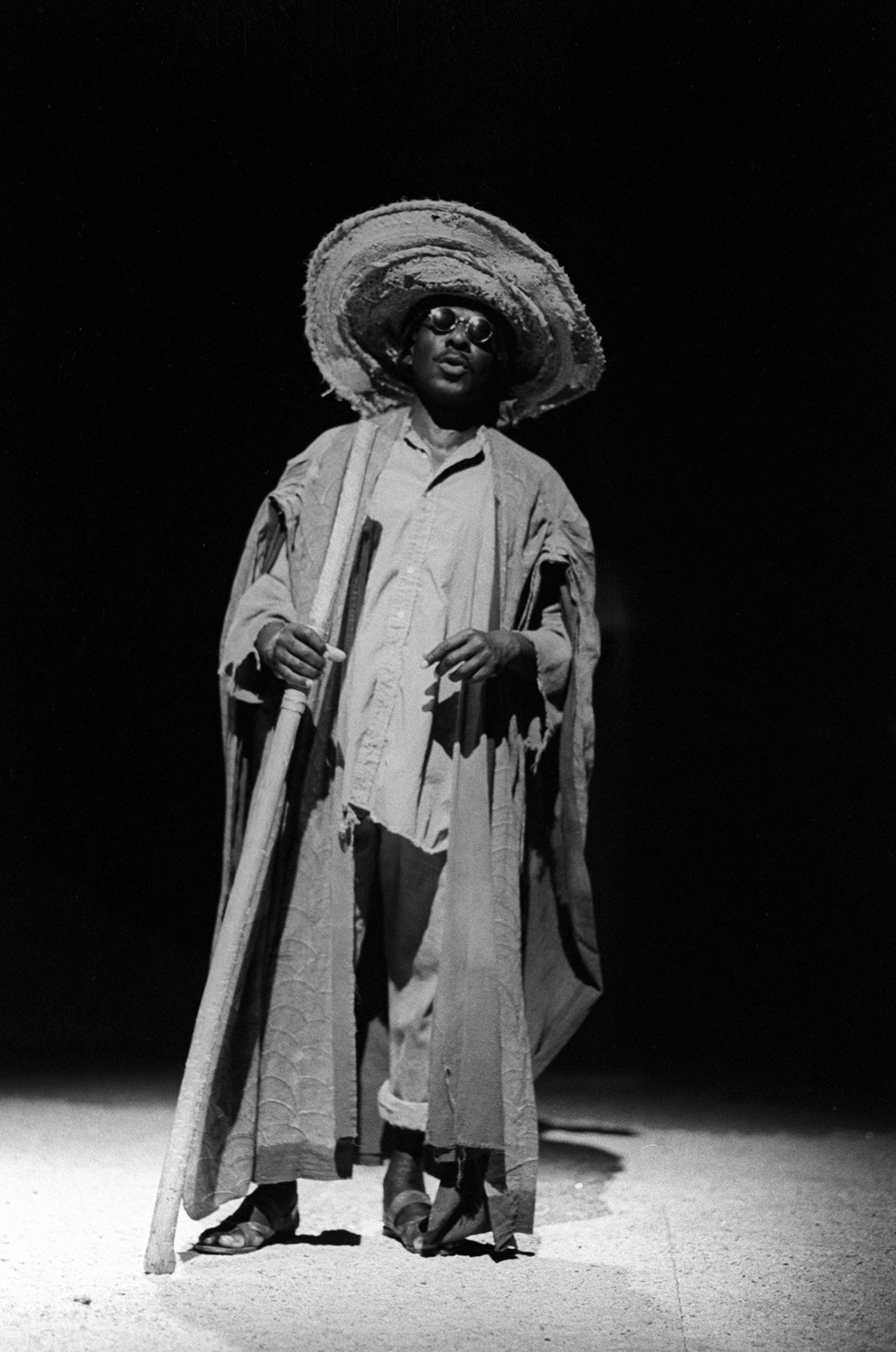
Late twentieth-century selections included the episode of the killing of the suitors and hanging of the maids from Odyssey 22. Derek Walcott's play The Odyssey. A Stage Version (Figure 8) subverted its cultural force by making Penelope forbid the killing of the maid.Footnote 42 The incident was central to Margaret Atwood's reworking for the stage, The Penelopiad, in which the slaughtered maids invoked the Furies, although in vain, and appeared in Hades to compel Penelope to revisit her past.Footnote 43 Finally, the episode was violently reworked in Peter Reading's ‘Homeric’ and by Michael Longley in ‘The Butchers’.Footnote 44 Both poets follow the account in Homer closely, but Longley elaborates the fumigation sequence to include an image of a priest exorcizing the ghosts from the house, thus focusing both on the ghosts of the dead and on the affinities with Hermes, who ‘Like a clergyman might wave the supernatural baton’. Longley's work contains many examples of short poems in which he uses episodes or figures, usually from Homer, to make connections between ancient and modern and to re-examine the values of both – for example, in ‘Eurycleia’ he uses the recognition scene and the boar's tusk scar on Odysseus’ leg to introduce a simile between himself and Odysseus (an example of Longley's predilection for metalepsis in his poems).Footnote 45 The recognition scene as paradigm for exploration of human relationships is refashioned in ‘Laertes’, while in ‘The Helmet’ the scene between Hector and his baby son juxtaposes family love with the violent implications carried by the line that Hector ‘prayed that his son might grow up bloodier than him’.Footnote 46
Rudolph Walker as Blind Billy Blue, the jazz-playing bard, in The Odyssey. A Stage Version, by Derek Walcott, directed by Gregory Doran, Royal Shakespeare Company, 1992.

One of the most influential images of war in Homer is included in the sequence on the shield of Achilles (Iliad 18). W. H. Auden's poem ‘The Shield of Achilles’ (1955) ruthlessly strips away the ‘ritual pieties’ and social cohesion expressed in Hephaistos’ crafting of the shield, and substitutes the execution of prisoners (or perhaps ‘deserters’):
Auden picks up the ambivalences in the Homeric rhetoric of war.Footnote 47 He explores these in a bleak image of large-scale suffering that is inclusive of both past and present:
This self-conscious reflection on ancient poetics and the values which have been attached to it is a major feature of the work of Seamus Heaney. In his collection Electric Light (2001) Heaney explores the Latin eclogue as a vehicle for addressing the poet's relationship to contemporary events.Footnote 48 The exploration is poetically and personally self-conscious, based on a dialogue with the source and with mediating poets who have used the form. In ‘Bann Valley Eclogue’ Heaney's engagement with the tradition not only deploys the Latinate vocabulary found elsewhere in the collection but also directly examines the cultural impact of words from Virgil's Fourth Eclogue. Virgil himself is made to generate the discussion:
Virgil's gently mocking comment introduces Heaney's reworking of these terms in the context of modern Ireland:
The figure of the poet in the poem refigures the ‘messianic’ birth of the child in Virgil's poem in the context of his own rural childhood and the expected birth.
Classical allusion and form enable Heaney to bridge the gap between public affairs (blood, pollution, the guilt of civil war) and private (rebirth, hope, the countryside). Virgil is directly addressed as his ‘hedge-schoolmaster’, an allusion to the role of the hedge schools in Irish cultural memory. The schools were a source of learning at the time when the penal laws in Ireland forbade an official education for Catholic children (1690–1795). The classical elements in this education were influential in the Nationalist tradition – as Canon Sheehan was supposed to have said in the nineteenth century, ‘The scholars took their sods of turf under their arms for school seats but every boy knew his Virgil and Horace and Homer as well as the last ballad about some rebel that was hanged.’Footnote 49
Heaney's work exemplifies a reception of classical poetry which engages with forms, vocabulary, and the overlap and differences in ancient and modern semantic fields in order to address both personal emotions and public dilemmas. It brings out the way in which receptions of poetry, like those of drama, both depend on a sense of difference from the source texts and exploit the shared aspects of human activities and experiences.
Shifting values
Carol Ann Duffy's poems take paradigms and elaborate or extend them, filling in gaps and silences and altering the direction of the gaze, as in ‘Mrs Teiresias’, ‘Mrs Icarus’, ‘Penelope’, and ‘Eurydice’ (‘In fact, girls, I'd rather be dead’).Footnote 50 In the twentieth century there were larger and more radical subversions, in which receptions challenged particular emphases in classical poetry and its interpretation, and used classical paradigms to contest not only the values expressed in the ancient work but also the value put on them subsequently and their role in exploiting modern familiarity to create critical reflection. Examples of this type of reception are found in free translations and adaptations and in new poems. Important examples of the latter have shaped the reception and refiguration of conceptions of war and heroism, particularly in the poetry of the trenches of the First World War.Footnote 51 Few of the poems involve direct translation (even at the freer end of the scale). Their impact derives partly from allusion and more especially from the reworking of themes from Homer and images from ancient cultures to create multiple layers of meaning.
The kind of direct allusion involved in the translating of a figure or image into the early twentieth-century context implies at least an outline acquaintance with classical and later literary culture on the part of the imagined readers. For example, in ‘I Saw a Man This Morning’, Patrick Shaw-Stewart compared his situation with that of Achilles (‘Achilles came to Troyland / And I to Chersonese’) but there is also an allusion to John Keats's claim that he was in battle with Achilles in Shaw-Stewart's lines:
The lines were written in the Gallipoli campaign of 1915 and situate Shaw-Stewart not just as aspiring to the status of a hero (and, furthermore, one who reflects on the justification for war) but also as aspiring to be a poet in the tradition of Keats.
As the carnage of war increased, Homeric allusions increasingly drew out the ambivalent or menacing resonances with classical poetry. Isaac Rosenberg's allusion in ‘August 1914’ (written in 1916; Rosenberg was killed in 1918) to the simile in Iliad 11.67–71, in which Trojans and Achaians cut one another down like two lines of reapers harvesting wheat or barley, became an imagist expression of the violation of both nature and humanity:
This image has direct impact for those who know no Homer. For those who do, it brings out the horror latent in Homer, although it is Homer and not Rosenberg who shows that the reapers/killers are working on behalf of the rich and powerful. The lines also draw on images from the cultures of the ancient Near East.Footnote 53
More specifically didactic was the insistence of Wilfred Owen (killed 1918) in ‘Dulce et decorum est’ that the Latin tag Dulce et decorum est pro patria mori (Horace Odes 3.2.13) represented an ‘old lie’, used to delude the young into thinking that death in battle was glorious. The poem is a vicious attack, both on complacency and ignorance about the war in the home country and also on the use of exempla from the past to justify present values.Footnote 54 His poem ‘Strange Meeting’ (1918) is more subtle. It is constructed round a katabasis, which featured in Homer, Virgil, and Dante as a stage in moral and spiritual enlightenment. Owen uses a variant of the epic device of aristeia, in which heroes demonstrated their courage and military skill, to bring about a reversal at the end of the poem, in which it becomes clear that the ‘narrator’ himself has been killed and that, in his encounter with the dead German, polarization of the ideas of friend/enemy and courage/wisdom is being challenged.Footnote 55
Owen's challenges were to ignorance of the realities of war and to unthinking acceptance of precepts drawn from appropriated classical works. In fact, his refigurations themselves draw closely on classical poetics. A very different approach to subverting the values associated with battle is taken by Christopher Logue in his ‘Accounts of Homer’. The term ‘account’ is used by him to distinguish his work from a translation or version; the multiplicity of meaning of the word ‘account’ both draws attention to his narrative approach and suggests that he is holding Homer to a reckoning. Logue's War Music (2015, first published 2001) draws on Books 1–4 and 16–19 of the Iliad. He served in the army, and his other works contain poems exploring and challenging jingoistic approaches to war.
Three features of Logue's ‘Accounts’ are of particular significance. The first is that he does not read Greek and began his work on the Iliad by studying translations by Chapman (1611), Pope (1720), Lord Derby (1865), A. T. Murray (1924), and E. V. Rieu (prose, 1950). His view was that, in those writers, poetic value and knowledge of Greek were in inverse proportions, and that there were as many Homers as there were translations.Footnote 56 The second important feature is that Logue developed a poetics very different from Homer's: he omitted formulaic epithets and truncated similes, and tried to keep the action moving energetically forward by capturing key moments, often by using sharp commands or comments, or introducing cinematic techniques into the poetry.Footnote 57 Thirdly, in both figurative language and description Logue drew out the dark side or replenished gaps in Homer. The ruthless and unquestioned exploitation of the women and the ordinary people which underlies Homer is never glossed over, and the idea of reciprocity which is so sensitively shaded in Owen's and Longley's receptions is reduced to basic material exchange. Logue's ‘Accounts’ not only undermine the concept of heroic values but also challenge the value of Homeric epic in that the emotional and moral sensitivity of the poetry of Books 6, 9, and 24 of the Iliad is bypassed – an example of the poverty of understanding involved in characterizing Homer as simply a poet of war.
This ‘desanitizing’ of Homer has provoked vigorous critical reaction. Some critics have pointed to the power of Logue's writing, its spareness, and its cumulative effect. Others have emphasized the violence and cruelty which is communicated through Logue's adaptation of popular art forms. His intervention is certainly revolutionary in terms of Homer reception, and it challenges the way in which Homer has been appropriated and interpreted in many aspects of the classical tradition. The effect of those radical subversions of the paradigms of classical poetry is one of ‘saying the unsayable’, in terms both of critique of iconic appropriations and of confronting the suffering brought by war. In his introduction to The Oxford Book of Modern Verse (1936), W. B. Yeats explained why he had decided not to include any work by Owen, Sassoon, Graves, and other war poets:
they made suffering their own. I have rejected these poems for the same reason that made Arnold withdraw his Empedocles on Etna from circulation; passive suffering is not a theme for poetry…In all the great tragedies, tragedy is a joy to the man who dies; in Greece the tragic chorus danced…If war is necessary, or necessary in our time and place, it is best to forget its suffering as we do the discomforts of fever, remembering our comfort at midnight when our temperature fell.
Apart from the debatable generalization about Greek tragedy, two points in Yeats's rationale stand out. The first is that ‘passive’ suffering, as opposed to aristeia, can be dismissed from poetry. The second is the implication that poetry cannot engage with suffering on the scale of that endured in the First World War. The war poets directly countered both points by redefining the concept of the hero and challenging the heroic concept of the ‘good death’ (a death met with individual courage and one which enabled the dead man to avoid the indignities of defeat, old age, and decrepitude, attaining a lasting reputation, kleos).
Yeats's doubts about the ability of poetry to cope with the enormity of suffering on a grand scale were refined in the question posed by Adorno as to whether poetry composed after Auschwitz would inevitably be barbaric, and have been extensively discussed since.Footnote 58 Both were challenged by the attempts of Tony Harrison in the film-poem Prometheus to encapsulate within the Prometheus myth the sufferings of twentieth-century Europe, including the bombing of Dresden, the Holocaust, and the atrocities in the Balkans.Footnote 59 In Harrison's view, not only the ancient Greeks but also modern consciousnesses are tested to the limit in coping with catastrophe.
Harrison specifically addressed this in The Labourers of Herakles, in which he himself played the spirit of Phrynichus and spoke of ‘redeeming destruction through the power of art’.Footnote 60 The allusion to Phrynichus brings into the argument the Athenian tragedian who wrote at the turn of the sixth and fifth centuries bce and based some of his work on recent historical events rather than purely mythological material. It was a play on a contemporary theme, The Capture of Miletus, which led to his being fined for reminding the Athenians of their own troubles.
Polarization of the concepts of poetry as catharsis and of poetry as a call to awakening is not confined to Aristotle. Auden, Owen, Longley, Logue, and Harrison all develop the latter aspect in their own ways and in so doing redeem poetry from Homer onwards from charges of sanitizing suffering and its causes, or of being appropriated for a modern ethos that includes the uncritical acculturation of war. In so doing they also strike a balance between exposing the alien qualities and contexts of classical poetry and building on the commonalities of suffering shared by other times and cultures.
Virgilian receptions
In the final section of this chapter, I would like to touch on the potential of Virgil as a classical source with almost infinite possibilities in the tracing of receptions. Earlier sections in this book have stressed the importance of reception within antiquity and the importance of mediations in reception, both through intertexts and through other genres and media. Barchiesi has analysed in detail Virgil's structure of narratives and allusions in relation to the polyphonic effects of intertextualities with Homer, concluding that Virgil walked a tightrope in compromising between regeneration and transformation in the epic repertoire.Footnote 61
Scholars have repeatedly referred to how Virgil can be read both forwards and backwards (for example, Virgil can be read through Dante, and Dante can be read through Virgil; Heaney does both). The translation history of Virgil is almost an epic subject in itself, and has been alluded to at various points in this book.Footnote 62 Virgil was and is a poet of intertextualities and of thematic receptions. His epic poem the Aeneid and his other major works, the Georgics and the Eclogues, all engage dialogically with other writers of his own time, as well as with earlier works, especially Homeric epic.Footnote 63 His works also resonate with the urgencies in the political and social traumas of Rome during the Late Republic and early Empire. Craig Kallendorf referred to Virgil as ‘protean’.Footnote 64 This characterization recognized the diverse materialities of Virgilian receptions and creative responses to his work. It also recognized the continuing urgency of the themes and situations that dominated his poetry. Notable among these are the role of foundations – of cities, of dynasties, and by extension of texts. Interwoven with those themes are questions of power (political and literary), and of the journeys made by the defeated and displaced who are without hope of nostos (homecoming) but instead seek to build a new future. Those aspirations are imbricated with the impact of defeat and irretrievable loss for some (Trojans, Turnus, and Dido in the Aeneid; peasant farmers in the Roman civil wars). For those reasons Virgil has been characterized as both a pessimistic and an optimistic poet.
Those debates continue into current scholarship. The Postclassicisms Collective has commented on the lasting presence of Virgil but questioned whether people were reading the same author.Footnote 65 This observation perhaps helps account for the attention paid to Virgil in the emerging sub-discipline of memory studies, both because of his poetic techniques and as an index of the creation of social and cultural paradigms.Footnote 66 Virgil also has status as a Nationalist icon in the educational and political history of Ireland, reflected partly in the actual or imagined association of reading Virgil with the hedge schools at the time when the British denied education to Catholics.Footnote 67 Literary responses to Virgil, both formal and thematic, are important for readers of Derek Walcott's poetry,Footnote 68 and for modern Irish poets, including Michael Longley, Eavan Boland, and Seamus Heaney. Heaney's 2016 translation of Aeneid 6 fulfilled a lifetime ambition.Footnote 69
One particular aspect of Virgil's poetry and its reception brings together a number of the themes in this Survey. His Georgics have attracted attention from scholars and from the wider public because of the association with the history of pastoral and the urgencies of modern concerns with ecology,Footnote 70 and because of reflections in his work on the destruction of the environment, agriculture, and rural life through war, especially civil war.Footnote 71 Here I want to cite the convergence of philological analysis of the texts by modern scholars and the imaginative exploration of the Georgics in conjunction with the modern medium of photography.
In her study Vergil's Green Thoughts (2019), Rebecca Armstrong's focus is on how Virgil engages with the natural world, especially plants and trees, and how analysis of that feature is fundamental to understanding his outlook on religion, culture, and humankind's relationship with the planet and the cosmos. Armstrong's book is not a study in modern receptions and she recoils from any temptation to appropriate the poet as some kind of environmentalist.Footnote 72 However, several aspects of her approach are helpful to reception analysis. She points to other Latin texts, notably Lucretius’ comments in De rerum natura, that forests recede as agricultural landscapes are created, and that Virgil's ‘wider web’ connects great trees with the rise and fall of civilizations – for example, when Aeneas ‘makes his mark on the wooded landscape of Cumae in both literal, poetical, and political senses’.Footnote 73 Armstrong also notes how the language of war is deployed in respect of human being's agricultural operations, and how plants have metaphorical associations with politics. In Roman historiography and epic, decapitated poppies become decapitated people.Footnote 74 The metapoetic significance of such ‘hanging motifs’ as the poppy (in itself a reception of the simile on the death of Gorgythion in Iliad 8) continues in modern poetry, notably that associated with the First World War.Footnote 75
In his study Still, commissioned and created as a response to the centenary of the outbreak of the First World War, the British Poet Laureate Simon Armitage collaborated with the Imperial War Museum to make a book that interspersed translated versions of Virgil's Georgics with photographs of the devasted landscapes of Flanders in 1914–18.Footnote 76 The book was subtitled ‘A Poetic Response to Photographs of the Somme Battlefield’. The Battle of the Somme started on 1 July 1916 and continued until 18 November of that year. It resulted in the deaths of hundreds of thousands of combatants with very little ground gained by either side. The British army sustained 20,000 dead on the first day alone, with 40,000 wounded, missing, or taken prisoner. Aerial photography was an emerging technology at the time and the grainy black-and-white photographs show routes, villages, and agricultural land devasted by battle, as well as some areas pre-battle. In his introduction, Armitage commented that he had chosen the Georgics rather than the Aeneid because of the Georgics’ concern with ‘the ground beneath our feet’, as well as with the military conflict, power politics, and nationhood reflected in the Aeneid. Particularly striking was the refashioning of part of the closing sequence of Book 1 of the Georgics, in which the poet images a future time in which the farmer's plough will strike into the detritus and lost weapons of battle and disinter the bones of the fallen.Footnote 77 Armitage described how the initial artistic installation of the project involved a refraction in which the poems were placed an inch above the photographic surface, creating aerial detachment, which served ‘in a certain light – to encourage the poems to throw their word-shadows on to the landscapes below’.Footnote 78
My juxtaposition of Armstrong's scholarly study of Virgil's texts, Armitage's versions of Virgil, the modern medium of photography, and the heightened receptivity generated by the anniversary of a battle that has become a symbol of the ravages and waste of war suggests not only that ‘word-shadows’ and physical environments can interact hermeneutically, but also that philology and reception are mutually enhancing. Armstrong and Armitage were thinking and working independently of one another but a connectivity was created through Virgil – an example of how classical receptions can work backwards and forwards, revealing a dense network of ‘deep classics’.