

Reciprocal social interaction is noticed in tiny infants, moments after they are born (Klin, Shultz, & Jones, Reference Klin, Shultz and Jones2015), and it is this interaction that forms the basis for the future development of the child’s social and communicative competence (Klin, Jones, Schultz, & Volkmar, Reference Klin, Jones, Schultz and Volkmar2003). Deficits in social interaction is one of the diagnostic features of autism spectrum disorder (ASD; American Psychiatric Association, 2013, p. 50). These deficits are often characterised by the lack of joint attention, including difficulties using eye gaze to coordinate attention, following the attentional focus of another person, and drawing another’s attention to an object or event (Wetherby et al., Reference Wetherby, Woods, Allen, Cleary, Dickinson and Lord2004).
Alongside the desire to support adults to skilfully engage a child with autism, is the strong belief in the importance of play and the right of all children to play. This has been identified in Article 31 of the United Nations Convention on the Rights of the Child (United Nations, 1989), which grants the right to rest and leisure, play and recreational activities appropriate to the age of the child. Play is widely recognised as the fundamental activity for the overall development of every child (Besio, Bulgarelli, & Stancheva-Popkostadinova, Reference Besio, Bulgarelli and Stancheva-Popkostadinova2017).
Besio (Reference Besio, Besio, Bulgarelli and Stancheva-Popkostadinova2017) examined the qualities and importance of social play, which children learn by playing with an adult (often mothers in the first instance). The author demonstrated ‘that it is possible to do something just to take pleasure in doing it together’ (p. 23). In many cultures, there are similarities in early games that adults play with their young children. These include hiding objects or parts of one’s face (e.g., peek-a-boo), performing a series of rhythmic actions on the child’s body, often with an increase in pace to build excitement (e.g., singing ‘round and round the garden’ on a child’s hand or tummy or ‘this little piggy went to market’ with a child’s toes), capturing the child’s interest and increasing his or her attention.
Children with autism typically have difficulty engaging in social play and often will focus more on objects rather than people (Klin et al., Reference Klin, Shultz and Jones2015). Gutstein (Reference Gutstein2000) described children (and adults) with autism as having difficulties with joint attention, sharing enjoyment with others, conjoint pretend play, declarative communication, social referencing, and perspective taking. He included these skills under an umbrella term of experience sharing, which is a dynamic social-emotional and social-cognitive ability that requires a child (or adult) to be able to constantly adapt to changing situations and continually evaluate information about emotions — their own and others. As well as difficulties with social interaction, children with autism generally have sensory difficulties, which affect their participation in play (Ray-Kaeser, Thommen, Baggioni, & Stanković, Reference Ray-Kaeser, Thommen, Baggioni, Stanković, Besio, Bulgarelli and Stancheva-Popkostadinova2017).
Way to Play
Way to Play is an intervention that sits under the broader spectrum of developmental social-pragmatic approaches. It has been developed in New Zealand (NZ) over nearly 20 years through collaboration among specialist teachers, a music therapist, and speech and language therapists across the country. It has had many iterations, beginning as a 1-day workshop titled Building Relationships With Children With Autism through to an approach called Experience Sharing, which has been implemented in an NZ special school for a number of years (Ngan, Hand, May, Antipova, & Purdy, Reference Ngan, Hand, May, Antipova and Purdy2011). Following further consultation with parents of children with autism, a program titled Relationship Approach Social Communication (RASCAL) was developed and is now known as Way to Play. Although the title of the program has been altered, taking into account the developing evidence and feedback from parents and participants over the years, the foundational philosophies have remained the same, namely, to create a range of simple and easy-to-implement strategies that any adult can use across the day to support engagement and fun with a young child with autism.
Support for the Way to Play Approach
Social-pragmatic approaches include Intensive Interaction (Nind & Hewett, Reference Nind and Hewett1994), Relationship Development Intervention (RDI; Gutstein, Burgess, & Montfort, Reference Gutstein, Burgess and Montfort2007), and Experience Sharing (Ngan et al., Reference Ngan, Hand, May, Antipova and Purdy2011). As described by Ingersoll (Reference Ingersoll2010), these approaches are based on an integration of Piagetian developmental psychology, as well as the social-pragmatic model of language acquisition. In practice, this means that in Way to Play there is an assumption that all children with autism want to and can engage in social play and that the development of social-communication skills in children with autism follows a similar developmental trajectory as in typically developing children. Another assumption of Way to Play is that, as with typically developing children, a child with autism will learn best when caregivers are responsive and follow the child’s lead (Siller & Sigman, Reference Siller and Sigman2008).
The Evidence for Social-Pragmatic Approaches
Although the effect of Way to Play on families and children has yet to be investigated, there is some research support for other social-pragmatic approaches to intervention with individuals with disability.
Intensive Interaction (Nind & Hewett, Reference Nind and Hewett1994)
Intensive Interaction was developed as an approach to teaching and spending time with individuals with profound and multiple learning difficulties where there may be limited communication as well as significant behavioural challenges. It is based on naturalistic processes and developmental principles. The techniques used in Intensive Interaction include being close to the person, and using touch, responsive eye contact, facial expressions, vocal mirroring, and joint focus activities. The aim is to facilitate communication development through intuitive processes as the child explores typical early communicative behaviours. In their systematic literature review, Hutchinson and Bodicoat (Reference Hutchinson and Bodicoat2015) found that although the approach has increasing recognition, more robust studies are needed, with many of the studies having limitations in methodology and design as well as small numbers of participants.
Relationship Development Intervention
RDI aims to address deficits in social-communication skills, which Gutstein and colleagues suggested includes perceptual, cognitive, and emotional difficulties (Gutstein et al., Reference Gutstein, Burgess and Montfort2007). They argued that it is an emotional deficit that impacts on a child’s ability to understand social situations, which in turn causes stress and confusion. RDI involves training parents to use naturally occurring everyday opportunities to help their children with autism respond more flexibly to new, challenging, and unpredictable problems. In the initial stages of the intervention, parents learn how to support their children to tune into the adult’s social behaviour and emotional indicators. Caregivers are taught how to establish predictable play patterns with the child, which incrementally become more varied. The focus of the intervention is to support children with autism to appreciate and enjoy social communication, initially with their caregivers and then with others. A review of RDI (Gutstein et al., Reference Gutstein, Burgess and Montfort2007) showed improvements in 16 children’s scores on measures of autism (Autism Diagnostic Observation Schedule; Lord, Rutter, DiLavore, & Risi, Reference Lord, Rutter, DiLavore and Risi1999; Autism Diagnostic Interview – Revised; Rutter, Le Couteur, & Lord, Reference Rutter, Le Couteur and Lord2003), flexibility, and school placement. At the start of the intervention, more than half of the children were in special education classrooms; post treatment, 10 of the 16 children were functioning in mainstream classes without a teacher’s aide and one remained in a special education classroom setting. This study has limitations because of small numbers, and no study to date has compared RDI to other treatment methods.
Experience Sharing (Ngan et al., Reference Ngan, Hand, May, Antipova and Purdy2011)
Experience Sharing is another developmental social-pragmatic approach and, as previously reported, was a basis for Way to Play and developed by the same group of people. Experience Sharing is based on the belief that changes in an adult’s interaction style will result in changes in the child as well as the view that children’s emotional development is dynamic (Fogel et al., Reference Fogel, Nwokah, Dedo, Messinger, Dickson, Matusov and Holt1992).
A small-scale investigation into how teachers trained in the Experience Sharing program differed in their interactions from teachers trained in another social-pragmatic approach was undertaken by Ngan et al. (Reference Ngan, Hand, May, Antipova and Purdy2011). They found that, although all the teachers showed a very high incidence of positive interactions with the children, teachers trained in the Experience Sharing approach used more nonverbal extending interactions (attempts to gain a child’s response) and more response interactions (e.g., responding to a child who throws a block across the room by doing the same thing). Outcomes were not evaluated for the students who, because of the severity of their disability, showed little spontaneous interactional behaviour.
Evaluation of the Way to Play Adult Training Program
An important goal for Autism NZ is to support adults and caregivers to successfully engage socially with their children with autism. The New Zealand Autism Spectrum Disorder Guideline (Ministries of Health and Education, 2016) emphasises the need to engage young children with autism in meaningful, goal-directed activities for 15–25 hours per week. This guideline provides evidence-based information for people on the autism spectrum, their families, as well as health, disability, and educational professionals and social service agencies.
Across Auckland, there are close to 300 specialist staff employed by the Ministry of Education to support children with additional learning needs (in early childhood settings and schools). Careful consideration is given to the training of specialist staff by practice and implementation advisors, who are responsible for sourcing as well as developing and delivering appropriate professional learning and development. Importance is placed not just on the quality of the intervention in which staff are being trained, but also on the methods and strategies used to train staff, as it is well established that no intervention is likely to be implemented if the training is not delivered in accordance with best principles around adult learning (Dunst & Trivette, Reference Dunst and Trivette2009). The Ministry of Education Auckland Performance and Quality Team began its collaboration with Autism NZ in early 2016 to examine effective methods to train specialist staff in the delivery of Way to Play. Preliminary data were gathered to investigate the perceptions of early intervention staff of the value of the Way to Play adult training program.
Method
Participants
Between mid-2016 and June 2019, the Way to Play training program was delivered six times, with 89 early intervention staff within the New Zealand Ministry of Education completing the course. Evaluation of the training included completion of a post-course questionnaire (36 responses received: nine in 2016, nine in 2017, seven in 2018, 11 in 2019). Participants were informed that de-identified data from their questionnaires may be published and gave verbal consent for this. Formal ethics approval to publish feedback from participants was not sought. In 2019, a follow-up survey was sent to 60 of the staff (25 responses received) who had completed the training and who were still working in the Ministry of Education.
Content of the Training Program
Participants were taught to implement Way to Play with the children they provide specialist support for. As part of this training, they were reminded of the importance of play. Using metaphors, Way to Play trainers gave participants examples of why children with autism may find it hard to engage in social interaction and play. For example, the image of a ‘dark alley’ was used to describe how children with autism may feel when invited to engage in social play; in the same way, neurotypical adults may feel reluctant to venture down a dark alley with a stranger when they are not clear what the outcome might be.
The metaphor of a ‘seesaw’ was used to illustrate how young children with autism prefer predictable patterns of behaviour. This insistence on sameness is recognised as a core deficit in autism, which is exemplified as ‘extreme distress at small changes, difficulties with transitions, rigid thinking patterns, greeting rituals, the need to take the same route or eat the same food every day’ (American Psychiatric Association, 2013, p. 50).
As part of Way to Play, participants were taught how to use three primary strategies: pattern, memory, and variation. The initial aim when engaging with a child with autism is to identify, based on an action or behaviour of the child, a repeating pattern (this could be an action such as patting the sand, banging a leg, or making a noise), which is imitated. The use of imitation has been shown to be supportive when engaging a child with autism (Ingersoll, Reference Ingersoll2012). Importance is placed on following the child’s lead (e.g., imitating what they are already doing), using vocal noise (melodic repetition of a ‘memory catchphrase’), and repeating your own actions and words to draw attention to your attempts to engage the child. Wimpory, Hobson, and Nash (Reference Wimpory, Hobson and Nash2007) found that when an adult followed the child’s focus of attention, used movement or musical activity, imitated the child, or repeated adult actions, there were more instances of social engagement with a child with autism. We also know that children with autism demonstrate increased responsiveness to social approaches that involve increased physical proximity (Doussard-Roosevelt, Joe, Bazhenova, & Porges, Reference Doussard-Roosevelt, Joe, Bazhenova and Porges2003). Once a pattern has been established with the child and they show they are engaged in the pattern, adults are asked to vary slightly the pattern they are using. Coming back to the metaphor of the seesaw, the idea is to ‘tilt’ the seesaw slightly. The use of variation is based on the view that children’s emotional development is dynamic and intimately tied to the flow of an individual’s activity in a context (Fogel et al., Reference Fogel, Nwokah, Dedo, Messinger, Dickson, Matusov and Holt1992). Slight variation in the predictable pattern means the child is challenged slightly and has to follow and watch what comes next in the game. When implemented successfully, a child demonstrates a high level of social engagement and connectivity with the adult.
Implementation of the Training Program
Ministry of Education practice and implementation advisors use the Participatory Adult Learning Strategy (Dunst & Trivette, Reference Dunst and Trivette2009), which places importance on active learning involvement as well as trainer-guided learner experiences. Training for specialist early intervention staff (speech-language therapists [SLT], early intervention teachers, psychologists) included three group face-to-face learning sessions with either an Autism NZ subject-matter expert or a practice and implementation advisor from the Ministry of Education. Each participant (early interventionist) was asked to select a focus child with autism with whom they would work for the duration of the training and to discuss the intervention with the child’s parents. Participants each brought a video of the child to the first session. A concurrent 1-day session was also provided by Autism NZ for the child’s parents and up to two of his or her teachers in order to share some of the content with them.
Through the use of video, participants were coached in the use of the intervention strategies as well as their use of video coaching. Two face-to-face individual follow-up sessions were provided where participants were supported to use the Way to Play strategies themselves (first video-coaching session) and then to coach others, such as a child’s parent or teacher, in the use of the strategies (second video-coaching session). Training was delivered over a 3-month time frame and an ongoing community of practice was established for participants who had completed the training to allow them to share ideas and to provide feedback on the program.
Measure of Training Program Outcomes
Evaluation of the training
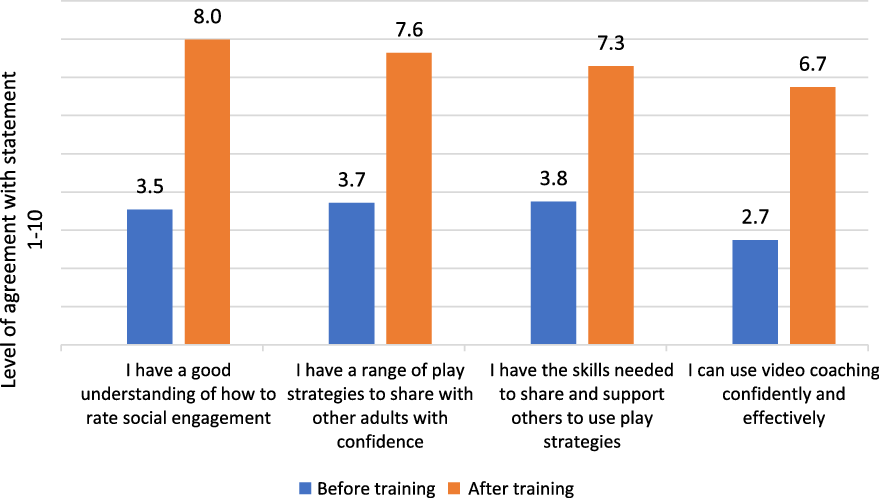
Following each workshop session, feedback was sought from participants as part of the ongoing evaluation and development of the program. Evaluation of the training included completion of a post-course questionnaire. Participants were asked to rate their agreement with a range of statements relating to their skills and knowledge before and after training. These statements were (a) I have a good understanding of how to rate social engagement, (b) I have a range of play strategies to share with other adults with confidence, (c) I have the skills needed to share and support others to use play strategies, and (d) I can use video coaching confidently and effectively. Participants were asked to rate each statement with a score from 1 (do not agree at all) to 10 (extremely high level of agreement). As part of this questionnaire, staff were also asked about their perceptions of their target child’s level of social engagement after implementation of Way to Play.
In 2019, follow-up surveys were sent to 60 of the original participants (25 responses). The survey included items inviting participants to report their (a) frequency of use of the intervention, (b) confidence in using the strategies themselves with a child, (c) confidence in introducing the intervention to a family or service using video coaching, (d) perception of the impact of the intervention on the engagement of the children with ASD, and (e) perception of the confidence of families to use the intervention strategies. Participants were also invited to make comments.
Perceived outcomes for children and families
Participant perception based on the survey and interventionist case studies provided a preliminary measure of child and family outcomes. In the post-training questionnaire, respondents were asked to estimate the impact of the training on their target child’s social interaction with adults. In the follow-up survey, sent to staff who had completed the training in previous cohorts, respondents were asked about their perceptions of the impact on child social interaction and adult confidence with using the strategies in their ongoing practice.
Results and Discussion
Effect of Way to Play Training on Participant Skills and Confidence
Figure 1 presents results from the post-course questionnaire and shows staff perceptions of their own understanding, skill, and confidence in using Way to Play strategies (36 respondents) immediately after training. As can be seen from the graph, mean participant confidence levels had at least doubled from pre to post training for (a) rating the quality of children’s social engagement, (b) using Way to Play strategies, (c) supporting others to use Way to Play strategies, and (d) using video coaching.
Staff Evaluation Immediately After Training.

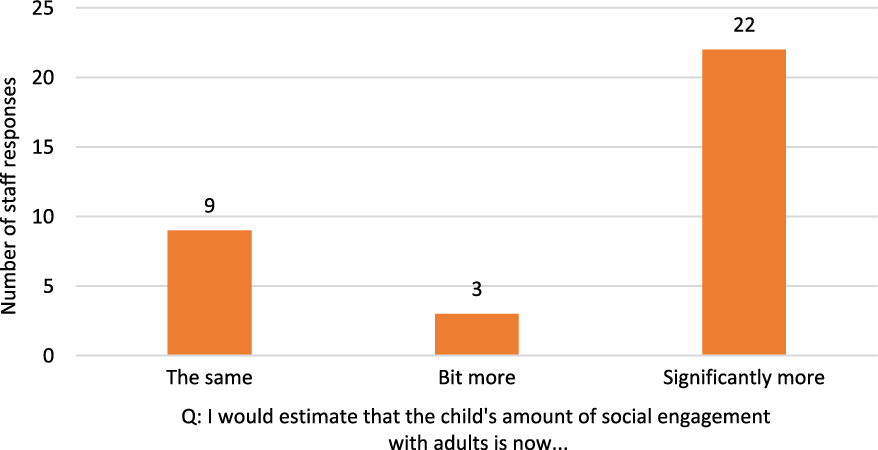
Figure 2 presents information from the second question in the post-training questionnaire where 22 (65%) of the respondents estimated that their target child’s social engagement with adults had improved significantly as a result of the adult training program, with only nine (26%) estimating that it had remained the same. The remaining three respondents (9%) indicated that it had improved a little.
Staff Perceptions of Social Engagement of Target Child.

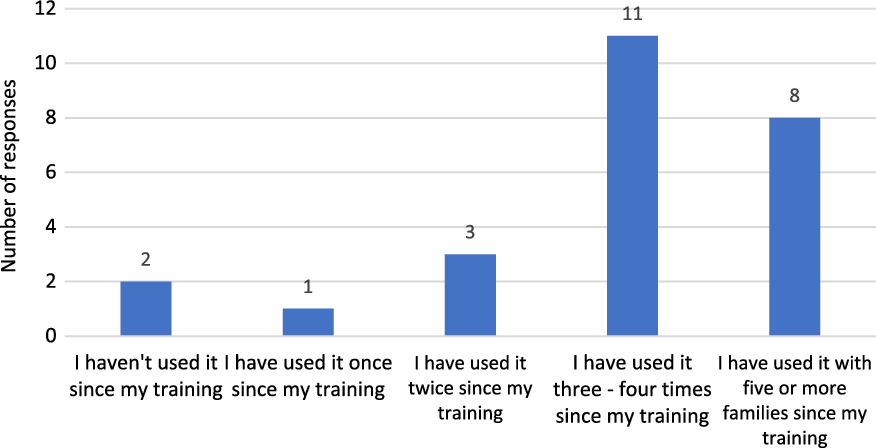
In the 2019 follow-up survey, participants were asked about their frequency of implementation of Way to Play. Twenty-five early intervention staff completed the survey, although not all respondents answered all the questions. Results indicated that of the 25 respondents, 19 (76%) continued to use Way to Play in their practice, reporting they had trained families and teachers to use the intervention on three or more occasions since their training (see Figure 3). Comments provided by the participants included, ‘not always able to use the whole program but introduce some of the strategies’; ‘Way to Play strategies have become an essential intervention for children who have difficulty giving eye contact, joint attention, and engagement. I promote it with families and centres’.
Staff Use of Intervention Strategies Since Training.

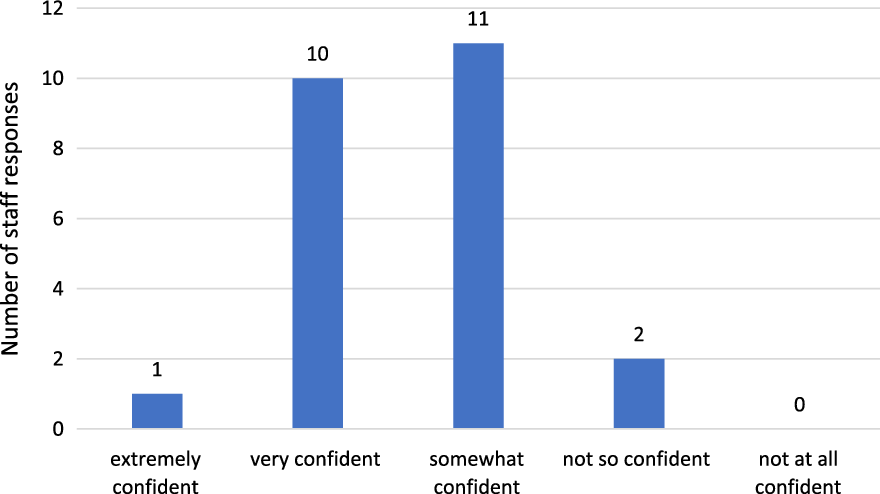
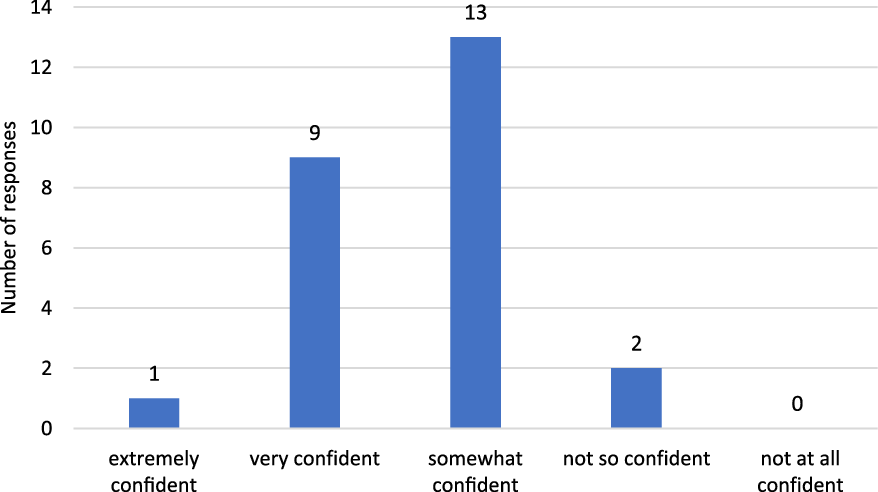
As part of the follow-up survey, participants were also asked to report their confidence in using Way to Play strategies since their initial training (see Figure 4), introducing Way to Play to others (see Figure 5), and in using video coaching to support the implementation of Way to Play (see Figure 6). Eleven participants (44%) reported feeling either ‘very confident’ or ‘extremely confident’ in using pattern, memory, and variation themselves with a child with ASD, with 11 (44%) feeling ‘somewhat confident’ and two (8%) ‘not so confident’ (see Figure 4). Only 24 responses were recorded for this question.
Staff Confidence With Using Intervention Strategies Themselves.

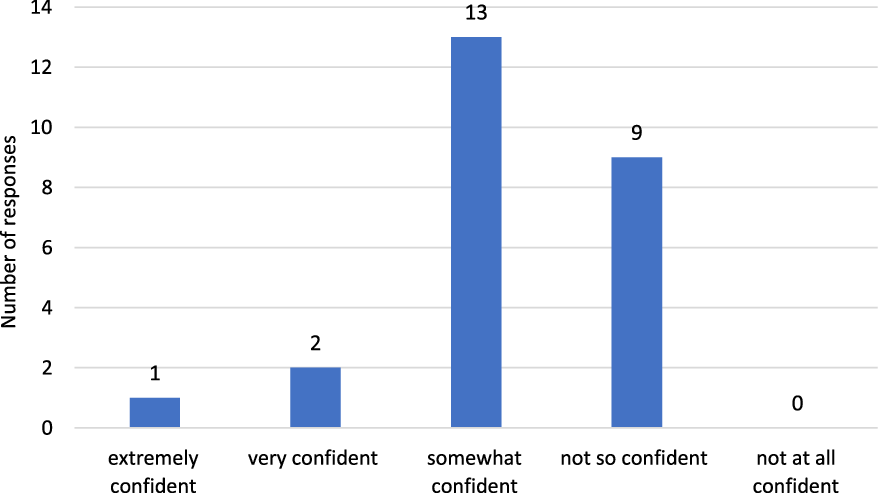
Staff Confidence to Introduce Intervention Strategies to Others.

Staff Confidence With Using Video Coaching to Support Way to Play.

Twenty-three (92%) staff rated themselves as either ‘somewhat’, ‘very’, or ‘extremely’ confident to introduce Way to Play to a family or early childhood team (see Figure 5). Comments included, ‘I have gained confidence from using [Way to Play] and it[‘s] working, so I can draw on examples from my personal experience’.
As illustrated in Figure 5, participants were relatively confident to introduce Way to Play to others, with 10 respondents (40%) reporting that they were ‘extremely confident’ or ‘very confident’. Respondents had more difficulty in implementing video coaching than other aspects of the program (see Figure 6). Just three respondents (12%) were either ‘very confident’ or ‘extremely confident’, with more than 22 (88%) being either ‘somewhat confident’ or ‘not so confident’. Comments included, ‘I think the video feedback and coaching is great. More me that is lacking than the program’; ‘This is the part I struggle with the most’. Participants also made suggestions for improving their confidence with this aspect of the program. These included more practice, reflecting on the video, and accessing other training such as a Hanen parent training program.
Outcomes for Children and Families
In the post-training questionnaire completed with staff immediately after their training, 22 (65%) respondents estimated that their target child’s social engagement with adults had improved significantly as a result of the adult training program, with only nine (26%) estimating that social engagement had remained the same. The remaining three respondents (9%) indicated that it had improved a little (see Figure 2).
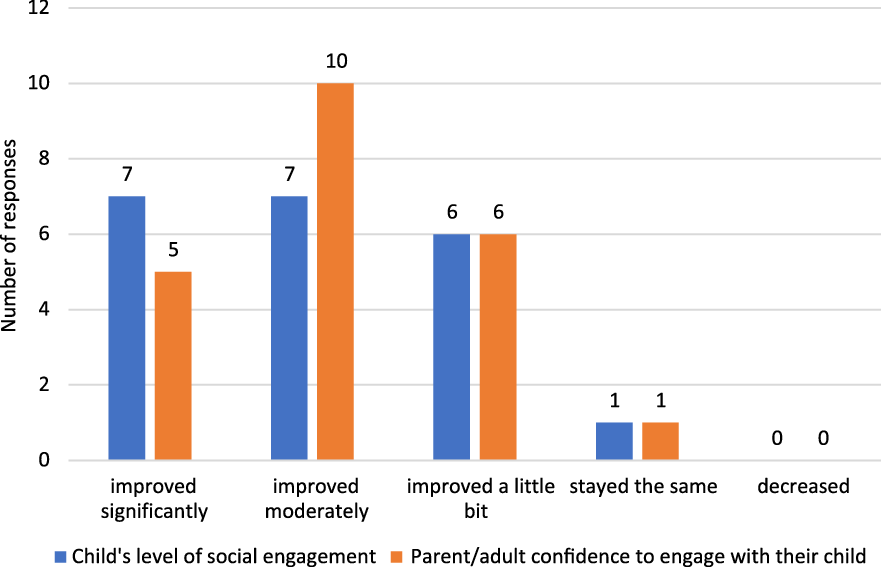
Of the 25 respondents completing the follow-up survey, 21 staff completed the question relating to perceived improvement in their target child’s level of social engagement. Of these 21 staff, 14 (66%) reported that child social engagement ‘improved moderately’ or ‘significantly’ (see Figure 7). Twenty-two participants completing the follow-up survey also rated parents’ confidence in engaging with their children. Of those responding to this question, 15 (68%) reported that parents’ confidence in this area ‘improved moderately’ or ‘significantly’ (see Figure 7). Comments included, ‘increased child’s social engagement depends on parents’ confidence’; ‘when both settings (teachers and parents) do the training and use the strategies, the challenge is to be able to support the adults to continue to use the strategies’.
Staff Perception of Impact of Intervention.

The following case studies illustrate how parents, carers, and teachers perceived the program benefits for themselves and the children. Names have been changed to protect the privacy of the participants.
Case example 1
Mei, parent to Joe, a 3-year-old boy with autism, attended a half-day Way to Play training session delivered by Autism NZ. This was suggested by their SLT, Jenna, who was undergoing her own training as part of the Ministry of Education’s collaboration with Autism NZ. Jenna also delivered a 1-hour workshop session to Joe’s teacher, Priya, which included modelling and video coaching to support Priya to implement the strategies. Jenna provided follow-up coaching to both Priya and Mei (one session each), again using video coaching.
Before the start of the intervention, Joe was not using any words, was reported to enjoy playing with toys, but did not like to engage with others during play. Four months after his teacher and parent attended the training and began implementing the Way to Play strategies, Joe had learned 13 words and was reported to be easier to engage. Mei reported feeling more confident in how to help Joe. She stopped having private SLT sessions that focused on skills in isolation, reporting ‘I do speech therapy with him every day’. At the early childhood centre, Joe’s teacher, Priya, reported that it was easier to engage Joe, and the staff were also extending the strategies to make routines and functional tasks easier; for example, they began to use a memory catchphrase to transition Joe to the table for mealtimes.
Case example 2
TJ was described as a child in his own world with limited vocabulary and anxious behaviour. His teachers and mother learned about Way to Play from their early intervention SLT, Ashleigh, during home visits and visits to the centre. TJ’s mother and teachers focused on making patterns at home and in daily routines and preferred activities (e.g., at the park). TJ’s mother found it particularly challenging when TJ was distressed about changes in routine. Two months after introducing Way to Play, TJ’s mother experimented with small changes after trialling patterns and reports that he is now accepting small changes every day.
Case example 3
Neelay is an early intervention teacher who worked with a team of teachers at an early childhood centre in Auckland. Initially, the teachers struggled to engage with a girl with autism attending the centre. However, following training in Way to Play, delivered by Neelay along with follow-up video coaching, teachers were better able to support the child. Prior to the training, Neelay had observed the little girl wandering around the centre, mostly unengaged and absorbed in self-stimulatory behaviour. Following the Way to Play training, when Neelay visited, the teachers were more often engaging with the girl in social play. For example, one day the girl approached a teacher and initiated a game by holding out her hands to the teacher. This was a pattern that had been established during the Way to Play practice sessions. All the teachers commented that Way to Play had given them a lot more confidence to engage and support the young girl.
Implications for the Inclusion of Children with Autism in Early Education Settings
When considering the implications for the inclusion of children with autism and how Way to Play supports this, it is helpful to provide some context about the early childhood curriculum in NZ. Te Whāriki, the NZ early childhood curriculum, does not include a prescriptive approach to teaching. Rather, the document seeks to identify a set of principles, strands, and goals that teachers can use to weave their own curriculum (Ministry of Education, 2017). The document supports the education of all children in all early childhood settings, acknowledging the Māori tradition that ‘children are seen to be inherently competent, capable and rich, complete and gifted no matter what their age or ability’ (Ministry of Education, 2017, p. 12). There is an expectation that all early learning services will provide a curriculum that allows for the active participation of all children, including those who may need additional support. The flexibility within Te Whāriki allows for early intervention staff to work alongside teachers and weave Way to Play strategies seamlessly into a child’s educational plan. Way to Play does not require the use of specific materials or the removal of children from their natural settings. It also does not rely on one skilled person; all teachers in an early childhood centre are encouraged to use and implement strategies.
Using the four curriculum principles and the strands — which include wellbeing, belonging, contribution, communication, and exploration — early intervention staff work alongside early childhood staff to develop inclusive goals for each child. Way to Play strategies can then sit alongside these goals. Over the years of implementation, early intervention staff have developed useful templates for connecting goals from Te Whāriki with Way to Play. Sample goals are shown in the Appendix.
Limitations and Future Research
The evaluation of the Way to Play training program was based on participant report, and the rating of participants’ pre-training skills and confidence was reported at the same time as the rating of their post-training confidence and skills (i.e., in the post-training questionnaire). Future research should include formal observations of the implementation of the program by early intervention staff and the adults trained by them. This will enable a more objective measure of the fidelity with which the training program is delivered, and the Way to Play strategies are implemented by early interventionists, early childhood teachers, and parents/carers. Research is also needed to provide a more comprehensive evaluation of the outcomes of Way to Play for children. This should include formal observations of child behaviour, pre and post training, through which child outcomes targeted in Way to Play are measured.
Summary and Conclusion
Way to Play is a social-pragmatic intervention appropriate for young children with autism. It is based on other social-pragmatic approaches, such as Intensive Interaction and RDI, which place emphasis on the importance of establishing an emotional connection with the young child with autism. Training in the approach is currently provided by Autism NZ and focuses on developing adult capability to engage and follow the child’s lead. Strategies also encourage adding variation to play patterns. The approach can be implemented with ease within NZ early learning centres, where the curriculum encourages teachers to work closely with the individual interests and strengths of the child. In this article, the training of early intervention staff in this approach, through the Ministry of Education, has been outlined and preliminary data demonstrating the effectiveness of this training have been provided. Although an increasing number of case studies are showing the positive impact of the approach on families and their children, further evidence is needed to establish the effectiveness of the approach in improving outcomes for children with autism and their families.
Appendix
Way to Play Targets Translated Into Te Whariki (With Thanks to Oaklynn Special School, Auckland)