Introduction
Effective hygiene practices in childhood are important for preventing the transmission of communicable diseases, particularly those affecting the gastrointestinal and respiratory systems (Aiello, Coulborn, Perez, & Larson, Reference Aiello, Coulborn, Perez and Larson2008) which are leading causes of morbidity and mortality for young children worldwide (UNICEF, WHO, World Bank Group, & United Nations, 2019). In the Australian context, young children and infants (under 5 years), especially those who attend child care centres, are at increased risk of contracting acute respiratory infections compared with older children or adults (Chen, Williams, & Kirk, Reference Chen, Williams and Kirk2014), and have twice the incidence of gastroenteritis compared with other age groups (Chen, Ford, Hall, Dobbins, & Kirk, Reference Chen, Ford, Hall, Dobbins and Kirk2016). Young children may also be more likely to suffer a relatively severe disease course and contribute to the spread of infections to others within the family home (Chen et al., Reference Chen, Williams and Kirk2014; Fox, Cooney, & Hall, Reference Fox, Cooney and Hall1975).
Although some factors that contribute to the increased risk of infectious illnesses among young children are innate and relatively unchangeable (Tregoning & Schwarze, Reference Tregoning and Schwarze2010; Ygberg & Nilsson, Reference Ygberg and Nilsson2012), the importance of modifiable behavioural factors is well acknowledged. Systematic reviews and meta-analyses demonstrate that consistent implementation of simple hygiene measures, such as regular handwashing, can reduce the spread of infectious disease (Aiello et al., Reference Aiello, Coulborn, Perez and Larson2008; Ejemot-Nwadiaro, Ehiri, Arikpo, Meremikwu, & Critchley, Reference Ejemot-Nwadiaro, Ehiri, Arikpo, Meremikwu and Critchley2015; Freeman et al., Reference Freeman, Stocks, Cumming, Jeandron, Higgins, Wolf and Curtis2014; Or, Ching, & Chung, Reference Or, Ching and Chung2020; Rabie & Curtis, Reference Rabie and Curtis2006). Health promotion and education interventions aiming to improve the hygiene practices of young children and/or their caregivers have been tested in day care and educational settings or home or community settings in predominantly low- and middle-income countries, and are effective in improving child health and developmental outcomes (Azor-Martinez et al., Reference Azor-Martinez, Yui-Jifume, Munoz-Vico, Jimenez-Noguera, Strizzi, Martinez-Martinez and Gimenez-Sanchez2018; Bowen et al., Reference Bowen, Agboatwalla, Luby, Tobery, Ayers and Hoekstra2012; Luby et al., Reference Luby, Agboatwalla, Feikin, Painter, Billhimer, Altaf and Hoekstra2005; Roberts, Jorm, et al., Reference Roberts, Jorm, Patel, Smith, Douglas and McGilchrist2000; Roberts, Smith, et al., Reference Roberts, Smith, Jorm, Patel, Douglas and McGilchrist2000; Willmott et al., Reference Willmott, Nicholson, Busse, MacArthur, Brookes and Campbell2016; Witta & Spencer, Reference Witta and Spencer2004).
The Centers for Disease Control and Prevention recommends frequent hand hygiene (handwashing, nail care); body, hair, and facial hygiene; and covering of coughs and sneezes as key infection control measures to interrupt the spread of communicable disease (Centers for Disease Control and Prevention, 2020). Likewise, Australian guidelines for young children (1–8 years) recommend handwashing after sneezing, coughing, or blowing noses, before touching food, and after toileting (Raising Children Network, 2019). However, a recent cross-sectional survey of parents of young children in Australia found that the majority of parents do not consistently implement these measures with their children (Baker, Morawska, & Mitchell, Reference Baker, Morawska and Mitchell2020). This is congruent with international studies reporting that children's caregivers do not follow evidence-based hand hygiene guidelines (van Beeck et al., Reference van Beeck, Zomer, van Beeck, Richardus, Voeten and Erasmus2016).
Although the implementation of low-cost preventative health measures within the family home is linked to improved child health, regardless of socioeconomic status (Lin, Wu, Chiou, & Chiang, Reference Lin, Wu, Chiou and Chiang2015), parenting factors (e.g. parents’ own hygiene behaviours, positive parenting behaviours, parent–child relationship) may influence the degree of children's engagement with and effectiveness of hygiene practices (Or et al., Reference Or, Ching and Chung2020; Song, Kim, & Park, Reference Song, Kim and Park2013). There is, however, a paucity of literature exploring parents’ perceptions of challenges, barriers, and facilitators of basic hygiene practices with young children. A qualitative study conducted with parents in Australia (Biezen, Grando, Mazza, & Brijnath, Reference Biezen, Grando, Mazza and Brijnath2019) reported that parents were concerned that encouraging frequent handwashing could cause children to become overly concerned or obsessed with cleanliness, and that children would become ‘too clean’ and that exposure to dirt is required for establishing immunity. Beyond this, many parents were sceptical about the possibility of achieving good hand hygiene practices with young children given their age and stage of development (Biezen et al., Reference Biezen, Grando, Mazza and Brijnath2019).
Despite this, parents and healthcare professionals agree that prompting and role-modelling by parents are important to ensure the early adoption of healthy hygiene habits in childhood (Biezen et al., Reference Biezen, Grando, Mazza and Brijnath2019), and there is an emerging literature examining the role of parents in fostering the development of good hygiene habits from the earliest years (Lam, Fowler, & Dawson, Reference Lam, Fowler and Dawson2016; Or et al., Reference Or, Ching and Chung2020; Song et al., Reference Song, Kim and Park2013). Australian data suggest that although most parents have a good knowledge of hygiene they do not consistently implement recommended hygiene behaviours with their young children (Baker et al., Reference Baker, Morawska and Mitchell2020), and few studies have examined parents’ perspectives on the process of teaching children to implement good hygiene practices (Lam et al., Reference Lam, Fowler and Dawson2016). The aim of this study was to investigate parent-reported adherence to, and barriers and enablers of, effective hygiene practices for young children aged 0–4 years living in Australia.
Materials and Methods
Design
The study used an explanatory sequential mixed-methods design. Data were drawn from a broader cross-sectional survey that examined the degree to which 477 Australian children meet health behaviour recommendations across multiple health behaviour domains (nutrition, physical activity, oral health, sleep, pedestrian and road safety, sun safety, personal hygiene, medical care); results from the broader survey are reported elsewhere (Baker et al., Reference Baker, Morawska and Mitchell2020).
Participants
Eligible participants were parents of children aged 0–4 years residing in Australia. Overall, 426/477 (89.3%) of the sample from the broader study completed the series of questions on personal hygiene practices and comprised the sample for this study.
Procedure
Ethical approval was obtained from the University of Queensland Human Research Ethics Committee (2017000887). Data were collected from September to December 2017. A short advertisement including a link to the study webpage was distributed Australia-wide via email to childcare centres (for dissemination in centre newsletters) and posted directly to the online forums of parent support organisations (e.g. BubHub, Raising Children Network) and social media (Facebook, Twitter). The advertisement directed interested parents to visit the study webpage to read the detailed study information (plain language statement). Parents clicked a button (‘I agree to participate’) to provide consent prior to starting the survey. The survey took an average (median) 20 min to complete. No incentives to participate were offered.
Measures
Socio-demographic characteristics
The Family Background Questionnaire (Sanders & Morawska, Reference Sanders and Morawska2010) collected socio-demographic data.
Personal hygiene practices
Parents responded to a series of close-ended questions assessing the extent to which their child participated in six personal hygiene practices (covers their cough or sneeze [e.g. with their sleeve, or a tissue], washes their hands thoroughly after toileting, washes their hands thoroughly before meals and when dirty, has their nails kept short, showers/bathes as needed, has their hair washed as needed) using a Likert type response scale from 1 (never) to 7 (always). Ratings of 6 (almost always) or 7 (always) were categorised as representing adherence to a given behaviour.
Barriers to establishing healthy hygiene habits
Parents used a text box to respond to an open-ended question exploring perceived barriers and enablers to establishing good personal hygiene practices with their children (Many parents experience difficulties establishing good personal hygiene habits with their children. Briefly describe what barriers, if any, you have experienced in establishing personal hygiene habits with your child).
Interest in assistance
A close-ended question asked parents to indicate whether they would be interested in receiving tips or information about children's personal hygiene (Would you be interested in receiving tips or information about children's personal hygiene, if such information was easily accessible? yes/no). Depending on their response, parents were invited to use a text box to provide further details about what particular topics they would like tips on (Is there anything in particular that you would like tips on [e.g. encouraging frequent handwashing, going to the hairdresser?] Please describe), or why they were not interested in receiving information (Please briefly tell us why you are not interested in receiving information [e.g. currently not a concern, child too young/old]). These items were only used to assess parents’ interest in receiving tips or information; no tips or information was supplied to parents.
Statistical and Qualitative Analyses
Overall, 0.8% of quantitative data were missing, and missing data were handled using pairwise deletion. SPSS Version 25.0 was used to generate descriptive statistics. Post hoc chi-squared analyses were conducted to test whether the proportion of parents wanting tips or information about children's personal hygiene (yes/no) differed depending on adherence (always/almost always) to hygiene behaviours. p-values of <.05 indicated statistical significance.
Qualitative responses were analysed using thematic analysis, a flexible qualitative data analysis method that allows for the identification of patterns within data. All authors read and re-read the qualitative responses from parents, and an initial round of coding was undertaken by KK. All authors undertook a comprehensive review of the proposed codes, with disagreements resolved through discussion and revision, and potential themes were generated. Several more rounds of discussion and revision resulted in a final consensus on themes and subthemes.
Results
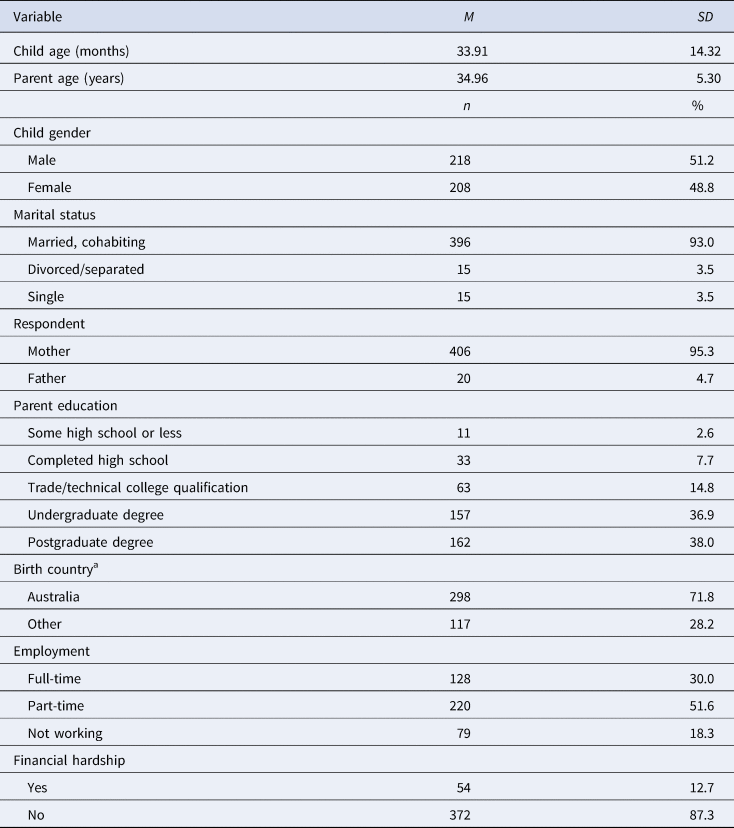
A convenience sample of 426 parents responded to the online survey and completed close-ended (quantitative) items examining children's personal hygiene practices. Most (66.9%, 285/426) also contributed qualitative data by responding to open-ended questions assessing parents’ experiences. Demographic characteristics are presented in Table 1. The sample comprised mostly mothers, and the median child age was 2 years. Most respondents had a university degree, were born in Australia, were employed full/part-time, and were not experiencing financial hardship.
Demographic Characteristics (N = 426)

a Missing data for n = 11.
Engagement in Personal Hygiene Practices by Age
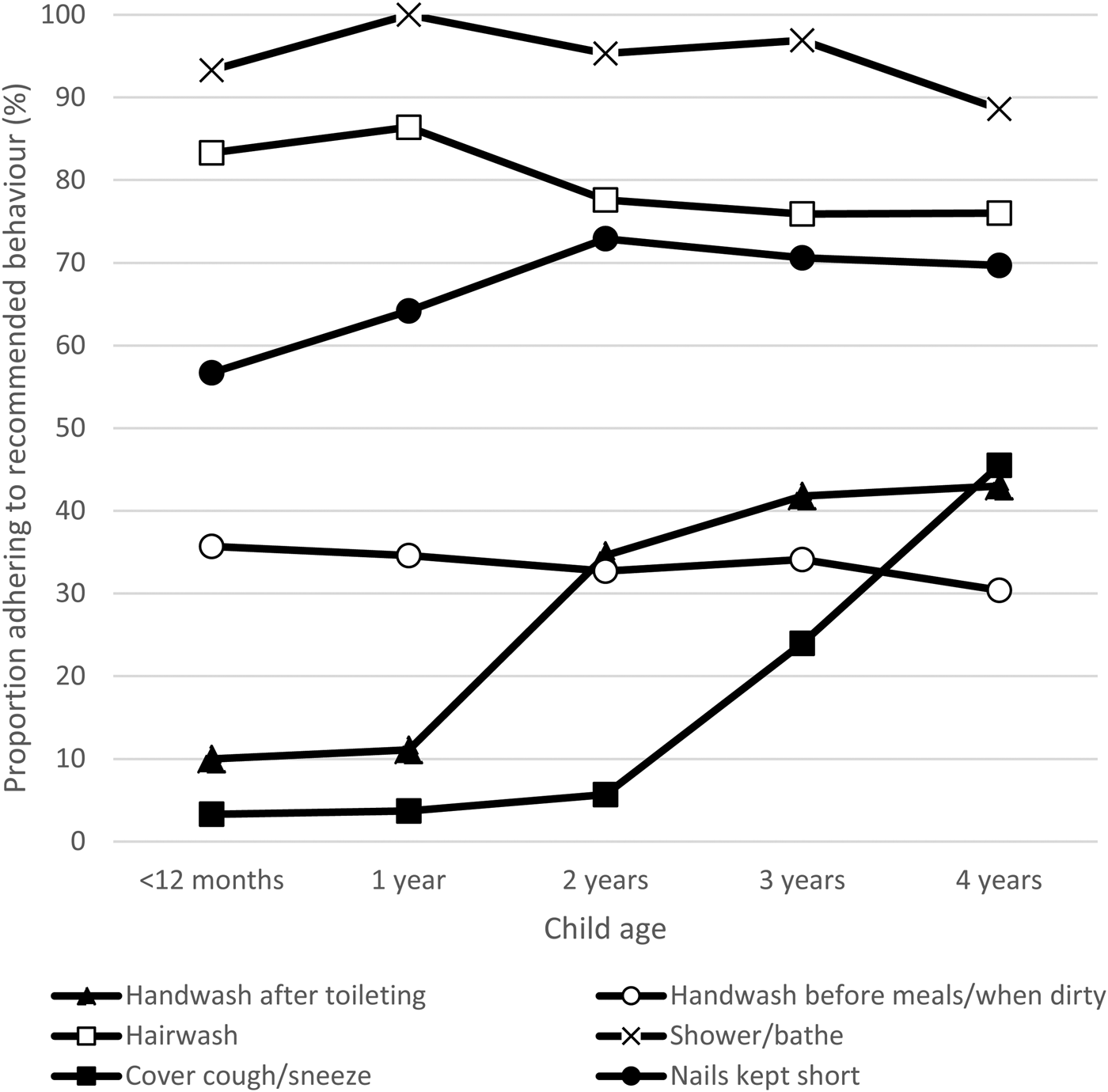
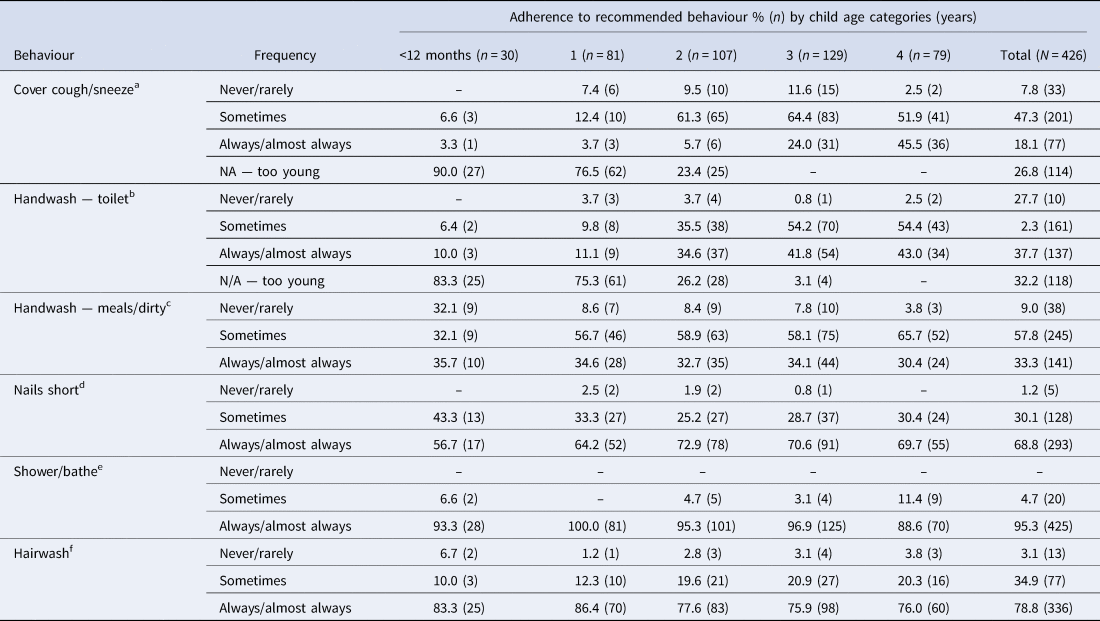
The degree of engagement in personal hygiene practices by children of different ages (<12 months, 1, 2, 3, and 4 years of age) and the full sample is shown in Table 2. The proportions of children always/almost always engaging in each behaviour are shown in Figure 1. Most children always/almost always showered/bathed (95.3%) and had their hair washed (78.8%) as needed, with little variation across age groups. Only 56.7% of infants under 1 year of age had their nails kept short; however, this increased to 69.7–72.9% for 2- to 4-year-olds. Always/almost always handwashing after toileting was rare (10.0–11.1%) for children under 2 years, but increased with increasing child age; however, even by age 4 only 43.0% were always/almost always engaging in this behaviour. Similarly, always/almost always washing hands before meals and when dirty was done by less than a third (30.4–35.7%) of children in any age group. Covering coughs/sneezes steadily increased from 2 to 4 years of age; however, less than half of 4-year-olds (45.5%) always/almost always engaged in this behaviour. Most parents of children under 2 years of age reported that their child was too young to wash their hands after toileting or to cover their cough/sneeze; however, around a quarter (23.4–26.2%) of parents of 3-year-olds still considered their child too young to regularly engage in these behaviours.
Engagement (always/almost always) in personal hygiene practices by child age.

Engagement in Personal Hygiene Practices by Age

a Covers their cough and sneeze (e.g. with sleeve, tissue) (n = 1 missing).
b Washes hands thoroughly after toileting.
c Washes hands thoroughly before meals and when dirty (n = 2 missing).
d Has nails kept short.
e Showers/bathes as needed (n = 1 missing).
f Has hair washed as needed.
Thematic Analysis: Barriers and Enablers
An open-ended item invited parents to share what barriers (if any) they had experienced in developing healthy hygiene habits with their children. Overall, 188 parents (44.1%) responded to this item.
Barriers to establishing good personal hygiene practices
Parents reported a wide variety of barriers to establishing good personal hygiene practices with their children which fit under nine themes:
1. Child resistance: This was the most common (n = 48) barrier to establishing effective hygiene practices.
He's stubborn and will sometimes refuse to wash hands or let me cut his nails. (Mother of 3-year-old boy)
Tantrums at bathtime, [she] has never been a big fan of the bath and hates having hair washed. (Mother of 2-year-old girl)
I feel it's a power struggle, I tell her to have a bath or cut her nails and if she doesn't wasn't to do it then I cannot force it, it has to be her idea. (Mother of 4-year-old girl)
Barrier is independen[ce], child doesn't want help and wants to do things themselves. (Mother of 1-year-old boy)
2. Lack of consistency/routine: This was a common (n = 30) barrier, particularly with regard to routine handwashing and covering coughs/sneezes. Two subthemes were identified: (1) Busy household (n = 5), with time constraints and competing demands contributing to lack of consistency, and (2) Parent gives up (n = 3).
Reminding a toddler to cough into their elbow can be tedious. (Mother of 2-year-old boy)
The effort involved in getting her to consistently do these things [is a barrier]. (Mother of 2-year-old girl)
It's difficult when you have more than one child to ensure they wash their hands consistently. (Mother of 2-year-old boy)
[I'm] too tired to argue when they fight it. (Mother of 4-year-old girl)
3. Child does not engage in task or forgets: This was another common (n = 30) barrier to establishing routine handwashing and covering of coughs/sneezes, and included the child becoming distracted with play.
He's not very good at remembering to cough into his elbow/a tissue… (Mother of 3-year-old boy)
Her remembering to wash her hands regularly, not to lick her fingers when she helps me prepare food. (Mother of 4-year-old girl)
She often does not want to break off play etc to wash hands. (Mother of 4-year-old girl)
4. Child dislikes the task: Children's dislike of completing particular hygiene tasks was a major barrier for some parents (n = 21) who responded by either reducing the frequency with which the task was attempted or otherwise compromising, or persisting regardless.
Dislikes shampoo in eyes so limited hair washing with shampoo. (Mother of 3-year-old girl)
He's a bit cranky about hair washing and tooth brushing. (Mother of 2-year-old boy)
5. Task difficulty: This was another commonly cited barrier (n = 19). Parents reported having difficulty implementing a wide variety of hygiene practices with their child, particularly nail cutting, bathing, and hair washing:
Washing hair is a nightmare. (Mother of 1-year-old girl)
Hard to cut baby's fingernails. (Mother of 10-month-old girl)
6. Child's young age (n = 18): Parents cited their child's age and inability to understand the importance of hygiene measures as contributors to difficulties. A subtheme was that the child often required help due to their young age.
His age is the biggest barrier – he covers his mouth when he coughs but uses his hand (mimicking the bad habits of his parents (what we were taught). Still learning to blow his nose. (Mother of 1-year-old boy)
Too young yet to understand and probably I am too used to taking over (i.e. lifting child and washing her hands myself) rather than letting her do it. (Mother of 1-year-old girl)
Loves being independent but currently can't turn the bathroom taps on herself. (Mother of 3-year-old girl)
7. Changes in expectation and routine (n = 11): Parents saw variations in routine between home and other environments, such as day care, and children observing and imitating bad habits from parents as barriers to establishing good hygiene practices.
It's hard to maintain habits outside the house or when we're not in control (e.g. childcare). (Mother of 3-year-old girl)
Normal routines have to change when friends stay over or child visits another family member or friend. (Mother of 4-year-old boy)
Child's father doesn't thoroughly wash his hands after urinating (just a brief moment under the tap). I know my older boy in particular has cottoned onto this. (Mother of 4-year-old boy)
8. Parental uncertainties (n = 7): Parents reported general uncertainty around implementing hygiene habits with their child, including age-appropriateness of different practices.
I would like information on how to teach young children to maintain good hand hygiene on their own. (Mother of 2-year-old girl)
I'm uncertain what is age appropriate hygiene habits for my child. (Mother of 1-year-old boy)
9. Parental forgetfulness (n = 6): Forgetting or the parent/family not having good hygiene habits were perceived barriers.
I also am quite bad about remembering to get them to wash their hands before meals, mostly because I do not have this habit. (Mother of 2-year-old boy)
Enablers to establishing good personal hygiene practices
Many parents also reported enablers to establishing good personal hygiene practices with children. These fit under six themes:
(1) Parents enforce rules and establish routines: This was the most common (n = 17) enabler to establishing hygiene practices. Parents reported that having clear expectations, sticking to routines, and using positive reinforcement were helpful in establishing good hygiene habits with their child.
My husband and I try to be straight on it and show our son and praise him when he does blow his nose etc. (Mother of 2-year-old boy)
My child is young but am trying to get him used to it. (Mother of 1-year-old boy)
She knows she has to do it – if I am nearby I make sure she does it. (Mother of 3-year-old girl)
Initially we had to really emphasise the importance of washing hands before meals/after using the toilet etc and that coughing into your elbow and not your hand was best practice to keep germs away from others. Now it's just habit. (Mother of 4-year-old girl)
(2) Child compliance: Cooperative behaviour, where the child follows or complies with the requests or directions of their parent or caregiver, was the second most common (n = 9) enabler of establishing effective hygiene practices.
He loves baths and will wash his hands if you ask him too [sic]. (Mother of 4-year-old boy)
If anything she is a little too keen with washing and cleaning. (Mother of 2-year-old girl)
(3) Making hygiene fun (n = 6): Parents encouraged hygiene practices by employing strategies to make the experience positive and fun for their child, for example, by joining in with their child, making a game out of the task, or using technology. Parents reported that:
I just try to persist and make it fun, hopefully we'll get there eventually. (Mother of 1-year-old girl)
…he hasn't always enjoyed washing his hair but we make it a game and he's usually fine with it. (Mother of 2-year-old boy)
Other themes identified as enablers of good hygiene habits were (4) Establishing routines at kindy (n = 4), (5) Parents teach consequences of poor hygiene (n = 3), and (6) Parents remind child (n = 4). For example:
My [child] attends a kindy and they introduce it as a routine so it now comes naturally to her. (Mother of 1-year-old girl)
Talking about germs. Talking about consequences if teeth aren't brushed. (Mother of 4-year-old boy)
She…needs to be reminded. (Mother of 2-year-old girl)
Interest in Assistance
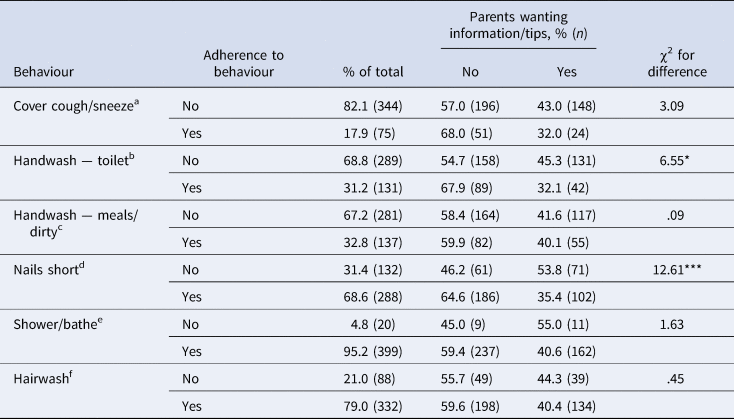
Less than half of parents (n = 173, 41.2%) were interested in receiving tips or information on children's hygiene (see Table 3), and of these only 31 (17.9%) responded to the open-ended question asking parents to nominate topics of interest to them. The most common was how to encourage handwashing (n = 13), followed by tips for trimming nails (n = 5) and washing hair (n = 5), teaching cough and sneeze etiquette (n = 2), general hygiene information (n = 2), managing visits to the hairdresser (n = 2), and teaching personal hygiene (n = 2). Of those who did not want tips or information (n = 247, 58.8%), many felt already well informed (n = 53), that hygiene is ‘common sense’ (n = 24), that their children already had or were developing good hygiene habits (n = 17), or were not concerned due to their child's young age (n = 18). A few lacked interest (n = 6), believed that ‘dirt is good’ for children or that the use of sanitisers is harmful (n = 4), or were too busy (n = 2); 123 (47.8%) did not provide a reason.
Proportion of Parents Wanting Information/Tips on Hygiene by Adherence to Hygiene Behaviours

Note. Children were considered to be adhering to behaviours if parents responded with ‘almost every day’ or ‘every day’ (scores 6–7).
a Covers their cough and sneeze (e.g. with sleeve, tissue) (n = 7 missing).
b Washes hands thoroughly after toileting (n = 6 missing).
c Washes hands thoroughly before meals and when dirty (n = 8 missing).
d Has nails kept short (n = 6 missing).
e Showers/bathes as needed (n = 7 missing).
f Has hair washed as needed (n = 6 missing).
*p < .05, **p < .01, ***p < .001.
Post hoc analyses explored the extent to which parents whose children were not adhering to guidelines were interested in receiving information or tips about children's personal hygiene (see Table 3). There was a significant relationship between parents wanting tips/information and non-adherence to keeping nails short and washing hands after toileting, with approximately half (45.3–53.8%) of parents of children who were not meeting these recommendations wanting tips/information compared to around a third (32.1–35.4%) of those who were already meeting these recommendations consistently. The median split of the sample by child age (under 3 years vs. 3 years or older) showed generally similar patterns of results, with the exception of the relationship between wanting tips/information and non-adherence to handwashing after toileting which persisted for those aged 3 years and older, χ2 (df = 1) = 8.99, p = .003, but not for younger children, χ2 (df = 1) = 0.32, p = 0.575. In contrast, the relationship with nail care remained significant for older children, χ2 (df = 1) = 4.41, p = .036, and younger children χ2 (df = 1) = 8.45, p = .004.
Discussion
This is one of the first studies to examine trends in adherence to recommended hygiene practices among young Australian children. Developing skills and routines that underpin healthy hygiene habits is an important task of childhood as good hygiene practices play an important role in supporting the short- and longer-term health and development of the child, their family, and the broader community. However, despite robust evidence supporting the effectiveness of basic hygiene and infection control practices, such as handwashing and covering coughs and sneezes, our data showed that the majority of young children across all age groups did not consistently engage in these fundamental preventive health behaviours.
Less than half of children overall and within each age group always/almost always covered their coughs and sneezes (3.3–45.5%) and routinely washed their hands after toileting (10.0–43.0%) or before meals and when dirty (30.4–35.7%). This is important since these behaviours are considered key to the prevention of acquisition and transmission of infectious diseases in childhood yet were the most poorly implemented behaviours in our sample. In contrast, most children (approximately 70% or more) across most age groups engaged in regular bathing, hair washing, and nail care.
Trends across age groups showed that engagement in some behaviours (i.e. bathing, handwashing before meals/when dirty) remained relatively consistent across age groups, while others showed patterns of increasing or decreasing adherence consistent with parents’ qualitative responses regarding child age or developmental barriers (e.g. parents of infants experiencing anxiety and difficulty with cutting infants’ nails, and older children disliking or refusing hair washing). Most marked, however, were changes in handwashing after toileting, which increased steeply between 1 and 2 years of age, presumably as children start toilet training; and covering coughs and sneezes, which increased steeply from 2 to 4 years of age, as children learn the necessary behaviours and develop the capacity to rapidly employ them when needed. However, even for the oldest age group (4 years), consistent handwashing and cough/sneeze etiquette was practiced by less than half of children.
Child resistance was the most commonly cited barrier relevant to all six hygiene behaviours; conversely, child compliance — that is, cooperative behaviour, where the child follows or complies with the requests or directions of their parent or caregiver — was one of the most commonly cited enablers. This is congruent with previous research which has identified child non-compliance as a key barrier to preventive health behaviours, for example in the domains of oral health and sun safety (Duijster, de Jong-Lenters, Verrips, & van Loveren, Reference Duijster, de Jong-Lenters, Verrips and van Loveren2015; Hamilton, Cleary, White, & Hawkes, Reference Hamilton, Cleary, White and Hawkes2016). Parents likewise cited other child-level factors, such as young age, distraction and forgetting as important barriers to developing good hygiene habits; however, family level and other contextual factors also influenced engagement. Lack of consistency and routine, parents forgetting or not monitoring children's behaviour, task difficulty, and parental uncertainty around how to teach hygiene behaviours or what is appropriate for their child's age were all common barriers. In contrast, parenting behaviours that provided consistency in terms of expectations and routine, making hygiene fun, and using reinforcement to encourage engagement in healthy habits were all seen as helpful. This is again congruent with the broader preventive child health literature (Duijster et al., Reference Duijster, de Jong-Lenters, Verrips and van Loveren2015; Elison, Norgate, Dugdill, & Pine, Reference Elison, Norgate, Dugdill and Pine2014); however, this is one of the first studies to confirm these phenomena with children's personal hygiene behaviours.
Our data suggest a disconnect between parents’ self-reported knowledge of the importance of hygiene practices and actual behaviour. Despite many parents reporting that they were already well-informed about children's hygiene and less than half of parents expressing interest in receiving tips on developing healthy hygiene habits with their children, adherence to key hygiene behaviours was low across all age groups. Interest in tips/information was only associated with non-adherence to washing hands after toileting for parents of older children (≥3 years) and keeping nails short (full sample). Although it is uncertain what underlies these associations, qualitative data suggest that some parents struggle to provide the supervision and consistency needed to establish routine handwashing, and experience anxiety and task difficulty with nail care. Still others were sceptical about the need for improved hygiene practices, felt that they were already well-informed, or had concerns about ‘over-cleanliness’, which was congruent with previous research in the Australian context (Biezen et al., Reference Biezen, Grando, Mazza and Brijnath2019).
It is worthwhile to note that in the age range of children in this study, parents are largely responsible for implementing all of these hygiene practices with their children. Thus, quite considerable differences in adherence to different hygiene behaviours may reflect differences in either parental beliefs and motivations to ensure their child follows specific health practices, or in the nature of the parenting task required. While it is possible that what sets these behaviours apart is the value or priority parents attach to it, all the behaviours with lower adherence require more ongoing, sustained parental effort. That is, children are likely to toilet multiple times a day, while bathe only once per day, creating many more opportunities for child resistance and/or difficulties in parental implementation to occur.
Overall, our results indicate ample scope for improvement in Australian children's hygiene behaviours and suggest that providing education on the ‘what’ and ‘why’ of children's hygiene may be insufficient to address the main barriers to adherence to hygiene recommendations. Rather, our results suggest that Australian parents might benefit from evidence-based strategies to manage difficult child behaviour and encourage children to form habits around hygiene practices. This could be done by mapping the specific barriers identified by parents to effective behaviour change strategies as outlined by Michie, Johnston, Francis, Hardeman, and Eccles (Reference Michie, Johnston, Francis, Hardeman and Eccles2008). Providing family-based intervention to bolster parents’ skills, confidence, and competence with implementing age-appropriate, consistent, effective parenting and behaviour change strategies to encourage healthy hygiene practices — that is, the ‘how’ of children's hygiene — may be a more useful approach in the context of a relatively educated, well-resourced parent population.
Limitations of this study include a self-selected convenience sample of parents (predominantly mothers) with generally high socioeconomic background. Engagement in and barriers to hygiene behaviours may be substantially different for parents from poorly resourced households. Likewise, the experiences of fathers may be different to those of mothers and deserve exploration. Adherence to recommended hygiene practices was assessed via self-report; measures incorporating direct observation may result in more accurate assessments of parent and child behaviour. Although most (66.9%) parents contributed both quantitative and qualitative data, the experiences and needs of the parents who did not respond to the open-ended questions are unknown. Importantly, these data were collected prior to the onset of the COVID-19 pandemic, and parental attitudes about the importance of good hygiene practices may well have shifted over the past 12 months. This study represents a useful baseline for parents’ attitudes and children's hygiene behaviours and will be compared to data collected from parents post-COVID-19 to assess for changes in beliefs and behaviours over time. In conclusion, the current study reveals generally poor engagement in important hygiene behaviours in early childhood. Barriers and facilitators identified by parents will inform future development and testing of interventions that aim to support parents to develop healthy hygiene habits with their children from the earliest years.
Acknowledgements
We are grateful to the parents participated in this study. Sincere thanks to Dr Sabine Baker for her contributions to survey development, participant recruitment, and data collection.
Funding
This work was supported by the Australian Research Council Discovery Project grant (AM; DP140100781) and Children's Hospital Foundation Early Career Fellowships and Translator Grant (AEM; award ref. no. 50223, ECF0112020).
Declaration of Interest
The Parenting and Family Support Centre is partly funded by royalties stemming from published resources of the Triple P – Positive Parenting Program, which is developed and owned by The University of Queensland (UQ). Royalties are also distributed to the Faculty of Health and Behavioural Sciences at UQ and contributory authors of published Triple P resources. Triple P International (TPI) Pty Ltd is a private company licensed by Uniquest Pty Ltd on behalf of UQ, to publish and disseminate Triple P worldwide. The authors of this paper are employees at UQ and have no share or ownership of TPI. Alina Morawska receives royalties from TPI. TPI had no involvement in the writing of this paper. Dr Morawska is an employee at UQ. Dr Mitchell and Ms Kulasinghe were employees at UQ at the time this research was conducted. Dr Mitchell is an Honorary Research Fellow at UQ.
Ethical Standards
The authors assert that all procedures contributing to this work comply with the ethical standards of the relevant national and institutional committees on human experimentation and with the Helsinki Declaration of 1975, as revised in 2008.