Pediatric rapid response teams have been developed to promote timely recognition of clinical instability, habituate appropriate response, and facilitate safe transfer to a higher level of care when indicated.Reference McKelvie, McNally, Chan, Momoli, Ramsay and Lobos1 Although the evidence supporting a beneficial impact on patient outcomes is mixed, most children’s hospitals have implemented rapid response teams.Reference Raymond, Bonafide and Praestgaard2–Reference Sandquist and Tegtmeyer5 Children with underlying cardiac disease have worse outcomes after rapid response team events compared with noncardiac patients and are at an increased risk of suffering in-hospital cardiac arrest.Reference Holmberg, Wiberg and Ross6–Reference Bavare, Rafie, Bastero, Hagan and Checchia9 However, pediatric cardiac patients have a higher likelihood of survival after in-hospital cardiac arrest and thus represent a vulnerable but rescuable population.Reference Holmberg, Wiberg and Ross6–Reference Orrtman, Prodhan and Gossett8
Increasingly, critically ill pediatric cardiac patients are cared for by specialized teams in a cardiac intensive care unit (ICU) that is separate from the general pediatric ICU.Reference Burstein, Jacobs and Li10,Reference Burstein, Rossi and Jacobs11 Similarly, many pediatric hospitals have formalized their care structure for inpatient cardiology patients who are not critically ill in the form of cardiac acute care or stepdown units.Reference Kipps, Cassidy and Strohacker12 Specialized pediatric rapid response teams have been developed for certain populations (e.g., pediatric stroke teams, difficult airway teams, etc.) but have not been described for pediatric cardiac patients.Reference Ladner, Mahdi and Gindville13,Reference Dalesio, Diaz-Rodriguez and Koka14 A better understanding of the impact of a specialized pediatric cardiac rapid response team on outcomes may help inform hospitals and teams seeking to optimize their response to this fragile population.
Prior to June 2015, a single, general pediatric rapid response team existed at our hospital. This team covered the entire children’s hospital, but the roster did not include team members from the cardiac ICU or cardiac stepdown unit. We hypothesized that the lack of cardiac team members unintentionally led to decreased utilization of this rapid response team. In June 2015, we implemented a specialized pediatric cardiac rapid response team to improve the communication, assessment, and response to patients experiencing decline in the cardiac stepdown unit. The objective of this study is to describe the design, implementation, utilization, and impact on outcomes of a specialized pediatric cardiac rapid response team.
Materials and methods
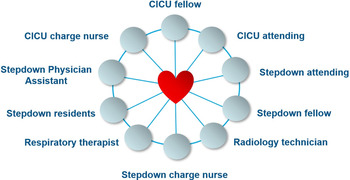
A specialized pediatric cardiac rapid response team was developed and implemented in June 2015. The team was designed and staffed utilizing on-duty personnel from the pediatric cardiac ICU (14 beds), the pediatric cardiac stepdown unit (14 beds), and ancillary team members (Fig 1). The cardiac rapid response team is activated via a telephone request to the hospital paging operator. All care team members including patient family members can request the pediatric cardiac rapid response team and it is available at all times.
Members of the pediatric cardiac rapid response team. The radiology technician was added to the paging roster in 2016 when data demonstrated that x-rays were performed during the majority of cardiac rapid response team (RRT) events.

Concomitantly with implementation of the cardiac rapid response team, the cardiac stepdown unit care team was trained to use the Cardiac Children’s Hospital Early Warning Score (C-CHEWS) to provide more uniform assessment of patient condition and trends.Reference McLellan and Connor15 This early warning score has been validated in the pediatric cardiac population and provided a threshold to automatically trigger activation of the rapid response team (score ≥ 5); however, staff and family members were advised that they could activate the rapid response team at any time regardless of the early warning score value. Team training was conducted and consisted of in situ simulations to emphasize the differences between the cardiac rapid response team and the code team.
We performed a single-institution, retrospective, cohort study. This study was approved by the Medical University of South Carolina’s Institutional Review Board. All pediatric cardiac rapid response team events from implementation through December 2018 were reviewed. An internal database of patients admitted to the heart center was used to compare patients who underwent rapid response team events with patients who did not. Variables abstracted from the database for comparison included age, birth weight, gestational age, admission type (surgical, medical, and cardiac catheterization), single ventricle physiology, pulmonary vasodilator therapy use during admission, number of cardiac ICU encounters, hospital length of stay, and in-hospital mortality. Unplanned transfer was defined as a patient admitted to the cardiac ICU from the cardiac stepdown unit that the cardiac ICU team was not aware of the definite need for transfer at the time of the daily morning bed meeting. This definition is used by the pediatric cardiac critical care consortium and excludes planned patient recoveries in the cardiac ICU (e.g., after gastrostomy tube placement or cardiac catheterization).Reference Gaies, Cooper and Tabbut16 Importantly, all transfers to the cardiac ICU that resulted from a rapid response activation were considered unplanned so that this outcome measure would not be artificially decreased by increasing utilization of the rapid response team. Critical deterioration events have been used as a metric to evaluate rapid response system performance and were defined as transfer to the ICU followed by initiation of mechanical ventilation or vasopressor within 12 hours.Reference Bonafide, Localio, Roberts, Nadkarni, Weirich and Keren4
Data regarding all unplanned transfers to the cardiac ICU and cardiac arrests on the cardiac stepdown unit were available from the implementation of the cardiac rapid response team through December 2018. These outcomes were indexed to 1000 patient-days to account for volume trends and run charts were used to identify improvement over time. Mortality data for the cardiac stepdown unit was available for review from academic year 2011 through 2020. The Institute for Healthcare Improvement Run Chart Tool was used to create charts and identify improvement.17 Improvement was identified by a “shift” in the run chart centerline (median), which was defined as six consecutive data points below the center line. Unless otherwise specified, chart timelines are in academic years (July 1 through June 30) as the rapid response team was implemented at the start of an academic year.
Data describing cardiac rapid response team events are represented using descriptive statistics. Medians and interquartile ranges were used for continuous variables and absolute counts with percentages were used for categorical variables unless otherwise noted. Bivariate comparisons were made between patients who underwent rapid response team events and those who did not using Mann–Whitney U tests or chi square tests as appropriate for individual variables. The Mann–Whitney U test was used to determine the significance of changes in the median over time (as indicated by the Institute for Healthcare Improvement run chart rules) of the outcomes of interest. All statistical analyses were performed using SPSS version 24 (IBM, Armonk, NY).
Results
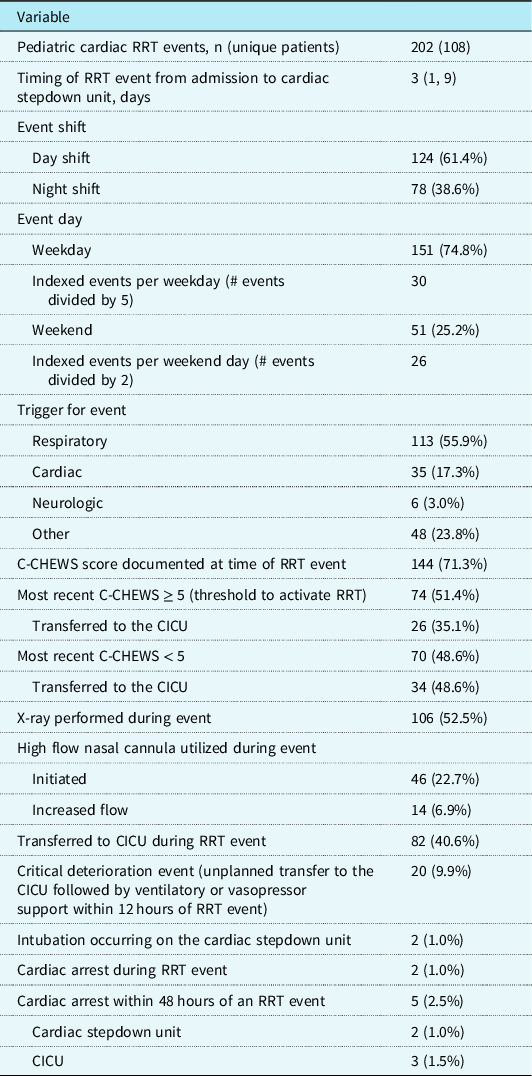
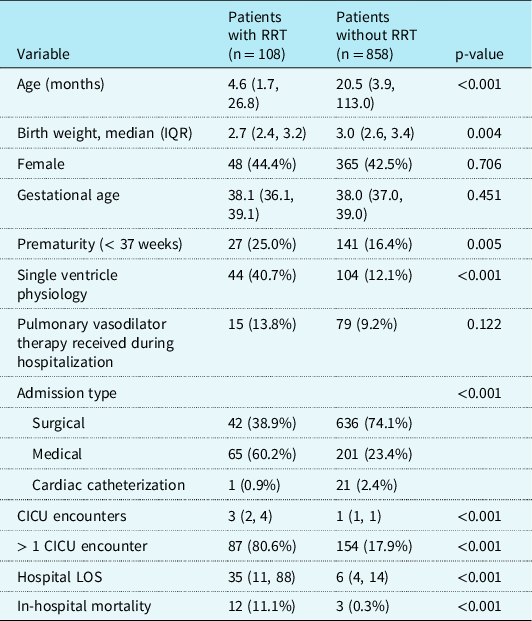
There were 108 patients who underwent 202 pediatric cardiac rapid response team activations and 858 patients admitted to the pediatric cardiac stepdown unit who did not undergo a rapid response team evaluation during the study period. Rapid response team event characteristics are described in Table 1. Rapid response team activations occurred more often during the day shift (61.4%) and were triggered most frequently by a change in the respiratory status (55.9%). An early warning score was documented prior to 144 (71.3%) rapid response events and 74 (51.4%) of those scores were ≥ 5 (threshold for team activation). Patient characteristics of those who underwent rapid response team evaluation compared with those that did not are summarized in Table 2. Patients who underwent rapid response team evaluation were younger (p < 0.001), lower birth weight (p = 0.004), more likely to have been born premature (p = 0.005), and more often admitted for a medical encounter as opposed to a surgical or cardiac catheterization-type encounter (p < 0.001). In addition, patients who underwent cardiac rapid response team event had worse outcomes including longer hospital lengths of stay and higher in-hospital mortality (all p < 0.001).
Pediatric cardiac rapid response event characteristics

CHEWS = cardiac children’s hospital early warning score; CICU = cardiac intensive care unit, LOS = length of stay; RRT = rapid response team.
Continuous variables represented as median (25th%, 75th%); categorical data representedas absolute counts (%).
Characteristics and outcomes in patients with and without pediatric cardiac rapid response events

CICU = cardiac intensive care unit; LOS = length of stay; RRT = rapid response team.
CICU encounters includes all encounters during the study period.
Continuous variables represented as median (25th%, 75th%); categorical data representedas absolute counts (%).
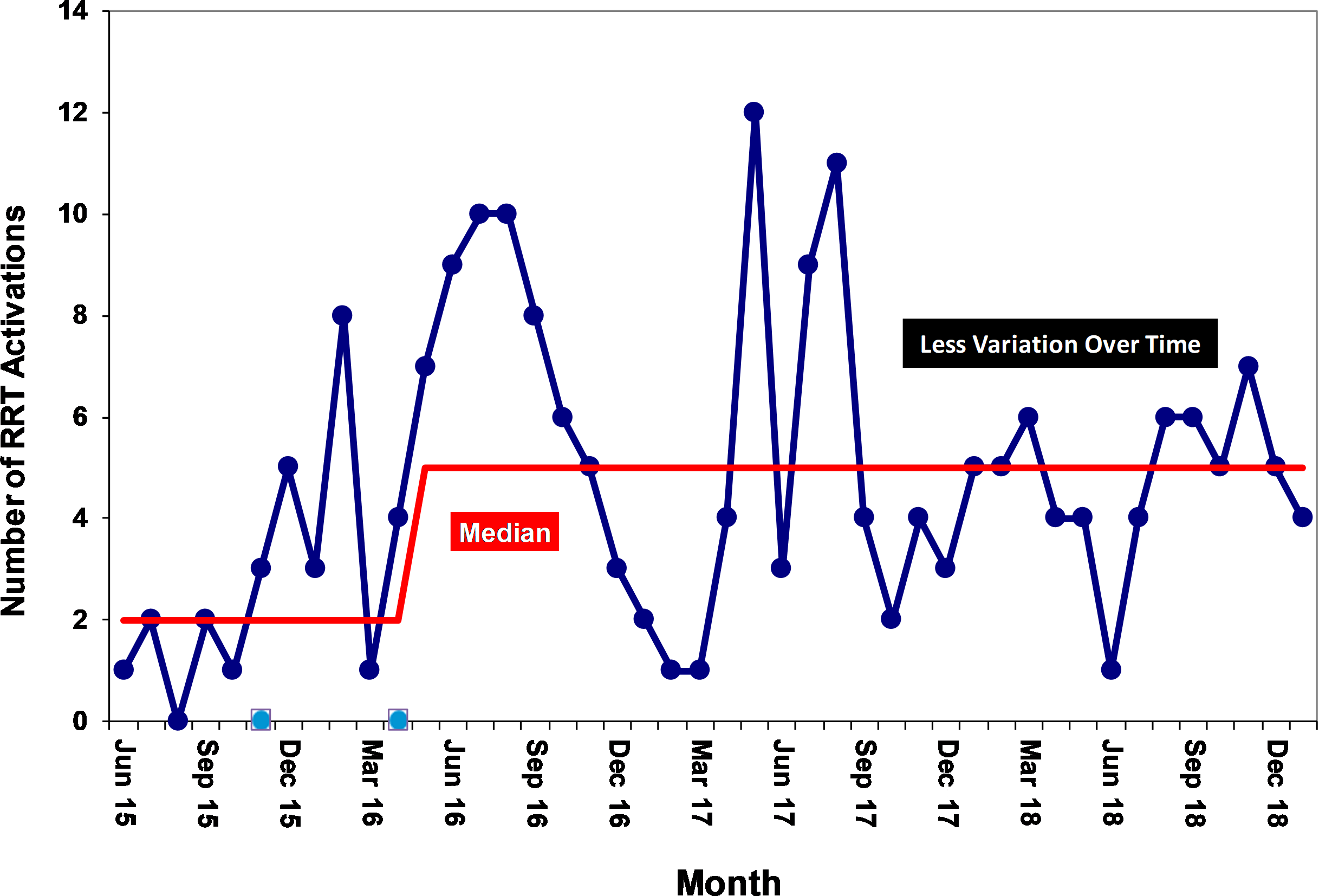
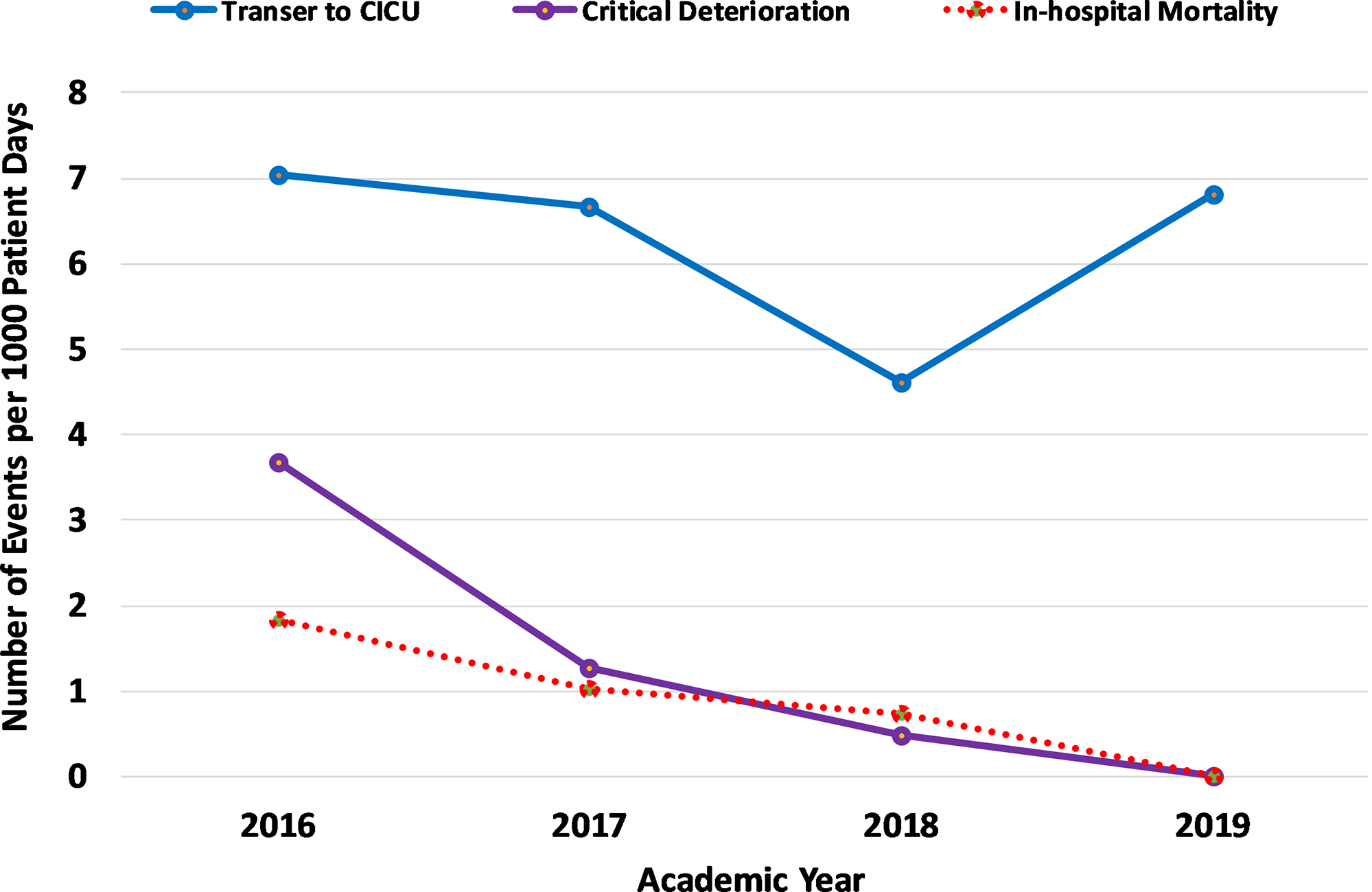
After implementation of the cardiac rapid response team, utilization increased and eventually reached a “steady state” of approximately five activations per month (Fig 2). Transfer to the cardiac ICU occurred in 82 (40.6%) of 202 rapid response team events. Twenty-six (35.1%) of the 74 patients who had an early warning score ≥ 5 at the time of their rapid response team event were transferred the cardiac ICU. Critical deterioration (initiation of ventilatory or vasopressor support within 12 hours of ICU transfer) occurred after 20 (9.9%) rapid response team events. After June 2016, the number of rapid response team events associated with critical deterioration decreased each year (Fig 3).
Utilization of the pediatric cardiac RRT. Utilization initially increased then stabilized at a median of 5 RRT activations per month with less variation over the last year of the study period.

Disposition and escalation of care after cardiac RRT events, indexed per 1000 patient days. The number of patients experiencing critical deterioration (initiation of ventilatory support or vasopressor within 12 hours of ICU transfer, purple line) after RRT events has decreased since academic year 2016.

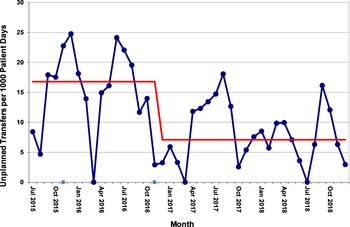
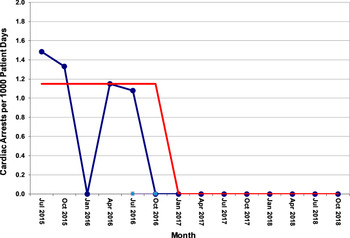
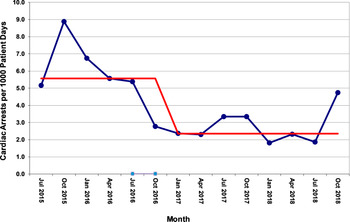
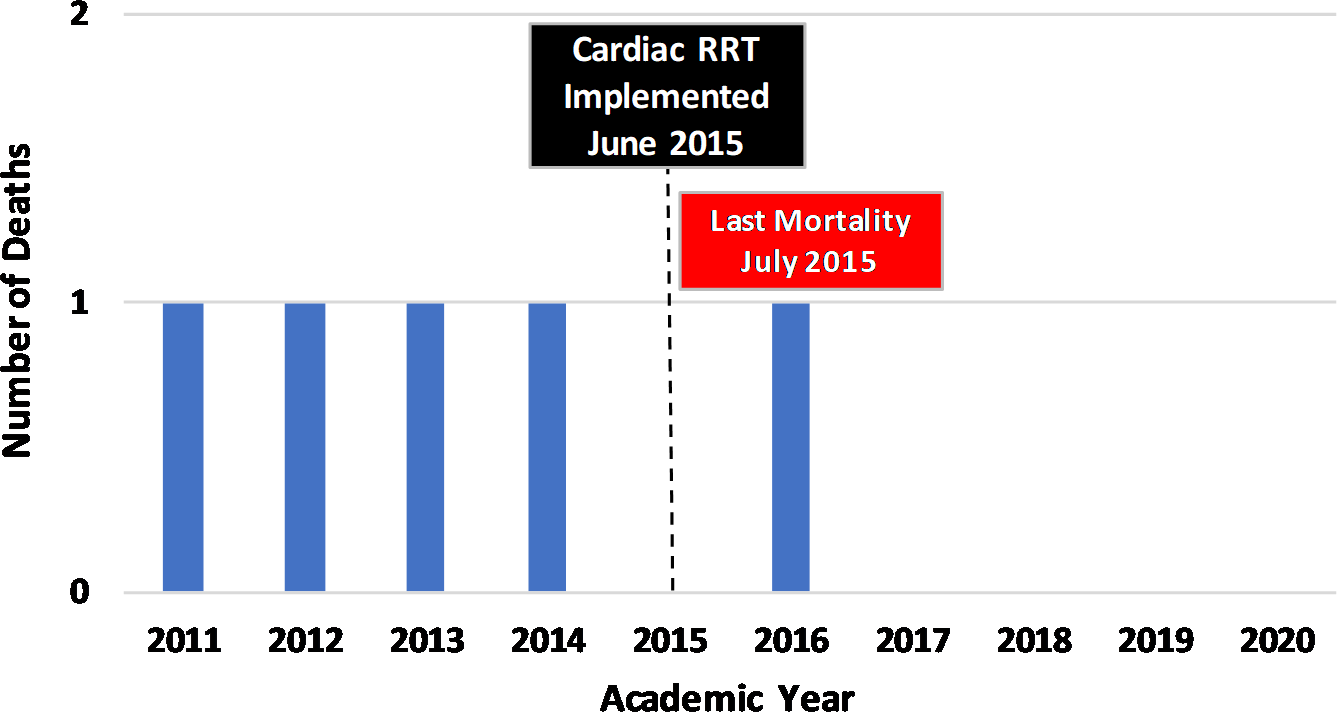
A downward “shift” in the center line (improvement) was observed for unplanned transfers to the cardiac ICU, cardiac arrests on the stepdown unit, and cardiac arrests in the cardiac ICU during the study period. Unplanned transfers to the cardiac ICU decreased from 16.8 to 7.1 transfers per 1000 patient-days (p = 0.01, Fig 4). The cardiac stepdown unit cardiac arrest rate decreased from 1.2 to 0.0 arrests per 1000 patient-days (p = 0.02, Fig 5). The overall cardiac arrest rate in the cardiac ICU during the study period decreased from 5.6 to 2.4 arrests per 1000 patient-days, but this trend did not reach statistical significance (p = 0.10, Fig 6). There has been one mortality on the cardiac stepdown unit since the implementation of the cardiac rapid response team compared to four mortalities over a similar time period prior to implementation (Fig 7). More specifically, a death occurred 1 month after implementation of the rapid response team and there have now been zero mortalities for over 5 years.
Unplanned transfers from the cardiac stepdown unit to the CICU, indexed per 1000 patient days. A downward “shift” in the centerline (median, red line) occurred in December 2016 (18 months after RRT implementation) representing improvement in the rate of unplanned transfers (p = 0.01).

Cardiac arrests on the cardiac stepdown unit, indexed per 1000 patient days. A downward “shift” in the centerline (median, red line) occurred in January 2017 (18 months after RRT implementation) representing improvement in the rate of cardiac arrests (p = 0.02).

Cardiac arrests in the CICU, indexed per 1000 patient days. A downward “shift” in the centerline (median, red line) occurred in January 2017 (19 months after RRT implementation) representing improvement in the rate of cardiac arrests but this trend did not reach statistical significance (p = 0.10).

Mortality on the cardiac stepdown unit. There has been one death since implementation of the pediatric cardiac RRT and zero deaths over the last 5 years. There were 4 deaths in the 5 years prior to implementation of the RRT.

Discussion
To our knowledge, this is the first report describing the implementation and impact of a specialized pediatric cardiac rapid response team. A reduction in cardiac arrests, unplanned transfers to the cardiac ICU, and mortality on the cardiac stepdown unit has been observed over time with consistent utilization of this specialized team.
During the study period, unplanned transfers to the cardiac ICU decreased by more than 50% after implementation of the pediatric cardiac rapid response team. The reduction in unplanned transfers observed during the study period could be explained by early activation of the cardiac rapid response team and interventions that prevent transfer to the cardiac ICU. Indeed, the majority of cardiac rapid response team events in this study did not result in a transfer to the cardiac ICU. In this regard, the rapid response event has often functioned as a “team huddle” for worrisome patients. When possible, avoiding transfer to the cardiac ICU has the potential to reduce the length of stay, decrease psychosocial stress on the family, and improve neurodevelopmental outcomes.Reference Newburger, Wypig and Bellinger18
Pediatric in-hospital cardiac arrest is an infrequent but potentially devastating event associated with high morbidity and mortality.Reference Andersen, Berg and Saindon19,Reference Marino, Tabbut and MacLaren20 Literature describing the impact of rapid response teams on pediatric in-hospital cardiac arrest rates is mixed.Reference Tibballs, Kinney, Duke, Oakley and Hennessy21–Reference Kronick, Kurz and Lin24 The infrequency of pediatric cardiac arrest outside the ICU makes it a difficult outcome measure to study for process improvement. While we were able to demonstrate a reduction in the rate of cardiac arrests on the stepdown unit after implementation of the rapid response team, high-integrity pre-implementation cardiac arrest data were not available and therefore limits our understanding of this finding. However, the four mortalities that occurred on the cardiac stepdown unit in the 5 years prior to implementation of the rapid response team were each associated with a sudden cardiac arrest. Therefore, a sustained period of zero cardiac arrests and zero mortalities is a notable achievement at our center.
It was important for us to understand that we were not simply displacing cardiac arrests from the cardiac stepdown unit to the cardiac ICU. As a balancing metric, we measured the rate of cardiac arrest in the cardiac ICU during the same period and noted a downward trend from 5.6 to 2.4 arrests per 1000 patient-days during the same period. While it is possible that other simultaneous efforts to improve care in the cardiac ICU impacted the rate of cardiac arrest, the significance of early identification and intervention for patients experiencing deterioration on the stepdown unit cannot be underestimated. Acknowledging the limitations of our analysis, we can say that a decline in cardiac arrests on the stepdown unit was not associated with a concomitant increase in arrests in the cardiac ICU.
Critical deterioration events (initiation of ventilatory or vasopressor support within 12 hours of ICU transfer) have been proposed as an additional outcome to measure the performance of a rapid response system.Reference Bonafide, Localio, Roberts, Nadkarni, Weirich and Keren4 Our critical deterioration event rate of 9.9% was considerably lower than the 22% rate observed by Bavare et al in a similar patient populationReference Bavare, Rafie, Bastero, Hagan and Checchia9. The lower rate of deterioration could be explained by differences in the rapid response team activation (e.g., earlier activation of the rapid response team may permit interventions that avoid intubation and vasoactive support), differences in the rapid response team structure (e.g., a specialized team may have familiarity with the patient and previous successful management strategies), differences in case-mix, or other unmeasured center effects. Of note, there were two intubations that occurred on the cardiac stepdown unit during rapid response team events and both events occurred during the first year of implementation. All other intubations and initiations of vasopressors occurred in the cardiac ICU, which supports the concept that the rapid response team was able to appropriately identify patients with impending critical deterioration and facilitate ICU transfer. While more studies utilizing critical deterioration events as an outcome measure are needed to understand its value, it is an attractive alternative to cardiac arrest given its higher occurrence rate.
The structural care model at our hospital includes a physically separate pediatric ICU, cardiac ICU, and associated stepdown units each with unique care team members. This care model unintentionally became a threat for silo communication about patients experiencing decline on the cardiac stepdown unit and impaired utilization of the general rapid response team. Our vision for the pediatric cardiac rapid response team was to develop a process for early team-wide notification, assessment and decision-making for worrisome patients. Inherently, in order to achieve this vision, the rapid response team needs to be utilized. We believe that frequent utilization of the rapid response team is dependent on empowerment of frontline staff, patients, and families so that they feel comfortable voicing concern and removal of barriers to escalating care (e.g., nurse not wanting to bother the fellow, fellow not wanting to wake up the attending etc.). “There is no such thing as an inappropriate rapid response team activation” is a mantra that has been genuinely adopted within our inpatient heart center.
The increased resource utilization associated with creation of a new rapid response team deserves consideration. Sustained success requires buy-in from key stakeholders, training of frontline care team members, persistence from clinical champions, and purposeful data collection to identify improvement and cultivate enthusiasm. Additionally, there were concerns that using on-duty cardiac ICU personnel could negatively impact cardiac ICU patients by stealing provider time needed for a rapid response team activation on the stepdown unit. Over time, and with data, these fears were alleviated. Currently, we average one rapid response team activation per week with a time commitment of approximately 30 minutes (at most) from activation to disposition. Our cardiac ICU provider team believes that this investment is justified if the rapid response team can function as a vehicle for prevention of deterioration in addition to one that simply provides “rescue”.
This study has several limitations. Due to the somewhat remote nature of the intervention, high-integrity data describing cardiac arrests and unplanned transfers were not available prior to July 2015. This made it impossible to directly compare outcomes before and after implementation of the cardiac rapid response team. We do know that the four deaths that occurred in the 5 years prior to implementation were each associated with a sudden cardiac arrest. The retrospective nature of the study affected our ability to isolate the impact of the pediatric cardiac rapid response team intervention compared with other simultaneous improvement initiatives during the study period. For example, an early warning score system was implemented concurrently with the cardiac rapid response team. However, a score was not always documented at the time of rapid response team assessment and the score itself was infrequently the trigger for team activation. While inpatient volumes did not change significantly during the study period, it is possible that patient acuity or severity of illness changed over time which may have confounded the results. Additionally, it is possible that the cardiac stepdown unit team became more comfortable with higher acuity patients over time which could have resulted in fewer transfers to the cardiac ICU. Lastly, unmeasured center effects could have impacted the outcomes measured but we can say that our rounding team structure (in both units), night coverage model, and cardiac surgical team was very stable during the study period. Our cardiac surgical volume and acuity data are available on the Society for Thoracic Surgeons public reporting platform.25
We observed a reduction in unplanned transfers to the cardiac ICU, cardiac arrests, and mortality on the cardiac stepdown unit after implementation of a specialized pediatric cardiac rapid response team. Hospitals with a separate or “dedicated” pediatric cardiac ICU and cardiac stepdown units may want to consider development of a separate or “dedicated” pediatric cardiac rapid response team as a mechanism to improve awareness, team-wide communication, and response to patients experiencing decline outside of the ICU.
Acknowledgements
None.
Financial support
This research received no specific grant from any funding agency, commercial or not-for-profit sectors.
Conflicts of interest
None.
Ethical standards
The authors assert that all procedures contributing to this study comply with the ethical standards of the National Institutes of Health and with the Helsinki Declaration of 1975, as revised in 2008, and has been approved by the institutional committees of the Medical University of South Carolina.