
Contents
Survey Article
Counting problems from the viewpoint of ergodic theory: from primitive integer points to simple closed curves
- Part of:
-
- Published online by Cambridge University Press:
- 24 February 2025, pp. 1281-1328
-
- Article
-
- You have access
- Open access
- HTML
- Export citation
-
In her thesis, Mirzakhani showed that the number of simple closed geodesics of length
 $\leq L$ on a closed, connected, oriented hyperbolic surface X of genus g is asymptotic to
 $L^{6g-6}$ times a constant depending on the geometry of X. In this survey, we give a detailed account of Mirzakhani’s proof of this result aimed at non-experts. We draw inspiration from classic primitive lattice point counting results in homogeneous dynamics. The focus is on understanding how the general principles that drive the proof in the case of lattices also apply in the setting of hyperbolic surfaces.


Original Article
Effective dynamical systems beyond dimension zero and factors of SFTs
- Part of:
-
- Published online by Cambridge University Press:
- 11 October 2024, pp. 1329-1369
-
- Article
-
- You have access
- HTML
- Export citation
Intersective sets for sparse sets of integers
- Part of:
-
- Published online by Cambridge University Press:
- 06 November 2024, pp. 1370-1402
-
- Article
-
- You have access
- Open access
- HTML
- Export citation
-
For
 $E \subset \mathbb {N}$, a subset
 $R \subset \mathbb {N}$ is E-intersective if for every
 $A \subset E$ having positive relative density,
 $R \cap (A - A) \neq \varnothing $. We say that R is chromatically E-intersective if for every finite partition
 $E=\bigcup _{i=1}^k E_i$, there exists i such that
 $R\cap (E_i-E_i)\neq \varnothing $. When
 $E=\mathbb {N}$, we recover the usual notions of intersectivity and chromatic intersectivity. We investigate to what extent the known intersectivity results hold in the relative setting when
 $E = \mathbb {P}$, the set of primes, or other sparse subsets of
 $\mathbb {N}$. Among other things, we prove the following: (1) the set of shifted Chen primes
 $\mathbb {P}_{\mathrm {Chen}} + 1$ is both intersective and
 $\mathbb {P}$-intersective; (2) there exists an intersective set that is not
 $\mathbb {P}$-intersective; (3) every
 $\mathbb {P}$-intersective set is intersective; (4) there exists a chromatically
 $\mathbb {P}$-intersective set which is not intersective (and therefore not
 $\mathbb {P}$-intersective).


Random walks on groups and superlinear-divergent geodesics
- Part of:
-
- Published online by Cambridge University Press:
- 21 November 2024, pp. 1403-1443
-
- Article
-
- You have access
- Open access
- HTML
- Export citation
Rigidity of Lyapunov exponents for derived from Anosov diffeomorphisms
- Part of:
-
- Published online by Cambridge University Press:
- 14 October 2024, pp. 1444-1460
-
- Article
-
- You have access
- HTML
- Export citation
-
For a class of volume-preserving partially hyperbolic diffeomorphisms (or non-uniformly Anosov)
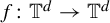 $f\colon {\mathbb {T}}^d\rightarrow {\mathbb {T}}^d$ homotopic to linear Anosov automorphism, we show that the sum of the positive (negative) Lyapunov exponents of f is bounded above (respectively below) by the sum of the positive (respectively negative) Lyapunov exponents of its linearization. We show this for some classes of derived from Anosov (DA) and non-uniformly hyperbolic systems with dominated splitting, in particular for examples described by Bonatti and Viana [SRB measures for partially hyperbolic systems whose central direction is mostly contracting. Israel J. Math. 115(1) (2000), 157–193]. The results in this paper address a flexibility program by Bochi, Katok and Rodriguez Hertz [Flexibility of Lyapunov exponents. Ergod. Th. & Dynam. Sys. 42(2) (2022), 554–591].
Entropy of group actions beyond uniform lattices
- Part of:
-
- Published online by Cambridge University Press:
- 21 November 2024, pp. 1461-1502
-
- Article
-
- You have access
- Open access
- HTML
- Export citation
Piecewise contractions
- Part of:
-
- Published online by Cambridge University Press:
- 28 October 2024, pp. 1503-1540
-
- Article
-
- You have access
- Open access
- HTML
- Export citation
-
We study piecewise injective, but not necessarily globally injective, contracting maps on a compact subset of
 ${\mathbb R}^d$. We prove that, generically, the attractor and the set of discontinuities of such a map are disjoint, and hence the attractor consists of periodic orbits. In addition, we prove that piecewise injective contractions are generically topologically stable.

Dimension estimates for badly approximable affine forms
- Part of:
-
- Published online by Cambridge University Press:
- 06 November 2024, pp. 1541-1596
-
- Article
-
- You have access
- HTML
- Export citation
-
For given
 $\epsilon>0$ and
 $b\in \mathbb {R}^m$, we say that a real
 $m\times n$ matrix A is
 $\epsilon $-badly approximable for the target b if where
 $$ \begin{align*}\liminf_{q\in\mathbb{Z}^n, \|q\|\to\infty} \|q\|^n \langle Aq-b\rangle^m \geq \epsilon,\end{align*} $$
 $\langle \cdot \rangle $ denotes the distance from the nearest integral vector. In this article, we obtain upper bounds for the Hausdorff dimensions of the set of
 $\epsilon $-badly approximable matrices for fixed target b and the set of
 $\epsilon $-badly approximable targets for fixed matrix A. Moreover, we give a Diophantine condition of A equivalent to the full Hausdorff dimension of the set of
 $\epsilon $-badly approximable targets for fixed A. The upper bounds are established by effectivizing entropy rigidity in homogeneous dynamics, which is of independent interest. For the A-fixed case, our method also works for the weighted setting where the supremum norms are replaced by certain weighted quasinorms.


Finite data rigidity for one-dimensional expanding maps
- Part of:
-
- Published online by Cambridge University Press:
- 13 November 2024, pp. 1597-1618
-
- Article
-
- You have access
- Open access
- HTML
- Export citation
-
Let
 $f,g$ be
 $C^2$ expanding maps on the circle which are topologically conjugate. We assume that the derivatives of f and g at corresponding periodic points coincide for some large period N. We show that f and g are ‘approximately smoothly conjugate.’ Namely, we construct a
 $C^2$ conjugacy
 $h_N$ such that
 $h_N$ is exponentially close to h in the
 $C^0$ topology, and
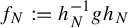 $f_N:=h_N^{-1}gh_N$ is exponentially close to f in the
 $C^1$ topology. Our main tool is a uniform effective version of Bowen’s equidistribution of weighted periodic orbits to the equilibrium state.


Geometric properties of disintegration of measures
- Part of:
-
- Published online by Cambridge University Press:
- 11 October 2024, pp. 1619-1648
-
- Article
-
- You have access
- HTML
- Export citation
Front Cover (OFC, IFC) and matter
ETS volume 45 issue 5 Cover and Front matter
-
- Published online by Cambridge University Press:
- 04 April 2025, pp. f1-f2
-
- Article
-
- You have access
- Export citation
Back Cover (OBC, IBC) and matter
ETS volume 45 issue 5 Cover and Back matter
-
- Published online by Cambridge University Press:
- 04 April 2025, pp. b1-b2
-
- Article
-
- You have access
- Export citation