


Civil war ravaged the West African country of Sierra Leone for 11 years between 1991 and 2002, with an estimated 48,000 young people enlisted in myriad war-related activities, including the national army, defense forces, and the Revolutionary United Front (McKay & Mazurana, Reference McKay and Mazurana2004). Many of these youth were violently indoctrinated into the fighting forces, and reports reveal their experiences of participating in or witnessing extremely savage acts, including physical abuse, sexual abuse, and torture (Betancourt, Brennan, Rubin-Smith, Fitzmaurice, & Gilman, Reference Betancourt, Brennan, Rubin-Smith, Fitzmaurice and Gilman2010). Youth were forced to injure or murder loved ones, abuse drugs, and perpetuate rape, among many other atrocities. Such war-related traumatic experiences have resulted in profound and prolonged effects on the mental health of children and adolescents living in postconflict settings, including high rates of depression, anxiety, and posttraumatic stress reactions (Betancourt, Agnew-Blais, Gilman, Williams, & Ellis, Reference Betancourt, Agnew-Blais, Gilman, Williams and Ellis2010; Betancourt, Brennan, et al., Reference Betancourt, Brennan, Rubin-Smith, Fitzmaurice and Gilman2010; Derluyn, Mels, & Broekaert, Reference Derluyn, Mels and Broekaert2009; Kohrt et al., Reference Kohrt, Jordans, Tol, Speckman, Maharjan, Worthman and Komproe2008; Santacruz & Arana, Reference Santacruz and Arana2002). In addition, a range of risk factors related to community reintegration, including stigma, discrimination, poverty, unemployment, limited social support, and unstable family structures, have been associated with poor mental health outcomes among war-affected youth (Betancourt, Agnew-Blais, et al., Reference Betancourt, Agnew-Blais, Gilman, Williams and Ellis2010).
In contrast to adults, children experience continuous and rapid physical, emotional, cognitive, and social development. The derivative effects of exposure to war trauma have a profound impact on the formation of their identity structures, adaptive coping mechanisms, personality characteristics, and socialization processes (Shaw, Reference Shaw2003). The developmental psychopathology framework urges researchers to move beyond simple risk models assuming universal predictors of psychopathology, and examine the role of mediating and moderating mechanisms that reflect the dynamic and reciprocal interplay between the youth and their multifaceted postconflict environments (Cicchetti, Reference Cicchetti, Cicchetti and Cohen2006; Cicchetti & Cohen, Reference Cicchetti, Cohen, Cicchetti and Cohen1995; Cummings & Valentino, Reference Cummings, Valentino, Overton and Molenaar2015; Masten & Narayan, Reference Masten and Narayan2012).
Conceptualizing Resilience: A Process-Oriented Approach
In mitigating the deleterious mental health effects of war experiences, interesting findings are emerging regarding the critical role of protective factors, including coping, social support, self-esteem, and collective efficacy (Dubow et al., Reference Dubow, Huesmann, Boxer, Landau, Dvir, Shikaki and Ginges2012; MacMullin & Loughry, Reference MacMullin and Loughry2004; Siefert, Finlayson, Williams, Delva, & Ismail, Reference Siefert, Finlayson, Williams, Delva and Ismail2007). In particular, the resilience literature has recently attracted considerable attention, with its focus on modifiable factors that can support well-being, thereby promoting the adoption of a salutogenic lens in studying health behaviors (Harrop, Addis, Eliot, & Williams, Reference Harrop, Addis, Elliott and Williams2006). Although it has been operationalized in various ways, resilience is most often described as an individual's ability to adapt and cope with stressful life events and adverse contexts. It is a multifaceted phenomenon contingent upon contextual factors and the optimal functioning of individuals' basic adaptation systems (American Psychological Association, 2014; Masten, Reference Masten2007). A growing body of literature examines resilience among youth within the context of political conflict (Betancourt & Kahn, Reference Betancourt and Khan2008). This literature navigates away from trauma frameworks, instead focusing on prevention and intervention activities that capitalize on the underlying strengths and capacities of youth (Ager, Reference Ager2013; Panter-Brick & Leckman, Reference Panter-Brick and Leckman2013). Although such research has broad implications for the structuring of community-based mental health supports, it is important to note that developmental psychopathology perspectives on resilience in the context of political conflict suggest that resilience processes are far from unidimensional (Luthar, Doernberger, & Zigler, Reference Luthar, Doernberger and Zigler1993). Individuals react differently based on their exposure to, participation in, and processing of conflict, reflecting a dynamic reciprocal determinism with their environments (Hanson & Gottesman, Reference Hanson and Gottesman2012). Thus, it is essential to strive for a more nuanced understanding of variability in individual-level resilience among youth (Barber, Reference Barber2013).
Theoretical Perspectives on Stress and Coping
Analyses of coping strategies have been instrumental in developing this nuanced understanding of resilience, particularly with regard to exposure to violence (Boxer & Sloan-Power, Reference Boxer and Sloan-Power2013; Boxer, Sloan-Power, Mercado, & Schappell, Reference Boxer, Sloan-Power, Mercado and Schappell2012; Sloan-Power, Boxer, McGuirl, & Church, Reference Sloan-Power, Boxer, McGuirl and Church2013). Coping refers to the management of psychological distress caused by stressors through behavioral, cognitive, and emotional strategies (Dubow & Rubinlicht, Reference Dubow, Rubinlicht, Brown and Prinstein2011; Folkman Reference Folkman1984). Coping theories such as the transactional model of stress and coping describe the interaction between one's cognitive appraisals of stressful events, the subsequent mechanisms employed to deal with such events, and environmental facilitators or barriers to implementing these strategies (Lazarus & Folkman, Reference Lazarus and Folkman1984). Although these strategies for dealing with stressors may vary significantly among individuals, researchers have generally grouped them into two broad dimensions of more actionable approach coping strategies and more disengaged avoidance coping strategies (Causey & Dubow, Reference Causey and Dubow1992; Compas, Connor-Smith, Saltzman, Thomsen, & Wadsworth, Reference Compas, Connor-Smith, Saltzman, Thomsen and Wadsworth2001; Roth & Cohen, Reference Roth and Cohen1986). Individuals adopting an approach coping style may manage stressors by proactively planning ahead, problem solving, seeking social support, or framing the situation from a constructive standpoint. Such coping is sometimes called positive coping because of its ties with better behavioral and mental health outcomes among youth (Boxer & Sloan-Power, Reference Boxer and Sloan-Power2013). In contrast, individuals adopting an avoidance coping style may, either actively or passively, move away from stressors through distraction, denial, or escape (Finset, Steine, Haugli, Steen, & Laerum, Reference Finset, Steine, Haugli, Steen and Laerum2002; Folkman & Lazarus, Reference Folkman and Lazarus1988). Given its association with poor mental health outcomes, avoidance coping is often understood more broadly as negative coping (Boxer et al., Reference Boxer, Sloan-Power, Mercado and Schappell2012). Although these dimensions present a useful framework, it is important to note that there may not always be such a distinct polarization because some forms of coping, such as spiritual or religious coping, can be both approach oriented and avoidance driven (Taylor & Stanton, Reference Taylor and Stanton2007). Studies have shown that positive health outcomes can be achieved using approach-driven coping mechanisms when stressful events are appraised as controllable and modifiable. Avoidance coping, however, may be more effective in reducing anxiety and depression for stressors perceived as uncontrollable, including past war events (Band & Weisz, Reference Band and Weisz1988; Compas, Banez, Malcarne, & Worsham, Reference Compas, Banez, Malcarne and Worsham1991). Researchers have generally observed that youth typically respond to instances of violence with avoidance coping strategies (Boxer et al., Reference Boxer, Morris, Terranova, Kithakye, Savoy and McFaul2008; Dempsey, Reference Dempsey2002; Kliewer et al., Reference Kliewer, Parrish, Taylor, Jackson, Walker and Shivy2006; Reid-Quiñones et al., Reference Reid-Quiñones, Kliewer, Shields, Goodman, Ray and Wheat2011; Scarpa & Haden, Reference Scarpa and Haden2006). According to Horowitz (Reference Horowitz, Hamilton and Warburton1979), war-affected individuals often engage in avoidance coping because people have self-preserving schemas that are threatened in the presence of traumatic war experiences, preventing the successful acknowledgment and integration of these memories into one's self-structure.
Coping is thus a multidimensional construct necessitating the use of valid and reliable measures to capture its subdomains (Finset et al., Reference Finset, Steine, Haugli, Steen and Laerum2002). Well-validated scales like the COPE (Carver, Scheier, & Weintraub, Reference Carver, Scheier and Weintraub1989) have items for various subconstructs, but often need contextual adaptation. Our study aims to achieve a theoretically grounded understanding of coping among war-affected youth by exploring the approach–avoidance coping dimensions of a brief version of the COPE as adapted to postconflict Sierra Leone.
Social–Ecological Systems Approach to Coping With War-Related Trauma
In writing on the role of risk and protective factors in the psychosocial adjustment of war-affected youth, many scholars have argued for an ecological/developmental model (Betancourt & Williams, Reference Betancourt and Williams2008; Cummings, Goeke-Morey, Merrilees, Taylor, & Shirlow, Reference Cummings, Goeke-Morey, Merrilees, Taylor and Shirlow2014; Cummings, Goeke-Morey, Schermerhorn, Merrilees, & Cairns, Reference Cummings, Goeke-Morey, Schermerhorn, Merrilees and Cairns2009; Dubow, Huesmann, & Boxer, Reference Dubow, Huesmann and Boxer2009; Masten, Reference Masten2007). These approaches adopt a social–ecological systems analysis by looking at factors potentially promoting resilience across the nested social–ecological levels (i.e., an individual is nested within family, community, various institutions, and culture; Bronfrenbrenner, Reference Bronfenbrenner1979, Reference Bronfenbrenner1986; Cicchetti & Lynch, Reference Cicchetti and Lynch1993; Lynch & Cicchettti, Reference Lynch and Cicchetti1998; McLeroy, Bibeau, Steckler, & Glanz, Reference McLeroy, Bibeau, Steckler and Glanz1988). Previous studies among Sierra Leonean war-affected youth have examined the role of family-level variables such as family acceptance and parenting; community-level variables such as social support, collective efficacy, and community acceptance; and institutional/policy-level variables such as education, socioeconomic status, and economic livelihoods (Betancourt, Agnew-Blais, et al., Reference Betancourt, Agnew-Blais, Gilman, Williams and Ellis2010; Betancourt, Brennan, et al., Reference Betancourt, Brennan, Rubin-Smith, Fitzmaurice and Gilman2010). Few studies, however, have examined whether individual-level factors such as coping styles mediate the association between war exposures and long-term mental health outcomes in this population (Dubow et al., Reference Dubow, Huesmann, Boxer, Landau, Dvir, Shikaki and Ginges2012). For instance, studies in other contexts have shown that avoidant coping strategies partially mediated the association between relatively uncontrollable stressors and subsequent mental health outcomes, such as depressive symptomology in women (Manne, Ostroff, Winkel, Grana, & Fox, Reference Manne, Ostroff, Winkel, Grana and Fox2005; Rayburn et al., Reference Rayburn, Wenzel, Elliott, Hambarsoomians, Marshall and Tucker2005; Taylor & Stanton, Reference Taylor and Stanton2007). Process-oriented research exploring mediating coping mechanisms can reveal explanatory patterns of how adaptive and maladaptive responses to war trauma develop and manifest in youth over time (Cicchetti, Reference Cicchetti, Cicchetti and Cohen2006; Cicchetti & Cohen, Reference Cicchetti, Cohen, Cicchetti and Cohen1995). Denov (Reference Denov2010) employed in-depth interviews with war-affected children in Sierra Leone and found emerging key themes on coping styles involving peer support structures, concealment and selective disclosure of war experiences, and prayer and community rituals. The author emphasized the need to move away from pathologizing these youth, instead focusing on their agency, reflectiveness, and resilience in future research and intervention planning. Furthermore, most previous studies with children associated with armed conflict have been cross-sectional or ethnographic in nature, with data collected shortly after demobilization and reintegration processes began (Betancourt et al., Reference Betancourt, Borisova, Rubin-Smith, Gingerich, Williams and Agnew-Blais2008; UNICEF, 2007). To address this gap, our prospective longitudinal study of war-affected youth in Sierra Leone began in 2002, immediately after the war, and has involved three waves of data collection on various multidomain outcomes. In contrast to cross-sectional designs, such multiwave longitudinal research designs allow the study of developmental process and psychosocial trajectories as they evolve along with the child's postconflict context over time (Cummings & Valentino, Reference Cummings, Valentino, Overton and Molenaar2015).
Study Aims
The present study examines individual-level coping mechanisms within a social–ecological framework to shed light on this core aspect of resilience. It also aims to help interpret and inform previous findings about risk and protective factors at macrosystem levels of these youths' ecosystems. The study examines three main hypotheses: (a) exposure to traumatic war experiences at baseline (being raped/sexually assaulted, death of parent(s), or killing/injuring someone) will be associated with higher levels of long-term negative mental health outcomes (internalizing behaviors, externalizing behaviors, posttraumatic stress symptoms) and lower levels of long-term adaptive/prosocial behaviors; (b) avoidance coping will be associated with higher long-term negative mental health outcomes and lower adaptive/prosocial behavior, and approach coping will be associated with lower long-term negative mental health and higher long-term adaptive/prosocial behaviors; and (c) the association between war trauma and negative mental health outcomes will be mediated by avoidance coping, and the association between war trauma and adaptive/prosocial behavior will be mediated by approach coping.
Methods
Sample and procedures
This study is a collaboration between a major international nongovernmental organization (NGO), several local community-based organizations in Sierra Leone, and the Harvard T. H. Chan School of Public Health. We employed a prospective longitudinal design. Survey interview data were collected at three time points: Time 1 (T1) in 2002, Time 2 (T2) in 2004, and Time 3 (T3) in 2008. Study participants were war-affected youth (N = 529, 25% female, aged 10–17 years at baseline), comprising three groups for the full sample: former child soldiers who had received services through Interim Care Centers (ICCs; June 2001–February 2002), a community sample of youth not served by ICCs and recruited via random door-to-door sampling, and a cohort of self-reintegrated former child soldiers recruited at T2 (Betancourt, McBain, Newnham, & Brennan, Reference Betancourt, McBain, Newnham and Brennan2013). As described in Betancourt et al. (Betancourt, Agnew-Blais, et al., Reference Betancourt, Agnew-Blais, Gilman, Williams and Ellis2010; Betancourt, Brennan, et al., Reference Betancourt, Brennan, Rubin-Smith, Fitzmaurice and Gilman2010; Betancourt et al., Reference Betancourt, McBain, Newnham and Brennan2013), initially at T1 in 2002 (N = 395; 259 from ICC-served cohort and 136 from the community sample), contact information for youth served by the ICCs in five districts of Sierra Leone (Bo, Kenema, Kono, Moyamba, and Pujehun) was collected from a master list. This list was created through the pooling of registries from collaborating NGOs. None of the subjects invited to participate at baseline refused. At T2 (N = 336; 151 from ICC-served cohort, 127 self-integrated, and 58 from the community sample), about 58% of the original ICC-served cohort had been recontacted, when data collection was terminated due to the death of the country director at our collaborating NGO. At T3 (N = 387; 183 from ICC-served cohort, 117 self-integrated, and 87 from the community sample), 73% of the full sample was recontacted and reinterviewed by the research team. All participants were compensated for their participation with small gifts of household goods.
Locally trained Sierra Leonean research assistants conducted private face-to-face interviews with youth and then with caregivers. Youth informed assent and guardian informed consent processes were done separately. All consent/assent forms and interviews were administered orally in Krio (the most commonly spoken language in Sierra Leone) due to low literacy rates at the study sites. The research assistants were monitored by the study principal investigator and country-level NGO staff to ensure adherence to study protocols. Trained social workers accompanied the research team during data collection for all three waves in case of any serious physical or emotional health needs, including risk of self-harm. At T3, 5% of the interviewees were deemed at immediate risk of self-harm due mainly to suicidal ideation, and were referred for mental health services through local community-based mental health service partners. For the T1 survey, the collaborating NGO country program headquarters approved survey protocols; for T2 they were also approved by institutional review board committees at the Boston University School of Medicine/Boston Medical Center; and for T3, the Harvard T. H. Chan School of Public Health approved protocols.
Measures
A key challenge was the adaptation of the survey battery and protocols to ensure that they were culturally and linguistically appropriate (Achenbach & Rescorla, 2006; Canino & Alegria, Reference Canino and Alegría2008). Thus, our measurement scales were locally derived or culturally adapted from existing measures, through focus groups with participants from similar communities to those where the study was conducted, and in close consultation with local staff. These instruments were then forward and backward translated to ensure consistency with cultural norms. The full survey battery incorporated a range of measures assessing risk and protective factors across the child's developmental stages at the individual, family, interpersonal, community, and policy levels, as consistent with the social–ecological model. The psychometric properties of the individual scales comprising the battery were examined in terms of internal consistency reliability, concurrent validity, and predictive validity, as well as correlations between subscales. All the measures included in this study were completed by the youth themselves.
Coping
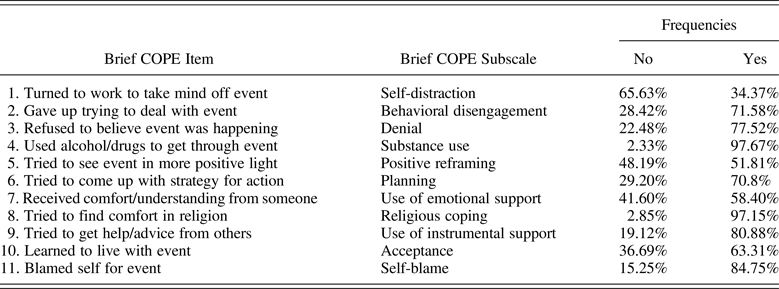
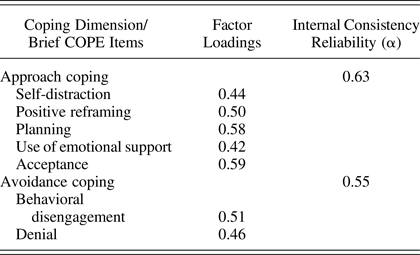
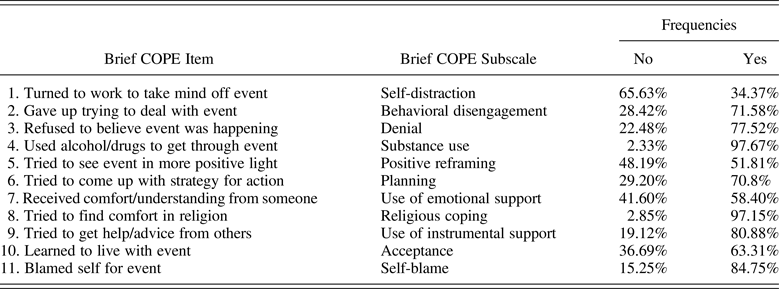
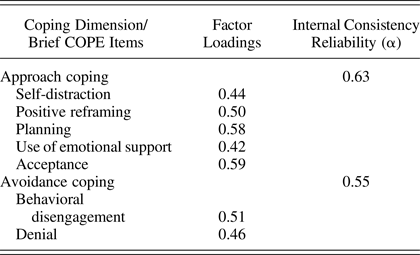
Coping was assessed at T3 only, using the Brief COPE Scale (Carver, Reference Carver1997). The original study using the Brief COPE was conducted on a community sample of adult survivors of Hurricane Andrew; and it indicated acceptable psychometric properties, including an internal reliability of α = 0.68. We adapted the scale to include the 11 items that performed best with the Sierra Leonean sample in the pilot phase. Each item represents a different dimension of coping, including self-distraction, behavioral disengagement, denial, substance use, positive reframing, planning, use of emotional support, religious coping, use of instrumental support, acceptance, and self-blame (items presented in Table 1). We asked participants to think about stressful war experiences, and provide responses retrospectively about the coping strategies they used after experiencing a particular stressor. Response options ranged from not at all to a lot. The Cronbach α value for the overall scale in this sample was 0.60. We conducted factor analysis with varimax rotation to test whether items loaded onto approach and avoidance coping dimensions as expected from previous studies (e.g., Kapsou, Panayiotou, Kokkinos, & Demetriou, Reference Kapsou, Panayiotou, Kokkinos and Demetriou2010). Items with factor loadings of >0.40 were retained for the approach and avoidance factors, and subscale αs were examined in an iterative manner to retain approach and avoidance items that had the greatest internal reliability. This yielded approach coping comprising items on self-distraction, positive reframing, planning, emotional support, and acceptance (Items 1, 5, 6, 7, and 10), with a Cronbach α of 0.63. Avoidance coping comprised items on behavioral disengagement and denial (Items 2 and 3) with a Cronbach α of 0.55. Because only two items loaded onto avoidance coping, there may have been estimation errors in creating latent constructs for approach and avoidance coping. Hence, we used sum scores from individual items to create the two coping factors. The results of our factor analysis, as well as findings from previous studies (Fillion, Kovacs, Gagnon, & Endler, Reference Fillion, Kovacs, Gagnon and Endler2002; Kapsou et al., Reference Kapsou, Panayiotou, Kokkinos and Demetriou2010, Miyazaki, Bodenhorn, Zalaquett, & Ng, Reference Miyazaki, Bodenhorn, Zalaquett and Ng2008), reveal that substance use and religion emerge as independent factors. As such, these items were not included in the approach or avoidance factors, along with others that did not load on to the approach or avoidance dimensions of coping. The results of the factor analysis are presented in Table 2.
Brief COPE scale characteristics
Factor analysis results with two-factor model
War exposures
The exposures of interest were war experiences assessed using items from the Child War Trauma Questionnaire (Macksoud, Reference Macksoud1992), containing 42 items coded as occurrence versus no occurrence. In light of theory, and based on previous research (Betancourt, Brennan, et al. Reference Betancourt, Brennan, Rubin-Smith, Fitzmaurice and Gilman2010), three specific “toxic” war experiences were given particular focus in the present analyses because of their potential to predict mental health outcomes over time: injuring or killing others, being a victim of rape or sexual assault, and death of parent(s) due to war.
Mental health
Our study examined mental health outcomes at T3, but also included mental health measures at T1 and T2 as autoregressive controls in the regression models. Mental health measured during all three waves included posttraumatic stress symptoms, adaptive/prosocial behaviors, internalizing behaviors, and externalizing behaviors. The Oxford Measure of Psychosocial Adjustment was developed and validated for use among former child soldiers in Sierra Leone and northern Uganda (MacMullin & Loughry, Reference MacMullin and Loughry2004). The 46-item scale included subscales for internalizing, externalizing, and adaptive/prosocial behaviors, with responses ranging from never to always on a 4-point Likert scale. The internalizing subscale included 16 items on depression and anxiety with the average T1 to T3 Cronbach α at 0.79. The externalizing subscale included 12 items on hostility with the average T1 to T3 Cronbach α at 0.81. The adaptive/prosocial subscale included 18 items on confidence and prosocial behaviors with the average T1 to T3 Cronbach α at 0.84. To assess posttraumatic stress symptoms, we used the 9-item Child Post-Traumatic Stress Disorder Reaction Index, assessed at T2 and T3 only, with a Cronbach α of 0.83 at T3. For each of these scales, higher scores indicated higher levels of the particular mental health construct.
Overview of statistical analyses
For each of the four mental health outcomes at T3 (internalizing behaviors, externalizing behaviors, posttraumatic stress symptoms, and adaptive/prosocial behaviors), main effects were estimated by fitting multiple regression models. These models included war experiences (injuring/killing someone during the war, being raped or sexually assaulted during the war, and losing a parent during the war) and approach and avoidance coping. Demographic factors (age and gender) and mental health at T1 and T2 were included as covariates. Mediation analyses were conducted using two separate frameworks to determine whether the indirect effect of the exposures on the outcomes via coping was significant. We used the Sobel Test (Sobel, Reference Sobel and Leinhart1982) to determine whether the reduction in the effect of the war exposures on mental health was significant after the inclusion of the mediators (approach and avoidance coping) in the regression models. We also employed methods for assessing mediation from the causal inference literature, which generalize social science approaches and allow for direct–indirect mediation decomposition through exposure–mediator interaction, using paramed in STATA 13.0 (VanderWeele, Reference VanderWeele2009, Reference VanderWeele2015). Because of the retrospective nature of the coping questions that linked coping strategies to war exposures, coping was viewed as a mediator occurring prior to T3 outcomes. To address the problem of missing data, multiple imputation was used to generate 20 data sets using the method of chained equations, and all regression analyses were conducted using the mi estimate procedure for these imputed data sets in STATA 13.0. For all analyses, we considered p values of <.05 as statistically significant and those of <.10 as marginally statistically significant. All analyses were conducted in STATA 13.0.
Results
Descriptive analyses
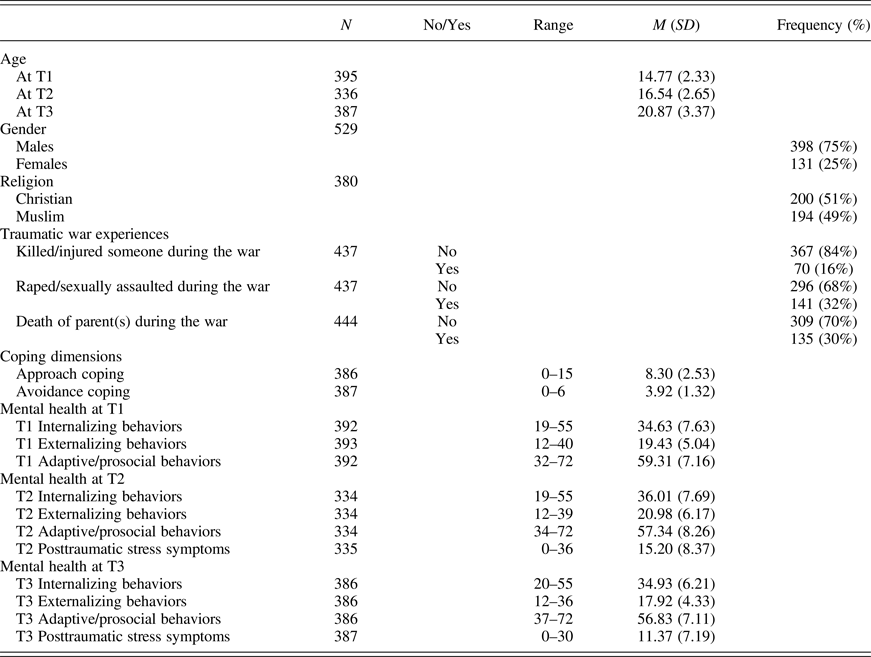
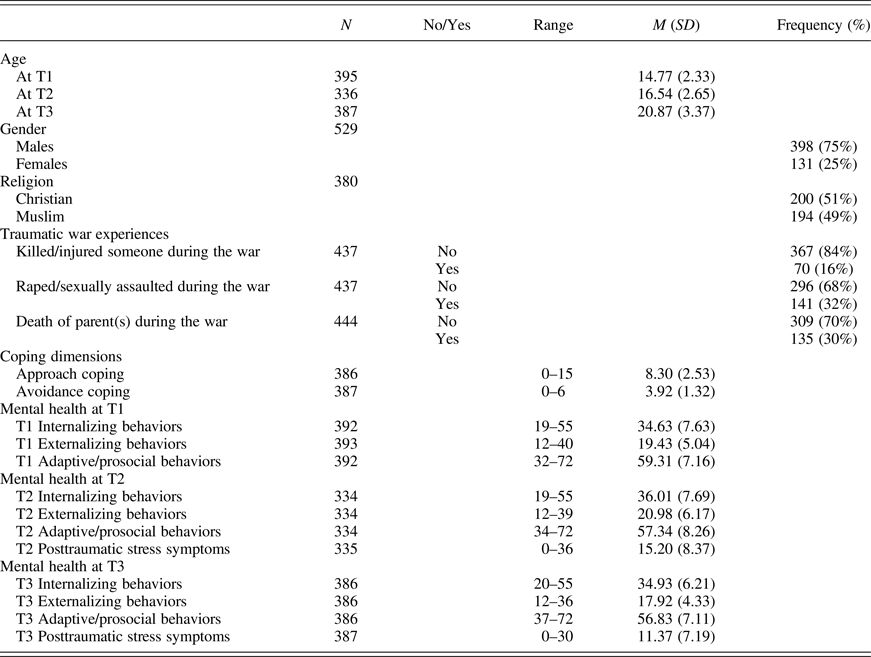
The total analytic sample of the study consisted of 529 youth. We examined descriptive statistics of war exposures, mental health outcomes, coping, and sociodemographic variables (gender, age, race/ethnicity, and religion) by computing scale ranges, frequencies and percentages (for categorical variables), and means and standard deviations (for continuous variables; see Table 3). The sample was predominantly male (75%, n = 398), and the mean sample age at T3 was 20.87 years. Other sociodemographic characteristics measured in the study are reported in Betancourt, Brennan, et al. (Reference Betancourt, Brennan, Rubin-Smith, Fitzmaurice and Gilman2010).
Sociodemographic characteristics of the sample
Note: T1, Time 1 data collection in 2002; T2, Time 2 data collection in 2004; T3, Time 3 data collection in 2008.
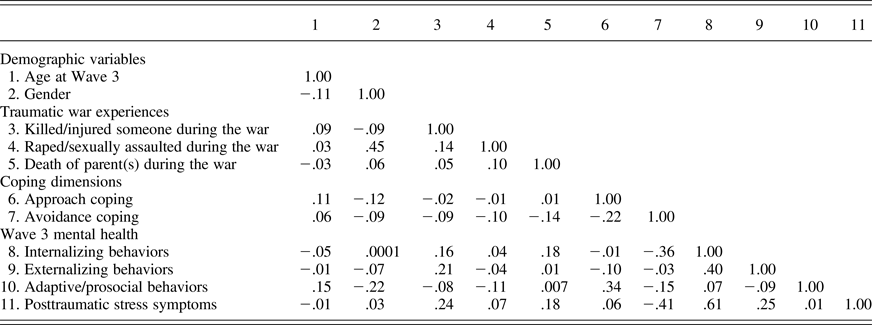
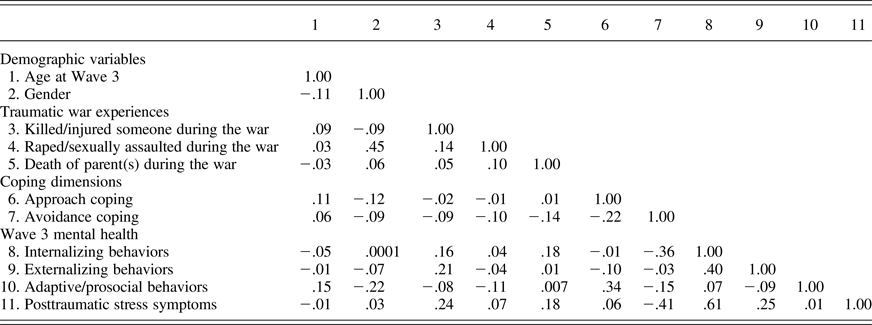
An examination of the war exposures reveal that 29% of the males and 35% of the females reported losing a parent during the war, and 35% of the males and 25% of the females reported killing/injuring someone during the war. Moreover, 7% of the males and 45% of the females reported being raped or sexually assaulted during the war. Chi-square tests reveal that only the relation between being raped/sexually assaulted during the war and gender was statistically significant (χ2 = 87.62, p < .001). Correlations among all primary study variables were also calculated and presented in Table 4. The following correlations were of particular interest: positive correlations between internalizing behaviors and posttraumatic stress symptoms (r = .61), between internalizing and externalizing behaviors (r = .40), and between approach coping and adaptive/prosocial behaviors (r = .34). We also found negative correlations between internalizing behaviors and avoidance coping (r = –.36), and between avoidance coping and posttraumatic stress symptoms (r = –.41).
Correlation among main study variables
Items 4 and 8 of the Brief COPE Scale, representing substance use and religious coping, respectively, were not included in the approach and avoidance coping constructs in our study. However, when coping items were examined individually, these two items had extremely high endorsements of 97%–98%, and were thus of limited potential for further analysis. Other items with fairly high endorsement (>75%) included denial (78%), use of instrumental support (81%), and self-blame (85%). The results from t tests also show that males (M = 8.47, SD = 2.58) had significantly higher approach coping scores than females (M = 7.80, SD = 2.32), t (384) = 2.28, p = .02. For the T3 mental health outcomes, results from a t test show that males (M = 57.75, SD = 6.90) had significantly higher adaptive/prosocial behaviors than females (M = 54.13, SD = 7.06), t (384) = 4.46, p < .001. None of the other T3 outcomes reveals statistically significant differences by gender.
Main effects between war exposures, coping, and mental health outcomes
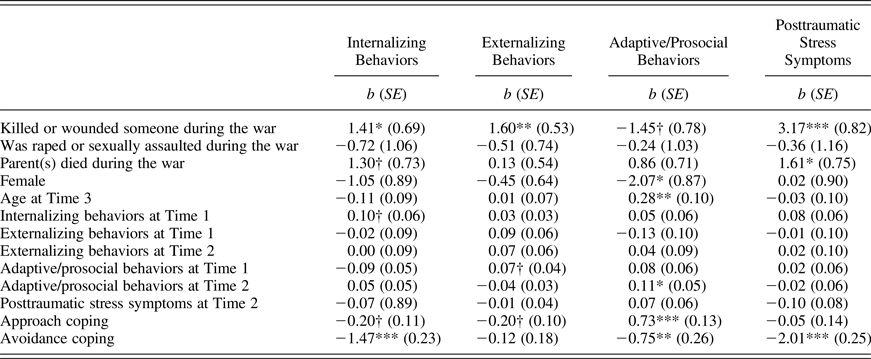
Multiple regression models on the multiply imputed data are presented in Table 5. These models examine the effects of war exposures on each of the mental health outcomes at T3, as well as the effects of coping on mental health outcomes, controlling for mental health outcomes at T1 and T2, gender, age, and approach and avoidance coping items.
Estimated regression models predicting Wave 3 mental health outcomes from baseline war exposures, gender, age, and coping with autoregressive controls
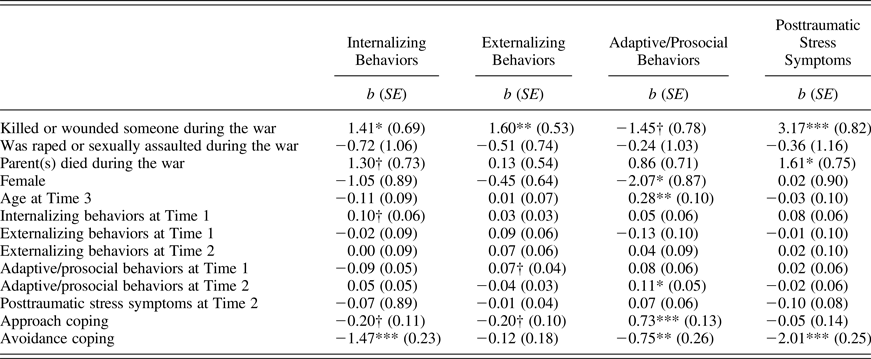
Note: Coefficient b, the estimated regression coefficient for the associated predictor; SE, the standard error for the associated regression coefficient.
†p ≤ .1. *p ≤ .05. **p ≤ .01. ***p ≤ .001.
War exposures and mental health
Killing/injuring someone during the war was statistically significantly associated with T3 mental health outcomes after controlling for other variables in the models. It was associated with higher T3 internalizing behaviors (b = 1.41, p = .04), higher T3 externalizing behaviors (b = 1.60, p = .003), and higher posttraumatic stress symptoms (b = 3.22, p < .001). Killing/injuring someone showed marginal significance for its association with lower adaptive/prosocial behaviors (b = –1.45, p = .07). Surviving rape or sexual assault during the war was not significantly associated with any of the four T3 mental health outcomes, adjusting for other variables. Death of parent(s) during the war was significantly associated with higher T3 posttraumatic stress symptoms (b = 1.61, p = .04), and marginally higher T3 internalizing behaviors (b = 1.30, p = .08).
Gender, age, and mental health
The effects of gender and age were statistically significant only for adaptive/prosocial behaviors at T3. Males reported higher T3 adaptive/prosocial behaviors compared to females (b = 2.07, p = .03). Regarding age effects, every additional year in a subject's age was significantly associated with increased T3 adaptive/prosocial behaviors (b = 0.28, p = .006).
Coping and mental health
Approach coping was statistically significantly associated with higher T3 adaptive/prosocial behaviors (b = 0.73, p < .001). It was also associated with marginally lower T3 externalizing behaviors (b = –0.20, p = .06), and internalizing behaviors (b = –0.20, p = .08). Avoidance coping was significantly associated with lower T3 internalizing behaviors (b = –1.47, p < .001), lower T3 adaptive/prosocial behaviors (b = –0.75, p = .005), and lower posttraumatic stress symptoms (b = –2.01, p < .001).
Mediation through approach and avoidance coping
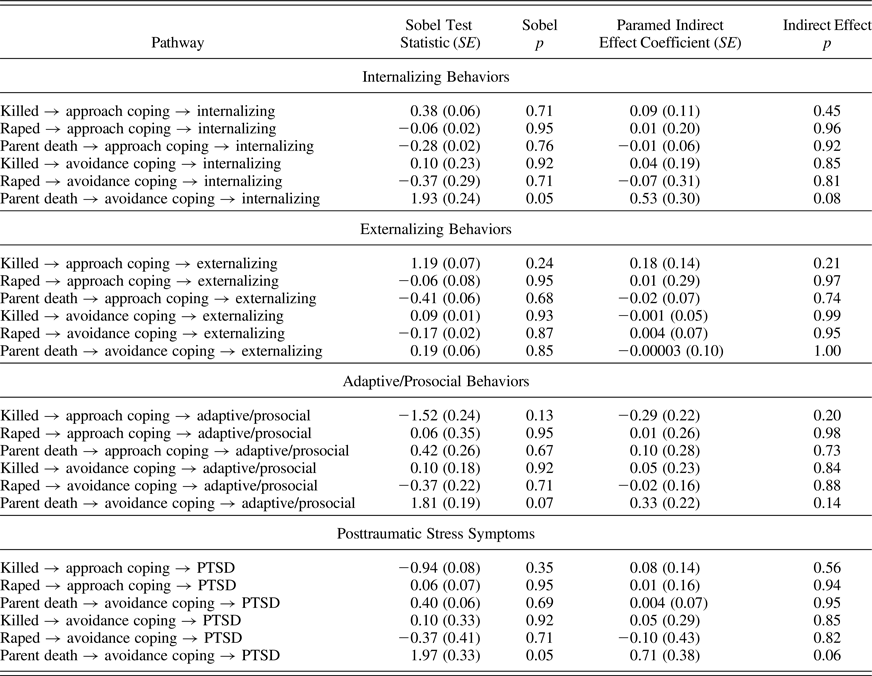
The results of the mediation analyses for all pathways tested are presented in Table 6. When we tested whether approach or avoidance coping were predicted by the war exposures, only avoidance coping was statistically significantly predicted by death of a parent during the war (b = –0.36, p = .035). Approach coping was not predicted by any of the three toxic stress exposures. Nevertheless, we tested mediation through approach and avoidance coping for each exposure–outcome pairing, using both the Sobel test and the paramed test to demonstrate indirect effects. We found that the coefficient for the association between parent(s) death during the war and T3 internalizing behaviors was reduced by 26.14% when avoidance coping was added to the model (Sobel = 1.94, p = .05). This could be viewed as full mediation as the direct pathway between parent(s) death and T3 internalizing behaviors is no longer statistically significant at the 0.05 α level (b = 1.30, p = .08). Using the paramed mediation analysis, the indirect pathway between these variables through avoidance coping was found to be marginally significant (p = .08). In the case of posttraumatic stress symptoms, the coefficient for parent(s) death during the war is reduced by 28.76% (Sobel = 1.97, p = .05), implying partial mediation as the direct pathway between parent(s) death and posttraumatic stress remained statistically significant across models. Similarly, using the paramed mediation analysis, the indirect pathway between these variables through avoidance coping was marginally significant (p = .06). We did not find any evidence of mediation by approach or avoidance coping items for any of the other pathways tested.
Results of mediation by approach and avoidance coping: All model indirect pathways using Sobel and paramed mediation
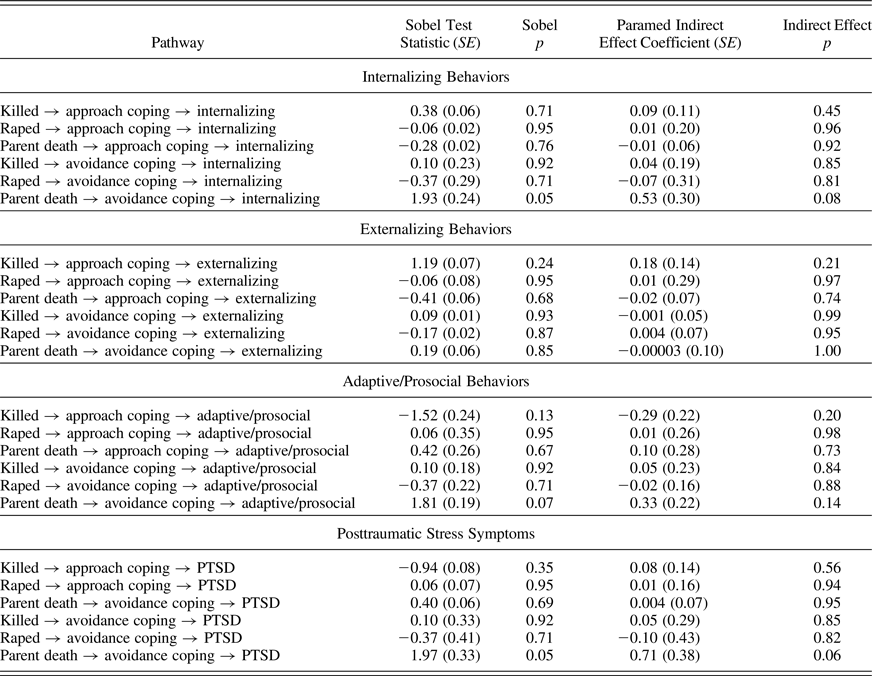
Note: SE, Standard error for the associated mediation coefficient; Killed, injured or killed someone during the war; Raped, was raped or sexually assaulted during the war; Parent death, death of parent(s) during the war; Internalizing, Time 3 (T3) internalizing behaviors; Externalizing, T3 externalizing behaviors; adaptive/prosocial, T3 adaptive/prosocial behaviors; PTSD, T3 posttraumatic stress disorder symptoms. The indirect effect coefficient and p value were estimated using paramed in Stata.
Discussion
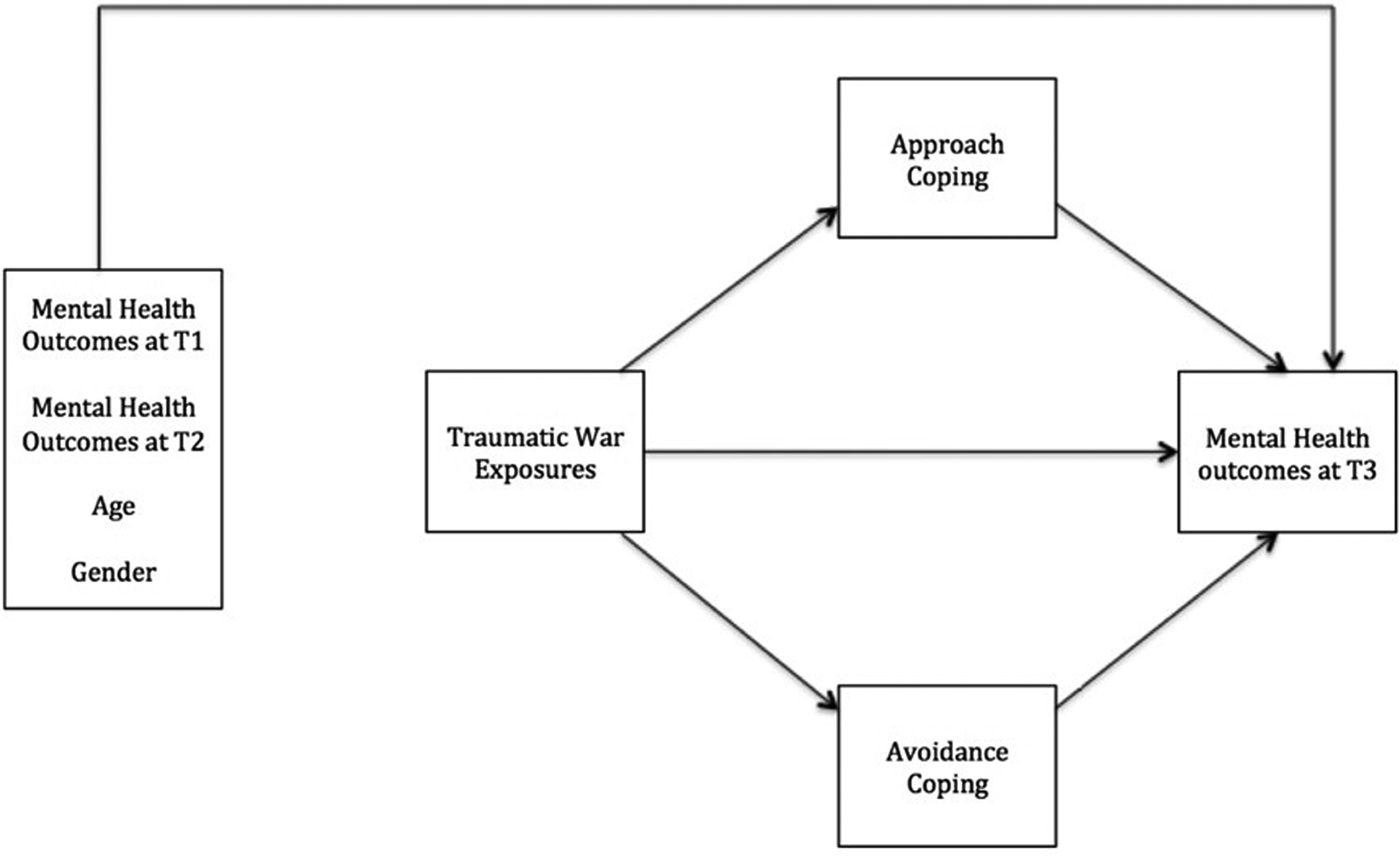
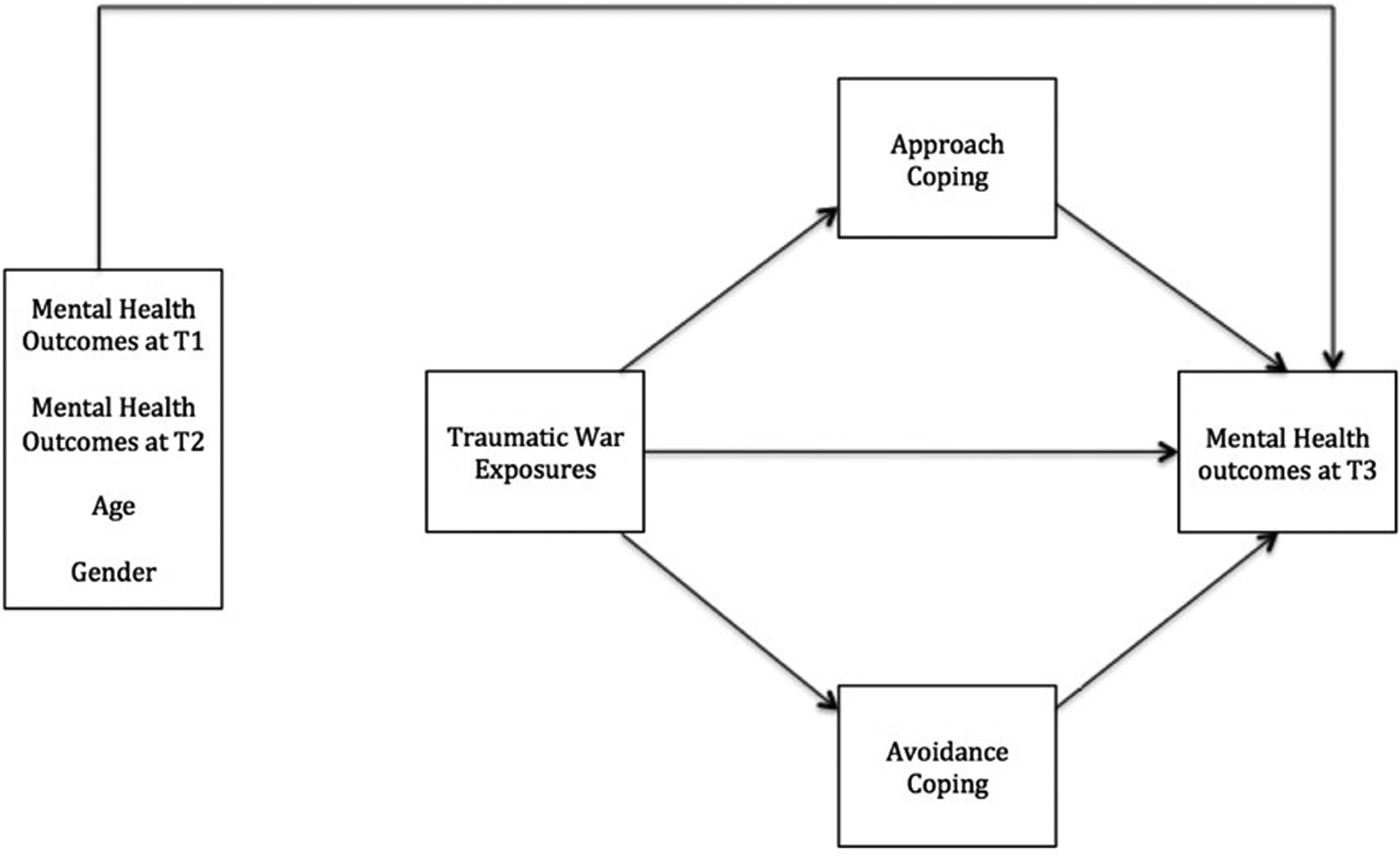
We sampled youth in Sierra Leone and examined (a) two theoretically guided dimensions of coping, approach, and avoidance; (b) the relation between specific war exposures at baseline (killing or injuring others, being raped or sexually assaulted, and death of parent(s)) and subsequent mental health outcomes at T3 (internalizing, externalizing, posttraumatic stress, and adaptive/prosocial behaviors), controlling for prior levels of those same mental health indicators; and (c) the mediating role of approach and avoidance coping items in explaining these relations (Figure 1).
Conceptual model.
Ecological systems theory has historical roots in the analysis of how children and youth cope with stress and violence (Cummings & Cummings, Reference Cummings and Cummings1988). In recent years, there has been an increasing emphasis on the role of microsystem factors, such as individual-level coping, within the broader social–ecological system as a means of understanding resilience among children (Luthar & Borwyn, Reference Luthar and Borwn2007; Masten, Reference Masten, Flynn, Dudding and Barber2006; Ungar, Ghazinour, & Richter, Reference Ungar, Ghazinour and Richter2013). The concept of coping has been operationalized in numerous ways, including problem- versus emotion-focused coping, meaning making and social coping, and approach versus avoidance coping. The dimensional framework employed by the latter conceptualization, however, has received considerable theoretical and evidence-based support (Folkman & Lazarus, Reference Folkman and Lazarus1988; Roth & Cohen, Reference Roth and Cohen1986). Our study therefore applied this coping framework to a culturally adapted version of the Brief COPE inventory, and found acceptable psychometric properties of selected items for the current sample of Sierra Leonean war-affected youth. The scale's overall Cronbach α of 0.60 is moderate, considering the problems of demonstrating internal consistency for coping measures. Billings and Moos (Reference Billings and Moos1981) explained that these challenges might arise because an individual's use of one coping response can reduce stress, so it thereby decreases the need for that individual to employ additional coping responses.
The mental health impacts of traumatic war experiences
In terms of main effects from the regression models, our findings show that among Sierra Leonean youth, some traumatic war experiences had a significant impact on mental health outcomes several years after the end of the civil war. Specifically, we found that killing or injuring someone during the war was significantly associated with greater negative mental health outcomes at T3 (internalizing, externalizing, and posttraumatic stress behaviors). This is consistent with findings of high rates of hostility, anxiety, and depression in previous studies conducted among former child soldiers (Annan, Blattman, & Horton, Reference Annan, Blattman and Horton2006; Betancourt, Brennan, et al., Reference Betancourt, Brennan, Rubin-Smith, Fitzmaurice and Gilman2010; Santacruz & Arana, Reference Santacruz and Arana2002), and adult war veterans and combatants (Hoffman, Litz, & Weathers, Reference Hofmann, Litz and Weathers2003; Johnson et al., Reference Johnson, Asher, Rosborough, Raja, Panjabi, Beadling and Lawry2008). In the present study, death of a parent during the war was significantly associated with greater internalizing behaviors and posttraumatic stress symptoms, consistent with previous studies showing prolonged grief, posttraumatic stress disorder, and major depression in bereaved war survivors (Macksoud & Aber, Reference Macksoud and Aber1996; Morina, Rudari, Bleichhardt, & Prigerson, Reference Morina, Rudari, Bleichhardt and Prigerson2010). However, being raped or sexually assaulted during the war was not significantly associated with any of the negative mental health outcomes at T3. Our findings are generally consistent with those of previous studies that have found an association between war trauma and mental health outcomes (Bayer, Klasen, & Adam, Reference Bayer, Klasen and Adam2007; Betancourt, Brennan, et al., Reference Betancourt, Brennan, Rubin-Smith, Fitzmaurice and Gilman2010; Kohrt et al. Reference Kohrt, Jordans, Tol, Speckman, Maharjan, Worthman and Komproe2008).
The role of coping
The findings from this study demonstrate the important role played by coping in explaining the relation between war trauma and subsequent mental health outcomes. Avoidance coping was associated with lower T3 internalizing and posttraumatic stress behaviors, and shows some evidence of mediating the relation between death of parent(s) during the war and the two outcomes mentioned above. Approach coping, in contrast, was not found to be a significant mediator for any of the hypothesized pathways to negative mental health outcomes. This is consistent with our theoretically derived hypothesis, which states that individuals who choose coping strategies that fit the appraised controllability and modifiability of the traumatic event are likely to have positive outcomes. However, those whose chosen coping strategies do not fit the context are unlikely to experience a positive outcome (Conway & Terry, Reference Conway and Terry1992; Folkman, Reference Folkman1984; Folkman & Moskowitz, Reference Folkman and Moskowitz2004; Zeidner & Endler, Reference Zeidner and Endler1996). War-affected youth's perceived lack of control over traumatic war experiences may lead them to appraise such events as nonmodifiable. The finding that avoidance coping items are associated with significantly lower negative outcomes may be due to youth finding it easier to deal with the painful memories of these events by using avoidance strategies, such as denial and behavioral disengagement. In these instances, the role of approach coping strategies, such as positive reframing of the event and future planning, becomes less effective in reducing negative outcomes due to the appraised lack of control. Moreover, it may be difficult for war-affected youth to leverage forms of approach coping, such as emotional and instrumental support. This may be because of broader macrosystem-level factors such as stigma and perceived discrimination that are associated with participating in war atrocities. This explanation is supported by prior research indicating high rates of community-level stigma, and its devastating effects on Sierra Leonean former child soldiers (Betancourt, Agnew-Blais, et al. Reference Betancourt, Agnew-Blais, Gilman, Williams and Ellis2010; Betancourt, Brennan, et al. Reference Betancourt, Brennan, Rubin-Smith, Fitzmaurice and Gilman2010). Contextualizing coping styles within the social–ecological environment of the developing child allows us to gain further insight into the interplay between multilayered risk and protective processes affecting outcomes. The mediation results show some evidence that avoidance coping strategies may help reduce the deleterious effect of war-related parent death on internalizing behaviors or posttraumatic stress at T3. Our failure to demonstrate strong mediation may be due to limitations in the measurement of coping, and future studies may further explore the meditational role of avoidance coping using greater number of items.
Both approach and avoidance coping items significantly predicted adaptive/prosocial behaviors, albeit in opposite directions. This is consistent with the dual processing model of coping, which posits that individuals oscillate between approach and avoidance forms of coping. Avoidance strategies may be more effective initially in dealing with traumatic events. Over time, however, once emotional equilibrium has been achieved, approach strategies may be more appropriate for future planning (Strobe & Schut, Reference Stroebe, Schut and Neimeyer2001). Our finding that avoidance coping was significantly associated with lower levels of adaptive/prosocial behaviors implies that this form of coping may not be as effective as approach coping in fostering positive mental health outcomes. An examination of the individual items that make up approach coping and adaptive/prosocial behaviors, along with the observed positive and significant correlation between the two variables, reveals considerable overlap between them, which may explain their strong association. However, we did not find evidence for approach or avoidance coping mediating the relation between war exposures and adaptive/prosocial behaviors. We also did not find evidence for approach or avoidance coping mediating the relation between war exposures and externalizing behaviors. Together, these findings indicate that avoidance coping as a mediator may mainly be effective in reducing the effect of traumatic stressors on depressive and anxiety symptoms associated with internalizing behaviors and posttraumatic stress disorder, and approach coping may primarily be related to greater long-term adaptive/prosocial behaviors.
Regarding sex differences, we found significantly higher use of approach coping strategies and greater adaptive/prosocial behaviors among males compared to females in our sample. The role constraint theory argues that these gender differences may arise from disparate social roles adopted by males and females (Ptaceck, Smith, & Zanas, Reference Ptacek, Smith and Zanas1992). In Sierra Leone, male-dominated cultural norms are prevalent, and females may engage less than males in the adaptive/prosocial behaviors and the active coping styles captured by the survey (such as taking the lead in initiating activities or preferring being alone rather than with friends and family).
We also found that youth in our sample heavily endorsed the use of alcohol or drugs as a coping mechanism (98%). This finding reflects the issues surrounding the high production and consumption of alcohol and illicit drugs in Sierra Leone, with the World Health Organization (2009) estimating that roughly 90% of the hospital admissions to the only psychiatric hospital in the country are for drug-related problems. Our study was not designed to explore the role of substance use as a coping strategy, but given the prevalence of abuse, research on this topic is warranted. Religious coping was also heavily endorsed by both sexes (97%). This is consistent with the substantial role played by religion in Sierra Leone, as well as the significant influence of faith-based organizations in guiding everyday life in the country. Religious coping as a distinct and complex method of coping has received considerable attention recently, with evidence suggesting that it stimulates the psychological and physiological mechanisms influencing stress appraisal (Goeke-Morey, Taylor, Merrilees, Shirlow, & Cummings, Reference Goeke-Morey, Taylor, Merrilees, Shirlow and Cummings2014; Pargament, 1997; Park & Cohen, Reference Park and Cohen1993; Seybold & Hill, Reference Seybold and Hill2001). Although we were unable to explore religious coping in this study, there is a clear need for research on the role of religion in shaping mental health in Sierra Leone.
Study strengths and limitations
There are several study limitations that must be considered when making causal inferences and generalizations based on these findings. First, given the longitudinal, prospective cohort design, it would have been desirable to examine if coping mediates the effect of war experiences on mental health outcomes across waves, at T2 and T3. However, coping was only measured at T3, at the same time point as the mental health outcomes. Thus, causal inferences about these associations should be made with caution. Second, there may be history or maturation effects in this population, whereby postwar psychosocial intervention efforts by other organizations in Sierra Leone, along with the normal process of child development, may have naturally led to the acquisition of coping skills and better overall psychosocial adjustment. This may make it difficult to isolate the precise effects of war exposures on T3 mental health outcomes. Thus, we have employed a developmental psychopathology lens in interpreting coping as a developmental process that alters adaptive and maladaptive outcomes over time. Third, the reliance on retrospective self-report may be subject to response bias, such that certain war traumas, such as rape or killing of others, may be selectively underreported. There may also have been recall bias for the coping scale, and the use of event-specific coping strategies may be erroneously reported due to the large time interval between the event and coping response measurement. Fourth, the Brief COPE Scale, although culturally adapted and possessing sound theoretical and moderate psychometric properties, represents a limited way of capturing predefined coping factors, raising concerns about construct validity. Future studies can build upon this work by using mixed-methods to elucidate unique combinations of coping styles utilized by war-affected youth in dealing with stressors. Studies could also enhance the number and range of items in this scale relevant to Sierra Leone and postconflict environments more broadly. Fifth, generalizability of these findings may be limited by the unequal representation of males and females in our sample, and also because we were only able to sample 5 out of 14 Sierra Leonean districts as a result of logistical considerations.
Despite these limitations, there are several study strengths to consider. For instance, the use of multidimensional survey measures and a thorough process to adapt these measures in order to make them culturally appropriate and acceptable aided in addressing contextual determinants of health behaviors. Studies of trauma and mental health with other conflict-affected populations have typically used tools developed in the West, and have thus been criticized for not accurately reflecting the cultural norms of their target population (Steel et al., Reference Steel, Chey, Silove, Marnane, Bryant and Van Ommeren2009). We attempted to overcome that barrier through an iterative process of tool development. In addition, prior research on resilience and protective processes among war-affected youth in Sierra Leone has begun to create an interesting narrative that complements our findings.
Qualitative data from multiple interlocutors using ethnographies and interviews has captured the traumatic war experiences and subsequent coping mechanisms utilized by these youth (Denov, Reference Denov2010). Previously reported quantitative data from our ongoing longitudinal study have described the role of family- and community-level resilience constructs, representing the broader systems of these youth's social ecology (Betancourt, Agnew-Blais, et al., Reference Betancourt, Agnew-Blais, Gilman, Williams and Ellis2010; Betancourt, Brennan, et al., Reference Betancourt, Brennan, Rubin-Smith, Fitzmaurice and Gilman2010). This study, therefore, is novel in using survey data from the multiwave longitudinal study to illuminate how individual-level coping styles in social–ecological and developmental contexts are manifested in this understudied population of war-affected youth, adding to our understanding of the broader picture (Cicchetti, Reference Cicchetti, Cicchetti and Cohen2006; Cicchetti & Lynch, Reference Cicchetti and Lynch1993).
Conclusion
With regard to the implications for a process-oriented conceptualization of the findings from a developmental psychopathology perspective, the nomenclature adopted by Patel and Goodman (Reference Patel and Goodman2007) operationalizes protective factors as those associated with lower levels of psychological symptoms, and promotive factors as those leading to increased positive health outcomes. Within this framework, our results suggest that for war-affected youth, avoidance coping may be a protective factor for symptoms of mental health problems, whereas approach coping may be a promotive factor for adaptive/prosocial behaviors (Cicchetti, Reference Cicchetti, Cicchetti and Cohen2006; Cicchetti & Cohen, Reference Cicchetti, Cohen, Cicchetti and Cohen1995).
With regard to the implications for translational research directions, the knowledge gained from this line of research, including the present study, can be leveraged to tailor interventions that may greatly improve youth mental health outcomes in Sierra Leone by targeting multilevel risk and protective factors simultaneously. Translational research holds considerable potential to advance the quality of the development of intervention approaches for youth (Cicchetti & Toth, Reference Cicchetti and Toth2006). Immediately after the civil war, the Sierra Leonean government, as well as a host of national and international NGOs, initiated several rehabilitation and community sensitization efforts. These programs were not sustained over time, however, and failed to address the pressing continued need for individual, family, and community mental health services. A survey in Sierra Leone by the World Health Organization (2009) found that despite relatively high rates of mental illness in the country, there was only one psychiatrist, only two trained psychiatric nurses, and an almost nonexistent community mental health infrastructure. With the World Health Organization setting mental health as a priority area for the country, and the recent influx of psychosocial aid due to ebola-related suffering and loss, our study has important implications by providing empirical bases for translational research that rigorously informs the design and implementation of new and innovative mental health programs and policies. These would allow Sierra Leonean youth to develop adaptive mechanisms and cope better with unstable and hostile environmental contexts through sustained efforts at building resilience.



Target article
Coping and mental health outcomes among Sierra Leonean war-affected youth: Results from a longitudinal study
Related commentaries (1)
Commentary on Sharma et al.