Introduction
Falls are a major public health problem for older adults in Canada and other developed countries, with approximately one-third of older adults experiencing a fall each year (O’Loughlin, Robitaille, Boivin, & Suissa, Reference O’Loughlin, Robitaille, Boivin and Suissa1993; Tinetti, Speechley, & Ginter, Reference Tinetti, Speechley and Ginter1988). In addition to morbidity and mortality, falls impose a substantial burden on family members, caregivers, and society as a whole due to increased rates of disability, significant amounts of time required by informal caregivers, and the increased costs of acute care associated with fall-related injuries (Fuller, Reference Fuller2000). As Canada’s population ages, action is needed to reduce both the number of falls and the costs associated with falling among older adults. Falls prevention programs are one approach; however, such an approach requires research to evaluate the cost-effectiveness of falls prevention practices directed at community-dwelling seniors (Angus, Cloutier, Albert, Chenard, & Shariatmadar, Reference Angus, Cloutier, Albert, Chenard and Shariatmadar1998; Davis et al., Reference Davis, Robertson, Ashe, Liu-Ambrose, Khan and Marra2010; Lamb, Jørstad-Stein, Hauer, & Becker, Reference Lamb, Jørstad-Stein, Hauer and Becker2005; Salkeld et al., Reference Salkeld, Cumming, O’Neill, Thomas, Szonyi and Westbury2000).
For the study of falls prevention among older adults, an economic evaluation such as cost-effectiveness can produce additional and important information that is not provided by studies of cost, efficacy, or effectiveness alone. Efficacy of falls prevention, which has been already established both in Canada and abroad (Chang et al., Reference Chang, Morton, Rubenstein, Mojica, Maglione and Suttorp2004; Gillespie et al., Reference Gillespie, Gillespie, Robertson, Lamb, Cumming and Rowe2003), identifies the intervention benefits to individuals who fully comply with the associated recommendations. The first Cochrane review suggested pooled point estimates of a 27 per cent reduction in falls with efficacy trials (Gillespie et al., Reference Gillespie, Gillespie, Robertson, Lamb, Cumming and Rowe2003). Effectiveness of falls prevention strategies identifies the benefits to individuals for whom it is offered. A more recent Cochrane review suggested more modest effects than have been previously reported, presumably because recent trials were included in which the intervention intensity was less than in the earlier trials because the recent trials were situated in actual practice settings (Gates, Fisher, Cooke, Carter, & Lamb, Reference Gates, Fisher, Cooke, Carter and Lamb2008). There is a variety of approaches to falls prevention and management that have emerged, most of which are considered complex interventions. Complex interventions are usually described as interventions that contain several interacting components (Craig, Dieppe, Macintyre, Nazareth, Petticrew, & Medical Research Council Guidance, Reference Craig, Dieppe, Macintyre, Michie, Nazereth and Petticrew2008; Lamb, Fisher, Gates, Potter, Cooke, & Carter, Reference Lamb, Fisher, Gates, Potter, Cooke and Carter2008). Interventions that assume responsibility for delivery of the program compared to referral to existing services are deemed to be of higher intensity.
When the principal effect of a health intervention is a single dimension, such as an unintentional fall, different approaches should be compared using cost-effectiveness analysis (CEA) (Drummond, Sculpher, Torrance, O’Brien, & Stoddard, 2005). CEA enables researchers to estimate the trade-off between the extra cost of implementing higher resource interventions and additional patient outcomes (Drummond et al., Reference Drummond, Sculpher, Torrance, O’Brien and Stoddart2005). With falls prevention interventions, CEA expresses the relationship between costs and consequences in terms of additional costs per additional fall prevented. Clearly, an intervention with a high cost per additional fall prevented does not represent an efficient use of health care spending.
Thus far, research to evaluate the cost-effectiveness of falls prevention strategies has yielded mixed results ranging from programs being economically attractive and cost saving to programs with both low and high additional costs to prevent falls (Chang et al., Reference Chang, Morton, Rubenstein, Mojica, Maglione and Suttorp2004; Davis et al., Reference Davis, Robertson, Ashe, Liu-Ambrose, Khan and Marra2010; Gillespie et al., Reference Gillespie, Gillespie, Robertson, Lamb, Cumming and Rowe2003). Eight studies completed cost-effectiveness analyses of the falls prevention strategies (Campbell et al., Reference Campbell, Robertson, La Grow, Kerse, Sanderson and Jacobs2005; Hendriks et al., Reference Hendriks, Evers, Bleijlevens, van Haastregt, Crebolder and van Eijk2008; Rizzo, Baker, McAvay, & Tinetti, Reference Rizzo, Baker, McAvay and Tinetti1996; Robertson, Devlin, Gardner, & Campbell, Reference Robertson, Devlin, Gardner and Campbell2001a; Robertson et al., Reference Robertson, Devlin, Scuffham, Gardner, Buchner and Campbell2001b; Robertson, Gardner, Devlin, McGee, & Campbell, Reference Robertson, Gardner, Devlin, McGee and Campbell2001c; Salked et al., Reference Salkeld, Cumming, O’Neill, Thomas, Szonyi and Westbury2000; Smith & Widiatmoko, Reference Smith and Widiatmoko1998). Each of these studies used falls as their primary outcome and evaluated the cost per additional fall prevented by the intervention compared to usual or alternative care using the incremental cost-effectiveness ratio (ICER). These studies, which featured a variety of interventions for preventing falls, reported ICERs that ranged from being cost saving (i.e., dollars saved per fall prevented), through a low ICER preventing a fall with costs of $537 (2004 CND; Robertson et al., Reference Robertson, Devlin, Gardner and Campbell2001a) to a higher ICER preventing a fall with costs of $6,633 (2004 CND; Salkeld et al., Reference Salkeld, Cumming, O’Neill, Thomas, Szonyi and Westbury2000) per fall prevented.
Interventions shown to be cost saving, as well as interventions with low ICERs, are economically attractive to policy planners and decision makers. Two of the aforementioned eight studies (Hendriks et al., Reference Hendriks, Evers, Bleijlevens, van Haastregt, Crebolder and van Eijk2008; Rizzo et al., Reference Rizzo, Baker, McAvay and Tinetti1996) evaluated the cost-effectiveness of multifactorial falls prevention interventions. Hendriks et al. evaluated the cost-effectiveness of a multifactorial falls risk assessment and referral to existing health care services compared with usual health care among community-dwelling older adult fallers and found the intervention to be not cost-effective compared to usual care. Rizzo et al. estimated the cost per fall prevented for participants – randomized to receive a multifactorial falls risk assessment with management of risk factor modification strategies – and found the intervention to be cost saving. The intervention was also more cost-effective for participants who were assessed as having four or more of the eight targeted risk factors for falls (Rizzo et al.). Given the heterogeneity of results, the consensus is that further research is needed to evaluate the cost-effectiveness of falls prevention practices directed at community-dwelling seniors (Angus et al., Reference Angus, Cloutier, Albert, Chenard and Shariatmadar1998; Davis et al., Reference Davis, Robertson, Ashe, Liu-Ambrose, Khan and Marra2010; Salkeld et al., Reference Salkeld, Cumming, O’Neill, Thomas, Szonyi and Westbury2000).
Other areas that have studied the cost-effectiveness of interventions have found that cost-effectiveness decreased as the intervention was expanded to include those with less-severe disease (Briggs & Gray, Reference Briggs and Gray2000). If this is the case, it follows that falls prevention programs directed only at individuals identified as being at highest risk for falls would produce the lowest cost per desired unit of health effect (e.g., a fall prevented). Including individuals with a lower risk for falls in a program would likely increase the cost per unit of effect (Smith & Brown, Reference Smith and Brown2000). Consequently, establishing which sub-groups benefit most from falls prevention initiatives will assist policy makers and regional planners to better allocate resources most efficiently and effectively.
Previous research has identified differences in the benefit of falls prevention activities across sub-groups (Fletcher & Hirdes, Reference Fletcher and Hirdes2002; Graafmans et al., Reference Graafmans, Ooms, Hofstee, Bezemer, Bouter and Lips1996; Robertson et al., Reference Robertson, Devlin, Gardner and Campbell2001a; Stalenhoef, Diederiks, Knottnerus, Kester, & Crebolder, Reference Stalenhoef, Diederiks, Knottnerus, Kester and Crebolder2002). A number of co-variates have been shown to be associated with increased risk for falls as well as with increased health service use. These include (a) age, (b) gender, (c) history of falls in the previous year, (d) number of risk factors for falls, and (e) region of residence (Findorff, Wyman, Nyman, & Croghan, Reference Findorff, Wyman, Nyman and Croghan2007; Fletcher & Hirdes, Reference Fletcher and Hirdes2002; Laird, Studenski, Perera, & Wallace, Reference Laird, Studenski, Perera and Wallace2001; Rizzo et al., Reference Rizzo, Baker, McAvay and Tinetti1996; Wiktorowicz, Goreree, Papaioannaou, Adachi, & Papadimitropoulos, Reference Wiktorowicz, Goreree, Papaioannaou, Adachi and Papadimitropoulos2001).
Current practice in the literature on cost-effectiveness of falls prevention has been to estimate ICERs. Although ICERs provide an estimate of the incremental cost per additional outcome (e.g., additional falls prevented), they are not amenable to regression analysis and do not permit the investigation of important co-variates. Nor is it easy to identify interaction effects involving the intervention and important sub-groups with this traditional cost-effectiveness method of estimation (Hoch, Briggs, & Willan, Reference Hoch, Briggs and Willan2002). Finally, ICERs cannot be used to make a decision about whether the program under study provides additional health gains at a cost that is judged by decision makers to be of good value unless a particular willingness to pay (WTP) is considered. WTP refers to the dollars that funders are willing to spend to prevent a single fall. Several research teams have recently addressed CEA challenges using the net benefit (Stinnett & Mullahy, Reference Stinnett and Mullahy1998; Tambour, Zethraeus, & Johannesson, Reference Tambour, Zethraeus and Johannesson1998) and the net benefit regression framework (NBRF) (Hoch et al., Reference Hoch, Briggs and Willan2002).
Health policy makers and funders must make decisions about whether or not to fund a given intervention, and they must also decide how much they are willing to pay for those interventions. Because governments have finite resources to direct towards falls prevention programs, determining a value for WTP becomes a key policy question. Policy makers might be guided in specifying their willingness to pay by considering various costs saved. For example, an admission to the hospital emergency department in Ontario costs between $196 and $223 (Ontario Case Costing Initiative [OCCI], 2004) and therefore, represents one possible value of the WTP. However, if policy makers are interested in preventing fall-related hospitalizations, the average cost of a fall-related hospitalization ($9,223 – $13,376, OCCI, 2004) is a potential WTP value for falls prevention programs. The NBRF allows for the explicit inclusion of a WTP level.
Another important advantage to using the NBRF is the formulation of the cost-effectiveness problem within a standard regression-type framework, which permits the evaluation of important sub-groups (Hoch et al., Reference Hoch, Briggs and Willan2002). Specifically, net benefit regression adjusts the CEA for important co-variates. Although this framework has been used previously to evaluate the cost-effectiveness of interventions in other areas such as mental health, oncology, and pharmacology, our study is the first time it has been used in the evaluation of falls prevention (De Ridder & De Graeve, Reference De Ridder and De Graeve2009; Hoch et al., Reference Hoch, Briggs and Willan2002; Shih, Pan, & Tsai, Reference Shih, Pan and Tsai2009).
No study to date has been completed within Canada’s unique health care system. Therefore, the cost-effectiveness of falls prevention practices in Canada, and Southwestern Ontario in particular, are unknown, which, to address this deficiency, is why we conducted the Project to Prevent Falls in Veterans (PPFV). The primary objective was to determine whether a falls prevention program consisting of an individually customized multifactorial intervention – including a comprehensive geriatric assessment coupled with referral to existing health services – was cost-effective in reducing the likelihood of further falls compared with community-based primary care. We randomized the participation of community-dwelling older adults into two fall prevention approaches: one was an individually customized multifactorial intervention the intevention, again which comprised of a specialized geriatric assessment coupled with referral to existing health services (e.g. vision examination or referral to a physiotherapist) and the other was community-based primary care. We evaluated the cost-effectiveness of the intervention compared with community-based primary care using the ICER and the NBRF.
Methods
This study, PPFV, was initiated to investigate the effectiveness of an individually customized multifactorial intervention in two phases. The first phase was a cross-sectional mailed survey of a simple random sample, generated by Veterans Affairs Canada, of WWII and Korean War veterans and their caregivers (n = 3,311). The sampling and data collection procedures for the initial phase of the PPFV have been described elsewhere (Speechley et al., Reference Speechley, Belfry, Borrie, Jenkyn, Crilly and Gill2005). Potentially modifiable risk factors for falls were ascertained from the mailed questionnaire and included (a) ≥ 4 prescription medications; (b) self-reported lower-extremity muscle weakness; and (c) self-reported balance, (d) foot, and (e) vision problems.
The second phase was a multifactorial risk factor modification field trial. The eligible population for study included 348 participants (veterans and caregivers) randomized to receive either the fall prevention intervention (n = 188) or usual care (n = 160). To be eligible, participants had to have completed the mailed questionnaire, reside in the London and Windsor, Ontario, regions, and have provided consent to be re-contacted. Participants with one to five modifiable risk factors (RFs) based on the mailed questionnaire were randomized within each RF stratum to either (1) intervention: an individually customized multifactorial intervention involving a comprehensive geriatric assessment followed by referral to individualized risk factor reduction; or (2) usual care: community-based primary care. The usual care group received standard care from their family physician following a letter from the study summarizing each participant’s self-reported risk factors sent directly to the family physician. Falls were measured prospectively using monthly return-addressed postage-paid calendars; this technique is the gold standard in the measurement of falls among community-dwelling older adults (Graafmans et al., Reference Graafmans, Ooms, Hofstee, Bezemer, Bouter and Lips1996; Tinetti, Speechley, & Ginter, Reference Tinetti, Speechley and Ginter1988; van Schoor, Smit, Pluijm, Jonker, & Lips, Reference van Schoor, Smit, Pluijm, Jonker and Lips2002). The second phase of the PPFV and collection of the 12-month follow-up information on prospective falls was completed in mid-year 2004. This study received ethical approval from the Research Ethics Board of the University of Western Ontario, Canada (UWO REB 08985E).
Intervention: Individually Customized Multifactorial Risk Factor Modification
Participants randomized to the intervention group were assessed by a geriatrician, geriatric nurse, or physiotherapist with specific training in falls assessment. The assessment, along with a preliminary version of the interRAI Community Health Assessment (CHA; 2007), was a subset of the Minimum Data Set for Home Care (MDSHC) version 2.0 (Morris et al., Reference Morris, Bernabei and Ikegami2002) which included (a) a detailed physical examination with musculoskeletal assessment, visual screening, extended pulse, and blood pressure assessment with attention to postural changes; (b) assessment of footwear and foot problems; (c) a quantified balance assessment (using the Berg Balance Scale; Berg, Wood-Dauphine, Williams, & Gayton, Reference Berg, Wood-Dauphine, Williams and Gayton1989); (d) gait assessment (a timed 10-meter walk); and (e) a review of current medications. Any potentially modifiable RFs identified by the assessment were individually addressed with each participant. Recommendations included referrals to other health professionals (i.e., vision examination or referral to a physiotherapist). The intervention did not involve the provision of any treatment or on-going monitoring. Participant adherence to referred services was captured at three months via telephone interviews. Participants receiving the customized intervention were then re-assessed at 12 months following the initial assessment.
Usual Care: Community-based Primary Care
Family physicians of those participants randomized to the community-based primary care group were each sent a letter informing them of their patients’ participation and listing the RFs identified in the questionnaire. This disclosure of potential falls risk gave the family physician and the participant the opportunity to modify ongoing “usual care” to address any potential fall risks. Thus, the participants randomized to the community-based primary care group received whatever health services they and their physicians felt were appropriate.
Outcome Measure
The primary outcome measure for the cost-effectiveness analysis was the estimated mean number of falls prevented during a 12-month follow-up. Fall events were captured for 12 months by participants’ completing calendars daily and mailing them to the research office at the end of every month. If a fall was reported, participants were contacted by telephone and asked a series of questions characterizing the fall’s details (i.e., location, injury, and medical care received). Participants were also contacted by telephone if their monthly falls calendar was not returned. Falls were examined up to the end of the 12-month follow-up period or to the point of withdrawal for those who did not complete the study.
A fall was defined as unintentionally coming to rest on the ground or at some other lower level (Tinetti et al., Reference Tinetti, Speechley and Ginter1988). An injurious fall was defined as a fall resulting in injury that required the participant to see a physician. Self-report is the primary method of obtaining falls data from participants in the literature (Graafmans et al., Reference Graafmans, Ooms, Hofstee, Bezemer, Bouter and Lips1996; Tinetti et al., Reference Tinetti, Speechley and Ginter1988; van Schoor et al., Reference van Schoor, Smit, Pluijm, Jonker and Lips2002).
Cost Measures
We selected a societal costing approach that included all health care costs incurred by society regardless of payer (Barber & Thompson, Reference Barber and Thompson1998; Davis et al., Reference Davis, Robertson, Ashe, Liu-Ambrose, Khan and Marra2010; Drummond et al., Reference Drummond, Sculpher, Torrance, O’Brien and Stoddart2005). This approach enabled us to capture program, fall-related, and health service utilization (HSU) costs both for the purpose of this study and to allow comparability with other studies. For program, fall-related, and HSU costs, quantities of all services used were multiplied by the unit cost per service to obtain overall costs for each participant. Each of these three sub-groups was made up of three types of costs: (a) costs incurred by the government (i.e., the Ontario Ministry of Health and Long-Term Care [MOHLTC]), (b) out-of-pocket costs incurred by the participant (including third-party insurance), and (c) participant time costs. Time costs included travel time to appointments and the time spent in the receipt of care.
Program Costs
Implementing the intervention was associated with two cost items: (a) assessor costs (i.e., geriatrician, geriatric nurse, or physical therapist) and (b) resultant fall risk factor modification costs (i.e., referral to other health professionals) as directed by the assessment. The community-based primary care (usual care) group cost items were the costs of services required by participants as a result of referrals made by their family physicians to address risk factors for falls.
Fall-related Costs
The cost of fall-related injuries was estimated from self-reported health service utilization information collected via telephone when a fall calendar was returned indicating that a fall had occurred. Quantities of all reported fall-related services were multiplied by the unit cost per service to obtain individual fall-related costs.
Health Service Utilization Costs
We collected information about participant health service use by self-reported telephone questionnaires. At the 12-month follow-up, we asked participants about their health service utilization, home care, and informal care received in the previous month. Quantities of all services used were then multiplied by the unit cost per service to obtain individual health service costs. Unit costs for family physician and specialists were approximated using the Ontario Health Insurance Plan (OHIP) schedule of benefits. Hospital cost estimates were obtained from the London Health Sciences Center Case Costing Department (LHSC). Unit cost estimates for formal care costs were obtained from the Ontario Association of Community Care Access Centers. Societal estimates for informal care were valued using the price of professional help as a replacement price. We also estimated participant time and travel time costs for each participant, then summed HSU costs to obtain a total cost estimate of health service utilization in the previous month. The HSU costs from the previous month were multiplied by 12, and the sum was used to approximate the total HSU costs for the 12-month intervention period.
Total Costs
As mentioned, we summed the program, fall-related, and HSU costs to obtain an estimate of the total costs incurred for each participant in both intervention and usual-care groups over the course of the study period. Unit costs are presented in Canadian dollars from the baseline year 2004, and otherwise indexed to the baseline year. The consumer price index used was four per cent as suggested by the Ontario Case Costing Initiative and the LHSC Case Costing Department. We did not perform a separate sample size calculation as N was set by the effectiveness trial.
Cost-effectiveness Analyses
Incremental Cost-effectiveness Ratio (ICER)
The cost-effectiveness we measured was as the additional cost of the intervention per additional fall prevented during the 12-month follow-up for both groups. The incremental costs associated with resource use during this period were estimated for each participant. The total cost of resource use (i.e., program, fall-related, and health service) was summed across individuals in the intervention group and in the usual-care group. Using cost-effectiveness analysis, we first expressed the relationship between costs and consequences in terms of additional costs per additional fall prevented, which we estimated by calculating the incremental cost-effectiveness ratio (ICER). The ICER is defined as ΔC/ΔE (Drummond et al., Reference Drummond, Sculpher, Torrance, O’Brien and Stoddart2005). The incremental cost (ΔC) was the additional cost of the resource use from the intervention, and was the difference between the average costs of the intervention  and the average cost of usual care
 . The incremental effect (ΔE) was estimated by the additional falls prevented by the intervention group, and was the difference between the average effects (i.e., unintentional falls) of the intervention
 and the average effects of usual care
 .
Net Benefit Regression Framework (NBRF)
The net benefit regression framework used the same information that was required to estimate the ICER but went one step further by also including a value for the maximum acceptable WTP per unit of health gain; in this case, the amount one is willing to spend to prevent a fall. Similar to the ICER calculation, ΔE (incremental effect) was estimated by the additional outcome gained by the intervention group, and ΔC (incremental cost) was the additional cost of the intervention. The NBRF thus formalized the judgment required by decision makers as to whether or not the extra benefit of an intervention was worth the extra cost by incorporating a value for WTP in the analysis. An intervention is cost-effective if the incremental net benefit (INB) is greater than zero. Hoch et al. (Reference Hoch, Briggs and Willan2002) expressed it as follows:

We selected two WTP values to provide context in evaluating whether the intervention was cost-effective. The first was the average cost of admission to the emergency department as a result of a fall for adults aged 65 and older ($196); the second value was the average cost of admission to hospital for an average length of stay (10 days) as a result of having a fall ($9,223) (OCCI data, 2004). Cost estimates were obtained from the OCCI (2004) for the International Classification of Diseases ICD-10 code W-10 (fall-related injuries).
We anticipated that the randomized allocation of participants to either the intervention or to the usual-care arms of the study would balance the observed and unobserved confounding factors. However, the net benefit regression method provided a means to correct for potentially unbalanced distribution of confounding factors and allowed greater statistical efficiency by adjusting for confounders, which thereby permitted a more precise estimate of the INB. We explored the impact of co-variates on marginal cost-effectiveness by introducing interaction terms into the regression model. For significant non-continuous co-variates, the model was stratified by co-variate sub-groups.
Statistical Analyses
Our primary analyses of this study were performed according to the intention-to-treat principle. In the event of a missing monthly falls calendar, no falls were assumed to have occurred. The mean number of missing calendars was 0.5 (SD = 2.0) per participant. Missing individual health service utilization data were replaced by sample means. Analyses were performed including persons with valid data on fall outcomes but without cost data using mean imputation on total 12-month health service utilization costs.
Cost data are often right skewed. To appropriately evaluate non-normally distributed data, we used non-parametric tests (specifically, the Mann Whitney U test) to evaluate any difference in medians between two distributions (Barber & Thompson, Reference Barber and Thompson1998). However, policy and decision makers are concerned with the total costs of treating all potential fallers (i.e., including those with both high and low consumption of health services). As a result, the mean or average cost is recommended as the most appropriate measure to describe the cost data of a program or service (Barber & Thompson, Reference Barber and Thompson1998; Drummond et al., Reference Drummond, Sculpher, Torrance, O’Brien and Stoddart2005). We evaluated normality, skewness, and kurtosis of the cost data and mean cost values between the two arms of the trial for each of the three cost sub-groups as well as for total costs. Arithmetic means (and standard deviations) were estimated and t-tests conducted to test for significant differences in mean costs between the intervention and usual-care groups. A p value of less than 0.05 (two-tailed) defined a significant difference. Statistical analyses were completed with SAS software, version 9.0 (SAS Institute, Inc., Cary, NC, USA).
Intervention adherence in the intervention group was estimated by evaluating the number of services a participant received compared to the total number of services to which a participant was referred. Service adherence in the intervention group was estimated by dividing the total number of participants that received a service by the total number of participants that were referred to that particular service.
The ICER was estimated by ΔC/ΔE between the intervention and usual-care groups. A net benefit (NB), calculated as NBi = WTP × Ei – Ci ,, was created for each participant. The regression coefficient for the intervention variable was the incremental net benefit of the intervention after adjusting for demographic differences. We modeled cost-effectiveness using two levels of WTP ($196 and $9,223). A positive INB indicates that at the selected level of WTP the program is cost-effective; a negative INB suggests that the intervention is not cost-effective compared to usual care. Regression analysis examined the effect on the outcome variable of the intervention while adjusting for the demographic variables of age, gender, injurious fall risk, history of falls, number of modifiable fall risk factors (as evaluated by the PPFV baseline screener), and region (London vs. Windsor) in which the participant resided. Interaction terms between the intervention variable and demographic variables were also included to identify important sub-groups. For the significant non-continuous co-variates, the model was stratified by the sub-groups of the co-variate to assess the impact of the co-variate on the marginal cost-effectiveness.
Using epidemiologic model building (through stepwise regression), we evaluated the co-variates as being potential confounders (Koval, Pederson, Mills, McGrady, & Carvajal, Reference Koval, Pederson, Mills, McGrady and Carvajal2000). We used regression diagnostics to identify additional factors associated with differences in INB and to evaluate any potential outliers that might have statistically significantly influenced the regression results (Kleinbaum, Kupper, Muller, & Nizam, Reference Kleinbaum, Kupper, Muller and Nizam1998). We evaluated multicollinearity of the models by estimating the variance inflation factors.
Results
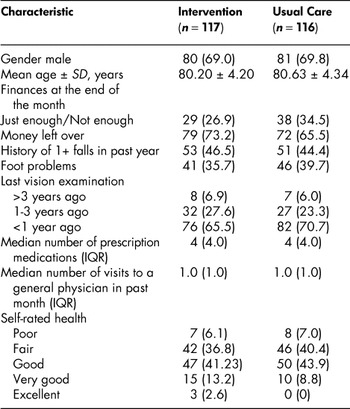
The eligible study population included 348 participants (veterans and caregivers) randomized to receive either the fall prevention intervention (n = 188) or usual care (n = 160). Of those randomized, 233 participants (n = 117 or 62.2% of the intervention participants and n = 116 or 72.5% of the usual-care participants) provided prospective falls data and also provided complete program and fall-related cost data. Overall, 205 (88%) of the 233 participants provided complete calendar data while 28 (12%) participants had one or more missing calendars over the 12-month study period. Health service utilization data were provided by 204 participants (including 103 intervention and 101 usual-care participants). Table 1 provides study participant characteristics measured at baseline for both groups (n = 233).
Participant characteristicsFootnote a

a Figures in parentheses are percentages unless otherwise indicatedSD = standard deviation
IQR = interquartile range
Falls
Bivariate analysis of the main effectiveness results showed no statistically significant differences for fall-related outcomes. Fifty-one participants in the intervention group and 52 participants in the usual-care group reported more than one fall during the 12-month study period. These participants accounted for 204 falls in the intervention group and 207 falls in the usual-care group.
Costs
Program Costs
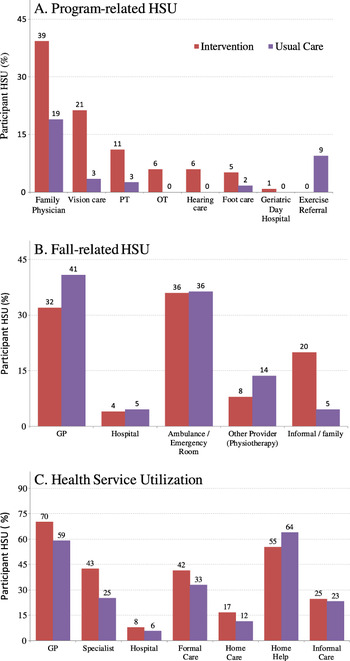
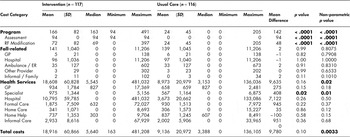
In total, two assessments for 117 intervention participants cost $11,027 and accounted for 57 per cent of total program costs. Participants in the intervention were referred to a larger range of services than usual-care participants (see Figure 1A). We observed similarities between groups for recommended fall risk reduction services – that is, referral to family physician, vision care (ophthalmology/optometry), physiotherapy (PT), and foot care (chiropody). In addition, intervention participants were referred to occupational therapy (OT), hearing care (audiology), and geriatric day hospital care. Only usual-care participants were referred to an exercise program. Referral costs for the intervention were larger ($8,387) than the usual-care group ($2,741). Average cost per participant for one year in the intervention program was $166 compared to $24 in the usual-care group, with a cost difference of $142 (95% CI: $26 to $159) (see Table 2).
Program, Fall-related, and Health Services Used by Participants in the SGS and FP groups. Figure 1 – Reported use of services for A) Program, B) Fall-related and C) Health Service Utilization among intervention and usual-care participants. Participants reported use of more than one type of service for each cost category.

Mean program, fall-related, and HSU costs, n = 233 participants, from a societal perspective

RF Modification = Risk Factor modification services including: family physician, ophthalmology, physiotherapy, speech language pathology and audiology, occupational therapy, geriatric day hospital care, chiropody, and referral for exercise
Formal Care = nursing, physiotherapy, occupational therapy, chiropractic services, speech and audiology, social work, and dental care
Home Care = nursing, physiotherapy, occupational therapy, personal care delivered in the home
Home Help = homemaking, meal delivery, cleaning, yard work
Informal Care = non-paid care provided by family, friends, or neighbours
Fall-related Costs
Of 233 participants, 15 (12.8%) intervention participants and 17 (14.7%) usual-care participants required immediate fall-related health care. In the intervention group, 23 fall events required medical care; in the usual-care group, 24 fall events did so. Visits to a family physician or to a hospital emergency department (either by own transportation or by ambulance), admission to hospital, and visits to another health care provider were reported as fall-related health services in both groups. For both groups, the most heavily used services were family physician visits and emergency room visits (see Figure 1B). In-patient hospitalizations, while much less used, accounted for more than two-thirds of the total fall-related costs (intervention group: 67.7% and usual care group: 69.4%).
The mean fall-related health service cost was $141 for the intervention group and $139 for usual care with a cost difference of $2 (–$267 to $271; see Table 2). Fall-related health service expenses were skewed. The median intervention fall-related cost was $0 with a maximum cost of $11,206. The median usual-care cost was $0 with a maximum cost of $11,206. There was no difference between population medians.
Health Service Utilization Costs
Health services included general practitioner (GP) and specialist visits, visits to other medical professionals, hospitalizations, and community care received in the home (including both formal and informal care) (see Figure 1C). More than half of participants reported visiting their GP in the previous month. A larger proportion of the intervention group (43%) reported a visit to a specialist in the previous month compared to the usual-care group (25%). More than half of all participants received some form of home help (government assisted or out-of-pocket). Finally, close to one in four participants indicated receiving informal care in the previous month (see Figure 1C).
Participants in the intervention group had health service expenditures of $18,608 (SD = $60,828) compared with $8,973 (SD = $20,979) for the usual-care group (Table 2). With the exception of specialist visits where the intervention group had significantly higher mean costs, no significant differences between other mean HSU costs were observed. However, a large difference in hospitalization costs was observed between the two groups: hospitalization costs for the intervention group were nearly three times that of the usual-care group. Non-parametric testing of group medians showed a statistically significant difference. The median health service expense per intervention participant was $5,545 with a maximum of $481,032. The median expense for usual-care participants was $3,153 with a maximum of $136,036 (Table 2).
Total Costs
Total costs were the sum of program, fall-related, and health service costs. Participants in the intervention arm of the trial incurred twice as many total costs compared to participants receiving usual care or community-based primary care. The aggregated results show that the participants in the intervention group consumed $18,916 on average, an extra $9,780 (95% CI: –$1,993 to $21,551) in resources over those in the usual-care group ($9,136). This difference is due to higher hospitalization costs (due to longer lengths of stay) and higher specialist costs (due to an increased number of visits). The difference in median total costs was statistically significant.
Adherence
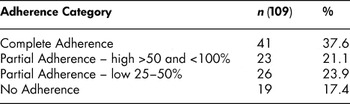
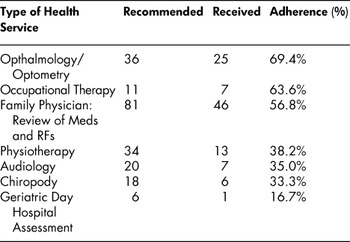
Adherence in the intervention group was estimated by evaluating the number of services a participant received compared to the total number of services a participant was referred to. In the intervention group, more than one-third of the participants had complete adherence, one-fifth had adherence of greater than 50 per cent but less than complete, and just under half of participants had adherence less than 50 per cent (see Table 3). Service adherence for the intervention group was estimated by dividing the total number of participants that received a service by the total number of participants referred to the service. Ophthalmology, OT assessments, and family physician visits were the services with the highest levels of adherence. Geriatric care and assessment had the lowest level of adherence (see Table 4).
Intervention adherence to fall risk factor modification recommendationsFootnote a

a Eight intervention participants did not receive fall risk factor reduction recommendations that involved referral to other health services
Adherence to specific health servicesFootnote a

a Health Service Adherence = number of individuals who received fall prevention service ÷ number of individuals who were recommended fall prevention services × 100
Cost-effectiveness (CE)
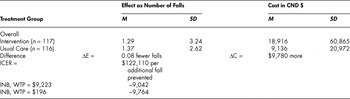
The average number of falls in the intervention group was 1.29 compared to 1.37 in the usual-care group; resulting in a difference of 0.08 fewer falls in the intervention group (see Table 5). Overall, participants in the intervention arm of the trial cost $9,780 more than the usual-care group. The overall ICER, calculated as ΔC/ΔE, is equal to $122,110 per fall prevented, indicating that the program cost $122,110 for each additional fall prevented in the intervention group (see Table 5).
Simple tabulation of treatment effect and cost-effectiveness

a Figures have been rounded to the nearest whole number. The incremental cost-effectiveness ratio (ICER) is ∆C/∆E. The incremental net benefit (INB) is WTP×∆E − ∆C > 0.
INB = incremental net benefit
WTP = willingness to pay
Two INB values (–$9,764WTP196, –$9,041WTP9223) were calculated, neither of which was greater than 0 and neither of which demonstrated the program to be cost-effective. A WTP value of at least $122,110 would be needed to make the INB ≥ 0.
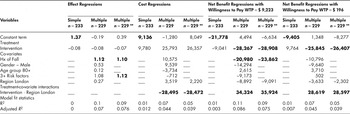
Table 6 shows results for the simple linear net benefit regressions. The indicator variable Intervention = 1 if the participant received the intervention and 0 if usual care was received. The coefficient on Intervention in the first effect regression is an estimate of the extra effect (ΔE). The coefficient on Intervention in the first cost regression is an estimate of the extra cost (ΔC). For the final two models using WTP = $9,223 and WTP = $196, the coefficients on Intervention are the estimates of the incremental net benefit (ΔNB or INB).
Simple and multiple linear regression results (N = 233)

Bold = p < .05
*p < .05 ** Based on epidemiologic model building
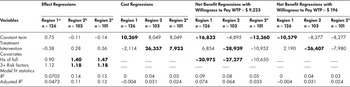
With the addition of the important co-variates, the INB estimates significantly decreased for both the net benefit (WTP = $9,223 and WTP = $196) regression models (see Table 6). Only in the net benefit regression model using WTP = $9,223 did the variable history of falls remain in the model as a statistically significant important co-variate. Also, for both models the interaction term Intervention × Region (London) was significant at p < .001. The significant interaction term between the intervention variable and region indicates that the cost-effectiveness for participants receiving the intervention and those receiving usual care varied by region after correcting for demographic characteristics. Consequently, the regressions were stratified by region (see Table 7). Using both values of WTP, in region 1 (London, ON) the intervention group compared to usual care had an INB greater than zero, indicating that the program was cost-effective. The regression results for region 1 were not statistically significant. In region 2 (Windsor, ON), the intervention compared to usual care had a statistically significant negative INB, indicating that the intervention in this region was not cost-effective regardless of WTP value. This difference in the direction of the results observed across region is known as qualitative interaction.
Multiple linear regression results stratified by region

a Region 1 is London, ON
b Region 2 is Windsor, ON
Bold = p < .05
* Results without 2 outliers
Regression Diagnostics and Influential Observations
The results of the Shapiro-Wilk test for normality, DFFITS and Cook’s distance revealed two observations that were statistically significantly influencing the regression results. These outliers were two individuals with extremely high hospitalization costs each due to a long length of stay. Both participants were in the intervention arm of the trial, and both resided in region 2 (Windsor). Removing the two outliers (Table 7) reduced the magnitude of the INB between the intervention and usual care. However, the INB remained less than 0, indicating that the intervention was not cost-effective in region 2. Results for region 1 were unchanged.
Discussion
Overall, this study did not provide evidence that the intervention was cost-effective compared to community-based primary or usual care. Cost-effectiveness was evaluated using the traditional incremental cost-effectiveness ratio (ICER) and the net benefit regression framework (NBRF). The overall ICER was estimated to be $122,110 per fall prevented, indicating a program cost of $122,110 for each additional fall prevented within the intervention group. Note that the large ICER is the result of a small difference in effect observed between the two groups in our study; dividing the difference in costs by a very small difference in effect resulted in a very large cost to prevent an additional fall. Consequently, the lack of cost-effectiveness observed is driven by the lack of effectiveness of the intervention in reducing unintentional falls.
Health policy makers and funders must make basic decisions about whether or not to fund a given intervention and how much they are willing to pay for selected interventions. We emphasize that the ICER cannot be used to make such decisions unless a particular willingness to pay is considered. Because governments have finite resources to direct towards falls prevention programs, determining a value for WTP becomes a key policy question. Policy makers might be guided in specifying their willingness to pay by considering various costs saved.
In the current study, two values of WTP were evaluated: (a) an admission to the emergency department in Ontario, $196 (2004 Ontario Case Costing Initiative, Canada) and (b) the average cost of a fall-related hospitalization, $9,223 (2004 Ontario Case Costing Initiative, Canada). Another key WTP value used in this study could have been the cost of a hip replacement or surgical repair within Ontario’s health care system following a fractured hip. While this has been suggested as a natural minimum estimate of the WTP for each fall prevented, a hip fracture is a less frequently occurring but catastrophic result of a fall, and observed only in 1 to 2 percent of falls (Angus et al., Reference Angus, Cloutier, Albert, Chenard and Shariatmadar1998). The estimated cost to the health system of a single hip fracture is $25,000 to $30,000 (Wiktorowicz et al., Reference Wiktorowicz, Goreree, Papaioannaou, Adachi and Papadimitropoulos2001).
By considering WTP based on costs of a fall-related admission to emergency departments (WTP = $196) and to hospital for a mean length of stay of 10 days (WTP = $9,223), the cost-effectiveness of the intervention was evaluated using the NBRF. Both models found the program to be not cost-effective (demonstrated by INB < 0). It was possible for us to go one step further in explaining the results and the impact of important co-variates and sub-groups on the results. The intervention’s cost-effectiveness was influenced by participant region of residence. The program could be cost-effective in the London region of Ontario given that the INB was > 0 for this region (results were not statistically significant); a larger sample may have yielded statistically significant results for this region. Although London and Windsor are both moderately sized cities, it is possible that the policies that drive their health care systems are very different. The results of this study highlight the importance of evaluating programs at the community level; a program that is cost-effective in one community may not be in a differing community.
Multifactorial fall-prevention strategies can be divided into those that provide direct management of the identified risk factors (by providing direct care to address the risk factor, eg. balance retraining for indivuals with balance deficits) and those that refer participants to their healthcare providers or to existing community programs. The aim of the interventions in the latter group was to assess the effectiveness of programs in regular care that have been shown to be effective in experimental settings (Hendriks et al., Reference Hendriks, Evers, Bleijlevens, van Haastregt, Crebolder and van Eijk2008). However, among the recently published multifactorial interventions, it is the “direct interventions” that appear to effectively reduce falls compared to those that use only assessment and referral to usual care (Tinetti, Reference Tinetti2008). Interventions that refer participants to existing services rely on adherence to referrals and completion of the recommended services by the participants and providers (Gates et al., Reference Gates, Fisher, Cooke, Carter and Lamb2008; Hendriks et al., Reference Hendriks, Evers, Bleijlevens, van Haastregt, Crebolder and van Eijk2008).
Our study, an effectiveness trial, made use of existing health care resources and settings and referred participants to the required services but did not directly implement the falls reduction strategies. Compared to other published falls prevention interventions, multifactorial and otherwise, this study was one of the least costly interventions to implement with a cost of $165 per participant; however, this underestimated the true potential intervention costs given that participants’ overall adherence to the recommendations was low. An intervention with near perfect adherence to recommendations would result in much higher program costs. Hendriks et al. (Reference Hendriks, Evers, Bleijlevens, van Haastregt, Crebolder and van Eijk2008) recently reported that their multidisciplinary program cost 荤385 (CND$589). Other programs have been more costly (Rizzo et al., Reference Rizzo, Baker, McAvay and Tinetti1996; Robertson et al., Reference Robertson, Devlin, Gardner and Campbell2001a, Reference Robertson, Devlin, Scuffham, Gardner, Buchner and Campbell2001b, Reference Robertson, Gardner, Devlin, McGee and Campbell2001c). Research overhead and calendar costs were not included in this study which may have also contributed to the lower program costs observed.
Just over one-third of participants (37.6%) in the study’s intervention arm adhered fully to the referred services. Consequently, for close to two-thirds of participants, recommended services were not accessed. Service adherence varied from 69.4 per cent for ophthalmology care to 16.7 per cent for Geriatric Day Hospital care. The low rates of adherence might have impacted the observed effectiveness of the trial. Rates of patient adherence to the recommendations of comprehensive geriatric assessment programs have been shown to range from 46 to 76 per cent (Aminzadeh, Reference Aminzadeh2000). Patient adherence to assessment recommendations have been shown to be influenced by various patient, treatment, care provider, and clinical setting characteristics (Becker, Reference Becker1985). Patients who perceived that they had access to transport and to an accompanying caregiver were more likely to adhere to prescribed services (Leduc et al., Reference Leduc, Tannenbaum, Bergman, Champagne, Clarfield and Kogan1998). Future studies may want to establish methods for facilitating higher adherence to recommended services.
Results from these trials support recent claims that lower intensity multifactorial interventions using existing resources may not be sufficient to reduce falls among community-dwelling older adults. Recent findings add important information to the larger debate in the literature about the minimum program intensity that is required to observe a reduction in fall outcomes using the multiple risk factor modification strategy. Specifically, while early systematic reviews (Gillespie et al., Reference Gillespie, Gillespie, Robertson, Lamb, Cumming and Rowe2003) showed a pooled effect of a 27 per cent reduction, the inclusion of subsequent studies has resulted in an attenuation of this value (Gates et al., Reference Gates, Fisher, Cooke, Carter and Lamb2008). Thus, the emerging policy-relevant evidence suggests that below a certain level of intensity, falls prevention efforts will cost more than they save, whereas above that level they produce cost savings. From an economic perspective, there is no evidence to support falls prevention programs unless they are sufficiently funded to meet that intensity threshold. Further investigation as to why some services are better adhered to, as well as why some participants are better adherents, is needed. Future research into the characteristics of successful multifactorial falls prevention practices is needed to further guide cost-effective management of unintentional falls in community-dwelling older adults.
It is possible that behaviour was modified for participants randomized to the usual-care arm of the trial. A letter summarizing potentially modifiable risk factors was sent to each participant and their family physician. This disclosure of potential falls risk provided both the family physician and the participant the opportunity to modify ongoing “usual care” and to address any potentially modifiable fall risks. Therefore, the possibility exists that falls prevention behaviour was altered in participants randomized to receive usual care. Any potentially modifiable risk factors for falls addressed by the usual-care arm of the trial would ultimately have contributed to fewer possible falls for the usual-care group, thereby reducing any overall difference in effect observed for the intervention. No difference in effect (measured as a reduction of falls) was found for the intervention. It was considered unethical, when the study was designed, to have a completely untreated control group. As a result, this study, as well as most others, included two “active” groups, thus raising the possibility that falls were being prevented in each.
The possibility also exists that the Hawthorne effect (usually positive or beneficial) or the effect of being under study upon the persons being studied (Last, Reference Last2001) may have biased the results and contributed in some part to the observed differences in health service use observed between the two groups. Participants in the intervention arm of the trial were referred to a number of services. This increased referral exposure may have increased participants’ use of routine health services. This change in behaviour may have resulted in increased health service utilization (HSU) costs incurred. In addition, the analysis of costs showed that in region 2 (Windsor, ON) participants in the intervention group had significantly higher overall costs (driven by higher HSU costs) compared to participants randomized to receive usual community-based primary care. This observation was not made for participants residing in region 1 (London, ON). Part of the increase in costs was the result of two outliers. However, once the two outliers were removed from the analysis, the region 2 HSU costs remained higher for the intervention group than for the usual-care group. Differences in how seniors access health services and what services are covered in the Windsor, ON, region may have contributed to the observed differences in health service utilization between the two regions.
Information bias can result in non-differential misclassification, which occurs when the degree of misclassification is independent of exposure status. Non-differential misclassification tends to bias the association towards the null hypothesis (Szklo & Nieto, Reference Szklo and Nieto2000). Self-report was used to capture participant falls, injurious falls, and fall-related health service use. Overall, 205 (88%) of the participants provided complete calendar data, and only 28 (12%) of the participants had one or more missing calendars over the 12-month duration of the study period. The mean number of missing calendars was 0.5 (SD = 2.0) per participant. For those missing calendars, no falls were assumed to have occurred. Although this may have biased the overall fall rate downwards, we had no reason to expect that participants in the intervention and usual-care groups would have differed in their calendar responses, which would be required to introduce a bias in between-group comparison. While the possibility of non-differential classification of some falls may have occurred (i.e., falls not reported), the possibility of differential misclassification was negligible. Consequently, the overall null result observed for the effectiveness of the intervention may in part be attributable to some of the non-differential misclassification due to under-reporting of unintentional falls.
It is possible that the intervention arm of the trial had a greater number of participants with more co-morbidities than the usual-care arm. However, participants were randomized within each risk factor stratum to receive either the intervention or usual care. This was done to ensure that participants were distributed equally between the groups according to number of potential risk factors evaluated. It was also anticipated that by controlling for the available co-variates (previous GP and specialist visits, self-rated health, history of falls, and number of potentially modifiable risk factors for falls) most residual confounding would be controlled for in the analysis. Other than GP and specialist visits, no other health service use was captured at a baseline. Having baseline data on all health service utilization would have also allowed other HSU baseline differences that may have been present between groups to be controlled for in the analysis. However, due to randomization, any differences in health service utilization would likely be small and the result of chance rather than bias.
The study has limitations that affect the generalizability of our results. First, our sample size calculation was based on the effectiveness trial and not the cost-effectiveness analysis. The INB results for the London region were significant to p ≤ .1 but not p ≤ .05. A larger sample may have given us the power to detect statistically significant INB at p ≤ .05 for this region. However, we did not initially plan this sub-group analysis, so the results are hypothesis generating.
A number of costs were not possible to include in the study. First, within program costs, we captured only the first visit to the recommended service. For many participants, this may have underestimated the costs required to fulfill the intervention given that more than one visit (e.g., to a physiotherapist for gait training) may have been required. For fall-related costs, we captured only immediate direct-care costs. Any long-term follow-up rehabilitation, home modifications, or home care required were not captured under fall-related costs. Again, this would underestimate fall-related costs for both the intervention and usual-care groups. Finally, we captured neither medication costs (of medications taken in the community) nor medical device costs. Omitting these costs would not tend to bias the results in favour of either group as both groups would likely be affected to the same degree.
Fall-related health service utilization was measured prospectively over a 12-month period and participants answered questions about fall-related care within a month of when each fall occurred. A shorter recall period has been shown to increase reliability of reporting among seniors (Alessi et al., Reference Alessi, Josephson, Harker, Pietruszka, Hoyl and Rubenstein2003); moreover, other studies have had participants recall fall-related health service use in the previous 3 to 12 months (Carroll, Stattum, & Cox, Reference Carroll, Stattum and Cox2005).
Using patterns of health service utilization over the last month of our study period, we estimated annual HSU costs for both study groups. We asked participants about health service utilization in their 12th month of the study and asked them to report any health services used in the previous month. A test-retest reliability sub-study indicated high repeatability of the self-reported HSU questionnaire we used with the study participants. Despite the short recall period which increased the reliability of HSU reports, the reliance on one month of health service utilization to estimate a 12-month period of costs is a limitation of the study data. However, given that we estimated HSU costs over the final study month, we anticipate that program services costs – which would have been consumed in the first part of the study period and immediately following the recommendations – would not be included in the HSU costs.
The NBRF allowed for the formulation of the cost-effectiveness problem within a standard regression framework. The addition of co-variates permitted the evaluation of the cost-effectiveness of the intervention while controlling for potential confounding variables. To explore the impact of these co-variates on the marginal cost-effectiveness, we used interaction terms. Because we included potential interaction terms, split the data by the significant interaction (intervention * region), and evaluated the data for influential outliers, the NBRF provided us a clearer understanding of the intervention’s cost-effectiveness than would have been possible with the traditional ICER.
Conclusion
This study yielded estimates of the costs of implementing multifactorial falls prevention using available resources within Canada’s publicly funded health care system. The results suggest that for Southwestern Ontario, a multifactorial falls prevention program using assessments and referral to existing services is not cost-effective compared to usual community-based primary care. However, the possibility of regional differences should be considered with future evaluations of falls prevention programs implemented in southwestern Ontario.
Ongoing fiscal restraint in the public health care system coupled with a growing population of older adults suggest that economic evaluations of community-based falls prevention programs will be increasingly necessary to optimize health care spending. Thus, of key interest to health policy makers and planners is a better understanding of which falls prevention programs demonstrate the greatest reduction in health care costs (e.g., in hospitalizations and other health services) such that an overall savings to the health care system may be achieved. Future economic evaluations of interventions to prevent falls remain necessary and should consider including the NBRF in addition to the estimation of the traditional ICER. The future challenge is to better understand the relationship between the community-dwelling older adult, potentially modifiable risks for falls, adherence to multifactorial risk factor recommendations, costs, and resulting effects of the implementation of falls prevention practices.