Introduction
The length of birth intervals, defined as the time between marriage and the first birth or two successive births, is closely related to maternal and child health as well as to fertility rates and population growth. Systematic reviews of recent studies show that short inter-pregnancy intervals (<16 months) are associated with maternal nutritional depletion, folate depletion, cervical insufficiency, vertical transmission of infections, sibling competition, transmission of infectious diseases among siblings and abnormal remodelling of endometrial blood vessels (Conde-Agudelo et al., Reference Conde-Agudelo, Rosas-Bermudez, Castaño and Norton2012), and very long intervals (>71 months) increase the risk of fetal death, preterm births and low birth weight births. In contrast, the least risk is found in women with 18–35 month birth intervals (WHO, 2005; Conde-Agudelo, Reference Conde-Agudelo, Rosas-Bermúdez and Kafury-Goeta2006; Haq et al., Reference Haq, Lallar, Akhter, Baba, Ahmad and Hamid2014).
A delayed transition from marriage to first birth also has negative consequences for the mother and children. The rise in mother’s age at first birth reduces her fecundity and increases the risk of stillbirth (Leridon, Reference Leridon2008), adds health costs related to the use of assisted reproductive technology (Allen et al., Reference Allen, Wilson and Cheung2006) and increases the risk of breast cancer (Collaborative Group on Hormonal Factors in Breast Cancer, 2001). Other evidence, however, shows that the postponement of childbearing is related to family stability, the economic stability of parents and self-efficacy of children (Mills et al., Reference Mills, Rindfuss, McDonald and Velde2011), and leads to women’s educational advancement (Erfani, Reference Erfani2015a), employment and increased income (Miller, Reference Miller2010).
The length of birth intervals is negatively associated with the fertility rate and hence the population growth rate. Short birth intervals increase period fertility rates (Feeney, Reference Feeney1983). For instance, the slight rise in the period fertility rate right after the 1979 Islamic Revolution in Iran was due to faster transition to first birth among all social groups of women and to the fourth birth largely among illiterate and less-educated women (Erfani & McQuillan, Reference Erfani and McQuillan2014). On the other hand, postponement of childbearing has led to ‘very low’ fertility in Europe (Sobotka, Reference Sobotka2004) and some subgroups of the population with higher education levels in the United States and other countries (Rindfuss et al., Reference Rindfuss, Morgan and Swicegood1988). A similar delayed childbearing along with very long inter-birth intervals have been observed in Iran (Erfani & McQuillan, Reference Erfani and McQuillan2014; Erfani, Reference Erfani2015b), where the total fertility rate has remained at below-replacement rates over the past decade – an estimated rate of 1.6 children per woman in 2011 (Erfani, Reference Erfani2013).
In response to the persistent low fertility in Iran, the Supreme Leader, Ayatollah Ali Khamenei, officially announced fourteen general policies on population with the purpose of making up for population decreases in recent years (Khamenei, Reference Khamenei2014). According to these policy statements, maternal and child health cannot be compromised by any pronatalist decision-making or programme, while a new pronatalist policy should be initiated to encourage marriage, childbearing and fertility in the nation (see Erfani, Reference Erfani2017b, for the detail of recent developments in population policies in Iran based on the Leader’s general policies). To this end, the Ministry of Health of Iran tailored the existing reproductive health programme to improve maternal and child health by helping mothers to choose right and safe birth spacing. The programme also aimed to encourage marriage and childbearing by telling couples not to delay childbearing so long and to avoid very long inter-birth intervals (Motlagh & Eslami, Reference Motlagh and Eslami2016). The success of such a policy relies on improving the understanding of subgroups of the population practising very short or very long birth intervals, which are detrimental to maternal and children health, and factors related to delaying childbearing and length of inter-birth intervals. This study aimed to address this gap by utilizing recent data from a large-scale fertility survey conducted in the low-fertility city of Hamedan in Iran, with an estimated total fertility rate at 1.4 children per woman in 2011 (Erfani, Reference Erfani2013). It is hoped that the findings of this study will improve awareness of population policymakers regarding factors associated with the timing of childbearing and spacing births, which in turn influence the fertility rate and maternal and child health.
Conceptual model
This study is based on a conceptual model in which the dependent variables are birth intervals, which refer to the time from marriage to first birth or the inter-birth interval. A combination of biological, proximate and socio-demographic factors describing women’s characteristics at the time of risk of experiencing a given birth, determine the length of a birth interval.
The duration of an inter-birth interval is a function of the duration of postpartum amenorrhoea, anovulatory cycles, time to conception and duration of the pregnancy (Potter, Reference Potter1963). These biological factors, in turn, are affected by principal proximate determinants of fertility, including age at first marriage, contraception use and breast-feeding duration (Bongaarts & Potter Reference Bongaarts and Potter1983). The proximate determinants of birth interval included in the model are age at marriage, contraceptive use before pregnancy of the birth and contraceptive failure leading to the conception of the birth, and breast-feeding duration of the previous birth. Age at first marriage determines the beginning of exposure to the childbearing process in a society like Iran where births outside marriage are unusual, the length of breast-feeding is directly related to the duration of postpartum amenorrhoea, and contraceptive use reduces the likelihood of pregnancy while contraceptive failure increases the probability of conception. It should be noted that while age at first marriage is indirectly associated with the length of the first birth interval, it is positively related to the spacing of inter-birth intervals (e.g. Mansoorian, Reference Mansoorian2008; Erfani & McQuillan, Reference Erfani and McQuillan2014). As for the first birth, Iranian women who marry at younger ages, say under the age of 16, have longer birth intervals due to their very low fecundity, while those who marry at later reproductive ages, who have higher fecundity, usually have shorter first birth intervals as they try to compensate for the years spent in schooling and securing a job, which delayed marriage. On the other hand, the positive effect of age at marriage on inter-birth intervals is largely attributed to the mother’s characteristics (Cleland & Hobcraft, Reference Cleland and Hobcraft1985). Women who marry and enter childbearing later are usually better educated, employed and living in a better-off community (Torabi et al., Reference Torabi, Baschieri, Clarke and Abbasi-Shavazi2013), and these factors are related to greater fertility control at higher parities.
The proximate determinants of birth intervals will be affected in turn by individual socio-demographic characteristics. The conceptual model includes seven socio-demographic covariates: years of education completed at the time of marriage, employment status before pregnancy of the birth, sex of previous births, survival status of prior births, women’s ethnicity and migration status, and the calendar period of exposure to pregnancy of the birth.
Employed women and those with higher levels of education begin childbearing at a later age and move on to have their succeeding births at a slower pace than unemployed women and those with lower levels of schooling (e.g. Hajian-Tilaki et al., Reference Hajian-Tilaki, Asnafi and Aliakbarnia-Omrani2009; Rutstein, Reference Rutstein2011; Fallahzadeh et al., Reference Fallahzadeh, Farajpour and Emam2013; Erfani & McQuillan, Reference Erfani and McQuillan2014). Compared with non-migrants, migrant women (especially those moving from other urban areas to the city of Hamedan) are expected to have longer inter-birth intervals because of the disrupting effects of migration on families and households (Agadjanian et al., Reference Agadjanian, Yabiku and Cau2011). Migration has been found to be associated with delayed marriage, longer inter-pregnancy intervals at higher parities (Pool et al., Reference Pool, Sceats, Hooper, Huntsman, Pummer and Prior1987) and a lower probability of birth (Avogo & Agadjanian, Reference Avogo and Agadjanian2008).
The death of the immediately previous child (referred to as the ‘index’ child) shortens the length of the subsequent birth interval for two biological and behavioural reasons (Rutstein, Reference Rutstein2011). A sudden termination of breast-feeding induced by the death of the index child shortens the period of postpartum infecundity, leading to a faster conception and birth of the subsequent child. Behaviourally, couples who have lost their previous births will go on to have the next birth faster in order to achieve their desired number of children. Likewise, the sex of previous children can have a composition or a preference effect on the length of subsequent birth intervals. A couple’s intention to have a further birth can be influenced by the desire to balance the current sex composition of their children (Teachman & Schollaert, Reference Teachman and Schollaert1989) or preference for one sex over the other (Mace & Sear, Reference Mace and Sear1997; Erfani & McQuillan, Reference Erfani and McQuillan2014). Finally, a calendar period covariate was included in the model, which explicitly brings into the analyses the birth risks in three different time periods, including: before May 1995, May 1995–April 2005 and May 2005–April 2015. This covariate measures the period during which a woman has been exposed to pregnancy of a given-order birth. In fact, the covariate of calendar periods of exposure to birth represents a combined period effect of contextual factors such as population and development policies and people’s living conditions that influence women’s birth risks. A lower birth risk is expected among women who have entered into a given birth risk during 1995–2005 and afterwards, due to the high contraceptive prevalence rate (Erfani & McQuillan, Reference Erfani and McQuillan2008) and low fertility intentions (Erfani, Reference Erfani2017a) at these periods.
Methods
Data
The study used data from the Hamedan Survey of Fertility (HSF), conducted in a representative sample of 3000 currently married women aged 15–49 residing in the ancient city of Hamedan, the capital city of Hamedan Province in the west of Iran with a population of approximately 530,000 people (Statistical Centre of Iran, 2011). The samples were interviewed face-to-face at the door of their houses by trained female interviewers during April–June 2015. The survey, which is a replication of the 2014 Tehran Survey of Fertility (Erfani, Reference Erfani2015b) and was modelled similar to a standard Demographic Health Survey, collected a wide range of data, including complete histories of live births, contraceptive use and abortions, as well as data on fertility intention, breast-feeding and the socioeconomic and demographic characteristics of women and their husbands.
The samples were selected from the population of currently married women aged 15–49 residing in the city of Hamedan by employing a stratified systematic random sampling design. The sampling frame was taken from health records of the population of married women registered by all public health units in the city of Hamedan.
The city of Hamedan has been stratified into 38 health units. First, the sample size was distributed among these 38 health units based on the probability proportion to the size of their health records. Then, the number of samples allocated to each health unit was selected from the list of health records of married women registered in a given unit by the systematic random sampling method. Next, interviewers approached the residence of the selected women to complete interviews.
In Iran, each public health unit in a city or rural area normally registers married women of reproductive age, living within its geographic jurisdiction, to monitor their maternal and child health status and deliver basic medical and health services, including prenatal and postpartum health care, child immunization and growth monitoring, dental care and hygiene, general medical examinations and family counselling. Since these services are either free of charge or largely subsidized by the government, every married woman normally has a history of visiting a health unit, in which her information is registered. As a result, the health units in the city of Hamedan have a very close-to-complete coverage of the list of married women of reproductive age who live with their husband in the city of Hamedan.
To validate the representativeness of the study sample, some demographic characteristics of the study samples were compared with those of the population of Hamedan, enumerated in 2011 census (Statistical Centre of Iran, 2011), and recorded by the 2010 Iran Multiple-Indicator Demographic and Health Survey (IrMIDHS, 2010). The results of this comparative analysis indicated that the study samples are very representative of the corresponding population of the city of Hamedan. For example, the sampling frame included a list of 121,390 married women aged 15–49, registered by 38 health units in Hamedan, who had actively been in contact with the health units in the city of Hamedan in 2015. This figure (121,390) is 8498 fewer than the corresponding 112,897 married women enumerated by the 2011 census (Statistical Centre of Iran, 2011). However, if the average annual population growth rate of 2.01% (as calculated below) for married women aged 15--49 in Hamedan between 2011–2015 is taken into account, it becomes clear that the difference of 8498 married women between the 2011 census and the 2015 survey is largely due to the growth in the number of married women over this 4-year period. Therefore, the sampling frame of 121,390 married women of reproductive age employed by the survey has a very close-to-complete coverage of the population of married women aged 15–49 living in the city of Hamedan in 2015. The calculation of the inter-censual annual population growth rate (r) for the population of married women aged 15–49 living in the city of Hamedan was calculated by the following exponential population growth equation:
 $$r\,{\equals}\,{{{\rm ln}\,P_{{{\rm 2011}}} {\minus}\,{\rm ln}\,P_{{{\rm 2006}}} } \over n}\,{\equals}\,{{{\rm ln}\,112,897{\minus}\,{\rm ln}102,128} \over 5}\,{\equals}\,0.02005 \cong 0.0201{\times}100\,{\equals}\,2.01%\,$$
where n equals five inter-censual years, ln P 2006 and ln P 2011 are natural logarithms of population size in the 2006 and 2011 censuses, P 2006 and P 2011 are, respectively, 102,128 and 112,897 married women aged 15–49 living in the city of Hamedan (Statistical Centre of Iran, 2006, 2011).
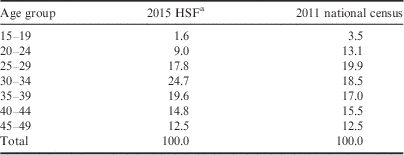
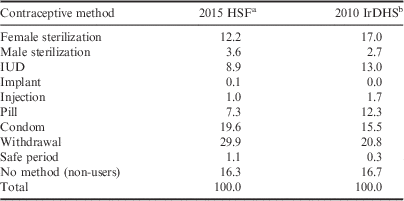
Furthermore, a comparative study of age distribution and percentage distribution of contraceptive use in Tables 1 and 2 shows a great representativeness of the study samples. Specifically, Table 1 shows that the two age distributions of married women, taken from the study samples in 2015 and the 2011 census, are quite similar, with a slight difference in the younger ages, which is attributed to the recent rise of age at marriage over the past five years in Iran (Statistical Centre of Iran 2006, 2011; Erfani, Reference Erfani2015b). Table 2 also shows that the patterns of contraceptive use among married women in the study sample (2015 HSF) and the 2010 Iran DHS are quite similar, with the only noticeable difference being in the use of male contraceptive methods. The main reason for this discrepancy is the recent limitation in the provision of publicly funded family planning services (i.e. sterilization, IUD and pill) in Iran as a result of the new pronatalist population policy approach of the government held since 2012 and discussed shortly in this article and in detail in Erfani (Reference Erfani2017b). Also, recent studies have documented that the increasing awareness of women of the side-effects of modern contraceptive methods and husbands’ willingness to protect their wives’ health are reasons for the rise in the use of condoms and withdrawal in recent years (Erfani, Reference Erfani and Yuksel-Kaptanoglu2012). This comparative analysis also clearly shows that the study samples are highly representative of the population of married women aged 15–49 living in the city of Hamedan.
Percentage distribution of married women aged 15–49 in Hamedan, Iran, by age group
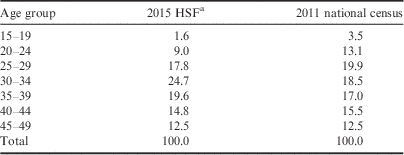
a HSF: Hamedan Survey of Fertility.
Percentage distribution of married women aged 15–49 in Hamedan, Iran, by contraceptive use
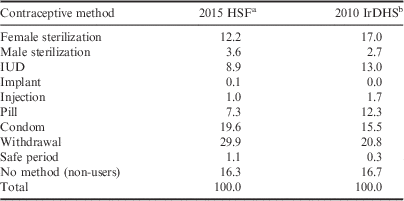
a HSF: Hamedan Survey of Fertility.
b IrDHS: Iran Demographic and Health Survey; data from this were provided by the National Institute for Health Research in Iran (http://nihr.tums.ac.ir).
Access to the health records of married women, solely for the purpose of sampling, was granted by Hamedan University of Medical Sciences.
Analysis
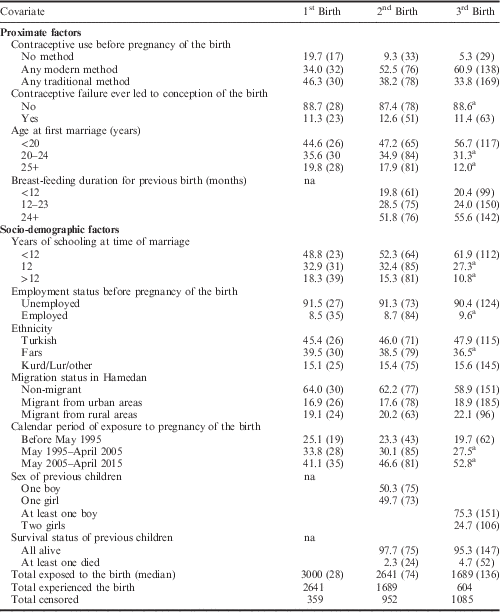
The dependent variables include durations of the first, second and third birth intervals, measured in months. The first birth interval is the period between marriage and first birth, and the second and third birth intervals refer to the durations from the first to the second birth and from the second to the third birth, respectively. Independent variables, mostly referring to conditions before a given-order birth, were selected based on the conceptual model. The distribution of the sample and median birth intervals across the selected covariates are shown in Table 3. The calendar period covariate was derived from the dates of first marriage, and first and second births. For example, the calendar period covariate for the timing of the second birth was based on the date of the first birth, when women entered into the risk of the second birth.
Percentage distribution of the sample, and median survival times in months (in parentheses), of the incidence of births by birth order and selected covariates, Hamedan, Iran, 2015
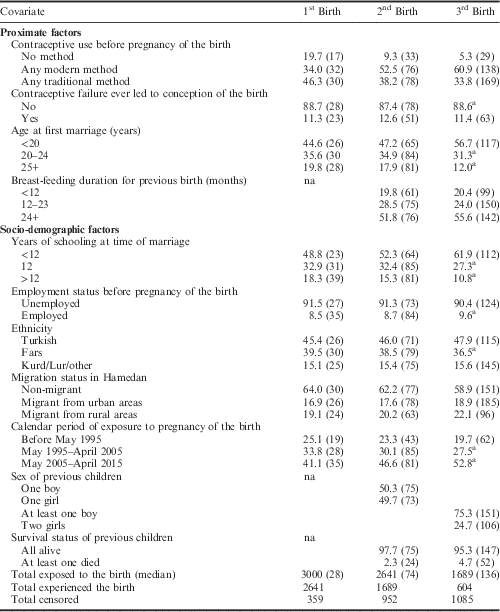
Medians were computed for the total number of women exposed to the risk of a specific-order birth, including censored cases.
a Medians were not computed, as the cumulative survival distribution did not go below 50% or less, which means more than half of women exposed to the risk of pregnancy of the birth had not yet experienced the birth.
na: not applicable.
To study successive birth intervals, survival analysis methods were used to include all the right-censored cases in the analyses. Within each birth interval women may either experience a birth or may not experience the birth up to the time of the survey. In the latter scenario, women were considered to be right censored. Conventional statistical methods (e.g. ordinary least square regression) cannot easily handle censoring without leading to biased estimates (Allison, 2004). Therefore, this study employed Kaplan–Meier non-parametric survival analysis to estimate median survival time of the occurrence of births, as birth intervals have a positively skewed distribution (Erfani & McQuillan, Reference Erfani and McQuillan2014, p. 86). Kaplan–Meier estimates cumulative survival probability for time-to-event data, which is the proportion of all cases that are still alive at a particular time point. Median survival time is the first, observed time at which the cumulative survival is 50% or less. For example, a median survival time at 74 months for the second birth interval distribution, related to a sample of women, tells us that 50% of the women have not experienced the second birth 74 months after the birth of their first child.
Moreover, Cox’s proportional hazard models were used to examine the net effect of proximate and socio-demographic factors on the relative risk of having a birth. The results of hazard models are presented in terms of hazard rate ratios. A hazard rate ratio less than or greater than unity means proportionally a lower or greater risk of experiencing a subsequent birth, respectively, compared with the reference group. Based on the conceptual model, two hazard models have been developed for each birth interval to examine changes in the relative effect of socio-demographic covariates. The first model includes only the socio-demographic determinants of birth intervals, whereas the second model includes both proximate and socio-demographic covariates of birth intervals. According to the conceptual model, it is expected that the relative effect of socio-demographic variables on inter-birth intervals diminishes after controlling for proximate factors in the second model.
Results
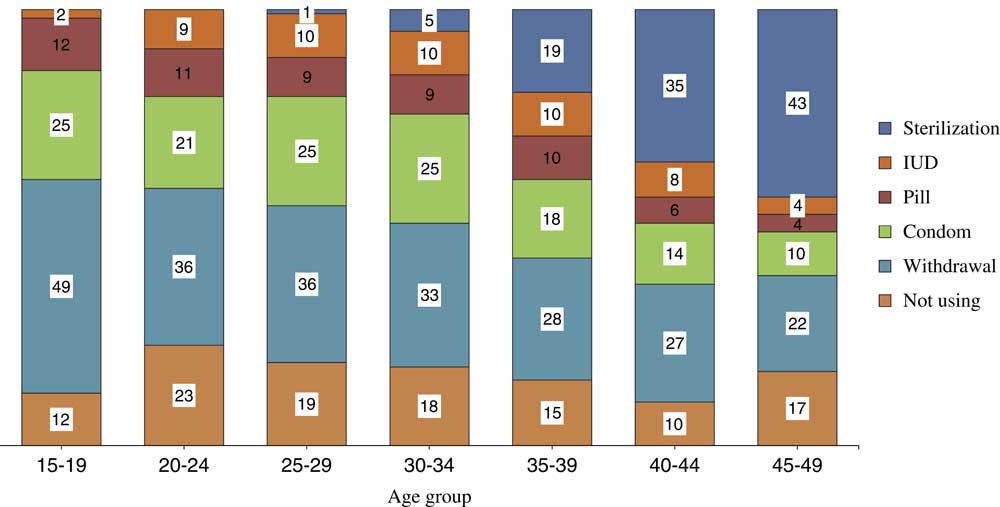
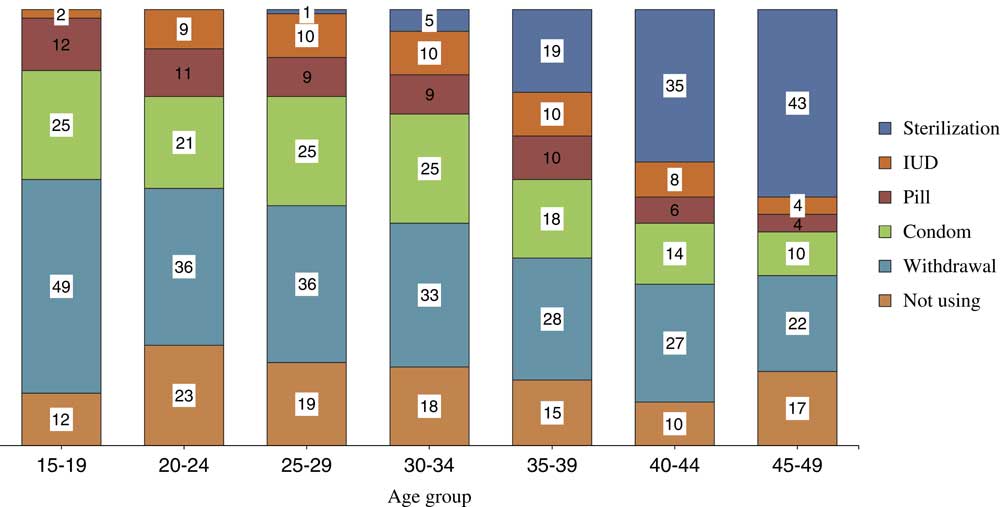
Table 3 shows that women in Hamedan on average spaced their first birth by less than 3 years (2 years and 4 months), but spaced their second and third births by more than 6 and 11 years, respectively. While women married on average at the age of 20, they had their first birth on average at the age of 23, and their second and third births at the ages of 27 and 29, respectively. This birth regulation has become possible by the widespread use of contraceptive methods. Figure 1 shows that withdrawal, condoms and pills are largely used by young married women, probably to delay childbearing and postpone the next birth, whereas the IUD and sterilization are mainly employed by women who are in their middle and later reproductive years, respectively, probably to stop childbearing.
Percentage contraceptive use by methods and age of married women aged 15–49, Hamedan, Iran, 2015.
The median survival times for birth intervals varied by women’s characteristics (see Table 3). The striking results in Table 3 are the large variations in the second and third birth intervals across the calendar periods, which are mainly due to long open or closed birth intervals among women who were in the middle of their reproductive lifetimes. The results on the first birth intervals also show that women who were exposed to the pregnancy of the first birth in the past decade postponed childbearing on average by about 3 years, while women in the oldest calendar period had their first birth on average 19 months after their marriage. Moreover, women who used a contraceptive method before the birth, married at later ages, had higher levels of education, were employed and non-migrants, and belonged to Fars ethnic group had longer birth intervals than women who did not use contraceptive methods, married at young ages, were unemployed and migrants, had lower levels of schooling and were Turkish. Table 3 also shows that women who breast-fed their previous birth for longer, had at least one previous dead child and those with only female children experienced their next birth much faster than those with a shorter duration of breast-feeding, no experience of child death and at least one boy.
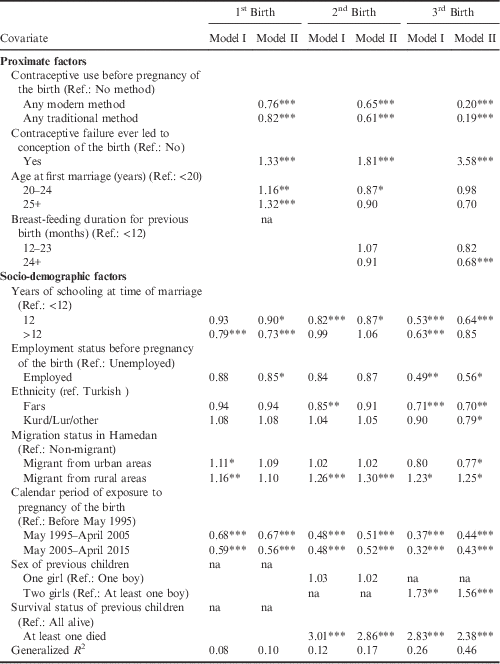
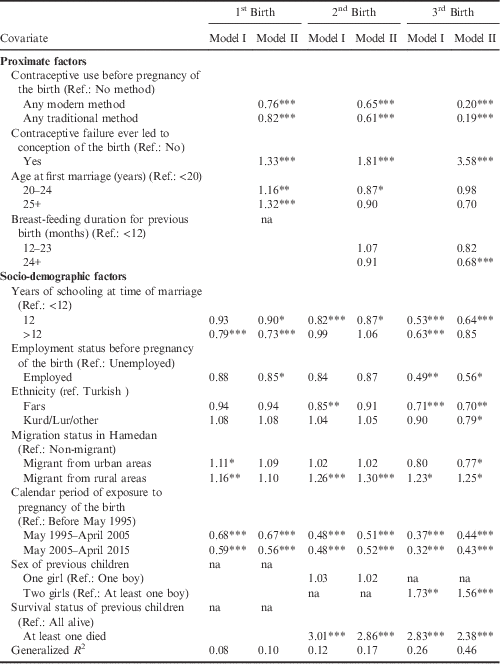
The results of the multivariate hazard regression analyses in Table 4 show that, consistent with the conceptual model, the significant effect of socio-demographic factors on the inter-birth intervals (i.e. the second and third birth intervals) slightly decreased after controlling for the proximate factors in the second models. Since the first birth interval is not an inter-birth interval, and hence of a different character on several grounds (such as absence of postpartum behaviours), the same changes of the effect of covariates, observed from the first to the second models for the second and third births, cannot be expected.
Estimated hazard rate ratios from Cox’s regression models assessing the impact of selected covariates on experiencing a first, second and third birth among married women aged 15–49 in Hamedan, Iran, 2015
Ref.: reference group; na: not applicable.
*p≤0.05; **p≤0.01; ***p≤0.001.
The results in Table 4 indicate that the calendar periods, the proximate and socio-demographic covariates, controlling for each other, were found to be significantly associated with the hazard rate ratio (relative risk) of having a given birth order. Compared with women experiencing birth risk before May 1995, those entering into birth risk after May 1995 had lower risks of first, second or third births.
The results pertaining to the proximate factors in the full models show that the relative risk of a birth was much lower among women using a contraceptive method than those not doing so. The effect of contraceptive use was very strong on the third birth, where the relative risk of having a third birth was 80% lower among contraceptive users than non-users. Furthermore, the relative risk of a third birth was 3.6 times higher among women whose contraceptive failure led to the pregnancy of the third birth than those whose third birth was planned. Similarly, the hazard rate of a first or second birth among women who experienced contraceptive failures was, respectively, 1.3 and 1.8 times higher than the rate among those who did not use contraceptives. As expected, a higher age at first marriage is associated with a greater risk of first birth, which can be attributed to the probable infecundity among those who married at very young ages or the compensation for the late marriage. For higher birth orders, a higher age at marriage is related to a lower risk of birth. In line with the conceptual model, a longer length of lactation of the second child was found to be significantly associated with a lower risk of the third birth. For example, women breast-feeding their second birth for more than 2 years were 32% less likely to go on to have a third birth, compared with women who breast-fed their second child for less than a year.
The most consistent and important social differentials in the timing of births relates to women’s schooling. A woman’s higher level of education at the time of marriage was found to be significantly associated with a lower risk of first, second and third births. Secondly, the magnitude of the effect of schooling on the timing of births increased when moving from the first to the third birth. The results of the full model of the third birth show that women with 12 years of schooling or more than a high school diploma had, respectively, a 36% and 15% lower risk of the third birth than those with some secondary or less education. Being employed rather than unemployed decreased the risk of the first and third birth by 15% and 44% respectively (see the full models). Ethnicity had a significant effect only on the third birth interval, where the risk of a third birth was lower by 30% and 21% among Fars and Kurd/Lur, compared with Turkish women. The migration status of women was found to be significantly associated with the risk of higher-order births. For instance, the risk of second and third births was 30% and 25% higher, respectively, among rural migrants than non-migrants in Hamedan.
Among the demographic factors, the survival status of previous children has the largest significant effect on the timing of second and third births. As expected, the death of at least one of a woman’s preceding children significantly increased the risk of second and third births by 2.9 and 2.4 times, relative to those with all preceding children alive. Finally, the results in the full models show a strong son preference for the third birth. In fact, the risk of a third birth was 56% higher among women with two girls than those with a mix of a boy and girl.
Discussion
Short or very long birth intervals have consequences for maternal and child health as well as population fertility rate and growth. So, it is imperative to regularly study variations and determinants of the length of birth intervals, especially in a country like Iran, which has been experiencing below-replacement fertility level over the past two decades. Using recent data from the 2015 Hamedan Survey of Fertility, this article studied differentials in the length of birth intervals and the determining factors.
This study found very large median survival times for second and third births (74 and 136 months, respectively), indicating that half of women with one or two children had not yet decided to have a second or a third child about 6 or 11 years after their last birth, respectively. Similar long pauses between births have been found in some low-fertility regimes in Latin America and Asia (Casterline & Odden, Reference Casterline and Odden2016). It is argued that long inter-birth intervals are a postponement rather than spacing of births, since women postpone their next birth for unlimited periods for reasons not related to the age of their earliest child, whereas they are not certain about not having any more children (Timæus & Moultrie, Reference Timæus and Moultrie2008). In fact, these women want to avoid any further pregnancy in the present rather than achieving a desired length of birth interval. If the postponement of birth becomes permanent, it may result in a lower fertility rate.
The length of birth intervals in Iran has increased significantly over the past three decades. While half of women who entered into the birth risk of the first child before 1995 gave birth to their first child within 19 months after marriage, women in the 2005–2015 calendar periods delayed childbearing on average by 35 months. Within the same period, the median survival time of the second birth also increased from 43 to 81 months. This increase in the length of birth intervals has translated into a decline in fertility, and explains the enduring below-replacement fertility rate over the past two decades in the country. Part of the reason for delaying childbearing and increasing inter-birth intervals is that the majority of Iranian couples currently feel less control over the socioeconomic resources required for childbearing and child rearing, view childbearing as detrimental to their personal life and society, and perceive normative pressures from their peers discouraging childbearing and large families (Erfani, Reference Erfani2017a).
The multivariate results indicate that variation in the timing of births is associated with proximate determinants and women’s socio-demographic characteristics. Among the proximate factors, contraceptive use and failure stand out as the strongest determinants of the timing of births. Use of modern and traditional contraceptives significantly decreased the risk of births, except when women reported that the birth was the result of contraceptive failure. However, the relative risk ratio of a third birth resulting from a contraceptive failure was much greater than that of a second or first birth (3.6 vs 1.8 and 1.3 respectively), suggesting that women with two children had a greater desire to cease childbearing and hence they were most likely use a modern contraceptive method. This is supported by another study indicating that the risk of unintended pregnancy is higher among women reporting modern contraceptive failure rather than withdrawal failures while controlling for other factors (Erfani, Reference Erfani2013).
The positive effects of women’s schooling and employment on the length of the first, second and third birth intervals suggest that more highly educated women and employed rather than unemployed women are leaders in the movement towards lower fertility in Iran. Compared with lower-order births, education has a greater negative effect on the risk of third birth, which probably points to differences in completed fertility by level of education, which have been reported by other studies (Erfani, Reference Erfani2013, Reference Erfani2015b). This study also found significant ethnic and migration differentials in inter-birth intervals, where women of Turkish ethnicity and those who migrated from rural areas to the city of Hamedan had greater risks of second and third births.
Finally, the findings showed that women with a deceased child went on to have second and third births faster. In fact, these women, in response to the loss of a first or second child, decided to have the next child faster in an effort to achieve their desired small number of children before their reproductive lifespan ended. Also, it was found that only the timing of the third birth was significantly influenced by son preference. This is consistent with a recent study documenting son preference at higher parities, even among more educated women in Iran (Erfani & McQuillan, Reference Erfani and McQuillan2014). Sex preference can become an important issue, if low fertility is well established in the country, with important consequences for the sex structure of the population and maternal health.
The practice of very long inter-birth intervals and delayed childbearing, observed in the current study and other recent Iranian studies (Erfani, Reference Erfani2015b), will reinforce the existing low fertility rates in the country and could increase maternal mortality and morbidity, related to unintended pregnancies and induced abortions, if the recent limitation in the delivery of publicly funded family planning services (Erfani, Reference Erfani2017b) is further expanded. The prevailing long delayed childbearing and birth intervals are more postponement than spacing of births as there is strong uncertainty in the intention of couples to have a/another child since they believe that the existing unpredictable and difficult socioeconomic living situations in the country discourage them from having a/another child (Erfani, Reference Erfani2017a). Therefore, the removal of these socioeconomic obstacles to family formation and childbearing should be the first priority of any government interventions aiming to increase fertility in the country.
Acknowledgments
The 2015 Hamedan Survey of Fertility was funded by the Iran University of Medical Sciences, Tehran, Iran, and was supported by Nipissing University, Ontario, Canada, and the Hamedan University of Medical Sciences, Hamedan, Iran.