


Around the world, religious and ethnic groups have helped people deal with shocks to their lives and livelihoods for centuries. From mutual aid societies of immigrant ethnic groups in nineteenth century USA (Iversen and Rehm Reference Iversen and Rehm2022a) to sectarian networks of credit and social welfare in Lebanon (Cammett Reference Cammett2014; Nucho Reference Nucho2017), shared ethnicity has provided an effective basis for organizing social insurance and welfare.
I study how social insurance provision within ethnic groups exacerbates divisions between groups. As the welfare state expands, does it reduce the extent to which individuals rely on their co-ethnics as a safety net? If yes, does the decline of co-ethnic dependencies improve ties and interaction with non-coethnics? These questions are important for understanding when and why ethnic divisions persist in diverse societies.
I theorize that ethnicity is an effective basis for organizing insurance because ethnic groups leverage shared norms of solidarity and reciprocity to solve problems like information asymmetry, adverse selection, and moral hazard (Cox and Fafchamps Reference Cox, Fafchamps, Schultz and Strauss2007; Di Tella and MacCulloch Reference Di Tella and MacCulloch2002; Iversen and Rehm Reference Iversen and Rehm2022a). To be able to ask their co-ethnics for loans or transfers in times of need, individuals invest scarce time and resources on interactions with co-ethnics, prioritize co-ethnics over non-coethnics when allocating resources, and obey group-based norms of interaction.
However, greater social investment in co-ethnics limits the possibility of making similar investments in ties with non-coethnics. There may be many ways in which ties with non-coethnics could be productive. But the formation of productive ties with non-coethnics is constrained when scarce time and resources are allocated primarily to co-ethnics and group-based norms are observed. Intergroup differences are thus heightened by ethnicity-based social insurance.
The welfare state reduces the extent to which individuals must rely on their ethnic group for insurance. In doing so, it enables individuals to reduce their social investment in co-ethnics and establish ties with non-coethnics. I hypothesize that as the welfare state expands, individual reliance on ethnicity-based social insurance declines, and interactions and ties with non-coethnics are enhanced. I further hypothesize that the impact of welfare is larger when the benefits reach a broad cross-section of individuals across ethnic groups.
I test these hypotheses in the context of caste-based networks in India. A caste is an endogamous status group, and the caste system is composed of thousands of such groups. Caste-based social insurance is prevalent (Munshi and Rosenzweig Reference Munshi and Rosenzweig2016), and castes are segregated through marriage as well as social networks (Prillaman Reference Prillaman2023). I focus on an income support program for farmers implemented in the state of Telangana in India, the Rythu Bandhu Scheme (RBS). Launched in 2018, RBS provides residents of Telangana owning agricultural land with Rs. 10,000 (about $
$ 125 $
 ) per acre per year.
I employ a research design that integrates panel data, survey data, and qualitative interviews. First, I use panel data from the Consumer Pyramids Household Survey (CPHS) in a difference-in-differences framework, comparing borrowing from caste members by program beneficiaries (landowners) and non-beneficiaries (landless) over a two-year period before and after the program launch. RBS reduced such borrowing by
$ 38.5\% $
 .
The panel data yields precise estimates, but provides no measure of intercaste ties. In addition, the CPHS records borrowing from relatives and friends rather than borrowing from caste members. Although borrowing from relatives and friends reflects important family and caste dependencies, it does not explicitly identify caste-based social insurance.
To address these limitations, I conducted an original survey of 3,020 households in 2023, spanning 75 villages along the border between the states of Telangana and Andhra Pradesh. Telangana was carved out of Andhra Pradesh in 2014. The erstwhile districts of Kurnool (now in Andhra Pradesh) and Mahbubnagar (in Telangana) have six decades of shared administrative, political, and economic institutions. Villages along the border between these two districts share the same caste hierarchy, language, and culture, and similar development outcomes. I leverage this variation in a difference-in-differences framework, comparing landed and landless households on both sides of the border, with the former being eligible for RBS in Telangana but not in Andhra Pradesh. The survey data include measures for intercaste ties, in-group social investment, as well as borrowing from caste members.
On average, RBS appears to have mixed effects on intercaste interaction. It increased the extent to which respondents reported sharing meals with other castes, and their perception that others in the village share meals with other castes. However, I do not find a significant average effect on whether people report having friends from other castes. Nor do I find an effect on the willingness to share resources with an out-group, measured using an incentivized donation where non-SC respondents were asked if they would allocate any of their lottery winnings to an NGO working for marginalized castes.
These average effects conceal a crucial heterogeneity: because RBS allocates benefits on the basis of land ownership, it is more likely to reach a broad cross-section of caste groups in villages where land is distributed more evenly across castes. In these villages, welfare reduced borrowing from caste members by over 40%. It further reduced investment in co-ethnics by 20%, based on reported festival spending. It also increased meal sharing, lowered the likelihood that most or all of respondents’ friends were of the same caste by 33%, and raised the donation amount by 19%, indicating that respondents were more willing to allocate resources toward an out-group.Footnote 1
Consistent with my hypotheses, where welfare reduces in-group economic reliance, I find reduced social investment in co-ethnics and improved ties with non-coethnics. By contrast, where land ownership is more concentrated in the hands of a dominant caste, RBS benefits are less likely to reach a broad cross-section of castes. In these areas, I do not find significant effects on borrowing from caste members or intercaste ties.
I rely on 56 qualitative interviews conducted in 2024 across 14 villages to describe the in-group social investments necessitated by reliance on caste-based social insurance and illustrate the benefits of intercaste ties. These data show how the social costs of in-group reliance make individuals prone to substituting away from their caste-based safety net once they receive welfare benefits.
The question of how welfare shapes identity and ethnic politics has become increasingly consequential with the proliferation of cash transfer programs in many parts of the world. India is a prominent example of this trend. In the 2023–24 financial year alone, state and central governments in India transferred over $80 billion directly into hundreds of millions of beneficiaries’ bank accounts.Footnote 2 The political implications of this seismic shift in India’s welfare state architecture are yet to be fully understood. This article takes a step in that direction.
Specifically, I study this shift in welfare in light of an enduring puzzle: why does caste-based social segregation persist? As Jodhka and Manor (Reference Jodhka and Manor2018, 17) remark, “The institution of jati (endogamous caste group) has been the most resilient and durable pre-existing social institution in modern Asia, Africa, and Latin America.” Scholars have studied how caste identity has been shaped by affirmative action (Chauchard Reference Chauchard2017; Dunning and Nilekani Reference Dunning and Nilekani2013; Jensenius Reference Jensenius2015), market reforms (Deshpande Reference Deshpande2011; Kapur et al. Reference Kapur, Prasad, Pritchett and Babu2010; Yengde Reference Yengde2019) and urbanization (Auerbach and Thachil Reference Auerbach and Thachil2018; Thachil Reference Thachil2017). I contribute an analysis focused on welfare as a driver of change.
Beyond the Indian case, my findings add to research on the relationship between welfare and social cohesion (Polanyi Reference Polanyi1957; Putnam Reference Putnam2000). To the debate on whether the welfare state undermines community and family or fosters generalized trust (Iversen and Rehm Reference Iversen and Rehm2022a; Murray Reference Murray2012; Rothstein and Stolle Reference Rothstein, Stolle, Hooghe and Stolle2003), I contribute the first study from the Global South of how state-provided welfare promotes out-group ties while reducing investment in in-group ties.
THEORY
Social segregation on the basis of identity is widespread. Scholars have examined numerous reasons why people form connections with co-ethnics, while excluding non-coethnics (Nathan and Sands Reference Nathan and Sands2023; Paluck et al. Reference Paluck, Porat, Clark and Green2021; Shayo Reference Shayo2020). Individuals derive psychological benefits from favoring in-group members (Adida et al. Reference Adida, Gottlieb, Kramon and McClendon2017; Lowe Reference Lowe2021), act on false beliefs and stereotypes about members of other groups (Kasara Reference Kasara2013; Samii Reference Samii2013), or harbor exclusionary preferences that lead them to behave in prejudiced ways (Becker Reference Becker1957; Enos and Gidron Reference Enos and Gidron2018; Hjort Reference Hjort2014). Ethnicity-based social segregation also results from conflicts over group status (Ignatiev Reference Ignatiev2009), insecurity regarding out-groups (Gay Reference Gay2006; Scacco and Warren Reference Scacco and Warren2018), or disputes over scarce resources (Koubi Reference Koubi2019). In distributive conflicts, identity can function as an informational shortcut, leading individuals to align with co-ethnics (Chandra Reference Chandra2004; Pepinsky, Liddle, and Mujani Reference Pepinsky, Liddle and Mujani2012).
Many prominent explanations for ethnic divisions emphasize group-level factors, such as political mobilization along group lines, competition between groups, or coordination across groups (Eifert, Miguel, and Posner Reference Eifert, Miguel and Posner2010; Huber Reference Huber2017; Lee Reference Lee2020; Posner Reference Posner2004; Varshney Reference Varshney2003; Wilkinson Reference Wilkinson2004). In contrast, I contribute a framework focused on within-group dynamics. Specifically, I contribute the role of social insurance.
Reliance on ethnicity-based social insurance, and kinship-based support networks more generally, shapes behavior in a variety of ways (Baland, Guirkinger, and Mali Reference Baland, Guirkinger and Mali2011; Berman Reference Berman2000; Chen Reference Chen2010; Di Falco et al. Reference Di Falco, Feri, Pin and Vollenweider2018; Scheve and Stasavage Reference Scheve and Stasavage2006). I focus on how the benefits of risk-sharing lead individuals to invest in group-based solidarity and reciprocity, and observe group-based norms of social interaction. Ethnicity is an effective basis for organizing social insurance because ethnic groups are able to draw on shared group norms to solve problems such as information asymmetry, adverse selection, and moral hazard. However, the social investment required by these group norms limits similar investment in productive ties with non-coethnics—ties that could help advance shared economic or social interests.
Any privately-provided insurance must solve the problems of information asymmetry, adverse selection, and moral hazard to be viable. This is especially important when risks are hard to observe and time-inconsistency makes current contributors uncertain if they will be supported by others through future contributions. Ethnicity-based social insurance solves these problems through shared norms of solidarity and reciprocity, and the ability to impose social sanctions (Chen Reference Chen2010; Cox and Fafchamps Reference Cox, Fafchamps, Schultz and Strauss2007; Iversen and Rehm Reference Iversen and Rehm2022a; Munshi and Rosenzweig Reference Munshi and Rosenzweig2016). A norm of solidarity encourages individuals to share resources with group members. Reciprocity obliges group members to provide mutual support to each other in times of need, so that the anticipation of future benefits prompts individuals to help co-ethnics in the present. The threat of social sanctions incentivizes individuals to meet their obligations to the group.
Shared ethnicity facilitates repeated interaction because it invokes shared culture, traditions, and values. Repeated interactions enable group members to articulate a common set of goals and interests, fostering a sense of solidarity (Nielsen Reference Nielsen1985). The interactions that foster in-group solidarity also solve an information problem. When group members interact repeatedly in social settings, they are able to observe each others’ financial circumstances and behavior, facilitating mutual insurance. As Munshi and Rosenzweig (Reference Munshi and Rosenzweig2016) note, people prefer to insure group members whose incomes they can observe, because an individual whose income is unobserved could under-report their income and be a net beneficiary of within-group transfers.
It follows that prior to asking co-ethnics for loans or transfers in times of need, individuals must spend time and resources interacting with co-ethnics. This could entail investing in ties with specific members of the group, participating in religious events (Chen Reference Chen2010) or contributing to shared cultural goods (Dasgupta and Kanbur Reference Dasgupta and Kanbur2007). Individuals invest in the group’s solidarity to benefit from the ethnicity-based social safety net in the future (Berman Reference Berman2000). Given scarce time and resources, however, prioritizing investment in relations with co-ethnics limits the possibility of similar investments in relations with non-coethnics.
The repeated interactions enabled by ethnicity are also conducive to reciprocity, where individuals help co-ethnics today to receive their help tomorrow. Reciprocity enables the enforcement of contracts in the absence of legal recourse, making it vital for risk-sharing (Fafchamps Reference Fafchamps, Benhabib, Bisin and Jackson2011). For an individual faced with a co-ethnic’s demand, the motivation of a safety net in the future is buttressed by social pressure to not renege on an obligation toward a coethnic in need (Carranza et al. Reference Carranza, Donald, Grosset-Touba and Kaur2025; Di Falco et al. Reference Di Falco, Feri, Pin and Vollenweider2018). Although this is a powerful incentive to help co-ethnics, it is also an incentive to prioritize co-ethnics over non-coethnics when allocating resources. An individual with a resource surplus has a clear interest, even an obligation, to use that surplus to help co-ethnics before non-coethnics.
Social sanctions for not reciprocating can be harsh, especially because ethnic groups facilitate the sharing of information about past behavior through repeated interaction (Di Falco and Bulte Reference Di Falco and Bulte2011; Fafchamps Reference Fafchamps, Benhabib, Bisin and Jackson2011). Refusing to help a coethnic or failing to repay a loan from a coethnic risks the loss of social ties or status within the group, in addition to exclusion from a valuable social safety net.
The threat of social sanctions further allows for the policing of group boundaries, solving the adverse selection problem. If different ethnic groups have distinct risk profiles, groups that perceive themselves as low risk have an incentive to avoid exposure to individuals from other groups perceived as higher risk. Simultaneously, each group has an incentive to prevent its own low risk members from “defecting” to a different social network with a better risk profile. The ability to impose social sanctions to police group boundaries is, hence, essential for social insurance (Iversen and Rehm Reference Iversen and Rehm2022a).
Alongside other cultural or psychological factors, the problem of adverse selection is perhaps one reason why relations among individuals from different groups invite disapproval. This is exemplified by the norms that caste groups in India enforce to exclude non-coethnics from their social network. For example, one stricture imposed by caste is that people should not share meals with those of a different social status. A more benign instance is when young people are chided by elders for being seen in another caste’s neighborhood. The starkest consequences are those for intercaste marriage, which can result in social ostracism and even murder. More generally, the problem of adverse selection may be one reason why ethnic groups develop clear markers, physical or behavioral, to differentiate in-group from out-group members. In the words of Ambedkar, “…each caste endeavors to segregate itself and to distinguish itself from other castes. Each caste not only dines among itself and marries among itself but each caste prescribes its own distinctive dress” (Ambedkar Reference Ambedkar and Anand1990, 52–3).
Taken together, these mechanisms—repeated interaction, reciprocity, and the threat of social sanctions—imply that reliance on co-ethnics as a safety net requires certain social investments. Greater social investment in co-ethnics, however, limits the extent to which individuals are able to make similar investments in productive ties with non-coethnics.
There are several ways in which having ties with non-coethnics could be valuable. It could enable individuals to diversify their access to potential sources of credit and capital (Banerjee and Munshi Reference Banerjee and Munshi2004). Ties with non-coethnics could also enable individuals to negotiate better outcomes in economic transactions with non-coethnics. For instance, Anderson (Reference Anderson2011) suggests that reduced social distance with non-coethnics enables enormous gains from trade in water markets. The economic complementarities are only heightened when different ethnic groups specialize in different occupations (Jha Reference Jha2013). Additionally, there may be many nonmaterial reasons to invest in ties with non-coethnics, for instance, a shared religious identity (Lazarev and Sharma Reference Lazarev and Sharma2017). Indeed, most people likely have some economic or social interest that could be better served by investing in stronger ties with non-coethnics.
Despite these potential benefits, the extent to which individuals invest time and resources in building ties with non-coethnics is constrained by the investment in co-ethnics required to benefit from ethnicity-based social insurance. When scarce time and resources are allocated primarily to co-ethnics, and group-based norms of social interaction are rigidly observed, intergroup divisions are only heightened. Ethnic groups are able to develop mutual risk sharing arrangements by drawing on shared norms of solidarity, reciprocity, and social sanctions, but the maintenance of these norms exacerbates social segregation along ethnic lines.
I hypothesize that an expansion in the welfare state reduces the extent to which individuals rely on ethnicity-based social insurance. When the state provides access to greater welfare benefits in times of need, individuals are less dependent on their co-ethnics as a safety net.Footnote 3 Because reliance on co-ethnics entails social investments, an alternative that does not require similar investments is preferable over ethnicity-based social insurance. Hence, I expect individuals to substitute away from ethnicity-based social insurance as their access to state-provided welfare increases.
H1. As the welfare state expands, reliance on ethnicity-based social insurance declines.
Further, an expansion in the welfare state prompts reduced investment in ties with co-ethnics, to the extent that such investment is motivated by social insurance. This reduced investment in co-ethnics affords greater scope to invest in productive ties with non-coethnics.Footnote 4 It allows individuals to go beyond their ethnic group in pursuing economic and social interests.
H2. As the welfare state expands, interaction and ties with non-coethnics are enhanced.
Finally, I hypothesize that the impact of welfare is larger when its benefits reach a broad cross-section of ethnic groups. To see the rationale for this hypothesis, consider a simple example of a society with two ethnic groups, A and B, where welfare benefits only reach members of group A, not group B. Members of group A receive welfare, reducing their dependence on co-ethnics and increasing their ability to invest in ties with members of group B. However, because welfare benefits do not reach group B, their reliance on co-ethnics remains unchanged, and hence they are not similarly able to pursue intergroup interactions.Footnote 5 Greater social integration results when the benefits of welfare reach a broad cross-section of both groups.
H3. If the welfare state reaches a broad cross-section of ethnic groups, its effects on interaction and ties with non-coethnics are larger.
Although the theory focuses on ethnicity-based social insurance, it applies more broadly to kin and family networks. In societies around the world, individuals rely on their extended family to deal with crises, whether for unemployment as in Jordan, Italy, and Spain (Baylouny Reference Baylouny2010; Bentolila and Ichino Reference Bentolila and Ichino2008), or for illness and aging as in sub-Saharan Africa (Fafchamps Reference Fafchamps, Benhabib, Bisin and Jackson2011). The expansion of the welfare state undermines such dependencies (Bau Reference Bau2021; Di Tella and MacCulloch Reference Di Tella and MacCulloch2002; Jensen Reference Jensen2004). Welfare, thus, reduces the need for social investment in kinship ties, thereby weakening them. The underlying mechanism remains the same, though the implications extend to blood-related ties.
The theory only applies to contexts where individuals have in-group economic dependencies. I posit that the degree to which individuals invest in ties with non-coethnics is lower in the presence of such dependencies. With limited time and resources to invest in social networks, investment in building or sustaining ties with co-ethnics comes at the cost of similar investments in ties with non-coethnics.Footnote 6
The theory focuses on mass-level, person-to-person social interaction. This is analytically distinct from how people respond to mobilization by political elites. Elites may coordinate across ethnic lines to pursue specific political objectives like winning an election. However, such political coordination is dissimilar to the quotidian social interactions individuals have with their co-ethnics and non-coethnics. For example, research by Thachil (Reference Thachil2017) in urban India suggests that people may be mobilized by political elites across ethnic lines even as they remain ethnically divided in their communities.
Finally, the theory addresses the question of how welfare impacts intergroup ties, but not what explains the emergence of welfare programs in ethnically-divided societies. This is not to deny the complexities of building a welfare state in a fragmented society, where redistributive politics may be undermined by the electoral significance of ethnic identities (Huber Reference Huber2017; Huber and Suryanarayan Reference Huber and Suryanarayan2016) and supporters of welfare programs may resist their extension to out-groups (Careja and Harris Reference Careja and Harris2022; De Koster, Achterberg, and van der Waal Reference De Koster, Achterberg and van der Waal2013; Mudde Reference Mudde2007). Rather, it is simply to acknowledge that the two questions require differing analytical considerations.Footnote 7
CASTE AND SOCIAL INSURANCE
I now discuss the persistence of caste-based social segregation in India, and the functioning of caste-based social insurance. I also discuss the importance of borrowing from friends and relatives as a fraction of within-caste transactions.
Caste is an endogamous status group that is traditionally associated with an occupation, has a hereditary nature, and occupies a certain position within a social hierarchy (Deliège Reference Deliège and Clark-Decès2011; Vaid Reference Vaid2014). The caste system comprises thousands of such endogamous groups, called jatis. Castes are often grouped into categories, like scheduled castes (SCs), backward classes (BCs), and other castes (OCs). Historically, SCs were marginalized and relegated to occupations deemed ritually “impure,” such as tanning or sanitation.
Throughout this article, I use the term caste to refer to jati, rather than the broader caste category. Social relations are typically defined at the jati level. Villages vary greatly in material inequalities between castes and in the observance of traditional hierarchies. When intercaste tensions arise, they are negotiated more promptly in some places than others (Jodhka and Manor Reference Jodhka and Manor2018).
The forces of economic development, urbanization, electoral competition, and affirmative action have all reshaped caste-based contestation and cooperation to varying degrees (Bhavnani, Lee, and Prillaman Reference Bhavnani, Lee and Prillaman2023; Cassan Reference Cassan2019; Chakrabarti Reference Chakrabarti2018; Chauchard Reference Chauchard2017; Girard Reference Girard2018; Kapur et al. Reference Kapur, Prasad, Pritchett and Babu2010; Lee Reference Lee2021; Rudolph Reference Rudolph1967; Sharma Reference Sharma2015; Teltumbde Reference Teltumbde2020; Thachil Reference Thachil2020; Reference Thachil2017; Yengde Reference Yengde2019). Despite these changes, caste-based social segregation remains prevalent. Interaction across caste lines remains limited (Munshi Reference Munshi2019). Social ties are typically denser within castes than across castes (Prillaman Reference Prillaman2023). The 2011–12 India Human Development Survey (IHDS) found that castes lived in separate neighborhoods in over 60% villages, and that intercaste marriage is extremely rare (Desai and Dubey Reference Desai and Dubey2012; Desai, Dubey, and Vanneman Reference Desai, Dubey and Vanneman2015). This social segregation affects economic activities, inhibiting trade in groundwater (Anderson Reference Anderson2011) and preventing workers from performing remunerative tasks that are not congruent with their caste norms (Oh Reference Oh2023). Caste boundaries also restrict the flow of capital (Banerjee and Munshi Reference Banerjee and Munshi2004).
As Jodhka and Manor (Reference Jodhka and Manor2018, 17) write, “Jati has retained its strength even though disadvantaged groups’ acceptance of caste hierarchies has declined… It is hierarchy among castes that is waning, not caste (jati) itself.” I argue that caste-based social insurance contributes to this endurance.
To illustrate how caste-based social insurance works, I use data from the 1999 Rural Economic Development Survey or REDS (National Council of Applied Economic Research 1999).Footnote 8 The REDS categorizes borrowing from relatives, friends, and caste members separately. Given the prevalence of endogamy (Desai and Dubey Reference Desai and Dubey2012; Desai, Dubey, and Vanneman Reference Desai, Dubey and Vanneman2015), borrowing from relatives can reasonably be regarded as borrowing from caste members, as also argued by Munshi and Rosenzweig (Reference Munshi and Rosenzweig2016). Additionally, caste-based segregation in social networks (Munshi Reference Munshi2019; Prillaman Reference Prillaman2023) suggests that a significant proportion of borrowing from friends occurs within caste lines. Assuming that all loans from friends are within-caste, borrowing from relatives and friends would account for 84% of all borrowing from relatives, friends, and caste members. If just one-third of borrowing from friends is within-caste, relatives and friends together would still account for 64%.
In terms of volume, loans from relatives comprised over 13% of total household debt from all sources recorded in the REDS. Loans from friends accounted for just under 10%, and loans from other caste members about 3%. These figures underscore that borrowing from relatives and friends constitutes a significant share of caste-based borrowing, even assuming that only a fraction of borrowing from friends is within-caste. Hence, numerically, borrowing from relatives and friends is a significant component of within-caste social insurance transactions.
Analytically, too, caste is what shapes the salience of relatives and friends. Not only does caste determine who one’s relatives and friends are, it provides a shared set of norms and practices that enhance cohesion within caste networks. The persistence of caste shapes the social implications of borrowing from relatives and friends in significant ways.
In Table S7 in the Supplementary Material, I summarize the terms at which households borrow from relatives, friends, and other caste members, and compare these with borrowing from institutional and other non-institutional sources.Footnote 9 Loans from relatives and friends tend to be significantly larger than other caste-based transactions, and often carry no interest.Footnote 10
Given the favorable terms of these loans, it is unsurprising that they are commonly used to meet consumption exigencies. To document the prevalence of such loans prior to the introduction of the RBS, I turn to data from the Consumer Pyramids Household Survey or CPHS (CMIE 2017). The CPHS is a panel survey of 175,000 households conducted by the Centre for Monitoring Indian Economy since 2014. The CPHS surveys households every four months. Unlike REDS, it does not report loan amounts or terms. It does, however, provide a panel with a larger sample, including nearly 6,000 households from Telangana alone. Access to the CPHS requires a paid subscription.
I use data from three rounds of the CPHS spanning May 2017 to April 2018, the 12 months prior to the introduction of RBS. Table S8 in the Supplementary Material indicates the prevalence of borrowing from relatives and friends. Half of the households surveyed in Telangana reported an outstanding borrowing from relatives or friends at some point in this 12 month period. Consumption expenditure was the modal purpose for borrowing, indicating that such borrowing helps deal with income volatility. Table S8 in the Supplementary Material also shows that borrowing from relatives or friends is similarly prevalent across caste categories.
Notably, both relatively poor and rich households rely on their caste network for consumption smoothing. I divide households in each caste in the CPHS sample into quintiles of the within-caste income distribution.Footnote 11 Similar fractions (22%) of the top and bottom quintiles reported having borrowed from relatives and friends for consumption. Households in quintiles two, three, and four were somewhat more likely to report such borrowing (25%, 27%, and 30%, respectively).
Even so, CPHS data suggest that larger transfers tend to flow toward poorer households, as indicated in Table S9 in the Supplementary Material. Column 1 reports relative income, measured by the ratio of average income in the income class to average income in the highest income class, averaged across all castes. Column 2 reports the corresponding statistic for relative consumption. Column 3 reports the ratio of relative consumption to relative income. This ratio-of-ratios in Column 3 shows that relative consumption exceeded relative income for each income class except the highest one, and is nearly three for the lowest income class.Footnote 12 This implies that richer households contribute more to the group’s social safety net, and consequently wield greater influence within the group. During interviews, respondents generally described their caste elite as older, wealthier men respected by other group members.
CONTEXT
The Government of Telangana introduced the RBS in May 2018 as a source of income support for farmers, and to facilitate investment in agricultural inputs before the main agricultural seasons. A government circular issued on April 4, 2018 stated, “Farmers’ income in the state has been under stress in view of the ever growing input costs, unpredictable prices, and rising family expenses, especially on health and education. Therefore, the daunting task before [the] Government of Telangana is to provide a sense of income security to the farmers.”
In 2018, RBS authorized the payment of Rs. 4,000 (approximately $49) per acre in each of the two yearly agricultural seasons, to every registered landholding farmer. For example, a farmer owning one acre of land would receive Rs. 4,000 before the kharif (monsoon) season and another Rs. 4,000 before the rabi (winter) season. The timing of transfers aligns with the goals of supporting farmer incomes because sowing season is when farmers typically have the greatest financial need, for both consumption and agricultural inputs. The first payments were made in May–June 2018. In 2019, the government hiked RBS payments to Rs. 5,000 per acre per season. Initially, payments were made by check. By 2020, the government began depositing funds directly into beneficiaries’ bank accounts. Even when payments were made by check, corruption was rare in the distribution of benefits (Muralidharan et al. Reference Muralidharan, Niehaus, Sukhtankar and Weaver2021).Footnote 13
When RBS was launched, its expected outlay was equivalent to 1.6% of Telangana’s GDP, making it over three times as large in GDP terms as Progresa in Mexico and Bolsa Familia in Brazil (Muralidharan et al. Reference Muralidharan, Niehaus, Sukhtankar and Weaver2021). By mid-2023, the program reached around seven million beneficiaries, and the government had spent about $8 billion (over Rs. 65,000 crore) on it (Express News Service 2023). Based on my 2023 household survey data, the median annual benefit from RBS was 15% of the median annual income reported.Footnote 14
RBS funds are used for both consumption and investment. Shaw, Rathi, and Chakrabati (Reference Shaw, Rathi and Chakrabati2023) estimate that RBS increased expenditure on food, fuel, and healthcare. During my qualitative interviews, several respondents reported that RBS funds helped pay for agricultural inputs, such as seeds and fertilizers.
RBS spurred a trend toward income support programs in India. The national government launched a similar program in 2019, and there are similar programs in at least three other states. RBS itself has continued uninterrupted, and was in fact expanded in 2025.Footnote 15 As Ghatak and Muralidharan (Reference Ghatak and Muralidharan2019) note, since the launch of RBS, the debate in India’s welfare strategy has shifted rapidly from whether to have such programs at all to the specifics of their design.
Because RBS provides benefits on a per acre basis, the larger the landholding, the higher the transfer. This has a major implication for how the benefits of RBS are distributed by caste. Figure 1 illustrates the variation in caste-based inequality in land ownership across the 75 villages in my survey sample. For each sample village, it plots the land-to-population ratio for the caste owning a plurality of land in the village. The median value of this ratio is two, meaning that if the caste owning a plurality of land is 10% of the village population (say), it owns 20% of the village land. Villages to the left of this median in Figure 1 are relatively equitable, with the caste that owns the most land holding a share roughly in proportion to its population. The ratio is as low as 0.67 in a village in which a caste constitutes 30% of the population while owning 20% of the land. Villages to the right of the median are relatively inequitable. In the most extreme case, this land-to-population ratio is 12.5.
Variation in Caste-Based Inequality in Land Ownership in the Survey Sample
Note: kernel = epanechnikov, bandwidth = 0.8060.

Figure 1. Long description
The X-axis represents the Ratio of land-to-population percentage of caste owning plurality of land, ranging from 0 to 14. The Y-axis represents Density, ranging from 0 to 0.25.
* The data curve begins at a density of approximately 0.09 when the ratio is 0.
* It rises sharply to a primary peak of approximately 0.24 density at a ratio of 1.5.
* A vertical dashed line is positioned at the ratio value of 2.
* After the peak, the curve declines steeply until a ratio of 3, then continues a more gradual descent.
* A small inflection point or shoulder occurs around a ratio of 6 with a density of 0.03.
* The curve flattens out significantly between ratios 6 and 14, maintaining a density below 0.02, with a very slight secondary rise near ratio 12 before tapering off at the end of the scale.
One of my hypotheses, H3, posits that welfare benefits are more effective when they reach a broad cross-section of ethnic groups in society. If this is correct, RBS is much less likely to alter intercaste ties in villages where one caste owns a disproportionate share of land resources, and thereby receives a disproportionate share of RBS transfers.
Overall, certain castes in Telangana own more land and receive more RBS benefits. In Figure S4 in the Supplementary Material, survey data illustrate variation in land ownership across five castes. On average, Reddys (OC or Other Caste) own more land than Kurumas or Boyas (BC or Backward Castes), who in turn own more land than Malas and Madigas (SC or Scheduled Castes).
What was the political setting in Telangana, where RBS was launched? Telangana was carved out of Andhra Pradesh on June 2, 2014. Advocates for a separate state of Telangana argued that elites from coastal Andhra Pradesh exploited Telangana’s resources and discriminated against its people (Janardhan and Raghavendra Reference Janardhan and Raghavendra2013). The Kammas of coastal Andhra Pradesh competed fiercely with the Reddys of Telangana, a dominant caste rivalry that further fueled the demand for statehood (Damodaran Reference Damodaran2008; Pingle Reference Pingle2011).
Although the leaders of the statehood movement were primarily from dominant castes, backward groups comprised its mass following, and saw in it an opportunity for greater political representation. The struggle for statehood did hold potential for greater caste equality, though this has not quite materialized. The 119-member Telangana legislative assembly elected in 2023 has 43 Reddy representatives (Reddy Reference Reddy2023), though Reddys are just 6% of the population (Damodaran Reference Damodaran2008).
From 2014 to 2023, Telangana was ruled by the Telangana Rashtra Samithi (TRS),Footnote 16 the party that led the statehood movement. Benbabaali (Reference Benbabaali2016) notes that the party’s power centers are controlled by one family, that of leader K. Chandrashekar Rao (popularly known as KCR), who is known to make policy decisions unilaterally.
The mobilization of middle- and lower-middle castes is not new to the Telangana–Andhra Pradesh region, which saw a movement challenging Brahmin dominance during the colonial era. Such mobilization can foster a social democratic welfare regime. Now, Telangana also has a subnational party; an attribute of subnational consciousness that can facilitate inclusive social development (Singh Reference Singh2015). Yet, as Kohli (Reference Kohli2012) argues, mass politics in this region typically precedes the rise of popular leaders who mobilize support through regional nationalism rather than class-based appeals.
The introduction of RBS in May 2018 likely had an electoral motive, with state-level elections in December 2018. RBS probably contributed to TRS’s landslide victory in that election. However, whether RBS represents a deeper shift in the region’s political economy is unclear.
RESEARCH DESIGN: OVERVIEW
I previously discussed how the welfare state enhances interaction and ties with non-coethnics by reducing individual reliance on ethnicity-based social insurance, putting forth three hypotheses. The causal chain can be summarized as follows:

To examine this causal chain, I employ a research design that integrates three complementary data sources. First, I estimate the effect of RBS on borrowing from relatives and friends using household loan data from the CPHS in a difference-in-differences framework. This approach compares landed (beneficiary) and landless households before and after RBS’s launch in 2018.
Borrowing from relatives and friends is indicative of caste-based social insurance in India, where social networks are structured by endogamy and caste-based segregation. Simultaneously, it captures a broader form of family dependency that may be eroded by state-provided welfare. In this sense, the CPHS analysis tests whether welfare affects kinship-based social insurance more broadly, adding to the literature on family ties cited in the theory. The panel structure of the CPHS allows for precise estimation of these effects.
However, the CPHS does not include any data on intercaste relations, and does not explicitly measure borrowing from caste members. To address these gaps, I use original survey data collected in 2023 from 3,020 households in 75 villages. I use a difference-in-differences framework to compare landed and landless households across the state border between Telangana and Andhra Pradesh. The survey includes measures of intercaste relations, in-group social investment, and borrowing from caste members, enabling me to test all three hypotheses. Because the variation is cross-sectional rather than temporal, estimates of the impact on caste-based borrowing are less precise than those from the panel data.
Finally, I complement these quantitative analyses with 56 qualitative interviews conducted in 2024 with key informants across 14 villages. These interviews explore how reliance on caste-based social insurance necessitates in-group social investments and illustrate the benefits of intercaste ties. They describe social dynamics that are difficult to quantify (Gerring Reference Gerring2017), for example, how caste-based reciprocal lending shapes behavior or how individuals perceive the threat of social sanctions. Although qualitative data do not permit me to assess the statistical prevalence of the mechanisms, they did enable open-ended discussions about social investments and state-provided welfare, helping uncover and validate mechanisms (Dunning Reference Dunning2012). The qualitative research design and findings are presented in depth in Sections A and B of the Supplementary Material, with a brief discussion in the main text.
This research design is iterative: findings from panel data shaped survey design, with the first-stage effects on borrowing informing the collection of original survey data focused on identifying the effects of welfare on intercaste relations. The sampling strategy for qualitative interviews rests on survey data on village characteristics, and my interview questions were shaped by survey findings.
THE IMPACT OF WELFARE ON CASTE-BASED SOCIAL INSURANCE
Research Design: Panel Data
In this section, I focus on H1, pertaining to the impact of welfare on reliance on ethnicity-based social insurance.Footnote 17 I use CPHS data to estimate the effect of RBS on one outcome, whether the household has an outstanding borrowing from relatives or friends. My analysis includes 2,016 CPHS households engaged in agricultural activities. Farmers tagged as “agricultural laborers” in the CPHS data are likely landless (Ghosh and Vats Reference Ghosh and Vats2023; Shaw, Rathi, and Chakrabati Reference Shaw, Rathi and Chakrabati2023). Hence, I classify agricultural laborers as the comparison group and other farmers as the treated group. The sample includes 1,624 in the treated group and 392 in the comparison group.Footnote 18
RBS, introduced in May 2018, gave unconditional transfers to landowning farmers (treated group). The policy did not benefit landless agricultural laborers (comparison group). The analysis spans a two-year time frame, beginning 12 months prior to RBS (May 2017) and ending 12 months after its launch (April 2019), encompassing six survey waves of the CPHS. This time frame helps estimate the effects of RBS as cleanly as possible. In November 2016, the Government of India banned Rs. 500 and Rs. 1,000 notes, disrupting economic activity and rendering commonplace transactions infeasible in the short term. To ensure that the estimation isn’t confounded by such effects, I exclude the January–April 2017 wave. In April 2019, the Government of India launched an income support program called PM-KISAN, providing Rs. 2,000 to eligible farmers. I exclude data beyond April 2019 to avoid conflating the effects of RBS with PM-KISAN.
My empirical specification is a difference-in-differences design comparing treated and comparison groups before and after the introduction of the policy. The specification, given by Equation 1, includes household and survey wave fixed effects. Household fixed effects control for time-invariant heterogeneity due to differences in preferences, productivity, and other unobserved traits. Survey wave fixed effects control for time-varying differences due to seasonal variation

Here,
$ {Y}_{it} $
 denotes the outcome of interest measured for household i at wave t;
$ {Treatment}_i $
 equals one for farmers and zero for agricultural laborers;
$ {Post}_t $
 equals one for time starting May 2018 and zero otherwise;
$ {\theta}_i $
 denotes household fixed effects;
$ {\theta}_t $
 denotes survey wave fixed effects; and
$ \beta $
 is the quantity of interest. Standard errors are clustered at the district × wave level.
To assess the magnitude of the treated group’s response to RBS, I express the outcome as a fraction of the pretreatment sample average (Ghosh and Vats Reference Ghosh and Vats2023):

The causal interpretation of
$ \beta $
 relies on two key assumptions. First, the treated group received RBS transfers whereas the comparison group did not. I verify this by examining income from government transfers reported by both groups. Second, outcomes for both treated and comparison groups would have evolved according to parallel trends in the absence of RBS. I investigate this by estimating a dynamic specification, given in Equation 3. Here,
$ {\beta}_k $
 refers to the treatment effect estimated at
$ t=k $
 relative to
$ t=3 $
 , which corresponds to the Jan–Apr 2018 survey wave conducted right before the launch of RBS:

To examine if any broader trends in borrowing from relatives or friends happened to coincide with RBS, I estimate Equation 3 for bordering districts in Telangana’s neighboring states. These are roughly contiguous, agrarian districts with similar climatic, geographic, and economic conditions to those in Telangana.Footnote 19
The estimator relies on three other assumptions: stability of the treated and comparison groups, homogeneity in treatment intensity, and no spillovers. The stability assumption would be violated by land sales allowing farmers to select into the treated group. However, agricultural land sales in India are infrequent and land wealth is largely inherited (Foster and Rosenzweig Reference Foster and Rosenzweig2002). The per acre price of land far exceeds RBS transfers, making it unlikely that the promise of RBS systematically incentivized land purchases.
Saez (Reference Saez2002) and Hanna and Olken (Reference Hanna and Olken2018) show that in the presence of a progressive tax schedule, cash transfers will not raise the after-tax income of all recipients by the same amount (Ghosh and Vats Reference Ghosh and Vats2023). A concern is that effective transfers vary across the income distribution, violating the homogeneity assumption. This is not an issue here because all farmers and farm-based enterprises in India are exempt from income taxes. Recognizing that not all farmers benefit equally from RBS transfers, I estimate Equation 1 with a continuous treatment variable—income from government transfers—to capture the marginal effect of one additional unit of government transfers on the outcome for eligible households.
Finally, spillovers would be a concern if RBS had indirect effects on the landless. Shaw, Rathi, and Chakrabati (Reference Shaw, Rathi and Chakrabati2023) find no evidence to suggest that the program changed the consumption or borrowing behavior of the landless. Although RBS might affect them by expanding employment opportunities in agriculture, Shaw, Rathi, and Chakrabati (Reference Shaw, Rathi and Chakrabati2023, 22) note that “policy spillovers were non-existent.” Hence, the no spillovers assumption is likely satisfied.
Results: Panel Data
The first-stage relevance of RBS is evident in Figure 2, which visualizes how government transfers received by the treated group changed relative to the comparison group.Footnote 20 The estimates come from Equation 3, with April 2018 as the base month. As expected, government transfers shot up for the treated group in June 2018. A similar spike is visible in November 2018, when the second round of payments were made. Prior to RBS, the difference between the treated and comparison groups remained similar. All coefficient plots in the article display 95% confidence intervals.
Income from Government Transfers

Figure 2. Long description
The Y axis is labeled Estimated coefficient and ranges from -5000 to 10000 with increments of 5000. The X axis lists months from may17 to feb19. A horizontal dashed line is at 0. A vertical dashed line is positioned between mar18 and jun18, specifically at may18.
From may17 to mar18, the data points with vertical error bars hover closely around the 0 line, with a slight dip in nov17.
Starting at the vertical dashed line in may18, the estimated coefficient begins to rise. In jun18, there is a sharp spike to approximately 7500 with a large error bar. Values in jul18, aug18, sep18, and oct18 drop back down but remain slightly above 0. In nov18, there is another significant peak at approximately 4500. The final three months, dec18, jan19, and feb19, show coefficients returning to a level slightly above 0.
Next, I examine the effect of RBS on household borrowing from relatives and friends.Footnote 21 Table 1 shows the treatment effect, estimated using Equation 1 and Equation 2. RBS led to a significant reduction of 11.3 percentage points in the likelihood of having a borrowing from relatives or friends. This corresponds to a 38.5% decline relative to the pre-RBS mean.Footnote 22 These effects were not significantly different for SCs, as shown in Table S2 in the Supplementary Material. RBS, hence, greatly reduced the likelihood of borrowing from caste members.
Effect of RBS on Borrowing from Relatives or Friends

Table 1. Long description
The table consists of three columns and four main data rows.
Column headers:
1. Empty header for variable names.
2. Borrowing from relatives or friends.
3. Borrowing from relatives or friends as a fraction of preperiod.
Data rows:
- Post times Treated: Column 2 shows minus 0.113 with three asterisks (standard error 0.0419). Column 3 shows minus 0.385 with three asterisks (standard error 0.142).
- Post: Column 2 shows minus 0.00281 (standard error 0.0651). Column 3 shows minus 0.00955 (standard error 0.221).
- N (Sample Size): 10,250 for both columns.
Footnote information: Specifications include household and survey wave fixed effects. Three asterisks indicate p is less than 0.01. Robust standard errors are clustered at the district times wave level.
Note: Specifications include household and survey wave fixed effects. The results in column 1 are based on Equation 1, while those in column 2 are based on Equation 2. The dependent variable in column 1 is a binary variable indicating whether the household had an outstanding borrowing from relatives/friends. The dependent variable in column 2 is the same outcome, expressed as a fraction of the preperiod mean. Robust standard errors clustered at the district * wave level in parentheses. ***
$ p<0.01 $
 , **
$ p<0.05 $
 , *
$ p<0.1 $
 .
I use Equation 3 to investigate the parallel trends assumption and find no indication of pre-existing trends in Figure 3.Footnote 23 The difference between the treated and comparison group in terms of borrowing from relatives or friends was quite similar up until the timing of the first round of transfers. The decline in borrowing from relatives or friends for the treated group becomes visible soon after RBS was introduced. A plot of the raw means in Figure S8 in the Supplementary Material confirms this is driven by a decline in borrowing from relatives or friends for the treated group, rather than an increase for the comparison group.Footnote 24
Dynamic Treatment Effects: Effect of RBS on Borrowing from Relatives or Friends

Figure 3. Long description
A line graph plotting Estimated coefficient on the Y axis against five time periods on the X axis. The Y axis ranges from negative 0.4 to 0.4 with increments of 0.1. A horizontal dashed line marks the zero baseline. A vertical dashed line between the second and third time periods indicates the start of the R B S treatment.
From left to right, the data points are as follows.
* may underscore aug 2017. The point is slightly below 0 with a vertical error bar extending from approximately negative 0.14 to 0.13.
* sep underscore dec 2017. The point is slightly above 0 at approximately 0.05 with an error bar from negative 0.13 to 0.22.
* may underscore aug 2018. Positioned immediately after the vertical treatment line, the point is at approximately negative 0.05 with an error bar from negative 0.2 to 0.1.
* sep underscore dec 2018. The point drops to approximately negative 0.13 with an error bar from negative 0.26 to 0.
* jan underscore apr 2019. The point remains at approximately negative 0.13 with an error bar from negative 0.24 to negative 0.02.
The overall trend shows coefficients near zero in the pre-treatment phase, followed by a shift toward negative values in the post-treatment phase.
Figure S9 in the Supplementary Material shows no similar decline post-RBS in districts in neighboring states that border Telangana.Footnote 25 This is a set of contiguous, agrarian districts that share geographic and climatic similarities with Telangana. The null effect in these districts suggest that the above estimates cannot be attributed to nation-wide policies or some general trend that happened to coincide with RBS.
This borrowing declined owing to reduced dependence on caste members for consumption. As Table S1 in the Supplementary Material shows, RBS reduced the likelihood of borrowing from relatives or friends for consumption by 48%. I use qualitative data—presented in full in Sections A and B of the Supplementary Material—to discuss why respondents substitute out of these loans. Despite their favorable financial terms, such loans require significant social investment in co-ethnic ties. For many individuals, the social costs outweigh the financial benefits.
More generally, RBS reduced borrowing for consumption and increased borrowing for investment. This is reflected in the impact of RBS on borrowing from banks and shops. Tables S14 and S47 in the Supplementary Material show that RBS increased borrowing from banks, driven by greater investment borrowing. In contrast, it decreased borrowing from shops, driven by declining consumption borrowing. Whereas shops lend primarily for consumption, banks are an important source of credit for investment in this context. Banks’ increased lending for investment likely reflects greater confidence in farmers’ ability to repay loans with greater welfare transfers. This would be consistent with existing theory and evidence in Iversen and Rehm (Reference Iversen and Rehm2022b), showing that commercial lending increases with state-provided welfare because larger welfare transfers reduce the risk of default.
THE IMPACT OF WELFARE ON CASTE-BASED SOCIAL INTEGRATION
Research Design: Survey Data
In this section, I focus primarily on hypotheses 2 and 3. To test them, I use data from a household survey conducted in villages along the border between Telangana and Andhra Pradesh. Prior to the formation of Telangana, the districts of Kurnool and Mahbubnagar were in the same state. Thus, erstwhile Kurnool district (now in Andhra Pradesh) and erstwhile Mahbubnagar district (now in Telangana) have six decades of shared administrative, political, and economic institutions. They share the same language, culture, and climatic and geographic conditions. Importantly, they share the same caste hierarchy.
In 2023, five years after RBS was launched, I surveyed 3,020 households in 75 villages located along the border between the erstwhile Mahbubnagar and Kurnool districts.Footnote 26 This includes 41 villages in Telangana and 34 in Andhra Pradesh.Footnote 27 The location of these states and sample villages is shown in Figures 4 and 5. These villages were in the same state until 2014, but are now exposed to different welfare regimes. In terms of welfare, the major difference is that villages in Telangana benefit from RBS whereas those in Andhra Pradesh do not.Footnote 28
Telangana (Blue) and Andhra Pradesh (Green) in Southern India, with Sample Villages Located in the Box

Sample Villages Along the Telangana–Andhra Pradesh Border

Figure 5. Long description
The map displays a concentration of green circular markers representing sample villages. These markers are densely packed along a West to East axis following the irregular black line of the state border.
* Distribution: The markers begin in the West near Raichur and Yemmiganur, following the border Eastward through a river valley area, and terminating near the Srisailam region.
* Northern Landmarks: Mahbubnagar and Devarakonda are located to the North of the sample cluster.
* Southern Landmarks: Adoni, Dhone, Nandyal, and Proddatur are situated to the South. The Nallamala Hills are visible to the Southeast of the main cluster.
* Eastern Landmarks: The Eastern Coastal Plains and cities like Vinukonda, Narasaraopet, and Kavali are located further East toward the coast.
* Infrastructure: Major roads are labeled with numbers in shields, including 18, 20, 50, 40, and 56. The Krishna River and its reservoirs are visible as blue bodies of water intersecting the border line where the markers are most concentrated.
As shown in Table S18 in the Supplementary Material based on the 2011 census and the 2013 economic survey, villages along the border are similar across most observable characteristics like literacy rate, population composition, public services, and infrastructure.Footnote 29 Caste diversity and caste-based inequality in land ownership also do not differ significantly across the border, as shown in Table S19 in the Supplementary Material. During my 2023 survey, the elected head of each village assembly (known as the sarpanch) was asked for information about their village.Footnote 30 The comparison between villages in Telangana and Andhra Pradesh based on these data is in Table S19 in the Supplementary Material.
Despite these similarities, a simple comparison of landowning farmers across the state border is insufficient, as farmers on either side of the border are also subject to a different administrative and policy setup since the formation of Telangana. To address this problem, I add a second difference by comparing landed and landless households within each state. Hence, my estimation strategy is to compare landed and landless households on both sides of the border, in the following difference-in-differences framework:

where
$ {Y}_{ij} $
 is outcome Y for household i in village j;
$ {T}_j $
 is a binary variable indicating whether village j is in Telangana (eligible for RBS);
$ {L}_{ij} $
 indicates whether i owns land;
$ {V}_{j\hskip0.3em } $
 includes village-level controls for village population and number of castes; and
$ {X}_{ij\hskip0.3em } $
 denotes household size and welfare benefits received by the household from other programs.Footnote 31 Controlling for other welfare benefits accounts for differences in the welfare architecture of Telangana and Andhra Pradesh.
$ {\beta}_1 $
 is the quantity of interest. Standard errors
$ {\varepsilon}_{ij} $
 are clustered at the village level.
For this identification strategy to be valid, cross-state differences other than welfare must not differentially affect landowning cultivators. Baseline differences between border villages do not pose a problem unless they affect the landed in Telangana differently. Although pre-RBS data on intercaste interactions in the sample villages are unavailable, data on the practice of untouchability from the 2011–12 IHDS suggest that the difference between landed and landless respondents is similar in the two states (Table S46 in the Supplementary Material).Footnote 32 It is worth emphasizing that the IHDS includes respondents from across the state, whereas similarities are likely greater in border villages.
A potential concern is that the Reddy–Kamma rivalry, which shaped Telangana’s state formation, might influence intercaste dynamics in the sample. But this is unlikely because hardly any Kammas live in sample villages. There are only four Kamma households in the sample.
Reddys are the dominant landowning caste on both sides of the border. SCs constitute 23-24% of the population in sample villages on both sides, and are composed mainly of Mala and Madiga castes. A comparison of sample villages (Table S19 in the Supplementary Material) further suggests that the caste-based concentration of land resources is similar across the border, as is the prevalence of residential segregation of SCs.
Because Telangana’s creation in 2014 followed a movement for a separate state, one might wonder if subnational identity is stronger in Telangana, particularly for landed households. This is unlikely because support for the formation of a separate state was widespread across caste and class lines in Telangana (Benbabaali Reference Benbabaali2016; Janardhan and Raghavendra Reference Janardhan and Raghavendra2013; Rao Reference Rao2011). In my survey, when asked to split 10 “tokens of trust” between a family member and a random person of their state, landed respondents in Telangana assigned
$ 3.3 $
 tokens to a random person of their state, on average, and landless respondents assigned
$ 3.5 $
 —comparable to
$ 3.2 $
 and
$ 3.4 $
 , respectively, in Andhra Pradesh. Hence, subnational bonds elicit similar levels of trust regardless of state and land ownership.
A common thread here is that the attributes that differ between Telangana and Andhra Pradesh don’t change sharply upon crossing the border. Near the border, similarities outweigh differences, as evident in the data as they are to the people living in this area.Footnote 33
Further, I observe no noteworthy cross-border migration. In the survey, 82% respondents reported that they had lived in the same village their whole life. Only nine reported moving to the village where they were surveyed in the last six years (since RBS was launched), of which four were in Andhra Pradesh.
Households were sampled using voter lists, a widely used sampling frame in rural India, comparable in representativeness to a full household listing (Joshi et al. Reference Joshi, McManus, Nagpal and Fraker2022). Voter lists for all sample villages were updated in 2022 or 2023. In each village, a random sample of 20–60 voters (depending on village size) was drawn, along with additional households sampled as replacements in the event of non-response. Landless households were over-sampled because the estimation strategy relies on a comparison of the landed and landless. Thus, almost 50% of the sample is landless, though their population percentage is likely lower.Footnote 34 Table 2 summarizes the sample composition.
Composition of Sample Households by State and Landownership Status

Table 2. Long description
The table consists of four columns and four rows.
Column headers from left to right are: Blank, Telangana, Andhra Pradesh, and Total.
Row 1: Landed households. Telangana has 751, Andhra Pradesh has 765, for a total of 1,516.
Row 2: Landless households. Telangana has 767, Andhra Pradesh has 737, for a total of 1,504.
Row 3: Total households. Telangana has 1,518, Andhra Pradesh has 1,502, for a grand total of 3,020.
Survey questions were piloted extensively and translated in the local language by professional translators. Surveyors were thoroughly trained on this translated questionnaire, including the procedure for informed consent. To ensure confidentiality, surveyors were instructed to talk to respondents individually rather than in public spaces. Respondents were informed they could skip any question or stop the interview at any time. The data were collected using password-protected tablets, and stored in an encrypted form throughout data collection and analysis. The performance of surveyors was monitored in person by a team of supervisors based in survey areas. Further, I listened to random snippets recorded from 30% of all surveys,Footnote 35 and checked the distributions of key variables daily to verify data quality.
The 3,020 households in the sample span 41 caste groups. SCs constitute 34% of the sample, 40% of whom own land. Backward Castes (BC) are 56% of the sample, 55% of whom own land. OCs account for 8%, 55% of whom own land.
I rely on four outcomes to measure intercaste ties and interactions, each of which reflects a type of social investment in non-coethnics: first, how frequently respondents reported sharing meals with someone from another caste, measured on a 1–3 scale; second, how frequently respondents believed others in the village share meals with other castes, also on a 1–3 scale; third, whether respondents reported that most or all of their friends were of the same caste; fourth, an incentivized donation choice to benefit an out-group. Respondents were informed that their name would be entered in a lottery, and they would receive Rs. 1,000 ($12) if they won. They were asked if, assuming they win the lottery, they would be willing to donate any of the prize to a charity working to educate children from marginalized castes. The outcome is the donation amount that non-SC respondents were willing to donate to an NGO working for an out-group.Footnote 36
Meal sharing with non-coethnics provides an indicator of social investment in out-group members. Shared meals play a central role in building relationships and forming connections, especially in contexts where food-related customs and practices are closely tied to identity (Mintz and Du Bois Reference Mintz and Du Bois2002). The second outcome assesses perceived social norms surrounding meal sharing, which are relevant because shifts in these norms can influence individual behavior and promote intergroup interaction. Norms that allow commensality lower barriers to social and economic engagement across castes.
Caste homogeneity among friends signals relationships with out-group members, which are often developed through repeated interactions. The incentivized donation choice measures willingness to share resources with an out-group, indicating in part an openness to cooperation (Fehr and Gächter Reference Fehr and Gächter2000; Henrich et al. Reference Henrich, McElreath, Barr, Ensminger, Barrett, Bolyanatz and Cardenas2006).Footnote 37 Taken together, these outcomes capture intercaste interaction, relationship, perception of norms, and resource sharing, providing evidence of investment in non-coethnic ties.
I also examine three outcomes pertaining to attitudes toward other castes: first, whether those of other castes can be trusted; second, willingness to have someone from another caste as a neighbor, measured on a 1–3 scale; and third, perceived willingness of others in the village to have a neighbor from another caste, also on a 1–3 scale. These reflect subjective evaluations rather than direct social investment in non-coethnics. Nevertheless, they indicate support for integration and hence merit analysis.
I emphasize meal sharing rather than support for residential integration among my main outcomes because productive ties are likely to be forged where the benefits of intercaste interaction are greater, which do not necessarily involve physical proximity (Varshney Reference Varshney2003).Footnote 38 Productive social and economic exchange requires reaching out across group boundaries but does not depend on bringing out-group members into one’s residential space (North Reference North1990).
I also analyze respondents’ reported festival spending in the past 12 months as an indicator of social investment in co-ethnics. Festivals are typically celebrated within one’s community, which maps onto caste lines because social ties tend to be denser within castes than across them (Prillaman Reference Prillaman2023). Furthermore, as Rao (Reference Rao2001) notes, many festivals are celebrated along caste lines because they are caste-specific, serving the purpose of building cohesion within the group. Even during larger festivals in which the whole village participates, people of different castes are often assigned different roles, reinforcing caste divisions.
Results: Survey Data
Including all welfare programs of the state and national governments, landowning households in Telangana reported receiving substantially greater benefits in the 12 months prior to the survey, as shown in Table 3.
Welfare Amount Received from All Programs in the Last 12 Months (in USD)

Table 3. Long description
The table consists of two columns representing geographic regions and two rows representing land ownership status.
* The first column header is Telangana and the second column header is Andhra Pradesh.
* The first data row for Landed individuals shows $757 for Telangana and $338 for Andhra Pradesh.
* The second data row for Landless individuals shows $350 for Telangana and $252 for Andhra Pradesh.
I estimate the effect of welfare on borrowing from caste members, before turning to the effect of welfare on interactions and ties with people of other castes (H2). In both cases, I show that these effects vary significantly depending on whether RBS benefits reached a broad cross-section of caste groups (H3). I also examine how welfare influences investment in co-ethnics—festival spending—and attitudes toward non-coethnics.
I use Equation 4 to estimate the average effect on borrowing from caste members. Table 4 displays the effect size relative to the mean in the Andhra Pradesh sample.Footnote 39 On average, it appears that welfare had a negative but statistically insignificant effect on such borrowing.
Average Effect of RBS on Borrowing from Caste Members, Based on Survey Data

Table 4. Long description
The table consists of two columns. The first column lists variables and the second column provides values for the Full sample.
* Telangana times Own land: minus 0.212 with a standard error of 0.162 in parentheses below it.
* Observations: 3,020.
* Andhra Pradesh mean: 0.146.
The note specifies that the dependent variable is a binary variable for borrowing from caste members in the past 12 months. Telangana and Own land are binary variables. Controls include village population, number of castes, household size, and other benefits. Standard errors are clustered at the village level.
Note: The dependent variable, borrowing from caste members, is a binary variable expressed relative to the mean of the Andhra Pradesh sample. Borrowing from caste members refers to whether the respondent reported such a borrowing in the past 12 months. Telangana is a binary variable that equals 1 if the household lives in Telangana, and 0 if the household lives in Andhra Pradesh. Own land is a binary variable indicating if the household owns any agricultural land. Specifications include Telangana and Own land as independent binary variables, in addition to controls for village population, number of castes living in the village, household size, and benefits received by the household from schemes other than RBS or Rythu Bharosa. Standard errors clustered at the village level in parentheses. ***
$ p< $
 0.01, **
$ p< $
 0.05, *
$ p< $
 0.1.
However, this average effect conceals heterogeneity by caste-based inequality in land ownership. RBS benefits are less likely to reach a broad cross-section of castes in villages with higher caste-based inequality in land ownership. Hence, to test H3, I estimate the impact of RBS separately in villages with lower and higher caste-based inequality in land ownership. Given the lack of detailed data on land ownership, I measure caste-based inequality in land ownership as the ratio of the share of land to share of population of the caste owning a plurality of land in the village. This helps identify villages with greater concentration of land in the hands of a dominant caste. In the median village, the ratio is 2. I categorize a village as lower inequality if this ratio is less than 2, and higher inequality otherwise.Footnote 40 Figure S7 in the Supplementary Material shows that villages with relatively low caste-based inequality in land ownership are spread across survey areas.Footnote 41
Consistent with H3, Table 5 shows that welfare reduced borrowing from caste members by 41% in lower-inequality villages, but had no noteworthy effects in higher-inequality villages.Footnote 42 Welfare also reduced festival spending by 21% in lower inequality villages, while having virtually no discernible effect in higher inequality villages. Thus, it is exactly where in-group economic dependencies decline do I find evidence of reduced investment in co-ethnics.
The Effect of RBS on Borrowing from Caste Members and Festival Spending, by Inequality in Land Ownership

Table 5. Long description
The table is divided into two main sections based on land ownership inequality: Lower inequality and Higher inequality. Each section contains two columns: Borrowing from caste members and Festival spending.
Row 1: Telangana times Own land (interaction term).
- Lower inequality: Borrowing from caste members is minus 0.410 (significant at p < 0.1); Festival spending is minus 0.214 (significant at p < 0.1).
- Higher inequality: Borrowing from caste members is minus 0.0809; Festival spending is 0.0285.
Row 2: Standard errors (in parentheses).
- Lower inequality: 0.226 for borrowing; 0.113 for spending.
- Higher inequality: 0.231 for borrowing; 0.0972 for spending.
Row 3: N (Sample size).
- Lower inequality: 1,275 for borrowing; 1,267 for spending.
- Higher inequality: 1,704 for borrowing; 1,702 for spending.
Row 4: Andhra Pradesh mean.
- Lower inequality: 0.146 for borrowing; 9,548 for spending.
- Higher inequality: 0.146 for borrowing; 9,548 for spending.
The note indicates that dependent variables are effect sizes relative to the Andhra Pradesh mean. Standard errors are clustered at the village level.
Note: Both dependent variables are effect sizes, expressed relative to the mean of the Andhra Pradesh sample. Festival spending refers to reported spending on festivals in the past 12 months. Borrowing from caste members refers to whether the respondent reported such a borrowing in the past 12 months. Estimates grouped under “Lower inequality” are based on survey data from villages with relatively lower caste-based inequality in land ownership. Estimates grouped under “Higher inequality” are based on survey data from villages with relatively higher caste-based inequality in land ownership. Telangana is a binary variable that equals 1 if the household lives in Telangana, and 0 if the household lives in Andhra Pradesh. Own land is a binary variable indicating if the household owns any agricultural land. Specifications include Telangana and Own land as independent binary variables, in addition to controls for village population, number of castes living in the village, household size, and benefits received by the household from schemes other than RBS or Rythu Bharosa. Standard errors clustered at the village level in parentheses. ***
$ p< $
 0.01, **
$ p< $
 0.05, *
$ p< $
 0.1.
Next, I use Equation 4 to estimate the average effect of welfare on interactions and ties with non-coethnics. In Figure 6, I display 95% confidence intervals and point estimates, divided by the standard deviation of the Andhra Pradesh sample.Footnote 43 The average effects appear to be mixed. There are significant positive effects on the frequency with which respondents report sharing meals with other castes, and their beliefs about whether others in the village share meals with other castes. The average effects are statistically indistinguishable from zero on donations by non-SCs to an NGO working for marginalized castes and whether most or all friends come from the same caste.
The Effect of Welfare on Intercaste Ties

Figure 6. Long description
A coefficient plot with a horizontal x-axis labeled Effect Size (Standard Deviations) ranging from negative 0.6 to positive 0.6. A vertical dashed line marks the zero point. Four variables are listed on the y-axis from top to bottom:
* Donation (non-S C s): The point estimate is approximately positive 0.18 with a wide confidence interval spanning from negative 0.05 to positive 0.38.
* Meals with other castes: The point estimate is approximately positive 0.2 with a confidence interval from positive 0.04 to positive 0.37.
* Others have meals with other castes: The point estimate is approximately positive 0.28 with a confidence interval from positive 0.13 to positive 0.43.
* Most/all friends from own caste: The point estimate is slightly negative at approximately negative 0.04 with a confidence interval from negative 0.18 to positive 0.1.
The horizontal blue lines represent 95 percent confidence intervals, and the dots represent point estimates. The two middle variables regarding meals show significant positive effects as their intervals do not cross the zero line.
As with borrowing and festival spending, these average effects conceal heterogeneity by caste-based inequality in land ownership. The positive effects are driven mainly by villages with lower caste-based inequality in land ownership. Figure 7 shows that in these villages, welfare increased the amount that non-SCs were willing to donate to an NGO working to educate children from marginalized castes by 19%.Footnote 44 Further, welfare reduced the likelihood of respondents reporting that most or all of their friends were of the same caste by 33%, while increasing the extent to which they reported sharing meals with other castes, and the extent to which they believed others in the village shared meals with other castes. By contrast, in villages with higher caste inequality, the impacts are smaller and mostly statistically insignificant.Footnote 45
Inequality and the Effect of Welfare on Intercaste Ties

Figure 7. Long description
A two-panel coefficient plot with a shared vertical axis and identical horizontal axes. The Y-axis lists four social indicators from top to bottom: Donation (non-S C s), Meals with other castes, Others have meals with other castes, and Most/all friends from own caste. The X-axis for both panels measures Effect Size (Standard Deviations) ranging from negative 0.8 to positive 0.8, with a dashed vertical reference line at 0.
Left Panel: Lower land inequality (blue data points).
* Donation (non-S C s): Point estimate at approximately positive 0.35 with a horizontal confidence interval from 0.05 to 0.65.
* Meals with other castes: Point estimate at approximately positive 0.35 with a confidence interval from 0.15 to 0.55.
* Others have meals with other castes: Point estimate at approximately positive 0.3 with a confidence interval from 0.1 to 0.55.
* Most/all friends from own caste: Point estimate at approximately negative 0.2 with a confidence interval from negative 0.4 to 0.
Right Panel: Higher land inequality (grey data points).
* Donation (non-S C s): Point estimate at 0 with a confidence interval from negative 0.25 to positive 0.25.
* Meals with other castes: Point estimate at approximately positive 0.1 with a confidence interval from negative 0.15 to positive 0.35.
* Others have meals with other castes: Point estimate at approximately positive 0.25 with a confidence interval from 0.05 to 0.45.
* Most/all friends from own caste: Point estimate at approximately positive 0.05 with a confidence interval from negative 0.1 to positive 0.2.
The pattern of effects is broadly similar to that in Figure 7 when using alternative thresholds to define lower-inequality villages, specifically, the mean land-to-population ratio of 3 (Figure S3 and Tables S41–S44 in the Supplementary Material) or a ratio of 1.5 (Figure S10 and Tables S53–S56 in the Supplementary Material). The effects are robust to controlling for case, that is, including a binary variable for each caste in the sample (Figure S1 and Tables S29–S32 in the Supplementary Material). The effects are qualitatively similar when controlling for public goods provision (Figure S2 and Tables S33–S36 in the Supplementary Material)Footnote 46 or respondent characteristics (Figure S6 and Tables S37–S40 in the Supplementary Material).Footnote 47
One concern with the donation measure is that the positive impact could reflect a general increase in generosity, which is difficult to disentangle from greater willingness to share resources with an out-group. To clarify the interpretation, I examine the impact of welfare on donations by respondents from the SCs. If welfare simply makes beneficiaries more generous, we would expect an increase in donations from SC beneficiaries as well. However, Table S57 in the Supplementary Material shows that welfare does not lead to higher donations among SC respondents. This suggests that the effect reported in Figure 7 is driven—at least in part—by stronger intergroup ties.
To clarify the hypothesized trade-off between social investments in co-ethnics and non-coethnics, I examine the correlation between festival spending and meal sharing with non-coethnics. The results in Table S52 in the Supplementary Material show that reduced festival spending is associated with increased sharing of meals with other castes. This evidence supports the proposed mechanism underlying H2: lower social investment in co-ethnics is accompanied by increased investment in non-coethnic ties.
Overall, low inequality areas witness changes across the hypothesized causal chain—welfare reduces reliance on ethnicity-based social insurance and investment in co-ethnic ties, while increasing interaction with non-coethnics. In high inequality areas, by contrast, the causal chain breaks down at the first stage. With no significant change in economic reliance on co-ethnics, as the theory would anticipate, there are no changes in intergroup ties.

The per-acre design of RBS precludes testing the counterfactual of whether welfare would have strengthened intercaste ties in high-inequality areas, had it impacted reliance on co-ethnics. Nonetheless, survey data from Andhra Pradesh show no significant differences in intercaste behavior or attitudes between lower and higher inequality areas (Tables S11 and S12 in the Supplementary Material). This suggests that such behavior and attitudes are not systematically more progressive in low-inequality villages. That is not to deny the possibility that social distances in high-inequality areas may be harder to bridge. Even if welfare were to reduce borrowing from caste members in these settings, the effects on intercaste ties might still be relatively muted.
Two alternative interpretations of the effects in low inequality areas warrant consideration. The first is an income effect, in which welfare leads to improved social relations because of greater consumption. The reduction in festival spending in low inequality areas suggests this is not the case. Moreover, survey data from Andhra Pradesh show that reported income is uncorrelated with behavior toward non-coethnics (Table S16 in the Supplementary Material). Data from the 2011–12 IHDS show that, conditional on caste category, wealthier households are more likely to practice untouchability (Table S17 in the Supplementary Material). Finally, across multiple studies, Deshpande and Spears (Reference Deshpande and Spears2016) found that people donate less to appeals featuring needy individuals from a lower caste, suggesting that charitable giving is circumscribed by caste.
Another possible interpretation is that welfare improved social relations by increasing leisure. RBS funds are substantial, equivalent to 15% of annual income for the median household. However, they are not large enough to overcome subsistence constraints in a context where most farmers are small or marginal and the median landholding is about two acres. In such settings, income support is unlikely to reduce labor supply or increase leisure (Ghatak and Muralidharan Reference Ghatak and Muralidharan2019). As reported in Tables S14 and S47 in the Supplementary Material, RBS increased borrowing for investment, suggesting that productive activity did not decline.
It is also worth discussing possible spillover effects. Did behavior changes in Telangana prompt similar changes in neighboring villages in Andhra Pradesh? Certain villages in my sample have easier access to the neighboring state because they are closer to roads connecting the two states. People in these villages likely have more opportunity for cross-border interaction. If significant cross-border spillovers existed, one would expect differential effects depending on whether a village has easier access to the other state.Footnote 48 As shown in Table S6 in the Supplementary Material, there are no discernible heterogeneous effects along these lines. The lack of evidence for spillovers concurs with a general insight from Jodhka and Manor (Reference Jodhka and Manor2018) that intercaste dynamics are locally determined.
A related possibility is that behavior changes among RBS beneficiaries prompt similar changes among non-beneficiaries. For instance, I find that welfare increases the extent to which people believe others in the village share meals with other castes. This could reflect a shift in norms around inter-dining, extending to those who did not benefit from RBS. The research design does not allow me to estimate spillovers from beneficiaries to non-beneficiaries. If these spillovers are occurring, they lead me to underestimate the true effect on intercaste social integration.
Finally, despite changes in intercaste ties and interactions in villages with low caste-based inequality, I do not find evidence to suggest that welfare altered attitudes toward other castes. The effects shown in Figure 8 are statistically indistinguishable from zero for reported trust in other castes, reported willingness to have a neighbor from a different caste, and beliefs about whether others in the village would be willing to have a neighbor from a different caste.Footnote 49
The Effect of Welfare on Attitudes Toward Other Castes

Figure 8. Long description
The plot consists of two side-by-side panels. The x-axis for both is Effect Size in Standard Deviations, ranging from negative 0.8 to positive 0.8 with a dashed vertical line at 0. The y-axis lists three variables from top to bottom: Trust other castes, Willing to have other caste neighbor, and Others willing to have other caste neighbor.
In the left panel, titled Lower land inequality, the data points are blue dots with horizontal error bars:
* Trust other castes: Point estimate is approximately positive 0.1 with error bars spanning from negative 0.15 to positive 0.35.
* Willing to have other caste neighbor: Point estimate is approximately positive 0.1 with error bars from negative 0.1 to positive 0.3.
* Others willing to have other caste neighbor: Point estimate is approximately negative 0.15 with error bars from negative 0.35 to positive 0.05.
In the right panel, titled Higher land inequality, the data points are grey dots with horizontal error bars:
* Trust other castes: Point estimate is approximately positive 0.05 with error bars from negative 0.15 to positive 0.25.
* Willing to have other caste neighbor: Point estimate is approximately positive 0.05 with error bars from negative 0.15 to positive 0.25.
* Others willing to have other caste neighbor: Point estimate is approximately positive 0.08 with error bars from negative 0.15 to positive 0.3.
The finding that behaviors change without concomitant changes in attitudes aligns with other studies of intergroup contact (Mousa Reference Mousa2020; Paluck Reference Paluck2009; Scacco and Warren Reference Scacco and Warren2018). Scacco and Warren (Reference Scacco and Warren2018) draw on foundational theories of social psychology to posit that attitudes are slow to change and often preceded by changes in behavior. Behavior reflects a mix of strategic and social considerations beyond attitudes alone. Additionally, productive ties require interaction across group boundaries but not shared residential space, so it is unsurprising that preferences for residential segregation remain unchanged even as intercaste ties increase. Nonetheless, the lack of a discernible effect on these outcomes suggests that though welfare fosters certain forms of integration, it does not altogether unravel the boundaries that shape everyday social life.
HOW CASTE-BASED SOCIAL INSURANCE SHAPES SOCIAL INTEGRATION
Research Design: Qualitative Data
To understand how social insurance within castes shapes social segregation across castes, I conducted in-depth interviews with 56 respondents in 14 of the 75 surveyed villages. Eight of these villages are in Telangana and six in Andhra Pradesh, across seven subdistricts.Footnote 50 Within each subdistrict, I visited one sample village with a relatively equitable land distribution across castes, and one with a relatively unequal land distribution.
In each village, I interviewed four respondents who routinely interacted with a broad cross-section of groups and could discuss social relations in the village. These included the elected head of the village assembly (sarpanch), the deputy sarpanch (upa sarpanch), other elected members of the village assembly, employees at the local government or panchayat office, healthcare workers (ASHA workers), and nutrition workers (Anganwadi workers), among others. I interviewed at least one respondent from the SCs and one from the backward castes in each village.
I describe this research design in more detail in Section A of the Supplementary Material, and the interview topics are outlined in Table S49 in the Supplementary Material.
Social Insurance and Investment in Co-Ethnic Ties
I have previously shown how borrowing from caste members is prevalent, substantial, and favorable in its terms. During interviews, almost all of my respondents emphasized the importance of “maintaining good relations” to borrow from one’s caste members in times of need. The emphasis on “maintaining good relations” led me to ask follow-up questions of my respondents, specifically what “good relations” meant to them and how such relations are maintained.
In Section B of the Supplementary Material, I describe the main themes that emerged in response to these questions. Most frequently, respondents alluded to reciprocity as essential for “good relations.” A second common theme was the threat of social sanctions; how borrowing and lending were accompanied by the threat of punishment for behaving in ways that one’s co-ethnics dislike. The third theme was repeated interaction. Although discussed less frequently than reciprocity or social sanctions, it is nonetheless an important social investment.
Qualitative data show that the relations that enable caste-based social insurance are cultivated through such investments. It is the possibility of future need that incentivizes people to invest more in within-caste ties. Simultaneously, the cost of sustaining these ties makes individuals more likely to substitute away from their caste safety net when they gain access to state-provided welfare.
Qualitative data also illustrate the ways in which intercaste ties can be productive, and the spaces in which intercaste interactions occur. These insights complement the survey findings that welfare reduces social investment in co-ethnics, which facilitates increased investment in non-coethnic ties.
RBS and Inequality in Land Ownership
The per-acre design of RBS implies that in villages where one caste owns a disproportionate share of land, they also corner a disproportionate share of RBS benefits. Consistent with H3, I find no discernible effects on borrowing from caste members or intercaste ties in villages with greater caste-based inequality in land ownership.
These findings are reflected in how people in high-inequality areas responded to interview questions about RBS. Several respondents expressed dissatisfaction with program design and spoke about alternatives that they thought would distribute the benefits more broadly. Some also discussed how the landless and marginal landowners perceived the program, emphasizing the government’s responsibility rather than focusing solely on larger landowners. These themes are described in Section B of the Supplementary Material.
CONCLUSION
Why does social segregation along ethnic lines persist? I focus on how ethnicity-based social insurance prompts greater social investment in co-ethnics, at the cost of foregone ties with non-coethnics. The welfare state reduces people’s economic reliance on their ethnic group, enabling them to form ties with out-group members.
I use panel data to show that an income support program for farmers in India reduced borrowing from caste members significantly. I use data from an original survey of 3,020 households to show that welfare increased intercaste interaction precisely where it reduced economic reliance on caste members as well as social investment in co-ethnics—that is, in villages with lower caste-based inequality in land ownership. In the Supplementary Material, I draw on qualitative data from 56 interviews conducted in 14 villages to describe the types of co-ethnic social investments necessitated by ethnicity-based social insurance, and discuss the potential benefits of intercaste ties.
In contrast to existing explanations for ethnic divisions that emphasize group-level factors, such as political mobilization or competition between groups, I contribute a framework focused on within-group dependencies. My findings highlight the role of policy design: welfare increases intergroup integration only when it reaches a broad cross-section of ethnic groups. Because RBS benefits were allocated on a per acre basis, villages with greater caste-based inequality in land ownership showed no discernible effects on borrowing from caste members or on intercaste relations. This suggests that intercaste integration may be better achieved through a more progressive income support program, or a universal one (Ghatak and Muralidharan Reference Ghatak and Muralidharan2019).
A limitation of this study is its focus on effects among beneficiaries, which precludes the estimation of general equilibrium effects on non-beneficiaries. Nonetheless, the evidence provides little indication that welfare exacerbated divisions between beneficiaries and non-beneficiaries. The non-beneficiaries (landless) in Telangana and Andhra Pradesh are largely indistinguishable in their intercaste behavior and attitudes (Table S50 in the Supplementary Material), and welfare did not affect perceptions of inequality in either low- or high-inequality villages (Table S13 in the Supplementary Material). Qualitative interviews likewise show that respondents often directed their dissatisfaction over the design of RBS at the government.
Another limitation concerns the scope of intercaste interactions captured by the survey. Although one survey outcome (donation) suggests a shift in how more privileged castes relate to less privileged ones, the data cannot show if intercaste interactions unfold more easily between castes of a similar status. A more detailed mapping of social networks, combined with a larger sample, would provide deeper insight. Caste networks provide not only economic support but also a sense of identity and belonging through shared cultural practices, and future research could examine whether the effects of welfare vary with the distance between castes in the status hierarchy.
Future work could also explore the extent to which a decline in co-ethnic social investments paves the way for the strengthening of cross-cutting identities that transcend caste boundaries. Reduced reliance on ethnicity-based social insurance may diminish the salience of ethnic identity, opening space for other identities—such as religious or occupational affiliations—to gain prominence. Such a shift would be consistent with the mechanism of social investment described in this article.
Beyond intergroup relations, programs like RBS could change political preferences. As Mettler and Soss (Reference Mettler and Soss2004, 64) remark, government policies influence “how citizens actually think and behave as members of the polity.” Policies can affect mass politics in complex ways (Campbell Reference Campbell2012). For instance, RBS reduced the importance of caste-based benefits in shaping voting decisions, while increasing the importance of benefits promised to the family (Figure S5 in the Supplementary Material).Footnote 51
Broadly, the expansion of non-contributory social insurance requires further study. In Latin America, Carnes and Mares (Reference Carnes and Mares2014) attribute the rise of non-contributory programs to an increase in informal work. In sub-Saharan Africa, many such programs emerged from the technocratic preferences of governments and their development partners (Alik-Lagrange et al. Reference Alik-Lagrange, Dreier, Lake and Porisky2021). In the Indian context, Maiorano (Reference Maiorano2014) and Maiorano, Das, and Masiero (Reference Maiorano, Das and Masiero2018) describe how centralized implementation and political agency have been instrumental for the success of a “post-clientelistic” rural employment program. As Jamil (Reference Jamil2021) notes, political competition has increased the provision of social welfare, but studying the conditions under which political competition reduces partisan targeting remains essential. Future research could explore the growing trend of direct benefit transfer programs in India to illuminate the conditions under which inclusive welfare programs emerge.
Finally, in future work, I plan to explore the extent to which aspects of my theory and findings travel beyond the important case of India. The potential of this work is aided by the ubiquity of ethnicity-based social insurance arrangements in developing countries. Welfare programs may similarly shape intergroup interactions in other contexts, where ethnic groups perform risk-sharing functions within divided social landscapes.
SUPPLEMENTARY MATERIAL
To view supplementary material for this article, please visit https://doi.org/10.1017/S0003055425101305.
DATA AVAILABILITY STATEMENT
Research documentation and data that support the findings of this study are openly available at the American Political Science Review Dataverse: https://doi.org/10.7910/DVN/IFNXYS. Limitations on data availability are discussed in the text.
ACKNOWLEDGEMENTS
I am grateful to John Gerring and two anonymous reviewers for their thorough, careful, and constructive feedback. For their guidance and support throughout the course of this research, I thank Torben Iversen, Melani Cammett, Pia Raffler, and Gautam Nair. For thoughtful suggestions, I thank Feyaad Allie, Jeremy Bowles, Rachel Brulé, Anirvan Chowdhury, Emmerich Davies, Jeffry Frieden, Archon Fung, Jennifer Hochschild, Alisha Holland, Saumitra Jha, Amirullah Khan, Mashail Malik, Alesha Porisky, Soledad Prillaman, Emily Rains, Paula Rettl, and Neelanjan Sircar. I thank participants at workshops on Comparative Politics, Political Economy, and the Political Economy of Development at Harvard University’s Government Department, the Democracy seminar and the Inequality and Social Policy proseminars at Harvard Kennedy School, and the Northeast Workshop in Empirical Political Science (NEWEPS) for their comments. I am grateful to DAI Research and Advisory Services for fielding the survey. Mahboob Basha provided invaluable research assistance during qualitative interviews, which were transcribed into English by M. Venkata Pruthvee, Ravali Pidaparthi, and Nithisha Chaviti.
FUNDING STATEMENT
This research was made possible by a Doctoral Dissertation Research Improvement Grant from the American Political Science Association and Stone Research Grants from the James M. and Cathleen D. Stone Program in Wealth Distribution, Inequality, and Social Policy at Harvard Kennedy School, as well as funding from the Weatherhead Center for International Affairs at Harvard University, the Malcolm Wiener Center for Social Policy at Harvard Kennedy School, and the Ash Center for Democratic Governance and Innovation at Harvard Kennedy School. This research has been supported by a James M. and Cathleen D. Stone PhD Scholar fellowship from the Multidisciplinary Program in Inequality and Social Policy at Harvard University.
CONFLICT OF INTEREST
The author declares no ethical issues or conflicts of interest in this research.
ETHICAL STANDARDS
The author declares the human subjects research in this article was reviewed and approved by the Committee on the Use of Human Subjects at Harvard University (IRB23-0943) and the DAI Research and Advisory Services Pvt. Ltd. Human Subjects Committee. The author affirms that this article adheres to the principles concerning research with human participants laid out in APSA’s Principles and Guidance on Human Subject Research (2020).
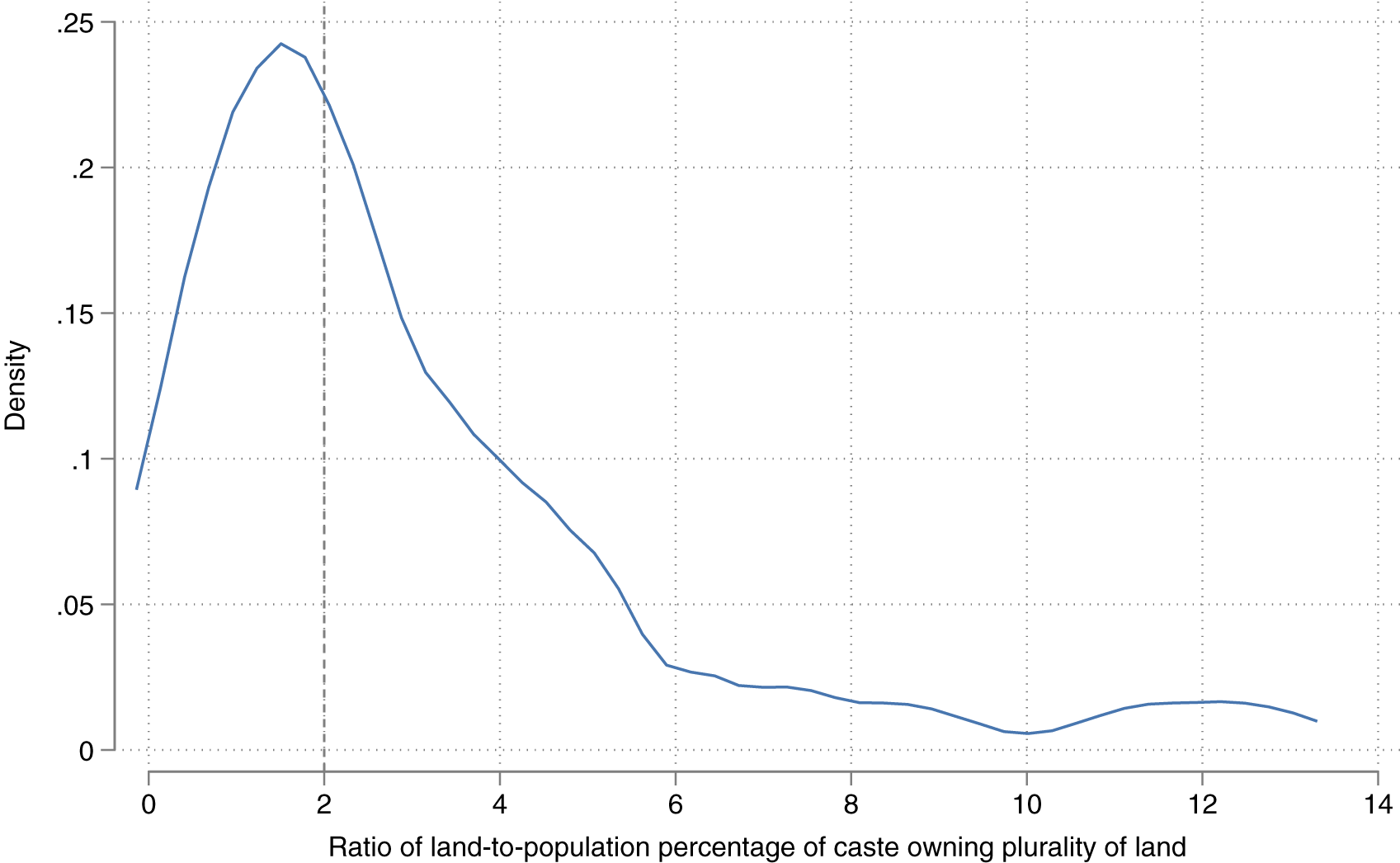
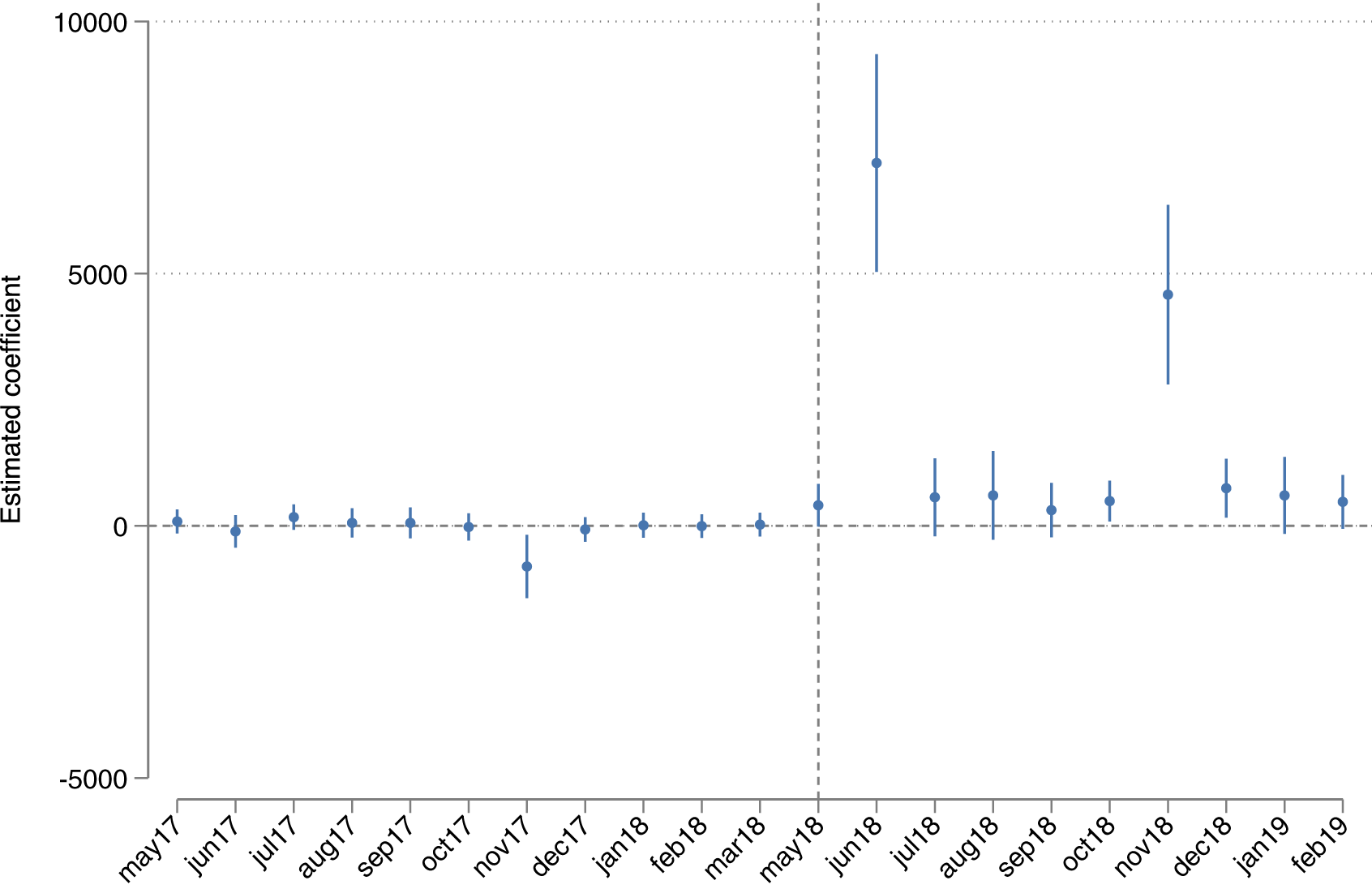
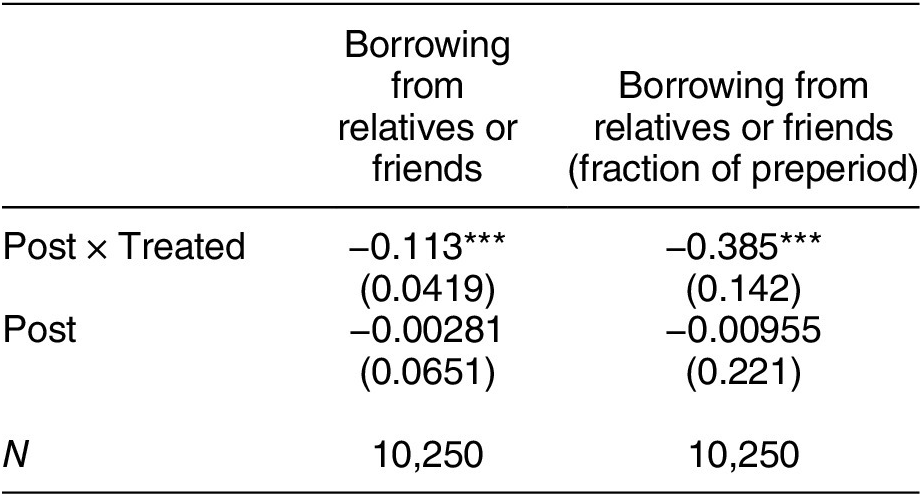
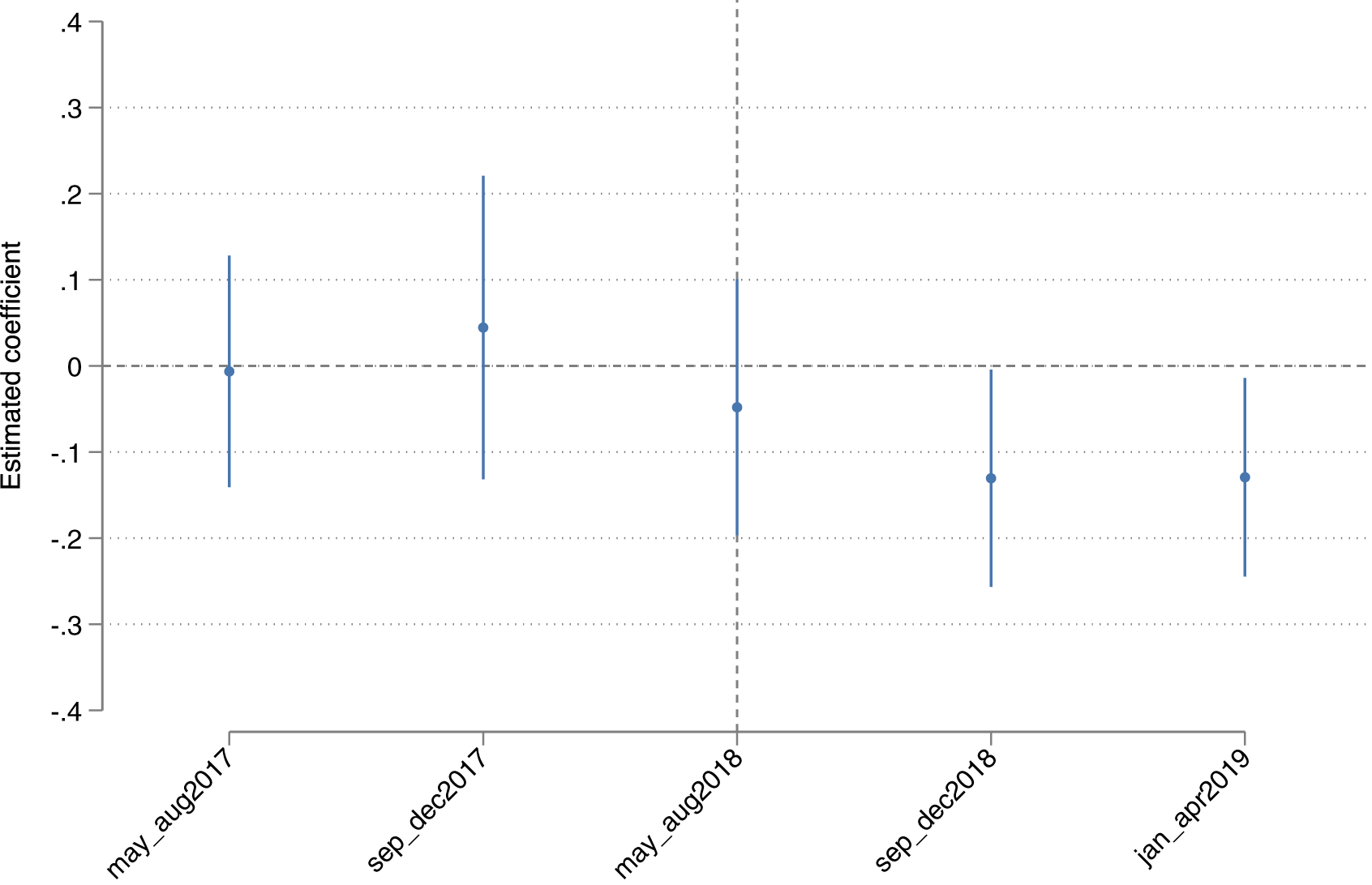
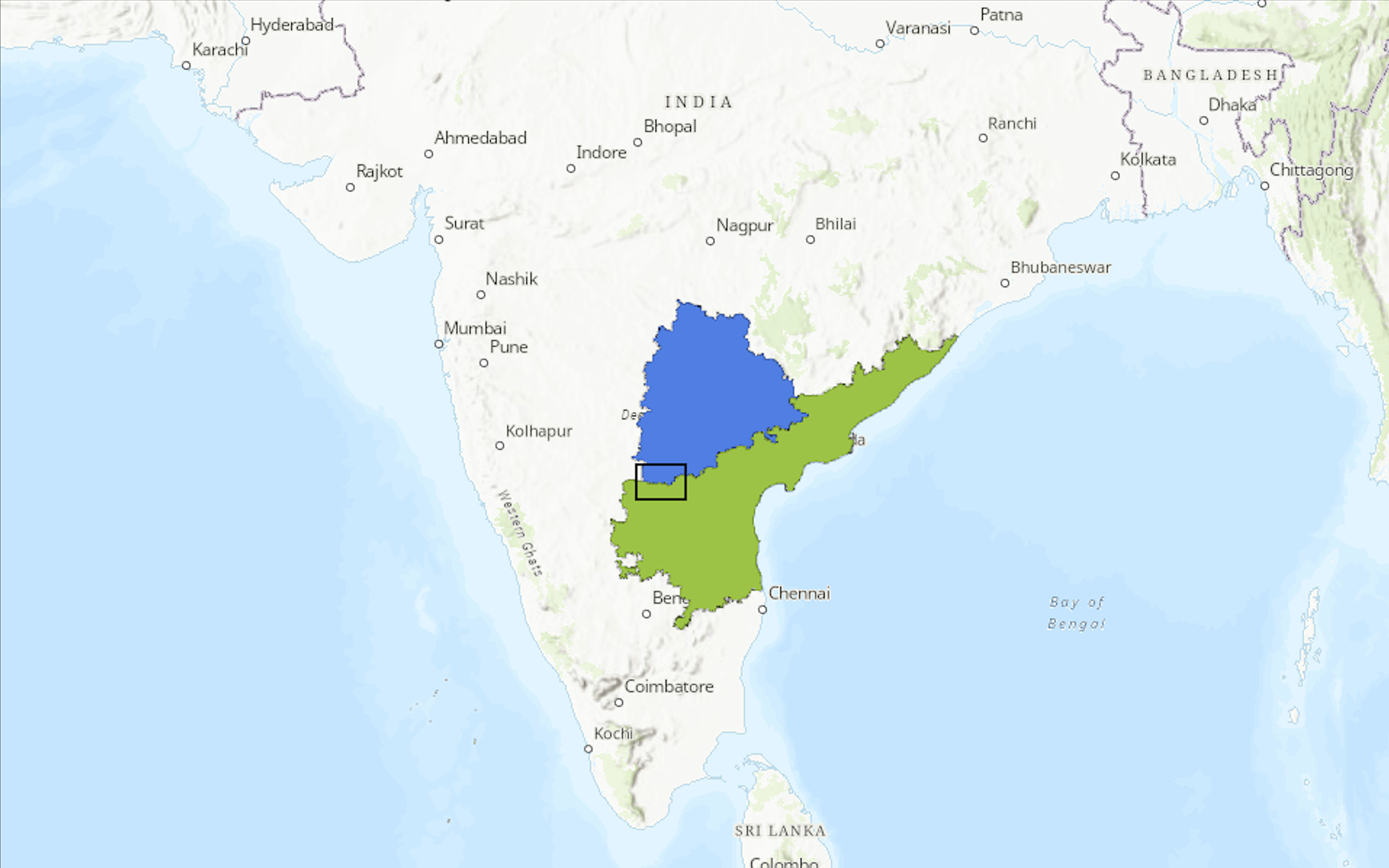
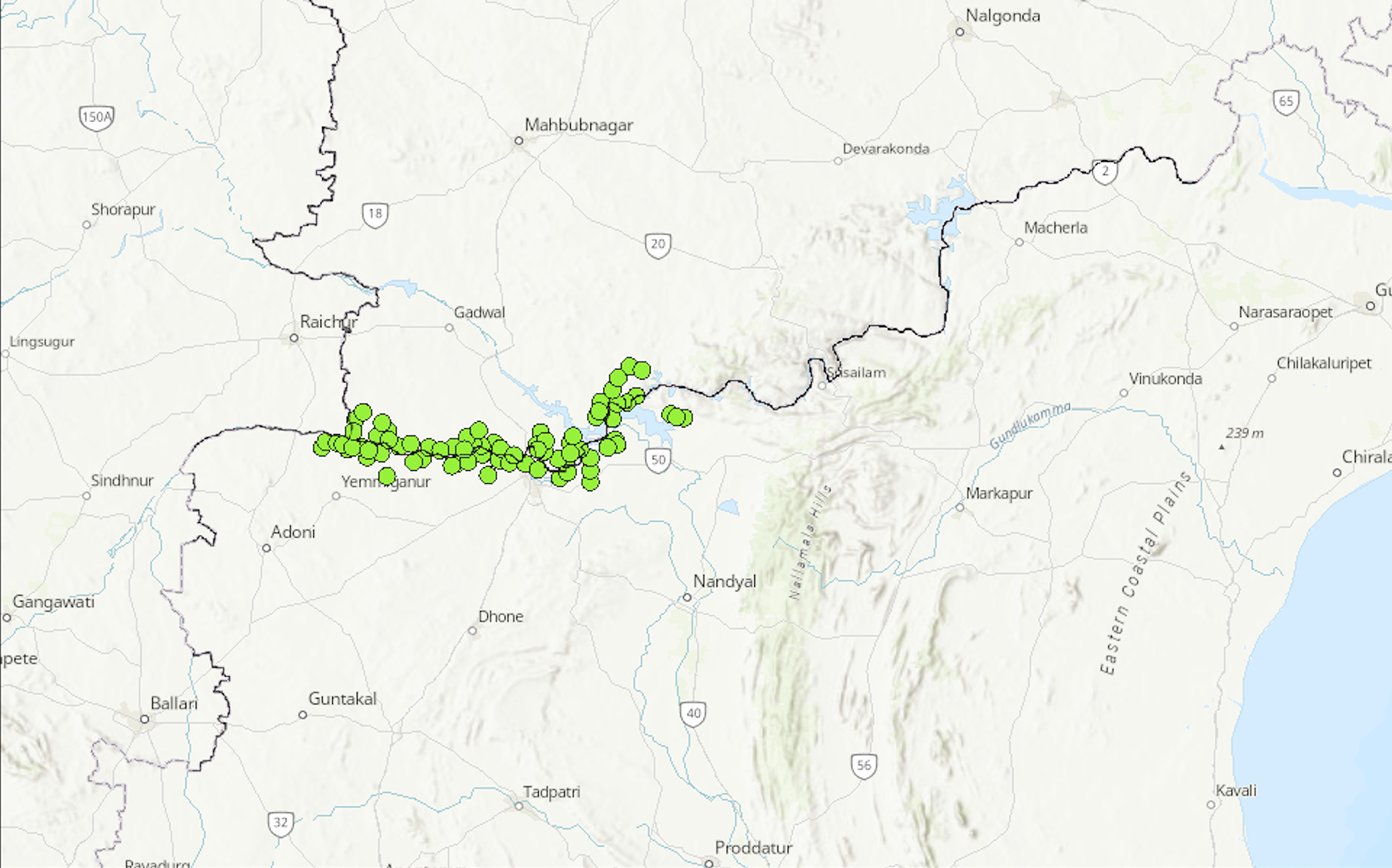
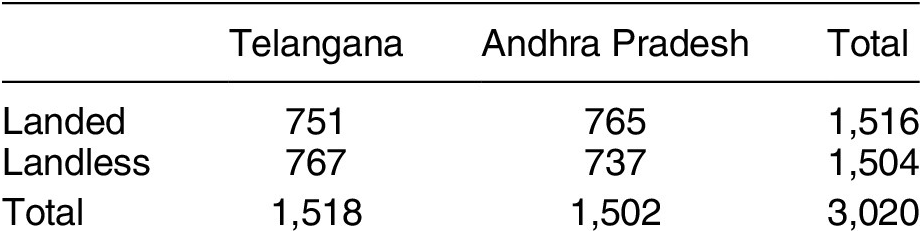

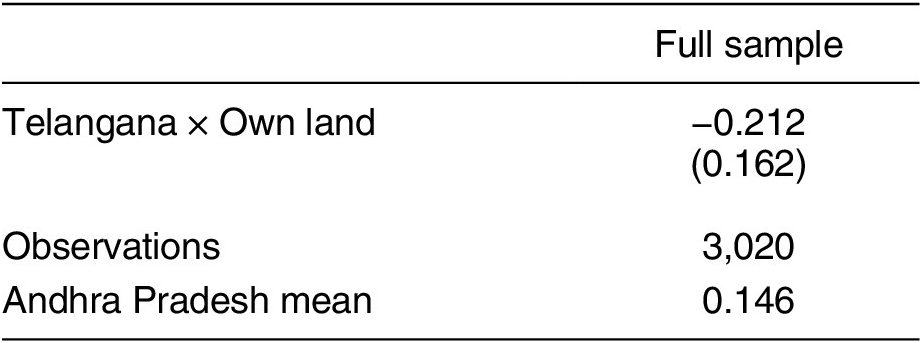
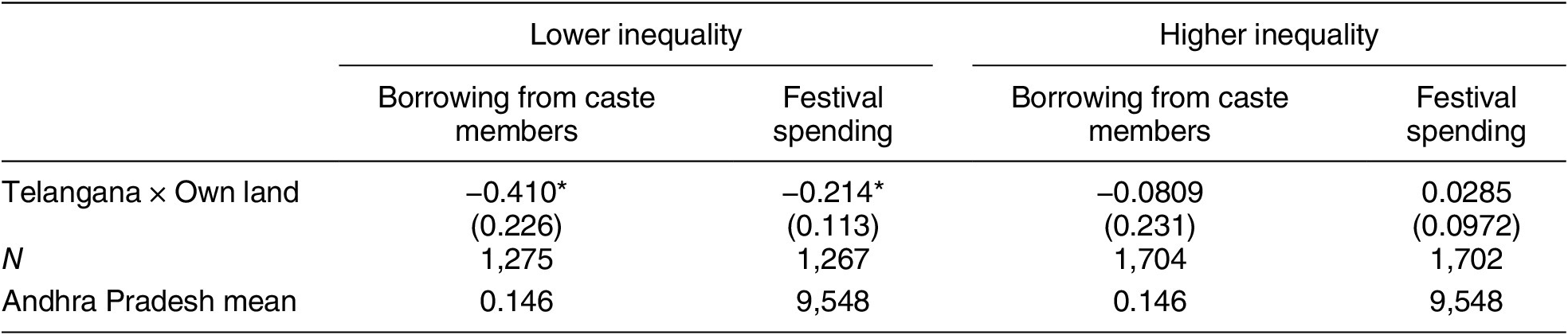
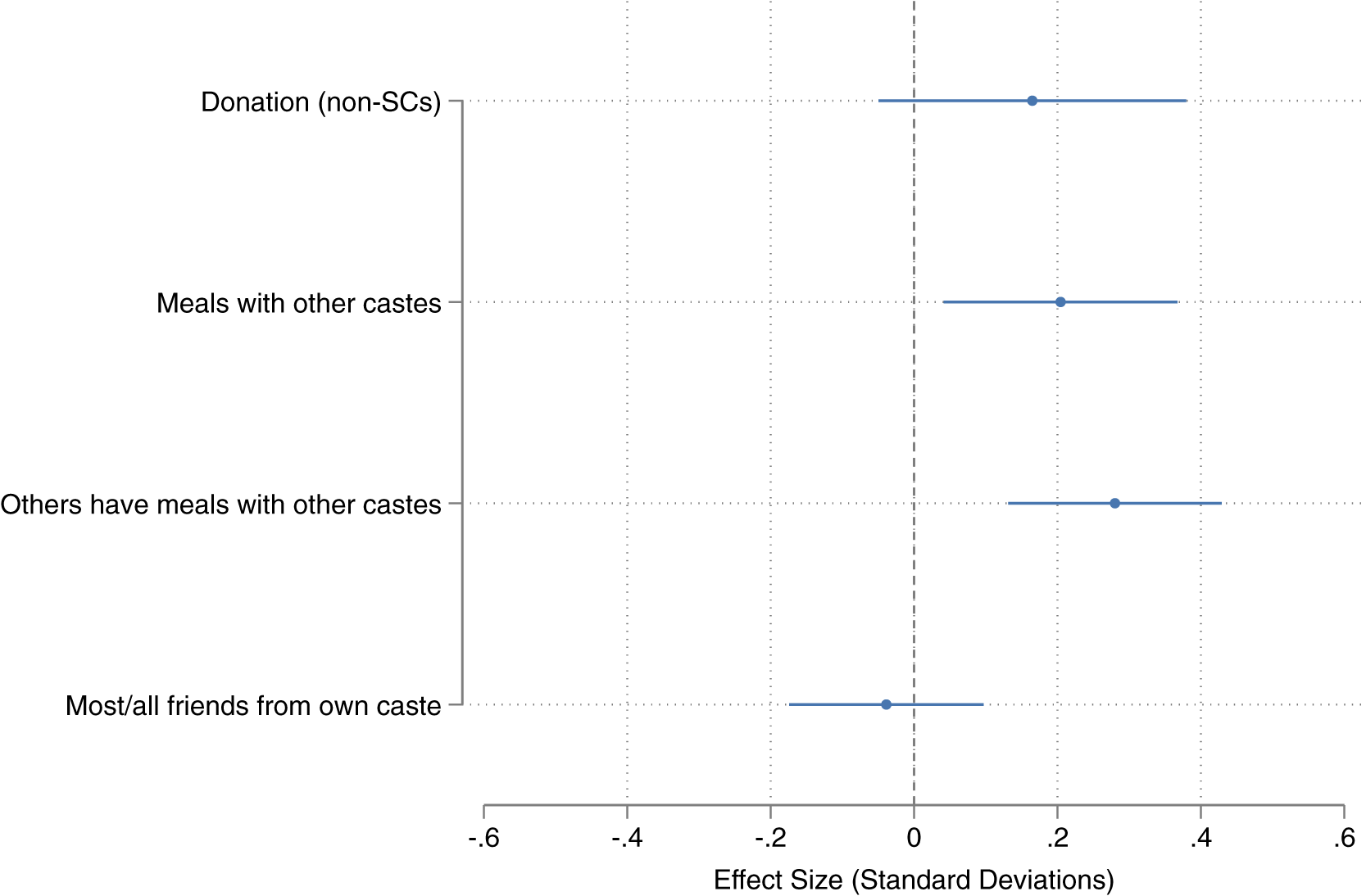
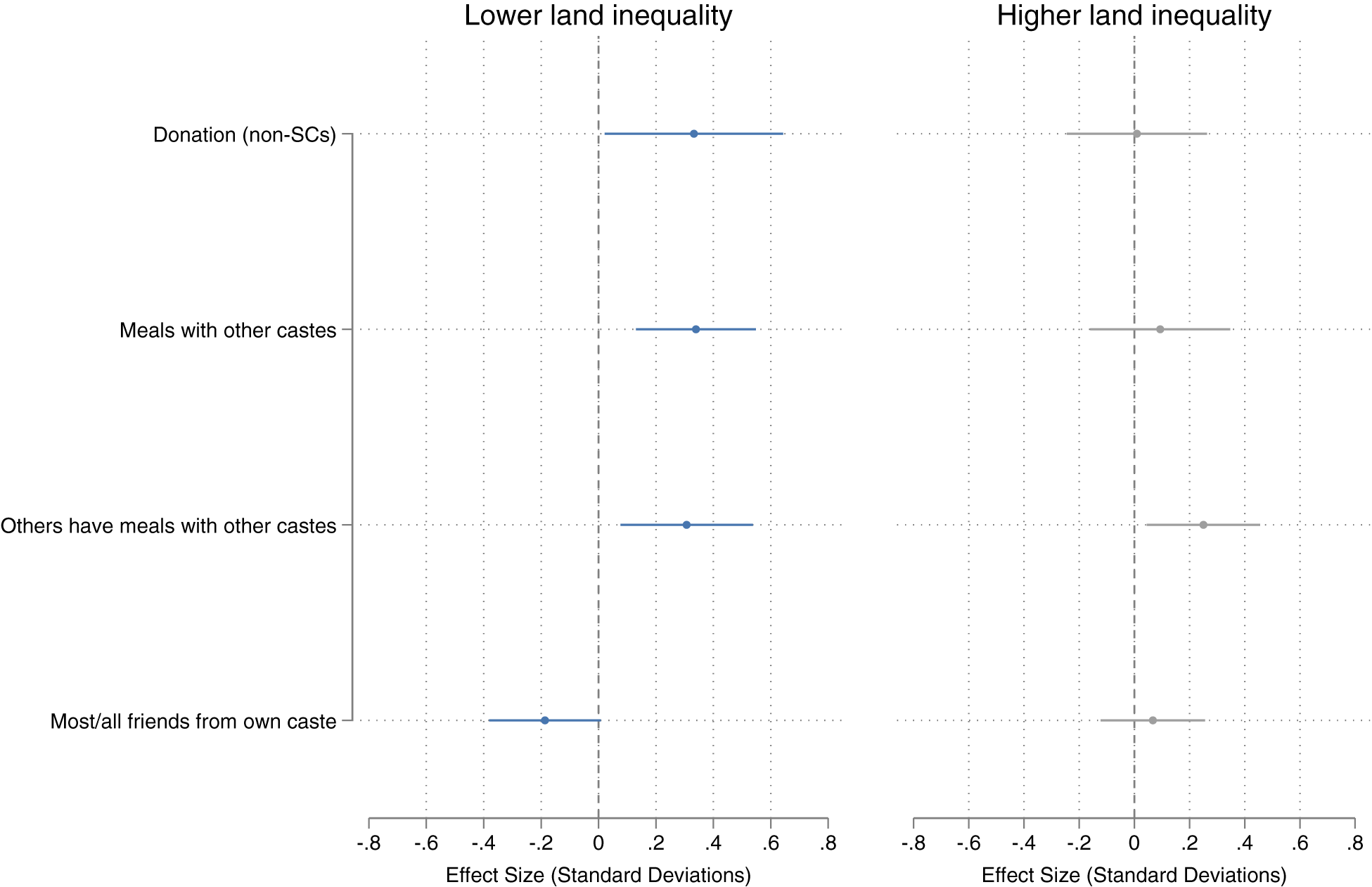
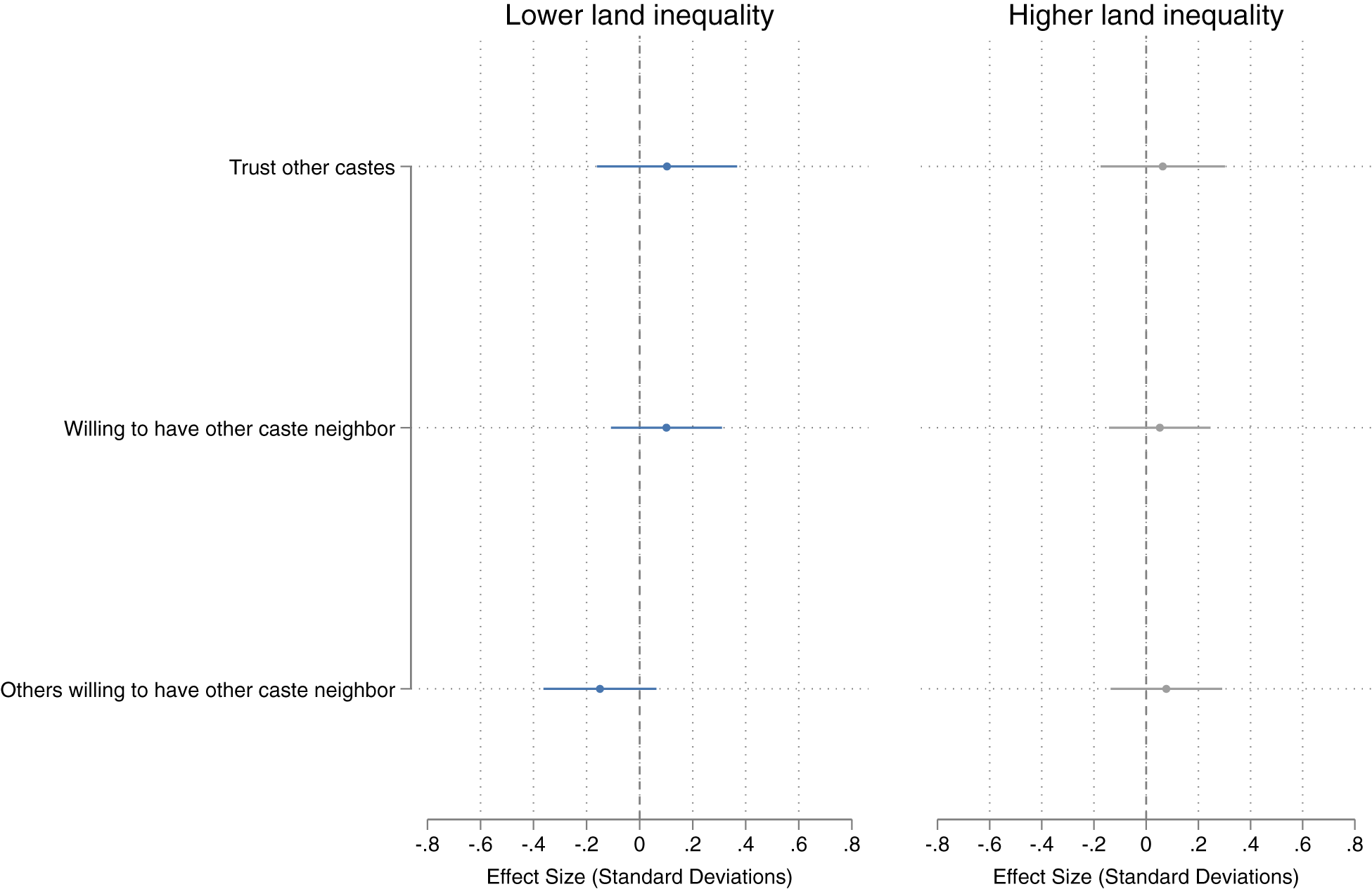


 Open access


Comments
No Comments have been published for this article.