The southern Andean altiplano is rich in some of the world's largest concentrations of nonferrous metallic mineral deposits, particularly silver, lead, copper, and tin (Heuschmidt and Miranda-Angles Reference Heuschmidt and Miranda-Angles2000). Both colonial historical sources and numerous archaeological studies indicate that a variety of altiplano societies exploited many of these deposits. This is the case for the silver mines of Potosí, Porco, and Oruro in Bolivia and for the copper mines at Chuquicamata in northern Chile, which were also worked by the Inka. Whereas prehispanic mining was likely limited to the exploitation of superficial or shallow ores, Andean metallurgy, in contrast, reached a high level of technological sophistication. The southern Andean altiplano was one of the principal areas for the development of metal production in the region. The technological knowledge achieved by Andean metal specialists of the altiplano is reflected in the sophisticated objects that they produced with copper alloys (primarily copper-tin), silver, and gold found in archaeological contexts dated as far back as the Early Intermediate period (EIP; AD 50–600), the Middle Horizon (MH; AD 600–1100)—especially within the sphere of Tiwanaku (Lechtman Reference Lechtman and Kolata2003, Reference Lechtman, Roberts and Thornton2014)—and the Late Intermediate period (LIP; AD 1100–1450). Nevertheless, the quantity of known metallic objects from these periods contrasts sharply with the scarcity of information about the establishments, installations, and metallurgical devices used to produce them. In recent years, various archaeological research programs have begun to fill in these gaps in data for the Potosí region and the highlands of Bolivia (Lechtman et al. Reference Lechtman, Cruz, MacFarlane and Carter2010; Téreygeol and Cruz Reference Téreygeol and Cruz2014; Van Buren and Mills Reference Van Buren and Mills2005), for northern Chile (Figueroa et al. Reference Figueroa, Mille, Salazar, Berenguer, Menzies, Sapiains, Cifuentes and Joly2018; Salazar et al. Reference Salazar, Figueroa, Morata, Mille, Manríquez and Cifuentes2011, Reference Salazar, Berenguer and Vega2013; Zori et al. Reference Zori, Tropper and Scott2013), and for northwest Argentina (Angiorama and Becerra Reference Angiorama and Becerra2010, Reference Angiorama and Becerra2017). These studies reveal evidence of the distinct and varied Indigenous metallurgical technologies that developed in this southern highland Andean region.
In this article we present the results of 15 years of research at the Escaramayu complex, analyzing the technological and organizational aspects of mineral and metal processing at the site (Supplemental Material 1). We focus on a remarkably large and complex reverberatory furnace that, from a technological perspective, represents a direct antecedent of the Andean reverberatory furnace model used widely in the region throughout the colonial period. We also discuss a set of cylindrical furnaces, the oldest known referents to Andean wayras, or wind ovens, that were used during the later Inka and colonial periods.
The Escaramayu Complex: Chronology and Regional Context
The Escaramayu complex is located within the community of Escara, 10 km east of the Uyuni salt flat and 10 km to the south of the mine and mining center of Pulacayo (Figure 1). Situated in an arid environment typical of the southern Andean altiplano, the area is nearly depopulated today, occupied only intermittently by one family of llama shepherds. The Escaramayu complex comprises two principal sites, Pulac050 and Pulac051, which are located on the opposite banks of the Escaramayu River at an altitude of more than 3,850 m asl (Figure 2).
Location of the Escaramayu complex in the southern Andean altiplano. (Color online)

Maps of the Escaramayu complex and the Pulac050 site. (Color online)

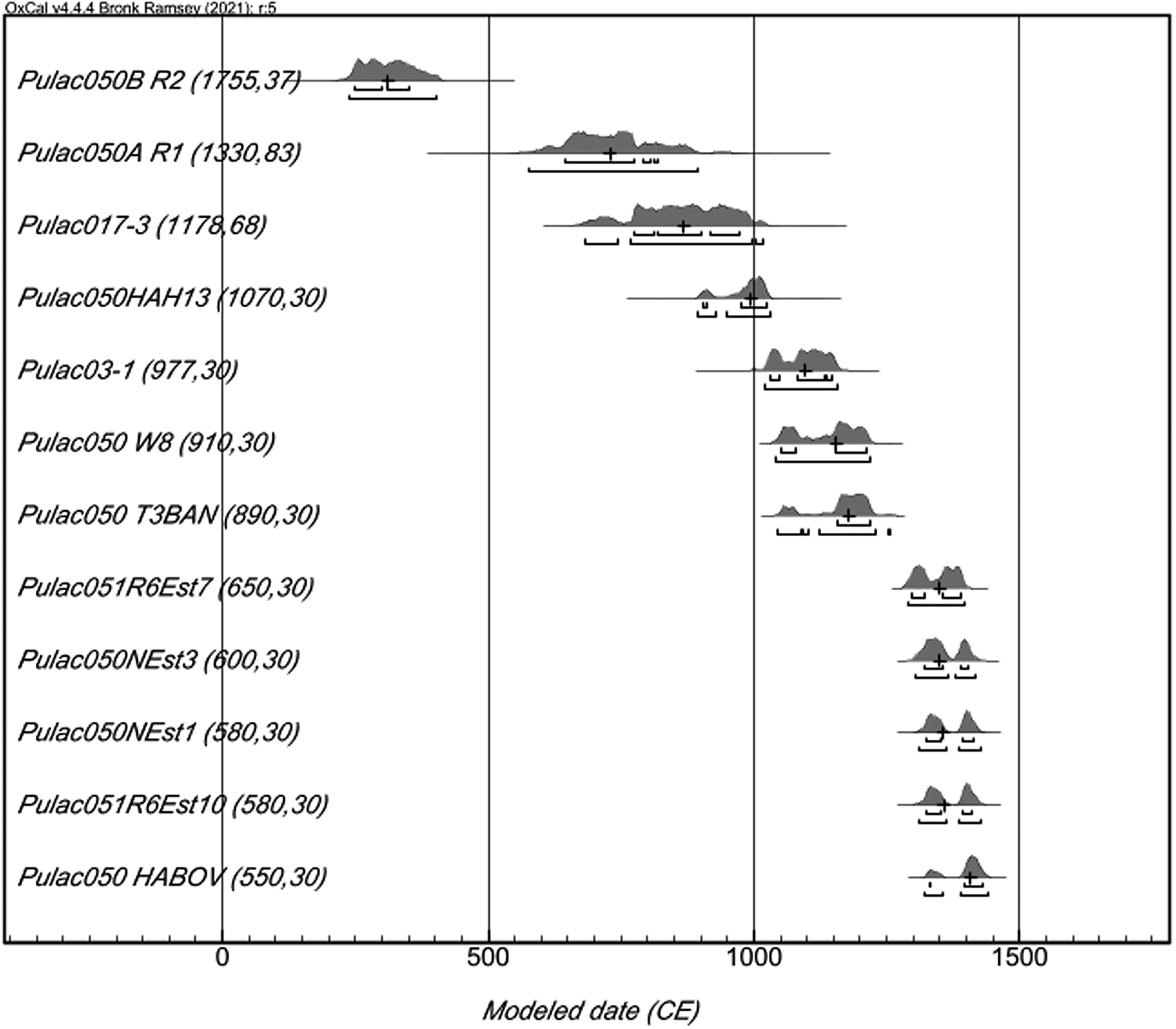
The ceramic remains found on the surface of the sites and in the excavated sectors of Pulac050 and Pulac051 point to two discontinuous occupations of the Escaramayu complex. The chronology of these two occupations was determined by accelerator mass spectrometry (AMS). Figure 3 and Supplemental Material 2 display the AMS results from 12 charcoal and bone samples: six from Pulac050, two from Pulac051, and four from associated funerary contexts. The first occupation took place from the ninth to the thirteenth century during the final phases of the MH and the first part of the LIP. The second, considerably shorter occupation occurred in the fourteenth and fifteenth centuries, during the second half of the LIP. These two occupations exhibit clear differences in ceramic styles, the location and construction of habitational spaces, and funerary patterns. The AMS results obtained to date indicate that the first occupation settled mainly in the Pulac050 site. The ceramics linked to this first occupation correspond principally to Yura styles (Ibarra Grasso Reference Ibarra Grasso1973; Lecoq and Céspedes Reference Lecoq and Céspedes1997), mainly in their polygonal and geometric variants. The category of Yura ceramics encompasses a tradition of regional pottery, present since the MH, over a vast territory that extends along the entire eastern edges of the Uyuni salt flat to the mesothermic valleys of Potosí (Céspedes and Lecoq Reference Céspedes, Lecoq and Cremonte1998; Cruz Reference Cruz2010). We also recovered ceramic styles associated with other regions of the altiplano, such as Puqui, Huruquilla (Ibarra Grasso Reference Ibarra Grasso1973), Cabuza and Taltape (Uribe Rodríguez Reference Uribe Rodríguez1999), and Tiwanaku (Albarracín Jordán Reference Albarracín Jordán1996), though they are less representative of our general findings.
Distribution of calibrated dates from Escaramayu complex.

The rectangular habitation enclosures of Pulac050 are situated on an alluvial terrace, close to watercourses and buried beneath an impressive layer of post-occupation sedimentation (0.8–1.2 m). Excavation of two enclosures in Pulac050 (R01 and R02; Supplemental Material 3a) shows that they were constructed with neat, double-faced masonry stone walls. Surveys led to the identification of 20 funerary contexts associated with this first occupation, although most were affected by looting. Our study of these disturbed areas and our excavation of various intact burials revealed a funerary pattern characterized by the placement of the dead in individual and collective tombs located within eaves and rock cavities (Supplemental Material 4). Personal objects—cloth apparel, textiles, bows and arrows, metallic ornaments, and lithic and bone tools—accompanied the dead, along with specific offerings: ceramic vessels, containers of basketry and gourds, tablets and tubes used for inhalation, wooden bells, ears of corn, pigments, and blocks of salt. Except for one case, Pulac015, the burials are located between 2 and 8 km from the Escaramayu complex, either isolated or in groups of two to four tombs. Two of these tombs were dated by AMS: Pulac017-3 to 1178 ± 68 BP (LOCEAN-131; wood) and Pulac03-1 to 977 ± 30 BP (LOCEAN-130; wood; see Supplemental Material 2 and 4).
The second occupation of Escaramayu during the LIP involved both sites. The ceramics attributed to this second occupation exhibit nonlocal styles that are distributed widely in neighboring regions both to the north and south of the Salar de Uyuni, such as the Intersalar Region (Lecoq Reference Lecoq1999), Quillacas (Lima Reference Lima and Rivera-Casanovas2014; Sejas Reference Sejas Portillo and Rivera-Casanovas2014), and Lípez (Nielsen and Berberián Reference Nielsen, Berberián and Rivera-Casanovas2008). Although the habitation enclosures assigned to this second occupation are also rectangular, their dimensions are smaller than those of the previous occupation (Supplemental Material 3b). Thirteen of these enclosures are located on the lower slopes of Pulac051 and another two within Pulac050. Excavations and test pits of three units in Pulac051 and one in Pulac050 show that these enclosures were built on leveled surfaces and that the walls were constructed with packed earth and adobes over a stone base; this construction technique is still used in this part of the southern altiplano. The funerary pattern associated with the second occupation is characterized by burials in the form of circular stone cists, most of which (N = 40) are grouped in a necropolis (Pulac050N) adjacent to the site Pulac051; six are dispersed in the near vicinity of the site (Supplemental Material 4). Two of these cists were dated by AMS: cist Pulac05N Est.1 was dated to 580 ± 30 (Beta-507056; bone; δ13C = −16.1‰), and cist Pulac050N Est.3 was dated to 600 ± 30 BP (Beta-507057; bone; δ13C = −17.9‰; see Supplemental Material 2 and 4).
A Metallurgical Establishment at a Regional Scale
The data obtained at the Escaramayu complex indicate that the site was a prehispanic metallurgical establishment. Various stages of metal production were in operation at the complex during both occupations. These activities included the preparation and selection of minerals, extractive and refining metallurgies, and likely the manufacture of metal objects. Although the weight of evidence varies, all the excavations carried out at Pulac050 and Pulac051 revealed contexts and structures related to metal production. One of the most prominent aspects of this prehispanic metallurgical establishment is the sheer number and variety of furnaces and structures associated with metal production. We registered the remains of at least 44 metallurgical combustion structures in Pulac050 and documented another 8 in Pulac051. Nevertheless, this register of structures represents only the results of excavations carried out to date, and there are likely many more structures. The furnaces and other metallurgical features identified at both sites thus far can be classified, according to their morphology and dimensions, in four major groups: large, medium, and small furnaces and longitudinal benches (Supplemental Material 5). Regrettably, the metallurgical contexts and structures in Pulac050 were altered greatly over the years by traditional practices of recovering metal remnants from archaeological slags and from ancient smelting devices.
During the MH, metallurgical activities took place only at Pulac050. Excavations there revealed a division of these activities into different workspaces located both outside and inside habitation structures. Sector S1 is notable among the spaces located outside the enclosures; it was on the site's alluvial terrace (Figure 4). Pyrometallurgical processes were carried out at different scales and with different types of smelting devices in Sector S1. We identified the remains of at least 11 metallurgical furnaces, as well as numerous pits with consolidated earth walls, some of which showed slight heat reddening; the pits were filled with ashy sediments and abundant charcoal. High concentrations of vitrified slag covered the surface of the sector and the remains of vitrified clay furnace walls. Two AMS analyses of charcoal samples were undertaken in Sector S1: HAH13 resulted in 1070 ± 30 BP (Beta-331429; wood charcoal; δ13C = −20.7‰) and T3BAN in 890 ± 30 BP (Beta-331428; wood charcoal; δ13C = −21.7‰).
Plan of Sector S1 of Pulac050.

At Sector S2 (Figure 2), located on a small promontory only 10 m north of Sector S1, we found the bases of 11 combustion structures built with clay. Eight have well-defined circular contours, indicating that the structures were cylindrical in form. A charcoal sample taken from the interior of one of these structures (W8) was dated to 910 ± 30 BP (Beta-507058; wood charcoal; δ13C = −11.2‰; cal AD 1048–1261; calibrated at 2σ with the program OxCal v. 4.3.2 SHCal20 [Bronk Ramsey and Lee Reference Ramsey and Lee2013; Hogg et al. Reference Hogg, Hua, Blackwell, Niu, Buck, Guilderson and Heaton2013]). In Sector S3, a few meters east of the promontory, we identified two benches built with stone and mortar, associated with two other circular combustion structures (similar to those in Sector S2) and two large pits filled with ashy sediment and abundant charcoal. A large part of the surface around these structures showed different levels of heat reddening, indicating their exposure to higher temperatures.
The R01 and R02 structures are found in Sector S4 (Supplemental Material 3a). R01 exhibits three spaces well defined by internal walls. A combustion structure is in the northern part of the enclosure in association with a set of spherical polishing tools and workshop plate polisher-grinding stones. Along the east wall, under the floor, we found a small storage structure with walls and a stone cover associated with a concentration of green copper oxide dust and granules and with similar plate grinding stones. A sample of charcoal (Pulac050A-R1) collected from a hearth located next to a baffle wall was dated by AMS at 1330 ± 83 (LOCEAN-128; wood charcoal). Within R02 we identified a set of structures very clearly connected with the production of metal items (Supplemental Material 3b). In the southwest corner of the enclosure, we uncovered a clay bench with a heat-reddened surface. This structure has four circular basins and an additional pit filled with ashes and charcoal. Another clay bench, located in the southeast corner, presents a similar heat-reddened surface with a diversity of small pits. A combustion structure with intensely heat-reddened walls and floor is located between the two benches and is filled with carbonaceous material. A charcoal sample from the interior of this last combustion structure (Pulac050B-R2) was AMS dated to 1755 ± 37 (LOCEAN-129; wood charcoal). Given that this date does not correspond chronologically to the ceramic styles and material culture within the enclosure or more generally throughout Pulac050, we argue that this result is a likely product of the “old-wood” effect. On the floor of the enclosure, we identified numerous plate grinding stones and stone-polishing tools, as well as shaped pumice blocks. The abundance of these types of tools and materials, in addition to the concentration and morphology of the combustion structures located inside the enclosure, suggests that it was dedicated to working metal (Supplemental Material 6).
During the LIP, from the fourteenth to the fifteenth century AD, metallurgical activities continued to develop in both Pulac050 and Pulac051. This is confirmed by AMS dating of a charcoal sample (HABOV) taken from Sector S1 of Pulac050 that yielded 550 ± 30 BP (Beta-331427; wood charcoal; δ13C = −21.6‰). The sample was taken from the top of a vaulted combustion structure built directly above an earlier combustion structure (HA; Figure 4). These dates are important because they demonstrate continuity in the use of this work area. Inside the three excavated enclosures in Pulac051 (R04, R06, and R07; Supplemental Material 3a [B]), we identified the remains of at least eight other metallurgical combustion structures that are similar morphologically to the remains of several furnaces identified in Sector S1 of Pulac050. Charcoal samples taken from two combustion structures inside enclosure R06 yielded AMS results of 650 ± 30 BP (Beta-507059; wood charcoal; δ13C = −22.4‰) and 580 ± 30 BP (Beta-507060; wood charcoal; δ13C = −19.4‰). Unlike in Pulac050, numerous exploratory surveys carried out on the slopes of Pulac051 did not reveal any work areas located outside the enclosures. However, excavations have not yet been carried out on the site's alluvial terrace, where sedimentary processes are more intense. Identification of stone wall segments that appear on the surfaces of this area suggests the probable existence of buried constructions.
Pulac050: Early Antecedents of Wayra and Reverberatory Furnaces
Of the numerous metallurgical devices assigned to the first occupation of the Escaramayu complex in Pulac050, both the H1 furnace and the wind furnaces identified in Sector S2 are remarkable. They constitute the earliest known antecedents of a southern Andean technological tradition that not only continued to be used but that also expanded regionally during the subsequent Inka and colonial periods. Here we present and analyze these furnaces, with particular attention to the H1 furnace because of its degree of sophistication.
The H1 Furnace: An Unanticipated Prehispanic Smelting Apparatus
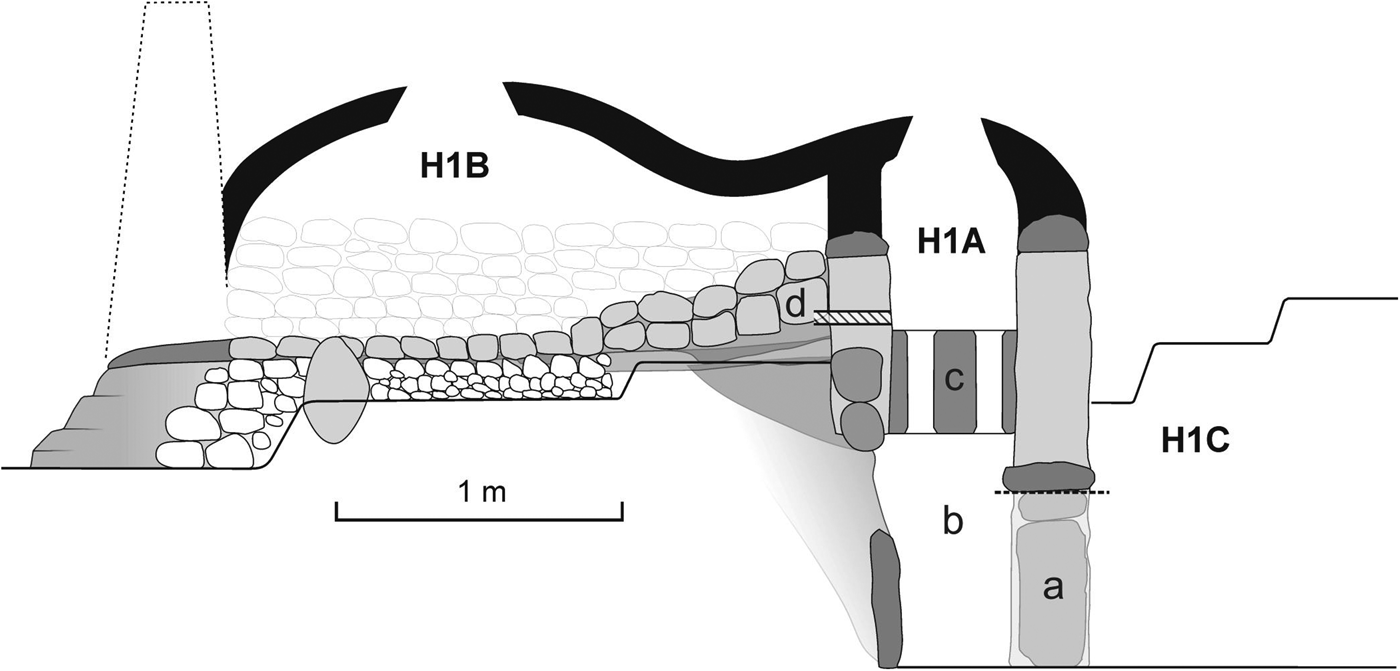
The H1 furnace in Sector S1 of Pulac050 (Figure 5) stands out because of its complexity, size, and state of preservation. It is designed as two units or segments, identified in the plan (Figure 4) and cross section (Figure 6) as H1A and H1B, and is associated with an open exterior space, H1C. Unit H1A comprises the fuel gate, firebox, and two benches with vertical ventilation ducts, on which refining or melting operations were likely carried out. Unit H1B was a roughly circular working chamber, with a flat interior base and a vaulted cover, features that are compatible with the definition of a reverberatory furnace.
Photograph of the H1 furnace excavation. Note the intense disturbance of the context.

Probable arrangement of the H1 furnace clay vaulting: (a) fuel gate; (b) firebox; (c) benches; (d) ventilation channel to the exterior.

The H1A segment is better preserved because it was partially buried. It consists of a rectangular firebox delimited on three sides by thick stone walls vitrified intensely on their interior faces. Identification of a layer of red clay in a cross section of one side of H1A indicates that the unit was covered by a vaulted clay structure (Figure 6). Two separated thick benches built with stones and mortar, suspended inside the upper portion of unit H1A, are covered by a thin layer of grayish sediment. Both benches are traversed by vertical, cylindrical ventilation ducts, four on the south bench and two on the north bench (Figure 6). A thick-walled, rustic clay container, which is concave and shallow, rests above the opening of one of the north bench ventilation ducts. It may have served as a base to hold and stabilize a crucible during furnace operation. The presence of this feature suggests that the H1A unit may have been not only a firebox but, in the zone immediately above the benches, served also to accommodate secondary metallurgical processes, such as the refining or melting of metal.
Unit H1A was supplied with fuel from a stock outside the furnace, at location H1C. A fuel gate (Figure 6a) delimited by flat stones and located beneath the two benches and at the center of the main exterior furnace wall provided passage for the fuel. Excavation of H1A revealed lower levels composed of fine, ashy sediments with an abundant volume of carbonized vegetal remains. Puseman (Reference Puseman2010) analyzed these vegetal fuel remains and identified them as tola (Parastrephia lepidophylla), a bush used traditionally as the main vegetable fuel in the southern Andean altiplano that grows abundantly in the vicinity of the site (Lechtman et al. Reference Lechtman, Cruz, MacFarlane and Carter2010). The fact that a considerable amount of the carbonized tola remaining at depth within H1A consists of extremely thin twigs (diameters less than 3 mm) indicates that dry tola wood, not charcoal, fueled the H1 furnace.
To understand the functioning of the H1A unit and to determine the temperatures reached within and just above the bench ducts, we removed samples for analysis from two locations: (1) the interior wall of one of the bench ventilation ducts and (2) the interior surface of the vessel resting above a duct. Thermocalc analyses determined 1,128°C as a starting temperature for surface vitrification of the inner wall of the bench duct and 1,150°C as a minimum temperature for surface vitrification of the inner wall of the vessel, with the probability that both reached higher temperatures (Lechtman et al. Reference Lechtman, Cruz, MacFarlane and Carter2010:20–23).
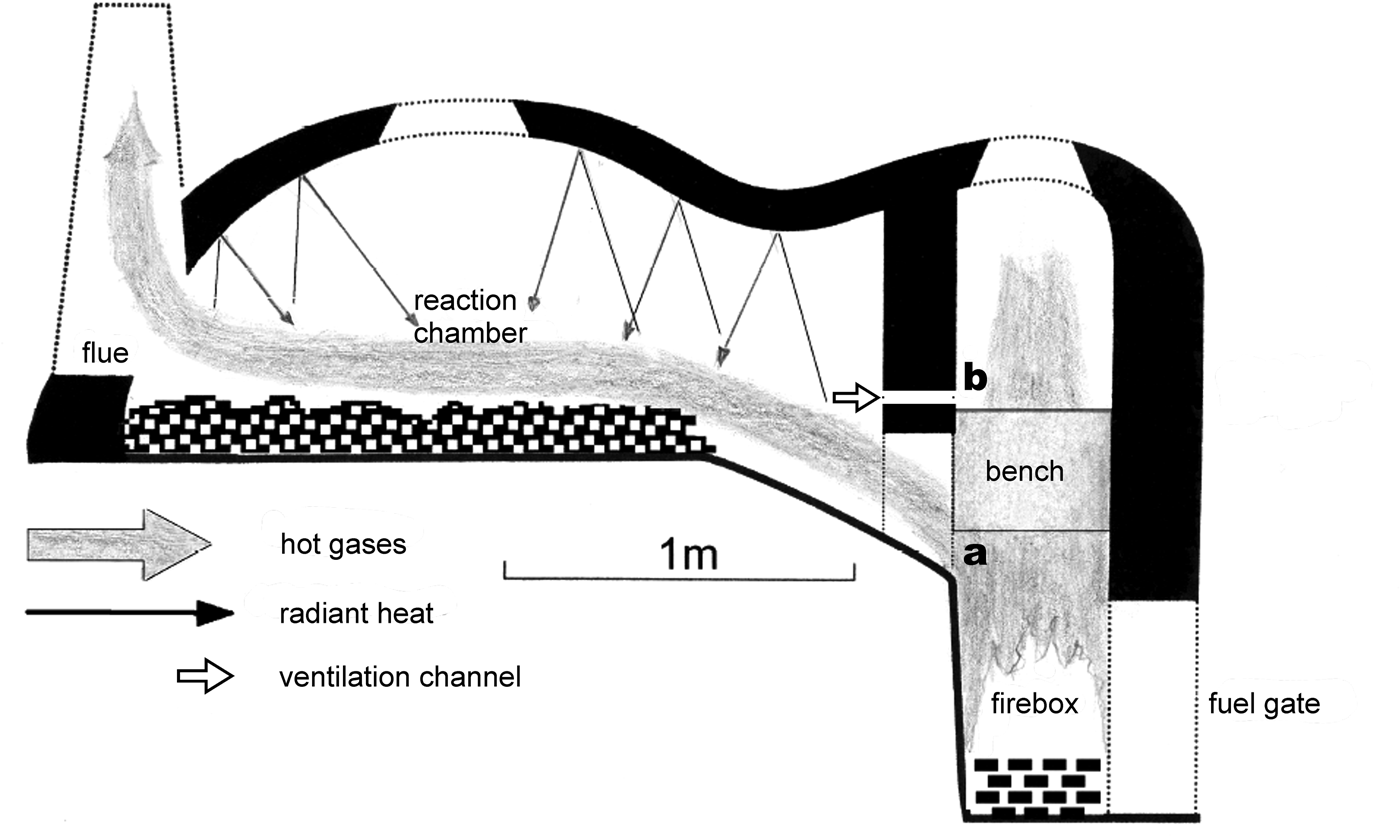
Unit H1B's plan is roughly circular, delimited at its base by a small stone wall and segments of intensely heat-reddened, compacted sediment. With an average internal diameter of 1.5 m, the base of the H1B unit is positioned higher than that of H1A, which is between 1.2 and 1.0 m from the bottom of the firebox. A thick layer (between 0.2 and 0.3 m) of structural elements comprising heat-altered clay and heat-reddened sediment covers the base. This layer resulted from the collapse of a feature that covered the unit at a higher elevation. A profile of the south wall of H1B, together with its roughly circular plan and the arrangement of the collapsed cover, indicates that H1B was a vaulted chamber (Figure 6). Each unit of the H1 furnace was vaulted independently. Nevertheless, both unit H1A and unit H1B were connected via an inclined channel between the two suspended benches at a level approximately mid-height of unit H1A (Figure 7). Hot gases from H1A entered H1B initially by convection; subsequently, the temperature within H1B was raised by radiant heating. The intense heat-reddened sediment on both the walls and the inclined channel indicates an exposure to high temperatures. The north lateral wall of the H1B unit exhibits a ventilation channel that connects the firebox with the outside (Figures 6 and 7). The external opening of this channel is oriented to the northwest to capture the dominant winds.
Diagram of heating mechanisms within Pulac 050H1 furnace.

The H1C area is a large space, open to the outside, planned exclusively for the storage and loading of fuel. The occupation floor in this sector is 1.44 m below the current surface, a placement that permitted loading fuel directly through the fire gate into H1A. H1C is delimited by irregular stone-retaining walls that rise to the occupation level of the site. Whereas our excavations in Pulac050 did not reveal remains of other similar furnaces, the abundance of large stones with heat-reddened and vitrified surfaces, in addition to the surface remains of intensely heat-reddened clay walls similar to those of the H1 furnace, suggest that this was not the only apparatus of its kind in Pulac050. Many of these remains of clay walls bear the imprint of textiles on their interior surfaces (Supplemental Material 7), a relevant observation to which we return later.
Although each formed part of the same furnace, the H1A and H1B units performed different metallurgical functions. Unit H1A comprises the fuel gate, the firebox, and two benches with vertical ventilation ducts. Refining or melting operations were likely carried out above the benches; however, more evidence is needed to definitively state the specific metallurgical functions and operations that took place at that location in unit H1A. The semi-buried placement of unit H1A insulated the firebox from the ambient temperature of the altiplano, which can be extremely cold, and eliminated the need to construct excessively tall structures that would have been difficult to operate. Unit H1B, in contrast, was a roughly circular working chamber, with a flat interior base and a vaulted cover, typical of a reverberatory furnace. The large dimensions (1.5 m in diameter) of this unit suggest that it was involved in stages of reducing metallic ores to metal, although the structure is equally appropriate for metal refining and perhaps for the dead roasting of ore. We excavated the H1B chamber down to its bed and encountered neither accumulations of metallurgical slag nor ceramic crucible sherds at these low levels. With so little evidence remaining of the precise operations carried out in chamber H1B, we await a planned experimental firing of a scaled reconstruction of the H1 furnace to study its design and test its functions.
The H1 furnace, a large metallurgical structure comprising two separate bodies, is unprecedented for the Andean region, even for the later Inka and colonial periods. All our data indicate that it is a prehispanic model of a reverberatory furnace: a furnace with a vaulted working chamber that is separated from the firebox and from the fuel. The heat within the vaulted working chamber is reflected (reverberated) from the vault onto the charge to be processed, whether that be minerals for reduction, metals to be refined, or possibly ore to be roasted. As a reverberatory furnace, the HI furnace is designed to accomplish two purposes, each carried out in an independent space, the H1A and H1B units (Figure 7). Moreover, the carefully chosen placement of a ventilation channel that exposed Unit H1A to strong prevailing winds is a key component of natural ventilation that places H1 within a prehispanic technological tradition of wind furnace design.
When establishing the chronology of furnace H1, given the intense, long-term disturbance and alteration of the site and its structures, we aimed to avoid dating errors and distortions (contamination of samples, more recent reuse) by collecting only charcoal samples taken from preserved contexts on the outside of structure H1 and on a platform associated with it. The three charcoal samples dated by AMS (HAH13, T3BAN, HABOV), which are stratigraphically either contemporary with or earlier than the construction of furnace H1, indicate that it was built and was in operation during the earliest occupation of the site (ninth to thirteenth centuries AD).
Operating Mode of the H1 Furnace
The H1 furnace at Pulac050 seems to have been designed to achieve and regulate heat within the furnace at two locations: (1) within the reaction chamber H1B, designed as a reverberatory chamber, and (2) in the zone between and above the two H1A benches, including the vertical, cylindrical bench ventilation ducts (Figure 7).
Location 1. The hot gases that enter the reaction chamber are fueled by wood (not charcoal) that burns in the firebox. At sea level, the highest temperatures that wood-fired gases can reach range between about 900°C and 1,000°C. Assuming that the ore being smelted in the reaction chamber is a copper oxide ore, (e.g., malachite), the smelt produces a solid but spongy copper metal. Neither at sea level nor at 4,000 m asl, however, is the gas temperature achieved in the reaction chamber (Figure 7a) high enough to melt the smelted copper metal (CuMP = 1,083°C).
Location 2. We analyzed a sample removed from the interior wall of a bench vertical ventilation duct via both inductively coupled plasma-optical emission spectrometry (ICP-OES) and instrumental neutron activation analysis (INAA) and introduced the resulting elemental chemical analyses to a Thermocalc program (Lechtman et al. Reference Lechtman, Cruz, MacFarlane and Carter2010:20–21). Thermocalc analysis indicated that the CO-rich gases within the cylindrical ventilation duct reached at least 1,128°C, well above the CuMP of 1,083°C. Thus, the purpose of the benches-and-cylindrical ducts may have been to melt the spongy smelted copper metal at temperatures that the reaction chamber could not reach.
Primary Combustion at Location (a) in Figure 7. Burning tola wood in the firebox produces a primary combustion at location (a). To increase the temperature of the gases achieved in a wood-burning fire, such as that produced by tola wood, the air introduced into the firebox must be deprived of oxygen. This is achieved by intermittently closing or restricting the fuel gate to the firebox. With sufficient oxygen (O2), carbon will burn to produce carbon dioxide (CO2) at normal wood fire temperatures. By intermittently limiting the firebox gate, thereby preventing sufficient air from entering the firebox, the carbon will burn to produce a mixture of carbon dioxide and carbon monoxide (CO).
Hot gases produced by the primary combustion at location (a) enter the reaction chamber, heating the chamber by convection as they pass along the bed of the furnace and exit via a flue. Eventually, a certain portion of radiant heat will also be produced as the heat rising from the furnace bed is reflected back by radiation from the wall of the covering vault. When the required furnace chamber temperature has been reached and is maintained at a steady state, between about 80% and 90% of the heat produced within the chamber will be a result of radiant heating. The flow of hot gases along the furnace bed is reduced markedly. According to the Stefan-Boltzmann law, the transfer of heat emitted from a surface via radiation varies with the surface temperature to the fourth power, whereas the transfer of heat from a surface via convection varies with the surface temperature to the first or second power. Thus, the effect of radiative heat transfer dominates as the temperature increases within the high-temperature environment of a metallurgical furnace. The vaulted shape of the roof of the H1B chamber increases the total radiative power incident on the chamber bed (Poirier and Geiger Reference Poirier and Geiger2016).
Secondary Combustion at Location (b) in Figure 7. Preheated gases, rich in CO from the first combustion at (a), rise and enter both the zone between the two benches suspended above the firebox and along the vertical cylindrical ducts within the benches. Carbon monoxide is a potent fuel that produces secondary combustion in the upper chamber of H1A. Because the CO fuel has been preheated to nearly 1,000°C (red heat), when these gases reach the level of the external ventilation channel at height (b), they burn with a much hotter flame, which can approach 1,500°C (yellow-to-white heat). The airflow from the external vent regulates the secondary combustion at this level, maintaining the temperature required for the operations taking place at the benches.
Similarities and Technological Continuities with Later Southern Andean Metallurgical
Furnaces
Some elements of the H1 furnace can be related closely to those in other prehispanic and more recent metallurgical furnaces that have been identified in parts of the southern Andes. Studies carried out at the Inka site Quillay (Figure 1) in northwestern Argentina (Raffino et al. Reference Raffino, Iturriza, Iácona, Capparelli, Gobbo, Montes and Vásquez1996; Spina Reference Spina2018; Spina et al. Reference Spina, Giovannetti and Ferraris2017) revealed metallurgical furnaces, most of which are vertical and cylindrical in shape. Inside two of these furnaces (nos. 14 and 17), a thick bench located above the fire box and covered by a thin layer of whitish limestone sediment is traversed by six vertical cylindrical air ducts (Spina Reference Spina2018:225–233; Spina et al. Reference Spina, Giovannetti and Ferraris2017:333–334). The photographs and diagrams in Figure 8 illustrate the formal features that the H1 Pulac050 furnace and the Quillay furnaces share. Metallurgical furnaces at both sites incorporate a highly specific technological feature: benches with vertical ventilation ducts located above the firebox. It is important to note here that several Quillay furnaces were covered at the top (Raffino et al. Reference Raffino, Iturriza, Iácona, Capparelli, Gobbo, Montes and Vásquez1996:63–64). This may have been the case for furnaces nos. 14 and 7, where the preserved portions of the upper walls close inward as a vault would (Spina Reference Spina2018:225–235). These furnaces have external fuel gates for the fireboxes, just as the Pulac050 H1 furnace has. Analysis of ceramic styles found at Quillay and four conventional 14C dates confirm the Inka chronology for the site (Raffino et al. Reference Raffino, Iturriza, Iácona, Capparelli, Gobbo, Montes and Vásquez1996: 64; Spina Reference Spina2018: 277–279). Even though Quillay's furnaces are not reverberatory devices, their formal similarities with the Pulac050 H1 furnace, especially the presence of a highly specific technological feature—benches with vertical ventilation ducts—are evidence of a long-standing prehispanic metallurgical tradition that consolidated and spread throughout the southern Andean altiplano.
Similarities between Pulac050 Furnace H1 and the furnaces of Quillay. Top: photograph and plan section diagrams of the Pulac H1A furnace; bottom: photograph and plan and section diagrams of furnace no. 14 from Quillay: (a) fuel gate; (b) firebox; (c) benches; (d) ventilation ducts (photograph courtesy of Josefina Spina). (Color online)

The H1 furnace also appears to be a direct antecedent of a native Andean model of reverberatory furnace that became widespread in this part of the Andes during the colonial period. That Andean furnace model included three units—a covered firebox, a vaulted working chamber, and a chimney—all of which were ventilated naturally (Cruz and Téreygeol Reference Cruz and Téreygeol2020; Téreygeol et al. Reference Téreygeol, Cruz and Méaudre2020). The reverberatory furnaces that the Spaniards imported into the Andes, the most widely used models in Europe at the time, had a much simpler structure. They consisted of a single unit that included a firebox located below a reverberatory chamber, ventilated by bellows (Agricola Reference Agricola, Hoover and Hoover1986 [1556]; Biringuccio Reference Biringuccio1990 [1540]).
Precise descriptions of the Andean reverberatory furnace and its operation appear in colonial documentation from 1618 at the Oruro mines (Cobo Reference Cobo1890 [1653]) and from around 1626 in the Lípez region (Barba Reference Barba1770 [1640]). For Álvaro Alonso Barba (Reference Barba1770 [1640]:150), one of the most experienced experts on metallurgy of his time, this model of a three-body reverberatory furnace represented a complete novelty (see Cruz and Téreygeol Reference Cruz and Téreygeol2020). Fernando de Montesinos (Reference Montesinos1832 [1638]:278–279), then the “Visitador General de las Minas,” was more direct in his description of the model of Andean reverberatory furnace used generally “in all of Peru”: it was a local invention. Similarly, a document from 1635 (“Dibujo de unos hornos para sacar más plata de los metales negrillos,” Archivo General de Indias, MP-INGENIOS, 148, Seville), which includes a drawing of this model of reverberatory furnace (Figure 9b), indicates that it had been a “secret” device, unknown to the Spaniards.
Comparison of the H1 furnace and the Andean reverberatory furnace used during the colonial period: (a) diagram of a section of H1 furnace from Pulac050; (b) drawing of an Andean colonial reverberatory furnace (1635, AGI, Lima, 331); (c) Andean colonial reverberatory furnace found at Santa Isabel (Lípez, Bolivia): (f) firebox; (rc) reaction and reverberatory chamber; (ch) chimney.

Material evidence that corroborates the documentary information about this model of Andean reverberatory furnace used during the colonial period has been found at mining sites around the region (Figure 1): Escoriani, Chocaya, Mina Santiago, San Antonio del Nuevo Mundo, Santa Isabel (Cruz and Téreygeol Reference Cruz and Téreygeol2020; Figure 9c), as well as in Porco and Potosí (Van Buren and Cohen Reference Van Buren and Cohen2010) and in Rinconada in the Puna of Jujuy (Angiorama and Becerra Reference Angiorama and Becerra2010, Reference Angiorama and Becerra2017). In Escoriani, a place located 93 km southeast of Escaramayu, pieces of mortar from furnace vaults have been identified alongside other remains of these Andean colonial furnaces. Importantly, the inside faces of the mortar fragments exhibit impressions of textiles similar to those observed in the remains of walls found next to the H1 furnace in Pulac050 (Supplemental Material 7). These impressions indicate that these vaults were constructed from a mold or molds covered with textiles.
The characteristics shared by Andean colonial furnaces and the H1 furnace at Pulac050 are evident. They were designed as reverberatory furnaces in which the firebox is separated from the working chamber. Both models were built with stones and mortar, operated with natural ventilation, and used wood for fuel. Their working chambers were positioned at a level higher than that of the firebox, and in both, the working chambers were circular with vaulted coverings. Structural elements of these vaults found next to the H1 furnace in Pulac050 and next to colonial reverberatory furnaces in Escoriani exhibit similar textile impressions. From a functional standpoint, there is only one significant difference between the H1 furnace and the later Andean colonial model: the H1 furnace was designed with a twofold purpose and use. Two benches suspended above the firebox were used for operations different from those taking place within the working chamber. If the suspended bench structure were eliminated, which would reduce the height of the firebox, the H1 furnace would present practically the same morphology as the later Andean colonial reverberatory furnaces. Most of the Andean colonial furnaces were built with a grill made with elongated stones that was located at the base of the firebox beneath which a space was left for collecting the fuel ash (Barba Reference Barba1770 [1640]:130).
These similarities position the Pulac050 H1 furnace as a direct antecedent to an Indigenous model of reverberatory furnace used during the colonial period. Historical sources that refer to the generalized use of this furnace model in the southern Andean altiplano during the early colonial period illustrate an important continuity in the use of this technology (Barba Reference Barba1770 [1640]:150; Capoche Reference Capoche1959 [1585]:129). The remains of Indigenous reverberatory furnaces found in the regions of Lípez and Chichas confirm historical accounts.
Two additional elements indicate the extended chronology of this local metallurgical tradition. The productive continuity of this furnace model is evident in the LIP, during the second occupation of the Escaramayu complex, when the H1 furnace was likely reused, as evidenced by the HABOV dating (550 ± 30 BP). In addition, the furnaces at the Inka Quillay site were also built with ventilation-ducted benches, external fuel gates, and vaulted working chambers.
The Wind Furnaces at Pulac050
In Sectors S2 and S3 at Pulac050, we identified the bases of 13 metallurgical combustion structures located at an altitude much higher than that of Sector S1, where they were exposed to dominant strong winds (Figure 10a). Eight of these structures were well defined, circular (diameter: 30–50 cm), and with partially heat-reddened internal edges surrounding a matrix of carbonous sediment (diameter: 20–35 cm). Two of these structures (W8 and W11) had well-preserved bases made up of various layers of heated and partially heat-reddened clay (50–80 mm thick). They were circular, with a concave base, and located below the occupation level (Figure 10b). In addition to its base, structure W8 also conserved wall segments made of heated and heat-reddened clay (Figure 10b). Their bases and remaining walls indicate that these combustion structures were cylindrical in shape. Portions of the base of furnace W8 underwent portable X-ray fluorescence (XRF) spectrometry analysis (Supplemental Material 8). The results show the presence of copper concentration levels sufficiently high to suggest that the preserved base was part of a metallurgical furnace associated with the processing of copper. A charcoal sample taken from the base of structure W8 has been AMS dated to cal AD 1048–1261 (W8), which places it in the same chronological context as the structures dated in Sector S1 (HAH13 and T3BAN).
(a) Sector S2 of Pulac050 and the bases of wind furnaces; (b) photograph and profile of the base of furnace W8.

The size and morphology of these cylindrical furnaces, as well as their placement at especially high elevations, bring to mind immediately the famous Andean wind furnaces cited in colonial sources: the wayras or wayrachinas (Téreygeol and Cruz Reference Téreygeol and Cruz2014; Van Buren and Mills Reference Van Buren and Mills2005). Wayras were cylindrical furnaces designed to reduce metallic ores to metal. Their walls were pierced by multiple openings for purposes of ventilation. Colonial sources do not refer to a specific wind furnace model but rather to a category of metallurgical devices constructed of stones, stones and mortar, or clay alone. Although they were used on a massive scale during the early colonial period, particularly for the processing of silver ores in mining centers like Potosí, historical sources agree that the wayra was key to a prehispanic Indigenous metallic ore-processing technology (Téreygeol and Cruz Reference Téreygeol and Cruz2014; Van Buren and Mills Reference Van Buren and Mills2005). Archaeological remains of wayras made of stones or of clay have been identified in various prehispanic metallurgical installations in the southern Andean altiplano (Téreygeol and Cruz Reference Téreygeol and Cruz2014).
No intact wall segments of the cylindrical furnaces identified in Sectors S2 and S3 of Pulac050 have been preserved, so we cannot document the presence or absence of ventilation holes. Nonetheless, on the surface of Sector S1, immediately below Sector S2, we found numerous fragments of clay walls, some with ventilation holes similar to the remains of wayras registered in different prehispanic and colonial period metallurgical establishments (Téreygeol and Cruz Reference Téreygeol and Cruz2014). Two of these wall fragments exhibited copper mineral remains trapped in layers of slag, indicating that the original device was likely used to reduce copper ore. This finding, however, does not exclude the possibility that they were used to process other metallic ores. The measured diameters of the cylindrical furnace bases at Pulac050 correspond to diameters determined from wall fragments of prehispanic wayras found at other locations (Téreygeol and Cruz Reference Téreygeol and Cruz2014). These formal similarities and their location in an elevated sector exposed to prevailing winds suggest that the cylindrical furnaces found at Pulac050 may be a model of a type of wayra. The date obtained for the W8 structure (cal AD 1048–1261) confirms that it represents a local technology that predated the Inka settlement of the region. The high-altitude, cylindrical furnace bases at Pulac050 constitute the oldest evidence to date of this type of wayra metallurgical furnace in the southern Andean altiplano.
In Sector S3, next to the bases of two cylindrical furnaces, we identified two longitudinal benches built with stones and mortar. These were also metallurgical devices powered by the strong winds of the altiplano. Similar structures were identified at the Ujina 8 and Ujina 10 sites in northern Chile, both of which constitute a part of what is likely the largest prehispanic metallurgical enclave in that region (Figueroa et al. Reference Figueroa, Mille, Salazar, Berenguer, Menzies, Sapiains, Cifuentes and Joly2018; Mille et al. Reference Mille, Salazar, Bourgarit, Figueroa, Perlès and Berenguer2013). Importantly, two of these metallurgical structures at Ujina 10 were AMS dated to cal AD 905–1394 (Figueroa et al. Reference Figueroa, Mille, Salazar, Berenguer, Menzies, Sapiains, Cifuentes and Joly2018:573) and thus fall within the same chronological range as the Escaramayu complex. The formal similarities between the benches identified in Sector S3 of Pulac050 and those found in the Ujina sites indicate that this metallurgical technology was generalized in the southern Andean zone by the end of the Middle Horizon.
Metallic Ores and Slags
Copper ores represent most of the metalliferous mineral remains found in both Pulac050 and Pulac051: they appear primarily in the form of tiny granules rarely exceeding 5 mm in length. Samples of these copper ores distributed on Pulac050 surfaces and analyzed by X-ray diffraction (XRD) were determined to be copper oxides (tenorite, cuprite), carbonates (malachite, azurite), and chlorides (atacamite; Lechtman et al. Reference Lechtman, Cruz, MacFarlane and Carter2010). At both sites, we found many droplets of copper metal, byproducts of metallurgical activities. Samples of copper ore and metallic copper from the surfaces of Pulac050, Sector S1, along with a sample of matte (copper sulfide) from furnace H1, were subjected to lead isotope analysis (Lechtman et al. Reference Lechtman, Cruz, MacFarlane and Carter2010). Included in the isotope analysis was an ore sample from the current Pulacayo mine and another sample taken from a tin-bronze “arm band” from the Pulacayo cave, located 6 km from Escaramayu. These analyses (Supplemental Material 9) demonstrate a strong coincidence between the characteristic isotopic signatures of the metallic ores from the current Pulacayo mine and the isotopic signatures of the copper ore, copper droplets, and matte found at the Pulac050 site. The isotope data suggest, with a high degree of confidence, that the comminuted copper ore present on the surface of Pulac050 came originally as ore extracted from the Pulacayo mineralogical deposit and that the copper droplets are a product of smelting that ore.
It should be noted, however, that lead ores containing silver were also processed in Sector S1 of Pulac050. Argentiferous lead ores (PbS with Ag) constitute one of the primary mineral deposits at Pulacayo. Unlike copper, however, we found only a few fragments of lead ore, in the form of galena (PbS), at Pulac050, and we identified very few metallic lead discards from smelting operations. Such ores and byproducts are not present at Pulac051. The contrast at both sites between the quantity of copper ores and the paucity of lead ores or of metallic lead byproducts is consistent with our observations of the remains of such metals in slags or on furnace wall fragments. Taken together, these indicators suggest that the Escaramayu complex processed mainly copper ore and, to a lesser extent, argentiferous lead ore.
Two of the distinguishing features of the Pulac050 site are the abundant quantity of metallurgical slag found on the surface and its presence throughout all excavated contexts. The slags vary greatly in composition, density, size, and morphology. This variety is compatible with the diversity of metallurgical structures at the site. We group the slags into three categories (Supplemental Material 10a).
Category A is made up of crystalline slags that can exhibit a light, spongy body and are generally beige or greenish in color. These slags are the product of smelting a primary ore, possibly a copper sulfide or a mixture of copper oxide and sulfide ores (Lechtman et al. Reference Lechtman, Cruz, MacFarlane and Carter2010:23–25). The dense and heavy slags that sometimes appear vitrified, which make up the smaller Category B, are byproducts of the smelting of argentiferous galena ores (Lechtman et al. Reference Lechtman, Cruz, MacFarlane and Carter2010: 25–26). The slags in category C, the largest category, exhibit a flat and glazed upper surface; a dense, heavy, rectangular, or oval body; and either a flat or convex base covered with abundant sediment and fine rock (Supplemental Material 10b, 10cA, and 10cB). Our analyses of these plate slags indicate that they are the byproducts of the reduction smelting of complex copper sulfide ores (Supplemental Material 10c–10k).
The morphology of the plate slag remnants found in Sector S1 of Pulac050 (Supplemental Material 10b) and the thick agglomeration of sediment and fine rock that clings to their bases suggest that, when liquid, they solidified in small shallow pits prepared in the surfaces of the site. Such characteristics are compatible with the numerous small pits identified in Sector S1 (E4–E6–E7) of Pulac050 and with heat-reddened walls, some of which are associated directly with medium-sized furnaces (H4–H5; Supplemental Material 5B). We suggest that these plate slags represent the waste that resulted from ore-smelting operations carried out in medium-sized reduction furnaces such as those identified in Pulac050, Sector S1.
An electron probe microanalysis (EPMA) analysis of a sample of plate slag from Pulac050, Sector S1, together with an equilibrium thermodynamic analysis of the glass matrix of the sample, appears in Supplemental Material 10c–10k. These analyses indicate that (1) the silicate plate slag was molten at and above a temperature of 1,200°C, so the design of the smelting furnace had to be capable of achieving such temperatures; (2) a copper prill trapped in the slag contains a variety of the mineral tetrahedrite, known as apthonite, which is present in one of the copper ore veins at the Pulacayo ore deposit; and (3) the smelt was almost entirely effective in removing all the sulfur present in the apthonite furnace ore charge.
Discussion
Our research at the Escaramayu complex during the last 15 years has revealed a prehispanic metallurgical establishment operating at a scale of production and level of technological development that were unanticipated for this part of the southern Andean altiplano. The chronology of this complex begins as early at the end of the first millennium AD. We registered two well-defined occupations at the site. The first, which was longer and was linked to Yura ceramic styles, developed during the final phases of the MH and the beginning of the EIP (between the ninth and thirteenth centuries AD). The second, shorter occupation, dates to the final phase of the LIP, between the fourteenth and fifteenth centuries. Thus far, our data do not permit us to determine whether these two occupations were continuous. However, the evident discontinuity observed in the ceramic styles that correspond to each occupation, the construction of habitation enclosures, and the changes in funerary patterns all point to a discontinuity in the populations associated with the two occupations registered at the Escaramayu complex. There is clear consistency, however, in the level of productivity, such that the second occupation carried out its metallurgical activities in the same workspaces as the first, most likely reusing old smelting devices such as the H1 furnace. In the middle of the fifteenth century, the metallurgical establishment was abandoned definitively. No evidence of later occupations has been identified in Escaramayu or the surrounding area.
In the first occupation, the data indicate that metallurgical activities were carried out in clearly differentiated spaces. Sector S1 of Pulac050 was a central workspace, structured around the H1 furnace, in which metallurgical activities were developed using a range of smelting devices (large, medium, and small furnaces). At the highest elevations of the site in Sector S2 (Pulac050 S2), cylindrical furnaces and benches operated on leveled work surfaces and were exposed to the action of strong dominant winds. They were likely used during various stages in the reduction of copper ores to copper metal. Other activities carried out inside the R01 and R02 enclosures were related to the production and finishing of metal objects. This sectoring is also evident in the second occupation of the Escaramayu complex with respect to metallurgical activities in Sector S1 of Pulac050 and inside the excavated structures of Pulac051.
During both occupations, this deliberate spatial organization of metal-processing activities reflected a coordinated organization of production consistent with a high level of technological sophistication and the availability of particular resources. The quantity and diversity of furnaces and metallurgical combustion structures, slags, and tools revealed through excavation indicate that many phases of metallurgy were operative at this site, from ore preparation to metal finishing. However, the data are still insufficient to define metal production workflows accurately. In the near future, two lines of research activities will allow us to achieve a better definition and understanding of these workflows. We expect to extend excavations in Sector S1 of Pulac050 and to excavate new sectors of Pulac051. In addition, Pablo Cruz has already initiated a program of experimental archaeology dedicated to building scaled reproductions of several metallurgical furnaces identified at Escaramayu and putting them into operation, beginning with furnace H1. The experimental tests will aid in defining the functions and modes of operation of the archaeological furnaces, information essential to constructing the operational chain of metal production at Escaramayu.
The differences between the Escaramayu complex and those prehispanic sites that constitute the principal referents for southern Andean metallurgy, such as Rincón Chico (González Reference González2010), Quillay (Raffino et al. Reference Raffino, Iturriza, Iácona, Capparelli, Gobbo, Montes and Vásquez1996), Collahuasi (Salazar et al. Reference Salazar, Berenguer and Vega2013), and Miño (Figueroa et al. Reference Figueroa, Mille, Salazar, Berenguer, Menzies, Sapiains, Cifuentes and Joly2018), stem from the environmental settings of these sites. The Escaramayu complex is totally isolated within a gorge in the arid altiplano, at least 25 km distant from any other relevant prehispanic occupations. Its characteristics are compatible with those of a metal production settlement, linked initially to local societies during the first occupation and, during the second, to a foreign population of peoples who came most likely from regions of the altiplano located north of the Uyuni salt flat. The location of the site made possible the combination and optimization of resources that were fundamental to the operation of a metallurgical establishment of this size: it had water, tola bushes (for fuel), pastureland areas (for pack animals), and a sufficient and constant supply of wind for the furnaces and was close to an accessible and rich metallic ore deposit.
The Pulac050 site provides the oldest evidence in the southern Andes of at least two types of naturally ventilated metallurgical furnaces developed there, both of which would become widely used during the Late Intermediate period, the Late period, and the colonial period. The H1 reverberatory dual-purpose furnace provides the oldest instance of this technology in the southern Andes. It is a technological antecedent of the furnaces at the Inka site of Quillay in northwest Argentina and of the Indigenous model of reverberatory furnace that was designed and used widely in the southern Andes during the colonial period.
Similarly, the remains of cylindrical furnaces found in Sector S2 of Pulac050 constitute a first reference to the use of wayras or wayrachinas, a naturally ventilated furnace type for extractive metallurgy that became particular to the south Andean altiplano and is widely documented by colonial sources and through archaeological investigation (Téreygeol and Cruz Reference Téreygeol and Cruz2014; Van Buren and Mills Reference Van Buren and Mills2005). These antecedents and technological continuities suggest that the interest of the Inka in this region, which continued later with the Spaniards, was based not only on the rich metallic ore deposits located in the southern Andes but also on the technology and metallurgical devices managed by local inhabitants and adapted to the particularities of the minerals and environments of the region. The furnaces registered at the Escaramayu complex reveal the breadth of metallurgical knowledge and attendant technologies that were sufficiently sophisticated to still be used for centuries later.
Acknowledgments
We are grateful to Veronica Cereceda (Antropólogos del Sur Andino [ASUR]), Sucre, Bolivia; the Selz Foundation, New York City; and CONICET, Argentina, for financial and logistical support and to the authorities of Unidad de Arqueología y Museos, Ministerio de Culturas y Turismo of Bolivia for authorizing the studies in Escaramayu during 2006–2018. We thank Josefina Spina and Marco Giovannetti for sharing their data on Quillay furnaces and Jimena Montero (ASUR) for administering the project during its early years. Heather Lechtman thanks her MIT colleagues—Antoine Allanore, Sidney Carter, Nilanjan Chatterjee, Thomas Eagar, and William Gilstrap—for their invaluable contributions, especially relating to the modes in which the Escaramayu site H1 furnace operated, as well as for their analytical approaches to characterizing the metallurgical slags. Except where noted, all maps, illustrations, and photographs are courtesy of Pablo Cruz.
Funding Statement
This research was financially supported by the Selz Foundation.
Data Availability Statement
Data analyses presented here can be found at the Center for Materials Research in Archaeology and Ethnology, at MIT in Cambridge, USA, and at UE CISOR, CONICET-UNJu, Jujuy, Argentina.
Competing Interests
The authors declare none.
Supplemental Material
For supplemental material accompanying this article, visit https://doi.org/10.1017/laq.2022.77.
Supplemental Material 1. Materials and Methods.
Supplemental Material 2. 14C Dates of Features at the Escaramayu Complex.
Supplemental Material 3. Habitational Structures Excavated at Escaramayu Complex.
Supplemental Material 4. Funerary Contexts Associated with the Escaramayu Complex.
Supplemental Material 5. The Furnaces and Metallurgical Structures of the Escaramayu Complex.
Supplemental Material 6. The Lithic Material of the Escaramayu Complex.
Supplemental Material 7. Furnace Walls with Textile Impressions.
Supplemental Material 8. XRF Analysis of the Upper and Lower Surfaces of Pulac050 W8 Base Sediment Sample.
Supplemental Material 9. Lead Isotope Analyses.
Supplemental Material 10. Metallurgical Slags at the Escaramayu Complex.