Introduction
For Usman, a resident of Maiduguri, the difference between the Civilian Joint Task Force (CJTF) and soldiers comes down to trust: “We are with the army, but we know not to trust them to defend us. We have already had two situations [of Boko Haram attacks] in Gwoza and Bama where soldiers ran away from their security posts. So how can you depend on them to protect you? In Bama, I was an eyewitness. I saw them mingle with civilians to escape to Maiduguri. So how can you imagine they would protect you?”
An obvious but all too often overlooked aspect of contemporary wars is the terrible tolls they exact on civilian populations. Research shows that as a conflict actor weakens relative to its adversary, it tends to use violence against civilian populations as a means of reshaping the strategic landscape to its benefits (Wood et al. Reference Wood, Jacob and Steven2012:647; Wood Reference Wood2010). To complicate matters, civilian protection strategies launched by states, international organizations, and non-governmental organizations (NGOs) have not always been effective, if they occur at all (Jose & Medie Reference Jose and Medie2015). Consequently, local populations are ever more dependent on providing their own security either independently (Jentzsch et al. Reference Jentzsch, Kalyvas and Schubiger2015), in conjunction with the state (Bellagamba & Klute Reference Bellagamba and Klute2008; Heitz-Tokpa Reference Heitz-Tokpa2019), or in negotiated relationships with armed opposition groups (Van Metre Reference Van Metre2019). Such local security initiatives are commonly spearheaded by civilian defense groups (CDGs), including vigilante groups and civil militias, which either operate alongside regular state security forces or work independently to protect their communities from rebels and other local security dilemmas (Dirkx Reference Dirkx2018; Kasfir et al. Reference Kasfir, Frerks and Terpstra2018). Across Africa, CDGs have become a popular survival mechanism for local populations who are caught between armed insurgents and brutal state security forces and preyed upon by both (Agbiboa Reference Agbiboa2019). The Kamajors in Sierra Leone emerged as the symbolic and material center of community-defense mobilization against the rebel forces of the Revolutionary United Front (RUF); the “Arrow Boys of Teso” protected villages against Joseph Kony’s LRA in Uganda; and the “Zande Arrow Boys” battled the Lord’s Resistance Army (LRA) and later rebelled against South Sudan’s Dinka-led regime (International Crisis Group [ICG] 2017; Hoffman Reference Hoffman2007; Jones Reference Jones2008).
Populated mainly by civilians (mostly local youth) who assume intelligence and limited combat roles, CDGs deliver a range of public or political goods including providing order and dispute resolution services. “Through their local connections,” argues Nelson Kasfir and associates, self-defense forces are “usually more adept in maintaining order, mobilizing popular support and providing critical intelligence by unmasking informers” (Kasfir et al. Reference Kasfir, Frerks and Terpstra2018:262). At the same time, CDGs exacerbate conflicts as polarizers of local communities and instigators of violence (ICG 2017; Carey et al. Reference Carey, Mitchell and Lowe2013; Rodgers Reference Rodgers, Pratten and Sen2007; Anderson Reference Anderson2002). In West African countries such as Nigeria and Sierra Leone, CDGs have long been linked to political reprisals, communal violence, extortion, random killings, and other kinds of criminality (Jones Reference Jones2008). This is partly because politicians often create, align with, or hijack these non-state armed actors to deal with various security concerns and to achieve their own political goals (Carey & Mitchell Reference Carey and Mitchelln.d.; Agbiboa Reference Agbiboa2019). One example of such an arrangement is the Bakassi Boys vigilante group that arose in south-eastern Nigeria in the late 1990s (Meagher Reference Meagher2012). On the one hand, the rise and growing influence of CDGs in the context of counterinsurgencies calls into question the Weberian assumption of a state monopoly on the legitimate use of violence. On the other hand, it challenges the continued treatment of civilians as passive victims of war rather than as active participants (Kalyvas Reference Kalyvas2003; Krause Reference Krause2017). Oliver Kaplan (Reference Kaplan2017:3) observes: “Civilians are not necessarily passive or powerless. They are actors with agency whose ability to respond to dangers in conflict derives from social cooperation.” Despite the large corpus of works on civil war and insurgency in Africa, we still know remarkably little about how and why CDGs emerge in counterinsurgencies, how they shape violence, how they mobilize popular support and integrate themselves among local communities, the nature of their relationship to the state, and how they insert themselves within political and economic niches.
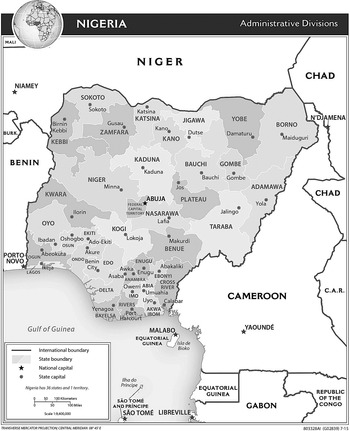
Civilian self-defense strategies in the context of the decade-old war on Boko Haram in north-eastern Nigeria (Figure 1) offer an important opportunity to go beyond the usual focus on the state to understand the civilian response to counterinsurgency. The voices of those who live daily with insurgent violence are a window into the resilience of local communities in the face of terror and victimization. By analyzing the role and agency of CDGs in the context of counterinsurgency in north-eastern Nigeria, I argue that civilian populations are not passive victims of war but adapt in a variety of ways to impose a sense of order and predictability on their dangerous environments. Focusing on the Civilian Joint Task Force (CJTF), also known as yan gora (Hausa for “youths with sticks”), a local self-defense group of vigilantes and hunters that mobilized at the height of the violent insurgency in Maiduguri in mid-2013, I offer a new interpretation of how and why the CJTF emerged, the nature of its relationship with the state (forces) and local populations, and how counterinsurgent vigilantism affects the prospects for peace. The impact of CDGs on counterinsurgency and the nature of civil-military relations speaks to the growing corpus of scholarship on the complex role of vigilantes and civil militias vis-à-vis the state and the local community in an environment of insurgent violence (Kasfir et al. Reference Kasfir, Frerks and Terpstra2018; Jentzsch et al. Reference Jentzsch, Kalyvas and Schubiger2015; ICG 2017; Meagher Reference Meagher2012; Kowalewski Reference Kowalewski1991; Dirkx Reference Dirkx2018). Specifically, it points to the vital role of civil-military cooperation for effective counterinsurgency campaigns and for reducing state violence against civilians. At the same time, it underscores the precariousness of protection, both in terms of increasing the targeting of civilians by vengeful insurgents as well as the tendency for civilian defense groups to “turn bad” and become threats to the communities they were expected to protect. By interrogating the CJTF’s impact on counterinsurgency, my goal is to see beyond vigilantism as a matter of crime-fighting, maintenance of law and order, and ethno-religious or regional claims for self-determination and social recognition (Meagher Reference Meagher2007; Higazi Reference Higazi2008; Nolte Reference Nolte2007; Casey Reference Casey, Pratten and Sens2007; Jones Reference Jones2008) in order to see how vigilantes play a major role in identifying, tracking and combating armed insurgents alongside the state, especially providing state security forces with the critical local knowledge that they woefully lack.
Map of Nigeria.

The rest of this article is divided into five parts. The first provides an overview of the Joint Task Force as a state response to Boko Haram, with particular attention to its problem of knowledge, its violence against civilians, and its alienation of local populations. The second part focuses on how and why the CJTF emerged in Borno state, and the precarious existence of state informants. The third part looks at the collaboration between members of the CJTF and Nigerian security forces in an effort to deny insurgents access to local communities, with particular focus on checkpoints. The fourth part explores how the intelligence and limited combat roles of the CJTF has pushed Boko Haram members to increasingly target civilians, thereby intensifying the conflict. The fifth part focuses on growing concerns about the CJTF’s lack of accountability, its vulnerability to state capture, and its human rights abuses.
State Response to Boko Haram: The Joint Task Force
Since 2009, Nigeria and its neighbors in the Lake Chad Basin have been in the throes of a jihadist insurgency by Jama’atu Ahl al-Sunnah lil-Dawa wal-Jihad, popularly known as Boko Haram. The group’s main objective is to carve out an Islamic Caliphate in West Africa along the lines of the ISIS caliphate in Iraq and Syria (Agbiboa Reference Agbiboa2013). In March 2015, Boko Haram’s leader Abubakar Shekau pledged allegiance to ISIS and its late caliph, Abu Bakr al-Baghdadi, leading to the creation of Wilayat Gharb Ifriquiya (The Islamic State’s West Africa Province [ISWAP]). In June 2011, at the height of Boko Haram’s trademark drive-by shootings and bombings, the Nigerian government deployed a special Joint Task Force (JTF), codenamed “Operation Restore Order,” to Borno state with the aim of extirpating insurgents from the land. But the JTF’s poor knowledge of the physical and social terrain in which Boko Haram lives and moves made it very difficult to build the networks of trust and reciprocity that are key to overcoming an internal enemy (Gopfert Reference Gopfert2016; Khalili Reference Khalili2014:28). “Look at it this way,” said a CJTF member in Maiduguri, “you bring in security officers who doesn’t know the local language and culture of the people. Those officers must become suspicious of any youth they see because they don’t know the Boko Haram elements that even the people living with them do not know.” This is particularly true in Maiduguri, where members of Boko Haram are said to “behave like normal people.” As one resident of Maiduguri told me: “These armed insurgents are normal people like us. You pray with them in mosques, go to the same markets and engage in transactions, do social engagements like weddings and naming ceremonies. But you don’t know who they are.”
Dispensing with any efforts to win “hearts and minds” (Kilcullen Reference Kilcullen2006:30) of the local population, the JTF lumped local populations into a “suspect community,” defined by Marie Breen-Smyth (Reference Breen-Smyth2014:223) as “a community created in and by the securitized imagination and enacted in processes of ‘othering’ through a range of security practices of counter-terrorism.” A local respondent puts it lucidly: “Suspicion is all the greater because we do not know who is Boko Haram and who is not […] To the military, the locals are ‘Boko Haram’ and to Boko Haram, the locals are traitors.” Another respondent noted, “The army came with the mindset that everyone in Maiduguri was Boko Haram.” Absent an efficient registering machine that made society knowable (Gopfert Reference Gopfert2016), a key function of governmentality, “risk assessment became a matter of belief, and suspicion itself became the grounds for [indefinite] detention” (Ahmed Reference Ahmed2004:131), random killings, and forced disappearances. As Abdul Raufu Mustapha (Reference Mustapha2014:14) pointedly notes: “Facing unidentified enemies in the northeast… the tendency for some in the military was to shoot first and ask questions later.” It is no wonder, then, that at the peak of the violent insurgency, from 2010 through 2013, the JTF is estimated to have killed three times more civilians than Boko Haram (NSRP 2016:12). As a consequence, during fieldwork, simply mentioning the name of Boko Haram in public conversations became anathema among fearful locals.
The scorched-earth tactics of the JTF alienated civilians and hurt chances of any local cooperation. As John Paden (Reference Paden2012:50–51) points out: “The rounding up by the federal authorities of young men in the proximity of each bomb attack or drive-by shooting in Borno and the burning of houses regarded as [insurgent] hideouts have alienated many innocent citizens. The community, it would appear, has closed its ears to pleas by the authorities for information as to who is (or who is not) a member of Boko Haram.” In May 2012, an official report by the Usman Galtimari Presidential Committee on Security Challenges in the north-east concluded that the JTF cannot win “the hearts and minds of the people” under the “present poisonous atmosphere.” The Committee called for the immediate replacement of the JTF with a new set that are not only familiar with the environment and culture of the people but also “have a human touch, care and concern by avoiding unnecessary brutality and ruthlessness” (Abbah Reference Abbah2012). Despite the disbandment of JTF in August 2013, and its replacement with the 7th infantry division (Lafiya Dole or “Peace at all cost”) as the umbrella command for the war on Boko Haram, indiscriminate military attacks on civilians continued to be widespread and extreme. “Sometimes, we don’t even know who the real enemy is: whether Boko Haram or soldiers,” says Hafsa, whose husband was killed in a bomb blast. It is against this background of insurgent violence and ineffective state response that the CJTF emerged.
Part of a broader research project on CDGs and counterinsurgency in the Lake Chad Basin region (Nigeria, Cameroon, Niger, and Chad), fieldwork for this study was conducted over a ten-month period spanning June 2017 through July 2019, situated in three of the hardest hit states in northeastern Nigeria—Borno, Yobe, and Adamawa. My fieldwork involved in-depth interviews and informal conversations with more than two hundred CJTF members in Maiduguri as well as several hours of observations at CJTF-operated checkpoints and roadblocks. Of the three states, I spent half of my time in Borno (Maiduguri) because the CJTF was headquartered there, but also due to immediate safety concerns at the time. Other interviewees included hunters and vigilantes from Yobe and Adamawa. Since January 2014, these non-state actors have collaborated with the Nigerian military in a concerted effort to extirpate armed insurgents retreating to the Sambisa forest, and in support of the search for 276 Chibok schoolgirls kidnapped by Boko Haram fighters in April 2014. This alliance is not surprising, given that, across Africa, hunters pride themselves in being “custodians of the bush” (Leach Reference Leach2000:580) and are respected for their healing and protective powers (Heitz-Tokpa Reference Heitz-Tokpa2019:150). So far, the voices and insights of these local security actors have been overshadowed by the rapidly growing literature on Boko Haram, despite their vital role in the ongoing counterinsurgency campaign. As Jentzsch and associates (Reference Jentzsch, Kalyvas and Schubiger2015:756) argue, the emergence of vigilante groups and civil militias “affects the process of armed group recruitment, the levels and patterns of violence against civilians, the dynamics and duration of the conflict, and the modalities of its termination; they can also shape the conflict’s outcome and the prospects for long-term post-conflict stability.” The empirical grounding of this study is particularly important, given that studies on the Boko Haram insurgency, especially journalistic accounts, often blur the lines between “reality and fantasy” (Perouse de Montclos Reference Perouse de Montclos2014:3), resulting in an explosion of speculations and poorly substantiated theories.
The Emergence of the CJTF
At the outset, the emergence of the CJTF must be located within the wider crisis of the state in Nigeria, most clearly exemplified by the post-structural adjustment program (SAP) economic crisis of the 1980s and the coercive and repressive military regimes of the 1990s. It was during this period that vigilante groups (e.g., neighborhood watches) became a popular local response to “widespread perceptions that the police, the courts, and other institutions of the state were too corrupt to curtail crime” (Smith Reference Smith2007:167). Far from being a homogenous entity, vigilante groups in Nigeria have drawn upon complementary and/or contradictory idioms that configure the state as both strong and weak (Nolte Reference Nolte2007). In northern Nigeria, contemporary vigilantism revolves around a religious idiom as illustrated by popular calls for the implementation of Sharia law, as a grassroots response to government failure and moral bankruptcy (e.g., the hisba). In south-eastern Nigeria, the dominant idiom in which vigilantes and vigilantism is manifest is the secret society (Gore & Pratten Reference Pratten2008:228; Meagher Reference Meagher2007:11). In south-western Nigeria, the recent rise of vigilante groups (e.g., the OPC) are entwined with “protest against political neglect and oppression, confirming that security is widely perceived not only in terms of law enforcement but also with regard to despotism, corruption and morality as well as political and social inclusion” (Nolte Reference Nolte2007:230). In the oil-rich Niger Delta, contemporary vigilantism emerged in the context of violent opposition to the mutuality between the Nigerian government and multinational oil companies accused of environmental degradation and death; in northern Nigeria, the politics of protection follows a plural policing logic in which vigilante movements (e.g., the Vigilante Group Nigeria [VGN]) mainly exist to support “official” security agencies (e.g., the police) in fighting crime and in the maintenance of law and order (Lar Reference Lar, Beek, Gopfert, Owen and Steiberg2017).
The emergence of the CJTF in Maiduguri was “a direct product of harassment by Boko Haram insurgents and harassment by Nigerian security forces,” says Ganiyu, the Overall Chairman of the CJTF. According to Ganiyu, “Because security men don’t know who was the real Boko Haram, they will cordon off any area and take every male youth away for ‘screening.’ Then later on, we the youth of Maiduguri, we decided that enough is enough. That’s why we chose to cooperate with the army that we are going to fish out those bad apples living among us. That’s how we started this group.” Ganiyu’s account was reinforced by Sanusi, a commercial driver whom I spoke to near Maiduguri’s crowded Monday Market. “Let me tell you,” says Sanusi, “we have three types of Boko Haram. We have a real Boko Haram. We have a military Boko Haram. And we have a political Boko Haram. You don’t know who will save you. Only God. If Boko Haram doesn’t kill you, soldiers will kill you. This is why those CJTF boys took up bamboo sticks. Because they say if the Nigerian state cannot protect us, let us protect ourselves.” For vigilant citizens like Ganiyu and Sanusi, the Nigerian government, which manifests itself through its brutal security forces, has not only failed in its responsibility to ensure the safety and security of life and property but constitutes a very real threat to the survival of ordinary citizens. This articulates with the omnivorous potentialities of the postcolonial state in Africa (Mbembe Reference Mbembe1992; Comaroff & Comaroff Reference Comaroff and Comaroff1999), that is, “its seemingly boundless capacity to prey upon its citizens” (Masquelier Reference Masquelier2001:268).
In dire need of local support, the overstretched Nigerian military was quick to spot the importance of the CJTF as both a “force multiplier” and “a feasible and effective means of counterinsurgency, providing valuable local knowledge and efficient means to collect intelligence” (Jentzsch et al. Reference Jentzsch, Kalyvas and Schubiger2015:759). In localities suspected of harboring insurgents, the CJTF functioned as the state’s grassroots “eyes and ears.” CJTF members were originally armed with rudimentary weapons such as sticks, machetes, and bows and arrows. “Guns are too expensive,” said a CJTF leader in Maiduguri, “costing between N600 and N700. We cannot afford that.” CJTF weapons and bodies were often laced with charms of invisibility and immunity (Pratten Reference Pratten2008:10). “Some of them if you shoot them the bullet will not penetrate their bodies because they have taken bulletproof medicine. So, they fear nobody,” said a security man in Maiduguri airport. “We have personal protection from our parents that gives us the ability to deflect bullets such as this one on my head. Some hidden charms have been embedded within my skull to protect me from harm,” says Bitrus, a CJTF member from Gombi in Adamawa state. The belief in magic as a powerful tool of warfare is rooted in the warring tradition in sub-Saharan Africa (Wlodarczyk Reference Wlodarczyk2009; Heitz-Tokpa Reference Heitz-Tokpa2019). In Nigeria, David Pratten (Reference Pratten2008:46) has argued that “the remaking of selves out of the secrets of the supernatural are familiar and effective frameworks in the quest for order and certainty.” A prime example of this is the Bakassi Boys in southeastern Nigeria, who had a reputation for invincibility by claiming to be able to deflect bullets as a result of particular initiation rites and jujus (charms) (Jones Reference Jones2008:6). The use of magic by the CJTF reclaims the ways in which traditional Muslim youth groups in northern Nigeria, including the ‘yan faratua and the ‘yan tauri, “emphasize bravery and skill with weaponry and forms of magical protection” (Casey Reference Casey2008:73).
Many youths joined the CJTF out of a feeling of personal loss which was then channeled toward opposing Boko Haram. As Sara Ahmed (Reference Ahmed2015:7) argues, emotions are intentional in the sense that they are “about” something; they involve a direction or orientation toward an object. A survey by Yusuf Umar (Reference Umar2014:69) in Maiduguri and Jere local government areas (LGAs) of Borno state found that 70 percent of CJTF members had lost a friend or relative to Boko Haram and were driven by this sense of loss. This was the case with Ganiyu, who joined the group in 2013 after his close friends were killed in a Boko Haram attack on their town. Prior to joining, Ganiyu worked for sixteen years as a secretary in the People’s Democracy Party (PDP). In 2013, as the insurgency intensified and his friends were killed, Ganiyu “resigned voluntarily” from the PDP to join the fight against Boko Haram. Although many Boko Haram members were known to locals like Ganiyu in the neighborhoods (“wards”) where they came of age, “no one could dare identify them because if you do they will sneak back and warn you and eventually kill you in public,” says Bomboy, who heads the CJTF sector in Hausari ward. The situation was complicated by the state’s coercive counterinsurgency tactics, which conflated local populations and Boko Haram terrorists. As Bakura, a CJTF leader in Maiduguri, told me, “When we first thought of joining the CJTF there was still the deep fear that if we tell the military who Boko Haram really was, they will come around and eliminate us.” Caught between militants and military, many youths were forced to join the pro-government yan gora. This is partly because “soldiers order villages to form the CJTF and kill them if they refuse, accusing them of being Boko Haram—and if they do, they face Boko Haram reprisals” (IRIN 2013). The story of Bukar Bama Sheriff is particularly illustrative.
Sheriff is the Chairman of the CJTF in Abadam town in Borno state, which until 2015 was controlled by Boko Haram. I met Sheriff at a camp for the internally displaced in Abadam, where his group of yan gora were manning the gates and providing security in the absence of the state. Headquartered in Malumfatori, Abadam town has an estimated population of 100,000 people and is one of the 16 LGAs that constitute the Borno Emirate. In October 2014, Boko Haram captured Abadam, killing up to forty people, and forcing residents to flee to neighboring Niger. In February 2015, a multinational joint task force of Cameroonian and Nigerian soldiers recaptured Abadam. But as early as August 2016, Abadam remained a stronghold of Boko Haram (UN 2017:3). Sheriff, who also holds a political position in Abadam LGA, said he first became involved in security surveillance work on behalf of the state in 2011, when the JTF posted to Abadam town sought his help about finding a suitable location to settle down. Sheriff’s cooperation with the soldiers soon exposed him to the wrath of Boko Haram. “You know,” he told me, “Boko Haram has very strong local intelligence and social network. So, if there is any cooperation between you and the JTF, they will know and they will try to eliminate you.”
Initially, Sheriff served as the vice chairman of the CJTF in Abadam, reporting to Buba, the overall chairman. Both Sheriff and Buba received death threats from Boko Haram, warning them to cease their support for the JTF or “prepare to die.” Boko Haram made real its threat when it brutally attacked and killed Buba in his house, leaving a warning note for Sheriff. Following Buba’s death, Sheriff assumed control of the CJTF, and vowed to continue working for the JTF as an informant. Since Sheriff had been on Boko Haram’s “most wanted list” in Abadam, his friends and relatives were also endangered and distanced themselves from him at public events. “People around me reacted in two ways,” says Sheriff. “People in Abadam started hating on me and isolating themselves from me. They don’t want to talk or seat next to me at public events out of fear of being linked to me. People always tried to convince me to abandon my support and intelligence work for the JTF, to save my head and that of my family. But I tell them that if you join the yan gora, Boko Haram will not rest until they finish you. They will target you until the end.” Hence, for Sheriff, there was no easy way out of his precarious life. “Immediately you identify yourself with the CJTF, even when you leave your work, even when you resign publicly, you have only resigned for yourself in the eyes of Boko Haram. They will still hunt you down and kill you.” There was also the small matter of dealing with a brutal Nigerian military. As Sheriff explains: “If you begin like me by giving them information about the insurgents hiding in the wards, and then you later decide to stop, they too will start suspecting and targeting you. They will say you have changed your mind and started to work of the insurgents. This is why my situation is extremely difficult.”
Following Mirco Gopfert (Reference Gopfert2016:44), Sheriff can be thought of as a “knowledge broker,” that is, a person with intimate knowledge of places and people who helps security forces to “see things.” Yet, his relationship with the state involves “a balancing act between suspicion and trust.” Sally Merry (Reference Merry2006:45) argues that local intermediaries are often distrusted because “their ultimate loyalties are ambiguous and they may be double agents. They are powerful in that they have mastered both of the discourses of the interchange, but they are vulnerable to charges of disloyalty or double-dealing.” Despite this harsh reality, Sheriff insists that “nobody forced me to join this group. I do this work readily because if I don’t, the impact of Boko Haram will still affect me and my family.”
The Popular Legitimacy of the CJTF
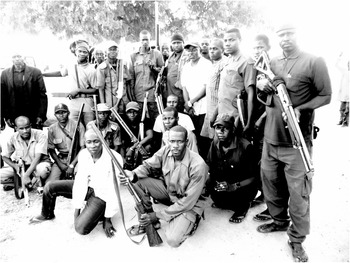
The CJTF’s efficiency in identifying and arresting Boko Haram members, aided by its local knowledge and social networks, forced Boko Haram to decamp from Maiduguri to remote parts of Borno state (the Gwoza hills and the Mandara mountains), where they were pursued by hunters who took up the fight (Figure 2). Since 2014, a local security assemblage of hunters and vigilante groups in Adamawa and Yobe states have worked closely with the CJTF and the Nigerian military to flush out armed insurgents seeking cover in the Sambisa forest. A veteran hunter from Yobe state described how “the Boko Haram insurgents used to plant land mines along the road,” and “we hunters guide the soldiers to go through the bushes and avoid the roads until we get to the Boko Haram base.”Footnote 1 Another hunter from Gombi in Adamawa boasted about his power to “tie down the forest and make the insurgents get lost in the bush and become easy targets.” Boko Haram’s relocation to the countryside and its surrounding forests represents a throwback to the “Kanama” phase of its formative years (2003–2004) when it withdrew from the city, formed a kind of puritanical Islamic community, and attacked the state from there. This move is not unusual for rebel movements in West Africa. As Thandika Mkandawire (Reference Mkandawire2002:207) writes, “The roots of revolt in most African countries lie in the cities, and more specifically, the capital cities. Most guerrillas are merely ‘passing through’ the countryside on their way to capture power in the city.”
Hunters fighting Boko Haram in Yobe state. Photo by author.

The CJTF’s status as “sons of the soil” conferred them with popular legitimacy, that is, trust and access, which proved key to flushing out armed insurgents hiding in their communities.Footnote 2 As Goran Peic (Reference Peic2014:166) points out, “Locals tend to be more trusting of natives than outsiders.” In Hausari ward, where the CJTF began, residents told me the CJTF are more effective than soldiers because they are “natives like us” and “know the bad eggs in our midst.” As a CJTF man told me: “You know we are from this place, and people either have our mobile numbers or those of our relatives, and they feel free to report anything unusual around them. The moment they notice any suspicious movement, they contact us on phone or, if there is no network, they can use their bicycles to connect with one of us.” The bravery of the CJTF has endeared them to local populations, setting them apart from Nigerian soldiers, whom many saw as deserters and strangers. “Our success hinges on patriotism and bravery,” said a CJTF leader. “The military were not patriotic initially as they were urging their colleagues to abandon the war, since it was not their homeland that was at stake, and many of them either deserted or withdrew. For us, there is no going back.” A 68-year-old man in Wulari noted that, “Without the CJTF, the army and police will not go anywhere. Because where these boys will enter, a police or army will be afraid to enter. They have courage and want to give everything in defense of their land and people. That is why we proudly call them ‘our boys.’” Thus, with the coming of the CJTF, many victimized citizens “came to experience the state in the ways in which it does not exist for them and not just the ways that it does” (Ismail Reference Ismail2006). Usman, the resident of Maiduguri whose experience opened this essay, is substantiated by NGO reports. In January 2019, for example, Boko Haram fighters attacked Rann, a town in Borno with 30,000 displaced people, killing sixty. A report on the attack by Amnesty International offers a damning portrait of the military:
Disturbingly, witnesses told us that Nigerian soldiers abandoned their posts the day before the attack, demonstrating the authorities’ utter failure to protect civilians. Alleged withdrawal of troops triggered a massive exodus of civilians to Cameroon, as fear spread that Boko Haram would take advantage and attack the town. At around 9am on 28 January, a group of Boko Haram fighters arrived on motorcycles. They set houses ablaze and killed those left behind. They also chased after those who attempted to escape and killed some people outside the town. Eleven bodies were found within Rann town, and 49 bodies were found outside.
(Amnesty International 2018)Given its effectiveness in the face of an absent state, the vigilante tactics of the CJTF replicated across other LGAs in Borno before spreading into Adamawa and Yobe. Today, the CJTF has an estimated membership strength of 30,000. A “small but mighty” portion of this number are women and wives who not only play a fundamental role in the gathering of local intelligence but also help in conducting stop and search activities on fellow women at homes, market spaces, mosques and churches, and commercial transit stations. The emergence of female CJTF became vital in light of the sect’s alarming usage of women and girls as suicide bombers. Women, of course, are ideal stealth weapons for Islamist groups conducting suicide operations because they are less likely to be suspected or searched (Khalili Reference Khalili2014), and can easily hide suicide vests under loose, billowy clothing. Thirty-five-year-old Zainab said she joined the CJTF after her brother was blown up in a suicide attack in Dala, Maiduguri. “The personal loss made me vow to expose them so that peace can be restored,” says Zainab. A CJTF sector commander from Yola North in Adamawa noted, “Women play an invaluable role in our vigilante work, because Islamic religion doesn’t allow men to enter houses, and we make use of the women to go into these houses for either surveillance or arrests.” This unique role of women reinforces the argument that “counterinsurgency practice makes men and women legible and assigns them to different categories of various utility for combat and pacification” (Khalili Reference Khalili2011:1479). “Through their daily work as household organizers, traders, mothers, stepmothers, and co-wives,” Insa Nolte (Reference Nolte2008:96) argues that “women are often the holders of intimate knowledge about changes and news in their compounds as well as in markets, shops and schools.”
The bravery and sacrifices of the CJTF have earned them high praise from civilians and politicians alike, with the federal government hailing them as “new national heroes” (Idris & Sawab Reference Idris and Sawab2013). “If not for the CJTF, Maiduguri would have long fallen into the hands of Boko Haram,” said Abubakar, community leader in Maiduguri. “They are a fearless band of committed youth who know Boko Haram members and the terrain very well.” For Gubio, a leader of the Borno State Elders Forum, “the CJTF are the saving grace for us in Borno, in fact in north-east Nigeria. Without their efforts, the insurgency wouldn’t have been put down by now. They organized themselves from each ward in the city and some of the major towns and started fighting their own friends and relatives who were members of Boko Haram.” Following a Boko Haram attack on the Dalwa and Mafa areas of Borno in February 2015, the former state governor Kashim Shettima praised the CJTF, who quickly rallied in support of the military “in a patriotic battle to defend the soul of Borno state and its people from being seized by determined insurgents” (Odunsi Reference Odunsi2015).
The emergence and influence of the CJTF reinforces the need to better understand the role of governance without government in counterinsurgency, since the state does not have a legitimate monopoly on the use of violence. As one study points out, “Far from possessing an effective monopoly of force, [African] states and their security institutions operate alongside a diverse array of non-state bodies, some violently challenging state authority, others working alongside or cooperating with it” (Bagayoko et al. Reference Bagayoko, Hutchful and Luckham2016:1, my emphasis).
Crossroads: CJTF-Military Relations
The military helped in (re)organizing the CJTF along its own lines of command. Maiduguri, for instance, was divided into ten sectors, each led by a CJTF chairman and secretary selected by top army officials to whom the rest of the members report. Most CJTF sectors were equipped with vehicles and charged with identifying and arresting Boko Haram suspects, manning checkpoints, and guiding soldiers on patrols. A CJTF man in Mubi in Adamawa state told me that although vigilantes participated in “combat battle,” their primary role was in “ensuring peace and stability in any recaptured towns or villages by doing house-to-house searching and patrolling around the captured areas.” In Borno, some 850 CJTF members were selected for special military training in firearms and intelligence gathering. Upon completion of the training, this group became known as the “CJTF Special Forces” and were tasked with providing combat support to the military. This fusing of a non-state actor—volunteering to protect their communities from armed insurgents—into an institution of legitimate violence by the state breaks down our normative understanding of state-society distinctions; it collapses the traditional understanding of the state as the Leviathan with exclusive right to legitimate violence. Related to that is an interesting phenomenon—the recognition by the agency for “exclusive” legitimate violence that it is incapable of winning a war against an insurgent group without the support and armed collaboration of a “civil” group.
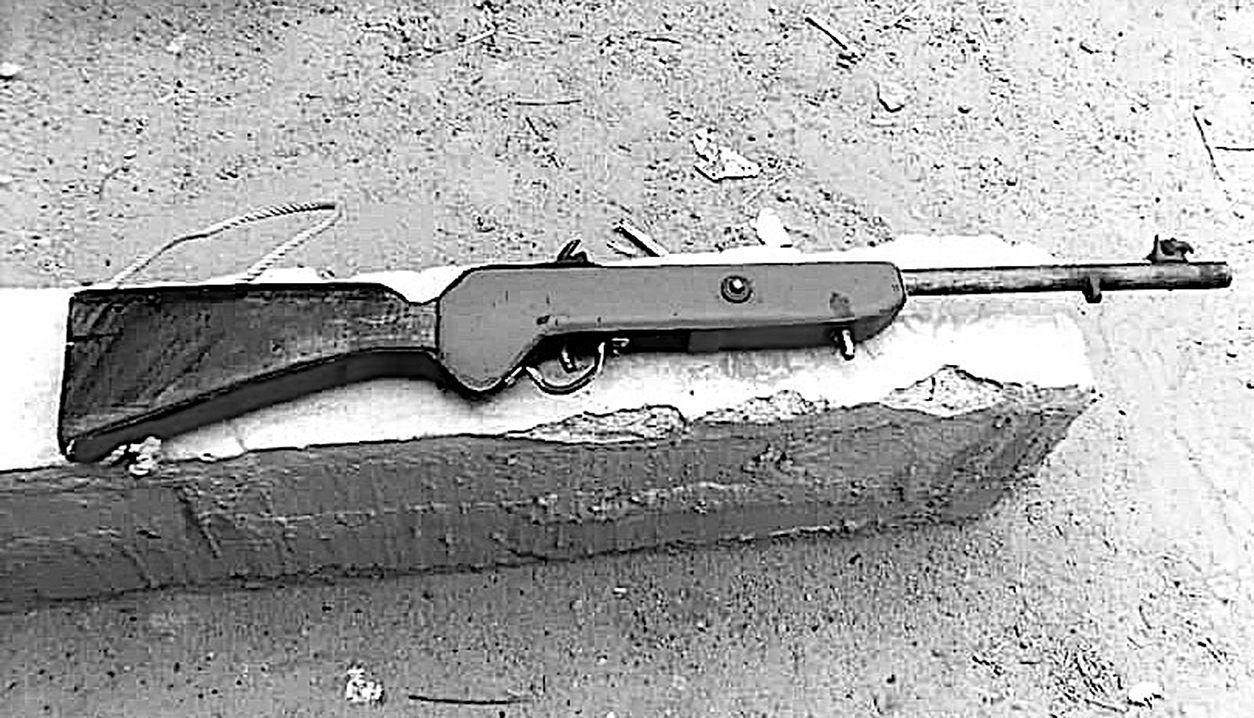
Members of the CJTF Special Forces graduated from wielding bows and arrows to using pump-action guns. Ali, a member of the Special Forces, told me that the upgrade became necessary in the face of Boko Haram’s superior weaponry: “When you get to Boko Haram camps you find that they have artillery pieces, anti-aircraft guns, and AK-47 while all we have are Dane guns [a type of long-barreled flintlock musket originally imported into West Africa by Dano-Norwegian traders, Figure 3] that you load and shoot once before you load and fire again.” After every battle, soldiers usually retrieved the guns from the CJTF for fear of arming young men of “doubtful character” who may use the pro-government militia as cover for their own ends. One security personnel noted that “some insurgents joined the CJTF when it started. We discovered that some of them joined for the sole purpose of monitoring our activities and mode of operation, which would make it easier for them to attack us” (Ndimele Reference Ndimele2016). This is consistent with studies which show that infiltration by insurgents and covert defection are ever-present risks associated with the deployment of CDGs during counterinsurgencies (Peic Reference Peic2014:178).
Dane gun. Photo by author.

During fieldwork at checkpoints leading into and out of Maiduguri, I spoke to small groups of machete-wielding CJTF boys working with soldiers carrying AK-47s. Dressed in mufti, these boys frisked vehicles as the soldiers kept an eye on them from behind sandbags, indexing “the terrain of anticipated violence” (Jeganathan Reference Jeganathan, Das and Poole2004:72). As one soldier said, “Forget what you read in the newspapers that all is well. We are on a serious alert here.” CJTF boys generally peer into vehicles as drivers move slowly past. Vehicles deemed “suspicious” are pulled over for inspection, which involves asking drivers to open the trunk of their vehicles and conducting a pat-down screening of their bodies for explosives. In an interview at a checkpoint in Gujba, along the Damaturu-Biu road, one CJTF member told me, “We try to search vehicles to see if they carry arms or food stuff to Boko Haram terrorists.” Another claimed that “body language” was his key to singling out, in some cases arresting (perhaps even killing) passengers when their vehicles are stopped, corroborating studies that have shown that the calculated presentation of self in everyday transit spaces (e.g., checkpoints) can be key to one’s survival (Hyndman & de Alwis Reference Hyndman and Malathi2004:552). Many of these boys work for the CJTF on a part-time basis. As one of them told me: “This is rainy season. Every day we go to farms and when we are back, we help mount the checkpoints to check what vehicles are carrying to ensure that no one is passing through with arms or armaments that could harm others.” “We normally come out in the morning,” said another vigilante. “If there is anything new the soldiers will alert us, and we go out with them. If nothing new, we get to the community entrance on the major road from Damaturu to Biu and mount the checkpoint to keep an eye on anyone that goes in/out of the community. We have been arresting insurgents on the road. We once arrested someone that drove the car of Boko Haram that launched an attack on the state capital last December and he confessed that himself.” According to a recent report, CJTF-controlled checkpoints and patrols have “stopped many people before detonation, had people who had been forced to carry IED vests surrender to them, or enabled detonation in such a way that minimized civilian casualties” (Civilians in Conflict 2018:14). For the boys manning the checkpoints, the ability to anticipate danger is key to survival, since checkpoints delineate and focus attention on the target (Jeganathan Reference Jeganathan, Das and Poole2004:69).
The Danger of Self-Defense
The emergence of the CJTF and its effectiveness in identifying and arresting Boko Haram fighters played a fundamental role in the transformation of the conflict from an “anti-state insurgency” into a “messy civil war” (ICG 2017:13), putting local populations at daggers drawn with Boko Haram terrorists. As a captured Boko Haram member commented in 2013: “Our original target was security operatives and politicians. But since the formation of the CJTF who now reveal our identities and even arrest us, we decided to kill anyone that is from Maiduguri because we believe every person there and some other towns of Borno state are members of the CJTF” (Strochlic Reference Strochlic2014). “By pushing Boko Haram… into the countryside,” says Mohammed Kyari, “CJTF and soldiers made life precarious to villagers” (IRIN 2013). In the first half of 2014 alone, Boko Haram launched an estimated 95 attacks that killed no fewer than 2,053 civilians, with 1,446 murders taking place in Borno state, 151 in Adamawa state, and 143 in Yobe state (Human Rights Watch 2019).
In June 2013, Boko Haram released an audio clip declaring an “all-out-war” on youth from Maiduguri “because you have formed an alliance with the military and police to fight our brethren. We call on any parents that values the life of his son to stop him from exposing our members. Otherwise he is dead” (IRIN 2013). In September 2013, following the Benisheik massacre, Shekau labeled the CJTF “infidels” for supporting the military and threatened to avenge the death of his followers at their hands: “We warn the CJTF to back out now,” he said, “if not, there will be no place for them to hide. We have evidences of how you killed our brethren whom you asked if they are Boko Haram before you killed them… we will get to you… we will smash your heads and kill you all. Even if you don’t do anything to us, we will kill you…” (Odunsi Reference Odunsi2014). These statements are consistent with studies that have shown that “Because civilian collaboration with the state is rightfully seen as a grave threat to rebel aims, insurgent organizations often attempt to discourage further collaboration by orchestrating reprisals against communities which join a CDF [Civilian Defense Force] program” (Peic Reference Peic2014:167). In light of Boko Haram’s rage against local communities that have formed a CJTF, many civilians have become increasingly fearful of (openly) identifying with the CJTF. As Kurna, the CJTF chairman for Adamawa state told me, “My landlord ejected me from his house for fear of retaliatory attacks by Boko Haram. He asked his lawyer to serve me quit notice without story.”
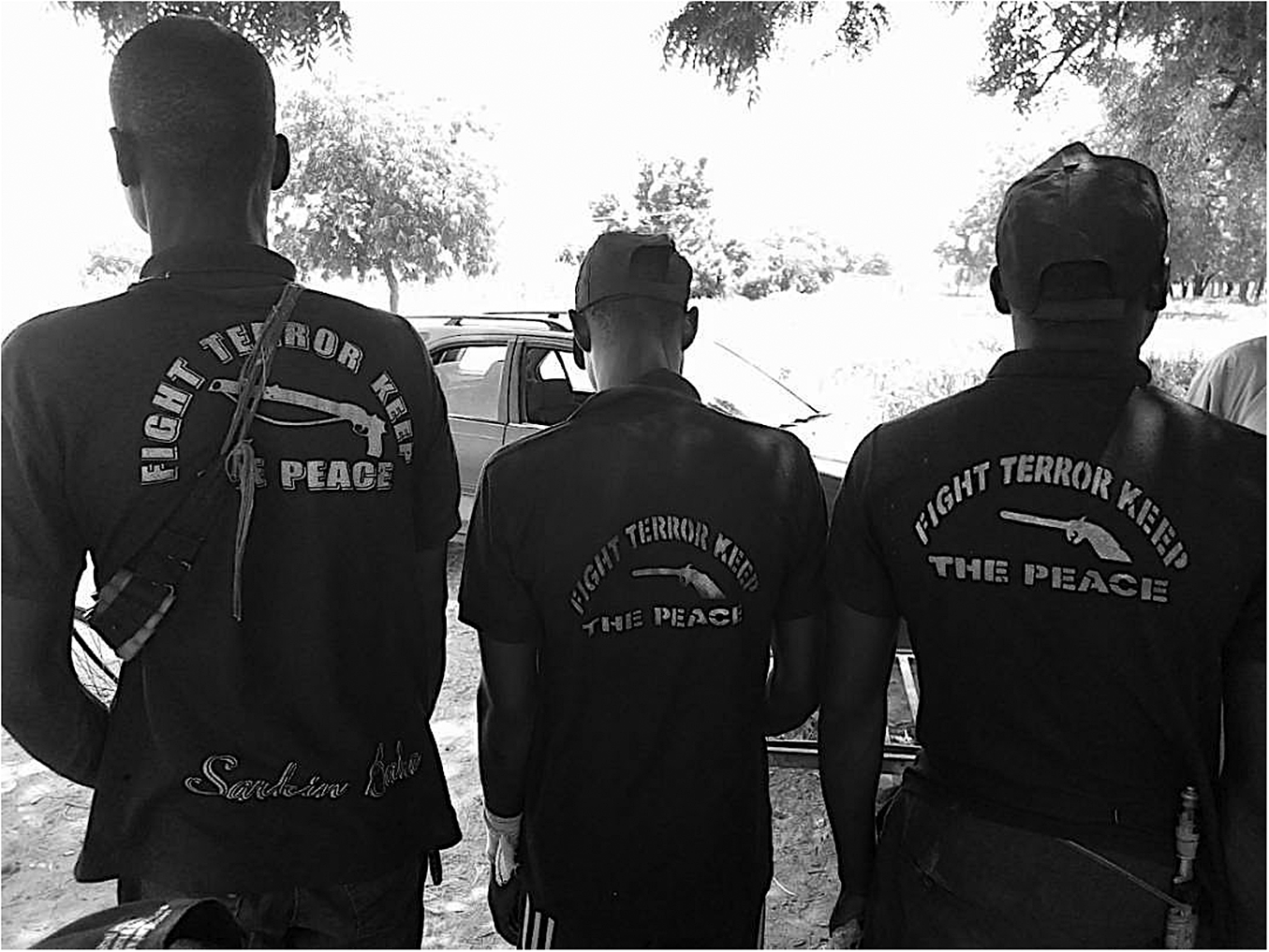
For their part, CJTF youths maintain that they have “crossed the Rubicon” in their vow to “fight terror and keep the peace”(Figure 4). As one member insists, “There is no going back. Boko Haram have declared war on us, and even if we stop hunting them, they still will come after us. So we have to fight them to the finish.” The resilience of the CJTF in the face of immediate security threats to their lives has come at a huge cost. “We have created a lot of enemies in this vigilante work,” says Kurna. “There are people that are still after us.” In Borno state alone, official death count for the CJTF between 2013 and 2017 is estimated at 700 (Omonigho Reference Omonigho2017). However, leaders of the CJTF believe the fatalities are much higher because there has hardly been any military operation against Boko Haram since 2013 without the loss of at least one CJTF member who routinely guides them.
Pro-government militias in Borno state. Photo by author.

Between Patriots and Traitors
It was Ray Abrahams (Reference Abrahams1987:180) who argued that “the boundary between vigilante and criminal, like that between heroes and bandits or patriots and traitors, is both fluid and manipulable.” The experience of CDGs in Africa—from the Kamajors of Sierra Leone to the Dozos of Cote d’Ivoire and the Koglweogos in Burkina Faso—suggests that they undermine their original role as “local security providers” when they morph into self-seeking or politically motivated civil militias (Van Metre Reference Van Metre2019; Jones Reference Jones2008; ICG 2017; Agbiboa Reference Agbiboa2019). One salutary reminder is the Bakassi Boys. Originating from south-eastern Nigeria’s commercial city of Aba, the vigilante group initially enjoyed popular legitimacy as they sought to restore community security (Jones Reference Jones2008). However, the group experienced a crisis of legitimacy when it was “politically hijacked” (Meagher Reference Meagher2007), provoking fears that they were “becoming political and therefore corrupt” (Smith Reference Smith2004:128). This manipulability and political instrumentality of CDG explains why Kate Meagher (Reference Meagher2012:1097) has criticized the revalorization of nonstate forms of order in the context of hybrid systems of governance in Africa. Meagher argues that the collaboration between state and non-state security forces may turn out to be a “Faustian bargain” which “leads not to more efficient and socially legitimate security arrangements, but to the embedding of violent or illegitimate forms of order in the state machinery, with disastrous rather than transformatory consequences.” The case of the CJTF is particularly revealing.
Despite its early heroic status, the CJTF’s lack of accountability, its vulnerability to state capture, and its “afterlife” remain a concern for Nigerians and the international community. The CJTF has engaged in extrajudicial killings and other atrocities against civilians, frequently in the presence of the “official” military. In August 2014, Amnesty International released gruesome video footage of detainees having their throats slit one by one and dumped in mass graves by the yan gora and military personnel. Among the CJTF’s list of atrocities are random killings of suspects; (ab)using children in their vigilante work; mounting arbitrary checkpoints whence it extorts monies from travelers; engaging in cattle rustling; and sexually harassing women under their watch in various camps for the internally displaced. These atrocities have eroded the popular support initially enjoyed by the CJTF. In June 2019, for example, about 2,000 locals gathered in Maiduguri to protest against the brutality and violence of the CJTF, calling on the government to ban the group. The protest erupted hours after a taxi driver was shot dead at a CJTF-operated checkpoint in Maiduguri on suspicion of being a Boko Haram member. “We want the CJTF to be banned from the city because of the abuses we suffer in their hands,” says Shaleh, who lives in Maiduguri, adding, “they have become a law unto themselves and are treating us badly. And now they have started killing us. The victim was a known resident and his name was Modu but the CJTF shot him for no reason” (AFP 2019).
While the CJTF has been relatively successful in shielding civilian populations from armed insurgents, they have also provoked fears about their vulnerability to political manipulation. As one local reporter said: “An unregulated, untrained and crudely armed civilian force may prove to be the last thing Maiduguri’s imperilled residents need… Apart from risking their lives unnecessarily, a greater danger of exposing civilians to battle situations includes the possibility of some of these civilians turning into warlords. In the North, such warlords inevitably put on the religious garb. Before we know, civilians helping to fight terrorists may fall under the influence of politicians and other foreign sponsors to float their own terror outfits” (Vanguard 2013). The Borno state government has never hidden its admiration for the CJTF, describing their coming as a “divine intervention.” Yet, some public officials concede that “unless deliberate efforts are made towards addressing issues of unemployment, illiteracy, hunger and poverty, the CJTF may be the Frankenstein monsters that might end up consuming us” (Okeowo Reference Okeowo2015).
While admitting that CJTF members “go overboard” from time to time during their counterinsurgent vigilantism, one senior public official in Borno deflected attention to Boko Haram as a far greater source of worry for ordinary citizens in Maiduguri. “The simple issue is terrorists,” he said, “[what the CJTF are doing] is not acceptable, but these Boko Haram terrorists, they will not spare you [when they get you], they will kill you.” Similarly, a local leader in Maiduguri noted that, “For now, we have to bear with them [CJTF]. Compared to what Boko Haram are doing, their own are insignificant” (AFP 2013). This apparent retreat to the principle of “lesser of two evils” bears a striking resemblance to the way in which residents of the city of Aba recognized that the brutality of the Bakassi Boys was undesirable, but in a context of unchecked armed robbery and violent extortion by the “official” police, it was better than the alternatives. As one resident puts it: “Killing human beings is not good. The Bakassi Boys will go to Hell, but we thank God they’re here” (Meagher Reference Meagher2012:1092). The evolution of the CJTF suggests that while it may yield short-term counterinsurgency gains, in the mid- to long term, it is likely to (un)intentionally threaten the security needs of local populations (cf. Dirkx Reference Dirkx2018).
Conclusion
The failure of the Nigerian state to shield its citizens from armed insurgents, especially the military’s conflation of Boko Haram and local populations, necessitated a security guarantor from “outside the formal security structures of the state” (Ero Reference Ero2000:26). That security guarantor came in form of the CJTF, a pro-government militia that mobilized out of a genuine desire to help government forces to overcome Boko Haram and protect local populations. The CJTF is widely credited with dislodging Boko Haram insurgents from their base in Maiduguri in 2013 and denying them re-entry. The CJTF attained popular legitimacy “by leveraging their superior linguistic, topographical, and social skills so as to garner information from fellow citizens more effectively” (Peic Reference Peic2014:163). Unlike previous studies of vigilantism that focus on crime fighting, ethnic threats, or community social control (Pratten Reference Pratten2008), the CJTF is fairly unique in that its key focus is on counterinsurgency alongside state security forces and its resolve is to prop up rather than withdraw from or even resist the state. This not only troubles “the canonical focus on state and insurgent actors as sole providers of war time political order and violence” (Jentzsch et al. Reference Jentzsch, Kalyvas and Schubiger2015:765) but highlights the need for a new analytical framework that seriously considers multiple layers of governance in the context of counterinsurgencies (Kasfir et al. Reference Kasfir, Frerks and Terpstra2017; Menkhaus Reference Menkhaus2006/7).
Unlike the majority of studies focusing on state response to the Boko Haram insurgency, this article has considered the response of civilian defense groups fighting “beside the state,” with emphasis on the CJTF. Going beyond crime fighting and/or social control, the article has interrogated vigilantism as both a self-protection strategy for victimized communities and an effective counterinsurgency tactic for state forces with poor knowledge of the physical and social terrain. Civilians do not have to be passive victims in the face of terror and state brutality but can undertake intelligence and combat roles to defend their communities from armed insurgents. The coming of the CJTF has undoubtedly enhanced the war against Boko Haram by helping state forces to identify and locate members of Boko Haram. This, in turn, has significantly reduced state violence against civilians. However, the CJTF has inadvertently pushed Boko Haram to increasingly target local communities suspected of supporting the vigilante group and/or the state, thereby intensifying the war. The CJTF has also been implicated in human rights abuses (including participation in military-led extrajudicial killings), with some locals describing the group as “another Boko Haram in the making.”
Beyond an alternative to failed security provision, the emergence of the CJTF may fairly be viewed as a cry from the margins for “more state, not less state” (Buur Reference Buur2006:750). As Nolte (Reference Nolte2007:219) observes, “The vast majority of Nigerians would prefer to live in a state able to provide adequate security.” During the course of my fieldwork, CJTF leaders repeatedly called on the government to do more to improve the precarious materiality of their members, the fear being that “by their sheer numbers, their availability and their eagerness to take up anything that may relieve them of conditions of poverty, idleness or ennui, youth are easily recruited by political parties, armed groups or criminal networks” (Abbink Reference Abbink, Abbink and van Kessel2005:3). As one CJTF leader said: “Our boys were promised jobs. If these jobs do not materialize, I fear the day will come when they will turn on us and our leaders out of frustration.” Afghanistan is a salutary reminder, where decreased support for U.S.-trained militias originally fighting on behalf of the Afghan government against the Taliban led to the defection of these groups to the Taliban insurgency (Dirkx Reference Dirkx2018). A CJTF chairman in Borno told me, “The government has done its best to end the insurgency but has forgotten that soldiers have salaries and allowances set aside to treat those injured but not CJTF and local hunters. We don’t know what is happening. Is it that soldiers do not say that we are helping them or what? If you go around our houses now you realize that we don’t have food provision to last us three days.” One key source of anger and frustration among the CJTF concerns the lack of financial support by the federal government for families of fallen comrades. As one CJTF sector commander explains: “You know the life of a human being is a very huge thing. The last group of boys that we lost to Boko Haram just last month, 13 of them, the state gave the family N500,000 each and one plot of land. But the support of the federal government is zero. Even now, we by ourselves want to start a school for children of our CJTF men who were killed in the service of this country because nobody takes these orphans to school.”
Despite their palpable frustrations with the government, many CJTF members still nurture ambitions of transitioning into law enforcement work as traffic police inspectors, vehicle inspection officers, and customs and border patrol officers. For these marginal youth, government jobs are very attractive because they represent “a source of more or less regular income as well as the chance of making money out of extortion and other illegal practices” (Debos Reference Debos2011). The CJTF’s collective yearning for inclusion in the state grid shows how “the state can be both the author of atrocities and [still] represent the hope of a better future” (Stevenson Reference Stevenson2007:142). It would seem that the CJTF is not simply fighting against Boko Haram but for a possibility, or what Henrik Vigh (Reference Vigh2006:235), describing the Aguentas in Guinea Bissau, calls “a process of social becoming and improvement of their life chances.”
Acknowledgments
This article was generously supported by a research grant from the Harry Frank Guggenheim Foundation. I would like to thank Benjamin Lawrance and the three anonymous reviewers for their helpful comments, and Meridith Murray for her copy editing.