Introduction
Childhood adversity is recognized as an important and independent risk factor for later development of psychosis, schizophrenia, and bipolar disorder (Alameda et al., Reference Alameda, Christy, Rodriguez, Salazar De Pablo, Thrush, Shen and Murray2021; Trotta, Murray, & Fisher, Reference Trotta, Murray and Fisher2015; Varese et al., Reference Varese, Smeets, Drukker, Lieverse, Lataster, Viechtbauer and Bentall2012) but also a risk factor for subclinical psychotic experiences including hallucinations and delusions in both clinical and non-clinical adults and youth (De Loore et al., Reference De Loore, Drukker, Gunther, Feron, Deboutte, Sabbe and Myin-Germeys2007; Fekih-Romdhane, Tira, & Cheour, Reference Fekih-Romdhane, Tira and Cheour2019; Trotta et al., Reference Trotta, Murray and Fisher2015).
Interpersonal childhood adversities, i.e. adversities characterized by intention to harm (e.g. sexual abuse, physical abuse and domestic violence), is associated with a greater risk for later development of psychotic experiences and worse psychotic disorder trajectory including increase in positive symptoms compared with non-interpersonal childhood adversities (Croft et al., Reference Croft, Heron, Teufel, Cannon, Wolke, Thompson and Zammit2019; Crush, Arseneault, Jaffee, Danese, & Fisher, Reference Crush, Arseneault, Jaffee, Danese and Fisher2018; Gibson, Alloy, & Ellman, Reference Gibson, Alloy and Ellman2016). Especially childhood sexual abuse has been widely investigated in relation to later psychopathology and psychotic experiences and has the strongest association with psychosis compared with other interpersonal adversities (Croft et al., Reference Croft, Heron, Teufel, Cannon, Wolke, Thompson and Zammit2019; McGrath et al., Reference McGrath, McLaughlin, Saha, Aguilar-Gaxiola, Al-Hamzawi, Alonso and Kessler2017; Wigman et al., Reference Wigman, van Winkel, Ormel, Verhulst, van Os and Vollebergh2012). Furthermore, increasing frequency of exposure to childhood adversities and exposure to multiple different types of adversities has been evidenced to also elevate the risk of developing psychotic symptoms (Croft et al., Reference Croft, Heron, Teufel, Cannon, Wolke, Thompson and Zammit2019; Crush et al., Reference Crush, Arseneault, Jaffee, Danese and Fisher2018; Wigman et al., Reference Wigman, van Winkel, Ormel, Verhulst, van Os and Vollebergh2012).
However, a genetic factor may be a confounder in the association between childhood adversities and psychotic outcome. A few previous studies evidence that children of parents with mental illness including schizophrenia spectrum disorders, bipolar disorder, and depression have an increased risk for these disorders, while they also have a greater risk of a more detrimental environment and increased risk for exposure to childhood adversities (Brandt et al., Reference Brandt, Hemager, Gregersen, Søndergaard, Krantz, Ohland and Thorup2022; Fisher et al., Reference Fisher, McGuffin, Boydell, Fearon, Craig, Dazzan and Morgan2014; Wigman et al., Reference Wigman, van Winkel, Ormel, Verhulst, van Os and Vollebergh2012). A study of children born to familial high risk of bipolar disorder (age 7–17 years) documented that children at familial high risk had a significantly higher prevalence of physical and/or sexual abuse, compared with controls (Goldstein et al., Reference Goldstein, Shamseddeen, Axelson, Kalas, Monk, Brent and Birmaher2010). Another study including adult offspring at familial high risk of bipolar disorder found childhood adversity levels to be significantly higher among offspring at familial high risk compared with controls (Schreuder et al., Reference Schreuder, Vinkers, Mesman, Claes, Nolen and Hillegers2016). In our own study, we found that children at familial high risk of schizophrenia (FHR-SZ) or bipolar disorder (FHR-BP) had a higher prevalence of exposure to any childhood adversities, interpersonal childhood adversities and a higher number of types of adversities compared with population-based controls in early childhood (age 0–7 years) and middle childhood (age 7–11 years) (Brandt et al., Reference Brandt, Hemager, Gregersen, Søndergaard, Krantz, Ohland and Thorup2022).
Despite the associations between childhood adversities and psychotic experiences and later development of mental illness and that children at familial high risk are at increased risk for exposure to childhood adversities, no previous studies have, to our knowledge, examined early childhood adversities and psychotic experiences during middle childhood in a familial high risk sample of children born to parents with schizophrenia or bipolar disorder. Most studies examining genetic liability in relation childhood adversities and psychotic experiences are general population studies or twin studies with inconsistent findings. Some studies found no interaction between parental psychopathology and childhood adversities in the effect on psychotic experiences during middle childhood (age 12 or age 10–16 years)(Arseneault et al., Reference Arseneault, Cannon, Fisher, Polanczyk, Moffitt and Caspi2011; Wigman et al., Reference Wigman, van Winkel, Ormel, Verhulst, van Os and Vollebergh2012) or psychosis cases (age 16–65 years)(Fisher et al., Reference Fisher, McGuffin, Boydell, Fearon, Craig, Dazzan and Morgan2014), whereas others found evidence for interaction between genetic liability (measured with sibling status) and childhood adversities with regard to psychotic symptoms (Pfeifer et al., Reference Pfeifer, Krabbendam, Myin-Germeys, Derom, Wichers, Jacobs and van Os2010; Van Nierop et al., Reference Van Nierop, Janssens, Bruggeman, Cahn, De Haan, Kahn and Wiersma2013).
Although psychotic experiences are common in the general population and mainly transient, they are also associated with an increased risk for schizophrenia and other mental disorders (Fekih-Romdhane et al., Reference Fekih-Romdhane, Tira and Cheour2019; Lu et al., Reference Lu, Wang, Qiu, Qing, Lin, Liu and Liu2020; McGrath et al., Reference McGrath, McLaughlin, Saha, Aguilar-Gaxiola, Al-Hamzawi, Alonso and Kessler2017). Evidence points toward that psychotic experiences are more prevalent among children at FHR-SZ compared with controls and in non-clinical relatives of individuals with schizophrenia (Ellersgaard et al., Reference Ellersgaard, Gregersen, Soeborg Spang, Christiani, Klee Burton, Hemager and Nordentoft2021; Gregersen et al., Reference Gregersen, Møllegaard Jepsen, Birkehøj Rohd, Søndergaard, Brandt, Ellersgaard, Hjorthøj and Elgaard Thorup2022; Lataster, Myin-Germeys, Derom, Thiery, & Van Os, Reference Lataster, Myin-Germeys, Derom, Thiery and Van Os2009). The relationship between childhood adversities and psychotic experiences or psychosis has mostly been examined in adult samples and to our knowledge, no studies have investigated it in a high risk sample. Thus, examining early childhood adversities in relation to middle childhood psychotic experiences in a sample of children at familial high risk of severe mental illness may provide further understanding of early potential vulnerability markers during childhood for later development of psychopathology (Fekih-Romdhane et al., Reference Fekih-Romdhane, Tira and Cheour2019).
We aimed to investigate whether early childhood adversities are associated with middle childhood psychotic experiences among children at FHR-SZ, FHR-BP, and population-based controls. We examined (1) If children who reported exposure to childhood adversities were more likely to have middle childhood psychotic experiences, if they were born to FHR-SZ or FHR-BP compared with controls born without this risk (2) The association between any childhood adversities, any interpersonal childhood adversities and multiple types of childhood adversities experienced in early childhood and any middle childhood psychotic experiences (3) Exposure to any childhood adversities, any interpersonal childhood adversities and multiple types of childhood adversities during early childhood as predictor of subclinical hallucinations and delusions in middle childhood, and (4) for exploratory analyses, the association between specific types of interpersonal childhood adversities; i.e. sexual abuse, physical abuse, domestic violence and victim of a violent act and middle childhood psychotic experiences.
Methods
Participants
The Danish High Risk and Resilience Study – VIA, is a longitudinal, population-based cohort study of 522 children with at least one biological parent with schizophrenia spectrum disorder (N = 202, ICD-10 codes: F20, F22 and F25, or ICD- 8 codes 295, 297, 298.29, 298.39, 298.89 and 298.99), bipolar disorder (N = 120, ICD-10 codes: F30 and F31, or ICD-8 codes 296.19 and 296.39) or population-based controls (hereafter controls) (N = 200). Controls were children of parents with none of the above disorders and were matched to the FHR-SZ group on sex, municipality, and age of the child. Children at FHR-BP were an unmatched sample, but comparable to the two other groups based on age and sex of the child.
Procedures
Data collection for baseline assessment, at age 7, was carried out from 1 January 2013, to 31 January 2016, and follow-up assessment, at age 11, from 1 March 2017, to 30 June 2020. Study design for both assessments is described in detail elsewhere (Thorup et al., Reference Thorup, Hemager, Søndergaard, Gregersen, Prøsch, Falkenberg Krantz and Nordentoft2018, Reference Thorup, Jepsen, Ellersgaard, Burton, Christiani, Hemager and Nordentoft2015).
Written informed consent was obtained from parent or other legal guardian of the child prior to assessment. The study was formally approved by the Danish Data Protection Agency. Approval from the Danish Committee on Health Research Ethics was applied for but considered unnecessary by this authority due to the observational nature of the study.
Measures
Children's Global Assessment Scale (C-GAS) (Shaffer et al., Reference Shaffer, Gould, Brasic, Fisher, Aluwahlia and Bird1983) was used to assess the child's current level of functioning at both assessments.
At baseline and follow-up assessment, children in this study were examined with Kiddie Schedule for Affective Disorders and Schizophrenia – Present and Lifetime Version (K-SADS-PL) (Kaufman et al., Reference Kaufman, Birmaher, Brent, Rao, Flynn, Moreci and Ryan1997). K-SADS-PL is a validated semi structured clinical interview assessing psychopathology in children and adolescents. Initially the parent and afterwards the child were interviewed. Interviews were ascertained by psychologists, medical doctors or research nurses trained in the use of K-SADS-PL. All diagnoses were confirmed at consensus meetings with a child- and adolescent psychiatrist blinded to familial high risk status and previous medical history of the child.
Early childhood exposures – childhood adversities, age 0–7 years
Early childhood adversities from baseline assessment (covering age 0–7 years) were used as exposure. Childhood adversities were assessed with the PTSD section of K-SADS-PL. Respondents were asked about 13 predefined types of adversities (car accident, other accidents, fire, witness of disaster, witness to a violent crime, victim of a violent crime, confronted with traumatic news, witness to domestic violence, physical abuse, sexual abuse, terrorism related trauma, witness of war, victim of act of war) and one additionally open-ended question about other types of adversities not listed. Each type of adversity was rated as present or absent between age 0–7 years.
Having any childhood adversities was dichotomized into exposure to any of the 13 types of adversities v. no adversities. The incidence of any interpersonal childhood adversities was created as presence of interpersonal adversities (sexual abuse, physical abuse, domestic violence, and victim of a violent act) or no interpersonal adversities. Multiple different types of childhood adversities were coded as a categorical variable with exposure to 0, 1, 2 or ⩾3 types of adversities. For exploratory analyses each type of interpersonal adversity was also created as a binary variable reflecting presence or absence of the specific type of adversity. Methods and results of exposure to early childhood adversities have been reported in more detail elsewhere (Brandt et al., Reference Brandt, Hemager, Gregersen, Søndergaard, Krantz, Ohland and Thorup2022).
Middle childhood outcomes – psychotic experiences, age 7–11 years
At follow-up assessment information regarding middle childhood psychotic experiences from age 7–11 was obtained. The psychosis subsection of K-SADS-PL interview was used to examine psychotic experiences. The subsection assesses 9 types of hallucinations and 13 types of delusional thinking. If a reported psychotic symptom was rated with a K-SADS-PL score of 2 (possible psychotic symptoms) or 3 (definite psychotic symptoms), supplementary psychosis probe questions were asked. Endorsement of psychotic experiences was discussed on consensus meetings with a child and adolescent psychiatrist. Each symptom was at this meeting given a final score (range 0–6), with 2 or more representing a score of definite psychotic experiences present. For analyses, the outcome variable any psychotic experiences were dichotomized as absent or present of any type of hallucinations or delusions (score ⩾2). The outcome variables regarding any hallucinations and any delusions were also created as binary outcome.
Methods and results for psychotic experiences within this cohort are described in details elsewhere (Ellersgaard et al., Reference Ellersgaard, Gregersen, Soeborg Spang, Christiani, Klee Burton, Hemager and Nordentoft2021; Gregersen et al., Reference Gregersen, Møllegaard Jepsen, Birkehøj Rohd, Søndergaard, Brandt, Ellersgaard, Hjorthøj and Elgaard Thorup2022).
Statistical analyses
Demographic and clinical characteristics of the study sample were analyzed with χ2 and one-way ANOVA as appropriate. For dropout analyses, χ2 analyses were used.
Prevalence and percentages for early childhood adversities and middle childhood psychotic experiences were conducted with crosstab. All analyses were initially examined for interaction effect with the different childhood adversities as predictors, psychotic experiences as outcome and FHR-status x childhood adversities as interaction term. If non-significant, the interaction term was removed from the model.
Binary logistic regression was used to calculate unadjusted association between different childhood adversities and any psychotic experiences. Subsequently analyses were adjusted for sex of the child, then FHR-status and lastly for early childhood psychotic experiences. Similar analyses were carried out with any hallucinations and any delusions as outcome, with exception of adjusting for early childhood psychotic experiences. Linear trend was performed with binary logistic regression. For any childhood adversities and multiple types of childhood adversities, children with no childhood adversities were used as reference. For any interpersonal childhood adversities, having no interpersonal adversities was used as reference. Outcome variables were any psychotic experiences, any hallucinations, and any delusions, respectively.
Exploratory analyses regarding specific types of interpersonal childhood adversities; sexual abuse, physical abuse, domestic violence, and victim of a violent act, were carried out with unadjusted binary logistic regression. Due to lack of power, no adjustments were made. Absence of the specific type of adversity was used as reference.
All statistical analyses were conducted using SPSS (version 25). Alpha was set to <0.05.
Results
Study sample
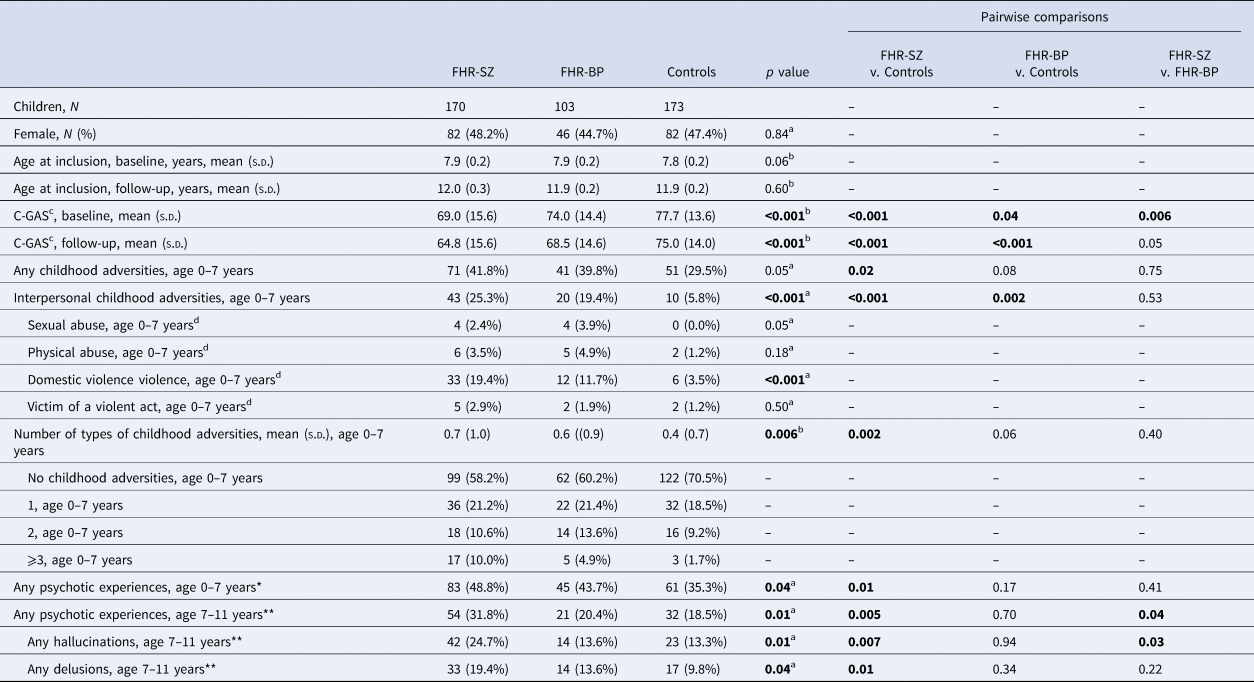
The sample in this study included 446 children (FHR-SZ; N = 170, FHR-BP; N = 103, controls; N = 173). At baseline, 512 children from the total cohort provided data on childhood adversities and at follow-up 451 children provided data on psychotic experiences. Only children providing data at both assessments were included in this study (Table 1).
Demographic and clinical characteristics of 446 children contributing with data on early childhood adversities (age 0–7) years and middle childhood psychotic experiences (age 7–11 years) in The Danish High Risk and Resilience Study – VIA 7 & VIA 11

Abbreviations: FHR-SZ, children at familial high risk of schizophrenia spectrum disorders; FHR-BP, children at familial high risk of bipolar disorder; PE, Psychotic Experiences; C-GAS, Children's Global Assessment Scale. Baseline, assessment at age 7; follow-up, assessment at age 11.
a χ2 test.
b One way ANOVA test.
c C-GAS score, range 1–100. Higher score indicates higher level of function. Range in this cohort: Baseline: 35–100; Follow-up: 34–98.
d Too small sample for parwise comparisons.
Children participating at follow-up did not differ regarding sex (χ2(1) = 0.882, p = 0.35), familial high risk (χ2(2) = 0.954, p = 0.62), exposure to any childhood adversities (χ2(1) = 0.849, p = 0.36) or any psychotic experiences during early childhood (χ2(1) = 1.343, p = 0.25) compared with those who dropped out from baseline to follow-up.
In the current sample no significant differences between the three FHR-groups were found regarding age of inclusion or sex of the child at baseline nor follow-up (mean age baseline assessment: 7.8, s.d. 0.20, range 7.02–8.41; mean age follow-up assessment: 11.9 s.d. 0.24, range 10.87–12.67). Children at FHR-SZ and FHR-BP had a significantly lower global level of function compared with controls at both assessments (Table 1).
Prevalence and between group differences regarding early childhood adversities and psychotic experiences and middle childhood psychotic experiences are detailed in Table 1 (Brandt et al., Reference Brandt, Hemager, Gregersen, Søndergaard, Krantz, Ohland and Thorup2022; Gregersen et al., , ).
Interaction between childhood adversities, familial high risk status and psychotic experiences
There was no interaction between childhood adversities and familial high risk in their effect on psychotic experiences in any of the analyses (p values for tests of interaction: Any childhood adversities = 0.09; any interpersonal childhood adversities = 0.76; multiple types of childhood adversities = 0.33).
Associations between early childhood adversities and middle childhood psychotic experiences
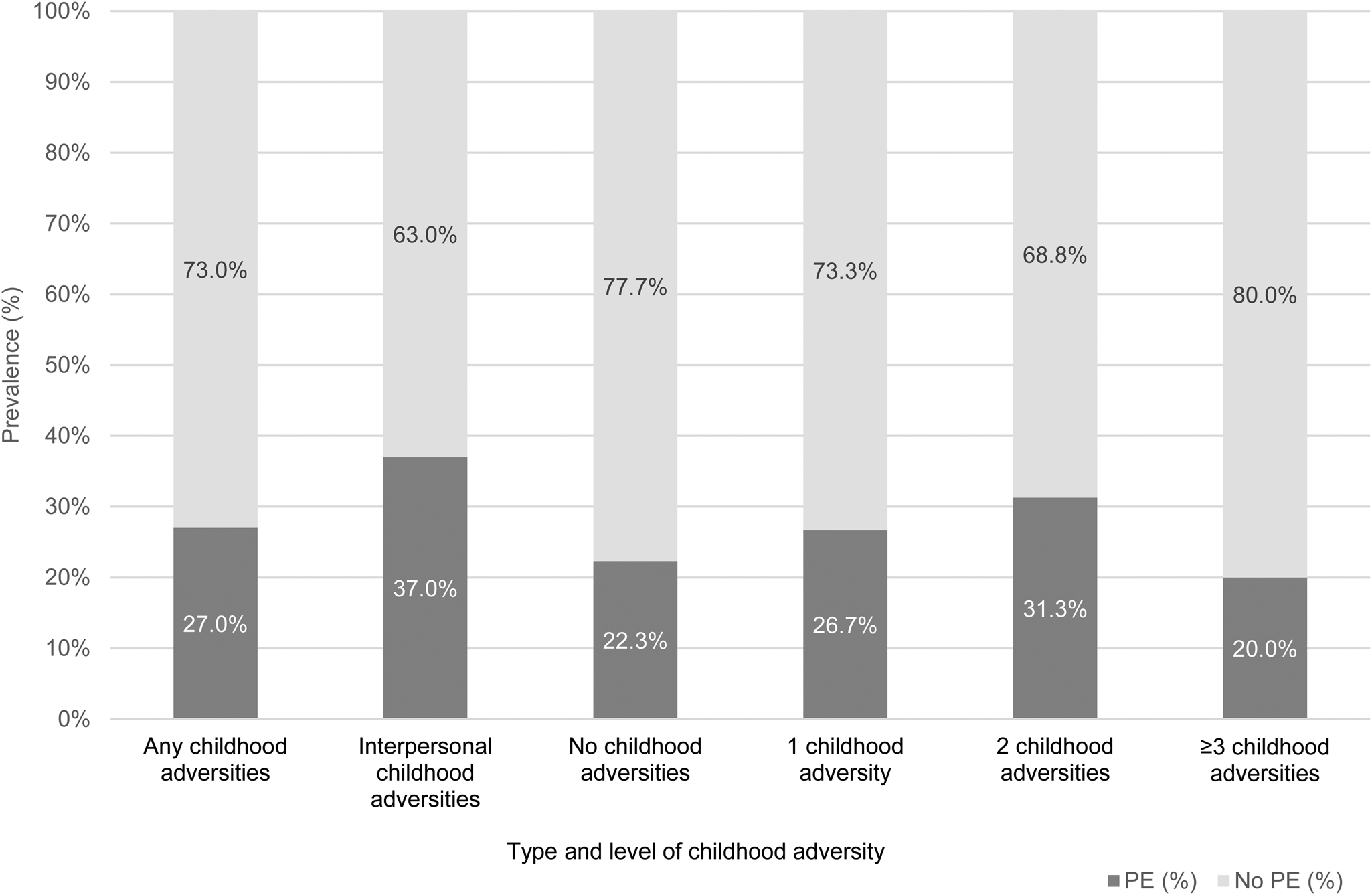
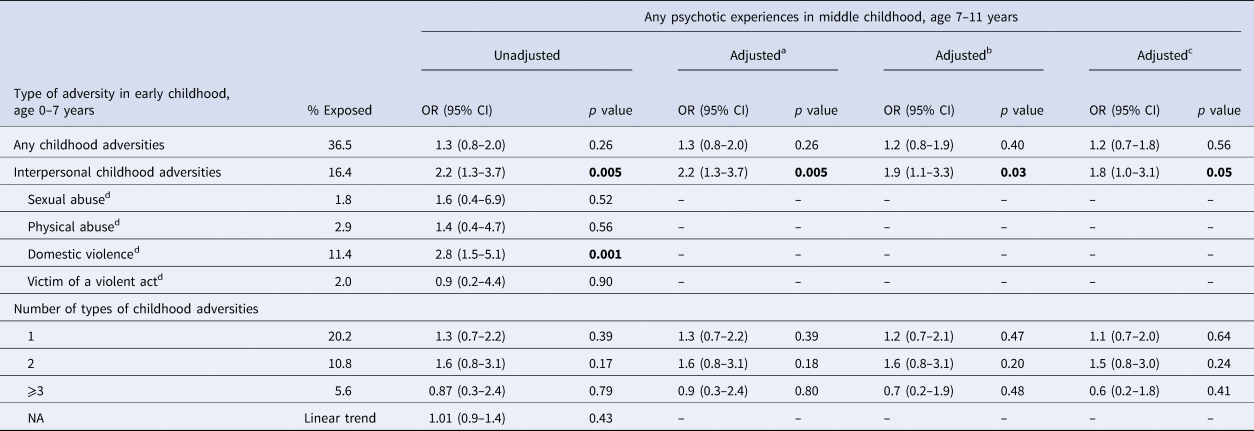
In children exposed to any adversities during early childhood (N = 163), 27.0% reported psychotic experiences in middle childhood and 73% did not. No significant association between exposure to any childhood adversities and any psychotic experiences was found (Fig. 1, Table 2).
Prevalence of middle childhood psychotic experiences (age 7–11 years) in children exposed to early childhood adversities (age 0–7 years) in The Danish High Risk and Resilience Study – VIA 7 & VIA 11.
Abbreviations: PE, psychotic experiences; Any childhood adversities age 0-7 years (N=163), Interpersonal childhood adversities age 0-7 years (N=73), No childhood adversities age 0-7 years (N=283), 1 childhood adversity age 0-7 years (N=90), 2 childhood adversities age 0-7 years (N=48), ≥3 childhood adversities age 0-7 years (N=25).

Associations between exposure to early childhood adversities (age 0–7 years) and any middle childhood psychotic experiences (age 7–11 years) in 446 children at FHR-SZ, FHR-BP and controls in The Danish High Risk and Resilience Study, VIA 7 & VIA 11

Abbreviations: OR, odds ratio; NA, not applicable, FHR-SZ, children at familial high risk of schizophrenia spectrum disorders; FHR-BP, children at familial high risk of bipolar disorder.
a Adjusted for sex.
b Adjusted for sex and familial high risk.
c Adjusted for sex, familial high risk and any PE at baseline assessment.
d Too small sample for adjusted analyses.
Significant p values (<0.05) in bold.
Psychotic experiences during middle childhood were reported in 37.0% of the children who had been exposed to any early childhood interpersonal adversities (N = 73) (Fig. 1). 63% of children exposed to interpersonal adversities during early childhood did not report psychotic experiences in middle childhood. Interpersonal adversities experienced in early childhood were significantly associated with psychotic experiences during middle childhood. (OR 2.2, 95% CI 1.3–3.7, p = 0.005). Adjusting for sex, familial high risk and baseline psychotic experiences attenuated the odds but significance remained (OR 1.8, 95% CI 1.0–3.1, p = 0.05) (Table 2).
No dose–response effect was found regarding association between exposure to a greater number of multiple different types of adversities and higher risk for psychotic experiences (Table 2).
Associations between early childhood adversities and middle childhood subclinical hallucinations and delusions
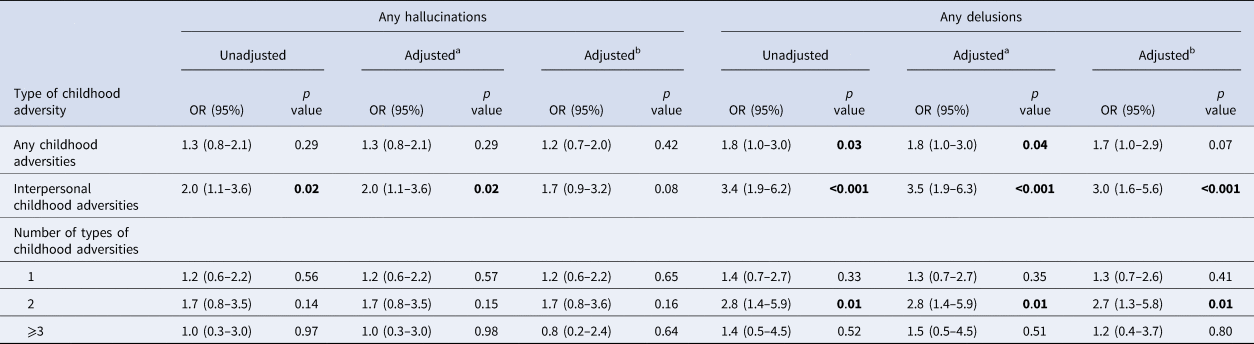
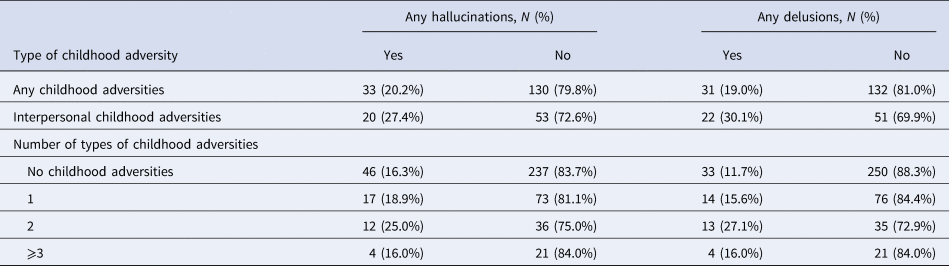
Exposure to interpersonal childhood adversities was associated with an increased risk of subclinical hallucinations when only adjusting for sex (OR 2.0, CI 95% 1.1–3.6, p = 0.02). Adjusting for FHR-status had a substantially attenuating effect for the association between interpersonal childhood adversities and hallucinations (OR 1.7, 95% CI 0.9–3.2, p = 0.08) (Table 3).
Associations between exposure to early childhood adversities (age 0–7 years) and middle childhood subclinical hallucinations and delusions (age 7–11 years) in 446 children at FHR-SZ, FHR-BP and controls in The Danish High Risk and Resilience Study, VIA 7 & VIA 11

Abbreviations: OR, odds ratio; FHR-SZ, children at familial high risk of schizophrenia spectrum disorders; FHR-BP, children at familial high risk of bipolar disorder.
a Adjusted for sex.
b Adjusted for sex and familial high risk.
Significant p values (<0.05) in bold.
Exposure to any childhood adversities (OR 1.8, 95% CI 1.0–3.0, p = 0.04) and any interpersonal childhood adversities (OR 3.5, 95% CI 1.9–6.3, p < 0.001) during early childhood predicted subclinical delusions in middle childhood when adjusting for sex. Adjusting for sex and FHR-status, a strong association with delusions persisted for interpersonal childhood adversities (OR 3.0, 95% CI 1.6–5.6, p < 0.001) (Table 3).
Having experienced two different types of adversities during early childhood was associated with subclinical delusions in middle childhood, even after adjusting for sex and FHR-status (OR 2.7, 95% CI 1.3–5.8, p = 0.01), whereas one or more than three types of childhood adversities were not.
Prevalence and percentages are presented in Table 4.
Summary statistics of exposure to early childhood adversities (age 0–7 years) and middle childhood hallucinations and delusions (age 7–11 years) in 446 children at FHR-SZ, FHR-BP and controls in The Danish High Risk and Resilience Study, VIA 7 & VIA 11

Abbreviations: FHR-SZ, children at familial high risk of schizophrenia spectrum disorders; FHR-BP, children at familial high risk of bipolar disorder.
Specific types of early childhood adversities and middle childhood psychotic experiences
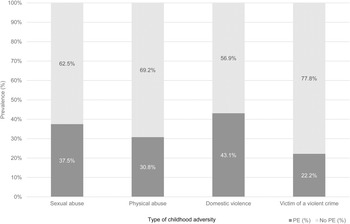
Exploratory analyses on associations between specific types of childhood adversities and psychotic experiences showed, that children who had experienced domestic violence during early childhood were more likely to report psychotic experiences in middle childhood (OR 2.8, 95% CI 1.5–5.1, p = 0.001), whereas for sexual abuse, physical abuse, and victim of a violent act, this was not the case (Table 2). Prevalence of psychotic experiences in children exposed to specific types of childhood adversities is shown in Fig. 2.
Prevalence of middle childhood psychotic experiences (age 7–11 years) in children exposed to specific types of interpersonal adversities in early childhood (age 0–7 years) in The Danish High Risk and Resilience Study – VIA 7 & VIA 11.
Abbreviations: PE, psychotic experiences; Sexual abuse age 0-7 years (N=8), physical abuse age 0-7 years (N=13), domestic violence age 0-7 years (N=51), victim of a violent crime (N=9).

Discussion
Main findings
Across the sample in this nationwide cohort study of children at FHR-SZ, FHR-BP and controls, any adversities including both interpersonal- and non-interpersonal adversities during early childhood, was not significantly associated with any middle childhood psychotic experiences. Exposure to any interpersonal adversities (sexual abuse, physical abuse, domestic violence, and victim of a violent act) during early childhood predicted an increased risk of any psychotic experiences in middle childhood when taking sex, familial high risk status and baseline psychotic experiences into account. Additionally, having early childhood interpersonal adversities was associated with an increased risk for delusions in middle childhood, after adjusting for sex and familial high risk status.
No evidence for a dose–response effect in exposure to multiple different types of childhood adversities associated to any middle childhood psychotic experiences was found. However, having experienced two types of adversities in early childhood predicted middle childhood delusions. Children who reported exposure to childhood adversities, were not more likely to have middle childhood psychotic experiences, if they were born to FHR-SZ or FHR-BP compared with controls.
Exploratory analyses revealed that early childhood experiences of domestic violence were associated with middle childhood delusions.
Associations between any childhood adversities and psychotic experiences
Contrary to meta-analytic evidence and previous findings of association between exposure to any childhood adversities from early childhood to early adulthood and psychotic experiences and psychotic symptoms (Alameda et al., Reference Alameda, Christy, Rodriguez, Salazar De Pablo, Thrush, Shen and Murray2021; Croft et al., Reference Croft, Heron, Teufel, Cannon, Wolke, Thompson and Zammit2019; McGrath et al., Reference McGrath, McLaughlin, Saha, Aguilar-Gaxiola, Al-Hamzawi, Alonso and Kessler2017), we did not find exposure to any early childhood adversities to be associated with an increased risk for psychotic experiences at this early age. The divergent findings could be attributable to the young age of the children or in keeping with the notion that interpersonal adversities are more strongly associated with psychotic experiences and psychosis (Croft et al., Reference Croft, Heron, Teufel, Cannon, Wolke, Thompson and Zammit2019; McGrath et al., Reference McGrath, McLaughlin, Saha, Aguilar-Gaxiola, Al-Hamzawi, Alonso and Kessler2017). Of note, in our study early childhood interpersonal adversities mainly accounted for the association to middle childhood psychotic experiences.
Associations between interpersonal childhood adversities and psychotic experiences
Our findings that exposure to any interpersonal childhood adversities, adversities with intention to harm (including exposure to sexual abuse, physical abuse, domestic violence, and/or victim of a violent act), have the strongest association regarding middle childhood psychotic experiences are in keeping with previous studies (Arseneault et al., Reference Arseneault, Cannon, Fisher, Polanczyk, Moffitt and Caspi2011; Croft et al., Reference Croft, Heron, Teufel, Cannon, Wolke, Thompson and Zammit2019). The associations remained significant after adjusting for sex and FHR-status which aligns with a large general-population study of exposure to early adversities and adolescent psychotic experiences (age 16) (Wigman et al., Reference Wigman, van Winkel, Ormel, Verhulst, van Os and Vollebergh2012). When adding baseline psychotic experiences to the model significance persisted, which is consistent with a previous prospective study of school-based adolescents (Kelleher et al., Reference Kelleher, Keeley, Corcoran, Ramsay, Wasserman, Carli and Cannon2013). These results are of importance, as individuals who have experienced interpersonal adversities are at increased risk for not only psychotic experiences during adolescence but also for developing a range of mental health problems including bipolar and psychotic disorders in adulthood (McGrath et al., Reference McGrath, McLaughlin, Saha, Aguilar-Gaxiola, Al-Hamzawi, Alonso and Kessler2017; McKay et al., Reference McKay, Kilmartin, Meagher, Cannon, Healy and Clarke2022; Morgan et al., Reference Morgan, Gayer-Anderson, Beards, Hubbard, Mondelli, Di Forti and Fisher2020).
Early childhood interpersonal adversities predicted subclinical hallucinations during middle childhood in our cohort when only adjusting for sex. Although not directly comparable due to divergent samples and symptom outcome, this is in keeping with previous studies of adult samples (Bentall et al., Reference Bentall, De Sousa, Varese, Wickham, Sitko, Haarmans and Read2014; Van Nierop et al., Reference Van Nierop, Lataster, Smeets, Gunther, Van Zelst, De Graaf and Van Winkel2014). Adjusting for FHR-status had an attenuation effect to non-significant, which corresponds with a previous study of individuals with first episode psychosis (Fisher et al., Reference Fisher, McGuffin, Boydell, Fearon, Craig, Dazzan and Morgan2014).
The effect of early childhood interpersonal adversities on psychotic experiences seems to be driven by the association of childhood adversities and subclinical delusions, as it was associated with the highest increase in risk (3.0-fold). These findings are, although not directly comparable, congruent with a large longitudinal population-based study examining delusions in adults (Van Nierop et al., Reference Van Nierop, Lataster, Smeets, Gunther, Van Zelst, De Graaf and Van Winkel2014). The association was robust and remained significant after adjusting for sex and familial high risk status of the child. One could speculate that these findings could be due to a previously reported pathway between childhood adversities and delusions with dissociation as a mediating factor (Alameda et al., Reference Alameda, Rodriguez, Carr, Aas, Trotta, Marino and Murray2020). Greater severity of adversity e.g. interpersonal adversities is associated with an increased experience of dissociation as a protective factor, which however can convert into delusions during adolescence and adulthood (Schäfer et al., Reference Schäfer, Fisher, Aderhold, Huber, Hoffmann-Langer, Golks and Harfst2012; Sun et al., Reference Sun, Alvarez-Jimenez, Simpson, Lawrence, Peach and Bendall2018).
Associations between frequency of exposure to childhood adversities and psychotic experiences
Previous studies report a dose–response effect where exposure to a higher number of childhood adversities predicts a higher risk of psychotic experiences including delusions in adolescence or psychotic symptoms in early adulthood (Croft et al., Reference Croft, Heron, Teufel, Cannon, Wolke, Thompson and Zammit2019; Crush et al., Reference Crush, Arseneault, Jaffee, Danese and Fisher2018; McGrath et al., Reference McGrath, McLaughlin, Saha, Aguilar-Gaxiola, Al-Hamzawi, Alonso and Kessler2017; McKay et al., Reference McKay, Cannon, Chambers, Conroy, Coughlan, Dodd and Clarke2020; Morgan et al., Reference Morgan, Gayer-Anderson, Beards, Hubbard, Mondelli, Di Forti and Fisher2020; Muenzenmaier et al., Reference Muenzenmaier, Seixas, Schneeberger, Castille, Battaglia and Link2015). In contrast, we did not find that a higher occurrence of childhood adversities (assessed by number of different types of adversities) was associated with a higher risk of any psychotic experiences. These unexpected findings could potentially be due to the low absolute number of children in our study (N = 446) compared with previous studies comprising larger samples (N = 2232–41 803). Another explanation may be that our study has any psychotic experiences in preadolescence as outcome. As other studies report psychotic experiences or psychotic symptoms later in childhood or in early adulthood, future studies could investigate if a dose–response effect would also account within our sample later in childhood. However, our results showed that exposure to two types of early childhood adversities was associated with an increased risk of delusions in middle childhood even after adjusting for sex and familial high risk status. It could be hypothesized that the lack of findings for three or more types of childhood adversities potentially could be explained by the reduced power caused by the relatively smaller sample size reporting three or more types of adversities in early childhood.
Interaction of familial risk and exposure to childhood adversities
We did not find an interaction between early childhood adversities and familial high risk in predicting middle childhood psychotic experiences. This is in keeping with previous findings from twin and adolescent general population samples (mean age 10–17.2 years) and a sample of individuals with first-episode psychosis (Fisher et al., Reference Fisher, McGuffin, Boydell, Fearon, Craig, Dazzan and Morgan2014; Pinckaers et al., Reference Pinckaers, Rotee, Nwosu, Krolinski, Smeets, Gülöksüz and Drukker2019; Wigman et al., Reference Wigman, van Winkel, Ormel, Verhulst, van Os and Vollebergh2012). Contrary, other studies of adults report adverse environments during upbringing and childhood adversities to increase risk of psychosis in individuals with a family history of psychiatric illness compared with individuals without the preexisting vulnerability (Tienari et al., Reference Tienari, Wynne, Sorri, Lathi, Läksy, Moring and Wahlberg2004; Van Nierop et al., Reference Van Nierop, Janssens, Bruggeman, Cahn, De Haan, Kahn and Wiersma2013). This aligns with recent metanalytic evidence using schizophrenia polygenic risk score as a genetic component (Woolway et al., Reference Woolway, Smart, Lynham, Lloyd, Owen, Jones and Legge2022). Moreover, a recent study has found evidence for a combined effect of genetic liability (defined through schizophrenia-polygenic risk score) and childhood adversities increasing the risk of onset of first-episode psychosis compared with the effect of adversity or genetic independently (Aas et al., Reference Aas, Alameda, Di Forti, Quattrone, Dazzan, Trotta and Morgan2021). The discrepancy with the latter findings could be due to methodological differences including age of the sample, measurement of childhood adversities or differences regarding definition of genetically liability using siblings not parents or polygenic risk score.
Thus, concerning our study, one can hypothesize that the potential effect of early childhood adversities on middle childhood psychotic experiences act independently of familial high risk for psychosis spectrum disorders or bipolar disorders and that type or frequency of childhood adversities to a higher degree will be determining risk factor.
Associations between specific types of childhood adversities and psychotic experiences
The association between exposure to early childhood domestic violence (physical violence between parents/other caregivers in the home of the child) and increased risk of psychotic experiences in middle childhood is in keeping with another study reporting a 10-fold increased risk of psychotic experiences during adolescence (age 12–15 years) if having witnessed domestic violence (Kelleher et al., Reference Kelleher, Harley, Lynch, Arseneault, Fitzpatrick and Cannon2008). The risk in our study was lower, corresponding with a population-based study measuring psychotic experiences at age 17 (Croft et al., Reference Croft, Heron, Teufel, Cannon, Wolke, Thompson and Zammit2019). Additionally, this study also found domestic violence experienced during early childhood (age 0–4.9 years) to be associated with a higher risk for early adulthood psychotic experiences (at age 17) compared to age 5–10.9 years and 11–17 years (Croft et al., Reference Croft, Heron, Teufel, Cannon, Wolke, Thompson and Zammit2019). Future studies within our cohort should examine if this also accounts for children at FHR-SZ and FHR-BP. Contrary to previous studies (Arseneault et al., Reference Arseneault, Cannon, Fisher, Polanczyk, Moffitt and Caspi2011; Fekih-Romdhane et al., Reference Fekih-Romdhane, Tira and Cheour2019; Kelleher et al., Reference Kelleher, Harley, Lynch, Arseneault, Fitzpatrick and Cannon2008; Lataster et al., Reference Lataster, van Os, Drukker, Henquet, Feron, Gunther and Myin-Germeys2006; McGrath et al., Reference McGrath, McLaughlin, Saha, Aguilar-Gaxiola, Al-Hamzawi, Alonso and Kessler2017; Van Nierop et al., Reference Van Nierop, Lataster, Smeets, Gunther, Van Zelst, De Graaf and Van Winkel2014), no associations between sexual abuse, physical abuse and psychotic experiences were found. The lack of findings could possibly be attributed to the small sample size reporting sexual abuse and physical abuse in early childhood.
Strengths and limitations
This study has numerous strengths. Firstly, childhood adversities and psychotic experiences were measured with a detailed validated face-to-face interview using information from both the caregiver and the child at baseline and at follow-up. The interview was conducted by clinicians trained in the use of K-SADS-PL and the instrument provides a comprehensive assessment of childhood adversities and psychotic experiences which allows evaluation of subclinical hallucinations and delusions separately. Assessment was both close to time of exposure to adversities and debut of psychotic experiences, reducing the risk of recall bias. Lastly, the study includes a large nationwide sample of children at FHR-SZ or FHR-BP, allowing us to examine familial risk as a confounder.
A number of limitations should also be considered. Using K-SADS-PL we were not able to determine severity of interpersonal adversities, e.g., if sexual abuse or physical abuse was performed by a close relative or someone not close to the child. Furthermore, multiple types of childhood adversities reflected number of different types of adversities and not total number of exposures, as it was not possible to measure repeated exposures within the same category of adversity. Despite the overall large sample size in this FHR-study, for exploratory analyses this study was underpowered to detect associations between sexual abuse, physical abuse, victim of violent act and psychotic experiences.
Conclusions
This study adds to previous evidence that children exposed to interpersonal childhood adversities may constitute a risk group for later development of psychotic experiences. These findings indicate that the risk for psychotic experiences following early childhood interpersonal adversities potentially can be established already as early as during middle childhood. This study found no evidence that being born at FHR-SZ or FHR-BP accounts for an association between early childhood adversities and middle childhood psychotic experiences. Future studies, including within this cohort, should examine the symptoms trajectories in the association between exposure to childhood adversities and persistence of psychotic experiences throughout childhood and later transition to psychotic disorder. Furthermore, future longitudinal studies within this cohort are warranted to investigate if the effect of childhood adversities on psychotic experiences is different over time if being born at FHR-SZ or FHR-BP.
Acknowledgements
The authors would like to thank all the families participating in the study; to L. Juhl Mikkelsen, L. Carmichael, Å. K. Prøsch, H. B. Stadsgaard, N. L. Steffensen, A. M. Bundsgaard, A. F. Bundgaard, M. Birk, M. Skjærbæk, A. Ranning, H. Jensen, C. Gregersen, M. T. Henriksen, K. Zahle and M. Melau for contributing to the data collection; and to C. B. Pedersen and M. G. Pedersen for assistance with data extraction from the registers.
Financial support
This work was supported by the Lundbeck Foundation Initiative for Integrative Psychiatric Research (iPSYCH) (grant number R102-A9118 and R155-2014-1724), the Innovation Fund Denmark (grant number IFD project 6152-00002B), the Beatrice Surovell Haskell Fund for Child Mental Health Research of Copenhagen (grant no 11531) – and the Capital Region of Denmark, the Mental Health Services of the Capital Region of Denmark, TrygFonden, and Aarhus University.
Conflict of interests
None.