Introduction
Adverse childhood experiences (ACEs) and toxic stress refer to severe, frequent, and/or prolonged adversity in the absence of a buffering relationship. They affect an individual's psychology and biology, and have been associated with detrimental childhood development, health, and life course outcomes (Felitti et al., Reference Felitti, Anda, Nordenberg, Williamson, Spitz, Edwards and Marks1998; Fox, Levitt, & Nelson III, Reference Fox, Levitt and Nelson2010; Hails, Reuben, Shaw, Dishion, & Wilson, Reference Hails, Reuben, Shaw, Dishion and Wilson2018; Shonkoff et al., Reference Shonkoff, Garner, Siegel, Dobbins, Earls, McGuinn and Care2012). Specifically, studies have linked exposure to adversity in childhood to an increased risk for mental health disorders and dysfunction (Bucci, Marques, Oh, & Harris, Reference Bucci, Marques, Oh and Harris2016; Felitti et al., Reference Felitti, Anda, Nordenberg, Williamson, Spitz, Edwards and Marks1998; Hughes et al., Reference Hughes, Bellis, Hardcastle, Sethi, Butchart, Mikton and Dunne2017; Reuben et al., Reference Reuben, Moffitt, Caspi, Belsky, Harrington, Schroeder and Danese2016). Additionally, exposure to ACEs and toxic stress can lead to considerable suffering at the individual and community level, and is associated with significant economic burdens to communities, care systems, and society in general (Anda et al., Reference Anda, Brown, Felitti, Bremner, Dube and Giles2007; Walker et al., Reference Walker, Unutzer, Rutter, Gelfand, Saunders, VonKorff and Katon1999).
Given the detrimental and costly effects of various forms of early and ongoing adversity, there has—over the past decade—been a strong national and international push to develop family-based preventive interventions that will buffer their impact. Many of these interventions focus on establishing and maintaining what has consistently been shown to be a powerful buffer of ACEs and toxic stress: the presence of a consistent, positive, and safe caregiving relationship in the child's earliest months and years (Anda et al., Reference Anda, Brown, Felitti, Bremner, Dube and Giles2007; Johnson et al., Reference Johnson, Guthrie, Smyke, Koga, Fox, Zeanah and Nelson2010; Julian, Lawler, & Rosenblum, Reference Julian, Lawler and Rosenblum2017; Narayan, Rivera, Bernstein, Harris, & Lieberman, Reference Narayan, Rivera, Bernstein, Harris and Lieberman2018; Robles, Gjelsvik, Hirway, Vivier, & High, Reference Robles, Gjelsvik, Hirway, Vivier and High2019). Comprehensive early home visiting has been described by the United States Centers for Disease Control and Prevention as one of the most effective ways to ameliorate the effects of early adversity in marginalized and underserved families by preventing exposure to adversity in subsequent generations (Garner, Reference Garner2013).
Currently, there are 21 federally recognized evidence-based home-visiting programs (EBHVP) available in the United States-—all of which have demonstrated efficacy in at least two of the following areas: child health, maternal health, child development, positive parenting practices, family economic self-sufficiency, successful linkages and referrals, and reductions in child maltreatment, juvenile delinquency, family violence and crime (Sama-Miller et al., Reference Sama-Miller, Akers, Mraz-Esposito, Zukiewicz, Avellar, Paulsell and Del Grosso2018). Among those that have studied middle childhood outcomes are the Nurse Family Partnership (NFP), Early Head Start (EHS), and Attachment and Biobehavioral Catch-Up (ABC). NFP children in middle childhood had fewer maternally reported total behavior problems than controls (Olds et al., Reference Olds, Kitzman, Cole, Robinson, Sidora, Luckey and Holmberg2004; Olds et al., Reference Olds, Holmberg, Donelan-McCall, Luckey, Knudtson and Robinson2014), and at 15-year follow-up a subset of NFP adolescents had fewer arrests and convictions compared to controls (Olds et al., Reference Olds, Henderson, Cole, Eckenrode, Kitzman, Luckey and Powers1998). In the EHS follow up studies, which include children who received services through the home-based and through center-based options, EHS children showed fewer social behavior problems than controls at age 5 years, and EHS mothers had lower levels of depression than control families (Vogel et al., Reference Zajac, Raby and Dozier2013). Families who had enrolled in EHS also had fewer child welfare encounters than controls, and were less likely to have a substantiated report of physical or sexual abuse at ages 5 and 9 years (Green et al., Reference Green, Ayoub, Bartlett, Von Ende, Furrer, Chazan-Cohen and Klevens2014). Lastly, middle childhood studies of the ABC intervention, a 10 session home-visiting program for caregivers of young children involved with the Child Protective Services, demonstrate that children who received the ABC intervention report higher levels of attachment security and have more favorable biobehavioral profiles (i.e., electroencephalography (EEG), respiratory sinus arrhythmia, and heart rate) when compared to children in the control group (Bick, Palmwood, Zajac, Simons, & Dozier, Reference Bick, Palmwood, Zajac, Simons and Dozier2019; Tabachnick, Raby, Goldstein, Zajac, & Dozier, Reference Tabachnick, Raby, Goldstein, Zajac and Dozier2019; Zajac, Raby, & Dozier, Reference Zajac, Raby and Dozier2020). While these results suggest that early home visiting can impact parenting and child behavior, there is clearly much more to be learned about these processes.
Minding the Baby®
The current study examines the effects of the Minding the Baby® (MTB) intervention—a federally recognized evidence-based home-visiting program—on parenting and child behavior during middle childhood. MTB is an interdisciplinary intervention aimed at improving relationship, developmental, and health outcomes in first-time, multiethnic, young mothers and children exposed to significant adversity (Sadler et al., Reference Sadler, Slade, Close, Webb, Simpson, Fennie and Mayes2013, Reference Slade, Holland, Ordway, Carlson, Jeon, Close and Sadler2019) [ClinicalTrials.gov Identifier: NCT01458145] that has been implemented in the United States, the United Kingdom, and Denmark. The MTB multigenerational approach begins during the transition to parenthood, when young pregnant women are recruited in their second or third trimester of a first pregnancy. Families are visited weekly until the child's first birthday, then every other week until the child is two years old. Nurses are paired with licensed clinical social workers to provide intensive in-home services, targeting maternal and child health and wellbeing, parents' mentalizing abilities, parenting capacities, and supporting parent-child attachment, and maternal and child life course outcomes.
MTB is rooted in mentalization and attachment theories, and specifically the idea that caregivers who are able to mentalize or reflectFootnote 1 upon their child's experience (i.e., envision or imagine and make meaning of both their own and their child's thoughts, feelings, intentions, and desires) are able to organize and regulate themselves and their child, and provide safe, loving, and consistent parenting (Slade, Reference Slade2005). Research has linked higher parental reflective functioning (PRF) with a child's secure attachment (Fonagy et al., Reference Fonagy, Steele, Steele, Leigh, Kennedy, Mattoon, Target, Goldberg, Muir and Kerr1995; Katznelson, Reference Katznelson2014; Meins, Fernyhough, Fradley, & Tuckey, Reference Meins, Fernyhough, Fradley and Tuckey2001; Slade, Reference Slade2005; Slade, Grienenberger, Bernbach, Levy, & Locker, Reference Slade, Grienenberger, Bernbach, Levy and Locker2005; Stacks et al., Reference Stacks, Muzik, Wong, Beeghly, Huth-Bocks, Irwin and Rosenblum2014), more sensitive maternal behavior (Smaling et al., Reference Smaling, Huijbregts, Suurland, Van Der Heijden, Van Goozen and Swaab2015; Stacks et al., Reference Stacks, Muzik, Wong, Beeghly, Huth-Bocks, Irwin and Rosenblum2014). and less disrupted maternal–child affective communication (Grienenberger, Kelly, & Slade, Reference Grienenberger, Kelly and Slade2005; Katznelson, Reference Katznelson2014). Researchers have also linked parental adversity and trauma to impaired or diminished mentalizing (Berthelot et al., Reference Berthelot, Ensink, Bernazzani, Normandin, Luyten and Fonagy2015; Condon et al., Reference Condon, Holland, Slade, Redeker, Mayes and Sadler2019b; Ensink, Berthelot, Bernazzani, Normandin, & Fonagy, Reference Ensink, Berthelot, Bernazzani, Normandin and Fonagy2014; Schechter et al., Reference Schechter, Coots, Zeanah, Davies, Coates, Trabka and Myers2005), and have linked a specific clinical focus on mentalization to improved outcomes in traumatized populations (Bateman & Fonagy, Reference Bateman and Fonagy2004; Muzik et al., Reference Muzik, Rosenblum, Alfafara, Schuster, Miller, Waddell and Kohler2015; Pajulo & Kalland, Reference Pajulo, Kalland, Suchman, Pajulo and Mayes2013; Schechter et al., Reference Schechter, Myers, Brunelli, Coates, Zeanah, Charles and Trabka2006; Suchman, Mayes, Conti, Slade, & Rounsaville, Reference Suchman, Mayes, Conti, Slade and Rounsaville2004). Thus, PRF supports the development of a secure attachment relationship (Slade, Reference Slade2005) that provides a foundation to the child's long-term physical health and wellness, and facilitates the child's socioemotional development and capacities for emotion regulation, while decreasing the risk of future psychopathology, including behavior problems (Sroufe, Egeland, Carlson, & Collins, Reference Sroufe, Egeland, Carlson and Collins2009). In communities where adversity and toxic stress are epidemic, the threats to parental capacities must be addressed directly.
MTB focuses on reducing threats to parents' emotional and physical safety by linking families to resources and providing consistent, reflective, nurturing relationships with a home-visiting nurse and a social worker. Because many MTB families have been exposed to a range of ACEs and toxic stressors, these relationships serve as a secure base and a model for the parents as they work to become more reflective, to regulate their own and their child's emotions, and to parent in a consistently positive and non-threatening way. This in turn helps parents establish a safe and secure parent-child relationship, and leads to improved developmental outcomes for both mother and child.
To date, two MTB randomized controlled trials (RCTs) support the evidence base of this model (Sadler et al., Reference Sadler, Slade, Close, Webb, Simpson, Fennie and Mayes2013; Slade et al., Reference Slade, Holland, Ordway, Carlson, Jeon, Close and Sadler2019). As predicted, compared to control group families, parents who received the MTB intervention had higher levels of parental reflective functioning, and their children had significantly higher rates of secure attachment and lower rates of disorganized attachment (Sadler et al., Reference Sadler, Slade, Close, Webb, Simpson, Fennie and Mayes2013; Slade et al., Reference Slade, Holland, Ordway, Carlson, Jeon, Close and Sadler2019). In addition, MTB dyads had lower levels of disrupted affective communication compared to controls (Sadler et al., Reference Sadler, Slade, Close, Webb, Simpson, Fennie and Mayes2013; Slade et al., Reference Slade, Holland, Ordway, Carlson, Jeon, Close and Sadler2019) at graduation. A subset of the MTB families were also followed up during the preschool period (the MTB Preschool Study), at which point, mothers in the MTB group reported significantly fewer total and externalizing problem behaviors than did mothers in the control group (Ordway et al., Reference Ordway, Sadler, Dixon, Close, Mayes and Slade2014).
The question guiding the present research is whether the MTB intervention, with its unique focus on mentalization within the context of a relationship based, interdisciplinary model, has ongoing effects on parental reflective capacities and parenting behavior, and whether these have ongoing effects on the child's socioemotional development in middle childhood. We currently know very little about the stability of parental mentalization over time, or about the role of parental mentalization in middle childhood. Mentalization theory would predict that parents' capacity to reflect on the child's experience would be important across development. That is, even though school-age children are—as compared to infants and toddlers—far more independent, and much more able to express or disguise their needs in sophisticated ways, they nevertheless need their parents to reflect and make meaning of their experience, albeit in a different way. However, the particular challenges and import of parental mentalization in middle childhood have—until recently—have remained largely unexamined (Borelli, St John, Cho, & Suchman, Reference Borelli, St John, Cho and Suchman2016a; Borelli, Vazquez, Rasmussen, Teachanarong, & Smiley, Reference Borelli, Vazquez, Rasmussen, Teachanarong and Smiley2016b; Borelli et al., Reference Borelli, Stern, Marvin, Smiley, Pettit and Samudio2020). In this study, the MTB-Early School Age follow-up (MTB-ESA), we aim to understand these questions by testing whether MTB has effects on parenting and child behaviors two to eight years after the intervention was completed.
We tested three hypotheses: At follow-up, (a) mothers who participated in the MTB intervention will be more reflective when compared to control group mothers, (b) mothers who participated in the MTB intervention will utilize more positive parenting practices when compared to control group mothers, and (c) mothers who participated in the MTB intervention will report fewer child behavior problems than control mothers.
Methods
Design, sample, and setting
The MTB-ESA is a cross-sectional follow-up study of a subsample of the original MTB RCTs. In the original MTB RCT studies, 237 families were randomized to the MTB intervention or control group (i.e., treatment as usual at their community health center) (Sadler et al., Reference Sadler, Slade, Close, Webb, Simpson, Fennie and Mayes2013; Slade et al., Reference Slade, Holland, Ordway, Carlson, Jeon, Close and Sadler2019). Specific criteria for eligibility in the original RCT samples are described elsewhere (Sadler et al., Reference Sadler, Slade, Close, Webb, Simpson, Fennie and Mayes2013; Slade et al., Reference Slade, Holland, Ordway, Carlson, Jeon, Close and Sadler2019). To be eligible for the MTB-ESA follow-up, (a) families had to be previously enrolled in either the intervention or the control group of the MTB RCTs, and were willing to be recontacted, (b) the child had to be between 4–10-years old at the time of data collection from October 2016 to March 2018, (c) the mother had to have primary custody or regular visitation with the child, and both mothers and children had to (d) be available for data collection in the state of Connecticut, and (e) be able to provide consent and/or assent to participate in the study.
Procedure
After obtaining Yale University Institutional Review Board approval for this study, eligible dyads were contacted and invited to participate through phone, text, and mail. Interested participants were invited to complete a two-hour follow-up interview session with their child at a convenient private location selected by participants (e.g., participant's home, the Yale School of Nursing Center for Biobehavioral Research, and community library offices). Mothers were consented, children provided assent, and both completed assessments. They were compensated US$50 for their time and US$15 for travel expenses if they came to the center for data collection; this was consistent with prior MTB RCTs compensation for assessments. Data were collected by a team of two individuals with at least a masters-level education. Author EC was the primary data collector for the control arm and ALT was the primary data collector for the intervention group; a research assistant was the secondary data collector for both arms. EC trained ALT and a research assistant in data collection procedures to ensure consistency across arms.
Variables and measures
Demographic characteristics
Demographic data collected included maternal and child age, education status, race/ethnicity, and mothers’ marital status, employment status, and use of public assistance as a proxy for socioeconomic status (SES) (i.e., Medicaid, Temporary Assistance for Needy Families (TANF), Special Supplemental Nutrition Program for Women, Infants, and Children (WIC), Supplemental Nutrition Assistance Program (SNAP)). Additionally, mothers completed the Childhood Trauma Questionnaire—Short Form (CTQ-SF) (Bernstein et al., Reference Bernstein, Stein, Newcomb, Walker, Pogge, Ahluvalia and Desmond2003), a retrospective 28-item self-report questionnaire of different types of childhood trauma (scores range from 28–140), which was used to assesses the level of trauma exposure in our sample. The following total trauma score cut-offs were used: none to minimal trauma (< = 36), low to moderate trauma (>36 and < = 41–51), moderate to severe trauma (>41–51 and < = 56–68), and severe to extreme trauma (> = 73) (Bernstein & Fink, Reference Bernstein and Fink1998). Internal consistency of the CTQ was high (α = 0.95) for the current study.
Parental reflective functioning (PRF)
Mothers completed the Parental Reflective Functioning Questionnaire (PRFQ) (Luyten, Mayes, Nijssens, & Fonagy, Reference Luyten, Mayes, Nijssens and Fonagy2017) an 18-item self-report measure (scores range from 6–42) that was developed to assess parental reflecting functioning in parents of young children. The PRFQ has been validated in high-risk populations (Luyten et al., Reference Luyten, Mayes, Nijssens and Fonagy2017) and has three subscales: (a) interest and curiosity in mental states (PRFQ-IC), which reflects the parents’ attentiveness to their child's mental states (e.g., “I try to see situations through the eyes of my child,” “I like to think about the reasons behind the way my child behaves and feels”), (2) certainty about mental states (PRFQ-CM), which reflects the parent's capacity to recognize the complexity and opacity of their child's mental states, whereby too much certainty reflects limited reflective capacities (e.g., “I always know what my child wants,” “I can completely read my child's mind”), and (3) prementalizing modes (PRFQ-PM), which refers to parental misattributions, including malevolent attributions of the child's mental states (e.g., “My child cries around strangers to embarrass me” “My child sometimes gets sick to keep me from doing what I want to do”). The PRFQ-CM scale was recoded to aid interpretation (e.g., I can always predict what my child will do): the mid-range responses were scored highest to reflect appropriate certainty about mental states, and the ends of the Likert-like scale (too much or too little certainty) received the lowest scores. Reliability was low for both the original (α = 0.43) and recoded versions of the PRFQ-CM (α = 0.49), therefore we did not use PRFQ-CM in our analyses. There was adequate reliability for PRFQ-IC (α = 0.65) and PRFQ-PM (α = 0.70).
Parenting behaviors
Mothers completed the Parent Behavior Inventory (PBI), a 20-item self-report instrument (scores range from 0–50) that was developed to assess parenting behaviors in caregivers of preschool and young school-age children (Lovejoy, Weis, O'Hare, & Rubin, Reference Lovejoy, Weis, O'Hare and Rubin1999). The PBI has been validated in high-risk populations (Dallaire et al., Reference Dallaire, Pineda, Cole, Ciesla, Jacquez, LaGrange and Bruce2006; Lovejoy et al., Reference Lovejoy, Weis, O'Hare and Rubin1999) and has two subscales: supportive/engaged and hostile/coercive. Supportive/engaged parenting includes behaviors that demonstrate warmth and affection through shared activities, positive physical, and verbal contact (e.g., “I listen to my child's feelings and try to understand them” and “I comfort my child when s/he seems scared, upset, or unsure”), and hostile/coercive parenting behaviors includes threats, punishment, coercion, guilt, and hostility (e.g., “I grab or handle my child roughly”). In the current sample, the two subscales of the PBI had adequate internal consistency: supportive/engaged parenting (α = 0.69) and hostile/coercive parenting (α = 0.69).
Child behavior
Mothers completed age-appropriate parent-report versions of the Child Behavior Checklist (CBCL/1½-5 and CBCL/6-18), a 99-item questionnaire designed to assess behavior problems in children (Achenbach & Ruffle, Reference Achenbach and Ruffle2000). The externalizing problem behaviors subscale includes aggressive and rule-breaking symptoms and behaviors, and the internalizing problem behaviors subscale includes mood disturbances and anxiety, depressive, and somatic symptoms and behaviors. The CBCL has been validated in various samples, including African-American and Hispanic parent informants, and across income levels, with good reliability (Gross et al., Reference Gross, Fogg, Young, Ridge, Cowell, Richardson and Sivan2006). The CBCL scores are reported as sex and age normed t scores (scores range from 0–100) that allows for compatibility across the two CBCL versions. Higher scores indicate greater degrees of behavioral and emotional problems. In the current sample, the reliability of the total CBCL score and externalizing and internalizing subscales was high (for children ≤ 5 years old, total problem behaviors α = 0.91, externalizing problem behaviors α = 0.84, and internalizing problem behaviors α = 0.76; for children ≥ 6 years old, total problem behaviors α = 0.97, externalizing problem behaviors α = 0.94, internalizing problem behaviors α = 0.84).
Data management and analyses
Data were imported, cleaned, and analyzed using SAS 9.4® and SPSS (v25.0). Univariate statistics were used to describe sample characteristics and all study variables including distribution patterns, potential outliers, and missing data. For bivariate analyses of enrolled versus not-enrolled and control versus intervention groups, we used independent t tests for normally distributed variables, Mann–Whitney U tests for non-normally distributed continuous variables, and Pearson's chi-square and Fisher's exact tests for categorical variables. For this study, the MTB RCT enrollment data were used to obtain treatment assignment and baseline MTB RCT enrollment demographic data.
We used linear regression for continuous primary outcomes (CBCL, PRFQ-IC, and PBI-hostile/coercive). CBCL scores are reported in general population standardized t scores. PRFQ-IC and PBI-hostile/coercive scales were standardized using z scores based on our study population distribution for ease of interpretation. Two of the continuous parenting scales, PRFQ-PM and PBI-supportive, were dichotomized at the mean due to lack of variability in responses. These data were analyzed using linear regression and logistic regression models adjusted for demographics that were different between MTB-ESA control and intervention groups. We also controlled for the child's sex because of the known differences between males and females with respect to behavior, and if this variable improved model fit. The primary predictor for both linear regression and logistic regression was being in the intervention group compared to being in the control group (referent group).
Results
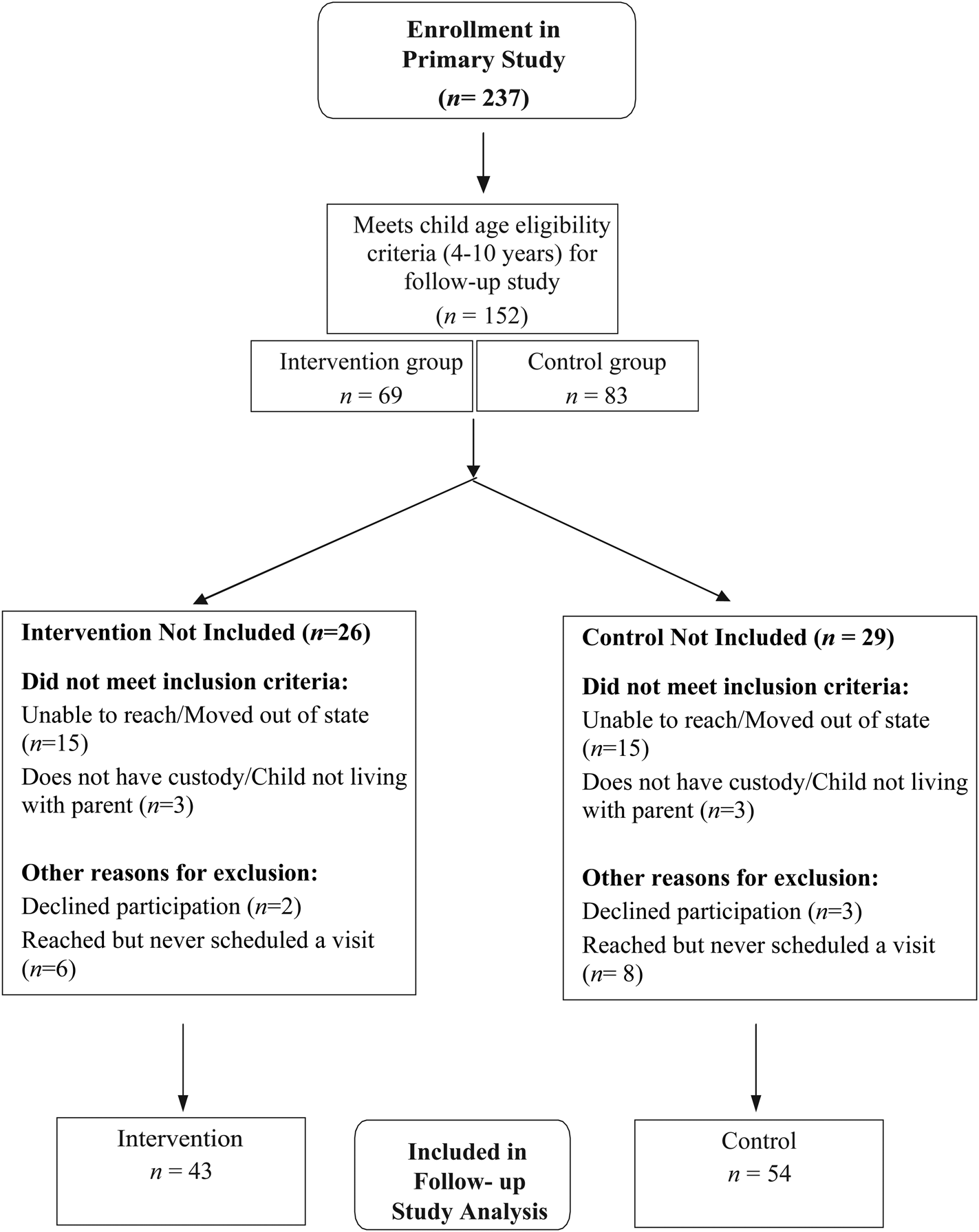
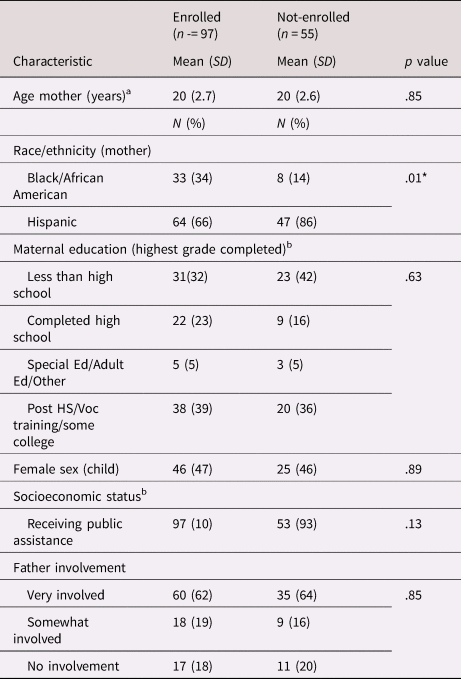
Detailed information regarding the flow of participants from the original study through follow-up, including reasons for exclusion is detailed in Figure 1. For the MTB-ESA follow-up, 152 families (64% of original MTB RCTs) met eligibility criteria (83 control, 69 intervention) based on the age of the child. Of those, 97 families (64%) were enrolled in this study (43 intervention families and 54 control). Of the 55 families who did not enroll in this study (i.e., 36% of the age eligible sample), 21% were unable to be located by the researchers despite multiple attempts to contact them, and only 12.5% refused to participate or did not schedule a visit. Enrolled and not-enrolled dyads differed only with regard to maternal race/ethnicity and did not significantly differ with regard to time since intervention or baseline demographic characteristics (maternal age at enrollment, education level, father involvement, child sex, use of social services). Black and Hispanic/Latina mothers were equally likely to enroll in the MTB-ESA follow-up study if they were in the intervention arm, but Hispanic/Latina were less likely to enroll in the follow-up if they were in the control arm (see Table 1).
Flow of participants from original study through the Minding the Baby ®-Early School Age follow-up MTB-ESA follow-up study.

Demographic characteristics at time of original Minding the Baby ® (MTB) consent (enrolled vs. not-enrolled)

Notes: aIndependent samples t test was used for analysis of this variable.
b Fisher's exact test was used for analysis of this variable. Pearson's chi-square was used for all other categorical groups.
* p value < .05, **p value < .01, ***p value < .001.
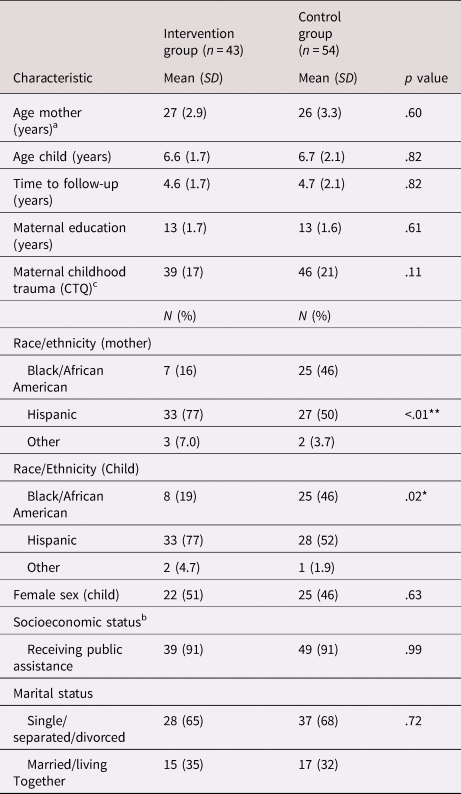
At time of the MTB-ESA follow-up, the average age of mothers was 27 years (SD = 3.1) and that of the children was 6.6 years (SD = 1.9). The mean time to follow-up since the original MTB RCT end point (2 years of age) was 4.6 years (SD = 1.9). In this follow-up, 33% of the mothers were Black/African American, 62% Hispanic (mostly Puerto Rican and Dominican), and 5.2% other/mixed; 34% of the children were Black/African American, 63% Hispanic, and 3.1% other/mixed; 49% of the children were female. Mean maternal education was 13 years (SD = 1.6) at follow-up. Up to 91% of the families received public assistance; 65% of the mothers reported being single, separated, or divorced; and 32% reported being married or living together with a partner. Mothers in both the intervention and control groups reported a range of low to severe levels of childhood trauma scores, with the mean at the midpoint of the low to moderate range (CTQ mean = 43, SD = 19).
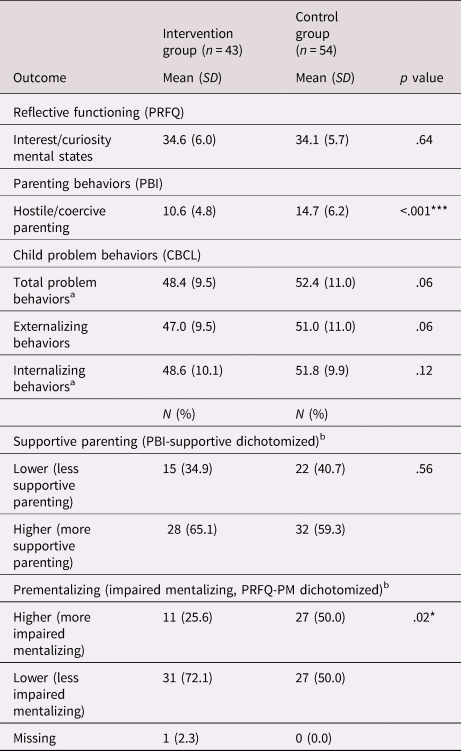
The intervention and control group mothers in this study were similar with regard to most background demographic characteristics including age of mother and child at follow-up, maternal education, child sex, SES, marital status, and maternal childhood trauma (Table 2). However, significant differences between groups included the reported race/ethnicity of the mother and child. Specifically, there were significantly more Hispanic mothers (77%) and children (77%) in the intervention group compared to Hispanic mothers (50%) and children (52%) in the control group (mothers p < .01, children p = .02) as had been previously seen in the original MTB RCT studies. Additionally, although no statistical differences were found between intervention and control groups with regards to time-to-follow-up, the distribution of this variable differed by group: the distributions in the control group and intervention groups were bimodal and right skewed respectively. Therefore, in multivariate analyses, we controlled for maternal race/ethnicity and time-to-follow-up. Due to collinearity between maternal and child race/ethnicity, we only controlled for maternal race/ethnicity. Table 3 reflects unadjusted outcome characteristics for this follow up study (intervention vs. control).
Demographic characteristics at follow-up (intervention vs. control)
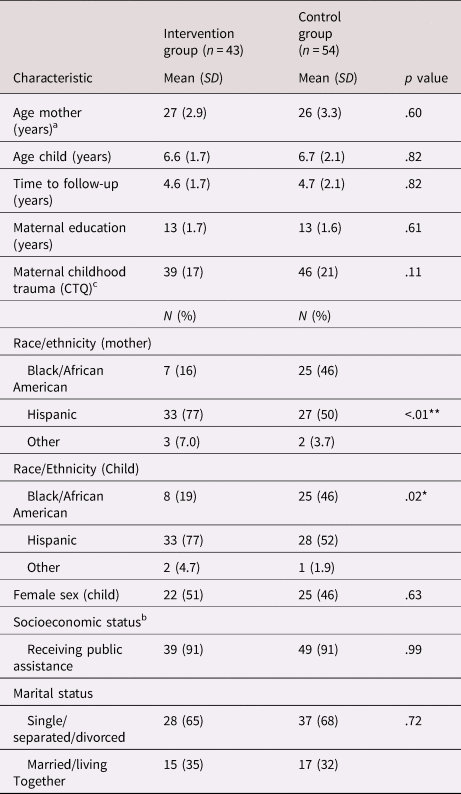
Notes: aIndependent samples t test was used for analysis of this variable. Mann–Whitney U was used for all other continuous demographic variables.
b Fisher's exact test was used for analysis of this variable. Pearson's chi-square was used for all others.
c CTQ: Childhood Trauma Questionnaire.
* p value <.05, **p value < .01, ***p value < .001.
Unadjusted outcome characteristics at follow-up (intervention vs. control)
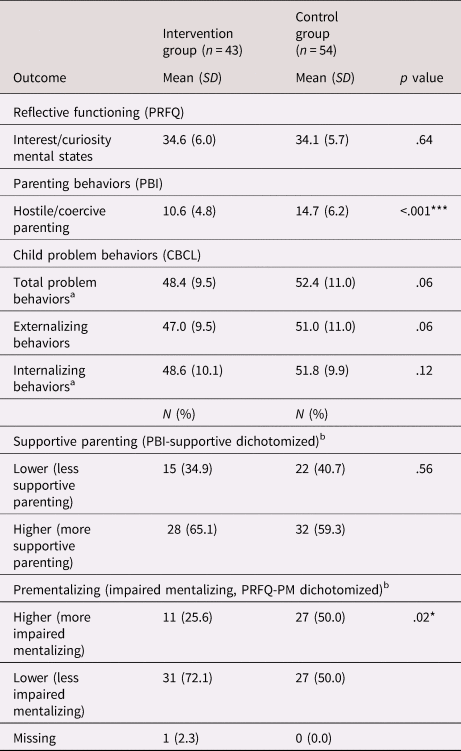
Notes: PRFQ = Parental Reflective Functioning Questionnaire. PBI = parent behavior inventory. CBCL = Child Behavior Checklist.
a Independent samples t test was used for analysis of this variable. Mann-Whitney U was used for all other continuous demographic variables.
b Pearson's chi-square was used for analysis of this variable.
* p value < .05, **p value < .01, ***p value < .001.
Hypothesis 1: Mothers who participated in the MTB intervention will be more reflective when compared to control group mothers 2 to 8 years post intervention
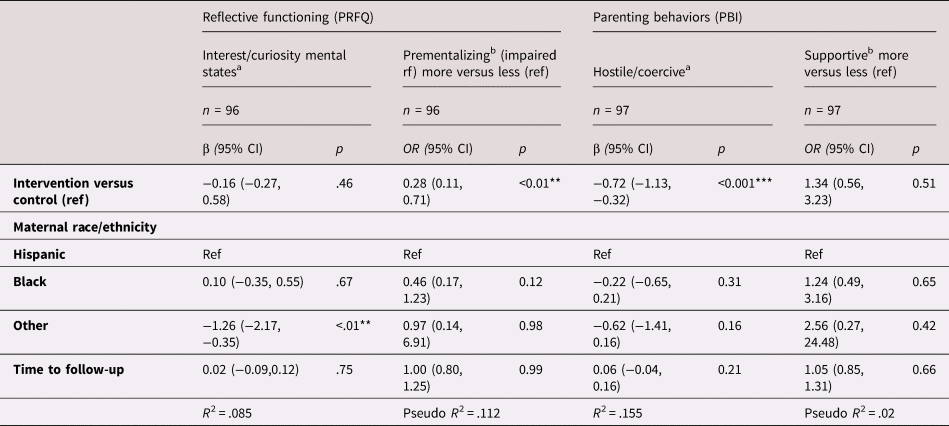
First, we evaluated whether there were long-term positive effects on parental reflective functioning in MTB mothers (i.e., MTB mothers compared with control group mothers would report less impaired mentalization reflected by lower scores on the PRFQ-Prementalizing scale, and higher scores on interest and curiosity in mental states). In the adjusted models of parental reflective functioning subscales (Table 4), mothers who received the MTB intervention were significantly less likely than controls to report prementalizing modes, or impaired mentalization. That is, intervention mothers were 72% less likely to endorse impaired mentalization items when compared to mothers in the control group (OR = 0.28; 95% CI 0.11, 0.71; p < .01). Both MTB and control mothers reported high levels of interest and curiosity in mental states and did not significantly differ from each other (β = −0.16; 95% CI −0.27, 0.58; p = .46). Thus, whereas the two groups reported similar levels of interest and curiosity in their children's experiences, the control group was more likely to report impaired mentalizing than the intervention group.
Parenting follow-up treatment outcomes
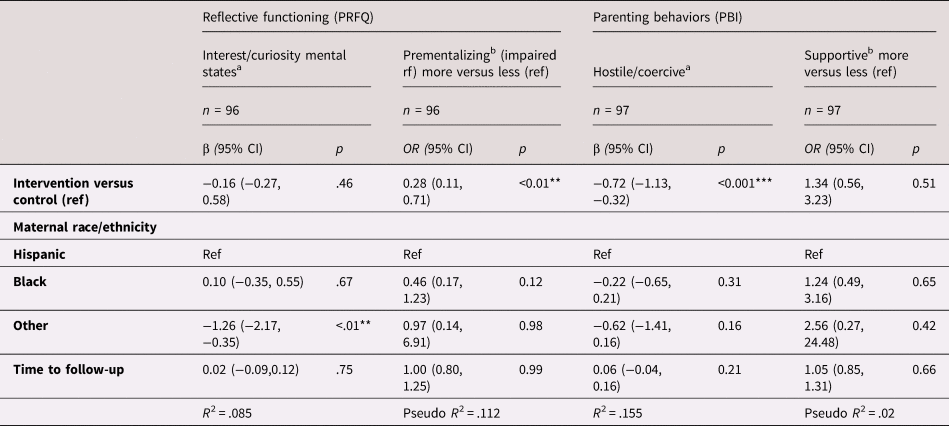
Notes: RF: reflective functioning.
a Linear regression with outcome standardized using study population (z scores).
b Logistic regression.
*p value < .05, **p value < .01, ***p value < .001.
Hypothesis 2: Mothers who participated in the MTB intervention will report more positive parenting behavior when compared to control group mothers 2 to 8 years post intervention
Second, we evaluated whether MTB mothers were more likely at follow-up to report positive parenting behaviors (i.e., increased supportive behaviors), and decreased hostile/coercive behaviors compared to control mothers (Table 4). Both intervention and control mothers reported high levels of supportive parenting behaviors, and in adjusted analyses did not differ from each other with respect to supportive parenting (OR = 1.34; 95% CI 0.56, 3.23; p = .51). However, mothers who received the MTB intervention reported less hostile/coercive parenting behavior than mothers in the control group (β = −0.72; 95% CI −1.13, −0.32; p < .001). Thus, whereas the two groups did not differ in supportive parenting, they did differ significantly in levels of hostile/coercive parenting, with control group mothers more likely to endorse these types of parenting behavior than intervention mothers.
Hypothesis 3: Mothers who participated in the MTB intervention will report fewer child behavior problems when compared to control group mothers 2 to 8 years post intervention
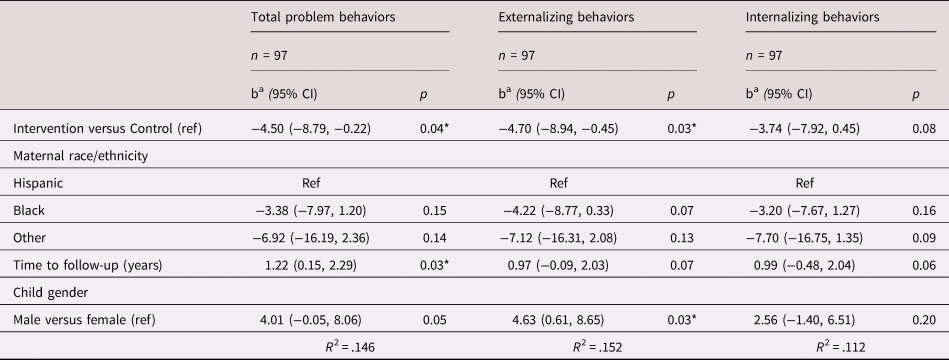
Third, we evaluated whether participation in MTB was associated with lower levels of maternally reported problem behaviors in the child, including lower total, externalizing and internalizing problem behaviors, when compared to mothers’ reports from the control group (Table 5). In adjusted analyses, the mothers of children who received MTB reported lower total behavior problem scores (b = −4.50; 95% CI −8.79, −0.22; p = .04), and lower externalizing problem behavior scores (b = −4.70; 95% CI −8.94, −0.45; p = .03) than those in the control group. The difference in internalizing behavior problem scores between the two groups was not statistically significant, but reflects a trend (b = −3.74; 95% CI −7.92, 0.45; p = .08) after adjusting for time to follow-up, maternal race/ethnicity, and child sex. Thus, the two groups differed significantly in maternally reported total and externalizing problem child behaviors, with control group mothers reporting higher total and externalizing child behavior problems at follow-up when compared to intervention mothers.
Child behavioral follow-up treatment outcomes

Notes: aLinear regression using Child Behavior Checklist (CBCL) general population normalized t scores (general population mean = 50, standard deviation = 10).
* p value < .05, **p value < .01, ***p value < .001.
Discussion
Despite the proliferation of evidence-based and other home-visiting interventions in recent decades, still relatively little is known about the long-term impacts of these interventions on parenting and child wellbeing. This cross-sectional longitudinal follow-up of the MTB RCT was undertaken to see whether participating in a reflective, attachment-based home-visiting program was associated with positive impacts on parenting and child behavior two to eight years post intervention. The results of this study highlight the long-term effects of the MTB intervention on maternally reported parental reflective functioning, parenting behaviors, and child problem behaviors. Specifically, in this predominantly Hispanic and Black/African-American sample of single young mothers living below the poverty line, with limited-education and high levels of adversity exposure, the MTB mothers reported lower levels of prementalizing and hostile/coercive parenting, and lower levels of externalizing and total problem behaviors in their children two to eight years after completion of the program and RCT.
Long-term positive effects of the MTB intervention on parental reflective functioning
Parental reflective functioning (i.e., parent's ability to make meaning of both their own and the child's thoughts, feelings, intentions, desires) is thought to be a key element of a positive caregiving relationships and secure attachment (Fonagy et al., Reference Fonagy, Steele, Steele, Leigh, Kennedy, Mattoon, Target, Goldberg, Muir and Kerr1995; Slade, Reference Slade2002; Slade, Reference Slade2005). By imagining and reflecting on the child's thoughts and feelings, the parent is able to help organize and regulate the child's experience, and provide care in ways that reflect their understanding of the child's needs (Slade, Reference Slade2005). The results of this study are consistent with previously published MTB findings in which intervention mothers had significantly higher levels of PRF at graduation (Sadler et al., Reference Sadler, Slade, Close, Webb, Simpson, Fennie and Mayes2013; Slade et al., Reference Slade, Holland, Ordway, Carlson, Jeon, Close and Sadler2019). However, whereas in our original RCTs we used an interview-based measure of PRF that was unidimensional (i.e., PRF was simply scored from high to low on the Parent Development Interview (Slade, Aber, Berger, Bresgi, & Kaplan, Reference Slade, Aber, Berger, Bresgi and Kaplan2004)), in this follow-up we used a self-report measure that assesses dimensions of PRF, the PRFQ. Our examination of the dimensions of PRF suggests that MTB has a particular impact on one aspect of PRF in parents of early school-age children, namely prementalizing. While there is admittedly much information lost when shifting from an interview to self-report measure of PRF such as an appreciation of the parent's capacity to reflect upon both their own and the child's experience (Borelli et al., Reference Borelli, St John, Cho and Suchman2016a; Suchman, DeCoste, Leigh, & Borelli, Reference Suchman, DeCoste, Leigh and Borelli2010), the explicit focus on prementalizing offered by the PRFQ does help sharpen our focus on the impact of aversive parental behavior on the school-age child.
Prementalizing refers to impaired mentalizing, in which the parent not only fails to consider the child's behavior in light of underlying mental states (which would be considered an absence of mentalizing), but also interprets behavior in inaccurate or malevolent ways. For example, a parent may feel that the child cries around strangers to embarrass them, that the child is fussy just to annoy them, or that the child gets sick to prevent them from doing what they want to do, assumptions which likely leave the child feeling alone and misunderstood (Fonagy et al., Reference Zajac, Raby and Dozier2002; Luyten et al., Reference Luyten, Mayes, Nijssens and Fonagy2017). Prementalizing has been associated with parental psychopathology and history of trauma (Condon et al., Reference Condon, Holland, Slade, Redeker, Mayes and Sadler2019a, Reference Condon, Holland, Slade, Redeker, Mayes and Sadler2019b; San Cristobal, Santelices & Miranda Fuenzalida, Reference San Cristobal, Santelices and Miranda Fuenzalida2017; Schechter et al., Reference Schechter, Coates, Kaminer, Coots, Zeanah, Davies and Trabka2008), lower parental emotional availability for the child, and insecure attachment in the child (Luyten et al., Reference Luyten, Mayes, Nijssens and Fonagy2017). It has also been linked to parents having difficulty regulating their own and their child's emotions and behaviors, to harsh parenting practices, and to child–parent conflict (Burkhart, Borelli, Rasmussen, Brody, & Sbarra, Reference Burkhart, Borelli, Rasmussen, Brody and Sbarra2017; Condon et al., Reference Condon, Holland, Slade, Redeker, Mayes and Sadler2019a; Rostad & Whitaker, Reference Rostad and Whitaker2016). Given that we did not find evidence that participation in MTB was linked to higher levels of maternally reported interest and curiosity about mental states compared to controls at follow-up, it seems that the reflective functioning effects of MTB may be specific to decreasing prementalizing.
As noted above, with the exception of the work of Borelli and her colleagues, there has been very little research on parental mentalization during the school-age period, a time of rapid socioemotional and cognitive development in the child. It is also a time when the child's capacities for self-expression and defense are far more sophisticated than they were in infancy and toddlerhood. As their children age, parents are required to read more subtle cues, find ways to convey their emotional presence and support without threatening the child's autonomy, and support the child's extra-familial attachment relationships (Borelli et al. Reference Borelli, St John, Cho and Suchman2016a, Reference Borelli, Vazquez, Rasmussen, Teachanarong and Smiley2016b). What our findings suggest is that the tendency to misread or distort the child's mental states is particularly disruptive during the school-age years, when the child's sense of security and trust in their autonomy are still evolving.
Long-term effects of the MTB intervention on parenting
Just as mothers who participated in the MTB intervention reported lower levels of prementalizing than mothers in the control group, they were less likely to report hostile/coercive parenting practices than control mothers. Hostile and coercive parenting relies on control strategies and behaviors that include threats, punishment, coercion, guilt and hostility; for example, caregivers may report losing their temper, ignoring, grabbing roughly, spanking, threatening, saying mean things to the child when their child does not do something that was asked of them. Parental hostility and coerciveness have been associated with a wide range of problems including parental psychopathology and childhood behavior problems (Hails et al., Reference Hails, Reuben, Shaw, Dishion and Wilson2018; Lovejoy et al., Reference Lovejoy, Weis, O'Hare and Rubin1999; Lovejoy, Graczyk, O'Hare, & Neuman, Reference Lovejoy, Graczyk, O'Hare and Neuman2000; Mendez, Durtschi, Neppl, & Stith, Reference Mendez, Durtschi, Neppl and Stith2016). Additionally, hostile and coercive parenting has been associated with child abuse and neglect (Cerezo, Reference Cerezo1998; Scaramella & Conger, Reference Scaramella and Conger2003; Silber, Hermann, Henderson, & Lehman, Reference Silber, Hermann, Henderson and Lehman1993).
The relative similarity of the two groups in “positive” PRF (namely interest and curiosity) and parenting behavior (supportive and engaged) suggests that the presence of interest and support does not necessarily preclude more insensitive parenting attitudes and behaviors. Indeed, even the most challenged parents can show sensitivity at times; in addition, they may well readily endorse socially acceptable items on a self-report questionnaire. Our documented impacts on more negative aspects of parenting confirm the notion—promulgated most explicitly in the attachment literature by Main (Hesse & Main, Reference Hesse and Main1999; Main & Hesse, Reference Main and Hesse1990) and Lyons-Ruth (Lyons-Ruth, Bronfman, & Parsons, Reference Lyons-Ruth, Bronfman and Parsons1999; Lyons–Ruth, Yellin, Melnick, & Atwood, Reference Lyons–Ruth, Yellin, Melnick and Atwood2005; Lyons-Ruth & Jacobvitz, Reference Lyons-Ruth, Jacobvitz and Shaver2016)—that negative parenting practices, which potentially frighten the child and disrupt parent-child affective discourse, may be driving adverse developmental outcomes. A review of the parenting literature over the past three decades also makes evident that distinguishing parents on the basis of maternal sensitivity can be quite difficult, and that a focus on disrupting factors in the interaction may be much more productive (Baumeister, Bratslavsky, Finkenauer, & Vohs, Reference Baumeister, Bratslavsky, Finkenauer and Vohs2001; Lyons-Ruth & Jacobvitz, Reference Lyons-Ruth, Jacobvitz and Shaver2016).
MTB's emphasis on establishing the antecedent conditions for, and building the capacities to mentalize helps the parent attune to the child's emotions, and use their understanding of the child's mental states to modulate their own behavior. Thus, for example, realizing that a child is frightened or distressed (rather than disobedient or provocative) might well result in less punitive and hostile parenting. The exposure to hostile and coercive parenting, even in the context of sometimes sensitive parenting, will likely impact how the child thinks and feels, and lead them to act out or internalize as a form of self-preservation or protection.
Long-term effects of the MTB intervention on child behavior
Researchers have long associated behavior problems in childhood, and particularly externalizing behaviors, with bullying, social rejection, and poor academic performance (Breslau et al., Reference Breslau, Miller, Breslau, Bohnert, Lucia and Schweitzer2009; Wood, Cowan, & Baker, Reference Wood, Cowan and Baker2002), violent/delinquent behavior in adolescence (Thompson et al., Reference Thompson, Tabone, Litrownik, Briggs, Hussey, English and Dubowitz2011), and higher risk for the development of psychopathology (Moffitt, Caspi, Dickson, Silva, & Stanton, Reference Moffitt, Caspi, Dickson, Silva and Stanton1996; Odgers et al., Reference Odgers, Moffitt, Broadbent, Dickson, Hancox, Harrington and Caspi2008; Reef, Diamantopoulou, van Meurs, Verhulst, & van der Ende, Reference Reef, Diamantopoulou, van Meurs, Verhulst and van der Ende2010). Thus, the prevention of problem behaviors in childhood is of utmost importance in developing early interventions. In this study, children who received the MTB intervention had lower maternally reported externalizing and total problem behaviors compared to children in the control group at follow-up. There was also a trend toward differences between the two groups in internalizing problem behaviors. A prior study of MTB likewise linked participation in MTB with lower levels of maternally reported total problem and externalizing problem behaviors during the preschool period (Ordway et al., Reference Ordway, Sadler, Dixon, Close, Mayes and Slade2014). We see this long-term impact on child behavior problems as inherently linked to less impaired mentalization and hostile coercive parenting practices, and indicative of MTB's potential to change developmental trajectories in a number of positive ways over time.
Generally speaking, these results are consistent with longitudinal follow-up studies of other EBHVPs, many of which reported impacts on child behavior at preschool and later follow up (Olds et al., Reference Olds, Kitzman, Cole, Robinson, Sidora, Luckey and Holmberg2004, Reference Olds, Holmberg, Donelan-McCall, Luckey, Knudtson and Robinson2014; Vogel et al., Reference Vogel, Brooks-Gunn, Martin and Klute2013). While school-age NFP follow-up studies did not link the intervention to a decrease in maternally reported externalizing behavior problems, they did report impacts on later proxies for externalizing behavior, namely arrests and convictions in adolescence (Kitzman et al., Reference Kitzman, Olds, Cole, Hanks, Anson, Arcoleo and Holmberg2010; Olds et al., Reference Olds, Henderson, Cole, Eckenrode, Kitzman, Luckey and Powers1998; Olds et al., Reference Olds, Kitzman, Cole, Robinson, Sidora, Luckey and Holmberg2004; Olds et al., Reference Olds, Holmberg, Donelan-McCall, Luckey, Knudtson and Robinson2014). The fact that NFP and MTB appear to have differential effects on maternally reported externalizing behavior may reflect the impact of MTB on prementalizing and hostile/coercive parenting, both of which have been linked to externalizing disorders in children. They may also be related in part to the MTB program's specific focus on PRF and attachment, and the added mental health supports (i.e., social worker) that are integral to the intervention, and that help address mental health needs in MTB mothers and children.
Theory of enduring effects: Minding the baby
Taken together, this study indicates that MTB has long-term effects on PRF, parenting, and childhood problem behaviors two to eight years after the completion of the intervention in a subsample of the original RCT, which represents a population of highly stressed mothers and their children. We believe that the specific focus of this intervention on the wellbeing of the mother and the child, at a sensitive period of development for the dyad, with a particular focus on their relationship and the parent's capacity to reflect in the face of adversity and trauma may be driving the long-term effects observed in this follow-up study. The ability of mothers to retain a reflective stance with their children across developmental periods with distinct developmental tasks takes time and effort, and depends on a context of both physical and psychological safety. Reflective functioning requires the engagement of the prefrontal cortex and higher cortical functions (Allen, Reference Allen2012; Luyten & Fonagy, Reference Luyten and Fonagy2015) which in turn help regulate automatic threat and emotional responses generated by lower cortical structures (Porges, Reference Porges2011). In the context of high levels of stress, these higher cortical functions are more difficult to engage and thus the ability to mentalize is diminished (Allen, Reference Allen2012; Luyten & Fonagy, Reference Luyten and Fonagy2015). Without feeling physically and psychologically safe, the parent may feel threatened and unable to attend to the needs of the child—unable to parent reflectively (Mayes, Reference Mayes2006). This safety is particularly important if a parent has already endured early adversity and ongoing toxic stress, and may be mistrusting of others, and over-reactive, under-reactive, or dysregulated (Slade et al., Reference Slade, Sadler, Close, Simpson, Webb, Fitzpatrick, Gojman-de-Millan, Herreman and Sroufe2017).
Therefore, in their work with families, MTB clinicians focus on establishing a safe and consistent relationship with the parent (i.e., psychological safety: providing in-home trauma-informed mental health care and services; physical safety: ensuring that mothers have good access to healthcare and support in finding safe housing, food, and other physical resources). These relational and concrete supports make it possible for caregivers to develop and harness their reflective capacities, make meaning of the child's experience and meet the child's difficult behaviors not with a harsh/coercive parenting stance, but rather with an open-minded and wondering stance. The findings of this study suggest that some of the skills explicitly and implicitly learned in the intervention may be “portable” and support the parent's adaptation to developmental changes in parenthood and in the child–parent relationship at a time when the child is “in the world” in a much more complex and differentiated way. The parent's ongoing ability to reflect and the consequent sensitive and non-hostile parental behaviors help the child and caregiver build a safe relationship from which the child's resilience and ability to regulate emotions grows.
Limitations of the Study
This study comes with its limitations, the most substantive being our reliance on maternal self-report measures. While we attempted to mitigate the impact of relying on self-reports by choosing measures that have been validated against observer-rated and interview-based measures, we recognize that the lack of behavioral and observational data limits the strength of these findings. The relative failure to collect such data is unfortunately common across many of the follow-up studies of early home visiting. It will be important for future studies to include such measures in assessing the long-term effects of early interventions on parenting and child behaviors. In addition, we were able to recruit only 64% of the eligible dyads; this is a source of selection bias and limited our power, in particular for the outcomes with smaller effects including internalizing behaviors. Despite multiple attempts to locate all families, and to maintain strong rapport with all RCT families through the use of mail, newsletter, and annual gatherings, we were unable to reach 21% of dyads eligible for the study based on the age of the child. This is unfortunately a relatively common phenomenon when recruiting individuals who face multiple stressors, may move frequently, and may not have access to working phones. Although this is a subsample of the all the dyads in the original RCT, the demographics of this sample are very similar to those of the whole original sample, making it more likely that our findings are in fact representative of the MTB cohort.
We also found differential enrollment in our sample, such that there were fewer Hispanic families in the control group than in the intervention sample. This difference—which was also observed in the original MTB RCT—may reflect the fact that intervention families had developed close, trusting relationships with MTB clinicians, whereas control families had not. This might have a particular impact on Hispanic families, given the cultural value of strong relationships. To account for racial/ethnic differences in enrollment, we adjusted for maternal race/ethnicity in our regression analyses. In addition, while one data collector was consistent across both arms of the study, the second data collector was different for the control and intervention groups due to funding and personnel availability. The difference in data collectors and their unblinded status is, unfortunately, a methodological weakness that limits the study's results, as data collectors may have biased participants’ responses potentially favoring the MTB condition.
Future Directions
Our group is evaluating whether MTB has ongoing effects on other maternal and childhood health, and life course outcomes, as well as subgroup analyses. We also plan to evaluate whether there are pre- and post-intervention predictors that moderate the effects of these long-term outcomes. These efforts will help us better understand which effects are enduring, which are not, and for what populations. This will not only aid in refining the intervention but also inform the development of future interventions that are desperately needed to buffer the long-lasting effects of chronic adversity in underserved population.
Conclusions
The results of this study provide evidence that parental reflective functioning in mothers exposed to high levels of adversity and stress is not only malleable with targeted interventions but has long-term effects many years after the intervention ended. Parental reflective functioning appears to be an adaptable skill that parents can continue to use and apply in their relationship with children even as the child grows and changes. Improved parental reflective functioning, and particularly lower levels of prementalizing seem to contribute both to lower levels of hostile and coercive parenting and lower rates of child behavior problems. Taken together, these positive long-term outcomes of MTB suggest that there may be real value in interventions that focus specifically on the development of parental reflective capacities particularly in sensitive periods for both mothers and children (i.e., pregnancy and early childhood). Studies are needed to assess whether and how this and other early preventive interventions for chronically stressed families impact a range of developmental outcomes. Additionally, this and other longitudinal follow-up studies of well-studied interventions that target the caregiver–child relationship may serve as the basis for new and more precise interventions to buffer the effects of adverse childhood experiences and toxic stress.
Acknowledgements
We thank Andrea Miller and Priscilla Qinglan Ding for their assistance with recruitment and data collection, Monica Ordway and Tanika Simpson for comments on an earlier version of this manuscript, and the Yale School of Nursing Biobehavioral Laboratory staff for providing the resources necessary to conduct this research. We also gratefully acknowledge the work of the MTB home visitors and supervisors, who have, over many years, dedicated themselves to providing the intervention with great skill and caring. Finally, we are most grateful to the families who participated in this study for contributing their time, and for being willing to share their experiences with us.
Financial Support
This work was supported by the American Academy of Child and Adolescent Pilot Research Award, National Institute of Mental Health (NIMH T32 MH018268-34) and Research Colloquium for Junior Investigators funded by the National Institute on Drug Abuse [NIDA: R13 DA042568-03] awarded to ALT, and by the NAPNAP Foundation, the Connecticut Nurses Foundation, the Jonas Nurse Leaders Scholars Program, and the Alpha Nu chapter of Sigma Theta Tau International, National Institute of Nursing Research of the National Institutes of Health (F31NR016385 and T32NR008346) awarded to EC.