Introduction
The older adults represent 5.3% (8.8 million) of the Nigerian population (National Population Commission, 2015). Due to an aging population and greater longevity, the prevalence of chronic disease and multi-morbidity is rising (Cramm and Nieboer, Reference Cramm and Nieboer2013). More than 65% of Nigerian older adults have at least one chronic illness (Abdulraheem et al., Reference Abdulraheem, Oladipo and Amodu2011).
The occurrence of chronic illness is associated with a decline in functional capacity making an individual frail and unable to perform personal care. People who suffer from chronic diseases, such as heart disease, stroke, diabetes, cancer, obesity, and arthritis, experience limitations in function, health activity, and work and these often affect the quality of their lives as well as the lives of their families. About one-quarter of people with chronic conditions have one or more daily activity limitations (Anderson, Reference Anderson, Herbert, Zeffiro and Johnson2004). The limitation may be worse among homebound individuals who often have a disproportionately high disease burden, significant functional limitations, and higher mortality rate (Cohen-Mansfield et al., Reference Cohen-Mansfield, Shmotkin and Hazan2010).
In Africa, there are few or no nursing homes for the care of older adults. Traditionally, family members serve as caregivers who provide care and support (Lai and Thomson, Reference Lai and Thomson2011). Similarly, in Nigeria, the care of the older adult is dependent on a weakened, informal, and traditional family support system (Fajemilehin and Odebiyi, Reference Fajemilehin and Odebiyi2011). Family members assist the older adults who are ill in the performance of their activities of daily living (ADL) ranging from bathing, grooming, changing of position in bed, and running errands. Family members who care for the older adults experience burdens ranging from poor health, financial difficulties, social isolation, and psychological disturbances.
Studies have shown that a caregiver's burden is associated with negative impacts on physical, social, and psychological health (Morimoto et al., Reference Morimoto, Schreiner and Asano2003). Caring for older adults not only affects caregivers’ daily lives, but also poses dramatic and considerable psychological and physical challenges (Yang et al., Reference Yang, Hao, George and Wang2012). The severity of the caregiving burden may be related to the morbidity and comorbidity of the patient. Persons caring for a patient with more than one chronic illness will be more likely to suffer more consequences of caregiving than those caring for patients with just one chronic illness (Sherwood et al., Reference Sherwood, Given, Given and Von Eye2005).
Previous studies on the health-related quality of life (HRQoL) among the Nigerian population have focused on specific disease conditions of patients. They have explored HRQoL of patients with specific disease conditions, such as hypertension, heart failure, epilepsy, and sickle cell disease (Faronbi, Reference Faronbi2015). None of these studies have focused on the HRQoL of caregivers of older adults with chronic illness in Nigeria. This study is the first of its kind among the Nigerian population.
The aims of this study were to investigate the prevalence of caregivers’ burden and HRQoL among the caregivers of older adults and to test the predictive effect of burden and socio-demographic factors on HRQoL. Findings from this study can serve as a guide for policy-makers on policy formulation in the management of chronic illnesses and related complications. Finally, this study will serve as a resource for further studies on the care of the older adults, chronic illness among the geriatric population, and on the quality of life of caregivers.
Conceptual model: stress process model
The conceptual model for this study is derived from the Stress Process Model developed by Pearlin et al. (Reference Pearlin, Mullan, Semple and Skaff1990). The model is built on three fundamental concepts: stressors, the mediator, and the stress outcomes. Stressors may include providing assistance with ADL and supervising the care receivers. It may also include financial and economic matters related to caregiving activities, such as payment for the upkeep of the older adults, hospital bills, and other financial matte. Stressors also include constraints and limitations imposed by the demands of caregiving, such as the inability to participate in social activity as well as the inability of the caregiver to combine their role as caregiver with their own daily role (role conflict) with the resultant effect being an inability to attend to their own daily routine.
Mediators are coping strategies employed to mitigate the caregiving process. These include culture, socio-economic status, family network, and personal history. Outcomes in this context include physical or psychological challenges ranging from body pain, poor sleep and poor health, role conflict, distress, and depression. All these may affect the HRQoL of the caregivers.
Methodology
Design
This is a cross-sectional study that employed a correlational design to examine the impact of burden on the HRQoL of caregivers of older adults with chronic illness in Osun State, Nigeria.
Setting and participants
The study was conducted in Osun State, Nigeria utilizing outpatient clinics and inpatients wards of Obafemi Awolowo University Teaching Hospitals Complex (OAUTHC), Ile-Ife, as well as the homes of the caregivers situated in towns and villages within the states. OAUTHC is a tertiary health facility situated in Osun State, Nigeria. It receives referrals from towns and villages within the South West, Nigeria, its catchment area. The hospital does not have a separate geriatric unit; older adults are attended to in the medical unit or department. Participants for this study were caregivers of older adults (aged 60 years and over) with chronic illness. Chronic diseases represented in this study were heart conditions, kidney diseases, cancer, gastrointestinal diseases, diabetes mellitus, stroke, and other neurological conditions, including dementia.
In order to locate the caregivers, older adults with chronic illness attending care in the hospital were located and their informed consent to participate in the study was gained. The older adults were recruited from the list of all the older adults attending care in the hospital in the past five years and screened to determine their eligibility using the Katz Index of Independent Activities of Daily Living (Katz IADL) (Shelkey and Wallace, Reference Shelkey and Wallace2012). Older people with a substantial level of dependency were asked to identify their caregivers who were then invited to participate in the study. The caregivers were selected using a purposive sampling technique. Inclusion criteria were specified so that a caregiver eligible to participate in the study must be (1) at least 18 years of age; (2) assisting the older adult with most ADL (caregiving tasks); (3) domiciled within Osun State; and (4) orientated to person, time, and space. The caregivers were followed up in their respective homes for data collection. The sample size was determined using the formula: n = t 2 × p(1–p)/m 2. This formula has been used in previous studies to determine sample size: Titilola et al. (Reference Titilola, Abiola, Akorede and Tunrayo2013) and Dye et al. (Reference Dye, Scheele, Dolin, Pathania and Raviglione1999). Viana et al. (Reference Viana2013) reported that 22–40% of the caregivers were experiencing various degrees of burden. Using p = 30%, t = 1.96, and m = 0.05, required calculated sample size was n = 322.72≈323. Caregivers were recruited consecutively, until the required sample was reached. At the end of the data collection period, 325 caregivers were enlisted for the study.
Instruments
The instruments employed for data collection were the Katz IADL, Zarit Burden Interview (ZBI), and Short Form (SF-36) Health Survey. The level of dependency of the older adult was assessed using the Katz IADL (Shelkey and Wallace, Reference Shelkey and Wallace2012). It is a six-item instrument that allows clients to be scored (with yes/no) on their ability to perform six basic functions, with responses corresponding to Dependence: (0 Points) with supervision, direction, personal assistance, or total care, and Independence: (1 Point) without supervision, direction, or personal assistance. The total score ranges from 0 to 6. A score of 6 indicates full function, 4 indicate moderate impairment, and 2 or less indicates severe functional impairment (Shelkey and Wallace, Reference Shelkey and Wallace2012).
The ZBI developed by Zarit et al. (Reference Zarit, Todd and Zarit1986) is a structured interview schedule that measures the subjective burden of the primary caregiver. Caregivers were asked to respond to a series of 22 questions measuring psychosocial distress using a 5-point Likert scale with Never, Rarely, Sometimes, Often, and Always corresponding to scores of 0–4, summed to give a total score ranging from 0 to 88 with zero being the minimum score and 88 the maximum score. Estimates of the degree of burden are classified as little burden (scores 0–20), mild burden (scores 21–40), moderate burden (scores 41–60), and severe burden (scores 61–88).
HRQoL is measured using the SF-36 Health Survey (Ware, Reference Ware2000). This survey consists of eight scales and 36 items. Each of the domains is summed up to 100 and the cut-off (in parenthesis) are given as follows: Physical functioning (84.2), Role limitations due to physical health (81.0), Role limitations due to emotional problems (81.3), energy/fatigue (60.9), Emotional well-being (74.7), Social functioning (83.3), Pain (75.2), and General health (72.2). Any score above the cut-off is considered good HRQoL, whereas any score below the cut-off is regarded as poor HRQoL.
The validity and reliability of the original instruments have been established in previous studies. In addition, a pilot study was conducted in the Ladoke Akintola University of Technology Teaching Hospital, Osogbo utilizing caregivers of older adults with chronic illnesses. Sixteen selected older adults were asked to identify their caregivers who then participated in the study. The three instruments: Katz IADL, ZBI, and SF-36 Health Survey were administered on them and analyzed. This provided the opportunity to validate the instruments. All instruments were validated and yielded the following correlation coefficient (r): Katz IADL (0.70), ZBI (0.75), and SF-36 Health Survey (0.72). They were, therefore, deemed suitable for use in the current study.
Ethical consideration
Ethical approval for the study was obtained from the Human Research Ethics Committee, Institute of Public Health, Obafemi Awolowo University, Ile-Ife (IPHOAU/12/101) and the Ethics and Research Committee, OAUTHC, Ile-Ife (NHREC/27/02/2009a). Permission was also obtained from the authority of the institution and, in addition, informed consent was obtained from the older adults as well as their caregivers before the commencement of the study.
Procedure and data collection
Four research assistants who were resident indigene of the state were employed for data collection. They were trained and assessed for their proficiency on the procedure for data collection. The principal investigator had a regular debriefing with them to ensure that they are actually doing the right thing. The selected caregivers were informed about the purpose of the study, their informed consent was gained and they were administered the ZBI and SF-36 Health Survey. Caregivers who were literate were allowed to fill the questionnaire without any form of intimidation while the researcher and research assistants administered the instruments on the non-literate ones using the local language.
Data analysis
Data generated were analyzed using Stata (version 12). Statistical techniques employed include descriptive statistics (frequency and percentage). Pearson product moment correlation coefficients were calculated to assess the relationship between burden and domains of the HRQoL. All variables were examined for normality of distribution and outliers. To test for the prediction of quality of life, multiple linear regression analysis was performed. The overall quality of life was generated by summing all the scores for the eight domains of HRQoL. This was used as dependent variable against burden and age of the caregivers. Preliminary analysis showed that caregiver burden and age of the caregiver were the only variables that demonstrated a significant correlation with the HRQoL, and the two variables were entered into the multiple linear regression model.
Results
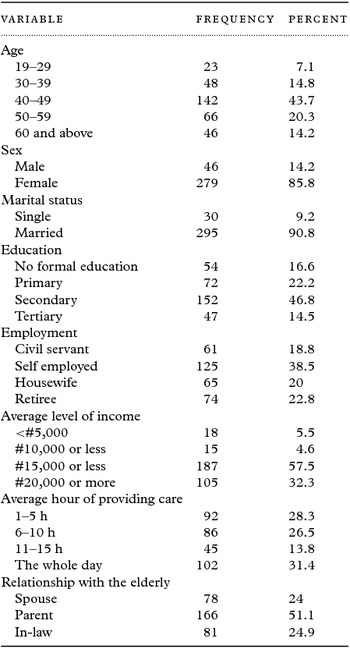
Table 1 presents the socio-demographic characteristics of the caregivers. The age of the caregivers ranged between 19 and 70 years with a mean age of 47.79 (±11.94). Almost 44% were in the age group of 40–49 years. A total of 85.8% were females, 90.8% were married, and 46.8% of the respondents had achieved secondary education. Their relationship with the older adults revealed that they were caring for spouse (24.0%), parent (51.1%), or in-law (24.9%). With respect to employment status, the data showed that 38.5% of caregivers were self-employed and more than half (57.7%) received an average monthly income between NGN15000 and NGN20000 (Nigerian Naira, NGN). Over 26.5% of caregivers spend almost the whole day in providing care.
Socio-demographic characteristics of the caregivers (n = 325)

The results also revealed that all caregivers were experiencing a degree of burden ranging from light burden (12.0%), moderate burden (28.9%), and to severe burden (59.1%). This burden manifests in the lives of the caregivers in various ways: poor health (88%), financial difficulty (90%), disruption of family processes (85%), social isolation (92%), and poor religious participation (86%).
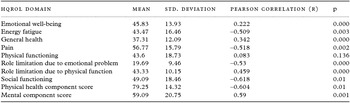
Table 2 presents the summary of the participants’ various domains of HRQoL as measured by the SF-36 Health Survey. It also presents the physical component score and the mental health component score. The results reveal that participants performed below the cut-off point in most of the domains of the SF-36 Health Survey.
Summary of Means and SD for HRQoL and Its Relationship with the Burden of Care

Relationship between burden of care and HRQoL
For the current study, the relationship between burden of care and HRQoL was explored using the Pearson correlation. The result as presented in Table 2 revealed that there was a significant correlation between caregivers’ burden and seven domains of HQRoL: General health (r = 0.342, p = 0.000); Emotional well-being (r = 0.222, p = 0.000); Physical activities (r = 0.459, .000); Bodily pain (r = –0.518, 0.002); Social functioning (r = –0. 618, p = 0.001); Role limitation due to emotional well-being (r = –0.530, r = 0.000); Energy/fatigue (r = –0.509, p = 0.003); and Role limitation due to physical function (r = 0.459, p = 0.000). However, there was no significant correlation between caregivers’ burden and the pain domain of HRQoL (r = 0.083, p = 0.136). The analysis also revealed a correlation between caregiver burden and physical health component score (r = –0.604, p = 0.01) and mental component score (r = 0.59, p = 0.001) (see Table 2). Multiple linear regression was performed to assess the impact of burden of care and age on the HRQoL of caregivers. The overall multivariate model accounted for 36.7% of the variance of caregivers’ HRQoL, F (2, 322) = 94.80 (p = 0.000). The two variables entered into the model were statistically significant, with age recording a higher β value (β = 0.612752, p < 0.011) than the burden of care (β = –3.142119, p < 0.000).
Discussion
This study assessed the impact of caregivers’ burden on the HRQoL of caregivers of older adults with chronic illness in Osun State, Nigeria. Findings from the study showed that caregivers of older people with chronic illness experience a severe burden of care. This may be associated with multiple tasks and roles that they engage in for the cause of providing care for their loved ones. As chronic illnesses exert various levels of financial hardship on the care recipient and caregivers, findings of the current study also revealed that caregivers experienced financial difficulties as a result of their caregiving experience. Chronic illness can tend to drain the finances of people and make them economically dependent. Apart from huge healthcare expenditure, the recurrent nature of chronic illness even makes the patient unable and unfit for work and increases the level of dependency. Thrall (Reference Thrall2005) argued that the medical care costs of people with chronic illnesses represents 75% of the U.S. annual healthcare spending. This is even worse in Nigeria due to lack of or poor insurance coverage. This makes people more prone to experiencing out-of-pocket expenditure, which itself is poorly documented.
Findings from the study revealed that caregivers were experiencing health challenges, such as headache, body pain, gastro intestinal disturbance, and joint pain. This is consistent with the findings of previous studies wherein it is reported that family caregivers are at an increased risk for depression, anxiety, lower levels of subjective well-being, and deteriorating physical health (Koenig et al., Reference Koenig, Steiner and Pierce2011; Dotchin et al., Reference Dotchin2014). Furthermore, findings from this study have shown that caregiving experience exerts a significant impact on the HRQoL of the caregivers. Kornblith et al. (Reference Kornblith, Herr, Ofman, Scher and Holland1994) observed in their study population that wives of patients with prostate cancer reported greater psychological distress than their husbands. Findings of this study support this assertion. Similarly, findings from the current study also corroborate the findings of numerous studies in Western countries, which have shown that family caregiving results in stress, depression, and financial difficulties (Awad and Voruganti, Reference Awad and Voruganti2008).
Sherwood et al. (Reference Sherwood, Given, Given and Von Eye2005) further expressed that negative stress responses have been well documented over the past decade for both caregivers of persons with cancer and for caregivers of persons with a neurologic disorder. Pearlin et al. (Reference Pearlin, Mullan, Semple and Skaff1990) also documented that caregiving is potentially a fertile ground for persistent stress. Providing care to family members dealing with chronic illness may be very stressful and may affect the quality of life of the caregivers. The situation may be worse in resource-constrained developing countries where there is neither social security nor palliative care services. Family caregivers of older adults with chronic illness may not find it easy managing the physiological and behavioral problems in the older adults, as they only rely on information available to them from relatives. The inability of the caregivers to properly manage these illnesses often results in an increased burden of care. This burden of care impacts on the physical, emotional, spiritual, and social health of the caregivers. Findings from this study revealed that caregivers experience an array of burdens, which include physical, emotional impact, and psychological strain. This supports the finding of Aschbrenner et al. (Reference Aschbrenner, Cai, Grabowski, Bartels and Mor2011) who observed in their study that caregivers experienced burdens, which are conceptualized as the range of negative emotional reactions to caregiving. Vitaliano et al. (2003) also documented that caring for a family member with dementia is generally regarded as a chronically stressful process, with potentially negative physical health consequences.
Caregiving demands have been associated with financial challenges (Brouwer et al., 2000). The results of the study by Brouwer et al. (2000), wherein the participants expressed their recognition of financial challenges, correlate with the findings of these authors. Financial challenges were potentially associated with role conflict with respect to the caregivers’ ability to concentrate on their own work or business, which eventually brought about a declining economic gain.
Measures of quality of life are increasingly used in healthcare studies as they provide a global assessment of the perceived burden associated with diverse conditions and are good predictors of future medical expenditures (Nachar et al., Reference Nachar, Guay, Beaulieu-Prévost and Marchand2013). A patient's health condition has been observed to be inversely correlated with the caregiver burden (Rivera-Navarro et al., Reference Rivera-Navarro, Manuel Morales-González and Benito-León2003). Findings from this study indeed confirmed this. All the respondents (100%) performed poorly (scored below cut-off) in the following three domains: Physical functioning, General health, and Social functioning. However, the majority of the respondents performed below the cut-off in the following domains: Role limitation due to emotional problems (80.6% Energy/fatigue (72.6%); Emotional well-being (70.5%); Physical activities (80.6%). These results may be a direct consequence of the impact of the caregiving role on the HRQoL. This result further confirms the multi-dimensional nature of caregivers’ burden (Buhse, Reference Buhse2008), which was further corroborated by findings from the qualitative data. All the participants rated their health as simply “Fair.” None rated their health as “Good.” Even when it is obvious that an individual's health is becoming worse, many people will not accept it or openly declare it as such.
Findings were, however, different in the pain domain, with an overwhelming majority of the respondents (70.5%) scoring above the cut-off. This is contrary to the expectation, which assumes that caregiving activities impact negatively on caregivers, with resulting pain and physical exhaustion. One would have expected respondents to score poorly in this domain. However, this was not so and the reason may not be unconnected with the fact that there is an element of denial associated with caregiving activities among this study population. Even though these caregiving activities are burdensome, respondents try to cover up and pretend as if a burden does not exist. Denial has been shown to be one of the coping styles employed by caregivers.
Similarly, failure to immediately acknowledge the burden of caregiving may not be unrelated to socio cultural beliefs associated with caregiving among the Yorubas, the predominant ethnic group in Osun State. Among the Yoruba, caring for older adult parents is considered the responsibility of offspring (Ajala, Reference Ajala2006). Even though it is expected that in the performance of caregiving activities, there might be inner conflict, difficulties, and challenges, a typical African person may see it as part of his or her responsibilities and may not want to acknowledge the presence of burden. This might have resulted in the findings showing no significant correlation between the presence of burden and pain domain of HRQoL.
Limitation
The results of this study should be considered in the light of the study's limitation related to its sampling technique. Yet, the reason for this may not be unconnected with the nature of healthcare services in Nigeria. There is no designated unit or facility in the healthcare/hospital system for older adults. This made it difficult to randomly select for the study the older adults as well as their caregivers. Therefore, the results may not be representative for all the caregivers of older patients. However, findings from this study provide significant insights into the interplay of caregivers’ burden and their HRQoL when caring for older adults with chronic illness in Nigeria and other countries with similar settings.
Conclusion
The findings of this study conclude that care of older adults with chronic illnesses imposes a severe burden on their caregivers. It also concludes that caregivers experience a poor HRQoL as a consequence of the negative effect of the caregiving burden on their HRQoL. Furthermore, sex of the caregiver, caregiver's income, level of dependency of the older adult, and a caregiver's burden significantly influence the HRQoL of the caregivers.
Recommendation
This study has underscored the existence of caregiver's burden among caregivers of older adults. It is vital to address the needs of family caregivers to help them cope with the demands of illness, provide adequate support to the chronically ill older adults, and reduce the complications of chronic illness among them. Based on these, the following recommendations are made:
-
1. There should be family interventions and support in the form of educating the family about the illness and their expectations in managing the illness. It can also include information dissemination through the provision of information for caregivers on where to seek for help for their elderly.
-
2. Home-care services should be established for the care of homebound chronically ill older adults. This will ensure that older adults have access to care without the problem of transportation, long-waiting times, and insufficient personnel in the hospital. There should be liaison with government to equip such caregiver teams with potent, effective drugs to administer to older adults without any cost. This will ensure that an older person's health is attended to regularly therefore reducing the burden of care on the older person's family members.
-
3. Social security should be provided for all older adults (with and without chronic illness). This should comprise their regular stipend as well as a health insurance package. This will reduce the financial burden associated with caring for patients with chronic illness, usually the sole responsibility of family members. Family members, especially primary caregivers, should be made one of the beneficiaries of any such policy. There should be establishment of support groups and non-governmental organizations that focus on the well-being of caregivers.
Conflict of interest
None.
Description of authors’ roles
Joel Olayiwola Faronbi conceived the idea for this study, participated in the design of methodology, data collection and analysis, interpretation of data, and prepared the final manuscript for publication. Adenike Ayobola Olaogun participated in the design of the study's methodology, interpretation of data, drafting, and editing of the manuscript. All authors reviewed and critically appraised the final paper prior to submission.
Acknowledgment
The author would like to acknowledge the support of Kara Gilbert of the KMG Communication, Australia for editing this manuscript. This research was supported by the Consortium for Advanced Research Training in Africa (CARTA). CARTA is jointly led by the African Population and Health Research Center and the University of the Witwatersrand and funded by the Wellcome Trust (UK) (Grant No: 087547/Z/08/Z), the Department for International Development (DfID) under the Development Partnerships in Higher Education (DelPHE), the Carnegie Corporation of New York (Grant No: B 8606), the Ford Foundation (Grant No: 1100-0399), Google.Org (Grant No: 191994), Sida (Grant No: 54100029), and MacArthur Foundation Grant No: 10-95915-000-INP.
Supplementary materials
To view supplementary material for this paper, please visit https://doi.org/10.1017/S1041610216002295.