Ethnic minorities are widely underrepresented in legislatures and among political elites across the world, particularly in non-democratic states.Footnote 1 China presents a unique case of overrepresentation of ethnic minorities in its legislature. Ethnic minorities occupy approximately 14 per cent of the seats in the National People’s Congress (NPC), despite representing less than 9 per cent of the country’s population. We have limited knowledge of the consequences of the overrepresentation of ethnic legislators.
Descriptive representation reflects the demographic characteristics of the represented community and may shape policy outcomes.Footnote 2 It can produce both symbolic and substantive consequences. Symbolically, it signals increased political opportunities and fosters a sense of democratic inclusion among underrepresented groups.Footnote 3 This symbolic role can enhance political trust, efficacy and participation among these groups.Footnote 4 Substantively, a growing body of literature highlights that descriptive representation can enhance substantive representation, advancing the interests of the represented community.Footnote 5 Minority legislators are more likely to advocate for constituents with whom they share identities.Footnote 6 However, most research on descriptive representation focuses on womenFootnote 7 and primarily examines this issue under democratic institutions.Footnote 8
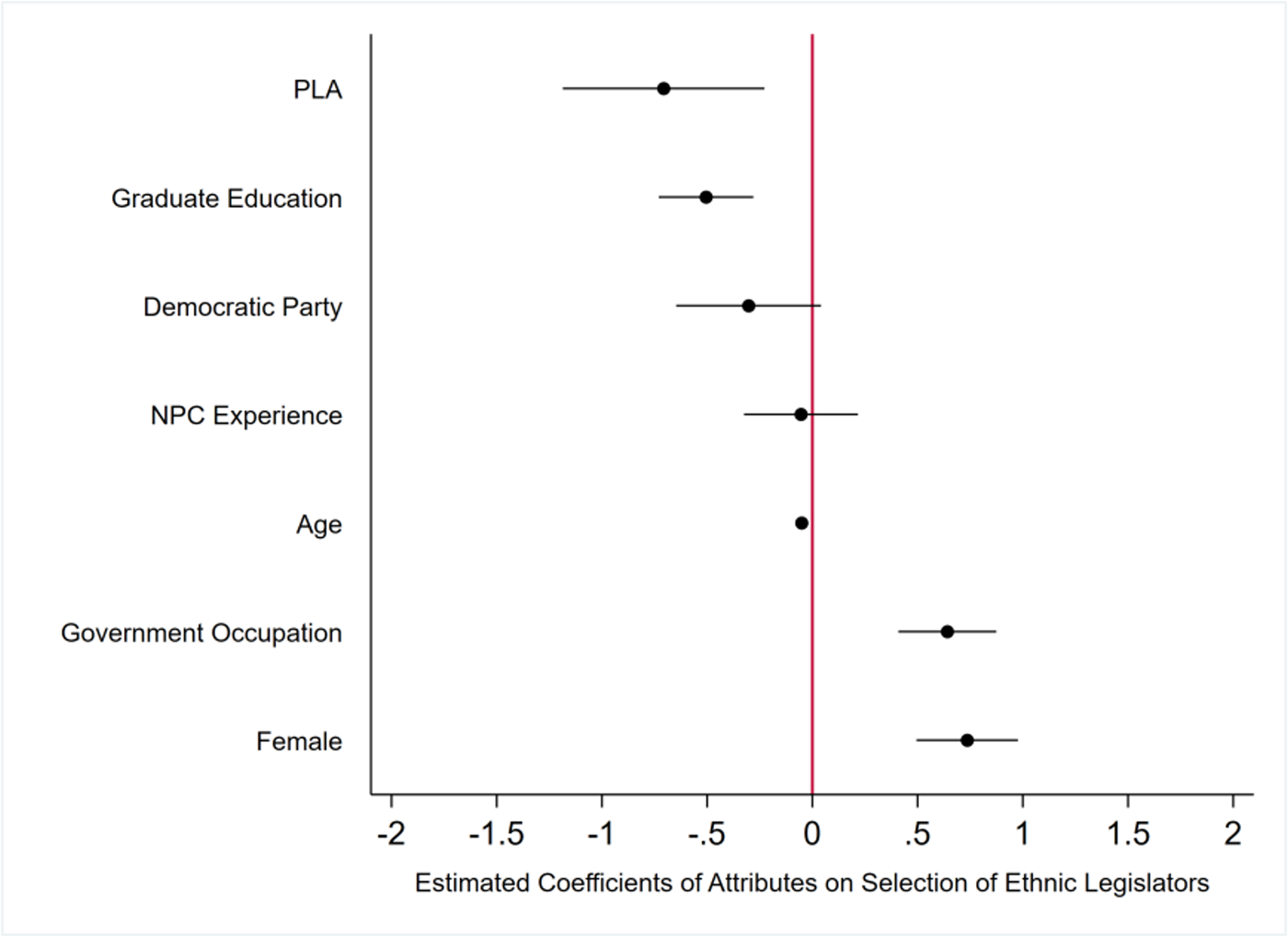
This study examines whether the descriptive representation of ethnic minority legislators enhances substantive representation in China’s NPC. We compiled detailed data on legislators, bills (yi’an 议案) and suggestions (jianyi 建议) submitted during the 13th NPC. First, we reveal that the ruling party employs distinct criteria in selecting ethnic minority legislators. Compared to Han legislators, ethnic minority legislators tend to be younger, less educated, less likely to come from democratic parties and more likely to be female or hold government positions. These patterns suggest that the ruling party emphasizes loyalty and symbolic inclusion over experience and competence when selecting ethnic minority legislators.
Furthermore, we demonstrate that ethnic minority legislators in the NPC are less likely to sponsor bills, particularly those concerning constitutional and legal issues, as well as fiscal and economic matters. Ethnic diversity appears to hinder inter-ethnic cooperation and coalition building. Moreover, ethnic minority legislators are fragmented and need to overcome collective action challenges to mobilize sufficient signatures for sponsoring bills. In delegations with higher levels of ethnic or language fragmentation, ethnic minority legislators exhibit lower levels of bill sponsorship. We also show that ethnic legislators exhibit no significant difference in submitting policy suggestions, which do not require co-sponsorship.
Ethnic Legislators and Proposal Making
A large body of literature demonstrates that descriptive representation of ethnic groups may enhance substantive representation in democratic legislatures. Ethnic legislators are more intrinsically motivated to respond to minorities’ policy concerns.Footnote 9 They may be more likely to legislate in line with the policy preferences of their respective ethnic groupsFootnote 10 and advocate for issues that hold significant importance for their communities.Footnote 11 The ethnocentric responsiveness of ethnic legislators may be attributed to candidate selection mechanisms, wherein minority voters identify responsive legislators based on party affiliation and policy stance.Footnote 12 Additionally, ethnic legislators often enjoy strong ingroup support and are motivated to win the hearts of minority voters.Footnote 13 Their shared experiences and identities with minorities also induce them to work on behalf of their constituents.Footnote 14
Chinese legislators exhibit some degree of responsiveness to their constituents’ interests.Footnote 15 However, their legislative advocacy is less likely to be driven by electoral incentives. National, provincial and municipal legislators are indirectly elected and face limited contested elections. They propose bills to convey policy demands to upper-level governments and address issues within their jurisdictions.Footnote 16 In particular, legislators in the NPC are organized by provinces, and they may sometimes represent their provincial interests and form policy coalitions to promote their policy agendas.Footnote 17 Despite ruling coalitions, citizens, scholars and other non-bureaucratic groups can propel legislative processes and policy shifts.Footnote 18
Are ethnic legislators responsive to minorities’ policy interests in China? Like female, peasant or worker legislators, ethnic minority legislators serve the purpose of safeguarding the interests of the groups they represent.Footnote 19 They exhibit a certain degree of symbolic representation. During the annual plenary session of the NPC, many ethnic legislators wear their traditional clothing, highlighting ethnic representation. Selecting ethnic minorities for elite positions in the Chinese political system serves propaganda purposes and makes minority groups perceive the system as inclusive.Footnote 20
However, the descriptive representation of ethnic legislators appears to fail in enhancing substantive representation. Legislators advocate for their constituents’ interests within bounds, only submitting policy proposals on non-sensitive issues.Footnote 21 Ethnicity issues are typically sensitive topics, and public discussion or criticism of these issues may lead to severe censorship in China’s political system. In addition, the Chinese Communist Party (CCP) tightly controls legislatures, and Party-led committees evaluate and select candidates for congresses.Footnote 22 Dissidents or critics are unlikely to become legislators in the NPC. So it follows that Party-selected ethnic legislators may avoid proposing sensitive ethnic issues and may sponsor ethnic issues that align with the central government’s policy initiatives. Section C in the online Appendix lists all ethnic-related proposals and elaborates the argument in detail.
One possible explanation for the underperformance of ethnic legislators is ethnic fragmentation, which reduces their likelihood of sponsoring policy proposals. All NPC bills require at least 30 co-sponsors. To sponsor a bill, legislators need to obtain an adequate number of signatures from their fellow legislators and form policy coalitions.Footnote 23 China has 55 ethnic minority groups, and all ethnic minorities have at least one representative in the NPC. In the 13th NPC, 27 of the 55 ethnic groups had only one legislator (Table A3). Ethnic legislators may need to build multi-ethnic coalitions to advance their policy bills. However, existing studies suggest that ethnic fragmentation can worsen public policy outcomes and lead to policy gridlock.Footnote 24 In ethnically fragmented communities, non-co-ethnic groups have lower mutual trust and face difficulties cooperating and forming social networks.Footnote 25 Language diversity among different ethnic groups may exacerbate this problem and hinder the building of coalitions. As a result, ethnic legislators may be less likely than their Han counterparts to initiate and sponsor policy bills.
Ethnic Representation in the NPC
Ethnic minorities are underrepresented in China’s party-state leadership but are overrepresented in legislatures. The full members of the Central Committees of the CCP are a group of around 200 political elites who hold de facto political power and govern China. As shown in Table A2 (online), between 1982 and 2022, ethnic minority full members were consistently underrepresented in nearly all Central Committees of the CCP. In 2022, ethnic minorities accounted for only 4.39 per cent of the full members of the 20th CCP Central Committee.
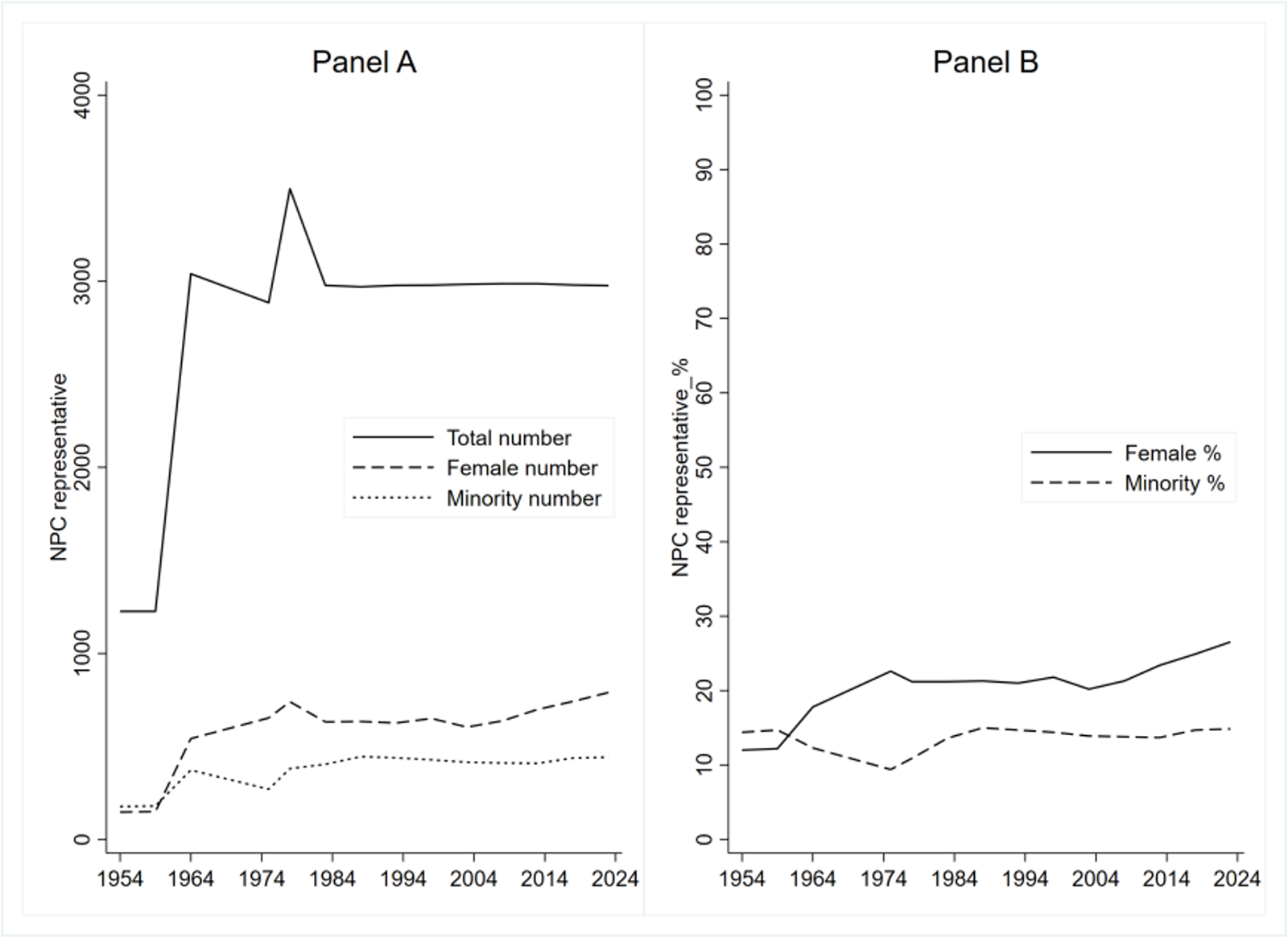
Since the establishment of the NPC in 1954, ethnic legislators have been consistently over-represented. Figure 1 and Table A1 show that the ethnic minority population gradually increased from 6.06 per cent in 1953 to 8.89 per cent in 2020, while the proportion of ethnic legislators in the NPC remained at around 14 per cent during this period.
NPC Legislators, 1954–2023

China has adopted an ethnic quota system for minorities in its legislatures, which has evolved over time. According to the 1953 Electoral Law,Footnote 26 the number of representatives in the NPC was determined based on population quotas, with special consideration given to ethnic groups with smaller populations, ensuring that all ethnic groups were represented and had the ability to express their political will. In the first NPC in 1954, ethnic minorities accounted for approximately 6.06 per cent of the population, but ethnic legislators made up 14.44 per cent of all legislators. In 1963, the NPC issued a notice explaining the allocation and election of representatives for the third NPC, which explicitly stated that ethnic minority groups with minimal populations should be allocated at least one seat.Footnote 27 The 1979 Electoral Law explicitly stipulates that the Standing Committee of the NPC is responsible for determining the quota of ethnic minority legislators, and this allocation is based on the population and geographical distribution of various ethnic groups, with a specific provision ensuring that even the smallest ethnic groups are represented by at least one legislator. This legal provision has been upheld by the NPC to the present day, thereby institutionalizing the practice of ethnic representation in the legislative body.
Table A3 illustrates the ethnic representation for each group. There are 27 ethnic groups that are each represented by a single seat. The representation ratio for 49 ethnic groups exceeds one, while for six ethnic groups, it is slightly below one. Furthermore, the representation of ethnic minority legislators varies across provinces. Figure A1 (online) illustrates the proportions of ethnic legislators and ethnic populations at the provincial level. Ethnic minority legislators are underrepresented in only four provinces: Tibet, Qinghai, Zhejiang and Guangdong. In most provinces, ethnic legislators are overrepresented, particularly in provinces such as Yunnan, Inner Mongolia and Guangxi, where the degree of overrepresentation is especially high.
Data and Variable
We compiled biographical information on all legislators who had a seat at the 13th NPC from 2018 to 2022, excluding those from Hong Kong, Macau and Taiwan. Our sample includes 2,951 legislators, of whom 15.05 per cent are ethnic minorities. Section B.1 introduces how we collected proposal data. Table A5 shows data sources for all variables, and Table A6 presents descriptive statistics. On average, 18.02 per cent of ethnic minority legislators sponsored at least one bill during the 13th NPC, compared to 21.54 per cent of Han legislators. Thus, it appears that ethnic minority legislators may be less active in bill sponsorship. Legislators’ attributes may influence their legislative behaviour. We also control for legislators’ gender, age, democratic party affiliation, prior NPC experience, PLA membership, graduate education and official government status.
Provincial characteristics may influence legislators’ bill sponsorship. Except for the People’s Liberation Army (PLA) delegates, all NPC legislators are organized by province. Cross-province co-sponsorship of a bill is restricted and, in some cases, even banned.Footnote 28 To mitigate concerns of reverse causality and capture delegation characteristics, we control for provincial socio-economic factors, including GDP per capita, fiscal revenue per capita and population size in 2017, one year before the 13th NPC.
Main Results
Who becomes an ethnic legislator?
What are the selection criteria for ethnic legislators in the NPC? Examining who becomes an ethnic legislator may provide clues to answer this question. Ideally, we would analyse the entire candidate pool of legislators to examine who ultimately becomes a legislator. However, the candidate pool data for ethnic legislators are not publicly available, so we conducted a simple analysis comparing the attributes of Han and ethnic legislators.
Figure 2 indicates that women, younger individuals, those without graduate degrees, members of non-democratic parties, individuals not belonging to the PLA and government officials are more likely to become ethnic legislators.Footnote 29 In China’s political system, government officials hold de facto power, while legislators in the NPC possess de jure power and serve as a form of descriptive representation. The selection logic for legislators differs from that for government positions. For instance, being male, attending elite colleges, obtaining graduate degrees and having government job experience provide advantages in becoming government officials.Footnote 30 Ethnic male cadres enjoy additional advantages in leadership recruitment within governments.Footnote 31 The CCP dominates the selection of ethnic legislators, seemingly favouring less capable, inexperienced but loyal ethnic minorities in the NPC.
Who Becomes an Ethnic Legislator

Ethnic legislators and proposal sponsorship
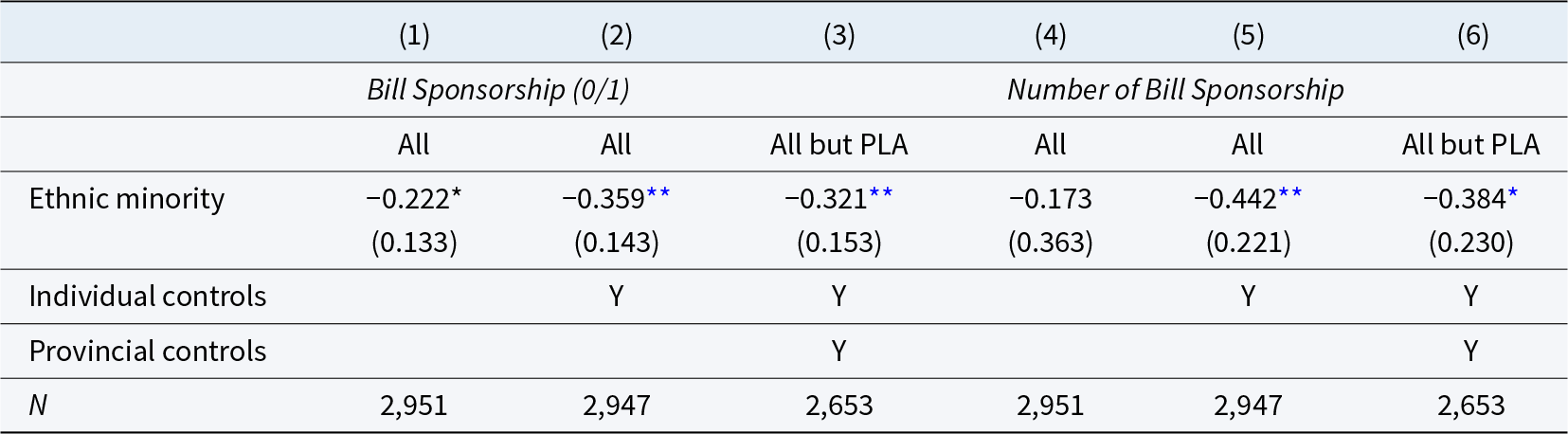
We examine whether being an ethnic minority affects a legislator’s likelihood of sponsoring bills. The main outcome variable is a binary indicator capturing whether a legislator sponsored at least one bill during the 13th NPC. Section E1 in the online Appendix explains our model specification. In our sample, only 3.74 per cent of PLA deputies sponsor bills, compared to 22.92 per cent of non-PLA deputies. PLA legislators are more likely to be constrained by directives from above, making them less active in legislative activities and more reticent in expressing policy preferences. It is also more difficult to compare them with legislators in provincial delegations, whose proposals often advance local economic and social interests. Therefore, in addition to presenting full-sample results, we estimate the main results in Columns (3) and (6) in Table 1 by excluding PLA legislators and controlling for provincial socio-economic factors.
Ethnicity and Bill Sponsorship

* Notes: Robust standard errors are in parentheses. We use a binary logistic model to estimate results in Columns (1)–(3), and rely on negative binomial regression to estimate results in Columns (4)–(6). Individual controls include male, age, democratic party, NPC experience, graduate education, PLA and government occupations. Provincial controls include GDP per capita (logged), fiscal revenue per capita (logged) and population (logged). * p < 0.1; ** p< 0.05; *** p < 0.01.
Columns (1)–(3) in Table 1 show that ethnic minority legislators are less likely to initiate and sponsor bills in the NPC. As an alternative outcome variable, we use the total number of bills sponsored to measure legislators’ bill sponsorship. Columns (4)–(6) in Table 1 indicate that ethnic minority legislators sponsor fewer bills compared to Han legislators. Our results also reveal that male legislators, PLA representatives and those working in government are less active in sponsoring bills, while members of democratic parties and those with prior NPC experience are more active in bill sponsorship.
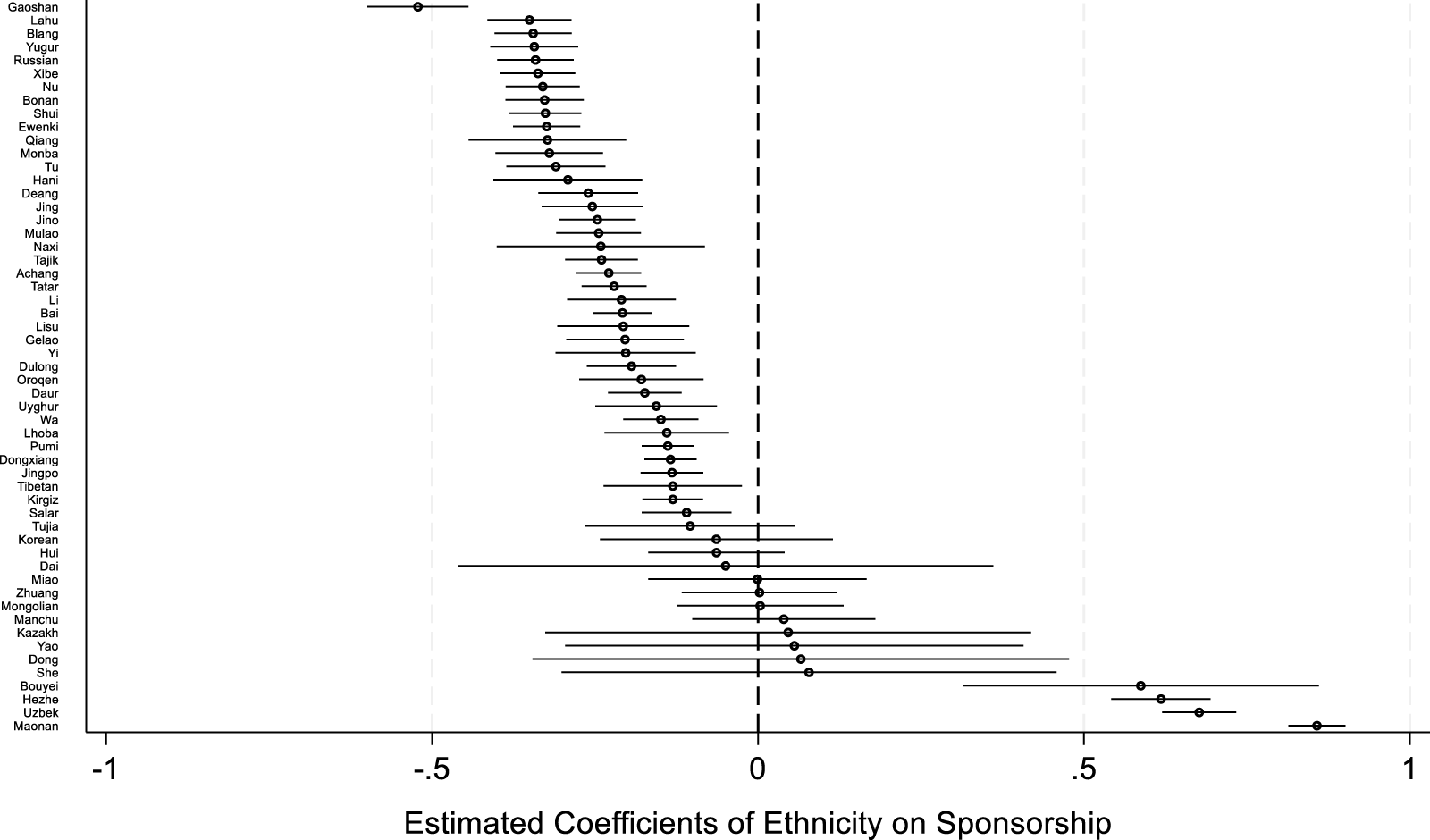
Furthermore, we parse out the distinct impact of specific ethnic groups on bill sponsorship. Figure 3 shows the estimated coefficients for ethnic minorities. Compared to Han legislators, most ethnic minority legislators are less likely to sponsor bills. Specifically, legislators from 39 ethnic groups are less likely to sponsor bills in the NPC, and legislators from 12 ethnic groups show no significant impact on bill sponsorship. However, legislators from only four ethnic groups (Maonan 毛南族, Uzbe 乌孜别克族, Hezhe 赫哲族, Bouyei 布依族) are more likely than their Han counterparts to sponsor bills; three of these four ethnic groups have only one legislator each.
Ethnicity and Bill Sponsorship

The impact of ethnic minority status on bill sponsorship may vary across different policy fields. We classify bills into several policy fields based on the committees to which they are assigned. Table A11 in the online Appendix presents the estimated results. Columns (1) and (2) reveal that ethnic minority legislators are less likely to sponsor bills related to constitutional and legal issues, as well as fiscal and economic matters. In other policy fields, ethnicity has no significant effect on bill sponsorship.
Our main analysis focuses on legislators from mainland China. There were 64 legislators from Hong Kong, Macau and Taiwan; only one of them was an ethnic minority legislator (gaoshan 高山族). They were relatively inactive, submitting only one proposal during the 13th NPC. As a robustness check, we include these legislators in our sample and re-estimate the main results. Columns (2) and (4) in Table A15 show that the magnitude of the estimated coefficient for ethnicity becomes smaller, but ethnicity still has a negative and significant effect on the submission of proposals.
One concern is that proposals alone may not fully capture legislators’ legislative representation. Aside from proposals, legislators can submit policy suggestions, which do not require co-sponsorship. Ethnic delegates in provincial people’s political consultative conferences are more active in submitting proposals, which also do not have co-sponsorship requirements.Footnote 32 As a robustness check, we collected policy suggestion data to estimate the effect of ethnicity. Section F in the Appendix shows that ethnic minority legislators do not differ significantly from Han legislators in the submission of policy suggestions.
Legislators’ proposal-making may vary across different professional groups. We interact ethnicity with legislators’ professional backgrounds and estimate its effect. Section H in the online Appendix shows that the negative effect of ethnicity on proposal-making is concentrated among social-sector legislators, who may face greater barriers or constraints in securing adequate sponsorship.
Ethnic diversity and proposal sponsorship
The over-representation of ethnic minority legislators, coupled with the lower likelihood of them sponsoring bills, presents a puzzling paradox. In this section, we present evidence suggesting that ethnic fragmentation may undermine their ability to sponsor legislation.
Legislators in the NPC are required to obtain at least 30 signatures from their colleagues to sponsor a bill. Legislators usually gather signatures from colleagues within their own delegations. In our sample, 56.68 per cent of bills have exactly 30 co-sponsors. The average number of co-sponsors for all bills is 31.29, while the average for bills initiated by ethnic minority legislators is 30.70, compared to 31.38 for those initiated by Han legislators. Ethnic minority legislators appear to gather fewer signatures from their colleagues. The challenges in forming multi-ethnic coalitions and securing sufficient signatures may prevent many ethnic minority legislators from successfully sponsoring bills.
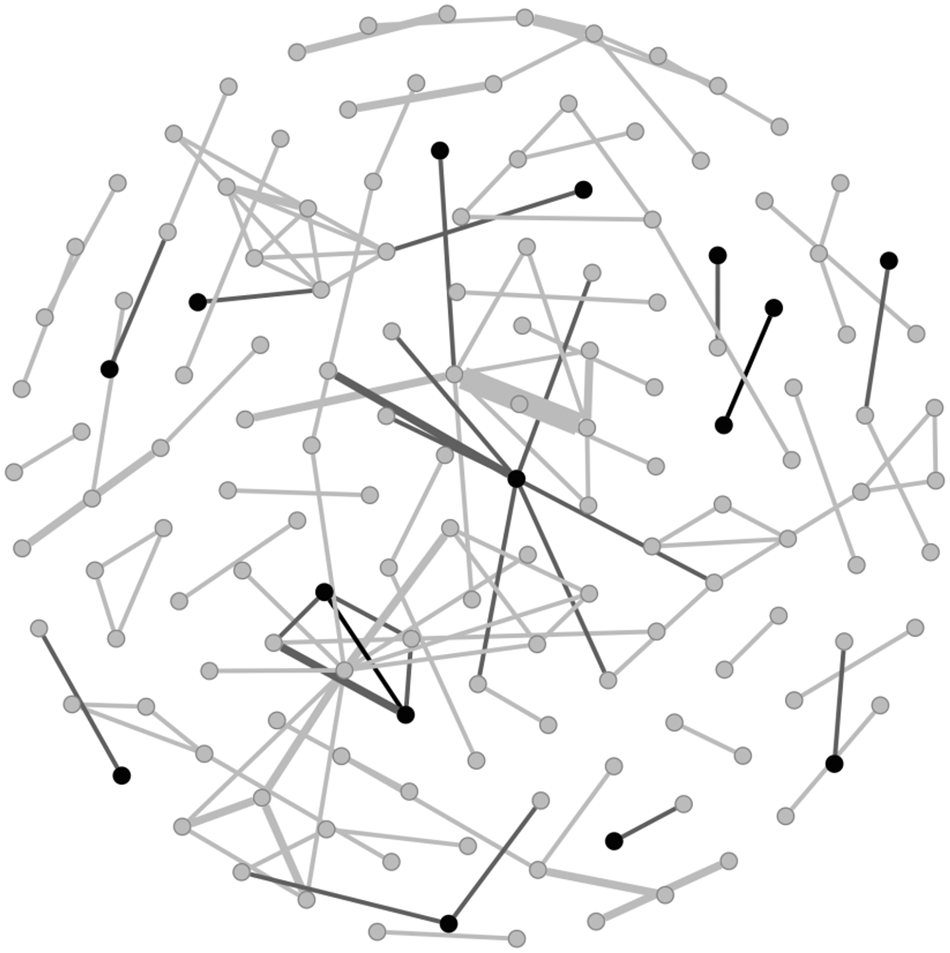
Furthermore, ethnic legislators may face greater challenges in forming policy coalitions. To advance specific policy agendas, legislators need to build cross-provincial coalitions and submit proposals with the same or similar content.Footnote 33 By examining the titles of proposals, we identify cross-provincial coalitions within the same year and use network analysis to plot cross-provincial policy coalitions among Han and ethnic legislators. Figure 4 indicates that ethnic legislators primarily form coalitions with Han legislators, with few coalitions being formed between two ethnic legislators. Many Han legislators may form coalitions with multiple legislators, while ethnic legislators mainly form coalitions with one other legislator. Ethnic legislators may find it difficult to build cross-provincial coalitions within the same ethnic group.
NPC Policy Coalition Network, 2018–2023

One possible explanation is that ethnic diversity may serve as a barrier for legislators in sponsoring bills. Ethnic diversity may have negative consequences on economic growth, public goods provision and political stability.Footnote 34 Individuals from different ethnic groups may face challenges in communication, interaction, building mutual trust and forming norms of reciprocity and cooperation.Footnote 35 Consequently, we may predict that ethnic diversity within delegations may hinder legislative cooperation and the sponsorship of bills.
We rely on three indexes to capture ethnic diversity within delegations. First, we construct an ethnic fragmentation index, which measures the probability that two randomly selected legislators do not belong to the same ethnic group in each delegation.Footnote 36 Second, we construct an ethnic polarization index to capture the degree of ethnic groups’ distance from a bipolar distribution.Footnote 37 Third, we construct the language fragmentation index for each delegation. Section I in the online Appendix discusses the rationale for using the language fragmentation index and provides detailed equations and the geographic distribution of these indices.
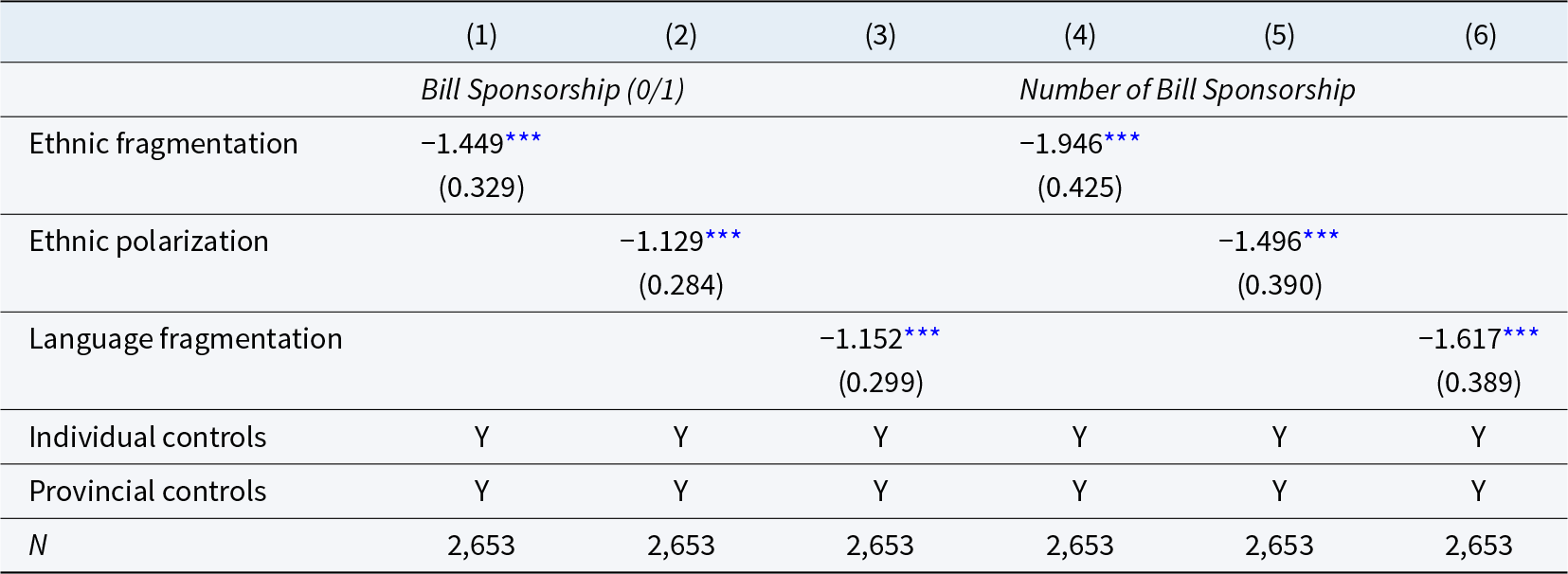
We estimate the impact of ethnic diversity on proposal-making. Table 2 summarizes the effects of ethnic diversity on bill sponsorship. Column (1) shows that ethnic fragmentation within delegations significantly reduces legislators’ likelihood of sponsoring bills, suggesting that legislators may face greater barriers to submitting proposals in provinces with higher ethnic fragmentation. Similarly, Column (2) indicates that ethnic polarization also decreases the probability of bill sponsorship. Column (3) demonstrates that language fragmentation significantly undermines legislators’ ability to sponsor bills. These findings remain robust when using the number of bills sponsored as an alternative outcome variable, as shown in Columns (4) to (6). Overall, the results suggest that ethnic diversity may serve as a significant barrier to proposal-making. In provinces with high ethnic diversity, legislators may face more difficulties in forming policy coalitions and securing adequate co-sponsorship. In particular, ethnic minority legislators may make up a larger proportion of delegations with high ethnic diversity. These results may provide evidence for the mechanism of constraints on bill co-sponsorship and help explain why ethnic minority legislators are less likely to submit proposals.
Ethnicity Diversity and Bill Sponsorship

* Notes: Robust standard errors are in parentheses. We use a binary logistic model to estimate results in Columns (1)–(3) and rely on negative binomial regression to estimate results in Columns (4)–(6). Individual and provincial controls are identical to those in Table 1. * p < 0.1; ** p< 0.05; *** p < 0.01.
Conclusion
This study is among the first attempts to examine ethnic legislators in China’s national legislature. Women and ethnic minorities are both historically excluded groups. While women are underrepresented, they outperform their male counterparts and actively advance women’s interests in China’s NPC.Footnote 38 By contrast, ethnic minorities have benefited from the ethnic quota system and have been overrepresented, yet they tend to be less active in sponsoring bills and exhibit reticence on ethnic issues.
We demonstrate that descriptive representation does not necessarily lead to substantive representation in China. Ethnic legislators may face significant obstacles in submitting proposals. With 27 ethnic groups each represented by only a single seat, ethnic legislators are fragmented and often struggle to gather the 30 or more signatures needed within a delegation to successfully submit a policy bill. Additionally, they encounter challenges in forming cross-provincial coalitions to advance their policy agendas. The ethnic diversity within each delegation impedes legislators’ ability to effectively submit policy proposals.
Although often portrayed as mere window dressing, recent studies reveal that authoritarian legislatures serve as crucial arenas for contestation and as apparatus for power sharing in policy decisions.Footnote 39 Our study reveals a mixed picture for ethnic legislators in the China’s NPC. On the one hand, the legislature plays an important role in power sharing and allocates more seats to ethnic minorities. On the other hand, ethnic legislators are less active in submitting bills and shaping policy agendas. Given the sensitivity of ethnic issues and their importance for political stability, the ruling party exerts strong control over both the selection of ethnic legislators and the operation of legislatures. Ethnic legislators provide more symbolic representation than substantive participation.
Supplementary material
Appendices for this paper are available online at https://doi.org/10.1017/S0305741025101690.
Acknowledgements
We thank the editor and the anonymous reviewers for their constructive comments. We are also grateful to Junzhi He, Xiao Ma, Long Sun, Jie Yan and participants at the Symposium on the Development of People’s Congresses and Public Participation for their helpful suggestions. We thank Jinxiu Wang for excellent research assistance. Funding was provided by the National Natural Science Foundation of China, Grants No. 72204007.
Competing interests
None.
Wenhui YANG is an assistant professor in the School of Government at Peking University. His research interests include Chinese politics and public policy.
Xinyang GAO is a PhD student in the School of Government at Peking University. His research interests include Chinese politics, disaster politics and computational politics.