Summations
-
∙ We will recommend choosing an selective serotonin reuptake inhibitor (SSRI) if possible to treat a depression among patients with diabetes mellitus (DM). Bear in mind that there is a possible risk of hypoglycemia when using SSRIs.
-
∙ If treatment with a tricyclic antidepressant is needed, closer glycaemic monitoring is recommended as it may impose a higher risk of hyperglycemia.
-
∙ Agomelatine and bupropion have shown promising results, but need to be investigated in more trials.
Considerations
-
∙ Some studies included only subjects with minor depression or with suboptimal-controlled diabetes making it difficult to show an effect.
-
∙ As sample size and duration of treatment in many included trials was too short, the effect of antidepressants in different subgroups of patients taking insulin, metformin, glibenclamid or other medications for diabetes could not be investigated.
Introduction
Depression may be difficult to treat and with comorbid DM it is an even bigger challenge. The prevalence of depression in DM is 10–30% (Reference Ali, Stone, Peters, Davies and Khunti1). The combination may be harmful as depression has a strong impact on psychosocial and medical outcomes in patients with DM (Reference Petrak and Herpertz2). The condition is associated with poor compliance with diabetes treatment, poor glycaemic control and increased risk for micro- and macrovascular complications (Reference Lustman, Clouse and Freedland3). Glycaemic control is assessed by patient self monitoring of blood glucose and haemoglobin A1c (HbA1c) levels (Reference Chamberlain, Rhinehart, Shaefer and Neuman4). In 2011, WHO concluded that HbA1c can be used as a diagnostic test for diabetes providing that stringent quality assurance tests are in place and assays are standardised to criteria aligned to the international reference values, and there are no conditions present which preclude its accurate measurement (5). An HbA1c of 6.5% is recommended as the cut point for diagnosing diabetes. A value of <6.5% does not exclude diabetes diagnosed using glucose tests. HbA1c reflects average plasma glucose over the previous 8–12 weeks (Reference Nathan, Turgeon and Regan6). Glycaemic control can deteriorate by bad life style in depression due to unhealthy food intake, reduced physical activity, smoking and decreased medication adherence (Reference Knol, Derijks and Geerlings7). Depression may lead to increased insulin resistance and a hypercortisolemic condition with increased intraabdominal fat (Reference Weber-Hamann, Hentschel and Kniest8). A comprehensive review by Andreoulakis et al. found depression with comorbid diabetes associated with adverse health outcomes and quality of life impairment (Reference Andreoulakis, Hyphantis, Kandylis and Iacovides9). They summarise that the antidepressant pharmacotherapy is effective for treating depressive symptoms in patients with DM, but the effect on glycaemic control might depend on the type of antidepressants and therefore recommend further research with longer and larger clinical trials. A systematic review by Barnard et al. concluded that there is a link between antidepressant use and diabetes, but causality is not established (Reference Barnard, Peveler and Holt10).
A review and meta-analysis of 14 randomised-controlled trials (RCT) studies from van der Feltz-Cornelis et al. deals with the effectiveness of existing therapies in DM, both pharmacotherapy (seven studies), psychotherapy (five studies) or combined (two studies) (Reference van der Feltz-Cornelis, Nuyen and Stoop11). They concluded that therapy had an effect on depressive symptoms (effect size 0.512), and that psychotherapy, often combined with diabetes self-management interventions, had strong effect on glycaemic control (effect size 0.581). Only sertraline, an SSRI, was found to affect glycaemic control. Studies with nortriptyline, a tricyclic antidepressant (TCA), paroxetine (SSRI) and fluoxetine (SSRI) showed no significant difference on glycaemic control presumably because they were underpowered. For various reasons, the review did not include many of the articles in this review.
Two reviews from Baumeister et al. and Petrak et al. concluded that SSRIs seem to be effective in reducing depressive symptoms and increasing glycaemic control in people with diabetes and depression, but results are conflicting (Reference Baumeister, Hutter and Bengel12,Reference Petrak, Baumeister, Skinner, Brown and Holt13). A nested case–control study by Knol et al. used PHARMO database to study the influence of antidepressants on glycaemic control in diabetic patients (Reference Knol, Derijks and Geerlings7). Pharmacy data from 1991 to 2003 were used. The study was longitudinal and included 133 patients. It found that insulin used did not change during or after antidepressants use in diabetic patients. No significant differences between SSRI and TCA users in amount of insulin used were found.
Animal studies
Studies have shown unlike effect of different antidepressants on plasma glucose and insulin levels. A study by Erenmemisoglu et al. investigated this in normoglycaemic and alloxan-induced diabetic mice (Reference Erenmemisoglu, Ozdogan, Saraymen and Tutus14). For this purpose, the effects of nortriptyline, fluoxetine and sertraline were examined on plasma glucose and insulin levels. The results were that nortriptyline significantly increased glucose levels and reduced insulin levels in all animals. Although neither fluoxetine nor sertraline induced changes in insulin levels, both significantly reduced the blood glucose levels of mice. They conclude that tricyclic antidepressants might induce an important decrease in glucose tolerance and worsen the control of diabetic patients. SSRI’s on the other hand might reduce plasma glucose independently of insulin levels.
A study by Mahmood et al. investigated the effect of sertraline and amitriptyline (TCA) in diabetic and normal rats (Reference Mahmood, Akhtar, Vohora and Khanam15). To induce diabetes, Streptozotocin was injected in rats. Results showed that sertraline reduced, and amitriptyline increased the serum glucose levels in diabetic and normal rats. Administration of amitriptyline increased HbA1c levels, while sertraline had no effect. Gupta et al. found that acute but not chronic treatment with imipramine (TCA) produced a rise in blood glucose (Reference Gupta, Awasthi and Jaju16) in rabbits.
Influence of antidepressants on insulin sensitivity in depressed non-DM
Andersohn et al. conducted a nested case–control study in a cohort of 165 958 patients with depression (Reference Andersohn, Schade, Suissa and Garbe17). A total of 2243 cases of incident DM and 8963 matched comparison subjects were identified. Compared with no use of antidepressants during the past 2 years, recent long-term use (>24 months) of antidepressants in moderate to high daily doses was associated with an increased risk of diabetes (incidence rate ratio=1.84, 95% CI=1.35–2.52). The magnitude of the risk was similar for long-term use of moderate to high daily doses of tricyclic antidepressants (incidence rate ratio=1.77, 95% CI=1.21–2.59) and SSRIs (incidence rate ratio=2.06, 95% CI=1.20–3.52).
In a nested case–control design of 2391 individuals with incident depression treated with antidepressant therapy, Brown et al. concluded that concurrent use of TCA and SSRI was associated with an increased risk of developing type 2 diabetes compared with using TCA alone (Reference Brown, Majumdar and Johnson18).
Kesim et al. demonstrated an increased insulin level in a study of eight male and 12 female non-diabetic depressive patients treated with sertraline for 12 weeks and diagnosed according to DSM-IV criteria. There were no differences in glucose or HbA1C levels in those patients (Reference Kesim, Tiryaki, Kadioglu, Muci, Kalyoncu and Yaris19).
In a trial by Weber-Hamann et al., 80 inpatients with an episode of major depressive disorder (DSM-IV criteria) were treated in a double-blind, randomised protocol with either amitriptyline or paroxetine over a period of 5 weeks. The results demonstrated that insulin sensitivity index (Matsuda) increased in only those patients who remitted from major depressive disorder as a result of treatment with either antidepressant (F=7.0, df=1,74; p<0.01) (Reference Weber-Hamann, Gilles, Lederbogen, Heuser and Deuschle20).
A randomised double-blind 8-week study of non-diabetic patients by Ghaeli et al. showed that fasting blood glucose levels may decrease in depressive patients receiving 20–40 mg fluoxetine and may increase in those patients treated with 75–200 mg imipramine (Reference Ghaeli, Shahsavand, Mesbahi, Kamkar, Sadeghi and Dashti-Khavidaki21). A total of 19 patients in the fluoxetine and 24 patients in the imipramine groups completed the study.
Aims of the study
This article aims to evaluate antidepressants most suitable for patients with depression and comorbid DM. A literature review of published trials in English language journals from 1995 to 2016 was made with focus on pharmacological treatment of depression in patients with DM. Most of the studies did not differentiate between type1 and type 2 DM. If so, it will be mentioned.
Method
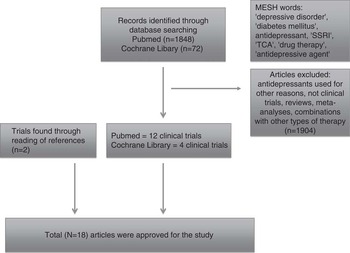
Initially we searched for randomised, controlled double-blind trials of treatment with antidepressants in depressed with DM but there were only a few studies and many of them were small trials. Thus, we decided to include studies that were not only RCT. We believe the studies in total will provide some answers. In April 2016, we searched studies in English language journals in the electronic databases PubMed, Embase, Clinicaltrials.gov and Cochrane Library from 1995 to 2016 using the terms ‘depressive disorders’ and ‘diabetes mellitus’ combined with and ‘antidepressant’ and tricyclic and ‘SSRI’. Initially we were primarily interested in double-blind RCTs as a representative of the highest level of evidence. Not many trials, however, were fulfilling these criteria, and many were small trials. Hence we included different study designs in our review; exclusion criteria were: Antidepressants used for reasons other than depression in DM, case reports as well as studies combining antidepressants with other interventions as collaborative care or psychotherapy. Reviews, meta-analysis and animal studies were used for a minor update in the introduction of this paper. Using PubMed, we cross-referenced the terms ‘diabetes mellitus’, ‘depressive disorder’, ‘drug therapy’, ‘antidepressive agents’, ‘tricyclic’ and ‘diabetes mellitus’ and not review (Fig. 1). In total, PubMed gave 1848 hits. Looking for clinical trials resulted in 22 hits. After reading those 22 articles, we excluded further 10 and ended up with 12 relevant articles for our study. We used the terms diabetes mellitus and depressive disorder, when we used clinicaltrials.gov. It resulted in 268 hits but only 15 showed relevant for our study. All of them were excluded for the following reasons: missing abstracts, missing publications, the trials were not finished or not relevant for our study. Searching in Cochrane library resulted in 72 hits but only nine seemed relevant and here we ended up with four articles. The references of the approved articles gave two more articles. In total, we ended up with 18 articles for our purposes. Using Embase gave 2224 hits, but the clinical trials were duplicates of the studies already found.
Summary of literature search and study selection.

Results
Open-label follow-up studies: comparison with baseline
1. The main aim of the research by Filipčić et al. (Reference Filipcic, Margetic, Simunovic and Jakovljevic22) was to assess patients with depression and optimally controlled diabetes and the influence of antidepressant treatment on mood, quality of life and metabolic control. In an open-label follow-up study, 60 depressive outpatients with type 2 diabetes were treated with 50 mg sertraline for 24 weeks and examined before and after treatment. The efficacy of the treatment was rated by the Montgomery Asbergs Rating Scale for depression and quality of life questionnaire. A total of 80% of the participants were older than 30 years of age. In all, 15 patients did not complete the investigation, that is 25%. The degree of depression showed substantial improvement after 8 weeks (p<0.001) and 24 weeks (p<0.008) (Table 1). The quality of life showed noticeable improvement after 8 weeks of treatment (p<0.001) but did not improve further hereafter. The study concludes that treatment induced no changes in the HbA1c, but the exact results are not revealed.
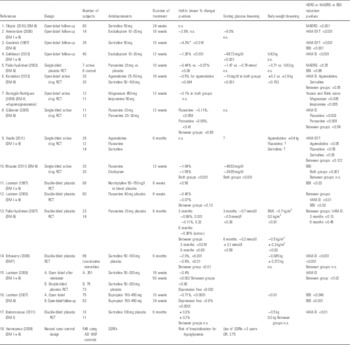
Characteristics of included studies

AD, antidepressants; BDI, Beck Depression Inventory; DM, diabetes mellitus; HAM-D, Hamilton depression rating; HDRS, Hamilton Depression Rating Scale; MADRS, Montgomery Asbergs Rating Scale for depression; RCT, randomised-controlled trials; SSRI, selective serotonin reuptake inhibitor.
A: HemA1c increased in some patients, but reduction of depression score decreased HemAl1c.
DM-I: IDDM; DM-II: NIDDM.
* Reduction for 13 of 17 patients with baseline HbA1c>8.0.
2. Amsterdam et al. examined the safety and efficacy of ecitalopram (SSRI) treatment in outpatients ≥18 years of age with comorbid depression (HAM-D17≥16) and diabetes, and its ability to improve glycaemic control (Reference Amsterdam, Shults, Rutherford and Schwartz23). It was an open-label follow-up study and 17 patients in total were enrolled (four women, 13 men) but only 14 patients received treatment with ecitalopram (10–20 mg/day) for up to 16 weeks. To measure the clinical outcome, they used 17-item Hamilton depression rating (HAM-D 17) and the clinical global impressions severity (CGI/S) and change (CGI/C) ratings. Moreover, before and during ecitalopram treatment, fasting glucose, fructosamine and HbA1c measures were obtained. The results were a significant reduction in mean HAM-D 17 (p<0.001), CGI/S (p=0.001) and CGI/C (p=0.001) ratings during ecitalopram treatment. A modest, non-significant drop in fasting glucose (−6.0%), fructosamine (−2.1%) and HbA1c (−2.9%) during ecitalopram treatment was observed.
3. An open-label follow-up study by Goodnick et al. (Reference Goodnick, Kumar, Henry, Buki and Goldberg24) provides further evidence of the effectiveness of sertraline as an antidepressant in patients with DM. In a 10-week open-label study, 28 type 2 DM patients with DSM-III-R major depression received a dose of sertraline 50 mg/day after a 2-week single-blind placebo washout period with a minimum 17-item Hamilton Rating Scale for Depression (HAM-D) score of 18. The patient group included 16 males and 12 females with a mean age of 54.2 years. The results were (1) Mean HAM-D scores decreased from 22.6±3.4 to 4.9±5.9 (p<0.001), and mean Beck Depression Inventory (BDI) scores decreased from 21.9±10.5 to 12.7±8.3 (p<0.001). (2) Decrease in platelet serotonin (5-HT) from 79.7±22.5 to 13.6±12.7 ng/108 platelet (p<0.001). (3) Correlation of baseline platelet (5-HT) content with response to sertraline by BDI scores (r=0.51) (p<0.05). (4) Patients with baseline dietary compliance under 70% showed significant development during treatment increasing from 59.7±13.2% to 69.1±10.2% (p<0.005). (5) 13 of 17 patients with a baseline HbA1c levels >8.0, showed a significant reduction in HbA1c (−4.3%) (p=0.018).
4. In an open-label 12-week follow-up study, Gehlawat et al. (Reference Gehlawat, Gupta, Rajput, Gahlan and Gehlawat25) investigated the effect of ecitalopram (10–20 mg/day) in outpatients with DM with comorbid depression, the relationship of treatment response for depression, and glycaemic control. A total of 40 patients (30 females and 10 males) were included with a mean age of 50.75 years. Mean body mass index was 26.83. HAM-D assessment at 3, 6 and 12 weeks were included in outcome measurement. Moreover, fasting and postprandial plasma glucose level, weight and waist circumference, HbA1c, lipid profile, renal function test and fundus examination were done before and during escitalopram therapy. The result showed a significant mean reduction in HAM-D scores from 22.3 at baseline to 4.75 after 12 weeks (p<0.001). After 12 weeks or less, a decline was observed in mean fasting plasma glucose level (−68.72 mg/dl), postprandial plasma glucose level (−109.95 mg/dl) and HbA1c (−1.36) (p<0.001).
Single-blind randomised placebo-controlled studies
5. In a single-blind randomised placebo-controlled 10-week trial, Paile-Hyvärinen et al. (Reference Paile-Hyvarinen, Wahlbeck and Eriksson26) investigated the effect of the antidepressant paroxetine on metabolic control, quality of life and mental well-being in mildly depressed women with type 2 diabetes. The allocation remained concealed to the patient. A total of 15 participants with non-optimally controlled type 2 diabetes with mean fasting blood glucose above 8 mmol/l were treated with either paroxetine (n=7) 20 mg/day or placebo (n=8).
Baseline Hb1Ac% was 7.5±0.8 in the paroxetine group versus 6.9±0.4 in the control group.
One patient stopped before starting medication and one patient stopped because of side effects, both belonged to the placebo group. With regards to improvement of quality of life, there was no significant difference between the groups. A reduction in HbA1c % (−0.44%) was found in the paroxetine group versus −0.07% in the placebo group (p=0.08). A superior rise in sex-hormone-binding-globuline levels showed in the paroxetine group (p=0.01) as indication of improved insulin sensitivity. Moreover, there was also a tendency for superior effectiveness of paroxetine in investigator-rated anxiety and depression. This was supported by decrease of serum cortisol levels in the paroxetine group (p=0.06).
Open-label randomised studies: comparison with active drugs
6. An observational open-label study by Karaiskos et al. (Reference Karaiskos, Tzavellas, Ilias, Liappas and Paparrigopoulos27) with 40 patients compared the efficacy of agomelatine and sertraline in the treatment of symptoms of depression/anxiety, diabetes self-care and metabolic control in patients with depression and non-optimally controlled type 2 DM (Hb1Ac >7.5%). Patients were randomly allocated to receive either agomelatine or sertraline and followed for 4 months. The agomelatine group (n=20) was treated with a dose of 25–50 mg/day, mean dose: 31±11 mg/day. The sertraline group (n=20) was treated with a dose of 50–100 mg/day; mean dose: 75±25 mg/day. After 4 months the Hamilton Depression Rating Scale (HDRS) was reduced from 19.9±5.5 to 5.8±3.1 in the agomelatine group and from 21.2±6.4 to 8.3±4.1 in the sertraline group. The fasting plasma glucose was reduced from 137±21 to 127±13 in the agomelatine group and from 135±16 to 125±13 in the sertraline group. The Hb1Ac % was reduced from 7.7±0.5 to 7.2±0.6 in the agomelatine group and from 7.6±7.6±0.5 in the sertraline group. Body weight changed from 73.7±12.9 to 73.9±12.8 in the agomelatine group and from 71.5±10.6 to 74.1±9.4 in the sertraline group.
7. In a 12-week study, Barragán-Rodrígues et al. assessed the efficacy of oral magnesium supplementation, with magnesium chloride (MgCl2), in the treatment of newly diagnosed depression in the elderly aged 60 years or more with type 2 diabetes and hypomagnesaemia (Reference Barragan-Rodriguez, Rodriguez-Moran and Guerrero-Romero28). 23 participants were included, 21 completed the follow-up. They were randomly allocated by computer generated random numbers to receive either 50 ml of MgCl2 (n=12) 5% solution equivalent to 450 mg of elemental magnesium or imipramine 50 mg daily (n=11). Hypomagnesaemia was defined as serum magnesium levels <1.8 mg/dl. Diagnosis of depression was performed using Yasavage and Brink score ≥11points. Hb1Ac changed from 8.9±1.6 to 8.8±1.2 in the MgCl2 group and from 9.0±1.7 to 8.9±1.4 in the imipramine group. The Yasavage and Brink score was reduced from 17.9±3.9 to 11.4±3.8 in the MgCl2 group (p<0.005) and from 16.1±4.5 to 10.9±4.3 in the imipramine group (p<0.005).
Single-blind randomised studies: comparison with active drugs
8. Gülseren et al. (Reference Gulseren, Gulseren, Hekimsoy and Mete29) investigated the efficacy of fluoxetine and paroxetine on the levels of depression-anxiety, quality of life, disability and metabolic control in type 2 DM patients. A total of 23 patients were randomly assigned to receive 20 mg/day fluoxetine or 20 mg/day paroxetine in 12 weeks. The interviewer was blinded to the medicine used. Patients in the fluoxetine group remained at the same dose, while it was increased to 30 mg/day for 4 patients in the paroxetine group after 6 weeks. In al, 11 patients were given paroxetine and 12 were given fluoxetine. One patient from the fluoxetine group and two patients from paroxetine group were eliminated from the study for not attending the follow-up visits. Mean HDRS was 17.5 in the fluoxetine group and 18.8 in the paroxetine group. Mean HbA1c % was 6.9±1.7 in the fluoxetine group 6.9±1.2 in the paroxetine group. In the fluoxetine group, a post treatment HDRS ≤7 was observed in 63.6% compared with 55.6% in the paroxetine (p=0.54). In the fluoxetine group HbA1c % decreased with −0.11 (p=0.058) and −0.06 (p=0.41) in the paroxetine group.
9. A total of 52 patients were enrolled by Vasile et al. (Reference Vasile, Vasiliu, Vasile, Terpan and Ojog30) to assess the comparative efficacy of agomelatine versus SSRIs (fluoxetine or sertraline) in patients with both major depression (HDRS >25) and DM. The study was a 6 months prospective single-blind controlled study. Patients in the agomelatine group (n=26) were treated with flexible dosage from 25 to 50 mg/day. Patients in the fluoxetine group (n=12) received a mean dose of 30 mg/day and the sertraline group (n=14) a mean dose of 125 mg/day. After 6 months, the agomelatine group showed improvement in HAM-D (−17.7, p<0.05), CGI (−4.2, p<0.05) and Global Assessment of Functioning (GAF) (+38.7, p<0.05). Compared with the pre-inclusion levels, the antidiabetic drugs doses did not differ significantly. Regarding the antidepressant effect assessed on HAM-D (p=0.122), no significant difference was found between the two groups (agomelatine vs. SSRIs). Patients in the agomelatine group had low weight gain (0.4 kg) and faster improvement of the sleep, as assessed on HAM-D-specific items (p=0.032). Patients had a higher tolerance to agomelatine than fluoxetine (p=0.044), but equally to the sertraline (p=0.154) when the total number of mild and moderate adverse events was taken into consideration. The trial was only published as a congress abstract.
10. Khazaie et al. enrolled 47 patients with diabetes and comorbid depression (Reference Khazaie, Rahimi, Tatari, Rezaei, Najafi and Tahmasian31) in a single-blind randomized-controlled study. The objective of the trial was to compare the antidepressant effects of citalopram with fluoxetine and their effect on glycaemic control in diabetic patients. A total of seven patients did not return for follow-up because of side effects of the drugs. In all, 40 patients with type 2 diabetes and suffering from depression (Beck’s Depression Inventory score ≥14) with average age of 48.3 years were randomly assigned using a computer generated randomisation list to two groups (n=20/group). The patients received 20–40 mg/day of fluoxetine or citalopram. The patients were reassessed in terms of severity of depression and diabetic status after 12 weeks of treatments. Hb1Ac was reduced from 7.68±1.69 to 5.74±1.06 (p<0.001) in the fluoxetine group and from 7.68±1.69 to 6.65±1 (p<0.001) in the citalopram group. Becks Depression Inventory was reduced from 26.29±3.50 to 12.21±2.08 (p<0.001) in the fluoxetine group and from 26.29±to 11.84±3.56 (p<0.001) in the citalopram group. Fasting blood sugar was also significantly reduced in both groups. No statistical difference between the groups in depression and diabetic status was found. A significant reduction (p<0.001) in HbA1c in the citalopram group (−1.59%) and the fluoxetine group (−1.94%) was found as well as a significant reduction in BDI in both groups (p<0.001).
Randomised double-blind placebo-controlled studies
11. In order to see whether depression in diabetes is treatable, and whether restoring mental health contributes to better medical outcome, Lustman et al. (Reference Lustman, Griffith and Clouse32) included 68 patients in their study to evaluate the effects of nortriptyline on depression and glycaemic control. Diabetic patients without depression were included to investigate a direct effect on glycaemic status. A total of 28 of the patients had major depression. At baseline Hb1Ac in the placebo group was 11.9±3.4 versus 12.2±2.6 in the nortriptyline group. It was an 8-week double-blind randomised controlled study with 1 week baseline assessment. Patients with depression were randomised to nortriptyline versus placebo. BDI was 17.8±7.1 in the placebo group and 19.0±7.4 in the nortriptyline group. Patients without depression were randomised to nortriptyline, benzodiazepine or placebo. The treatment with nortriptyline was targeted to therapeutic plasma levels (50–150 ng/ml). Patients treated with nortriptyline had significantly greater decrease in depression symptoms compared with those with placebo (p=0.02). 57% remitted in the nortriptyline treated group versus 35.7% in the placebo group (p=0.45). No statistically significant difference in response rate between diabetes mellitus type 1 (IDDM) and diabetes mellitus type 2 (NIDDM) was detected (p=0.56). In the non-depressed nortriptyline had a hyperglycemic effect (Hb1Ac+0.56%) compared with placebo treatment of the depressed (−0.41%) and control subjects (−0.31%), p=0.04. Improvement in depression score had a favourable effect on glucose regulation with nortriptyline or placebo treatment (p=0.54). Compliance with the medication regimen and with blood glucose monitoring did not differ as a function of treatment. No correlation with weight change was found.
12. In an 8-week double-blind randomised placebo-controlled trial, Lustman et al. (Reference Lustman, Freedland, Griffith and Clouse33) enrolled 60 patients to investigate the antidepressant efficacy of fluoxetine in diabetic patients with major depressive disorder. In all, six patients discontinued before 8 weeks. The secondary aim was to study the glycaemic control as the effects of treatment and depression improvement. Up to 40 mg/day fluoxetine were administered to the patients. Patients in the fluoxetine group showed significantly greater reductions in depression scores (BDI: 23.6 to 9.6; HAM-D: 20.1 to 9.4) compared with patients in the placebo group (BDI: 22.4 to 13.6, p=0.03; HAM-D: 19.5 to 14.3, p=0.01). HbA1c % was reduced non-significantly (p=0.13) in the fluoxetine group (−0.40%) compared with the control group (−0.07%). No significant difference in post treatment HbA1c was found in responders compared with non-responders.
13. In a double-blind randomised placebo-controlled 6-month trial, Paile-Hyvärinen et al. investigated the effect of the antidepressant paroxetine on quality of life, metabolic control and mental well-being in mildly depressed diabetics aged 50–70 years (Reference Paile-Hyvarinen, Wahlbeck and Eriksson34). A total of 49 mildly depressed patients with non-optimal glycaemic control (Hb1Ac >7.0%) were included in the trial. As six subjects withdrew before starting medicine, and six dropped out later in the study, only 37 patients were included in the statistical analysis. In all, 23 patients were treated with paroxetine 20 mg/day and 14 received placebo. After 3 months, Hb1Ac % was reduced from 8.5 to 7.9 in the paroxetine group and from 9.0 to 8.5 in the control group (p=0.018). After 6 months, HbA1c was 8.3 in the paroxetine group and 8.4 in the control group (p=0.693). After 3 months, hospital anxiety and depression scale (HADS) depression score was reduced from 7.3 to 3.8 in the paroxetine group and from 8.2 to 5.1 in the placebo group (p=0.129). After 6 months, HADS depression score was 5.5 in the paroxetine group and 6.2 in the placebo group.
14. Echeverry et al. (Reference Echeverry, Duran, Bonds, Lee and Davidson35) wanted to investigate whether pharmacological treatment of depression in low-income minorities with diabetes improved HbA1c and quality of life. Depressed subjects with a HbA1c level ≥8.0% were randomised to sertraline or placebo in a double-blind controlled 6-month trial. Patients were screened for depression with Whooley’s two-question tool, and depression was confirmed (or not) with the Computerized Diagnostic Interview Survey software program. Start dose of sertraline was 50 mg and, if needed, dose was increased to 100 mg. A total of 89 patients entered the trial and 75 completed the study. An intention-to-treat analysis was done (last observation carried forward). After 6 months HAM-D21 was reduced from 19±5 to 11±6 (p<0.001) in the sertraline group and from 20± 6 to 13±8 (p<0.001) in the control group. No significant difference between the groups was found. HbA1c% was reduced from 10.0±1.8 to 8.0±1.4 in the sertraline group (p<0.001) and from 9.7±1.6 to 8.8±1.9 (p<0.01) in the control group. The difference in HbA1c among the two groups was significant after 6 months (p<0.01) favouring sertraline. The correlation of 0.45 between changes in depression and HbA1c level was highly significant (p<10−6). Again, this study confirms that change in depression score seem to be the most important issue for change in Hb1Ac.
Maintenance treatment with antidepressants
15. Lustman et al. investigated whether recurrence of major depression in patients with diabetes is prevented by maintenance treatment with sertraline (SSRI) and the effect on the course of glycaemic control (Reference Lustman, Clouse and Nix36). It was a two-phase study; the first phase included 351 participants (mean age 50.8 years) in an open-label trial. Second phase included 152 participants who were randomised to a double-blind placebo controlled maintenance phase with sertraline. Patients recovering from depression through open-label sertraline treatment were randomised to sertraline (n=79) or placebo (n=73). In phase 1, patients with major depression were treated with sertraline for up to 16 weeks. Follow-up period in phase 2 was up to 52 weeks or until depression recurred. Patients began with a dose of 50 mg/day sertraline and the maximum dose was 200 mg/day. Patients recovering and entering phase 2 continued at recovery dosage from phase 1. Sertraline conferred significantly superior prophylaxis against depression recurrence than placebo [hazard ratio 0.51 (0.31–0.85), p=0.02]. Hb1Ac levels remained lower than baseline during depression-free maintenance phase (p=0.002) and did not differ between treatment groups when controlling for baseline HbA1c level (p=0.90).
16. Lustman et al. designed an open-label trial to see whether treatment with bupropion hydrochloride extended release improved HbA1c during acute and maintenance phase in patients with type 2 diabetes and major depressive disorder, and whether alterations were connected to alterations in mood, diabetes self-care, or anthropometrics (Reference Lustman, Williams, Sayuk, Nix and Clouse37). The dose of bupropion hydrochloride was 150–450 mg/day depending on side effect and clinical response. They included 93 patients. The last dose used to reach remission during the acute phase was sustained during maintenance phase without modification. Participants who finished the acute phase (10 weeks, n=75) and whose depression partially remitted [BDI score ≤9 and absence of MDD per DSM-IV criteria) (n=63, 68%)] sustained on bupropion at the remission dose and were followed in the maintenance phase (24 weeks) until attrition (n=8) or relapse of MDD (n=0). A total of 41 patients sustained in remission during the maintenance phase. HbA1c decreased in the overall subject group during the acute phase (−0.5±1.0%, p<0.001). The effect was attributable to changes in the subset showing remission (−0.6±1.1%, p<0.001). HbA1c remained lower than baseline during the depression-free interval of maintenance (−0.7±1.3%, p<0.001). Short term improvement in glycaemic control was predicted by improvement in mood and body composition. Longer term improvement in HbA1c was dependent on improvement in mood, but independent of weight and diabetes self-care.
17. In their 6-month, double blinded, randomised, placebo-controlled study, Komorousova et al. (Reference Komorousova, Beran, Rusavy and Jankovec38) investigated the effect of sertraline treatment of depression and anxious symptoms in type 1 diabetic patients. A total of 10 patients were randomised to sertraline 50 mg/day and increased to 100 mg/day, and 11 were given placebo. Sealed envelope randomisation was used. At baseline HAM-D was 10.5 (9–13) in the sertraline group and eight (7–9) in the placebo group. Hamilton Anxiety Scale (HAM-A) was 17 (10–25) in the sertraline group and 18 (12–21) in the placebo group. HbA1c was 6.9 (5.9–7.7) in the sertraline group and 6.9 (6.6–8.7) in the placebo group. Both groups had mental state improvement. HAM-D was reduced with seven points in the sertraline group versus two points in the control group (p=0.01). HAM-A was reduced with five points in both groups. HbA1c% was increased with 0.3% versus 0.2% in the control group (n.s.).
Randomised double-blind controlled trials comparing two active drugs
None.
Case–control study
18. Derijks et al. studied the association between use of antidepressants and risk of hypoglycemia requiring hospitalisation (Reference Derijks, Heerdink, De Koning, Janknegt, Klungel and Egberts39). The study was a nested case–control design and the data was from the PHARMO Record Linkage system in the Netherlands. The base cohort included all patients treated with insulin and/or oral antidiabetic drugs for at least 1 year from January 1991 to December 2002. A total of 549 patients with hypoglycemia requiring hospitalisation and 1897 controls were selected. The primary determinant investigated was exposure to antidepressants. The antidepressants were additionally sub classified depending on the receptor binding profile to investigate whether specific pharmacological properties could describe a potential influence on glucose homeostasis. Results proved that current use of any antidepressant was not related with a significantly higher risk of hypoglycemia requiring hospitalisation [OR: 1.36 (95% CI: 0.84–2.20)]. The antidepressants with high affinity for the serotonin reuptake transporter had a trend for higher risk of hypoglycemia, and after use of antidepressants for 3 years the risk of severe hypoglycemia was increased [OR: 2.75 (95% CI:1.31–5.77)].
Discussion
Almost all of the trials in this review showed a reduction in depressive symptoms after treatment with an antidepressant in the acute as well as during maintenance phase. In the article from Filipčić et al. it is concluded, that treatment of depression has no impact upon the values of the control parameter HbA1c in diabetic patients with depression. A result that is expected as the included sample is defined as patients with optimally controlled diabetes. A definition of this condition is missing, though (Reference Filipcic, Margetic, Simunovic and Jakovljevic22).
The next three open-label studies in our review all found a reduction in HbA1c during treatment with an SSRI (Reference Amsterdam, Shults, Rutherford and Schwartz23–Reference Gehlawat, Gupta, Rajput, Gahlan and Gehlawat25). All studies found an improvement in depression scores although the dose of sertraline in two of the studies was rather low; 50 mg/week for 24 weeks or 10 weeks (Reference Filipcic, Margetic, Simunovic and Jakovljevic22,Reference Goodnick, Kumar, Henry, Buki and Goldberg24). As the two studies were non-randomised open-label studies, we cannot rule out the degree of spontaneous remission. The study from Paile-Hyvärinen published in 2003 showed an improvement in Hb1Ac after treatment with paroxetine 20 mg for 10 weeks, but a non-significant change in depression score as the study probably was underpowered (Reference Paile-Hyvarinen, Wahlbeck and Eriksson26). The study by Karaiskos et al. concluded that agomelatine might offer some advantages over sertraline concerning diabetes regulation (Reference Karaiskos, Tzavellas, Ilias, Liappas and Paparrigopoulos27). However the open-label study did not describe the randomisation procedure in details. Body weight increased non-significantly in the sertraline group. It is not clear why HbA1c did not change in the sertraline group as in the previous mentioned studies. It is possible that a bigger sample size is needed to show an effect among suboptimal-controlled DM. Barragán-Rodríges study with imipramine showed a non-significant minor reduction in Hb1Ac (Reference Barragan-Rodriguez, Rodriguez-Moran and Guerrero-Romero28). In Gülseren et al. (Reference Gulseren, Gulseren, Hekimsoy and Mete29), the randomisation procedure is not described in detail. However the interviewer was blinded to the medicine used. The results do however confirm the previous positive findings of using an SSRI. Vasile et al. compared agomelatine versus fluoxetine or sertraline and found that, compared with the pre-inclusion levels, use of antidiabetic drugs did not differ significantly (Reference Vasile, Vasiliu, Vasile, Terpan and Ojog30). No significant difference was found between the two groups (agomelatine vs. SSRIs) regarding the antidepressant effect assessed on HAM-D or Hb1Ac. But perhaps a minor weight gain is achieved using agomelatine compared with treatment with SSRIs. Randomisation procedure was not described. Khazaie et al. showed a significant reduction in Hb1Ac, fasting glucose level and depressive symptoms. Subjects included had a major depression (Reference Khazaie, Rahimi, Tatari, Rezaei, Najafi and Tahmasian31). The 1997 trial of Lustman et al., showed that nortriptyline had a positive effect on remission and glycaemic control, but patients were only followed for 8 weeks. They found that nortriptyline deteriorated glycaemic control in non-depressed. It is possible that longer follow-up will uncover problems with glycaemic control in depressed as well. Lustman et al. investigated fluoxetine (Reference Lustman, Freedland, Griffith and Clouse33) and found significant residual symptoms (BDI≥10) in 42%, and proposed a follow-up for at least 120 days. In a maintenance trial from 2006, Lustman et al. followed remitted depressed patients with diabetes for 52 weeks during sertraline treatment or placebo treatment (Reference Lustman, Clouse and Nix36). Sertraline prolonged the depression-free interval. Sustained remission with or without sertraline was associated with improvement in Hb1Ac. In a non-randomised trial from Lustman et al., bupropion was used during acute and maintenance phase (Reference Lustman, Williams, Sayuk, Nix and Clouse37). It showed that depression improvement had a favourable effect on glycaemic control that was weight independent. Depression remitted in 84% of those who completed the acute phase; a rather high effect that looks promising for the future treatment of depression in diabetics. Furthermore, diabetics usually have a higher risk of sexual problems but these do not seem to deteriorate with bupropion treatment; perhaps these problems can even be reduced.
Komorousova et al. found improvement in HAM-D score after sertraline treatment and placebo but not in Hb1Ac measures. A reason might be that they included patients with minor depression for sertraline treatment (HAM-D: 9–13) and placebo treatment (HAM-D: 7–9) with optimal glycaemic control (median Hb1Ac: 6.9).
The study from Paile-Hyvärinen et al. published in 2007 showed an effect on glycaemic control after 3 months but not after 6 months. Patients included only had mild depression, so the effect of paroxetine on mood might be sparse. The level of Hb1Ac in the mildly depressed subjects seemed to reflect the course of depression. A decrease in HAM-D is reflected by a decrease in Hb1Ac, and an increase in HAM-D is followed by an increase in Hb1Ac.
In a 2009 trial, Echeverry et al. showed that sertraline reduced HbA1c during a 6 months follow-up. They found a non-significant reduction in HAM-D21 score between the sertraline group and the control group but found a significant correlation between changes in depression and HbA1c level.
For now the definite conclusions cannot be drawn to which antidepressant must be preferred as no trials are double-blind randomised-controlled clinical trials comparing two active drugs with placebo. There is a need for larger sample studies with larger variance of glycaemic control allowing investigating the effect of antidepressant treatment among subgroups of patients with poor, moderate or good glycaemic control. Most of the pharmacological trials are minor trials with a high risk of being underpowered. Therefore, conclusions have to be drawn carefully, and specific recommendations cannot be provided to date. Also, conclusions regarding pharmacological agents other than SSRI cannot be made due to an inadequate number of studies. Depression occurs almost one and a half times more often among patients with diabetes than among patients without diabetes and is associated with a poor prognosis. Thus, it is important to treat depression in patients with DM, the problem is, however, that some antidepressants may complicate glycaemic control.
Overall, there seem to be a strong message from the different studies that SSRI’s has effect on depressive symptoms in diabetics. Furthermore, SSRIs seem to stabilise or lower the glucose level in depressed patients with DM. Concerning tricyclic antidepressants (nortriptyline and imipramine) there are fewer studies. But the studies presented show a tendency towards increasing the glucose level in depressed patients with DM mainly in non-responders.
From these data, we will recommend choosing an SSRI if possible to treat a depression among patients with diabetes. If treatment with a tricyclic antidepressant is needed, closer glycaemic monitoring is recommended. Bear in mind that there is a possible risk of hypoglycemia when using SSRIs. Agomelatine and bupropion have shown promising results, but need to be investigated in more trials. As sample size and duration of treatment in many included trials was too short, the effect of antidepressants in different subgroups of patients taking insulin, metformin, glibenclamid or other medications for diabetes needs to be investigated. Most studies were non-randomised open-label-controlled studies which might increase the risk of bias and confounding. Some studies included only subjects with minor depression or with suboptimal-controlled diabetes for different safety reasons making it difficult to show an effect.
Acknowledgements
The authors would like to thank our departments of psychiatry for financial support.
Authors Contributions: Both authors independently searched for relevant trials in the databases and participated in analysis and interpretation of data as well as drafting of the article and final approval.
Financial Support
This work was supported by the two departments of psychiatry. No other funding was needed.
Conflicts of Interest
The authors have no conflicts of interest.