Introduction
Cognitive behavioural therapy (CBT) interventions have been shown in a multitude of studies to be an effective treatment for depression in adults and adolescents (Weisz et al. Reference Weisz, McCarty and Valeri2006; Calear & Christensen, Reference Calear and Christensen2010; Cuijpers et al. Reference Cuijpers, van Straten, Donker and Andersson2011). However, our knowledge of mechanisms that could explain this recovery is still limited (Kazdin, Reference Kazdin2007; Lemmens et al. Reference Lemmens, Arntz, Peeters, Hollon, Roefs and Huibers2011). To evaluate how change comes about, research may focus on mediators. Kazdin (Reference Kazdin2007) defines a mediator as an intervening variable that may statistically account for the relationship between the independent and dependent variable. He sees assessing mediation as an important intermediate step between showing a causal relationship and correctly understanding the mechanisms through which the effect occurs. Identifying mediators is important to the further improvement of treatments and their clinical and cost-effectiveness. It enables components to be included that are crucial to recovery (Kazdin, Reference Kazdin2007; Lemmens et al. Reference Lemmens, Arntz, Peeters, Hollon, Roefs and Huibers2011). Our present study will focus on the possible mediating role of changes in perceived control, anxiety and depression in the recovery process of participants with symptoms of depression that followed the CBT-based online Master Your Mood (MYM) intervention.
Perceived control
In previous mediation studies on CBT interventions perceived control has been explored as a possible mediator (Meulenbeek et al. Reference Meulenbeek, Spinhoven, Smit, van Balkom and Cuijpers2010; Warmerdam et al. Reference Warmerdam, van Straten, Jongsma, Twisk and Cuijpers2010). Perceived control refers to beliefs about one's own ability to control one's environment (Thompson & Schlehofer, Reference Thompson, Schlehofer, Shah and Gardner2008). People have a sense of control when they believe that personal action generally controls outcomes (internal locus of control) and that they have the personal skills (self-efficacy) to carry out those actions (Thompson & Schlehofer, Reference Thompson, Schlehofer, Shah and Gardner2008). ‘Mastery’ is a similar concept and is defined as the feeling of the extent to which a person perceives himself to be in control of events and ongoing situations (Moser & Dracup, Reference Moser and Dracup1995). As both concepts are often used indiscriminately, no distinction had been made between perceived control and mastery in this study.
Perceived control seems to be a crucial element in understanding anxiety and depression. Low perceived control predicts anxiety and depression symptoms (Chaney et al. Reference Chaney, Mullins, Uretsky, Doppler, Palmer and Wees1996; Rivard & Cappeliez, Reference Rivard and Cappeliez2007). Other research has demonstrated an inter-relationship between stress, perceived control and emotional disturbances (Lachman & Weaver, Reference Lachman and Weaver1998; Thompson et al. Reference Thompson, Schlehofer, Bovin, Dougan, Montes and Trifskin2006; Mausbach et al. Reference Mausbach, Patterson, Von Känel, Mills, Dimsdale and Ancoli-Israel2006; Reference Mausbach, Mills, Patterson, Aschbacher, Dimsdale, Ancoli-Israel, von Känel and Grant2007; Rosenbaum et al. Reference Rosenbaum, White and Gervino2012). For example, in the study of Rosenbaum et al. (Reference Rosenbaum, White and Gervino2012) in patients with non-cardiac chest pain, it was hypothesized that perceived control would mediate the relationship between stress and anxiety disorder severity and between stress and mood disorder severity. This study showed that stress and perceived control were both associated with severity of anxiety and mood disorder. It appeared that perceived control fully mediated the relationship between stress and mood disorder severity, but not the severity of anxiety disorder. Furthermore, a few studies were found in which perceived control was examined as a possible mediator in the intervention effect on depression or anxiety. A study on a CBT intervention for depression demonstrated that perceived control mediated the intervention effect on depression (Warmerdam et al. Reference Warmerdam, van Straten, Jongsma, Twisk and Cuijpers2010). Another study identified perceived control as a mediator in the recovery from anxiety (Bakker et al. Reference Bakker, Spinhoven, Van der Does, Van Balkom and Van Dyck2002). A study on panic disorder did not find that feelings of mastery in general mediated the effect of the CBT-based intervention on panic symptomatology; however, perceived self-efficacy in coping with panic did have a mediating effect (Meulenbeek et al. Reference Meulenbeek, Spinhoven, Smit, van Balkom and Cuijpers2010).
Our own previous trial on the CBT-based MYM intervention (Van der Zanden et al. Reference Van der Zanden, Kramer, Gerrits and Cuijpers2012) suggested that a sense of control may mediate recovery from depression. In that study, the experimental group included people who did not attend a single session, but who nonetheless showed favourable intervention effects. We surmised that this might be explained by the difference in study conditions to which the experimental group and the wait-list group had been assigned: though both groups attended no sessions, the experimental group made an active decision on it, and thus might have experienced a sense of control, while the wait-listed group did not. Finally, we found studies reporting apparent bi-directional relationships between change on cognitive measures and perceived control and changes on symptom measures for depression and anxiety, indicating that the change process might be circular in nature (Jarrett et al. Reference Jarrett, Vittengl, Doyle and Clark2007; Anholt et al. Reference Anholt, Kempe, de Haan, van Oppen, Cath, Smit and van Balkom2008; Meulenbeek et al. Reference Meulenbeek, Spinhoven, Smit, van Balkom and Cuijpers2010).
Summarizing, it seems relevant to investigate the mediating role of perceived control in the intervention effect on depression and anxiety symptoms. In the light of possible circularity in the process of change, it seems also relevant to investigate the reversed condition, that is the mediating role of changes in depression and anxiety symptoms in the intervention effect on perceived control.
Anxiety and depression
Another issue to analyse in building knowledge on mediators and possible circularity in change processes is the strong relationship between depression and anxiety (Axelson & Birmaher, Reference Axelson and Birmaher2001; Hale et al. Reference Hale, Raaijmakers, Muris, Van Hoof and Meeus2009; Hoek et al. Reference Hoek, Van Lier, Koot and Hoek2012). As anxiety and depression are strongly associated and processes of change may occur in a circular manner, it is worthwhile to investigate not only perceived control as a mediator for depression and anxiety recovery (and vice versa) as stated before, but also whether change in anxiety mediates depression change and whether change in depression mediates anxiety change. Although we did not find previous mediation studies on this topic, we did discover other research on depression and anxiety that may help in building knowledge on mechanisms of change. Research has shown that a co-morbid anxiety disorder is noted in 25% to 50% of depressed adolescents and 10% to 15% of adolescents with an anxiety disorder have a co-morbid depressive disorder (Brady & Kendall, Reference Brady and Kendall1992; Cole et al. Reference Cole, Peeke, Martin, Truglio and Seroczynski1998; Axelson & Birmaher, Reference Axelson and Birmaher2001). Most studies of adolescents have found evidence that anxiety disorder symptoms precede symptoms of depressive disorder (Cole et al. Reference Cole, Peeke, Martin, Truglio and Seroczynski1998), whilst results on the converse relationship are less conclusive (Axelson & Birmaher, Reference Axelson and Birmaher2001). A longitudinal study by Hoek et al. (Reference Hoek, Van Lier, Koot and Hoek2012) of 497 teenagers drawn from the general adolescent population has found, using non-diagnostic instruments, that symptoms of depression and anxiety developed simultaneously.
As research indicates a strong relationship between depression and anxiety, it has been questioned whether anxiety and depression actually represent two distinct syndromes, or simply the same disorder on a continuum of severity (Lee & Rebok, Reference Lee and Rebok2002). More recent research, however, suggests that depression and anxiety do develop as two distinct disorders with parallel growth processes, each with its own unique growth characteristics (Hale et al. Reference Hale, Raaijmakers, Muris, Van Hoof and Meeus2009).
Regarding the strong relationship between depression and anxiety, and possible circularity in processes of change, it seems relevant to explore in the present study the associations between anxiety and depression and the possible mediating roles played by anxiety reduction in depression recovery and vice versa.
Study object and hypotheses
This paper focuses on the mechanisms of change in participants receiving the MYM intervention, an online CBT-based group course for young adults with depressive symptoms. MYM has been shown effective in reducing depressive and anxiety symptoms and increasing mastery (Van der Zanden et al. Reference Van der Zanden, Kramer, Gerrits and Cuijpers2012). To explore the hypothesized circularity in the recovery process, we first analyse the relationship between depression and anxiety in our sample. We then perform mediation analyses to detect: (1) any mediating role of changes in anxiety and mastery in changes in depression; (2) any mediating role of changes in depression and mastery in changes in anxiety; and (3) any mediating role of anxiety and depression in changes in mastery. We finally explore whether early changes in anxiety predict later change in depression and whether early changes in depression predict later change in anxiety.
Assuming possible circularity in the recovery process, we expect: (a) high co-morbidity and a strong association between depression and anxiety symptom levels, and changes in them, in our sample; (b) bi-directional changes in mediators and outcomes; and (c) no prediction of late change in depression by early change in anxiety and no prediction of late change in anxiety by early change in depression. The latter expectation is based on the assumption that when relationships are bi-directional and the process of change is circular in nature, it is less likely to find in a period of time that early mediator change is predictive for later change in outcome.
Method
Participants and procedures
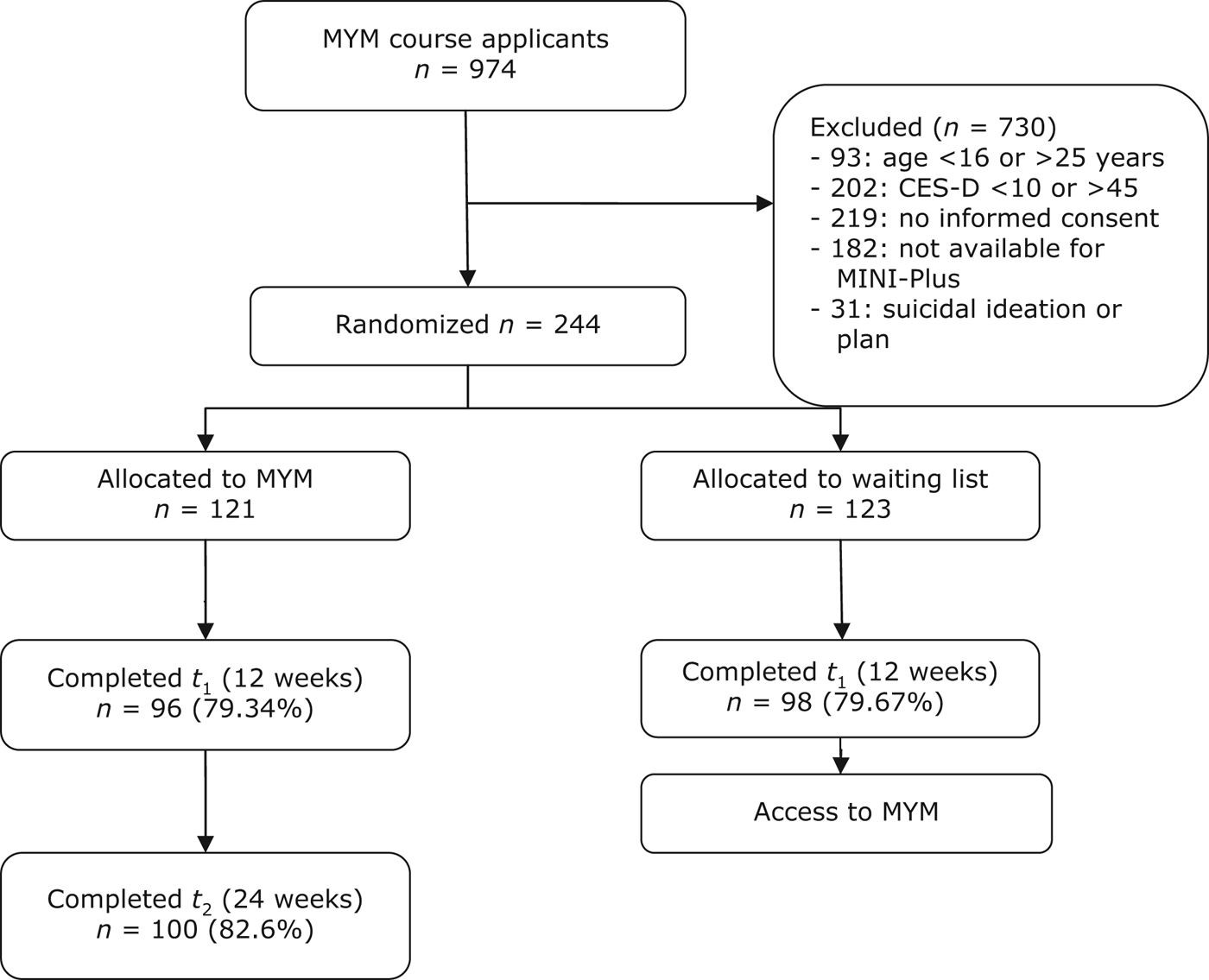
A comprehensive description of the participants and procedures can be found in a previous publication (Van der Zanden et al. Reference Van der Zanden, Kramer, Gerrits and Cuijpers2012). Participants were recruited from the general population using promotional materials in general practitioner (GP) offices and educational institutions. Banners and links were placed on mental health websites and on websites popular with youth. Inclusion criteria were: age 16–25 years, informed consent (including parental consent for those aged under 18 years) and a Center for Epidemiologic Studies Depression Scale (CES-D) score of 10–45 (Bouma et al. Reference Bouma, Ranchor, Sanderman and van Sonderen1995). Applicants were excluded on indications of suicidal ideation with intent and plan, as assessed with the Mini-International Neuropsychiatric Interview (MINI-Plus; Sheehan et al. Reference Sheehan, Lecrubier, Sheehan, Amorim, Janavs and Weiller1998; Van Vliet et al. Reference Van Vliet, Leroy and van Megen2000). Assessments took place before randomization (baseline), 12 weeks later (post-intervention) and 12 weeks after that (follow-up). Questionnaires were completed online; the MINI-Plus was administered in online chat sessions. A total of 244 participants were randomized to the MYM course (n = 121) or a wait-list control group (n = 123). A flow chart of the sample selection is shown in Fig. 1 (Van der Zanden et al. Reference Van der Zanden, Kramer, Gerrits and Cuijpers2012).
Flow chart of respondent selection. MYM, Master Your Mood; CES-D, Center for Epidemiologic Studies Depression Scale; MINI-Plus, Mini-International Neuropsychiatric Interview.

Intervention
The online MYM group course is a structured form of CBT for depression. At the core of MYM is the cognitive restructuring of thinking patterns. Course participants are encouraged to detect their own unproductive, unrealistic thoughts, and they are then taught to transform these into realistic, helpful thoughts. Performance of pleasant daily activities is also encouraged, and a mood measure is completed daily to clarify the connection between pleasant activities and mood. The course we evaluated took place at fixed times in a secured chatroom, which participants entered with usernames and passwords. Anonymity was ensured by self-chosen nicknames. The course comprised six 90-min sessions, at set times every week, and home exercises. The sessions were structured around six themes (Van der Zanden et al. Reference Van der Zanden, Kramer, Gerrits and Cuijpers2012). During the sessions, course material was introduced by the facilitators and displayed in the chatroom using text and images. Participants could respond, share experiences and ask questions. Emoticons could be used to express feelings. Participants and professionals could read session transcripts afterwards. The course was guided by one or two trained professionals, depending on group size (six participants maximum).
Outcome measures
Depressive symptoms
Symptoms of depression were assessed with the 20-item CES-D (Radloff, Reference Radloff1977; Bouma et al. Reference Bouma, Ranchor, Sanderman and van Sonderen1995), which measures the frequency of 20 depressive symptoms over the past week using four-point Likert scales. Total score range is 0–60, with higher ratings indicating more depressive symptoms. Computerized and paper CES-D versions correlate at a very high level (Ogles et al. Reference Ogles, France, Lunnen, Bell and Goldfarb1998). The web-based CES-D has proved a reliable, valid screening instrument in a Dutch adolescent population (Cuijpers et al. Reference Cuijpers, Boluijt and Van Straten2008).
Anxiety symptoms
The anxiety subscale of the Hospital Anxiety and Depression Scale (HADS-A; Zigmond & Snaith, Reference Zigmond and Snaith1983) was used to assess anxiety symptoms. The Dutch version of HADS has been validated (Spinhoven et al. Reference Spinhoven, Ormel, Sloekers, Kempen, Speckens and Van Hemert1997). The anxiety subscale consists of seven items measuring anxiety symptoms on a four-point Likert scale, with a 0–21 score range, and with higher ratings indicating higher states of anxiety.
Perceived control
The Dutch version of the five-item Mastery Scale was used to assess perceived control (Pearlin & Schooler, Reference Pearlin and Schooler1978). Mastery refers to beliefs about one's own ability to control one's environment. Responses are rated on a five-point Likert scale, with a total score range of 5–25, and higher scores indicating a greater sense of mastery. The Mastery Scale has good psychometric properties (Pearlin & Schooler, Reference Pearlin and Schooler1978).
Statistical analysis
All analyses were based on an intention-to-treat sample (including data from all participants, whether or not they received the intervention). The expectation–maximization method was used to impute data missing at post-treatment and follow-up (Van der Zanden et al. Reference Van der Zanden, Kramer, Gerrits and Cuijpers2012). It imputes values by maximum-likelihood estimation using the observed data in an iterative process (Dempster et al. Reference Dempster, Laird and Rubin1977). The 12-week assessment was used as the post-treatment measurement and the 24-week assessment as the follow-up. The follow-up was performed in the experimental group only, as the control group had access to the course after post-treatment. Baseline between-group differences in demographics and potential mediators were investigated using χ 2 and t tests. Correlation analysis was used to investigate associations between levels of anxiety and depression at baseline and post-treatment. For the calculation of the co-morbidity rate of depression with anxiety, we used the cut-off scores CES-D ⩾22 (Cuijpers et al. Reference Cuijpers, Boluijt and Van Straten2008) and HADS ⩾11 (Crawford et al. Reference Crawford, Henry, Crombie and Taylor2001).
Mediation analysis was then conducted, to investigate the mechanisms through which the treatment affects the outcome variable(s), following the steps for testing multiple mediators outlined by Baron & Kenny (Reference Baron and Kenny1986):
-
(1) Treatment condition should predict change in the outcome variable.
-
(2) Treatment condition should predict change in the possible mediators.
-
(3) Change in possible mediators should predict change in the outcome variable.
-
(4) The effect of treatment condition on change in outcome should be attenuated when the effect of mediators is statistically controlled.
Path analysis mediation models (MacKinnon, Reference MacKinnon2008) were used to explore the relationship between the outcome variable and two potential correlated mediators. To investigate possible circularity in the recovery process, in our study each of the variables depression, anxiety and mastery was tested alternately as an outcome variable and as a potential mediator. In the first analysis, the outcome was the difference between baseline and post-treatment scores for depression, and potential mediators were baseline to post-treatment differences in anxiety and mastery scores. In the second analysis, the outcome was anxiety differences, with depression and mastery differences as possible mediators. In the third analysis, the outcome was differences in mastery and potential mediators were differences in depression and anxiety.
Univariate analyses were performed with SPSS 19 (SPSS Inc., USA) and mediation analyses with Mplus (Muthén and Muthén, USA). A two-sided significance level of p = 0.05 was used. Mediation proportions for each mediator were computed by dividing the absolute value of the indirect effect, ABS(a1*b1), by the total effect, ABS(c) + ABS(a1*b1) + ABS(a2*b2) (Bate et al. Reference Bate, Stigler, Thompson, Arora, Perry, Reddy and MacKinnon2009). In the mediation models, the a-path refers to the effect of the independent variable on the mediator, the b-path represents the effect of the mediator on the dependent variable after controlling for the effect of the independent variable, and the c-path refers to the direct effect of the independent variable on the dependent variable after controlling for mediators (see Figs 2–4). Variance inflation factors (VIFs) were calculated to assess possible collinearity effect in multiple mediation analysis, meaning that the indirect effect attenuates to the extent that the mediators are correlated in the model (Belsey et al. Reference Belsey, Kuh and Welsch1980; Preacher & Hayes, Reference Preacher and Hayes2008).
Results
Baseline participant characteristics
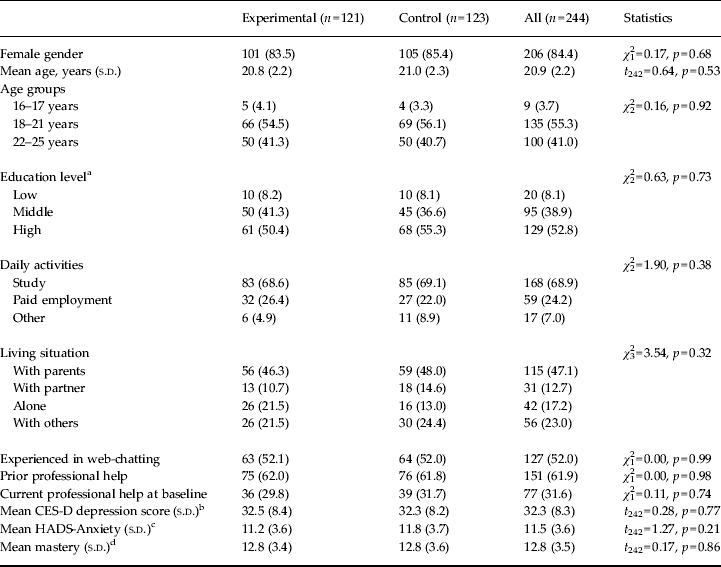
Demographic and clinical characteristics of experimental and control group members are shown in Table 1 (Van der Zanden et al. Reference Van der Zanden, Kramer, Gerrits and Cuijpers2012). At baseline, t tests for independent groups and χ 2 tests revealed no significant between-group differences on demographic and outcome variables (CES-D, HADS-A, mastery).
Baseline characteristics of the 244 participants

Data are given as number (percentage), unless otherwise indicated.
s.d., Standard deviation.
a Highest completed or present education: low = primary or lower secondary school or less; middle = secondary school or intermediate vocational school; high = professional school or university.
b Dutch version of the 20-item Center for Epidemiologic Studies Depression Scale (Bouma et al. Reference Bouma, Ranchor, Sanderman and van Sonderen1995).
c Dutch version of the seven-item Hospital Anxiety and Depression Scale (Spinhoven et al. Reference Spinhoven, Ormel, Sloekers, Kempen, Speckens and Van Hemert1997).
d Five-item Mastery Scale (Pearlin & Schooler, Reference Pearlin and Schooler1978).
Co-morbidity and association between depression and anxiety
We first analysed co-morbidity – defined as the presence of one or more disorders in addition to a primary disease or disorder – of depression with the additional disorder anxiety. For clinical depression we used a CES-D cut-off score of ⩾22 (Cuijpers et al. Reference Cuijpers, Boluijt and Van Straten2008) and for anxiety disorder a HADS cut-off score of ⩾11 (Crawford et al. Reference Crawford, Henry, Crombie and Taylor2001). Although the inclusion criterium was set on CES-D > 10, 86.5% (211/244) of the participants had a CES-D score ⩾22. Furthermore, 85.2% (208/244) had a HADS score ⩾11.
Then we calculated the co-morbidity rate of depression with anxiety, according to the given definition. At baseline we found a co-morbidity rate of 69.2% (146/211), meaning that of the group with a CES-D score ⩾22 (n = 211), 146 respondents had a HADS score ⩾11.
Next, we computed the association between depression and anxiety scores at baseline and at post-treatment, finding strong correlations between depression and anxiety at both assessments (r = 0.60, p < 0.001; r = 0.71, p < 0.001). Finally, we computed correlations between the baseline to post-treatment change scores in depression and anxiety. The correlation between the changes was strong (r = 0.68, p < 0.01) and in the expected direction: greater changes in depression corresponded with greater changes in anxiety.
Association between treatment and outcomes
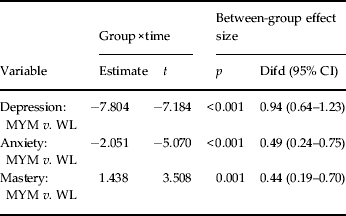
As previously reported (Van der Zanden et al. Reference Van der Zanden, Kramer, Gerrits and Cuijpers2012), MYM participants showed significantly greater improvements at 12 weeks than controls, with a large between-group effect size for depressive symptoms [CES-D, d = 0.94, 95% confidence interval (CI) 0.64–1.23] and moderate effect sizes for anxiety (HADS-A, d = 0.49, 95% CI 0.24–0.75) and mastery (d = 0.44, 95% CI 0.19–0.70). Improvements in the MYM group were maintained at 24 weeks. In the present study, the outcomes depression, anxiety and mastery were also considered as possible mediators, which means that the same estimated treatment effect applies to the association between treatment and mediators as well (Table 2).
Estimated treatment effect on outcome variables and estimated treatment effect on potential mediators from baseline to post-measurement

MYM, Master Your Mood course; WL, wait-list control group; Difd, effect size differences between the MYM group and the wait-list control group; CI, confidence interval.
Associations between treatment and mediating variables
The next step in examining the hypothesized bi-directional relationships between change in outcomes and change in mediators was to analyse the various associations between treatment, potential mediators and outcomes. The first and second requirements for mediation analysis of Baron & Kenny (Reference Baron and Kenny1986) were checked, and had been fulfilled (Table 2). The check of the third and fourth requirements was performed in the same equation. We studied three possible mediation models (Figs 2–4). Table 3 summarizes the indirect effects (or mediation effects) and the mediation proportions.
Intervention effects on depression, anxiety and mastery as mediated by changes in depression, anxiety and mastery, and indirect effects of the intervention on outcomes through proposed mediators (a*b paths)

CI, Confidence interval; Prop, mediation proportion.
a A p value of 0.000 means that the p value is < 0.001.
Model 1: depression as mediated by anxiety and mastery
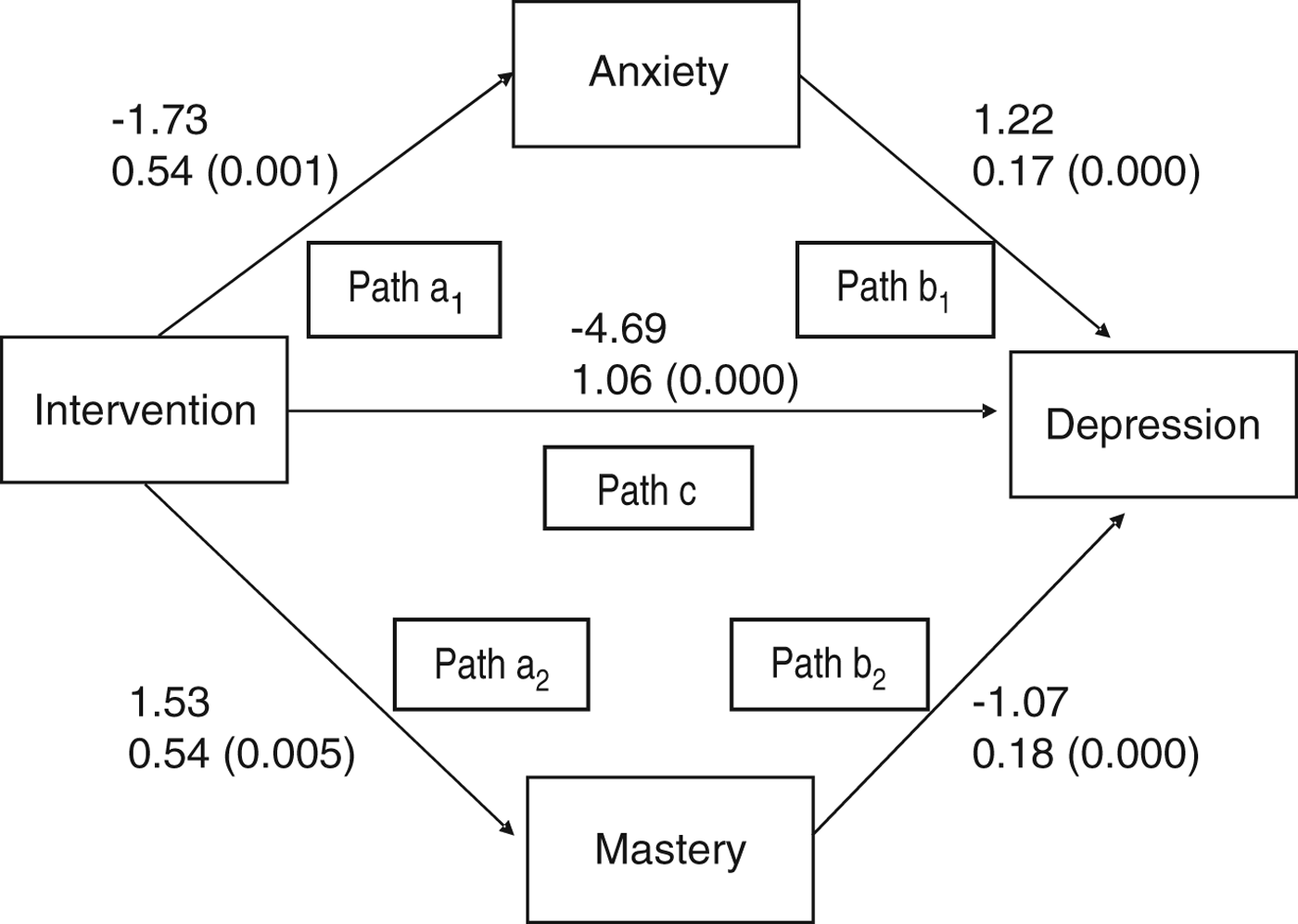
As Fig. 2 shows, the association between treatment and change in depression decreases from −7.804 to −4.69 after control for anxiety and mastery, but remains significant (p < 0.001). Table 3 reveals a significant indirect effect of anxiety (−2.11, 95% CI −03.64 to −0.80); the mediation proportion is 0.25, meaning that 25% of the effect of treatment on depression is explained by the change in anxiety. The indirect effect of mastery is also significant (−1.63, 95% CI −2.93 to −0.48), with a mediation proportion of 19%. Altogether, then, the mediators anxiety and mastery explain 44% of the intervention effect on depression.
Graphic display of the estimated path analysis model. The two regression equations, with depression as outcome and anxiety and mastery as potential mediators, are represented by single-headed arrows. Parameter estimates, standard errors (and p values) are reported for each regression equation.

Model 2: anxiety as mediated by depression and mastery
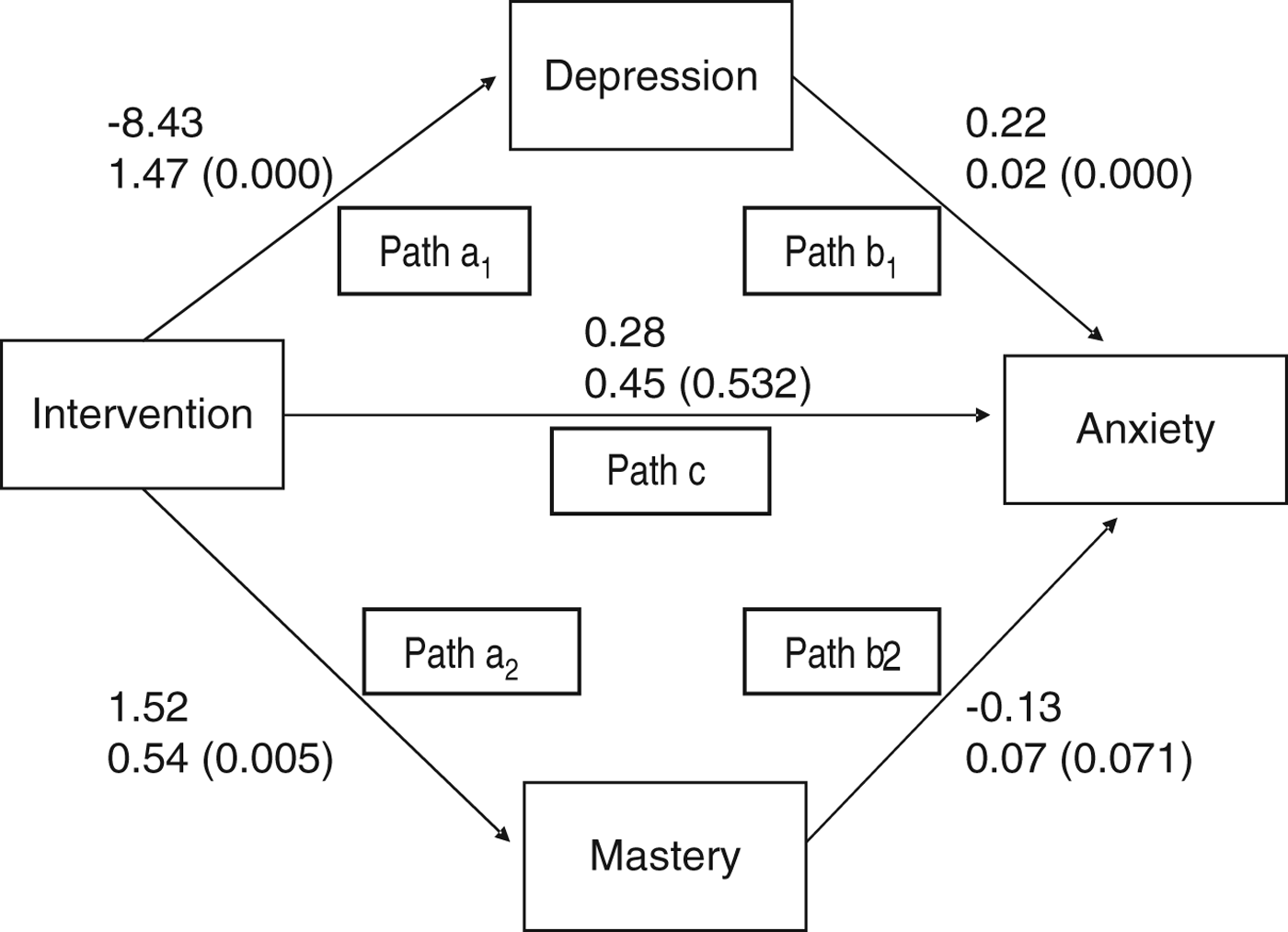
As Fig. 3 shows, the association between treatment and anxiety is no longer significant after control for depression and mastery, with the regression coefficient decreasing from −2.051 to 0.28 (p = 0.532). Table 3 shows the mediating effects of depression and mastery. Only the depression effect is significant (p < 0.001). The mediation proportions are 0.79 for depression and 0.08 for mastery. Altogether, the mediators depression and mastery explain 87% of the intervention effect on anxiety. The VIF for depression and anxiety was 1.79, meaning that there is no collinearity effect.
Graphic display of the estimated path analysis model. The two regression equations, with anxiety as outcome and depression and mastery as potential mediators, are represented by single-headed arrows. Parameter estimates, standard errors (and p values) are reported for each regression equation.

Model 3: mastery as mediated by anxiety and depression
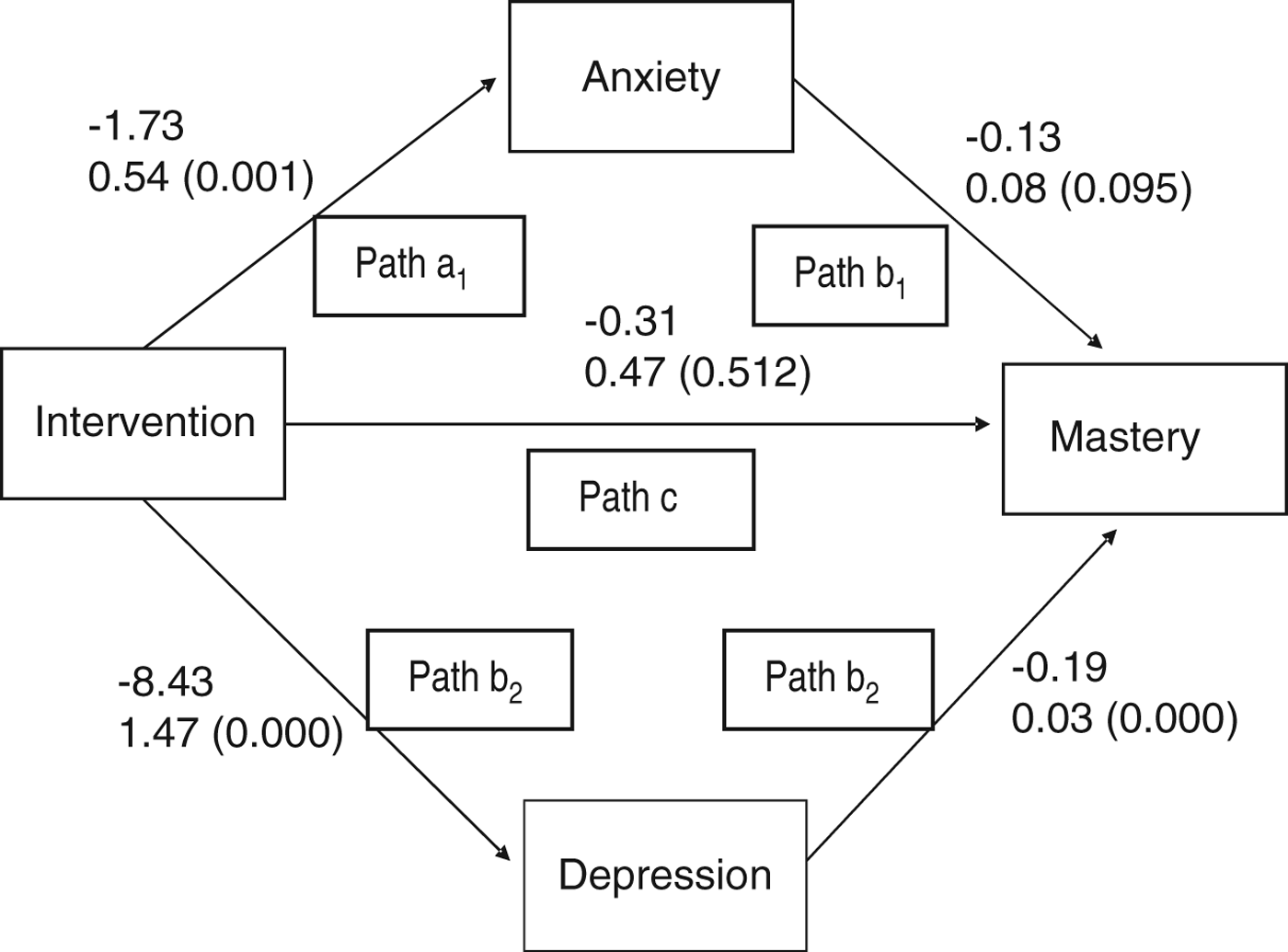
Fig. 4 shows that the association between treatment and change in mastery is no longer significant after control for anxiety and depression. The coefficient decreases from 1.44 to −0.31 (p = 0.512). Table 3 reveals a significant indirect effect of depression (1.61, 95% CI 0.91–2.46), with a mediation proportion of 0.75, and a non-significant indirect effect of anxiety (0.22, 95% CI −0.02 to 0.57), with a mediation proportion of 0.10. Altogether, the mediators anxiety and depression thus explain 85% of the intervention effect on mastery. The VIF for depression and mastery was 1.65, meaning that there is no collinearity effect.
Graphic display of the estimated path analysis model. The two regression equations, with mastery as outcome and anxiety and depression as potential mediators, are represented by single-headed arrows. Parameter estimates, standard errors (and p values) are reported for each regression equation.

Relationship between early changes in anxiety or depression and late changes in depression or anxiety
To detect whether an early change in anxiety was predictive of a late change in depression, we first calculated correlations of baseline to post-treatment change scores on these measures. The correlation was strong (r = 0.68, p < 0.01) and in the expected direction. We then calculated correlations between ‘early’ change in anxiety from baseline to post-treatment and ‘late’ change in depression between post-treatment and follow-up. The correlation was significant but weak (r = –0.231, p < 0.01) and not in the expected direction, indicating that a greater reduction in anxiety scores during the first 12 weeks corresponded to a smaller reduction in depression scores in the following 12 weeks. We next computed the reverse relationship: whether early change in depression predicted later change in anxiety. Again, the correlation was significant but weak (r = –0.288, p < 0.001) and in the unexpected direction: a greater early decrease in depression scores corresponded with a smaller late decrease in anxiety scores. As early changes in anxiety or depression were negatively related to late changes in the other condition, no additional regression analyses were performed.
Discussion
Main results
The purpose of this study was to help clarify mechanisms of change in online CBT for depression. We analysed the process of change in participants in the MYM intervention, an online CBT-based group course for adolescents with symptoms of depression. A randomized controlled trial of MYM had already shown a significant reduction in depressive and anxiety symptoms in the intervention participants and an increase in their sense of control, or mastery (Van der Zanden et al. Reference Van der Zanden, Kramer, Gerrits and Cuijpers2012). To gain further insights into the process of change, which we expected to be circular in nature, we analysed the relationship between depression and anxiety in our sample and conducted mediation analyses using three different models. These explored possible mediators and outcomes and their inter-relationships. We also analysed whether changes in the mediator anxiety preceded changes in the outcome depression, and vice versa.
The co-morbidity of depression with anxiety was high and changes in depression and anxiety were strongly intercorrelated. The results of the multiple mediation analyses indicated that changes in anxiety and mastery mediated change in depression (mediation proportion 44%); changes in depression mediated anxiety change (79%) and mastery change (75%). Mastery change appeared not to mediate significant change in anxiety and vice versa (8% and 10%). We did not find that early changes in anxiety or depression scores predicted late changes in the other condition.
Comparison with other research
This study appears to confirm the hypothesized circularity in the recovery process in online CBT interventions. First, we detected a strong intercorrelation between the changes in depression and anxiety occurring in our sample. Although our participants had been recruited and selected exclusively on depressive symptoms and not on anxiety, we found high co-morbidity between the two, at a baseline rate of 69.2%, exceeding that reported for the general youth population (Axelson & Birmaher, Reference Axelson and Birmaher2001). However, it seems in line with a study of Birmaher et al. (Reference Birmaher, Ryan, Williamson, Brent, Kaufman, Dahl, Perel and Nelson1996) on clinical youth samples, in which a co-morbidity rate up to 70% was reported for depression with anxiety. The MYM trial participants seemed to fit well into the group of at-risk adolescents with the highest symptom severities who are most vulnerable to increasing levels of the other disorder, as described by Hale et al. (Reference Hale, Raaijmakers, Muris, Van Hoof and Meeus2009). It should be noticed that the latter and current study were based on self-report screening instruments (which may generate false-positive diagnosis) and that Axelson & Birmaher (Reference Axelson and Birmaher2001) and Birhamer et al. (Reference Birmaher, Ryan, Williamson, Brent, Kaufman, Dahl, Perel and Nelson1996) based their results on (diagnostic) interviews. Nevertheless, the co-morbidity rate in our study seems to be substantial, which makes it worthwhile when recruiting adolescents for CBT interventions like MYM not to focus exclusively on those with depressive symptoms, but on those with anxiety as well.
A second indication of circularity in the recovery process is that the three mediating models revealed bi-directional relationships between changes in mediators and outcomes, consistent with other studies (Jarrett et al. Reference Jarrett, Vittengl, Doyle and Clark2007; Anholt et al. Reference Anholt, Kempe, de Haan, van Oppen, Cath, Smit and van Balkom2008; Meulenbeek et al. Reference Meulenbeek, Spinhoven, Smit, van Balkom and Cuijpers2010). Depression was the mediator that exhibited the largest mediation proportion in the three models, explaining 79% of the intervention effect on anxiety. This suggests that anxiety reduction is explained largely by improvement in depression. Change in anxiety explained 25% of the intervention's effect on depression.
The result that the mediating impact of anxiety change on depression change was less than the reverse condition might have been affected by the fact that the MYM intervention was originally designed to reduce depression symptoms and that the effect size for anxiety was less than that for depression (see Table 2). Nevertheless, the results of the mediation analyses suggest that targeting depressive symptoms can be a way of alleviating anxiety symptoms.
Another finding was that change in mastery appeared to explain a larger proportion of the effect on depression (19%) than of that on anxiety (8%). This is roughly in line with other studies: the mediating role of mastery in the change in depression seems to be more consistent (Warmerdam et al. Reference Warmerdam, van Straten, Jongsma, Twisk and Cuijpers2010; Rosenbaum et al. Reference Rosenbaum, White and Gervino2012) than the mediating role of mastery in anxiety change (Meulenbeek et al. Reference Meulenbeek, Spinhoven, Smit, van Balkom and Cuijpers2010; Rosenbaum, et al. Reference Rosenbaum, White and Gervino2012). This might be explained by the scales for assessing perceived control used in our and the other studies, which seems to be focused predominantly on mastery of depression (sense of control) and not on mastery as it is required to master anxiety. While mastery of anxiety does require a sense of control, it also requires the ability to experience anxiety-provoking situations without avoiding them (Meulenbeek et al. Reference Meulenbeek, Spinhoven, Smit, van Balkom and Cuijpers2010). In the MYM intervention, the last aspect is targeted by stimulating participants to enhance pleasant activities in daily life, which may include anxiety-provoking activities that were found pleasant before participants’ distress emerged.
A third indication of circularity is our finding that early changes in anxiety or depression did not predict later changes in the other disorder. This was consistent with findings by Warmerdam et al. (Reference Warmerdam, van Straten, Jongsma, Twisk and Cuijpers2010) and with our expectation that when relationships are bi-directional and the change process is circular in nature, it is less likely to find in a time schedule one variable is predictive for the other. The result could, however, also be due to the fact that most of the change in our sample took place between baseline and post-treatment, leaving little change to detect from post-treatment to follow-up.
Limitations
In addition to the limitations described in our previous publication on the randomized controlled trial of MYM (Van der Zanden et al. Reference Van der Zanden, Kramer, Gerrits and Cuijpers2012), the current study may have several other limitations. First, the absence of assessments during the course of the intervention prevented us from analysing the precise sequence of changes. Our study contained three assessments: baseline, post-intervention and follow-up. Additional interim measurements could have given more detailed insights into the process of recovery from the beginning (when most changes appear to occur; Garratt et al. Reference Garratt, Ingram, Rand and Sawalani2007; Warmerdam et al. Reference Warmerdam, van Straten, Jongsma, Twisk and Cuijpers2010) to the end of the intervention and follow-up. A more rigorous test of mediation would require that changes in specific mediatory variables temporally precede changes in the outcome variables. The best design for mediation analysis would entail a fine-grained analysis of changes in mediators and symptoms, based on several interim measurements. This would allay concerns that both the mediator and the symptoms changed simultaneously or due to a third variable (Kazdin, Reference Kazdin2007).
Second, the study population was selected on depressive symptoms, and not on levels of anxiety or mastery. Although a majority of the participants (69.2%) had co-morbid anxiety, the inclusion criteria could have still affected the outcomes of the three mediation models. Whereas respondents with low scores on depression (CES-D < 10) were excluded from the trial, those with low anxiety scores were not. For the latter, there was not much room or need to reduce their anxiety symptoms. This could have led to the smaller mediating impact of the anxiety change score on depression as compared with the other direction. Otherwise, respondents with CES-D scores > 45 were excluded, but not those with high HADS-A scores.
Third, only a limited set of potential mediators was available in this study. The three mediating models containing the variables mastery, anxiety and depression were set up to analyse statistical connections between these variables, and thereby to enhance knowledge about mediation and mechanisms of change. The high co-morbidity between depression and anxiety and the substantial effects of the intervention on both disorders may prompt more active recruitment of people with anxiety, in addition to those with depression. Nevertheless, no clues for concrete improvements in the intervention's components emerged. Therefore, future research with more potential mediators is necessary.
Future directions
In the field of psychological treatment, knowledge of mediators and mechanisms of change is still very limited. ‘Next-step’ research is recommended to help unfold such mechanisms. As Kazdin (Reference Kazdin2007, p. 6) has emphasized, ‘the case for a mediator is built by a sequence of studies that may vary in the set of criteria they address and the clarity of the demonstration’. He underlined that several studies are needed, meeting a range of criteria (strong associations, specificity, consistency, experimental manipulation, gradient, demonstrated timelines and plausibility), before one can conclude that an intervening process explains change.
In research on CBT interventions like MYM, such ‘next-step’ research might include more frequent assessments of symptoms and potential mediators, in order to build knowledge on the sequence of change. Special points of interest would be how to prevent attrition caused by the more frequent assessments during the intervention and what influence the assessments themselves might have on the intervention effect.
Since specific mediators like cognitions and perceived control may not account for the full effect in CBT interventions (Longmore & Worrell, 2006; Warmerdam et al. Reference Warmerdam, van Straten, Jongsma, Twisk and Cuijpers2010), future research should include non-specific variables as well. These could help uncover underlying mechanisms (Stephen & Craighead, Reference Stephen and Craighead2006). Previous studies (Spek et al. Reference Spek, Cuijpers, Nyklícek, Riper, Keyzer and Pop2007; Van der Zanden et al. Reference Van der Zanden, Kramer, Gerrits and Cuijpers2012) have implied that social support from professionals or course participants could be a relevant mediator. Perceived stress, which could itself be affected by feelings of support, might also mediate the intervention effect (Mausbach et al. Reference Mausbach, Mills, Patterson, Aschbacher, Dimsdale, Ancoli-Israel, von Känel and Grant2007). Feelings of hope and expectation (Stephen & Craighead, Reference Stephen and Craighead1995) or a feeling of control derived from the mere act of applying for the intervention (even if the applicant ultimately does not attend any session; Van der Zanden et al. Reference Van der Zanden, Kramer, Gerrits and Cuijpers2012) could further explain intervention effects.
The strong connection between anxiety and depression, though these appear to be different disorders (Hale et al. Reference Hale, Raaijmakers, Muris, Van Hoof and Meeus2009), suggests underlying dimensions involving factors such as the psychobiological response to threat and stress. Repeated dysregulation of those systems may result in arousal and emotional reactions like depression (Dubovsky, Reference Dubovsky1990; Cole et al. Reference Cole, Peeke, Martin, Truglio and Seroczynski1998). Future research should therefore incorporate physiological outcomes into the total concept of change mechanisms, in addition to the psychological outcomes discussed so far. Interdisciplinary research will therefore be of interest in future work.
Given the strong association between depression and anxiety, a final recommendation would be to develop and evaluate treatment approaches that target both conditions simultaneously.
Conclusions
This study appears to confirm the hypothesized circularity in the recovery process.
Depression change scores corresponded strongly to the change scores of co-morbid anxiety. Furthermore, depression change scores mediated significantly anxiety and mastery change scores, anxiety change scores mediated significantly depression change scores and mastery change scores mediated significantly depression change scores.
Because specific mediators such as cognitions and sense of control do not appear to explain the entire effect of CBT interventions, and because underlying psychological and physiological mechanisms may play a role in the recovery process, future research should include non-specific and physiological variables. A more profound understanding of mediators will further the refinement of theoretical notions relating to the complex mechanisms of change. This will help to optimize treatment and improve its (cost)effectiveness.
Acknowledgements
For this study, the data that were used were derived from the randomized controlled trial on the MYM intervention. Ethical approval was granted by an independent medical ethics committee (CCMO no. NL18984.097.07). The study was funded by a research grant from ZonMw (Netherlands Organization for Health Research and Development), grant no. 61300036. No funding bodies had any role in study design, data collection and analysis, decision to publish, or preparation of the manuscript.
Declaration of Interest
R.v.d.Z. is one of the developers of the online MYM group course, and the Trimbos Institute is a cooperation partner in MYM, but none of these derives financial income from the MYM intervention. There are no competing interests.