



1. Introduction
1.1 Background
Drinfeld–Jimbo quantum groups  $\textbf {U} =\textbf {U}(\mathfrak g)$ are deformations of universal enveloping algebras of simple or symmetrizable Kac–Moody Lie algebras
 $\mathfrak g$, associated with a generalized Cartan matrix
 $(a_{ij})_{i\in \mathbb {I}}$. The theory of canonical bases for quantum groups has been developed by Lusztig and also by Kashiwara [Reference LusztigLus90, Reference KashiwaraKas91, Reference LusztigLus91, Reference LusztigLus92, Reference LusztigLus10, Reference KashiwaraKas94]. It has applications to Kazhdan– Lusztig theory and geometric representation theory; it was also a major motivation for several exciting active research directions in the past decade including categorification and cluster algebras.
The classification of real simple Lie algebras or, equivalently, the symmetric pairs  $(\mathfrak g, \mathfrak g^\theta )$, was achieved by É. Cartan, and they are in bijection with (bicolored) Satake diagrams,
 $\mathbb {I} =\mathbb {I}_\circ \cup \mathbb {I}_{\bullet }$; cf. [Reference ArakiAra62]. As a deformation of symmetric pairs, the quantum symmetric pair (QSP)
 $(\textbf {U}, {\textbf {U}^{\imath }})$ was formulated by Letzter [Reference LetzterLet99, Reference LetzterLet02] in finite type with the Satake diagrams as inputs; this construction has been generalized by Kolb [Reference KolbKol14] to the Kac–Moody setting. Here
 ${\textbf {U}^{\imath }}$ is a coideal subalgebra of
 $\textbf {U}$ and will be referred to as an
 $\imath$-quantum group on its own. A subtle and deep feature of QSPs is that
 ${\textbf {U}^{\imath }} =\textbf {U}^{\imath }_{\varsigma ,\kappa }$ depends on a multiple of parameters
 $\varsigma =(\varsigma _i)_{i\in \mathbb {I}_\circ }$ and
 $\kappa =(\kappa _i)_{i\in \mathbb {I}_\circ }$ subject to some constraints; specializing at
 $q=1$ and
 $\varsigma _i=1$ allows one to recover the symmetric pairs.
In recent years, it has become increasingly clear that a number of fundamental constructions for quantum groups admit highly nontrivial generalizations to the setting of QSP. In [Reference Bao and WangBW18b] (also cf. [Reference Bao and WangBW18a]), the authors developed a theory of  $\imath$-canonical bases for the QSP
 $(\textbf {U}, {\textbf {U}^{\imath }})$ of finite type, on
 ${\textbf {U}^{\imath }}$-modules as well as a modified form
 $\dot {\textbf {U}}^{\imath }$. The constructions of quasi-
 $K$-matrix and universal
 $K$-matrix for QSP [Reference Bao and WangBW18a, Reference Balagovic and KolbBK19] have also played a significant role. The
 $\imath$-quantum group
 ${\textbf {U}^{\imath }}$ of quasi-split type AIII and its
 $\imath$-canonical basis have applications to super Kazhdan–Lusztig theory of type BCD [Reference Bao and WangBW18a, Reference BaoBao17], admit a geometric realization [Reference Bao, Kujawa, Li and WangBKLW18, Reference Li and WangLW18] and a KLR-type categorification [Reference Bao, Shan, Wang and WebsterBSWW18]. The
 $\imath$-quiver varieties introduced more recently by Li [Reference LiLi19] have intimate connections with QSPs.
1.2 Obstacles
Let us expand on some of the main obstacles toward canonical bases arising from QSP before the current work. Set  $\mathcal {A} ={\mathbb {Z}}[q,q^{-1}]$. Similar to the canonical bases for quantum groups, the
 $\imath$-canonical bases on modules require three ingredients:
(1) a bar involution
 $\psi _{\imath }$;
(2) an integral
$\mathcal {A}$-form;(3) a
${\mathbb {Z}}[q^{-1}]$-lattice (with some distinguished basis).


The bar involution on  ${\textbf {U}^{\imath }}$ in general was proposed in [Reference Bao and WangBW18a] and then constructed in great generality by Balagovic–Kolb in [Reference Balagovic and KolbBK15] who also specified the constraints on the parameters
 $\varsigma$ and
 $\kappa$. On the other hand, the new bar involution
 $\psi _{\imath }$ at the level of
 $\textbf {U}$-modules (regarded as
 ${\textbf {U}^{\imath }}$-modules by restriction) requires the notion of quasi-
 $K$-matrix due to the authors of [Reference Bao and WangBW18a], which is a QSP generalization of Lusztig's quasi-
 $R$-matrix; the existence of quasi-
 $K$-matrix in much generality has been subsequently established by [Reference Balagovic and KolbBK19].
These general constructions in [Reference Balagovic and KolbBK15, Reference Balagovic and KolbBK19] largely rely on two crucial assumptions. The first (and somewhat mild) assumption is that the Cartan integers are bounded, i.e.  $|a_{ij}| \le 3$. The construction of a bar involution on
 ${\textbf {U}^{\imath }}$ relies on explicit Serre-type presentations of
 ${\textbf {U}^{\imath }}$, which are only available under the bound assumption on
 $(a_{ij})$ until very recently. In a recent work [Reference Chen, Lu and WangCLW20], a Serre presentation was obtained for the quasi-split
 $\imath$-quantum group
 ${\textbf {U}^{\imath }}$ (i.e. associated to the Satake diagram with
 $\mathbb {I}_{\bullet } =\emptyset$) without any bound constraint on
 $(a_{ij})$, and the existence of the bar involution on such
 ${\textbf {U}^{\imath }}$ follows. Note the QSP of finite and affine types are all covered.
The second (and a more serious) assumption is the validity of a conjecture in [Reference Balagovic and KolbBK15] that certain numbers  $\nu _i \in \{1, -1\}$ for
 $i\in \mathbb {I}_\circ$ should always be
 $\nu _i=1$; for a precise formulation see (3.9) and (3.10) and Conjecture 3.5. It was shown in [Reference Balagovic and KolbBK15] that
 $\nu _i=1$ always holds for
 $\textbf {U}$ of finite type. For
 $\textbf {U}$ of Kac–Moody type, the conjecture is only known for
 $\textbf {U}$ of locally finite type (cf. [Reference Bao and WangBW18b, § 5.4]), and in this case it follows from the counterpart in the finite type because the definition of
 $\nu _i$ is local. We shall refer to this Balagovic–Kolb conjecture as the fundamental lemma of QSP, because although this sounds like a mere technicality, several major constructions in great generality depend on it. For example, the quasi-
 $K$-matrix as well as universal
 $K$-matrix in [Reference Balagovic and KolbBK19] (which was first constructed in [Reference Bao and WangBW18a, § 2.5] for quasi-split QSP of type AIII) both rely on the validity of the fundamental lemma of QSP.
The approach developed in [Reference Bao and WangBW18a] on the integrality issue for the quasi- $K$-matrix
 $\Upsilon$ and the modified form
 $\dot {\textbf {U}}^{\imath }$ of finite type is rather tedious and technical as it is based on a case-by-case analysis in the eight real rank-one finite-type cases. Such an approach toward the integrality is not generalizable to
 ${\textbf {U}^{\imath }}$ of Kac–Moody type, as it is probably impossible to classify the real rank-one
 $\imath$-quantum groups of Kac–Moody type (there is already a zoo of real rank one
 $\imath$-quantum groups of affine type; cf. [Reference Regelskis and VlaarRV16]).
1.3 Goal
The goal of this paper is to develop a general theory of  $\imath$-canonical bases for the QSP of Kac–Moody type. We shall construct
 $\imath$-canonical bases on integrable highest weight
 $\textbf {U}$-modules and their tensor products. We shall also construct the
 $\imath$-canonical basis on the modified form
 $\dot {\textbf {U}}^{\imath }$. (Note that the canonical basis on
 $\dot {\textbf {U}}$ [Reference LusztigLus92] can be viewed as the
 $\imath$-canonical basis for the
 $\imath$-quantum group for the QSP of diagonal type.) Our goal is achieved by building on the foundational works [Reference LusztigLus10, Reference Balagovic and KolbBK19], following closely several constructions in [Reference Bao and WangBW18a] when applicable (including a projective system of based
 ${\textbf {U}^{\imath }}$-modules) and, more crucially, introducing several new ideas to overcome the major obstacles as mentioned previously.
Even for QSP of finite type, the results in this paper here strengthen the main results in [Reference Bao and WangBW18b] by allowing general integral parameters  $\varsigma _i$ and simplifying the approach in [Reference Bao and WangBW18b] by substituting the tedious case-by-case real rank-one analysis therein with a conceptual
 $\imath$-divided powers construction.
We further provide a proof of the fundamental lemma of QSP in full generality. This removes a major technical assumption in [Reference Balagovic and KolbBK15, Reference Balagovic and KolbBK19] toward the existence of bar involution, quasi- $K$-matrix and universal
 $K$-matrix, and as well as for the constructions of
 $\imath$-canonical bases in this paper.
1.4 Fundamental lemma of QSP
The fundamental lemma of QSP is actually a statement for quantum groups, motivated by the study of QSPs. By [Reference Balagovic and KolbBK15, Proposition 2.5]  $\sigma \tau (Z_i)= \nu _i Z_i$, where
 $\nu _i \in \{1, -1\}$,
 $Z_i$ is defined in (3.9) and
 $\sigma$ is the anti-involution of
 $\textbf {U}$ which fixes
 $E_i, F_i$ for all
 $i\in \mathbb {I}$, and
 $\tau$ is a diagram automorphism. We show that
 $Z_i$ descends to a certain cell quotient of
 $\dot {\textbf {U}}$ as a nonzero scalar multiple of a canonical basis element, and it follows that
 $\nu _i=1$ as the canonical basis is preserved by
 $\sigma$ and
 $\tau$. Our proof relies in an essential way on Lusztig's theory of based modules and cells on quantum groups [Reference LusztigLus10, Chapters 27, 29]. Some old results of Joseph and Letzter [Reference Joseph and LetzterJL94, Reference Joseph and LetzterJL96] also play a role.
1.5 The $\imath$-divided powers

A key new construction in this paper is a family of explicit elements called  $\imath$-divided powers, for each
 $i \in \mathbb {I}$, which by definition satisfy the three properties: bar invariant, integral and having a leading term the standard divided powers embedded as elements in
 $\dot {\textbf {U}}$. The
 $\imath$-divided powers associated to
 $i \in \mathbb {I}_{\bullet }$ are the standard divided powers
 $F_i^{(n)}, E_i^{(n)}$ as in [Reference LusztigLus10]. The
 $\imath$-divided powers associated to
 $i \in \mathbb {I}_\circ$ with
 $\tau i\neq i$ or to
 $i \in \mathbb {I}_\circ$ with
 $w_\bullet i =i =\tau i$ were introduced and studied earlier in [Reference Bao and WangBW18a, Reference Bao and WangBW18b, Reference Berman and WangBeW18]. For the class of
 $i \in \mathbb {I}_\circ$ with
 $w_\bullet i \neq i =\tau i$, our formula for the
 $\imath$-divided powers, denoted by
 $B_{i,\zeta }^{(n)}$ for
 $n\ge 1$, is explicit and universal. (Note that five out of eight
 $\imath$-quantum groups of real rank one in finite type belong to this class; cf. [Reference Bao and WangBW18b, § 3.2, Table 1].)
The  $\imath$-divided powers
 $B^{(n)}_{i, \zeta }$ should be regarded as a leading term of a corresponding
 $\imath$-canonical basis element. We eventually show that the
 $\mathcal {A}$-form
 ${}_\mathcal {A}\dot {\textbf {U}}^{\imath }$, which is defined in a more conceptual way, is actually generated by the
 $\imath$-divided powers, and
 ${}_\mathcal {A}\dot {\textbf {U}}^{\imath }$ is a free
 $\mathcal {A}$-submodule of
 $\dot {\textbf {U}}^{\imath }$ such that
 $\dot {\textbf {U}}^{\imath } =\mathbb {Q}(q)\otimes _{\mathcal {A}} {}_\mathcal {A}\dot {\textbf {U}}^{\imath }$.
1.6 Integrality of $\Upsilon$ in action

It is neither expected nor needed that the quasi- $K$-matrix for
 ${\textbf {U}^{\imath }}$ beyond finite type is integral on its own, based on the knowledge from quasi-
 $R$-matrix for a quantum group
 $\textbf {U}$ beyond finite type (cf. [Reference Bao and WangBW16]). With the help of the aforementioned
 $\imath$-divided powers, we show that
 $\Upsilon$ preserves the integral
 $\mathcal {A}$-forms on integrable highest weight
 $\textbf {U}$-modules and their tensor products. The proof is in part inspired by our argument in [Reference Bao and WangBW16] that Lusztig's quasi-
 $R$-matrix preserves the integral
 $\mathcal {A}$-forms of these
 $\textbf {U}$-modules; actually the approach developed in [Reference Bao and WangBW16] toward canonical bases on tensor product modules can in turn be viewed as dealing with the special case of QSP of diagonal type.
For QSP of finite type, our new approach via the  $\imath$-divided powers allow us to establish the integrality of
 $\Upsilon$ for general integral parameters
 $\varsigma _i$ (in contrast to
 $\varsigma _i \in \pm q^{\mathbb {Z}}$ in [Reference Bao and WangBW18b]) and to bypass the tedious case-by-case real rank-one analysis in [Reference Bao and WangBW18a, Appendix A.4–A.7]. (The complete detail takes 23 pages and can be found in Appendix A.4–A.11 in the arXiv version 1 of the paper.)
Following [Reference Bao and WangBW18a, Reference Bao and WangBW18b], we define a new bar involution  $\psi _{\imath } =\Upsilon \circ \psi$ on the based
 $\textbf {U}$-modules such as integrable highest weight
 $\textbf {U}$-modules and their tensor products. As
 $\psi _{\imath }$ preserves the integral
 $\mathcal {A}$-forms, we are able to construct the
 $\imath$-canonical bases on these modules using their canonical bases from [Reference Bao and WangBW16] (cf. [Reference LusztigLus10, Part IV]). The
 $\imath$-canonical basis spans the same
 ${\mathbb {Z}}[q^{-1}]$-lattices as the usual canonical basis: this is the characterization property (3) for
 $\imath$-canonical basis in § 1.1.
We further extend the construction of based  ${\textbf {U}^{\imath }}$-modules to tensor products of a based
 ${\textbf {U}^{\imath }}$-module with a based
 $\textbf {U}$-module, using a construction of
 $\Theta ^\imath$ in [Reference Bao and WangBW18a] and [Reference KolbKol20]; this was recently carried out for QSP of finite type in [Reference Bao, Wang and WatanabeBWW20].
1.7 $\imath$-Canonical bases on based modules and $\dot {\textbf {U}}^{\imath }$


Note we have established the  $\imath$-canonical bases on modules for
 ${\textbf {U}^{\imath }}$ with general parameters
 $\varsigma _i \in \mathcal {A}$ (in contrast to the very strict constraint that
 $\varsigma _i \in \pm q^{\mathbb {Z}}$ in [Reference Bao and WangBW18b]). Recall the condition on
 $\varsigma _i$ in [Reference Bao and WangBW18b] was imposed to ensure that an anti-involution
 $\wp$ on
 $\textbf {U}$ (see Proposition 2.1) restricts to an involution to the subalgebra
 ${\textbf {U}^{\imath }}$ (see [Reference Bao and WangBW18b, Proposition 4.6]).
We make a crucial observation here that the general construction of  $\imath$-canonical basis on the modified form
 $\dot {\textbf {U}}^{\imath }$ does not rely on the fact that
 $\wp$ preserves
 ${\textbf {U}^{\imath }}$ (this was rather a mental block for us for quite some time). In all our constructions toward the
 $\imath$-canonical basis on
 $\dot {\textbf {U}}^{\imath }$, we only need to use the twist of
 $\wp$ on
 $\textbf {U}$-modules. Recall that any
 $\textbf {U}$-module is automatically a
 ${\textbf {U}^{\imath }}$-module by restriction.
The construction for the canonical basis on the modified  $\imath$-quantum group
 $\dot {\textbf {U}}^{\imath }$ relies crucially on the based
 $\textbf {U}$-submodules
 $L(w\lambda , \mu ) \subset L(\lambda ) \otimes L(\mu )$, for a Weyl group element
 $w$; cf. (2.5). In finite type, we proved that
 $L(w\lambda , \mu )$ is a based module using an identification
 $L(\lambda ) \otimes L(\mu ) \cong {}^\omega L( -w_0\lambda ) \otimes L(\mu )$, where
 $w_0$ is the longest element in the Weyl group. Instead, Kashiwara's theory of extreme weight modules [Reference KashiwaraKas94] is used to prove that
 $L(w\lambda , \mu )$ is a based submodule of
 $L(\lambda ) \otimes L(\mu )$ over
 $\textbf {U}$ of Kac–Moody type; see Theorem 2.2.
With all these preparations and observations, we follow [Reference Bao and WangBW18a] closely to build a projective system of based  ${\textbf {U}^{\imath }}$-modules (which generalizes Lusztig's construction [Reference LusztigLus10, Part IV]), and establish the
 $\imath$-canonical basis of
 $\dot {\textbf {U}}^{\imath }$ (and of
 ${}_\mathcal {A}\dot {\textbf {U}}^{\imath }$).
For QSP of affine type AIII, a geometric realization of  $\dot {\textbf {U}}^{\imath }$ and its
 $\imath$-canonical bases was first given in [Reference Fan, Lai, Li, Luo and WangFLLLW20].
1.8 Applications
For the existence of bar involution, we shall make the basic assumption that  $|a_{ij}| \le 3$ or
 $\mathbb {I}_{\bullet } =\emptyset$ throughout the paper. It seems possible that the new
 $\imath$-divided powers introduced in this paper might help to obtain a Serre presentation for
 ${\textbf {U}^{\imath }}$ (and then a bar involution) by weakening or removing this bound assumption on the generalized Cartan matrices in the long run. This is exactly how the (old)
 $\imath$-divided powers helped solving this very problem for the quasi-split
 $\imath$-quantum groups
 ${\textbf {U}^{\imath }}$ in [Reference Chen, Lu and WangCLW20].
The  $\imath$-divided powers are expected to play a key role in computational aspects of
 $\imath$-canonical bases and related combinatorics. They will help to shed new light on the categorification and geometric realization of QSP, and in addition have applications in the study of QSPs at roots of 1.
In [Reference Regelskis and VlaarRV16], several crucial constructions for QSP were carried over for a more general class of quantum algebras associated to generalized Satake diagrams. It is interesting to explore if the technique of  $\imath$-divided powers introduced in this paper allows a possible further generalization of integral forms and
 $\imath$-canonical basis in this generalized QSP setting.
1.9 The organization
The paper is organized as follows. Sections 4–6 contain the main new ideas of this paper.
In § 2, we review and set up notation for quantum groups and canonical basis. The new result in this section is the existence of a family of based  $\textbf {U}$-modules
 $L(w\lambda , \mu )$.
In § 3, we set up notation for QSPs  $(\textbf {U}, {\textbf {U}^{\imath }})$. We recall some earlier work [Reference Balagovic and KolbBK19] and summarize various results in [Reference Bao and WangBW18b] which remain valid in the Kac–Moody setting. The existence of an anti-involution
 $\sigma _\imath$ on
 ${\textbf {U}^{\imath }}$ (analogous to an anti-involution
 $\sigma$ on
 $\textbf {U}$) is new. We assume in § 3 the validity of the fundamental lemma of QSP, so the results in this section work in great generality. The fundamental lemma of QSP, which is a conjecture of Balagovic and Kolb, is then proved in § 4.
In § 5, we define explicitly and study in depth the  $\imath$-divided powers in three separate classes, including a major new class of
 $i\in \mathbb {I}_\circ$ with
 $w_\bullet i \neq i=\tau i$. We prove that the
 $\imath$-divided powers are integral, bar invariant with suitable leading term; we show in § 7 that they generate the
 $\mathcal {A}$-form
 ${}_\mathcal {A} \dot {\textbf {U}}^{\imath }$.
In § 6, we show that the quasi- $K$-matrix
 $\Upsilon$ preserves the
 $\mathcal {A}$-forms of highest weight integrable
 $\textbf {U}$-modules and their tensor products, and then construct
 $\imath$-canonical bases on these modules. We further construct
 $\imath$-canonical bases on a tensor product of a based
 ${\textbf {U}^{\imath }}$-module and a based
 $\textbf {U}$-module.
In § 7, we establish the  $\imath$-canonical basis on
 $\dot {\textbf {U}}^{\imath }$, and show that the
 $\mathcal {A}$-subalgebra
 ${}_\mathcal {A} \dot {\textbf {U}}^{\imath }$ of
 $\dot {\textbf {U}}^{\imath }$ defined in Definition 3.10 is indeed a free
 $\mathcal {A}$-module such that
 $\mathbb {Q}(q) \otimes _{\mathcal {A}} {}_\mathcal {A} \dot {\textbf {U}}^{\imath } = \dot {\textbf {U}}^{\imath }$. This is essentially a summary of [Reference Bao and WangBW18b, § 6], now in the Kac–Moody setting, based on the results in previous sections. A different (and more elementary) partial order inspired by [Reference Bao, Wang and WatanabeBWW20] is used here.
2. Quantum groups and canonical bases
In this section, we review some basic constructions and set up notation in quantum groups. We then establish a family of based  $\textbf {U}$-modules
 $L(w\lambda , \mu )$.
2.1
Let  $q$ be an indeterminate. Consider a free
 $\mathbb {Q}(q)$-algebra
 $'\textbf {f}$ generated by
 $\theta _{i}$ for
 ${i \in \mathbb {I}}$ associated with the Cartan datum of type
 $(\mathbb {I}, \cdot )$. As a
 $\mathbb {Q}(q)$-vector space,
 $'\textbf {f}$ has a weight space decomposition as
 $'\textbf {f} = {\bigoplus} _{\mu \in {{\mathbb {N}}}[\mathbb {I}]} '\textbf {f}_{\mu },$ where
 $\theta _{i}$ has weight
 $i$ for all
 $i \in \mathbb {I}$. For
 $\mu =\sum _{i\in \mathbb {I}} a_i i$, the height of
 $\mu$ is denoted by
 $\text {ht} (\mu ) =\sum _{i\in \mathbb {I}} a_i$. For any
 $x \in \textbf {'f}_\mu$, we set
 $|x| = \mu$. For any
 $i \in \mathbb {I}$, we set
 $q_{i} = q^{{i \cdot i}/{2}}$. Let
 $W$ be the corresponding Weyl group generated by simple reflections
 $s_i$ for
 $i \in \mathbb {I}$.
For each  $i \in \mathbb {I}$, we define
 $r_{i}, {}_i r: \textbf {'f} \rightarrow \textbf {'f}$ to be the unique
 $\mathbb {Q}(q)$-linear maps such that
 \begin{equation} \begin{aligned} r_{i}(1) & = 0, \quad r_{i}(\theta_{j}) = \delta_{ij}, \quad r_{i}(xx') = xr_{i}(x') + q^{i \cdot \mu'}r_{i}(x)x', \\ {}_{i}r(1) & = 0, \quad {}_{i}r(\theta_{j}) = \delta_{ij}, \quad {}_{i}r(xx') =q^{i \cdot \mu }x \,_{i}r(x') +{ _{i}r(x)x'}, \end{aligned} \end{equation}
for all  $x \in \textbf {'f}_{\mu }$ and
 $x' \in \textbf {'f}_{\mu '}$.
Let  $({\cdot }\,{,}\,{\cdot })$ be the symmetric bilinear form on
 $\textbf {'f}$ defined in [Reference LusztigLus10, 1.2.3]. Let
 $\textbf {I}$ be the radical of the symmetric bilinear form
 $(\cdot ,\cdot )$ on
 $\textbf {'f}$. For
 $i\in \mathbb {I}, n \in {\mathbb {Z}}$ and
 $s \in {\mathbb {N}}$, we define
 \[ [n]_i = \frac{q_i^n-q_i^{{-}n}}{q_i - q^{{-}1}_i} \quad \text{and} \quad [s]^!_i = \prod^s_{j=1} [j]_i. \]
We shall also use the notation
 \[ \begin{bmatrix} n\\ s \end{bmatrix}_i = \frac{[n]^!_i}{[s]^!_i [n-s]^!_i}, \quad \text{for } 0 \le s \le n. \]
It is known [Reference LusztigLus10] that  $\textbf {I}$ is generated by the quantum Serre relators
 $S(\theta _i, \theta _j)$, for
 $i \neq j \in \mathbb {I}$, where
 \begin{equation} S(\theta_i, \theta_j) = \sum^{1-a_{ij}}_{s=0}({-}1)^{s} \begin{bmatrix}1-a_{ij}\\s \end{bmatrix}_i\theta_{i}^s \theta_{j} \theta_{i}^{1-a_{ij}-s}. \end{equation}
Let  $\textbf {f} =\textbf {'f}/\bf {I}$. We introduce the divided power
 $\theta ^{(a)}_{i} = \theta ^a_{i}/[a]_i^!$ for
 $a \ge 0$. Let
 \[ \mathcal{A} ={\mathbb{Z}}[q,q^{{-}1}]. \]
Let  $_\mathcal {A}\textbf {f}$ be the
 $\mathcal {A}$-subalgebra of
 $\textbf {f}$ generated by
 $\theta ^{(a)}_{i}$ for various
 $a \ge 0$ and
 $i \in \mathbb {I}$.
2.2
Let  $(Y,X, \langle \cdot ,\cdot \rangle , \ldots )$ be a root datum of type
 $(\mathbb {I}, \cdot )$; cf. [Reference LusztigLus10]. We define a partial order
 $\leq$ on the weight lattice
 $X$ as follows: for
 $\lambda , \lambda ' \in X$,
 \begin{equation} \lambda \le \lambda' \text{ if and only if } \lambda' -\lambda \in {\mathbb{N}}[\mathbb{I}]. \end{equation}
The quantum group  $\textbf {U}$ associated with this root datum
 $(Y,X, \langle \cdot ,\cdot \rangle , \ldots )$ is the associative
 $\mathbb {Q}(q)$-algebra generated by
 $E_{i}$,
 $F_{i}$ for
 $i \in \mathbb {I}$ and
 $K_{\mu }$ for
 $\mu \in Y$, subject to the following relations: for all
 $\mu , \mu ' \in Y$ and
 $i \neq j \in \mathbb {I}$,
 \[ \begin{array}{c} K_{0} =1, \quad
K_{\mu} K_{\mu'} = K_{\mu +\mu'}, \\ K_{\mu} E_{j} =
q^{\langle \mu, j' \rangle} E_{j} K_{\mu}, \quad K_{\mu}
F_{j} = q^{-\langle \mu, j' \rangle} F_{j} K_{\mu} , \\
E_{i} F_{j} -F_{j} E_{i} = \delta_{i,j}
\dfrac{\tilde{K}_{i} -\tilde{K}_{{-}i}}{q_i-q_i^{{-}1}}, \\
\hspace{1.5pc}S(F_{i}, F_{j}) = S(E_{i}, E_{j}) = 0, \end{array}
\]
where 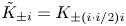 $\tilde {K}_{\pm i} = K_{\pm ({i \cdot i}/{2}) i}$ and
 $S({\cdot }\,{,}\,{\cdot })$ is defined as (2.2).
Let  $\textbf {U}^+$,
 $\textbf {U}^0$ and
 $\textbf {U}^-$ be the
 $\mathbb {Q}(q)$-subalgebra of
 $\textbf {U}$ generated by
 $E_{i}$
 $(i \in \mathbb {I})$,
 $K_{\mu } (\mu \in Y)$, and
 $F_{i}$
 $(i \in \mathbb {I})$, respectively. We identify
 $\textbf {f} \cong \textbf {U}^-$ by matching the generators
 $\theta _{i}$ with
 $F_{i}$. This identification induces a bilinear form
 $({\cdot }\,{,}\,{\cdot })$ on
 $\textbf {U}^{-}$ and
 $\mathbb {Q}(q)$-linear maps
 $r_i, {}_i r (i\in \mathbb {I})$ on
 $\textbf {U}^-$. Under this identification, we let
 $\textbf {U}_{-\mu }^-$ be the image of
 $\textbf {f}_\mu$. Similarly, we have
 $\textbf {f} \cong \textbf {U}^+$ by identifying
 $\theta _{i}$ with
 $E_{i}$. We let
 $_\mathcal {A}\textbf {U}^-$ (respectively,
 $_\mathcal {A}\textbf {U}^+$) denote the image of
 $_\mathcal {A}\textbf {f}$ under this isomorphism, which is generated by all divided powers
 $F^{(a)}_{i} =F_{i}^a/[a]_i^!$ (respectively,
 $E^{(a)}_{i} =E_{i}^a/[a]_i^!$). The coproduct
 $\Delta : \textbf {U} \rightarrow \textbf {U} \otimes \textbf {U}$ is defined as follows:
 \begin{equation} \Delta(E_i) = E_i \otimes 1 + \tilde{K}_i \otimes E_i, \quad \Delta(F_i) = 1 \otimes F_i + F_i \otimes \tilde{K}_{{-}i}, \quad \Delta(K_{\mu}) = K_{\mu} \otimes K_{\mu}. \end{equation}
2.3
We recall several symmetries of  $\textbf {U}$; cf. [Reference LusztigLus10].
Proposition 2.1
(1) There is an involution
$\omega$ of the $\mathbb {Q}(q)$-algebra $\textbf {U}$ such that $\omega (E_{i}) =F_{i}$, $\omega (F_{i}) =E_{i}$, and $\omega (K_{\mu }) = K_{-\mu }$ for all $i \in \mathbb {I}$ and $\mu \in Y$.(2) There is an anti-involution
$\wp$ of the $\mathbb {Q}(q)$-algebra $\textbf {U}$ such that $\wp (E_{i}) = q^{-1}_i F_{i} \tilde {K}_{i}$, $\wp (F_{i}) = q^{-1}_i E_{i} \tilde {K}_i^{-1}$ and $\wp (K_{\mu }) = K_{\mu }$ for all $i \in \mathbb {I}$ and $\mu \in Y$.(3) There is an anti-involution
$\sigma$ of the $\mathbb {Q}(q)$-algebra $\textbf {U}$ such that $\sigma (E_{i}) = E_{i}$, $\sigma (F_{i}) = F_{i}$ and $\sigma (K_{\mu }) = K_{-\mu }$ for all $i \in \mathbb {I}$ and $\mu \in Y$.(4) There is a bar involution
$\bar {\phantom {x}}$ of the $\mathbb {Q}$-algebra $\textbf {U}$ such that $q \mapsto q^{-1}$, $\bar {E}_{i}= E_{i}$, $\bar {F}_{i}=F_{i}$, and $\bar {K}_{\mu }=K_{-\mu }$ for all $i \in \mathbb {I}$ and $\mu \in Y$. (Sometimes we denote the bar involution on $\textbf {U}$ by $\psi$.)(5) There are automorphisms
$\texttt T''_{i, -e}$ (for $e=\pm 1$, $i\in I$) of the $\mathbb {Q}(q)$-algebra $\textbf {U}$ such that
\begin{gather*} \texttt T''_{i, -e}
(E_i) ={-}F_i \tilde{K}_{{-}ei} , \quad \texttt T''_{i, -e}
(F_i) ={-} \tilde{K}_{ei}E_i, \quad \texttt T''_{i, -e}
(K_\mu) = K_{s_i(\mu)}; \\ \texttt T''_{i, -e} (E_j) =
\sum_{r+s ={-} \langle i, j'\rangle} ({-}1)^r q^{er}_{i}
E^{(s)}_i E_j E^{(r)}_i \quad \text{for } j\neq i.
\end{gather*}


As  $\texttt T''_{i, +1}$ satisfies the braid group relation, we can define the automorphism
 $\texttt T''_{w, +1}$ of
 $\textbf {U}$, associated to
 $w\in W$, in a standard fashion. To simplify the notation, throughout the paper we often write
 \[ \texttt T_i = \texttt T''_{i, +1}, \quad \text{and} \quad \texttt T_w = \texttt T''_{w, +1}, \quad \text{for } w \in W. \]
2.4
Let  $M(\lambda )$ be the Verma module of
 $\textbf {U}$ with highest weight
 $\lambda \in X$ and with a highest weight vector denoted by
 $\eta _{\lambda }$. We define a lowest weight
 $\textbf {U}$-module
 $^\omega M(\lambda )$, which has the same underlying vector space as
 $M(\lambda )$ but with the action twisted by the involution
 $\omega$ given in Proposition 2.1. When considering
 $\eta _{\lambda }$ as a vector in
 $^\omega M(\lambda )$, we shall denote it by
 $\xi _{-\lambda }$.
Let
 \[ X^+{=} \{\lambda \in X \mid \langle i, \lambda \rangle \in {{\mathbb{N}}},\ \forall \, i \in \mathbb{I} \} \]
be the set of dominant integral weights. By  $\lambda \gg 0$ we shall mean that the integers
 $\langle i, \lambda \rangle$ for all
 $i$ are sufficiently large. The Verma module
 $M(\lambda )$ associated to
 $\lambda \in X$ has a unique simple quotient
 $\textbf {U}$-module, denoted by
 $L(\lambda )$. We shall abuse the notation and denote by
 $\eta _\lambda \in L(\lambda )$ the image of the highest weight vector
 $\eta _\lambda \in M(\lambda )$. Similarly, we define the
 $\textbf {U}$-module
 $^\omega L(\lambda )$ of lowest weight
 $-\lambda$ with lowest weight vector
 $\xi _{-\lambda }$. For
 $\lambda \in X^+$, we let
 $_\mathcal {A} L(\lambda ) ={_\mathcal {A}\textbf {U}^-} \eta _\lambda$ and
 $^\omega _\mathcal {A} L(\lambda ) ={_\mathcal {A}\textbf {U}^+ } \xi _{-\lambda }$ be the
 $\mathcal {A}$-submodules of
 $L(\lambda )$ and
 $^\omega L(\lambda )$, respectively.
There is a canonical basis  $\textbf {B}$ on
 $\textbf {f}$, a canonical basis
 $\{b^+|b\in \textbf {B}\}$ on
 $\textbf {U}^+$ and a canonical basis
 $\{b^-|b\in \textbf {B}\}$ on
 $\textbf {U}^-$. For each
 $\lambda \in X^+$, there is a subset
 $\textbf {B}(\lambda )$ of
 $\textbf {B}$ so that
 $\{b^- \eta _\lambda |b\in \textbf {B}(\lambda )\}$ (respectively,
 $\{b^+\xi _{-\lambda } |b\in \textbf {B}(\lambda )\}$) forms a canonical basis of
 $L(\lambda )$ (respectively,
 ${}^\omega L(\lambda )$). For any Weyl group element
 $w\in W$, let
 $\eta _{w\lambda }$ denote the unique canonical basis element of weight
 $w\lambda$.
Let  $\dot {\textbf {U}} =\oplus _{\zeta \in X} \dot {\textbf {U}} {\bf 1} _\zeta$ be the idempotented quantum group and
 ${}_\mathcal {A} \dot {\textbf {U}}$ be its
 $\mathcal {A}$-form. Then
 $\dot {\textbf {U}}$ admits a canonical basis
 $\dot {\textbf {B}} = \{ b_1 \diamondsuit _{\zeta } b_2 \mid (b_1, b_2) \in \textbf {B} \times \textbf {B}, \zeta \in X \}$; cf. [Reference LusztigLus10, Part IV].
2.5
For any  $\mathbb {I}_{\bullet } \subset \mathbb {I}$, let
 $\textbf {U}_{\mathbb {I}_{\bullet }}$ be the
 $\mathbb {Q}(q)$-subalgebra of
 $\textbf {U}$ generated by
 $F_{i}$
 $(i \in \mathbb {I}_{\bullet })$,
 $E_{i}$
 $(i \in \mathbb {I}_{\bullet })$ and
 $K_{i} ( i \in \mathbb {I}_{\bullet })$. Let
 $\textbf {B}_{\mathbb {I}_\bullet }$ be the canonical basis of
 $\textbf {f}_{\mathbb {I}_{\bullet }}$ (here
 $\textbf {f}_{\mathbb {I}_{\bullet }}$ is simply a version of
 $\textbf {f}$ associated to
 $\mathbb {I}_{\bullet }$), which induces canonical bases on
 $\textbf {U}^{-}_{\mathbb {I}_\bullet }$ and
 $\textbf {U}^{+}_{\mathbb {I}_\bullet }$. Let
 $\textbf {{P}}= \textbf {{P}}_{\mathbb {I}_\bullet }$ be the
 $\mathbb {Q}(q)$-subalgebra of
 $\textbf {U}$ generated by
 $\textbf {U}_{\mathbb {I}_{\bullet }}$ and
 $\textbf {U}^{-}$. We denote by
 $L_{\mathbb {I}_{\bullet }}(\lambda )$ the simple
 $\textbf {U}_{\mathbb {I}_{\bullet }}$-module of highest weight
 $\lambda$.
We introduce the following subalgebra of  $\dot {\textbf {U}}$:
 \begin{align*}\dot{\textbf{P}} = \mathop{\bigoplus}\limits_{\lambda \in X} \textbf{P} {\bf 1}_{\lambda}.\end{align*}
We further set  ${}_\mathcal {A} \dot {\textbf {P}} = \dot{\textbf {P}} \cap {}_\mathcal {A} \dot {\textbf {U}}$.
2.6 Based submodules $L(w\lambda , \mu )$

Recall the theory of based  $\textbf {U}$-modules of Lusztig [Reference LusztigLus10, Chapter 27] for
 $\textbf {U}$ of finite type, which was extended by the authors in [Reference Bao and WangBW16] for
 $\textbf {U}$ of Kac–Moody type. For
 $\lambda , \mu \in X^+$ and
 $w\in W$, we introduce the following
 $\textbf {U}$-submodule:
 \begin{equation} L(w\lambda, \mu) = \textbf{U} (\eta_{w\lambda} \otimes \eta_{\mu}) \subset L(\lambda) \otimes L(\mu). \end{equation}
The following theorem is the main result of this section, the proof of which was kindly communicated to us by Kashiwara.
Theorem 2.2 Let  $\lambda , \mu \in X^+$ and
 $w\in W$. Then the
 $\textbf {U}$-submodule
 $L(w\lambda , \mu )$ is a based
 $\textbf {U}$-submodule of
 $L(\lambda ) \otimes L(\mu )$.
Proof. Write  $w\lambda =\lambda _1 -\nu$, for some
 $\lambda _1, \nu \in X^+$. Thanks to [Reference Bao and WangBW16, Theorem 2.9, Proposition 2.11],
 $L(\lambda _1) \otimes L(\mu )$ is a based
 $\textbf {U}$-module, and the map
 $\chi : L(\lambda _1 +\mu )\rightarrow L(\lambda _1) \otimes L(\mu )$, which sends
 $\eta _{\lambda _1 +\mu } \mapsto \eta _{\lambda _1} \otimes \eta _{\mu }$, is a based
 $\textbf {U}$-module homomorphism. Therefore,
 \[ \chi': =\text{id}_{ {}^\omega L(\nu)} \otimes\chi: {}^\omega L(\nu) \otimes L(\lambda_1 +\mu) \longrightarrow {}^\omega L(\nu) \otimes L(\lambda_1) \otimes L(\mu), \]
which sends  $\xi _\nu \otimes \eta _{\lambda _1 +\mu } \mapsto \xi _\nu \otimes \eta _{\lambda _1} \otimes \eta _{\mu }$, is a based module homomorphism.
Recall the notion of extremal weight modules [Reference KashiwaraKas94, § 8], and in particular the extremal weight module  $L(w\lambda )$ coincides with
 $L(\lambda )$, thanks to
 $\lambda \in X^+$.
It follows from [Reference LusztigLus10, Proposition 23.3.6] that there exists a  $\textbf {U}$-module homomorphism
 $\phi : {}^\omega L(\nu ) \otimes L(\lambda _1) \rightarrow L(w\lambda )=L(\lambda )$, which sends
 $\xi _\nu \otimes \eta _{\lambda _1} \mapsto \eta _{w\lambda }$. By Kashiwara [Reference KashiwaraKas94, Lemma 8.2.1], the map
 $\phi : {}^\omega L(\nu ) \otimes L(\lambda _1) \rightarrow L(w\lambda )=L(\lambda )$ is a based module homomorphism. Thus,
 \[ \phi' :=\phi \otimes \text{id}_{L(\mu)}: {}^\omega L(\nu) \otimes L(\lambda_1)\otimes L(\mu) \longrightarrow L(\lambda)\otimes L(\mu), \]
which sends  $\xi _\nu \otimes \eta _{\lambda _1} \otimes x \mapsto \eta _{w\lambda }\otimes x$, for
 $x\in L(\mu )$, is a based
 $\textbf {U}$-module homomorphism.
Therefore, the composition homomorphism
 \[ \phi' \chi': {}^\omega L(\nu) \otimes L(\lambda_1 +\mu) \longrightarrow L(\lambda)\otimes L(\mu), \]
which sends  $\xi _\nu \otimes \eta _{\lambda _1 +\mu } \mapsto \eta _{w\lambda } \otimes \eta _{\mu }$, is a based
 $\textbf {U}$-module homomorphism. As
 $\xi _\nu \otimes \eta _{\lambda _1 +\mu }$ is a cyclic vector (i.e. it generates the
 $\textbf {U}$-module
 ${}^\omega L(\nu ) \otimes L(\lambda _1 +\mu ))$, the
 $\textbf {U}$-module
 $L(w\lambda , \mu )$ is the image of the based module homomorphism
 $\phi ' \chi '$. Hence
 $L(w\lambda , \mu )$ is a based
 $\textbf {U}$-submodule of
 $L(\lambda )\otimes L(\mu )$.
Remark 2.3 Theorem 2.2 for  $\textbf {U}$ of finite type appeared as [Reference Bao and WangBW18b, Theorem 2.6] with a different proof.
3. The $\imath$-quantum groups ${\textbf {U}^{\imath }}$


In this section, we review the basic definitions and constructions of QSPs, including the bar involution and quasi- $K$-matrix. We also formulate various (old and new) symmetries on
 ${\textbf {U}^{\imath }}$ and
 ${\textbf {U}^{\imath }}$-modules. Our general setup assumes the validity of the fundamental lemma of QSP, which is to be established in § 4.
3.1
Let  $\tau$ be an involution of the Cartan datum
 $(\mathbb {I}, \cdot )$; we allow
 $\tau =\text {id}$. We further assume that
 $\tau$ extends to an involution on
 $X$ and an involution on
 $Y$, respectively, such that the perfect bilinear pairing is invariant under the involution
 $\tau$. For any
 $\lambda \in X$ (or
 $Y$), we shall write
 $\lambda ^\tau = \tau (\lambda )$.
From now on, we assume  $\mathbb {I}_{\bullet } \subset \mathbb {I}$ is a Cartan subdatum of finite type. Let
 $W_{\mathbb {I}_\bullet }$ be the parabolic subgroup of
 $W$ with
 $w_{\bullet }$ as its longest element. Let
 $\rho ^\vee _{\bullet }$ be the half sum of all positive coroots in the set
 $R^{\vee }_{\bullet }$, and let
 $\rho _{\bullet }$ be the half sum of all positive coroots in the set
 $R _{\bullet }$. We shall write
 \begin{equation} \mathbb{I}_{{\circ}} = \mathbb{I} \backslash \mathbb{I}_{{\bullet}}. \end{equation}
A pair  $(\mathbb {I}_{\bullet }, \tau )$ is called admissible (cf. [Reference KolbKol14, Definition 2.3]) if the following conditions are satisfied:
(1)
$\tau (\mathbb {I}_{\bullet }) = \mathbb {I}_{\bullet }$;(2) the action of
$\tau$ on $\mathbb {I}_{\bullet }$ coincides with the action of $-w_{\bullet }$;(3) if
$j \in \mathbb {I}_{\circ }$ and $\tau (j) = j$, then $\langle \rho ^\vee _{\bullet }, j' \rangle \in {\mathbb {Z}}$.


In this paper, all pairs  $(\mathbb {I}_{\bullet }, \tau )$ considered are admissible.
Note that  $\theta = -w_{\bullet } \circ \tau$ is an involution of
 $X$ and
 $Y$. Following [Reference Bao and WangBW18b], we introduce the
 $\imath$-weight lattice and
 $\imath$-root lattice
 \begin{equation} \begin{array}{c} X_{{\imath}} = X / \breve{X}, \quad \text{where } \breve{X} = \{ \lambda - \theta(\lambda) \mid \lambda \in X\}, \\ Y^{\imath} = \{\mu \in Y \mid \theta(\mu) =\mu \}. \end{array} \end{equation}
For any  $\lambda \in X$ denote its image in
 $X_{\imath }$ by
 $\bar {\lambda }$.
The involution  $\tau$ of
 $\mathbb {I}$ induces an isomorphism of the
 $\mathbb {Q}(q)$-algebra
 $\textbf {U}$, denoted also by
 $\tau$, which sends
 $E_i \mapsto E_{\tau i}$,
 $F_i \mapsto F_{\tau i}$ and
 $K_\mu \mapsto K_{\tau \mu }$.
3.2
We recall the definition of QSP  $(\textbf {U}, {\textbf {U}^{\imath }})$, where
 ${\textbf {U}^{\imath }}$ is a coideal subalgebra of
 $\textbf {U}$ from [Reference LetzterLet99, Reference KolbKol14, Reference Balagovic and KolbBK15, Reference Balagovic and KolbBK19]; also cf. [Reference Bao and WangBW18b, § 3.3].
Definition 3.1 The algebra  ${\textbf {U}^{\imath }}$, with parameters
 \begin{equation} \varsigma_{i} \in { {\mathbb{Z}}[q, q^{{-}1}]}, \quad \kappa_i \in {\mathbb{Z}}[q,q^{{-}1}], \quad \text{for } i \in \mathbb{I}_{{\circ}}, \end{equation}
is the  $\mathbb {Q}(q)$-subalgebra of
 $\textbf {U}$ generated by the following elements:
 \begin{align*} F_{i} &+ \varsigma_i \texttt T_{w_{{\bullet}}} (E_{\tau i}) \tilde{K}^{{-}1}_i + \kappa_i \tilde{K}^{{-}1}_{i} \, (i \in \mathbb{I}_{{\circ}}), \\ & \quad K_{\mu} \,(\mu \in Y^{\imath}), \quad F_i \,(i \in \mathbb{I}_{{\bullet}}), \quad E_{i} \,(i \in \mathbb{I}_{{\bullet}}). \end{align*}
The parameters are required to satisfy Conditions (3.4)–(3.7):
 \begin{align} \kappa_i & =0 \quad \text{unless } \tau(i) =i, \langle i, j' \rangle = 0 \ \forall \, j \in \mathbb{I}_{{\bullet}},\nonumber\\ & \qquad\quad\text{and } \langle k,i' \rangle \in 2{\mathbb{Z}} \ \forall \,k = \tau(k) \in \mathbb{I}_{{\circ}} \text{ such that } \langle k, j' \rangle = 0 \text{ for all } j \in \mathbb{I}_{{\bullet}}; \end{align}
 \begin{align} \overline{\kappa_i} &= \kappa_i; \end{align}
 \begin{align} \varsigma_{i} & =\varsigma_{{\tau i}} \text{ if } i \cdot \theta (i) =0; \end{align}
 \begin{align} \varsigma_{{\tau i}} &= ({-}1)^{ \langle 2\rho^\vee_{{\bullet}}, i' \rangle } q_i^{-\langle i, 2\rho_{{\bullet}}+w_\bullet\tau i ' \rangle} {\bar{\varsigma_{i} }}. \end{align}
By definition, the algebra  ${\textbf {U}^{\imath }}$ contains
 $\textbf {U}_{\mathbb {I}_{\bullet }}$ as a subalgebra.
Remark 3.2 Note that the conditions (3.4)–(3.7) for the parameters are as general as in [Reference Balagovic and KolbBK19], except the integral requirement in (3.3) which is necessary for an integral form of  ${\textbf {U}^{\imath }}$. We are going to develop the theory of
 $\imath$-canonical basis for
 ${\textbf {U}^{\imath }}$ in this full generality. This is a significant improvement than the constraint that
 $\varsigma _i \in \pm q^{{\mathbb {Z}}}$ in [Reference Bao and WangBW18b, Definition 3.5] even in finite type, where (3.7) was written as
 $\varsigma _{{\tau i}} \varsigma _i = (-1)^{ \langle 2\rho ^\vee _{\bullet }, i' \rangle } q_i^{-\langle i, 2\rho _{\bullet }+w_\bullet \tau i ' \rangle }$.
Remark 3.3 Our parameter  $\varsigma _i$ is related to the notation of parameters in [Reference KolbKol14] and [Reference Balagovic and KolbBK15] via
 $\varsigma _i =- s(\tau (i)) c_i$; we shall never need these additional parameters separately. The parameters
 $\varsigma _i$ can always be chosen to be
 $\varsigma _i \in q^{\mathbb {Z}}$ by [Reference Balagovic and KolbBK15, Remark 3.14], once [Reference Balagovic and KolbBK15, Conjecture 2.7] (i.e. Conjecture 3.5 below) is established in Theorem 4.1. This allows the specialization at
 $q=1$ of the QSP
 $(\textbf {U}, {\textbf {U}^{\imath }})$ to the corresponding symmetric pair, justifying the terminology of QSP.
Set
 \[ \mathcal{A}^{\rm inv} = \{f\in \mathcal{A} \mid \bar{f} =f \}. \]
Remark 3.4 The coefficient  $(-1)^{ \langle 2\rho ^\vee _{\bullet }, i' \rangle } q_i^{-\langle i, 2\rho _{\bullet }+w_\bullet \tau i ' \rangle }$ has been computed explicitly in [Reference Bao and WangBW18b, Lemma 3.10] in finite type. The Satake diagrams of symmetric pairs of real rank one in finite type are listed in [Reference Bao and WangBW18b, § 3, Table 1]. The values of [Reference Bao and WangBW18b, § 3, Table 3] of
 $\varsigma _i$ for QSPs of real rank one are now updated to become the following table, taking into account the relaxed conditions on parameters
 $\varsigma _i$ in (3.3).

It is sometimes convenient to set
 \begin{equation} B_i = \begin{cases} F_{i} + \varsigma_i \texttt T_{w_{{\bullet}}} (E_{\tau i}) \tilde{K}^{{-}1}_i + \kappa_i \tilde{K}^{{-}1}_{i} & \text{ if } i \in \mathbb{I}_{{\circ}}; \\ F_{i} & \text{ if } i \in \mathbb{I}_{{\bullet}}. \end{cases} \end{equation}
3.3
For  $i\in \mathbb {I}_{\circ }$, we define
 \begin{equation} Z_i = \frac{1}{q_i^{{-}1} -q_i} r_i (\texttt T_{w_{{\bullet}}} (E_i) ) \in \textbf{U}_{\mathbb{I}_{{\bullet}}}^+. \end{equation}
It is known (cf. [Reference Balagovic and KolbBK15]) that  $Z_i \neq 0$ (we thank Kolb for explaining this fact in detail). Balagovic–Kolb showed in [Reference Balagovic and KolbBK15, Proposition 2.5] that
 \begin{equation} \sigma \tau (Z_i) =\nu_i Z_i\ \text{with } \nu_i \in \{1, -1\},\quad \forall \,i\in \mathbb{I}_\circ. \end{equation}
Conjecture 3.5 [Reference Balagovic and KolbBK15, Conjecture 2.7]
We have  $\sigma \tau (Z_i) = Z_i$, that is,
 $\nu _i=1$, for all
 $i\in \mathbb {I}_\circ$.
This conjecture will be established in full generality as Theorem 4.1 in § 4. It is known [Reference Balagovic and KolbBK15, Proposition 2.3] that  $\nu _i=1$ (that is, [Reference Balagovic and KolbBK15, Conjecture 2.7] holds) for
 $(\textbf {U}, {\textbf {U}^{\imath }})$ of finite type.
We shall assume that Theorem 4.1 holds in the remainder of this section.
3.4
Throughout the paper, we make the following basic assumptions:
 \begin{equation} |\langle i, j' \rangle | \le 3,\ \forall \,i,j\in I,\quad \text{or}\quad I_\bullet{=}\emptyset. \end{equation}
Remark 3.6 Condition (3.11) is imposed so that explicit Serre-type defining relations for  ${\textbf {U}^{\imath }}$ are available, and then the bar involution on
 ${\textbf {U}^{\imath }}$ can be verified [Reference Balagovic and KolbBK15, Reference Chen, Lu and WangCLW20]. It is generally expected that the assumptions (3.11) can be removed eventually.
The existence of the bar involution on  ${\textbf {U}^{\imath }}$ below was predicted in [Reference Bao and WangBW18a].
Lemma 3.7 [Reference Balagovic and KolbBK15, Reference Chen, Lu and WangCLW20]
There is a unique anti-linear bar involution of the  $\mathbb {Q}$-algebra
 ${\textbf {U}^{\imath }}$, denoted by
 $\bar {\phantom {x}}$ or
 $\psi _{\imath }$, such that
 \[ \psi_{\imath} (q) =q^{{-}1}, \quad \psi_{\imath} (B_i) = B_i (i \in \mathbb{I}), \quad \psi_{\imath}(E_i) = E_i (i \in \mathbb{I}_{{\bullet}}), \quad \psi_{\imath} (K_\mu) = K_{-\mu} (\mu \in Y^{\imath}). \]
We recall the following theorem (cf. [Reference Bao and WangBW18a, Theorem 2.3], [Reference Balagovic and KolbBK19, Theorem 6.10] and [Reference Bao and WangBW18b, Theorem 4.8, Remark 4.9]).
Theorem 3.8 There exists a unique family of elements  $\Upsilon _{\mu } \in \textbf {U}^+_{\mu }$, such that
 $\Upsilon _0 =1$ and
 $\Upsilon = \sum _{\mu } \Upsilon _{\mu }$ satisfies the following identity (in
 $\widehat {\textbf {U}}$):
 \begin{equation} \psi_{\imath}(u) \Upsilon = \Upsilon \psi(u), \quad \text{for all } u \in {\textbf{U}^{\imath}}. \end{equation}
Moreover,  $\Upsilon _{\mu } =0$ unless
 ${\mu ^\theta } = - \mu \in X$.
The formulation of the quasi- $K$-matrix
 $\Upsilon$ (called sometimes an intertwiner) was due to the present authors [Reference Bao and WangBW18a]; its existence in full generality has been established in [Reference Balagovic and KolbBK19] (also cf. [Reference Bao and WangBW18b, Remark 4.9]).
Remark 3.9 Lemma 3.7 and Theorem 3.8 were established in the literature under the assumption that  $\nu _i=1$ for
 $i\in \mathbb {I}_\circ$; this assumption is now removed unconditionally thanks to Theorem 4.1. Theorem 3.8 for
 ${\textbf {U}^{\imath }}$ with
 $\mathbb {I}_{\bullet } =\emptyset$ is new as its bar involution has only recently been established in [Reference Chen, Lu and WangCLW20], the usual proof in [Reference Balagovic and KolbBK19]–[Reference Bao and WangBW18a] carries over.
3.5
We define the modified version (i.e. idempotented version)  $\dot {\textbf {U}}^{\imath }$ of the
 $\imath$-quantum groups following [Reference LusztigLus10, Part IV]. Some extra care is required because the pairing between
 $X_\imath$ and
 $Y^\imath$ is not perfect in general, and we expand and correct slightly the definition given in [Reference Bao and WangBW18b]. We thank Hideya Watanabe for helpful remarks and suggestions.
We define an  $X_\imath$-grading on
 ${\textbf {U}^{\imath }}$ by assigning
 $B_i\ (i \in \mathbb {I})$,
 $E_j\ (j \in \mathbb {I}_{\bullet })$ and
 $K_\mu \ (\mu \in Y^\imath )$ degree
 $-\overline {i'}$,
 $\overline {j'}$ and
 $0$, respectively. One can easily check this is well-defined via Definition 3.1. We denote by
 $\textbf {U}^\imath (\zeta )$ the homogeneous subspace of
 ${\textbf {U}^{\imath }}$ of degree
 $\zeta \in X_\imath$. Note that
 $\textbf {U}^\imath (\zeta )$ is nontrivial if and only if
 $\zeta \in \overline {{\mathbb {Z}}[\mathbb {I}]} \subset X_\imath$.
For any  $\lambda ', \lambda '' \in X_\imath$ with
 $\zeta = \lambda '' -\lambda '$, we define
 \[ _{\lambda'}{\textbf{U}}^\imath_{\lambda''} = {\textbf{U}^{\imath}}(\zeta) \bigg/ \bigg( \sum_{\mu \in Y^\imath} (K_\mu - q^{\langle \mu, \lambda' \rangle}) {\textbf{U}^{\imath}}(\zeta) + \sum_{\mu \in Y^\imath} {\textbf{U}^{\imath}}(\zeta) (K_\mu - q^{\langle \mu, \lambda'' \rangle}) \bigg). \]
We denote by  $\pi _{\lambda ', \lambda ''}: {\textbf {U}^{\imath }} \rightarrow {}_{\lambda '}{\textbf {U}}^\imath _{\lambda ''}$ the natural quotient map, where
 $\pi _{\lambda ', \lambda ''}(x) =0$ if
 $x \not \in {\textbf {U}^{\imath }}(\lambda '' - \lambda ')$. We write
 ${\bf 1} _{\lambda '} = \pi _{\lambda ', \lambda '}(1)$ for the orthogonal idempotents.
Following [Reference LusztigLus10, Part IV], we then define an associative  $\mathbb {Q}(q)$-algebra structure (without unit) on
 \[ {\dot{\textbf{U}}^{\imath}} = \mathop{\bigoplus}\limits_{\lambda', \lambda'' \in X^\imath} {}_{\lambda'}{\textbf{U}}^\imath_{\lambda''}. \]
Moreover, the modified quantum group  $\dot {\textbf {U}}$ is naturally a
 $(\dot {\textbf {U}}^{\imath }, \dot {\textbf {U}}^{\imath })$-bimodule. For any
 ${u \in \dot {\textbf {U}}^{\imath }}$ (or
 ${\textbf {U}^{\imath }})$ and
 ${\bf 1} _{\lambda } \in \dot {\textbf {U}}$, we shall denote by
 $u {\bf 1} _{\lambda } \in \dot {\textbf {U}}$ the action of the
 $u$ on
 ${\bf 1} _\lambda$. The coproduct of
 ${\textbf {U}^{\imath }}$ induces a similar structure on
 $\dot {\textbf {U}}^{\imath }$ similar to [Reference LusztigLus10, 23.1.5].
The bar involution on  ${\textbf {U}^{\imath }}$ in Lemma 3.7 induces a bar involution
 $\psi _{\imath }$ on the
 $\mathbb {Q}$-algebra
 $\dot {\textbf {U}}^{\imath }$ such that
 $\psi _{\imath } (q) =q^{-1}$ and
 \[ \psi_{\imath} (B_i {\bf 1}_\zeta) = B_i {\bf 1}_\zeta\ (i \in \mathbb{I}), \quad \psi_{\imath}(E_i {\bf 1}_\zeta) = E_i {\bf 1}_\zeta\ (i \in \mathbb{I}_{{\bullet}}), \quad \psi_{\imath} ({\bf 1}_\zeta) = {\bf 1}_{\zeta}\ (\zeta \in X_{\imath}). \]
Recall  $\textbf {{P}}= \textbf {{P}}_{\mathbb {I}_\bullet }$ and
 $\dot{ \textbf {P}}$ from § 2.5. Let
 $\textbf {U}^+(w^\bullet )_{>}$ be the two-sided ideal of
 $\textbf {U}^+$ generated by
 $E_i$ for
 $i \in \mathbb {I}_{\circ }$. The composition map, denoted by
 $p_\imath = p_{\imath ,\lambda }$,
 \begin{equation} \dot{\textbf{U}}^{\imath} {\bf 1}_{\bar{\lambda}} \longrightarrow \dot{\textbf{U}} {\bf 1}_{\lambda} \longrightarrow \dot{\textbf{U}} {\bf 1}_\lambda / \dot{\textbf{U}} \textbf{U}^+(w^\bullet)_{>} {\bf 1}_\lambda \longrightarrow \dot{\textbf{P}} {\bf 1}_{\lambda}, \end{equation}
is a  $\mathbb {Q}(q)$-linear isomorphism; cf. [Reference Bao and WangBW18b, § 3.8].
Definition 3.10 We define  $_{\mathcal {A}} \dot {\textbf {U}}^{\imath }$ to be the set of elements
 $u \in \dot {\textbf {U}}^{\imath }$, such that
 $u \cdot m \in {}_\mathcal {A}\dot {\textbf {U}}$ for all
 $m \in {}_\mathcal {A}\dot {\textbf {U}}$. Then
 $_{\mathcal {A}} \dot {\textbf {U}}^{\imath }$ is clearly a
 $\mathcal {A}$-subalgebra of
 $\dot {\textbf {U}}^{\imath }$ which contains all the idempotents
 ${\bf 1} _\zeta (\zeta \in X_\imath )$, and
 $_{\mathcal {A}} \dot {\textbf {U}}^{\imath } = {\bigoplus} _{\zeta \in X_\imath }\, {}_{\mathcal {A}} \dot {\textbf {U}}^{\imath } {\bf 1} _{\zeta }$.
3.6 Symmetries of ${\textbf {U}^{\imath }}$ and ${\textbf {U}^{\imath }}$-modules


3.6.1
Recall the braid group operators  $\texttt T'_{i,e}$ and
 $\texttt T''_{i,e}$, for
 $e=\pm 1$, from [Reference LusztigLus10].
Proposition 3.11 [Reference Bao and WangBW18b, Theorem 4.2 and Propositions 4.6 and 4.13]
Let  $i\in \mathbb {I}_{\bullet }$,
 $j\in \mathbb {I}_{\circ }$, and
 $e =\pm 1$.
(1) The braid group operators
$\texttt T'_{i,e}$ and $\texttt T''_{i,e}$ restrict to isomorphisms of ${\textbf {U}^{\imath }}$.(2) We have
$\texttt T''_{i, e} (\Upsilon ) = \Upsilon$ and $\texttt T'_{i, e} (\Upsilon ) = \Upsilon$.(3) Assume
$\varsigma _{j} = q_j^{-1} \text {if } \kappa _j \neq 0$ and $\overline {\varsigma _j} = \varsigma _j^{-1}$ for the parameters. Then the anti-involution $\wp$ on $\textbf {U}$ restricts to an anti-involution $\wp$ on $\textbf {U}^\imath$.


3.6.2
We define the anti-linear involution  $\sigma '_\imath$ of
 $\textbf {U}$ as
 \[ \sigma'_\imath=\sigma \circ \tau \circ \psi : \textbf{U} \longrightarrow \textbf{U}. \]
Lemma 3.12 We have  $\sigma '_\imath (\varsigma _i \texttt T_{w_{\bullet }} (E_{\tau i}) \tilde {K}^{-1}_i ) =\varsigma _{\tau i} \texttt T_{w_{\bullet }} (E_{i}) \tilde {K}^{-1}_{\tau i} ,$ for
 $i\in \mathbb {I}_{\circ }$.
Proof. We have
 \begin{align*} \sigma'_{\imath}
(\varsigma_i \texttt T''_{w_{{\bullet}},+1} (E_{\tau i})
\tilde{K}^{{-}1}_i ) &= \sigma \circ \tau
(\overline{\varsigma_i} \,\, \overline{\texttt
T''_{w_{{\bullet}},+1} (E_{\tau i})} \tilde{K}_i ) \\ & =
\sigma \circ \tau (\overline{\varsigma_i} \,\, \texttt
T''_{w_{{\bullet}}, -1} (E_{\tau i}) \tilde{K}_i )\\ & =
\sigma (\overline{\varsigma_i}\,\, \texttt
T''_{w_{{\bullet}}, -1} (E_{ i}) \tilde{K}_{\tau i} )\\ & =
\overline{\varsigma_i} \,\, \tilde{K}^{{-}1}_{\tau i}
\sigma \texttt T''_{w_{{\bullet}}, -1} (E_{ i})\\
&\stackrel{(a)}{=} \overline{\varsigma_i} q_i^{-\langle
\tau i, w_{{\bullet}} i' \rangle} \texttt
T'_{w_{{\bullet}}, +1} (E_{i}) \tilde{K}^{{-}1}_{\tau i} \\
&\stackrel{(b)}{=} \overline{\varsigma_i} q_i^{-\langle i,
w_{{\bullet}} \tau i' \rangle} ({-}1)^{ \langle
2\rho^\vee_{{\bullet}}, i' \rangle } q_i^{-\langle i,
2\rho_{{\bullet}} \rangle} \texttt T''_{w_{{\bullet}}, +1}
(E_{ i}) \tilde{K}^{{-}1}_{\tau i} \\ & \stackrel{(c)}{=}
\varsigma_{\tau i} \texttt T''_{w_{{\bullet}}, +1} (E_{ i})
\tilde{K}^{{-}1}_{\tau i}. \end{align*}
Here the equality  $(a)$ follows from [Reference LusztigLus10, § 37.2.4],
 $(b)$ follows from [Reference LusztigLus10, § 37.2.4] and a similar computation as in [Reference Bao and WangBW18b, Corollary 4.5] and, finally,
 $(c)$ follows from (3.7).
Proposition 3.13 We have a  $\mathbb {Q}(q)$-linear anti-involution
 $\sigma _\imath = \psi _\imath \circ \sigma _\imath '$ of the algebra
 ${\textbf {U}^{\imath }}$, such that
 $\sigma _\imath (F_i) =F_{\tau i}$,
 $\sigma _\imath (E_i)=E_{\tau i} \ (i \in \mathbb {I}_{\bullet })$,
 $\sigma _\imath (B_i)=B_{\tau i} \ (i \in \mathbb {I}_{\circ })$, and
 $\sigma _\imath (K_\mu )=K_{- \tau \mu } \ (\mu \in Y^\imath )$.
Proof. Note that  $\sigma _\imath ' (F_i) =F_{\tau i}$,
 $\sigma '_\imath (E_i)=E_{\tau i}$ and
 $\sigma '_\imath (K_\mu )=K_{\tau \mu }$, for all
 $i \in \mathbb {I}, \mu \in Y$. It follows that
 \[ \sigma'_\imath (q)=q^{{-}1}, \sigma'_\imath (B_i)=B_{\tau i}\ (i\in \mathbb{I}_\circ), \quad \sigma'_\imath (K_\mu)=K_{\tau \mu}\ (\mu \in Y^\imath), \]
and, hence,  $\sigma _\imath '$ restricts to an anti-linear anti-involution on the subalgebra
 ${\textbf {U}^{\imath }}$.
The proposition follows immediately from the above and the definition of  $\psi _{\imath }$ in Lemma 3.7.
Note  $\sigma _\imath$ takes a particular neat form when
 $\tau =\text {id}$, and it is strikingly similar to the anti-involution
 $\sigma$ on
 $\textbf {U}$.
3.6.3
Following [Reference Bao and WangBW18b, § 4.5], we consider the automorphism obtained by the composition
 \[ \vartheta = \sigma \circ \wp \circ \tau : \textbf{U} \longrightarrow \textbf{U}, \]
which sends
 \begin{equation} \vartheta (E_i) = q_{\tau i}F_{\tau i} \tilde{K}_{- \tau i} , \quad \vartheta (F_i) = q_{\tau i} E_{\tau i} \tilde{K}_{\tau i}, \quad \vartheta (K_{\mu}) = K_{-\tau \mu}. \end{equation}
For any  $\textbf {U}$-module
 $M$, we define a new
 $\textbf {U}$-module
 ${}^\vartheta M$ as follows:
 ${}^\vartheta M$ has the same underlying
 $\mathbb {Q}(q)$-vector space as
 $M$, but we shall denote a vector in
 ${}^\vartheta M$ by
 ${}^\vartheta m$ for
 $m\in M$, and the action of
 $u\in \textbf {U}$ on
 ${}^\vartheta M$ is now given by
 $u {}^\vartheta m = {}^\vartheta (\vartheta ^{-1} (u)m)$. Hence, we have
 \[ \vartheta (u) {}^\vartheta m = {}^\vartheta ( u m), \quad \text{for } u \in \textbf{U}, m \in M. \]
As  ${}^\vartheta M$ is simple if the
 $\textbf {U}$-module
 $M$ is simple, one checks by definition that
 \[ {}^\vartheta L(\lambda) \cong {}^{\omega}L(\lambda^{\tau}). \]
Remark 3.14 Note that  $\vartheta$ is not an automorphism of the subalgebra
 ${\textbf {U}^{\imath }}$ in general (as we allow more general parameters
 $\varsigma _i$). Nevertheless,
 $M$ and
 ${}^\vartheta M$ are both
 $\textbf {U}$-modules and, hence,
 ${\textbf {U}^{\imath }}$-modules by restriction.
Let  $g : X \longrightarrow \mathbb {Q}(q)$ be such that [Reference Bao and WangBW18b, (4.16) and (4.17)] hold. The function
 $g$ induces a
 $\mathbb {Q}(q)$-linear map from any weight
 $\textbf {U}$-module
 $M = \oplus _{\mu \in X}M_\mu$ to itself:
 \begin{equation} \tilde{g}: M\longrightarrow M, \quad \tilde{g}(m) = g (\mu) m, \quad \text{for } m \in M_{\mu}. \end{equation}
Recall that we denote by  $\eta _{\lambda }$ the highest weight vector in
 $L(\lambda )$. Let
 $\eta ^{\bullet }_{\lambda }$ be the unique canonical basis element in
 $L(\lambda )$ of weight
 $w_\bullet \lambda$. Recall
 $\lambda ^\tau = \tau (\lambda )$. Let
 $\mathcal {C}^{\text {hi}}$ be the BGG category of
 $\textbf {U}$-modules with weights in
 $X$ and
 $\mathcal {C}'$ be the full subcategory of
 $\mathcal {C}^{\text {hi}}$ consisting of integrable
 $\textbf {U}$-modules [Reference LusztigLus10, 3.4.7 and 3.5.1].
Theorem 3.15 (cf. [Reference Bao and WangBW18b, Theorem 4.18] and [Reference Balagovic and KolbBK19, Theorem 7.5])
For any integrable  $\textbf {U}$-module
 $M = \oplus _{\mu \in X}M_\mu$ in
 $\mathcal {C}'$, we have the following isomorphism of
 ${\textbf {U}^{\imath }}$-modules
 \[ \mathcal{T} := \Upsilon \circ \tilde{g} \circ \texttt T^{{-}1}_{w_\bullet} : M \longrightarrow {}^\vartheta M. \]
In particular, we have the isomorphism of  ${\textbf {U}^{\imath }}$-modules
 \[ \mathcal{T} : L(\lambda) \longrightarrow {}^\omega L(\lambda^{\tau}), \quad \eta^{{\bullet}}_{\lambda} \mapsto \xi_{-\lambda^{\tau}}. \]
We note that the function  ${g}$ can be chosen such that
 $\mathcal {T}$ is an isomorphism of the
 $\mathcal {A}$-form
 ${}_\mathcal {A} L(\lambda ) \longrightarrow {}^\omega _\mathcal {A} L(\lambda ^{\tau })$ once Corollary 6.8 is established.
Proof. The same proof as [Reference Bao and WangBW18b, Theorem 4.18] applies with minor modifications as specified in the following.
The definition of the weight function  $g$ in [Reference Bao and WangBW18b, (4.15)] remains the same. However, we should replace
 $\varsigma _{\tau i}^{-1}$ by
 $\overline {\varsigma _{\tau i}}$ for the first identity in [Reference Bao and WangBW18b, Lemma 4.16], thanks to our relaxed conditions on parameters (3.3). Otherwise, the proof of the lemma remains identical, and the original proof for [Reference Bao and WangBW18b, Theorem 4.18] applies here verbatim.
4. Fundamental lemma for QSP
The goal of this section is to establish the Balagovic–Kolb conjecture [Reference Balagovic and KolbBK15, Conjecture 2.7] in full generality. The main tool here is Lusztig's theory of based modules and cells for  $\textbf {U}_{\mathbb {I}_{\bullet }}$ as developed in [Reference LusztigLus10, Chapters 27 and 29].
Recall  $Z_i$ from (3.9), and recall from (3.10) that
 $\sigma \tau (Z_i) =\nu _i Z_i$ for some
 $\nu _i \in \{1, -1\}$ and any
 $i\in \mathbb {I}_\circ$. Balagovic–Kolb conjectured [Reference Balagovic and KolbBK15, Conjecture 2.7] (which is recalled in Conjecture 3.5) that
 $\nu _i =1$ for all
 $i$ for
 $\textbf {U}$ of Kac–Moody type. This conjecture looks rather technical and innocent, but has been critical in several advances in the theory of QSP; for such reasons, we referred to the Balagovic–Kolb conjecture as the fundamental lemma of QSP.
Several crucial results, such as the existence of bar involution with the parameters  $\varsigma _i$ chosen to be in
 $q^{\mathbb {Z}}$ and the existence of quasi-
 $K$-matrix, are established only under the assumption of this conjecture. Without the validity of the conjecture, it is unclear if suitable parameters for the QSP
 $(\textbf {U}, {\textbf {U}^{\imath }})$ can be chosen to ensure the bar involution, quasi-
 $K$-matrix and a meaningful specialization at
 $q=1$ to the usual symmetric pair. The conjecture was only known (based on results in [Reference Balagovic and KolbBK15]) to hold for
 $\textbf {U}$ of locally finite type, in the sense that all the real rank-one Levi subalgebras of
 ${\textbf {U}^{\imath }}$ are of finite type.
Theorem 4.1 (Fundamental lemma of QSP) For  $\textbf {U}$ of an arbitrary Kac–Moody type, we have
 $\nu _i=1$, that is,
 $\sigma \tau (Z_i) = Z_i$, for all
 $i\in \mathbb {I}_\circ$.
Let us prepare several lemmas. Denote
 \[ X_{\mathbb{I}_{{\bullet}}}^+{=}\{\lambda \in X \mid \langle i, \lambda \rangle \in {\mathbb{N}},\ \forall \,i \in \mathbb{I}_{{\bullet}} \}. \]
Let us fix  $i\in \mathbb {I}_\circ$. We write
 $\alpha _i = i' \in X$ for notational consistency with [Reference Balagovic and KolbBK15]. Then we may and shall regard
 $-\alpha _i \in X_{\mathbb {I}_{\bullet }}^+$ thanks to
 $i \cdot j \leq 0$ for
 $j\in \mathbb {I}_{\bullet }$. Recall that
 $\xi _{\alpha _i}$ denotes the lowest weight vector in
 ${}^\omega L_{\mathbb {I}_{\bullet }}(-\alpha _i)= L_{\mathbb {I}_{\bullet }}(w_\bullet \alpha _i)$.
Lemma 4.2 The element  $Z_i\in \textbf {U}_{\mathbb {I}_{\bullet }}^+$ acts on
 $L_{\mathbb {I}_{\bullet }}(w_\bullet \alpha _i)$ as a nonzero map. In particular, we have
 $Z_i (\xi _{\alpha _i}) \neq 0$. (As
 $Z_i\in \textbf {U}^+_{w_\bullet \alpha _i - \alpha _i}$ by (3.9),
 $Z_i (\xi _{\alpha _i})$ is of highest weight.)
Proof. We owe this proof to Gail Letzter and her suggestions and references. The statement follows from a very special case of general results of Joseph and Letzter.
Let  $\lambda \in X_{\mathbb {I}_{\bullet }}^+$. Denote by
 $K \in \textbf {U}_{\mathbb {I}_{\bullet }}^0$ such that
 $KE_j K^{-1} =q_j^{- \langle j,\lambda \rangle } E_j$, for all
 $j \in \mathbb {I}_{\bullet }$. (This
 $K$ is relevant to [Reference Balagovic and KolbBK15, Proposition 2.4].) Note the notation
 $\tau (\lambda )$ in [Reference Joseph and LetzterJL94, Reference Joseph and LetzterJL96] translates to
 $K^2$ here. It follows by [Reference Joseph and LetzterJL94, Corollary 3.3] and [Reference Joseph and LetzterJL96, (8.6)] that
 ${\rm ad} \big (\textbf {U}_{\mathbb {I}_{\bullet }}\big ) (K^{2}) \longrightarrow {\rm End} \big (L_{\mathbb {I}_{\bullet }}(\lambda ) \big )$ is injective. (In fact, this is an isomorphism for dimension reasons.)
Setting  $\lambda =w_\bullet \alpha _i$, we have
 $K=\tilde {K}_i$, and
 $Z_i \tilde {K}_i^2 \in {\rm ad} (\textbf {U}_{\mathbb {I}_{\bullet }}) (\tilde {K}_i^2)$ by [Reference KolbKol14, (4.4)] (or [Reference Balagovic and KolbBK15, (2.21)]; by the injectivity above
 $Z_i \tilde {K}_i^2$ and, hence,
 $Z_i$ have nonzero images in
 ${\rm End} \big (L_{\mathbb {I}_{\bullet }}(w_\bullet \alpha _i) \big )$. The lemma is proved.
Recall from [Reference LusztigLus10, 29.1.2] the two-sided ideals  $\dot {\textbf {U}}_{\mathbb {I}_{\bullet }}[{}^> w_\bullet \alpha _i]$ and
 $\dot {\textbf {U}}_{\mathbb {I}_{\bullet }}[{}^\geq w_\bullet \alpha _i]$ of
 $\dot {\textbf {U}}_{\mathbb {I}_{\bullet }}$ are based submodule of
 $\dot {\textbf {U}}_{\mathbb {I}_{\bullet }}$. In addition, we have that
 $\dot {\textbf {U}}_{\mathbb {I}_{\bullet }}[{}^> w_\bullet \alpha _i] \subset \dot {\textbf {U}}_{\mathbb {I}_{\bullet }}[{}^\geq w_\bullet \alpha _i]$ and, moreover,
 $\dot {\textbf {U}}_{\mathbb {I}_{\bullet }}[{}^\geq w_\bullet \alpha _i] / \dot {\textbf {U}}_{\mathbb {I}_{\bullet }}[{}^> w_\bullet \alpha _i]$ admits a canonical basis. The natural action of
 $\dot {\textbf {U}}_{\mathbb {I}_{\bullet }}[{}^\geq w_\bullet \alpha _i]$ on
 $L(w_\bullet \alpha _1)$ factor through the projection
 \[ {\rm pr}: \dot{\textbf{U}}_{\mathbb{I}_{{\bullet}}}[{}^\geq w_\bullet \alpha_i] \longrightarrow \dot{\textbf{U}}_{\mathbb{I}_{{\bullet}}}[{}^\geq w_\bullet \alpha_i] / \dot{\textbf{U}}_{\mathbb{I}_{{\bullet}}}[{}^> w_\bullet \alpha_i], \]
and it further induces the following  $\mathbb {Q}(q)$-algebra isomorphism (cf. [Reference LusztigLus10, Proposition 29.2.2]).

Lemma 4.3 We have:
(1)
$Z_i {\bf 1} _{\alpha _i} \in \dot {\textbf {U}}_{\mathbb {I}_{\bullet }} [\geq w_\bullet \alpha _i]$;(2)
${\rm pr}(Z_i {\bf 1} _{\alpha _i}) \neq 0$ in $\dot {\textbf {U}}_{\mathbb {I}_{\bullet }}[{}^\geq w_\bullet \alpha _i] / \dot {\textbf {U}}_{\mathbb {I}_{\bullet }}[{}^> w_\bullet \alpha _i]$;(3) there exists a unique canonical basis element, denoted by
$b_{\bullet }$, in the based module $\dot {\textbf {U}}_{\mathbb {I}_{\bullet }}[{}^\geq w_\bullet \alpha _i] / \dot {\textbf {U}}_{\mathbb {I}_{\bullet }}[{}^> w_\bullet \alpha _i]$ of weight $w_\bullet \alpha _i -\alpha _i$; hence, ${\rm pr}(Z_i {\bf 1} _{\alpha _i}) = c \cdot b_{\bullet }$, where $c \in \mathbb {Q}(q)^\times$.


Proof. Assume  $Z_i {\bf 1} _{\alpha _i}$ acts on
 $L(\lambda _2)$, for some
 $\lambda _2\in X_{\mathbb {I}_{\bullet }}^+$, by a nonzero map. Then we must have
 $\alpha _i \geq w_\bullet \lambda _2$ or, equivalently,
 $\lambda _2 \geq w_\bullet \alpha _i$. Hence, by [Reference LusztigLus10, Lemma 29.1.3], we have
 $Z_i {\bf 1} _{\alpha _i} \in \dot {\textbf {U}}_{\mathbb {I}_{\bullet }} [{}^\geq w_\bullet \alpha _i]$, whence part (1).
By Lemma 4.2, we have  $(Z_i {\bf 1} _{\alpha _i} )(\xi _{\alpha _i}) \neq 0$, and it follows by (4.1) that
 ${\rm pr}(Z_i {\bf 1} _{\alpha _i}) \neq 0$, whence part (2).
As the weight subspace of  $\text {End} \big (L(w_\bullet \alpha _i) \big )$ of weight
 $w_\bullet \alpha _i -\alpha _i$ is clearly one-dimensional, by the isomorphism in (4.1) we see that
 $\dot {\textbf {U}}_{\mathbb {I}_{\bullet }}[{}^\geq w_\bullet \alpha _i] / \dot {\textbf {U}}_{\mathbb {I}_{\bullet }}[{}^> w_\bullet \alpha _i]$ has a one-dimensional weight subspace of weight
 $w_\bullet \alpha _i -\alpha _i$, and part (3) follows.
Now we are ready to prove the fundamental lemma of QSP.
Proof of Theorem 4.1 The anti-involution  $\sigma$ sends
 $\dot {\textbf {U}}_{\mathbb {I}_{\bullet }}[{}^\geq \lambda ]$ onto
 $\dot {\textbf {U}}_{\mathbb {I}_{\bullet }}[{}^\geq -w_\bullet \lambda ]$, for any
 $\lambda \in X_{\mathbb {I}_{\bullet }}^+$, according to [Reference LusztigLus10, Lemma 29.3.1]. By the admissible condition (2) in § 3.1, the action of the diagram involution
 $\tau$ on
 $\mathbb {I}_{\bullet }$ coincides with the action of
 $-w_{\bullet }$ and, thus,
 $\tau$ induces an isomorphism
 $\dot {\textbf {U}}_{\mathbb {I}_{\bullet }}[{}^\geq -w_\bullet \lambda ] \rightarrow \dot {\textbf {U}}_{\mathbb {I}_{\bullet }}[{}^\geq \lambda ]$, for any
 $\lambda \in X_{\mathbb {I}_{\bullet }}^+$.
Hence, the composition  $\sigma \tau$ preserves
 $\dot {\textbf {U}}_{\mathbb {I}_{\bullet }}[{}^\geq \lambda ]$, for each
 $\lambda \in X_{\mathbb {I}_{\bullet }}^+$. It follows from [Reference KashiwaraKas94, Theorem 4.3.2] that
 $\sigma$ preserves the canonical basis of
 $\dot {\textbf {U}}_{\mathbb {I}_{\bullet }}$. The diagram automorphism
 $\tau$ preserve the canonical basis of
 $\dot {\textbf {U}}_{\mathbb {I}_{\bullet }}$ as well. Hence, the canonical basis of
 $\dot {\textbf {U}}_{\mathbb {I}_{\bullet }}[{}^\geq \lambda ]$ is stable under the action of
 $\sigma \tau$.
Therefore, by Lemma 4.3(3), we must have  $\sigma \tau (b_{\bullet })=b_{\bullet }$ since
 $\sigma \tau$ is weight-preserving.
Hence, we have  ${\rm pr} \big (\sigma \tau (Z_i {\bf 1} _{\alpha _i}) \big ) = \sigma \tau \big ({\rm pr} (Z_i {\bf 1} _{\alpha _i}) \big ) =\sigma \tau (c\cdot b_{\bullet }) =c\cdot b_{\bullet }$. On the other hand, by (3.10), we have
 ${\rm pr} \big (\sigma \tau (Z_i {\bf 1} _{\alpha _i}) \big ) = {\rm pr} (\nu _i \cdot Z_i {\bf 1} _{\alpha _i}) =\nu _i c\cdot b_{\bullet }$. By comparison, we conclude that
 $\nu _i=1$.
5. The $\imath$-divided powers

5.1
This section is devoted to a constructive proof of the existence of the so-called  $\imath$-divided powers.
Theorem 5.1 For any  $i \in \mathbb {I}$ and
 $\zeta \in X_\imath$, there exists an element
 $B^{(n)}_{i, \zeta } \in {}_{\mathcal {A}} \dot {\textbf {U}}^{\imath } {\bf 1} _{\zeta }$ satisfying the following properties:
(1)
$\psi _{\imath } (B^{(n)}_{i, \zeta })=B^{(n)}_{i, \zeta }$;(2)
$B^{(n)}_{i, \zeta } {\bf 1} _{\lambda } = F^{(n)}_i {\bf 1} _{\lambda } +\sum _{a < n}F^{(a)}_i {}_\mathcal {A} \textbf {U}^+{\bf 1} _{\lambda }$, for ${\bf 1} _{\lambda } \in {}_\mathcal {A}\dot {\textbf {U}}^{\imath }$ with $\bar {\lambda } =\zeta$.


When  $i \in \mathbb {I}_{\bullet }$, we can simply set
 $B^{(n)}_{i, \zeta }= F_i^{(n)} {\bf 1} _{\zeta }$.
We shall explicitly construct the elements  $B^{(n)}_{i, \zeta } \in {}_{\mathcal {A}} \dot {\textbf {U}}^{\imath } {\bf 1} _{\zeta }$ with the desired properties in Theorem 5.1 for
 $i \in \mathbb {I}_{\circ }$ by separating the real rank-one into three classes (this is a much rougher division than [Reference Bao and WangBW18a], where eight cases of
 $\imath$-quantum groups of finite type of real rank one are enumerated). Two classes which are essentially known from [Reference Bao and WangBW18a, Reference Bao and WangBW18b] are treated in § 5.5. Most of this section (§§ 5.2–5.4) deals with the most nontrivial (potentially nonfinite type) class when
 $\tau (i)=i\neq w_\bullet i$ (Theorem 5.1 in this case is summarized below as Theorem 5.13); the formula for this class is new even in finite type and allows a major simplification of [Reference Bao and WangBW18b].
Remark 5.2 The elements  $B^{(n)}_{i, \zeta } \in {}_{\mathcal {A}} \dot {\textbf {U}}^{\imath } {\bf 1} _{\zeta }$ in Theorem 5.1 will be called
 $\imath$-divided powers. The element
 $B^{(n)}_{i, \zeta }$ should be regarded as a leading term of the
 $\imath$-canonical basis element
 $(1 \Diamond ^\imath _{\zeta } F_i^{(n)})$ established in Theorem 7.2, because the
 $\imath$-canonical basis is hard to compute and the equality
 $(1 \Diamond ^\imath _{\zeta } F_i^{(n)}) = B^{(n)}_{i, \zeta }$ remains uncertain in general.
We also refer to  $E_i^{(n)} {\bf 1} _{\zeta }$, for
 $i\in \mathbb {I}_{\bullet }$, as
 $\imath$-divided powers.
5.2 A $q$-boson algebra

Let  $i\in \mathbb {I}_{\circ }$ be such that
 $\tau (i)=i \neq w_\bullet i$. Then we have
 $\texttt T_{w_{\bullet }} (E_i) \neq E_{i}$. This implies that
 $i\in I_{ns}$ in the notation of [Reference KolbKol14], and it follows that
 $\kappa _i=0$ always.
5.2.1
For such an  $i \in \mathbb {I}_{\circ }$, recalling
 $Z_i$ from (3.9), for convenience in the following we define
 ${\mathfrak Z}_i = \varsigma _i Z_i$, that is,
 \begin{equation} {\mathfrak Z}_i = \frac{\varsigma_i}{q_i^{{-}1} -q_i} r_i (\texttt T_{w_{{\bullet}}} (E_i) )\in \textbf{U}_{\mathbb{I}_{{\bullet}}}^+. \end{equation}
Remark 5.3 An element  ${\unicode{x01B5}}_i =- s(\tau (i)) r_i (\texttt T_{w_{\bullet }} (E_i))$ (in case
 $\tau =\text {id}$) was introduced and studied in depth in [Reference KolbKol14] (see [Reference Balagovic and KolbBK15, (3.10)]). Our
 ${\mathfrak Z}_i$ is related to
 ${\unicode{x01B5}}_i$ by
 \begin{equation} {\mathfrak Z}_i = \frac1{q_i^{{-}1} -q_i} c_i {\unicode{x01B5}}_i. \end{equation}
Indeed, for the theory of QSP throughout [Reference Balagovic and KolbBK15] and this paper, one only needs to use  $Z_i$ instead of
 ${\unicode{x01B5}}_i$.
Lemma 5.4 Let  $i \in \mathbb {I}_{\circ }$ be such that
 $\tau (i)=i \neq w_\bullet i$. We have:
(1)
$[F_i, \varsigma _i \texttt T_{w_{\bullet }} (E_i)] = {\mathfrak Z}_i \tilde {K}_i$;(2)
${}_ir \big (\texttt T_{w_{\bullet }} (E_i) \big )=0$;(3)
$\texttt T_i \texttt T_{w_{\bullet }} (E_i) \in \textbf {U}^+$.


Proof. Recall [Reference LusztigLus10, 3.1.6] that, for  $x \in \textbf {U}^+$,
 \[ F_i x -x F_i = \frac{ r_i(x) \tilde{K}_i -\tilde{K}_{i}^{{-}1} {}_ir(x)}{q_i^{{-}1}-q_i}. \]
The equivalence between parts (1) and (2) follows from this. On the other hand, by [Reference LusztigLus10, Proposition 38.1.6], parts (2) and (3) are equivalent.
Thus, it suffices to prove part (3). The assumption  $\texttt T_{w_{\bullet }} (E_i) \neq E_{ i}$ is equivalent to that
 $w_\bullet \alpha _i \neq \alpha _i$, an so we have
 $w_\bullet \alpha _i =\alpha _i + \sum _{j \in \mathbb {I}_{\bullet }} k_j \alpha _j\in \Phi _+ \backslash \{\alpha _i\}$, where
 $\Phi _+$ denotes the set of positive roots of the Kac–Moody algebra
 ${\mathfrak g}$. Hence,
 $s_i w_\bullet \alpha _i =w_\bullet \alpha _i -\langle i, w_\bullet \alpha _i \rangle \alpha _i \in \Phi _+$. This implies
 $\texttt T_i \texttt T_{w_\bullet } (E_i) =\texttt T_{s_i w_\bullet } (E_i) \in \textbf {U}^+$.
5.2.2
Set
 \[ Y_i =\varsigma_i \texttt T_{w_{{\bullet}}} (E_i) \tilde{K}^{{-}1}_i. \]
Lemma 5.5 Let  $i \in \mathbb {I}_{\circ }$ be such that
 $\tau (i)=i \neq w_\bullet i$. Then:
(1)
${\mathfrak Z}_i$ commutes with $F_i$, $Y_i$;(2)
$F_i Y_i -q_i^{-2} Y_i F_i = {\mathfrak Z}_i.$


Proof. (1) It follows from the presentation of  ${\textbf {U}^{\imath }}$ that
 $[{\mathfrak Z}_i, B_i]=0$ (cf. [Reference Balagovic and KolbBK15, (3.15)] or [Reference KolbKol14, (7.7)]). Hence, it follows by (3.8) that
 \[ [{\mathfrak Z}_i, F_i] +[{\mathfrak Z}_i, Y_i] =[{\mathfrak Z}_i, B_i]=0. \]
As  $[{\mathfrak Z}_i, F_i]$ and
 $[{\mathfrak Z}_i, Y_i]$ have distinct weights, we must have
 $[{\mathfrak Z}_i, F_i] =[{\mathfrak Z}_i, Y_i] =0$.
(2) This follows because  $F_i Y_i -q_i^{-2} Y_i F_i =[F_i, \varsigma _i \texttt T_{w_{\bullet }} (E_i)] \tilde {K}^{-1}_i ={\mathfrak Z}_i$.
We focus on two algebras  $\textbf {H}_i$ and
 $\mathbf {T}_i$ in the following.
(i) Denote by
$\textbf {H}_i$ the $\mathbb {Q}(q)$-subalgebra with 1 of $\textbf {U}$ generated by $F_i, Y_i, {\mathfrak Z}_i$; we shall call $\textbf {H}_i$ a $q$-boson algebra.(ii) Denote by
$\mathbf {T}_i$ the $\mathbb {Q}(q)$-subalgebra with 1 of $\textbf {H}_i$ generated by $B_i =F_i +Y_i$ and ${\mathfrak Z}_i$.


Clearly  $\mathbf {T}_i$ is also a
 $\mathbb {Q}(q)$-subalgebra of
 ${\textbf {U}^{\imath }}$, and the bar map
 $\psi _{\imath }$ on
 ${\textbf {U}^{\imath }}$ preserves the algebra
 $\mathbf {T}_i$ thanks to [Reference Balagovic and KolbBK15, Theorem 3.11]. The algebras
 $\textbf {H}_i$ and
 $\mathbf {T}_i$ contain various integral elements of interest.
5.3 Integral elements
We continue to assume  $i\in \mathbb {I}_{\circ }$ such that
 $\tau (i)=i \neq w_\bullet i$.
5.3.1
Denote  ${\mathfrak Z}_i^{(n)} ={\mathfrak Z}_i^n/ [n]_i!$ and
 $Y_i^{(n)} = Y_i^n / [n]_i!$, for
 $i \in \mathbb {I}_{\circ }$.
Proposition 5.6 We have  $Y_i^{(n)} \in {}_\mathcal {A} \textbf {U}$ and
 ${\mathfrak Z}_i^{(n)} \in {}_\mathcal {A} \textbf {U}_{\mathbb {I}_{\bullet }}$.
Proof. Note
 \[ Y_i^{(n)} : =\varsigma_i^k \frac{ (\texttt T_{w_{{\bullet}}} (E_i) \tilde{K}_i^{{-}1})^n}{[n]_i!} =\varsigma_i^k q^* \texttt T_{w_{{\bullet}}} (E_i^{(n)} ) \tilde{K}_i^{{-}n} \in {}_\mathcal{A} \textbf{U}, \]
where  $*$ denotes a suitable integer.
It remains to show that  ${\mathfrak Z}_i^{(n)} \in {}_\mathcal {A} \textbf {U}$, because this implies that
 ${\mathfrak Z}_i^{(n)} \in \textbf {U}_{\mathbb {I}_{\bullet }} \cap {}_\mathcal {A} \textbf {U} ={}_\mathcal {A} \textbf {U}_{\mathbb {I}_{\bullet }}$.
Assume  $xy -q_i^{-2}yx=z$ and
 $z$ commutes with both
 $x$ and
 $y$. Denote
 $x^{(n)} =x^n/ [n]_i!, y^{(n)} =y^n/ [n]_i!$ and
 $z^{(n)} =z^n/ [n]_i!$. Then one checks
 \begin{equation} x^{(n)} y^{(m)} = \sum_{a=0}^n q_i^{{-}2nm +(n+m)a -(1/2) a(a-1)} y^{(m-a)} x^{(n-a)} z^{(a)}. \end{equation}
This is a variant of [Reference KashiwaraKas91, (3.1.2)], which corresponds to our formula by specializing  $z=1$ and
 $z^{(a)}=[a]_i^{-1}$ for all
 $a$. We rewrite the formula (5.3) for
 $m=n$ as
 \begin{equation} z^{(n)} = q_i^{(1/2) n(n-1)} \bigg( \sum_{a=0}^{n-1} q_i^{{-}2n^2 +2na -(1/2) a(a-1)} y^{(n-a)} x^{(n-a)} z^{(a)} - x^{(n)} y^{(n)} \bigg). \end{equation}
By induction on  $n$ and (5.4), we conclude that
 $z^{(n)} \in {}_\mathcal {A} \textbf {U}$ if
 $x^{(k)}$ and
 $y^{(k)}$ lie in
 ${}_\mathcal {A} \textbf {U}$, for all
 $k$.
The above general formalism is applicable to  $x=F_i$,
 $y=Y_i$ and
 $z={\mathfrak Z}_i$, thanks to Lemma 5.5(2). Therefore, we conclude that
 ${\mathfrak Z}_i^{(n)} \in {}_\mathcal {A} \textbf {U}$.
Lemma 5.7 We have  ${Z_i}/({q -q^{-1}}) \in {\textbf {U}^{\imath }} \cap {}_\mathcal {A} \textbf {U}$, and
 ${{\mathfrak Z}_i}/({q -q^{-1}}) \in {\textbf {U}^{\imath }} \cap {}_\mathcal {A} \textbf {U}$.
Proof. If suffices to prove the first statement as  ${\mathfrak Z}_i =\varsigma _i Z_i$. By [Reference Balagovic and KolbBK15, Proposition 3.5], (recalling
 $\unicode{x01B5}_i =- s(\tau (i)) r_i \big (\texttt T_{w_{\bullet }} (E_i) \big )$), we have
 \begin{equation} \psi(r_i (\texttt T_{w_{{\bullet}}} (E_i) ) ) = \nu_i \ell_i r_i \big(\texttt T_{w_{{\bullet}}} (E_i) \big) = \ell_i r_i \big(\texttt T_{w_{{\bullet}}} (E_i) \big), \end{equation}
where  $\nu _i=1$ thanks to Theorem 4.1. By definition (3.9),
 $Z_i = ({1}/({q_i^{-1} -q_i})) r_i \big (\texttt T_{w_{\bullet }} (E_i) \big )$ and, hence,
 \begin{equation} \psi(Z_i) ={-} \ell_i Z_i. \end{equation}
We recall  $\ell _i =q^{(\alpha _i, \alpha _i -w_\bullet \alpha _i -2 \rho _\bullet )} =q_i^{2 -\langle i, 2\rho _\bullet +w_\bullet i' \rangle }$ is always an even power of
 $q$ by [Reference Balagovic and KolbBK15, Remark 3.14]. Set
 $m =(\alpha _i, \alpha _i -w_\bullet \alpha _i -2 \rho _\bullet )/2 \in {\mathbb {Z}}$, and
 $Z'_i =q^m Z_i$. Then
 \[ \psi (Z'_i) ={-} Z'_i. \]
As  $Z'_i \in {}_\mathcal {A} \textbf {U}^+$, we write
 $Z'_i =\sum _{k} d_k b_k$, a finite
 $\mathcal {A}$-linear combination of canonical basis elements
 $b_k$, where
 $d_k \in \mathcal {A}$. It follows by
 $\psi (Z'_i) = - Z'_i$ that
 $\sum _{k} \overline{d_k} b_k = -\sum _{k} d_k b_k$. Therefore,
 $\overline{d_k} =- d_k$ for each
 $k$. Writing
 $d_k = \sum _{n\in {\mathbb {Z}}} a_{k;n} q^n$ with
 $a_{k;n}\in {\mathbb {Z}}$, we conclude that
 $a_{k;-n} =-a_{k;n}$ for all
 $n$. Hence
 $d_k = \sum _{n>0} a_{k;n} (q^n-q^{-n})$, and
 ${d_k}/({q -q^{-1}}) \in \mathcal {A}$. The lemma is proved.
Example 5.8 Consider the following Satake diagram of type  $BII$.

We have  $\imath ( B_1) =F_1 +\varsigma _1 \texttt T_{2} (E_1) \tilde {K}_1^{-1}.$ Recall
 $\texttt T_{2} (E_1) =E_2^{(2)} E_1 -q^{-1}E_2 E_1 E_2 +q^{-2} E_1 E_2^{(2)}.$ A direct computation shows that
 $[F_1, \texttt T_{2} (E_1)] = (q^{-4}-q^{-2}) E_2^{(2)} \tilde {K}_1,$ Hence, by Lemma 5.4 we have that
 \[ Z_1 =(q^{{-}4}-q^{{-}2}) E_2^{(2)}, \quad \frac{Z_1}{q-q^{{-}1}} ={-}q^{{-}3} E_2^{(2)} \in{}_\mathcal{A} \textbf{U}_{\mathbb{I}_{{\bullet}}}. \]
5.3.2
For  $n\ge 0$, we define
 \begin{equation} b_i^{(n)} = \sum_{a=0}^n q_i^{{-}a(n-a)} Y_i^{(a)}F_i^{(n-a)} \in {}_\mathcal{A} \textbf{U}. \end{equation}
Lemma 5.9 We have  $b_i^{(n)} \in {\textbf {U}^{\imath }} \cap {}_\mathcal {A} \textbf {U}$, for
 $i \in \mathbb {I}_{\circ }.$
Proof. We know by definition (5.7) that  $b_i^{(n)} \in {}_\mathcal {A} \textbf {U}$. It remains to show that
 $b_i^{(n)} \in {\textbf {U}^{\imath }}$ by induction on
 $n$. The statement is trivial for
 $n=1$ as
 $b_i^{(1)}=B_i$. It suffices to prove the following inductive formula for
 $n\ge 2$:
 \begin{equation} [n]_i b_i^{(n)} = b_i^{(n-1)} B_i - q_i^{2-n} {\mathfrak Z}_i b_i^{(n-2)},\end{equation}
thanks to  $B_i, {\mathfrak Z}_i \in {\textbf {U}^{\imath }}$.
It follows by Lemma 5.5 and an induction on  $m$ that
 \begin{equation} F_i^{(m)} Y_i -q_i^{{-}2m} Y_i F_i^{(m)} = q_i^{1-m} {\mathfrak Z}_iF_i^{(m-1)}. \end{equation}
Recalling  $B_i=F_i+Y_i$ and using (5.9) with
 $m=n-a-1$, we have
 \begin{align*} b_i^{(n-1)} B_i &= \sum_{a=0}^{n-1} q_i^{{-}a(n-a-1)} Y_i^{(a)}F_i^{(n-a-1)} B_i\\ &= \sum_{a=0}^{n-1} q_i^{{-}a(n-a-1)} [n-a]_i Y_i^{(a)}F_i^{(n-a)}\\ &\quad + \sum_{a=0}^{n-1} q_i^{{-}a(n-a-1)} Y_i^{(a)} \big(q_i^{2+2a-2n} Y_i F_i^{(n-a-1)} + q_i^{2+a-n} {\mathfrak Z}_iF_i^{(n-a-2)} \big)\\ &\stackrel{({\star})}{=} \sum_{a=0}^n \big(q_i^{{-}a(n-a-1)}[n-a]_i + q_i^{-(a+1)(n-a)} [a]_i \big) Y_i^{(a)} F_i^{(n-a)}\\ &\quad + q_i^{2-n} {\mathfrak Z}_i \sum_{a=0}^{n-2} q_i^{{-}a(n-a-2)} Y_i^{(a)}F_i^{(n-a-2)} \\ &= \sum_{a=0}^n [n]_i q_i^{{-}a(n-a)} Y_i^{(a)} F_i^{(n-a)} + q_i^{2-n} {\mathfrak Z}_i \sum_{a=0}^{n-2} q_i^{{-}a(n-a-2)} Y_i^{(a)}F_i^{(n-a-2)}\\ &=q_i^{2-n} {\mathfrak Z}_i b_i^{(n-2)} + [n]_i b_i^{(n)}. \end{align*}
To obtain the equality  $(\star )$, we have shifted the index of the (first half of) the second summand from
 $a$ to
 $a-1$. This proves the lemma.
5.3.3
Recall the  $\mathbb {Q}(q)$-subalgebra
 $\mathbf {T}_i$ of
 ${\textbf {U}^{\imath }} \cap \textbf {H}_i$ from § 5.2.2. It follows by induction on
 $n$ using (5.8) that
 $b_i^{(n)} \in \mathbf {T}_i$ for all
 $n$. Denote by
 ${}_\mathcal {A}{\mathbf {T}}_i$ the
 $\mathcal {A}$-subalgebra (with 1) of
 $\mathbf {T}_i$ generated by
 ${\mathfrak Z}_i^{(n)}, b_i^{(n)}$, for all
 $n\ge 1$. It follows by (5.7) and Proposition 5.6 that
 ${}_\mathcal {A}{\mathbf {T}}_i \subset {}_\mathcal {A} \textbf {U}$.
Proposition 5.10 We have
 \[ \psi_{\imath}(b_i^{(n)}) = \sum_{k \ge 0} q_i^{{k(k+1)}/{2}} {\mathfrak Z}_i^{(k)} b_i^{(n-2k)}. \]
In particular, we have  $\psi _{\imath }(b_i^{(n)}) \in {\textbf {U}^{\imath }} \cap {}_\mathcal {A}{\mathbf {T}}_i\subset {\textbf {U}^{\imath }} \cap {}_\mathcal {A} \textbf {U}$.
Proof. By Lemma 5.9, the integrality statement for  $\psi _{\imath }(b_i^{(n)})$ follows from the explicit formula in the lemma.
To prove the formula, we proceed by induction on  $n$. The case
 $n=1$ is clear as
 $b_i^{(1)} =B_i$ is
 $\psi _{\imath }$-invariant.
By [Reference Balagovic and KolbBK15, Theorem 3.11(2)], we have  $\psi _{\imath } (c_i {\unicode{x01B5}}_i) =q^{(i, \tau i)} c_{\tau i} {\unicode{x01B5}}_{\tau i}$; this equality is transformed via (5.2) to be
 \begin{equation} \psi_{\imath} ({\mathfrak Z}_i) = \psi ({\mathfrak Z}_i) ={-} q_i^2 {\mathfrak Z}_i, \end{equation}
thanks to  ${\mathfrak Z}_i \in \textbf {U}_{\mathbb {I}_{\bullet }}^+$.
Assume the statement holds for the cases of  $\psi _{\imath }(b_i^{(k)})$ with
 $k\le n$, and we shall prove the formula for
 $\psi _{\imath }(b_i^{(n+1)})$. By (5.8), we have
 \[ [n+1]_i b_i^{(n+1)} =b_i^{(n)}B_i -q_i^{1-n} {\mathfrak Z}_i b_i^{(n-1)}. \]
Applying the bar map  $\psi _{\imath }$ to the above identity and using inductive assumptions on
 $\psi _{\imath }(b_i^{(n)})$ and
 $\psi _{\imath }(b_i^{(n-1)})$, we have
 \begin{align*} &[n+1]_i
\psi_{\imath}(b_i^{(n+1)})\\ &\quad\stackrel{\text{(5.10)}}{=}
\psi_{\imath}(b_i^{(n)})B_i +q_i^{n-1} q_i^{2} {\mathfrak
Z}_i \psi_{\imath}(b_i^{(n-1)})\\ &\quad= \sum_{k \ge 0}
q_i^{{k(k+1)}/{2}} {\mathfrak Z}_i^{(k)} b_i^{(n-2k)} B_i
+q_i^{n+1} \sum_{k \ge 0} q_i^{{k(k+1)}/{2}} {\mathfrak
Z}_i {\mathfrak Z}_i^{(k)} b_i^{(n-1-2k)}\\
&\quad\stackrel{({\star})}{=} \sum_{k \ge 0}
q_i^{{k(k+1)}/{2}} \big([n+1-2k]_i {\mathfrak
Z}_i^{(k)}b_i^{(n+1-2k)} +q_i^{1+2k-n} [k+1]_i{\mathfrak
Z}_i^{(k+1)} b_i^{(n-1-2k)} \big)\\ &\qquad +q_i^{n+1}
\sum_{k \ge 0} q_i^{{k(k+1)}/{2}} [k+1]_i {\mathfrak
Z}_i^{(k+1)} b_i^{(n-1-2k)}\\ &\quad= \sum_{k \ge 0}
q_i^{{k(k+1)}/{2}} \big ([n+1-2k]_i +q_i^{{-}k}
q_i^{2k-1-n} +q_i^{n+1}) [k]_i \big) {\mathfrak Z}_i^{(k)}
b_i^{(n+1-2k)}\\ &\quad=[n+1]_i \sum_{k \ge 0}
q_i^{{k(k+1)}/{2}} {\mathfrak Z}_i^{(k)} b_i^{(n+1-2k)}.
\end{align*}
In the identity ( $\star$), we have used (5.8) for
 $b_i^{(n-2k)} B_i$. The proof is complete.
5.4 The $\imath$-divided powers $B_i^{(n)}$


We continue to assume  $i\in \mathbb {I}_{\circ }$ such that
 $\tau (i)=i \neq w_\bullet i$. We define
 \begin{equation} B_i^{(n)} =\frac{q \psi_{\imath}( b_i^{(n)}) -q^{{-}1} b_i^{(n)}}{q -q^{{-}1}}.\end{equation}
It follows from Proposition 5.10 that
 \begin{equation} B_i^{(n)} = {b}_i^{(n)} + \frac{q}{q -q^{{-}1}} \sum_{k \ge 1} q_i^{{k(k+1)}/{2}} {\mathfrak Z}_i^{(k)} b_i^{(n-2k)}. \end{equation}
Lemma 5.11 Let  $f, g \in \mathcal {A}$ be relatively prime. Assume
 $u \in \textbf {U}$ satisfies that
 $u/f, u/g \in {}_\mathcal {A} \textbf {U}$. Then we have
 $u/(fg) \in {}_\mathcal {A} \textbf {U}$.
Proof. Let  ${\mathfrak B}$ be an
 $\mathcal {A}$-basis of
 ${}_\mathcal {A} \textbf {U}$. Then
 $u =\sum _{b\in \mathfrak S} h_b b$, for
 $h_b \in \mathbb {Q}(q)$ and a finite subset
 $\mathfrak {S} \subset \mathfrak B$. By assumption on
 $u/f$ and
 $u/g$, we have
 $h_b/f, h_b/g \in \mathcal {A}$, for
 $b\in \mathfrak S$. As
 $f, g \in \mathcal {A}$ are relatively prime and
 $\mathcal {A}$ is a unique factorization domain, we have
 $h_b/(fg) \in \mathcal {A}$. Hence,
 $u/(fg) =\sum _{b\in \mathfrak S} h_b/(fg) \cdot b \in {}_\mathcal {A} \textbf {U}$.
Lemma 5.12 For  $n\ge 1$, we have
 $\psi _{\imath }(B_i^{(n)}) =B_i^{(n)}$ and, moreover,
 \[ B_i^{(n)} \in {\textbf{U}^{\imath}} \cap {}_\mathcal{A}{\mathbf{T}}_i \subset {\textbf{U}^{\imath}} \cap {}_\mathcal{A} \textbf{U}. \]
Proof. It follows by definition (5.11) that  $\psi _{\imath }(B_i^{(n)}) =B_i^{(n)}$.
Clearly,  $[n]_i!$ and
 $(q -q^{-1})$ are relatively prime in
 $\mathcal {A}$. By Lemma 5.7, we have
 ${{\mathfrak Z}_i^n}/{(q -q^{-1})} \in {}_\mathcal {A} \textbf {U}$. Since
 ${\mathfrak Z}_i^{(n)} ={{\mathfrak Z}_i^n}/{[n]_i!} \in {}_\mathcal {A} \textbf {U}$ by Proposition 5.6, we conclude by Lemma 5.11 that
 ${{\mathfrak Z}_i^{n}}/{[n]_i! (q -q^{-1})} \in {}_\mathcal {A} \textbf {U}$, i.e.
 ${{\mathfrak Z}_i^{(n)}}/({q -q^{-1}}) \in {}_\mathcal {A} \textbf {U}$. Then it follows by (5.12) and Lemma 5.9 that
 $B_i^{(n)} \in {}_\mathcal {A}{\mathbf {T}}_i \subset {}_\mathcal {A} \textbf {U}$.
Summarizing the discussions in §§ 5.2–5.4, we have arrived at the following.
Theorem 5.13 Assume  $i\in \mathbb {I}_{\circ }$ such that
 $\tau (i)=i \neq w_\bullet i$, and let
 $\zeta \in X_\imath$. Then
 $B_{i,\zeta }^{(n)} = B_i^{(n)} {\bf 1} _{\zeta } \in {}_\mathcal {A} \dot {\textbf {U}}^{\imath }$ satisfies conditions (1) and (2) in Theorem 5.1.
Proof. Condition (1) in Theorem 5.1 is satisfied by  $B_{i,\zeta }^{(n)} = B_i^{(n)} {\bf 1} _{\zeta } \in {}_\mathcal {A} \dot {\textbf {U}}^{\imath }$, thanks to Lemma 5.12. Condition (2) in Theorem 5.1 follows from the formula (5.12) for
 $B_i^{(n)}$ and the definition (5.7) of
 $b_i^{(n)}$ (note that
 ${\mathfrak Z}_i^{(k)} \in {}_\mathcal {A}\textbf {U}^+$ and
 $Y_i^{(a)} {\bf 1} _{\mu } \in {}_\mathcal {A}\textbf {U}^+{\bf 1} _\mu$).
5.5 Additional $\imath$-divided powers

We consider the remaining two classes for  $\imath$-divided powers associated to
 $i\in \mathbb {I}_{\circ }$.
5.5.1 The class with $\tau (i) \neq i$

Let  $i\in \mathbb {I}_{\circ }$ be such that
 $\tau (i)\neq i$. Then
 $\kappa _i=0$, and
 $B_i = F_i +\varsigma _i \texttt T_{w_{\bullet }} (E_{\tau i}) \tilde {K}^{-1}_i$. We write again
 $Y_i : = \varsigma _i \texttt T_{w_{\bullet }} (E_{\tau i}) \tilde {K}^{-1}_i$. We have
 $F_i Y_i -q_i^{-2} Y_i F_i =[F_i, Y_i] \tilde {K}^{-1}_i =0$. Thanks to the
 $q$-binomial theorem, we define
 \[ B_{i,\zeta}^{(n)} = \frac{B_i^n}{[n]_i!} {\bf 1}_{\zeta} = \sum_{a=0}^n q_i^{{-}a(n-a)} Y_i^{(a)}F_i^{(n-a)} {\bf 1}_\zeta \in {}_\mathcal{A} \dot{\textbf{U}}^{\imath}. \]
5.5.2 The class with $\tau (i) = i =w_\bullet i$

Then  $B_i = F_i +\varsigma _i E_i \tilde {K}_i^{-1}+\kappa _i \tilde {K}_i^{-1}$, for such
 $i\in \mathbb {I}_{\circ }$. This real rank-one QSP is of local type AI. When
 $\varsigma _i =q_i^{-1}$, the existence of the
 $\imath$-canonical basis (=
 $\imath$-divided powers) in
 $\dot {\textbf {U}}^{\imath }$ parametrized by
 $F_i^{(n)} {\bf 1} _{\zeta }$, for
 $\zeta \in X_\imath$, was established in [Reference Bao and WangBW18a]. With the more general parameter in the current setting, we can still obtain the precise inductive formula for the intertwiner
 $\Upsilon$ in the real rank-one case as [Reference Bao and WangBW18a, Lemma 4.6]. Afterwards, we can establish the
 $\imath$-canonical basis of
 $\dot {\textbf {U}}^{\imath }$ as in [Reference Bao and WangBW18a], which will serve as the elements
 $B^{(n)}_{i, \zeta }$ desired in Theorem 5.1. Indeed, if we assume
 $\Upsilon = \sum _{k \ge 0} c_k E_i^{(k)}$, then we have
 \[ c_{k+1} ={-}q^{{-}k}(q-q^{{-}1}) (q^2 \varsigma_i [k] c_{k-1} + \kappa_i c_k), \quad \text{where } c_0 =1, c_{{-}1}=0. \]
We clearly have  $c_{k} \in \mathcal {A}$ thanks to
 $\varsigma _{i}, \kappa _i \in \mathcal {A}$.
The precise formulas for the  $\imath$-divided powers (
 ${=}\,\imath$-canonical basis) in this real rank-one case can be found in [Reference Berman and WangBeW18] for distinguished parameters
 $\varsigma _i =q^{-1}_i$ and
 $\kappa _i$ a
 $q_i$-integer. The explicit formulas for the
 $n$th
 $\imath$-divided powers with a general parameter
 $\varsigma _i$ (and
 $\kappa _i=0$), for
 $n=2$, can be computed, though they remain to be computed in general for
 $n>2$.
6. $\imath$-Canonical bases for modules

In this section, we develop a theory of based  ${\textbf {U}^{\imath }}$-modules. To that end, we establish a key property that the quasi-
 $K$-matrix
 $\Upsilon$ preserves the integral forms of various based modules and their tensor products.
6.1 The $\mathcal {A}$-forms

Definition 6.1 Let  ${}_\mathcal {A}' \dot {\textbf {U}}^{\imath }$ be the
 $\mathcal {A}$-subalgebra of
 ${}_\mathcal {A}\dot {\textbf {U}}^{\imath }$ generated by the
 $\imath$-divided powers
 $B^{(n)}_{i, \zeta }$
 $(i \in \mathbb {I})$ and
 $E_j^{(n)} {\bf 1} _\zeta (j \in \mathbb {I}_{\bullet })$, for all
 $n \ge 1$ and
 $\zeta \in X_\imath$.
Remark 6.2 We shall see later that  ${}_\mathcal {A}' \dot {\textbf {U}}^{\imath } ={}_\mathcal {A}\dot {\textbf {U}}^{\imath }$ in Corollary 7.5.
Recall for  $\lambda \in X$, we denote by
 $M(\lambda )$ the Verma modules of highest weight
 $\lambda$. We denote the highest weight vector by
 $\eta _\lambda$. The following is an
 $\imath$-analogue of [Reference Bao and WangBW16, Lemma 2.2(1)].
Lemma 6.3 Let  $(M, B(M))$ be a based
 $\textbf {U}$-module. Let
 $\lambda \in X$. Then:
(1) for
$b \in B(M)$, the $\mathbb {Q}(q)$-linear map $\pi _b: \dot {\textbf {U}}^{\imath } {\bf 1}_{\overline {|b|+\lambda}} \longrightarrow M \otimes M(\lambda ), u \mapsto u(b \otimes \eta _\lambda ),$ restricts to an $\mathcal {A}$-linear map $\pi _b: {}_\mathcal {A}' \dot {\textbf {U}}^{\imath } {\bf 1}_{\overline {|b|+\lambda}} \longrightarrow {}_\mathcal {A} M \otimes _\mathcal {A} {}_\mathcal {A} M(\lambda )$;(2) we have
$\sum _{b \in B(M)} \pi _b ({}_\mathcal {A}' \dot {\textbf {U}}^{\imath } {\bf 1}_{\overline {|b|+\lambda}})= {}_\mathcal {A} M \otimes _\mathcal {A} {}_\mathcal {A} M(\lambda )$.


Proof. Recall  ${}_\mathcal {A}' \dot {\textbf {U}}^{\imath } \subset {}_\mathcal {A}\dot {\textbf {U}}^{\imath }$. Part (1) follows from Definition 3.10. We prove part (2) here following [Reference Bao and WangBW16, Lemma 2.2]. We have
 $\sum _{b \in B(M)} \pi _b ({}_\mathcal {A}' \dot {\textbf {U}}^{\imath } {\bf 1}_{\overline {|b|+\lambda}}) \subset {}_\mathcal {A} M \otimes _\mathcal {A} {}_\mathcal {A} M(\lambda )$ by part (1).
Recall  ${}_\mathcal {A}\textbf {U}^-$ has an increasing filtration
 \[ \mathcal{A} = {}_\mathcal{A}\textbf{U}^-_{\le 0} \subseteq {}_\mathcal{A}\textbf{U}^-_{\le 1} \subseteq \cdots \subseteq {}_\mathcal{A}\textbf{U}^-_{\le N} \subseteq \cdots \]
where  ${}_\mathcal {A}\textbf {U}^-_{\le N}$ denotes the
 $\mathcal {A}$-span of
 $\{F_{i_1}^{(a_1)}\ldots F_{i_n}^{(a_n)} | a_1+\cdots + a_n\le N,\, i_1, \ldots , i_n \in I\}$. This induces an increasing filtration
 $\{ {}_\mathcal {A} M(\lambda )_{\le N} \}$ on
 ${}_\mathcal {A} M(\lambda )$. We shall prove by induction on
 $N$ that
 ${}_\mathcal {A} M \otimes _\mathcal {A} {}_\mathcal {A} M(\lambda )_{\le N} \subset \sum _{b \in B(M)} \pi _b ({}_\mathcal {A}' \dot {\textbf {U}}^{\imath } {\bf 1}_{\overline {|b|+\lambda}})$.
Let  $b \otimes \big (F_{i_1}^{(a_1)}\ldots F_{i_n}^{(a_n)} \eta _{\lambda } \big ) \in {}_\mathcal {A} M \otimes _\mathcal {A} {}_\mathcal {A} M(\lambda )_{\le N}$. Recall the element
 $B^{(a_i)}_{i_1, \zeta }$ in Theorem 5.1 with appropriate
 $\zeta \in X^\imath$. Thanks to [Reference Bao and WangBW16, Lemma 2.2] and Theorem 5.1, we have
 \[ B^{(a_i)}_{i_1, \zeta} \big( b \otimes \big(F_{i_2}^{(a_2)}\ldots F_{i_n}^{(a_n)} \eta_{\lambda} \big) \big) \in b \otimes \big(F_{i_1}^{(a_1)}\ldots F_{i_n}^{(a_n)} \eta_{\lambda} \big) + {}_\mathcal{A} M \otimes_\mathcal{A} {}_\mathcal{A} M(\lambda)_{\le N-1}. \]
The lemma follows.
For  $\lambda \in X^+$, we abuse the notation and denote also by
 $\eta _\lambda$ the image of
 $\eta _\lambda$ under the projection
 $p_\lambda : M(\lambda ) \rightarrow L(\lambda )$. Note that
 $p_\lambda$ restricts to
 $p_\lambda : {}_\mathcal {A} M(\lambda ) \rightarrow {}_\mathcal {A} L(\lambda )$. The next corollary follows from Lemma 6.3.
Corollary 6.4 Let  $\lambda \in X^+$, and let
 $(M, B(M))$ be a based
 $\textbf {U}$-module. Then:
(1) for
$b \in B(M)$, the $\mathbb {Q}(q)$-linear map $\pi _b: \dot {\textbf {U}}^{\imath } {\bf 1}_{\overline {|b|+\lambda}} \longrightarrow M \otimes L(\lambda ), u \mapsto u(b \otimes \eta _\lambda )$, restricts to an $\mathcal {A}$-linear map $\pi _b: {}_\mathcal {A}' \dot {\textbf {U}}^{\imath } {\bf 1}_{\overline {|b|+\lambda}} \longrightarrow {}_\mathcal {A} M \otimes _\mathcal {A} {}_\mathcal {A} L(\lambda )$;(2) we have
$\sum _{b \in B(M)} \pi _b ({}_\mathcal {A}' \dot {\textbf {U}}^{\imath } {\bf 1}_{\overline {|b|+\lambda}})= {}_\mathcal {A} M \otimes _\mathcal {A} {}_\mathcal {A} L(\lambda )$.


6.2 Integrality of actions of $\Upsilon$

6.2.1
The quasi- $K$-matrix
 $\Upsilon \in \widehat {\textbf {U}}^+$ induces a well-defined
 $\mathbb {Q}(q)$-linear map on
 $M \otimes L(\lambda )$:
 \begin{equation} \Upsilon: M \otimes L(\lambda) \longrightarrow M \otimes L(\lambda), \end{equation}
for any  $\lambda \in X^+$ and any weight
 $\textbf {U}$-module
 $M$ whose weights are bounded above.
Recall [Reference Bao and WangBW18b, § 5.1] that a  ${\textbf {U}^{\imath }}$-module
 $M$ equipped with an anti-linear involution
 $\psi _{\imath }$ is called involutive (or
 $\imath$-involutive) if
 \[ \psi_{\imath}(u m) = \psi_{\imath}(u) \psi_{\imath}(m),\quad \forall \, u \in {\textbf{U}^{\imath}},\ m \in M. \]
Proposition 6.5 Let  $(M,B)$ be a based
 $\textbf {U}$-module whose weights are bounded above. We denote the bar involution on
 $M$ by
 $\psi$. Then
 $M$ is an
 $\imath$-involutive
 ${\textbf {U}^{\imath }}$-module with involution
 \begin{equation} \psi_{\imath} := \Upsilon \circ \psi. \end{equation}
Proof. Note that because the weights of  $M$ are bounded above, the action
 $\Upsilon : M \rightarrow M$ is well defined. The rest of the argument follows from [Reference Bao and WangBW18b, Proposition 5.1].
6.2.2
Proposition 6.6 Let  $(M,B)$ be a based
 $\textbf {U}$-module whose weights are bounded above such that
 $\Upsilon$ preserves the
 $\mathcal {A}$-submodule
 ${}_\mathcal {A} M$. Then the
 $\mathbb {Q}(q)$-linear map
 $\psi _{\imath } := \Upsilon \circ \psi$ preserves the
 $\mathcal {A}$-submodule
 ${}_\mathcal {A} M \otimes _\mathcal {A} {}_\mathcal {A} L(\lambda )$, for any
 $\lambda \in X^+$.
Proof. The  $\textbf {U}$-module
 $M\otimes L(\lambda )$ is involutive with the involution
 $\psi :=\Theta \circ (\bar {\phantom {x}} \otimes \bar {\phantom {x}})$; see [Reference LusztigLus10, 27.3.1]. It follows by [Reference Bao and WangBW16, Proposition 2.4] that
 $\psi$ preserves the
 $\mathcal {A}$-submodule
 ${}_\mathcal {A} M \otimes _\mathcal {A} {}_\mathcal {A} L(\lambda )$.
Regarded as a  ${\textbf {U}^{\imath }}$-module,
 $M\otimes L(\lambda )$ is
 $\imath$-involutive with the involution
 $\psi _{\imath }:=\Upsilon \circ \psi$. We now prove that
 $\psi _{\imath }$ preserves the
 $\mathcal {A}$-submodule
 ${}_\mathcal {A} M \otimes _\mathcal {A} {}_\mathcal {A} L(\lambda )$.
By Corollary 6.4(2), for any  $x \in {}_\mathcal {A} M \otimes _\mathcal {A} {}_\mathcal {A} L(\lambda )$, we can write
 $x=\sum _k u_k (b_k\otimes \eta _\lambda )$, for
 $u_k \in {}_\mathcal {A}' \dot {\textbf {U}}^{\imath }$ and
 $b_k \in B$. As
 $M \otimes L(\lambda )$ is
 $\imath$-involutive, we have
 \begin{equation} \psi_{\imath} (x) =\sum_k \psi_{\imath} (u_k) \psi_{\imath} (b_k \otimes \eta_\lambda) =\sum_k \psi_{\imath} (u_k) \Upsilon \psi (b_k \otimes \eta_\lambda) =\sum_k \psi_{\imath} (u_k) (\Upsilon b_k \otimes \eta_\lambda), \end{equation}
where we have used  $\Delta (\Upsilon ) \in \Upsilon \otimes 1 + \textbf {U} \otimes \textbf {U}^+_{>0}$ by [Reference LusztigLus10, 3.1.4]. By assumption, we have
 $\Upsilon b_k \in {}_\mathcal {A} M$ and it follows by definition of
 ${}_\mathcal {A}' \dot {\textbf {U}}^{\imath }$ that
 $\psi _{\imath } (u_k) \in {}_\mathcal {A}\dot {\textbf {U}}^{\imath }$. Applying Corollary 6.4(1) again to (6.3), we obtain that
 $\psi _{\imath } (x) \in {}_\mathcal {A} M \otimes _\mathcal {A} {}_\mathcal {A} L(\lambda )$. The proposition follows.
Corollary 6.7 Let  $(M,B)$ be a based
 $\textbf {U}$-module whose weights are bounded above such that
 $\Upsilon$ preserves the
 $\mathcal {A}$-submodule
 ${}_\mathcal {A} M$. Then
 $\Upsilon$ preserves the
 $\mathcal {A}$-submodule
 ${}_\mathcal {A} M \otimes _\mathcal {A} {}_\mathcal {A} L(\lambda )$. In particular,
 $\Upsilon$ preserves the
 $\mathcal {A}$-submodule
 ${}_\mathcal {A} L(\lambda )$ of
 $L(\lambda )$.
Proof. Recall  $\Upsilon =\psi _{\imath } \circ \psi$. The corollary follows from Proposition 6.6 and the fact that
 $\psi$ preserves the
 $\mathcal {A}$-submodule
 ${}_\mathcal {A} M \otimes _\mathcal {A} {}_\mathcal {A} L(\lambda )$.
Corollary 6.8 Let  $\lambda _i \in X^+$ for
 $1 \le i \le \ell$. The involution
 $\psi _{\imath }$ on the
 $\imath$-involutive
 ${\textbf {U}^{\imath }}$-module
 $L(\lambda _{1})\otimes \cdots \otimes L(\lambda _\ell )$ preserves the
 $\mathcal {A}$-submodule
 ${}_\mathcal {A} L(\lambda _{1})\otimes _{\mathcal {A}} \cdots \otimes _{\mathcal {A}} {}_\mathcal {A} L(\lambda _\ell )$.
Proof. Thanks [Reference Bao and WangBW16, Theorem 2.9] we know that  $L(\lambda _{1})\otimes \cdots \otimes L(\lambda _\ell )$ is a based
 $\textbf {U}$-module whose weights are bounded above. Then the corollary follows by applying Proposition 6.6 consecutively.
Theorem 6.9 Assume  $(\textbf {U}, {\textbf {U}^{\imath }})$ is of finite type. Write
 $\Upsilon =\sum _{\mu \in {\mathbb {Z}}\Pi } \Upsilon _\mu$. Then we have
 $\Upsilon _\mu \in {}_\mathcal {A} \textbf {U}^+$ for each
 $\mu$.
Proof. Follows by Corollary 6.7 and applying  $\Upsilon$ to the lowest weight vector
 $\xi _{-w_0\lambda } \in {}_\mathcal {A} L(\lambda )$, for
 $\lambda \gg 0$ (i.e.
 $\lambda \in X^+$ such that
 $\langle i, \lambda \rangle \gg 0$ for each
 $i$).
Remark 6.10 Theorem 6.9, which allows general parameters  $\varsigma _i \in {\mathbb {Z}}[q,q^{-1}]$ as in (3.3), generalizes [Reference Bao and WangBW18b, Theorem D], which required
 $\varsigma _i \in \pm q^{\mathbb {Z}}$. Our current approach (which is based on the new
 $\imath$-divided powers developed in § 5) avoids the tedious case-by-case verification in the eight cases of real rank-one QSP in [Reference Bao and WangBW18b, Appendix A].
6.3 $\imath$-Canonical bases on modules

6.3.1
Let us first recall the following definition of based  ${\textbf {U}^{\imath }}$-modules in [Reference Bao, Wang and WatanabeBWW20, Definition 1]. Let
 $\mathbf {A}= \mathbb {Q}[[q^{-1}]] \cap \mathbb {Q}(q)$.
We call a  ${\textbf {U}^{\imath }}$-module
 $M$ a weight
 ${\textbf {U}^{\imath }}$-module, if
 $M$ admits a direct sum decomposition
 $M = \oplus _{\lambda \in X_\imath } M_{\lambda }$ such that, for any
 $\mu \in Y^\imath$,
 $\lambda \in X_\imath$,
 $m \in M_{\lambda }$, we have
 $K_{\mu } m = q^{\langle \mu , \lambda \rangle } m$.
Definition 6.11 Let  $M$ be a weight
 ${\textbf {U}^{\imath }}$-module over
 $\mathbb {Q}(q)$ with a given
 $\mathbb {Q}(q)$-basis
 $\textbf {B}^\imath$. The pair
 $(M, \textbf {B}^\imath )$ is called a based
 ${\textbf {U}^{\imath }}$-module if the following conditions are satisfied:
(1)
$\textbf {B}^\imath \cap M_{\nu }$ is a basis of $M_{\nu }$, for any $\nu \in X_\imath$;(2) the
$\mathcal {A}$-submodule ${}_{\mathcal {A}}M$ generated by $\textbf {B}^\imath$ is stable under ${}_{\mathcal {A}}\dot {\textbf {U}}^{\imath }$;(3)
$M$ is $\imath$-involutive; that is, the $\mathbb {Q}$-linear involution $\psi _{\imath }: M \rightarrow M$ defined by $\psi _{\imath }(q)= q^{-1}, \psi _{\imath }(b) = b$ for all $b \in \textbf {B}^\imath$ is compatible with the $\dot {\textbf {U}}^{\imath }$-action, i.e. $\psi _{\imath }(um) = \psi _{\imath }(u) \psi _{\imath }(m)$, for all $u\in \dot {\textbf {U}}^{\imath }, m\in M$;(4) let
$L(M)$ be the $\mathbf {A}$-submodule of $M$ generated by $\textbf {B}^\imath$; then the image of $\textbf {B}^\imath$ in $L(M)/ q^{-1}L(M)$ forms a $\mathbb {Q}$-basis in $L(M)/ q^{-1}L(M)$.


We shall denote by  $\mathcal {L}(M)$ the
 ${\mathbb {Z}}[q^{-1}]$-span of
 $\textbf {B}^\imath$; then
 $\textbf {B}^\imath$ forms a
 ${\mathbb {Z}}[q^{-1}]$-basis for
 $\mathcal {L}(M)$. We also have the obvious notions of based
 ${\textbf {U}^{\imath }}$-submodules and based quotient
 ${\textbf {U}^{\imath }}$-modules.
6.3.2
We have the following generalization of [Reference Bao and WangBW18b, Theorem 5.7] to QSP of Kac–Moody type.
Theorem 6.12 Let  $(M,B)$ be a based
 $\textbf {U}$-module whose weights are bounded above. Assume the involution
 $\psi _{\imath }$ of
 $M$ from Proposition 6.5 preserves the
 $\mathcal {A}$-submodule
 ${}_\mathcal {A} M$.
(1) The
${\textbf {U}^{\imath }}$-module $M$ admits a unique basis (called $\imath$-canonical basis) $B^\imath := \{b^\imath \mid b \in B \}$ which is $\psi _{\imath }$-invariant and of the form
(6.4)\begin{equation} b^\imath = b +\sum_{b' \in B, b < b'} t_{b;b'} b', \quad \text{for } t_{b;b'} \in q^{{-}1}{\mathbb{Z}}[q^{{-}1}]. \end{equation}(2) The basis
$B^\imath$ forms an $\mathcal {A}$-basis for the $\mathcal {A}$-lattice ${}_\mathcal {A} M$ (generated by $B$), and forms a ${\mathbb {Z}}[q^{-1}]$-basis for the ${\mathbb {Z}}[q^{-1}]$-lattice $\mathcal {M}$ (generated by $B$).(3) The module
$(M, B^\imath )$ is a based ${\textbf {U}^{\imath }}$-module, where we call $B^\imath$ the $\imath$-canonical basis of $M$.


6.3.3
Recall from Theorem 2.2 the based  $\textbf {U}$-submodule
 $L(w\lambda , \mu )$, for
 $\lambda , \mu \in X^+$ and
 $w\in W$.
Theorem 6.13 Let  $\lambda , \mu , \lambda _i \in X^+$ for
 $1 \le i \le \ell$ and
 $w\in W$:
(1)
$L(\lambda _1) \otimes \cdots \otimes L(\lambda _\ell )$ is a based ${\textbf {U}^{\imath }}$-module, with the $\imath$-canonical basis defined as Theorem 6.12;(2)
$L(w\lambda , \mu )$ is a based ${\textbf {U}^{\imath }}$-submodule of $L(\lambda ) \otimes L(\mu )$.


Proof. It suffices to verify the assumptions of Theorem 6.12. Indeed, it is clear that both  $L(\lambda _1) \otimes \cdots \otimes L(\lambda _\ell )$ and
 $L(w\lambda , \mu )$ have weights bounded above. It follows from Corollary 6.8 that
 $\psi _{\imath }$ preserves the
 $\mathcal {A}$-submodule
 ${}_\mathcal {A} L(\lambda _1) \otimes _\mathcal {A} \cdots \otimes _\mathcal {A} {}_\mathcal {A} L(\lambda _\ell )$ and, hence, preserves
 ${}_\mathcal {A} L(w\lambda , \mu )$ too. Therefore, both
 $L(\lambda _1) \otimes \cdots \otimes L(\lambda _\ell )$ and
 $L(w\lambda , \mu )$ are based
 ${\textbf {U}^{\imath }}$-modules. It is obvious that
 $L(w\lambda , \mu )$ is a based
 ${\textbf {U}^{\imath }}$-submodule of
 $L(\lambda ) \otimes L(\mu )$. The theorem is proved.
For  $\lambda , \mu \in X^+$, we shall denote by
 \[ L^\imath(\lambda,\mu) =L(w_\bullet \lambda, \mu), \]
which is a based  $\textbf {U}$-module and also a based
 ${\textbf {U}^{\imath }}$-module thanks to Theorem 2.2.
6.4 The element $\Theta ^\imath$

We define
 \begin{equation} \Theta^\imath = \Delta (\Upsilon) \cdot \Theta \cdot (\Upsilon^{{-}1} \otimes \text{id}). \end{equation}
Note that  $\Theta ^\imath$ only lies in a completion of
 $\textbf {U} \otimes \textbf {U}$, whose definition can be found in [Reference KolbKol20, § 3.1]. Even though only finite types were considered in [Reference KolbKol20], the generalization to Kac–Moody is straightforward.
We can write
 \begin{equation} \Theta^\imath = \sum_{\mu \in {\mathbb{N}}\mathbb{I}}\Theta^\imath_{\mu}, \quad \text{where } \Theta^\imath_{\mu} \in \textbf{U} \otimes \textbf{U}^+_\mu. \end{equation}
The following result first appeared in [Reference Bao and WangBW18a, Proposition 3.5] for the QSPs of (quasi-split) type AIII/AIV.
Lemma 6.14 [Reference KolbKol20, Proposition 3.10]
We have  $\Theta ^\imath _{\mu } \in {\textbf {U}^{\imath }} \otimes \textbf {U}^+_\mu$, for all
 $\mu$. In particular, we have
 $\Theta ^\imath _{0} = 1\otimes 1$.
The proof of [Reference KolbKol20, Proposition 3.10] remains valid in the Kac–Moody setting. (We thank Kolb for the confirmation.)
Theorem 6.15 Let  $M$ be a based
 ${\textbf {U}^{\imath }}$-module, and
 $\lambda \in X^+$. Then
 $\psi _{\imath } \stackrel {{\rm def}}{=} \Theta ^\imath \circ (\psi _{\imath } \otimes \psi )$ is an anti-linear involution on
 $M \otimes L(\lambda )$, and
 $M \otimes L(\lambda )$ is a based
 ${\textbf {U}^{\imath }}$-module with a bar involution
 $\psi _{\imath }$.
Proof. The anti-linear operator  $\psi _{\imath } = \Theta ^\imath \circ (\psi _{\imath } \otimes \psi ): M \otimes L(\lambda ) \rightarrow M \otimes L(\lambda )$ is well defined thanks to Lemma 6.14 and the fact that the weights of
 $L(\lambda )$ are bounded above. Then entirely similar to [Reference Bao and WangBW18a, Proposition 3.13], we see that
 $\psi _{\imath }^2=1$ and
 $M \otimes L(\lambda )$ is
 $\imath$-involutive in the sense of Definition 6.11(3).
We now prove that  $\psi _{\imath }$ preserves the
 $\mathcal {A}$-submodule
 ${}_\mathcal {A} M \otimes _{\mathcal {A}} {}_\mathcal {A} L(\lambda )$. By assumption,
 $(M, \textbf {B}^\imath (M))$ is a based
 ${\textbf {U}^{\imath }}$-module. For any
 $b \in \textbf {B}^\imath (M)$, we define
 \[ \pi_b: {}_\mathcal{A} \dot{\textbf{U}}^{\imath} \rightarrow {}_\mathcal{A} M \otimes_{\mathcal{A}} {}_\mathcal{A} L(\lambda), \quad u \mapsto u (b \otimes \eta_{\lambda}). \]
Indeed,  $\pi _b$ is well defined, because
 $u \in {}_{\mathcal {A}} \dot {\textbf {U}}^{\imath }$ if and only if
 $u \cdot {\bf 1} _{\mu } \in {}_{\mathcal {A}} \dot {\textbf {U}}$ for each
 $\mu \in X$; cf. [Reference Bao and WangBW18b, Lemma 3.20] (see Definition 3.10 for
 ${}_{\mathcal {A}} \dot {\textbf {U}}^{\imath }$).
Note that  $\psi _{\imath } (b \otimes \eta _{\lambda }) = (b \otimes \eta _{\lambda })$ for any
 $b \in \textbf {B}^\imath (M)$. Following the proof of Lemma 6.3, we have
 $\sum _{b \in \textbf {B}^\imath (M)} \pi _b( {}_\mathcal {A} '\dot {\textbf {U}}^{\imath } ) = {}_\mathcal {A} M \otimes _{\mathcal {A}} {}_\mathcal {A} L(\lambda )$. Hence, we also have
 $\sum _{b \in \textbf {B}^\imath (M)} \pi _b( {}_\mathcal {A} \dot {\textbf {U}}^{\imath } ) = {}_\mathcal {A} M \otimes _{\mathcal {A}} {}_\mathcal {A} L(\lambda )$, because
 ${}_\mathcal {A} '\dot {\textbf {U}}^{\imath } \subset {}_\mathcal {A} \dot {\textbf {U}}^{\imath }$. Then the same strategy of Proposition 6.6 implies that
 $\psi _{\imath }$ preserves the
 $\mathcal {A}$-submodule
 ${}_\mathcal {A} M \otimes _{\mathcal {A}} {}_\mathcal {A} L(\lambda )$.
We write  $\textbf {B} = \{b^- \eta _{\lambda } \mid b \in \textbf {B}(\lambda )\}$ for the canonical basis of
 $L(\lambda )$. Following the same argument as for [Reference Bao, Wang and WatanabeBWW20, Theorem 4], we conclude that:
(1) for
$b_1 \in \textbf {B}^\imath , b_2\in \textbf {B}$, there exists a unique element $b_1\diamondsuit _\imath b_2$ which is $\psi _{\imath }$-invariant such that $b_1\diamondsuit _\imath b_2\in b_1\otimes b_2 +q^{-1}{\mathbb {Z}}[q^{-1}] \textbf {B}^\imath \otimes \textbf {B}$;(2) we have
$b_1\diamondsuit _\imath b_2 \in b_1\otimes b_2 +\sum _{(b'_1,b'_2) \in \textbf {B}^\imath \times \textbf {B}, |b_2'| < |b_2|} q^{-1}{\mathbb {Z}}[q^{-1}] \, b_1' \otimes b_2'$;(3)
$\textbf {B}^\imath \diamondsuit _\imath \textbf {B} :=\{b_1\diamondsuit _\imath b_2 \mid b_1 \in \textbf {B}^\imath , b_2\in \textbf {B} \}$ forms a $\mathbb {Q}(q)$-basis for $M \otimes L(\lambda )$, an $\mathcal {A}$-basis for ${}_\mathcal {A} M \otimes _{\mathcal {A}} {}_\mathcal {A} L(\lambda )$, and a ${\mathbb {Z}}[q^{-1}]$-basis for $\mathcal {L}(M) \otimes _{{\mathbb {Z}}[q^{-1}]} \mathcal {L}(\lambda )$;(4)
$(M\otimes L(\lambda ), \textbf {B}^\imath \diamondsuit _\imath \textbf {B})$ is a based ${\textbf {U}^{\imath }}$-module.


7. Canonical bases on the modified $\imath$-quantum groups

In this section, we formulate the main definition and theorems on canonical bases on the modified  $\imath$-quantum groups. The formulations are straightforward generalizations of the finite type counterparts in [Reference Bao and WangBW18b, § 6] (with mild modifications), and the reader is encouraged to be familiar with [Reference Bao and WangBW18b, § 6] first. Thanks to the new results established in the previous sections, they are now valid in the setting of QSP of Kac–Moody type.
7.1 The modified $\imath$-quantum groups

Recall the partial order  $\leq$ on the weight lattice
 $X$ in (2.3). The following proposition generalizes [Reference Bao and WangBW18b, Propositions 6.8, 6.12, 6.13 and 6.16] to Kac–Moody types.
Proposition 7.1 Let  $\lambda , \mu \in X^+$ and let
 $\zeta = w_\bullet \lambda +\mu$ and
 $\zeta _\imath = \bar {\zeta }$.
(1) The
$\imath$-canonical basis of $L^{\imath }(\lambda , \mu )$ is the basis $\textbf {B}^\imath (\lambda , \mu ) =\big \{ (b_1 \diamondsuit _{\zeta _\imath } b_2 )_{w_\bullet \lambda ,\mu }^{\imath } \mid (b_1, b_2) \in \textbf {B}_{\mathbb {I}_{\bullet }} \times \textbf {B} \big \} \backslash \{0\}$, where $(b_1 \diamondsuit _{\zeta _\imath } b_2 )_{w_\bullet \lambda ,\mu }^{\imath }$ is $\psi _{\imath }$-invariant and lies in
\[ (b_1 \diamondsuit_{\zeta} b_2 )
(\eta_\lambda^\bullet \otimes \eta_{\mu}) +
\sum_{|b_1'|+|b_2'| \le |b_1|+|b_2|}
q^{{-}1}{\mathbb{Z}}[q^{{-}1}] (b'_1 \diamondsuit_{\zeta}
b'_2 ) (\eta_\lambda^\bullet\otimes \eta_{\mu}).
\](2) We have the projective system
$\{ L^\imath (\lambda +\nu ^\tau , \mu +\nu ) \}_{\nu \in X^+}$ of ${\textbf {U}^{\imath }}$-modules, where
is the unique homomorphism of\[ \pi_{\nu+ \nu_1, \nu_1}: L^{\imath} (\lambda+\nu^\tau+\nu_1^\tau, \mu+\nu+\nu_1) \longrightarrow L^{\imath} (\lambda+\nu^\tau, \mu+\nu), \quad \nu, \nu_1 \in X^+, \]${\textbf {U}^{\imath }}$-modules such that
\[ \pi(\eta^{{\bullet}}_{\lambda+\nu^\tau+\nu_1^\tau} \otimes \eta_{\mu+\nu+\nu_1}) = \eta^{{\bullet}}_{\lambda+\nu^\tau} \otimes \eta_{\mu+\nu}. \](3) The projective system in claim (2) is asymptotically based in the following sense: for fixed
$(b_1, b_2) \in \textbf {B}_{\mathbb {I}_{\bullet }} \times \textbf {B}$ and any $\nu _1 \in X^+$, as long as $\nu \gg 0$, we have
\[ \pi_{\nu+ \nu_1, \nu_1} \big((b_1 \diamondsuit_{\zeta_\imath} b_2 )_{w_\bullet(\lambda+\nu^\tau+\nu_1^\tau),\mu+\nu+\nu_1}^{\imath}\big) = \big((b_1 \diamondsuit_{\zeta_\imath} b_2 )_{w_\bullet(\lambda+\nu^\tau),\mu+\nu}^{\imath}\big). \]


Proof. Claim (1) is just a reformulation of Theorem 6.13(2). Claim (2) follows by the same proof as [Reference Bao and WangBW18b, Proposition 6.12].
Claim (3) is essentially the same as [Reference Bao and WangBW18b, Proposition 6.16] with a mild modification which we now explain. We used the finite-dimensionality of the module  $L(\nu ^\tau , \nu )$ four lines below [Reference Bao and WangBW18b, (6.5)]. However, this can be replaced by the fact that only finitely many
 $a(b', b'')$ are nonzero [Reference Bao and WangBW18b, (6.5)]. The rest is exactly the same. Note that the (fixed) parameters plays no essential role here as we are taking
 $\nu \gg 0$.
Theorem 7.2 [Reference Bao and WangBW18b, Theorem 6.17]
Let  ${\zeta _\imath } \in X_{\imath }$ and
 $(b_1, b_2) \in B_{\mathbb {I}_{\bullet }} \times B$.
(1) There is a unique element
$u =b_1 \diamondsuit ^\imath _{\zeta _\imath } b_2 \in \dot {\textbf {U}}^{\imath }$ such that
for all\[ u (\eta^{{\bullet}}_\lambda \otimes \eta_\mu) = (b_1 \diamondsuit_{\zeta_\imath} b_2)_{w_\bullet\lambda,\mu}^\imath \in L^{\imath} (\lambda, \mu), \]$\lambda , \mu \gg 0$ with $\overline {w_\bullet \lambda +\mu } = {\zeta _\imath }$.(2) The element
$b_1 \diamondsuit ^\imath _{\zeta _\imath } b_2$ is $\psi _{\imath }$-invariant.(3) The set
$\dot {\textbf {B}}^\imath =\{ b_1 \diamondsuit ^\imath _{\zeta _\imath } b_2 \mid {\zeta _\imath } \in X_\imath , (b_1, b_2) \in B_{\mathbb {I}_{\bullet }} \times B \}$ forms a $\mathbb {Q}(q)$-basis of $\dot {\textbf {U}}^{\imath }$ and an $\mathcal {A}$-basis of ${}_\mathcal {A}\dot {\textbf {U}}^{\imath }$.


Proof. The proof is the same as for [Reference Bao and WangBW18b, Theorem 6.17] once Proposition 7.1 is available.
Remark 7.3 Let us illustrate the dependence on parameters for small  $\nu$ by a simple example. We consider the QSP of type AIV of rank one. We have
 $\imath (B) = F + \varsigma EK^{-1}$ (with
 $\kappa =0$). Let us write
 $\varsigma = q^{-2} \overline {\varsigma } = q^{-1}\sum _{i \in {\mathbb {Z}}} a_i q^{i}$ with
 $a_i =a_{-i} \in {\mathbb {Z}}$. We have the contraction map
 \begin{align*} \pi: L(2) &\longrightarrow L(0) \\ \eta_2 \mapsto \eta_0,\quad F \eta_2 & \mapsto 0, \quad F^{(2)} \eta_2 \mapsto - \varsigma \eta_0. \end{align*}
The  $\imath$-canonical basis of
 $L(2)$ is of the following form
 \[ \eta_2^\imath = \eta_2, \quad (F \eta_2)^\imath= F \eta_2, \quad (F^{(2)} \eta_2)^\imath = F^{(2)} \eta_2 + \bigg(\sum_{i < 1} a_i q^{i-1} - \sum_{i > 1} a_i q^{1-i}\bigg) \eta_2. \]
Therefore, we see that
 \[ \pi((F^{(2)} \eta_2)^\imath) ={-} \sum_{i>1} a_i (q^{i} + q^{{-}i}). \]
Hence, the map  $\pi : L(2) \longrightarrow L(0)$ is generally not a morphism of based
 ${\textbf {U}^{\imath }}$-modules.
Recall the linear map  $p_{\imath ,\lambda }: \dot {\textbf {U}}^{\imath } {\bf 1} _{\bar {\lambda }} \longrightarrow \dot {\textbf {P}} {\bf 1} _{\lambda }$ from (3.13).
Corollary 7.4 [Reference Bao and WangBW18b, Corollaries 6.19 and 6.20]}
The  $\mathcal {A}$-algebra
 ${}_\mathcal {A} \dot {\textbf {U}}^{\imath }$ is generated by
 $1 \diamondsuit _{{\zeta _\imath }}^{\imath } F^{(a)}_{i}$
 $(i \in \mathbb {I})$ and
 $E^{(a)}_{j} {\bf 1} _{{\zeta _\imath }}$
 $(j \in \mathbb {I}_{\bullet })$ for
 ${\zeta _\imath } \in X_\imath$ and
 $a \ge 0$. Moreover,
 ${}_\mathcal {A} \dot {\textbf {U}}^{\imath }$ is a free
 $\mathcal {A}$-module such that
 $\dot {\textbf {U}}^{\imath } =\mathbb {Q}(q) \otimes _{\mathcal {A}} {}_\mathcal {A} \dot {\textbf {U}}^{\imath }$.
For  $\lambda \in X$, the map
 $p_{\imath ,\lambda }: {}_\mathcal {A} \dot {\textbf {U}}^{\imath } {\bf 1} _{\bar {\lambda }} \longrightarrow {}_\mathcal {A}\dot {{\bf P}} {\bf 1} _{\lambda }$ is an isomorphism of (free)
 $\mathcal {A}$-modules.
Recall from Definition 6.1 the  $\mathcal {A}$-subalgebra
 ${}_\mathcal {A}' \dot {\textbf {U}}^{\imath } \subset {}_\mathcal {A} \dot {\textbf {U}}^{\imath }$.
Corollary 7.5 We have  ${}_\mathcal {A}' \dot {\textbf {U}}^{\imath } = {}_\mathcal {A} \dot {\textbf {U}}^{\imath }$; that is, the
 $\mathcal {A}$-algebra
 ${}_\mathcal {A} \dot {\textbf {U}}^{\imath }$ is generated by the
 $\imath$-divided powers
 $B^{(a)}_{i,\zeta _\imath }$
 $(i \in \mathbb {I})$ and
 $E^{(a)}_{j} {\bf 1} _{{\zeta _\imath }}$
 $(j \in \mathbb {I}_{\bullet })$ for
 ${\zeta _\imath } \in X_\imath$ and
 $a \ge 0$.
Proof. The equality follows from Corollary 7.4 and the surjectivity of the restriction  $p_{\imath ,\lambda }: {}_\mathcal {A}' \dot {\textbf {U}}^{\imath } {\bf 1} _{\bar {\lambda }} \longrightarrow {}_\mathcal {A}\dot {\textbf {P}} {\bf 1} _{\lambda }$. The rephrase follows by Definition 6.1 of
 ${}_\mathcal {A}' \dot {\textbf {U}}^{\imath }$.
7.2 The bilinear form
Following [Reference Bao and WangBW18b, Definition 6.15], we define a symmetric bilinear form  $(\cdot , \cdot ): \dot {\textbf {U}}^{\imath } \times \dot {\textbf {U}}^{\imath } \rightarrow \mathbb {Q}(q)$ via a limit of the corresponding bilinear forms (defined using the anti-involution
 $\wp$) on the projective system of
 ${\textbf {U}^{\imath }}$-modules
 $L^\imath (\lambda , \mu )$.
The next theorem generalizes [Reference Bao and WangBW18b, Theorem 6.27] to  $\dot {\textbf {U}}^{\imath }$ associated with more general parameters
 $\varsigma _i$ and to the Kac–Moody setting.
Theorem 7.6 The  $\imath$-canonical basis
 $\dot {\textbf {B}}^\imath$ of
 $\dot {\textbf {U}}^{\imath }$ is almost orthonormal in the following sense: for
 ${\zeta _\imath }, \zeta _\imath ' \in X_\imath$ and
 $(b_1, b_2), (b'_1, b'_2) \in \textbf {B}_{\mathbb {I}_{\bullet }} \times \textbf {B}$, we have
 \[ (b_1 \diamondsuit^\imath_{\zeta_\imath} b_2, b'_1 \diamondsuit^\imath_{\zeta_\imath'} b'_2) \equiv \delta_{{\zeta_\imath}, \zeta_\imath'} \delta_{b_1, b'_1} \delta_{b_2, b'_2}, \quad \text{ mod } q^{{-}1} {\bf A}. \]
In particular, the bilinear form  $(\cdot , \cdot )$ on
 $\dot {\textbf {U}}^{\imath }$ is nondegenerate.
Remark 7.7 A notable feature in the definition of the bilinear forms on  $\dot {\textbf {U}}$, or on
 $\dot {\textbf {U}}^{\imath }$ as in [Reference Bao and WangBW18b, § 6.6] (where it was assumed that
 $\varsigma _i \in \pm q^{\mathbb {Z}}$), is the adjunction
 $\wp$.
For  $\varsigma _i$ in (3.3) satisfying the general relation (3.7) in general, the
 $\textbf {U}$-automorphism
 $\wp$ does not restrict to an automorphism of
 ${\textbf {U}^{\imath }}$, or
 $\dot {\textbf {U}}^{\imath }$. However, because
 $L^\imath (\lambda , \mu )$ is a
 $\textbf {U}$-module, the
 $\wp$-twisted action of
 ${\textbf {U}^{\imath }}$ is always well defined. Hence, the definition of the bilinear form
 $(\cdot , \cdot )$ on
 $\dot {\textbf {U}}^{\imath }$ based on the projective system of
 ${\textbf {U}^{\imath }}$-modules
 $L^\imath (\lambda , \mu )$ remains valid, and the proof of [Reference Bao and WangBW18b, Theorem 6.27] can be carried here.
Although the adjunction induced by  $\wp$ no longer holds in general, if the anti-involution
 $\wp$ preserves the algebra
 ${\textbf {U}^{\imath }}$ as in Proposition 3.11(3), we shall still have the induced adjunction.
Acknowledgements
This project could not have been completed without the generous help from many people over the years. We are indebted to Masaki Kashiwara for supplying a proof of Theorem 2.2. We thank Gail Letzter for her expertise and help regarding Lemma 4.2, and thank Stefan Kolb for helpful clarifications of his work with Balagovic. We thank Hideya Watanabe for enlightening discussions regarding the modified  $\imath$-quantum groups. We thank Collin Berman (supported by REU in W.W.'s NSF grant) for various computer explorations on
 $\imath$-divided powers, and Thomas Sale for a verification of a crucial example. We would also like to thanks an anonymous referee for helpful comments.
H.B. is supported by NUS-MOE grant R-146-000-294-133 and R-146-001-294-133. W.W. is partially supported by NSF grant DMS-1702254 and DMS-2001351.



