Hypoplastic left heart syndrome is the leading cause of neonatal cardiac mortality, accounting for 25–40% of such deaths.Reference Barron, Kilby and Davies1–Reference Siffel, Riehle-Colarusso, Oster and Correa3 Management of HLHS patients involves a staged surgical palliation with a high morbidity and mortality despite significant advances in medical care.Reference Scheurer, Salvin and Vida4,Reference Ballweg, Domingez and Ravishankar5
Post-operative arrhythmia is a recognised complication of congenital cardiac surgery, and it has been independently associated with morbidity and mortality.Reference Hehir, Dominguez and Ballweg6,Reference Simsic, Bradley, Stroud and Atz7 The post-operative period is a high-risk time for the development of arrhythmia due to surgical injury to the myocardium or conduction tissue, myocardial dysfunction due to cardiopulmonary bypass and circulatory arrest, post-operative metabolic and electrolyte disturbances, and increased levels of catecholamines.Reference Lan, Lee and Wetzel8 Studies have shown that lower age and body weight, longer cardiopulmonary bypass time and aortic cross-clamp time, high inotropic score, deep hypothermia, and circulatory arrest were associated with arrhythmia.Reference Delaney, Moltedo, Dziura, Kopf and Synyder9,Reference Rekawek, Kansy and Miszczac-Knecht10
Few studies have focused on the prevalence and impact of post-operative arrhythmia in patients with HLHS.Reference Trivedi, Smith and Barker11,Reference Gist, Schuchardt and Moroze12,Reference Hall, Smith and Fish13 We sought to evaluate the incidence, types, and risk factors of arrhythmias, their time course, as well as their impact on morbidity and mortality in patients with HLHS and anatomical variants undergoing staged surgical palliation.
Materials and methods
We performed a retrospective review of the electronic medical records of patients with HLHS and variants who underwent staged single-ventricle palliation at the Children’s Mercy Hospital from January, 2006 to December, 2016. The study was approved by the Institutional Review Board. Patients were identified from the heart centre database. Details of patient and arrhythmia characteristics were obtained by reviewing operative reports, progress notes, laboratory results, echocardiogram reports, emergency department, and clinic visit records. The diagnosis of arrhythmia was confirmed by reviewing all available 12-lead ECGs, telemetry, and Holter records.
Data collected included demographic variables, clinical variables (subtypes of HLHS, presence of genetic syndromes, presence of other congenital defects, degree of tricuspid regurgitation, degree of cardiac dysfunction, unplanned reoperation, and/or cardiac catheter intervention after each surgical stage, requirement for extracorporeal membrane oxygenation, and presence of renal failure), and surgical variables (type of surgery, cross-clamp time, and cardiopulmonary bypass time). Tricuspid regurgitation and myocardial dysfunction were assessed from the most recent echocardiogram available at the time of arrhythmia, for those patients with arrhythmias, or from the earliest echocardiogram obtained after stage I surgery in the group without arrhythmias, excluding the immediate post-operative echocardiogram. Tricuspid regurgitation and myocardial dysfunction were graded qualitatively as none, mild, moderate, or severe.
When an arrhythmia was identified, we recorded the following: type of arrhythmia, age at onset, time of onset from most recent surgery, concomitant metabolic and electrolyte abnormalities, concurrent use of potentially proarrhythmic medications, type, duration, and outcome of antiarrhythmic therapy. Metabolic and electrolyte abnormalities were defined as hypokalaemia (K+ < 3.2 mg/dl), hyperkalaemia (K+ > 5.5 mg/dl), hypocalcaemia (ionised calcium < 1.0 mmol/L), acidosis (pH < 7.30), or alkalosis (pH > 7.50). Potentially proarrhythmic medications included milrinone, dopamine, epinephrine, or dobutamine. Outcome variables such as death, length of ICU stay, and total hospital stay at each surgical stage was collected.
Arrhythmia definition
Clinically important arrhythmias included EAT, PSVT, atrial flutter, atrial fibrillation, junctional tachycardia, ectopic tachycardia, ventricular tachycardia, ventricular fibrillation, sinoatrial node dysfunction, and high-grade atrioventricular block (ranging from sustained or recurrent episodes of Mobitz type 1 to complete heart block). Patients with isolated premature atrial and ventricular complexes and rare, non-repetitive, brief (less than five complexes) runs of atrial or ventricular ectopy, or isolated episodes of Mobitz type 1 (Wenckebach) AV block, were not included in the study.
Ectopic atrial tachycardia was defined as a sustained or repetitive long RP tachycardia exhibiting warm-up and cool-down periods with P wave morphology different from sinus, with or without episodic AV block. Paroxysmal supraventricular tachycardia was diagnosed when narrow complex tachycardia (or tachycardia with a QRS morphology that resembles the baseline sinus rhythm, or clearly due to aberrant conduction) was observed with abrupt onset and termination. This category includes patients with AV node reentry or AV reentry tachycardia. Atrial flutter was defined as a sustained atrial reentrant tachycardia with stable atrial cycle length, or with typical flutter waves, with variable AV nodal conduction. Junctional ectopic tachycardia was defined as a narrow complex QRS tachycardia (or tachycardia with QRS morphology that resembles the baseline sinus rhythm or clearly due to aberrant conduction) with AV dissociation. Ventricular tachycardia was defined as wide complex tachycardia with QRS morphology clearly different from sinus and not due to bundle branch block and with AV dissociation, and/or with fusion beats. Sinoatrial node dysfunction was defined as sinus or junctional bradycardia that was persistently lower than the normal heart rate for age.
Statistical analysis
Data were collected using Research Electronic Data Capture tools.Reference Harris, Taylor and Thielke14 Descriptive statistics were reported as medians with interquartile range for continuous variables, or frequencies and proportions for categorical variables. Chi-square test, Fisher’s exact test, or student’s t-test were used to compare variables as indicated. Univariate analysis was used to evaluate the association of variables with arrhythmia or mortality. Variables that demonstrated statistical significance were considered for inclusion in the multivariate logistic regression model. Survival analysis with and without arrhythmia was performed using Kaplan–Meier methods with log-rank comparison. Statistical significance was set at p < 0.05. Statistical analysis was performed using SAS Version 9.4 (SAS Institute, Inc., Cary, NC, USA).
Results
Population characteristics and arrhythmia risk factors
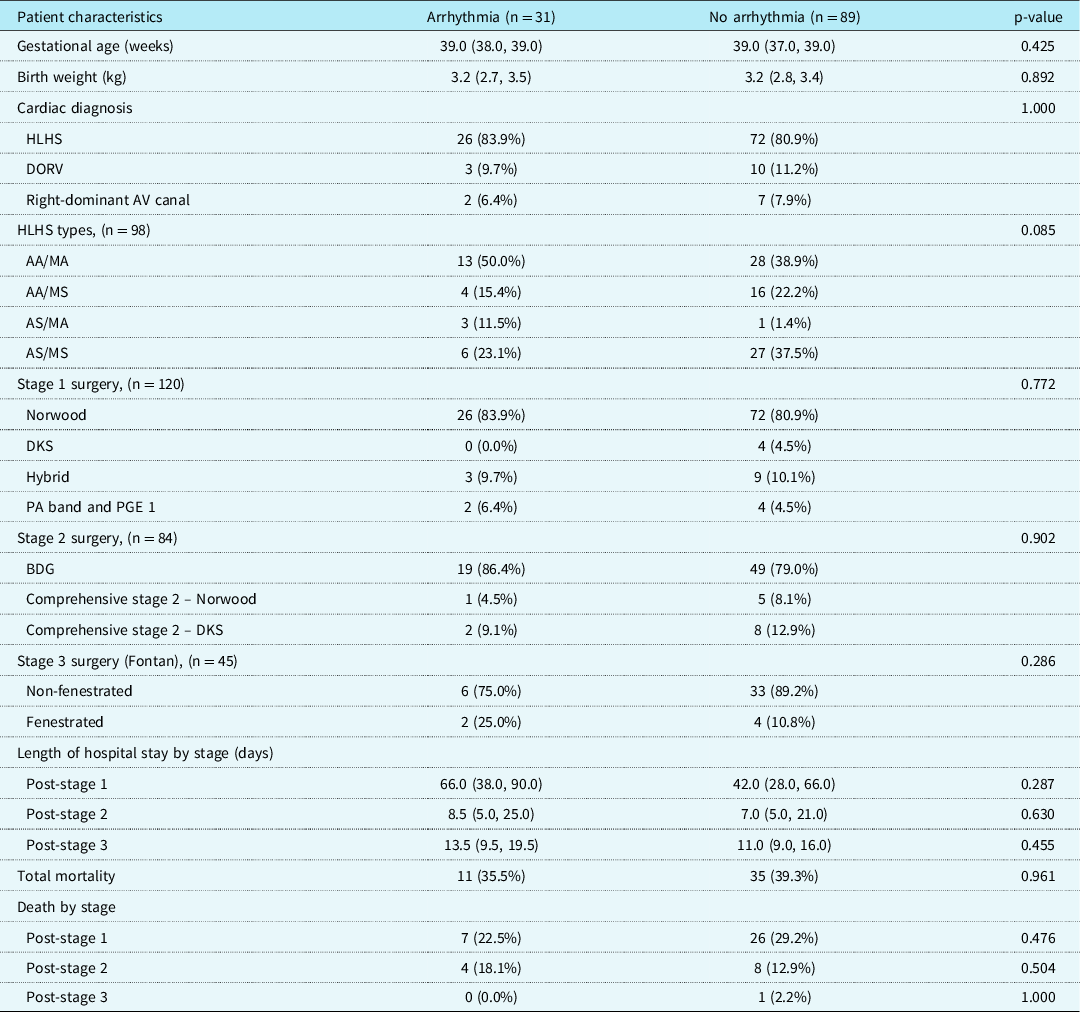
A total of 120 patients with HLHS and anatomic variants were included in the study. The overall patient characteristics were compared based on the presence or absence of arrhythmia in Table 1. There were no statistically significant differences in demographic, anatomic, clinical, or surgical variables between those with and without arrhythmia.
Clinical characteristics of patients

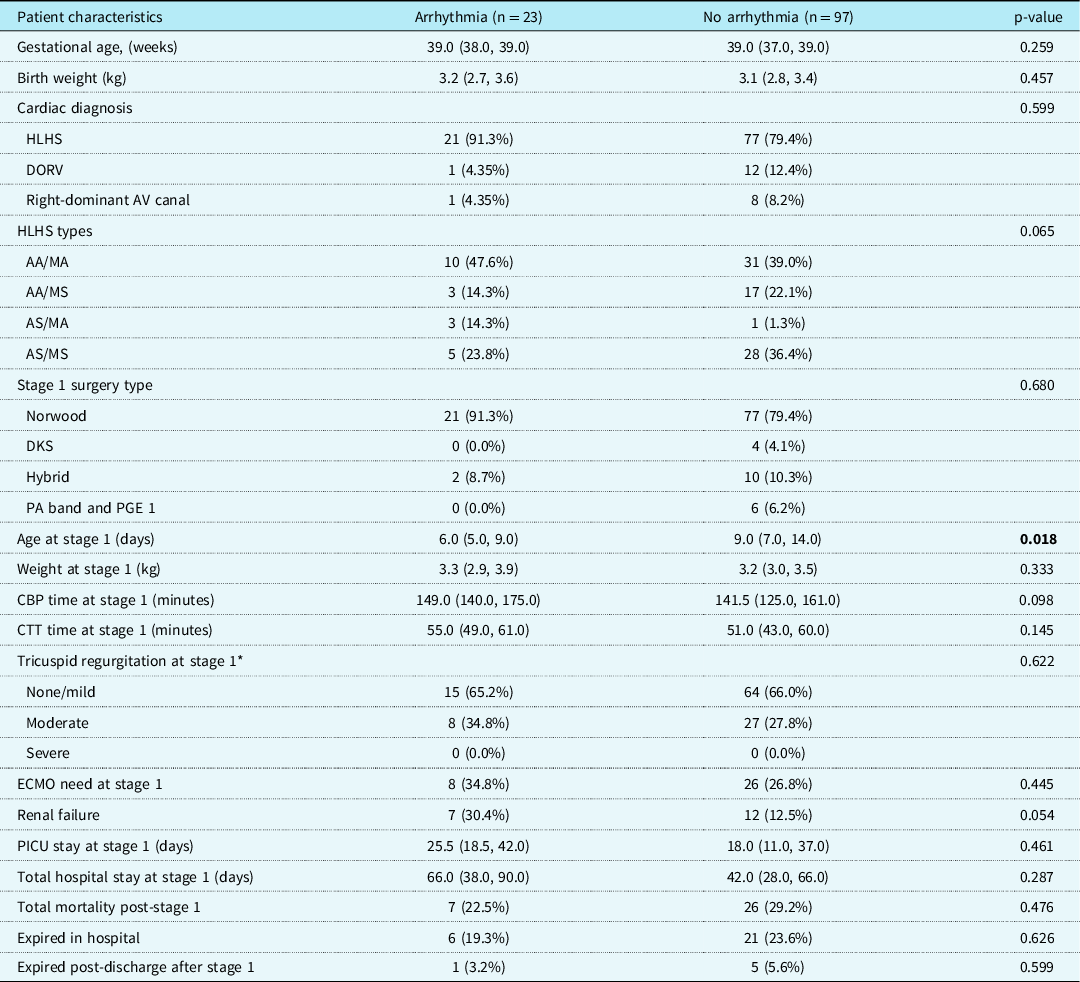
In Table 2, risk factors are specifically analysed after stage 1 surgery for differences between those with and without arrhythmia. Overall, there were no significant differences between those with and without arrhythmia, except that patients with arrhythmia were younger at stage 1 surgery and there was a marginal association with renal failure. Further analysis of those who have had Norwood at stage 1 also showed no significant differences between those with and without arrhythmia, except patients with arrhythmia were younger. In the multivariate analysis (controlling for cardiac diagnosis and renal failure), only age at stage 1 surgery was significantly associated with arrhythmia with odds of arrhythmia at stage 1 surgery being 1.12 times greater per unit (in days) decrease in age (p = 0.0439; 95% CI (1.003, 1.25)).
Characteristics of patients with and without arrhythmia at stage 1 surgery
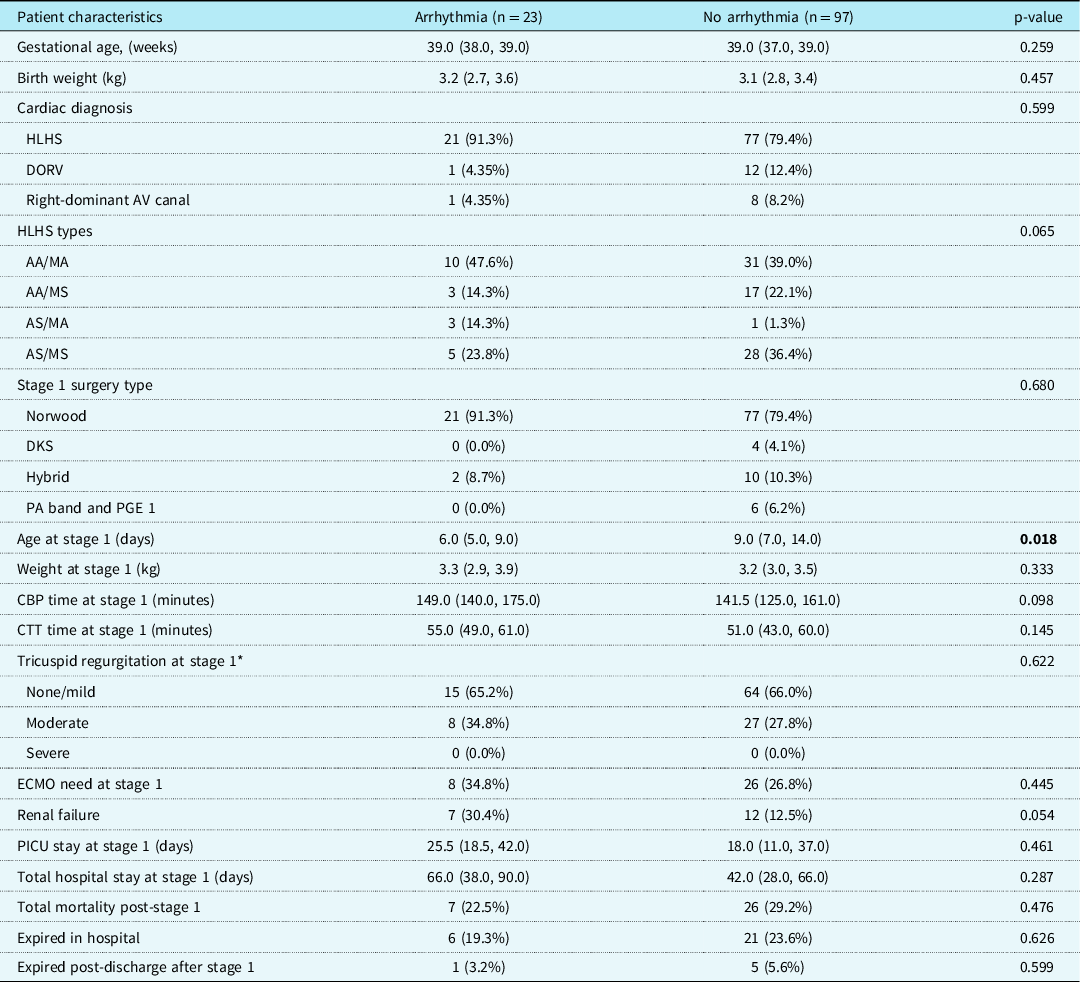
* 6 (6.2%) patients without arrhythmia at stage 1 surgery did not have echo performed to assess tricuspid regurgitation.
Most patients with arrhythmia had normal electrolyte levels at the time of arrhythmia (90% of the patients had normal potassium and all had normal serum calcium and magnesium level). Most patients were on one or more inotropic medications, such as milrinone (20 (64%)), dopamine (15 (48%)), and epinephrine (5 (22.5%)) at the time of arrhythmia. Sixteen patients were on more than one inotrope at the time of arrhythmia.
Arrhythmia incidence and types
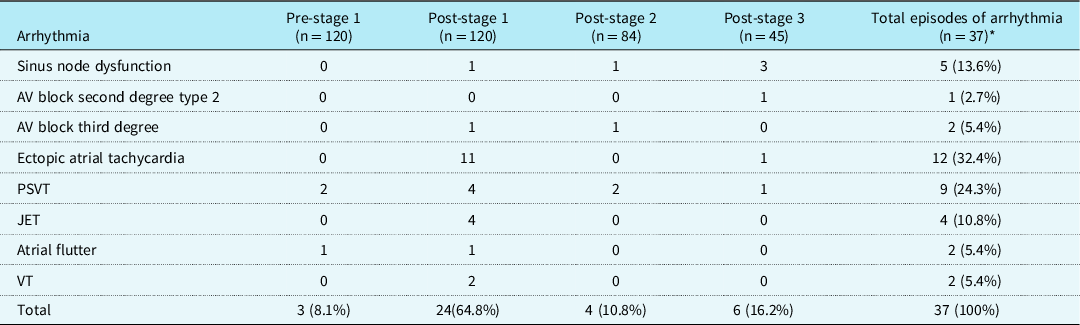
The types of arrhythmias that were observed in each surgical stage are depicted in Table 3. A total of 31 patients (26%) had 37 post-operative arrhythmias over a median follow-up period of 3.5 years (IQR 1.6, 6.1 years). Six patients had more than one episode of arrhythmia (one patient with EAT and two patients with PSVT had a recurrence of the same arrhythmia after different surgical stages and three patients had an occurrence of more than one type of arrhythmia). Of the 37 episodes of arrhythmia, 24 (64.8%) occurred in post-stage 1, 4 (10.8%) occurred in post-stage 2, and 6 (16.2%) occurred in post-stage 3. Three (8.1%) patients had arrhythmia before stage 1 (two patients had PSVT and one patient had atrial flutter). The median time from surgery to the onset of arrhythmia was 1 day (IQR 0, 5 days) and the median age at arrhythmia was 9 days (IQR 7, 132 days). Overall, supraventricular tachyarrhythmias were the most common type of arrhythmia, occurring in 21 patients, with a total of 27 (72.9%) episodes of arrhythmia.
Incidence and type of arrhythmia by stage of surgery
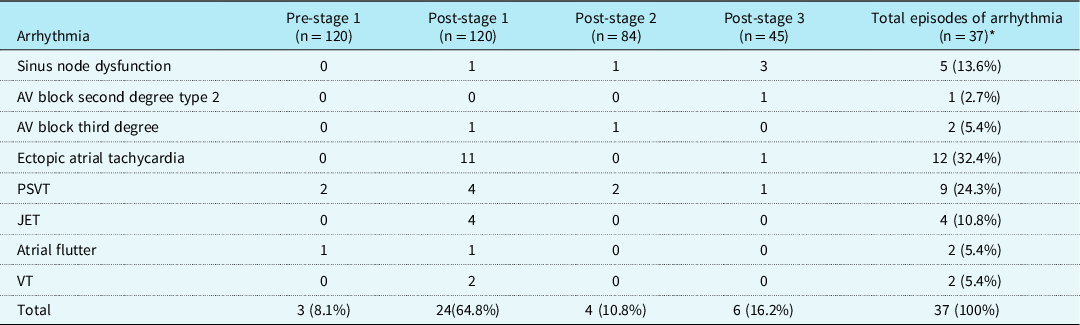
* Three patients had a recurrence of the same arrhythmia and three patients had more than one type of arrhythmia.
Arrhythmia therapy and course
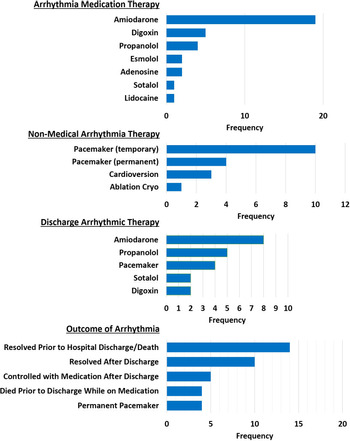
Figure 1 shows arrhythmia therapy and course. Although almost all patients (96.8%) required therapy acutely, a majority (65%) of the arrhythmia episodes resolved eventually. Amiodarone was the most used form of antiarrhythmic therapy for acute management of arrhythmia followed by temporary pacing. Amiodarone was also the most prescribed medication at discharge, followed by propranolol. The median duration of therapy was 18 days (IQR 5, 124 days).
Arrhythmia therapy and course.

Of the 37 episodes of arrhythmias, 14 (37.8%) resolved prior to discharge or death, 15 (40.5%) required medication at the time of discharge, and 4 (10.8%) had permanent pacemaker before discharge. Of the arrhythmias that required medication at the time of discharge, 10 (27%) eventually resolved, and 5 (13.5) were on chronic medical therapy at the time of the study. Arrhythmia in post-stage 1 was more likely to resolve compared to post-stages 2 or 3 (p = 0.006).
A 6-month-old infant with a complicated course after a Norwood operation and a bidirectional Glenn operation developed recurrent episodes of paroxysmal tachycardia despite treatment with amiodarone and propranolol. This patient underwent an electrophysiologic study 2 months after the Glenn operation, during which AV node reentrant tachycardia was diagnosed. Successful ablation of the tachycardia was achieved with cryoablation.
Outcome of arrhythmia
A total of 46 patients (38%) died: 33 in post-stage 1, 12 in post-stage 2, and 1 in post-stage 3. Since most deaths occurred after stage 1, mortality risk factors were evaluated for this group. In the univariate logistic regression analysis, mortality was associated with low birth weight, cardiac dysfunction, tricuspid regurgitation, ECMO use, and renal failure. Renal failure was multifactorial, and it was not specifically related to arrhythmia. In the multivariate logistic regression analysis, only ECMO use was found to be significant (OR 21.475; p = <0.0001; 95% CI (7.395, 62.363)).
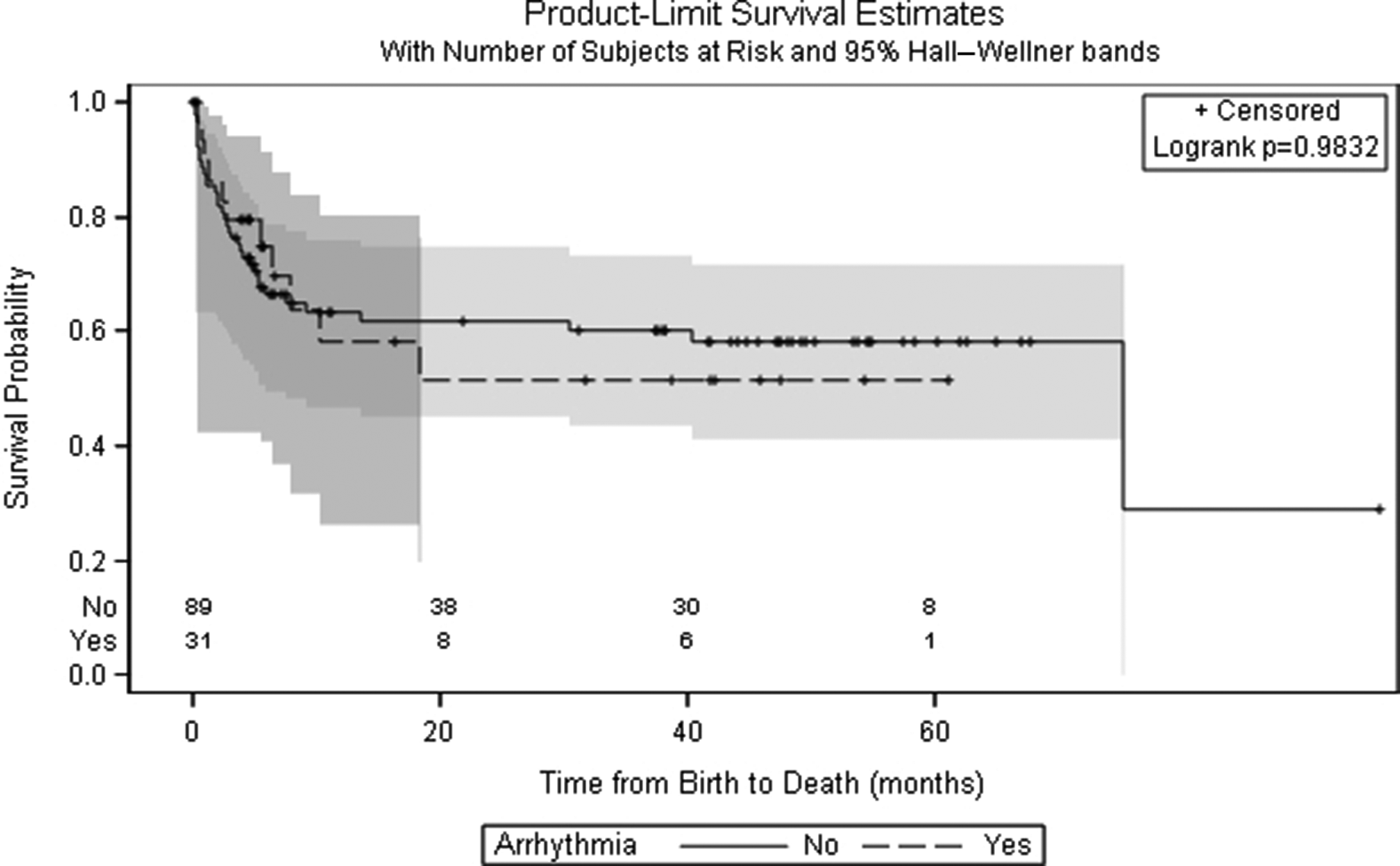
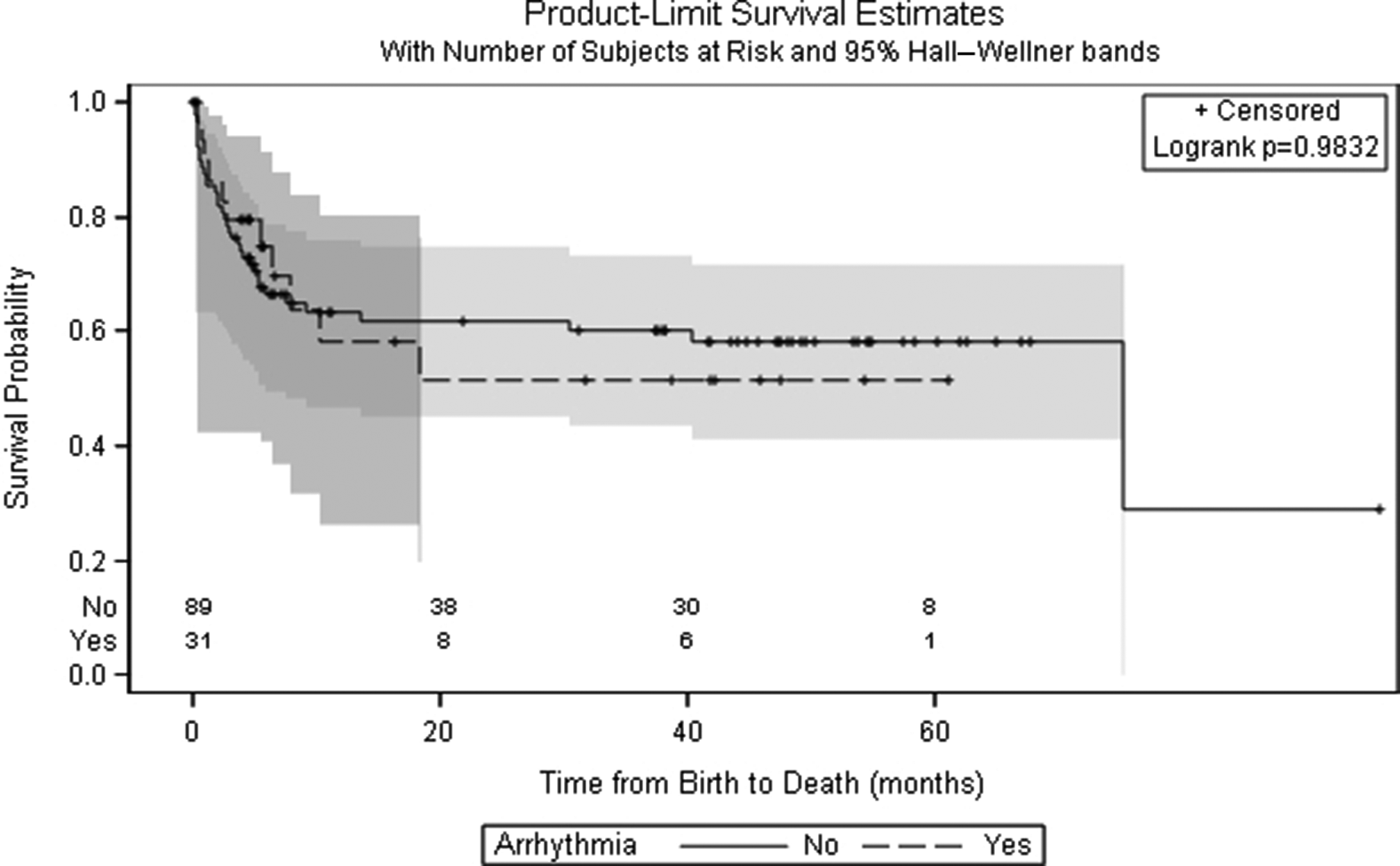
A total of 11 patients (7 in post-stage 1 and 4 in post-stage 2) died in the arrhythmia group. Of these, seven had resolution of their arrhythmia prior to the time of death and four were on antiarrhythmic medication at the time of death. Arrhythmia was not associated with mortality either at stage 1 surgery or for the overall cohort as shown in Fig 2. Amongst the seven deaths in post-stage 1, the arrhythmia diagnoses were atrial flutter (1), JET (2), PSVT (2), EAT (2), and AV block (1). One patient had two types of arrhythmias. No patient’s death was directly attributable to the arrhythmia. The length of PICU and total hospital stay was not significantly different between the two groups at each stage of surgery. There was also no specific arrhythmia that was associated with prolonged PICU or hospital stay.
Survival analysis of patients with and without arrhythmia.
Discussion
To the best of our knowledge, this is the largest study on the incidence, types, risk factors, and impact of post-operative arrhythmias in HLHS and its anatomic variants. Our data confirm that arrhythmias are common in the immediate post-operative period after stage 1 palliation of HLHS patients, with EAT and PSVT being the most common subtypes. There were no demographic, clinical, or surgical factors that increased the risk of arrhythmias, except for younger age at stage 1 palliation. Although most arrhythmias were haemodynamically significant and required therapy soon after onset, only half of the patients required antiarrhythmic therapy at discharge. Arrhythmias were more likely to resolve after stage 1 than after the subsequent stages. The presence of arrhythmias did not have a statistically significant impact on length of hospital stay or mortality.
Comparison to previous studies and aetiologic considerations
There have been very few studies about arrhythmias in HLHS. Trivedi et alReference Trivedi, Smith and Barker11 reported a 57% incidence of arrhythmias, but their study included premature atrial and ventricular beats. Gist et alReference Gist, Schuchardt and Moroze12 found an incidence of 34% of tachyarrhythmias after stage 1 palliation. Both incidences are higher than the findings in our study, which found an overall incidence of 26%, including before and after all stages of palliation. The incidence of arrhythmias after the first stage was 20%, with tachyarrhythmias accounting for 18%.
Several factors could have contributed to the observed differences in the incidence of arrhythmia. BT shunt was used in 85% of our patients, whereas right ventricle-to-pulmonary artery shunt was predominantly used in both cohorts, and this could have contributed to the difference.Reference Trivedi, Smith and Barker11,Reference Gist, Schuchardt and Moroze12 Right ventricle-to-pulmonary artery shunt was found to increase the risk of ventricular arrhythmias in the immediate post-operative period.Reference Hall, Smith and Fish13 The relatively higher percentage of hybrid procedures in our study population (10%) compared to the other studiesReference Trivedi, Smith and Barker11,Reference Gist, Schuchardt and Moroze12 may be another contributing factor. Arrhythmias have been found to be much less frequent after the hybrid procedureReference Moore, Paulus and Cua15 and after a comprehensive stage II palliation, following an initial hybrid stage I palliation.Reference Wilhelm, Paulus and Cua16 Variability in the inotropic and anaesthetic management could also have contributed to the difference.Reference McFerson, McCanta and Pan17–Reference Shuplock, Smith and Owen19
Amongst the types of tachyarrhythmias, EAT was the most common in our study and in the report by Gist et alReference Gist, Schuchardt and Moroze12. Trivedi et alReference Trivedi, Smith and Barker11 reported a higher incidence of PSVT. Accessory pathways are the most common aetiology of PSVT in infancy, but AV node reentry tachycardia may also occur. Atrioventricular reentrant tachycardias may spontaneously resolve in infancy in more than 90% of the patients.Reference Perry and Garson20 The aetiology of EAT and JET in the early post-operative period is multifactorial, including increased automaticity due to surgical trauma, inflammation, catecholamines, electrolyte and metabolic abnormalities, and higher atrial pressures. These triggering mechanisms decrease during convalescence. Thus, all potential types of tachyarrhythmias are likely to decrease during post-operative follow-up after the first stage of palliation. However, after the subsequent stages, more established mechanisms, such as chronic scars and reentrant or automatic mechanisms that have not resolved in the first few months of life are likely to persist.
There was no significant association between arrhythmia at stage 1 surgery and weight, gestational age, HLHS subtypes, type of surgery, degree of myocardial dysfunction, tricuspid regurgitation, cardiopulmonary bypass time, cross-clamp time, length of PICU and hospital stay, ECMO use or unplanned operations, and mortality. The only factor that was associated with arrhythmia in the logistic regression analysis was the age at stage 1 surgery. While younger age was not demonstrated as a risk factor in prior studies of arrhythmia in HLHS patients, it was reported in post-operative arrhythmias in other CHD types.Reference Delaney, Moltedo, Dziura, Kopf and Synyder9,Reference Rekawek, Kansy and Miszczac-Knecht10
Overall, the mortality after stage I palliation in this cohort was similar to the findings of prior studies, and arrhythmias were not associated with either overall mortality or stage-specific mortality. While Gist et alReference Gist, Schuchardt and Moroze12 reported no association between arrhythmias and mortality, Trivedi et alReference Trivedi, Smith and Barker11 reported a potential association of arrhythmia with mortality at stage 1 surgery, particularly sinus node dysfunction and high-grade AV block, with a 73% mortality in this patient group, despite appropriate recognition and initiation of pacing. The poor outcome of patients with heart block after stage 1 palliation was also documented by Mah et alReference Mah, Cheng and Alexander21 with 78% of their patients with pacemakers dying or needing a transplant. The increased mortality documented in those studies could have been due to pacemaker-associated ventricular dysfunction. Our study did not show an association with mortality amongst patients who had SAND or high-grade AV block. This could be due to the overall lower incidence of SAND and high-grade AV block. There was only one patient who had AV block that died in post-stage 1 and the death was not directly attributed to arrhythmia.
In conclusion, post-operative arrhythmias, especially supraventricular, were common in HLHS patients who undergo single-ventricle palliation. EAT was the most common type of arrhythmia. Arrhythmias were not associated with demographic, anatomic, or clinical factors except younger age at stage 1 surgery. Although most arrhythmias occurred in the immediate post-operative period and required treatment, many of them resolved and the presence of arrhythmia did not affect mortality.
The main limitation of this study is its retrospective nature and the possible incompleteness of reviewed records. The sample was not large enough to perform arrhythmia specific statistical analysis on sinoatrial node dysfunction or AV block. There was also no protocol for outpatient follow-up of patients with HLHS and arrhythmia surveillance, which could have potentially led to an underestimation of the incidence of arrhythmia.
Acknowledgements
We would like to acknowledge our families for their unwavering support and encouragement.
Financial support
This research received no specific grant from any funding agency, commercial, or not-for-profit sectors.
Conflict of interest
None.
Ethical standards
The institutional board at the Children’s Mercy Hospital approved the study.