


1. Introduction
Data has become a fundamental production resource in modern economies. Governments compete for advantage by investing in data collection, standardization, and provision to domestic firms. To bridge this technological gap and capture the strategic value of artificial intelligence (AI), states have radically transformed their policy toolkits, moving far beyond traditional trade levers. The traditional levers of industrial policy, such as tariffs, grants, and tax credits, are now supplemented by integrated digital infrastructure provision. These measures range from compute power vouchers to specialized data spaces designed to nurture national AI champions.Footnote 1 These vouchers represent a socialization of privatesector risk by shifting the high cost of computing from firms to the state. From the common European data spaces to China’s data policies and the US National AI Research Resource (NAIRR),Footnote 2 nations are increasingly treating data as the primary economic substrate.Footnote 3 Besides, access to the underlying data remains highly concentrated within a few firms and economies.Footnote 4 This concentration has major economic meaning. Training a large language model serves as the foundation of current AI systems. This process requires extensive datasets, large computational power, and investments of billions of dollars. These high entry barriers mean that only a limited number of companies and countries have the resources to develop leading systems.
These developments raise fundamental questions. How do established international trade rules accommodate this shift? Will WTO law remain neutral when governments provide data support, and how will these measures relate to the purpose of subsidy rules and the resurgence of industrial policy?Footnote 5
To deal with this conflict, the WTO and researchers are assessing if rules from the past century can accommodate twenty-first century digital data. This search for an answer centers on the principle of technological neutrality. At its core, technological neutrality posits that trade rules should not discriminate on the basis of the technological means of production or delivery, thereby ensuring that legal disciplines remain adaptive to technological change rather than remaining crystallized around particular technologies existing at the time of rule-making.Footnote 6 This principle serves a dual function: it prevents Members from using technology-specific language to evade trade obligations, while simultaneously recognizing that general trade rules apply with equal force to both traditional and emerging technologies.
The Appellate Body's embrace of evolutionary interpretation-reading treaty terms in light of changing circumstances rather than freezing them to their 1994 meaning-can be traced to United States – Import Prohibition of Certain Shrimp and Shrimp Products,Footnote 7 held that the term ‘exhaustible natural resources’ must be interpreted ‘in the light of contemporary concerns.’ This principle of evolutionary interpretation provides the interpretive foundation on which technological neutrality was built. More directly relevant to this paper, the dispute in United States–Large Civil Aircraft highlighted how government-funded research, proprietary scientific data, and associated IP rights can be brought within the scope of SCM Agreement subsidies—whether framed as government purchases of services, foregone revenue, or financial transfers—demonstrating the potential for WTO subsidy rules to adapt to intangible assets in the modern data economy.Footnote 8 The Panel in that case explicitly rejected the proposition that the ordinary meaning of goods should be ‘restricted to tangible, possessable items’, reasoning instead that intangibles with clear commercial value and industrial utility should fall within the scope of SCM disciplines. The idea of technological neutrality was first clearly stated in the United States – Measures Affecting the Cross-Border Supply of Gambling and Betting Services Footnote 9 Since then, it has been used in digital trade fights to show that GATS rules apply if a service is delivered in person (Mode 3) or online (Mode 1).Footnote 10 This interpretive move is particularly significant for understanding data as a trade input, insofar as it suggests that the form of transmission should not determine its classification under trade law.
It is essential to clarify that technological neutrality, as deployed in this paper, must be distinguished from the broader principle of competitive neutrality, which is a concept sometimes invoked to resist trade-distortive subsidies more generally. Competitive neutrality, in its economic sense, refers to the level playing field principle that trade should be based on comparative advantage rather than government favor. Technological neutrality, by contrast, is a principle of legal interpretation: it instructs courts and adjudicatory bodies that rules crafted in reference to outdated technologies should be interpreted to apply to functionally equivalent modern technologies. The distinction is crucial, because technological neutrality does not independently justify the imposition of subsidy disciplines; rather, it justifies the application of existing disciplines (themselves grounded in competitive neutrality) to technologies not contemplated when those disciplines were drafted.
Technological neutrality now demands that the law adapt to digital realities. If the SCM Agreement disciplines government provision of physical infrastructure such as roads and power plants, it should also discipline government provision of digital infrastructure when that provision distorts trade. However, applying 1994 language to 2025 technologies requires interpretive choices. Does ‘goods’ in Article 1 encompass digital datasets? Does ‘services other than general infrastructure’ cover data curation services? Current state interventions blur the line between competitive neutrality and regulatory autonomy.Footnote 11
Subsidy disciplines emerged in a mercantilist era when governments directly supported export industries through tariffs, quotas, and financial transfers. The SCM Agreement reflected skepticism of such policies and created disciplines designed to prevent a race to the bottom in government support for exports. Yet contemporary industrial policy has evolved significantly. High-income economies now rarely impose tariffs; instead, they compete through non-tariff mechanisms: investment screening, regulatory standards, innovation incentives, and infrastructure provision.Footnote 12 This shift reflects recognition that markets alone will not produce the technological capabilities governments deem strategically important. However, existing WTO disciplines on subsidies primarily apply to goods,Footnote 13 leaving a gap in coverage for AI-related services and intellectual property that may allow governments to provide concentrated support to specific domestic firms. Second, the ongoing WTO moratorium on customs duties on electronic transmissions, extended until March 2026, complicates the unilateral enforcement of trade remedies.Footnote 14 The moratorium prevents the application of traditional border duties on digital data, creating an enforcement paradox where a Member might identify an injurious data subsidy but be legally barred from levying a digital countervailing duty (CVD) at the border.
Also, subsidy rules aim to ensure that firms compete based on efficiency rather than government favoritism. At the same time, they must preserve the right of governments to pursue legitimate public objectives such as research and innovation. Petros Mavroidis argues that subsidies are an exception to the pillars of non-discrimination and must be strictly controlled to prevent a race to the bottom. While a government-funded data repository might resemble a public good, data resources are often designed to be excludable, requiring specialized technical capacity.Footnote 15 This creates a competitive advantage from state data control.
While this state-led mobilization of digital resources accelerates domestic innovation, it simultaneously generates profound friction with existing international trade law. The core dilemma lies in distinguishing legitimate public investment from trade-distortive market intervention. However, the state provision of these resources creates a legal tension between public investment and industrial support. Data provision blurs this line in ways that traditional subsidy law did not anticipate. A government-funded data repository theoretically available to all economic actors resembles a form of permissible public investment. Yet data resources are often inherently excludable (requiring specialized technical capacity to process) and targeted (designed for specific industrial uses). Consequently, the issue is not whether governments may fund data projects, it is about deciding if that funding fits the definition of a subsidy that other countries can complain about under the SCM Agreement.Footnote 16
More specifically, a central legal question emerges from these state interventions. Does the provision of curated data by a government constitute an actionable subsidy under the SCM Agreement? This paper argues that certain novel forms of state-led provision of data and computing power may fall within the concepts of financial contribution, benefit, and specificity. It presents this as a plausible doctrinal pathway rather than a completed solution. The goal is to help the reader understand what role data plays in modern economic ecosystems and how that reality relates to rules negotiated in a different era.
Given these doctrinal ambiguities and enforcement paradoxes, the academic community has only begun to map the contours of data as a subsidized trade input. The prevailing discourse has largely overlooked this dimension, leaving a critical analytical void. Despite the growing geoeconomic importance of AI, a significant gap remains in the international trade law scholarship. To date, the literature has focused extensively on the data-restrictive side of the digital economy, analyzing data localization mandates, cross-border flow restrictions, and privacy protections under the GATS. Conversely, the supportive side of data policy, specifically its role as a subsidized industrial input, remains largely unexplored. While some scholars have called for a general reform of WTO rules to accommodate digital trade, there is a lack of rigorous analysis detailing the conceptual fit of state data provision within the specific legal tests of financial contribution, benefit, and specificity under the SCM Agreement.Footnote 17 The prevailing legal discourse often assumes that subsidy disciplines only apply to physical products, failing to engage with the input–output bridge where a subsidized digital input results in trade-distortive output.
This paper contributes to the field by articulating a unified framework for analyzing state-led data provision as a potential subsidy. It moves beyond a simple application of existing law to examine how non-rivalrous, intangible assets can be reconceptualized within the existing textual boundaries of Article 1.1 of the SCM Agreement. This analysis evaluates the legal characterization of data and its cross-border flow, addressing how fragmented regulatory frameworks and data concentration among dominant firms may hinder the inclusive diffusion of AI technologies and distort competition in digital markets. Moreover, the evidentiary challenges presented by the development of WTO subsidy jurisprudence is also tackled. Currently, this jurisprudence mandates that complaining Members furnish affirmative evidence of price undercutting or inhibited market growth in global markets. This task is rendered arduous due to the opaqueness of digital pricing models and the incipient state of AI markets.
2. Data Infrastructure as a Subsidizable Input under the SCM Agreement
Reconceptualizing state-led data sharing for the digital era requires a sophisticated interpretation of how intangible assets such as curated data repositories function as structural industrial inputs. This section undertakes a surgical examination of these legal elements, moving beyond the simplistic comparison of data to physical products, and instead adopts a paradigm of socialization of risk and structural enclosure. By tracing the evolution of WTO jurisprudence from natural resources to modern findings on scientific information,Footnote 18 this analysis evaluates how the SCM Agreement disciplines the strategic endowments that fuel the global race for AI dominance.
The foundational legal question is straightforward: does government provision of curated data and computing capacity meet the SCM Agreement’s definition of a subsidy? Article 1.1 requires two elements: a financial contribution and a benefit. Article 2 adds a third requirement: specificity. This section works through each element step by step, examining why data curation and compute access typically fall outside the ‘general infrastructure’ exception, how benefit is measured against market benchmarks, and when the distribution of benefits satisfies the specificity requirement.
2.1 Legal Characterization of Data and Computing Resources
The first thing to figure out is if data and computing power from the government count as a ‘financial contributions’. The answer depends on if these digital resources fit into the rules for ‘goods or services’ rather than just being ‘general infrastructure’. The threshold legal characterization of data depends upon its classification under Article 1.1(a)(1)(iii) of the SCM Agreement, which defines a financial contribution as a situation where a government provides goods or services that are not part of the general infrastructure. Because the SCM Agreement does not explicitly define the terms goods or services, WTO adjudicatory bodies have historically adopted a substance-over-form approach to prevent Members from circumventing disciplines through the use of non-monetary transfers of value. To apply this approach effectively, a disciplined doctrinal analysis must distinguish among the different types of state-provided inputs.
First, raw data consists of unorganized and unannotated information, such as unindexed satellite imagery or raw administrative records. In its raw state, this information has potential but unrefined value. While the provision of raw data can be a financial contribution, its impact on the recipient is often limited because it is not yet ready for industrial use. Second, curated datasets are digital assets that have been cleaned, labeled, and optimized for specific tasks, such as training a large language model. Unlike raw data, these datasets are processed production inputs with a clear market value. Third, compute resources involve the government providing access to high-performance computing facilities and hardware clusters. This type of support is legally characterized as the provision of a service or the use of a government facility.
Finally, data curation services occur when the state performs the labor-intensive work of data preparation on behalf of a firm, rather than providing a pre-existing asset. This includes activities such as data verification, error removal, and filtering. This government assumption of commercial costs shifts the high expense of preparation from the firm to the state. While these four categories are analytically separate, each can constitute a financial contribution when the government provides a resource or performs a function that conveys economic value to a specific industry.
2.1.1 Jurisprudence on Intangible Inputs and Intellectual Property
Can data be characterized as a ‘good’ under the SCM Agreement even though not tangible? While not explicitly defining intangible data as a generic ‘good’, the rulings in US–Large Civil Aircraft paved the way for addressing data in subsidy law, with key implications for the modern data economy. In this case, the Appellate Body addressed the provision of scientific information and rights over data generated through government-funded research by NASA and the US DoD, recognizing the transfer of such data and tech rights as a financial contribution under the SCM Agreement.Footnote 19 The Panel in that dispute reasoned that the ordinary meaning of the term goods should not be restricted to tangible, possessable items. Instead, the Panel stated that there is no reason to assume that the ordinary meaning of goods necessarily excludes intangibles, particularly when those intangibles possess clear commercial value and are utilized as inputs in an industrial process.Footnote 20
To discuss this issue, it is essential to examine the Sykes–Neven theory. The foundational way trade law looks at subsidies comes from the work of Alan Sykes and Damien Neven. They offer different views on whether subsidies are an economic problem that needs fixing or whether they are just a government’s way of making its own rulesthat should be respected. Neven and Sykes suggest that legal experts should check if a recipient is getting an unfair advantage. They argue that who owns the intellectual property should not be the only aspect that determines if a government action counts as a benefit.Footnote 21 Sykes contends that subsidies often serve legitimate public policy objectives and that broad-based trade restrictions on subsidies may be economically inefficient.Footnote 22 His economic analysis emphasizes that subsidies can address market failures (such as externalities in research and development) and that the case for subsidy disciplines rests on contestable assumptions about welfare effects.Footnote 23
In both Neven and Sykes’ view, a government contract might still be an efficient arrangement even if it confers an advantage, unless the state overpays for services or provides over-compensation through data rights. This perspective emphasizes that the primary job of the law is to identify an economic advantage that is relative to the market, rather than focusing on the intangible nature of the asset itself.
The Sykes–Neven framework provides important context for understanding why state data provision warrants SCM disciplines even when considering Sykes’s skepticism toward broad subsidy regulation. Sykes argues that many subsidies reflect legitimate policy judgments and that disciplines should be calibrated to address only those subsidies that create clear cross-border distortions.Footnote 24 Nevertheless, Sykes’s analysis posits that subsidy benefits are fully utilized upon transfer. Specifically, it assumes that once a financial transfer takes place, the subsidy is ‘expended’ and fails to yield continuous strategic advantages. Data subsidies operate under different economic logic. Because data is non-rivalrous, a government can provide the same high-quality training dataset to multiple domestic champions at minimal marginal cost, thereby creating perpetual, compound competitive advantages that persist and amplify over time as models are retrained and refined. This structural feature of data subsidies distinguishes them from the transitory subsidies Sykes discusses and aligns them with Neven’s concern regarding entrenched market enclosure. Furthermore, the excludability aspect of state-curated data, which is realized via technical gate-keeping and vetting mechanisms, implies that the socialization of artificial intelligence development costs is intentionally concentrated. This concentration differentiates data subsidies from truly public goods (such as widely disseminated basic research) and places them within Neven’s paradigm of selective rent creation.
Furthermore, the non-rivalrous nature of data does not disqualify it from being a ‘good’ in the trade law sense. On the contrary, as the state can provide the same high-value input to multiple domestic champions at near-zero marginal cost, this non-rivalry amplifies the scale of the potential distortion. This concentration of fiscal support and regulatory readiness creates a strategic advantage for firms in high-income economies, helping them to navigate the immense costs of data acquisition and model development.Footnote 25 The high fixed costs associated with data resources and computing power are identified as primary factors contributing to the high concentration of AI capabilities in a handful of leading economies and dominant firms. The main point is not whether data is labeled as a digital product or a data-cleaning service, what really matters is that data is an economic resource from the government that gives a clear financial boost to a specific industry.
2.1.2 Distinguishing between Raw Data and Prepared Datasets
Does the legal character of state support change when data is processed for industrial use? The application of the Large Civil Aircraft jurisprudence to Generative AI requires a distinction between raw, unstructured information and AI-ready training sets. High-quality data is recognized not as a naturally occurring resource but as a foundational asset requiring substantial investment in an institutional and infrastructural capacity. Applying prior findings on scientific information to modern technology requires a distinction between raw, unstructured information and datasets that are ready for training. Besides, the collection, labeling, annotation, and verification of training data are the labor-intensive activities essential to the development and optimization of AI models, often demanding scalable storage solutions and compliance with complex data regulations. Raw data, such as unindexed medical records or unprocessed satellite imagery, has limited utility for training a Large Language Model (LLM). The commercial value is realized only through a labor-intensive lifecycle of data preparation.
How do government cleaning and labeling activities create a financial advantage for domestic firms? When a government helps create a national data pool, it is often providing much more than raw information. These initiatives typically involve the state that is checking the data to remove errors and labeling it to provide necessary context for machine learning. By doing this, the state engages in a state assumption of commercial costs that would otherwise be paid by the firm. The global market, for prepared AI training data, is projected to grow to US$ 17.04 billion by 2032,Footnote 26 which demonstrates the economic value of this prepared assets. Access to resources and the high costs of development are significant barriers to entry. While existing rules in the SCM Agreement apply primarily to hardware, the state provision of these AI-ready assets functions as a production input with a clear market equivalent in the form of data licensing.
2.2 The Attribution Framework: Connecting Data Policies to the State
A second issue to consider is whether or not the organization giving out data is actually part of the government. The legal analysis needs to look at who is giving the support separately from how it is being delivered. A ‘financial contribution’ counts as government support no matter whether the state does it directly or tells another group to do it. This section clearly explains the different ways in which national data policies are linked to the state.
2.2.1 Functional Criteria for Public Bodies
The first attribution pathway involves the direct provision of data by a public body. In the landmark case United States–Definitive Anti-Dumping and Countervailing Duties on Certain Products from China, the Appellate Body established a functional test to define what constitutes a public body.Footnote 27 An entity is a public body if it possesses, exercises, or is vested with governmental authority. The formal legal status of the entity is not dispositive: the core of the test is its function and relationship to the state.Footnote 28
In the digital realm, state-owned commercial banks, national research institutes, and government-funded cloud platforms often fulfill this definition. These entities are frequently taskmasters of national AI strategies, and their provision of data resources under delegated governmental authority is a measure to achieve technological sovereignty. For instance, a national data platform managed by a government research council that aggregates public sector records and licenses them to domestic tech giants is acting as a public body. Its actions are direct expressions of state policy, and the economic resources it transfers are directly attributable to the government under Article 1.1(a)(1).
2.2.2 Government Direction of Private Data Resources
The second attribution pathway, provided for in Article 1.1(a)(1)(iv), applies when a government uses a private body as its proxy to make a financial contribution. In US – Countervailing Duty Measures (China), the Appellate Body affirmed that ‘entrust’ refers to giving responsibility to a private body and ‘direct’ means commanding a private body to perform a task. This doctrine provides a key interpretive tool for analyzing modern ‘data realms’, where governments may rely on regulatory mandates to compel private entities to socialize their data assets.Footnote 29 This attribution pathway is crucial for analyzing policies such as the Common European Data Spaces, where private platforms may be commanded or incentivized to share their proprietary data with domestic rivals. A government action need not be a legally binding command to constitute direction, it is sufficient if the government provides an incentive that leaves the private body with no realistic commercial choice but to act in a particular way. For example, if a national AI strategy document provides R&D tax credits to private firms on the condition that they contribute their datasets to a national platform for use by startups, this constitutes a financial contribution through direction. By maintaining this surgical distinction, the analysis ensures that governments cannot bypass subsidy rules by using nominally private consortia or public–private partnerships to bestow data-based advantages.
2.3 Criteria for the General Infrastructure Exception
Even if data provision constitutes a ‘financial contribution’, it may still be exempt if it qualifies as ‘general infrastructure’ under Article 1.1(a)(1)(iii). This section explains why state-led data provision typically fails this exception.
2.3.1 Standards for Universality and Access
The Panel in EC and Certain Member States–Large Civil Aircraft provided the definition of the infrastructure exception, stating that general infrastructure is that which is available to all or nearly all entities in the economy.Footnote 30 The criterion for this concept lies in its universality and non-excludability. Classic examples of general infrastructure include national road networks or public sanitation systems.
In contrast, state-facilitated data pools for AI are inherently excludable and selective. The legal standard for infrastructure requires that the resource be provided as a public good, yet data pools are frequently designed with technical and legal barriers that limit their use to a select group of technologically advanced firms. If a resource is restricted to a specific sector or to firms meeting high computational thresholds, it cannot be described as general. Besides, control over data infrastructures is a form of power that trade law has traditionally sought to discipline.Footnote 31 The strategic provision of AI-ready data to nurture national champions almost certainly constitutes the provision of goods or services other than general infrastructure. The failure to meet the ‘general infrastructure’ exception does not stem merely from the unequal technological capacity of downstream users. Rather, it derives from the state’s active design of technical gatekeeping, vetted user registries, and explicit eligibility criteria that legally and structurally restrict access to a designated group of domestic enterprises, thereby breaching the requirement of general availability across the economy.
2.3.2 Selective Curation for Industrial Use
This selective essence is manifested in three main ways. Firstly, there exists technical exclusivity. Access to petabyte-scale training sets necessitates specialized high-performance computing (HPC) environments that are restricted to pre-approved participants. Second, there is targeted curation: the commercial value of data lies in its preparation for specific tasks. When a state cleans, labels, and annotates data specifically for AI training, it is providing a bespoke production input tailored to a single industry (AI development), not a public good for general use. Third, there are national security and privacy carve-outs: many high-value datasets cannot be made universally public. When a government provides privileged access to these restricted datasets for a select group of domestic firms, it is furnishing a specific commercial asset. This threshold issue found in the Appellate Body Report, US–Softwood Lumber IV, Article 1 is distinct from the Article 2 specificity requirement, a distinction that this analysis strictly maintains.Footnote 32
2.4 Measuring Benefit and Economic Advantage
Article 1.1(b) of the SCM Agreement requires that a financial contribution confers a benefit. The Appellate Body in Canada–Aircraft established that the concept of benefit refers to the advantage received by the recipient relative to the market, rather than the cost to the government.Footnote 33 This section moves beyond simple price-comparison models and instead analyzes benefit as the socialization of industrial risk.Footnote 34
2.4.1 Market Benchmarks for Data Licensing
In Canada–Aircraft, the Appellate Body noted that although Article 14(d) primarily concerns the calculation of the amount of a subsidy in CVD investigations, it also provides essential context for the interpretation of benefit in Article 1. Under Article 14(d), a benefit exists if the government provides a good or service for less than adequate remuneration relative to prevailing market conditions.Footnote 35 In the AI sector, the marketplace is no longer merely a site of transactions but a baseline for commercial rationality.Footnote 36
When a government provides domestic AI firms with free or discounted access to curated training sets, it is acting inconsistently with the behavior of a commercial operator. The AI training dataset market alone is expected to experience rapid growth, with projections indicating that it will reach US$ 17.04 billion by 2032.Footnote 37 This expansion reflects the increasing economic importance of data and data licensing as foundational inputs for the development of generative AI systems. This burgeoning market provides a baseline for constructing benchmarks. If a private data broker, recognizing the monopolistic potential of a high-quality dataset, were to demand an equity stake or substantial royalties, the state’s failure to seek such remuneration would constitute a clear economic benefit.
2.4.2 State Assumption of High Entry Costs
A more sophisticated paradigm for the AI treats data as a capitalized intangible asset. In the AI economy, the primary barrier to entry is the staggering cost of data preparation. Training new foundation models is an intensive process that demands massive computational power, vast datasets, and substantial capital investment. Furthermore, the physical infrastructure required, such as hyperscale data centers, involves significant financial outlays, often reaching billions of dollars.Footnote 38 When a state undertakes data cleaning and labeling, it is not simply offering a ‘commodity’; rather, it is socializing the most substantial capital risk within the AI lifecycle. By endowing domestic firms with a cost advantage that is not available to foreign rivals, the state confers a strategic rent that directly improves the recipient’s market capitalization.Footnote 39 This capitalization approach provides a more robust legal foundation compared to standard price-comparison models. This is because it has the structural advantage of being the first to train on exclusive national datasets in a market with winner-takes-all dynamics.Footnote 40
2.5 Specificity and Restricted Access to Digital Resources
Establishing the existence of a subsidy is only the first hurdle. Article 2 of the SCM Agreement requires that the subsidy be specific to an enterprise or industry. A measure that fails to be categorized as general infrastructure under Article 1 is not automatically specific: it must still meet the criteria of Article 2 to be actionable.
2.5.1 De Facto Specificity and the Infrastructural Threshold
While some national data strategies are de jure specific (naming the AI sector in law), most utilize nominally neutral language. In such cases, the analysis must focus on de facto specificity under Article 2.1(c).Footnote 41 As established in United States–Subsidies on Upland Cotton, de facto specificity exists if the actual distribution of benefits is concentrated in a limited group.Footnote 42 This paper argues that state-facilitated data pools are inherently specific because of the infrastructural threshold.Footnote 43
AI adoption tends to cluster in large, urban, and digitally connected firms. These firms, particularly those in highly productive metropolitan areas and innovation hubs, are led by larger enterprises with the resources necessary to manage complex production processes and invest in the digital infrastructure required for AI development and deployment.Footnote 44 If a government data platform is theoretically open to every firm, but only a handful of domestic AI champions possess the high-performance computing power required to process petabytes of training data, those firms are the predominant users. Regarding the literature that also paid attention to the risk of such ‘digital inequality’, where infrastructural control generates massive rents for a few dominant firms,Footnote 45 the state is making a targeted industrial investment whereby only a specific group of companies can realistically satisfy the specificity requirement.Footnote 46
2.5.2 Industry Targeting and Restricted Access
The potential for AI to drive inclusive growth is challenged by the high concentration of development capacity within a limited number of firms and economies. High-income and upper middle-income economies account for most of global subsidy measures targeting AI-related products, which demonstrates a substantial risk of further concentrating AI capabilities and widening the structural gap across income groups. There comes a problem of data inequality, arguing that control over data conveys significant social and economic power. When a government oversight committee exercises discretion to approve data access for ‘trusted’ national champions while denying foreign competitors, it fulfills the Article 2.1(c) test of discretionary specificity.Footnote 47
Furthermore, the curation process itself acts as a mechanism of enclosure. When a state cleans and labels data specifically for the requirements of a domestic AI model, it is providing a bespoke industrial input that has no utility for other sectors. This form of ‘algorithmic capture’ ensures that the benefits of state support remain locked within the national AI industry. By maintaining the surgical distinction between the definition of the subsidy and its specificity, this analysis demonstrates that national data policies are precise instruments of digital industrial policy. They are designed to benefit a domestic industry by providing privileged access to the algorithmic commons, thereby distorting the level playing field that the SCM Agreement was intended to protect.
2.6 Compliance Framework: The ‘Traffic Light’ Approach to Data Subsidies
To operationalize the legal anatomy developed above, this paper proposes a tripartite compliance framework for state-led data initiatives, mapped against the core disciplines of the SCM Agreement (see Figure 1). This mapping evaluates data measures along two axes: Legal Specificity (Art. 2) and Market Distortiveness.
Mapping of Data-Related Measures within the SCM Agreement Framework. This plot categorizes state-led data initiatives based on specificity (X-axis). Data-point placements are stylized approximations intended to illustrate relative positioning across categories, not precise empirical measurements.

Figure 1 Long description
The scatter plot maps data-related measures within the SCM Agreement framework. The x-axis is labeled ′Legal Specificity (SCM Art. 2)′ and the y-axis is labeled ′Market & Trade Distortiveness.′ Both axes use qualitative scales without units. The plot categorizes initiatives into zones: Green Zone for non-specific permissible subsidies, Yellow Zone for actionable subsidies and a Prohibited Zone for highly actionable subsidies. Specific areas include ′General Digital Infrastructure′ in the Green Zone, ′Restricted Research Data Pools/Data Spaces′ in the Actionable Zone and a ′Targeted Strategic Corpora′ point in the Prohibited Zone. As legal specificity and market distortiveness increase, points move towards the Prohibited Zone, indicating higher regulatory scrutiny.
This plot illustrates the legal categorization of state-led data initiatives based on their degree of specificity and trade distortiveness. Measures range from non-specific digital public goods (Green Zone) to restricted-access research resources (Yellow Zone), and finally to highly targeted industrial data endowments (Red Zone) that pose the greatest risk to competitive neutrality. Data thresholds are derived from WTO and OECD 2024/2025 AI infrastructure metrics.
The ‘Green Zone’ (Non-Specific Infrastructure): These measures, such as general telecommunication protocols or non-discriminatory access to public administrative records, align with the ‘general infrastructure’ exception of Article 1.1(a)(1)(iii). Because they are universally accessible and do not target specific AI industries, they fail the specificity test and remain non-actionable digital public goods.
The ‘Yellow Zone’ (De Facto Specificity): This category includes initiatives such as ‘Sectoral Data Spaces’ or ‘Restricted Research Data Pools’. While often framed as open, they create ‘de facto specificity’ through high technical barriers and vetted access. As analyzed above, when only a few domestic AI champions possess the computational power to utilize these datasets, the state confers a concentrated benefit that is actionable if ‘serious prejudice’ to foreign rivals can be evidenced.
The ‘Red Zone’ (Targeted Industrial Endowments): The most sensitive category involves ‘Targeted Strategic Corpora’ specifically curated for national champion firms. These measures represent a clear socialization of industrial risk and capitalization of intangible inputs. By providing bespoke, AI-ready data at less than adequate remuneration, governments are essentially providing prohibited-leaning support that directly threatens the level playing field of the global AI market.
Figure 1 synthesizes these findings, illustrating how the strategic enclosure of the ‘algorithmic commons’ moves state support from the green safe harbor towards the red zone of trade-distortive intervention.
2.7 Synthesis of the Legal Anatomy
The synthesis of this section reveals that the state provision of curated data for AI training is an actionable subsidy that meets all the criteria of the SCM Agreement. By viewing data as a capitalized asset in a risk-sharing venture, the analysis aligns with the Appellate Body’s findings in US–Large Civil Aircraft while addressing the unique economic realities of the 2025 digital economy.Footnote 48 The benefit is not merely a low price, it is the socialization of the enormous R&D risks associated with the AI development cycle. The specificity is not merely a sector list: it is the structural enclosure of a non-rivalrous resource through technical gatekeeping. Trade can be a powerful enabler for an inclusive AI transformation. However, this potential can only be realized if economies act purposely to promote regulatory coherence and prevent further concentration of AI capabilities, which is currently skewed by uneven government support and subsidies. The SCM Agreement remains the most potent instrument for this task provided that its rules are interpreted to encompass the capitalized and infrastructural nature of the digital era’s most critical production input.Footnote 49
The geoeconomic competition for AI supremacy is characterized by the emergence of distinct governance models that utilize state power to solve the ‘data hunger’ of foundational models. Simulations suggest that the use of AI could boost global goods and services trade by nearly 40% by 2040. However, the current concentration of development capacity and targeted government support within a small number of high-income and upper-middle-income economies poses a significant risk of entrenching long-term inequalities and widening structural gaps across income groups.Footnote 50 The following cases illustrate how major powers are institutionalizing the provision of data to their national champions.
3. Case Study: NAIRR’s Access Restrictions, Gatekeeping Mechanisms, and Subsidy Determination
3.3 The NAIRR Pilot and the Socialization of Private-Sector Risk
The National AI Research Resource (NAIRR) Pilot, launched in early 2024, is a multi-agency initiative coordinated by the National Science Foundation (NSF). The NAIRR brings together 10 federal agencies and over 25 private-sector partners to provide researchers with access to high-performance computing (HPC) and specialized datasets. From a trade law perspective, the NAIRR case presents a unique threshold question regarding the ‘general infrastructure’ exception. While the US government frames the NAIRR as a ‘public utility’, the pilot involves significant technical gatekeeping.Footnote 51 On 28 August 2025, the NSF launched the ‘Integrated Data Systems and Services’ (IDSS) program, which integrated 10 high-value datasets into the NAIRR portal.Footnote 52 ‘The Industry Documents Library’ was provided by the University of California, San Francisco (UCSF), rather than Johns Hopkins University. Johns Hopkins University actually provided the ‘Johns Hopkins Turbulence Databases (JHTDB)’, while computational physics assets like the ‘Phase-Field Fracture Simulation’ were integrated through affiliated national laboratory and research partnerships.Footnote 53 Access to these datasets is not universal: it is restricted to vetted US research teams and domestic entities physically based in the United States.
When the NAIRR provides an AI startup with free access to petabyte-scale medical records or terrain mapping data, it is supplying a production input that has a clear marketplace equivalent. More importantly, the state provides a specialized ‘data curation service’ by cleaning and annotating these datasets to make them AI-ready. The World Trade Report 2025 notes that global trade in AI-enabling goods reached US$ 2.3 trillion in 2023, and that access to such inputs is highly concentrated. The provision of state data through the NAIRR pilot (which has already connected over 600 projects and 6,000 students) provides an additional ‘negative cost’ advantage.Footnote 54 By socializing the expense of data preparation for its domestic innovation ecosystem, the US government is making a targeted industrial investment. While the NAIRR is more inclusive than the EU’s sectoral spaces, its inherent technical barriers ensure that the AI industry is the predominant user.Footnote 55
3.3.1 Federal Support and Restricted Access: The First Prong of Article 1 Subsidy Definition
First, NAIRR receives financial support from the federal government in coordination with 10 agencies and 25 private partners, such as Amazon and NVIDIA.Footnote 56 Critically, access to NAIRR resources is not universal or automatically available. Rather, it is expressly restricted to vetted research teams and domestic entities physically based in the United States.Footnote 57 This gatekeeping structure immediately signals the non-universal nature of the program. While private firms cannot access NAIRR resources directly, they may do so indirectly by partnering with academic institutions designated as official recipients, thereby creating a domestically favoring partnership mechanism.Footnote 58
This access restriction is decisive for meeting the requirements of Article 1(1)(a)(1) of the SCM Agreement, which stipulates that a subsidy exists only when there is a ‘financial contribution by a government’ that bestows ‘a benefit’. The SCM framework clearly acknowledges that not all government expenditures qualify as subsidies; instead, a subsidy must both offer financial assistance and confer an advantage to a particular recipient.Footnote 59 By limiting access to vetted US-based teams, NAIRR does not act as a neutral public utility open to all economic participants. Instead, it functions as a targeted benefit mechanism, concentrating advantage among a restricted class of beneficiaries.
3.3.2 Technical Gatekeeping and the Rejection of the ‘General Infrastructure Exception’
Second, NAIRR does not qualify for the general infrastructure exception under SCM jurisprudence because it employs significant technical gatekeeping mechanisms combined with a selective vetting process.Footnote 60 The concept of ‘digital gatekeeping’ refers to the institutional practice of restricting or mediating access to critical infrastructure based on control mechanisms implemented at multiple points and levels. In the context of NAIRR, technical barriers serve as a de facto form of access control. Specifically, only organizations equipped with adequate computational expertise and institutional capacity can effectively leverage the platform. This gate-keeping function gives rise to what scholars refer to as ‘infrastructural barriers to participation’, which are obstacles not only ingrained in formal policies but also embedded in the technical architecture of the system itself.Footnote 61
The unequal control over data infrastructure is acknowledged as a fundamental origin of economic power and strategic edge. Thomas Streinz has persuasively contended that ‘control over data infrastructures should not’ be concentrated in the hands of a single state or actor with privileged access.Footnote 62 Nevertheless, the architecture of NAIRR precisely does this: it confers control over petabyte-scale data resources and the computational infrastructure to the federal government, which will only allocate them to vetted domestic teams. Given that the resource is restricted to vetted US teams and prioritized for national research objectives, as manifested in the program’s stated mission of ‘advancing the AI industry’,Footnote 63 it does not operate as a universally accessible public utility that can be utilized by both domestic and foreign competitors. Instead, the program’s capacity is restricted to a specific, favored group of users rather than to the entire economy.Footnote 64
The WTO jurisprudence on specificity clearly establishes that programs which appear universally available but function with de facto or technical restrictions constitute specific subsidies.Footnote 65 NAIRR’s technical design ensures that even if formally ‘open’, the practical barriers to entry and use ensure that AI developers dominate the user base, thereby satisfying the implicit targeting requirement embedded in the SCM framework.Footnote 66
3.3.3 Market Benefit: Calculating the Subsidy Value through Commercial Comparators
Third, the benefit conferred by NAIRR is identified by comparing the zero-cost or heavily subsidized access to the market rates charged by commercial cloud providers such as AWS and Microsoft Azure.Footnote 67 The SCM Agreement defines benefit as a comparative advantage: i.e., what matters is not the absolute value but the advantage the recipients achieve relative to what they would obtain on the open market.Footnote 68
When the US government provides an AI startup with free or near-free access to petabyte-scale terrain mapping, medical imaging, or other specialized datasets, it is supplying a production input that has a clear market equivalent. Commercial cloud providers charge substantial fees for equivalent computational capacity and data access.Footnote 69 Moreover, NAIRR offers specialized data curation services, including data cleaning, labeling, and preparation for machine-learning applications. This implies that the government undertakes the commercial costs associated with data preparation, which would otherwise pose a significant financial obstacle for domestic enterprises aiming to develop AI models in a competitive manner.Footnote 70 Such cost-absorption by government is paradigmatic of the kind of financial contribution that generates a countervailable benefit under Article 1 of the SCM Agreement.
3.3.4 Specificity: Sector-Specific Targeting and De Facto Concentration of Benefit
Beyond mere access and benefit, the measure satisfies the specificity requirements of Article 2 of the SCM Agreement through multiple mechanisms. First, although NAIRR is nominally ‘open to various research purposes’,Footnote 71 its design and operational capacity ensure that AI developers become the predominant users. The program was explicitly designed with ‘the advancement of the AI industry as its central goal’. The technological infrastructure, including GPU clusters, specialized AI datasets, and frameworks optimized for deep-learning, is de facto dedicated to AI applications. Researchers aiming to utilize NAIRR in non-AI domains encounter technical obstacles and will find that the infrastructure is less than optimal for their requirements.Footnote 72 This implicit sectoral targeting satisfies de facto specificity under Article 2.1(c), which directs adjudicators to consider whether a subsidy programme is predominantly used by a limited number of enterprises.
Second, the limitation to US teams gives rise to explicit specificity based on geography and nationality, as the SCM Agreement stipulates that a subsidy is specific when ‘access to the subsidy is restricted to certain enterprises’ or when it is ‘de facto restricted to certain enterprises’.Footnote 73 By confining the NAIRR to US-based researchers and excluding foreign competitors, the program centralizes its economic advantage within a defined domestic group. Yet from a WTO perspective, such nationality-based restrictions precisely delineate a specific subsidy subject to SCM regulations.
Third, although the National Artificial Intelligence Research Resource (NAIRR) does not explicitly impose export requirements, it indirectly attains comparable outcomes via its selectivity mechanisms. Access is contingent upon research teams meeting vetting criteria that are in line with the research priorities of the US government.Footnote 74 This conditionality, namely the requirement for researchers to align their work with national objectives, operates as a form of de facto performance requirement analogous to those prohibited under Article 3.1(b) of the SCM Agreement, which bars subsidies contingent, ‘whether solely or as one of several other conditions, upon the use of domestic over imported goods.’Footnote 75 Even though these criteria are phrased in neutral terms, such as ‘research excellence’ and ‘alignment with national interests’, they effectively direct the subsidy towards domestically favored firms whose research agendas are consistent with the priorities of the US government.
3.3.5 Synthesis: Non-Universal Infrastructure, Targeted Benefits, and Subsidy Determination
The National Artificial Intelligence Research Resource (NAIRR) represents a novel form of subsidy in the digital era: government-provided data and computational infrastructure, featuring restricted access, technical control, and de facto sectoral and geographical targeting, meet all the criteria of the definition in the SCM Agreement. The federal government offers free or highly subsidized access to computational and data resources valued at market rates, conducting specialized data preparation services, and sustaining the infrastructure through government funding.Footnote 76 Access gained at zero or below-market rates means that recipients establish a comparative advantage over private-sector alternatives;Footnote 77 and specificity through multiple means, such as de facto sectoral targeting towards AI developers, explicit geographical and nationality-based targeting towards US-based teams, and conditional access contingent on alignment with government research priorities.
Because NAIRR satisfies all three definitional prongs of a specific subsidy, it falls squarely within the SCM Agreement’s scope. It represents precisely the kind of government intervention that SCM disciplines are designed to regulate: a measure that provides advantage to domestic enterprises at the expense of foreign competitors, thereby distorting the conditions of fair international competition.
3.4 Theoretical Abstractions: The Paradoxes of the Algorithmic Commons
The synthesis of these three data realms reveals fundamental theoretical contradictions that challenge the current international trade law regime. These contradictions represent the cognitive change needed to prevent the WTO from failing in the AI age.Footnote 78
3.4.1 The Paradox of Non-Rivalry: Public Good versus Strategic Enclosure
The primary contradiction is the public good versus strategic enclosure paradox. Economically, data is a non-rivalrous resource: its use by one firm does not inherently preclude its use by another. This characteristic suggests that data should be a public good for global innovation. However, the mechanisms used by the ‘Big Three’ (vetted platforms, sectoral data spaces, and factor exchanges) effectively enclose the resource for the benefit of domestic champions. This selective enclosure of a non-rivalrous resource contradicts the principle of non-discrimination that underpins the WTO. States are utilizing the digital nature of data to create ‘club goods’ that shift the competitive relationship with foreign rivals without appearing on traditional balance sheets.Footnote 79
3.4.2 The Conflict of Sovereignty: Regulatory Autonomy versus Multilateral Neutrality
Jurisdictions in all three realms justify their data socialization policies as acts of ‘digital sovereignty’. According to the World Trade Report 2025, high-income and upper-middle-income economies provide significantly more financial support for AI-related production. The report confirms that these economies account for the vast majority of the total count of global AI-related subsidy measures, demonstrating a substantial risk of further concentration of capabilities.Footnote 80
3.4.3 The Knowledge Subsidy: Infrastructural Control as Factor Endowment
Lastly, states are no longer solely offering financial subsidies; instead, they are establishing the infrastructure conducive to knowledge generation. Thomas Streinz identifies this as a pervasive form of digital inequality, where unequal control over the infrastructures that generate and store data becomes a structural barrier to development.Footnote 81 The state provision of AI-ready data socializes the massive capital risks of the fourth industrial revolution for a limited group of firms. By doing so, it entrenches the dominance of those with the capacity to exploit these infrastructures, widening the gap between the ‘data haves’ and ‘data have-nots’. Trade can be a powerful enabler for an inclusive AI transformation, but the case studies suggest that without disciplining these data subsidies, the digital divide will only be further institutionalized. To maintain the integrity of the system, WTO Members must move beyond simple applications of law and engage with these structural realities, ensuring that the algorithmic commons are governed by the principles of fair competition and multilateral oversight.
4. Systemic Challenges: Jurisdictional Overlaps and Remedial Hurdles
After demonstrating in Section 3 that the core legal framework of the SCM Agreement can accommodate state-led data initiatives, this section addresses what could be referred to as the ‘implementation deficit’, namely the disparity between legal tractability and practical enforceability. The potential of the SCM Agreement to regulate national data-sharing policies is restricted by a series of systemic obstacles that mirror the analog-era origins of the multilateral trading system. As the global economy undergoes a structural pivot toward AI, the existing legal architecture faces a crisis of classification and enforcement. This section analyzes three interconnected challenges: (i) the jurisdictional friction between the SCM Agreement and the GATS; (ii) the restrictive impact of the WTO moratorium on customs duties on electronic transmissions; and (iii) the evidentiary burdens of proving serious prejudice in the wake of the expiration of Article 6.1.Footnote 82
This section then questions whether current global trade rules are still good enough for an age where AI-driven services and complex data flows across borders have become the norm. The analysis proceeds from a candid acknowledgment that the absence of these remedial mechanisms does not invalidate the legal theory, but rather highlights the urgency of institutional reform. Although the existing framework serves as a basis for AI trade, it is essential to assess the extent to which current rules address the complexities of the digital economy, alongside the potential for regulatory updates to foster inclusive and shared prosperity.
The potential of the SCM Agreement to discipline national data-sharing policies is constrained by a series of systemic hurdles that reflect the analog-era origins of the multilateral trading system. As the global economy undergoes a structural pivot toward AI, the existing legal architecture faces a crisis of classification and enforcement.Footnote 83 This section analyzes the jurisdictional friction between the SCM Agreement and the GATS, the restrictive impact of the WTO moratorium on customs duties on electronic transmissions, and the evidentiary burdens of proving serious prejudice in the wake of the expiration of Article 6.1. It then examines the compatibility of current multilateral trade frameworks with an economic environment characterized by intangible AI-driven services and intricate cross-border data flows. Although the existing framework serves as a basis for AI trade, it is essential to assess the extent to which current rules address the complexities of the digital economy, alongside the potential for regulatory updates to foster inclusive and shared prosperity.
4.1 The Interplay between the SCM Agreement and GATS Article XV
The threshold challenge for any analysis of digital subsidies is the deep-seated bifurcation between the trade in goods and the supply of services. The SCM Agreement was explicitly drafted to address producer subsidies in the manufacturing sector, typically involving the production or sale of tangible items. In contrast, the GATS was designed to govern a heterogeneous landscape of intangible activities, ranging from financial services to telecommunications. Generative AI defies this neat categorization because its production function involves a subsidized digital input (data) that results in a trade-distortive output (AI services).
4.1.1 The Linkage: Subsidizing Goods-Inputs for Service-Outputs
Under Article 1.1(a)(1)(iii) of the SCM Agreement, the primary legal test for identifying data provision as a financial contribution is its classification as the ‘provision of goods or services other than general infrastructure’. The value of such a subsidy is conceptualized as follows:
 \begin{equation*}{V_{subsidy}} = \sum\limits_{i = 1}^n {\left( {{P_{market}} - {P_{gov}}} \right)} \times {D_{volume}}\end{equation*}
This equation quantifies the benefit conferred by calculating the delta between the prevailing market benchmark ( ${{\text{P}}_{{\text{market}}}}$) – such as commercial licensing fees for ‘AI-ready’ datasets or the market rental rate for high-performance GPU clusters – and the price actually charged by the government or public body (
 ${{\text{P}}_{{\text{gov}}}}$). In jurisdictions where ‘compute vouchers’ or ‘data vouchers’ are utilized,
 ${{\text{P}}_{{\text{gov}}}}$ can represent a price as low as 20% of the market rate, effectively covering up to 80% of a startup’s operational costs in the Large Language Model training phase. This ‘negative cost’ advantage socializes the heavy capital risks of the fourth industrial revolution, creating a competitive distortion that satisfies the ‘benefit’ test established in Canada–Measures Affecting the Export of Civilian Aircraft, where the focus is on the advantage received by the recipient relative to the marketplace rather than the cost to the state.
The intangible nature of data should not serve as a shield against subsidy disciplines. As a foundational resource for training Large Language Models (LLMs), curated data possess distinct commercial value and market benchmarks (e.g., data licensing agreements). While Article 1.1(a)(1)(iii) excludes general infrastructure, platforms such as the NAIRR, the Shanghai Data Exchange, and Common European Data Spaces utilize technical gatekeeping and participant vetting mechanisms. Consequently, these do not meet the legal threshold of being ‘universally available’ and cannot be classified as general infrastructure.
A critical jurisdictional gap exists regarding the ‘input–output’ bridge in the AI industry. Most AI models are delivered as cross-border services via Mode 1 (cross-border supply) or Mode 3 (commercial presence), yet the strategic support they receive is often provided at the input stage. As established in United States–Measures Affecting Trade in Large Civil Aircraft (Second Complaint), the provision of scientific information and rights over data can be characterized as a financial contribution under the SCM Agreement. This suggests that even if the final product is a service, the state mobilization of curated data repositories can be disciplined as a subsidy to the model’s production.
AI is increasingly recognized as a general-purpose technology with the potential to transform the world economy and significantly boost international commerce. Simulations suggest that the use of AI could increase global trade in goods and services by nearly 40% by 2040.Footnote 84 However, this growth is mediated by the algorithmic models that act as intermediaries. If a government provides its domestic AI industry with free or discounted access to national healthcare or financial archives, it is subsidizing the foundational resource of the service output. Under the principle of technological neutrality, as discussed in US–Gambling, commitments under the GATS apply regardless of the delivery mechanism.Footnote 85 Yet, a fundamental asymmetry remains: while the SCM Agreement provides binding disciplines for goods-based inputs, GATS Article XV remains a mere placeholder for services subsidies. This services loophole creates a structural vulnerability, allowing states to potentially shield their digital champions by framing the entire support mechanism through the lens of services trade, where multilateral rules have reached a state of perpetual stasis.Footnote 86 It is important to clarify the legal boundary: while the SCM Agreement explicitly disciplines subsidies to goods, digital AI models often bridge the gap between goods and cross-border services (Mode 1). For the SCM Agreement to directly apply in this hypothetical scenario, the complaining Member must either frame the AI model software itself as a digital good/tangible production input, or assert that the input subsidy directly distorts downstream trade in goods reliant on AI integration. Otherwise, if characterized purely as a service, the dispute reveals the very 'jurisdictional vacuum' under GATS Article XV discussed herein.
4.1.2 Legal Impediments to Applying CVDs to Service Suppliers
The lack of progress in negotiating disciplines under GATS Article XV has led to what scholars like Pietro Poretti describe as the ‘Waiting for Godot’ of trade law.Footnote 87 Article XV recognizes that subsidies can have trade-distortive effects and mandates WTO Members to enter into negotiations to develop necessary disciplines, but these negotiations have remained in a rule-making stasis for nearly three decades. As a result, there are no explicit GATS rules for the calculation of benefit or the imposition of countervailing duties (CVDs) for services.
Applying traditional CVDs to AI service providers faces significant legal and practical obstructions. Unlike manufacturing sectors where an investigating authority can identify a ‘like product’ and assess its price in a domestic market, the AI services market is characterized by opaque, tiered, and highly customized pricing models, such as API-based subscriptions. Establishing a ‘normal value’ for a digitally delivered service is exceedingly difficult. Furthermore, traditional trade remedies are designed to offset price advantages at the border, yet services are supplied through a variety of modes that bypass customs checkpoints. Yi-ting Cathy Cheng has proposed adapting the SCM Agreement definition to services, taking into account the four modes of supply. However, without multilateral consensus, such unilateral attempts at ‘service CVDs’ would likely be challenged as violations of National Treatment or Market Access obligations. Regulatory coherence is essential for an inclusive AI transformation.Footnote 88 The lack of progress in negotiating disciplines under GATS Article XV has led to uncertainty of trade law. Article XV recognizes that subsidies can have trade-distortive effects and mandates WTO Members to enter into negotiations to develop necessary disciplines, but these negotiations have remained in a rule-making stasis for nearly three decades. As a result, there are no explicit GATS rules for the calculation of benefit or the imposition of CVDs for services. However, the current framework faces challenges in ensuring a level playing field, as existing multilateral disciplines (including the SCM Agreement) apply primarily to goods and do not encompass services or intellectual property.Footnote 89 Furthermore, the absence of specific safeguard mechanisms in services trade to address sudden import surges may discourage market opening and hinder the global diffusion of AI-related services.
4.2 The Restrictive Impact of the WTO E-commerce Moratorium
The ability of WTO Members to enforce trade remedies against injurious data subsidies is further complicated by the ongoing moratorium on customs duties on electronic transmissions. First established in 1998 and periodically renewed (most recently until March 2026), the moratorium prohibits Members from imposing duties on ‘digital deliveries’.Footnote 90 While the moratorium has been foundational to the growth of the global digital economy, it creates a unique enforcement paradox in the age of AI.
Under Part V of the SCM Agreement, a Member is legally authorized to unilaterally impose CVDs to offset the injury caused by subsidized imports. For traditional goods, these duties are levied as a tariff at the border. However, for AI outputs delivered as digital data, the moratorium prevents the application of traditional border duties. This creates a situation where a Member might successfully identify an injurious data subsidy through a domestic investigation but be legally barred by the moratorium from applying the standard remedy to the digital transmission itself.
This enforcement paradox is particularly acute for developing economies. AI adoption and improvements in digital infrastructure could boost real incomes in low-income economies from 11% to 15%.Footnote 91 However, access to AI technologies and the capacity to participate in digital trade currently remain highly unequal, as digital infrastructure and regulatory readiness are concentrated in only a handful of economies. Some Members, including India and South Africa, have argued that the moratorium erodes their fiscal and industrial policy space by preventing them from taxing the substantial volumes of digital exports from advanced economies. If a Member attempted to levy a ‘digital CVD’ as an internal tax or a transaction fee, it would need to ensure consistency with the National Treatment obligations of Article III of the GATT or Article XVII of the GATS. The lack of a settlement to the moratorium adds a layer of systemic uncertainty: if the moratorium is not renewed in 2026, the international trading system could face a fragmented landscape of national digital tariffs, further disrupting global AI value chains.Footnote 92
4.3 Serious Prejudice and the Evidence Standard in the AI Era
For many WTO Members, the multilateral track (challenging subsidies directly through the Dispute Settlement Body) is the preferred alternative to unilateral CVDs. However, the legal threshold for demonstrating that a subsidy causes adverse effects has become significantly more burdensome following the expiration of certain transitional arrangements.
4.3.1 The Burden of Proof Following the Expiration of Article 6.1
Article 6.1 of the SCM Agreement established a presumption of serious prejudice for certain egregious categories of subsidies, such as those where the total ad valorem subsidization exceeded 5% or those intended to cover operating losses. This provision was designed to simplify the burden of proof for complaining Members. However, Article 6.1 expired on 31 December 1999, after Members failed to reach consensus on its renewal. Consequently, there is no longer a ‘safe harbor’ or a presumption of prejudice for large-scale data subsidies.
Any claim of serious prejudice must now be based on positive evidence of adverse effects as detailed in Article 6.3. In the context of AI, a complaining Member needs to demonstrate that a state-led data sharing policy has resulted in significant price undercutting, price suppression, or a significant loss of market share in the global market for AI services. While the development of foundation models remains concentrated among a few dominant firms, the emergence of cost-efficient model architectures and open-weight alternatives is beginning to shift competitive dynamics within the AI sector. However, proving that a low-cost data advantage in one jurisdiction caused a specific price effect in another is an econometric challenge of the highest order. The non-market nature of state data provision and the opacity of digital pricing models mean that positive evidence is often difficult to obtain. As the Appellate Body noted in US–Upland Cotton, the causal link between the subsidy and the price effect must be clearly demonstrated, a requirement that places a heavy evidentiary burden on smaller economies with limited investigative capacity.Footnote 93
4.3.2 The Dual Role of Injury in Multilateral and Unilateral Tracks
A final systemic consideration is the dual role of injury under the SCM Agreement. Footnote 11 of the Agreement clarifies that the term ‘injury’ applies both to the unilateral track (as a basis for CVDs) and to the multilateral track (as a category of adverse effect). This ensures that Members have multiple pathways to address injurious subsidization. In the global race for AI supremacy, proving that a data subsidy has materially retarded the establishment of a domestic AI industry in another Member country could become a central claim in future WTO litigation.
Trade can be a powerful enabler for an inclusive AI transformation by fostering the diffusion of innovation and unlocking new development pathways. However, the high concentration of targeted government support within a small number of economies suggests a substantial risk of further consolidating AI capabilities. Without proactive policy responses and greater international cooperation, these disparities risk locking in long-term inequalities and widening structural gaps across income groups. If a subsidized firm from a major data realm uses its structural advantage to dominate the algorithmic commons, it may prevent the emergence of localized AI solutions in developing regions. Proving this material retardation is legally possible under Article 5(a), but it requires a level of data transparency that the current notification system fails to provide. Strengthening notification requirements and utilizing the Trade Policy Review Mechanism to document non-monetary inputs like data access are essential steps to ensuring that the dual role of injury remains an effective safeguard against digital protectionism.
4.4 A Worked Hypothetical: Government Health Data Integration as a Subsidizable Data Subsidy
To maintain doctrinal coherence under the SCM Agreement, the complaining Member (the United States) must explicitly establish a goods-based input-output linkage. Specifically, the dispute must either frame the subsidized output as embedded AI software packages/medical diagnostic devices (classified as goods), or argue that the subsidized health data serves as a direct, trade-distortive production input for exported physical high-tech products. Otherwise, if characterized strictly as a Mode 1 cross-border service, the claim directly encounters the jurisdictional gap under GATS Article XV.
To concretize the legal framework developed in this paper and demonstrate how the SCM Agreement disciplines government provision of integrated health data, consider the following hypothetical dispute scenario:
Factual Scenario: The EU’s Integrated Health Data Repository Initiative
Suppose the European Union, through coordinated action by the European Commission and member states, establishes the ‘European Health Data Commons’ (EHDC) – an integrated digital platform that consolidates electronic health records (EHRs), medical imaging databases, clinical trial datasets, and genomic data from all EU member state healthcare systems.Footnote 94 The platform is designed to ‘accelerate AI-driven medical innovation’ and is funded through EUR 2 billion in direct EU subsidies supplemented by binding contributions from national health ministries.Footnote 95
The EHDC integrates 500 million anonymized patient records encompassing 25 years of medical histories, with a particular focus on cancer, cardiovascular, and neurological disorders. Access is limited to EU-registered biotechnology firms, academic institutions with EU headquarters, and European research consortia, explicitly precluding non-EU companies (including those from the US, China, or Switzerland, specifically AI developers). The EU government allocates EUR 300 million annually for data cleaning, standardization, annotation, and quality assurance to render datasets ‘AI-ready’.Footnote 96 Licensed data access is offered at EUR 100,000 per annum per enterprise (significantly lower than commercial market rates), while academic institutions are provided with free access. Access is contingent upon research teams demonstrating ‘alignment with EU healthcare policy objectives’.Footnote 97
This hypothetical scenario mirrors real-world precedents, such as the 2021 ‘data-for-doses’ agreement between the Israeli Ministry of Health and Pfizer, under which Israel provided access to anonymized, aggregated epidemiological data in exchange for accelerated and preferential vaccine supply. Another example is the relationship between the UK’s National Health Service (NHS) and DeepMind (subsequently Google Health), which similarly entailed the provision of medical records without equivalent commercial compensation.Footnote 98
4.4.1 Prong 1: The Financial Contribution Test (Article 1.1)
Under Article 1.1(a)(1)(iii) of the SCM Agreement, a complaining Member (assume the United States) must establish that the EU has made a ‘financial contribution’ by ‘providing goods or services other than general infrastructure’.
Firstly, the United States would classify the European Health Data Cloud’s (EHDC) provision of curated health data as a ‘service’ within the framework of SCM jurisprudence, referring to the precedent set in the case of United States – Measures Affecting Trade in Large Civil Aircraft (Second Complaint).Footnote 99 The United States would contend that data curation, which involves the labor-intensive procedures of cleansing, anonymizing, standardizing, and annotating medical records for machine-learning applications, amounts to the provision of services.
The government directly made the financial contribution. The direct subsidy and the annual government expenditure on services are financial contributions that confer a benefit to the recipient that meet the requirements of Article 1.1(a)(1)(i).Footnote 100
First, data does not meet the criteria of ‘general infrastructure’. Unlike public road networks or sanitation systems, the EHDC is not universally accessible. The explicit limitation to entities registered in the European Union and the vetting condition (‘alignment with EU healthcare objectives’) indicate that the resource is selectively offered to a specific group of beneficiaries.Footnote 101 As determined in the case of EC and Certain Member States – Large Civil Aircraft, general infrastructure must be available to ‘all or nearly all entities in the economy’.Footnote 102 The EHDC’s exclusion of non-EU competitors fails to satisfy this criterion.
Second, data curation services possess commercial value. The United States would introduce economic evidence to illustrate the market value of comparable data-preparation services. Studies indicate that investing in high-quality training datasets in the artificial-intelligence domain implies high fixed costs, and a complete dataset suitable for training machine learning models requires a large scale of observations depending on its complexity.Footnote 103 By regulating data access and sharing, the EU government is trying to strike a balance between private incentives and social benefits.
Regarding the attribution to the government, the United States would prove that the EHDC is a public entity according to the functional test established in United States – Definitive Anti-Dumping and Countervailing Duties on Certain Products from China.Footnote 104 Although nominally managed by a ‘European Health Authority’ (a technically private entity), the authority exercises delegated governmental powers. It is fully funded by the government, its board is appointed by the EU and member-state governments, and its operations directly implement public health policies. Therefore, the financial contributions can be attributed to the EU government.
Even if the EU were to claim that data provision merely represents ‘information sharing’ rather than a ‘service’, the United States would adopt the substance-over-form approach. Regardless of the terminology used, the transfer of valuable, AI-ready data from the government to selected private enterprises constitutes the provision of a good or service for the purposes of Article 1.1.
4.4.2 Prong 2: Establishing Benefit (Article 1.1(b))
Upon establishing the financial contribution, the complaining Member is required to demonstrate that the measure bestows a ‘benefit’ upon recipients, which is an advantage in relation to the market.
The United States would adopt the ‘commercial comparator’ methodology. According to the ruling in Canada – Aircraft, a benefit exists when the government provides a good or service ‘at less than adequate remuneration relative to prevailing market conditions’.
The investigatory authority would formulate the benefit calculation as follows:
 \begin{equation*}Benefit{\text{ }} = {\text{ }}\left( {Market{\text{ }}Price} \right){\text{ }} - {\text{ }}\left( {Government{\text{ }}-{\text{ }}Charged{\text{ }}Price} \right)\end{equation*}
where:
 \begin{equation*}\begin{array}{*{20}{l}}
{Market{\text{ }}Price{\text{ }}\left( {Pm} \right){\text{ }} = {\text{ }}cost{\text{ }}of{\text{ }}comparable{\text{ }}data{\text{ }}acquisition{\text{ }}and{\text{ }}curation{\text{ }}in{\text{ }}commercial{\text{ }}markets} \\
Government{\text{ }}-{\text{ }}Charged{\text{ }}Price{\text{ }}\left( {Pg} \right){\text{ }} = EUR\ 100{,}000\ per\ annum\ per\ firm
\end{array}\end{equation*}
The US would present evidence demonstrating that the European Health Data Cloud (EHDC) constitutes a substantial implicit subsidy to domestic firms, as commercial market comparables reveal that medical-grade cloud storage, specialized AI data licensing, and high-quality data annotation for petabyte-scale datasets typically entail annual costs ranging from €50 million to 150 million, conservative independent valuations tailored to the EHDC’s specific scale appraise its integrated bundle of unrestricted health data, AI-ready preparation services, and high-performance computing .Footnote 105
By charging beneficiary firms only €100,000 , the EU effectively delivers an annual subsidy of €50 million to 150 million per recipient. Since access to these premium datasets is currently restricted to just 15–20 EU-based biotech firms, the program concentrates €750 million to €3 billion in annual benefits among a narrow domestic cohort. This pricing structure creates a severe competitive disadvantage for US AI and biotech companies, which are compelled to either procure equivalent health data at 500 to 1,500 times the cost through commercial brokers or forgo access entirely, thereby restricting the geographic and epidemiological diversity of their training datasets and undermining their global competitiveness (see Table 1).
Benefit calculation summary table

Table 1 Long description
The table compares estimated market costs, government-provided rates, and the resulting implicit subsidy for major data and computing cost components. For data storage of 1,000 petabytes per year, market cost is USD 5 to 10M while the government rate is included, implying a USD 5 to 10M subsidy. Data preparation and curation is the largest component at USD 25 to 300M at market rates, also included by government, implying the same subsidy range. Quality assurance and compliance is USD 2 to 5M at market rates and included by government, implying a USD 2 to 5M subsidy. Computational infrastructure is USD 10 to 20M at market rates and included by government, implying a USD 10 to 20M subsidy. Overall, total annual benefit per firm is shown as market costs of USD 42 to 335M versus a government rate of USD 0.11M, yielding an implicit subsidy of about USD 41.9 to 334.9M. Ranges indicate uncertainty or variability across firms and assumptions, and the government rate being listed as included suggests costs may be covered through provision rather than direct billing.
Note: The Government–Charged Price of €0.1M (€100,000) is not allocated across individual cost components (hence Included in each row) but is netted against the aggregate market value at the total level. Precisely, Total Implicit Subsidy = €49.9M–€149.9M; this is presented rounded to €50–150M for consistency with the whole–million precision used elsewhere in this table.
This quantification demonstrates that the benefit is substantial, identifiable, and confers a decisive competitive advantage to beneficiary firms.
4.4.3 Prong 3: Establishing Specificity (Article 2)
The final criterion necessitates demonstrating that the subsidy is ‘specific’, i.e., concentrated within a particular enterprise or industry. Although nominally open to all EU-registered research organizations, the US would contend that the EHDC exhibits de facto specificity under Article 2.1(c) of the SCM Agreement through three converging mechanisms. First, technical gate keeping creates sectoral specificity: the platform’s infrastructure is heavily optimized for AI and machine learning while imposing structural barriers on traditional epidemiological or clinical researchers, thereby channeling benefits almost exclusively to AI developers and biotech firms. Second, the explicit EU-registration requirement establishes de jure specificity under Article 2.1(a) and, per United States – Subsidies on Upland Cotton, functions as geographic specificity that concentrates advantages domestically by systematically excluding major non-EU competitors such as OpenAI, Anthropic, DeepMind, and Chinese AI developers.
Third, the mandate that applicants demonstrate ‘alignment with EU healthcare policy objectives’ operates as a de facto performance requirement analogous to those prohibited under Article 3.1(b) of the SCM Agreement. This effectively conditions subsidy access on the extent to which AI development prioritizes European disease patterns and public health goals, thereby converting a broadly framed initiative into a targeted industrial policy instrument. This conclusion is reinforced by the WTO precedent in United States – Measures Affecting Trade in Large Civil Aircraft (Second Complaint), where the Appellate Body held that even unmarked government research transfers constitute specific subsidies when confined to a limited beneficiary group, making the EHDC’s explicit eligibility and performance conditions a clear instance of WTO-inconsistent specificity.
4.4.4 Prong 4: Demonstrating Serious Prejudice (Article 5)
After determining that the subsidy satisfies the criteria of Article 1 and Article 2, the United States would subsequently be required to demonstrate ‘serious prejudice’ to prove that the subsidy is actionable.Footnote 106
Legal Standard: Article 5(c) of the SCM Agreement identifies ‘serious prejudice to the interests of another Member’ as an actionable category of adverse effect. Article 6.3 operationalizes this standard, providing that serious prejudice may arise where the effect of the subsidy is ‘displacement or impedance of the imports of like products of another Member into the market of the subsidizing Member’ (Art. 6.3(a)) or ‘displacement or impedance of exports of a like product of another Member from a third country market’ (Art. 6.3(b)).
The US would establish its evidentiary pathway by first characterizing the relevant ‘like product’ as generative AI models and AI-driven diagnostics. These products serve functionally equivalent roles in global healthcare markets irrespective of their origin in EHDC data or US-sourced commercial datasets. To demonstrate serious prejudice through export displacement, the US would present market data showing substantial long-term growth in the global medical AI sector, with the EU accounting for a significant portion of demand, while US firms’ regional market share has experienced severe erosion from its historically dominant global position within Europe.
Causal evidence from industry surveys and cost–benefit analyses would directly link this decline to the EHDC subsidy, revealing that EU procurers prefer domestic partners due to the platform’s low-cost data access, which drastically reduces AI development expenses and enables EU offerings to be priced substantially below US alternatives, thereby displacing a vast volume of annual US medical AI export sales and satisfying the WTO’s serious prejudice threshold. Furthermore, the US would demonstrate actionable prejudice under Article 5(c) by documenting third-market share erosion, as EHDC-subsidized EU firms leverage their structural cost advantage to undercut American competitors in Asia and Latin America, with the EU market share in international healthcare AI contracts rising sharply, directly mirroring corresponding losses for US exporters.
4.4.5 Prong 5: Remedial Constraints–the Implementation Deficit
Despite establishing a prima facie case of actionable subsidization causing serious prejudice, the US would confront significant systemic enforcement hurdles that severely constrain its remedial options. First, the absence of binding CVD disciplines under GATS Article XV means that even a favorable WTO panel ruling would not authorize unilateral CVDs on EU medical AI services, leaving Washington to choose between protracted DSB litigation spanning two to three years, diplomatically unlikely multilateral negotiations or legally precarious unilateral service taxes that risk violating WTO National Treatment obligations.
Second, any attempt to impose border measures on digitally delivered AI services would directly contravene the WTO e-commerce moratorium, which remains in force until March 2026,Footnote 107 thereby forcing the US to either pursue the diplomatically fraught delisting of AI services or carefully design internal tax-based remedies that must strictly comply with GATT Article III.
Third, the EU would likely mount robust substantive defenses by characterizing the EHDC as a legitimate public health initiative shielded by public policy exceptions, arguing that the underlying health data remains ‘government-held’ and thus falls outside the SCM Agreement’s scope regarding privately received inputs, or by invoking the GATT Article XXI essential security exception to categorize sensitive health data as beyond the reach of standard trade disciplines.Footnote 108 Collectively, these procedural, treaty-based, and doctrinal barriers would significantly complicate US enforcement despite a strong substantive claim. Nevertheless, the United States could counter such public-health justifications by demonstrating that the explicit exclusion of foreign entities constitutes an arbitrary or unjustifiable discrimination, or a disguised restriction on international trade under the chapeau of GATT Article XX.
4.4.6 Synthesis: The Hypothetical’s Instructive Value
This worked hypothetical demonstrates that while the SCM Agreement provides sufficient conceptual tools to classify government-integrated health data as a subsidizable input, calculate its financial benefit, establish specificity, and evidence serious prejudice,Footnote 109 the complaining Member would nonetheless face remedial paralysis due to insurmountable practical obstacles: the absence of binding GATS Article XV disciplines for services countervailing duties, the WTO e-commerce moratorium blocking tariffs on digitally delivered AI, attribution ambiguities that enable defensive public-interest arguments. Without amending the GATS Article XV framework or renegotiating the e-commerce moratorium, WTO Members lack effective mechanisms to discipline highly trade-distortive data subsidies, thereby creating a structural loophole that invites governments to deploy data as an unpoliced industrial policy tool.Footnote 110 To restore the credibility of the multilateral trading system in the AI era, Members must urgently negotiate binding GATS Article XV disciplines targeting AI-related services subsidies, clarify the status of digital transmissions under the e-commerce moratorium to permit targeted countervailing measures, and develop WTO jurisprudence establishing that proven data subsidies trigger mandatory multilateral remediation regardless of current Article XV gaps.
5. Conclusion: Towards Clearer Rules for Digital Subsidies
The convergence of trade law and generative artificial intelligence marks a critical juncture for the multilateral trading system, necessitating a transition from traditional hardware-centric oversight to what this analysis proposes as a more nuanced understanding of the algorithmic factor as a strategic industrial input. The geoeconomic race for AI supremacy has fundamentally transformed data from a digital byproduct into what Streinz and others characterize as a strategic industrial asset and a form of infrastructural control. This analysis argues that the WTO SCM Agreement, despite its analog-era origins, provides a structurally robust framework for disciplining these digital industrial policies, contingent upon interpretive innovation and a willingness by adjudicators to extend existing subsidy jurisprudence to intangible inputs.
By reconceptualizing curated data as a capitalized asset and a mechanism for the socialization of industrial risk, the Agreement can effectively bridge the jurisdictional gap between the trade in goods and the supply of services. This analysis has traced what it proposes as a clear path through the legal anatomy of a subsidy, establishing that government data provision and curation mechanisms may reasonably be found to meet the criteria of financial contribution, benefit, and specificity under Articles 1 and 2 of the SCM Agreement. Nevertheless, this doctrinal approach constitutes one feasible interpretation within the realm of competing legal methodologies. Alternative conceptualizations, such as invoking exceptions related to regulatory autonomy or carving-outs from the public domain, may yield distinct conclusions.
The path forward is constrained by what scholars have identified as the cognitive stasis of the current multilateral system, necessitating a modernization of both rules and interpretive functions. Trade can be a powerful enabler for an inclusive AI transformation by fostering the diffusion of innovation and unlocking new development pathways. Without proactive policy responses and disciplinary mechanisms, this concentration of support risks widening structural gaps and potentially locking in long-term inequalities across income groups. Furthermore, current multilateral rules under the SCM Agreement apply primarily to goods, leaving what scholars characterize as a critical gap in coverage for the services and intellectual property that are essential to the AI ecosystem. To ensure that the benefits of Generative AI are shared broadly across the global trading community, the WTO must consider moving beyond its business-as-usual approach and may need to address the systemic flaws that allow digital industrial policy to escape multilateral scrutiny.
A primary priority for incremental reform would be the resolution of the transparency deficit. As identified in recent trade monitoring reports, many Members fail to notify industrial support programs, especially those involving non-monetary inputs like data access. The SCM Committee might strengthen its oversight role by requiring more detailed disclosures of authorized data operations and sectoral data spaces. Utilizing the Trade Policy Review Mechanism to document these initiatives represents an important first step toward building the knowledge base required for future negotiations. Furthermore, while the expiration of the non-actionable subsidy category has increased the complexity of challenging R&D support, the framework of serious prejudice remains a vital safeguard. Proving the material retardation of a domestic AI industry in the global south will likely emerge as the central legal frontier of the AI age, requiring the WTO to develop more sophisticated econometric tools to link state-mediated data rents to global market outcomes.
The jurisdictional vacuum surrounding services subsidies under GATS Article XV also demands urgent attention from WTO membership, a point extensively documented by Sauvé and Soprana in their analysis of the uncertain phenomenon in services subsidy negotiations.Footnote 111 The current rule-making stasis provides a convenient loophole for states to protect their digital champions while hindering more inclusive participation in AI-related trade. While this paper proposes an input–output bridge to apply SCM disciplines to service-generating data inputs, it acknowledges that a more permanent and robust solution requires the development of binding multilateral rules for services subsidies. Such a framework must account for the unique characteristics of the digital economy, including the high tradability of AI services and the four modes of supply enumerated in GATS. Additionally, the permanent settlement of the WTO moratorium on customs duties on electronic transmissions is essential. The current enforcement paradox, where injurious subsidies can be identified but not countered at the border, creates a state of legal uncertainty that potentially hampers global investment and risks fragmenting the digital marketplace.
Ultimately, ensuring a level playing field in the age of generative intelligence requires what this analysis characterizes as a profound cognitive reorientation in how the international community perceives the relationship between the state and the market. The case studies of the EU, China, and the United States reveal that digital infrastructure and data resources are increasingly being enclosed as strategic assets rather than public goods: a development that may represent either a departure from WTO disciplines or a legitimate exercise of regulatory autonomy, depending on one’s interpretive framework. The survival of the credibility of the multilateral system depends, significantly, on its capacity to adapt to the realities of twenty-first-century production, where bits and bytes function as essential industrial inputs. Provided that the interpretive scope is refined to encompass the foundational resources that now fuel the global economy, the SCM Agreement potentially remains the most potent instrument for preventing a global arms race in data subsidization.
By aligning trade regulations with the structural actualities of AI-driven production and recognizing the real tensions between competitive neutrality and regulatory autonomy, WTO can strive to ensure that the AI revolution acts as a catalyst for convergence instead of emerging as a novel source of global inequality. Nevertheless, this outcome is neither inevitable nor guaranteed, it is crucially dependent on the institutional choices and interpretive strategies adopted by WTO Members and adjudicators in the forthcoming years.

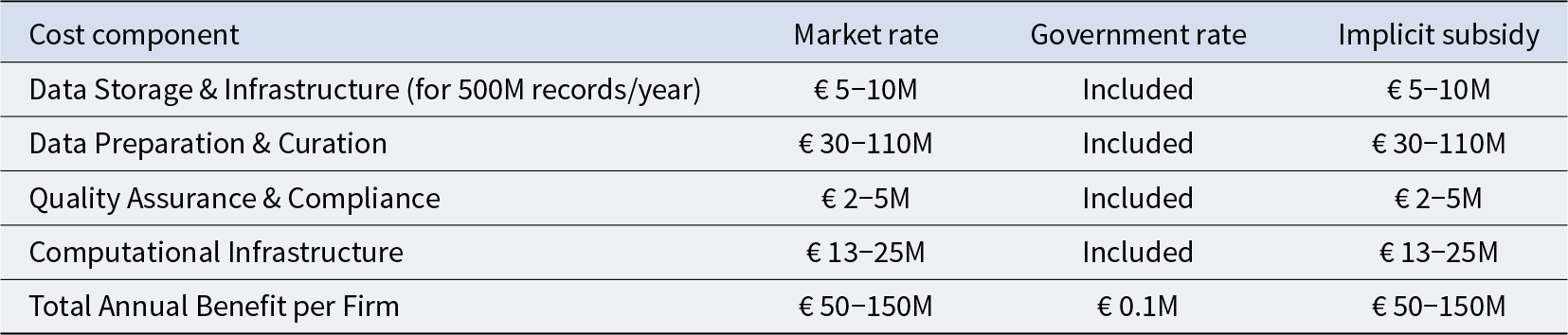

 Open access

