Introduction
The high rates of self-harm, suicide attempts and completed suicides among individuals with psychotic disorders (Palmer et al. Reference Palmer, Pamkratz and Botswick2005) also extend to those in the general population with psychotic experiences (PEs), i.e. hallucinatory and delusional experiences (Honings et al. Reference Honings2016a). PEs are more common than psychotic disorders, reported by 5–8% of adolescents and adults (Kelleher et al. Reference Kelleher2012a; McGrath et al. Reference McGrath2015), and are strongly associated with self-injurious thoughts and behaviours (SITB), including non-suicidal self-injury, suicidal ideation, plans and attempts (Koyanagi et al. Reference Koyanagi, Stickley and Haro2015a; DeVylder et al. Reference DeVylder2015b). Understanding the mechanisms underlying the association between PEs and SITB may assist identification of people at high risk of suicide and also inform interventions for those with PEs.
A meta-analysis reported increased likelihood of suicidal ideation and suicidal behaviour in those with any PE [odds ratios (ORs) and 95% confidence interval (CI) 2.47; 1.71–3.59 and 3.03; 2.08–4.41, respectively] (Honings et al. Reference Honings2016a). Studies have also reported dose–response relationships with regard to both number of PEs (Nishida et al. Reference Nishida2010; Saha et al. Reference Saha2011a; Cederlöf et al. Reference Cederlöf2016) and severity of suicidality (Kelleher et al. Reference Kelleher2012b; DeVylder & Hilimire, Reference DeVylder and Hilimire2015). Less is known about the association between PEs and non-suicidal self-injury, typically defined as deliberate self-injury without suicidal intent (Peterson et al. Reference Peterson2008), although two studies report increased risk of non-suicidal self-injury in adolescents (Martin et al. Reference Martin2015) and adults (Koyanagi et al. Reference Koyanagi, Stickley and Haro2015a) with PEs.
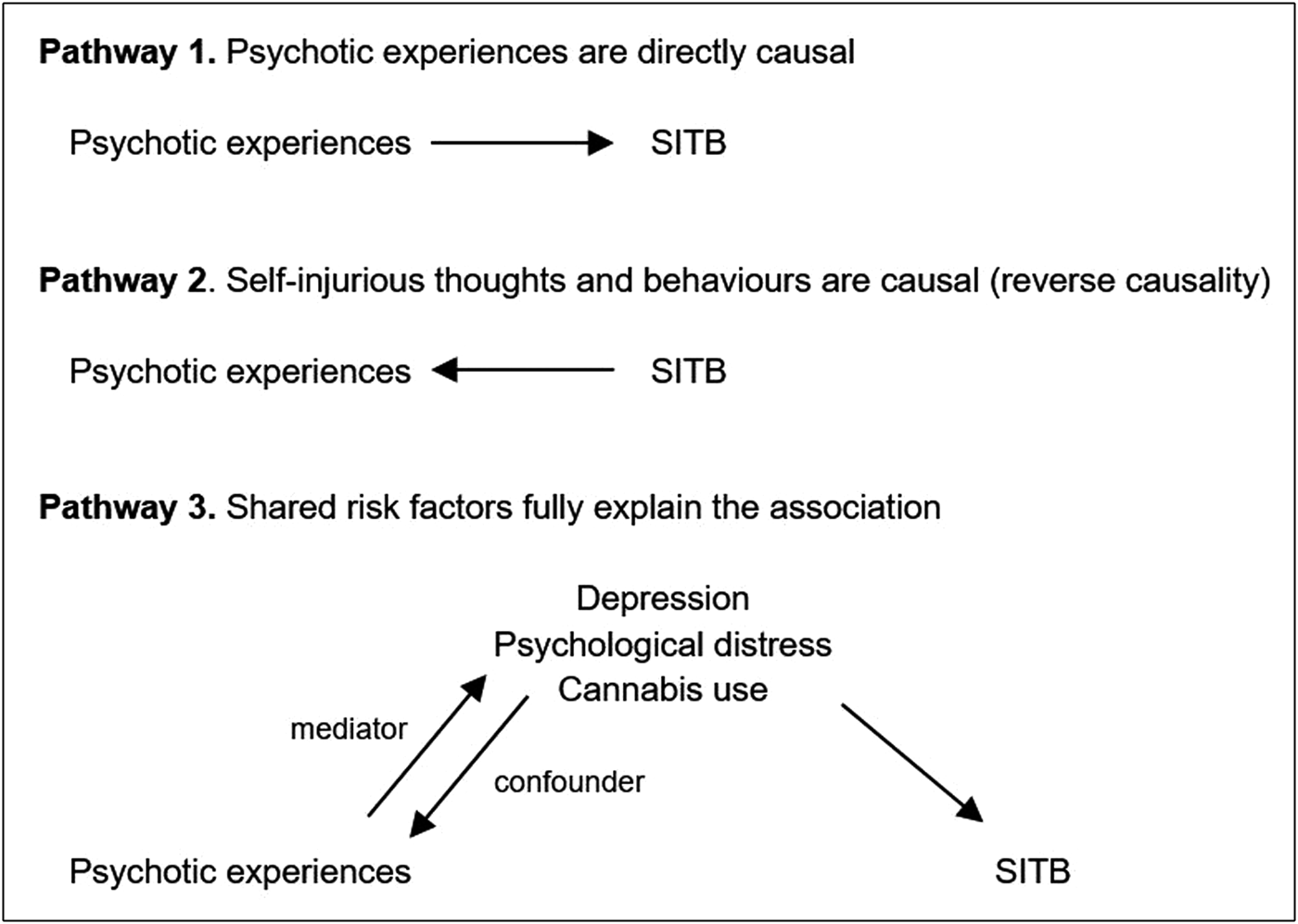
The association between PEs and SITB has been well replicated, although underlying mechanisms remain unclear. It may be directly causal where PEs induce self-injurious thoughts or acts via such symptoms as command hallucinations, i.e. voices directing a person to harm themselves (Kelleher et al. Reference Kelleher2012b). Alternatively, shared risk factors such as depression may result in indirect pathways (see Fig. 1) (Jang et al. Reference Jang2014). A longitudinal study found the PE-suicidality association was only present in those reporting common mental disorders at baseline (Honings et al. Reference Honings2016b), and adding a measure of depressive symptoms to PEs significantly improved prediction of later suicide attempts (Sullivan et al. Reference Sullivan2015). Conversely, a study of the Adult Psychiatric Morbidity Survey (n = 7403) reported the strong association between hallucinations and suicide attempts was independent of common mental disorders such as depression (Kelleher et al. Reference Kelleher, Ramsay and DeVylder2017). This was somewhat supported by Honings et al.’s (Reference Honings2016a) meta-analysis, which found adjusting for depression attenuated but did not negate the PE–SITB association. These studies, however, did not adjust for other co-occurring diagnoses or other confounding factors.
Three potential pathways to explain the association between psychotic experiences and self-injurious thoughts and behaviours (SITB).

Other potential confounders and mediators (e.g. traumatic experiences, emotional dysregulation) likely play a role in the PE–SITB association (DeVylder et al. Reference DeVylder2015a), but to date, have been inconsistently investigated: studies have either not adjusted for the same factors (e.g. self-esteem v. emotional dysregulation) or not adjusted beyond the more typical variables of sociodemographics, depression, and substance use. In light of these gaps in the literature, we conducted a systematic review and critically analysed third variables (confounders, mediators) that have been examined to date which influence the PE–SITB relationship.
This review aimed to elucidate the role of confounding and mediating factors in the association between PEs and SITB. Specifically, we aimed to extend previous work (Honings et al. Reference Honings2016a) by: (1) including additional studies that have been subsequently published or initially omitted; (2) improving definitions and categorisation of SITB types; (3) presenting associations between SITB and different types of PEs, as well as different populations (adolescent v. adult); and (4) systematically examining different types of confounders and mediators not considered in the previous review. In conducting this review, we also identified gaps in the literature where potential mechanisms for the PE–SITB association have yet to be investigated, so as to guide future research.
Methods
Data sources
This systematic review adhered to the PRISMA Guidelines (Moher et al. Reference Moher2009). An electronic literature search was initially conducted in January 2017, which covered relevant international databases, including PubMed, PsycINFO and EMBASE (final search conducted in May 2017). Additional records were identified through citation databases, such as the Web of Science and Scopus, as well as through Google Scholar. Reference lists of included articles were also hand-searched. Authors of included articles were contacted to obtain further details about their analyses.
Definitions
Self-injurious thoughts and behaviours
SITB were defined as actions where an individual deliberately initiates a non-socially or culturally sanctioned behaviour that, without intervention from others, will harm or injure their own body tissue (St. Germain & Hooley, Reference St. Germain and Hooley2012; Larkin et al. Reference Larkin, Di Blasi and Arensman2014), as well as thoughts about harming oneself or ending one's life (Nock et al. Reference Nock2007). This definition is consistent with the WHO/EURO multicentre study on self-harm (Platt et al. Reference Platt1992; Hawton et al. Reference Hawton2003), and was incorporated to investigate how PEs relate to a wide spectrum of distinct but overlapping self-injury-related constructs.Footnote †Footnote 1 The separation of self-injurious thoughts from behaviours is recommended as they have distinct prevalence rates, functions, correlates, and outcomes (Klonsky et al. Reference Klonsky, May and Saffer2016). For this reason, SITB was divided into two categories. The first was self-harming and suicidal ideation, which included all cognitions (thoughts, feelings, plans) about self-harm and suicide, without engagement in self-injurious behaviour. No study specifically captured self-harming thoughtsFootnote 2 and therefore this category was titled ‘suicidal ideation’.
The second category was labelled non-accidental self-injury (NASI) and included non-suicidal self-injury, deliberate self-harm (with/without suicidal intent), and suicide attempt. There is expanding evidence for the Gateway Theory (Kapur et al. Reference Kapur2013; Whitlock et al. Reference Whitlock2013), which proposes that non-suicidal self-injury and fatal suicide sit at two ends of the same spectrum, with non-suicidal self-injury being an antecedent to suicide (Linehan, Reference Linehan1986; Stanley et al. Reference Stanley1992). Some of the evidence includes considerable overlap in risk factors of non-suicidal and suicidal behaviour (Grandclerc et al. Reference Grandclerc2016), comparable prevalence rates of non-suicidal self-injury and deliberate self-harm (Muehlenkamp et al. Reference Muehlenkamp2012), and in prospective studies, non-suicidal self-injury is one of the more robust predictors of suicide attempts (Guan et al. Reference Guan, Fox and Prinstein2012; Scott et al. Reference Scott2015). Following the evidence, in this review we presented NASI as a construct that does not assume or preclude suicidal intent. It includes behaviours on a continuum of suicidal intent, ranging from non-suicidal self-injury to suicide attempt, as opposed to discrete intent categories.
Psychotic experiences
PEs were defined as hallucinations and delusions (e.g. persecution, referential and grandiose) endorsed by individuals in the general population that do not occur in the context of sleep or substance use (Johns et al. Reference Johns2004; Linscott & van Os, Reference Linscott and van Os2013). They may be appraised as clinically relevant symptoms or as subclinical/subthreshold experiences, not prompting help-seeking behaviour (Linscott & van Os, Reference Linscott and van Os2010). Although phenotypically PEs lie on a continuum with psychotic disorders, most with PEs do not transition to psychosis (Yung & Lin, Reference Yung and Lin2016). More commonly, PEs are associated with a broader range of adverse health and social outcomes (McGrath et al. Reference McGrath2016; Saha et al. Reference Saha2011b).
Eligibility criteria
Inclusion criteria were studies that: (a) were peer-reviewed and published in English language, from inception until May 2017; (b) measured both SITB and PEs; (c) reported on the PE–SITB association; and (d) were conducted in a general population or non-clinical community sample.
Exclusion criteria were studies limited to: (a) body modification (i.e. cutting, piercing, tattooing) as a cultural practice or expression of creativity; (b) assisted suicide by a physician; (c) indirect forms of self-injurious behaviour (e.g. binge-drinking, excessive exercise); (d) skin picking or hair pullingFootnote 3; (e) self-injurious behaviour arising in those with development disorder; (f) studies conducted in clinical, mental health or help-seeking populations; or (g) assessment of schizotypy and related personality assessments.Footnote 4
Search strategy
A literature search was conducted in PubMed, PsycINFO and EMBASEFootnote 5 using the following terms: (psychotic exp* OR subclinical psych* OR psychotic-like OR delusion* OR hallucinat*) AND (self-injur* OR self-harm* OR suic*). Search terms were sourced from Honings et al.’s (Reference Honings2016a) review, as well as other systematic reviews on PEs (Kaymaz et al. Reference Kaymaz2012; Linscott & van Os, Reference Linscott and van Os2010, Reference Linscott and van Os2013) and SITB (Larkin et al. Reference Larkin, Di Blasi and Arensman2014; Taylor et al. Reference Taylor, Hutton and Wood2015; Zetterqvist, Reference Zetterqvist2015). See online Supplementary Material I for full PubMed search.
Data extraction
One author (EH) located eligible studies using the search strategy and downloaded these into EndNote. Titles and abstracts were screened, with at least 10% done independently by two authors (EH and SS) against the predefined inclusion criteria. A similar process was undertaken for the full-text screen. Data on study design, SITB and PEs measurement, third variables, and key findings were extracted and entered into an excel template by EH.
Data synthesis and confounder analysis
The literature was critically reviewed by narrative synthesis of aggregate-level data. Due to the wide range of third variables measured, and the fact that most studies simultaneously adjusted for multiple variables, meta-analysis was precluded. Potential confounders and mediators were examined using a protocol developed for analysis of epidemiologic studies of parental smoking (Witorsch & Witorsch, Reference Witorsch and Witorsch1993). The key aims of our analysis were to determine: (1) which potential confounders/mediators have been considered; (2) frequency at which confounders/mediators have been considered; and (3) whether these variables influenced the PE–SITB relationship.
Considering the variability of third variables, they were grouped into seven higher-level categories: sociodemographics, mental disorders, alcohol and substance use, environmental (e.g. trauma), psychological, intervention, and family history/genetic factors. These categories were derived from extracted data of included studies, as well as known risk factors in the broader self-harm and suicide literature (Klonsky, Reference Klonsky2007; Franklin et al. Reference Franklin2017). We examined the influence of these seven categories on: (1) suicidal ideation, and (2) NASI, which was further divided into non-suicidal self-injury, deliberate self-harm and suicide attempt. Despite substantial overlap between risk factors for non-suicidal self-injury and suicide attempts (Grandclerc et al. Reference Grandclerc2016), it was important to investigate these constructs separately, as some variables may be important for the association between PEs and one self-injurious outcome but not the other.
We labelled all seven categories as confounders, as this was how most studies described these variables. However, some of these variables are mediators, which explain the association between PEs and SITB. Online Supplementary Material II presents a more detailed discussion of each category, and we further address this in the ‘Discussion’.
Results
Characteristics of included studies
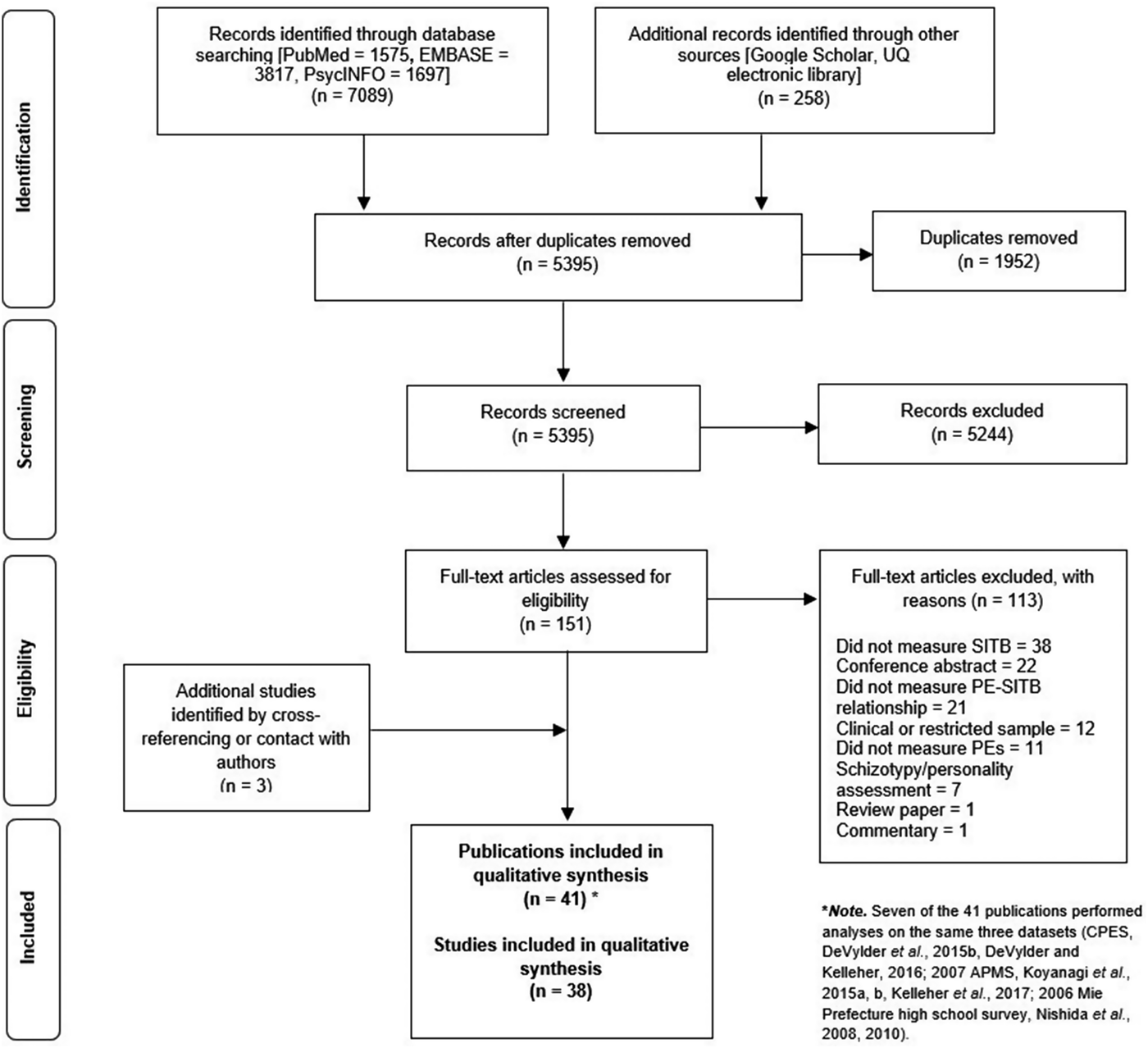
The systematic search strategy identified 38 individual studies (from 41 publications) reporting on 1 39 427 participants (M = 3873, range = 66–16 131) from 16 countries (see Fig. 2). Most studies were cross-sectional (73.7%), with ten reporting longitudinal data (follow-up range = 3 months–27 years). There was a mixture of data sources: 26.3% of studies reporting national household surveys, 15.8% reporting birth cohorts, and the remainder (57.9%) reporting community samples, e.g. high school and university students. Seven of the 41 publications performed analyses on the same three datasets (see Fig. 2). Because the authors presented different variables of interest (e.g. ideation v. attempts) and adjusted for different confounders, the remaining results section presents the literature in terms of number of publications, as opposed to individual studies/datasets.
PRISMA flow chart of literature search.

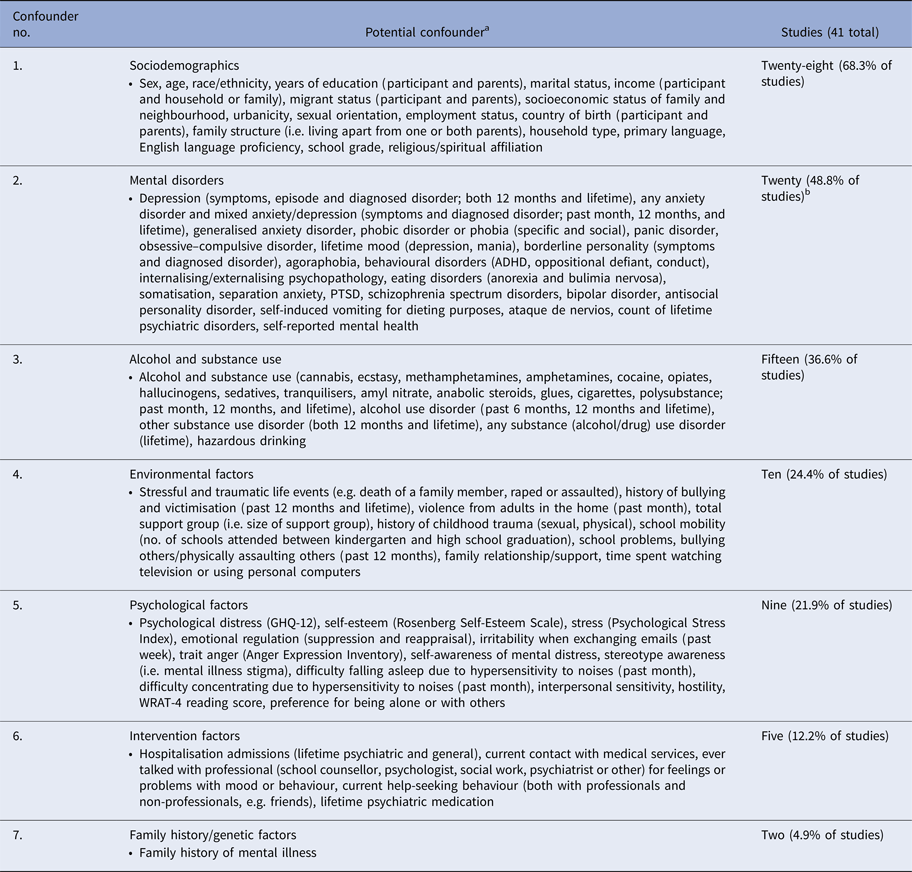
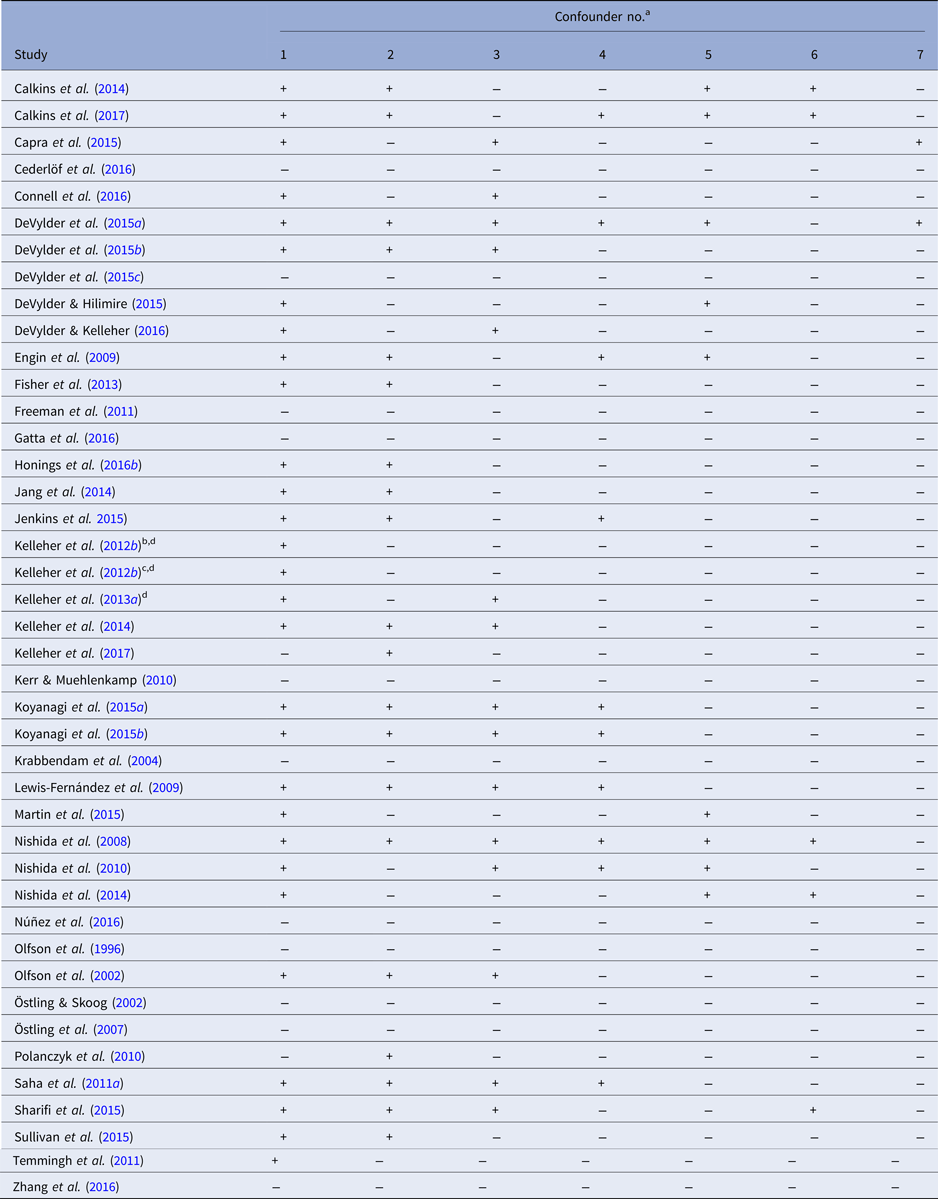
Most studies (n = 24; 58.5%) reported aggregated PEs, as opposed to the association with individual symptoms (e.g. visual hallucinations). All but one study (Kelleher et al. Reference Kelleher2012b)Footnote 6 reported on different types of SITB separately. The level of adjustment varied across studies (see Tables 1 and 2), with 11 (26.8%) not controlling for any confounding variables. Only one study (Jang et al. Reference Jang2014) treated their third variable of interest (depressive symptoms) as a mediating variable.
Frequency of consideration of potential confounders in studies examining the association between psychotic experiences and self-injurious thoughts and behaviours

Note: All confounders in eligible studies were captured in this table, except for Children's Global Assessment Scale (OR 0.96, 95% CI 0.95–0.97, Calkins et al. Reference Calkins2014, Reference Calkins2017), self-reported physical health (OR 0.88, 95% CI 0.60–1.29), and count of lifetime chronic medical conditions (OR 1.20, 95% CI 1.06–1.33; Lewis-Fernández et al. Reference Lewis-Fernández2009). None of these variables fitted our confounder categorisation, and most did not significantly contribute to the fully adjusted models.
a Confounders are ordered according to how frequently they appear in the literature, both within and across categories.
b Four of the studies included depressive symptoms only.
Consideration of potential confounding variables in studies examining the relationship between psychotic experiences and self-injurious thoughts and behaviours

+, Indicates the potential confounding variables were considered in a particular study.
a Corresponds to numbers in Table 1.
b Adolescent Brain Development (ABD) study reported in Kelleher et al. (Reference Kelleher2012b).
c Challenging Times (CT) study reported in Kelleher et al. (Reference Kelleher2012b).
d Confounders adjusted for using a stratified analysis were only considered if stratification was performed as part of the main analysis (i.e. overall estimate for psychotic experiences), and if the authors presented the odds ratios in each strata i.e. with and without the third variable of interest. These two publications did not present such information in their psychiatric disorder/psychopathology stratified subanalysis, and therefore ‘mental disorders’ were not counted in their confounder categorisation.
PEs and suicidal ideation
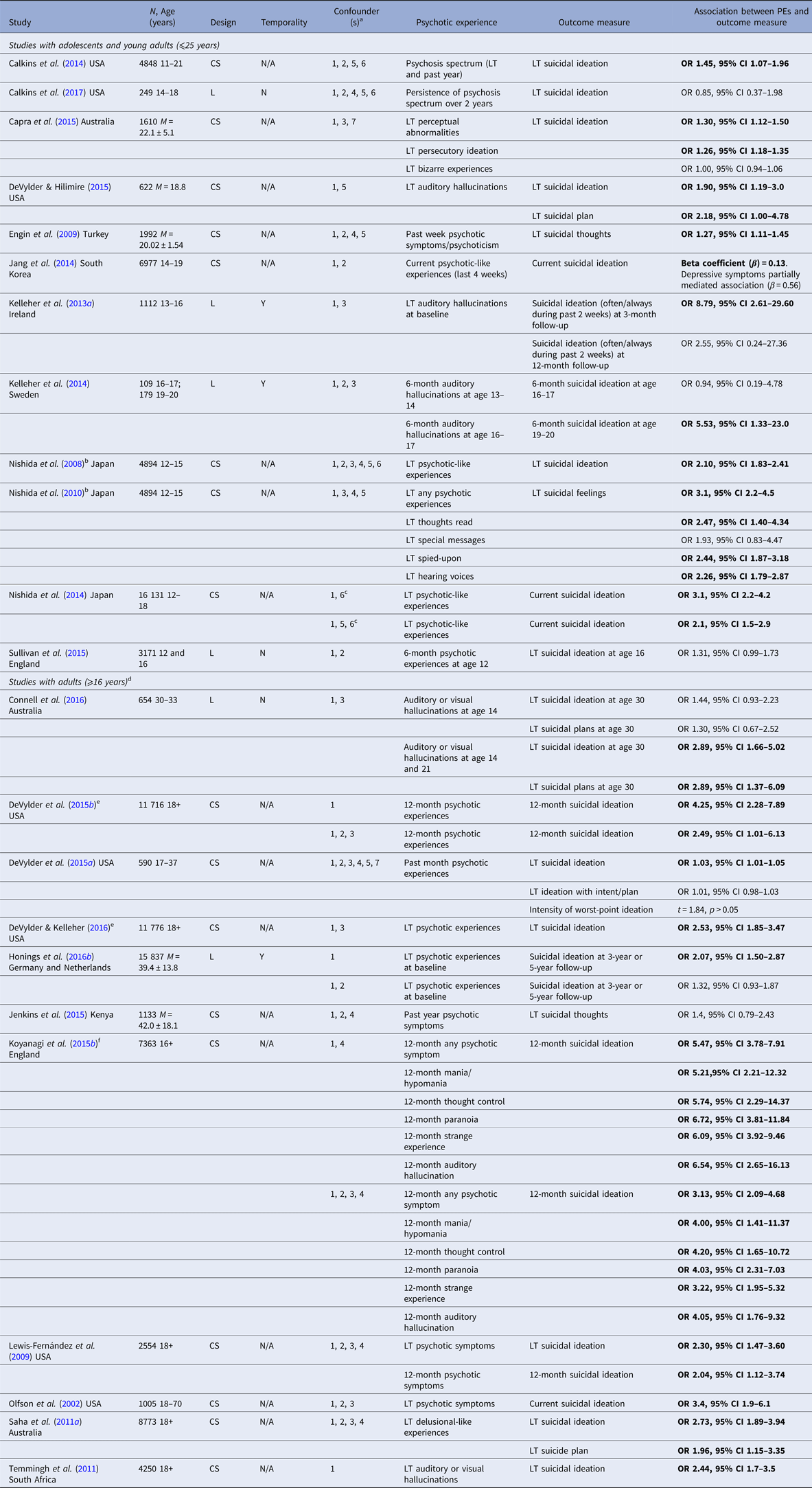
When broken down by SITB outcomes, 23 studies reported the PE–suicidal ideation association after adjustment for confounders; with just over half (52.2%) confined to an adolescent and/or young adult sample (see Table 3). Three of 23 studies reported the association between suicidal ideation and different types of PEs, yielding mixed findings (Nishida et al. Reference Nishida2010; Capra et al. Reference Capra2015; Koyanagi et al. Reference Koyanagi, Stickley and Haro2015b). Most (n = 14; 60.9%) controlled for three confounder categories or less, with demographics, mental disorders and/or substance use most common. Only two cross-sectional studies controlled for six out of the seven confounder categories (Nishida et al. Reference Nishida2008; DeVylder et al. Reference DeVylder2015a). Adjusting for these confounders attenuated the strength of the PE-suicidal ideation association (OR range = 1.03–2.10, p < 0.05) compared with unadjusted associations and associations found in most other studies.
Strength of evidence in studies (n = 23) examining the psychotic experiences (PEs) – suicidal ideation relationship, after adjustment for confounders

CS, cross-sectional; L, longitudinal; Y, yes, temporality considered; N, no, temporality not considered; N/A, not applicable; LT, lifetime; OR, odds ratio; 95% CI, 95% confidence interval.
Bold represents a significant finding.
a Corresponds to numbers in Table 1.
b Reports on data from the 2006 Mie Prefecture high school survey.
c Variable used as stratification variable in the main analysis, e.g. if mental disorder was the stratification variable, we reported on the influence of psychotic experiences on SITB within the ‘no mental disorders’ strata.
d The adult category (16+) overlaps with the adolescent and young adult category (⩽25) because most general population samples range from 16 (or 18) to 95 years.
e Reports on data from the Collaborative Psychiatric Epidemiology Surveys (CPES).
f Reports on data from the 2007 Adult Psychiatric Morbidity Survey (APMS).
PEs and NASI
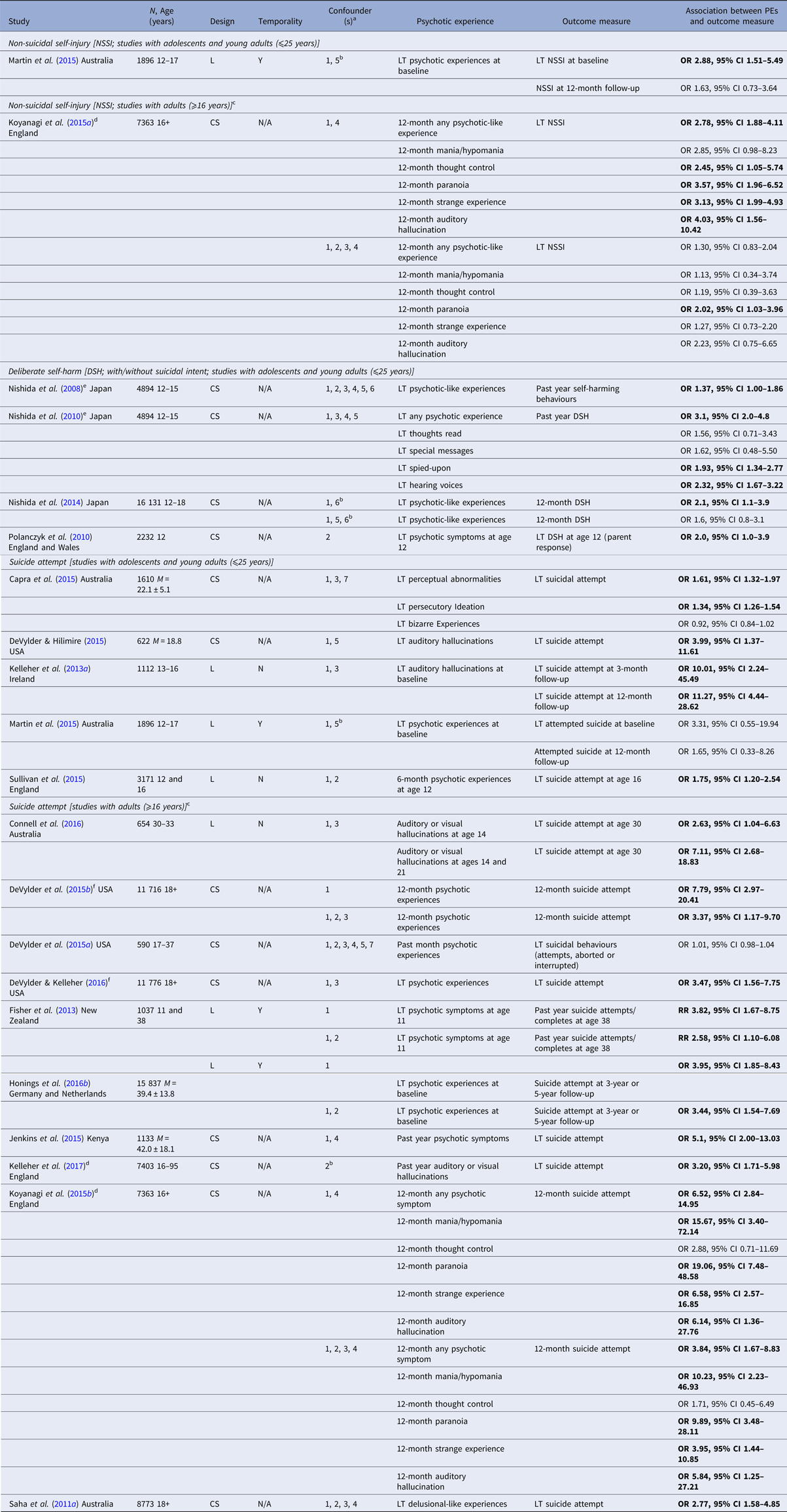
Table 4 outlines the studies (n = 20; non-suicidal self-injury = 2, deliberate self-harm = 4, suicide attempt = 15) reporting the PE–NASI association, adjusted for confounders. All deliberate self-harm studies focused on adolescents, non-suicidal self-injury studies equally covered adolescents and adults, whereas most suicide attempt studies (n = 10; 66.7%) reported adult populations. Four of 20 studies compared the association of NASI with different PEs, and all found individual PEs were differentially associated with all three NASI outcomes (Nishida et al. Reference Nishida2010; Capra et al. Reference Capra2015; Koyanagi et al. Reference Koyanagi, Stickley and Haro2015a, Reference Koyanagi, Stickley and Harob). Similar to suicidal ideation studies, most NASI studies (n = 15; 75.0%) controlled for three or less confounder categories, with demographics, mental disorders and substance use again the most common (see Table 4). Only two studies controlled for six of seven confounder categories, reporting barely significant associations between both deliberate self-harm (OR 1.37, 95% CI 1.00–1.86, Nishida et al. Reference Nishida2008) and suicide attempts (OR 1.01, 95% CI 0.98–1.04, DeVylder et al. Reference DeVylder2015a) with PEs. Each confounder category is further discussed below with reference to all SITB outcomes.
Strength of evidence in studies (n=20) examining the psychotic experiences (PEs) – non-accidental self-injury (NASI) relationship, after adjustment for confounders

CS, cross-sectional; L, longitudinal; Y, yes, temporality considered; N, no, temporality not considered; N/A, not applicable; LT, lifetime; OR, odds ratio; RR, relative risk; 95% CI, 95% confidence interval.
Bold represents a significant finding.
a Corresponds to numbers in Table 1.
b Variable used as stratification variable in the main analysis, e.g. if mental disorder was the stratification variable, we reported on the influence of psychotic experiences on SITB within the ‘no mental disorders’ strata.
c The adult category (16+) overlaps with the adolescent and young adult category (⩽25) because most general population samples range from 16 (or 18) to 95 years.
d Reports on data from the 2007 Adult Psychiatric Morbidity Survey (APMS).
e Reports on data from the 2006 Mie Prefecture high school survey.
f Reports on data from the Collaborative Psychiatric Epidemiology Surveys (CPES).
Sociodemographics
Most studies (n = 28; 68.3%) adjusted for sociodemographics, incorporating diverse variables ranging from age and sex to sexual orientation and employment status. Four studies (9.8%) presented point estimates of the PE–SITB relationship after adjusting for demographics (see Tables 3 and 4) and associations remained significant (OR range: 2.07–7.79). Further adjustment for such variables as mental disorders and substance use substantially attenuated the strength of the association (OR range: 2.49–3.37; Fisher et al. Reference Fisher2013; DeVylder et al. Reference DeVylder2015b), with some estimates becoming non-significant (OR range: 1.32–1.60; Nishida et al. Reference Nishida2014; Honings et al. Reference Honings2016b), suggesting considerable residual confounding when only sociodemographics were included in the model.
Mental disorders
Less than half of the studies (n = 20; 48.8%) adjusted for mental disorders, most commonly depression (12-month or lifetime diagnosis, episode, or symptoms), anxiety disorders and mixed anxiety/depression diagnosis. Five studies controlled for mental disorders individually, or in separate steps in their models (Polanczyk et al. Reference Polanczyk2010; Fisher et al. Reference Fisher2013; Koyanagi et al. Reference Koyanagi, Stickley and Haro2015a; Honings et al. Reference Honings2016b; Kelleher et al. Reference Kelleher, Ramsay and DeVylder2017). Most studies adjusting for comorbid depressive symptoms and common mental disorders (depression, anxiety, personality disorders) reported reduced ORs, but the PE–SITB association remained significant (OR range: 2.00–3.20; Polanczyk et al. Reference Polanczyk2010; Fisher et al. Reference Fisher2013; Kelleher et al. Reference Kelleher, Ramsay and DeVylder2017). This was somewhat supported by Honings et al.’s (Reference Honings2016a) meta-analysis, where they included only studies that controlled for depression and found an attenuated (but significant) pooled OR for all SITB outcomes except deliberate self-harm (OR for SITB = 2.02, 95% CI 2.33–4.40). However, most studies controlled for a number of confounders simultaneously, making it difficult to interpret the proportion of the PE–SITB relationship attributable to depression.
Analyses stratified by presence of mental disorder provided further insight. A longitudinal study reported the association was only present in the subsample of participants with PEs who reported mental disorders at baseline (Honings et al. Reference Honings2016b). By contrast, other cross-sectional and longitudinal studies found the PE–SITB relationship persisted even when the sample was restricted to those without mental disorders (Saha et al. Reference Saha2011a; Sullivan et al. Reference Sullivan2015; Kelleher et al. Reference Kelleher, Ramsay and DeVylder2017). Mental disorders consistently explain, in part, the PE–SITB association, although the association is frequently evident even in those without mental illness endorsing PEs.
Alcohol and substance use
Almost 40% of studies adjusted for substance use, most controlling for past 12 month or lifetime substance use as opposed to abuse or dependence. Substance use was typically adjusted for in the same step as mental disorders preventing any conclusions about their role in the PE–SITB relationship. Alcohol and cannabis use were not significant contributors in DeVylder et al.’s (Reference DeVylder2015a) fully adjusted model, whereas Capra et al. (Reference Capra2015) found lifetime cannabis use was a significant predictor in both suicidal ideation and attempts models (β-coefficient range: 0.10–0.18). The strong association between substance use and both suicidality (Vijayakumar et al. Reference Vijayakumar, Kumar and Vijayakumar2011) and PEs (Rognli et al. Reference Rognli2017) suggests it may be important in the PE–SITB relationship.
Environmental factors
Although traumatic life events are associated with both suicidality and PEs (Scott et al. Reference Scott2007; Kelleher et al. Reference Kelleher2013b), fewer than 25% of studies adjusted for these and no study independently controlled for such factors. In DeVylder et al.’s (Reference DeVylder2015a) fully adjusted models, bullying, school mobility and childhood sexual trauma were key variables, resulting in large attenuation of all suicidal outcomes with only broadly defined suicidal ideation remaining significant (OR 1.03, 95% CI 1.01–1.05). Although PEs and suicidal behaviour appear to co-occur in the context of severe social stressors, these environmental exposures did not entirely account for the PE-suicidality association (β-coefficient range: 0.19–2.23).
Psychological factors
Psychological factors (e.g. psychological distress) were adjusted for in 21.9% of studies. Martin et al. (Reference Martin2015) found PEs, in the absence of psychological distress, were not associated with increased risk of future non-suicidal self-injury and suicide attempts (OR range: 1.63–1.65). The only other study independently controlling for psychological distress (Nishida et al. Reference Nishida2014) reported attenuated ORs of deliberate self-harm and suicidal ideation in those with PEs, with only suicidal ideation remaining significant (OR 2.1, 95% CI 1.5–2.9). Some suggest that PEs are manifestations of distress (Saha et al. Reference Saha2011a; Koyanagi et al. Reference Koyanagi, Stickley and Haro2015b). DeVylder et al. (Reference DeVylder2015a) investigated other psychological factors such as self-esteem and stereotype awareness (i.e. mental illness stigma), which explained a significant amount of variance between PEs and intensity of suicidal ideation (β-coefficient range: 0.10–0.29), but did not entirely account for the relationship.
Intervention factors
Only five studies adjusted for intervention factors, including hospitalisation history and help-seeking behaviour. Only Nishida et al. (Reference Nishida2014) individually adjusted for such factors, by stratifying their sample by help-seeking. Risk of both suicidal ideation and deliberate self-harm were highest among non-help-seeking adolescents (who had a need for care) with PEs; however, the PE–SITB relationship persisted regardless of help-seeking status.
Family history/genetic factors
Only two studies adjusted for family history of mental illness (Capra et al. Reference Capra2015; DeVylder et al. Reference DeVylder2015a), with both simultaneously adjusting for multiple confounders; however, family history explained little of the variance.
Discussion
There is consistent evidence that PEs are an important clinical indicator of suicide risk. However, no study has explained if the relationship is causal or if their co-occurrence arises from shared risk factors. This distinction is critical to inform the clinical assessment and interventions for those with PEs. In this review, almost 30% of all general population and community sample studies did not adjust for any confounding variables, possibly resulting in an assumption that SITB is directly attributable to PEs, without taking into consideration factors which confound or mediate this association (see confounder v. mediator discussion below). In the majority of studies, where adjustment for confounders occurred, the association persisted albeit with attenuated effect sizes, suggesting PEs are independently associated with self-harm and suicidality, in both adolescent and adult populations. There was high variability in the confounders adjusted for in these studies, with less than half controlling for mental disorders, and less than one-quarter controlling for environmental and psychological factors. Because most studies simultaneously adjusted for multiple variables, no conclusions could be reached as to the influence of an individual factor. However, mental disorders, environmental and psychological factors explained a substantial amount of the variance, whereas most sociodemographic (except for age of PEs in adolescence and sexual orientation) and family history variables were of less importance.
Understanding the role of confounders is important because such variables may mask an actual association or, more commonly, falsely demonstrate an apparent association between the exposure and outcome measure (Skelly et al. Reference Skelly, Dettori and Brodt2012). When studies appropriately control for such variables, they present a more accurate estimate of the true association due to the exposure (Skelly et al. Reference Skelly, Dettori and Brodt2012). Results of the current review supported pathway one (see Fig. 1) where PEs are directly causal of SITB. However, the inconsistent and incomplete adjustment for confounders prevents rejection of pathway three (fully explained by shared risk factors) as an explanatory model. Also of note, the associations between PEs and SITB were essentially eliminated in two adolescent/young adult studies with exhaustive adjustments (Nishida et al. Reference Nishida2008; DeVylder et al. Reference DeVylder2015a), suggesting the relationship may indeed be spurious, although these findings would benefit from replication in more broadly representative samples. Alternatively, reverse causality may also be possible, in which the mind's way of adapting to severe distress of SITB results in PEs (Forman et al. Reference Forman2004) (pathway two in Fig. 1). No study to date has tested the reverse causality pathway in the general population, although this explanation is less consistent with broad clinical assumptions.
It is also important to recognise that even if the PE–SITB association becomes non-significant after adjustment, this does not necessarily mean that PEs are not causally important to SITB. Rather it could be the case that the confounders of interest are in fact mediators which explain the association between PEs and SITB on the causal pathway (Christenfeld et al. Reference Christenfeld2004). Jang et al. (Reference Jang2014), for example, found support for depressive symptoms as a partial mediator of the PE-suicidal ideation relationship; however, the authors incorporated a cross-sectional mediation analysis, which has faced considerable criticism (Cole & Maxwell, Reference Cole and Maxwell2003). Confounders and mediators cannot be differentiated statistically, but rather this differentiation is derived from theory and an understanding of the temporal precedence among variables (MacKinnon et al. Reference MacKinnon, Krull and Lockwood2000; Babyak, Reference Babyak2009). As explained in online Supplementary Material II, sociodemographics and family history/genetic factors should be treated as confounders, as PEs cannot precede these variables. All other categories should likely be treated as mediating variables, except for substance use and certain environmental factors (e.g. childhood abuse), which have both been consistently shown to precede PEs (Kelleher et al. Reference Kelleher2013Reference Kelleherb; McGrath et al. Reference McGrath2016). It is also important to consider that some variables may in fact be moderators (e.g. intervention factors), which influence the strength or direction of the association. All these factors need to be considered in order to advance our understanding of the relationships at play.
Studies with consistent and comprehensive adjustment of third variables are required to explain the PE–SITB relationship. Furthermore, future studies should examine associations of SITB with different PE characteristics, as these have been differentially associated with each NASI outcome. Such PE characteristics include the frequency and emotional valence of content (DeVylder et al. Reference DeVylder2015a). Theoretical models of self-harm and suicidality may also provide frameworks to better understand the PE–SITB relationship. This includes theories which focus on the transition from suicidal thoughts to actions (Three-Step Theory, Klonsky & May, Reference Klonsky and May2015; Interpersonal Theory, Van Orden et al. Reference Van Orden2010), as well those which integrate both non-suicidal and suicidal behaviours (Hamza et al. Reference Hamza, Stewart and Willoughby2012), which ideally should be tested using longitudinal data. Schimanski et al. (Reference Schimanski2017) focused on the schizotypy–suicidal ideation relationship and found stronger support for the Interpersonal Theory than for the Three-Step Theory of suicide, suggesting constructs such as thwarted belongingness and perceived burdensomeness should be considered in future investigations. In addition to these theoretical components, there are other potentially confounding variables (e.g. genetic factors), which have yet to be investigated (see the section ‘Future research’).
Strengths and weaknesses of the review
This systematic review considered and classified all confounding factors, enabling interpretation of individual variables in the PE–SITB relationship. However, meta-analysis was precluded, preventing quantitative measurement of the impact of individual variables on the association. Statistical approaches (e.g. structural equation modelling) are required in existing datasets, as well as in future studies to further test the specific effect of individual confounders and mediators.
Studies should also give consideration to the temporal association between the variables in order to inform possible causality using a discrete-time survival modelling approach. Approximately 30% of all longitudinal studies did not account for SITB at baseline measurement of PEs, and then administered lifetime SITB measures at follow-up, which prevented conclusions as to which occurred first. Also, many studies did not adjust for borderline personality disorder (BPD) or psychotic disorders (only seven studies excluded participants with psychotic disorders). Both BPD and psychosis have high rates of suicide (Hor & Taylor, Reference Hor and Taylor2010) and for low prevalence outcomes such as suicide attempts, inclusion of participants with these diagnoses may inflate the PE–SITB association. Koyanagi et al. (Reference Koyanagi, Stickley and Haro2015a) found BPD symptoms had a substantial influence on the PE-non-suicidal self-injury association, whereas Kelleher et al. (Reference Kelleher, Ramsay and DeVylder2017) found the PE-suicide attempt association persisted in those without BPD diagnosis or traits. Future studies should consistently account for these diagnoses, where BPD is of particular interest in the PE-non-suicidal self-injury association.
Future research
The PE–SITB association is in part attributable to common mental disorders such as depression; however, more research is required to determine their specific role as either a confounder or mediator (Jang et al. Reference Jang2014), particularly given evidence that PEs are indicative of greater severity of underlying depressive and anxiety disorders. To date, environmental factors have not been controlled for in longitudinal studies which consider temporality. In addition, the role of social isolation in the PE–SITB association has not been examined. Isolation and loneliness are associated with both PEs (Lim & Gleeson, Reference Lim and Gleeson2014) and SITB (Trout, Reference Trout1980), and are relevant to the Interpersonal Theory construct of thwarted belongingness. Only two studies controlled for emotional dysregulation (Nishida et al. Reference Nishida2008; DeVylder et al. Reference DeVylder2015a), which is surprising considering its key role in the development of non-suicidal and suicidal self-injury (Klonsky, Reference Klonsky2007).
There are no studies examining shared genetic risk factors underlying the PE–SITB relationship. Mental disorders, environmental and psychological factors explained much of the variance; however, it is possible that these risk factors are themselves partly explained by genetic factors (DeVylder et al. Reference DeVylder2015a). In addition, cognition, including IQ and other neurocognitive function (e.g. working memory), has not been properly investigated. Calkins et al. (Reference Calkins2014, Reference Calkins2017) included an academic achievement variable (WRAT-4 reading subtest) into their PE-suicidal ideation model, and found it had negligible effects (OR range: 0.99–1.00, p ⩾ 0.05). Considering that this variable is modestly related to IQ (Reilly et al. Reference Reilly2014; Olsen et al. Reference Olsen2015), cognitive intelligence may be of less importance. However, other aspects of cognitive function such as working memory and executive function may be of more interest for future research. Finally, poor sleep is a strong risk factor for both PEs (Reeve et al. Reference Reeve, Sheaves and Freeman2015) and SITB (Hysing et al. Reference Hysing2015) and may be important in the PE–SITB relationship.
Conclusion
This systematic review critically examined confounders and mediators adjusted for in the PE–SITB association. In most studies, the association between PEs and both suicidal ideation and NASI remained significant after adjustments, suggesting an independent association. A substantial amount of the variance was explained by mental disorders, psychological distress and environmental exposures. Interventions to target these symptoms of mental ill health in those with PEs may assist in reducing risk of self-harm and suicide. In order to fully understand the mechanisms underpinning the PE–SITB association, hypothesis driven studies with more consistent and comprehensive adjustment for third variables are required, as well as studies which clarify the phenomenological aspects of different types of PEs. Such efforts will inform intervention, which in turn may reduce the risk of morbidity and mortality by suicide in those with PEs.
Supplementary material
The supplementary material for this article can be found at https://doi.org/10.1017/S0033291717002677
Acknowledgements
We thank Nicky Foxlee, a medical librarian, who assisted with devising the search strategy for this systematic review. We also thank Professor John McGrath for providing comments on earlier versions of the manuscript. EH is supported by the Dr F and Mrs ME Zaccari Scholarship, Australia. JGS is supported by a National Health and Medical Research Council Practitioner Fellowship Grant (grant number 1105807).
Declaration of Interest
None.