Adolescence is a critical developmental period for the onset of depression and subclinical depressive manifestations (Kessler, Avenevoli, & Ries Merikangas, Reference Kessler, Avenevoli and Ries Merikangas2001; Weissman et al., Reference Weissman, Wolk, Goldstein, Moreau, Adams and Greenwald1999). Because depressed youth experience significant psychological and social impairment (Wittchen, Nelson, & Lachner, Reference Wittchen, Nelson and Lachner1998), understanding childhood and adolescence characteristics associated with depressive symptoms is crucial (Petersen et al., Reference Petersen, Compas, Brooks-Gunn, Stemmler, Ey and Grant1993). Adolescence is also marked by the pubertal transition that involves major biological, psychological, and social changes (Alsaker, Reference Alsaker and Rutter1995). Pubertal timing, which refers to the extent of the adolescent's pubertal development when compared to same-sex and same-aged peers, has been associated with depressive symptoms during adolescence, mainly in girls (Weichold, Silbereisen, & Schmitt-Rodermund, Reference Weichold, Silbereisen, Schmitt-Rodermund and Hayward2003). Prepubertal vulnerabilities, such as emotional problems during childhood, might accentuate the effect of pubertal timing on later depression. Furthermore, specific interpersonal contexts, “real” or “perceived,” such as getting involved at an early age in romantic relationships, affiliating with deviant peers, being popular among peers, or feeling rejected by parents can also moderate the effect of pubertal timing. Following the theoretical and empirical work of Conley and Rudolph (Reference Conley and Rudolph2009), Rudolph (Reference Rudolph, Nolen-Hoeksema and Hilt2009), and Rudolph and Troop-Gordon (Reference Rudolph and Troop-Gordon2010), we examined the adequacy of two models of pubertal timing: a personal-accentuation model and a contextual-amplification model that could explain differences in adolescents' depression symptoms. The integration of both models will also be explored because accentuation and amplification may co-occur.
Pubertal Timing and Symptoms of Depression in Adolescence
Adolescents vary noticeably in their timing of pubertal development, and at least two hypotheses have been proposed to explain how pubertal timing could be related to a heightened risk of depressive symptoms in adolescence. The early-timing, or stage-termination, hypothesis (Peskin, Reference Peskin1967, Reference Peskin1973) posits that adolescents who develop earlier than their peers are more at risk of experiencing adjustment problems because they are exposed to the pubertal transition and its psychosocial consequences at a younger stage of development. Early maturers are thus considered less prepared than their peers to face the physiological changes of puberty and the social reactions to their mature appearance, because their early maturation conflicts with the normal development of late childhood, an important period in which children learn coping and social skills and develop a sense of self (Brooks-Gunn, Petersen, & Eichorn, Reference Brooks-Gunn, Petersen and Eichorn1985; Peskin, Reference Peskin1967, Reference Peskin1973).
The deviance hypothesis suggests that developmental transitions occurring within the expected timetable are socially and culturally accepted (Susman, Dorn, & Schiefelbein, Reference Susman, Dorn, Schiefelbein, Lerner and Easterbrooks2003). According to this hypothesis, adolescents with an off-time pubertal timing, that is, early and late, are more vulnerable to psychological maladjustment because they are considered to be socially deviant from on-time maturing peers and, as a result, may have to negotiate pubertal changes in a less supportive sociocultural context (Petersen & Crockett, Reference Petersen and Crockett1985; Sarigiani & Petersen, Reference Sarigiani, Petersen and Kazdin2000).
Empirical examinations of these hypotheses have mainly supported the early-timing hypothesis, particularly for female adolescents. Girls' earlier pubertal timing has been associated with more depressive symptoms, both concurrently (Graber, Lewinsohn, Seeley, & Brooks-Gunn, Reference Graber, Lewinsohn, Seeley and Brooks-Gunn1997; Kaltiala-Heino, Marttunen, Rantanen, & Rimpelä, Reference Kaltiala-Heino, Marttunen, Rantanen and Rimpelä2003; Miller & Gur, Reference Miller and Gur2002; Rierdan & Koff, Reference Rierdan and Koff1991; Siegel, Yancey, Aneshensel, & Schuler, Reference Siegel, Yancey, Aneshensel and Schuler1999) and longitudinally (Ge, Conger, & Elder Jr., Reference Ge, Conger and Elder1996, Reference Ge, Conger and Elder2001a; Ge et al., Reference Ge, Kim, Brody, Conger, Simons and Gibbons2003; Graber, Seeley, Brooks-Gunn, & Lewinsohn, Reference Graber, Seeley, Brooks-Gunn and Lewinsohn2004; Hayward, Killen, Wilson, & Hammer, Reference Hayward, Killen, Wilson and Hammer1997; Stice, Presnell, & Bearman, Reference Stice, Presnell and Bearman2001). However, some findings fully or partially support the deviance hypothesis. For instance, in one study, both early and late pubertal timing were associated with greater depression (Wichstrøm, Reference Wichstrøm1999). However, other results suggested that late maturing girls are more inclined to experience internalizing problems, such as greater self-consciousness and lower self-esteem (Graber et al., Reference Graber, Lewinsohn, Seeley and Brooks-Gunn1997; Williams & Currie, Reference Williams and Currie2000).
Empirical results on adolescent boys are limited and mixed. Positive consequences, such as more self-confidence, popularity with peers, and greater social achievement, have been linked to early puberty in adolescent boys, as a more mature physical appearance could be an advantage in some social context (Felson & Haynie, Reference Felson and Haynie2002; Mccabe & Ricciardelli, Reference McCabe and Ricciardelli2004; Mussen & Jones, Reference Mussen and Jones1957, Reference Mussen and Jones1958; Taga, Markey, & Friedman, Reference Taga, Markey and Friedman2006). However, while some findings support the early-timing hypothesis (Ge, Conger, & Elder Jr., Reference Ge, Conger and Elder2001b; Ge et al., Reference Ge, Kim, Brody, Conger, Simons and Gibbons2003; Kaltiala-Heino et al., Reference Kaltiala-Heino, Marttunen, Rantanen and Rimpelä2003), other results support the deviance hypothesis by suggesting that early and late maturing boys report more depressive symptoms (Conley & Rudolph, Reference Conley and Rudolph2009; Graber et al., Reference Graber, Lewinsohn, Seeley and Brooks-Gunn1997). Other research suggests that only late maturers would be at risk (Siegel et al., Reference Siegel, Yancey, Aneshensel and Schuler1999). Thus, further empirical investigation is needed to evaluate the longitudinal association between pubertal timing and depressive symptoms in both adolescent boys and girls. As a whole, empirical results for boys, although limited, seemed to support the deviance hypothesis, because early and late maturing boys tended to present more depressive symptoms than do their peers.
The Interaction Between Individual Risks and Pubertal Timing in Predicting Symptoms of Depression in Adolescence
Individual vulnerabilities prior to puberty can be related to depressive manifestations in adolescence. Even if heterotypic trajectories of depressive symptoms are observed throughout development (Zahn-Waxler, Klimes-Dougan, & Slattery, Reference Zahn-Waxler, Klimes-Dougan and Slattery2000), children who display internalized symptoms prior to puberty are more likely to report depressive symptoms in adolescence and early adulthood (Costello, Mustillo, Erkanli, Keeler, & Angold, Reference Costello, Mustillo, Erkanli, Keeler and Angold2003; Harrington, Fudge, Rutter, Pickles, & Hill, Reference Harrington, Fudge, Rutter, Pickles and Hill1991). Therefore, it is important to consider that the presence of emotional problems in late childhood can impact the way adolescents manage the pubertal transition. Caspi & Moffitt (Reference Caspi and Moffitt1991) were the first to propose an accentuation model, which suggests that the effect of prebubertal individual characteristics is amplified during transitions, such as puberty. They reported that girls' early pubertal maturation was linked to antisocial behaviors during adolescence, particularly in girls who already had a history of conduct problems in childhood (Caspi & Moffitt, Reference Caspi and Moffitt1991). Ge et al. (Reference Ge, Conger and Elder1996) also found that early maturing girls with early symptoms of psychological distress were more likely to display subsequent symptoms when compared to on-time or late maturers with the same individual history. Results from a recent study showed a similar process, suggesting that the link between earlier pubertal timing and depression was stronger in adolescents with depressive personality traits and prior depressive symptoms (Rudolph & Troop-Gordon, Reference Rudolph and Troop-Gordon2010). In sum, emotional problems in late childhood are thus expected to moderate the association between pubertal timing and depression by accentuating the risk of depressive symptoms for early maturing youth.
The Interaction Between Pubertal Timing and Interpersonal Factors in Predicting Symptoms of Depression in Adolescence
Various theoretical models have been elaborated in the aim of understanding adolescent depression (e.g., cognitive vulnerabiliy models, biological vulnerability models, emotional regulation models; for reviews, see Abela & Hankin, Reference Abela and Hankin2008; Beck & Alford, Reference Beck and Alford2009; Nolen-Hoeksema & Hilt, Reference Nolen-Hoeksema and Hilt2009). Because adolescence is characterized by major shifts and reorganization in social contexts, interpersonal theories of adolescent depression have underscored the importance of considering how adolescents' personal characteristics relate to their social environments (Nolen-Hoeksema & Girgus, Reference Nolen-Hoeksema and Girgus1994; Rudolph, Reference Rudolph, Nolen-Hoeksema and Hilt2009). Thus, recent interpersonal perspectives have proposed that relational vulnerability can interact with pubertal transition to amplify adolescents' depressive symptoms (Natsuaki, Biehl, & Ge, Reference Natsuaki, Biehl and Ge2009; Rudolph, Reference Rudolph, Nolen-Hoeksema and Hilt2009). In this regard, characteristics of relationships with peers and parents, such as affiliation with deviant peers, early romantic dating, perceived peer popularity, and perceived parental rejection, have been identified as interpersonal contexts that could be related to higher levels of depression during adolescence (e.g., Brendgen, Vitaro, & Bukowski, Reference Brendgen, Vitaro and Bukowski2000; Compian, Gowen, & Hayward, Reference Compian, Gowen and Hayward2004; Fergusson, Wanner, Vitaro, Horwood, & Swain-Campbell, Reference Fergusson, Wanner, Vitaro, Horwood and Swain-Campbell2003; Joyner & Udry, Reference Joyner and Udry2000; Nolan, Flynn, & Garber, Reference Nolan, Flynn and Garber2003; Stice, Ragan, & Randall, Reference Stice, Ragan and Randall2004). Deviant peer affiliation in adolescence was found to be indirectly linked to depression, though the negative consequences resulting from deviant peer influences such as engaging in deviant behaviors (Fergusson et al., Reference Fergusson, Wanner, Vitaro, Horwood and Swain-Campbell2003) and substance use (Prinstein, Boergers, & Spirito, Reference Prinstein, Boergers and Spirito2001), and directly, because friendship between deviant peers is often more unstable (Dishion, Andrews, & Crosby, Reference Dishion, Andrews and Crosby1995). Adolescents who engage in early romantic dating may also be at heightened risk of depression by exposing themselves to interpersonal challenges such as dealing with conflicts, potential breakups, and emergent sexual attraction (Monroe, Rohde, Seeley, & Lewinsohn, Reference Monroe, Rohde, Seeley and Lewinsohn1999; Zimmer-Gembeck, Siebenbruner, & Collins, Reference Zimmer-Gembeck, Siebenbruner and Collins2001). Furthermore, perceived peer acceptance or popularity is an important factor that could be associated with depression, because peer acceptance is closely related to self-esteem and satisfaction in peer relations (Litwack, Aikins, & Cillessen, Reference Litwack, Aikins and Cillessen2010; Nolan et al., Reference Nolan, Flynn and Garber2003). Finally, adolescents' perception of perceived parental rejection was robustly found to be associated with depression, given the important role of family support in adolescent well-being (Khaleque & Rohner, Reference Khaleque and Rohner2002; Stice et al., Reference Stice, Ragan and Randall2004). However, few studies have investigated the interactions among interpersonal factors, personal risks, and pubertal maturation.
In peer and romantic social contexts, Conley and Rudolph (Reference Conley and Rudolph2009) have found that pubertal timing (i.e., early timing for girls and late timing for boys) was related to depression 1 year later, but only at high levels of peer stress, a measure that evaluates peer experiences such as lack of friendships, poor-quality relationships, and social exclusion. Other studies indicated that early maturing girls displayed higher levels of psychological distress when they affiliated with mixed-gender friends; they also appeared more vulnerable, in terms of psychological distress, to the influences of deviant peer affiliation (Ge et al., Reference Ge, Conger and Elder1996). In a recent study investigating developmental trajectories of depressed mood from early adolescence to young adulthood, adolescents boys and girls who experienced an off-time puberty (early or late) and reported dating experiences between 12 and 16 years of age were more likely to have an elevated depressed mood trajectory (Natsuaki et al., Reference Natsuaki, Biehl and Ge2009). Regarding the interplay between pubertal timing and parent–adolescent relationships, some evidences suggest that early maturing girls experiencing high levels of parental psychological control display more internalized problem behaviors (Arim & Shapka, Reference Arim and Shapka2008). Early maturing girls also appeared to be more vulnerable, in terms of psychological distress symptoms, to their fathers' hostile feelings (Ge et al., Reference Ge, Conger and Elder1996). Therefore, preliminary empirical findings suggest that the experience of early or off-time puberty could be related to a heightened risk of depression in challenging interpersonal environments.
Because the present study focused on the association between interpersonal factors and depressive symptoms in late adolescence, it was important to control for variables that may be associated with puberty and adolescent depression, such as family adversity, family depression history, and childhood conduct problems. Family adversity includes measures of family socioeconomic status, nonintact family status, and family dysfunction. Children from lower socioeconomic status families, nonintact households, and dysfunctional family environments appeared more at risk for depressive manifestations during adolescence (Glied & Pine, Reference Glied and Pine2002; Goodyer, Herbert, Tamplin, Secher, & Pearson, Reference Goodyer, Herbert, Tamplin, Secher and Pearson1997; Reinherz, Paradis, Giaconia, Stashwick, & Fitzmaurice, Reference Reinherz, Paradis, Giaconia, Stashwick and Fitzmaurice2003; Wallerstein, Reference Wallerstein1991). Moreover, a family history of depression is known to be an important predictor of later youth depression (Cummings & Davies, Reference Cummings and Davies1994; Hammen & Brennan, Reference Hammen and Brennan2003; Reinherz et al., Reference Reinherz, Paradis, Giaconia, Stashwick and Fitzmaurice2003). Finally, we also controlled for the child's conduct problems in late infancy, because several studies have pointed out a positive association between conduct problems in childhood and depression during adolescence (Capaldi & Stoolmiller, Reference Capaldi and Stoolmiller1999; Hofstra, van der Ende, & Verhulst, Reference Hofstra, van der Ende and Verhulst2002; Loeber & Keenan, Reference Loeber and Keenan1994; Mason et al., Reference Mason, Kosterman, Hawkins, Herrenkohl, Lengua and McCauley2004; Zoccolillo, Reference Zoccolillo1992).
The Current Study
The first objective of this study was to evaluate the predictive validity of pubertal timing in early adolescence (12–13 years) and depressive symptoms in late adolescence (16–17 years), separately by gender.
The second objective was to test whether the link between pubertal timing and depressive symptoms was moderated by a prepubertal individual factor, such as emotional problems in late childhood (personal-accentuation model), and by characteristics of peer and parent interpersonal contexts: deviant peer affiliation, early dating experience, perceived peer popularity, and perceived parental rejection (contextual-amplification model).
Building on previous theoretical and empirical findings, it was hypothesized that an earlier pubertal timing would be significantly associated with depressive symptoms in adolescent girls. For boys, curvilinear association between pubertal timing (early and late) and depressive symptoms was investigated (Conley & Rudolph, Reference Conley and Rudolph2009). Moreover, it was expected that the interactions not only between prepubertal emotional problems and pubertal timing but also between interpersonal factors and pubertal timing would predict depressive symptoms. The association between pubertal timing (earlier timing for girls; early and/or late timing for boys) and depressive symptoms was expected to be stronger in adolescents who experienced previous emotional problems during late childhood and who reported deviant peer affiliation, early romantic dating, lower perceived peer popularity, and higher levels of perceived parental rejection (personal-accentuation and contextual-amplification integrated models).
Method
Sample
This study analyzed data from the National Longitudinal Survey of Children and Youth (NLSCY), a representative and prospective survey investigating social, emotional, and behavioral development of Canadian children from infancy to adulthood (Human Resources Development Canada & Statistics Canada, 1996). Initiated in 1994–1995 (Cycle 1), the NLSCY uses a stratified sampling procedure to ensure a representation of children from various socioeconomic backgrounds living in the 10 Canadian provinces. Children living in institutional settings, on First Nation reserves, and in some remote regions were excluded. In Cycle 1, from the 15,579 eligible families randomly selected, 13,349 Canadian households with children aged between 0 and 10 years agreed to participate, making for a response rate of 86.3%. Participants were grouped in different cohorts, according to age: 0–1 year, 2–3 years, 4–5 years, 6–7 years, 8–9 years, and 10–11 years. This longitudinal sample was then followed every 2 years (Cycle 2: 1996–1997, Cycle 3: 1998–1999, Cycle 4: 2001–2002, Cycle 5: 2003–2004, and continuing).
We selected a subsample of participants that included children from the two oldest cohorts, aged between 8 and 11 years at Cycle 1 (n = 4,951). From this sample, we identified participants who were followed at four time points: ages 10–11 years (Time 1), ages 12–13 years (Time 2), ages 14–15 years (Time 3), and ages 16–17 years (Time 4). Therefore, for the cohort of participants aged 10–11 years at Cycle 1, we used data collected between Cycle 1 and Cycle 4, while for the cohort aged 10–11 years at Cycle 2, we analyzed data collected between Cycles 2 and 5. A total of 2,921 participants fitted these criteria. Of this number, we selected only participants who had complete data available. The final sample consisted of 1,431 participants (653 boys, 778 girls) predominantly of Caucasian descent (more than 90% of the sample).
Procedure
Data were collected from families every 2 years between September and June by trained interviewers from Statistics Canada, in person or by phone. For participants under 17, the person most knowledgeable about the child (PMK), in most cases the mother (89.9% in this sample), was interviewed regarding several aspects of his or her child and family life. In addition, children 10 years and older were asked to complete a confidential self-reported questionnaire, at home or in the classroom. Participants filled out the questionnaire alone and gave it back to the interviewer in a sealed envelope. Participants were then assigned a personal identification number to ensure confidentiality.
Attrition
Logistic regression analyses were performed on the original sample at Cycle 1 (n = 4,951) to identify which variables were associated with attrition. Results indicated that participants lost through attrition were more likely to come from families with a lower socioeconomic status (odds ratio [OR] = 0.69; p < .001) and to display a higher frequency of conduct problems (OR = 1.05; p < .001). Nonintact family status (OR = 1.12; ns), child's emotional problems as reported by the parent (OR = 0.98; ns), parental depression (OR = 0.99; ns), or the quality of family functioning (OR = 0.99; ns) were not significantly associated with attrition, however.
All statistical analyses were conducted using normalized longitudinal survey weights provided by Statistics Canada. The use of survey weights is a method of handling missing data that adjusts the importance of participants in the sample by calculating a value for each sample participant who represents his weight in the population. This strategy takes into account the NLSCY's stratified sampling strategy, attrition, nonresponse, age, sex, and province of residence in order to ensure the representativeness of the original sample (Human Resources Development Canada & Statistics Canada, 1996). Numerous studies with NLSCY samples successfully used this strategy to manage missing data (e.g., Browne, Odueyungbo, Thabane, Byrne, & Smart, Reference Browne, Odueyungbo, Thabane, Byrne and Smart2010; Côté, Borge, Geoffroy, Rutter, & Tremblay, Reference Côté, Borge, Geoffroy, Rutter and Tremblay2008; Dupéré, Lacourse, Willms, Leventhal, & Tremblay, Reference Dupéré, Lacourse, Willms, Leventhal and Tremblay2008; Dupéré, Lacourse, Willms, Vitaro, & Tremblay, Reference Dupéré, Lacourse, Willms, Vitaro and Tremblay2007; Lacourse et al., Reference Lacourse, Baillargeon, Dupéré, Vitaro, Romano and Tremblay2010).
Measures
Depressive symptoms were self-reported at 16–17 years of age. Late adolescence is an important period to investigate depressive symptoms because depression at this time of life is related to later depressive symptoms and mental health outcomes in adulthood (Fergusson, Horwood, Ridder, & Beautrais, Reference Fergusson, Horwood, Ridder and Beautrais2005). Moreover, focusing on depressive symptoms at 16–17 years of age allows assessment of the long-term impact of pubertal timing on depressive symptoms.
Pubertal timing was measured at 12–13 years of age. This specific time point was selected to increase variability in pubertal development in order to discriminate early as well as late maturers, which is more difficult when pubertal timing is measured at an early age (Dupéré et al., Reference Dupéré, Lacourse, Willms, Leventhal and Tremblay2008).
Emotional problems in late childhood were reported by the PMK when participants were 10–11 years old, in order to consider personal prepubertal vulnerability to depressive symptoms.
Peer and parent variables (deviant peer affiliation, early dating experience, peer popularity, and perceived parental rejection) were self-reported at 14–15 years of age, to take interpersonal context following pubertal development into account.
Family adversity, family history of depression, and childhood conduct problems were included as control variables and were also reported by the PMK at 10–11 years of age.
Depressive symptoms (ages 16–17)
Adolescents' self-reporting of depressive symptoms was measured using a shortened 12-item version of the Center for Epidemiological Study Depression Scale (Radloff, Reference Radloff1977). Adolescents were asked to indicate the frequency of depressive symptoms in the past week on a scale ranging from 0 (rarely or never, less than 1 day a week) to 3 (most or all of the time, 5–7 days a week). Symptoms included depressive mood, anhedonia, feelings of worthlessness and isolation, difficulty to concentrate, loss of energy or fatigue, and appetite and sleep disturbances (e.g., “I felt depressed,” “I felt hopeful about the future,” “My sleep was restless,” or “I felt that everything I did was an effort”). Internal consistency was good (Cronbach α = 0.83). Total scores ranged from 0 to 36, a higher score indicating a greater occurrence of depressive symptoms. This 12-item scale was found to have satisfactory validity and reliability in a sample of Canadian adolescents (Poulin, Hand, & Beaudreau, Reference Poulin, Hand and Beaudreau2005).
Pubertal timing (ages 12–13)
Pubertal development was self-reported by adolescents using a 5-item version of the Pubertal Development Scale (Petersen, Crockett, Richards, & Boxer, Reference Petersen, Crockett, Richards and Boxer1988), a widely used and well-validated measure of pubertal development. On a scale of 1 (development not started) to 4 (development completed), adolescent boys and girls rated the level of their body hair development. In addition, adolescent boys reported on their facial hair development and voice change while girls indicated their breast development and if they had experienced their first menarche (item coded dichotomously: no = 1; yes = 4). Cronbach alphas were 0.76 for boys and 0.73 for girls. Responses were summed and averaged by gender, giving a score between 1 and 4 corresponding to adolescents' perceived level of pubertal development.
Pubertal development scores were then standardized by age (12 or 13) and gender to provide a pubertal timing score (M = 0, SD = 1) that reflected adolescents' level of pubertal development when compared to same-age and same-sex peers (Ge et al., Reference Ge, Conger and Elder2001a; Graber & Brooks-Gunn, 1997). Scores varied between –3.13 and 3.68, with higher scores indicating an earlier pubertal development and lower scores referring to a later pubertal development in relation to peers.
Prepubertal emotional problems (ages 10–11)
On a 3-point scale (0 = never or not true, 1 = sometimes or somewhat true, 2 = often or very true), the PMKs reported how often their children displayed several signs of emotional problems at ages 10–11 using a validated measure of 7 items (Achenbach, Reference Achenbach1991; Offord & Lipman, Reference Offord and Lipman1996). Three items evaluated anxiety symptoms (e.g., “Child is nervous, high-strung, or tense,” and “Child is worried”) and 4 items assessed depressive symptoms (e.g., “Child cries a lot,” and “Child seems to be unhappy, sad, or depressed”). Internal consistency of the scale (Cronbach α) was 0.76. Summed scores varied between 0 and 21.
Interpersonal relationships variables (ages 14–15)
Deviant peer affiliation
Deviant peer affiliation was assessed with a single item. Adolescents were asked how many of their friends break the law by stealing, hurting someone, or damaging property (0 = none, 1 = a few, 2 = most, 3 = all). Adolescents were considered to be affiliating with deviant peers if they reported that a few, most, or all or their friends break the law (coded as 1 on a dichotomous variable). Single-item measures were found to have adequate validity in assessing deviant peer affiliation in adolescent samples (e.g., Dupéré et al., Reference Dupéré, Lacourse, Willms, Vitaro and Tremblay2007; Lacourse, Nagin, Tremblay, Vitaro, & Claes, Reference Lacourse, Nagin, Tremblay, Vitaro and Claes2003; Lacourse et al., Reference Lacourse, Nagin, Vitaro, Côté, Arseneault and Tremblay2006).
Early dating experience
Early dating experience was derived from 2 items of a larger scale investigating romantic relationships and adolescents' sexuality. Adolescents were first asked: “Have you ever had a boyfriend or girlfriend?” (0 = no, 1 = yes). If they answered yes, they had to answer the question: “How old were you when you had your first boyfriend or girlfriend?” Adolescents were considered to have early dating experience if they had had their first boyfriend/girlfriend at 13 years or younger (coded as 1) and not to have had early dating experience if they had never had a boyfriend/girlfriend or had had their first relationship at age 14 or 15 (coded as 0). A similar measure was used in previous studies examining the association between pubertal timing and dating experience (Joyner & Udry, Reference Joyner and Udry2000; Natsuaki et al., Reference Natsuaki, Biehl and Ge2009).
Perceived peer popularity
Adolescents' perception of their popularity with peers was assessed using the peer relations subscale of the Marsh Self-Description Questionnaire (Marsh & Gouvernet, Reference Marsh and Gouvernet1989). On a 5-point scale (0 = false, 1 = mostly false, 2 = sometimes true/sometimes false, 3 = mostly true, 4 = true), adolescents rated 4 items about their friends and same-age acquaintances (e.g., “I have many friends” and “Most others my age like me”). The scale showed good internal consistency (α = 0.85). Scores ranged from 3 to 16, with higher scores indicating a greater perception of popularity among peers.
Perceived parental rejection
Adolescents' perception of parental rejection was measured using a subscale of the Parenting Questionnaire (Lempers, Clark-Lempers, & Simons, Reference Lempers, Clark-Lempers and Simons1989). This subscale assessed rejection-oriented parenting practices and disciplinary behaviors (e.g., “My parents nag me about little things,” “My parents only enforce rules when it suits them,” and “My parents get angry and yell at me”). Adolescents were asked to read the statements and indicate how often their parents had acted this way toward them in the past 6 months (0 = never, 1 = rarely, 3 = sometimes, 4 = often, 5 = always). Cronbach alpha was 0.74. Scores varied between 0 and 28, with higher values reflecting higher perceived parental rejection.
Family adversity, family history of depression, and child's conduct problems (ages 10–11)
Family socioeconomic status was reported by the PMK, and it reflected a combined score created by Statistics Canada (Willms & Shields, Reference Willms and Shields1996). This score was derived from five aspects of family socioeconomic status: the highest levels of education the PMK and his or her spouse attained, the PMK's and the spouse's levels of occupational prestige (Pineo, Porter, & McRoberts, Reference Pineo, Porter and McRoberts1977), and the household income. Each of the five indicators was standardized and integrated into a composite score, ranging from –3.08 to 2.82 in this sample. Family status was reported by the PMK and was coded 1 if the child lived in a nonintact family (divorced, separated, remarried, or widowed parents) and 0 if the child lived in an intact family (with both biological or adoptive parents). Parental depression was assessed with a shortened 12-item version of the Center for Epidemiological Study Depression Scale (Radloff, Reference Radloff1977). The PMK indicated the frequency of depressive symptoms in the past week, such as depressive mood, concentration difficulties, and appetite and sleep problems (0 = rarely or none of the time, 1 = some or little of the time, 2 = occasionally or a moderate amount of the time, 3 = most or all of the time). Scores varied between 0 and 33, and the scale showed good internal consistency (Cronbach α = 0.89). This short version of the Center for Epidemiological Study Depression Scale had been previously used in studies on parental depression (e.g., Elgar, Mills, McGrath, Waschbusch, & Brownridge, Reference Elgar, Mills, McGrath, Waschbusch and Brownridge2007). Family dysfunction was measured using a 12-item scale that assessed the quality of family interactions (e.g., communication, family roles, problem solving, affective involvement, affective responsiveness, and behavior control; Boyle et al., Reference Boyle, Offord, Hofman, Catlin, Byles and Cadman1987). On a 4-point scale (0 = strongly agree, 1 = agree, 2 = disagree, 3 = strongly disagree), the PMK indicated how well the items described their family (e.g., “In time of crisis, we can turn to each other for support,” “We are able to make decisions about how to solve problems,” and “We don't get along very well”). Internal consistency of the scale was good (Cronbach α = 0.88). Items were summed with positive items inversed. Scores varied between 0 and 34, higher scores reflecting more family dysfunction. The child's conduct problems were assessed with a 7-item scale from the Child Behavior Checklist (Achenbach, Reference Achenbach1991). The PMK was asked to report how often (0 = never or not true, 1 = sometimes or somewhat true, 2 = often or very true) his or her child exhibited physically aggressive and nonphysically aggressive problems behaviors (e.g., “Child gets into many fights,” “Child kicks, bites, or hits other children,” and “Child steals at home”). Scale showed adequate internal consistency (Cronbach α = 0.71), with scores varying between 0 and 14.
Analytical strategy
A series of hierarchical multiple regression analyses were conducted to examine the additive and interaction effects of pubertal timing (ages 12–13), prior emotional problems in late childhood (ages 10–11), and peer and parent variables (ages 14–15) on adolescents' depressive symptoms (ages 16–17).
Preliminary multiple regression analyses were conducted to evaluate a possible curvilinear association between pubertal timing and depressive symptoms by simultaneously entering linear and curvilinear (quadratic term) pubertal timing variables. If evidence of curvilinear effects were found, linear and quadratic terms were kept for the following analyses, and if not, only the linear term was included.
Multiple regression analyses were then performed in five steps. Control variables (family adversity, family history of depression, and child's conduct problems) were included in a first model. Emotional problems in late childhood and pubertal timing were then added in the second and third models. The fourth model included pubertal timing, emotional problems in late childhood, control variables, and the main effects of peer and parent variables. In subsequent models, two-way interactions between emotional problems in late childhood and pubertal timing, as well as between peer and parental variables and pubertal timing were tested. Three-way interactions among emotional problems in late childhood, peer and parental variables, and pubertal timing were also explored. To avoid multicollinearity problems, interactions were tested in separate models. All continuous variables included in interactions were centered prior to calculating interaction terms. Significant two-way interactions were interpreted following the simple slope probing procedure by Holmbeck (Reference Holmbeck2002), and significant three-way interactions were analyzed with a Dawson and Richter (Reference Dawson and Richter2006) procedure to test significant differences between slopes. Only significant interactions are shown, with all previous variables included in the analyses.
Results
Descriptive statistics
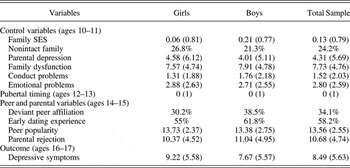
Table 1 presents descriptive statistics for control variables, pubertal timing, peer and parental variables, and depressive symptoms separately by gender. Significant gender differences were found: More adolescent boys than girls reported deviant peer affiliation, χ2 (1, N = 1,431) = 10.81, p < .001, phi-2 = 0.007, and early dating experience at 14–15 years of age, χ2 (1, N = 1,431) = 6.64, p < .01, phi-2 = 0.004. However, adolescent girls perceived higher peer popularity, t (1,429) = 2.63, p < .05, d = 0.13, and less parental rejection than did boys, t (1,429) = –2.67, p < .01, d = –0.14. Adolescent girls also displayed higher scores of depressive symptoms at 16–17 years of age than did boys, t (1,429) = 5.25, p < .001, d = –0.29. No gender difference was found at 10–11 years of age regarding the child's emotional problems, as reported by the PMK, t (1,429) = 1.22, ns.
Descriptive mean (standard deviation) or frequencies statistics for the study variables according to gender

Note: SES, socioeconomic status.
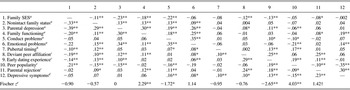
Analyses were conducted separately by gender. Preliminary data analyses revealed differences in the profiles of associations between variables according to gender. Some correlations between control/main variables and the outcome variable of depressive symptoms were significantly different between girls and boys (see r to z transformations in the bottom line of the correlations matrix, Table 2). Moreover, we conducted preliminary regression analyses to test the interactions between the main variables and sex. Some interactions were found to be significant: between early dating and sex (β = 0.13, p < .01) and between perceived peer popularity and depressive symptoms (β = –0.45, p < .01). The interaction between the quadratic term of pubertal timing and sex was found to be marginally significant (β = 0.07, p < .10). The interactions between deviant peer affiliation and sex (β = –0.04, ns) and between perceived parental rejection and sex (β = 0.07, ns) were not found to be significant. These preliminary results suggested sex differences regarding the associations between key variables and depressive symptoms.
Bivariate Pearson correlations among the study variables according to gender

Note: Statistics for boys are above the diagonal and for girls below the diagonal.
aAges 10–11.
bAges 12–13.
cAges 14–15.
dAges 16–17.
eFischer z testing the differences between boys and girls regarding the correlations between the variables of the study and depressive symptoms.
†p < .10. *p < .05. **p < .01.
Table 2 shows bivariate Pearson correlations between the variables, separately by gender. For adolescent girls, risk factors in late childhood, such as emotional (r = .08, p < .01) and conduct problems (r = .16, p < .01), were significantly associated with depressive symptoms at ages 16–17. Girls' earlier pubertal timing at ages 12–13 (r = .10, p < .05), deviant peer affiliation (r = .10, p < .05), early dating experience (r = .13, p < .01), lower perceived peer popularity (r = –.15, p < .01), and higher perceived parental rejection at ages 14–15 (r = .23, p < .01) were also significantly related to higher scores of depressive symptoms at ages 16–17.
For adolescent boys, family dysfunction (r = .19, p < .01) and emotional problems in late childhood (r = .14, p < .01) were significantly correlated with depressive symptoms at ages 16–17, while pubertal timing was not (r = .05, ns). Peer popularity (r = –.35, p < .01) and perceived parental rejection (r = .30, p < .01) were significantly correlated with depressive symptoms, but deviant peer affiliation and early dating experience were not related to the latter.
Multivariate models
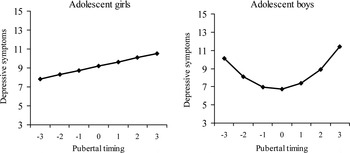
Multivariate regression analyses were performed to detect possible linear and curvilinear associations between pubertal timing and depressive symptoms. Both linear and quadratic terms were entered simultaneously in a first step, with the control variables. For adolescent girls, results indicated that pubertal timing had a linear effect on depressive symptoms (β = 0.08, p < .05), but no significant curvilinear effect was found (β = 0.02, ns). For adolescent boys, pubertal timing was found to have a significant curvilinear association with depressive symptoms (linear term: β = 0.04, ns; quadratic term: β = 0.10, p < .01). Consequently, only linear pubertal timing variable was included in the girls' models, while both linear and quadratic effects were taken into account in the boys' models. Figure 1 illustrates the association between pubertal timing at ages 12–13 and adolescent boys' and girls' depressive symptoms at ages 16–17, with control variables held at their average values.
The associations between pubertal timing (ages 12–13) and depressive symptoms (ages 16–17) for adolescent boys and girls.

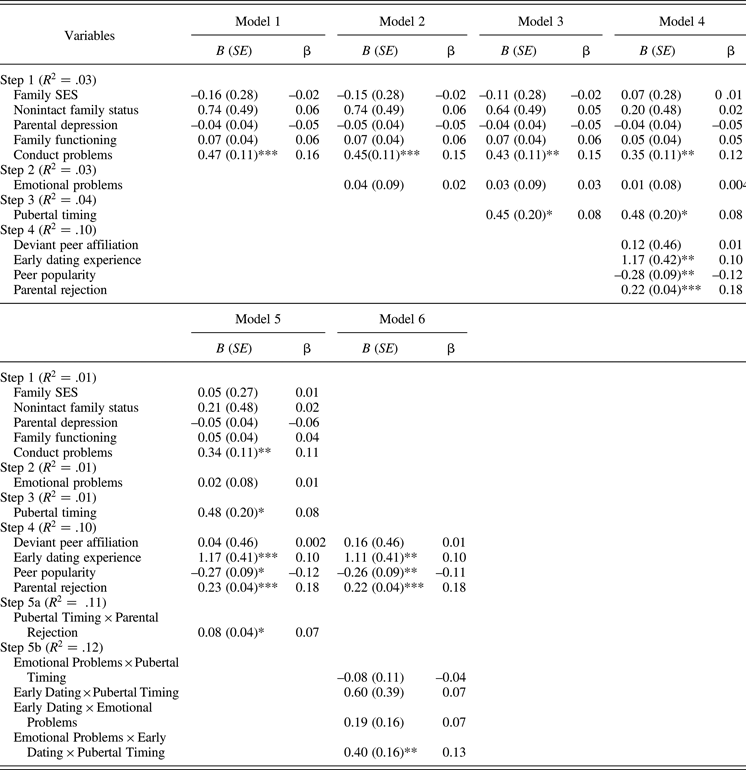
Table 3 and Table 4 report the results of hierarchical multiple regression models, which tested the main and interactive effects of emotional problems in late childhood, peer and parental variables, and pubertal timing on adolescents' depressive symptoms at 16–17 years of age.
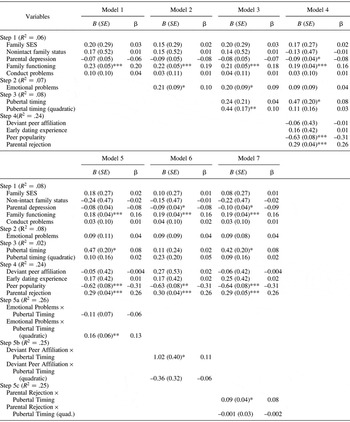
Multiple regression testing main and moderating effects of emotional problems in late childhood, peer and parental variables, and pubertal timing on depressive symptoms in adolescent girls (n = 778)
Note: All analyses controlled for cohort's membership. Step 1: control variables at ages 10–11; Step 2: emotional problems at ages 10–11; Step 3: pubertal timing at ages 12–13; Step 4: peer and parent variables at ages 14–15. ΔR 2: Model 2: .00, p = .625; Model 3: .01, p = .021; Model 4: .06, p = .000; Model 5: .01, p = .04; Model 6: .02, p = .007. SES, socioeconomic status.
*p < .0. **p < .01. ***p < .001.
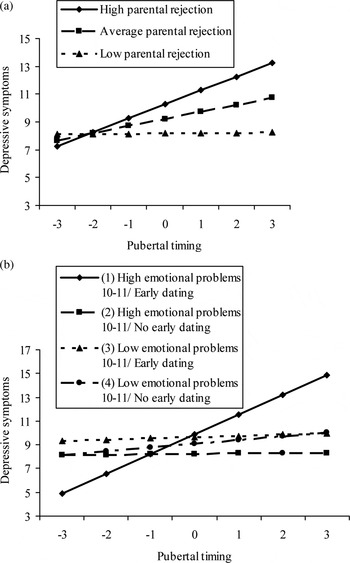
Multiple regression testing main and moderating effects of emotional problems in late childhood, peer and parental variables, and pubertal timing on depressive symptoms in adolescent boys (n = 653)

Note: All analyses controlled for cohort's membership. Step 1: control variables at ages 10–11; Step 2: emotional problems at ages 10–11; Step 3: pubertal timing at ages 12–13; Step 4: peer and parent variables at ages 14–15. ΔR 2: Model 2: .01, p=.021; Model 3: .01, p = .001; Model 4: .16, p = .001; Model 5: .02, p = .007; Model 6: .01, p = .023; Model 7: .01, p = .07 (p = .021 excluding interaction with pubertal timing-quadratic term). SES, socioeconomic status.
Adolescent girls
In Table 3, Model 3 shows that an early pubertal timing was significantly associated with higher levels of depressive symptoms (β = 0.08, p < .05), with control variables and emotional problems in late childhood included. In Model 4 the main effects of peer and parent variables were added. Having an early dating experience (β = 0.10, p < .01) as well as perceiving less peer popularity (β = –0.12, p < .001) and more parental rejection (β = 0.18, p < .001) were significantly associated with more depressive symptoms. Deviant peer affiliation was not associated with depressive symptoms when other variables were added to the model (β = 0.01, ns).
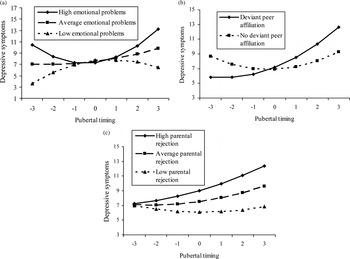
In Model 5, one two-way interaction between perceived parental rejection and pubertal timing was found to be significant (β = 0.07, p < .05). Using the Holmbeck (Reference Holmbeck2002) procedure for testing simple slopes, we examined the association between pubertal timing and depressive symptoms at different levels of perceived parental rejection (at one SD below mean, at mean level, and at one SD above mean). Results indicated that pubertal timing was not significantly associated with depressive symptoms at low levels of perceived parental rejection (β = 0.02, ns). However, pubertal timing was significantly and positively related to depressive symptoms at average levels of perceived parental rejection (β = 0.08, p < .05), and the effect was found to be more pronounced at high levels of perceived parental rejection (β = 0.15, p < .01). Figure 2a illustrates this interaction, with other variables of the model held at their average values.
The associations between pubertal timing (ages 12–13) and girls' depressive symptoms (ages 16–17) as a function of (a) perceived parental rejection and (b) emotional problems in late childhood and early dating experience.

In Model 6, a three-way interaction among late childhood emotional problems, early dating experience, and pubertal timing was found to be significant (β = 0.13, p < .01). Figure 2b displays this interaction, with other variable of the model held at their average value. To interpret this interaction, different configurations of emotional problems at 10–11 years of age (low levels: 1 SD below mean; high levels: 1 SD above mean) and early dating experience (early dating experience vs. no early dating experience) were evaluated according to pubertal timing scores (earlier to later timing). Therefore, four slopes are displayed in Figure 2 (Slope 1: high level of emotional problems at ages 10–11 + early dating experience; Slope 2: high level of emotional problems at ages 10–11 + no early dating experience; Slope 3: low level of emotional problems at ages 10–11 + early dating experience; and Slope 4: low level of emotional problems at ages 10–11 + no early dating experience). Results indicated that only Slope 1 was significantly different from Slope 2 (t = 2.85, p < .01), Slope 3 (t = 2.96, p < .01) and Slope 4 (t = 2.19, p < .05). Slopes 2, 3, and 4 were not significantly different from one another (2 and 3: t = 0.08, ns; 2 and 4: t = –0.71, ns; 3 and 4: t = 0.85, ns). These results suggested that early pubertal timing was associated with more depressive symptoms but only in girls who presented emotional problems in late childhood and dating experiences in early adolescence.
It is important to note that the two-way interaction between emotional problems in late childhood and pubertal timing was significant (β = 0.07, p < .05). However, these results are not shown, because the three-way interaction Emotional Problems × Early Dating × Pubertal Timing was also significant. No other two-way interactions or three-way interactions were found to be significant.
Adolescent boys
As shown in Model 3 (Table 4), a significant curvilinear association between pubertal timing and boys' depressive symptoms was found (β = 0.10, p < .01), with control variables and emotional problems in late childhood included. In Model 4, perceived peer popularity (β = –0.31, p < .001) and perceived parental rejection at 14–15 years of age (β = 0.26, p < .001) were significantly associated with depressive symptoms. Deviant peer affiliation and early dating experience were not significantly related to boys' depressive symptoms. Moreover, when peer and parent variables were included in Model 4, the linear term of pubertal timing became significant (β = 0.08, p < .05), while the quadratic term was no longer significant (β = 0.03, ns). Inspection of the associations between variables indicated that this effect was the result of the inclusion of the peer popularity variable. This finding suggested that the link between later pubertal timing and depressive symptoms was partially explained by lower levels of perceived peer popularity.
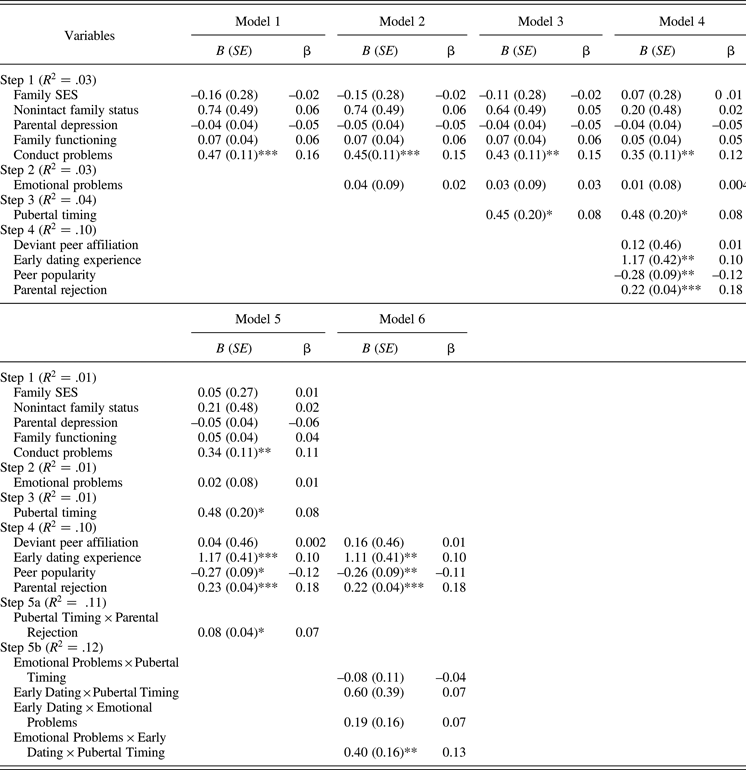
Three two-way interactions emerged as significant in subsequent models. As shown in Model 5, an interaction between emotional problems in late childhood and pubertal timing (quadratic) was found to be significant (β = 0.13, p < .01). A test of simple slopes at different levels of emotional problems in late childhood (1 SD below mean, average level, and 1 SD above mean) indicated that the curvilinear association between pubertal timing and depressive symptoms was only significant at high levels of emotional problems (β = 0.12, p < .01) and not at low (β = –0.07, ns) or average levels (β = 0.02, ns). Figure 3a displays this interaction, with other variables of the model held at their average value: off-time pubertal timing was associated with more depressive symptoms at 16–17 years of age, but only in boys who already displayed high levels of emotional problems in late childhood.
The associations between pubertal timing (ages 12–13) and depressive symptoms (ages 16–17) as a function of (a) emotional problems in late childhood, (b) deviant peer affiliation (ages 14–15), and (c) perceived parental rejection (ages 14–15).

In Model 6, a significant interaction between deviant peer affiliation and pubertal timing (linear term) was found (β = 0.11, p < .05). A test of simple slopes showed that the linear effect of pubertal timing on depressive symptoms was not significant when adolescent boys reported no affiliation with deviant peers (β = 0.02, ns). In the context of affiliation with deviant peers, pubertal timing (linear term) was significantly and positively associated with depressive symptoms (β = 0.21, p < .001). This interaction is illustrated in Figure 3b, which shows that when boys affiliate with deviant peers, early maturers are more likely to report depressive symptoms.
An interaction between perceived parental rejection and pubertal timing (linear) emerged as significant (β = 0.08, p < .05) in Model 6. Interpretation of this interaction suggested that the linear association between pubertal timing and depressive symptoms was not significant at low levels of perceived parental rejection (β = –0.002, ns). Pubertal timing was significantly and positively related to depressive symptoms at average levels of perceived parental rejection (β = 0.08, p < .05), and the association was stronger at high levels of perceived parental rejection (β = 0.16, p < .01). This interaction indicated that early maturing boys are more likely to display depressive symptoms if they perceived higher levels of perceived parental rejection. This interaction is displayed in Figure 3c. No other two-way or three-way interactions were found to be significant for adolescent boys.
Discussion
Using a representative longitudinal sample of Canadian boys and girls followed over a 6-year period, the aim of this study was to test personal-accentuation and contextual-amplification models of pubertal timing. Complex interactions among prepubertal individual risk, interpersonal factors, and pubertal timing emerged, showing that a potential detrimental effect of pubertal timing is substantially dependant on individual and contextual influences. Moreover, this study extends our understanding of these models by providing evidence for a joint interplay of individual and social domains when evaluating the risk for depression associated with pubertal timing.
Personal-accentuation models
Results of this study contributed to our understanding of the potential long-term effect of pubertal timing on depressive symptoms by showing that the association between pubertal timing and depressive symptoms was only significant in adolescents who had already experienced emotional problems in late childhood. By taking into account that adolescents enter puberty with diverse preexisting individual risk conditions, these results support the accentuation model (Caspi & Moffitt, Reference Caspi and Moffitt1991). Preexisting individual vulnerabilities could be accentuated during a transitional period, such as when early (girls) or off-time puberty (boys) increased the frequency of depressive symptoms in adolescents with emotional problems in childhood (Caspi & Moffitt, Reference Caspi and Moffitt1991; Ge et al., Reference Ge, Conger and Elder1996). Therefore, pubertal maturation is not necessarily a stressful or difficult transition for all early or off-time maturers, but it may be particularly challenging for adolescents with vulnerabilities to depression.
Contextual-amplification models
Some evidence, found in this study, sheds light on the complex longitudinal associations between pubertal timing and the frequency of depressive symptoms in adolescence by showing that the potential detrimental effect of pubertal timing is amplified by interpersonal characteristics in the broader social context of peers and family. In line with Person × Environment interactions and biopsychosocial models of puberty and development (Graber, Reference Graber and Hayward2003; Magnusson, Reference Magnusson1988; Rudolph, Reference Rudolph, Nolen-Hoeksema and Hilt2009), these results confirm previous findings by indicating that pubertal timing is associated with depressive symptoms primarily within specific interpersonal and social contexts (e.g., Ge et al., Reference Ge, Conger and Elder1996; Natsuaki et al., Reference Natsuaki, Biehl and Ge2009). Contextual amplification effects were observed, because higher levels of depressive symptoms were found in early maturing adolescents who experienced early dating (girls), deviant peer affiliation (boys), and perceived parental rejection (girls and boys) but not in early maturing youth who did not exhibit these interpersonal factors. Even if we did not directly test the underlying mechanisms accounting for these interactions, some hypotheses can be proposed. It could be hypothesized that these social contexts constitute potential sources of interpersonal stress that are particularly challenging for early maturers (Conley & Rudolph, Reference Conley and Rudolph2009). Physical transformations associated with pubertal development imply changes in adolescents' self-perceptions (Brooks-Gunn, Reference Brooks-Gunn1984), which are influenced by social contexts surrounding adolescents (Graber, Reference Graber and Hayward2003; Magnusson & Cairns, Reference Magnusson, Cairns, Cairns, Elder and Costello1996). Early maturing adolescents have to manage an emergent sexual interest, a more mature physical appearance compared to their chronological age, and a redefinition of their interactions with parents and peers at a younger age. This developmental context could be demanding if associated with interpersonal difficulties or precarious social environments (e.g., deviant peer context or perceived parental rejection).
However, the pattern of results found for adolescent boys suggests that early and late pubertal timing may be linked to depressive symptoms for various reasons. After including the main effects of the social environments in the model, the curvilinear association between pubertal timing and depressive symptoms was no longer significant, specifically because of the inclusion of the peer popularity variable. Although not expected, this result suggested a partial mediation effect: Lower perceived peer popularity may account for the association between later pubertal maturation and depressive symptoms. Because evidence indicates that late maturing boys tend to be more psychologically immature in terms of ego development (Lindfors et al., Reference Lindfors, Elovainio, Wickman, Vuorinen, Sinkkonen and Dunkel2007) and treated as being younger than their age because of their physical appearance (Johnson & Collins, Reference Johnson and Collins1988), they may struggle more than others for peer acceptance. This hypothesis needs to be explored in further studies. However, a significant interaction between affiliation with deviant peers and pubertal timing indicated that when adolescent boys reported affiliation with deviant peers, early maturers were more likely to display depressive symptoms than were their peers. Fergusson et al. (Reference Fergusson, Wanner, Vitaro, Horwood and Swain-Campbell2003) found that adolescents who affiliated with deviant peers showed more depressive symptoms. These authors proposed a causal chain process where deviant peer affiliation increases externalizing problems, which, in turn, further increase the risk of depression. It is possible that this process may be intensified in early maturing boys who associate with deviant peers, because boys with early maturation tend to engage more intensively in delinquent activities and substance use (Ge, Brody, Conger, Simons, & Murry, Reference Ge, Brody, Conger, Simons and Murry2002; Kaltiala-Heino et al., Reference Kaltiala-Heino, Marttunen, Rantanen and Rimpelä2003). Moreover, early maturing boys are more likely to be popular among peers (Felson & Haynie, Reference Felson and Haynie2002) and perhaps, consequently, more vulnerable to peer pressure (Allen, Porter, McFarland, Marsh, & McElhaney, Reference Allen, Porter, McFarland, Marsh and McElhaney2005; Santor, Messervey, & Kusumakar, Reference Santor, Messervey and Kusumakar2000). This may explain why early maturers tend to display more depressive symptoms in a context of deviant peer influences.
For both boys and girls, the association between an earlier pubertal timing and depressive symptoms was exacerbated if adolescents reported higher levels of perceived parental rejection. Some previous studies have revealed that early pubertal timing is associated with intensified family conflicts and parent–adolescent emotional distance (Steinberg, Reference Steinberg1987). However, if earlier pubertal timing may be associated with more family conflicts, it does not seem to be associated with major relationships problems, such as perception of parental rejection, because pubertal timing was not significantly correlated with perceived parental rejection in this study. Some hypotheses might explain the possibility of heightened interpersonal vulnerability to depressive symptoms for early maturers in this context. For instance, the development of secondary sex characteristics, which are signs of sexual and social maturity, often initiates changes in parent–adolescent interactions regarding affective manifestations, communication processes, and parental control (Paikoff & Brooks-Gunn, Reference Paikoff and Brooks-Gunn1991). Although this renegotiation of the parent–adolescent relationship is normative, it may affect early maturers more if they also perceive rejection from their parents. Moreover, as proposed by the biopsychosocial perspective, the difficulties elicited by early puberty appear to be intensified in difficult interpersonal contexts characterized by a high level of perceived parental rejection; a low level of perceived parental rejection in turn seems to buffer the potential risk associated with adolescents' early puberty.
An integrated perspective on the contribution of personal and contextual factors
Preexisting individual vulnerabilities and interpersonal contexts contribute to increase or decrease the risk for subsequent depression associated with pubertal timing in late adolescence. This study extends these perspectives by suggesting that personal-accentuation and contextual-amplification processes may occur simultaneously. A significant three-way interaction was found, indicating that girls' earlier pubertal timing was associated with higher levels of depressive symptoms, but this was only in girls who exhibited emotional problems in late childhood and experienced early dating. These results are in line with previous findings that suggest bidirectional links between internalizing symptoms and early romantic dating. Although romantic dating and having mixed-sex peers in early adolescence appears quite normative, it has been linked to an increased risk of depression (Joyner & Udry, Reference Joyner and Udry2000), particularly in early maturing girls (Ge et al., Reference Ge, Conger and Elder1996). Early adolescents may lack the skills to cope with romantic stress and to regulate emotions that could arise from rejection or interpersonal conflicts (Davila, Reference Davila2008; Joyner & Udry, Reference Joyner and Udry2000). At the same time, depressed adolescents who get involved in romantic relationships are more likely to do so as a coping mechanism to find support or to satisfy dependency needs, an interpersonal context that could increase their depressive symptoms (Davila et al., Reference Davila, Stroud, Starr, Ramsey Miller, Yoneda and Hershenberg2009; Gotlib, Lewinsohn, & Seeley, Reference Gotlib, Lewinsohn and Seeley1998). The present results suggested that girls' early pubertal timing may be an important feature to be considered in conjunction with antecedents of emotional problems and early romantic involvement.
Limitations and implications for future research
Some limitations need to be taken into account. First, the effect of pubertal timing and its interactions with contextual and personal variables explained a small part of the variance in the frequency of depressive symptoms (1% to 2% of explained variance). However, such small effects are to be expected when interactions are found in nonexperimental studies (McClelland & Judd, Reference McClelland and Judd1993), particularly in the pubertal development field (Alsaker, Reference Alsaker1996). Moreover, the significant interactions indicated that the effect of pubertal timing may explain a larger part of variance in depressive symptoms within some social context. For example, in girls, an earlier pubertal timing is associated with more important change in depressive symptoms within adolescents who perceived parental rejection (β = 0.15, p < .01) than in all adolescent girls (β = 0.07, p < .05).
Second, the extent of some measures was limited, because the NLSCY is a large-scale survey assessing a wide range of aspects of child and adolescent development. For example, pubertal development was measured with a shortened version of the Pubertal Development Scale, and early dating experience and deviant peer affiliation were measured with single items. Multiple measures of pubertal development, such as Tanner stages and items directly assessing perceived pubertal timing, would have been helpful to define more precise connections between pubertal timing and depressive symptoms.
Third, the use of normalized longitudinal weights to handle missing data and ensure the representativeness of the initial sample may not have eliminated all problems associated with attrition (e.g., more children with conduct problems were lost through attrition). However, this strategy is a valuable and widely used method to produce valid estimates in large surveys like the NLSCY.
Fourth, pubertal timing, peer and parent variables, as well as depressive symptoms were self-reported and therefore share some common variance that may lead to an overestimation of the associations among these variables. Unfortunately, we did not have access to measures of adolescent depression and interpersonal relationships from multiple informants. However, many studies have shown that adolescents appear to be valid and reliable informants of their own depressive state. Other informants, such as parents, tend to underestimate internalizing symptoms in adolescents (Seiffge-Krenke & Kollma, Reference Seiffge-Krenke and Kollma1998; Verhulst & Van der Ende, Reference Verhulst and Van der Ende2006), which can substantially reduce interindividual differences. Moreover, because parents or teachers may not be well informed of adolescents' social interactions with peers (e.g., dating experiences or friends' deviancy), the inclusion of self-report data on these dimensions is important. The use of self-report measures was also relevant to this study because it specifically examined the links between self-perceived characteristics of adolescent social life and depressive symptoms. Self-perceptions of interpersonal contexts are crucial in understanding the frequency of depressive symptoms (Rudolph, Reference Rudolph, Nolen-Hoeksema and Hilt2009).
Our findings suggest multiple independent pathways toward depression in adolescence. Therefore, it is plausible that multiple trajectories of depression exist for early and off-time maturing youth in conjunction with different social contexts and individual vulnerability factors (Natsuaki et al., Reference Natsuaki, Biehl and Ge2009). Further studies should examine physiological processes involved in pubertal timing and explain why it is related to depression in some social contexts. Some evidence suggests that patterns of physiological reactivity may differ according to pubertal timing. For example, early maturing young women appear to experience more physiological stress and less physiological recovery (measured by cortisol levels) when facing high levels of interpersonal conflicts in a discussion task with their romantic partner (Smith & Powers, Reference Smith and Powers2009). It is therefore possible that pubertal timing influences the physiological reactivity to stress in particular interpersonal contexts and eventually contributes to emotional disturbances. These complex interactions between physiological and interpersonal factors related to pubertal timing merit further investigation.
Despite these limitations, this prospective longitudinal study deepens our understanding of the long-term association between pubertal timing and depressive symptoms. By adopting a biopsychosocial and transactional perspective, our findings add to the emerging body of evidence indicating that interactions among personal preexisting risk conditions, social contexts, and pubertal timing predict depressive symptoms in adolescence. This theoretical framework offers important avenues in evaluating how the pubertal transition shapes the adolescent experience and especially in which social contexts depressive symptoms are more likely to be observed, because early or off-time maturation does not confer a similar risk for depression in late adolescence. The results also have implications for prevention and intervention in adolescent depression. By drawing attention to particular combinations of biological, individual, and interpersonal characteristics associated with depressive symptoms, our findings may help to identify adolescents who are more vulnerable to pubertal transition. In particular, attention should be given to adolescents with a history of emotional problems during late childhood and who experienced early or off-time puberty. Moreover, characteristics of peer, romantic, and parental contexts, such as early dating experience, deviant peer affiliation, and perceived parental rejection, should be taken into account because these contexts may be related to a higher risk of depressive symptoms in adolescence, especially if paired with early pubertal development.