









1. Introduction
Given an isometric immersion  $f\colon M^n\to\mathbb{R}^{m}$ of a Riemannian manifold
 $(M^n,g)$ into Euclidean space with normal bundle-valued second fundamental form
 $\alpha\in \Gamma(\mbox{Hom}(TM,TM;N_fM))$, let
 $\phi\in C^\infty(M)$ be defined by:
 \begin{equation}
\phi^2=\frac{n}{n-1}(\|\alpha\|^2-n\|\mathcal{H}\|^2),
\end{equation}
where  $\mathcal{H}$ is the mean curvature vector field of f and
 $\|\alpha\|^2\in C^\infty(M)$ is given at any point
 $x\in M^n$ by:
 \begin{equation*}
\|\alpha(x)\|^2=\sum_{i,j=1}^n\|\alpha(x)(X_i,X_j)\|^2,
\end{equation*}
in terms of an orthonormal basis  $\{X_i\}_{1\leq i\leq n}$ of TxM. Notice that ϕ vanishes precisely at the umbilical points of f. The metric
 \begin{equation*}
g^*=\phi^2 g,
\end{equation*}
defined on the open subset of non-umbilical points of f, is a Moebius invariant metric called the Moebius metric determined by f. Namely, if  $\tilde f=\tau\circ f$ for some Moebius transformation of
 $\mathbb{R}^m$, then the Moebius metrics of f and
 $\tilde f$ coincide.
It is a fundamental fact, proved by Wang in [Reference Wang16], that a hypersurface  $f\colon M^n\to\mathbb{R}^{n+1}$ is uniquely determined, up to Moebius transformations of the ambient space, by its Moebius metric and its Moebius shape operator
 $S=\phi^{-1}(A-HI)$, where A is the shape operator of f with respect to a unit normal vector field N and H is the corresponding mean curvature function. A similar result holds for submanifolds of arbitrary codimension (see [Reference Wang16] and Section 9.8 of [Reference Dajczer and Tojeiro9]).
Li, Ma and Wang have provided in [Reference Li, Ma and Wang13] a partial classification of the hypersurfaces  $f\colon M^n\to\mathbb{R}^{n+1}$,
 $n\geq 4$, that are not determined, up to Moebius transformations of
 $\mathbb{R}^{n+1}$, only by their Moebius metrics, called Moebius deformable hypersurfaces. For
 $n\geq 5$, the classification of Moebius deformable hypersurfaces was completed by the authors in [Reference Jimenez and Tojeiro12].
Moebius deformable hypersurfaces belong to the more general class of conformally deformable hypersurfaces, that is, the hypersurfaces  $f\colon M^n\to\mathbb{R}^{n+1}$ for which Mn admits an immersion
 $\tilde f\colon M^n\to\mathbb{R}^{n+1}$ such that f and
 $\tilde f$ induce conformal metrics on Mn and do not differ by a Moebius transformation. The study of conformally deformable hypersurfaces goes back to Cartan [Reference Cartan2] (see also [Reference Dajczer and Tojeiro8] and Chapter 17 of [Reference Dajczer and Tojeiro9]).
Our main goal in this article is to classify the infinitesimally Moebius bendable hypersurfaces, that is, the umbilic-free hypersurfaces  $f\colon M^n\to \mathbb{R}^{n+1}$ into Euclidean space that admit a one-parameter family of immersions
 $f_t\colon M^n\to \mathbb{R}^{n+1}$, with
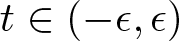
 $t\in (-\epsilon, \epsilon)$ and
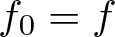
 $f_0=f$, whose Moebius metrics coincide with that of f up to the first order, in a sense that is made precise below.
Let  $f\colon M^n\to\mathbb{R}^m$ be an isometric immersion free of umbilical points. We call a smooth map
 $F\colon (-\epsilon, \epsilon)\times M^n\to\mathbb{R}^m$ a Moebius variation of f if
 $f_t=F(t,\cdot)$, with
 $f_0=f$, is an immersion that determines the same Moebius metric for any
 $t\in (-\epsilon, \epsilon)$. In other words, if gt is the metric induced by ft, then
 $
g_t^*=g_0^*,
$ for all
 $t\in I$.
Trivial Moebius variations can be produced by composing f with the elements of a smooth one-parameter family of Moebius transformations of the Euclidean ambient space. Thus, the results in [Reference Jimenez and Tojeiro12] and [Reference Li, Ma and Wang13] give a classification of the umbilic-free hypersurfaces  $f\colon M^n\to\mathbb{R}^{n+1}$ of dimension
 $n\geq 5$ that admit non-trivial Moebius variations.
We are interested in the umbilic-free isometric immersions  $f\colon M^n\to\mathbb{R}^m$ that satisfy the weaker condition of admitting non-trivial infinitesimal Moebius variations. By an infinitesimal Moebius variation of an isometric immersion
 $f\colon M^n\to\mathbb{R}^m$ without umbilical points we mean a smooth map
 $F\colon (-\epsilon, \epsilon)\times M^n\to\mathbb{R}^m$ such that the maps
 $f_t=F(t,\cdot)$, with
 $f_0=f$, are immersions whose corresponding Moebius metrics coincide up to the first order. This means that
 $\frac{\partial}{\partial t}|_{t=0}g_t^*=0$, that is,
 \begin{equation*}
\frac{\partial}{\partial t}|_{t=0}(\phi_t^2{\langle}f_{t*}X,f_{t*}Y{\rangle})=0,
\end{equation*}
for all  $X,Y\in\mathfrak{X}(M)$, where
 $\phi_t^2$ is given by (1) for the immersion ft,
 $t\in (-\epsilon, \epsilon)$.
Given a smooth variation  $F\colon (-\epsilon, \epsilon)\times M^n\to\mathbb{R}^m$ of an isometric immersion
 $f\colon M^n\to\mathbb{R}^m$, one defines its variational vector field by
 ${\cal T} = F_*\partial/\partial t|_{t=0}$. When the immersions
 $f_t=F(t,\cdot)$ are the compositions of f with the elements of a smooth one-parameter family of Moebius transformations of
 $\mathbb{R}^m$, the variational vector field
 ${\cal T}$ is the restriction to Mn of a conformal Killing vector field of
 $\mathbb{R}^m$. Accordingly, an infinitesimal Moebius variation
 $F\colon (-\epsilon, \epsilon)\times M^n\to\mathbb{R}^m$ of an isometric immersion
 $f\colon M^n\to\mathbb{R}^m$ without umbilical points is said to be trivial if the variational vector field
 ${\cal T}$ associated with F is the restriction to Mn of a conformal Killing vector field of
 $\mathbb{R}^m$. We say that f is infinitesimally Moebius bendable if it admits an infinitesimal Moebius variation that is non-trivial restricted to any open subset of Mn. It is locally infinitesimally Moebius bendable if each point
 $x\in M^n$ has an open neighbourhood U such that
 $f|_U$ is infinitesimally Moebius bendable.
In order to state our classification of the umbilic-free infinitesimally Moebius bendable Euclidean hypersurfaces of dimension  $n\geq 5$, we need some further definitions.
First, by a conformally surface-like hypersurface  $f\colon M^n\to \mathbb{R}^{n+1}$ we mean a hypersurface that differs by a Moebius transformation of
 $\mathbb{R}^{n+1}$ from either a cylinder or a rotation hypersurface over a surface in
 $\mathbb{R}^3$, or from a cylinder over a three-dimensional hypersurface of
 $\mathbb{R}^4$ that is a cone over a surface in
 $\mathbb{S}^3$. We say, accordingly, that f is a conformally surface-like hypersurface determined by a surface
 $h\colon L^2\to \mathbb{Q}_{\epsilon}^3$, with
 $\epsilon=0, -1$ or 1, respectively.
Now we recall how a two-parameter family of hyperspheres in  $\mathbb{R}^{n+1}$ is determined by a surface
 $s\colon L^2\to \mathbb{S}_{1,1}^{n+2}$ into the Lorentzian sphere:
 \begin{equation*}
\mathbb{S}_{1,1}^{n+2}=\{x\in\mathbb{L}^{n+3}\colon{\langle}x,x{\rangle}=1\},
\end{equation*}
in the Lorentz space  $\mathbb{L}^{n+3}$.
Let  $f\colon M^n\to \mathbb{R}^{n+1}$ be an oriented hypersurface with respect to a unit normal vector field N. Then, the family of hyperspheres
 $
x\in M^n\mapsto S(h(x),r(x)),
$ with radius r(x) and centre:
 $
h(x)=f(x)+r(x)N(x),
$ is enveloped by f. If, in particular,
 $1/r$ is the mean curvature of f, it is called the central sphere congruence of f.
Let  $\mathbb{V}^{n+2}$ denote the light cone in
 $\mathbb{L}^{n+3}$ and let
 $\Psi=\Psi_{v,w,C}\colon\mathbb{R}^{n+1}\to\mathbb{L}^{n+3}$ be the isometric embedding onto:
 \begin{equation*}
\mathbb{E}^{n+1}=\mathbb{E}^{n+1}_w=\{u\in\mathbb{V}^{n+2}:{\langle}u,w{\rangle} =1\}\subset\mathbb{L}^{n+3}:
\end{equation*}
given by:
 \begin{equation*}
\Psi(x)=v+Cx-\frac{1}{2}\|x\|^2w,
\end{equation*}
in terms of  $w\in \mathbb{V}^{n+2}$,
 $v\in \mathbb{E}^{n+1}$ and a linear isometry
 $C\colon\mathbb{R}^{n+1}\to\{v,w\}^\perp$. Then the congruence of hyperspheres
 $x\in M^n\mapsto S(h(x),r(x))$ is determined by the map
 $S\colon M^n\to\mathbb{S}_{1,1}^{n+2}$ defined by:
 \begin{equation*}
S(x)=\frac{1}{r(x)}\Psi(h(x))+\frac{r(x)}{2}w,
\end{equation*}
for  $\Psi(S(h(x),r(x)))=\mathbb{E}^{n+1}\cap S(x)^\perp$ for all
 $x\in M^n$. The map S has rank
 $0 \lt k \lt n$, that is, it corresponds to a k-parameter congruence of hyperespheres, if and only if
 $\lambda=1/r$ is a principal curvature of f with constant multiplicity n − k (see Section 9.3 of [Reference Dajczer and Tojeiro9] for details). In this case, S gives rise to a map
 $s\colon L^k\to \mathbb{S}_{1,1}^{n+2}$ such that
 $S\circ \pi=s$, where
 $\pi\colon M^n\to L^k$ is the canonical projection onto the quotient space of leaves of
 $\ker (A-\lambda I)$.
Finally, a surface  $h\colon L^2\to \mathbb{Q}^3_\epsilon$ is said to be a generalized cone over a unit-speed curve
 $\gamma\colon I\to \mathbb{Q}^2_c$,
 $c\geq \epsilon$, in an umbilical surface
 $\mathbb{Q}^2_c\subset \mathbb{Q}^3_\epsilon$, if
 $L^2=I\times J$ is a product of intervals
 $I, J\subset \mathbb{R}$ and
 $h(s,t)=\exp_{\gamma(s)}tN(s)$ for all
 $(s,t)\in I\times J$, where exp is the exponential map of
 $\mathbb{Q}^3_\epsilon$ and N is a unit normal vector field to
 $\mathbb{Q}^2_c$ along γ. Notice that h has 0 as one of its principal curvatures, with the t-coordinate curves as the correspondent curvature lines. Generalized cones without totally geodesic points are precisely the isothermic surfaces that have 0 as a simple principal curvature. Recall that a surface
 $h\colon L^2\to \mathbb{Q}^3_\epsilon$ is isothermic if each non-umbilic point of L 2 has an open neighbourhood where one can define isothermic (that is, conformal) coordinates whose coordinate curves are lines of curvature of h.
Theorem 1. Let  $f\colon M^n\to \mathbb{R}^{n+1}$,
 $n\geq 5$, be an umbilic-free infinitesimally Moebius bendable hypersurface. Then there exists an open and dense subset
 $\mathcal{U}^*$ of Mn such that f is of one of the following types on each connected component U of
 $\mathcal{U}^*$:
(i) a conformally surface-like hypersurface determined by an isothermic surface
 $h\colon L^2\to \mathbb{Q}_\epsilon^3$, $\epsilon \in \{-1, 0, 1\}$.
(ii) a hypersurface whose central sphere congruence is determined by a minimal space-like surface
$s\colon L^2\to \mathbb{S}_{1,1}^{n+2}$.


In particular, f has a principal curvature with multiplicity n − 1 or n − 2 at any point of Mn, and the first possibility occurs on a connected component U of  $\mathcal{U}^*$ if and only if f is given on U as in part (i), with the surface
 $h\colon L^2\to \mathbb{Q}_\epsilon^3$ being a generalized cone over a unit-speed curve
 $\gamma\colon J\to \mathbb{Q}_{c}^2$ in an umbilical surface
 $\mathbb{Q}_{c}^2\subset \mathbb{Q}_{\epsilon}^3$,
 $c\geq \epsilon$.
Conversely, any simply connected hypersurface as in (ii) is infinitesimally Moebius bendable, and for any hypersurface as in (i) there exists an open dense subset where f is locally infinitesimally Moebius bendable.
It follows from Theorem 1 and the main result in [Reference Jimenez and Tojeiro12] that, within the class of hypersurfaces that are not conformally surface-like on any open subset and have a principal curvature of constant multiplicity n − 2, the families of those that are either Moebius deformable or infinitesimally Moebius bendable coincide. On the other hand, among conformally surface-like hypersurfaces, the class of infinitesimally Moebius bendable hypersurfaces is strictly larger than that of Moebius deformable hypersurfaces. Indeed, while a surface in the former class is determined by an arbitrary isothermic surface, the elements in the latter are determined by particular isothermic surfaces, namely, Bonnet surfaces admitting isometric deformations preserving the mean curvature.
Our approach to prove Theorem (1) is rather different from those used in both [Reference Jimenez and Tojeiro12] or [Reference Li, Ma and Wang13] to classify the Moebius deformable hypersurfaces. It is based on the theory developed in [Reference Dajczer and Jimenez5] and [Reference Dajczer, Jimenez and Vlachos7] of the more general notions of conformal variations and conformal infinitesimal variations of an isometric immersion  $f\colon M^n\to\mathbb{R}^m$, which are natural generalizations of the corresponding classical concepts of isometric variations and isometric infinitesimal variations.
A smooth map  $F\colon (-\epsilon, \epsilon)\times M^n\to\mathbb{R}^m$ is a conformal variation of an isometric immersion
 $f\colon M^n\to \mathbb{R}^m$ if the maps
 $f_t=F(t,\cdot)$, with
 $f_0=f$, are conformal immersions for any
 $t\in (-\epsilon, \epsilon)$, that is, if there is a positive
 $\gamma\in C^\infty((-\epsilon, \epsilon)\times M^n)$, with
 $\gamma(0, x) = 1$ for all
 $x\in M^n$, such that:
 \begin{equation}\gamma(t, x){\langle}{f_t}_*X, {f_t}_*X{\rangle}={\langle}X,Y{\rangle},
\end{equation}
for all  $X, Y\in \mathfrak{X}(M)$, where
 ${\langle}\, ,\,{\rangle}$ stands for the metrics of both
 $\mathbb{R}^m$ and Mn. Thus Moebius variations are particular cases of conformal variations for which
 $\gamma(t,x)=\phi_0^{-2}(x)\phi^2_t(x)$ for all
 $(t,x)\in I\times M^n$.
Conformal infinitesimal variations of an isometric immersion  $f\colon M^n\to \mathbb{R}^m$ are smooth variations for which (2) holds up to the first order, that is,
 \begin{equation}
\frac{\partial}{\partial t}|_{t=0} (\gamma(t, x){\langle}{f_t}_*X, {f_t}_*X{\rangle})=0,
\end{equation}
for all  $X, Y\in \mathfrak{X}(M)$. Eq. (3) implies that the variational vector field
 ${\cal T} = F_*\partial/\partial t|_{t=0}$ of F satisfies:
 \begin{equation}
{\langle}\tilde\nabla_X{\cal T}, f_*Y{\rangle}+{\langle}f_*X, \tilde\nabla_Y{\cal T}{\rangle}=2\rho{\langle}X,Y{\rangle},
\end{equation}
for all  $X, Y\in \mathfrak{X}(M)$, where
 $\rho(x)=-(1/2)\partial \gamma/\partial t(0,x)$.
For this reason, a smooth section  ${\cal T}\in \Gamma(f^*T\mathbb{R}^m)$ that satisfies (4) is called a conformal infinitesimal bending of f with conformal factor
 $\rho\in C^{\infty}(M)$. In particular, the variational vector field
 ${\cal T}=F_*\partial/\partial t|_{t=0}$ of an infinitesimal Moebius variation, which we call an an infinitesimal Moebius bending, is also a conformal infinitesimal bending of f whose conformal factor is:
 \begin{equation}
\rho=-\frac{1}{2}\frac{\partial}{\partial t}|_{t=0}(\gamma(t,x))=-\frac{1}{2}\phi_0^{-2}(x)\frac{\partial}{\partial t}|_{t=0}(\phi_t^2(x)).
\end{equation}
By the above, the variational vector field of a conformal infinitesimal variation is a conformal infinitesimal bending. Conversely, any conformal infinitesimal bending  ${\cal T}\in \Gamma(f^*T\mathbb{R}^m)$ is the variational vector field of a (non-unique) conformal infinitesimal variation
 $F\colon (-\epsilon, \epsilon)\times M^n\to \mathbb{R}^m$ of f. For instance, one may take
 \begin{equation*}
{F}(t, x) = f(x) + t{\cal T}(x),
\end{equation*}
for all  $(t,x)\in (-\epsilon, \epsilon)\times M^n$. The reason why it is convenient to consider the conformal infinitesimal bending associated with a conformal infinitesimal variation of an isometric immersion
 $f\colon M^n\to \mathbb{R}^m$ is that one can establish a fundamental theorem providing necessary and sufficient conditions for the existence of a conformal infinitesimal bending (and hence of a conformal infinitesimal variation); see [Reference Dajczer and Jimenez5].
Infinitesimal variations of an isometric immersion  $f\colon M^n\to \mathbb{R}^m$ correspond to the conformal infinitesimal variations for which the function γ in (3) has the constant value γ = 1. The associated variational vector fields are called infinitesimal bendings and correspond to the conformal infinitesimal bendings with conformal factor ρ = 0. The reason why isothermic surfaces
 $f\colon L^2\to \mathbb{Q}_c^3$ appear in this context is that they are precisely the surfaces that are locally infinitesimally Bonnet bendable, that is, the surfaces that admit local infinitesimal variations
 $F\colon (-\epsilon, \epsilon)\times L^2\to\mathbb{Q}_c^3$ such that the mean curvature functions Ht of
 $f_t=F(t,\cdot)$,
 $t\in (-\epsilon, \epsilon)$, coincide up to the first order, that is,
 $\partial/\partial t|_{t=0}{H}_t=0$ (see, e.g., Proposition 9 of [Reference Jimenez and Tojeiro11]).
The study of hypersurfaces  $f\colon M^n\to\mathbb{R}^{n+1}$,
 $n\geq 3$, that admit non-trivial variations preserving the induced metric goes back to Sbrana [Reference Sbrana15] and Cartan [Reference Cartan1] (see also [Reference Dajczer, Florit and Tojeiro3] or Chapter 11 of [Reference Dajczer and Tojeiro9]), whereas the hypersurfaces that admit non-trivial infinitesimal variations were investigated by Sbrana [Reference Sbrana14] (see also [Reference Dajczer and Vlachos10], Chapter 14 of [Reference Dajczer and Tojeiro9] and [Reference Dajczer and Jimenez6]). We point out that the latter class turns out to be much larger than the former.
In the proof of Theorem (1), a main step is the following characterization of independent interest of the infinitesimally Moebius bendable isometric immersions  $f\colon M^n\to \mathbb{R}^m$ of arbitrary codimension among those that admit a non-trivial conformal infinitesimal bending
 ${\cal T}$ with conformal factor
 $\rho\in C^{\infty}(M)$. In the next statement, we denote by
 $\mathcal{H}$ the mean curvature vector field of f and by
 $\mathcal{L}\in\Gamma(N_fM)$ the normal vector field given by:
 \begin{equation}
\mathcal{L}=\frac{1}{n}\sum_{i=1}^n\beta(X_i,X_i)\in \Gamma(N_fM),
\end{equation}
for any orthonormal frame  $\{X_1, \ldots, X_n\}$ of Mn, where β is the symmetric section of
 $\mbox{Hom}\,(TM,TM; N_fM)$ associated with
 ${\cal T}$ (see (8) below).
Theorem 2. An isometric immersion  $f \colon M^n\to \mathbb{R}^m$ is infinitesimally Moebius bendable if and only if it admits a non-trivial conformal infinitesimal bending such that:
 \begin{equation}
\Delta\rho+n{\langle}\mathcal{L},\mathcal{H}{\rangle}=0.
\end{equation}
By means of Theorem 2, it is shown in the proof of Theorem 1 that any conformal infinitesimal bending of a hypersurface as in part (ii) of the statement of that result is also an infinitesimal Moebius bending.
2. The fundamental theorem of conformal infinitesimal bendings
In this section, we recall from [Reference Dajczer and Jimenez5] the fundamental theorem for conformal infinitesimal bendings of Euclidean hypersurfaces.
Let  $f\colon M^n\to\mathbb{R}^m$ be an isometric immersion and let
 ${\cal T}$ be a conformal infinitesimal bending of f with conformal factor ρ, that is,
 ${\cal T}$ and ρ satisfy (4). Defining
 $L\in\Gamma(\mbox{Hom}(TM;f^*T\mathbb{R}^m))$ by:
 \begin{equation*}
LX=\tilde\nabla_X {\cal T}-\rho f_*X={\cal T}_*X-\rho f_*X,
\end{equation*}
for any  $X\in\mathfrak{X}(M)$, then (4) can be written as:
 \begin{equation*}
{\langle}LX,f_*Y{\rangle}+{\langle}f_*X,LY{\rangle}=0,
\end{equation*}
for all  $X,Y\in\mathfrak{X}(M)$. Let
 $B\in \Gamma(\mbox{Hom}\,(TM,TM; f^*T\mathbb{R}^m))$ be given by:
 \begin{equation*}
B(X,Y)=(\tilde\nabla_XL)Y=\tilde\nabla_XLY-L\nabla_XY,
\end{equation*}
for all  $X,Y\in\mathfrak{X}(M)$, and define
 $\beta\in \Gamma(\mbox{Hom}\,(TM,TM; N_fM))$ by:
 \begin{equation}
\beta(X,Y)=(B(X,Y))_{N_fM}=(\tilde\nabla_X\tilde\nabla_Y{\cal T}-\tilde\nabla_{\nabla_XY}{\cal T})_{N_fM}-\rho\alpha(X,Y),
\end{equation}
for all  $X,Y\in\mathfrak{X}(M)$. Flatness of the ambient space and the symmetry of α imply that β is symmetric.
Given  $\eta\in\Gamma(N_fM)$, let
 $B_\eta\in\Gamma(\mbox{End}(TM))$ be given by:
 ${\langle}B_\eta X,Y{\rangle}={\langle}\beta(X,Y),\eta{\rangle}$ for all
 $X, Y\in \mathfrak{X}(M)$. Then it can be shown that:
 \begin{align}
A_{\beta(Y,Z)}X+&B_{\alpha(Y,Z)}X-A_{\beta(X,Z)}Y-B_{\alpha(X,Z)}Y\nonumber\\
&+(X\wedge \mbox{Hess}\,\rho(Y)-Y\wedge \mbox{Hess}\,\rho(X))Z=0,
\end{align}
for all  $X,Y,Z\in\mathfrak{X}(M)$; see [Reference Dajczer and Jimenez5], where a fundamental theorem for conformal infinitesimal bendings of Euclidean submanifolds with arbitrary codimension was obtained. Here we restrict ourselves to state that theorem for the particular case of hypersurfaces.
Given a hypersurface  $f\colon M^n\to \mathbb{R}^{n+1}$, let A be its shape operator with respect to a unit normal vector field N, and let
 $\mathcal{B}\in \Gamma(\mbox{End}(TM))$ be given by
 \begin{equation*}{\langle}\mathcal{B}X,Y{\rangle}={\langle}\beta(X,Y),N{\rangle}\end{equation*}
for all  $X, Y\in \mathfrak{X}(M)$. The fundamental theorem for conformal infinitesimal bendings of f reads as follows.
Theorem 3. ([Reference Dajczer and Jimenez5])
The pair  $(\mathcal{B}, \rho)$ associated with a conformal infinitesimal bending of the hypersurface
 $f\colon M^n\to \mathbb{R}^{n+1}$ satisfies the equations:
 \begin{equation}
\mathcal{B}X\wedge AY-\mathcal{B}Y\wedge AX+X\wedge \mbox{Hess}\,\rho(Y)-Y\wedge \mbox{Hess}\,\rho(X)=0,
\end{equation}
and
 \begin{equation}
(\nabla_X\mathcal{B})Y-(\nabla_Y\mathcal{B})X+(X\wedge Y)A\nabla\rho=0,
\end{equation}
for all  $X,Y\in\mathfrak{X}(M)$. Conversely, if Mn is simply connected, then a symmetric tensor
 $\mathcal{B}\in \Gamma(\mbox{End}(TM))$ and
 $\rho\in C^{\infty}(M)$ satisfying (10) and (11) determine a unique conformal infinitesimal bending of f.
1) For an infinitesimal variation of a hypersurface
$f\colon M^n\to \mathbb{R}^{n+1}$, its associated tensor $\mathcal{B}$ satisfies (10) with ρ = 0, and (11) reduces to the Codazzi equation for $\mathcal{B}$.2) By Proposition 12 in [Reference Dajczer, Jimenez and Vlachos7] (respectively, Theorem 13 in [Reference Dajczer and Vlachos10]), a conformal infinitesimal bending (respectively, infinitesimal bending) of a conformal infinitesimal variation (respectively, infinitesimal variation) of a hypersurface
$f\colon M^n\to \mathbb{R}^{n+1}$, $n\geq 3$, is trivial if and only if its associated tensor $\mathcal{B}$ has the form $\mathcal{B}=\varphi I$ for some $\varphi\in C^{\infty}(M)$ (respectively, its associated tensor $\mathcal{B}$ vanishes).


3. Proof of Theorem 2
This section is devoted to the proof of Theorem 2, for which we first establish several preliminary facts.
Let  $f\colon M^n\to \mathbb{R}^m$ be an isometric immersion and let
 $F\colon (-\epsilon, \epsilon)\times M^n\to\mathbb{R}^m$ be a smooth variation of f by immersions
 $f_t=F(t,\cdot)$ with
 $f_0=f$. From now on, given a one-parameter family of vector fields
 $X^t\in \mathfrak{X}(M)$, we define
 $X'\in \mathfrak{X}(M)$ by setting, for each
 $x\in M^n$,
 \begin{equation*}
X'(x)=\frac{\partial}{\partial t}|_{t=0}X^t(x).
\end{equation*}
For the proofs of the next two lemmas we refer to [Reference Jimenez and Tojeiro11] (see Lemma 4 and Lemma 5 therein, respectively).
Lemma 5. For any fixed  $x\in M^n$, the velocity vector at t = 0 of the smooth curve
 $t\mapsto f_{t*}X^t(x)$ is:
 \begin{equation*}
\frac{\partial}{\partial t}|_{t=0}f_{t*} X^t(x)=\tilde \nabla_{X(x)}{\cal T}+f_*X'(x),
\end{equation*}
where  ${\cal T}$ is the variational vector field of F.
Lemma 6. If α t denotes the second fundamental form of ft, then
 \begin{equation*}
{\langle}\frac{\partial}{\partial t}|_{t=0}\alpha^t(X,Y), \eta{\rangle}={\langle}\tilde\nabla_X\tilde\nabla_Y{\cal T}-\tilde\nabla_{\nabla_XY}{\cal T},\eta{\rangle},
\end{equation*}
for all  $X,Y\in\mathfrak{X}(M)$ and
 $\eta\in \Gamma(N_fM)$.
Taking into account (8), Lemma 6 yields the following for a conformal infinitesimal variation of f.
Corollary 7. If F is a conformal infinitesimal variation of f and  $\rho\in C^{\infty}(M)$ is the conformal factor associated to its conformal infinitesimal bending
 ${\cal T}$, then
 \begin{equation}
{\langle}\frac{\partial}{\partial t}|_{t=0}\alpha^t(X,Y),\eta{\rangle}={\langle}\beta(X,Y)+\rho\alpha(X,Y),\eta{\rangle},
\end{equation}
for all  $X,Y\in\mathfrak{X}(M)$ and
 $\eta\in\Gamma(N_fM)$.
For a conformal infinitesimal variation F of f and a (local) orthonormal frame  $\{X_i\}_{1\leq i\leq n}$ with respect to the metric induced by f, let
 $X_i^t\in\mathfrak{X}(M)$,
 $1\leq i\leq n$,
 $t\in I$, be a smooth one-parameter family of tangent frames such that
 $X_i^0=X_i$,
 $1\leq i\leq n$, and
 $
{\langle}f_{t*}X_i^t,f_{t*}X_j^t{\rangle}=\delta_{ij},
$ for all
 $1\leq i,j\leq n$ and
 $t\in I$, that is,
 $\{X_i^t\}_{1\leq i\leq n}$ is an orthonormal frame for the metric induced by
 $f_t=F(t,\cdot)$.
Lemma 8. The vector fields  $X_i'$,
 $1\leq i\leq n$, satisfy,
 \begin{equation}
{\langle}X_i',X_i{\rangle}=-\rho,
\end{equation}
and
 \begin{equation}
{\langle}X_i',X_j{\rangle}+{\langle}X_i,X_j'{\rangle}=0,
\end{equation}
for all  $1\leq i,j\leq n$ with i ≠ j.
Proof. Taking the derivative with respect to t of  $
{\langle}f_{t*}X_i^t,f_{t*}X_j^t{\rangle}=\delta_{ij}
$ at t = 0 and using Lemma (5), we obtain,
 \begin{align*}
0= & \frac{\partial}{\partial t}|_{t=0}{\langle}f_{t*}X_i^t,f_{t*}X_j^t{\rangle}\\
=&{\langle}\tilde\nabla_{X_i}{\cal T}+f_*X_i',f_*X_j{\rangle}+{\langle}f_*X_i,\tilde\nabla_{X_j}{\cal T}+f_*X_j'{\rangle}\\
=& {\langle}X_i',X_j{\rangle}+{\langle}\tilde\nabla_{X_i}{\cal T},f_*X_j{\rangle}+{\langle}X_i,X_j'{\rangle}+{\langle}f_*X_i,\tilde\nabla_{X_j}{\cal T}{\rangle}.
\end{align*}
Combining the preceding equation with (4) yields:
 \begin{equation*}
{\langle}X_i',X_j{\rangle}+{\langle}X_i,X_j'{\rangle}+2\rho{\langle}X_i,X_j{\rangle}=0,\,\,\,1\leq i,j\leq n.
\end{equation*}
Lemma 9. Let  $f\colon M^n\to\mathbb{R}^m$ be an isometric immersion and let
 $F\colon (-\epsilon, \epsilon)\times M^n\to\mathbb{R}^m$ be a conformal infinitesimal variation of f with corresponding conformal infinitesimal bending
 ${\cal T}$ and conformal factor
 $\rho\in C^{\infty}(M)$. Let ϕt be given by (1) for each immersion
 $f_t=F(t,\cdot)$,
 $t\in (-\epsilon, \epsilon)$. Then
 \begin{equation}
\frac{\partial}{\partial t}|_{t=0}\phi_t^2=2n\Delta\rho-2\phi^2\rho+2n^2{\langle}\mathcal{L},\mathcal{H}{\rangle},
\end{equation}
where  $\mathcal{H}$ is the mean curvature vector field of f and
 $\mathcal{L}\in\Gamma(N_fM)$ is given by (6).
Proof. Let us first compute  $\partial/\partial t|_{t=0}\|\alpha^t\|^2$. Let
 $\{X_i^t\}_{1\leq i\leq n}$ be a one-parameter family of frames such that, for each fixed
 $t\in (-\epsilon, \epsilon)$,
 $\{X_i^t\}_{1\leq i\leq n}$ is orthonormal with respect to the metric induced by ft. By (12) we have,
 \begin{equation}
{\langle}\frac{\partial}{\partial t}|_{t=0}\alpha^t(X^t_i,X^t_j), \eta{\rangle}
={\langle}\beta(X_i,X_j)+\rho\alpha(X_i,X_j)+\alpha(X_i',X_j)+\alpha(X_i,X_j'),\eta{\rangle},
\end{equation}
hence
 \begin{align*}
\frac{1}{2}\frac{\partial}{\partial t}|_{t=0}\|\alpha^t(X^t_i,X^t_j)\|^2=&{\langle}\frac{\partial}{\partial t}|_{t=0}\alpha^t(X^t_i,X^t_j),\alpha(X_i,X_j){\rangle}\\
=&{\langle}\beta(X_i,X_j)+\rho\alpha(X_i,X_j),\alpha(X_i,X_j){\rangle}\\
&+{\langle}\alpha(X_i',X_j)+\alpha(X_i,X_j'),\alpha(X_i,X_j){\rangle}.
\end{align*}
Thus
 \begin{align*}
\frac{\partial}{\partial t}|_{t=0}\|\alpha^t\|^2=&2\rho\|\alpha\|^2+2\sum_{i,j=1}^n{\langle}\beta(X_i,X_j),\alpha(X_i,X_j){\rangle} \\
&+2\sum_{i,j=1}^n{\langle}\alpha(X_i',X_j)+\alpha(X_i,X_j'),\alpha(X_i,X_j){\rangle}\\
=&2\rho\|\alpha\|^2+2\sum_{i,j=1}^n{\langle}\beta(X_i,X_j),\alpha(X_i,X_j){\rangle} \\
&+4\sum_{i,j=1}^n{\langle}\alpha(X_i',X_j),\alpha(X_i,X_j){\rangle}.
\end{align*}
It follows from (9) that:
 \begin{align*}
2{\langle}\beta(X_i,X_j),\alpha(X_i,X_j){\rangle}=&
{\langle}\beta(X_i,X_i),\alpha(X_j,X_j){\rangle}+{\langle}\beta(X_j,X_j),\alpha(X_i,X_i){\rangle}\\
&+{\langle}X_j,X_j{\rangle}\mbox{Hess}\,\rho(X_i,X_i)+{\langle}X_i,X_i{\rangle}\mbox{Hess}\,\rho(X_j,X_j),
\end{align*}
for all  $1\leq i, j\leq n$ with i ≠ j. Therefore
 \begin{equation*}
2\sum_{i,j=1}^n{\langle}\beta(X_i,X_j),\alpha(X_i,X_j){\rangle}= 2(n-1)\Delta\rho
+2\sum_{i, j=1}^n{\langle}\beta(X_i,X_i),\alpha(X_j,X_j){\rangle},
\end{equation*}
where Δ denotes the Laplacian. On the other hand, from the Gauss equation,
 \begin{equation*}
{\langle}\alpha(X_i',X_j),\alpha(X_i,X_j){\rangle}={\langle}\alpha(X_i',X_i),\alpha(X_j,X_j){\rangle}+{\langle}R(X_i',X_j)X_i,X_j{\rangle},
\end{equation*}
where R denotes the Riemann curvature tensor of Mn, we obtain,
 \begin{equation*}
\sum_{i\neq j}{\langle}\alpha(X_i',X_j),\alpha(X_i,X_j){\rangle}=
\sum_{i\neq j}{\langle}\alpha(X_i',X_i),\alpha(X_j,X_j){\rangle}-\sum_{i=1}^n \mbox{Ric }(X_i',X_i).
\end{equation*}
Thus
 \begin{align*}
\frac{\partial}{\partial t}|_{t=0}\|\alpha^t\|^2=&2\rho\|\alpha\|^2+2(n-1)\Delta\rho
+2\sum_{i, j=1}^n{\langle}\beta(X_i,X_i),\alpha(X_j,X_j){\rangle}\\
&+4\sum_{i,j=1}^n{\langle}\alpha(X_i',X_i),\alpha(X_j,X_j){\rangle}-4\sum_{i=1}^n \mbox{Ric }(X_i',X_i)\\
=&2\rho\|\alpha\|^2+2(n-1)\Delta\rho+2n^2{\langle}\mathcal{L},\mathcal{H}{\rangle}\\
&+4n\sum_{i=1}^n{\langle}\alpha(X_i',X_i),\mathcal{H}{\rangle}-4\sum_{i=1}^n\mbox{Ric }(X_i',X_i).
\end{align*}
By (13), we may write  $X_i'=-\rho X_i+\sum_{i\neq k}{\langle}X_i',X_k{\rangle}X_k$; hence
 \begin{align*}
\sum_{i=1}^n{\langle}\alpha(X_i',X_i),\mathcal{H}{\rangle}=&-\rho n\|\mathcal{H}\|^2+\sum_{i\neq k}{\langle}X_i',X_k{\rangle}{\langle}\alpha(X_k,X_i),\mathcal{H}{\rangle}\\
=&-\rho n\|\mathcal{H}\|^2,
\end{align*}
where the last equality follows from (14). Similarly,
 \begin{equation*}
\sum_{i=1}^n\mbox{Ric }(X_i',X_i)=-\rho n(n-1)s,
\end{equation*}
where  $s=\frac1{n(n-1)}\sum_{i=1}^n{\textstyle\text{Ric}}(X_i,X_i)$ is the scalar curvature of Mn. Thus
 \begin{align*}
\frac{\partial}{\partial t}|_{t=0}\|\alpha^t\|^2=&2\rho\|\alpha\|^2+2(n-1)\Delta\rho+2n^2{\langle}\mathcal{L},\mathcal{H}{\rangle}\\
&-4n^2\rho\|\mathcal{H}\|^2+4\rho n(n-1)s.
\end{align*}
Using that
 \begin{equation*}
s=\frac{n}{n-1}\|\mathcal{H}\|^2-\frac{1}{n(n-1)}\|\alpha\|^2,
\end{equation*}
we obtain,
 \begin{equation}
\frac{\partial}{\partial t}|_{t=0}\|\alpha^t\|^2=2(n-1)\Delta \rho+2n^2{\langle}\mathcal{L},\mathcal{H}{\rangle}-2\rho\|\alpha\|^2.
\end{equation}
We now compute  $\partial/\partial t|_{t=0}\|\mathcal{H}^t\|^2$. With
 $\{X_i^t\}_{1\leq i\leq n}$ as above, we have,
 \begin{align*}
\frac{\partial}{\partial t}|_{t=0}\|\mathcal{H}^t\|^2=&2{\langle}\frac{\partial}{\partial t}|_{t=0}\mathcal{H}^t,\mathcal{H}{\rangle}\\
=&2{\langle}\frac{1}{n}\sum_{i=1}^n\frac{\partial}{\partial t}|_{t=0}\alpha^t(X^t_i,X^t_i),\mathcal{H}{\rangle}\\
=&2\rho\|\mathcal{H}\|^2+2{\langle}\mathcal{L},\mathcal{H}{\rangle}+\frac{4}{n}\sum_{i=1}^n{\langle}\alpha(X_i',X_i),\mathcal{H}{\rangle},
\end{align*}
where the last step follows from (16). Using (13) and (14) as before, we obtain:
 \begin{equation}
\frac{\partial}{\partial t}|_{t=0}\|\mathcal{H}^t\|^2=2{\langle}\mathcal{L},\mathcal{H}{\rangle}-2\rho\|\mathcal{H}\|^2.
\end{equation}
It follows from (17) and (18) that:
 \begin{align*}
\frac{\partial}{\partial t}|_{t=0}\phi_t^2=&\frac{n}{n-1}\left(2(n-1)\Delta \rho+2n^2{\langle}\mathcal{L},\mathcal{H}{\rangle}-2\rho\|\alpha\|^2\right.\\
&\left.-2n{\langle}\mathcal{L},\mathcal{H}{\rangle}+2n\rho\|\mathcal{H}\|^2\right)\\
=&\frac{n}{n-1}(2(n-1)\Delta\rho+2n(n-1){\langle}\mathcal{L},\mathcal{H}{\rangle}\\
&-2\rho\|\alpha\|^2+2\rho n\|\mathcal{H}\|^2)\\
=&2n\Delta\rho+2n^2{\langle}\mathcal{L},\mathcal{H}{\rangle}-2\phi^2\rho,
\end{align*}
where we have used (1) in the last equality.
Proof of Theorem (2)
If  ${\cal T}$ is the variational vector field of an infinitesimal Moebius variation
 $F\colon (-\epsilon, \epsilon)\times M^n\to \mathbb{R}^m$ of f, then the corresponding conformal factor ρ is given by (5). Thus, (15) yields:
 \begin{equation*}
-2\phi^2\rho=2n\Delta\rho-2\phi^2\rho+2n^2{\langle}\mathcal{L},\mathcal{H}{\rangle},
\end{equation*}
and hence (7) holds.
For the converse, assume that  ${\cal T}$ is a conformal infinitesimal bending of f whose conformal factor ρ satisfies (7). The variation
 ${\cal F}\colon\mathbb{R}\times M^n\to\mathbb{R}^m$ given by:
 $
{\cal F}(t,x)=f(x)+t{\cal T}(x),
$ is a conformal infinitesimal variation with variational vector field
 ${\cal T}$. Let
 $f_t={\cal F}(t,\cdot)$ and let ϕt be given by (1) for each ft,
 $t\in \mathbb{R}$. We claim that
 ${\cal F}$ is an infinitesimal Moebius variation of f. Indeed, we have
 \begin{equation*}\frac\partial{\partial t}\vert_{t=0}(\phi_t^2\langle f_{t\ast}X,f_{t\ast}Y\rangle)=\frac\partial{\partial t}\vert_{t=0}(\phi_t^2)\langle X,Y\rangle+\phi^2(\langle{\widetilde\nabla}_X\mathcal T,f_\ast Y\rangle+\langle f_\ast X,{\widetilde\nabla}_Y\mathcal T\rangle)\end{equation*}
for all  $X,Y\in\mathfrak{X}(M)$, hence,
 \begin{equation*}
\frac{\partial}{\partial t}|_{t=0}(\phi_t^2{\langle}f_{t*X},f_{t*}Y{\rangle})=\left(\frac{\partial}{\partial t}|_{t=0}(\phi_t^2)+2\phi^2\rho\right){\langle}X,Y{\rangle}
\end{equation*}
by (4). On the other hand, from (15) and (7) we have:
 \begin{equation*}
\frac{\partial}{\partial t}|_{t=0}(\phi_t^2)+2\phi^2\rho=0,
\end{equation*}
which proves the claim and completes the proof.
Before concluding this section, we state for later use the following consequence of some of the preceding computations (see [Reference Dajczer and Vlachos10] for the corresponding fact for (isometric) infinitesimal variations).
Proposition 10. Let  $F\colon (-\epsilon, \epsilon)\times M^n\to\mathbb{R}^{n+1}$ be a conformal infinitesimal variation of an isometric immersion
 $f\colon M^n\to \mathbb{R}^{n+1}$. Let Nt be a unit vector field normal to
 $f_t=F(t,\cdot)$,
 $t\in (-\epsilon, \epsilon)$, and denote by At the corresponding shape operator. Then the tensor
 $\mathcal{B}\in \Gamma(\mbox{End}(TM))$ associated with F satisfies:
 \begin{equation}
\mathcal{B}=A'+\rho A,
\end{equation}
where  $\rho\in C^{\infty}(M)$ is the conformal factor of F and
 $A'=\partial/\partial t|_{t=0}A_t$.
Proof. It follows from (4) and Lemma 5 that:
 \begin{eqnarray*}
\partial/\partial t|_{t=0}{\langle}\alpha^t(X,Y),N_t{\rangle}&=&\partial/\partial t|_{t=0}{\langle}{f_t}_*A_tX,
{f_t}_*Y{\rangle}\\
&=&{\langle}A'X,Y{\rangle}+2\rho{\langle}AX,Y{\rangle}
\end{eqnarray*}
for all  $X,Y\in\mathfrak{X}(M)$. On the other hand, from (12) we obtain,
 \begin{equation*}
\partial/\partial t|_{t=0}{\langle}\alpha^t(X,Y),N_t{\rangle}={\langle}\mathcal{B}X,Y{\rangle}+\rho{\langle}AX,Y{\rangle}.
\end{equation*}
Comparing the two preceding equations yields (19).
4. Proof of Theorem 1
In this section, we prove Theorem 1. We start with some preliminary results, which make use of the following lemma in [Reference Dajczer, Jimenez and Vlachos7] (see Lemma 14 therein).
Lemma 11. Let  $f\colon M^n\to\mathbb{R}^{n+1}$,
 $n\geq 5$, be a hypersurface that admits a conformal infinitesimal bending
 ${\cal T}$ that is non-trivial on any open subset. Then its associated tensor
 $\mathcal{B}$, the Hessian H of its conformal factor ρ, and the shape operator A of f share, on an open and dense subset of Mn, a common eigenbundle Δ of constant dimension
 $\dim \Delta\geq n-2$.
The next result states how Theorem (2) reads for hypersurfaces.
Proposition 12. Let  $f\colon M^n\to\mathbb{R}^{n+1}$,
 $n\geq 5$, be an umbilic-free infinitesimally Moebius bendable hypersurface. Then there exists an open and dense subset
 $\mathcal{U}$ of Mn where
 $\mathcal{B}$, H and A share a common eigenbundle Δ of rank n − 2 and
 $\mbox{tr}\,(A-\lambda I)\mbox{tr}\,(\mathcal{B}-bI)=0$, where
 $b, \lambda \in C^{\infty}(\mathcal{U})$ are such that
 $\mathcal{B}|_\Delta=bI$ and
 $A|_\Delta=\lambda I$.
Proof. Since f is infinitesimally Moebius bendable, it admits, in particular, a conformal infinitesimal bending  ${\cal T}$ that is non-trivial on any open subset. By Lemma 11, there exists an open and dense subset
 $\mathcal{U}$ of Mn where
 $\mathcal{B}$, H and A share a common eigenbundle Δ of constant dimension
 $\dim \Delta\geq n-2$. In the proof of Proposition 15 in [Reference Dajczer, Jimenez and Vlachos7] (see Eq. (35) therein), it was shown that:
 \begin{equation}
bA+\lambda(\mathcal{B}-bI)+\mbox{Hess}\,\rho=0,
\end{equation}
on  $\mathcal{U}$. Let
 $\mathcal{H}$ and
 $\mathcal{L}$ be given by
 $\mbox{tr}\, A=n\mathcal{H}$ and
 $\mbox{tr}\, \mathcal{B}=n\mathcal{L}$. Taking traces in (20) yields
 \begin{equation*}
nb\mathcal{H}+n\lambda\mathcal{L}-n\lambda b+\Delta\rho=0.
\end{equation*}
We write the preceding equation as:
 \begin{equation*}
n(\mathcal{H}-\lambda)(\mathcal{L}-b)=\Delta\rho+n\mathcal{L}\mathcal{H},
\end{equation*}
which is also equivalent to:
 \begin{equation}
\mbox{tr}\,(A-\lambda I)\mbox{tr}\,(\mathcal{B}-bI)=n(\Delta\rho+n\mathcal{L}\mathcal{H}).
\end{equation}
Taking into account that (7) reduces to  $\Delta\rho+n\mathcal{L}\mathcal{H}=0$, it follows from (21) and Theorem (2) that
 $\mbox{tr}\,(A-\lambda I)\mbox{tr}\,(\mathcal{B}-bI)~=~0$.
Finally, notice that the preceding condition cannot occur on any open subset where  $\dim \Delta= n-1$. Indeed, if
 $\dim \Delta= n-1$, then the condition
 $\mbox{tr}\,(A-\lambda I)=0$ would imply that
 $A=\lambda I$, whereas
 $\mbox{tr}\,(\mathcal{B}-bI)=0$ would yield
 $\mathcal{B}=bI$, in contradiction with the assumptions that f is free of umbilic points and that the infinitesimal bending
 ${\cal T}$ is non-trivial, respectively.
Lemma 13. The distribution Δ given by Proposition 12 is umbilical.
Proof. If  $\Delta=\ker (A-\lambda I)$, then it is the eigenbundle corresponding to the principal curvature λ, and hence umbilical. Thus we only need to consider the case in which Δ coincides with
 $\ker (B-bI)$ and is a proper subspace of
 $\ker(A-\lambda I)$. Equation (11) can be written as:
 \begin{equation*}
(\nabla_X(\mathcal{B}-bI))Y-(\nabla_Y(\mathcal{B}-bI))X+(X\wedge Y)(A\nabla\rho-\nabla b)=0,
\end{equation*}
for any  $X,Y\in\mathfrak{X}(M)$, where
 $\nabla b$ and
 $\nabla\rho$ are the gradients of b and of the conformal factor ρ, respectively. Let
 $T,S\in\Gamma(\Delta)$ be orthogonal and take
 $X\in\Gamma(\Delta^\perp)$. Evaluating the preceding equation in X and T and taking the inner product of both sides with S gives
 $
{\langle}\nabla_T(\mathcal{B}-bI)X,S{\rangle}=0.
$ Since we are assuming that
 $\mbox{rank }(\mathcal{B}-bI)=2$, the above equation gives:
 \begin{equation*}
(\nabla_TS)_{\Delta^\perp}=0,
\end{equation*}
for all  $T,S\in\Gamma(\Delta)$ with
 ${\langle}T,S{\rangle}=0$. Thus Δ is an umbilical distribution.
From now on, for  $\mathcal{U}$ and
 $b, \lambda \in C^{\infty}(\mathcal{U})$ as in Proposition 12, we denote
 $\bar{A}=A-\lambda I$ and
 $\bar{\mathcal{B}}=\mathcal{B}-bI$.
Proposition 14. Let  $f\colon M^n\to\mathbb{R}^{n+1}$,
 $n\geq 5$, be an umbilic-free infinitesimally Moebius bendable hypersurface, let
 $\mathcal{U}$ be the open and dense subset of Mn given by Proposition 12, and let
 $\mathcal{U}_1$ be the subset of
 $\mathcal{U}$ where
 $\mbox{tr}\, \bar{\mathcal{B}}=0$. Then
 $\mathcal{U}_1=\mathcal{Y}_1\cup \mathcal{Y}_2$, where the following holds on
 $\mathcal{Y}_1$ and
 $\mathcal{Y}_2$, respectively:
(i)
$\bar{A}|_{\Delta^\perp}$ is a multiple of the identity endomorphism $I\in \Gamma(\mbox{End}(\Delta^\perp))$;(ii) there exists at each point an orthonormal basis
$\{X,Y\}$ of $\Delta^{\perp}$ given by principal directions of f and $\theta\in \mathbb{R}$ such that $\bar{\mathcal{B}}X=\theta Y$ and $\bar{\mathcal{B}}Y=\theta X$.


Proof. It follows from (20) that, at each  $x\in \mathcal{U}$, Eq. (10) can be written as:
 \begin{equation}
\bar{\mathcal{B}}X \wedge \bar A Y= \bar{\mathcal{B}}Y \wedge \bar A X,
\end{equation}
or equivalently,
 \begin{equation*}{\langle}\bar{A}Y,X{\rangle}{\langle}\bar{\mathcal{B}}X, Y{\rangle}-{\langle}\bar{\mathcal{B}}X,X{\rangle}{\langle}\bar{A}Y, Y{\rangle}={\langle}\bar{A}X,X{\rangle}{\langle}\bar{\mathcal{B}}Y,Y{\rangle}-{\langle}\bar{\mathcal{B}}Y,X{\rangle}{\langle}\bar{A}X,Y{\rangle},\end{equation*}
for all  $X, Y\in T_x \mathcal{U}$. Applying the preceding equation to orthogonal unit eigenvectors X and Y of
 $\bar A|_{\Delta^\perp}$, with
 $\bar A X=\mu_1X$ and
 $\bar A Y=\mu_2Y$, gives
 \begin{equation*}
-\mu_2{\langle}\bar{\mathcal{B}}X,X{\rangle}=\mu_1{\langle}\bar{\mathcal{B}}Y,Y{\rangle}.
\end{equation*}
Therefore, at each point of  $\mathcal{U}_1$, either
 $\mu_1=\mu_2:=\mu\neq 0$, and hence
 $\bar A|_{\Delta^\perp}=\mu I$, or
 ${\langle}\bar{\mathcal{B}}X,X{\rangle}=0={\langle}\bar{\mathcal{B}}Y,Y{\rangle}$. In the latter case, denoting
 $\theta={\langle}\bar{\mathcal{B}}X,Y{\rangle}$, we have
 $\bar{\mathcal{B}}X=\theta Y$ and
 $\bar{\mathcal{B}}Y=\theta X$.
Given a distribution Δ on a Riemannian manifold Mn, recall that the splitting tensor  $C\colon\Gamma(\Delta)\to\Gamma(\mbox{End}(\Delta^\perp))$ of Δ is defined by:
 \begin{equation*}
C_TX=-\nabla_X^hT,
\end{equation*}
for all  $T\in\Gamma(\Delta)$ and
 $X\in\Gamma(\Delta^\perp)$, where
 $\nabla_X^hT=(\nabla_XT)_{\Delta^\perp}$.
Proposition 15. Let  $f\colon M^n\to\mathbb{R}^{n+1}$,
 $n\geq 5$, be an umbilic-free infinitesimally Moebius bendable hypersurface carrying a principal curvature of constant multiplicity n − 2 with corresponding eigenbundle Δ. Assume that at no point of Mn the splitting tensor
 $C\colon\Gamma(\Delta)\to\Gamma(\mbox{End}(\Delta^\perp))$ of Δ satisfies
 $C(\Gamma(\Delta))\subset \mbox{span}\{I\}$. Then the central sphere congruence of f is determined by a minimal space-like surface
 $s\colon L^2\to \mathbb{S}_1^{n+2}$.
Proof. Denoting by λ the principal curvature of f with constant multiplicity n − 2 with respect to a unit normal vector field N, the map
 \begin{equation*}x\in M^n\mapsto f(x)+\frac{1}{\lambda(x)}N\end{equation*}
determines a two-parameter congruence of hyperspheres that is enveloped by f. As explained in the introduction, this congruence of hyperspheres is determined by a space-like surface  $s\colon L^2\to\mathbb{S}_1^{n+2}$.
Since f is infinitesimally Moebius bendable, it admits, in particular, a conformal infinitesimal bending that is non-trivial on any open subset. By Proposition 15 in [Reference Dajczer, Jimenez and Vlachos7], the hypersurface f is either elliptic, hyperbolic or parabolic with respect to  $J\in\Gamma(\mbox{End}(\Delta^\perp))$ satisfying
 $J^2=-I$,
 $J^2=I$ or
 $J^2=0$, respectively, with J ≠ I if
 $J^2=I$ and J ≠ 0 if
 $J^2=0$. Moreover, the tensor
 $\mathcal{B}$ associated with
 ${\cal T}$ satisfies:
 \begin{equation}
\bar{\mathcal{B}}=\mu \bar{A} J,
\end{equation}
where  $0\neq\mu\in C^\infty(M)$ is constant along the leaves of Δ.
It was also shown in [Reference Dajczer, Jimenez and Vlachos7] that, in the hyperbolic and elliptic cases, the tensor J is projectable with respect to the quotient map  $\pi\colon M^n\to L^2$ onto the spaces of leaves of the eigenbundle Δ of λ, that is, there exists
 $\bar{J} \in \mbox{End}(TL)$ such that
 $\bar{J}\circ \pi_*=\pi_*\circ J$. Moreover, the surface
 $s\colon L^2\to\mathbb{S}_1^{n+2}$ is either a special elliptic or special hyperbolic surface with respect to
 $\bar J$. This means that,
 \begin{equation}
\alpha^s(\bar{J}\bar{X},\bar{Y})=\alpha^s(\bar{X},\bar{J}\bar{Y}),
\end{equation}
for all  $\bar{X},\bar{Y}\in \mathfrak{X}(L)$, and that there exists
 $\mu\in C^\infty(L)$ such that
 $\mu \bar J$ is a Codazzi tensor on L 2.
In the sequel we will show that, under the assumptions of the proposition, the tensors J and  $\bar{J}$ act as a rotation of angle
 $\pi/2$ on
 $\Delta^\perp$ and on each tangent space of L 2, respectively, that is, both J and
 $\bar{J}$ are orthogonal tensors satisfying
 $J^2=-I$ and
 $\bar{J}^2=-I$. From the orthogonality of J and the symmetry of
 $\bar{B}$ it will follow that the tensor
 $\bar{A}=A-\lambda I$ is traceless by (23). This implies that λ is the mean curvature function of f, and hence the congruence of hyperspheres determined by s is its central sphere congruence. On the other hand, the orthogonality of
 $\bar{J}$ and the fact that
 $\bar{J}^2=-I$ implies the minimality of s by (24), and this will conclude the proof.
First we rule out the parabolic case. So, assume that there exists  $J\in\Gamma(\Delta^\perp)$ such that
 $J^2=0$, J ≠ 0,
 $\nabla^h_T J=0$ for all
 $T\in\Gamma(\Delta)$, and such that
 $C_T\in\mbox{span}\{I,J\}$ for all
 $T\in\Gamma(\Delta)$. By Proposition 16 of [Reference Dajczer, Jimenez and Vlachos7], f is conformally ruled, with the leaves of the distribution
 $\Delta\oplus\ker(J)$ as the rulings of f. Let
 $X,Y\in\Gamma(\Delta^\perp)$ be an orthonormal basis of
 $\Delta^\perp$ such that JX = Y and JY = 0, let
 $\lambda_1, \lambda'\in C^{\infty}(M)$ be such that
 $\bar A X=\lambda_1X+\lambda' Y$ and
 $\bar A Y=\lambda' X$. From (23) we see that
 $\bar{\mathcal B}X=\mu\lambda' X$ and
 $\bar{\mathcal B} Y=0$. Since
 $\mathcal{B}$ is not a multiple of the identity endomorphism, then
 $\lambda'\neq 0$, and hence
 $\mbox{tr}\, \bar{\mathcal B}\neq 0$. It follows from Proposition (12) that
 $\lambda_1=\mbox{tr}\, \bar A=0$.
It follows from the Codazzi equation that:
 \begin{equation}
\nabla^h_T \bar A=\bar{A}C_T
\end{equation}
for any  $T\in\Gamma(\Delta)$.
For a fixed  $T\in\Gamma(\Delta)$, write
 $
C_T=dI+eJ,
$ for some smooth functions d and e. On one hand,
 $
\nabla^h_T\bar{A}X=\nabla^h_T\lambda'Y=T(\lambda')Y,
$ where we have used that
 $\nabla^h_TY=0$, for Y is tangent to the rulings. On the other hand,
 \begin{equation*} \bar{A}C_TX=\bar{A}(dX+eY)=d\lambda'Y+e\lambda'X.\end{equation*}
Therefore e = 0 by (25) and, since  $T\in\Gamma(\Delta)$ was chosen arbitrarily, it follows that
 $C_T\in \mbox{span}\{I\}$ for any
 $T\in\Gamma(\Delta)$, a contradiction with our assumption.
Now assume that f is hyperbolic, that is, that there exists  $J\in\Gamma(\mbox{End}(\Delta^\perp))$ such that
 $J^2=I$, with J ≠ I,
 $\nabla^h_T J=0$ and such that
 $C_T\in\mbox{span}\{I,J\}$ for all
 $T\in\Gamma(\Delta)$. Let
 $\{X,Y\}$ be a frame of
 $\Delta^\perp$ of unit eigenvectors of J, with JX = X and
 $JY=-Y$. Since
 $\nabla^h_T J=0$ for all
 $T\in\Gamma(\Delta)$, it follows that
 $\nabla^h_T X=0=\nabla^h_T Y$. The symmetry of
 $\bar{\mathcal{B}}=\mu\bar{A}J$ yields
 ${\langle}\bar{A}X,Y{\rangle}=0$. Write
 $\bar{A}X=\alpha X+\beta Y$ and
 $\bar{A}Y=\gamma X+ \delta Y$ for some smooth functions α, β, γ, δ. Then
 \begin{equation}
{\langle}\bar{A}X,X{\rangle}=\alpha+\beta{\langle}Y,X{\rangle},\,\,\,\,\,{\langle}\bar{A}Y,Y{\rangle}=\gamma{\langle}Y,X{\rangle}+\delta,\end{equation}
and from  ${\langle}\bar{A}X,Y{\rangle}=0={\langle}X, \bar{A}Y{\rangle}$ we obtain,
 \begin{equation}
\alpha{\langle}X,Y{\rangle}+\beta=0=\gamma+\delta{\langle}X,Y{\rangle}.
\end{equation}
On the other hand, writing as before  $C_T=dI+eJ$ for some smooth functions d and e, Eq. (25) gives,
 \begin{equation}
{\langle}\nabla^h_T\bar{A}X, X{\rangle}={\langle}\bar{A}C_TX, X{\rangle}=(d+e){\langle}\bar{A}X, X{\rangle},
\end{equation}
and similarly,
 \begin{equation}
{\langle}\nabla^h_T\bar{A}Y, Y{\rangle}={\langle}\bar{A}C_TY, Y{\rangle}=(d-e){\langle}\bar{A}Y, Y{\rangle}.
\end{equation}
Suppose that  $\mbox{tr}\,\bar{A}=0$. Then
 $\alpha=-\delta$, hence (27) implies that
 $\beta=-\gamma$. Thus
 ${\langle}\bar{A}X,X{\rangle}=-{\langle}\bar{A}Y,Y{\rangle}$ by (26), and hence
 \begin{equation*}{\langle}\nabla^h_T\bar{A}X, X{\rangle}=T{\langle}\bar{A}X, X{\rangle}=-T{\langle}\bar{A}Y, Y{\rangle}=-{\langle}\nabla^h_T\bar{A}Y, Y{\rangle}.
\end{equation*}
Comparing with (28) and (29) gives  $d+e=d-e$, for
 ${\langle}\bar{A}X, X{\rangle}\neq 0$ by the assumption that
 $\mbox{rank }\bar A=2$. Hence e = 0.
If  $\mbox{tr}\, \bar{\mathcal{B}}=0$, then (23) gives
 $\alpha=\delta$, and hence
 $\gamma=\beta$ by (27). Therefore
 ${\langle}\bar{A}X,X{\rangle}={\langle}\bar{A}Y,Y{\rangle}$ by (26), and hence
 \begin{equation*}{\langle}\nabla^h_T\bar{A}X, X{\rangle}=T{\langle}\bar{A}X, X{\rangle}=T{\langle}\bar{A}Y, Y{\rangle}={\langle}\nabla^h_T\bar{A}Y, Y{\rangle}.
\end{equation*}
Then, we obtain as before that e = 0 by comparing with (28) and (29), and we conclude as in the parabolic case that  $C_T\in \mbox{span}\{I\}$ for any
 $T\in\Gamma(\Delta)$, a contradiction.
Finally, suppose that f is elliptic, that is, that there exists  $J\in\Gamma(\mbox{End}(\Delta^\perp))$ such that
 $J^2=-I$,
 $\nabla^h_T J=0$, and such that
 $C_T\in\mbox{span}\{I,J\}$ for all
 $T\in\Gamma(\Delta)$. Let
 $\{X,Y\}$ be a frame of
 $\Delta^\perp$ such that JX = Y and
 $JY=-X$. This is equivalent to asking the complex vector fields X − iY and X + iY to be pointwise eigenvectors of the
 $\mathbb{C}$-linear extension of J, also denoted by J, associated with the eigenvalues i and −i, respectively. Thus
 $z(X-iY)=(sX+tY)+i(tX-sY)$ and
 $z(X+iY)=(sX-tY)+i(tX+sY)$ are also eigenvectors of J associated to i and −i, respectively, for any
 $z=s+it\in \mathbb{C}$, that is,
 $\bar{X}=sX+tY$ and
 $\bar{Y}=-tX+sY$ form a new frame of
 $\Delta^\perp$ such that
 $J\bar X=\bar Y$ and
 $J\bar Y=-\bar X$. It is easily seen that s and t can be chosen so that
 $\bar{X}$ and
 $\bar{Y}$ are unit vector fields. In summary, we can always choose a frame
 $\{X,Y\}$ of unit vector fields such that JX = Y and
 $JY=-X$.
Since  $\nabla^h_T J=0$ for all
 $T\in\Gamma(\Delta)$, then
 $J\nabla^h_T X=\nabla^h_T Y$ and
 $J\nabla^h_T Y=-\nabla^h_T X$. Denoting
 $\hat X=\nabla^h_T X$ and
 $\hat Y=\nabla^h_T Y$, it follows that
 $\hat X-i\hat Y=(s+it)(X-iY)$ for some
 $s+it\in \mathbb{C}$, that is,
 \begin{equation*}\hat X=sX+tY\,\,\,\,\,\mbox{and}\,\,\,\,\,\hat Y=-tX+sY.\end{equation*}
Since X and Y have unit length, then  ${\langle}\hat X,X{\rangle}=0={\langle}\hat Y, Y{\rangle}$. Thus
 \begin{equation*}s+t{\langle}X,Y{\rangle}=0=s-t{\langle}X,Y{\rangle},\end{equation*}
and hence  $t{\langle}X,Y{\rangle}=0=s$.
Assume that J is not an orthogonal tensor, that is, that  ${\langle}X,Y{\rangle}\neq 0$. Then
 $s=0=t$, that is,
 $\nabla^h_T X=0=\nabla^h_T Y$ for all
 $T\in \Gamma(\Delta)$.
Write  $\bar{A}X=\alpha X+\beta Y$ and
 $\bar{A}Y=\gamma X+ \delta Y$ for some smooth functions α, β, γ and δ. The symmetry of
 $\bar{\mathcal{B}}$ gives:
 \begin{equation}
{\langle}\bar{A}X,X{\rangle}+{\langle}\bar{A}Y,Y{\rangle}=0.
\end{equation}
Then
 \begin{equation}
{\langle}\bar{A}X,X{\rangle}=\alpha+\beta{\langle}Y,X{\rangle},\,\,\,\,\,{\langle}\bar{A}Y,Y{\rangle}=\gamma{\langle}Y,X{\rangle}+\delta,\end{equation}
and from (30) and  ${\langle}\bar{A}X,Y{\rangle}={\langle}X, \bar{A}Y{\rangle}$ we obtain, respectively,
 \begin{equation}
(\alpha+\delta) +(\beta+\gamma){\langle}X,Y{\rangle}=0,
\end{equation}
and
 \begin{equation}
\alpha{\langle}X,Y{\rangle}+\beta=\gamma+\delta{\langle}X,Y{\rangle}.
\end{equation}
On the other hand, writing as before  $
C_T=dI+eJ
$ for some smooth functions d and e, Eq. (25) gives:
 \begin{equation}
{\langle}\nabla^h_T\bar{A}X, Y{\rangle}={\langle}\bar{A}C_TX, Y{\rangle}=d{\langle}\bar{A}X, Y{\rangle} +e{\langle}\bar{A}Y, Y{\rangle}.
\end{equation}
Now assume that  $\mbox{tr}\,\bar{A}=0$. Then
 $\alpha=-\delta$, hence
 $\beta=-\gamma$ by (32). Thus
 ${\langle}\bar{A}X,Y{\rangle}=0$ by (33), and hence
 ${\langle}\nabla^h_T\bar{A}X, Y{\rangle}=T{\langle}\bar{A}X, Y{\rangle}=0$. It follows from (34) that e = 0, for
 ${\langle}\bar{A}Y, Y{\rangle}\neq 0$ by the assumption that
 $\mbox{rank }\bar A=2$.
If  $\mbox{tr}\,\bar{\mathcal{B}}=0$, then (23) gives
 $\gamma=\beta$, hence
 $\alpha=\delta$ by (33). Therefore
 ${\langle}\bar{A}X,X{\rangle}=0={\langle}\bar{A}Y,Y{\rangle}$ by (32) and (31). Then
 ${\langle}\nabla^h_T\bar{A}X, X{\rangle}=T{\langle}\bar{A}X, X{\rangle}=0$, and, on the other hand,
 \begin{eqnarray*}
{\langle}\nabla^h_T\bar{A}X, X{\rangle}&=&{\langle}\bar{A}C_TX,X{\rangle}\\
&=&{\langle}\bar{A}(dX+eY),X{\rangle}\\
&=& d{\langle}\bar{A}X,X{\rangle}+e{\langle}\bar{A}Y,X{\rangle}\\
&=& e{\langle}\bar{A}Y,X{\rangle}.
\end{eqnarray*}
It follows that e = 0, for  ${\langle}\bar{A}Y, X{\rangle}\neq 0$ by the assumption that f is free of points with a principal curvature of multiplicity at least n − 1. We conclude as in the previous cases that
 $C_T\in \mbox{span}\{I\}$ for any
 $T\in \Gamma(\Delta)$, a contradiction.
It follows that J must be an orthogonal tensor, that is,  ${\langle}X,Y{\rangle}=0$. It remains to show that the tensor
 $\bar{J} \in \mbox{End}(TL)$ given by
 $\bar{J}\circ \pi_*=\pi_*\circ J$ is also orthogonal. For this, we use the fact that the metric
 ${\langle}\cdot,\cdot{\rangle}'$ on L 2 induced by s is related to the metric of Mn by:
 \begin{equation}
{\langle}\bar{Z},\bar{W}{\rangle}'={\langle}\bar{A}Z, \bar{A}W{\rangle},
\end{equation}
for all  $\bar{Z},\bar{W}\in\mathfrak{X}(L)$, where Z, W are the horizontal lifts of
 $\bar{Z}$ and
 $\bar{W}$, respectively. Let
 $\bar{X}\in\mathfrak{X}(L)$ and denote by
 $X\in\Gamma(\Delta^\perp)$ its horizontal lift. Using the symmetry of
 $\bar{A}J$, we have:
 \begin{align*}
{\langle}\bar{X},\bar{J}\bar{X}{\rangle}'&={\langle}\bar{A}X, \bar{A}JX{\rangle}\\
&={\langle}\bar{A}J\bar{A}X,X{\rangle}\\
&={\langle}J\bar{A}X,\bar{A}X{\rangle}\\
&=0,
\end{align*}
where in the last step we have used that J acts as a rotation of angle  $\pi/2$ on
 $\Delta^\perp$. Using again the symmetry of
 $\bar{A}J$, the proof of the orthogonality of
 $\bar{J}$ is completed by noticing that:
 \begin{align*}
{\langle}\bar{J}\bar{X},\bar{J}\bar{X}{\rangle}'&={\langle}\bar{A}JX,\bar{A}JX{\rangle}\\
&={\langle}J\bar{A}JX,\bar{A}X{\rangle}\\
&={\langle}JJ^t\bar{A}X,\bar{A}X{\rangle}\\
&=-{\langle}J^2\bar{A}X,\bar{A}X{\rangle}\\
&={\langle}\bar{X},\bar{X}{\rangle}'.
\end{align*}
For the proof of Theorem 1 we will also need the following fact (see Theorem 1 in [Reference Dajczer, Florit and Tojeiro4] or Corollary 9.33 in [Reference Dajczer and Tojeiro9]).
Lemma 16. Let  $f\colon M^n\to\mathbb{R}^{n+1}$,
 $n\geq 3$, be a hypersurface and let Δ be an umbilical subbundle of rank n − 2 of the eigenbundle of f correspondent to a principal curvature of f. Then f is conformally surface-like (with respect to the decomposition
 $TM=\Delta^\perp\oplus \Delta$) if and only if the splitting tensor
 $C\colon\Gamma(\Delta)\to\Gamma(\mbox{End}(\Delta^\perp))$ of Δ satisfies
 $C(\Gamma(\Delta))\subset \mbox{span}\{I\}$.
Proof of Theorem 1
Let  $\mathcal{U}$ and Δ be, respectively, the open and dense subset of Mn and the distribution of rank n − 2 given by Proposition 12. By that result,
 $\mathcal{U}$ splits as
 $\mathcal{U}=\mathcal{U}_1\cup \mathcal{U}_2$, with
 $\mbox{tr}\, \bar{\mathcal{B}}=0$ on
 $\mathcal{U}_1$ and
 $\mbox{tr}\, \bar{A}=0$ on
 $\mathcal{U}_2$.
We also consider the decompositions  $\mathcal{U}=\mathcal{V}_1\cup \mathcal{V}_2$ and
 $\mathcal{U}=\mathcal{W}_1\cup \mathcal{W}_2$, where
 $\mathcal{V}_1$ and
 $\mathcal{V}_2$ are the subsets where the dimension of
 $\ker \bar{A}$ is either n − 2 or n − 1, respectively,
 $\mathcal{W}_2$ is the subset where
 $C(\Gamma(\Delta))\subset \mbox{span}\{I\}$ and
 $\mathcal{W}_1=\mathcal{U}\setminus \mathcal{W}_2$.
In the following we denote by S 0 the interior of the subset S. We will show that the direct statement holds on the open and dense subset:
 \begin{equation*}\mathcal{U}^*=\mathcal{V}^0_2\cup (\mathcal{V}_1\cap \mathcal{W}_1)\cup (\mathcal{V}_1\cap \mathcal{W}^0_2\cap \mathcal{U}^0_2)\cup (\mathcal{V}_1\cap \mathcal{W}^0_2\cap \mathcal{Y}^0_2)\cup (\mathcal{V}_1\cap \mathcal{W}^0_2\cap \mathcal{Y}^0_1),\end{equation*}
where  $\mathcal{Y}_1$ and
 $\mathcal{Y}_2$ are the subsets of
 $\mathcal{U}_1$ given by Proposition 14.
It follows from Proposition 15 that the central sphere congruence of  $f|_{\mathcal{V}_1\cap \mathcal{W}_1}$ is determined by a minimal space-like surface
 $s\colon L^2\to \mathbb{S}_1^{n+2}$.
The proof of the direct statement will be completed once we prove that, for each connected component  $\mathcal{W}$ of the subsets
 $\mathcal{V}_1\cap \mathcal{W}^0_2\cap \mathcal{Y}^0_2$,
 $\mathcal{V}^0_2$,
 $\mathcal{V}_1\cap \mathcal{W}^0_2\cap \mathcal{U}^0_2$ and
 $\mathcal{V}_1\cap \mathcal{W}^0_2\cap \mathcal{Y}^0_1$, respectively,
 $f|_{\mathcal{W}}$ is a conformally surface-like hypersurface determined by a surface
 $h\colon L^2\to \mathbb{Q}_\epsilon$,
 $\epsilon \in \{-1,0,1\}$ of one of the following types:
(i) an isothermic surface;
(ii) a generalized cone over a unit-speed curve
$\gamma\colon J\to \mathbb{Q}_{c}^2$ in an umbilical surface $\mathbb{Q}_{c}^2\subset \mathbb{Q}_{\epsilon}^3$, $c\geq \epsilon$;(iii) a minimal surface;
(iv) an umbilical surface.


Notice that any surface as in (ii), (iii) and (iv) is also isothermic (for h as in (ii) see Corollary 12 in [Reference Jimenez and Tojeiro11]). Notice also that  $f|_{\mathcal{W}}$ being a conformally surface-like hypersurface determined by a surface
 $h\colon L^2\to \mathbb{Q}_\epsilon$,
 $\epsilon \in \{-1,0,1\}$, is equivalent to
 ${\mathcal{W}}$ being (isometric to) a Riemannian product
 $L^2\times N^{n-2}$ and to
 $f|_{\mathcal{W}}$ being given by
 $f|_{\mathcal{W}}=\mathcal{I}\circ\Phi\circ (h\times i)$, where i is the inclusion map of an open subset
 $N^{n-2}$ of either
 $\mathbb{R}^{n-2}$ or
 $\mathbb{Q}_{-\epsilon}^{n-2}$, according to whether ϵ is zero or not,
 $\mathcal{I}$ is a Moebius transformation of
 $\mathbb{R}^{n+1}$, and Φ is the standard isometry
 $\Phi\colon \mathbb{R}^3\times \mathbb{R}^{n-2}\to \mathbb{R}^{n+1}$ if ϵ = 0 and, if
 $\epsilon =-1$ or 1, respectively, the conformal diffeomorphism:
•
$\Phi\colon \mathbb{H}^3\times \mathbb{S}^{n-2}\subset \mathbb{L}^{4}\times \mathbb{R}^{n-1}\to \mathbb{R}^{n+1}\setminus \mathbb{R}^{2}$, $\Phi(x, y)=\frac{1}{x_0}(x_1, x_2,y)
$ for all $x=x_0e_0+x_1e_1+x_2e_2+x_3e_3\in \mathbb{L}^{4}$ and $y=(y_1, \ldots, y_{n-1})\in \mathbb{S}^{n-2}\subset \mathbb{R}^{n-1}$, where $\{e_0, e_1, e_2, e_3\}$ is a pseudo-orthonormal basis of the Lorentzian space $\mathbb{L}^{k+1}$ with ${\langle}e_0, e_0{\rangle}=0={\langle}e_3, e_3{\rangle}$ and ${\langle}e_0, e_3{\rangle}=-1/2$.•
$\Phi\colon \mathbb{S}^{3}\times \mathbb{H}^{n-2}\subset \mathbb{R}^{4}\times \mathbb{L}^{n-1}\to \mathbb{R}^{n+1}\setminus \mathbb{R}^{n-3}$, $\Phi(x, y)=\frac{1}{y_0}(x, y_0, \ldots, y_{n-3})$ for all $x=(x_1, \ldots, x_4)\in \mathbb{S}^3\subset \mathbb{R}^4$ and $y=y_0e_0+\ldots y_{n-3}e_{n-2}\in \mathbb{H}^{n-2}\subset\mathbb{L}^{n-1}$, where $\{e_0, \ldots, e_{n-2}\}$ is a pseudo-orthonormal basis of $\mathbb{L}^{n-1}$ with ${\langle}e_0, e_0{\rangle}=0={\langle}e_{n-2}, e_{n-2}{\rangle}$ and ${\langle}e_0, e_{n-2}{\rangle}=~-1/2$.


Case (i): Let  $\mathcal{W}$ be a connected component of
 $\mathcal{V}_1\cap \mathcal{W}^0_2\cap \mathcal{Y}^0_2$. Since, in particular,
 $\mathcal{W}\subset \mathcal{W}_2$, then
 $C(\Gamma(\Delta))\subset \mbox{span}\{I\}$ on
 $\mathcal{W}$. By Lemma 16,
 $f|_{\mathcal{W}}$ is a conformally surface-like hypersurface determined by a surface
 $h\colon L^2\to \mathbb{Q}_\epsilon$,
 $\epsilon \in \{-1,0,1\}$. Thus, with notations as in the preceding paragraph, we may write
 $\mathcal{W}= L^2\times N^{n-2}$ and
 $f|_{\mathcal{W}}=\mathcal{I}\circ\Phi\circ (h\times i)$. In particular, the distributions Δ and
 ${\Delta}^\perp$ are given by the tangent spaces to
 $N^{n-2}$ and L 2, respectively.
Denote by g 1 the product metric of  $\mathbb{Q}_\epsilon^3\times \mathbb{Q}_{-\epsilon}^{n-2}$ and let g 2 be the metric on
 $\mathbb{Q}_\epsilon^3\times \mathbb{Q}_{-\epsilon}^{n-2}$ induced from the metric of
 $\mathbb{R}^{n+1}$ by the conformal diffeomorphism
 $\mathcal{I}\circ \Phi$. Let
 $\varphi \in C^{\infty}(\mathbb{Q}_\epsilon^3\times \mathbb{Q}_{-\epsilon}^{n-2})$ be the conformal factor of g 2 with respect to g 1, that is,
 $g_2=\varphi^2 g_1$. Then the shape operators of
 $F_1=h\times i\colon L^2\times N^{n-2}\to \mathbb{Q}_\epsilon^3\times \mathbb{Q}_{-\epsilon}^{n-2}$ and of
 $F_2=F_1\colon (L^2\times N^{n-2}, F_1^*g_2)\to (\mathbb{Q}_\epsilon^3\times \mathbb{Q}_{-\epsilon}^{n-2}, g_2)$ with respect to unit normal vector fields N 1 and
 $N_2=N_1/\varphi$, respectively, are related by:
 \begin{equation}
A_{N_2}^{F_2}=\frac{1}{\varphi\circ F_1}A^{F_1}_{N_1}-\frac{g_1(\nabla^1 \varphi, N_1)}{(\varphi\circ F_1)^2} I.
\end{equation}
We recall that the Levi-Civita connections  $\bar\nabla$ and
 $\nabla$ of the metrics
 $\bar g$ and
 $g={\langle}\,,\,{\rangle}$ on
 $M^n=L^2\times N^{n-2}$ induced by F 1 and F 2, respectively, satisfy:
 \begin{equation}
\nabla_XY=\bar\nabla_XY+\frac{1}{\bar\varphi}(X(\bar\varphi)Y+Y(\bar\varphi)X-\bar g(X,Y)\bar\nabla\bar\varphi),
\end{equation}
where  $\bar\varphi=\varphi\circ F_1$. It follows from (37) that the mean curvature vector field
 $\delta\in\Gamma(\Delta^\perp)$ of Δ (with respect to the metric g) is:
 \begin{equation}
\delta=-\bar{\varphi}^{-3}(\bar\nabla\bar\varphi)_{\Delta^\perp}.
\end{equation}
Now, we can write (11) as:
 \begin{equation}
(\nabla_X \bar{\mathcal{B}})Y-(\nabla_Y\bar{\mathcal{B}})X+(X\wedge Y)(A\nabla\rho-\nabla b)=0,
\end{equation}
for all  $X,Y\in\mathfrak{X}(M)$. The Δ-component of (39) evaluated in unit vector fields
 $Z\in\Gamma(\Delta^\perp)$ and
 $T\in\Gamma(\Delta)$ gives:
 $
{\langle}\bar{\mathcal{B}}Z,\nabla_TT{\rangle}={\langle}Z,A\nabla\rho-\nabla b{\rangle},
$ or equivalently,
 \begin{equation}
\bar{\mathcal{B}}\delta=A\nabla\rho-\nabla b.
\end{equation}
Since  $\mathcal{W}\subset \mathcal{Y}^0_2$, there exists locally a smooth function θ and an orthonormal frame
 $\{X, Y\}$ of
 $\Delta^\perp$ given by principal directions of f such that
 $\bar{\mathcal{B}} X=\theta Y$ and
 $\bar{\mathcal{B}} Y=\theta X$. From (37) we have
 ${\langle}\nabla_XT,X{\rangle}={\langle}\nabla_YT,Y{\rangle}=T(\log\circ\bar{\varphi})$. Evaluating (39) in T and X (or Y) gives:
 \begin{equation}
T(\theta)=-T(\log\circ\bar{\varphi})\theta,
\end{equation}
whereas (39) evaluated in X and Y yields:
 \begin{equation}
X(\theta)=2\theta{\langle}\nabla_YY,X{\rangle}-{\langle}Y,A\nabla\rho-\nabla b{\rangle},
\end{equation}
and
 \begin{equation}
Y(\theta)=2\theta{\langle}\nabla_XX,Y{\rangle}-{\langle}X,A\nabla\rho-\nabla b{\rangle}.
\end{equation}
Set  $\bar{\theta}=\bar{\varphi}\theta$ . It follows from (41) that
 $T(\bar{\theta})=0$ for any
 $T\in\Gamma(\Delta)$. Thus,
 $\bar{\theta}$ induces a function on L 2, which we also denote by
 $\bar \theta$. By (36), the vector fields
 $\bar{X}=\bar{\varphi}X$ and
 $\bar{Y}=\bar{\varphi}Y$ form an orthonormal frame of principal directions of h. Using (37), (38), (40) and (42) we obtain:
 \begin{align}
\bar{X}(\bar{\theta})&=\bar{X}(\bar{\varphi})\theta+\bar{\varphi}^2X(\theta)\nonumber\\
&=\bar{X}(\bar{\varphi})\theta+\bar{\varphi}^2(2\theta{\langle}\nabla_YY,X{\rangle}-{\langle}Y,A\nabla\rho-\nabla b{\rangle})\nonumber\\
&=\bar{X}(\bar{\varphi})\theta+\bar{\varphi}^2(2\theta(\bar{\varphi}^{-1}\bar{g}(\bar{\nabla}_{\bar{Y}}\bar{Y},\bar{X})-\bar{\varphi}^{-2}\bar{X}(\bar{\varphi}))-{\langle}\bar{B}Y,\delta{\rangle})\nonumber\\
&=\bar{X}(\bar{\varphi})\theta+2\bar{\theta}\bar{g}(\bar{\nabla}_{\bar{Y}}\bar{Y},\bar{X})-2\theta\bar{X}(\bar{\varphi})-\bar{\varphi}^2\theta{\langle}X,\delta{\rangle}\nonumber\\
&=\bar{X}(\bar{\varphi})\theta+2\bar{\theta}\bar{g}(\bar{\nabla}_{\bar{Y}}\bar{Y},\bar{X})-2\theta\bar{X}(\bar{\varphi})+\theta\bar{\varphi}^{-1}{\langle}X,\bar{\nabla}\bar{\varphi}{\rangle}\nonumber\\
&=\bar{X}(\bar{\varphi})\theta+2\bar{\theta}\bar{g}(\bar{\nabla}_{\bar{Y}}\bar{Y},\bar{X})-2\theta\bar{X}(\bar{\varphi})+\theta\bar{X}(\bar{\varphi})\nonumber\\
&=2\bar{\theta}\bar{g}(\bar{\nabla}_{\bar{Y}}\bar{Y},\bar{X}).
\end{align}
A similar computation using (43) instead of (42) gives:
 \begin{equation}
\bar{Y}(\bar{\theta})=2\bar{\theta}\bar{g}(\bar{\nabla}_{\bar{X}}\bar{X},\bar{Y}).
\end{equation}
Let  $\mathcal{B}^*\in\Gamma(\mbox{End}(TL))$ be defined by
 $\mathcal{B}^* X=\bar{\theta}\bar{Y}$ and
 $\mathcal{B}^* Y=\bar{\theta}\bar{X}$. Then (44) and (45) are equivalent to
 $\mathcal{B}^*$ being a Codazzi tensor on L 2. By (36), the shape operator Ah of h is a multiple of
 $\bar{A}|_{\Delta^\perp}$, which has rank two, for
 $\mathcal{W}\subset \mathcal{V}_1$, and
 $\mathcal{B}^*$ is a multiple of
 $\bar{\mathcal{B}}|_{\Delta^\perp}$. Therefore, the fact that
 $\bar{A}$ and
 $\bar{\mathcal{B}}$ satisfy (22) implies that
 $\mathcal{B}^*$ and Ah also satisfy (22) with respect to
 $\bar{g}$. Since, in addition,
 $\mbox{tr}\, \mathcal{B}^*=0$, it follows from Proposition 8 of [Reference Jimenez and Tojeiro11], together with Theorem 4.7 in [Reference Dajczer and Jimenez6] (also stated in [Reference Jimenez and Tojeiro11] as Theorem 2), that h is locally infinitesimally Bonnet bendable, hence isothermic by Proposition 9 of [Reference Jimenez and Tojeiro11].
Case (ii): First we show that the interior  $\mathcal{V}^0_2$ of the subset
 $\mathcal{V}_2$ where
 $\dim \ker \bar{A}=n-1$ is contained in
 $\mathcal{W}^0_2\cap \mathcal{Y}^0_2$. Clearly,
 $\mathcal{V}_2\subset \mathcal{U}_1$, the subset where
 $\mbox{tr}\, \bar{B}=0$, for if
 $\mbox{tr}\, \bar{A}(x)=0$, that is, if
 $x\in \mathcal{V}_2\cap \mathcal{U}_2$, then we would have
 $\bar{A}(x)=0$, in contradiction with the assumption that f is free of umbilic points. Also, since
 $\dim \ker \bar{A}=n-1$ on
 $\mathcal{V}_2$, then
 $\bar{A}|_{\Delta^\perp}$ cannot be a multiple of the identity endomorphism
 $I\in \Gamma(\mbox{End}(\Delta^\perp))$ at any point of
 $\mathcal{V}_2$. Thus
 $\mathcal{V}_2\subset \mathcal{Y}_2$.
We now show that, on any connected component  $\mathcal{W}$ of
 $\mathcal{V}^0_2$, the splitting tensor
 $C\colon\Gamma(\Delta)\to\Gamma(\mbox{End}(\Delta^\perp))$ of Δ satisfies
 $C(\Gamma(\Delta))\subset \mbox{span}\{I\}$, which will yield the inclusion
 $\mathcal{V}^0_2\subset \mathcal{W}^0_2$. So let
 $\mathcal{W}$ be such a connected component. Since we already know that
 $\mathcal{W}\subset \mathcal{Y}^0_2$, there exist locally smooth functions
 $\theta, \mu$ and unit vector fields
 $Y\in \Gamma(\Delta^\perp\cap \ker \bar{A})$ and
 $X\in \Gamma((\ker{\bar A})^\perp)$ such that
 $\bar{A}X=\mu X$,
 $\bar{\mathcal{B}}X=\theta Y$ and
 $\bar{\mathcal{B}}Y=\theta X$.
Applying (39) to T and Y gives:
 \begin{equation}
\begin{array}{l}T(\theta)X+\theta\nabla_TX-\bar{\mathcal{B}}\nabla_TY+\bar{\mathcal{B}}\nabla_YT+{\langle}\lambda\nabla\rho-\nabla b, Y{\rangle}T\\
\hspace{20ex}-{\langle}\lambda\nabla\rho-\nabla b, T{\rangle}Y=0.
\end{array}
\end{equation}
Taking the X-component of (46) we obtain:
 \begin{equation}
T(\theta)=\theta{\langle}\nabla_YY, T{\rangle},
\end{equation}
whereas the Y-component and the T-component give, respectively,
 \begin{equation}
{\langle}\lambda\nabla\rho-\nabla b, T{\rangle}=0,
\end{equation}
and
 \begin{equation*}
{\langle}\lambda\nabla\rho-\nabla b, Y{\rangle}=\theta{\langle}\nabla_TT, X{\rangle}.
\end{equation*}
Applying (39) to T and X and using (48) give:
 \begin{equation}
\begin{array}{l}T(\theta)Y+\theta\nabla_TY-\bar{\mathcal{B}}\nabla_TX
+\bar{\mathcal{B}}\nabla_XT+{\langle}\mu\nabla\rho-\nabla b, X{\rangle}T=0.
\end{array}
\end{equation}
Taking the S-component of (49) for  $S\in \Gamma(\Delta)$ with
 ${\langle}S, T{\rangle}=0$ gives:
 \begin{equation*}{\langle}\nabla_T S, Y{\rangle}=0,\end{equation*}
and taking its T-component yields:
 \begin{equation*}
\theta{\langle}\nabla_TT, Y{\rangle}={\langle}\mu\nabla\rho-\nabla b, X{\rangle}.
\end{equation*}
Using that  $\ker\bar{A}=\{X\}^\perp$ is an umbilical distribution, it follows that the same holds for Δ.
Taking the X-component of (49) yields:
 \begin{equation}
{\langle}\nabla_XY, T{\rangle}=0,
\end{equation}
whereas the Y-component gives:
 \begin{equation}
T(\theta)=\theta{\langle}\nabla_XX, T{\rangle}.
\end{equation}
It follows from (47), (50) and (51), taking into account that one also has  ${\langle}\nabla_YX, T{\rangle}~=~0$, that the distribution
 $\Delta^\perp$ is umbilical with mean curvature vector field
 $\zeta=(\nabla \log \theta)|_{\Delta}$, which is equivalent to the splitting tensor
 $C\colon\Gamma(\Delta)\to\Gamma(\mbox{End}(\Delta^\perp))$ of Δ satisfying
 $C_T={\langle}\zeta, T{\rangle} I$ for all
 $T\in\Gamma(\Delta)$.
Now that we know that  $\mathcal{V}^0_2\subset \mathcal{W}^0_2\cap \mathcal{Y}^0_2$, the argument used in case (i) shows that
 $f|_{\mathcal{W}}$ is a conformally surface-like hypersurface determined by an isothermic surface
 $h\colon L^2\to \mathbb{Q}^3_\epsilon$,
 $\epsilon \in \{-1,0,1\}$. But since
 $\mbox{rank } \ker \bar{A}=n-1$ on
 $\mathcal{V}_2$, then h has index of relative nullity equal to one at any point. By Corollary 12 in [Reference Jimenez and Tojeiro11], h is a generalized cone over a unit-speed curve
 $\gamma\colon J\to \mathbb{Q}_{c}^2$ in an umbilical surface
 $\mathbb{Q}_{c}^2\subset \mathbb{Q}_{\epsilon}^3$,
 $c\geq \epsilon$.
Cases (iii) and (iv): Let  $\mathcal{W}$ be a connected component of
 $\mathcal{V}_1\cap \mathcal{W}^0_2\cap \mathcal{U}_2^0$ (respectively,
 $\mathcal{V}_1\cap \mathcal{W}^0_2\cap \mathcal{Y}^0_1$). As in cases (i) and (ii),
 $f|_{\mathcal{W}}$ is a conformally surface-like hypersurface determined by a surface
 $h\colon L^2\to \mathbb{Q}_\epsilon$,
 $\epsilon \in \{-1,0,1\}$, by Lemma 16. Since
 $\mbox{tr}\, \bar{A}=0$ on
 $\mathcal{U}_2$ (respectively,
 $\bar{A}|_{\Delta^\perp}$ is a multiple of the identity endomorphism of
 $\Delta^\perp$ on
 $\mathcal{Y}_1$), it follows from (36) that also
 $\mbox{tr}\, A^h=0$ (respectively, Ah is a multiple of the identity endomorphism of TL), hence h is a minimal surface (respectively, h is umbilical).
We now prove the converse. Assume first that  $f\colon M^n\to\mathbb{R}^{n+1}$ is a simply connected hypersurface whose central sphere congruence is determined by a minimal space-like surface
 $s\colon L^2\to \mathbb{S}_{1,1}^{n+2}$. Let
 $\bar{J}\in\Gamma(\mbox{End}(TL))$ represent a rotation of angle
 $\pi/2$, and let
 $\bar{X},\bar{Y}$ be an orthonormal frame satisfying
 $\bar{J}\bar{X}=\bar{Y}$ and
 $\bar{J}\bar{Y}=-\bar{X}$. Then
 $\bar{J}$ is parallel with respect to the Levi-Civita connection
 $\nabla'$ on L 2, hence it is, in particular, a Codazzi tensor on L 2. Since s is minimal, then
 $
\alpha'(\bar{X},\bar{X})+\alpha'(\bar{Y},\bar{Y})=0,
$ hence s is a special elliptic surface by Proposition 11 in [Reference Dajczer, Jimenez and Vlachos7].
By Theorem 1 in [Reference Dajczer, Jimenez and Vlachos7], f admits a non-trivial conformal infinitesimal bending  ${\cal T}$. We now show that
 ${\cal T}$ is also an infinitesimal Moebius bending. Let
 $X,Y\in\mathfrak{X}(M)$ be the lifts of
 $\bar{X}$ and
 $\bar{Y}$. From (35) we see that
 $\bar{A}X$ and
 $\bar{A}Y$ form an orthonormal frame of
 $\Delta^\perp$. Let
 $J\in\Gamma(\mbox{End}(\Delta^\perp))$ be the lift of
 $\bar{J}$. It was shown in the proof of the converse of Theorem 1 in [Reference Dajczer, Jimenez and Vlachos7] that
 $\bar{A}J$ is symmetric. Thus
 \begin{equation*}{\langle}J\bar{A}X,\bar{A}X{\rangle}={\langle}\bar{A}J\bar{A}X,X{\rangle}={\langle}\bar{A}X,\bar{A}JX{\rangle}={\langle}\bar{X},\bar{J}\bar{X}{\rangle}'=0.\end{equation*}
Similarly,  ${\langle}J\bar{A}Y,\bar{A}Y{\rangle}=0$,
 ${\langle}J\bar{A}X,\bar{A}Y{\rangle}=-1$ and
 ${\langle}J\bar{A}Y,\bar{A}X{\rangle}=1$. Hence J is an orthogonal tensor, and the symmetry of
 $\bar{A}J$ implies that
 $\mbox{tr}\,\bar{A}=0$. By Proposition 12,
 ${\cal T}$ is an infinitesimal Moebius bending.
Now let  $f\colon M^n\to \mathbb{R}^{n+1}$ be a conformally surface-like hypersurface determined by an isothermic surface
 $h\colon L^2\to \mathbb{Q}_\epsilon$,
 $\epsilon \in \{-1,0,1\}$. Then h is locally infinitesimally Bonnet bendable (see, e.g., Proposition 9 and Remark 11 of [Reference Jimenez and Tojeiro11]), that is, it admits locally a non-trivial infinitesimal variation
 $h_t\colon L^2\to \mathbb{Q}_\epsilon$ such that the metrics
 $\bar{g}_t$ induced by the
 ${h_t}'s$ and their mean curvatures
 $\mathcal{H}_{t}$ satisfy:
 $
\partial/\partial t|_{t=0}\bar{g}_t=0=\partial/\partial t|_{t=0}\mathcal{H}_t.
$
Thus also  $\partial/\partial t|_{t=0}K_t=0$, where Kt is the Gauss curvature of
 $\bar{g}_t$.
Let ft be the variation of f given by the conformally surface-like hypersurfaces determined by ht. The Moebius metric of ft is (see Remark 3.7 in [Reference Li, Ma and Wang13]):
 \begin{equation*}
\left(4\mathcal{H}_t^2-\frac{2n}{n-1}(K_t-\epsilon)\right)(\bar{g}_t+g_{-\epsilon}),
\end{equation*}
where g −ϵ is the metric of  $\mathbb{Q}_{-\epsilon}^{n-2}$ and
 $\bar{g}_t+g_{-\epsilon}$ denotes the product metric on
 $L^2\times \mathbb{Q}_{-\epsilon}^{n-2}$. Therefore, the immersions ft determine an infinitesimal Moebius variation of f. It remains to argue that the latter is non-trivial.
From Proposition 10 we know that the associated tensor  $\mathcal{B}$ satisfies (19). On the other hand, by (36) the shape operator At of ft has the form:
 \begin{equation}
A_t=\delta_{1}(t)\bar{A}_t+\delta_2(t)I,
\end{equation}
for some smooth functions δ 1 and δ 2, with  $\delta_1(0)\neq 0$. Here
 $\bar{A}_t$ denotes the second fundamental form of ht extended to TM by defining
 $\bar{A}_tT=0$ for any T tangent to
 $\mathbb{Q}_{-\epsilon}^{n-2}$. Since
 $\partial/\partial t|_{t=0} \bar{A}_t\neq 0$, for ht determine a non-trivial infinitesimal Bonnet variation of h, it follows from (19) and (52) that
 $\mathcal{B}$ is not a multiple of the identity endomorphism. Hence the infinitesimal Moebius variation of f determined by ft is non-trivial (see Remarks 4–2)).
Acknowledgements
This research was initiated while the first author was supported by CAPES-PNPD grant 88887.469213/2019-00 and was finished under the support of Fapesp grant 2022/05321-9. The second author was partially supported by Fapesp grant 2022/16097-2 and CNPq grant 307016/2021-8.



